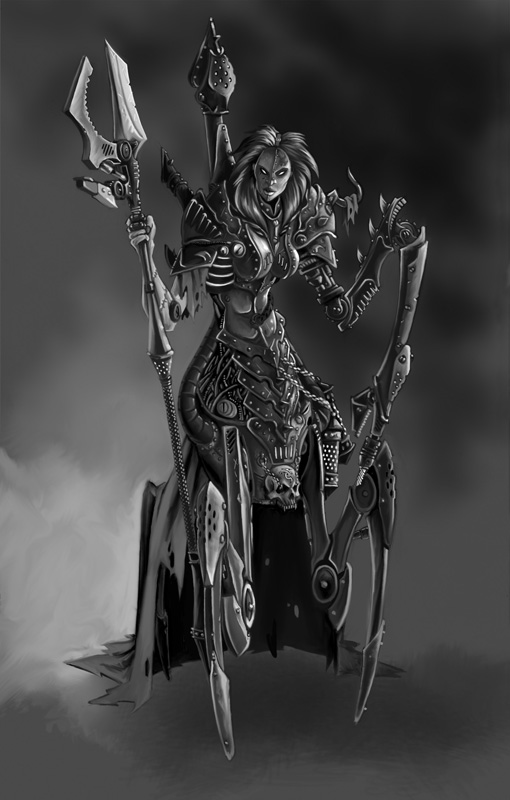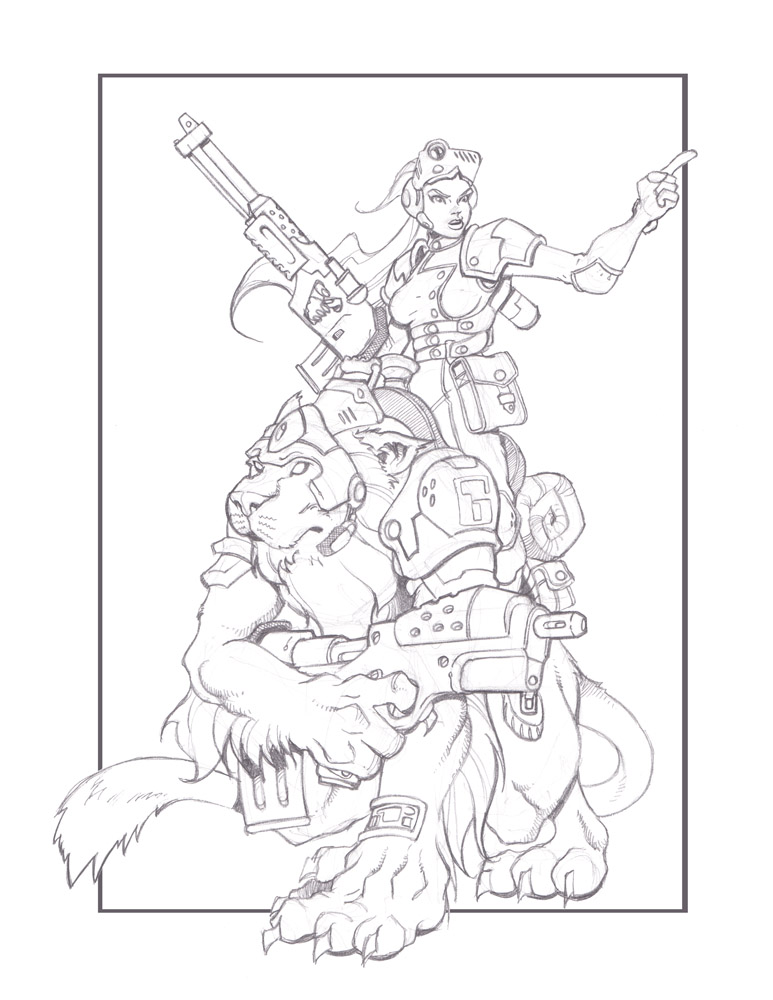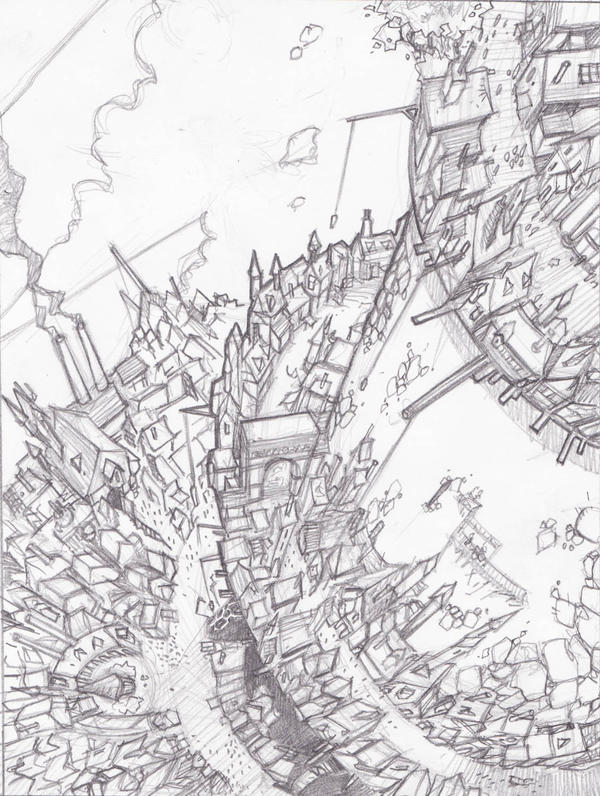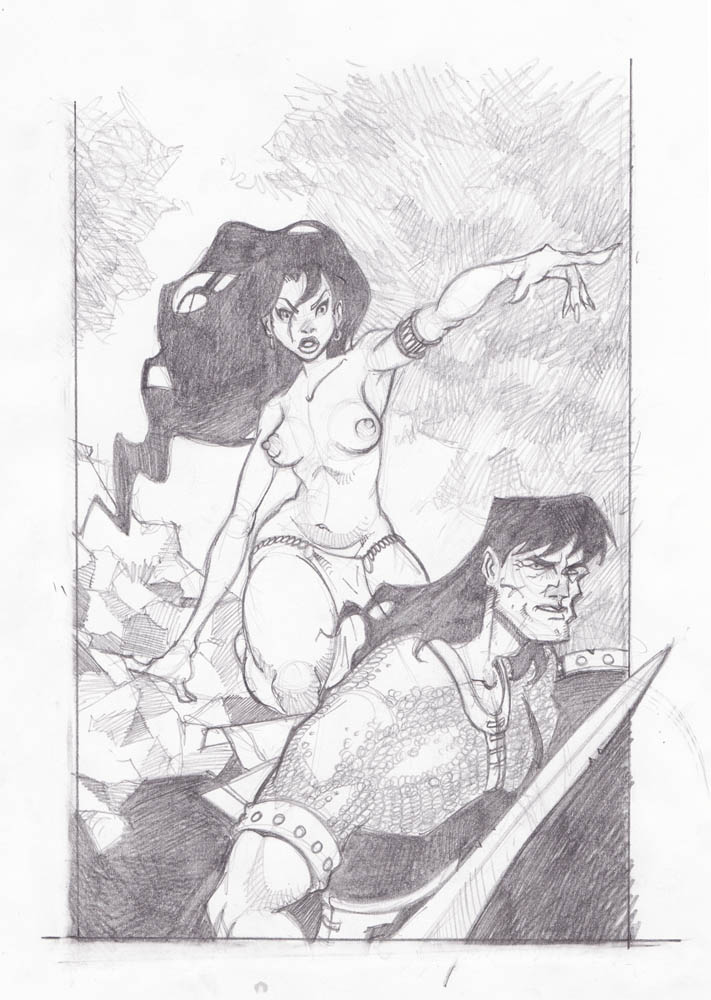
Venatia – Gnomes, Bugbears and Invisible Men

Done Done Done! Finally done writing the text for the Western Venatia hexcrawl. All I need to finish now for NOD #6 is another dungeon level for Izrigul’s Pleasure Palace, and hot diggity that magazine is ready to go. So, probably one more Western Venatia preview after this one. Here goes …

2235. The hither gnome village of Borbet overlooks the sea. Its inhabitants make their living by fishing, keeping guinea fowl, and growing vegetables in well-tended gardens. The village’s population stands at 150 gnome-wives, 80 gnomelings and 230 gnomes. They dwell in several dozen stone cottages built around a central square that contains a stone well. A low stone wall surrounds the village. It has two gates on the east and west sides of the village, each overlooked by a tall wooden tower. The walls and towers are covered by creeping, flowered vines.

Borbet is known for its fine, pale ale and its smith-work. The smiths of Borbet maintain a forge in a sea cave, allowing them to harness the elemental power of wind and wave when manufacturing their magical weapons and shields.

The village milita consists of 115 gnome warriors under the command of Nereva. The village is governed by a warlock called Kindle.

Treasure: The town treasury holds 4,085 sp, 2,860 gp, a hematite worth 65 gp, a bronze statue of Mercurius worth 3 gp and 3 sq. yd. of linen worth 12 gp. It is locked in an iron chest with a complicated lock in the cellar of the mayor and guarded by a bull mastiff.

| Kindle, Gnome Magic-User Lvl 9: HP 20; AC 9 [10]; Save 7 (5 vs. spells); CL/XP 11/1700; Special: Spells (5th), phantsmal force 1/day. Golden amulet of office worth 1,000 gp, beechwood staff carved with gnome faces, silver dagger, money pouch stuffed in right boot containing 30 gp.

| Nereva, Gnome Fighter Lvl 5: HP 19; AC 4 [15]; Save 10; CL/XP 5/240; Special: Phantasmal force 1/day. Chainmail, shield, boots of elvenkind, short sword, short bow, dagger.

2337. On a granite promontory that juts into the sea there is an ancient, weathered stone chair. Legends say that those who spend the night of a full moon sitting in the chair will learn the secret of their doom and how to avoid it. In truth, they will probably be killed by the enormous black pudding that lives inside the promontory and seeps out the cracks to engulf the chair each night.

| Black Pudding: HD 10 (60 hp); AC 6 [13]; Atk 1 attack (3d8); Move 6; Save 5; CL/XP 11/1700; Special: Acidic surface, immune to cold, divides when hit by lightning.

2410. The Blood Hawks are the most northerly of the orc clans and the weakest, having recently been decimated by the adventuring company from Blackpoort. The Blood Hawks have 100 warriors. They are ruled by Nar, who is assisted by Zhor, a shaman of the Gods of the Lake (see Blackmere Lake). The Blood Hawks dwell in a cavern lair set amidst rugged cliffs. They fletch their arrows with blood hawk feathers and paint the birds on their shields.

| Nar: HD 5 (21 hp); AC 4 [15]; Atk 1 battle axe (1d8); Move 9; Save 12; CL/XP 5/240; Special: None. Chainmail, shield, battle axe.

| Zhor, Orc Adept Lvl 3: HP 10; AC 7 [12]; Save 13; CL/XP 4/120; Special: Spells (1st), alchemist (brews poisons).

| Blood Hawk Orc: HD 1; AC 6 [13]; Atk 1 spear (1d6) or short bow (1d6 + poison); Move 9; Save 17; CL/XP 2/30; Special: Poison on arrows causes paralysis for 1d3 rounds.

2516. In a dry gulch called the Valley of the Angel there is a small village of folk who make their living collecting the valuable resins from the acacia trees that grow therein. The valley is named for a rock formation that looks vaguely like a winged creature bent down on one knee. The village is built around the base of this natural monument and consists of small hovels woven from the branches of the acacia. It is protected by a dry moat and a low wall of stacked stones. The village is ruled by Baron Nestor the Mad, an outcase of Antigoon who seized control of the village with his hired goons as a young man and has ruled it ever since. He is now pushing 60, not long for the world and fretting over the fate of his only child, Krapahild, now 30 and unwed. Krapahild, of course, is not in the least worried. She longs for freedom from her impetuous, often schizophrenic father, and enjoys a fine reputation among the villagers, who often seek her wise council and will almost certainly accept her as their new baroness on the passing of her father. The 20 warriors of the village wear ring armor and dashing white capes and wield shield and longsword. They are commanded by Morward, a man of 50 years who has served the baron since before his exile. Morward is an unassuming man, grey-haired and slight of build, who happens to be a very skilled assassin. Morward is quite a bit less excited about Krapahild assuming command of the village, and would gladly marry her or kill her to remain in power.

Treasure: 1,800 sp, 102 gp and a hematite arrow worth 105 gp.

| Morward, Assassin Lvl 6: HP 25; AC 7 [12]; Save 10 (9 vs. death); CL/XP 6/400; Special: Decipher script, disguise, sneak attack x3, skullduggery, poison. Leather armor, buckler, long sword, several daggers and poisoned darts hidden on his person.

2710. A small band of bugbears is traveling to join the hobgoblin army in [2505] before they cease being. The bugbears travel only at night, and are a strange band indeed. The leader of the band is Zorion, a yawahu bugbear, albino sorcerers akin to ogre magi. His comrades are the product of his dealings with demons, mutants possessed of extraordinary powers.

Treasure: 100 gp each.

| Zorion, Elder Yawahu: HD 6 (36 hp); AC 5 [14]; Atk 1 spear (1d6+1) or 1 shortbow (1d6); Move 12; Save 11; CL/XP 7/600; Special: Spells – charm person, magic missile, cause blindness, invisibility, weakness (rev. of strength) and rope trick. Wears a cloak of elvenkind he stole from a hapless adventurer on the way.

| Zunx, Undead Charred Skeletal Bugbear: HD 3+3 (22 hp); AC 5 [14]; Atk 1 bite (1d8+1); Move 9; Save 14; CL/XP 7/600; Special: Surprise on 1-3 on 1d6, surrounded by cloud of ash (10’ radius, save or cough and choke, suffer 1d3 damage, -5 to hit from obscurement), touch causes metal to heat (per heat metal spell), rebuke undead as lvl 3 cleric, only harmed by magic weapons, at 0 hp explodes into 3 dice fireball.

| Nobbit, Tenebrous Bugbear: HD 3+1 (20 hp); AC 2 [17]; Atk 1 bite (1d10+1 + 1d6 acid); Move 9; Save 14; CL/XP 4/120; Special: Surprise on 1-3 on 1d6, acidic bite, filiments on head inject poison into unarmed attackers (paralysis 1d4 rounds).

| Unog, Demonic Bugbear: HD 3+1; AC 4 [15]; Atk 2 claw (1d6), bite (1d8+1); Move 9 (F9); Save 14; CL/XP 7/600; Special: Surprise on 1-3 on 1d6, immune to poison, half damage from acid, cold, electricity and fire, only harmed by magic weapons, magic resistance 15%, cast darkness 15’ radius and inflict light wounds 1/day. Unog is a distant relation to Melchom, Paymaster of Hell.

| Tmor, Blink Bugbear: HD 3+3 (16 hp); AC 5 [14]; Atk 1 bite (1d8+1); Move 9; Save 14; CL/XP 4/120; Special: Surprise on 1-3 on 1d6, cast dimension door, blink as blink dog.

| Gux, Undead Bloody Bugbear: HD 3+3 (21 hp); AC 2 [17]; Atk 1 bite (1d8+1); Move 9; Save 14; CL/XP 6/400; Special: Surprise on 1-3 on 1d6, damage from bite adds to its own hit point (up to 27), creatures killed by it become zombie spawn, magic resistance 15%, only harmed by magic weapons.

| Zbugod, Giant Bugbear: HD 4+1; AC 3 [16]; Atk 1 bite (1d10+1); Move 12; Save 13; CL/XP 4/120; Special: Surprise on 1-3 on 1d6, throw boulders (40’ range, 1d10 damage).

[This was me playing with some old d20 templates, I guess they’re like the X-Bugbears]

2735. The sea dragon Zavicus makes its lair here in the submerged dome of some ancient sea fortress. Zavicus is a small dragon, about the size of a horse, with smooth, black skin and markings reminiscent of an orca. He is highly intelligent, but unable to speak or cast magical spells. Zavicus keeps its treasure in a large, round pit in the center of its lair. Seven mer-maids of exquisite beauty are kept there as the dragon’s prisoners, all chained to metal hoops that circle the treasure pit.

| Zavicus: HD 9 (36 hp); AC 4 [15]; Atk 2 claws (1d6), bite (1d8); Move 12 (S24); Save 6; CL/XP 12/2000; Special: Only harmed by magic weapons, can emit a cone of sound (30’ long, 20’ at base, 9d8 damage and deafness, save for half damage and to negate deafness), claws are so sharp one must save against them or begin bleeding (1d4 damage per round until cured by magic or staunched by normal means).
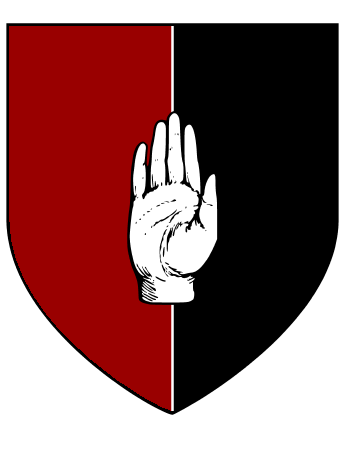
3427. Loquash, the mythic “Invisible City” is situated near the banks of the Vrusk River. The city and its inhabitants are only visible in the moonlight, becoming completely visible during the full moon and otherwise existing in an invisible, quasi-real state the rest of the time. The Loquashi have ophidian blood flowing through their veins, and their time under the curse has diminished them, making them about 5-ft tall on average. Their skin glistens like thousands of pink and yellow diamonds, their features would be elven save for the fact that their arms are more swept back and their torsos are a bit longer. They are terribly graceful, and sneak through the world, collecting secrets and knowledge and stealing precious articles, leaving clues to the location of the Invisible City to lure those from whom they have stolen to them during the full moon. These intrepid investigators are greeted warmly, their property returned to them, and they are permitted to feast on delicacies, the food being poisoned to turn the guests into Loquashi themselves.

Loquash has walls of pearly stone that gleam and shimmer in the moonlight, and thirty tall towers of dark, polished wood that rise 30-ft above the 30-ft stone walls. The city’s gates are polished steel and decorated with whimsical arabesques. The buildings within the city walls are graceful, most in the style of slim towers that taper gently from base to peak. They are topped with observation decks to permit the inhabitants to gaze at the stars. The streets of the city that are paved are paved with grey cobblestones. The city’s primary industries are the exchange of secrets and knowledge (their invisible lurkings around the world have brought them much knowledge) and the catching of fish in the Vrusk River using nets that, for most of the year, are completely invisible. The lands around Loquash appear to be barren under the light of day, but the moon reveals them to be lush croplands of beets, dates and pears and durum. Goats are kept for their milk, but they are never killed.

Loquash, in the days of the Lizard Kings when it was a normal city-state, was known for its fine metalwork, and in fact is still produces exceptional work. The city is also known for its lush parklands and its race track, where the locals watch the newt derbies.

Loquash once had a ruling monarch, but it was the king’s sinful ways that brought the curse of the gods down on the people’s heads. Since then, the palace has been allowed to sit empty, a monument to vice, and the priesthood has ruled the city with a gentle hand. The Loquashi, most of whom are not born, but rather made, have few family ties. Instead, people are stratified by classes based on their skills. The wise make up the ruling class of priests, while the dextrous and intelligent make up the middle class of artisans, sages, mages and thieves. The strong and tough make up the lower class of warriors, servants and laborers, while the charismatic make up the slave class of jugglers, actors, poets and storytellers.

The Loquashi worship the old gods of the ophidians, from whom they received their curse and to whom they beg for forgiveness. The two main deities of Loquash are Saclist, the goddess of virtue (which the ophidians define as loyalty and dilligence) and Phu’abbo, the lustful god of dreams. Minor divinities include Latha, god of craftsmen, Azol, goddess of wealth and Phothar, goddess of winter and dreaded hibernation. The days of the full moon are grand celebrations in Loquash in which the people travel a cirrcuit around the city to each temple, reciting prayers and leaving offerings of flowers and prayer scrolls scribed in their own blood. During the full moon, the taboo on physical contact is lifted and much revelry ensues. It is also during this festival that most outsiders come to Loquash and are tricked into consuming the city’s accursed food. The priests of the city-state wear bronze masks and go everywhere carrying censers burning sweet resins.

The soldiers of Loquash are apathetic and poorly trained. They wield morninstars and light crossbows, and primarily fight in the hopes of taking slaves. The army numbers 350 men-at-arms (HD 1d6), 20 sergeants (HD 3d6) and 2 captains (HD 5d6).

The Hanged Man is the finest tavern in Loquash. Located in the center of the city, it features service and fare fit for a lord (and priced for a lord as well). The tavern has two medium-sized rooms for rent, though they are occupied about 50% of the time. The Hanged Man is always loud and bustling, with dozens of tables featuring card games. They serve fermented goat milk and curds of goat cheese as well as many fine raw fish dishes.

Some of the more interesting people of Loquash include Shollo, a member of the old royal family who has suffered many financial setbacks since the overthrow (and who insists he has amble gold in his old apartment in the royal palace, if only someone would retrieve it); a seductive mage named Zhaua who is toiling under the threat of blackmail; Thath, a wealthy garrison commander whose schemes go far beyond Loquash and Thigomin, a wealthy courtesan who has dabbled with many powerful priests and who spends money very freely.

Loquashi Characters: The fact that the Loquashi spend most of their time invisible makes them problematic as player characters, but excellent foils with which to challenge the player characters.

Treat the Loquashi as elves with a +2 bonus to save against poison instead of an immunity to Charm Person and Sleep. In addition, their “class versatility” ability replaces Fighting-Man with Thief (the one published in NOD #2 or any other version you favor).

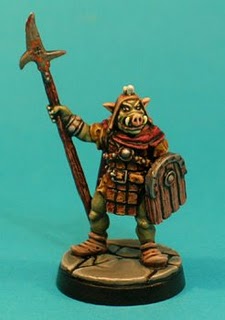
Miniature from Otherworld Miniatures, painted by Richard Scott.

Tycho Brahe – Warrior Astrologomage!

Man, I love this weird world we live on! Here’s an article on Tycho Brahe, a duelist, astronomer, mathematician (who says fighting-men have to be stupid) and minor nobleman who had a pet elk and dwarf jester who was supposedly clairvoyant (he made is psionic powers roll!). Oh, and Brahe had a prosthetic nose made of gold and silver because his own was sliced off in a duel that may have been precipitated by an argument over mathematics or astrology. Since I would like to believe that every earthbound weird-o from our glorious history has a free, all-access pass to live on in NOD after they slip their mortal coil, how about some game stats!

[Note – edited for a couple great idea in the comments.]

Tycho Brahe, Fighting-Man Lvl 1, Magic-User Lvl 6*: HP 21; AC 9 [10]; Save 10 (8 vs. spells); CL/XP 6/400; Special: Spells (3rd). Rapier (1d6 damage), silver dagger, spellbook, prosthetic nose of silver and gold (worth 150 gp).

Tycho’s Spellbook contains the following spells: 1st – Detect Magic, Light, Read Languages, Read Magic, Sleep; 2nd – Detect Evil, Detect Invisibility, Knock, Locate Object, Mirror Image, Strength; 3rd – Dispel Magic, Hold Person, Lightning Bolt, Suggestion.

Jepp, Dwarf Assassin Lvl 4: HP 16; AC 8 [11]; Save 12 (11 vs. death & poison, 8 vs. magic); CL/XP 4/120; Special: Decipher script, disguise, sneak attack x2, skullduggery, poison, clairvoyance (3/day). Jester’s outfit and cap, pig bladder on a stick, three hidden daggers, vial of mercury (treat as slow poison – save or die in 1d4 days).

Tycho’s Elk: HD 4 (19 hp); AC 6 [13]; Atk 1 gore (1d6); Move 15; Save 13; CL/XP 4/120; Special: None.

Johannes Kepler, Magic-User Lvl 3: HP 7; AC 9 [10]; Save 13 (11 vs. spells); CL/XP 2/30; Special: Spells (2nd). Scholar’s robes, parchment and quills, horn of ink, vial of mercury (was it him or Jepp? Or both?).

Johannes’ Spellbook: 1st – detect magic, light, read languages, read magic, shield; 2nd – continual light, levitate, phantasmal force.

* Yeah, we could make him a sage, but where’s the fun in that.

Below is pictured Uraniborg, Tycho’s stronghold. The gardens are planted with medicinal herbs and flowers. Each of the guard towers is guarded by 4 men-at-arms supplied by his royal patron, men wearing breastplates and armed with pole arms, daggers and light crossbows.

Deviant Friday – Dario Carrasco Edition

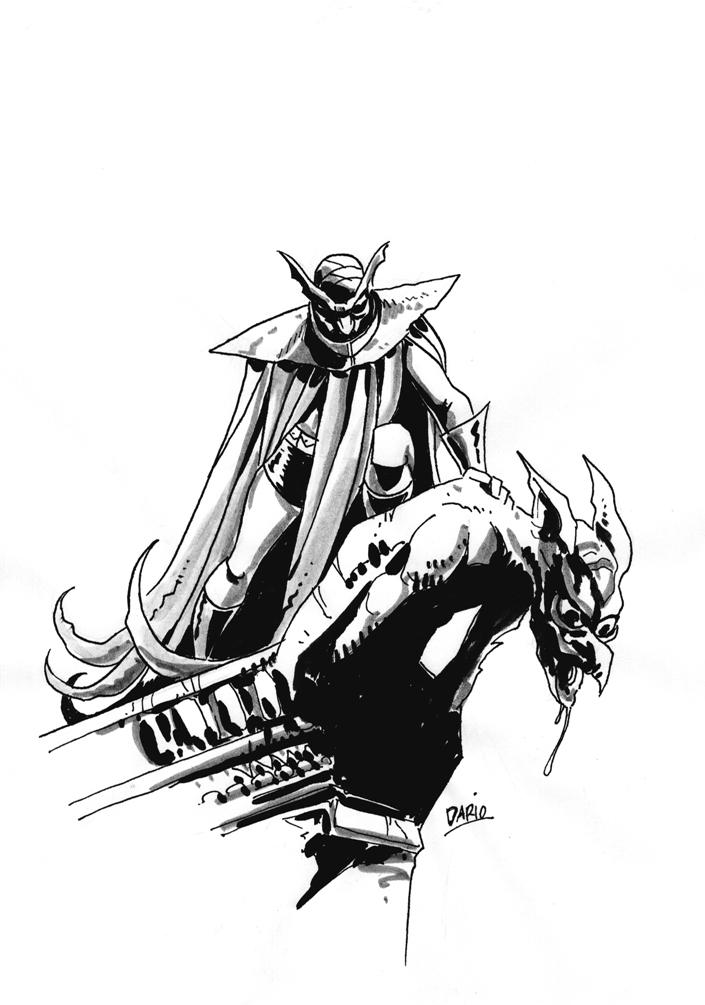
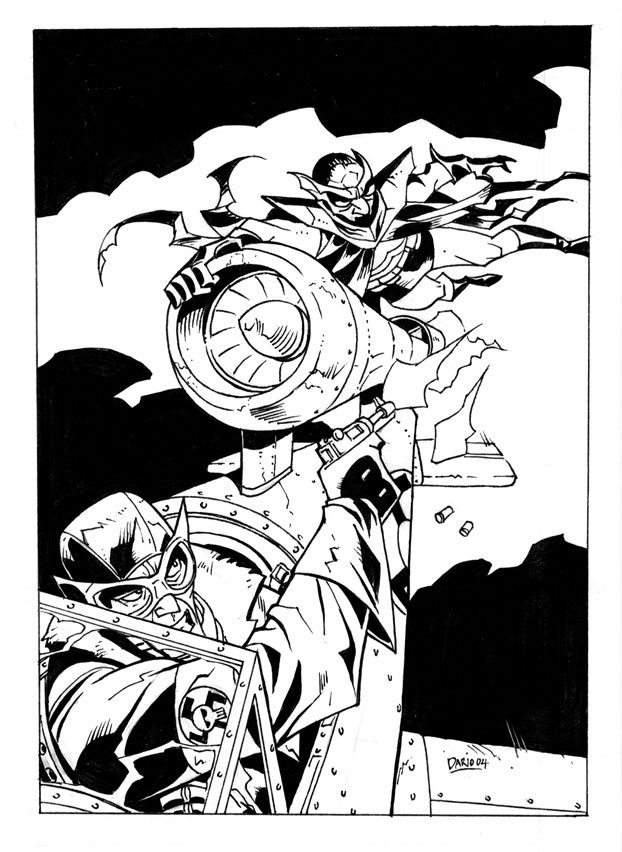
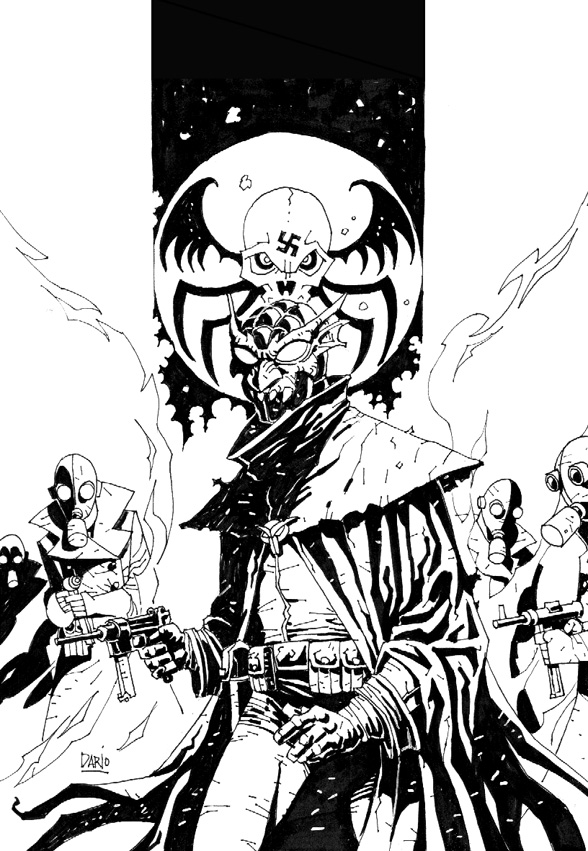
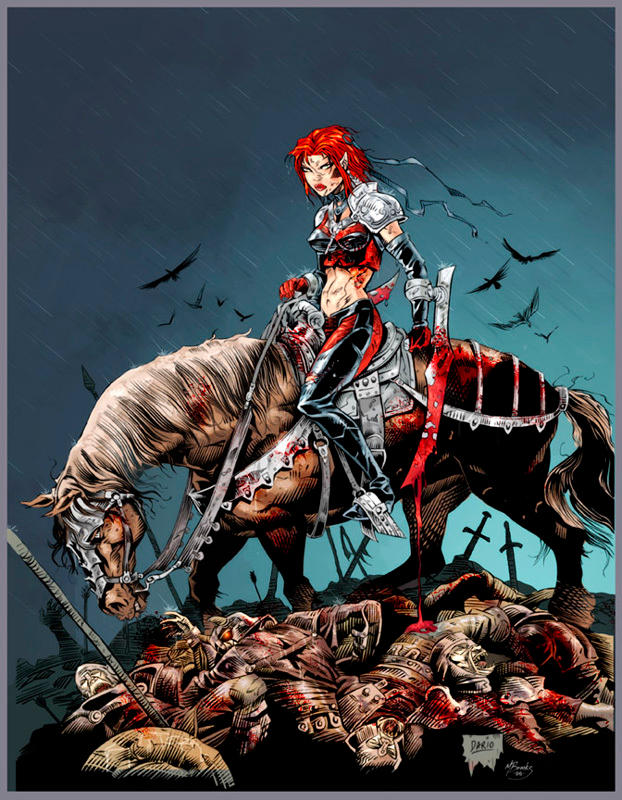
Dario, Darry on DeviantArt, is a comic book guy – and if I’m being honest he mostly draws characters I’m unfamiliar with. This isn’t a knock on Dario, because my comic book reading days are waaaay behind me – Batman and Captain America were still alive (wait, are they still dead at the moment? Maybe they should resurrect the characters in each others bodies as a company cross-over event!), Spider-Man was still married to Mary Jane, Venom was still cool, Hulk was in a grey period, etc. In fact, Dario’s renditions of these characters pique my interest in them, so good on him. Dario has a nice selection of work, from fantasy to steampunk to pulp-style heroes – enjoy!

No Sonja or Dejah this week, but we do have a Sonja-esque Blood Rayne and another half-naked character of ERB
Enjoy ladies – and never let it be said that I don’t look out for my female audience (assuming I have one – let me hear from you ladies if you’re out there!)

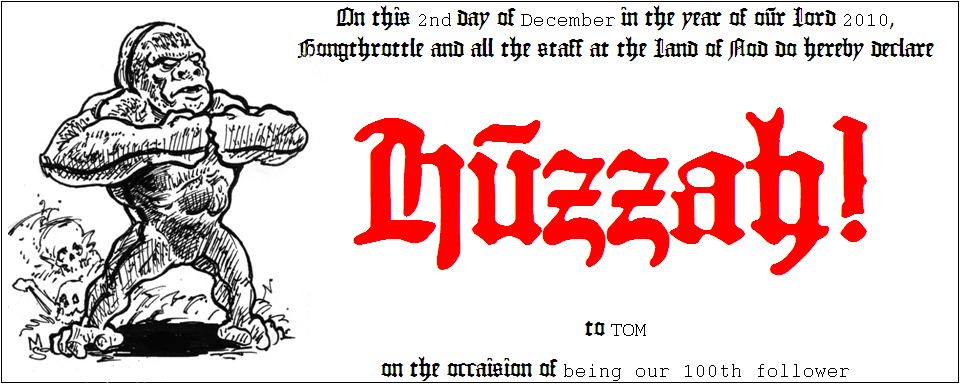
Huzzahs Duly Distributed

I’m as good as my word …
And lest I forget my first …

Print these babies out and keep them in your wallets – there’s nothing better for picking up chicks!

Thanks everybody who has followed, stopped by and looked, commented, downloaded or purchased – it’s been quite a year in the Land of Nod, and I hope to have many more.

Dolls of the Apocalypse and Other Things

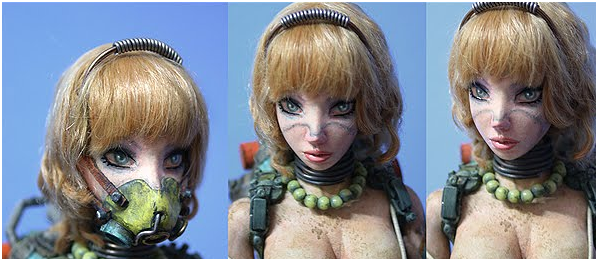
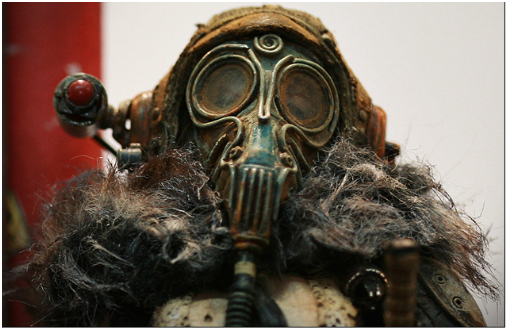
Okay – suitably odd blog post title. Just found some post-apocalyptic dolls designed by Yeon Guun Jeong/BHEAD that I thought might be of interest to the Gamma Inclined. Found via Super Punch, my one stop shop for stuff on the interwebz.

If we could be guaranteed girls like this, I think more of us could get on board with the apocalypse.


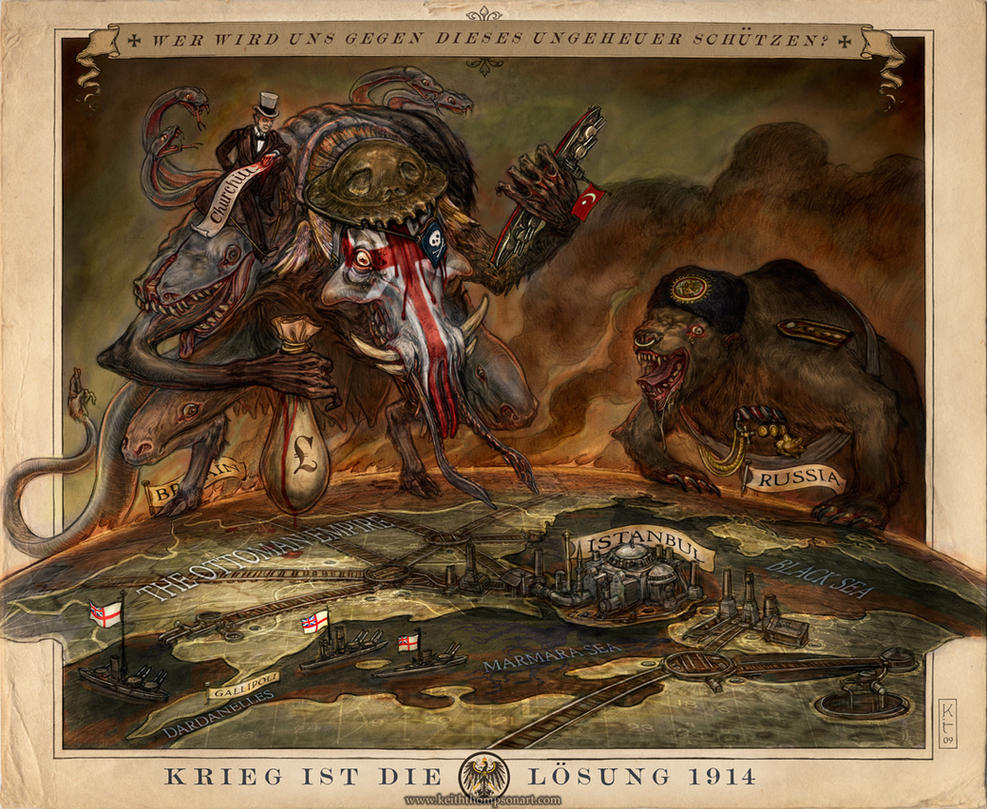
Makes me think a post-apocalyptic early 20th century Europe embroiled in a never-ending Great War could be a very cool setting for Gamma World. Remnants of the Great Powers and their armies, guys in jodhpurs slashing at fleshy-headed mutants with their cavalry sabers, wandering undead produced by the mass slaughter of trench warface and unable to go quietly into the afterlife (and a good excuse for Van Helsing-style clerics in a Gamma World setting), chemical mutants (remember, before the a-bomb most super powers came from accidents involving chemicals – stupid upstart radioactive superheroes) scouring the bleak and broken landscape for sustenance – clearly a good time would be had by all.

In other news – finished writing Hexcrawl #2 last night – huzzah! Now I just need to finish up NOD #6, write my quarterly reports (work related – check them out if you have an interest in commercial real estate in Las Vegas) and then start delving into Mystery Men! and sketching out the three cities that will appear in NOD #7 (Lyonesse, Antigoon and Blackpoort) and Hexcrawl #3, a sort of bleak zombie-land of basalt hills, ashen plains and slow, oozy rivers. But no major deadlines staring me in the face for a few weeks after NOD #6, so time to party!

Oh – and Aeons & Auguries is getting lonely in the Megacrawl – for cryin’ out loud, somebody write a comment.

Oh Oh – and 99 followers – whose going to take the Land of Nod into triple digit territory? The 100th follower will receive a personalized HUZZAH fit for framing.

Edit – 101 followers reached – thanks folks! Also, the setting sketch above is getting some attention, especially from JD Jarvis who has already started mapping HERE. Those who like the idea of such a setting might want to check out artist Keith Wormwood – he’s doing some work lately that would go well with such a setting.

Deviant Sunday – C Walton Edition

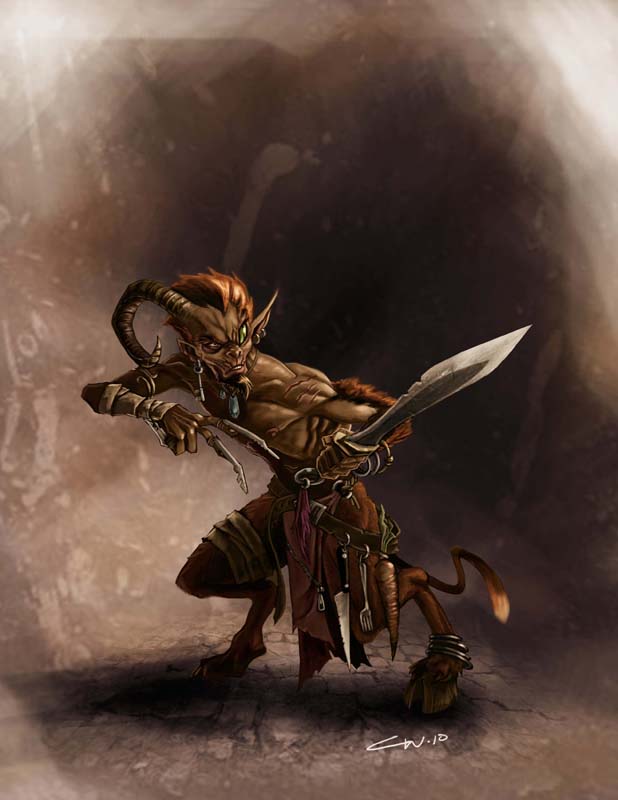
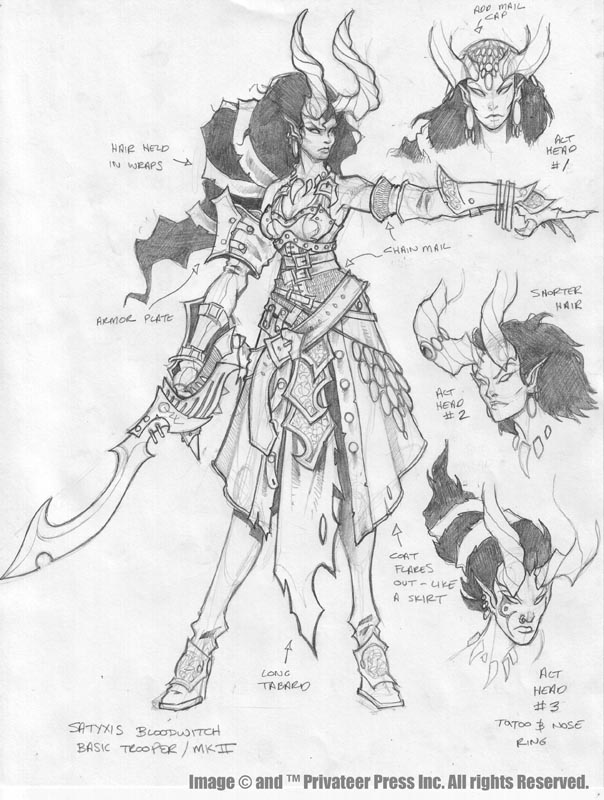
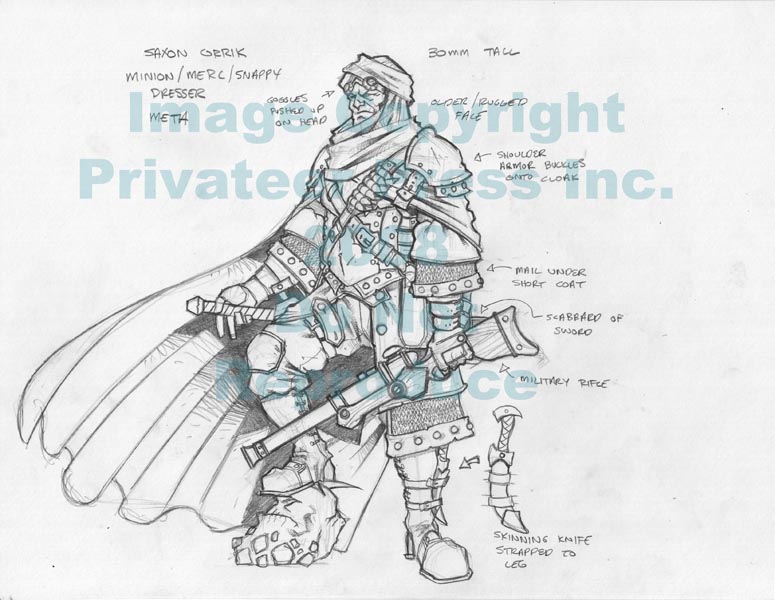
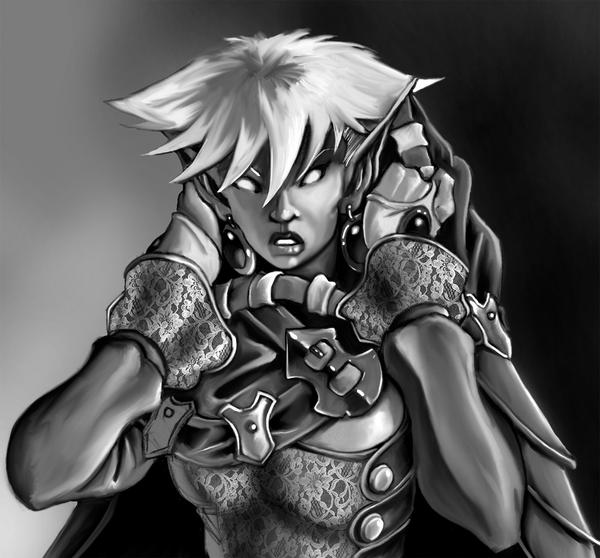
CWalton does a lot of work, conceptual and otherwise, for the good folks at Privateer Press, publishers of the Iron Kingdoms setting that mashes fantasy with steampunk and giant robots. I never played or owned anything from the Iron Kingdoms, but I did have a soft spot for the art, which, though a bit outside my wheelhouse, was always infused with a sense of fun and passion. Oh, also, the Satyxis are just plain cool. Enjoy.

Not a brand of vacuum cleaner built by an ancient Germanic tribe …
The reference in the title is completely lost on me. Image makes me think of a steampunk drider (a reference that is lost on probably 99% of the population of the Earth).
Kinda Gamma-Worldy, this one – or RIFTSy
Sorry, close as I could get to Red Sonja this time around

Venatia – Marching Lepers, Bloody Fangs and the Sailor’s Rest

About 3 weeks out from publishing NOD #6 (I hope). I have about 80 more encounters to write and a few other things to polish off, including level 3 of Izrigul’s Pleasure Palace. Busy busy.

2109. A horde of 50 lepers are on the march through this hex, pilgrims from Lyonesse making their way to the medicinal springs in [2013] that are now menaced by giant rock weasels. The pilgrims are led by the paladin Sir Juste, and his companions, Friar Owelle, Sir Tadith and ten fighting-men. All are mounted on warhorses and armed with platemail and shield. They are currently making camp, the named characters and men-ar-arms in pavilions, the lepers under the stars. Friar Owelle owns a magic rope, the silk entwined with silver thread. When laid on the ground in a roughly circular shape, it acts as a Protection from Evil spell for those located inside the circle.

| Sir Juste, Knight of the Jaguar, Paladin Lvl 6: HP 41; AC 2 [17]; Save 11; CL/XP 7/600; Special: Detect evil, protection from evil, immune to disease, cure disease 2/week, lay on hands (12 hp), turn undead as 4th level cleric, immune to fear, allies are +2 to save vs. fear. Platemail, shield, lance, long sword, holy symbol, jaguar skin worth 25 gp worn as a cape, 20 pp.

| Friar Owelle, Cleric Lvl 4: HP 16; AC 2 [17]; Save 12 (10 vs. paralysis & poison); CL/XP 5/240; Special: Spells (2nd), turn undead. Platemail, shield, mace, holy symbol, magic rope (see above), 17 pp.

| Sir Tadith, Fighting-Man Lvl 4: HP 24; AC 2 [17]; Save 11; CL/XP 4/120. Platemail, shield, horseman’s axe, lance, dagger, 16 pp.

2115. The most poweful clan of orcs in the Gaestly Hills are the Bloody Fangs. The Fangs are the most barbaric and superstitious of the orc clans, as their territory borders the land of the Barrow Fiends. The Bloody Fangs consist of 250 black orc warriors. Black orcs have blue-black skin and red-rimmed eyes. They are devotees of the demon prince Orcus, and many show signs of demonic heritage. Black orcs wear armor of iron scales, iron shields painted with bloody fangs, light crossbows and battle axes. The Bloody Fangs dwell in a cavern lair. The entrance is about ten feet above a boulder-strewn field.

The Bloody Fangs are led by Thangblad. Thangblad maintains a bodyguard of six zombies. He is assisted by 20 sergeants.

Treasure: Kept in a locked chest. Consists of 150 gp, 800 sp and 1,700 cp.

| Thangblad, Orc Adept Lvl 6: HP 28; AC 5 [14]; Save 10 (6 vs. undead); CL/XP 7/600; Special: Rebuke undead as 3rd level cleric, spells (2nd), berserker. Leather, shield, rusty spear caked with dried blood.

| Black Orc: HD 2+2; AC 3 [16]; Atk 1 weapon (1d8+1); Move 9; Save 16 (12 vs. undead); CL/XP 2/30.

| Black Orc Sergeant: HD 4+4; AC 3 [16]; Atk 1 weapon (1d8+1); Move 9; Save 13 (9 vs. undead); CL/XP 4/120.

| Zombie: HD 2; AC 7 [12]; Atk 1 weapon (1d8); Move 6; Save 16; CL/XP 2/30; Special: Immune to sleep and charm.

2128. This area of the Grete Myre, nicknamed the Pismyre, receives most of the run-off from Antigoon’s open sewers. It is inhabited by several gangs of gulguths and at least thirty otyughs. Encounters with one or both occur whenever one travels through the area (1-3 = 1d8 gulguths, 4-5 = 1 otyugh, 6 = both), so the locals avoid it at all costs.

2138. Sailor’s Rest is an interdimensional rest home for sailors. One will spot Vikings, New England whalers, Chinese merchants and Napoleonic sailors in this place, all living in a large manse that appears to have been built from ship wrecks. The men are stereotypical old salts. They live off of fishing and crates of foodstuffs and spirits salvaged by mermaids from lost ships. Visitors are welcome, and can expect a supper of hard tack, salt pork, fish stew, turtle soup, grog and plenty of tall tales.

The sailors never leave their home (except by death, when they are given a Viking funeral), so they know little of the surrounding area. Since most do not come from Nod, only a few are knowledgeable about the Tepid Sea or Mother Ocean. All of them know of the Meistersinger [1229], for he visits every few months to swap stories and sing shanties.

The old men have no real treasure, for they’ve little need of it. One might find a silver pocket watch or some scrimshaw. They arm themselves with broad swords and hafted hooks.

| Old Salt (25): HD 4; AC 7 [12]; Atk 1 weapon (1d8); Move 12; Save 13; CL/XP 4/120; Special: None.

2207. Wulum the Bald, a hefty barbarian prince has built a small motte-and-bailey fort in this hex in a wide valley of soft, green meadows watered by a sparkling stream. The southern half of the valley is hemmed in by chalk cliffs (worked by a few stout halfling miners in Wulum’s employ), while the northern walls of the valley are old, weathered basalt and studded with small caves.

The castle is constructed of creamy, white stone and pine and inhabited by a small court of servants and laborers, 12 tawny-headed berserkers and 15 men-at-arms equipped with ring armor, shields, spears and short bows. Wulum is tall and quite fat, and despite his wild, ice-blue eyes and unkempt black beard, very logical and intelligent, traits not normally associated with barbarians. He hails from the Chimeria (located north and west of this region). He is happily wed to his court magician, Orandjia the Grey, a high-born exile from Blackpoort with grey eyes, long, black hair worn in braids and a delicate face that belies the woman’s powerful ambition and hatred for her city of birth.

The castle is surrounded by several hovels inhabited by a mix of human, halfling and dwarf yeomen – mostly herders of sheep and cultivators of flax and rye. They are currently constructing a dye house.

Wulum is a tremendous host, sharing all he has with visitors provided they show he, his wife and his people respect and provide good company.

Treasure: 2,790 gp, 5 lb of cocoa (100 gp/lb), 2 lb of tobacco (100 gp/lb), 12 barrels of ale (30 gal., 250 lb, 6 gp each).

| Wulum the Bald, Barbarian Lvl 12: HP 84; AC 6 [13]; Save 4; CL/XP 12/2000; Special: Immune to backstab and flank bonuses, berserker (+2 to hit and damage, -2 to AC for 12 rounds, fights beyond 0 hit points while berserk).

| Orandjia, Magic-User Lvl 8: HP 18; AC 9 [10]; Save 8 (6 vs. spells); CL/XP 10/1400; Special: Spells (4th). Robes of dark blue velvet over comfortable clothing, a slim crystal wand and silver dagger.

New Class for Thanksgiving: The Puritan

A while back, I got it into my head to design classes based on characters from fiction, since there are indications that AD&D rangers are really just Aragorns (why else can a woodsman specifically use crystal balls?) and the barbarian class owed a bit to everybody’s favorite Cimmerian. Thus were born the Beastmaster (to be published one day), the She Devil (again, you’ll have to wait) and today’s blog post, the Puritan. The Puritan can be regarded as a darker alternative to the Paladin (the turkey leg to the paladin’s turkey breast, so to speak). Enjoy – and HAPPY THANKSGIVING!

Historically, the puritans were an English religious sect that operated in the 16th and 17th centuries. The terms “puritan” and “preciseman” were coined as insults; the people called themselves “the godly”. The puritans, by and large, were interested in returning Christian worship to what they believed was a purer form. In general, this involved problems they had with the trappings and rituals of the Catholic Church and its progeny, the Anglican Church. In England and the United States, puritans are often associated with strict moral guidelines, religious zealotry and witch hunts.

Religious reformers offer little grist for the mill when creating a new character class, unless Robert E. Howard enters the picture. In 1928, Howard introduced Solomon Kane in a story entitled “Red Shadows”.

Solomon Kane is an English puritan who leaves his country to adventure. As with many adventure-oriented characters of the time period, very little time is dedicated to Solomon Kane’s history, although the poem “Solomon Kane’s Homecoming”, we learn that he lost his love, Bess, at some point before he became an adventurer. During the course of his adventures, Kane battled brigands, sorcerers, pirates, vampires and slave-traders. Most of his adventures take place in Europe and Africa.

Prime Attribute: Wisdom (13+ for 5% XP bonus)

Hit Dice: 1d6+2/level (Gains 2 hp/level after 10th)

Armor Permitted: Leather, ring armor, buckler.

Weapons Permitted: Any.

Puritan Class Abilities
Puritans have a +2 bonus on saving throws made against fear and its effects. In addition, they have a +2 bonus on saving throws made against the spells and magical effects of creatures of chaos or evil.

Puritans enjoy a +1 bonus to hit and damage creatures of chaos or evil. Moreover, their weapons are capable of damaging creatures normally only damaged by magical or silver weapons.

When a puritan turns his gaze on a creature for at least one minute, he can determine that creature’s alignment. This cold stare is unnerving to those of a chaotic or evil disposition, forcing them to succeed at a saving throw or hurry away.

A puritan’s devotion to the gods of law grants him the ability to turn undead, as a cleric, but at a -2 penalty. In addition, he can call down one minor miracle (i.e. level one cleric spell) each day simply by grasping a holy symbol or book and invoking the name of his Creator. The puritan does not have to memorize or prepare this spell in advance. At every odd level, the puritan gains the ability to call down one additional level one cleric spell, thus two at third level, three at fifth, four at seventh, and so on.

Level
Experience
Hit Dice
Attack
Save
Title
1
0
1
+0
15
Confessor
2
2,200
2
+0
14
Penitent
3
4,400
3
+1
13
Pilgrim
4
8,800
4
+2
12
Preciseman
5
17,000
5
+2
11
Firebrand
6
35,000
6
+3
10
Hexenhammer
7
70,000
7
+4
9
Shepherd
8
140,000
8
+5
8
Zealot
9
280,000
9
+6
7
Puritan
10
380,000
+2
+7
6
Puritan
11
480,000
+4
+7
5
Puritan
12
580,000
+6
+8
5
Puritan

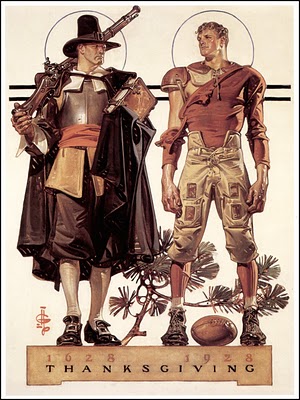
Image: Puritan Jemuel Landes regards traveler “Steel” Sullivan with some suspicion – he claims to be a “football” star from the land of Cleve, but he’s probably a witch. Art by J. C. Leyendecker via Golden Age Comic Book Stories.

Random Musings of the Day

Item One
This …

… is cool. Eric Canete – check him out, won’t you. He’ll show up on Deviant Friday sooner or later. Never watched much of the old Gargoyles cartoon, but I can certainly get behind Demona.

Item Two
Are pen and paper games ahead of the curve? Consider – in the case of rules-lite games, you have a slim set of rules to which you can add modules/house rules (i.e. apps) to build the experience you want, as opposed to something like Warcraft, which offers some pretty cool features, but forces everyone into the same experience. Want the ability to fly around on dragons and joust – no problem in Rules-Lite Pen and Paper – heck, somebody probably already wrote some rules for that. Want to do it in Warcraft (and honestly, maybe you already can – I have no idea) – you’ll need to ask and they’ll need to put it in a list of things to do and then debate on whether this is an idea that will be popular with everyone – oh, and you’ll need to have a subscription of some sort. Most rules-lite and rules-lite supplements are either free or very cheap. Maybe pen and paper has a brighter future than we all thought in a world of program-it-yourself entertainment?

Item Three

Random Thoughts Table (Roll D4)

1. Did I remember to extinguish the hearth before I left on this quest?
2. You know, I really like pretzels.
3. Is that idiot seriously going to tap that damn 10-ft pole on every floor tile in this hallway?
4. I should totally stab the thief in the back – he’d never see it coming.

My best friend drew up a random table for one of his characters (Rygar the Last), which included things like accidentally discharging his crossbow. Good times.

Item Four
Anyone want to trade a black and white illo for NOD #6 for a full page ad of their choice in the magazine. I’m writing up the next level of Izrigul’s Pleasure Palace (the best – and only – multi-level dungeon ever published in NOD). The whole level was designed as a theater by the demon Izrigul and features two factions at eternal (and pointless) war with one another. The troops on one side are tieflings in the style of Spanish soldiers from the 17th century armed with staffs that shoot rockets/sparks and sabers. The other side is composed of bugbears with snow white hair in the style of the powdered wigs of the time, wielding halberds and hand axes and dressed like 18th century French soldiers. I’d love a pic of one facing off against the other. Think opera/ballet meets D&D. Email me if you’re willing and able.

That’s all for today – much writing to do …

Venatia – Simonya of the Seven Symbols

Fifteen parts, and probably fifteen to go before I publish NOD #6.

0816. Fifty industrious gnomes have established an iron mining operation here. They are led by Morgenstern, a gnome veteran of countless campaigns against the kobolds. The gnomes live in their mine and have smelting ovens near the river. They are on good terms with the surrounding wildlife, and thus are rarely surprised by intruders.

The gnomes have an illusory trap of a flood filling the canyon. Those who fail their intelligence save will pantomime being carried away by the waters, rolling around on the ground and eventually coming to rest a mile away having suffered 3d6 points of nonlethal damage.

Treasure: Silver nuggets (10, worth 100 gp), 20 gp and three casks of brandy.

| Gnome: HD 1d6; AC 7 [12]; Atk 1 weapon (1d6); Move 12; Save 18 (16 vs. illusions); CL/XP 1/15; Special: Cast phantasmal force once per day. Leather armor, pick, throwing axe.

| Morgenstern, Fighting-Gnome Lvl 5: HP 32; AC 3 [16]; Save 10 (8 vs. illusions); Special: Cast phantasmal force once per day. Military pick +1 (hums in the presence of silver), throwing axe, chainmail hauberk, shield.

0831. This portion of the woodland is dominated by a great hemisphere of granite pocked with caves and covered by ancient, twisted pine trees. The mound, referred to as Bear Mountain, is surrounded by lush fields of clover and wild flowers. Black bears and a clan of werebears dwell in the vicinity. The black bears, numbering 30, live in the mountain caves, coming down to the meadow and woods to hunt and frolic.

The werebears live in hive-shaped stone huts on the meadow. They keep bees and are noted for their skill in sorcery, a pursuit not usually associated with their kind. The clan consists of seven werebears led by an old male called Troff and his mate, Lir. The other clan members are all evocators (i.e. 3rd level magic-users). The werebears are presently quite pleased with themselves, as they have just created the world’s first honey golem, which they plan to use as a guardian for their domain.

Treasure: The werebear’s treasure is kept in a hollow place beneath the floor of their huts. It consists of 3,950 sp, 770 gp. They also have 8 barrels of mead (30 gal. each, 250 lb), worth 8 gp each.

| Werebear Evocator (4): HD 7+3; AC 2 [17]; Atk 2 claws (1d3), bite (2d4); Move 9; Save 9 (7 vs. spells); CL/XP 9/1100; Special: Lycanthropy, spells (2nd).

| Lyr, Werebear Magic-User Lvl 7: HP 37; AC 2 [17]; Save 9 (7 vs. spells); CL/XP 10/1300; Special: Lycanthropy, spells (4th).

| Troff, Werebear Magic-User Lvl 9: HP 38; AC 2 [17]; Save 7 (5 vs. spells); CL/XP 12/2000; Special: Lycanthropy, spells (5th).

| Honey Golem: HD 5 (18 hp); AC 3 [16]; Atk 1 slam (2d6); Move 9; Save 12; Special: Immune to magic, half damage from piercing and slashing weapons, sticky, summon swarm. Grappled victims must pass a strength save or be engulfed and suffocate. Cold effects deal no damage to honey golems, but acts as a slow spell.

0909. Two strongholds overlook this river canyon that approaches Pfeife. One is commanded by the chaotic Lord Dross, the other the lawful Lord Pinkel. Dross and Pinkel are brothers with an unceasing hatred of one another. They inherited their strongholds from their father, the elder Lord Dross, a powerful and respected Knight of the March. The brothers routinely fire volleys of stones and arrows at one another’s castle, and are likely to consider any intruders in their valley to be on the other side’s payroll. Neither brother allows his henchmen to cross the river. Each noble commands 20 men-at-arms in chainmail, shield, short sword and light crossbow.

1733. Simonya of the Seven Symbols, a grand dame among elves and a well practiced sorcerer, occupies a tall tower on the banks of the river here. The tower rises five stories, with domestics and guardsmen quartered on the ground floor, a great hall of learning and a great hall of celebration on the second story, an armory and balconies on which rest ballistas on the third story, living quarters for Simonya and her court on the fourth story, and the sorceress’ laboratory and library on the fifth story. All in all, it is a cozy and well defended position, and the ballistas give her sway over all shipping traveling to and from the city-state of Amvianda. In fact, the great bolts fired from the ballistas are connected to large winches via thick, iron chains, allowing ships hit by the bolts to be reeled in and generally torn apart.

The tower is guarded by a deployment of elves from Amvianda, for Simonya is a close cousin of that city-state’s Steward. The elf guardsmen wear uniforms of red leather studded with bronze and carry long swords and longbows. Their sergeant, Cearas, is a handsome elf of the old blood with the eyes of an eagle and the tongue of an adder.

The Great Hall of Celebrations is notable primarily for its model of the great hippodrome of Nomo done in precise miniature. In this model, Simonya keeps several teams of horses and charioteers, all shrunk by magic. She and her court often gather around the hippodrome, miniaturizing visitors and challenging them to race or be fed to her oft invisible cat.

Simonya got her nomenclature from her centuries long search for the seven symbols that, together, form a glyph of the true name of the demon prince Uvall. She now seeks the fabled Crown of Cykranosh, which is said to hold clues on how the symbols might be assembled and Uvall summoned. She believes the crown to be hidden within the so-called “World Below”, a vast dungeon extending under much of the Klarkash Mountains.

Treasure: 1,320 sp, 4,270 ep, 750 gp, 240 pp, sapphire worth 7,200 gp, electrum toe ring worth 80 gp (taken from a lich, turns the toe black) and a brass arm band worth 115 gp in the shape of nymphs and satyrs.

| Simonya, Elf Magic-User Lvl 14: HP 29; AC 9 [10]; Save 4 (2 vs. spells); CL/XP 16/3200; Special: Spells (7th), elf abilities. Dusky-skinned and painfully thin. She is scheming and casually cruel, but does honor contracts and show hospitality to guests.

2013. The mineral springs here once boasted a small shrine often visited by pilgrims in search of relief for their ills. In recent years it has been taken over by a boogle of five giant weasels. The shrine consists of a rose-blush marble cuppola containing a limestone effigy of Saint Osgiua the Sublime, a priestess of Angita, a demi-goddess of healing and witchcraft.

| Giant Weasel: HD 3+3 (24, 19, 16, 11,10 hp); AC 6 [13]; Atk 1 bite (2d6 + blood drain); Move 15; Save 14; CL/XP 5/240; Special: Drain blood (automatic 2d6 damage).

Art by Todd Lockwood – one of the many fine pieces he did for 3rd edition D&D.