Smilodars

The first response I got when I asked about awesome monsters from the old D&D line (B/X or BECMI or RC) referenced the aranea, which made it into the SRD, and the rakasta. I wanted to slap myself in the forehead. The rakasta were one my old favorites from that line. How could I forget the rakasta?

Thus are born the smilodars of Blood & Treasure. They should be compatible with most old school clones.

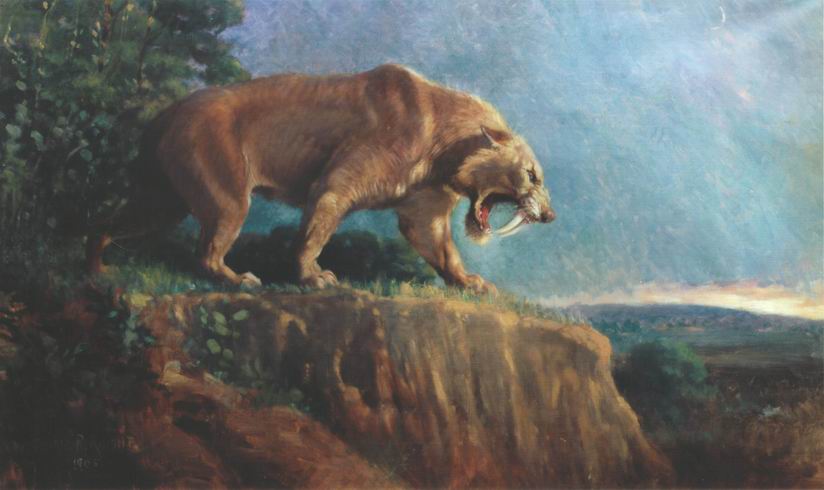
Smilodon by Charles Knight

SMILODAR
Neutral Medium Humanoid, Average Intelligence; Hunting Band (1d8) or Tribe (80 + 50% + 1d4 x 5 smilodons)

HD 2; AC 12; ATK 1 clawed gauntlet (1d4) and/or spear (1d6) or throwing axe (1d6) or bite (1d4); MV 30 (Leap 15); Save F 12, R 15, W 15; XP 100; Special: Leap into combat.

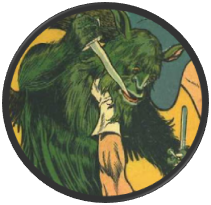
The smilodar are cat-headed men and women with tawny fur and sabre-teeth. They dwell in steppes and sometimes on the edges of deserts, hunting prey and raiding nearby human and demi-human settlements. While they bear no particular ill will towards most, smilodars have an innate hatred of gnolls and attack them on sight. Smilodars stand about 7 feet tall. They speak their own language and that of large, predatory cats, and might also learn Common, Gnoll and Goblin.

A typical smilodar warrior wears a leather loincloth and carries a clawed metal gauntlet (1d4 damage), spear and a throwing axe or four javelins.

Elite smilodar warriors are mounted on the backs of semi-domesticated smilodons. They fashion leather saddles that allow them to lock their hind-claws into leather flaps and thus ride using only one hand to steady themselves. Smilodars control their mounts with sounds and scents rather than reins.

In combat, smilodars can leap from their mounts, covering up to 15 feet and attacking as though making a charge. Their mounts then fight in concert with their masters, who can attack with spear and clawed gauntlet each round with a -2 penalty to hit with each. If disarmed, they can still bite for 1d4 points of damage.

SMILODARS AS CHARACTERS
Smilodars tend to come from primitive backwaters and lost lands. They adjust their starting ability scores as follows: Strength +1, Constitution +1, Intelligence -1. Smilodars retain the leaping ability of their monstrous cousins, essentially using it as a charge attack that does not require them to move at least 30 feet. As with all charges, they suffer the normal penalty to AC when charging. Smilodars can multi-class as barbarian/clerics and barbarian/thieves. They speak Smilodar and the language of large, predatory cats, and might also choose to learn Common, Elf, Gnoll and Goblin.

The Wizard’s Brain …

The Dead Wizard’s Brain …

… has unraveled and now looks like a squishy pink snake; it casts what spells it has left as auras and vibration fields such that all spells have an area of effect of 10-ft. per magic-user level

… is kept in a jar of preservative reagents, plotting and cursing and waiting for the day of rebirth

… was merged with his or her pointy hat and now allows the wizard to control those who wear the hat

… is hidden inside a puzzle box and does not want its revery disturbed by the senses

… was turned to crystal and now sends out thought rays that allow it to cast spells through anyone struck by such a beam

… is nestled in the head of a flesh golem (or any other flavor of golem) and is completely insane though no less potent for it

… is a cloud of mystic ash that haunts the corridors of its old tower, attempting to enter people through the nose and mouth

… is a shimmering cascade of energy that runs along the cracks and crevices of walls and which, sometimes, can animate those walls (per mid-range earth elemental with magic-user spells)

… was powdered and stirred into your drink; it will turn your tongue bright purple and give you the ability to cast one spell that was stored in it when he died one time only

… is preserved within the body of a gelatinous cube, casting spells despite the lack of vocal cords or digits

… has become a viscous goo that lurks on ceilings, dropping on the unwary

… floats in astral space, sending out tendrils of quintessence into Astral, Ethereal and Material Planes to search for a new host

… has been imprinted in a glyph etched in gold that covers a vast chamber – people in contact with the gold get an electric shock (per shocking grasp) and become conduits for his spell casting and speech; they must pass a Bend Bars check to pull away from the electrified gold

The Living Wizard’s Brain …

… has become a mirror image of itself, its owner now speaking in reverse, walking in reverse and casting spells in reverse (i.e. they either have the reverse effect, or they are backward in time, the effect occurring before the casting)

… has a 1 in 100 chance per day of collapsing in on itself and becoming a black hole that sucks him and everything else into an alternate dimension

… is in constant contact with the divine via a contact higher plane effect; only he can hear these divine voices, and he is often heard saying “no, I wasn’t talking to you Thor, I was talking to somebody here” – he still doesn’t get the true benefit of the spell more than once per day

… demands chocolate at any price

… is a clockwork device that needs winding once per day – this involves sticking a crank in his ear; on the plus side, he’s immune to all traditional mind-altering spells and effects

… is split into two personalities; one is obvious and in control of the body, the other is subtle and acts via telekinesis

… is convinced that wall wasn’t there before … or was it?

… is slowly crystallizing, losing the ability to cast low level spells, but increasing the number of higher level spells each day (i.e. one day one, the magic-user can no longer cast first level spells, but he gains one additional spell per day of his highest level spells) until he can only cast his highest level spells – at this point, the inside of his head looks like a geode

… wants to be relieved of conscious thought as much as possible; each drink or drag of something alcoholic or narcotic gives him a 1 in 12 chance of going astral (per astral spell) and journeying to a higher plane

… suffers cleric envy

… sends out etheric vibrations that impose any condition it is experiencing on everyone else within 1 mile per the magic-user’s level (save allowed, of course)

… is three seconds ahead or behind everyone else in time- very disorienting

Results of Best. Monster. Ever!

No love for the RC?

The results are in (I’m always amazed at how few people who view these posts actually chime in – I’ve never known a gamer who didn’t have an opinion or couldn’t form one at the drop of a hat) and the monsters the readers want to see are the Slaad, the Modrons and the hengeyokai.

Naturally, the slaad and modrons have to be re-cast. The slaad are going to become the xaoc and retain their rubbery toadness, but with a dash of Lovecraft’s moon monsters and CAS’s Tsathoggau thrown in for good measure.

The modrons are going to become the polyhedroids – something I’ve already put together and should translate pretty easily. I picture them as skittering around in the space between dimensions, maintaining the mechanics of the universe and sometimes intervening when powerful adventurers insist on screwing with the intricate balance.

I had thought about rebranding them as the Abraham Merritt’s metal monsters, but I might just include them as well – they’re pretty awesome.

The hengeyokai are legendary and pretty easy to work with, and yeah, I’ll make sure there’s a blurb on playing them as characters.

By far, the most response was for Fiend Folio monsters, and I’m wondering if that book doesn’t form a dividing line in the hobby. Plenty of people hate it, but I’m one of the folks who love it and, frankly, wouldn’t play a game without it. I just run those kinds of games, I guess.

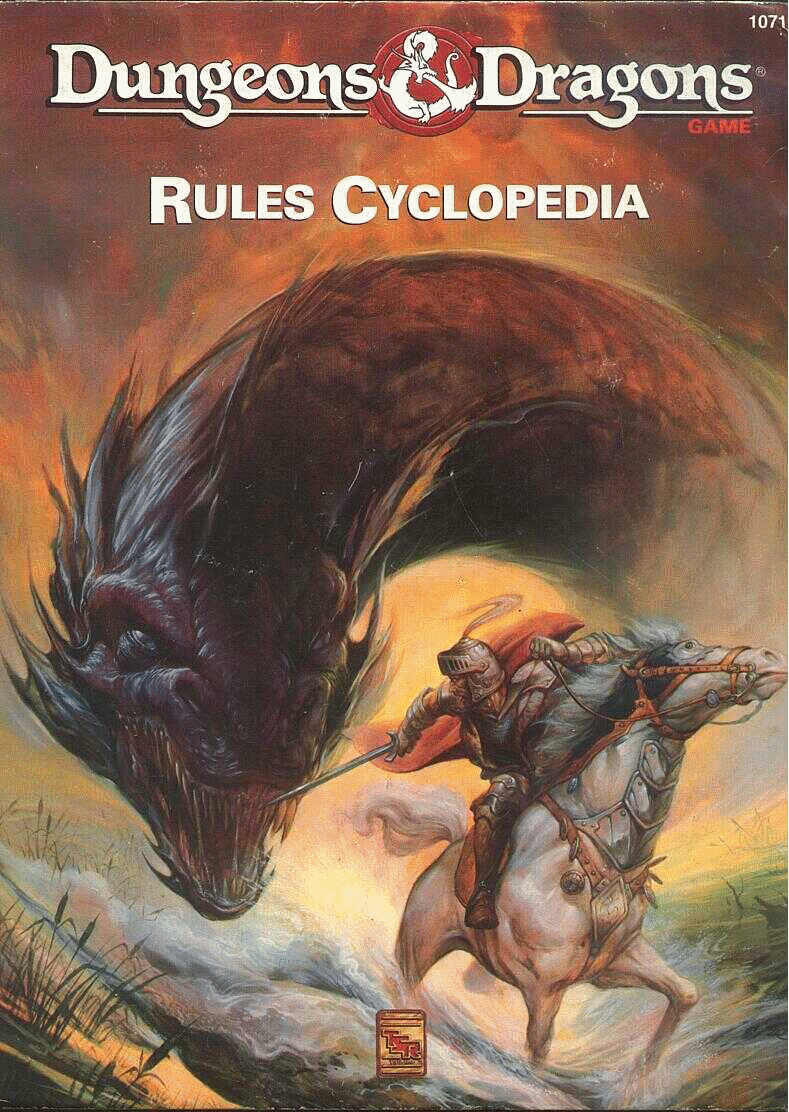
There was no response for the old Rules Cyclopedia, i.e. the “basic” Dungeons & Dragons line. Were the only unique, cool monsters in that book the nightshades, who already made it into the SRD? Or maybe I just didn’t attract enough fans of the old line to comment on the thread. I don’t know, but I’d love to hear some thoughts on the old D&D monsters that made it distinct from the AD&D line.

Bionic Warriors and Space Hippies

It could take up to 6 million quatloos to get a body like this!

Two new classes for the wonderful worlds of Space Princess

BIONIC WARRIOR
Bionic warriors are usually space warriors or astronauts who have been rebuilt due to injuries sustained in the line of duty. They are strong and quick, and come with their own built-in super science. Some hold a grudge against the scientists who built them, while others are glad to use their new-found abilities to help others.

HIT DICE: Bionic warriors roll d10 to determine hit points

REQUIREMENT: STR and DEX of 6 or higher

SKILLS: Bionic warriors can add their SKILL to the following tests: Climb (STR), Leap & Swing (STR) and SWIM (STR)

STARTING GEAR: Bionic warriors start with a hand weapon, ray gun and snazzy jumpsuit

.nobrtable br { display: none }

Level Hit Dice Skill Luck
Robo-Man/Woman 3 3 2
Cyber-Man/Woman 5 6 1
Bionic Man/Woman 8 10 0

Bionic warriors have three random bionic implants in their bodies. These implants can be disabled with other super science devices (electro-scramblers, EMPs, etc.).

ROLL / IMPLANT
1. Bionic brain (ie. mento-helmet)
2. Bionic calves (leaps as though had a SKILL of 12)
3. Bionic claws (retractable claws allow an additional claw attack for 1d4 points of damage)
4-6. Bionic ears (can listen at doors as though the bionic warrior had a SKILL of 12)
7-9. Bionic eyes (i.e. night goggles)
10. Bionic feet (i.e. gravity boots)
11. Bionic finger (finger acts as a basic ray gun with 3 shots per day and can be used to disable devices as though the bionic warrior had a SKILL of 10)
12-13. Bionic fists (fists are as potent as laser swords)
14. Bionic jaw (gains additional bite attack that deals 1d4 points of damage)
15. Bionic lungs (immune to toxic, narcotic and poisonous fumes and gases and can hold breath for 10 minutes)
16-17. Bionic nose (i.e. locator)
18. Bionic skeleton (i.e. exoskeleton)
19. Bionic skin (i.e. body armor)
20. Bionic thighs (increases movement from slow to normal, normal to fast or fast to very fast)

SPACE HIPPIE
Space hippies travel the star-ways, spreading their message of enlightenment. Space hippies are adventurous sorts. Some are rugged individualists, while others are just posers looking for a handout and their next smoke of Venusian red, but all space hippies cast disdain upon the “Herberts” – authority figures who don’t share their beliefs.

HIT DICE: Space hippies roll d6 to determine hit points

REQUIREMENT: MEN of 4 or higher

SKILLS: Space hippies can add their SKILL to the following tests: Identify substance (KNO), calm situation (MEN), hide (DEX), move silently (DEX), charm strangers (MEN), play instrument (MEN)

STARTING GEAR: Space hippies start with a musical instrument the clothes on their backs – they disdain weapons, but will fight to defend themselves from the Herberts (and space monsters) using their feet and fists. Space hippies aren’t looking for trouble, but they can handle what they find.

.nobrtable br { display: none }

Level Hit Dice Skill Luck
Joker 2 4 3
Star Child 5 8 1
Groovy Guru 7 12 0

Space hippies are capable of evoking emotional states with their music. This requires a play instrument test, with the following difficulties and effects:

PEACE, BROTHER (DC 15): This music calms hostile creatures. All who hear it cease fighting and can only begin fighting again after one round, and even then they must pass a MEN test (DC 15) to begin fighting. A combatant who is attacked can always choose to defend themselves.

THE BLUES (DC 15): All whom the space hippy targets must pass a MEN test or become very, very glum, suffering a -2 penalty to all tests and attacks.

RIGHT ON! (DC 10): All whom the space hippy targets are filled with righteous energy and enjoy a +2 bonus to all tests, but not to attacks.

KEEP ON KEEPIN’ ON (DC 10): All who hear this that are under the effect of some mental effect can make a new test at +2 to shake it off.

SPACE TRUCKIN’ (DC 15): Pilots who hear this music enjoy a +1 bonus on all pilot tests.

AQUARIUS RISING (DC 25): All whom the space hippy targets with this masterful song can spend one free luck point on any test or attack they make while the effect lasts. This can only be done once per adventure.

PROTEST (DC 20): This protest song has the ability to counter any sonic ability or attack (including damage-dealing harmonics) used by an opponent.

Animals and simple beasts suffer a -2 penalty to tests against these effects, while militant aliens enjoy a +1 bonus. The effect lasts as long as the space hippy plays their music +1d4 rounds.

Best. Monster. Ever. [A Poll]

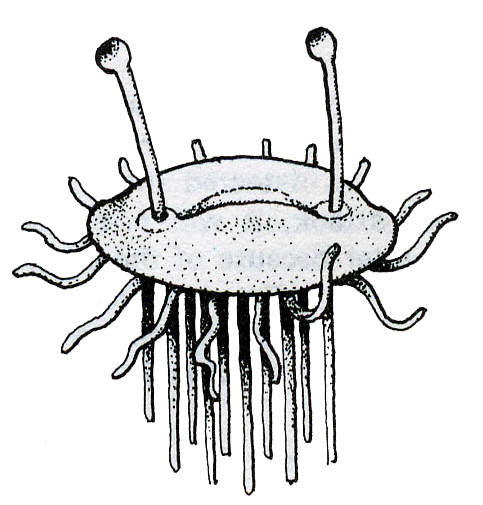
Image found at flumph.com. No, seriously.

My work on Blood & Treasure is rapidly coming to a close. Only a couple small sections are left to be written and I’m now embarking on editing the sizable tome. I’ve managed to include most of the monsters of the SRD, including a few psionic beasts (some rely too heavily on the d20 psionic system to work well without it) and many of the epic level monsters (toned down a bit).

About the only monsters that didn’t make the cut were those of the “monster +1” variety – i.e. a monster with additional hit dice or class levels. With all the myriad systems and calculations, statting up monsters like that was useful in d20, but in Blood & Treasure its mostly a waste of space. Even the “alternate iconics” have all made it in as well, from the greymalkin to the evil eye to the phrenic scourge. That being said, there’s always room for a few more monsters.

So – my question is this: What is the best monster ever! that wasn’t included in the SRD, but does exist in some open content source?

In particular, I want to know what you think is the best monster ever! from each of the following books:

[I’ll keep a tally as people comment]

AD&D’s Fiend Folio

Beaktapus (as an alternative to the Grell) … 2 votes
Crypt Thing … 1 vote
Dark Creepers and Stalkers … 1/2 vote
Death Knight … 1 vote
Flail Snail … 2 votes
Skulk … 1/2 vote
Slaad … 3 votes

* I think it’s a testament that by far the most response is for Fiend Folio monsters. It’s may favorite as well, and I guess I just draw that sort of crowd!

** Looks like the slaad are starting to run away with this one

AD&D’s Monster Manual II

Metal Monsters (as an alternative to the modrons) … 1 vote

D&D’s Rules Cyclopedia 

Rakasta … 1 vote

Any of the myriad d20 sourcebooks

Clockwork Horrors (an alternative version, of course) … 1 vote
Hengeyokai (an original version, most likely) … 3 votes
Primordial Ooze (as an alternative to the deepspawn) … 1 vote

I’d love to hear from the readers … what is your favorite that you’d like to see in Blood & Treasure?

Cover of the Day

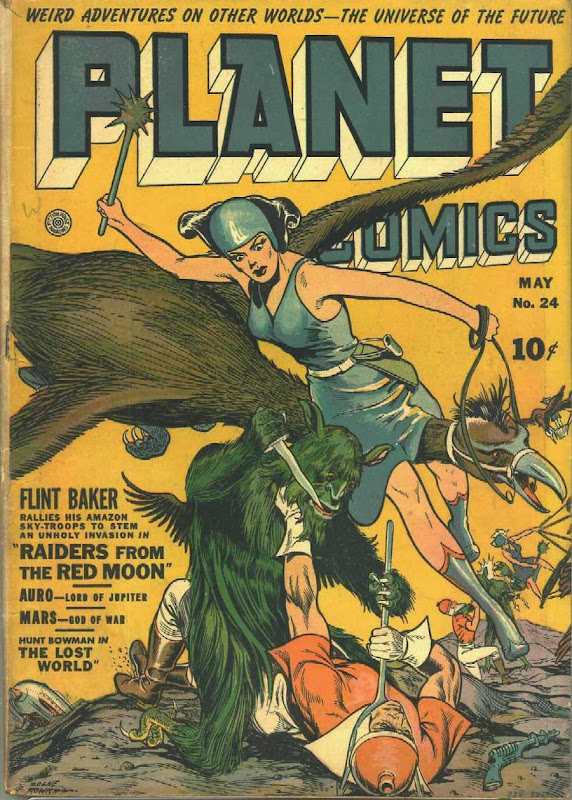
So tell me, dear readers. Is this fantasy or science-fantasy? Or science-fiction? I don’t know, but I do know that I love everything about this cover. Let’s break it down, along with some quick stats for Space Princess and Blood & Treasure.

We have to start with our heroine. Who sez the ladies were always helpless victims on old pulp and comic book covers? Okay, maybe 99% of the time, but still. From the cover blurb, we can assume this is one of Flint Baker’s amazon sky-troops. AMAZON SKY-TROOPS. Please tell me that phrase makes you smile. Tastefully dressed amazons equipped with morningstars flying about on the surprisingly strong necks of mutant vultures. If you look at the background closely, you’ll see that some of the amazons are riding on flat platforms being pulled by the birds – maybe the sci-fi equivalent of floating discs.

Amazon Sky-Trooper (B&T): Medium Humanoid, Neutral, Average Intelligence; HD 3; AC 14 [5]; Atk 1 morningstar (1d6+1); Move 30; Save F 14/R 12/W 14; XP 150; Special: No penalty to attack while mounted.

Amazon Sky-Trooper (SP): HD 3; DEF 16; FIGHT 8 (1d6+1); SHOOT 9; MOVE N; STR 5; DEX 6; MEN 4; KNO 4; DL 3; Special: No penalty to attack while mounted.

Vulturoid (B&T): Medium Animal, Neutral, Animal Intelligence; HD 6; AC 13 [6]; Atk 2 claws (1d6) and bite (1d6); Move 20 (Fly 90); Save F 10/R 9/W 15; XP 300; Special: None.

Vulturoid (SP): HD 6; DEF 17; FIGHT 14 (1d6); SHOOT 10; MOVE F; STR 8; DEX 4; MEN 3; KNO 0; DL 6; Special: None.


Moving downward, we come across a furry gent who is apparently a raider from the Red Moon. Perhaps we could also call him a Red Moonman. He’s not only furry, he also has cute little ears and demonic talons for feet. And check out the fork he’s holding that guy down with.

Raider of the Red Moon (B&T): Medium Humanoid, Chaotic, Low Intelligence; HD 2; AC 15 [4]; Atk 1 war-fork (1d4), dagger (1d4) or 2 talons (1d4); Move 20; Save F 12/R 15/W 16; XP 200; Special: Resistance to cold, can make two attacks per round with weapons, or, if has initiative, pounce and make four attacks with weapons and talons.

Raider of the Red Moon (SP): HD 2; DEF 16; FIGHT 6 (1d4); SHOOT 6; MOVE S; STR 4; DEX 4; MEN 4; KNO 2; DL 2; Special: Resistance to cold, can make two attacks per round with weapons, or, if has initiative, pounce and make four attacks with weapons and talons.

If we continue down, we meet, I assume, Flint Baker, and frankly, he’s the least interesting thing on this cover. No pixels will be wasted on Flint.

Other stories include Auro, Lord of Jupiter, Mars, God of War and Hunt Bowman in the Lost World. If you don’t name your next ranger Hunt Bowman, you might be taking your gaming just a tad too serious.

Stygian Depths – Hellcrawl Preview II

Writing has begun in earnest on the Stygia portion of the Hellcrawl. Here are some samples of what I’ve written so far.

33.50 Tree Temple: The mangroves here grow to a truly enormous size. A city of 500 frog men is built in the tree tops, centered around an abbey dedicated to Tsathogga. Their matriarch is an engorged female frog man, bedecked in amber beads and holding in her hands two crystal balls, each one colored bright green with a white, star shape in the center that spins and waxes and wanes. Though they appear identical, one seems to promise security and safety, while the other promises unending struggle and chaos. As soon as people enter the temple their gaze must be drawn to one or the other.

Those who choose safety and security gain the ability to commune with Tsathogga once per day, but whatever advice he gives, they must obey. Those who choose unending struggle have chosen life, and suffer no ill effects other than the ire of the frog men, who attempt to sacrifice those who reject the fatherhood of Tsathogga in his name, hosting a grand feast of them for those who have chosen Tsathogga’s blessings.

34.59 Love Shack: A red, serpentine dragon courses through the mud, battering down trees as it does so. When it spots travelers, it slinks close and opens its great mouth, revealing a door of ruby crystal. It waits patiently for 1 turn to allow people to enter the door, and then moves on.

Beyond the door there is a grand hall of red velvet and marble floors. The spirits of jealous, bitter lovers slink by the walls, hissing at travelers. The twisting hall leads to a shrine in which there is a throne of green stone. Sitting on the throne there is a handsome youth who looks much like Cupid, but has glowing green eyes and pincers in place of hands. This is Phthonus, a daimon of jealousy who stirs the fires of love and unleashes it in violent passions.

36.48 Flooded Temple: A sinkhole here might send unlucky travelers into a series of flooded caverns. The largest of them holds an ancient, partially ruined temple. The temple is composed of blocks of lapis lazuli. The temple is dedicated to Omoo, a sahuagin goddess regarded as the mother of the species. The idol holds a statue depicting the demon lord Dagon simultaneously copulating with and tearing apart Omoo, whose blood, according to the myths of the sahuagin, turned into the first sahuagin, who then fed on her flesh and drew on her powers. A reliquary hidden in a dungeon beneath the temple holds her dismembered hand, which gives the bearer command over sahuagins, sharks and rays and denies creatures struck by it the ability to regenerate for 24 hours. If the hand is planted, it grows into five fiendish sahuagin warrior-maids who persist for as long as they are fed the blood of their summoner. They obey their summoner loyally.

Big, Green and Plenty Mean [Monster]

In honor of the new John Carter movie (no, I haven’t seen it), and the fact that this kick ass illustration is in the public domain, I present everyone’s favorite green, four armed aliens for a variety of systems with the serial numbers just barely filed off.

Consider this baby Open Game Content.

ZHARKS (GREEN MARTIANS)

Illustration by J. Allen St. John

Zharks are tall (18-ft for males, 12-ft for females) humanoids who inhabit ruined cities in great wastelands. Exceptionally warlike and cruel, they form great hordes that compete, violently, for resources and slaves. Zharks have long torsos that support four arms, one pair located about 2 feet above the other. They have large eyes, ear stalks on the top of their bald heads, and great tusks jutting from their mouths. Zharks have olive green to dark green skin that is thick and waxy, helping to keep their bodies from losing too much moisture in the warm deserts they call home.

Zharks arm themselves with swords, spears and radium guns. These guns are exceptionally long rifles that fire bullets with a core of radium. When the outer casing of the bullets cracks and the radium is exposed to sunlight, it explodes for an additional 1d6 points of damage. Some zharks carry smaller radium pistols. The zharks acquire their more high-tech weaponry from others, for they are only capable of crafting primitive weapons.

Zharks are usually mounted on eight-legged monsters called zhotes. Their arch enemies are the girallons.

BLOOD & TREASURE
Zhark, Large Monstrous Humanoid, Chaotic, Average Intelligence
HD 5; AC 14; Atk 4 weapon attacks; Move 40; Saves F 12, R 11, W 11; XP 250; Special: None.

SWORDS & WIZARDRY

Zhark: HD 5; AC 5 [14]; Atk 4 weapon attacks; Move 15; Save 12; CL/XP 5/240; Special: None.

MYSTERY MEN

Zhark: LVL 5; PH 7 (+2); MN 3; DC 15; SPD 2; XP 500; Atk 4 weapon attacks.

SPACE PRINCESS

Zhark: HD 5; DEF 16; FIGHT 12 (1d10); SHOOT 9 (2d6); MOVE N; STR 7; DEX 4; MEN 5; KNO 3; DL 6; Special: Can make a total of four attacks each round.

I Dream of Uranians [Space Princess]

Uranians have been known, from time to time, to fall in love with handsome astronauts.

The Uranians, also known as space genies or radiation genies, are powerful entities of energy who have learned the secret of transforming matter into energy and energy into matter. They usually appear to material folk as masculine or feminine humanoids, sometimes with pointed ears or other such flourishes. Immensely powerful, most folk know to treat them with respect, and it is not unknown for them to perform favors for folk who impress them. A uranian’s powers can be completely contained with a force box or sphere (super science DC 25 to project a small force cube or sphere, DC 30 to project a large force cube or sphere) and should they enter the circuits of a super science device, it is possible to trap them within (invention test, DC 25).

Uranians can emit energy beams that deal 2d6 points of damage and steal away one point of STR (which can be healed normally). They are capable of changing themselves into pure energy, in which form they are immune to most attacks or taking material form. In energy form, they are effectively immaterial and cannot harm material creatures. Uranians are capable of changing ambient energy into matter or matter into ambient energy three times per day (or once per day if they are creating or dematerializing something larger than man-sized). They can alter the size of others or themselves, making them up to a tenth of their normal size or up to twice their normal size (modify STR and DEX as you see fit). Finally, they can, once per day, make themselves invisible and remain invisible until they attack or otherwise interact with another person.

Uranians suffer only half normal damage from ray guns and other energy-based attacks.

URANIAN: HD 6; DC 18; FIGHT 12 (strike 1d6); SHOOT 12 (energy beam 2d6); MOVE F; STR 6; DEX 6; MEN 6; KNO 5; DL 10; Special: Invisibility, transmute matter and energy, energy form, enlarge or reduce self or others.

A Fantasy Cosmos

While writing (or, to some degree, copy/pasting from the SRD) Blood & Treasure the other day, I finally came to the section on the planes. I decided, for a sample cosmos (and I do mean sample – there is no official cosmology for Blood & Treasure), to present something like the one I use for NOD. I thought folks might like to see it, but note – it lacks a mention of Hell or the Firmament at the moment.

ONE POSSIBLE COSMOLOGY

This cosmology of planes is inspired by the old Ptolomaic view of the universe, i.e. The Earth at the center of the universe surrounded by “crystalline spheres” containing the different planets and beyond them the Empyrean Heaven of God and the angels. At the center of Earth lies Hell, essentially a plane within a plane.

In this conception, the Ethereal Plane extends beyond Earth to the Moon, but no further. The Astral Plane extends throughout the entire universe, to the borders of the Empyrean Heaven.
All of the planes (i.e. planets) in this cosmology other than the Empyrean Heaven are self-contained spheres. Heaven is infinite.

EARTH AND THE MOON (MATERIAL PLANE)
Earth and the Moon are the Material Plane, the center of the universe. The Moon differs from Earth only in that it is mildly-chaotic. They define what is considered normal. The Material Plane has the following traits:

• Normal gravity.

• Normal Time

• Alterable morphic.

• No Elemental or Energy Traits (specific locations may have these traits, however)

• Mildly neutral-aligned (mildly chaos-aligned for the Moon).

• Normal magic.

THE ETHEREAL PLANE
The Ethereal Plane is coexistent with the Material Plane and the plane of Luna. The Material Plane itself is visible from the Ethereal Plane, but it appears muted and indistinct, its colors blurring into each other and its edges turning fuzzy.

While it is possible to see into the Material Plane from the Ethereal Plane, the Ethereal Plane is usually invisible to those on the Material Plane. Normally, creatures on the Ethereal Plane cannot attack creatures on the Material Plane, and vice versa. A traveler on the Ethereal Plane is invisible, incorporeal, and silent to someone on the Material Plane.

The Ethereal Plane is mostly empty of structures and impediments. However, the plane has its own inhabitants. Some of these are other ethereal travelers, but the ghosts found here pose a particular peril to those who walk the fog.
It has the following traits.

• No gravity.

• Alterable morphic. The plane contains little to alter, however.

• Mildly neutral-aligned.

• Normal magic. Spells function normally on the Ethereal Plane, though they do not cross into the Material Plane. The only exceptions are spells and spell-like abilities that have the force descriptor and abjuration spells that affect ethereal beings. Spellcasters on the Material Plane must have some way to detect foes on the Ethereal Plane before targeting them with force-based spells, of course. While it’s possible to hit ethereal enemies with a force spell cast on the Material Plane, the reverse isn’t possible. No magical attacks cross from the Ethereal Plane to the Material Plane, including force attacks.

PLANE OF SHADOW
The Plane of Shadow is a dimly lit dimension that is both coterminous to and coexistent with the Material Plane. It overlaps the Material Plane much as the Ethereal Plane does, so a planar traveler can use the Plane of Shadow to cover great distances quickly.

The Plane of Shadow is also coterminous to other planes. With the right spell, a character can use the Plane of Shadow to visit other realities.

The Plane of Shadow is a world of black and white; color itself has been bleached from the environment. It is otherwise appears similar to the Material Plane.

Despite the lack of light sources, various plants, animals, and humanoids call the Plane of Shadow home.

The Plane of Shadow is magically morphic, and parts continually flow onto other planes. As a result, creating a precise map of the plane is next to impossible, despite the presence of landmarks.

The Plane of Shadow has the following traits.

• Magically morphic. Certain spells modify the base material of the Plane of Shadow. The utility and power of these spells within the Plane of Shadow make them particularly useful for explorers and natives alike.

• Mildly neutral-aligned.

• Enhanced magic. Spells of shadow are enhanced on the Plane of Shadow. Such spells are cast as though they were prepared with the Maximize Spell feat. Shadow conjuration and shadow evocation spells are 30% as powerful as the conjurations and evocations they mimic (as opposed to 20%). Greater shadow conjuration and greater shadow evocation are 70% as powerful (not 60%), and a shades spell conjures at 90% of the power of the original (not 80%).

• Impeded magic. Spells that use or generate light or fire may fizzle when cast on the Plane of Shadow. Spells that produce light are less effective in general, because all light sources have their ranges halved here. Despite the dark nature of the Plane of Shadow, spells that produce, use, or manipulate darkness are unaffected by the plane.

THE ASTRAL PLANE
The Astral Plane is the space between the planes. When a character moves through an interplanar portal or projects her spirit to a different plane of existence, she travels through the Astral Plane. Spells that allow instantaneous movement across a plane briefly touch the Astral Plane.

The Astral Plane is a great, endless sphere of clear silvery sky, both above and below. Occasional bits of solid matter can be found here, but most of the Astral Plane is an endless, open domain. Both planar travelers and refugees from other planes call the Astral Plane home.

The Astral Plane has the following traits.

• Subjective directional gravity.

• Timeless. Age, hunger, thirst, poison, and natural healing don’t function in the Astral Plane, though they resume functioning when the traveler leaves the Astral Plane.

• Mildly neutral-aligned.

• Enhanced magic. All spells and spell-like abilities used within the Astral Plane may be employed as if they were improved by the Quicken Spell feat. Already quickened spells and spell-like abilities are unaffected, as are spells from magic items. Spells so quickened are still prepared and cast at their unmodified level. As with the Quicken Spell feat, only one quickened spell can be cast per round.

MERCURY (ELEMENTAL PLANE OF EARTH)
Mercury is a solid sphere of rock and metal burrowed through by a multitude if tunnels and caverns. An unwary and unprepared traveler to Mercury may find himself entombed within this vast solidity of material and have his life crushed into nothingness, his powdered remains a warning to any foolish enough to follow.

Despite its solid, unyielding nature, Mercury is varied in its consistency, ranging from soft soil to veins of heavier and more valuable metal.

Mercury has the following traits.

• Earth-dominant.

• Enhanced magic. Spells and spell-like abilities that use, manipulate, or create earth or stone are both empowered and extended (as if the Empower Spell and Extend Spell metamagic feats had been used on them). Spells and spell-like abilities that are already empowered or extended are unaffected by this benefit.

• Impeded magic. Spells and spell-like abilities that use or create air (including spells that summon air elementals or outsiders with the air subtype) are impeded.

VENUS (POSITIVE ENERGY PLANE)
Venus is a lush world of brilliant, almost blinding color and overgrown vegetation and animals. Some area of the plane are so fertile that entering them can actually cause a person to explode with life.

Venus has the following traits.

• Normal gravity.

• Minor positive-dominant. Some regions of the plane have the major positive-dominant trait instead, and those islands may be inhabited by various divinities of fertility and life.

• Enhanced magic. Spells and spell-like abilities that use positive energy, including cure spells, are maximized (as if the Maximize Spell metamagic feat had been used on them). Spells and spell-like abilities that are already maximized are unaffected by this benefit. Class abilities that use positive energy, such as turning and destroying undead, gain a +10 bonus on the roll to determine Hit Dice affected.

• Impeded magic. Spells and spell-like abilities that use negative energy (including inflict spells) are impeded.

MARS (PLANE OF NEUTRALITY)
Mars is an earth-like plane dedicated to neutrality in the war between Law and Chaos. It is a small sphere and taken up by red, sandstone hills, shallow, salty seas, lowlands of red, tuberous plants watered by vast canals and gleaming, ancient cities slowly falling into ruin. The various people of Mars are warriors who glory in combat.

Mars has the following traits.

• Light gravity.

• Strongly neutral-aligned. Lawfuls and chaotic suffer a -2 penalty to reaction checks and to intelligence- and wisdom-based checks.

• Limited magic. The following spells operate normally on Mars: Detect thoughts (ESP), xxx. All other spells fail to operate here.

• Flowing time. Time passes more quickly on Mars than the Material Plane. A year spent on Mars corresponds to a day on the Material Plane.

SUN (ELEMENTAL PLANE OF FIRE)
Everything is alight on the Sun. The ground is nothing more than great, evershifting plates of compressed flame. The air ripples with the heat of continual firestorms, and the most common liquid is magma, not water. The oceans are made of liquid flame, and the mountains ooze with molten lava. Fire survives here without need for fuel or air, but flammables brought onto the plane are consumed readily.

The Sun has the following traits.

• Fire-dominant.

• Enhanced magic. Spells and spell-like abilities with the fire descriptor are both maximized and enlarged (as if the Maximize Spell and Enlarge Spell had been used on them). Spells and spell-like abilities that are already maximized or enlarged are unaffected by this benefit.

• Impeded magic. Spells and spell-like abilities that use or create water (including spells that summon water elementals or outsiders with the water subtype) are impeded.

JUPITER (ELEMENTAL PLANE OF AIR)
Jupiter is a giant spheric plane of air. At the heart of Jupiter there is a core of iron and adamantine, and there are other bits of solid ground and water vapor floating amid the endless, roiling skies of Jupiter.

Jupiter is the home of all manner of airborne creatures. Indeed, flying creatures find themselves at a great advantage on this plane. While travelers without flight can survive easily here, they are at a disadvantage.

Jupiter has the following traits.

• Subjective directional gravity. Inhabitants of the plane determine their own “down” direction. Objects not under the motive force of others do not move.

• Air-dominant.

• Enhanced magic. Spells and spell-like abilities that use, manipulate, or create air are both empowered and enlarged (as if the Empower Spell and Enlarge Spell metamagic feats had been used on them).

• Impeded magic. Spells and spell-like abilities that use or create earth (including spells that summon earth elementals or earth-based outsiders) are impeded.

SATURN (PLANE OF CHAOS)
Saturn is a plane infused with chaos, and therefore quite alien to most folk of the Material Plane. It is covered by all manner of fascinating land-scapes, including ashen plains cut by streams of mercury, swamps of sentient ooze, thickets of mineral plants like sheaves of swords and towering mountains of vapor, all under a greenish-black sky illuminated by the plane’s wondrous rings from which ioun stones are plucked.

Saturn has the following traits:

• Strongly chaos-aligned. Lawfuls suffer a -2 penalty to reaction checks and to intelligence- and wisdom-based checks.

• Wild magic.

NEPTUNE (ELEMENTAL PLANE OF WATER)
Neptune is a sea without a floor or a surface; an entirely fluid sphere lit by a diffuse glow. It is one of the more hospitable of the Inner Planes once a traveler gets past the problem of breathing.

The eternal oceans of this plane vary between ice cold and boiling hot, between saline and fresh. They are perpetually in motion, wracked by currents and tides. The plane’s permanent settlements form around bits of flotsam and jetsam suspended within this endless liquid. These settlements drift on the tides of the plane of Neptune.

Neptune has the following traits.

• Subjective directional gravity. The gravity here works similar to that of the Elemental Plane of Air. But sinking or rising on the Elemental Plane of Water is slower (and less dangerous) than on the Elemental Plane of Air.

• Water-dominant.

• Enhanced magic. Spells and spell-like abilities that use or create water are both extended and enlarged (as if the Extend Spell and Enlarge Spell metamagic feats had been used on them). Spells and spell-like abilities that are already extended or enlarged are unaffected by this benefit.

• Impeded magic. Spells and spell-like abilities with the fire descriptor are impeded.

URANUS (PLANE OF LAW)
Uranus is the opposite of Saturn, a plane of law and perfection. Uranus has the same landscapes as the Material Plane, but they are each perfect and slightly angular, often repetitious, as though made by the will of a single artist. The skies and landscapes of Uranus all carry a metallic hue – warm coppers, brilliant silvers and dazzling golds.
Uranus has the following traits:

• Strongly law-aligned. Chaotics suffer a -2 penalty to reaction checks and to intelligence- and wisdom-based checks.

• Static. Uranus cannot be altered by visitors.

• Timeless. Time does not flow on Uranus.

PLUTO (NEGATIVE ENERGY PLANE)
To an observer, there’s little to see on Pluto. It is a dark, empty place, an eternal pit where a traveler can fall until the plane itself steals away all light and life. Pluto is the most hostile of the planets, and the most uncaring and intolerant of life. Only creatures immune to its life-draining energies can survive there.

Pluto has the following traits.

• Subjective directional gravity.

• Major negative-dominant. Some areas within the plane have only the minor negative-dominant trait, and these islands tend to be inhabited.

• Enhanced magic. Spells and spell-like abilities that use negative energy are maximized. Spells and spell-like abilities that are already maximized are unaffected by this benefit. Class abilities that use negative energy, such as rebuking and controlling undead, gain a +10 bonus on the roll.

• Impeded magic. Spells and spell-like abilities that use positive energy, including cure spells, are impeded. Characters on this plane take a –10 penalty on Fortitude saving throws made to regain lost levels from a life drain attack.