A rare 2,200 year old gold piece was found in Israel. Weighs almost one ounce – clearly it came out of a dungeon.
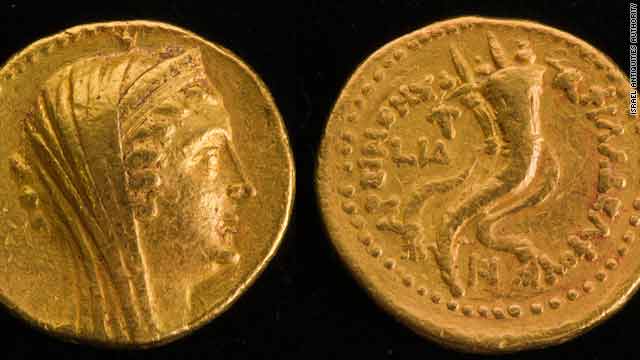
A rare 2,200 year old gold piece was found in Israel. Weighs almost one ounce – clearly it came out of a dungeon.

This post details the River of Death (area A) and the Street of Kings (area B), along with some of the booths on the Street of Kings. Part One is here.
A. River of Death
By the time the River of Death flows into the marshes, it divides into numerous channels both big and small. Ibis is built on the banks of the largest channel at a place where the land rises about 15 feet above the surface of the river. The river here is black with sediment and its banks are choked with papyrus reeds and inhabited by crocodiles and hippos. An ancient nixie dwells in the river, seducing men and then drowning them when they attempt to embrace her.
Crowds: During the day, the river is always busy with mercantile barges and fishermen. At night, the river is largely empty.
Random Encounters
1 Crocodile (3d6)
2 Hippopotamus (2d6)
3 Nixie (max hit points)
4 Royal Barge (Nobles, bodyguards)
5 Smuggler (Thief Lvl 3 with 3-6 underlings)
6 Specter
A1. Smuggler’s Tunnel: A tunnel here is obscured by reeds and barred by a locked grate. The tunnel allows enough room for a man in a rowboat or on a raft to pass through without scraping his head. The tunnel leads to a small loading dock with a locked door. The door opens into a secret room in the cellar of the House of Three Leopards [1].
B. Road of Kings
The Road of Kings extends from the northern gate (the Thoeris Gate, named for the giant statues of the hippo-headed goddess that flank it) to the Gate of the Moon that opens to the west. Along most of its length it is paved in dingy limestone and cut by wheel ruts. In several places (such as [13] on the map) it is marked by a deep, open sewer with small drainage tunnels that lead to the River of Death and are known to harbor the city-state’s ghouls.
To the north on our map, the Road of Kings passes by the Nomarch’s Palace, a large fortress and the city’s treasury. To the west, it leads to an industrial area of tanners, phosphorous makers, smiths, dye shops, shipyards, stone cutters and an orichalcum foundry.
Crowds: During the day, the Road of Kings is crowded with artisans, beggars, townswomen and other folk just going about their business.
Random Encounters
1 Adventurer (see end of article for sample NPCs)
2 Caravan (1d6 traders with 2 camels each)
3 Guard (1d6 + sergeant)
4 Mage (two, preparing to duel)
5 Noble Retinue (Aristocrat with bodyguards and slaves)
6 Priest (1d6+6 carrying an idol and chanting)
Nomarch’s Palace: The nomarch’s palace is a sprawling complex of dozens of buildings (guest houses, barracks for the Mameluke guards), mostly faced by white marble, and gardens (kitchen, medicinal, orchards and pleasure gardens). The entire complex is surrounded by a 20-ft tall wall patrolled (inside and out) by Mamelukes (see below) who are sometimes accompanied by chained leopards. A small portion of the gardens appears on the map [20].
The main structure of the palace is a three story rectangular building comprising over 200 chambers, including a shrine of Bast, guest rooms, a massive throne room, chambers for the nomarch and her ladies in waiting. major domo and other servants.
• Besheva, Gynosphinx: HD 8 (47 hp); AC 1 [18]; Atk 2 claws (1d8); Move 18 (Fly 24); Save 8; CL/XP 9/1100; Special: Divination, dispel.
• Faki, Major Domo, Magic-User Lvl 7: HP 26; AC 9 [10]; Save 9; Special: Spells (4th); Black robes, long, pointed shoes tipped with golden horns, a polished ebony staff of divination tipped with a ruby worth 1,000 gp, silver dagger, scroll of protection from evil. Mature aristocrat with tanned skin, black hair and long beard, brown eyes, heavy-set. He is mean with money, but virtuous. Keeps a harem.
• Mameluke: HD 3; AC 3 [16]; Atk 1 weapon (1d10); Move 12; Save 14 (12 vs. spells); CL/XP 3/60; Special: Adept spells (1st). Chainmail, shield, curved long sword, jezzail (treat as heavy crossbow). The Mamelukes are slave soldiers raised as warrior-mages loyal to the nomarch.
• Mameluke Captain: HD 5; AC 3 [16]; Atk 1 weapon (1d10); Move 12; Save 12 (10 vs. spells); CL/XP 3/60; Special: Adept spells (2nd). Chainmail, shield, curved long sword, pistol (treat as light crossbow).
Merchant Stalls: There are 16 merchant stalls on the portion of the Road of Kings on this map. It is rare that one is closed during the day (1 in 20 chance). In general, assume that a merchant has what a player is looking for on a roll of 1-4 on 1d6.
B1. Bes the Spice Merchant (2 hp) offers a small variety of spices. He charges double the normal price for his spices, but they are of the best quality and are double-wrapped in cheese cloth. Bes is a drowsy man (his wife keeps him awake all night with her snoring) with very dark skin and a bald head.
B2. Mukamutara (4 hp) is a grouchy old woman with beady eyes and a perpetual sneer. She always has a bright green parrot on her shoulder. Mukamutara is a witch of some minor ability, and sells magical charms and protective amulets. Her charms are of very high quality (10% chance of actually working) and go for 10 gp for a basic love charm to 100 gp for an amulet that protects one from possession by evil spirits. Mukamutara has a problem with men, and charges them triple what she charges women.
B3. Astennu (2 hp) is a nervous, chubby little man who designs and sells a wide variety of turbans and hats. His hats are mediocre, but his prices are a bit steep. Astennu keeps five ostrich feathers (worth 5 sp per feather) under his counter. He also sells a balm made from beeswax and other secret ingredients that he claims cures the gout (or any other complaint a customer might have, including mummy rot! Of course, it has no curative abilities).
B4. Tumaini is a retired adventurer who sells adventuring supplies (rope, torches, 10-ft poles) and maps (he has one that he claims leads to Necropolis, and another to the ruins of Timulus). His prices are quite reasonable and of good quality. Tumaini has a booming voice and is tall and muscular. He would be quite handsome if not for the gaping scar across his face and his glass eye (which always seems a bit off-kilter) received in battle with a wyvern.
• Tumaini, Fighting-Man Lvl 3: HP 14; AC 8 [11]; Save 14. Keeps a shield and curved short sword handy, and a dagger on his belt. Nervous around mages.
B5. Raziya (2 hp) is a trader who once plied the length and breadth of Nabu, Pwenet and the Wyven Coast. She is now too old to run a caravan, but her three sons have taken over the business and keep her supplied with a miscellany of armor and weapons. Currently, she is hawking a set of polished bronze greaves, a suit of armor made from bulette hide and a suit of full plate mail that bears the mark of Guelph and is thus of the highest quality (though it smells like something died in it – which is accurate). Raziya is quite greedy, but has a soft spot for a handsome man. She wears loose silk pantaloons of blue and yellow, a purple bodice set with tiny pearls (really alabaster) and a billowy chemise of peach and green.
B6. Nassor (3 hp) is a dour man with a booming voice who calls out “Bows – Bows – Finest on two continents!” as he works on a short bow of laminated horn. He currently has three short bows and two long bows ready to go, along with two dozen arrows of various weights and lengths and a few bow strings. Nassor’s bows look good, but are not of the highest quality (-1 to hit), though they are sold at half-price. He likes to gossip, and seems distressed (he owes money to the local thieves’ den).
B7. Gahiji is a pleasant little man with a round belly and several jiggling chins. He dresses in a simple white robe and adorns himself only with a band of iron on his left pinky. Gahiji has a sallow complexion and dirty blond hair. He is a necromancer of middling abilities who sells minor enchanted items (potions, scrolls, maybe a magical dagger or amulet) taken from tombs and burial sites by the city-state’s ghouls. Roll three minor magical treasures for Gahiji’s stand, and allow for a 10% chance that he has a medium magic item and a 1% chance of a major magic item. Minor items usually sell for around 1,000 gp, medium for 5,000 gp and major items for 10,000 gp.
• Gahiji, Magic-User Lvl 3: HP 5; AC 8 [11]; Save 13; Special: Spells (2nd). Wears a ring of protection +1.
B8. Nuru (1 hp) is a stone carver who produces little idols of Bes from soapstone and (1% chance) more valuable materials like turquoise, lapis lazuli or alabaster. Her partner, Shabat (COM 3 hp), is an excellent cook who sells humus and cold vegetable soups from the same booth. While Shabat is rather petite and plain, Nuru is more heavy-set and a bit androgynous with her short hair and baggy clothes. Her idols are of average quality, but she sells them at a dear price. Bartering annoys her.
B9. This raucous booth is filled with a dozen squawking birds (parrots and a macaw) and a few yapping little dogs. The animals are trained by Zesiro, a loud, obnoxious woman who loves to haggle.
B10. Kamilah is a rather mannish-looking woman (maybe an exiled amazon?) who runs a booth selling crossbows of excellent quality and, for those who know the thieves’ cant, concealable weapons like spring-loaded daggers and slim swords hidden in walking sticks. Kamilah is cheerful and loves to barter. Those who get the best of her are usually invited to the Spotted Sphinx for a drinking bout that might last long into the night.
• Kamilah, Fighting-Woman Lvl 1: HP 6; AC 9 [10]; Save 16. Owns leather armor, a shield, heavy crossbow (+1 to hit), short sword and dagger. Usually just keeps a dagger handy.
Saw this piece by Tolkyes on DeviantArt today …
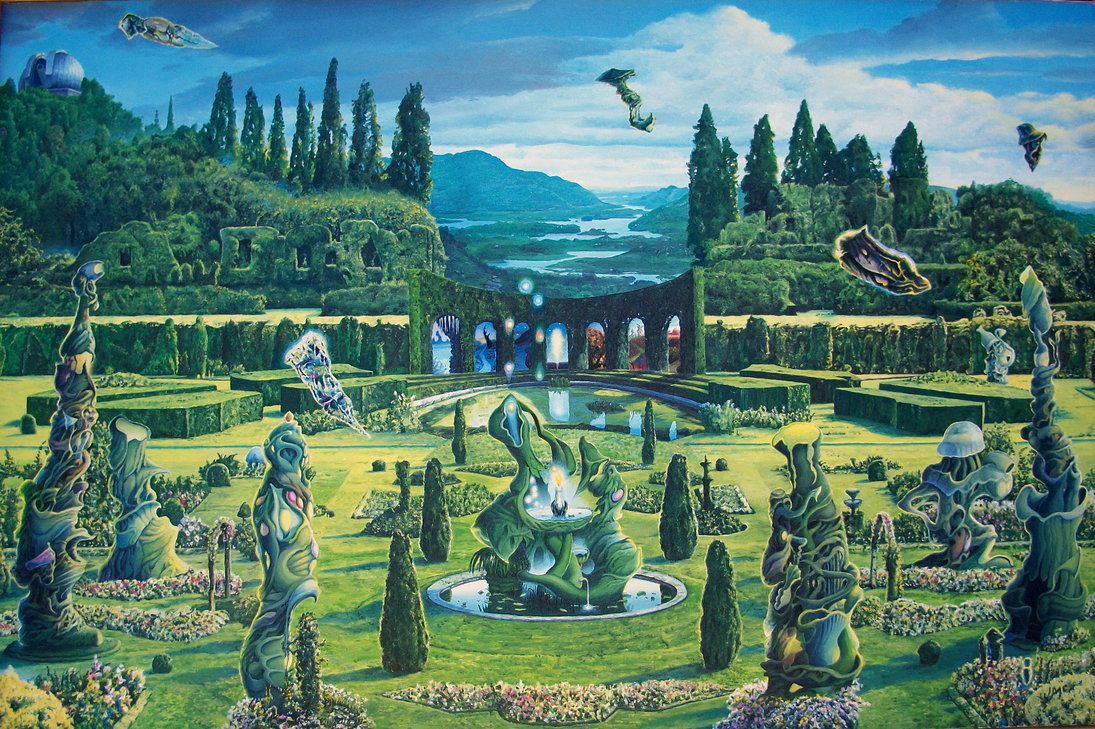
Seemed like it might be useful to folks in weird fantasy-style campaigns.
Is there anything on this cover …
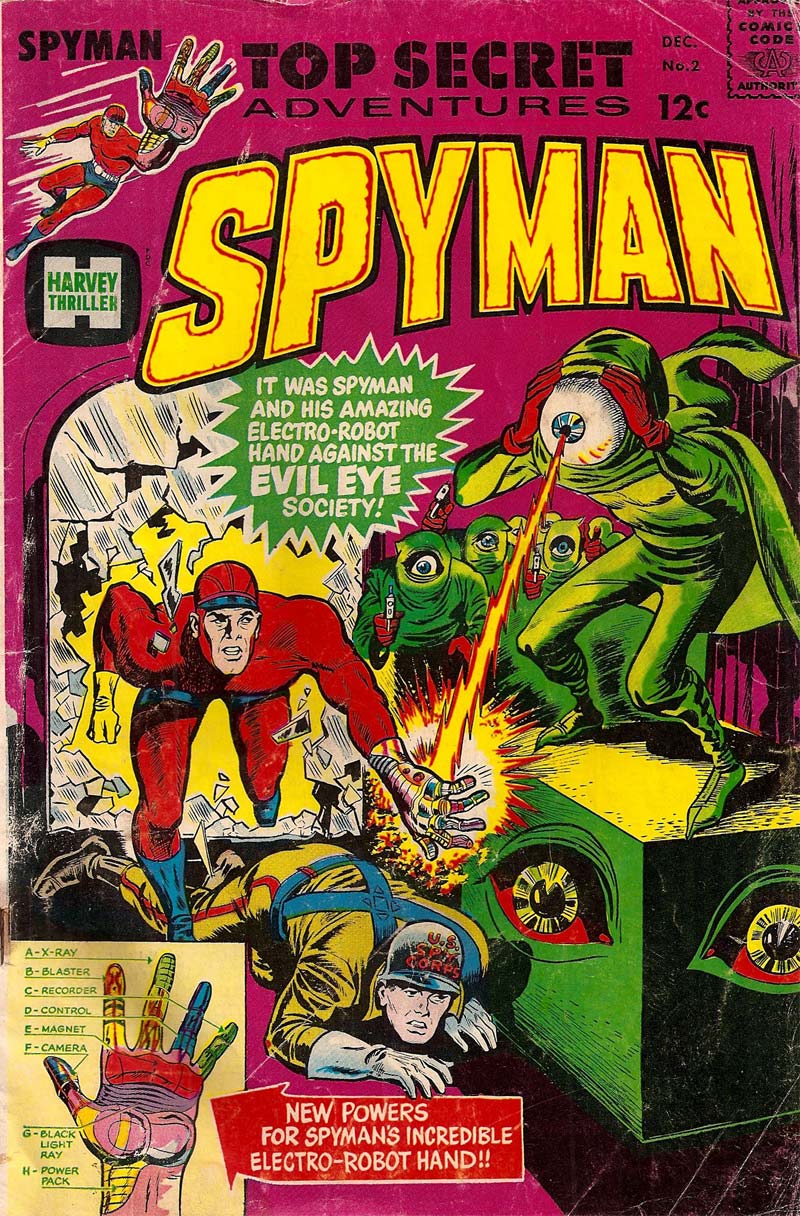
that doesn’t scream Encounter Critical?
Heck, most of it would fit into any fantasy campaign I run.
I was just reading Al Nofi’s CIC at Strategypage, and he showed some information on animal movement rates from Sir Garnet Wolseley’s The Soldier’s Pocket-book for Field Service. Sir Garnet was apparently the inspiration for Gilbert & Sullivan’s “Modern Major General”. I thought these figures might be useful for RPG’ers, at least as a comparison to the overland rates given in our favorite RPG’s. All of the following is drawn from Nofi’s post …
| Animal | Speed | Pack Load | Draught Load | Work Day | ||||
| Ass * | 4.0 | mph | 150-175 | pds | 900 | pds | 15-16 | miles |
| Camel | 2.5 | 300-600 | 1000 | 20 | ||||
| Dog * | 6.5 | na | 160 | 60 by sleigh | ||||
| Elephant | 3.5 | 800-1200 | 8000 | 15-20 | ||||
| Horse | 4.0 | 250-400 | 350 | 15-16 | ||||
| Human | 2.5 | 40-80 | 120-150 | 4-8 | ||||
| Llama * | 2.5 | 65-125 | na | 12-18 | ||||
| Mule | 4.0 | 150-300 | 500 | 15-16 | ||||
| Ox | 2.2 | 160-200 | 300-500 | 4-6 | ||||
| Reindeer | 18 | na | 300 | 50-100 by sleigh |
Note: Since Sir Garnet didn’t campaign in places where some types of beasts of burden were in common use, we’ve added a few of these, as indicated by an asterisk. Pack Load includes weight of the pack; Draught Load includes that of the vehicle; na, not applicable for military usage.
Thought I add to this – the work days, in NOD hexes, would work out to …
Ass: 2 to 3
Camel: 3
Dog: 10 (by sleigh – impressive)
Elephant: 3
Horse: 2 or 3
Human: 1
Llama: 2 or 3
Mule: 2 or 3
Ox: 1
Reindeer: 8 to 16 (again, by sleigh wow!)
The sleigh pulling animals are quick – could be a good magic item – a sleigh that makes its own snow. We usually went by the rule of thumb of 1 hex on foot, 2 by mount, which isn’t too far off, though maybe 1 hex on foot, 3 by mount is better.

This post includes minerals A-C. My original document, made as it was for personal use, was adorned with many photo references of metals, gems and old alchemical symbols. If any of the text refers to a picture that is not there, just google it and I’m sure you will find a usable reference.
With each material, I give a value in parentheses and then a quick list of its general uses. Art usually refers to jewelry (as in stuff that shows up on treasure lists). Minor, medium and major gems refers to the treasure generation system in Swords and Wizardry and do not give values, since such values are randomly determined. I should also note that in my NOD campaign, I used a measure of 100 coins to the pound, rather than the 10 coins to the pound that appears in games like OSRIC and Swords and Wizardry – adjust values of metal accordingly. The rest is, I’m sure, self explanatory.
—
Alabaster
Alabaster (6 sp / lb); Art
The alabaster that was used in ancient times was a carbonate of calcium. Alabaster occurs as a deposit on the floors and walls of limestone caves. Alabaster was a common stone used for hardcarving. The Egyptians used it to make perfume bottles, ointment vases and canopic jars. Small vessels used to hold perfume and precious oils were called alabastrons. There is even a record of an entire sarcophagus carved from a block of alabaster. When cut thin, alabaster could be used as a window, a technique used in many Medieval churches.
Amber
Amber; Minor Gem
Amber is fossilized tree resin (sap). It has been valued since prehistoric times. Amber is usually yellow-orange-brown, but can range from whitish to pale lemon yellow to brown and almost black. There is even red, green and blue amber, the blue being very rare and highly sought after. Oltu stone is a black amber found in Asia Minor. It is formed from fossilized resin and clay or lignite, and is used to make beads and jewelry. Amber can often be collected after it washes up on sea shores. Amber is supposed to have the power to ward off disease.
Antimony
Butter of Antimony (300 gp); Poison
Antimony, or stibnum, is a blue-white metal that is very brittle and thus easily crushed or powdered. It is most often found in the mineral stibnite, a soft, grey crystalline substance.
Antimony has a low melting point and is thus easy to cast. It is used to alloy tin, copper or lead.
Alchemists once prepared a substance called butter of antimony, or antimony trichloride. It was so called because of its waxy appearance. Butter of antimony is a soft, colorless solid with a pungent odor. Paracelsus called it Mercury of Life, and used it as a medicine. Unfortunately, butter of antimony is quite poisonous, and all Paracelsus managed to do with it was commit suicide. Butter of antimony was used to make powder of Algaroth, also known as spirits of philosophical vitriol. This was a white powder that was a powerful emetic.
Glass of antimony was also an emetic. It was prepared by putting ground antimony in an earthen crucible over a vigorous fire until it no longer fumed. The remaining substance, called calx, was then vitrified in a wind furnace, creating a transparent, reddish glass.
Antimony was symbolized by the wolf, as it was linked with man’s free spirit or animal nature.
Arsenic
Arsenic (1 gp / lb); Poison, Alloy
Orpiment (2 cp / oz); Pigment, Poison
Realgar (2 cp / oz); Pigment, Poison
Arsenic’s name is derived from the Persian for “yellow orpiment”. It is a metallic grey in color as a metal. Mispickel, realgar and orpiment are the most common arsenic-bearing ores. Mispickel, or arsenopyrite, is a hard, heavy steel grey to silver white mineral. It is found in hydrothermal vents and volcanic areas. Mispickel is also an indicator of gold-bearing ores, especially in reefs.
Realgar, called sandarach by Aristotle, is a soft, orange-red mineral with a sub-metallic luster. The name comes from the Arabic “rahj al-gar”, or “powder of the mine”. In India it was called manseel. Its decayed form, a yellow powder, is called pararealgar.
Orpiment is a yellow to orange mineral found near volcanoes, hydrothermal vents, hot springs and from the decay of realgar. Its name is Latin for “yellow pigment”, and it is also called “King’s Yellow” and hartal.
Dissolved in nitric acid, mispickel produces arsenic fumes and elemental sulfur. As a metal, arsenic was refined from realgar. The realgar was roasted, creating “cloud of arsenic”, or arsenius oxide. This vapor was then reduced to obtain the metal arsenic.
Arsenic’s main use was for murder, especially among nobles. It was called “Poison of Kings” or “King of Poisons” for this reason. The infamous Aqua Tofana was a poison made by a Giulia Tofana in Palermo for 50 years. It was sold both as a cosmetic and as a devotionary object in vials with pictures of St. Nicholas (as “Manna of St. Nicholas of Bari”) to women who wanted to kill their husbands. Aqua Tofana contained arsenic, lead and belladonna, and was colorless and tasteless, and thus easily mixed into drinks.
Arsenic was also alloyed with bronze to make a harder bronze called arsenical bronze. Orpiment and realgar were used as pigments in painting. The Chinese used both as an ingredient in medicines, and the Chinese also incorporated realgar into household ornaments (wine pots, wine cups, and paperweights) to ward off disease. The highly toxic nature of both pigments made them useful as fly poisons and as a poison (Type I) applied to arrows.
Alchemists turned arsenic into a substance they called flowers of antimony, or arsenic trioxide. This substance was obtained by roasting orpiment or realgar. The Chinese used flowers of antimony to treat cancer and other medical conditions, although it is really quite toxic.
Barium
Glowstone (2 gp); Equipment, Poison (Weak)
Although not isolated during the Middle Ages, barium was known through the mineral barite. Large deposits of barite in pebble form were found around the city of Bologna, and thus the pebbles were called Bologna stones. Apparently, Bologna stones, if exposed to light, would glow for years, making them attractive to alchemists and witches, and, in a fantasy setting, to dungeon delvers. In a fantasy milieu, they might be called glowstone. Glowstones produce as much light as a candle, but they are quite poisonous.
Beryl
Aquamarine; Medium Gem
Beryl; Medium Gem, Protection from Evil
Emerald; Major Gem
Beryl is a precious stone named by the Greeks for a blue-green color. It is found in granite called pegmatite and in mica schists. It can be found in a variety of colors including green-yellow, pure yellow and pink. Blue-green beryls are called aquamarines and pure green and pure red beryls are called emeralds and scarlet emeralds. Some emeralds, called trapiche, have a six-pointed grey star pattern. Beryl deposits are also a source of tin (q.v.).
Chalk
Chalk (8 cp / lb); Equipment
Chalk is a form of limestone composed of calcite. It is formed under deep marine conditions from the accumulation of tiny shelled creatures. Because it is more resistant to weathering than the clays that surround it, chalk often forms tall columns or cliffs. Chalk is white and soft, and thus useful for writing.
Chrysoberyl
Alexandrite; Medium Gem, Divination
Chrysoberyl; Medium Gem, Protection from Possession
Cymophane; Medium Gem
Chrysoberyl is a precious stone that bears no relationship to beryl. It occurs in granite and mica schists, near dolomitic marble and in sands and gravel from river deposits along with corundum (q.v.), garnet (q.v.) and topaz (q.v.). Chrysoberyl is the third hardest gemstone, ranking between corundum and topaz. It develops into twinned crystals in three varieties: ordinary chrysoberyl is yellow-green in color, cymophane is light green with a band of light, and alexandrite is emerald green, red and orange-yellow in coloration.
Cobalt
Smalt (3 gp / lb) Blue pigment
Cobalt is a hard, gray metal named for kobolds. It got the name because early attempts to smelt the metal failed, but managed to produce a toxic arsenic gas. Cobalt is found in a grey mineral called cobaltite. Cobaltite contains cobalt, arsenic, sulfur and iron (10%). It is found with magnetite and sphalerite in metamorphic rocks. Another source of cobalt, and more useful in ancient times, was smaltite. Smaltite is a grey mineral that contains cobalt, iron, nickel and arsenide.
Cobalt, the metal, was not isolated until 1735 by chemist Georg Brandt. The metal was used in ancient times, however, as blue pigment. A mixture of smaltite, quartz and potassium carbonate was roasted, yielding a dark blue glass which was ground into a powder and used as a pigment in glass, ceramics, glazes and paint.
Copper and Malachite
Billon (5 gp / lb); Coins
Bronze (1 gp / lb); Art, Coins, Equipment
Brass (2 gp / lb); Art, Coins
Copper (1 gp / lb); Art, Coins
Hepatizon (2 gp / lb); Art, Equipment
Malachite; Minor Gem
Orichalcum (10 gp / lb); Art
Potin (5 sp / lb); Coins
Speculum (6 sp / lb); Mirrors
Verdigris (3 cp / oz); Pigment (Green)
Malachite is a green stone that is often found with azurite, a blue stone. Malachite occurs in limestone deposits. It is the principal ore containing copper. Copper can also be found in bornite, or peacock copper, and chalcocite, also called copper-glance and vitreous copper. Bornite is a brown to copper red mineral that tarnishes to blue and purple. Chalcopyrite is a brassy to golden yellow color. Bornite occurs in porphyry (q.v.) deposits. Chalcopyrite occurs in granite, diorite and porphyry deposits.
Malachite is valued in its own right as a fancy stone. It is carved into vessels and statuary and is used in green paint.
Copper is a reddish ore that is harder than silver and gold, but softer than iron. Copper can be used to make jewelry and other ornaments. It was once used to make weapons and tools, but was replaced by its many alloys.
Copper is a component in several alloys. Bronze is an alloy of copper and tin (80:20). Bronze is harder than copper, but softer than iron. For thousands of years, bronze was used to make tools, weapon and armor, eventually being replaced in that capacity by iron and later steel. Even after this, it was used to make art objects and coins. Bronze does not corrode easily, making it a useful material for tools and fasteners to be used aboard ships or near the shore. Most copper coins were made from bronze or brass.
Brass is an alloy of copper and zinc (90:10). Brass is harder than copper and softer than bronze. It can be polished to be as shiny as gold, and is thus primarily used as a cheaper alternative to gold in art objects. As mentioned above, many copper coins were really made of brass. Brass has the same value as copper and bronze.
Billon is an alloy of copper and silver, with copper making up more than 50% of the alloy. It was a common material for coins. In a fantasy game, a billon piece (bp) could be placed between a copper piece and silver piece in value. Potin is an alloy that combines copper, lead, tin and zinc. It was primarily used for minting coins. In a fantasy economy, a potin coin could be worth half a copper piece.
Orichalcum was an alloy of copper, gold and silver (50:33:12). By fantasy game standards, orichalcum is worth the same as silver. Hepatizon, or shakudo in Japan, is an alloy of copper, gold and silver (84:8:8). Used in art objects, hepatizon takes on a purple-black patina as it ages. One pound of hepatizon is worth about 20 sp. Speculum was an alloy of bronze and tin (66:33). It is a brittle, white metal that can be polished to a high shine, and is thus used to make superior mirrors.
Copper was also used to produce verdigris. Verdigris was used as a green paint or pigment. It was made by hanging copper plates over hot vinegar in a sealed pot until a green crust formed, or by attaching copper strips to a wooden block with acetic acid and then burying the block in dung. Either process took a few weeks.
The Greeks believed that Demeter’s throne was fashioned from malachite and decorated with gold images of swine and ears of barley. Malachite was believed to provide protection from falling. Copper was associated with Venus.
Coral
Coral; Minor Gem
Coral is not a mineral, but rather the skeletons of thousands of tiny aquatic creatures that form a colony. Coral under the sea is alive, but coral that has emerged from the sea is dead. The Greeks believed that coral was seaweed that had been doused by the blood of Medusa as Perseus flew over the sea with her severed head. It usually grows on rocky sea bottoms with low sedimentation and usually in dark environments like the depths or inside caves. Deposits of precious coral can grow at depths of 25 to 800 feet.
Coral can be polished to a glassy shine. It is red to pink in color and is usually cut cabochon or used to make beads. The people of India believed it to be highly magical, and a brisk coral trade developed between the Mediterranean and India. Gauls decorated their arms and armor with it.
Romans would hang coral around the necks of children to ward off danger. They also believed it cured poison from snakes and serpents and diagnosed disease by changing color. Poseidon’s palace is made of coral and gems.
Corundum (Ruby and Sapphire)
Ruby; Major Gem
Sapphire; Major Gem
Corundum is a mineral found in schist, gneiss and some marbles. It is mined from alluvial deposits or underground workings. When it is red, it is called a ruby. All other colors of corundum, blue, brown, green, orange, pink, yellow and colorless, are called sapphires. Some rubies and sapphires have a white, star-shaped inclusion in them, and are thus called star rubies and star sapphires. These stones were highly valued by the ancient Greeks. The rarest stones are called color change sapphires, which show different colors when placed in different lights.
It was believed that rubies brought good luck, and that sapphires aided in understanding problems, boosting magical abilities and killing spiders.
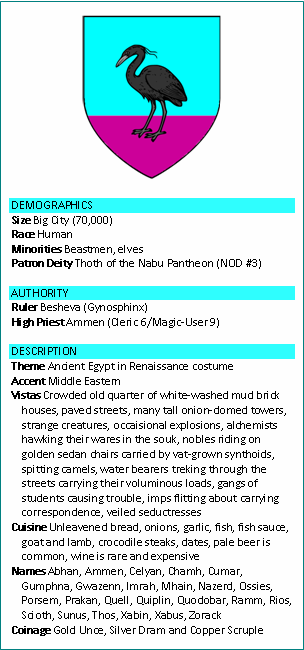
Ibis is a city-state dominated by magic-users and illusionists. Mages hold most political power and form the bulwark of the city-state’s defenses. It is situated on the delta of the River of Death, a landscape of lush hills, sparkling lakes and reed-choked river banks. In ancient times, it was the major sea port of the Nabu Empire, which occupied a savanna that stretched from the shores of the Golden Sea to the rain forests of Cush. Nabu was ruled by an aristocracy of pale skinned wizard kings and queens called pharoahs. These men and women plumbed the depths of knowledge arcane and scientific, and in their quest to bring the world under their yoke destroyed themselves, turning their lush parklands into a terrible wasteland. Ibis alone among the great city-states of Nabu was spared.
In the intervening centuries, Ibis managed to survive and then thrive. For a short period after the collapse of the Nabu Empire, it fell under the domination of the Purple Kings of Ophir (see NOD #2), but that was short lived. Only 200 years ago it was the eastern jewel of the Empire of Nomo, which itself fell due a cataclysm not of its own making. During the Nomo domination, its old university flourished and the city-state began to attract philosophers, sages and sorcerers to delve into what knowledge of ancient Nabu was saved and to quest into the desert to find lost lore. Ibis is again a free state, ruled by a secretive nomarch and beginning to look across the Golden Sea with hungry eyes.
Ibis is ruled by the Nomarch Besheva, a gynosphinx of great antiquity, she having siezed power after the end of Nomoan rule. Besheva is assisted in her rule by a privy council of great sorcerers, warlocks and witches and by a council of commons consisting of the heads of the city-state’s noble families. Besheva dwells in the Old Palace, a sprawling estate of gardens, courtyards, barracks for the pastoral guard and slave-soldiers (see below), a shrine of Bast, guest houses and a manor containing a throne room, living chambers for the nomarch, her ladies in waiting, her major domo and hundreds servants.
The city-state’s high priest is a member of the privy council as well as heading the city-state’s college of priests, the Grand Temple of Thoth and the Eldritch Order of the All-Seeing Eye, a brotherhood of magic-users.
The jewel of Ibis, though, is its University. While small by modern comparisons, it is one of the larger such institutions in (or near) the Motherlands, and over the years has attracted many of the finest young men and women from families noble and mercantyl. While many think of it as a school for sorcery, this is quite incorrect. The university at Ibis teaches rhetoric, history, geometry and mathematics, above all else. Several of its faculty, however, are magic-users of some minor ability and sages who have picked up a spell or two in their day, and these individuals have several apprentices to whom they pass on the lost arts of ancient Nabu – think of them as teacher’s aides who can throw a spell or two but still have to attend Master Hahmet’s lecture on the ninteenth dynasty.
Because the city-state has attracted so many magic-users in its day, it has acquired a reputation for wizardry, and in truth has more alchemists, wand carvers and cauldron makers than the average city. In addition, magical items are more common in Ibis than in other city-states and may be available for trade.
Ibis’ magic-users, like their kind everywhere, are an eccentric lot. Because of their political power, they tend to be more arrogant and overbearing than elsewhere. Those who go to far are punished for the hubris by a clandestine band of assassins.
All of the divinities of the Nabu pantheon (NOD #3) have temples and shrines in Ibis, with the largest temples being dedicated to Thoth, Isis (and her trinity) and Anubis. Foreign deities such as Hecate, Sabazios and Mercurius are represented on the college of priests, and there are also dozens of obscure cults dedicated to saints, archangels, chaos lords, archdevils and demon princes.
Most crime in Ibis involves the black market for magical items and rare spell components, which are supposed to move through the temple of Thoth. Thoth’s diviners spend most of their time trying to suss out smugglers.
The Citizenry
Nabu’s human population is made up of a core of true natives who can trace their families back to the days of the Nabu Empire, the descendants of more recent immigrants (mostly from Nomo and the Golden Coast) and old noble families who, again, can trace their bloodlines back to the empire.
The true natives have dusky, reddish skin and black hair, with green eyes predominating. The noble families have pale, milky white skin that becomes a mousy gray as they age. Their hair is as black as night when they are young, but in their old age becomes whispy and silver. Nobles have large, almond-shaped eyes that range from hazel to a dark brown that is almost black.
Most Ibisians dress in long caftans of bright, cheery colors and wrapped turbans, usually of black or white. Others wear baggy trousers and loose shifts with ruffled collars and long, sleeved robes. Feathers are a common adornment in turbans. Ibisian women of the noble caste wear more form-fitting gowns of silk and adorn themselves with jewelry, especially head bands of cloth-of-gold. They carry ostrich-feather fans to shade themselves from the sun and the eyes of common onlookers.
The people of Ibis speak a dialect of the ancient language of Nabu. It is a poetic language, soft and pleasant to the ear. Almost all Ibisians speak (or at least understand) the common tongue of the Mother-lands, and usually speak it in the dialect of Nomo, as that empire conquered Ibis and ruled it for two hundred years. Educated Ibisians speak elven, and it is the principal language spoken at the University.
Ibisians are an independent bunch. The non-magical folk are hard-working and not entirely enamored with mages and their followers. The common people tend to rally around Isis and her priesthood, while the artisans favor Hathor.
For entertainment, Ibisians prefer dice games, wrestling, and horse and chariot races. Magic-users favor more lofty diversions, such as dragon chess and cockatrice fights. Magical duels are officially illegal, but occur regularly nonetheless.
Ibis is built on the Ishka Delta, where the Ishka River meets the Golden Sea. This is a very fertile area, and the entire delta is under the domain of Ibis. Beyond the delta and river is the demon-haunted desert, which hides ancient ruins and royal crypts.
Ibis’ economy is based on agriculture, fishing, paper-making and alchemical manufactures. Precious metals from the surrounding wastelands and highlands flow into the city-state via miners and is minted into gold, silver and copper coins. Gems are rarely traded in Ibis, as they are too valuable as alchemical components.
Exotic Customs
Animals are sacred in Ibis and not to be harmed or killed except by specially sanctioned priests who perform killing in hidden rituals and only outside the city-state. This makes meat somewhat more rare and expensive (double price) in Ibis than in other places. Fish are not included in this prohibition of harming animals, and thus feature prominently in the local diet. The penalty for harming or killing an animal is several months in the Nomarch’s dungeon and a thorough lashing, with repeat offenses resulting in the loss of a hand and then an eye. Attacks on cats or the sacred ibis is punishable by mutilation or death.
Locals do not speak of the dead without casting their eyes to the heavens and then dropping a coin (usually copper) on the ground. These coins are usually picked up by beggars, who are permitted to do so, but are considered unlucky for others (5% chance of the perpetrator suffering a -1 penalty on all rolls while the coin is in his or her possession).
Foreigners are scanned for magical auras. Each magical aura on the person costs them a gold coin (two if they are using foreign coinage). Naturally, this means that there are moneychangers set up along the road leading to Ibis.
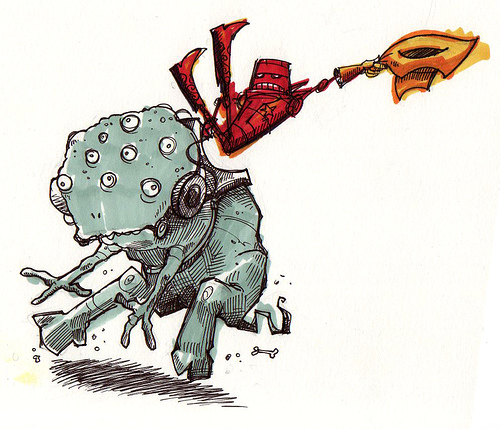
I’ve been mulling over monsters for PARS FORTUNA the last couple of days – creating stats but also trying to figure out where they fit in to the larger scheme of “killing things and taking their stuff”. For most fantasy role-playing games, right back to the first, monsters were drawn from mythology, folklore and fantasy literature – you have the basic concept and you just apply some stats. As monsters are added, they slowly fill in some “ability gaps” – i.e. we have a monster that can hit, but maybe we need one that can hit AND is immune to fire. With PARS FORTUNA, the process is a bit different. The monster concepts come from random generators, but the stats do not, so right from the start I’m trying to figure out where a given monster fits in as far as how powerful it is, how it endangers the PCs and where it lives. And, of course, you want to do this in such a way that the beasties don’t just seem to have been stacked and sorted in a spreadsheet – you want them to live and inspire (probably too lofty a word, but it will work for now) and make the game experience enjoyable (I won’t say “fun” or the heavens may split and the hand of Raggi* may descend to smite me verily).
To my thinking, there are four classes of opponents in most RPGs
Muscle – Your basic creature who kills you with weapons, sometimes a claw or slam, usually roughly humanoid, few (if any) special abilities – in other words (and to use Swords and Wizardry terminology) the Hit Dice and Challenge Level are usually the same. The main different between these creatures is the Hit Dice and maybe Armor Class and Damage – usually all ascending at the same time. This category has the axis of kobold – goblin – orc – hobgoblin – gnoll – bugbear – ogre, but also probably includes the minotaur and the simpler giants.
Magic – The flip side of muscle, these guys have a big gap between Hit Dice and Challenge Level because they are really all about the special powers, which are usually magical. What these creatures lack in hit points they need to make up with difficulty in hitting, or the fights will be too short to be interesting. Here, you can file the dryads, nymphs and pixies, among others.
Monsters – This category is just muscle + special attacks and defenses, physical and magical. The focus here is usually on a physical attack form (constriction, poison, etc) or maybe a magical power (petrification, confusion). They often have multiple attack forms, so unlike the muscle, which challenge with numbers, the monsters can take on a full party by themselves. These things can be humanoid, but usually are not. Things like chimeras, giant spiders and gorgons.
Ubers – The uber category combines Muscle and Magic, and are often used as BBEGs in the game – rakshasas, hags, ogre magi, storm giants, etc.
Of course, no little system, especially one so hastily assembled, can fit everything in, but it seems to me that these are the four bases to cover in monster design – you want a good variety of these kinds of monsters at different power levels to scale with the adventurers as they gain levels and keep each dungeon from being exactly the same – i.e. you would like multiple “monsters” for “mid-level” play, so the mid-levels of every dungeon don’t play quite the same.
So – is there anything I am missing here? Let me know.
–
Art from Robots and Monsters, a charity website that produces custom-made drawings to help others. Check it out.
–
* I think I’m adding a St. Iggar to NOD. Or maybe St. I-Gar.
The classic Deck of Many Things item in D&D uses either a normal deck of cards or a deck of tarot cards. But what about the Cards of Wu?

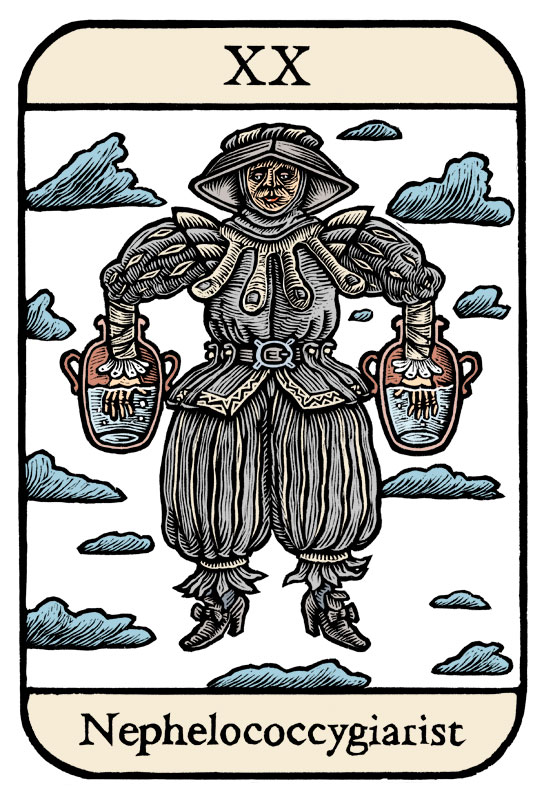

The Cards of Wu are a project of Ellis Nadler, and would make a great tarot deck for Algol, Thool or any weird fantasy setting (heck, even Nod).
Proving once again my theory that everybody does Star Wars better than its creator.
 Land of Nod