That Wonderful "Oh Crap" Moment for a Writer

So, I’m writing up Lyonesse and I take a quick look at NOD 6 because I can’t remember a name of one of the powerful noble families – I tend to write in a stream of consciousness style – and then have this wonderful “oh crap” moment when I notice that a paragraph in which I note that the Diamontes overthrew the Mallor dynasty with the help of the Krumms is immediately followed by a paragraph in which I note that the Diamontes overthrew the Brute dynasty with the help of the Krumms. Dang. For the record, it was the Brute dynasty, and also for the record – I have no idea if Bob the high priest was a joke I forgot to excise from the final text or if I was serious – either way, Bob it is!

And to keep this post from being nothing more than me admitting to screwing up, I present another locale from Lyonesse and the story behind it:

Flying Duck: The Flying Duck tavern is a sociable, musical place with a spacious common room filled with numerous tables both large and small, a few private booths and a side room open only to folks who know the password (see below). The place is run by Teine, a plump, ivory-skinned man with chins hung like curtains and blue-black hair worn down to his shoulders (a wig made from the hair of a captured Saracen, an article made in the Venatian League) and dazzling, peacock green eyes. Teine is assisted by a bouncer called Labrach.

Teine is analytical and quirky, and fancies himself a scientist and mathematician. In fact, he does have some skill in these areas, and keeps a workshop in the cellar hidden behind some old barrels and casks. Teine is a music lover of the first order, and offers cheap food and drink to minstrels and musicians who agree to play in the tavern. For this reason, the Flying Duck has music from dawn to dusk.

The side room can only be entered by speaking a password in front of the door, which is only a door in the academic sense of the world, for to be completely accurate it does not exist and therefore cannot be opened by any outside agency. Speaking the world causes the door to fully exist and open, revealing a dusty, dingy room with a floor marked by dozens of footprints leading from the door to an old cupboard. The cupboard is a singularity, existing in several Flying Duck taverns spread across the Cosmos. One enters the otherwise empty cupboard, which can hold up to 10 people, and then closes the door. One then waits for a few moments, opens the door and exits into another side room in another Flying Duck. One determines their destination by intuition and feel, initially having a 5% chance to end up in the correct Flying Duck, increased by 5% for magic-users and those with a Wisdom of 13 or higher. Experienced travelers increase their chances by 5% for every five trips they take through the cupboard, but the chance of success never increases to more than 75%. The cupboard cannot be used more than once per week by a given person, so cupboard travelers get used to spending time in far away, strange places. The password to enter the side room changes daily, and can only be discovered via the contact other plane or wish spells.

About two or three years ago, I was running my players through NOD for the first time, specifically the region known as Thule (it was called Og back then). The group had just picked up a new member, Luke, and thus the party had just picked up a new character, Dakk the ranger. Dakk, we decided, hailed from Azsor, a barbarian city ruled by King Mogg and constructed around a massive waterfall. Once the group entered the city-state, I asked Luke where they should stay, since it was his hometown. Of course, Luke knew nothing about Azsor, but he’s that kind of player a DM loves – rolls with everything. He immediately announced that they should go stay with his parents. The party decides this is a good (and cheap) idea, and off they go. At this point, they (and Luke) discover that Dakk’s parents are dwarves (mom puts her finger to her lips and then whispers “He doesn’t know he’s adopted) and this launches a running gag that Dakk thinks he’s a dwarf – including Luke inventing his famous footy pajamas that his mom made for him that include a fake beard sewn into them. The group also discovers that Dakk’s parents are the Nodian, dwarven equivalent of Frank and Estelle Costanza from Seinfeld, and they soon decide that an inn might be more comfortable. So – where now? Luke pipes up with the Flying Duck – a name that struck us all as so odd that every inn the group visited in every city (including the Asian-style cities of Mu-Pan) became the Flying Duck. As a DM, I then made the decision that the Flying Ducks were all interdimensionally linked.

I bring this up for two reasons – first, to thank Luke DeGraw for being a great player who truly left his mark on my little campaign world, and also to show that the best campaigns are not written on reams and reams of paper, but grown organically at the table. To do this, you have to be willing to cede some control over your world to the players, and they need to be willing to cede some control over their characters to you and to one another, but it makes for things you all remember and laugh about.

Image by NC Wyeth, via Golden Age Comic Book Stories.

Lyonesse, The Gleaming City – The Citadel

[No numbers on this map yet – just place buildings where you’d like for now]

The Citadel
The citadel is a massive fortress, the center of government in Lyonesse and home to its king and many members of his court. The citadel is constructed from brilliant, white lime-stone. Its towers have conical roofs of sapphire blue slates. The walls of the citadel stand 40-feet tall, its towers 60-ft tall, and they are routinely patrolled by crossbowmen.

Within the citadel dwells King Tristram, his wife Queen Lenore and their children, Burgon, Damoun, Juliada and Pontinae. Princess Juliada is in line to take the throne when her father passes, while her brother Burgon has been promised the Duchy of Lutece as his own. Pontinae is slated for education by the church and a prominent place in the priesthood of Ceres, while Damoun will be apprenticed to Master Odumnovice when he comes of age. Other inhabitants of the citadel include the aforementioned court magician Odumnovice, Tristram’s personal chaplain Father Roquelaure, lord high constable Ramee, the commander of the royal guard, the royal surgeon Dr. Menet and Fraien, giant, blue-black beaded master of the hunt. Various ladies-in-waiting and squires drawn from the nobility dwell in the citadel, and visitors from the countryside are common.

The citadel rests upon a fortified mount 20-ft tall. In front of this mount is the large, round bailey. The bailey is actually an open courtyard that is used for military demonstrations. A troupe of seven heavy infantry occupy the bailey at all times and the walls above are manned by fifteen crossbowmen, all elite men-at-arms (HD 2).

The City Wall
The city wall of Lyonesse is constructed from the same limestone as the citadel, and like the citadel is kept immaculate and gleaming. The wall is set upon a massive embankment (colored light gray on the map) that rises 30-ft above the surrounding land and is buttressed by 10-ft thick walls of limestone. The actual city walls are 40-ft tall. The guard towers are 50-ft tall, while the gatehouse stands 60-ft tall. The walls and towers are always staffed by soldiers – assume any 100-ft span of wall is manned by five cross-bowmen, while each tower holds five crossbowman and five heavy infantry with a sergeant-at-arms in command.

Gatehouse: The gatehouse, also called the Bridge Gate sports two steel portcullises and foot-thick doors of oak studded with hundreds of bronze nails in the outline of a lion rampant. The doors and portcullises are left open during the daylight hours, but closed (and never opened, save by direct order of the king) at night.

During daylight hours, two heavy infantry and four crossbowmen guard the entrance to Lyonesse, collecting tolls for an exciseman (1 cp per foot, 1 sp per wheel). The exciseman sits at a wooden desk with an iron strongbox that typically holds 1d10x10 cp and 1d6x10 sp per hour after daylight. The towers are used as barracks for twenty heavy infantry and twenty crossbowmen, who take their turns patrolling the walls and standing guard. The guardsmen are under the direct command of Captain Calie, an aging elven woman in platemail with skin the color of ancient ivory, hair of burnt umber and gentian eyes. Her natural grace and optimistic attitude have made her popular with the men-at-arms. Calie is one of the three famous “Harpies of the Bridge”, along with the female sergeants that command the guard towers that flank the gatehouse.

Mithras’ Grotto: This 20-ft tall building has a peaked roof of stepped stone and bears no decoration other than a bas-relief of a bull’s head over the iron door that serves as its entrance. The building is a temple to Mithras, the patron deity of soldiers. The upper portion of the building is an empty chamber decorated with frescoes depicting Mithras slaying a bull on the east wall and Mithras slaying a dragon on the west wall. In the middle of the room there is a secret trapdoor that can only be activated by simultaneously depressing hidden buttons in the frescoes, one on the bull’s neck, the other on the dragon’s breast, with a spear or sword point. Once opened, the trapdoor reveals a vertical shaft one can traverse using stubby iron bars that jut from the walls. At the bottom of the shaft one must let themselves drop about 8 feet to the floor of a man-made cavern. The cavern holds a shallow pool and behind it a sacrificial altar and idol of Mithras slaying a bull. The idol is made from marble and painted to look real. Here, soldiers gather under the guidance of Guson, the resident priest of Mithras, to sacrifice bulls and pay homage to their patron. The bulls are brought in through a secret tunnel that connects the cavern to the Corn Market.

Guson dwells in his own chambers in the gatehouse. He is a suave, well spoken man with black hair tinged white at the temples and an elegant pointed chin and aquiline nose. Guson always dresses in robes of blue linen over his plate-mail. He carries a shield bearing an image of Mithras and wears a red Phrygian cap in imitation of his deity.

West Tower: The west tower is commanded by Cwenen, young sergeant-at-arms with skin bronzed by many campaigns against Tristram’s enemies, chestnut hair and large, hazel eyes that flit constantly about a room looking for threats. An overbearing disciplinarian, her soldiers also know her to have a heart of gold – many soldiers down on their luck have found a few extra silver coins dropped in their laps as Cwenen walks by. Cwenen nearly became a priestess, but her lack of patience for book learning and love of swordplay sent her into the military life. Cwenen’s blade was taken as a prize when she faced down an orc chieftain many years ago on the field of battle. It is a bastard sword +1 of azure metal that grants its owner a +1 bonus to save against magic and, if it beats an opponent’s AC by more than 6 points transmutes metal armor to leather and leather armor to cloth. The bastard sword was forged for the bard Longorius, aid-de-camp of King Rollo of Lyonesse during his wars to conquer Western Venatia. The sword is aligned to Law and does not permit its user to lie.

East Tower: The east tower is commanded by Sergeant Ursuin, third of the three Harpies of the Bridge. Ursuin is a young woman from Blackpoort who entered Tristram’s service after saving Yarvis Krumm from bandits on one of his travels between Lyonesse and Blackpoort. Ursuin is tall and muscular, with tanned skin, bushy black hair and a heavy frame. Ursuin has a forceful personality, and few care to get in her way, though she is also very forgiving and great fun in a tavern brawl. During combat, she can choose to accept a -1 penalty to hit in exchange for a +1 bonus to inflict damage. Unlike her sister Harpies, she wields a battle-axe, a gift from Yarvis Krumm that is so finely forged it gives her a +1 bonus to hit.

All-Saints StreetAll-Saints Street is a fashionable promenade of sepia tiles and tall, imposing buildings of dark oak and yellow-white plaster. It is usually crowded with strutting students, aristocrats on parade, chattering bourgeois on the hunt for fun, strolling minstrels mingling their voices and lute-songs with the murmuring of the crowds, street performers in gaudy costume, coy prostitutes in their mandated yellow cloaks and partridge feathers tucked into their hair, beggars who look as though they’ve never missed a meal and craft pick pockets. The most impressive displays on the street, however, are made by the nuns of Nunnery of Proserpina. Each Sunday they emerge from their cloisters in vibrant blue robes and black shawls marked with the three golden pomegranate seeds that are the emblem of their order. Four nuns hold aloft a small golden altar of their patron goddess while the others hold sheaves of golden wheat and chant hymns in honor of Proserpina and Ceres. Young members of the order scatter pomegranate seeds while the senior members distribute silver coins bearing the goddess’ likeness to the poor who line the street.

Nunnery of Proserpina: The abbey is a fine building of limestone, two stories tall, with a tall, peaked roof clad in copper. The abbey has an almshouse on Bulwarks Lane, where copper coins and porridge are distributed to the poor, a hospice for those who cannot pay for their care, especially farmers, a chapel, rectory and dormitories. The abbess is Damma (2 hp), a plump woman with short hair the color of dark chocolate (a well known vice of the abbess, who spends rather more of the abbey’s budget on cocoa than she should) and olive skin. Damma is a devious woman, well versed in church politics and opposed to Bishop Bob, a member of the Kaspars, rivals to her own Papelard family. All nuns are technically married to Pluto, but Damma has been known to see men on the side when it was advantageous to her politically.

All-Saints College: All-Saints College was endowed by Queen Yvette-Mimi about 350 years ago. It occupies an ancient building of limestone, four stories tall and housing dormitories for the four sages and their fifteen to twenty students, lecture halls, a dining hall and kitchen and a small library with five tomes, these tomes composing the curriculum of the college. The dean of the college is one Malbot, a willowy man with thin arms and fingers and a face like a tack. Despite his imposing appearance, Malbot is a gregarious, good-natured old gentleman and much beloved by the students. Malbot is a devout worshiper of Ceres, but shares rooms with his good friend Guson, the cleric of Mithras who would like to overturn the old faith in Lyonesse and institute the worship a more robust and virtuous worship geared towards Law. Malbot often lectures his students on matters of divinity while walking through the streets of Lyonesse, sampling the wares of local pedlars and restauranteurs while he talks.

The Hôtel Kaspar: The hôtel of the Kaspars, the dukes of Brioche, is an imposing structure with a large armorial emblazoned on the third story wall. The house has four floors and a peaked roof with a copper roof. Two guards (heavy infantry) stand guard outside the thick oak front door at all times. Entrance can only be gained by getting past the butler. The hôtel is often visited by spies and various cousins and children of the Duke, who rarely enters Lyonesse for fear of assassination by his enemies. The main inhabitant is Tadoc, the Duke’s son and an infamous rake who spends his time drinking, whoring and keeping ill company (including dwarves!).

The Yellow Queen: The Yellow Queen is a restaurant and tavern run by Ywell (3 hp), a halfling chef with a puffy face and nut-brown skin, grey eyes and shoulder-length black hair always kept perfumed and curled. The restaurant derives its name from a marionette of a queen in yellow that hangs from an upper window. Most folk in Lyonesse know the story of how a very drunk Ywell got the marionette hurled at him by an angry Maggi when he got rowdy in her puppet theater some years back. He never gave the marionette back, and the two would be enemies yet had not a basket of warm muffins not appeared on Maggi’s doorstep the next night, and once a week thereafter. Ywell serves plates of trout in generous portions, steaming platters of escamoles in coriander sauce, bread dipped in cream and then fried in dill oil and ginger beer. His staff are all relations, and they are known to help themselves to patrons purses, replacing them after extracting a few gold coins or tiny gems. The restaurant has eight tables and five booths shrouded by curtains of light blue linen. The waiters and waitresses are famous for their copper helmets, essentially little kettles of hard cider worn on the head and in which patrons can dip their copper mugs. The upper floor is reserved for the “nobs”, and no pilfering is allowed there. Ywell can’t personally stand the nobles, so he spends his time on the ground floor with the bourgeois and peasants, smoking his ivory pipe and swapping stories.

Blackpoort, City of Thieves – Crooked Street

By gum, I’m busier than a one-armed paper hanger lately. Here’s the Blackpoort post I promised yesterday – I got busy writing Lyonesse and forgot to post. Enjoy.

Crooked Street

Crooked Street (often just called “The Crook”) is a lively street of bustling crowds, where rich and poor mingle. The center of activity on The Crook is the Music Hall [18], of course, and the old street has become a center of the “Bohemian” art set in Blackpoort, drawing jongleurs, prostitutes, street artists, minstrels and clowns at twilight and lasting into the night.

17. Brigtan the Assassin: Brigtan is a young woman of modest means who makes a living as a duelist. Aloof and scheming, she appears to have been educated somewhere, but never speaks of her past. Her home is a single-story brick building with a slate roof and a conservatory in which she raises a number of “medicinal” herbs. Hidden beneath the conservatory, under a removable floor tile, is a small coffer holding 450 pp and a large, leather-bound bestiary. Brigtan is very short, with tanned skin, blond hair that always seems to be falling in her face, and hazel eyes. She is always dressed neatly, in a black doublet (actually a jack of plates) and black breeches, with an ornate longsword on her hip and daggers hidden in her tall boots.

18. Music Hall: Always surrounded by hustle and bustle, the music hall is the center of the Crook’s cultural life. Owned by Leona Tattlewit, a young woman with alabaster skin, dark brown hair cut in a bob and aloof chestnut eyes with a touch of crimson. Tattlewit is tall and thin, graceful and with an airy, sylph-like beauty that belies her very precise and business-like mind. Her former husband, Sceath Tattlewit (RIP) was a well regarded actor, and she inherited the theater when he died. The music hall plays two-penny (well, 2 sp) operas to boisterous, noisy crowds. Halflings work the audience selling greasy viands and fruit and picking pockets (Leona gets 20%). The hall is a building of red bricks painted in bright, garish colors (blue, yellow, purple) and an old copper roof that leaks. Next week, they are putting on a musical production of a new play called The King in Yellow.

19. Foundryman’s Club: This dimly lit social club is frequented by laborers of all stripes in Blackpoort, including poor adventurers. The club consists of a single story brick building with a tall, peaked, slate roof and a long, brick chimney. Inside, there is a common room with three round tables (old oak, varnished by several generations of use), four long tables painted red and a few semi-private booths hidden by lank, greasy curtains. The inn is run by Wolvine, a youthful woman with olive skin, thick, blond hair pulled back in a bun and hazel eyes always cast down in a serious look. Wolvine is a bit heavy-set, and usually wears a peasant dress. She inherited the club from her father, Olvus. The club serves black beer and pungent mead in wooden goblets. Steaming trenchers of eel and white fish are set on the tables every hour, and patrons are expected to drop a few coppers on the trencher after eating their fill. Wolvine, despite her surly exterior, is brave and virtuous. A widower who lost her husband, a man-at-arms, to some damn fool dungeon exploration, treats her patrons like her own children, doing her best to keep them on the straight and narrow and true to their lives and children.

20. The Old Miser: This imposing five story tower is the home of Nevenbak, a wealthy miser. Nevenbak’s home, though once quite grand, has fallen into disrepair. The stone is black with soot and the roof is missing slate tiles. The corners of the roof were once protected by sculptures of eagles, but all but two of them have long since fallen into the overgrown garden. The garden is surrounded by a tall wall with a tarnished bronze gate. Nevenbak lives alone, having long ago driven away friends and family with his over zealous thrift and inhuman lust for money. He maintains a vault beneath his house that has yet to be cracked by the thieves of Blackpoort, though many have tried. Their remains now decorate the vault’s antechamber, where dwells a captive owlbear, possibly Nevenbak’s only remaining friend. Nevenbak spends his days in his counting house in the southern portion of Blackpoort, and his nights in the vault with his owlbear, counting his money (the horde now amounts to XXX and a potion of green dragon control in a dusty wine bottle. One of Nevenbak’s arms is twisted, the hand atrophied into a hook-like claw.

21. Madhouse: Blackpoorters usually hurry past this somber, three-story building. Once a manor belonging to the extinct Usher family, the building is now a madhouse under the supervision of the priests of Mercurius, specifically Brother Candle, a well curtal friar with sun-kissed, happy wrinkles framing his eyes and light brown, tonsured hair. Candle’s own mother went mad, so he has dedicated himself to caring for the insane and using what few powers he has to keeping them healthy. The other priests who work in the madhouse consider it a punishment, which is usually is, and often react accordingly to the needs of the inmates. It is also known to be a place where enemies of high placed men and women end up, often without the knowledge of Brother Candle. The windows of the madhouse have thick curtains of black velvet, used to keep the moonlight and its mind-bending power from worsening the condition of the mooncalves, lunatics and melancholics interred within.

Blackpoort, City of Thieves – Guild Street

Clanker Row and Guild Street
Clanker Row intersects with Guild Street in this portion of the map, but is otherwise hemmed in by the city walls. If Blackpoort is known for its soot and grime, Clanker Row is the reason for it. Clanker Row is the chief industrial corridor of the city-state, being home to dozens of smiths and iron foundries. Most of the traffic on Clanker Row is in the form of apprentices, journeymen and master artisans on their way to and from work or other appointments. Coal wagons and other carts carrying raw materials and supplies make their way up and down the street with distressing regularity, forcing pedestrians to the margins of the narrow, brick-paved path.

6. Grizelda the Smith: Grizelda’s smithy is a single-story brick building with a large forge and well tended tools hanging on the walls. Grizelda is a blacksmith, focusing on tools and other non-violent goods, though she is capable of cleaning and making minor repairs to weapons, and might have a few old weapons and shields for sale, taken in trade from down-on-their luck adventurers. A mature woman, she was widowed many years ago and her son, the apple of her eye, serves in the Blackpoort guard. Grizelda has light olive skin, grey hair and green eyes. Her appearance is usually ragged – she is a hard worker, and can usually be found clanging away well after dark. Pessimistic by nature, she is not given to working on account. She has a large diamond worth 450 gp hidden in a wooden box nailed to the inside bottom of a barrel filled with sand and used for cleaning the rust from armor. She sleeps in a backroom.

7. Morgan the Smith: Morgan is a hot tempered and sadistic young man who hates his job, hates his life and hates everybody around him. He has tan skin and sandy-brown hair and always wears a perpetual scowl on his handsome face. His smithy has two stories, with living quarters for two in the upper story. A widower, he drowned his young bride in the Swiven River, attracting the ire of the nixies living there, who have conspired with other fey to ruin the young man’s life.

8. Tatlana the Stable-Master: These stables, owned by Barno [26] and mostly serving the farrier [9] next door, are managed by Tatlana (5 hp), an expert groom and very attractive young woman underneath the grime and dirt she normally wears. With her olive skin, bright, hazel eyes and infectious smile, she has charmed more than a few travelers out of a meal and several mugs of ale – after a bath, of course. Tatlana is a solitary sort who prefers the company of horses to humans (again, outside of a brief tete-a-tete). Intelligent and inquisitive, she can also be quite violent when threatened.

9. Fridd the Farrier: Fridd is an ex-soldier who now works as a farrier, a sort of combination blacksmith and horse veterinarian. A mature man with deep wrinkles on his broad, expressive face, he has olive skin, thinning grey hair and dark, soulful brown eyes. A tape worm keeps him looking thin and drawn, even when times are good. Fridd carries a torch for Tatlana next door, but his craven and argumentative personality keeps her away. Fridd once took a bribe from the assassins’ guild to mis-shoe a horse, causing it to rear and kill its rider, the son of a minor noble.

Fridd: HD 1 (5 hp); AC 9 [10]; Atk 1 hammer (1d4) or crossbow (1d6); Move 12; Save 17; CL/XP 1/15.

10. Iron Monger’s Guild: This ornate, four-story building is home to the Humble Brotherhood of Iron Mongers. The iron mongers own mines and sell iron to the local smiths and export ingots of iron and steel to merchants and smiths in Antigoon, Lyonesse, Pfeife. The front door is made of iron and covered in bas-relief sculpture of oreads and miners in mines. It is flanked by caryatid columns (non-animated) of miners carved from porphyry. The current master of the guild is Yavvoo, an old man who immigrated from Kirikersa as a youngish man who tired of his life at sea. Yavvoo has swarthy skin, curly black hair and green eyes. He only wears the latest fashions from Antigoon, and generally cuts a fine figure, all 5-ft of him strutting down the avenue with a gold-tipped walking stick and two burly guards in mail. Yavvoo has three wives and many children at home, and thus often sleeps in his room in the guildhall. A sober and honorable man, he indulges in no vice but does have a rather short temper that often leads him into confrontations he regrets.

Honestly, I don’t remember where I found the art above, but there’s about a 90% chance that it came from Golden Age Comic Book Stories.

Blackpoort, City of Thieves – Introduction

And so we begin the new year with another city-state of NOD. My goal is to write a city-state a week over the next three weeks, posting a few sneak previews as I go. Up first is Blackpoort, first mentioned in NOD 6 as a shadowy city of thieves and corruption. So, once more into the breech, my friends …

Cathedral Square
The cathedral of Mercurius is one of the central gathering places for citizens of Blackpoort. From haggling merchants to canny thieves and politicians, anyone who needs to make a deal or garner some spiritual assistance to get ahead eventually finds their way to the cathedral to make a quid pro quo sacrifice of something shiny and expensive.

The square is paved in dark red bricks in a sort of staggered diamond pattern. A band of postulant monks and nuns keeps the square clean with brooms and selling bits of useful junk and found items on the side.

1. Cathedral of Mercurius: Mercurius’ cathedral is a large, weathered construction of dark grey blocks of stone faced with sooty, yellow limestone. The building is covered with beautiful architectural details, including mulitple bas-reliefs depicting the adventures and accomplishments of Mercurius and his many children and consorts, including a large, cherished bas-relief of a voluptuous Venus on the northern face of the cathedral that attracts many offerings from hopeful lovers in the form of kisses from painted lips and garlands of white flowers.

The cathedral is surmounted by a tarnished dome of brass etched with protective glyphs and runes and several towers, each with a pointed roof and containing a large bronze bell. These bells are rung at midnight to call thieves, scoundrels and prostitutes to prayer.

The interior of the cathedral is dominated by a large sanctum containing an idol of Mercurius on the wing carved from white marble and coated with gold leaf. An altar before the idol contains slots through which offerings of coins and small gems are accepted. Vermilion robed priests are always on hand to advise petitioners and guard the locked iron boxes into which the offerings flow.

Surrounding the sanctum are a number of chambers used as storehouses of vestments, candles and other priestly paraphernalia, as well as offices, living chambers and rooms used for exorcisms, congress with departed souls and summonings. Secret doors in these ritual chambers lead into the subterranean levels of the cathedral, where the bodies of Blackpoort’s deceased aristocracy are processed for their journey to the Ethereal Plane. The priests of Mercurius, now robed in sable cloaks and wearing bronze gorgon masks, remove the heads with a silver axe, anoint them with costly, fragrant oils and seal them with beeswax. The heads are then placed in terracotta boxes and placed on shelves in the flooded catacombs under the cathedral. The bodies are then loaded onto barges and poled to one of many grottoes that connect with Blackmere, where they are sold to the strange denizens of the black lake or sorcerers in need of bodies for their explorations into the unknown. The priests do a good business in bodies and funerary rites.

The head of the cathedral is the Archbishop Wontan, a delicately featured man with high cheekbones, creamy skin and curly brown hair usually kept under a skullcap of vermilion silk. Wontan is the eldest of many siblings, all of whom are merchants and tradesmen. He is married to the abbess of St. Autolycus Abbey next door and has a son named Bode, a rapacious little snit who sits on the city council for his father.

2. Domen the Baker: Domen’s bakery is a single-story structure of blackened brick with three large chimneys that burn coal. The bakery has a 15-ft ceiling, a large work area that employs a dozen bakers and apprentices. A narrow strip facing Swindle Street has several tables for patrons to enjoy hot, buttered bread, frothy mugs of black beer (imported from the countryside) that is sometimes spiced with cinnamon and cloves and plum tarts. A private room in the back of the bakery is a favorite meeting place for rivals to make marriage deals beneath a small idol of Priapus, fertility god and son of Mercurius. The master of the establishment, Dolmen, is a self-effacing man with pale skin, beady grey eyes and short-cropped brown hair. Unbeknownst to the good people of Blackpoort, Domen is a maniac who wanders the streets at night murdering people and collecting their thumbs.
3. Fridaz the Barber: Fridaz is a strange man, lovely ivory skin, curly, golden hair and crimson eyes surrounded by a palpable melancholy. He rarely speaks, cutting hair (man of his customers are priests keeping their tonsures well clipped), shaving faces and pulling teeth, all with gentle competence and imparting a strange sense of calm and peace to his customers. Fridaz employs two apprentices, local boys who can only aspire to their master’s skill. He also owns a large, golden cat who lazes about the shop, opening its emerald eyes when people enter the shop and giving them a long, hard look. Fridaz dwells above the shop in a simple room with his cat, gazing out the window late into the night, studying the stars. Fridaz is a fallen angel, come to Nod a decade ago to deliver a message to the Archbishop from Mercurius, and then staying on too long. He developed a taste for the night life and fell in love with a dancing girl.

4. Old Curiosity Shop: This shop is run by an antiquarian called Bodur the Bald, an old man with a crooked spine, thin fingers twisted by rheumatism and a deeply creased face. Bodur has all manner of useful items in his shop, most of them quite old, but sturdy. Bodur knows a story behind most of the items in the shop, from simple lengths of rope to a singular brass lamp lamp with inlaid ivory panthers that he will not part with for less than 1,000 gp, explaining that it was carried by St. Oglethwit in his ancient and well known explorations of catacombs and tunnels that now form the foundation of Blackpoort’s undercity.

5. The Screeching Maiden: The Screeching Maiden is a decent quality coaching inn on the High Street and next to Cathedral Square. The inn is named for its “sign”, an old figure head over the entrance that is connected to a copper pipe that runs from a vat of water next to a hearth. As steam builds in the vat, it finally bursts forth from the maiden’s mouth, giving off a loud whistle.
The entrance to the inn is via a double door in the inn’s courtyard, where a groom awaits to take a horse and/or carriage to a shed just south of the inn, or by a cellar entrance on the High Street.

The Screeching Maiden has three floors, the upper floors given to a dozen private rooms and a large common room. The first floor has quarters for the staff and the owner, Clerren, and his family. There are two taverns, one in the south wing that serves the city-state’s famous dark stouts and a menu of sausages, roast pigeons, sour dough breads and honey cakes for desert. One can usually find Nevin, a baronet, holding court here with his retinue of rakes and doxies. Nevin is a seductive man who spends money much faster than his manorial village can make it.

The more popular tavern for adventurers is in the cellar, where rot-gut liquor and heavily fortified wines and food brought down from the kitchen. The cellar is usually crowded, noisy and fun. A large hearth is shared with a “secret” room that holds a large tub of water available for private stews with the tavern wenches, Dawn (a mousy blond), Thomka (a tall, pasty faced red head with an infectious laugh and sparkling green eyes) and Xalta (a buxom emigre’ from Mu-Pan with a round, pleasing face and a sultry voice). Gorlaf, a baudy jongleur who performs in his pantaloons and with a painted face, entertains most nights in the cellar, reciting dirty limericks and performing juggling tricks with daggers and wooden balls.

The landlord of the inn, Cleren, is a retired soldier who still carries his broadsword on his hip. He is married to Nemaeri, a woman from the countryside with a bit of hobgoblin blood flowing through her veins. She has reddish skin, black hair worn in long braids, and a chiseled, though pretty, face. She stands 7′ tall in her stocking feet and is built like an amazon. Sturdy and voluptuous, she gets plenty of stares from the patrons in the cellar tavern, which she runs, but nobody is stupid enough to whistle. Clerren and Nemaeri have three children and employ ten servants.

Venatia – Alien Mazes, Tranquil Ponds and the Castle of the Beast

NOD #6 is written – it will probably be around 100 pages. Now I just need to edit and illuminate, fix some maps (it’s always something with the dang maps) and get this puppy out there. If anyone out there would like to advertise something in this issue (gratis), let me know. I can’t promise to accommodate everything (nor can I expect to get anything), but contact me and I’ll see what I can work out. My goal is to publish by the 14th, so consider the 12th a hard deadline.

Now – time for the final Western Venatia preview …

2846. Sometime in the mists of antiquity, the alien tsalakians, for reasons known only to them, constructed a vast maze of corridors, tunnels and vaults plucked from the sea floor beneath the waves. As the waters of Nod receeded, this maze came closer to the surface, so close in fact that it now lurks just beneath the calm surface of the Tepid Sea. The maze is difficult to spot, and many a ship has been dashed against its walls, the inhabitants of the dungeon’s upper levels preying on the shipwrecked sailors. Denizens of the maze include aquatic ogres and trolls, sharks, a team of squid-man adventurers and a veritable zoo of alien aquatic predators.

3023. There is a tranquil pond here filled with lily pads and surrounded by tiny cottages woven from grass, leaves, twigs and reeds. A village of 200 of frog fairies is situated around the pond. The frog fairies are ruled by Queen Anabeth. Although they are not welcoming of most strangers, those of lawful alignment will be allowed to rest and refresh themselves and give tribute to the queen. Besides its warriors, the village is protected by a dozen giant frogs.

| Queen Anabeth, Illusionist Lvl 8: HP 24; AC 3 [16]; Save 8 (6 vs. illusions); CL/XP 8/800; Special: Spells known (4th), spell points 28, silver tongue, +3 to hit with darts, magic resistance 20%, frog fairy spells.

| Frog Fairy (100): HD 1; AC 3 [16]; Atk 2 darts (1d3) or 1 dagger (1d4); Move 9; Save 14; CL/XP 1/15; Special: +3 to hit with darts, magic resistance 20%, cast hold person, invisibility and pyrotechnics.

| Giant Frog: HD 1; AC 7 [12]; Atk 1 bite (1d3); Move 3 (or 150’ leap); Save 17; CL/XP 1/15; Special: Leap.

3106. In the southern reaches of the forest, not far from the banks of the Danu, lies the infamous Castle of the Beast. The castle’s inhabitants were cursed years ago, its master twisted into the form of a beast (treat as a werewolf in hybrid form but without lycanthropy) and the souls of his servants trapped inside objects, unable to speak but still capable of carrying out their duties. Here, the beast broods and hunts and prays that someday the curse will be lifted.

The castle has a sinister cast to it. It is surrounded by well-tended gardens and vineyards, but the fields surrounding the castle are fallow and wild pigs and cattle can be found in the surrounding woods. There is a dilapidated landing and boat house on the Danu about 1 mile away from the castle. The landing is connected to the castle with an overgrown stone path. Warnings have been carved on the boathouse walls by the claws of the Beast himself.

Those who would storm the castle for its treasures will be sorely disappointed, for though the castle holds many valuable items (see below), those who possess them for more than a day have their souls trapped within them (per Magic Jar spell) until the curse is removed by a cleric of at least 10th level.

Treasure: The Beast’s treasure is in multiple trapped chests. It consists of 11,000 gold pieces. There is a winter wolf rug worth 1,000 gp stretched in front of the hearth of his great hall. The Beast wears an ivory broach carved in the image of his mother (worth 500 gp) and a weapon belt held with a silver belt buckle (worth 250 gp). Above his torn and tattered bed hangs a now-inverted holy symbol made of silver and platinum worth 750 gp.

| The Beast: HD 4 (26 hp); AC 3 [16]; Atk 1 bite (2d4); Move 15; Save 13; CL/XP 4/120.

| Animated Object (Small): HD 1; AC 5 [14]; Atk 1 slam (1d3); Move 15; Save 17; CL/XP 1/15.

| Animated Object (Medium): HD 2; AC 5 [14]; Atk 1 slam (1d6); Move 12; Save 16; CL/XP 2/30.

| Animated Object (Large): HD 4; AC 5 [14]; Atk 1 slam (1d8); Move 9; Save 13; CL/XP 4/120.

3211. A deep, natural trench in this hex holds thousands of writhing man-sized giant centipedes, attracted, apparently, to a magic helm at the bottom of the trench. The helm is made of gold, and thus heavy and offering little protection. It is shaped like a skull-cap with a nasal guard and a crest composed of a number of rounded nubs. Wearing the helm makes it possible for you to communicate with vermin and for them to communicate with you. In addition, you gain the ability to “turn” vermin and oozes as a 3rd level cleric, but at the cost of 1d6 points of temporary wisdom damage.

3310. A seemingly abandoned village in this hex contains a remarkable sight – dozens of villagers and twenty ogres frozen into statues of quartz by some unknown agency. Some searching will reveal one robed individual, on hands and knees in a doorway looking out at the slaughter, hand raised as though in the process of casting a spell. In fact, the wizard is responsible for the spell and the attack. The ogres had been tracking him for several days, he being injured in a previous encounter and seeking healing. The villagers took him in, and he rested for a few days before the ogres arrived. The quartz effect is merely an optical illusion of people frozen in time until some other equally powerful wizard (Morthern is a level 9 wizard) can undo the incantation (known colloquially as Morthern’s Moment in Time).

Illustration by N. C. Wyeth

Venatia – Gnomes, Bugbears and Invisible Men

Done Done Done! Finally done writing the text for the Western Venatia hexcrawl. All I need to finish now for NOD #6 is another dungeon level for Izrigul’s Pleasure Palace, and hot diggity that magazine is ready to go. So, probably one more Western Venatia preview after this one. Here goes …

2235. The hither gnome village of Borbet overlooks the sea. Its inhabitants make their living by fishing, keeping guinea fowl, and growing vegetables in well-tended gardens. The village’s population stands at 150 gnome-wives, 80 gnomelings and 230 gnomes. They dwell in several dozen stone cottages built around a central square that contains a stone well. A low stone wall surrounds the village. It has two gates on the east and west sides of the village, each overlooked by a tall wooden tower. The walls and towers are covered by creeping, flowered vines.

Borbet is known for its fine, pale ale and its smith-work. The smiths of Borbet maintain a forge in a sea cave, allowing them to harness the elemental power of wind and wave when manufacturing their magical weapons and shields.

The village milita consists of 115 gnome warriors under the command of Nereva. The village is governed by a warlock called Kindle.

Treasure: The town treasury holds 4,085 sp, 2,860 gp, a hematite worth 65 gp, a bronze statue of Mercurius worth 3 gp and 3 sq. yd. of linen worth 12 gp. It is locked in an iron chest with a complicated lock in the cellar of the mayor and guarded by a bull mastiff.

| Kindle, Gnome Magic-User Lvl 9: HP 20; AC 9 [10]; Save 7 (5 vs. spells); CL/XP 11/1700; Special: Spells (5th), phantsmal force 1/day. Golden amulet of office worth 1,000 gp, beechwood staff carved with gnome faces, silver dagger, money pouch stuffed in right boot containing 30 gp.

| Nereva, Gnome Fighter Lvl 5: HP 19; AC 4 [15]; Save 10; CL/XP 5/240; Special: Phantasmal force 1/day. Chainmail, shield, boots of elvenkind, short sword, short bow, dagger.

2337. On a granite promontory that juts into the sea there is an ancient, weathered stone chair. Legends say that those who spend the night of a full moon sitting in the chair will learn the secret of their doom and how to avoid it. In truth, they will probably be killed by the enormous black pudding that lives inside the promontory and seeps out the cracks to engulf the chair each night.

| Black Pudding: HD 10 (60 hp); AC 6 [13]; Atk 1 attack (3d8); Move 6; Save 5; CL/XP 11/1700; Special: Acidic surface, immune to cold, divides when hit by lightning.

2410. The Blood Hawks are the most northerly of the orc clans and the weakest, having recently been decimated by the adventuring company from Blackpoort. The Blood Hawks have 100 warriors. They are ruled by Nar, who is assisted by Zhor, a shaman of the Gods of the Lake (see Blackmere Lake). The Blood Hawks dwell in a cavern lair set amidst rugged cliffs. They fletch their arrows with blood hawk feathers and paint the birds on their shields.

| Nar: HD 5 (21 hp); AC 4 [15]; Atk 1 battle axe (1d8); Move 9; Save 12; CL/XP 5/240; Special: None. Chainmail, shield, battle axe.

| Zhor, Orc Adept Lvl 3: HP 10; AC 7 [12]; Save 13; CL/XP 4/120; Special: Spells (1st), alchemist (brews poisons).

| Blood Hawk Orc: HD 1; AC 6 [13]; Atk 1 spear (1d6) or short bow (1d6 + poison); Move 9; Save 17; CL/XP 2/30; Special: Poison on arrows causes paralysis for 1d3 rounds.

2516. In a dry gulch called the Valley of the Angel there is a small village of folk who make their living collecting the valuable resins from the acacia trees that grow therein. The valley is named for a rock formation that looks vaguely like a winged creature bent down on one knee. The village is built around the base of this natural monument and consists of small hovels woven from the branches of the acacia. It is protected by a dry moat and a low wall of stacked stones. The village is ruled by Baron Nestor the Mad, an outcase of Antigoon who seized control of the village with his hired goons as a young man and has ruled it ever since. He is now pushing 60, not long for the world and fretting over the fate of his only child, Krapahild, now 30 and unwed. Krapahild, of course, is not in the least worried. She longs for freedom from her impetuous, often schizophrenic father, and enjoys a fine reputation among the villagers, who often seek her wise council and will almost certainly accept her as their new baroness on the passing of her father. The 20 warriors of the village wear ring armor and dashing white capes and wield shield and longsword. They are commanded by Morward, a man of 50 years who has served the baron since before his exile. Morward is an unassuming man, grey-haired and slight of build, who happens to be a very skilled assassin. Morward is quite a bit less excited about Krapahild assuming command of the village, and would gladly marry her or kill her to remain in power.

Treasure: 1,800 sp, 102 gp and a hematite arrow worth 105 gp.

| Morward, Assassin Lvl 6: HP 25; AC 7 [12]; Save 10 (9 vs. death); CL/XP 6/400; Special: Decipher script, disguise, sneak attack x3, skullduggery, poison. Leather armor, buckler, long sword, several daggers and poisoned darts hidden on his person.

2710. A small band of bugbears is traveling to join the hobgoblin army in [2505] before they cease being. The bugbears travel only at night, and are a strange band indeed. The leader of the band is Zorion, a yawahu bugbear, albino sorcerers akin to ogre magi. His comrades are the product of his dealings with demons, mutants possessed of extraordinary powers.

Treasure: 100 gp each.

| Zorion, Elder Yawahu: HD 6 (36 hp); AC 5 [14]; Atk 1 spear (1d6+1) or 1 shortbow (1d6); Move 12; Save 11; CL/XP 7/600; Special: Spells – charm person, magic missile, cause blindness, invisibility, weakness (rev. of strength) and rope trick. Wears a cloak of elvenkind he stole from a hapless adventurer on the way.

| Zunx, Undead Charred Skeletal Bugbear: HD 3+3 (22 hp); AC 5 [14]; Atk 1 bite (1d8+1); Move 9; Save 14; CL/XP 7/600; Special: Surprise on 1-3 on 1d6, surrounded by cloud of ash (10’ radius, save or cough and choke, suffer 1d3 damage, -5 to hit from obscurement), touch causes metal to heat (per heat metal spell), rebuke undead as lvl 3 cleric, only harmed by magic weapons, at 0 hp explodes into 3 dice fireball.

| Nobbit, Tenebrous Bugbear: HD 3+1 (20 hp); AC 2 [17]; Atk 1 bite (1d10+1 + 1d6 acid); Move 9; Save 14; CL/XP 4/120; Special: Surprise on 1-3 on 1d6, acidic bite, filiments on head inject poison into unarmed attackers (paralysis 1d4 rounds).

| Unog, Demonic Bugbear: HD 3+1; AC 4 [15]; Atk 2 claw (1d6), bite (1d8+1); Move 9 (F9); Save 14; CL/XP 7/600; Special: Surprise on 1-3 on 1d6, immune to poison, half damage from acid, cold, electricity and fire, only harmed by magic weapons, magic resistance 15%, cast darkness 15’ radius and inflict light wounds 1/day. Unog is a distant relation to Melchom, Paymaster of Hell.

| Tmor, Blink Bugbear: HD 3+3 (16 hp); AC 5 [14]; Atk 1 bite (1d8+1); Move 9; Save 14; CL/XP 4/120; Special: Surprise on 1-3 on 1d6, cast dimension door, blink as blink dog.

| Gux, Undead Bloody Bugbear: HD 3+3 (21 hp); AC 2 [17]; Atk 1 bite (1d8+1); Move 9; Save 14; CL/XP 6/400; Special: Surprise on 1-3 on 1d6, damage from bite adds to its own hit point (up to 27), creatures killed by it become zombie spawn, magic resistance 15%, only harmed by magic weapons.

| Zbugod, Giant Bugbear: HD 4+1; AC 3 [16]; Atk 1 bite (1d10+1); Move 12; Save 13; CL/XP 4/120; Special: Surprise on 1-3 on 1d6, throw boulders (40’ range, 1d10 damage).

[This was me playing with some old d20 templates, I guess they’re like the X-Bugbears]

2735. The sea dragon Zavicus makes its lair here in the submerged dome of some ancient sea fortress. Zavicus is a small dragon, about the size of a horse, with smooth, black skin and markings reminiscent of an orca. He is highly intelligent, but unable to speak or cast magical spells. Zavicus keeps its treasure in a large, round pit in the center of its lair. Seven mer-maids of exquisite beauty are kept there as the dragon’s prisoners, all chained to metal hoops that circle the treasure pit.

| Zavicus: HD 9 (36 hp); AC 4 [15]; Atk 2 claws (1d6), bite (1d8); Move 12 (S24); Save 6; CL/XP 12/2000; Special: Only harmed by magic weapons, can emit a cone of sound (30’ long, 20’ at base, 9d8 damage and deafness, save for half damage and to negate deafness), claws are so sharp one must save against them or begin bleeding (1d4 damage per round until cured by magic or staunched by normal means).

3427. Loquash, the mythic “Invisible City” is situated near the banks of the Vrusk River. The city and its inhabitants are only visible in the moonlight, becoming completely visible during the full moon and otherwise existing in an invisible, quasi-real state the rest of the time. The Loquashi have ophidian blood flowing through their veins, and their time under the curse has diminished them, making them about 5-ft tall on average. Their skin glistens like thousands of pink and yellow diamonds, their features would be elven save for the fact that their arms are more swept back and their torsos are a bit longer. They are terribly graceful, and sneak through the world, collecting secrets and knowledge and stealing precious articles, leaving clues to the location of the Invisible City to lure those from whom they have stolen to them during the full moon. These intrepid investigators are greeted warmly, their property returned to them, and they are permitted to feast on delicacies, the food being poisoned to turn the guests into Loquashi themselves.

Loquash has walls of pearly stone that gleam and shimmer in the moonlight, and thirty tall towers of dark, polished wood that rise 30-ft above the 30-ft stone walls. The city’s gates are polished steel and decorated with whimsical arabesques. The buildings within the city walls are graceful, most in the style of slim towers that taper gently from base to peak. They are topped with observation decks to permit the inhabitants to gaze at the stars. The streets of the city that are paved are paved with grey cobblestones. The city’s primary industries are the exchange of secrets and knowledge (their invisible lurkings around the world have brought them much knowledge) and the catching of fish in the Vrusk River using nets that, for most of the year, are completely invisible. The lands around Loquash appear to be barren under the light of day, but the moon reveals them to be lush croplands of beets, dates and pears and durum. Goats are kept for their milk, but they are never killed.

Loquash, in the days of the Lizard Kings when it was a normal city-state, was known for its fine metalwork, and in fact is still produces exceptional work. The city is also known for its lush parklands and its race track, where the locals watch the newt derbies.

Loquash once had a ruling monarch, but it was the king’s sinful ways that brought the curse of the gods down on the people’s heads. Since then, the palace has been allowed to sit empty, a monument to vice, and the priesthood has ruled the city with a gentle hand. The Loquashi, most of whom are not born, but rather made, have few family ties. Instead, people are stratified by classes based on their skills. The wise make up the ruling class of priests, while the dextrous and intelligent make up the middle class of artisans, sages, mages and thieves. The strong and tough make up the lower class of warriors, servants and laborers, while the charismatic make up the slave class of jugglers, actors, poets and storytellers.

The Loquashi worship the old gods of the ophidians, from whom they received their curse and to whom they beg for forgiveness. The two main deities of Loquash are Saclist, the goddess of virtue (which the ophidians define as loyalty and dilligence) and Phu’abbo, the lustful god of dreams. Minor divinities include Latha, god of craftsmen, Azol, goddess of wealth and Phothar, goddess of winter and dreaded hibernation. The days of the full moon are grand celebrations in Loquash in which the people travel a cirrcuit around the city to each temple, reciting prayers and leaving offerings of flowers and prayer scrolls scribed in their own blood. During the full moon, the taboo on physical contact is lifted and much revelry ensues. It is also during this festival that most outsiders come to Loquash and are tricked into consuming the city’s accursed food. The priests of the city-state wear bronze masks and go everywhere carrying censers burning sweet resins.

The soldiers of Loquash are apathetic and poorly trained. They wield morninstars and light crossbows, and primarily fight in the hopes of taking slaves. The army numbers 350 men-at-arms (HD 1d6), 20 sergeants (HD 3d6) and 2 captains (HD 5d6).

The Hanged Man is the finest tavern in Loquash. Located in the center of the city, it features service and fare fit for a lord (and priced for a lord as well). The tavern has two medium-sized rooms for rent, though they are occupied about 50% of the time. The Hanged Man is always loud and bustling, with dozens of tables featuring card games. They serve fermented goat milk and curds of goat cheese as well as many fine raw fish dishes.

Some of the more interesting people of Loquash include Shollo, a member of the old royal family who has suffered many financial setbacks since the overthrow (and who insists he has amble gold in his old apartment in the royal palace, if only someone would retrieve it); a seductive mage named Zhaua who is toiling under the threat of blackmail; Thath, a wealthy garrison commander whose schemes go far beyond Loquash and Thigomin, a wealthy courtesan who has dabbled with many powerful priests and who spends money very freely.

Loquashi Characters: The fact that the Loquashi spend most of their time invisible makes them problematic as player characters, but excellent foils with which to challenge the player characters.

Treat the Loquashi as elves with a +2 bonus to save against poison instead of an immunity to Charm Person and Sleep. In addition, their “class versatility” ability replaces Fighting-Man with Thief (the one published in NOD #2 or any other version you favor).

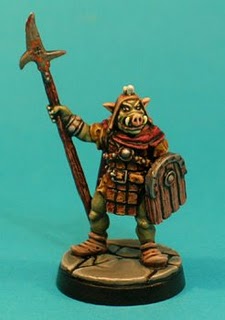
Miniature from Otherworld Miniatures, painted by Richard Scott.

Venatia – Marching Lepers, Bloody Fangs and the Sailor’s Rest

About 3 weeks out from publishing NOD #6 (I hope). I have about 80 more encounters to write and a few other things to polish off, including level 3 of Izrigul’s Pleasure Palace. Busy busy.

2109. A horde of 50 lepers are on the march through this hex, pilgrims from Lyonesse making their way to the medicinal springs in [2013] that are now menaced by giant rock weasels. The pilgrims are led by the paladin Sir Juste, and his companions, Friar Owelle, Sir Tadith and ten fighting-men. All are mounted on warhorses and armed with platemail and shield. They are currently making camp, the named characters and men-ar-arms in pavilions, the lepers under the stars. Friar Owelle owns a magic rope, the silk entwined with silver thread. When laid on the ground in a roughly circular shape, it acts as a Protection from Evil spell for those located inside the circle.

| Sir Juste, Knight of the Jaguar, Paladin Lvl 6: HP 41; AC 2 [17]; Save 11; CL/XP 7/600; Special: Detect evil, protection from evil, immune to disease, cure disease 2/week, lay on hands (12 hp), turn undead as 4th level cleric, immune to fear, allies are +2 to save vs. fear. Platemail, shield, lance, long sword, holy symbol, jaguar skin worth 25 gp worn as a cape, 20 pp.

| Friar Owelle, Cleric Lvl 4: HP 16; AC 2 [17]; Save 12 (10 vs. paralysis & poison); CL/XP 5/240; Special: Spells (2nd), turn undead. Platemail, shield, mace, holy symbol, magic rope (see above), 17 pp.

| Sir Tadith, Fighting-Man Lvl 4: HP 24; AC 2 [17]; Save 11; CL/XP 4/120. Platemail, shield, horseman’s axe, lance, dagger, 16 pp.

2115. The most poweful clan of orcs in the Gaestly Hills are the Bloody Fangs. The Fangs are the most barbaric and superstitious of the orc clans, as their territory borders the land of the Barrow Fiends. The Bloody Fangs consist of 250 black orc warriors. Black orcs have blue-black skin and red-rimmed eyes. They are devotees of the demon prince Orcus, and many show signs of demonic heritage. Black orcs wear armor of iron scales, iron shields painted with bloody fangs, light crossbows and battle axes. The Bloody Fangs dwell in a cavern lair. The entrance is about ten feet above a boulder-strewn field.

The Bloody Fangs are led by Thangblad. Thangblad maintains a bodyguard of six zombies. He is assisted by 20 sergeants.

Treasure: Kept in a locked chest. Consists of 150 gp, 800 sp and 1,700 cp.

| Thangblad, Orc Adept Lvl 6: HP 28; AC 5 [14]; Save 10 (6 vs. undead); CL/XP 7/600; Special: Rebuke undead as 3rd level cleric, spells (2nd), berserker. Leather, shield, rusty spear caked with dried blood.

| Black Orc: HD 2+2; AC 3 [16]; Atk 1 weapon (1d8+1); Move 9; Save 16 (12 vs. undead); CL/XP 2/30.

| Black Orc Sergeant: HD 4+4; AC 3 [16]; Atk 1 weapon (1d8+1); Move 9; Save 13 (9 vs. undead); CL/XP 4/120.

| Zombie: HD 2; AC 7 [12]; Atk 1 weapon (1d8); Move 6; Save 16; CL/XP 2/30; Special: Immune to sleep and charm.

2128. This area of the Grete Myre, nicknamed the Pismyre, receives most of the run-off from Antigoon’s open sewers. It is inhabited by several gangs of gulguths and at least thirty otyughs. Encounters with one or both occur whenever one travels through the area (1-3 = 1d8 gulguths, 4-5 = 1 otyugh, 6 = both), so the locals avoid it at all costs.

2138. Sailor’s Rest is an interdimensional rest home for sailors. One will spot Vikings, New England whalers, Chinese merchants and Napoleonic sailors in this place, all living in a large manse that appears to have been built from ship wrecks. The men are stereotypical old salts. They live off of fishing and crates of foodstuffs and spirits salvaged by mermaids from lost ships. Visitors are welcome, and can expect a supper of hard tack, salt pork, fish stew, turtle soup, grog and plenty of tall tales.

The sailors never leave their home (except by death, when they are given a Viking funeral), so they know little of the surrounding area. Since most do not come from Nod, only a few are knowledgeable about the Tepid Sea or Mother Ocean. All of them know of the Meistersinger [1229], for he visits every few months to swap stories and sing shanties.

The old men have no real treasure, for they’ve little need of it. One might find a silver pocket watch or some scrimshaw. They arm themselves with broad swords and hafted hooks.

| Old Salt (25): HD 4; AC 7 [12]; Atk 1 weapon (1d8); Move 12; Save 13; CL/XP 4/120; Special: None.

2207. Wulum the Bald, a hefty barbarian prince has built a small motte-and-bailey fort in this hex in a wide valley of soft, green meadows watered by a sparkling stream. The southern half of the valley is hemmed in by chalk cliffs (worked by a few stout halfling miners in Wulum’s employ), while the northern walls of the valley are old, weathered basalt and studded with small caves.

The castle is constructed of creamy, white stone and pine and inhabited by a small court of servants and laborers, 12 tawny-headed berserkers and 15 men-at-arms equipped with ring armor, shields, spears and short bows. Wulum is tall and quite fat, and despite his wild, ice-blue eyes and unkempt black beard, very logical and intelligent, traits not normally associated with barbarians. He hails from the Chimeria (located north and west of this region). He is happily wed to his court magician, Orandjia the Grey, a high-born exile from Blackpoort with grey eyes, long, black hair worn in braids and a delicate face that belies the woman’s powerful ambition and hatred for her city of birth.

The castle is surrounded by several hovels inhabited by a mix of human, halfling and dwarf yeomen – mostly herders of sheep and cultivators of flax and rye. They are currently constructing a dye house.

Wulum is a tremendous host, sharing all he has with visitors provided they show he, his wife and his people respect and provide good company.

Treasure: 2,790 gp, 5 lb of cocoa (100 gp/lb), 2 lb of tobacco (100 gp/lb), 12 barrels of ale (30 gal., 250 lb, 6 gp each).

| Wulum the Bald, Barbarian Lvl 12: HP 84; AC 6 [13]; Save 4; CL/XP 12/2000; Special: Immune to backstab and flank bonuses, berserker (+2 to hit and damage, -2 to AC for 12 rounds, fights beyond 0 hit points while berserk).

| Orandjia, Magic-User Lvl 8: HP 18; AC 9 [10]; Save 8 (6 vs. spells); CL/XP 10/1400; Special: Spells (4th). Robes of dark blue velvet over comfortable clothing, a slim crystal wand and silver dagger.

Venatia – Simonya of the Seven Symbols

Fifteen parts, and probably fifteen to go before I publish NOD #6.

0816. Fifty industrious gnomes have established an iron mining operation here. They are led by Morgenstern, a gnome veteran of countless campaigns against the kobolds. The gnomes live in their mine and have smelting ovens near the river. They are on good terms with the surrounding wildlife, and thus are rarely surprised by intruders.

The gnomes have an illusory trap of a flood filling the canyon. Those who fail their intelligence save will pantomime being carried away by the waters, rolling around on the ground and eventually coming to rest a mile away having suffered 3d6 points of nonlethal damage.

Treasure: Silver nuggets (10, worth 100 gp), 20 gp and three casks of brandy.

| Gnome: HD 1d6; AC 7 [12]; Atk 1 weapon (1d6); Move 12; Save 18 (16 vs. illusions); CL/XP 1/15; Special: Cast phantasmal force once per day. Leather armor, pick, throwing axe.

| Morgenstern, Fighting-Gnome Lvl 5: HP 32; AC 3 [16]; Save 10 (8 vs. illusions); Special: Cast phantasmal force once per day. Military pick +1 (hums in the presence of silver), throwing axe, chainmail hauberk, shield.

0831. This portion of the woodland is dominated by a great hemisphere of granite pocked with caves and covered by ancient, twisted pine trees. The mound, referred to as Bear Mountain, is surrounded by lush fields of clover and wild flowers. Black bears and a clan of werebears dwell in the vicinity. The black bears, numbering 30, live in the mountain caves, coming down to the meadow and woods to hunt and frolic.

The werebears live in hive-shaped stone huts on the meadow. They keep bees and are noted for their skill in sorcery, a pursuit not usually associated with their kind. The clan consists of seven werebears led by an old male called Troff and his mate, Lir. The other clan members are all evocators (i.e. 3rd level magic-users). The werebears are presently quite pleased with themselves, as they have just created the world’s first honey golem, which they plan to use as a guardian for their domain.

Treasure: The werebear’s treasure is kept in a hollow place beneath the floor of their huts. It consists of 3,950 sp, 770 gp. They also have 8 barrels of mead (30 gal. each, 250 lb), worth 8 gp each.

| Werebear Evocator (4): HD 7+3; AC 2 [17]; Atk 2 claws (1d3), bite (2d4); Move 9; Save 9 (7 vs. spells); CL/XP 9/1100; Special: Lycanthropy, spells (2nd).

| Lyr, Werebear Magic-User Lvl 7: HP 37; AC 2 [17]; Save 9 (7 vs. spells); CL/XP 10/1300; Special: Lycanthropy, spells (4th).

| Troff, Werebear Magic-User Lvl 9: HP 38; AC 2 [17]; Save 7 (5 vs. spells); CL/XP 12/2000; Special: Lycanthropy, spells (5th).

| Honey Golem: HD 5 (18 hp); AC 3 [16]; Atk 1 slam (2d6); Move 9; Save 12; Special: Immune to magic, half damage from piercing and slashing weapons, sticky, summon swarm. Grappled victims must pass a strength save or be engulfed and suffocate. Cold effects deal no damage to honey golems, but acts as a slow spell.

0909. Two strongholds overlook this river canyon that approaches Pfeife. One is commanded by the chaotic Lord Dross, the other the lawful Lord Pinkel. Dross and Pinkel are brothers with an unceasing hatred of one another. They inherited their strongholds from their father, the elder Lord Dross, a powerful and respected Knight of the March. The brothers routinely fire volleys of stones and arrows at one another’s castle, and are likely to consider any intruders in their valley to be on the other side’s payroll. Neither brother allows his henchmen to cross the river. Each noble commands 20 men-at-arms in chainmail, shield, short sword and light crossbow.

1733. Simonya of the Seven Symbols, a grand dame among elves and a well practiced sorcerer, occupies a tall tower on the banks of the river here. The tower rises five stories, with domestics and guardsmen quartered on the ground floor, a great hall of learning and a great hall of celebration on the second story, an armory and balconies on which rest ballistas on the third story, living quarters for Simonya and her court on the fourth story, and the sorceress’ laboratory and library on the fifth story. All in all, it is a cozy and well defended position, and the ballistas give her sway over all shipping traveling to and from the city-state of Amvianda. In fact, the great bolts fired from the ballistas are connected to large winches via thick, iron chains, allowing ships hit by the bolts to be reeled in and generally torn apart.

The tower is guarded by a deployment of elves from Amvianda, for Simonya is a close cousin of that city-state’s Steward. The elf guardsmen wear uniforms of red leather studded with bronze and carry long swords and longbows. Their sergeant, Cearas, is a handsome elf of the old blood with the eyes of an eagle and the tongue of an adder.

The Great Hall of Celebrations is notable primarily for its model of the great hippodrome of Nomo done in precise miniature. In this model, Simonya keeps several teams of horses and charioteers, all shrunk by magic. She and her court often gather around the hippodrome, miniaturizing visitors and challenging them to race or be fed to her oft invisible cat.

Simonya got her nomenclature from her centuries long search for the seven symbols that, together, form a glyph of the true name of the demon prince Uvall. She now seeks the fabled Crown of Cykranosh, which is said to hold clues on how the symbols might be assembled and Uvall summoned. She believes the crown to be hidden within the so-called “World Below”, a vast dungeon extending under much of the Klarkash Mountains.

Treasure: 1,320 sp, 4,270 ep, 750 gp, 240 pp, sapphire worth 7,200 gp, electrum toe ring worth 80 gp (taken from a lich, turns the toe black) and a brass arm band worth 115 gp in the shape of nymphs and satyrs.

| Simonya, Elf Magic-User Lvl 14: HP 29; AC 9 [10]; Save 4 (2 vs. spells); CL/XP 16/3200; Special: Spells (7th), elf abilities. Dusky-skinned and painfully thin. She is scheming and casually cruel, but does honor contracts and show hospitality to guests.

2013. The mineral springs here once boasted a small shrine often visited by pilgrims in search of relief for their ills. In recent years it has been taken over by a boogle of five giant weasels. The shrine consists of a rose-blush marble cuppola containing a limestone effigy of Saint Osgiua the Sublime, a priestess of Angita, a demi-goddess of healing and witchcraft.

| Giant Weasel: HD 3+3 (24, 19, 16, 11,10 hp); AC 6 [13]; Atk 1 bite (2d6 + blood drain); Move 15; Save 14; CL/XP 5/240; Special: Drain blood (automatic 2d6 damage).

Art by Todd Lockwood – one of the many fine pieces he did for 3rd edition D&D.