Dis, Grand City of Hell – Slums

This one took me a while. I couldn’t map it, couldn’t treat it just like any other city (it was too large to do it justice with a few shops and such) and needed to find a reason for characters to wander around a bit. I think (or hope) I finally cracked it.

Dis is like a collection of cities, which will still be represented on cards, that connect with one another – kinda like they predict the great eastern megalopolis of Boston – New York – Philadephia will be one day. Each of these cities/blocks/quarters is ruled by a separate demon or devil lord, and each is like a prison with heavily guarded gates. The only way to get through a gate besides fighting through it is to gain a brass seal from the lord of the place, and that means doing a favor (rolled randomly). This creates a reason to move about and explore – finding the other demon lord that has to be parlayed with / killed / paid tribute to etc.

Escape from one block to another is one thing. How about escape from Dis. The city of Dis just sprawls – it has no beginning and no end. Nobody can simply walk through it and get to the next circle of Hell. To escape, one must summon Geryon for a lift, and to do that, they need a silver seal from one of the more powerful lords of Hell, represented by the Jacks, Queens and Kings of the deck. Getting in to see them requires seals from at least three of the demon lords under them (i.e. of the same suit). The whole point is to draw players into the politics of Hell and, hopefully, produce a fun experience.

With that said, here’s a sample of some of the quarters in the suit of Clubs, the suit of toil and despair.

ACE OF CLUBS

The buildings in this block are tall and irregular, and covered in a greasy sheen that stinks of rotting flesh. Those who enter the block must save as though facing the noxious stink of troglodytes. The streets are narrow and twisted, and every so often empty into vast, circular courts. These courts are flurries of activity, as manes demons scurry about, tossing writhing mortals and shades into a pit, about 30 feet in diameter, of boiling liquid. Bearded devils armed with iron staves push these poor souls back into the pit when they try to escape. Other bearded devils are in charge of ladling off the greasy slime that these people are rendered into, scooping it into large black barrels carried on the backs of manes demons. These barrels are loaded on carts when they are full and delivered to other blocks for processing.

The gates of Borbazu’s block are composed of a vast weave of skeletons. Above the gates, bearded devils man great pots of boiling oil to pour through murder holes that send a great spray down before the gates (all within 30 feet of a gate must pass a saving throw or suffer 3d6 points of damage from the boiling oil). In towers that flank the gates there are 40 manes demons armed with heavy crossbows ready to send a volley of bolts down on invaders. Each gate is under the command of a barbed devil armed with a chain that ends in a three-pronged meat hook. If an attack with a chain beats an opponent’s AC by 5 or more, it hooks into their flesh and holds them until removed with a successful bend bars check (which inflicts an additional 1d6 points of damage). The skeletons of the gates can deliver 1d6 attacks to any within reach, trying to grab and hold intruders rather than kill them.

Borbazu, a minor lord of Dis, rules this block. He takes the form of a towering serpent of pallid flesh (not scales) that dwells beneath the block. He can emerge from any of the flesh pits scattered through the city. Borbazu can also assume the form of a ruddy-skinned, boyish warrior, handsome, but with vestigial horns and a lenonine mane. This form has aquamarine eyes and wears white robes. In this form, Borbazu can form metal objects of up to man-sized with the merest thought.

FOUR OF CLUBS

This block consists of crooked buildings made of pale, sweaty stone. The buildings hang over the streets, making the air close and stifling, though at odd intervals blazing hot winds whip through these corridors. The walls are spiked, and the doors are all clad in green copper. The streets sometimes empty into pit-like courts with ophidian designs carved into the sides, and winding ramps that lead down into the courts.

The gates of Caila’s block are all at the end of cramped streets, and consist of circular doors. The doors are coated in deadly poison, and touching the doors causes the spikes in the nearby buildings to fire (1d6 poisoned dart attacks, 1d6 points of damage from each). The buildings on either side of the street hold a company each of bearded devils. Behind each door, a purple worm lurks, waiting to lurch out and swallow people whole.

One of the courts is entered via a bronze arch hung with crystal beads that cut one’s flesh like razors and whisper portents of doom into their ears. The court’s walls are set with dozens of little windows covered by shutters painted with images of demons or devils, others with shocking scenes of hopelessness and despair. Behind each of these windows is an oracle who can give one piece of information, provided the questioner passes their palm with an equally valuable piece of information written on a parcel of their own flesh. The oracle reaches their hand through the shutter (as in incorporeally) to retrieve their payment and then reaches back out with a tiny scroll containing the desired information.

Within sight of this alley is the jagged red tower of Caila the Judge. The upper portions of the 10-story tower are circled by a guard of young red dragons. The tower’s interior is as red as the exterior, with ornaments of carnelian, ruby and bloodstone. Movement from one level to the other is via teleporting cabinets, though some of the cabinets in the tower instead fill with poison gas or spears that leap up from the floor.

Caila is a short, leggy demoness with blue-black skin that bristles into barbed scales when she is excited. She has almond-shaped eyes of azure. She surrounds herself with artists, who she can inspire with her gaze, replacing a portion of their soul with her own. Caila can summon 1d6 fiendish giant scorpions three times per day and can assume the form of a giant scorpion once per day.

JACK OF CLUBS


Malphas is both a prince of Hell and a grand president, and he is the patron of architects and masons. As one might imaging, his sprawling block is composed entirely of stone buildings, and everyone a piece of art. Cathedrals, strongholds, towers, all ornamented with flying buttresses, fanciful water spouts, bridges, tunnels, fountains, statuary, veritable skyscrapers; amazing and very difficult to navigate, as it is so crowded and the streets so narrow. Construction is constant here, with bits of masonry sent falling to the ground at random intervals (1 in 6 random encounters forces adventurers to pass a saving throw or suffer 4d6 points of damage).

The gates of Malphas’ quarter are great strongholds, ten stories tall, with perfectly straight and smooth walls. They are patrolled by his gargoyles (three companies are assigned to each gate) and barred by wooden portcullises that instantly rust any metal that touches them. Within each gatehouse tunnel, Malphas’ soldiers can pour green slime on invaders and deliver fusillades of poisoned darts.

Malphas occupies the grandest cathedral in his domain, a veritable demon-made mountain of stone, all of it rare and expensive, with spires that defy gravity. Within this monument he houses the remainder of his infernal army and keeps a population of slaves, artisans (he has bargained for the soul of many great artists and can summon them at will) and priests. He sits at the center of a maze of passages, all trapped and well-guarded, for Malphas is paranoid in the extreme.

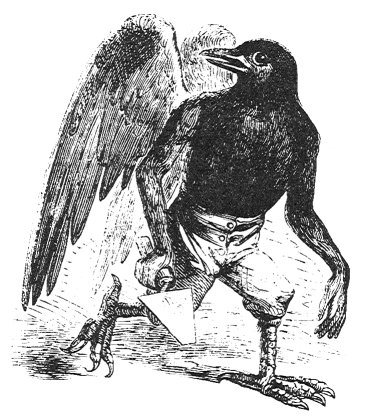
Malphas appears as a crow, but can be induced sometimes to take the form of a handsome humanoid with blue-black skin and curved, golden horns. In either form, he carries a mason’s trowel, which attacks as a +2 battleaxe, can cleave through any stone, cast disintegrate and earthquake once per day and can, at will, transmute rock to mud and mud to rock. Malphas is always at war with one demon lord or another, and is always in the market for spies.

Gehenna – Besieged Towns and Ruby Cities

Probably the last Gehenna preview until NOD 13 hits the virtual shelves – having an extra day this February is going to help. Other articles slated for lucky number 13 include Shades of Red (the variant red dragons), Hero vs. Villain (stats for Zanzibar the magician and the speed demon Greymalkin – and an adventure seed as well), a crop of Demon Lords, Epic Journeys (a series that will lay out the concept of a 1st level to 20th level campaign centered around an epic level monster, in this case the Anaxim), the rules to my card game Greatsword, the Evolutionary PC class (with some sweet art) and a few new magic helms.

On to the preview …

Fly Man of Abaddon by Ndege Diamond – not in this preview

80.28 Nathox: Nathox was once a splendid town of 1,000 Xshayathian ophidians under the command of the glabrezu Keirzer the Dreadful. It is now besieged by an army of demonic centaurs and erinyes that marched into Gehenna from Stygia. Powerful magics from the centaurs and their leader, Erichtho (Mage 17; 43 hp), the Stygian witch and a servant of mighty Dagon, Prince of Stygia, who seeks the soul of the damsel Beatrice, stolen by rebel erinyes.

Erichtho wields the horn of an ancient white wyrm, using it to freeze the once blazing city, encasing the walls in ice and causing all of the fires in the city to sputter and die – they now produce nothing but thick, acrid smoke.

87.76 Black Dogs: This hex is patrolled by packs of gaunt, black dogs. The dogs are about the size of terriers and are capable of emitting a terrible shriek before attacking (save vs. fear or flee for you drop). The strange beasts are only harmed by holy symbols (which are pretty pathetic weapons) and divine magic. They have 90% resistance to arcane magic and even magic weapons only harm them 90% of the time. The dogs were summoned by an unfortunate wizard using a small book bound in black leather. The book was stolen from the camp of Paymon, and may contain other weird summonings.

88.73 Monastery of Madness: There is a monastery here that looks like it might have been dreamed up by Salvadore Dali – all abstract shapes and weird lines. The monastery is dedicated to Azathoth, the Slaad Lord of Madness, and is staffed by a priesthood of walking slimes and overseen by a balor demon called Karum, Bringer of Madness. Karum looks as though his flesh is melting from his body, and he leaves a trail of slime that, if it puddles, has a 1 in 6 chance per turn of animating as yet another walking slime.

At the heart of the monastery, if one can find it through the shifting corridors and many pit falls, there is an idol in the form of a black sphere that gives off a strange humming noise (like a theramin) and great arcs of electricity (1 in 6 chance per round of striking a random person within 30 feet with a 3 dice lightning bolt that also steals their soul unless they pass a saving throw). Rumors speak of a vault beneath the idol holding all manner of relics and riches.

The idol is surrounded, at a distance of 35 feet, by six hepatizon pedestals. A thief can work out that they are triggers that must be weighted down with 100 lb. each to be triggered. If this is done, the would-be tomb robbers get a nasty surprise. Instead of discovering a treasure vault, they instead are drained of 1d4 levels, their life energy passing into the black sphere, which shatters and is sucked inward into a umbral blot that has been summoned to wreak havoc in Hell in service to mighty Azathoth.

92.42 Calepp: Calepp is a grand city of ruby spires inhabited by the 1,000 Lamuresti elves. The city is constructed of ruby-colored crystal and blocks of brass, each one a bas-relief of a beauteous elf. From the walls of Calepp, the elves sing terrible chants that echo across the metallic sands, mourning the kidnap of the Princess Ninsab, daughter of King Barimu (Fighter/Mage 10; 36 hp).

The elves are especially enraged that Barimu has launched no counter attack against the gnolls [90.76] who took her. He is currently enchanted by Eshkit (Duelist 11; 35 hp), a rakish woman who is actually a doppelganger in service to Mammon, sent to spy on these elves who worship Mulciber above all other demons. She has carried a magical garnet into the city and has secreted it in Barimu’s treasure chamber. The accursed garnet has not only stolen Barimu’s heart and will, but is spreading a wasting curse (per mummy rot) through the elves of the city.

Gehenna – Introduction

Mammon by George Frederick Watts (1885)

Time for my first preview of Gehenna, with an overview of this rather warm circle of Hell.

Although Gehenna is a dry, inhospitable wasteland of black, burning metallic sand, it almost looks like paradise to travelers who have just slogged their way through many leagues of sewage and decay in Abaddon.

Getting into Gehenna is dangerous. When one is one the very edge of Abaddon they cannot see into Gehenna. Instead, they see nothing but miles of sewage and junk as far as the horizon. When they place one over the border, though, they suddenly find themselves in the midst of a howling, raging storm of burning metallic sand and fire (per the fire storm spell). This persists for 1d6 rounds, and when it ends, one sees nothing but Gehenna, with no trace or sign of Abaddon.

Gehenna, as mentioned above, consists of mile after mile of rolling dunes of metallic sand. The sand is mostly black, but there are lines of coppery red, golden brown and silvery white worked into the landscape, making it almost pretty for a circle of Hell. Rivers of molten metal flow through the landscape aimlessly, ending in bubbling lakes. There are also great mesas of basalt to be found in Gehenna, and it usually on these that the landforms that the various tribes and lords of Gehenna dwell.

No plants exist in Gehenna, but the landscape is often broken up by growths of metallic crystals, some tall and branched like trees, others in spiked clumps.

All of the animals of Gehenna are immune to fire. Most are reptilian or insect in nature.

Gehenna is the ring of Hell allotted to the souls of the avaricious and prodigal. Avarice (also known as greed or covetousness) is the rapacious pursuit of wealth, status and power. While all people have ambitions, the covetous take this to an extreme, casting aside the eternal (and Lawful) for the temporal. In time, these things they sought fall through their hands as dust and escape them.

In Gehenna, the shades of the avaricious are turned into “misers”. Misers take the form of slaves in Gehenna, being driven by the Gehennites to push around great stones for their pointless monuments to the glory of Mammon, Amon or one of the other lords of the circle. The misers have lost their humanity and their individuality, and are now little more than beasts of burden.

The shades of the prodigals, on the other hand, become small in stature – nimble little thieves who try their best to steal from travelers and others, but find their bodies become immaterial whenever they attempt to hold onto anything, their newly acquired wealth quickly slipping through their hands. They are naked and hunched, and would be pitiable if not for their rapacious faces.

Races of Gehenna
Gehenna, as lifeless as it might seem, has its own inhabitants. These are the seven tribes of Gehenna, all of them races known to people of the surface world but altered by their habitation in Hell.

Arkusites: The Arkusites are hairless gnolls with pallid skin and icy blue eyes. The Arkusites build strongholds of gold and ride out from them on feral centaurs to raid and plunder. Arkusite warriors wear glistening scale armor, amply decorated with gold and tall, golden conical helms and wield long horseman’s axes and shortbows. Warriors are extensively tattooed.

Arkusites worship various demon lords, and change their allegiance often. Their priests use drugged wine to bring on prophetic dreams and practice ritual cannibalism.

The Harrites: The Harrites are kobolds that look like pteradactyls with golden scales and eyes like multi-faceted garnets. They roam Gehenna in great swarms, swooping down on victims from above with their cruelly barbed and hooked spears, snatching people up into the sky to be roasted alive in their towers. The Harrites dwell in great fluted towers of blue metal (cobalt, in fact). In the base of these towers, which rise in clumps from the landscape, they keep great fires burning at all times. The towers are open from base to ceiling and ringed with platforms and shelves on which the kobolds dwell. They hang their captives over these fires from chains and allow their screams and moans of torment to echo up through the tower. On the ceiling of the tower they keep strange ooze, which feeds on these screams and produces weird, sticky nodules that the kobolds collect and sell. The nodules are eaten by the inhabitants of Hell like candy. The Harrites usually worship Pazuzu.

The kobolds can exhale plumes of burning ash. Alone, a kobold can spew this into the face of an opponent once every 1d4 rounds, the victim having to pass a save or be blinded for 1d4 rounds. In groups of 30 or more, the kobolds can swoop down and exhale in unison, creating the equivalent of an incendiary cloud that lasts for 1 round.

Lamuresti: The Lamuresti are the elves of Gehenna, with warm, copper skin and entirely black eyes. They are graceful in appearance, with sharp, severe features. The Lamuresti are completely loyal to Mammon, whom they call their divine king. Each lamuresti village is governed by a priestly steward (an anti-cleric of level 1d4+2). They construct two-towered bronze ziggurats to Mammon and decorate their walls with bas-reliefs and metallic tiles depicting woodlands and marshes they may never visit. They are particularly known for their bronze lions.

The villages of Lamuresti contain eternal flames fed by the bodies of the shades punished in Gehenna (or any other captive they can get their well-manicured hands on). The Lamuresti are known for their harsh punishments and cruelty (pyramids of skulls, flaying captives alive, walling people into their city walls, etc.). The males wear flowing robes of cloth-of-gold and conical caps, with tighter dresses and feathered head-dresses on the females.

Lamuresti warriors wear scale armor and carry short swords, spears and longbows.

Sarrimites: The Sarrimites are changeling goblinoids. When first encountered, they look like hunched and muscular goblins, with short, bandy legs and bearded faces with over-large teeth jutting from their grim, low-set mouths. They wear iron masks that depict noble-looking men with dead eyes and long beards. When joined in battle, they shout their war-cries and become large hobgoblins. If reduced to half their normal hit dice, they grow into ogres (their equipment growing with them), gaining 2 extra hit dice and doing +2 points of damage with their attacks. The Sarrimites wear iron scales and horned helms. They attack with axe, spear and hand cannon (per heavy crossbow).

The Sarrimites are usually loyal to Mulciber, but worship his wife, the sensuous demoness Tyrana, a winged lilin only marginally loyal to Lilith of Erebus. Her temples grace the citadels of the Sarrimites and are attended by the female goblins. The citadels are ruled by the high priestess of Tyrana, the goblin king being subservient (and married) to her – a situation no goblin king cares for.

The goblins are expert engineers and smiths. Their villages are joined by iron-shod roads that rise above the burning sands of Gehenna, and they have canals that channel the molten rivers of metal to their foundries where most of the weaponry, armor and ordnance of Hell is manufactured.

Uccenites: The Uccenites, or “wolves of Gehenna” are sahitim, demonic humanoids who dwell in some of the deserts of Nod. Like their surface kin, the Uccenites are lean and lank, with golden-orange skin, with black horns like those of an antelope rising up to 3 feet tall. They swathe themselves in black robes, the men veiling their faces, the women adorning theirs with black tattoes.

The Uccenites are nomads, setting up temporary camps around large sepulchral tomb mounds in which they store their mummified dead. These mummies are animated, of course, and appear as naked, hunched sahitim (they are interred in a fetal position that bends their spines) covered in red ochre paint and in a state of decay. These mounds look like conical pyramids, wider than they are high, made of various metal blocks. The Uccenites also raise megalithic monuments to Amon, whom they worship exclusively. In honor of their demon lord, they sacrifice captives by slowing carving up their bodies while alive – first the ears, nose and lips, then the fingers and toes, etc.

Uccenite warriors wear mail tunics and carry bronze shields, scimitars and jezzails (as crossbows). They ride beasts that look like a cross between wolves and camels.

Xshayathiyans: The most grandiose and powerful of the peoples of Gehenna are the Xshayathiyans, also known as ophidians. They were worshipping demons before it was cool – perhaps before there actually was a Hell. Here they preside over stately cities of silver and gold, encrusted with gems and inlaid with serpentine and lapis lazuli. They wear kilts and loose tunics of cloth-of-gold and –silver and tall crowns (even the lowliest wear crowns). Warriors wear bulbous helms with golden face masks depicting demons, gorgons, medusas and other monstrous creatures. They are armed with iridescent scale coats, oblong shields, spears, axes, short swords and longbows.

The Xshayathiyans are ruled by their magic-users, who preside in palatial temples that are home to powerful glabrezu demons, the ruling class of the ophidians, who serve as the various satraps under their emperor, Mammon from his capitol, the Burnt City. These temples also hold ritual vats in which the priests bathe in oil or in the blood of sacrifices. The temples are guarded by winged gorgons and serpoleopards.

Xshayathiyan magi possess the most useful objects in Gehenna – at least for adventurers. These are stones that look like pure, white quartz spheres that, when buried one foot beneath any soil, cause a spout of pure, fresh water to erupt into a fountain for 1d4 minutes. One waterskin can be filled from the fountain per minute. The stones, called stones of necessity, function once per day, and there is a 5% chance per use of them crumbling into dust.

Xulites: The Xulites are bronze men – humans with skin not only the color of bronze, but the consistency as well. The Xulites build citadels of brass, decorated with gynosphinxes with golden bodies and ivory faces. Within these citadel they keep gorgons who feed on the metallic sands (they are immune to their petrifying breath) and grow crystalline trees of emerald and ruby.

The Xulites are slavers, capturing the zombie-like prisoners of Gehenna and using them as beasts of burden. They wear pointed helms and scale hauberks and wield longswords, spears, daggers and crossbows that throw metal darts. The elite Xulite warriors ride scaled lions (like miniature dragonnes) into battle, their roars driving their foes in fear before them.

Lords of Gehenna
Mammon, the Grand Prince of Avarice, rules the Circle of Gehenna with subterfuge and double dealing. There are those who say he commands a power greater than himself, and uses it to get his opponents out of the way. Four demon lords have proven too powerful for Mammon to unseat, they being Amon, Maphistal, Paymon (king of the glabrezu demons) and Pazuzu. The smith of Hell, Mulciber, also dwells in Gehenna, though he shows no interest in the politics of Hell and is not seen as a rival by any of the other lords.

The Glooms – Evil Pumpkins and Dwarf Kings

I’m about three days away from finishing the main writing on the Hell South hex crawl for NOD 12. Then I have a few articles to finish up and should be able to publish before Christmas – or maybe after Christmas. We’ll see.

10.72 Anemone Shelf: Hundreds of brightly colored giant sea anemones are attached to a wide shelf along the bank of the Acheron, about 70 feet below the surface. Equally colorful nixies dwell within these anemone, sometimes falling prey to them, but more often tending them. The nixies are led by the druid Anwyla, whose sea cave lair is hidden by the anemones. Deep within this sea cave there is a bubbling fountain of air. Bathing in this air, which carries a damp, green smell, one becomes a creature of living water. While in this form, the person can swim at a speed of 30 and is immune to cold and resistant to fire. This state lasts for a number of hours equal to the person’s constitution score.

35.99 Bothaaa: This hex holds the lair of Bothaaa, a giant, fiendish octopus spawned by Dagon himself. Bothaaa is usually in his sea cave, studying his greatest treasure, a jar that holds the preserved head of the Rivana, youngest daughter of the lich lord Piran. This head wears a crystal diadem (worth 1,000 gp). It is still alive, the body resting in Guelph in an ornate crypt. The head is sought by Dudge, the chaotic knight currently trapped in the stomach of the dragon whale Oraguldurn [7.63].

9.66 Grimserne: Grimserne is the dark city of Alberich, the king of the nyblings, a race of sorcerous, demonic dwarves. The nyblings are sore put upon by Alberich, and the shade slaves of Grimserne even more so.

Grimserne is home to 5,000 shades and 3,500 nyblings. The city is built into the sides of a massive and ever deepening pit mine from which the slaves extract copious amounts of coal, enough to fire the furnaces of Dis. The nymblings direct the slaves in their mining and then form them into great caravans who march towards the palace of Minos and the narrow stairs that lead down to the third ring of Hell. Each shade holds 300 pounds of coal in its back in canvas and leather sacks, and by the end of the journey to Dis are so spent that they often melt into the landscape, only to emerge back in their pit a few days later.

Alberich is a mighty sorcerer among dwarves. He and his people possess an unheard of skill at forging magical items, making them as easily as most craftsman make normal items, but expecting cruel payments for their handiwork and cursing the items to make sure they are not betrayed.

11.70 Prison Farm: The damned souls of 450 greedy halfling farmers toil here on a vast field, farming and tending animals under the poisonous whip of the balor Enkepis and his manes. The halflings grow bitter kale, lima beans, Brussels sprouts and pumpkins that grow to about four feet in diameter and bear tormented faces on their pale orange skins. They also tend sheep that they turn into spicy meat pies that are valued throughout Hell.

Each of the pumpkins, if one should carve a hole into it and crawl inside (gnomes and halflings can manage this) is a portal to the surface world.

13.57 Peat Fields: This hex was once a great swamp of tsetse flies and stinging nettles. It has since been drained and is now a great expanse of peat fields. Miserable shades now roam the fields, cutting the peat under the watchful eyes of gnoll overseers. The peat is destined for the lodge of Barbatos, who disdains the use of coal and thornwood. The peat moss is rank with worms, each one with the face of a damned, miserable soul.

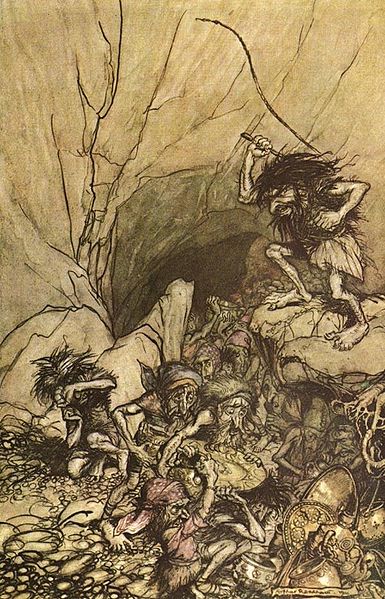
Image by Rackham; found at Wikipedia.

The Glooms – Ghoul Town

110.100 Ghala-ghilan: Ghala-ghilan is the gruesome city-state of the ghouls and ghasts and their hideous lords. The city houses 5,000 ghouls, 1,500 ghasts and their slaves/cattle, which number 1d10 x 1,000 humanoids at any given moment. Ghala-ghilan has sandstone walls topped by a hundred onion domes cast in bronze and painted with black enamel. In each tower there is a squad of ghouls armed with slings and crude axes. The streets of Ghala-ghilan are wide and covered with a damp, slimy film. The buildings are sandstone towers rising 30 to 50 feet in height, with flat roofs topped by memorial statues stolen from cemeteries all over the world. Amidst these towers there are long palaces with colonnades.

The ghouls need not eat often, so when they do slaughter their herds of humanoid slaves, they hold grandiose feasts with strangely sedate and dainty entertainments.

112.99 Celestial Army: An army of luminous aasimar has gathered here for an assault on Ghala-ghilan, the city of ghouls [110.100], for the ghouls have stolen something precious to the powers of Law, the legendary Pistis Sophia. The paladin Eaduvenius leads the bright host, who are now camped in white pavilions (regrettably sullied by their long trek through the Underworld) flying white pennons emblazoned with various symbols holy to the forces of Law. The army numbers 25 companies of heavy infantry and 50 companies of light infantry and archers. Almost all of them are drawn from the Farukh, the descendants of the Heavenly Host that once descended to Nod to destroy the wicked city of Irem and stayed to long. The Farukh dwell in the hills outside of the city-state of Guelph. In addition to the warrior, the army has about 300 bearers and handlers to look after the giant lizards used as pack animals, and ten packs of blink dogs.

117.64 Hot Cave: There is a deep, dank, damp cave here that is heated by a thermal vent and mineral spring. The interior of the cave and much of the exterior is covered by a massive yellow musk creeper. The cave is always filled with 3d6 yellow musk zombies and encounters with 2d4 zombies occur in this hex on a roll of 1-4 on 1d6 per day.

120.63 Exploding Pool: A simple pool in this hex is bordered by white stones that glow lightly. Should a person try to drink from it, the fountain explodes into a water spout, throwing them 1d10 x 10 feet into the air. Should one attempt to ride this spout to the top (requires a dexterity check on 2d6+12) find they can access a chamber carved into the ceiling that contains a great trove of treasure guarded by an ancient water elemental.

121.66 Tormented Mephits: Ten fire mephitis have been chained to the ground here near a frosty cave. The cave is inhabited by three frost giant brothers, Frimli, Giri and Hundi and their pet small white dragon, Snurl. The giants torment the mephitis from time to time, carrying small torches near them and then snapping them away.

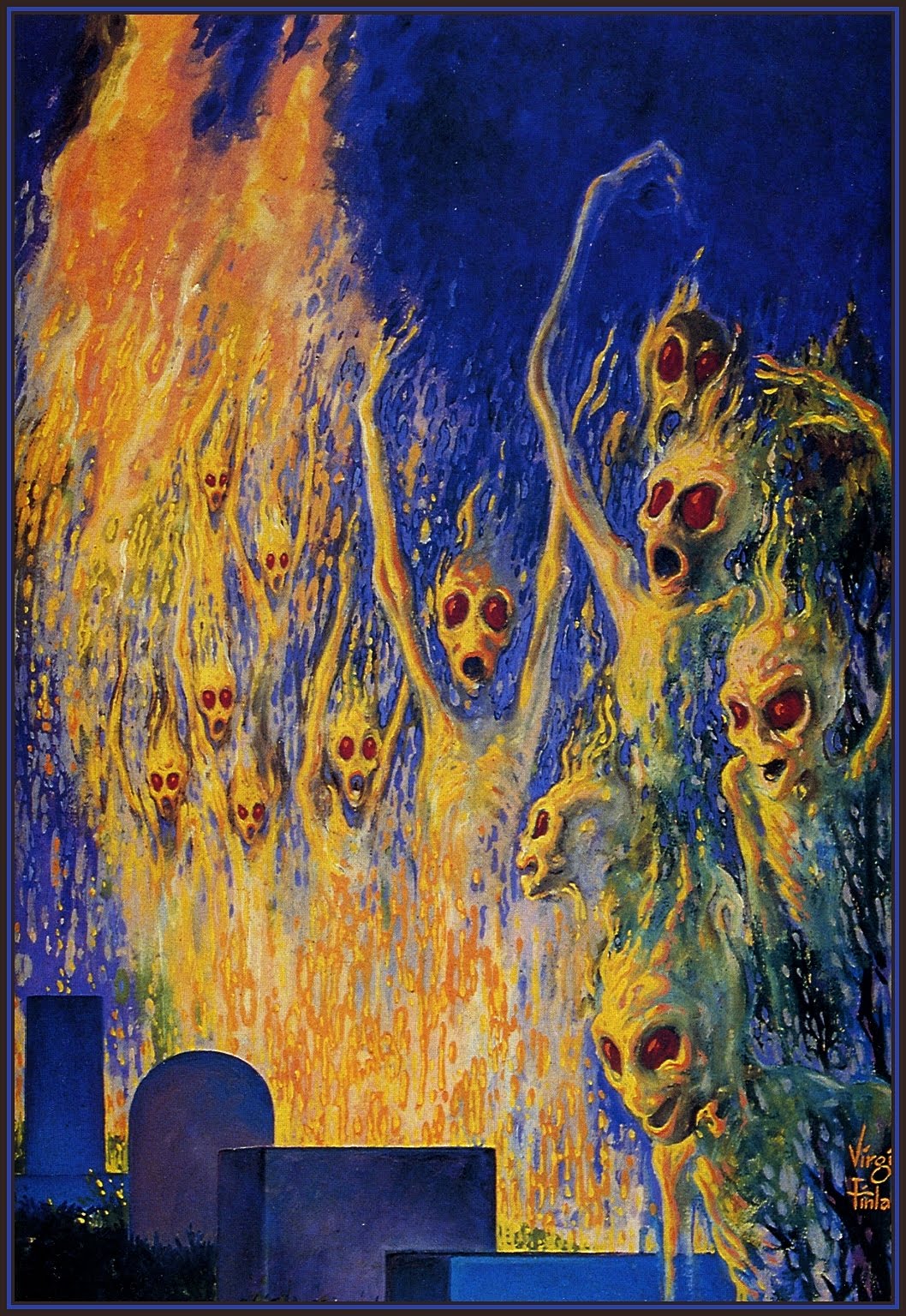
Image from Golden Age Comic Book Stories; by Virgil Finlay

The Glooms – A Sphinx Says What?

Another quickie preview. Soon, I’ll be previewing some art for Blood & Treasure!

92.99 Criosphinx: A talkative, obnoxious criosphinx has set up shop here on a ledge about 500 feet above the ground. The ledge leads back into a natural amphitheater and several shallow mines dug ages ago by kobolds searching for gold. They finally quit when one group of miners struck an underground river, which flooded the mine and formed a waterfall for years. Eventually, the river shifted and the ledge and mines are now dry and worn very smooth.

99.95 Hidden Ropers: The landscape here contains an old stone road that descends into a deep canyon. The walls of the canyon are streaked with deposits of gold and marred by many ledges and shallow caves that spout clear, fresh springs. The springs empty into rifts in the canyon floor, keeping it from filling with water. The ledges in one mile-long stretch are occupied by several ropers that are hidden beneath a hallucinatory terrain effect created by a duergar magic-user who wants to keep the gold safe until he is ready to clear the canyon of ropers.

102.96 Stone Golem Inn: A band of enterprising svirfneblin have established a rollicking good inn here. The inn is set about 40 feet above the ground in an abandoned cliff dwelling that looks to have once belonged to mantari.

Standing beneath the inn there is a stone golem that has the appearance of a great ape with pearly eyes and upward jutting fangs. The gnomes have nicknamed it “Ook”, and are apparently capable of commanding it, perhaps by dint of their now owning the cliff dwelling. The stone golem is the only means of accessing the inn other than climbing the walls or flying in, and the gnomes only grant access to folk who appear to be no danger and who are willing to dance a lively jig for the entertainment of themselves and their customers.

The svirfneblin number four ex-adventurers and their significant others and children; there are twelve in all. They serve a passable mushroom brew using fresh water that falls down the back of the inn (a subterranean waterfall) and serve thick mushroom steaks and anything else they can get their hands on.
The inn has ten small rooms (15 gp a night), or folks can stay in the common room for 3 gp a night.

107.102 Cracking Ground: The ground here cracks and juts up at random intervals, presenting a terrible hazard to travelers (1 in 6 chance per hour of being struck for 8d6 points of damage). Amidst this chaos, there rests the magnificent Throne of Glooms, a simple throne carved from basalt (and quite rough) and set with three dozen onyx (1d6 x 100 gp each). Each of these stones holds an ethereal shade, who can emerge if a living person sits in the throne. The person is stuck fast to the throne while it drains away their charisma (1 point per round). They can only escape the throne with an open doors check, though the shades do their best to prevent this.

As a person loses their charisma, the color gradually drains away from their skin, eyes and hair. When their charisma is drained to 0, the person transforms into a terrible creature called a gloom, the genius loci of the Glooms, so to speak. At this, the terrible eruptions of the hex end and the ground becomes perfectly smooth and placid.

The newly created gloom will expect its former comrades to become its avid worshippers and help it to facilitate the re-conquest of its domain.

The Glooms – Dungeons and Mines

7.91 Adalark’s Tomb: A tall cenotaph of black marble stands 20 feet tall here. On the top there is a sculpture of a giant serpent, mouth open and fangs bared.

The serpent is the entrance to a small tomb complex located about forty feet below the ground. One cannot fit in the serpent’s mouth, of course, but by reaching deep into its mouth (unfortunately impossible for halflings or gnomes) and touching a stone lodged therein, a person is teleported beneath the ground.

[A] The entry chamber into the tomb is a square room with black marble walls and a 30 foot high ceiling. Against one wall there is a copper plaque bearing the following inscription: “Adalark | Called Great | Was Great | He cannot blame lesser thieves for following in his steps.”

There is a terracotta statue here of a weeping woman looking at the plaque, on hand reaching toward it. Approaching any of the walls in the room causes a sub-section (10’ wide by 10’ tall) of that wall to move backward – apparently one cannot step closer than five feet toward a wall. The walls extend back ten feet, at which point a metal portcullis descends from the ceiling, locking them in. The walls then slowly begin to crawl back to their original position to crush the intruder. The section of the wall with the plaque does the same as the others.

If all four walls are forced back at the same time, the wall with the plaque disappears completely and reveals a second chamber, and the other three traps do not spring.

[B] The trapped chamber opens here onto a balcony overlooking a square room about 10 feet below. In the room below there is gathered the treasure of Adalark the master thief, which consists of three gold ingots (3 lb each), a brass icon of a winged woman (worth 1,000 gp), a cape of deep red velvet (100 gp), six silver shields (250 gp each), thirty pairs of chartreuse gloves (they were Adalark’s trademark), a suit of halfling-sized platemail and 8,000 gp. The interior of the platemail is coated with platinum (2,000 gp worth).

Extending from the balcony there is a wall of force that does not allow one access to the treasures below. The treasure chamber is actually an optical trick called “Pepper’s Ghost”. The treasure is actually located in a room beneath the balcony. A large pane of glass slanted across the open area reflects the treasure, which is illuminated from below using a continual light spell. The most likely way of dropping into the treasure chamber is to use dispel magic to remove the wall of force. Any who then drop into the chamber without being very careful may drop through the glass into a pool of acid below (inflicts 3d6 points of damage from the fall and 1d6 points of damage each round from the acid).

14.87 Boring Wreck: A large earth borer made of steel with brass highlights has been abandoned here by the Master’s synthoids after the drill bit broke. The Master was already on to other projects and never reclaimed it. Eight were-weasels have now adopted it as a lair, and keep 60 cp, 170 gp, fifteen wolf skins (worth 8 gp each) and a small pearl worth 3 gp hidden inside.

20.92 Iromir Mine: Iromir is a natural alloy of iron and mithral. A very deep mine here, run by kobolds (who took it from a clan of svirfneblin), produced a good amount of the material, which the drow favor for their weapons and armor when they cannot find pure mithral. The shipments recently stopped. When a band of orog from the village in [32.98] appeared to investigate, they discovered the mine (it has seven levels) crawling with kobold zombies. There are now fifty orogs camped outside the mine and making some shallow forays into the place.

Image is copyright Wizards of the Coast.

The Glooms – Mechanical Men, Drow and Worm Food

After taking two days off from writing about Hell (well, a week actually – it was two days between finishing NOD 11 and starting NOD 12), here is the first peek at the southern portion of the Glooms.

2.58 Mechanical Misfits: A little tribe of mechanical men, refugees from the experiments of the Master [4.105], dwell in a ruined kobold fortress. The fortress is carved into the wall and consists of a guarded, fortified entry chamber (locked portcullis, the ledge in front of it is trapped to collapse, sending people 50 feet to the cavern floor). Beyond the entry chamber there are about twenty chambers, mostly small, inhabited by the mechanical men. The mechanical men number 40 individuals built of scrap. Most are about 3 to 4 feet in height. They are sneaky little devils, scavenging far and wide for replacement parts and metal that they can melt down and forge into new parts. They have a working forge and a fine crucible and are open to trade, but find it difficult to resist the temptation presented by adventurers toting metal.

2.106 Troupe: A troupe consisting of five drow overseers and their master, Qodvigo, a drow warrior-mage, and thirteen enslaved ophidian dancing girls. The troupe is gradually picking their way through the ooze-filled tunnel using picturesque wagons painted with phosphorescent paint (skeletons, owls, the words “Master Q’s Traveling Show”) and supported on four spindly legs, like those of an elephant only longer and thinner.

There are three wagons in all, each one carrying three or four ophidians huddled around a coal-burning stove, a driver and a guard. The ophidians wear torqs that have a permanent charm monster effect cast on them and tied to Qodvigo. Qodvigo’s wagon is the largest and contains a separate, raised chamber (about 6 feet long and 4 feet wide) containing his ritual objects and spellbook.

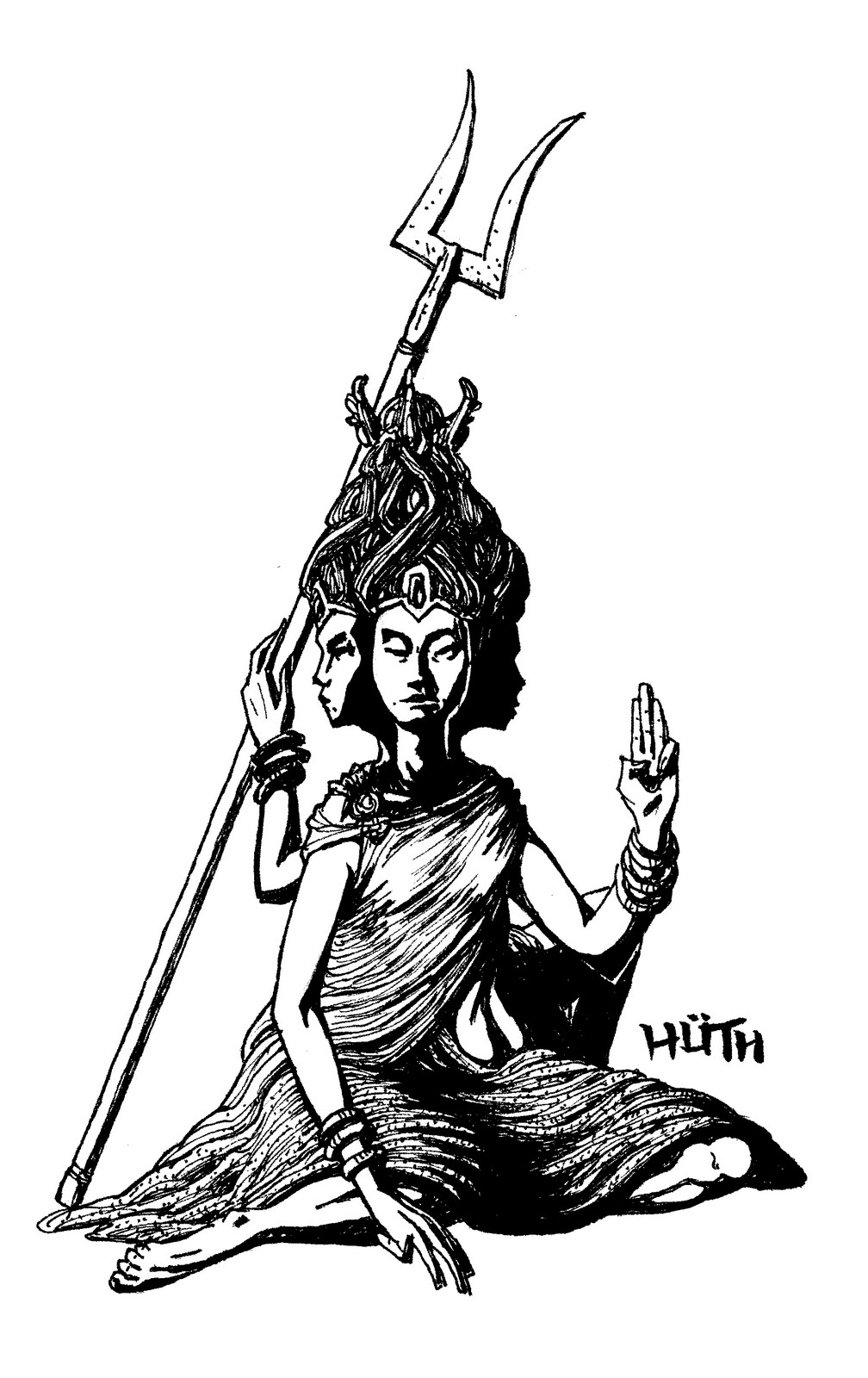
3.66 Worm Food: A tunnel in the wall here features a series of stairs downward leading to a branch of three tunnels. In the nexus there is a brass idol of Tricrucia, the petty goddess of forks in underground tunnels. The three-faced, three-legged, three-armed idol has all three arms pointing down towards the three different passages. One of the passages has an “X” carved above the cave entrance, the second a short series of three white marble steps down and the third the smell of rotting vegetation. The third tunnel is the safe one, the other two containing great lantern worms. At the end of the stinky tunnel there is a small shrine to Tricrucia containing sacred coins (5,100 sp, 710 ep, 5,400 gp) in bronze pots. If any of these are stolen, the thieves suffer a divine curse that keeps them from ever knowing their way under-ground, at least until the treasures are restored.

Image of Tricrucia by Chris Huth from Petty Gods – can’t wait for that release!

Asphodel, First Circle of Hell

Rather than post some locations, I thought I’d post the draft for my description of the first circle of Hell, Asphodel.

Asphodel
The First Circle of Hell

Once one has crossed the Acheron, they see looming above them a wall greater and more hopeless than any other in the cosmos. Hell, you will remember, is a prison and the demons and devils within Hell prisoners. The walls are composed of impossibly thick stones, and thus for all intents and purposes impossible to bore through or knock down. The walls are also proof against ethereal creatures and the passwall spell. Within Hell, it is impossible to teleport or open dimension doors or gates to anywhere outside of the confines of Hell.

Hell’s ramparts from the outside are a sheer face of dark gray stone about 500 feet high. The battlements are not unlike those of a mortal fortification, being crenellated and manned by barbed devils. The walls are 80 feet wide at the bottom and about 40 feet wide at the top, providing ample space for the terrible bronze guns of Hell – massive cannon 30 feet long and 6 feet in diameter that launch exploding cannon balls that inflict 12d6 points of damage in a 10-ft radius, 9d6 in a radius from 11 to 30 feet, 6d6 in a radius from 31 to 60 feet, 3d6 points of damage in a radius from 61 to 90 feet and 1d6 points of damage in a radius from 91 to 120 feet. Folks within 60 feet of the impact must pass a saving throw or be permanently deafened. The cannon have a range of 600 feet and the shells can explode in mid-air at a range chosen by the firer. These shells leave massive craters, many of which are in evidence on the gray-green plains of Asphodel just beyond the walls.

The key point about the cannons is that they point inward, not outward. Likewise, the demons on the parapets do not resist people flying into Hell – only people trying to fly out. For those attempting an escape, assume that every mile of the wall is patrolled by 1d4 squads of barbed devils (i.e. 1d4 x 10 barbed devils) and one cannon. When one section of the wall is “attacked”, barbed devils from nearby sections quickly join the fight. Fortunately, the barbed devils that guard the walls of Hell are prisoners themselves, and thus cannot go beyond the walls to chase down escapees. The gods of Law and the masters of Hell use other resources to deal escaped shades.

Most escape attempts are aimed at the Hellmouth, or Gates of Hell. The gate is unimpressive on the exterior wall – an arched portal 40 feet tall and 25 feet wide barred by a portcullis that, like the walls, is proof against ethereal creatures. The bars are 6 inches thick and made of adamant, and thus quite difficult to bend. The 80 foot tunnel beyond the front portcullis has another adamant portcullis located every 20 feet. All of these are operated by barbed demons looking down from chambers constructed around the tunnel via arrow slits. Murder holes abound, through which the demons pour such things as molten lead, acid and boiling oil. Arrow slits located about 20 feet above the floor allow them to rain arrows on those who are attempting to force their way through.

On the interior wall of Hell, the gate is more heavily defended, situated as it is between two 500-ft tall towers pierced by numerous arrow slits. Each tower is manned by three companies of barbed devils. The terrible hound Cerberus stands guard just outside the inner portcullis.

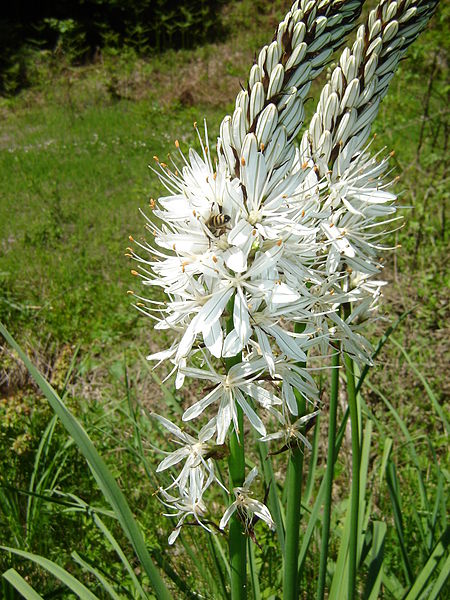
Beyond the walls of Hell, Asphodel is a wide-open, undulating savannah of long, gray-green grasses, thorny, twisted trees and tiny white flowers called asphodels, the circle’s namesake. The plains are roamed by a variety of demonic humanoids and animals in a sort of parody of Africa’s savannah. Many fortresses and even cities dot the savannah, where the lords and dukes of Hell hold court.

There is no Sun in Hell, of course, but the whole of Asphodel is swathed in a twilight gloaming, allowing creatures to see about 1 mile away, double for creatures with “darkvision”. The air of Asphodel is unnaturally still and almost suffocating in its stillness. There is no wind to move the grasses or bend the boughs of the prickly trees, and the range of wind-related magic on Asphodel is cut in half. Storms cannot be raised here nor lightning called.

Races of Asphodel
Asphodel, like most of the other circles of Hell, is not only inhabited by pitchfork-carrying devils and their victims. Four races known to people of the surface world dwell in Asphodel, though these races have been changed by their habitation in Hell.

Asphodelian Gnoll: The gnolls of Asphodel are tall and thin, with greenish hair spotted with black and glaring white eyes. They arm themselves with spears, ring armor and large, round shields. The Asphodelian gnoll utters an insane, demonic laughter while fighting, forcing people to pass a saving throw after three rounds of combat or become so unnerved that they suffer a -2 penalty to fight.

GNOLLS: HD 2; AC 4 [15]; Atk 1 bite (2d4) or weapon (1d10); Move 9; Save 16; CL/XP 3/60; Special: Unnerving laughter.

Asphodelian Goblin: The goblins of Asphodel have rear legs like those of a grasshopper. They have mottled blue skin and long fangs jutting down from behind their upper lips. These goblins carry spiked maces and wear leather armor. Their touch causes people to revert in age by one year unless they pass a saving throw.

GOBLINS: HD 1d6 hp; AC 5 [14]; Atk 1 weapon (1d6); Move 9; Save 18; CL/XP B/10; Special: -1 to hit in sunlight, touch de-ages people.

Asphodelian Halfling: Asphodelian halflings are willowy and relatively tall for their race. They have spidery arms and legs and droopy eyes, like those of opium eaters, on small heads with beetle-brows and pronounced overbites. The halflings are bald and have four gleaming white eyes spaced evenly around their heads, making it impossible to surprise them. They arm themselves with barbed nets and whips, dropping from trees to capture travelers.

HALFLINGS: HD 1d6 hp; AC 5 [14]; Atk 1 weapon (1d6); Move 9; Save 18; CL/XP B/10; Special: -1 to hit in sunlight, cannot be surprised.

Asphodelian Hobgoblin: Asphodelian hobgoblins are squat, apelike creatures always encased in black lacquered platemail and gripping their beloved axes and blunderbusses. They are deeply paranoid creatures, positive that everyone and everything is out to get them, and this makes them even more militant than usual for hobgoblins.

HOBGOBLINS: HD 2+2; AC 1 [18]; Atk 1 weapon (1d8+2); Move 9; Save 16; CL/XP 2/30; Special: Magic resistance (10%).

The Glooms – Caged Imps, Forlorn Golems and Shadowy Theatres

Three more from the Ante-Hell. Perdition awaits …

110.5. Imp-N-Cage: Somewhere in this hex of magma pools and basalt landforms, hanging from a chain beneath a natural land bridge that spans a flow of magma, there is an imp inside a cage constructed of logical fallacies. The cage is too convoluted for the imp, but perhaps a character with high intelligence could solve it. To simulate this, the Referee can prepare three riddles. If a player can answer all three of them, they succeed in freeing the imp, which will swear eternal loyalty (ha!) to its rescuer and even become their familiar if they are a magic-user. Each riddle that is answer incorrectly, however, costs the character one point of their intelligence score, permanently, as they find themselves trapped in logical fallacies. Of course, as difficult as answering the riddles is, the swarm of adamantine wasps that guards the bridge is even worse.

ADAMANTINE WASP SWARM: HD 15 (76 hp); AC 0 [19]; Atk 1 sting (3d6+poison); Move 5 (F14); Save 4; CL/XP; 16/3200; Special: Poison (harden into ice, 1d6 damage per round, shatter when dead), magic resistance (12%).

IMP: HD 2; AC 2 [17]; Atk 1 sting (1d4 + poison); Move 6 (F16); Save 16; CL/XP 6/400; Special: Poison tail, polymorph, regenerate, immune to fire.

110.29. Forlorn Golem: A stone golem sits on the banks of the Acheron, its feet in the black waters, chin on hands, elbows resting on knees. The golem was created by a mad wizard to besiege Hell, the wizard miscalculating the width and depth of the Acheron. Abandoning the concept, the wizard moved on and left his creation by the river to await new orders. He sits there to this day.

STONE GOLEM: HD 15 (60hp); AC 5 [14]; Atk 1 fist (3d8); Move 6; Save 3; CL/XP 16/3200; Special: +1 or better magic weapon to hit, immune to most magic.

118.51. Natural Amphitheatre: There is a natural amphitheater located in this hex. The amphitheater has been accentuated with seating carved into the reddish-brown rock. Against the back of the amphitheater there is what appears to be a bas-relief (deep relief) of a warrior in Greek armor, spear and shield in hand. He appears to be fighting, with his back against the wall. The statue is actually a warrior who was turned to stone while fighting the guardians of this shrine, for the amphitheater is a shrine dedicated to the Tenebrae, the daughters of Nyx and Eerebus. It is guarded by eight sisters, medusas with black-bronze skin and cool, green eyes. Each of these medusas, as a priestess of the Tenebrae, can cast three cleric spells, one of first, second and third level, each.

The statue is still inhabited by the warrior’s spirit, now an ethereal shade. The shade appears when people walk on the “stage” and attempts to force a female adventurer touch his statue body. Doing this releases him from the curse, in which case the restored warrior can introduce himself as Damali, a crusader from ancient days. Damali is a 10th level paladin.

ETHEREAL SHADE: HD 8; AC 1 [18]; Atk Icy touch (2d6) or special ability; Move 9; Save 8; CL/XP 10/1400; Special: Hard to see, immune to non-magic weapons, befuddlement.

Image from HERE.