Phlegethon – Ice Wights, Magic Crowns and Nrogara of the Long Stride

Wow – been a while since I previewed old Phlegethon here. I’m actually now working on Malebolge (not to be confused to Male Bulge, a truly frightening demi-plane of male underwear models), and have my eye on Cocytus. I’m nearly through with Hell!!!

So, here’s four nasty little surprises lurking in Phlegethon …

46.62. Misty Cave: Water from the boiling river flows into a misty cave. One must wade into the cave – the water reaches their waist – and if they do they discover that it is clad in ice. The cave is 200 feet long and quite rugged and twisting. The water in the cave is tepid at first, then chilly and finally slushy at the back wall. In the colder portions of the cave, one sees several corpses (ice wights) embedded in the walls. The back of the cave is solid ice, and within it one sees the leering face of Lucifer. The face gives off a low, rumbling laugh and then a wall of ice forms about 20 feet behind the adventurers. The ice wights break from their confinement and attack the party, attempting to wrest from them their weapons, shields – anything they can get – and then merge back into the icy walls.

ICE WIGHT: HD 8; AC 0 [19]; Atk 1 claw (1d6 + level drain); Move 9; Save 14; CL/XP 10/1400; Special: Drain 1 level with hit, +1 or better weapon to hit, immune to cold, merge with ice.

50.66 Tower Keep: A grand tower keep dominates the badlands here. It looks to have suffered little damage over the eons from wandering Vandals, and this is because permanent walls of force screen it from the landscape.

The fortress is composed of the reddish stone of the badlands, set haphazardly with purple moss growing between the cracks. Trickles of reddish water seep from the high, barred windows and form little streams that collect within the area contained by the walls of force, making a reddish moat that is hot to the touch (1d4 points of damage per round).

The fortress has double doors for entry, the doors being made of strips of cold iron bolted to a backing of 10-inch thick black oak. The doors are always kept locked, and murder holes above the doors permit the devils inside to pour boiling red water on those who bother them.

Within the doors, the fortress takes on the aspect of an Escher painting (treat its navigation as a maze, except for the inhabitants). It is the home of Galiffiet, a night hag of tremendous power and cunning. Under her command is a company of giant spiders and a “harem” of six chaotic androsphinxes, the largest and most dominant of them being called Rekur.

Gallifiet seeks her lost lover, Zenrukh, the balor demon who now leads the resistance of “fallen devils” in Hell. Whether she wishes to help or destroy him is unknown.

Gallifiet holds a treasure of 790 sp, 11,110 gp, 320 pp, ten pounds of silver ingots (worth 100 gp), a brass candelabra (worth 4,000 gp) that casts the illusion of the angel of death hanging over one person within its light, a silver pendant (worth 4,800 gp, a gift from Zenrukh) and a golden crown that, when tapped against various materials, summons various evil lords and ladies (15th level each) that must serve their summoner for 1 day.

MATERIAL / CLASS
Base Metal / Thief
Copper / Magic-User
Gemstone / Monk
Gold / Cleric
Iron/Steel / Fighter
Platinum / Antipaladin
Silver / Illusionist
Stone / Ranger
Wood / Druid

55.39 Adamant Fountain: An adamant fountain is hidden away in a deep cave, magenta-colored water pouring from the fountain, through the cave and out into the badlands.

The fountain features a hollow adamant statue of a marilith holding six adamant swords. If struck by a metal object, the sound waves cause the water to drain from the fountain and the bottom descends, permitting folk to enter a strange subterranean prison. When a person approaches the fountain they are attacked by black tentacles (per the spell), which last for 10 minutes.

The prison is a vast labyrinth of corridors an alcoves, the alcoves filled with force cages. The cages contain various powerful undead (corporeal), demons, devils, daemons and demodands.

57.40 Black Avengers: A company of 20 wicked avengers occupies an ancient castle of blue-grey stone. The avengers (Ftr 5; 20 hp each) dress in black cloaks and coats of blackened mail and arm themselves with longswords and longbows. Their leader is a fallen ranger, Nrogara of the Long Stride (Ftr 16; 68 hp), who was bewitched by Amduscias through a strange, cloudy crystal ball he discovered in a wizard’s tower.

The avengers have a treasure of 1,260 sp and 350 gp in a grand, heavily ornamented gold urn (worth 7,000 gp). They also have 8 casks of fine burgundy (12 gallons each, 100 lb each, worth 600 gp each).
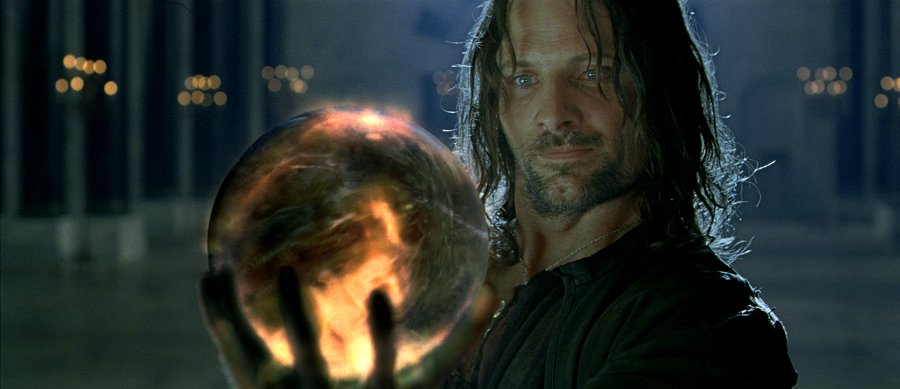
This guy has nothing to do with Nrogara of the Long Stride. Absolutely nothing.

60.38 Forgotten Sea God: On the banks of the boiling river, amidst the weeping pines, there is an ancient abbey of pocked, gray stone and roofs of sparkling aquamarines. Within the abbey there is an idol of a forgotten sea titan, muscular and pale, a cloak of silvery fish scales thrown over his shoulder. No priests now throng the idol or drown victims in the sacrificial pool at his feet, and the idol’s missing head and symbol of Dagon engraved in its chest tells the tale as to why. Still, the god’s pool is still inhabited by the souls of the departed, and when the living approach too close, they begin to rise from the waters as brine zombies (1d4 per round for 10 rounds), seeking new souls to join them in the abyss.

The pool leads to a pocket dimension of a wine-dark, salty sea populated by brinze zombies and shadow sharks. At the heart of this seemingly infinite plane there is kept a relic called the Orb of Elemental Water, an orb capable of casting any water-based spell at will and controlling water elemental creatures en masse. It is a powerful artifact, and it is guarded by a monstrously huge hydra whose heads are those of the high priests who once served the forgotten god (his name even escapes them now), each one capable of casting spells as a 12th level anti-cleric.

(Yeah, there are other Orbs in Phlegethon – one of those things that wasn’t planned)

Holy Freaking Crud – Rome, In All It’s Cartographic Glory

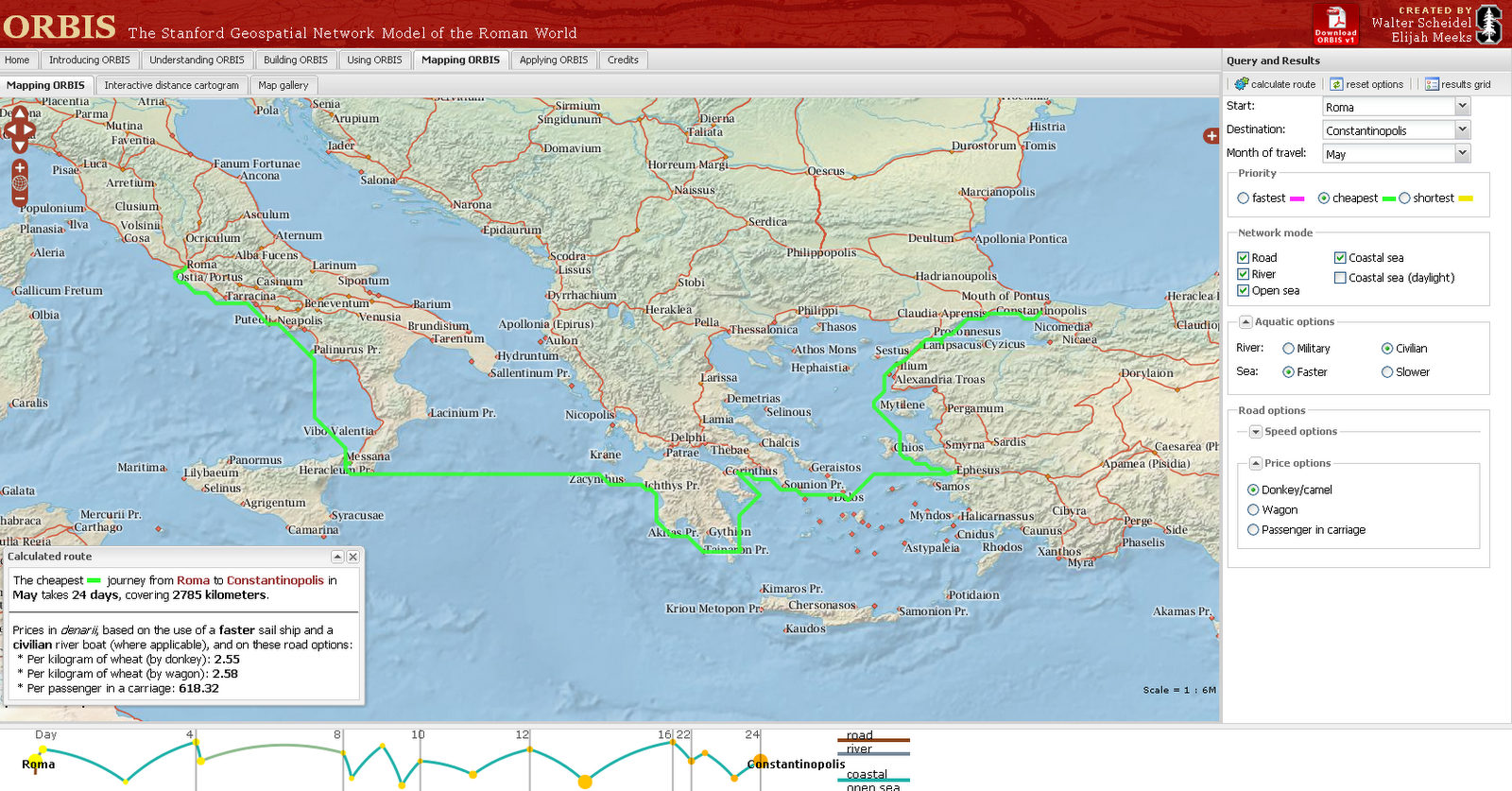
Yeah – cheap little post today – have lots of real work (you know, the stuff I get paid for) going on that I need to address. In the meantime, I just stumbled across ORBIS, a mapping site that is trying to bring Imperial Rome into the 21st century.

I can’t help but think this would be a useful thing for folks running campaigns set in the Roman, or even post-Roman era. Hell, if you can’t find a way to use this in almost any fantasy campaign, there’s a really good chance you shouldn’t be running a campaign. If they could just integrate some wandering monster tables, we’d be all set.

I mean – you got travel times, routes, the freaking cost in silver pieces – you can choose donkey travel vs. wagons, military vs. civilian ships, the month of travel, the route, whether you want it cheap or fast. Astounding!

I might chime in later today with another Hell preview, and I’m still working on more monsters for Mother Goose & Goblins. I also hope to produce a small dungeon for it. Oh – and the Pars Fortuna dungeon – I need to work on that as well. Plenty to do!

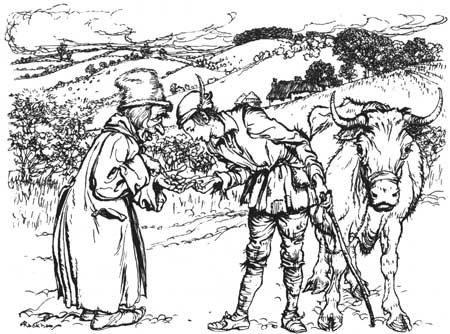
Let’s Get Grimm … Nursery Rhyme Monsters I

Animals
Just about any animal belongs in a fairy tale world, but some animals are more prominent than others, including bears, foxes, leopards, lions, owls, pussy cats and wolves. Just use the normal stats for these “monsters”.

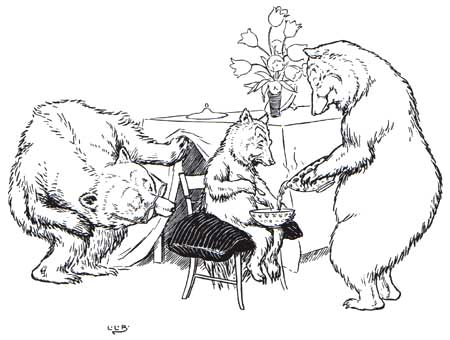
About 1 in 6 animals is a talking animal. Larger talking animals conform to the normal stats, save they are intelligent and can speak. Smaller talking animals (and some of the larger predators) are more anthropomorphized. Pussy cats are clever and often quite magical (spells as a 1st to 4th level magic-user) and have a knack for the fiddle, bears live in comfortable houses and dine on porridge, foxes are able rogues (as a 1st to 4th level thief), etc

Animated Silverwear

When animals aren’t talking in Fairy Tale Land, dishes and spoons are running away with one another.  One can imagine the surprise of a party when it wanders into an “empty” dining room, only to be set upon by the fine china. Also – note that most animated forks, knives and spoons are made of silver.

Animated Silverwear: HD 0 (1d4 hp); AC 5; Atk 1 slap, poke or stab (1 point of damage); Move 120; Save as 0-level human; Aligned with Clubs; Special: None.

Big Bad Wolf
Big Bad Wolves have a bad reputation in Fairy Tale Land, and a well deserved one. They are a particular menace to little pigs and knaves in red cloaks, but are happy to attack anything they think they can make a meal of.

Big Bad Wolf: HD 4; AC 3; Atk 1 bite (1d6); Move 120; Save as Fighter 4; Aligned with Clubs (Evil); Special: Small creatures who are bitten for max damage must make a save vs. death or be swallowed whole.

Billy Goat Gruff

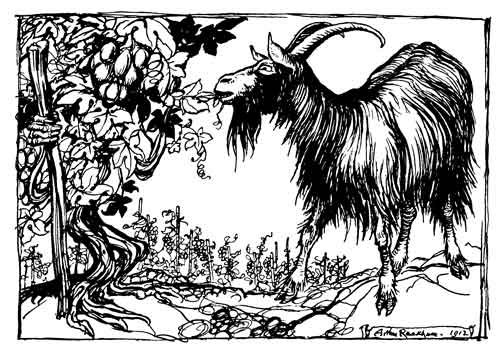
Billy goats gruff are large specimens of intelligent goat. They are neither wicked nor kind; just don’t attempt to bar their way.

Billy Goat Gruff: HD 3; AC 7; Atk 1 gore (2d6); Move 180; Save as Fighter 3; Aligned with Spades; Special: +4 damage on charge.

Bogeyman
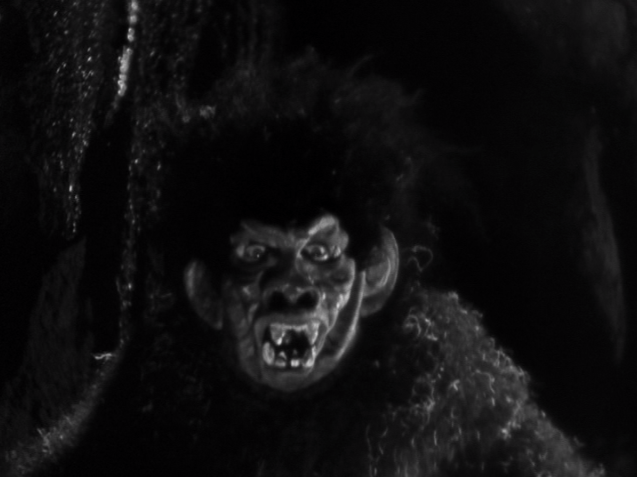
Bogeymen are savage looking humanoids that gather in Bogeyland, but sometimes make incursions into happier places. They often fight with firebrands (1d4 points of damage, save vs. petrification or catch on fire). Bogeymen use the stats for gnolls. Aligned with Clubs (Evil).

Bugaboo
Bugaboos, or bugbears, conform to their normal D&D stats. They look like creepy bears, who lurk in the woods and frighten travelers. Aligned with Clubs (Evil).

Changeling
Changelings are the issue of wicked fairies. When a fairy steals a human child to raise (these children grow up to become fairy knights), they leave a changeling in its place. Changelings are wicked and ill-mannered, and grow up to become spies and assassins. Changelings conform to the stats for doppelgangers. Aligned with Clubs (Evil).

Construct – Gingerbread Man
Gingerbread men are sometimes concocted by wicked witches, and sometimes created accidentally by bakers. They are quick and enjoy taunting others, but sometimes laid low by their over-confidence, and the fact that having a head made of dough doesn’t lend itself to great intelligence.

Gingerbread Man: HD 0 (1d4 hp); AC 4; Atk 1 strike (1d4-1); Move 180; Save as Thief 2; Aligned with Clubs; Special: None.

Construct – Wooden Soldier

Wooden soldiers are built by tinker elves and animated by martial spirits. They look like 6-foot tall soldiers carved of wood and painted in gay colors. Wooden soldiers carry wooden weapons. They are immune to most magic spells, but sticks to snakes cancels their magic immunity for 1d6 rounds. Patrols of wooden soldiers are sometimes led by Nutcracker Princes (8 HD, AC 2, Save as Fighter 8).

Wooden Soldier: HD 2; AC 4; Atk 1 wooden weapon (1d6); Move 120; Save as Fighter 2; Aligned with Spades; Special: Spell immunity, immune to fear and other mind effects.

Devil

Devils are foul creatures from the Netherworld who pop into the Fairy Tale Land to tempt the foolish. They appear either as beautiful temptresses (perhaps with vestigial fangs) or as thin, sophisticated men with red skin, pointed black beards, small horns and a tail that ends with a point. Although they often appear unarmed, a devil can summon a trident to hit or her hand instantly when threatened. They can also unfurl bat wings when they find flight a necessity. Aligned with Spades (Evil).

Devil: HD 6; AC 0; Atk 1 trident (1d8) and tail (1d4 + poison); Move 120 (Fly 240); Save as Cleric 6; Special: Poison tail (save or paralyzed for 4 rounds), teleport (in a puff of sulfurous smoke), only harmed by magic weapons.

Dragon
Dragons in Fairy Tale Land are of the fire breathing variety, though in coloration they are usually green. They have the normal stats for a red dragon, and the normal chance to speak and use magic.

Dwarf, Yellow
The yellow dwarves are cruel tricksters who often fall in love with princesses, doing their utmost to force them into marriage. They are dogged and determined, and never let a slight go unrevenged. Yellow dwarves have sallow skin and stringly, orange-yellow hair. They are usually armed with short swords or hand axes.

Yellow Dwarf: HD 1; AC 6; Atk 1 weapon; Move 90; Save as Dwarf 1; Aligned with Diamonds (Evil); Special: Growth (double in size, fight as 4 HD monster, weapon deals double damage) once per day for 10 rounds or invisibility (once per day).

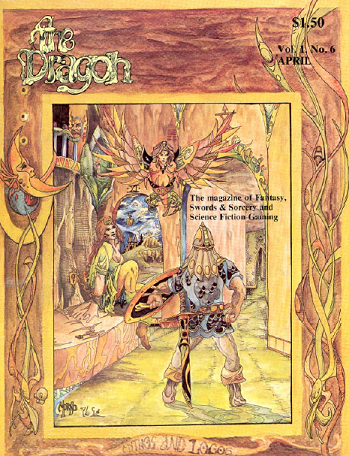
Dragon by Dragon … April 1977 (6)

Ah – spring of 1977. I’m sure after the big Bucharest earthquake and the discovery of rings around Uranus, people were almost too worn out to delve into another issue of The Dragon, but delve they did!

The cover for this issue was by “Morno”, AKA Brad Schenck, who you can find at deviantART. He’s mostly known for his contributions to Arduin and computer gaming, and he has lots of nice retro sci-fi material in his gallery. Check it out.

First article is by Guy W. McLimore, Jr.An Alternate Beginning Sequence For Metamorphosis: Alpha. Article begins with a neat little graphic of old pseudo-computer code … takes me back to programming BASIC on my old Vic-20. Good times. The article takes a while to get to the point, describing a clone bank on the Warden. [Hey – just got it – James Ward – Warden – damn I’m slow]. The meat of the article is a little d% table to determine whether you are human, a latent mutant or a true mutant and how many mutations and defects you have. Do the new versions of WOTC Gamma World delve into defects at all? I dig that defects are just part of character creation back in the day … you play the cards the dice deal you.

The article continues with many more tables, including more detail for latent mutants and the number of programmed ship skills one might have, including some special psychic skills for humans only.

The author would go on to be a part of the Doctor Who RPG, Mekton Empires and a host of products for Star Trek and Starfleet Command.

Ronald C. Spencer, Jr. (another junior … I smell conspiracy) presents Sea Trade in D&D Campaigns. This one springs from a campaign being played on the ballistic missile sub USS Benjamin Franklin … I love the stuff that comes from actual play. In this case, a fighting-man wanted to set up a shipping business on the side – smart guy!

D&D produces two wonderful sorts of rules. On the one hand, you have the super simple, elegant rule – like shields will be splintered – and on the other hand, the baroque set of charts that put a warm glow into the hearts of people like me, even if we never plan on actually using them. This one has a single chart and a few assumptions – one page to cover the whole concept. I like it.

The basics of the system are set up as a number of assumptions. To be brief … (1) Cargo is not specified; (2) small merchant ships can carry a max value of 10,000 gp, large merchants 50,000 gp; (3) ships have to pay a pilot fee of 500 gp for small ships, 2,500 gp for large ships and a 5% import tax based on the value of the cargo; (4) profit/loss is determined with a dice roll (i.e. the neat little chart) and is based on the number of ports the ship bypasses (i.e. the further you go, the more you make, but the more likely you are to lose a ship to storms or pirates).

The ship owner invests in a cargo and then gives sailing orders to hit ship – where to go, which ports to bypass, how much profit/loss to accept (if a port is bypassed to avoid a loss, it counts as a bypassed port – I suppose this involves ignoring a bad roll and trying again). Ultimately, the DM (or D/M as he writes it – love this period when things were not yet settled and official) makes the percentile roll and money is either lost or made.

Ships are delayed 1d4 weeks at ports other than their home port, and when ships are lost at sea the owner is notified 1d6+2 weeks later. Neat system, which I’ll happily use in my Blood & Treasure campaign, assuming anyone goes to the trouble of buying a ship or investing in one.

M.A.R. Barker now chimes in with a painting guide for Legions of the Petal Throne. I can’t imagine how anyone in the hobby back in the day could have resisted buying the Tekumel material … very evocative. Love the art.

Morno (Brad Schenck) now provides some fiction in the form of The Forest of Flame. From now on, I will present one random paragraph from each bit of fiction …

Some obsure glory, had thought Visaque, must belong to one who unlocked the musty secrets of the tome; the dream was even now fresh on him. Weeks, then months of spare hours were spent in the attempt of understanding the mysterious text. By the time its crabbed script was half-deciphered the task became somewhat simpler, and often he read in the small hours its forgotten tales by candlelight. He read of the Elder Days and the Days To Come: of heroes, mages, and of strange devices . . . of Crowyn the Worme’s Bane and of his star-crossed blade; Of the strange curse of Vyckar the Grim; Akor the Valkrian, Nokra Negreth, the Red Branch heroes . . . all the warriors and their impeccable deeds. And then, the mages: Bran-Herla whose soul was lost by the wide waters; Vergil Magus; Garanyr the Heart-Misled; of Myrddin, of Verbius, Therion, and the loremaster Isaac Decapole D’alsace . . . and in an indefinite reference on a faded page, was inscribed the name of Vishre Vishran. When Visaque first read that name it struck an eerie chord within him, as if of a misplaced memory. Even now the name was uncomfortably close to an identity. Yet for contemplation there was, today, no time. That the mage was called an Ipsissimus, he knew, but knew not the rank so named. For all his study (so unclear in the remembering . . .) all Visaque had learned was that Vishran dwelt in the Castle Arestel, atop the mountains eastward. (Arestel . . .)

In the Designer’s Forum (that’s a neat idea … a place where game designers can just add a few bits and pieces and corrections to their games – if any designers out there want to talk about their stuff in NOD, let me know).

This forum is by James Ward, with Further Rules, Modifications and Clarifications for Metamorphosis Alpha. He goes into mutations for taller mutants (roll 1d20 for additional height, add one “striking die” for each four feet above normal height – you can get some tall freaking mutants in MA!), shorter mutants, additional body parts, wings and some psychic powers.

Next, there’s an add for D&D miniatures. They guarantee satisfaction. Fantasy Forge has some neat Tekumel miniatures (I wonder how many are still out there, painted and waiting to be used), followed by an ad for Space Gamer out of Austin, TX.

After the adverts, we get chapter 6 of the Gnome Cache. I quote from the summary …

Unable to resist the wanderlust any longer, Dunstan has robbed his father’s strongbox and set forth on his quest for adventure and glory.

In his naivete, Dunstan casts his lot in with a band of scurrilous cutthroats, believing them to be adventurers sharing his noble pursuits.

Our hero learns the true nature of his erstwhile companions, and his pockets are the poorer for it. Dunstan parts company from the band, narrowly escaping apprehension by the Warders. In the confusion, he ‘liberates’ a horse, and sets off for Huddlefoot, there to spend the night in the stables.

Our would-be knight acquires a would-be squire, and strikes a bargain with Evan to travel with his caravan to Rheyton and Nehron. This arranged, he takes care of the incriminating horse, spinning a tall tale of being on official business. This done, they await departure . . .

David W. Miller presents: D&D Option: Determination of Psionic Abilities, giving some additional ways people could pick up psionics in the game. I kinda dig the baroque nature of psionics in old D&D, though I don’t remember if we ever used them or not. Maybe one or two characters were lucky enough to develop them.

Jim Hayes and Bill Gilbert cover Morale in D&D – an important system when you consider the game’s wargaming roots and the importance of wandering dungeons with large bodies of men-at-arms and torch bearers. This one has a couple charts, lots of modifiers and … honestly, I’d rather just roll 2d6 and be done with it.

In Fineous Fingers, we get a visit from Bored-Flak, the Bolt Lobber, who has a firing sight on his finger. He saves the party’s bacon and then disappears into the dungeon.

The Featured Creature is the Death Angel by John Sullivan. Not the toughest monster in the world – 7 Hit Dice (d8’s, it notes) and AC 4 (or 15, in modern games), but it does a death scythe that forces people to make a save vs. death at -3 (and you lose a point of constitution if you fail). If you can take this sucker on at range, you’re okay … except it can teleport at will. They also have 95% magic resistance. Fortunately, they only attack their intended victim – essentially somebody who has pissed off a god or demi-god. The take away here … leave those gemstone eyes in the idol alone!

Next (and final) add is for the old dungeon geomorphs – only $2.99.

All in all, a decent issue, but not spectacular.

Greatest Fantasy Cartoon of All Time?

No. Not really.

But, I will put the last 15 minutes of this old Japanese cartoon about iron age Scandinavians up against any fantasy cartoon on the market for pure, gonzo greatness. You have no idea how much I want to start statting things up for this, but I can’t. I’d ruin it for you. So, go out and find it – I watched it on Netflix as The Little Viking Prince.

Later, if you’re good (and if I find some time in between watching my pride and joy in her latest play and converting “one last file” for Rappan Athuk (note: not the last file, really) and writing NOD 15 and editing Blood & Treasure) I’ll post the rest of Mother Goose & Goblins. If not tonight, then Sunday (’cause Saturday is Dragon by Dragon day).

Oh – and I’ll swear that the person doing Horus/Hols voice in that cartoon also did Rudolf the Red-Nosed Reindeer in the Rankin-Bass production of same.

Mother Goose is my Dungeon Master!

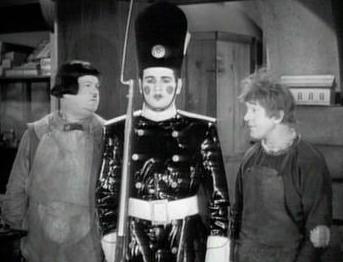
I was watching Babes in Toyland the other day (like you do), mostly because the daughter and I had a hankerin’ for Laurel and Hardy, and while viewing it, a strange thought popped into my head.

“If Mother Goose wrote D&D, little pigs would be a playable race.”

Naturally, one thing led to another …

Mother Goose & Goblins

The basic rules here are B/X D&D (or Labyrinth Lord, if you please). I’m not going to repeat everything in the rules (for now …), so if I don’t mention it, it works like B/X. The concept here is “what if Gygax was inspired more by nursery rhymes and fairy tales than swords & sorcery”. The game is still meant to be about exploration, treasure hunting (with some good deeds thrown in, of course) and fighting monsters, just with a veneer of (slightly tongue-in-cheek) Mother Goose-isms.

CLASSES
MG&G has seven classes, as follows:

PRINCE
The prince works essentially like the fighter – can use any weapon or armor, d8 for hit points, etc. Princes are young, handsome men, and are always the children of one king or another (kings are as copious in fairy tales as grains of sand on a beach).

A prince with a 17 Charisma who has reached at least 4th level can elect to become a Prince Charming. A Prince Charming must serve either the King of Hearts or the King of Diamonds. His kiss can dispel any magical effect, he enjoys a +2 bonus to saving throws against evil magic, and he is bound to fight evil dragons, rescue helpless damsels and give generously to the needy.

JOAN OF ARC RULE: A female character with a Strength of 12 or higher can become a Princess (i.e. a female version of the Prince).

FAIRY GODMOTHER
Fairy Godmothers are always elderly women of an elfin demeanor. They fill the roll of the magic-user and generally follow the rules for that class, save that a fairy godmother knows all the spells (assuming you’re just using the spells in B/X) of a level she learns to cast (much as a cleric), and must possess her magic wand to cast any spell. If a knave is adventuring with a fairy godmother, the fairy godmother must adopt them as a godchild and do their best to teach and protect them.

KNAVE
Knaves are boys and girls of common ancestry (1% chance of being the child of a king and queen who was hidden away with a peasant family to avoid a terrible curse). They fill the role of the thief, with the same skills and abilities, though some skills are renamed slightly for flavor:

Ask/Solve Riddle (replaces find/remove trap)*

Climb Beanstalk (i.e. climb walls)
Hear NoiseHide in Shadows
Creep Quietly
Steal Tarts (i.e. pick pockets)

* Traps do not play a big part in fairy tales and nursery rhymes, but the idea of confusing an opponent with a riddle, or needing to solve a riddle to get past a problem does crop up now and again. Naturally, players can still have their characters look for traps, and can devise ways to get past them without rolling dice; now they can instead roll dice to get past riddles or stun a foolish opponent (for 1d6 rounds) by asking them a real puzzler (the victim gets a saving throw even if the “ask riddle” roll is successful).

Each naughty or wicked act of a knave carries with it a cumulative 1% chance that they will be given a conscience (in the form of a talking cricket or something similar) to attempt to guide them into a more law-abiding and honorable way of life.

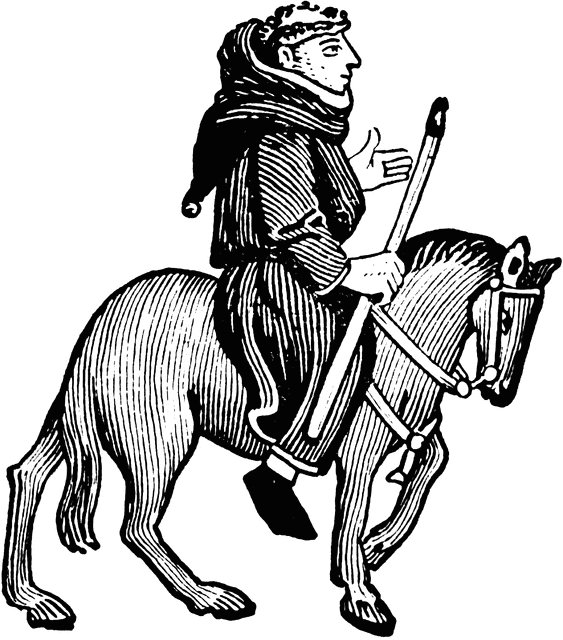
CURTAL FRIAR

Curtal Friars are men with tonsured scalps who cultivate a healthy paunch (in order to demonstrate the great abundance of the Lord), wear simple robes (with a mail coat beneath, usually) and wield a club or mace in the name of God Almighty. They are, essentially, clerics in terms of rules, though their ability to “turn undead” works on a slightly different set of monsters (as not all of the B/X monsters appear in fairy tales or nursery rhymes).

Monster
Pixie/Leprechaun (replaces skeletons)
Revenants (i.e. zombies)
Devil (i.e. imp – replaces ghoul)
Changeling (i.e. doppelganger – replaces wight)
Ghost (i.e. wraith)
Troll (replaces mummy)

Naturally, one can play a Nun instead of a Friar, though warrior nuns are generally pretty scarce in fairy tales.

DWARF
One of a group of seven who left his brothers to see the world. Dwarfs conform to the Dwarf class in B/X D&D. Each has a particular physical or personality trait that dominates their character, and for which they are named.

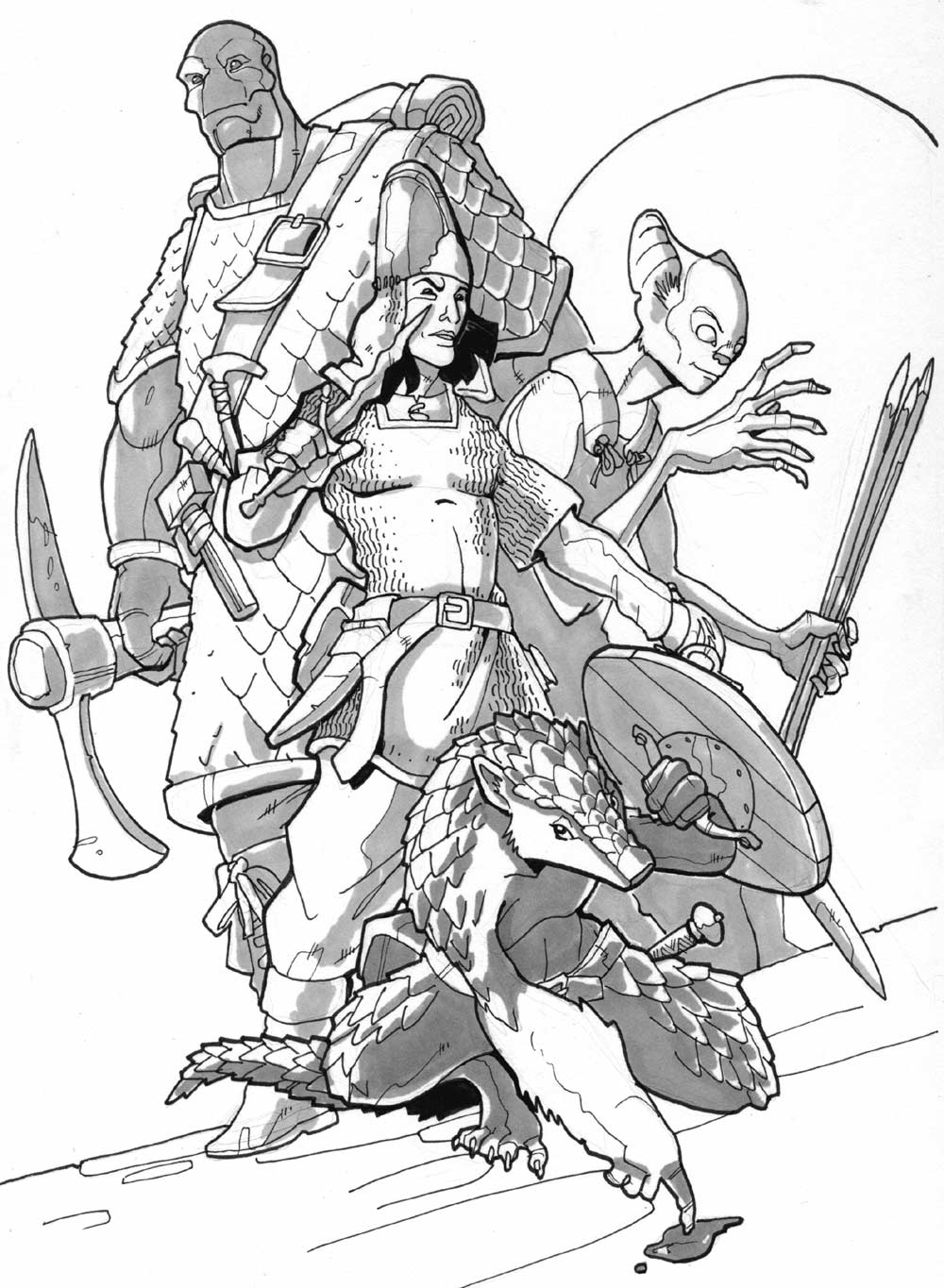
LITTLE PIG
The Little Pig replaces the Halfling in MG&G. Little pigs have a +2 bonus to save vs. fear (“who’s afraid,” they inquire, “by the Big Bad Wolf?”) and a particular skill at building houses and at setting traps (for wolves or others).

FAIRY KNIGHT
The fairy knight (or fairy dame) replaces the Elf class in B/X. They are permitted to wear up to mail, and though beautiful, they have no souls and thus are not to be completely trusted.

ALIGNMENT
Whereas B/X has three alignments, Lawful, Neutral and Chaotic, MG&G has four alignment which correspond with four royal houses in fairy tale land. A character must pledge his or her troth to one of these alignment (though they need not always cleave faithfully to that faction – unless somebody is watching).

Hearts: The character is pledged to the ideal of Love. He or she gets a +1 bonus to hit when defending this ideal (i.e. defending a loved one), but must pass a save vs. magic when confronted with the temptation of Lust.

Diamonds: The character is pledged to the ideals of Truth and Beauty. He or she gets a +1 to hit when defending beauty or seeking out the truth, but must pass a save vs. magic when confronted with the temptations of Envy and Avarice.

Spades: The character is pledged to the ideal of Judgment. He or she gets a +1 bonus to hit when fighting against outlaws and other evils, but must pass a save vs. magic when confronted with the temptation of Vengeance.

Clubs: The character is pledged to the ideal of Mirth and Merriment. He or she gets a +1 bonus when fighting spoil sports and bullies, but must pass a save vs. magic when confronted with the temptation of Cruelty.

Next installment will cover Grimm Tales (i.e. monsters & treasure)

APPENDIX N (A brief version, anyways)

Snow White
Cinderella
Beauty and the Beast
Little Mermaid
Pinnochio
Three Little Pigs
Three Billy Goats Gruff
Hansel & Gretel
Red Riding Hood
Rose RedBlue Beard
Puss in Boots
Gingerbread Man
Rumpestiltskin
Jack and the Beanstalk (Jack the Giant Killer)
Humpty Dumpty
Cat and the Fiddle
Tom Thumb/Thumbellina
Princess and the Pea
Frog Prince
Little Boy Blue
Simple Simon
Pied Piper
Tom Tom the Piper’s Son
Old Woman in a Shoe
Old Mother Hubbard
Old King Cole
Little Jack Horner

Supplement I – Wonderland
Supplement II – Oz

The Caves of Llosh

The Caves of Llosh is a multi-part dungeon for the Pars Fortuna rules, for characters level 1-3 that I decided to publish here, piece by piece. I’m going to start doing the same for Space Princess and the Catacombs of Old Mars soon … let’s see how it goes.

[No Map Yet … Been busy but wanted to get this ball rolling, and the intro area is pretty straight-forward]

Well beyond the city of Viacrux and the Pyroxist Mountains, past the steading of the cyclopeans and to the west of the Titan’s Door, lie the Caves of Llosh, one of the many entrances to the infamous Spire that lies at the center of creation and, they say, offers one a chance to rewrite that creation if only they can climb to its pinnacle.

The caverns are accessed via a small cave in the base of a mountain shrouded in spiny ygoraa bushes that drip their maddening sap when the moon is full. The upper reaches of the mountain are stark and on the rocky ledges perch beady-eyed hraeths (giant ravens), who often attack adventurers making their way to and from the caves (3 in 6 chance, 5 in 6 if laden with treasure).

HRAETH (1d8): HD 1; AC 15; ATK 1d4 (talons); Move 3 (Fly 18); Save 17; CL/XP 1/15; Special: None.

1-1. The entry cave measures about 50 feet wide and 70 feet long, and the ground and ceiling both angle downwards from the entry. The floor and walls have been worn smooth by dozens of adventurers who have dared the caves, and bits of graffiti are to be found chiseled into the walls, including a large admonishment to “Never Bite an Oort” and a plea to “Bow to The Dam”.

There are three exits from the cavern. One is a sinkhole with glistening walls (not wet, just a characteristic of the rock). The sinkhole has an opening about 15 feet in diameter – a sort of cone – with several iron spikes driven into the rim, and usually (2 in 6) a rope tied to at least one. About 20 feet down, the air becomes foul and difficult to breath (save or suffer -1 penalty to attack and save for 2 hour; or simply cover mouth and nose with a thick cloth), and about 40 feet down you might come across additional spikes driven into the walls, where people made a perch for themselves and tied off additional ropes. In all, the sinkhole is 80 feet deep and leads to chamber 3-1.

The next exit is a rather large cave mouth at the back of cave 1-1. The air in the mouth of this cave is quite chilly, and one can even see crystals of frost on the ground leading into it. This cave leads into a tunnel about 40 feet long, that winds back and forth gently and descends at a 15-degree angle to chamber 1-2. The tunnel is guarded by four cavern crawlers with mottled, white skin that allows them to blend in with the frosty tunnel (surprise on 1-2 on 1d6).

CAVERN CRAWLER (4): HD 1d4 (4, 2, 2, 2 hp); AC 12; ATK suffocate (drop); Move 12; Save 18; CL/XP 1/15; Special: Suffocate (see monster description).

The final exit is hidden by an illusion, making it look like part of the east wall. It is a stone portal, large enough to be carved by bo’al, and bearing the tell-tale signs of their aesthetic (i.e. boring, angular, sturdy, etc.). Beyond the illusion (not the work of bo’al, but of a party of caledjula who long ago met their demise within the caves) there is a hallway about 10 feet long and an iron door (locked, trapped with an acid spray that deals 1d6 damage and has a 13% chance of ruining a thief’s lock pick). Beyond the iron door there is a spiral stair that leads down about 30 feet to chamber 2-1. This engineering feat was a result of a party of bo’al being guided by a prophetic dream, and breaching the second level of the dungeon from a pathway its inhabitants never quite expected.

Gentleman Dog

Philo was a sophisticated man about town, a bon vivant with a mind like a steel trap. While he spent his days with the smart set, at night he often rubbed shoulders with a rougher element, aiding the New York City police when a crime proved too tough to solve. It was a day trip into Greenwich village, though, that proved his undoing.

A trip to a coffee house in Greenwich led to the discovery of a murder in the backroom, and through his investigations, Philo found himself confronting a rather powerful magician, one Hayden Olivier. Hayden murdered the woman in the coffee house accidentally, but has no intention of serving time in prison. More importantly, he has discovered in murder a powerful new form of magic, and now sets his sights on another, a sorceress of no mean ability named Leah. In the final scene of Philo’s case, he found himself caught between the two sorcerers, and though Olivier was forced to quite this plane, mortally wounded, he left behind a dead rival and a transformed detective. Philo was now a dog – a cunning, dashing little hound, of course, but a dog just the same. With her dying breath, Leah lays down a final, tender curse upon Philo – that he should live until the magic was reversed.

So it was that Philo became known as Gentleman Dog, a surprisingly cunning beast with a strange knack for making himself understood. With top hat and monocle, he lives an almost immortal existence, solving crimes and seeking out practitioners of the occult in hopes of reversing Hayden’s curse.

GENTLEMAN DOG, Adventurer 7 (Dog, Detective)
STR 1 (+0) | DEX 4 (+1) | CON 4 (+1) | INT 9 (+2) | WIL 5 (+1) | CHA 7 (+2)
HP 35 | DC 11 | ATK +6 (+6 melee, +7 ranged) | SPD 3 | XP 8,125 (start with 25,000 XP)

Ability Boosts: Charisma +4, Constitution +1, Dexterity +2, Intelligence +6

Powers: Sending (must make eye contact, humans only, short messages that come to the person as sudden realizations), Super Speed +1

Gear: Top hat, monocle, pipe

Found here … yeah, all this, because I found a picture of a dog in a top hat with a pipe and had to do something with it … I am at least proud that I managed to turn it into a half-assed mash-up of Philo Vance and Aleister Crowley. 

PS – Anyone out there want to do a comic book set in the “Mystery Men! Universe” – or maybe more properly the Shore City Universe? If so, let me know. I’d love to publish some 1 or 2 page quickie stories in Land of Nod.

Three New Undead … Just Because

These critters popped into my head a few days ago, so I decided to give them some stats. Enjoy …

Necromantic Masterpieces

Necromancers are often frustrated artists, and their desire to outdo their brethren is fierce. While the pedestrian necromancer is content with creating zombies, skeletons, ghouls and the like, the true artist labors on a unique creation and creates a manual to hide away for others to one day find.

DAME SANS MERCI
Medium Undead, Chaotic (NE), Average Intelligence; Solitary (1)

Hit Dice: 5
Armor Class: 15 [4]
Attacks: 2 flailing fists (1d6) or gaze (see below)
Move: 30
Saves: Fort 13, Ref 13, Will 11
XP: 500 (CL 6)

A dame sans merci appears as a feminine skeleton wrapped in tight, black leather (sometimes studded with spikes) that has been padded (to create the curvaceous feminine shape) with a rare form of fungus cultivated by some death cults and wicked alchemists. The skeleton has onyx eyes.

The dame sans merci can focus its withering gaze on any one target within 30 feet. They target must pass a Will saving throw (save vs. magic) or be affected per the spell ray of enfeeblement. Once per day, it can breath a cone (15-ft long and 10-ft wide) of necromantic spores that play on a person’s mind. Roll 1d4 and consult the table below:

1 = Fear
2 = Rage
3 = Confusion
4 = Despair

All within the cone must pass a Fortitude saving throw (or save vs. poison) or be affected by a random mind effect for 2d4 rounds.

AMPUTATOR
Large Undead, Chaotic (CE), Low Intelligence; Gang (1d4)

Hit Dice: 8
Armor Class: 14 [5]
Attacks: 2 pincer (2d4)
Move: 30
Saves: Fort 10, Ref 11, Will 10
XP: 800 (CL 9)

Amputators are made by removing the hands from a dead gorilla and replacing them with large, metal pincers. Most of these gorilla corpses are shaved by the necromancer and covered with tattoos of magical glyphs – needless to say, amputators are rather horrifying.

When an amputator’s pincer attack is a natural ’20’, the target suffers double damage and must pass a Fortitude saving throw (save vs. petrification) or have an arm twisted off. If the target is wearing armor, the armor first makes an item saving throw. If successful, the target’s arm remains attached to their body. If the item saving throw fails, the armor is torn off the arm and the arm is now in danger of being torn off.

FULL-THROATED SCREAMER
Small Undead, Chaotic (CE), Average Intelligence; Solitary (1)

Hit Dice: 6
Armor Class: 16 [3]
Attacks: Slam (1d4 + 1d4 cold) or scream (see below)
Move: Fly 30
Saves: Fort 13, Ref 12, Will 10
XP: 600 (CL 7)

Possibly the oddest of created undead, the full-throated screamer appears as three preserved heads encased in crystal spheres. The heads must have belonged to a fishwife, politician and braggart in life. They float within 5 feet of one another, and can slam into people or, once per day each, issue a terrible scream that affects all within 30 feet. Those within range of the scream must pass a Will saving throw (save vs. magic) or their lowest mental ability score (intelligence, wisdom or charisma) suffers 1d4 points of damage. If this score is reduced to half normal, the victim becomes either a mindless berserker (wisdom; per rage), babbling fool (intelligence; per feeblemind) or mad dancer (charisma; per irresistible dance).