Truth > Fiction Files: Giant Scale Worms

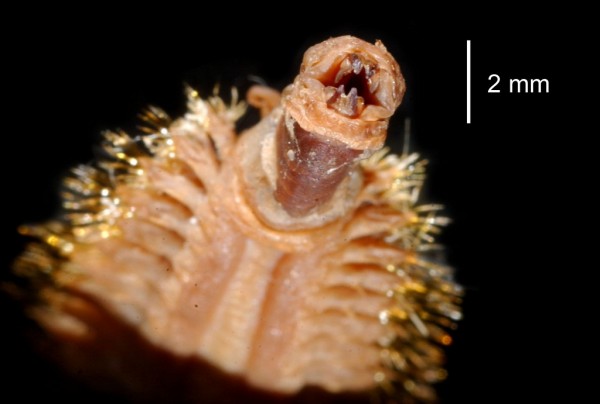
Saw this at Boing Boing today – a giant scale worm. 

Nasty little bugger, what? And is practically demands game stats. Of course, our version of giant is going to be GIANT!


GIANT SCALE WORM
Large Vermin, Neutral (N), Non-Intelligent; Bundle (1d6)

Hit Dice: 5
Armor Class: 14
Attacks: Bite (1d8)
Move: 20 (Climb 20)
Save: F 10, R 13, W 13
XP: 500 (CL 6)

Giant scale worms are aquatic monsters who sometimes crawl from the salty depths to harass ships traveling through shallow seas, or to attack people in fishing villages that have strayed too near the water’s edge at night. When a giant scale worm finds prey, it shoots its jaws out at the end of its reversible throat, allowing it an extra 5-ft. reach. For those not practiced in fighting scale worms, this attack gains a +5 bonus to hit. The jaws are quite powerful, and are capable of crushing weapons and armor. Any time a giant scale worm’s attack fails by no more than 2 points, the target must pass a Reflex save or the worm’s attack is treated as a sundering attack against their equipment, in the following order: Shield, weapon, armor.  In systems without rules for sundering attack, simply force the target’s equipment to pass an item saving throw, or the target to pass a save vs. paralyzation, or be destroyed.

Special Qualities: Blindsight, resistance to cold

Additional images found at Real Monstrosities

Cush – Quicksand, Evil Gnomes and Pearl Trees

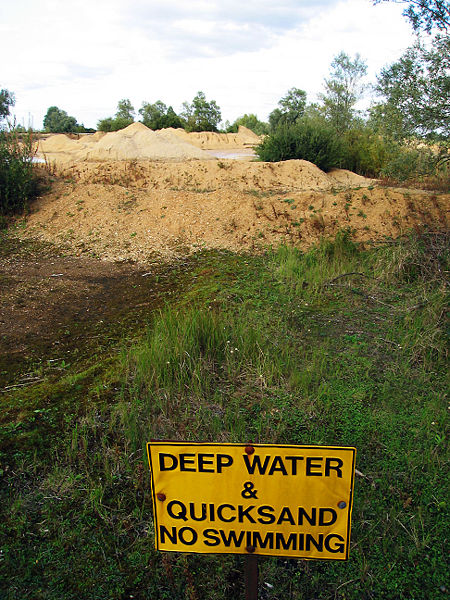
03.31 Quicksand: Adventurers moving through this hex have a 2 in 6 chance of stepping into a pit filled with quicksand. The trees surrounding the quicksand are inhabited by a race of talking monkeys, who will cast bets (using cowrie shells) on whether the unfortunates will live or die. They will not render aid unless they are somehow tricked into it. If attacked, they flee into the forest; from that point on, random monster encounters occur on the roll of 1-2 on 1d6.

[Because a jungle without quicksand is just bogus]

05.13 Gingi Tribe: The Gingi are a tribe of lizardmen (pop. 331) descended from the lizard kings of old. They have faces that resemble the gallimimus and green scales with yellow stripes. The tribe has 200 spear-armed warriors. Their village is surrounded by a ditch and palisade. The ditch is filled with humanoid and animal bones, and skulls are attached to the tops of the walls by leather thongs. The wall is guarded by 8 elite warriors (3 HD) armed with blowguns and poisoned (sleep) darts. Water for the village is drawn from a deep well.

The village consists of huts made of woven vines covered in dried mud and a large, octagonal wooden house. The house is occupied by the tribe’s chief Jumbaba, his harem of six females and his fifteen hatchlings. The tribe’s treasure consists of 4,000 gp taken from an exhausted (and heavily laden) party of adventurers two months ago.

06.34 Pearl Tree: A large tree resembling a baobab grows here. In the late summer the tree will be filled with large, prickly, yellow fruits with delicious pink flesh. There is a 1% chance that those someone eating a fruit (roll once for the entire party) will find a perfect, pinkish pearl (100 gp) at the center instead of a pit. Fruit that is opened up but not consumed will cause the person wasting it to be cursed by the tree’s guardian spirit. The pits can be used to make fire seeds (as the druid spell) by knowledgable wise women.

08.03 Gingdaja Village: The small village of Gingdaja (pop. 300) is inhabited by a clan of wicked gnomes led by a council of elders that consists of Zangdok, Pukulga and Jajujh. The village is surrounded by a short picket of sharpened stakes, all of them meticulously carved into whimsical animal shapes. The people live in clusters of huts surrounding a wooden shrine.

The gnomes of Gingdaja were created by Azba, their patron deity. They are lithe and agile, and their scholars are well versed in elemental magic. In place of a normal gnome’s innate spells, the Gingdajans can cast create water, endure elements and magic stone each once per day.

Gingdaja has a small tavern run by Momwi, a retired slinger. The tavern is a long, narrow lean-to that serves a light, frothy ale made from roots and a powerful liquor made from tree fungus, as well as a hearty mushroom stew. The village also has a blacksmith named Pukdaja, a healer named Zuljujh and a monkey-trainer named Keshu. The village’s temple is a one-room, wooden structure surrounded by a yard edged by white stones. The shrine is tended by Zagu, a priest of Azba.

Azba is a goddess of chance and gambling. She appears as a tall crone with lemon-yellow skin and large, round, red eyes. She carries a simple hammer that randomly blesses or curses those it strikes in combat. The gnomes believe that Azba embodies the vital forces of the universe (i.e. chaos). They also believe that she dwells in the cave in [0802]. They throw their old and infirm in the cave as sacrifices to Azba.

08.27 Ape Boy: A cave system here is inhabited by a clan of thirty carnivorous apes and an adopted human boy they call Gargan. The apes are led by a massive male called Jorak (30 hp). In the deepest cavern of their lair, secreted there by an unknown party, there is a treasure. It consists of 80,000 cp in a dozen small chests, a golden yellow topaz (700 gp), a white pearl that has been delicately carved to hold the silhouette of a woman (80 gp) a cylindrical chunk of polished coral (60 gp) and a vial of phosphorescent liquid in a pewter flask. The liquid removes paralysis but causes intense hunger (double ration consumption for 1d6 days; -1 penalty to all rolls on less than double rations due to hunger pangs).

Sale at Lulu

I don’t do the advertising bit too often, but they are running a sale at Lulu.com right now, and it might come in handy if you’re in the market for any of my nonsense. Just click the ad below …

African Expeditions – Henchmen and Supplies in 1910

In my quest for Africa-related illustration, I’ve delved into a couple old books found at Project Gutenberg. Besides a few usable illustrations, I also found a few interesting tidbits from the age of safaris, when the process for going out into the wilderness wasn’t too different from what it might be like in a game of D&D.

What follows comes from a book called In Africa, Hunting Adventures in the Big Game Country by John T. McCutcheon.

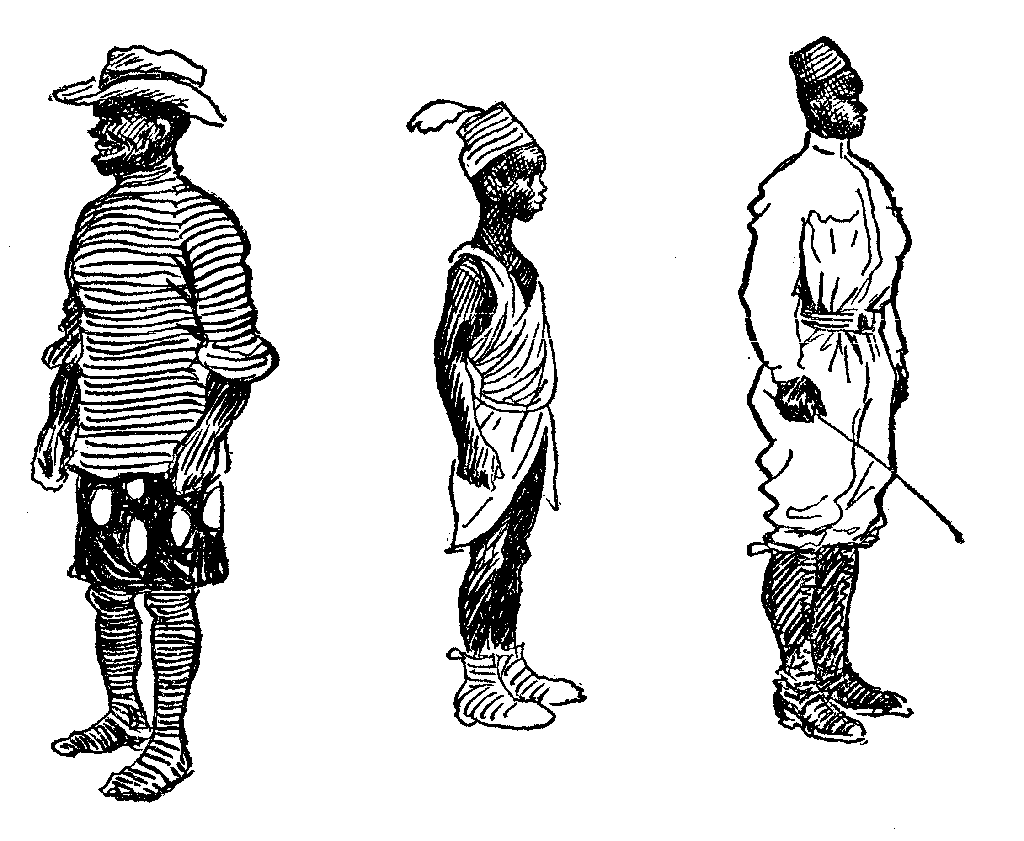
For an African expedition involving four “adventurers”, there were the following “henchmen”
Cook, toto and head man

(1) Head-man: Runs the camp and the other henchmen; paid $25/month

(8) Gunbearers: Carry gun and other key equipment, skin beasts and collect trophies; fire weapons when the boss is down; paid $25/month.
(4) Askaris: Native guards, keep up fires, scare away animals; $5/month.
(1) Cook: $13/month
(4) Tent Boys: Personal servants of the “adventurers”; wait on tables, do washing, make sure water is boiled and purified, fill water bottles; $7/month
(80) Porters: Carry camp from place to place, each carrying 60 lb. on head, then set up camp, get firewood, carry what game is shot by the “adventurers”; $3/month
(4) Saises: Grooms, one for each mule or horse; $4/month
(20) “Totos”: Means “little boy”, they are not hired, but come along as stowaways, carry small loads and help brighten the camp; paid food and lodging.
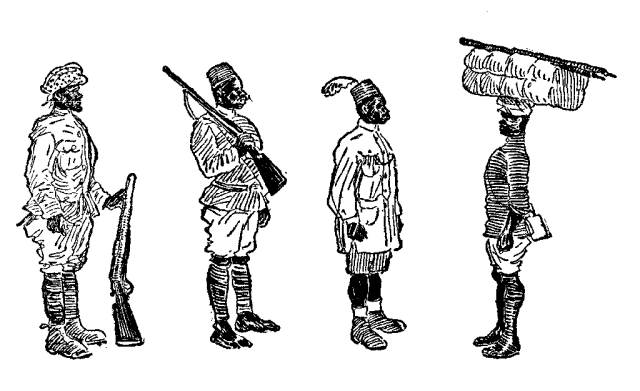
 

Gun bearer, askari, tent boy, porter

By my count, that would be something like a sergeant-at-arms, 12 men-at-arms, one specialist (the cook) and 108 “torchbearers”. The total cost is $542 per month.

It was required by law that each porter be provided with, at minimum, a water bottle, blanket and sweater. Uniforms, water bottles, shoes and blankets were provided for all others.

They had 20 tents for the entire expedition – if you assume one tent per adventurer, then you’re looking at an average of seven or eight people per tent – probably more in some tents, since the head-man and cook probably got their own tents.

Supplies for a 6 month trip into the wilderness were as follows:

TWENTY CASES (RED BAND)
    Two tins imperial cheese.
    One pound Ceylon tea.
    One three-quarter pound tin ground coffee.
    One four-pound tin granulated sugar.
    Two tins ox tongue.
    One tin oxford sausage.
    Two tins sardines.
    Two tins kippered herrings.
    Three tins deviled ham (Underwood’s).
    Two tins jam (assorted).
    Two tins marmalade (Dundee).
    Three half-pound tins butter.
    Three half-pound tins dripping.
    Ten half-pound tins ideal milk.
    Two tins small captain biscuit.
    Two tins baked beans, Heinz (tomato sauce).
    One half-pound tin salt.
    One two-pound tin chocolate (Army and Navy).
    Two parchment skins pea soup.
    One one and one-half pound tin Scotch oatmeal.
TWENTY CASES (BLUE BAND)
    Two tins baked beans (Heinz) (tomato sauce).
    One tin bologna sausage.
    One tin sardines.
    One tin sardines, smoked.
    Two one-pound tins camp, pie.
    Five tins jam, assorted.
    Two tins marmalade (Dundee).
    Five half-pound tins butter.
    Three half-pound tins dripping.
    Ten half-pound tins ideal milk.
    Two tins imperial cheese.
    One one and one-quarter pound tin Ceylon tea.
    One three-quarter pound tin ground coffee.
    One four pound tin granulated sugar.
    One quarter-pound tin cocoa.
    Two tins camp biscuit.
    One half-pound tin salt.
    One one and one-half tin Scotch oatmeal.
    One one-pound tin lentils.
    One tin mixed vegetables (dried).
    One two-pound tin German prunes.
    Six soup squares.
    One ounce W. pepper.
    Two sponge cloths.
    One-half quire kitchen paper.
    One two-pound tin chocolate (Army and Navy).
SIXTEEN CASES (GREEN BAND)
    Three fourteen-pound tins self-raising flour.
    Two cases (black band) containing fifteen bottles lime juice (plain) Montserrat.
    Two cases, each containing one dozen Scotch whisky.
    Two cases (red and blue band) thirty pounds bacon, well packed in salt.
    Two cases (yellow and black band) five ten-pound tins plaster of Paris for making casts of animals.
    One case (red and green band) fifty pounds sperm candles—large size (carriage).
    Four folding lanterns.
The following items to be equally divided into as many lots as necessary to make sixty-pound cases:
    Eight Edam cheeses.
    Twenty tins bovril.
    Twenty two-pound tins sultana raisins.
    Ten two-pound tins currants.
    Ten one-pound tins macaroni.
    Thirty tins Underwood deviled ham.
    Eighty tablets carbolic soap.
    Eighty packets toilet paper.
    Ten bottles Enos’ fruit salt.
    Twenty one-pound tins plum pudding.
    Six tins curry powder.
    Twenty one-pound tins yellow Dubbin.
    Six one-pound tins veterinary vaseline.
    Six one-pound tins powdered sugar.
    Six tin openers.
    Twelve tins asparagus tips.
    Twelve tins black mushrooms.
    Six large bottles Pond’s extract.
    Twelve ten-yard spools zinc oxide surgeon’s tape one inch wide.
    Two small bottles Worcestershire sauce.
In addition to the foregoing we added the following equipment of table ware:
    Eight white enamel soup plates—light weight.
    Eight white enamel dinner plates—light weight.
    Three white enamel vegetable dishes—medium size.
    Six one-pint cups.
    Eight knives and forks.
    Twelve teaspoons.
    Six soup spoons.
    Six large table-spoons.
    One carving knife and fork.
    Six white enamel oatmeal dishes.
As our tent equipment and some of the miscellanies necessary to our expedition, the subjoined articles were procured:
    Four double roof ridge tents 10 by 8—4 feet walls, in valises.
    One extra fly of above size, with poles, ropes, etc, complete.
    Five ground sheets for above, one foot larger each way, i.e., 11 by 9.
    Four mosquito nets for one-half tents, 9 feet long.
    Four circular canvas baths.
    Twelve green, round-bottom bags 43 by 30.
    Four hold-all bags with padlocks.
    Two fifty-yard coils 1 1-4 Manila rope.
    One pair wood blocks for 1 1-4 brass sheaves, strapped with tails.
    Four four-quart tin water bottles.
    Two eight-quart Uganda water bottles.
    Four large canvas water buckets.
    One gross No. 1 circlets.
    One punch and die.

This does not include medical and surgery supplies or rifles.

Personal supplies were as follows:

    Two suits—coat and breeches—gabardine or khaki.
    One belt.
    Two knives—one hunting-knife, one jack-knife.
    Three pair cloth putties.
    Three flannel shirts (I actually only used two).
    Six suits summer flannels, merino, long drawers.
    Three pair Abercrombie lightest shoes (one pair rubber soles).
    Three colored silk handkerchiefs.
    Two face towels—two bath towels.
    Three khaki cartridge holders to put on shirts to hold big cartridges, one for each shirt.
    One pair long trousers to put on at night, khaki.
    Two suits flannel pajamas.
    Eight pair socks (I used gray Jaeger socks, fine).
    One light west sweater.
    One Mackinaw coat (not absolutely necessary).
    One rubber coat.
    One pair mosquito boots (Lawn and Alder, London).
    Soft leather top boots for evening wear in camp.
    Five leather pockets to hold cartridges to go on belt.
    Three whetstones (one for self and two for gunbearers).
    One helmet (we used Gyppy pattern Army and Navy stores).
    One double terai hat, brown (Army and Navy stores).
    One six-_or_eight-foot pocket tape of steel to measure horns.
    One compass.
    One diary.
    Writing materials.
    Toilet articles.

How often to PC’s bring changes of clothes with them on adventures?
 

Dragon by Dragon – April 1978 (13)

Niall armors up like a barbarian!

Dragon #13 is a mixed bag. Mostly good, a little wasted space (in my opinion of course, one man’s waste is another man’s … hmmm, that’s not going to sound right … skip it). Let’s take a look, shall we …

Tim Kask starts off with his editorial spiel, noting that this is the first of the monthly Dragons. It is also the April Fool’s edition, which we’ll regret a little later on. Gencon moves this year from the Playboy Resort in Lake Geneva (the what in where?) to the campus of the University of Wisconsin-Parkside in Kenosha – they needed more room. TSR Periodicals is also planning a move to a bigger building.

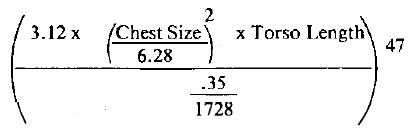
Shlump Da Orc (I’m guessing that’s a nom de plume) produces a surprisingly long article on figuring out how heavy giants are and how much they can lift. In fact, it is multiple efforts to answer this pressing question (one of the ones that suggests to me D&D was already beginning the process of moving from practice to theory with some folks). One formula explains that a 30-ft. tall giant should weigh 11.75 tons, have a 16′ 9″ chest and an 8′ long torso. Would you care for the semi-official weight formula?

Anyhow … the bit on how much a giant could pick up is a bit more interesting, if for no other reason than because of the following assumptions they use about the average human:

The average person can:

1) Carry his full weight on his back
2) Hold in his arms 3/4 of his weight – dead weight that is balanceable
3) With difficulty pick up half his body weight in dead weight
4) With difficulty pick up half his body weight in a struggling animal
5) With mild difficulty pick up 1/4 of his body weight a struggling animal with two hands
6) Fairly easily pick up 1/4 of his body weight in one hand of dead weight, balanced and somewhat symmetrical

Maybe these guidelines will prove useful to you one day.

The other useful bit is the weight (pounds per cubic foot) of various substances, such as:

Aluminum: 170 pounds
Brass, Forging: 525 pounds
Copper: 560 pounds
Iron, Malleable: 450 pounds
Gold: 1,205 pounds
Platinum: 1,340 pounds
Silver: 655 pounds
Steel, Cold Rolled: 500 pounds

Agate: 160 pounds
Beeswax: 60 pounds
Bone: 110 pounds
Diamond: 200 pounds

etc.

This one actually came in quite handy for something I was just writing for NOD, and definitely will be transcribed into an Excel document for future use in my writing. Thanks 30-year old Dragon!

Rob Kuntz now treads into dangerous territory with Tolkien in Dungeons & Dragons. I’m not sure if this was pre- or post-lawsuit. This one is an official pronouncement on the “position on D&D in conjunction with other worlds of fantasy which influenced it conception and specifically to clear up the fallacious beliefs regarding Tolkien’s fantasy as the only fantasy which inspired D&D”

The article mostly boils down to “D&D does not simulate Middle Earth, nor is it intended to, so please stop your nerd-whining”. This continues to be a problem in gaming, primarily in that many people forget that these are games, which by design are about allocating scarce resources to achieve victory (which, actually, is also what life is about), and not make-believe sessions in which whatever you want to happen does.

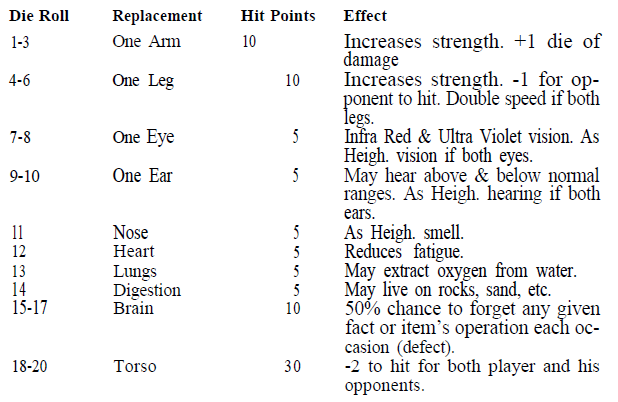
More interesting than this article is the inset by Brian Blume The Bionic Supplement for Metamorphosis Alpha. Bonzer! Random dice roll to replace your parts with bionic bits, and what those bits do. Totally worth reproducing in its entirety:

Jon Pickens is in next with an equally awesome article – D&D Option: Demon Generation. We begin with a kick-ass piece of art …

The article gives a way to generate additional “Types” of demons, with the following assumptions – all demons have Hit Dice and Gate ability appropriate to their level, all of Level III or less are vulnerable to normal weapons, the rest being vulnerable only to magical weapons, Magic Resistance 50% at Level I, increasing by 5% per level thereafter and special abilities based on the demon’s level. The powers are divided into 6 levels, and frankly, this looks like a blueprint for a demon class. I won’t reproduce it all, but worth checking out.

Jerome Arkenberg now presents the Japanese Mythos for D&D – again, very extensive article on the gods, goddesses, monsters and heroes of Japanese myth and legend, though the info on each god/demon/hero is pretty light. If you want a super rules-lite version of D&D, imagine if all you knew about a character was his Armor Class, Hit Points, Movement Rate, Magic Ability (i.e. level of magic-user or cleric), Fighter Ability and Psionic Ability.

Up next is the April Fool’s bit – a couple pages of song parodies. The less said the better.

Tim Kask now presents WARLORD: Correcting a Few Flaws. Since I know nothing about the game, I won’t comment on the article. Sounds like a fun game, though.

Gardner F. Fox now presents The Stolen Sacrifice, another adventure of Niall of the Far Travels (not to be confused with Niall of the Just Running to the Corner for Ice).

“The man moved silently through the shadows, keeping always to the darkest places. He moved as an animal might, his body poised for instant action, a big hand on the hilt of the longsword by his side. His eyes darted from a doorway to the far corner, where the wind blew a length of scarlet silk hanging from the wall. Caution was in his great body, for he knew that should he be seen this night, death would be his reward.”

Fineous Fingers finds out that just walking up to an evil wizard’s stronghold is stupid …

Yeah, you hate him, but DM’s love him. Meanwhile, Wormy introduces barbecued dwarf burgers.

We round it out with James Ward explaining a few tricks for adventurers – the kind of things that remind you that, at least back in the day, it really was a game, meant to be played and the rules exploited.

That’s it for #13. All in all a pretty useful issue, and especially good if you enjoy Gardner Fox.

Codpiece of Power [Magic Item]

When attached to one’s armor, the codpiece of power actually just sits there, doing nothing. No powers at all. The magic is in the satisfaction of kicking someone’s ass while the codpiece of power stares at them with that smug look on its face.

That, or it permits the wearer to invoke the power of a potion of heroism once per day when facing a foe tougher than they are, or when outnumbered at least 3 to one.

Or maybe it can attack a foe per the lion shield (or shield of the lion, or whatever it’s called)

Or once per day, when you rub it, it answers one question for you, per the augury spell.

Any other ideas what this puppy might do?

The image above, and the images in the past post, are by Wendelin Boeheim

Armor Up Like a Barbarian

Once upon a time, there was pretty realistic armor floating around in the fantasy realm – the stuff you would expect out of folks who did a little research at the local library. And then the 1980’s arrived on the scene …

In the spirit of ridiculous, barbarian-style armor, I present the following scheme:

Armor is for cowards, and nobody likes or respects a coward – not buxom serving wenches, not grizzled men-at-arms, not squirrely thieves, not fat merchants and certainly not the local lord with a quest that needs fulfilling.

In old school parlance, being unlikable = low charisma.

In a barbarian milieu, armor = cowardice.

The barbarian uses piecemeal armor. Each fledgling barbarian hero can decide, at character creation, to buy as many pieces of armor as they like – well, up to 8 anyways. Each piece costs 25 gp, improves one’s Armor Class by 1 and reduces their charisma score by 1. A barbarian cannot allow their charisma to fall below 3, so starting out with low charisma puts a solid ceiling on how much armor you get to wear as a barbarian. This doesn’t sound fair? By Crom, barbarians don’t whine about life not being fair – go be paladin you lousy #$%#%.

For each piece of armor you order, you roll on the following table – after all, only a real poser would actually go out and buy mismatched, piecemeal armor – barbarians pick it up off the bodies of the slain.


Note: Bits and straps of leather don’t count here – just metal. Leather up all you want.

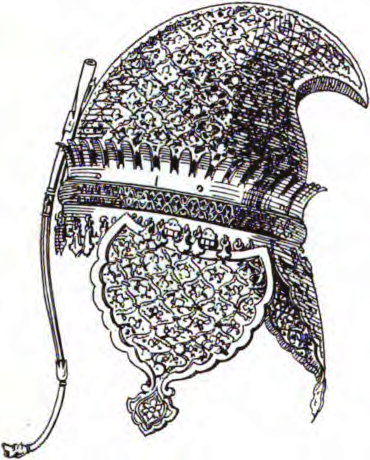
1. Helm (5% chance of wicked horns – if you have horns, you keep your point of charisma)


2. Sabatons (if this is your only piece of armor you lose an extra point of charisma – what kind of dork walks around with nothing but metal shoes)

3. Breastplate or shirt or mail or scales (+2 AC and -2 charisma)

4. Arm (right or left, your choice sport)

5. Leg (right or left, you choice sport)

Always protect yer fightin’ leg!

6. Shield (why does a shield dock your barbarian street cred? Because you should be wielding a honking big two-handed sword or axe, jerkwad)

7. Shoulder guards (if your charisma is still 15 or higher, you can add a cape; otherwise it would just make you look like a stupid poser)

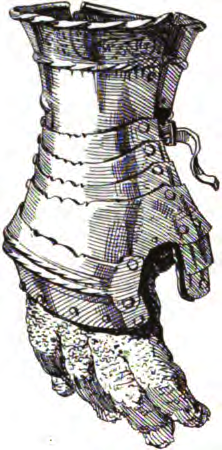
8. Gauntlet (5% chance of being spiked, which grants +1 bonus to damage each time you score a hit in combat)

9. Mail Loincloth (add mail brassiere if female, unless you want to kick it amazon style)

[You can Google “chainmail loincloth” on your own, chief]

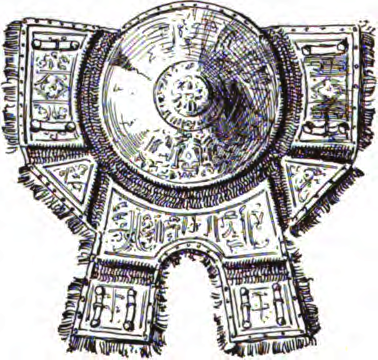
10. Disc Armor (not as dorky as a breastplate, but still shows a lack of self-confidence, which is like a taped up pair of eyeglasses to a barbarian)

You can scrounge other pieces as you adventure, but note – adding a piece still means losing charisma, which means fewer retainers, lower reaction checks and probably some kind of penalty to carousing.

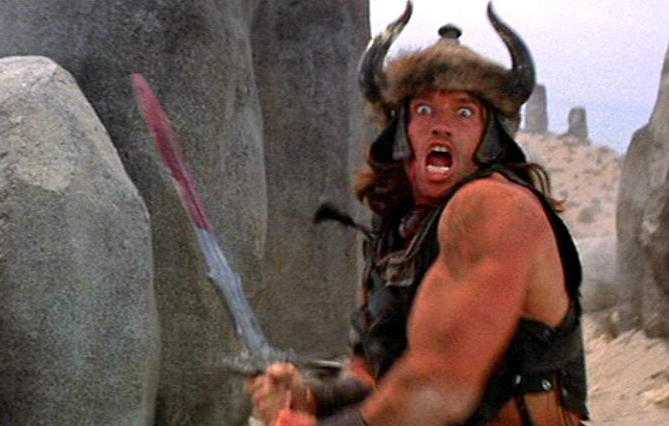
Don’t worry Conan, we can forgive the horned helmet … just not the acting

Eine Kleine Monster Art

One of my artists on Blood & Treasure, Jon Kaufman, has just posted a compilation shot of most of the monsters he illustrated for me on DeviantART. Check it ..

From left to right (vaguely – we’re all geeks here, so I’m sure you can suss it out): Behir, Centaur, Horned Devil, Wight, Mummy, Marilith, Nalfeshnee, Hengeyokai (Fox), Sahuagin, Ghaele, Bat Monster, Locathah, Succubus, Flail Snail, Cockatrice, Shedu and Gnoll.

You can also buy the illustration as a print, if you are so inclined.

In other news, I’ve finished editing the Player’s Tome for Blood & Treasure! I still need to tweak the layout a bit, but the Player’s Tome should be on sale pretty soon. Next step is the larger Treasure Keeper’s Tome. Still, I’m getting there little by little.

Thinking About Angels

We often talk about under-used (and over-used) monsters in D&D, but I rarely hear people bring up angels as an underused monsters. But think about it … aside from the railroady-save-the-world-from-elder-evil games, most D&D concerns a bunch of plunderers and tomb robbers. Even though some might be, technically, lawful, why wouldn’t some angelic vengeance show up once in a while when the party violates a consecrated tomb and carries away the burial goods or busts in on some humanoids who aren’t, at that moment, breaking God’s Law (or Whoever’s Law) and slaughter them wholesale, carting away their treasures. Angels in the game seem to just show up when a (technically) Lawful character summons them for help.

“Sure, mortal, I understand how hard it is to murder your way to riches. Let me help you out with some free healing because you’re technically on my team!”

I think there are a few reasons why this attitude predominates.

1) In a culture with Judeo-Christian roots (whether you believe or not, the roots are there), fighting angels seems wrong – i.e. not just non-lawful, but deeply chaotic. Fine for an “Evil Campaign” perhaps, but just weird otherwise.

2) The GM/Ref is “God”. You can fight berserkers, orcs, basilisks, balrogs, flail snails, etc. all day long, and it makes sense, because they’re just supposed to be there. But if an angel shows up and scolds the party with a fireball, it must be because the GM is trying to punish you for wrecking his dungeon/world.

3) History might be another problem. For generations, supposed believers in The Book wore their religion on their sleeve while engaging in plunder and slaughter. Angels didn’t punish them, so why should they punish us? We often posit – “What would a fantasy world be like if The Gods were real?”, but not  – “What would a fantasy world be like if Vengeful Enforcers of the Ten Commandments were real?”.

4) Finally, we tend to take a very soft, Michael Landon sort of view of angels in popular culture. You know, technically the adventurers are the good guys (or at least mostly focus their killing and robbing on evil folks), so, you know, the angels are kinda sorta on their side.

But how about a more unforgiving view of angels. Angels are relentless enforcers of the deity or deities of Law on the Material Plane. They take orders from an entity that is right, by definition, always right (maybe this entity is always right in your campaign, or maybe Lawful entities think he/she/it always is). “Thou shalt not kill” isn’t a suggestion, its a rule. You go around killing things, even wicked things, and eventually you’re going to run into some divine interference (maybe a cumulative 1% chance per killing, first you tangle with a lesser deva, and then work your way up to a Solar).

These are angels that encourage the concept of “martyrdom for one’s beliefs” (i.e. pacifism in the face of sure death, ’cause the point is to die with your alignment intact, not with the most XP or GP), not the “muscular Christianity” of the 19th century. Steal a pound of gold, lose a pound of flesh. It’s a different view of angels than we usually get, but isn’t that the point? Players won’t see it coming, and you can finally get some use out of the those solars, planetars, devas, archons, eladrin, etc. that are taking up space in your favorite monster book.

Anyhow – just a thought.