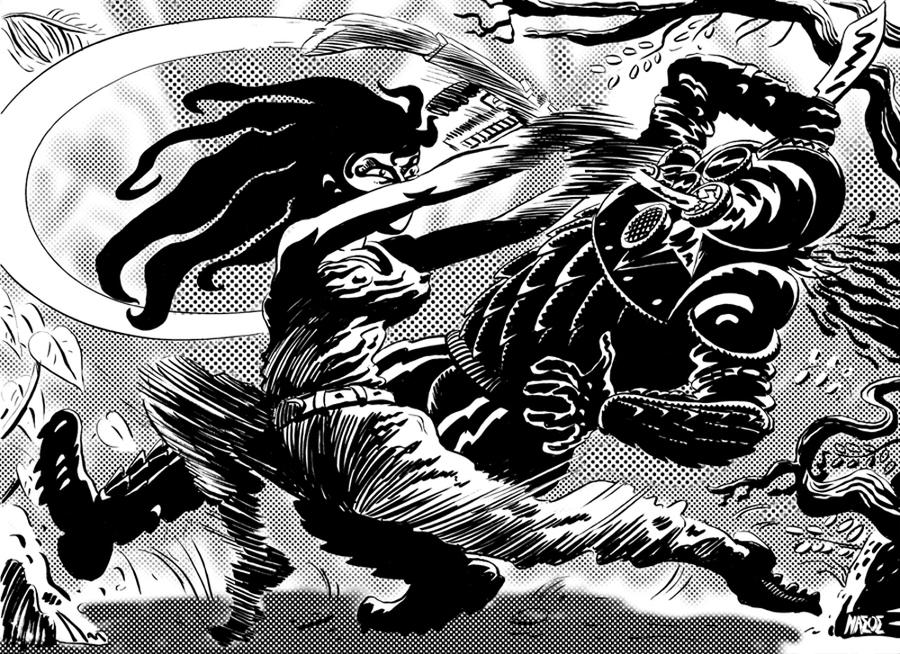
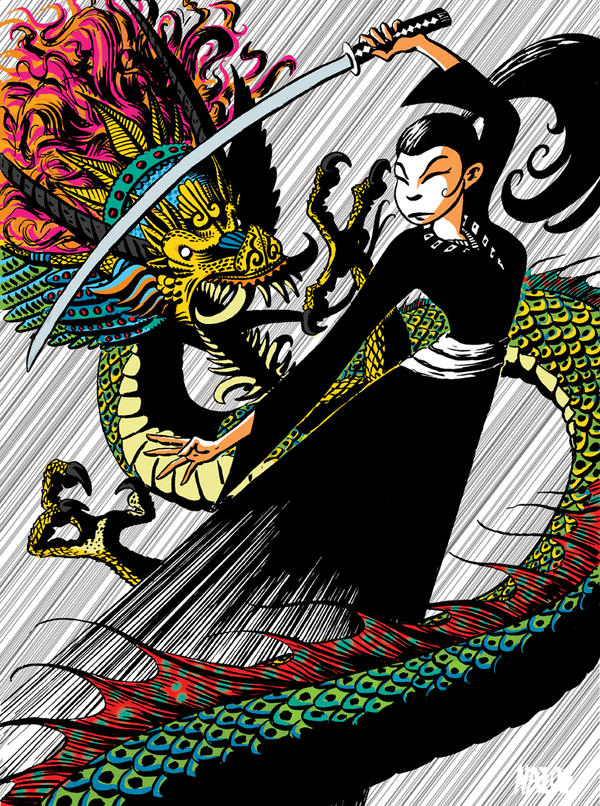
Super busy today, so I won’t gush over Nathan Rosario too much – but hey, just check the art and you can see why I follow him on deviantART.
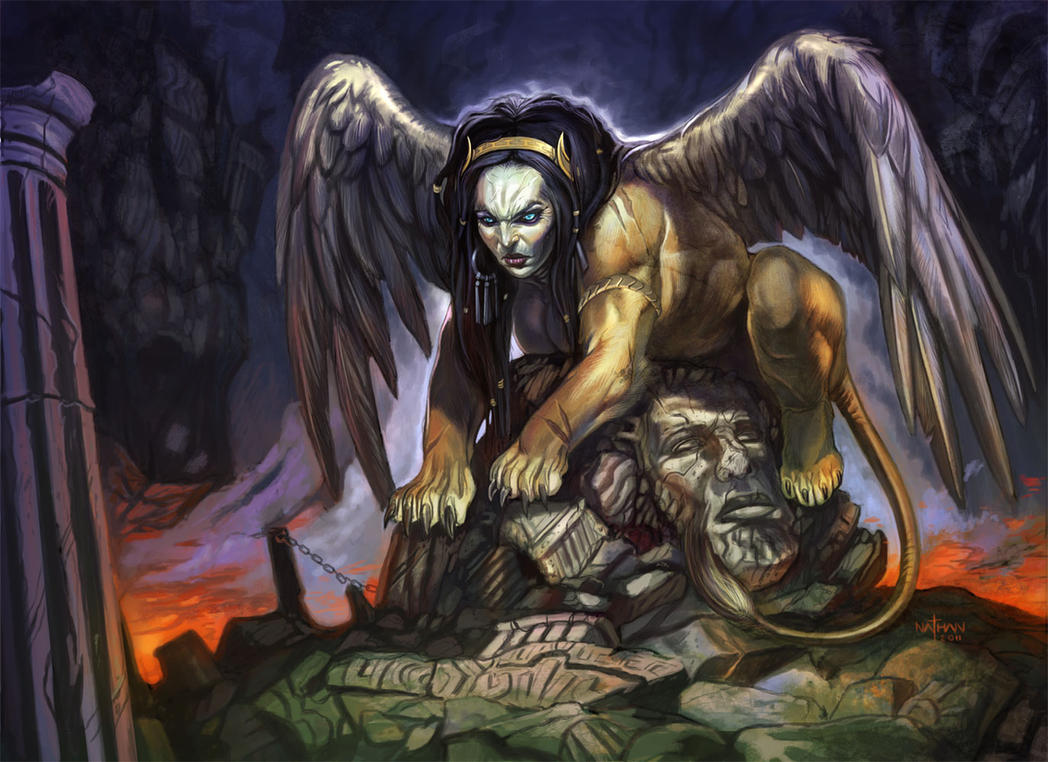

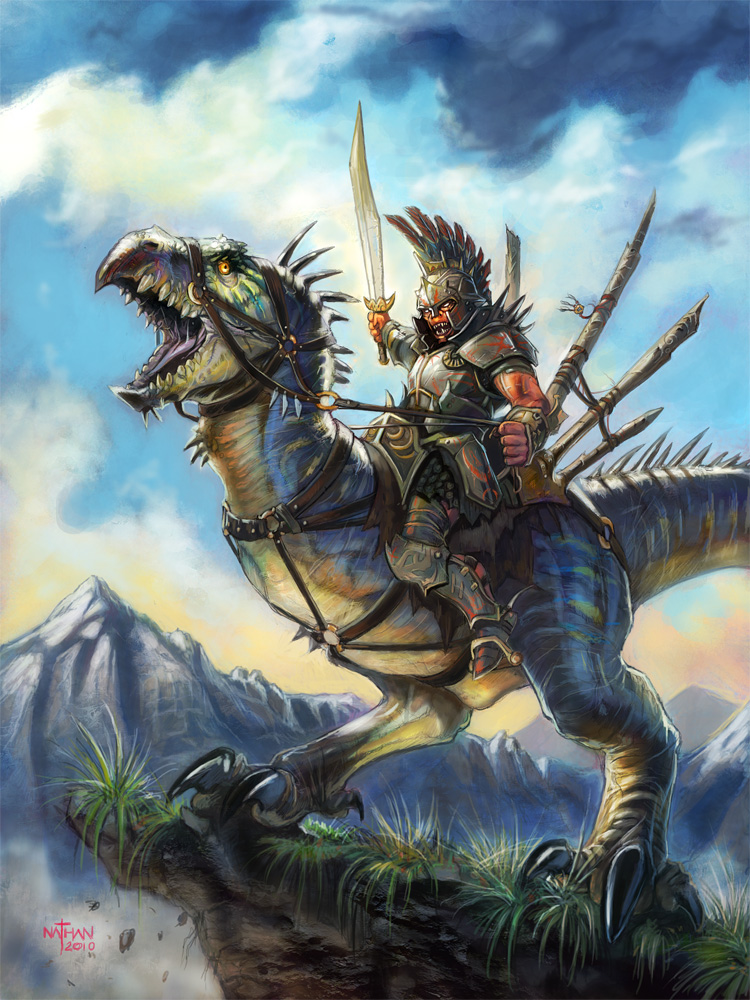
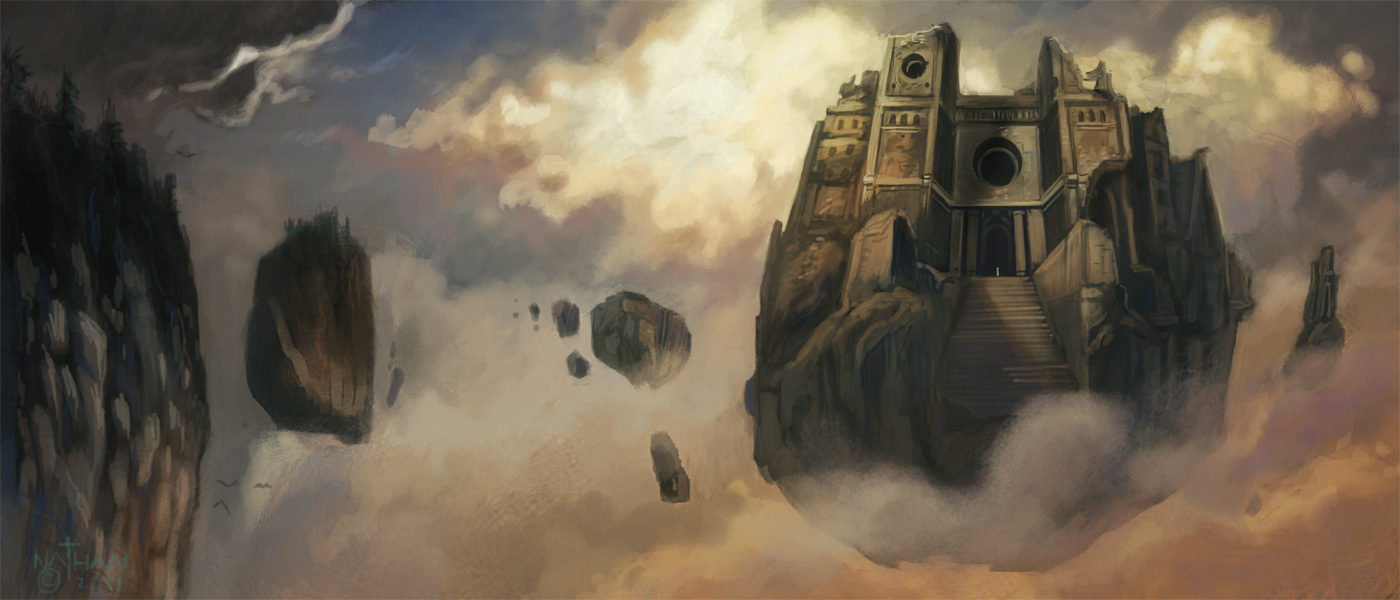
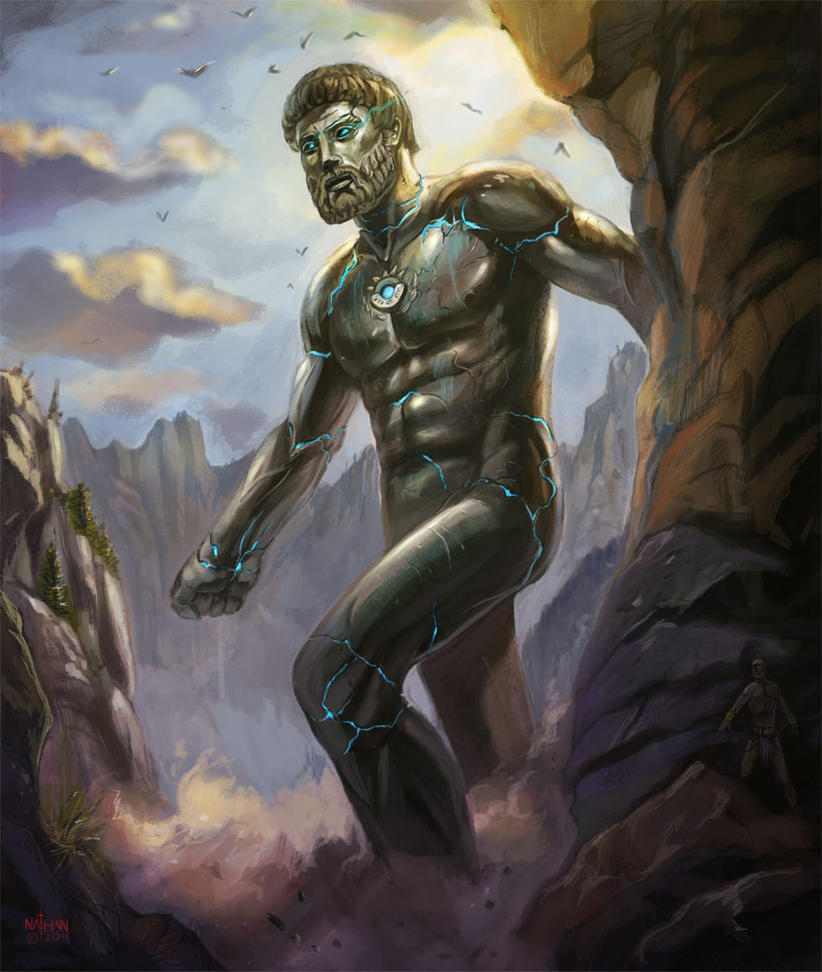
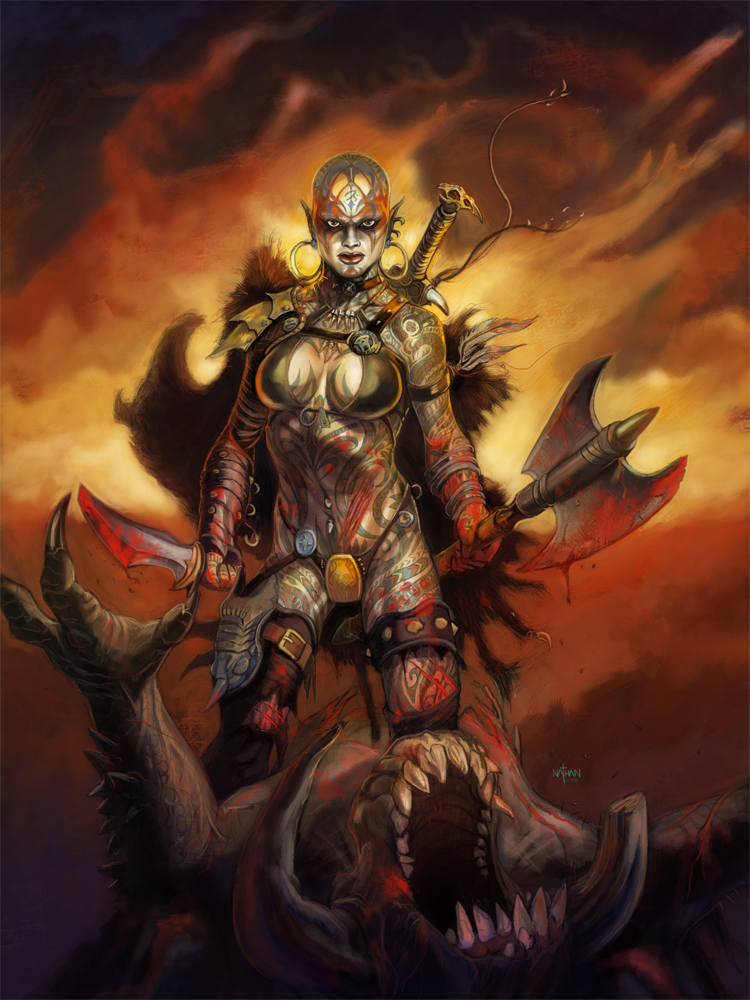
Super busy today, so I won’t gush over Nathan Rosario too much – but hey, just check the art and you can see why I follow him on deviantART.
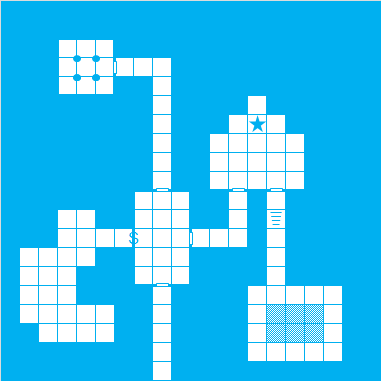
Well, I think I just about have this whole mapping in Excel thing down, so why not share the techniques with everyone else. Quick note that I’m doing these maps with the latest, greatest versions of Excel and Paint and nothing else.
STEP ONE
The first step is setting up your grid. In general, this involves eyeballing the fields into squares, and then adding a border to all of those squares using whatever color you like. In the example below, I’m using a light blue.

STEP TWO
Now, I color in all of those squares with the same color blue, and then cut out the passages and chambers by changing those squares to “no color”, though I suppose coloring them white would work just as well.

STEP THREE
At this stage, you can add in walls using thick lines (again, using the same color as above), doors (they’re just small rectangles), stairs (see below, took me a while to get these right), pillars, statues, etc. The newer versions of excel also allow you to freestyle draw shapes, which are good for irregular pools. For pools, I do a tight, white dot pattern over the blue. For chambers that are going to be natural caverns, just get the overall shape right at this stage.

The secret door is just an “S” (Arial 12 pt.) in a text box with no outline and no background.
The stairs are a long trapezoid, no outline, with a pattern of vertical lines or horizontal lines, depending on the direction the stairs face. Yeah, I’m kinda proud of figuring that one out – I originally tried drawing in the lines, but could never get the spacing correct.
STEP FOUR
To make the pointed room, I added a couple right triangle shapes of the blue color. I then add room numbers using Arial Narrow, 9 point. You can also add outlines of rounded shapes over rooms, coloring in the bits outside the outline in the next step.

STEP FIVE
We now highlight our map, hit CONTROL-C to copy, and open up MS Paint. In Paint, we paste in the map. If we want to turn any of our passages or chambers into tunnels or caverns, we just use the paintbrush (same color as background) to draw in the natural walls.

And, lo and behold, we have a workable dungeon map. It’s not perfect, and there are some limitations, but it’s not bad for using a couple pretty basic programs. Whether this will work with the Open Office version of Excel, I don’t know – I’d love to hear from somebody who tries it out.

First page of the magazine … Fantasy Air Cavalry from Ral Partha. It’s a good start, let’s see how they finish.
Best line in Kask’s editorial this time …
“In the past year, we have met and overcome all obstacles in our path save one: the U.S. Post Offal.”
The more things change …
First article is Dragon Magic by Michael Benveniste. This is in the D&D Variant series (God, I love seeing that in an official TSR publication).
“The magic used by dragons is tempered by their nature. Dragons
are creatures of rock and wind, having little use for plants and water.
They feel little need for offensive spells, believing that their own body
and deadly breath fulfill this need.”
What follows is a spell list for dragons, and this idea: All dragons have a secret name they will reveal to nobody, under no circumstances. A legend lore or wish reveals a clue, but not the name, nor does commune or similar spells. A limited wish just confirms or denies a guess. Speaking the dragon’s name dispels all of his spells, and allows the speaker to demand one – just one – service from that dragon. Nice concept for driving a game: “We can’t get to the top of the Godmountain without the help of the Dragon of Peaks, and to do that we need to learn its true name.”
The spell list has all sorts of new dragon spells, including 1st level – Breath Charm, Charm Avians, Evaluate Item, Locate Lair, Magic Pointer, Werelight; 2nd level – See Other Planes, Wall of Gloom, Weave Barrier, Weight Control (boy, could you make money selling this one, as long as no phen phen is involved); 3rd level – Binding Spell, Hold Mammal, Mesh, Negate Enchantment I, Revelation, Servant Summoning I, Water to Wine, Wood to Sand; 4th level – Attack Other Planes, Rock to Sand, Seek, Turn Magic, Work Weather. There are some great, evocative names in there, and the more I read, the more I liked the idea. One sample …
“Water to Wine: A dragon loves good wine. This spell allows the dragon to convert any water (including salt or tainted) to wine valued even by Elves. Amount: 20 gallons per age class.”
Up next are a couple more D&D Variants. First, we have Pits by Richard Morenoff. It’s a pretty neat set of random tables to determine the contents or type of a pit. One possibility is a “citizen”, which consists of the following: Pipeweed grower, shipbuilder, hatmaker, beer merchant, sculptor, fisherman, locksmith, tool merchant, weapon merchant, teacher, loan shark and trapper. Old D&D means that 1 in 1000 pits found in a dungeon holds a pipeweed grower.
N. Robin Crossby of Australia next presents Random Events Table for Settlements and/or Settled Areas. This one is based on the current season (word to the wise, Spring and Winter are safer than Summer and Autumn). There can never be enough tables like this.
James Ward is up next with Monty and the German High Command, another expose of the gaming goings-on within TSR in 1978. The accompanying illustration brings me joy …
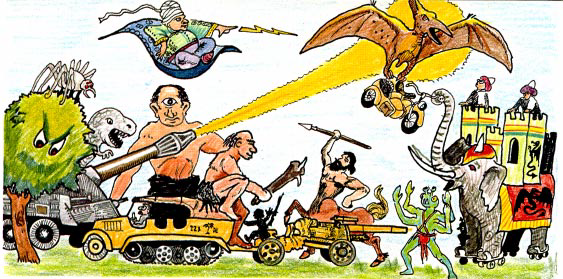
This one involves some WW2 Germans facing off against orcs, storm giants, manticores, an EHP (if you don’t know, you need to study your D&D history a little more closely), a warlock, heroes and superheroes, and trolls, all in an attempt to take a castle.
Jim Ward also presents some thoughts on Wandering Monsters, providing a list of Fourth Level wandering monsters. Takes me back to the game’s origin as a, well, game.
Jeff Swycaffer now presents Notes From Another Barely Successful D&D Player, a follow-up to Ward’s article in issue II/7. He tells of playing a “Maladroit”, who can’t cast spells, fight for a damn, pick locks or lead men. Instead, he lies like a rug. Some good ideas here – worth a read.
Jerome Arkenberg writes The Gospel of Benwa (is he referring to … hmmm) in Dragon Mirth, in which he extoles the Benwanite Heresy, that holds that all the problems in the world are due to the struggle between the Gods of Law and Chaos, and that only victory by the Gods of Neutrality can end misery on earth.
Gygax‘s From the Sorcerer’s Scroll covers D&D Ground Area and Spell Area Scale. Herein, he claims the confusion of 1″ = 10 feet indoors and 1″ = 10 yards outdoors will be cleared up in ADVANCED DUNGEON & DRAGONS. He explains how this originally came to pass – namely that the original scale was 1″ = 10 yards in CHAINMAIL, and that the 1/3 scale was devised by Arneson when he turned the tunneling and mining rules of CHAINMAIL into the dungeon rules of what would become DUNGEONS & DRAGONS. He also explains here that one turn = one scale minute in CHAINMAIL, but that for dungeon movement it was altered to one turn = ten minutes, since mapping and and exploring in an underground dungeon is slow work. The key here is that area of effect is always 1″ = 10 feet, even outdoors. So, there you go.
David Tillery is next with Weather in the Wilderness. This always seems to be such an obvious thing to do, but it has rarely paid off for me in a game. I usually just roll for inclement weather conditions when there’s to be an outdoor fight, to make the fight more interesting. Tillery has a pretty solid system, it seems – reminds me of the World of Greyhawk system.
Next, we have an ad announcing “TWO IMPORTANT NEW RELEASES FROM TSR”, those releases being GAMMA WORLD (love the original font) and the AD&D Player’s Handbook.
Next, we have Stellar Conquest: Examining Movement Tactics by Edward C. Cooper. Since I don’t know the game, I won’t go into it much, but I did enjoy the art:
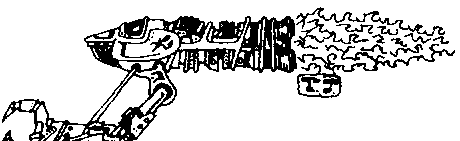
Not enough space ships have giant pincers, in my opinion.
Next we have some fiction by L. Sprague deCamp – The Green Magician.
“In that suspended gray mists began to whirl around them, Harold moment when the Shea realized that, although the pattern was perfectly clear, the details often didn’t work out right.
It was all very well to realize that, as Doc Chalmers once said, “The world we live in is composed of impressions received through the senses, and if the senses can be attuned to receive a different series of impressions, we should infallibly find ourselves living in another of the infinite number of possible worlds.” It was a scientific and personal triumph to have proved that, by the use of the sorites of symbolic logic, the gap to one of those possible worlds could be bridged.”
Funny – I just read this bit recently.
Next up … Fineous Fingers runs away from Grond the Anti-Paladin.
After that, a full page pic of Wormy counting his gold over a backgammon board.
The next article is Random Encounters for BOOT HILL, by Michael E. Crane. This should be useful for folks who play Old West games. It includes such things as mounted bandits, homesteaders in wagons, unarmed clergy, soldiers, indians, etc.
And so ends the June 1978 issue of The Dragon!

I’ll do a Dragon by Dragon later today, but wanted to share this in the meantime. Jack Vance has a website, maintained by family and friends, and they currently have an e-book of The Chasch up as a free download, with, they say, more to follow. If you’re a fan, or if you’ve never experienced Vance, visit the site and give it a look-see.
If you want to know more about The Chasch, you can read a bit at Wikipedia.
PLAYERS TOME NOW AVAILABLE!

I used an exclamation point because I’m excited … whether anyone else is, I have no idea. But, the Players Tome is now up for sale at Lulu.com in three flavors:
If you purchase the hard cover, email me (you can find the address in the right-hand column) with a copy of the lulu.com receipt and I’ll give you a link and password to download the PDF for free (please God let this work without a hitch!).
I’m about 80% finished with editing the Treasure Keepers Tome. When I finish editing, I’ll create and order a review copy, and when I make final changes, I’ll put the Treasure Keepers Tome and Complete Editions up for sale. IMPORTANT – If you want the Complete Edition that puts the Players Tome and Treasure Keepers Tome together in the same book, PLEASE DO NOT order the Players Tome today. Be patient … it’s just around the corner.
If you’re a Carcosa-ite, this little gallery might be especially interesting to you. Nassosv48 has a manic style, reminiscent of José Guadalupe Posada. Dig it …

Before our regularly scheduled post, a brief word from our sponsor …

The print copy of NOD 15 is now available for sale. Click on the picture of Lucifer to the right to find the sales page. Remember, the money you spend on NOD goes to supporting artists and buying presents for my wife and daughter. Now back to the post …
I was thinking about overland travel yesterday. I use the following overland travel rates in Blood & Treasure, which I lifted from Col. Sir Garnet J. Wolseley’s excellent The Soldier’s Pocket-Book for Field Service, based upon his military service during the 19th century.
The rates are as follows (miles per day):
Ass/Donkey – 16
Camel – 20
Dog – 10 (i.e. dog sled)
Elephant – 18
Griffon – 6 on foot / 18 on the wing (yeah, a few of these weren’t from Col. Wolseley’s book)
Hippogriff – 16 on foot / 32 on the wing
Horse – 16
Humans – 6 in a large group, 12 in a small group
Llama – 15
Mule – 16
Ox – 5
Pegasus – 16 on foot / 36 on the wing
Reindeer (team) – 75
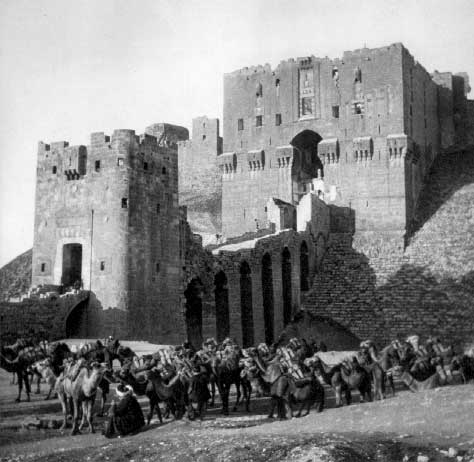
This is easy enough to use – allows players and referees to plot things out (i.e. the Temple of Doom is 30 miles away, we can get there in 3 days on foot if we don’t hire a bunch of men-at-arms, etc.)
To make it a little more organic, though, you could randomize it. In essence, let the adventurers roll a number of D6 per day to see how much progress they make each day. To keep it simple, divide those numbers above by 3.5 to find out how many dice to roll, rounding down. If the party has a druid or ranger with it, or a native guide, let them roll an extra D6. If traveling through especially tough terrain, roll D4’s instead.
So, if traveling by donkeys, a group rolls 4d6 to see how many miles they cover in a day.
Another way to go would be to assume on major problem per day (if you’ve ever done a family road trip, you know this is probably generous) that the adventurers have to solve, usually through wise preparation. If they don’t, they lose 1d6 miles of travel (maybe more) on that day. Some problems could include:
Monster Attack (can be solved by surprising the monsters and running away)
Heat Exhaustion (can be solved by wearing the proper clothing, drinking a double ration of water, etc.)
Injured Animal (can be solved by having extra mounts or pack animals, or casting the appropriate spells)
Broken Wagon (assuming wagons are being used – boy, would they slow you down – could be solved by having the proper tools and replacement parts or being able to cast spells like make whole or mending)
Illness (random minor complaint that can be solved with the proper spells – cure disease, purify food and water – assume it strikes at least half the party, maybe the half with the lowest Constitution scores)
You get the idea. This would reward smart planners and maybe provide some color to the journey.
I like to take walks – usually 2 or 3 miles. Clears the head, good exercise, etc. Also gives my mind time to wander without external influence from radio/tv/internet.
So, the other day I was walking about and an idea for a new system of buying super powers for Mystery Men! flew in and took roost. It took a couple more walks to get it to a point where it would work using an idea I’m calling Power Packs. I’m going to publish the entire thing in the next issue of NOD, but here’s a sample …
—
POWER PACKS
 |
| Yeah, I’m a little ashamed. But dang! |
Power packs are an alternate way to handle character creation in Mystery Men! Please note that if players and masterminds wish to use this method, the method will need to be adopted by all in the game, as power packs, while blending into the rules as written, can produce more powerful characters than are produced using the normal character creation rules.
With this system, characters purchase power levels in a variety of “power packs”. A power pack is a grouping of powers under a single heading. A character with electricity powers, for example, would now purchase power levels in the Electricity power pack, rather than buying individual powers. Within each power pack, individual powers are given a rank. If a character’s power level in a power pack is equal to or greater than a power’s rank, they can access that power automatically. If the power’s rank is higher than their power level, they can attempt a dice roll to activate that power. This gives heroes and villains a greater variety of powers, often at a lower cost than when using the rules as written.
As with the official MM! rules, the cost of powers can still be halved by introducing limitations on power packs. Powers can also still be invested in items, the equivalent XP cost of the powers depending on the power’s power rank:
POWER RANK
1. 1,000 XP
2. 2,000 XP
3. 3,000 XP
4. 4,000 XP
5. 6,000 XP
6. 10,000 XP
7. 15,000 XP
8. 25,000 XP
9. 35,000 XP
10. 50,000 XP
ABILITY SCORES
Using this system, characters have ability scores ranked from 1 to 6. Various power packs add their power levels to ability feats and other rolls without actually increasing the ability score. Ability score bonuses with this system are equal to the ability score, thus a score of 6 adds a bonus of +6 to rolls associated with that ability score.
When creating a character, all ability scores start at 3. One ability score can be increased by lowering another ability score by the same amount.
CLASSES
Using this system, all characters can use the same adventurer class. Sorcerers purchase power levels in the Sorcery Power Pack, among others, and Scientists purchase power levels in the Super Intelligence Power Pack.
ACTIVATING POWERS
Powers with a rank (the number in parentheses) equal to or lower than your power level can be activated by you automatically, with no roll of the dice. Powers of a rank higher than your power level can only be activated by a roll of the dice. Subtract your power level from the rank of the power (the number in parentheses after the name of the power). You must roll higher than this number on 1d6 in order to activate the power.
POWER PACKS
Here are a couple sample power packs …
FORCE FIELDS (6,000 XP/Level)
FORCE MISSILE (1): You fire a single missile of pure force that deals 1d6 points of damage per power level and requires a ranged attack to hit.
SHIELD (1): An invisible disc of force gives you a +4 to DC and completely blocks force and energy missiles. Shield lasts one round per power level.
LEVITATE (3): You levitate up to 100 lb. per power level at rate of ascent or descent of 100 ft. per round.
FORCE SPHERE (5): You create a sphere of force 2 ft. in diameter per power level within a range of 30 ft. The sphere lasts for as long as you concentrate on it. A force sphere is only affected by disintegrate or negate power. A subject inside the sphere can breathe normally, but is otherwise trapped.
FORCE WALL (6): You create an invisible and invulnerable plane of force up to 10 sq. ft. per power level that lasts 1 round per power level. The plane cannot be damaged and it is unaffected by negate power, although it can be destroyed with disintegrate. Dimension hop and teleport can bypass the wall of force, but other powers cannot be used to get through the plane. The plane can be generated as a wall, floor or ceiling, and can be slanted like a ramp.
INVISIBILITY (6): You cannot be seen, but you can be sensed by hearing or scent. Opponents suffer a -5 penalty to hit you in combat. Lasts as long as you concentrate and 1 round per level thereafter.
FORCE CAGE (8): You create a prison cell of force 10 ft x 10 ft x 10 ft that lasts as long as you concentrate on it plus one round per power level thereafter.
FORCE SWORD (8): You create a blade of pure force that appears before you and attacks as monster of your power level. The sword deals 4d6 points of damage per hit and can affect ethereal and incorporeal creatures. The sword lasts as long as you concentrate on it.
MASS INVISIBILITY (8): As Invisibility, but affects you and one other target per power level. Mass Invisibility lasts as long as you concentrate plus 1 round per power level.
FORCE HAND (9): You create a giant hand-shaped force field that can provide a +4 bonus to you DC or can bull rush or grapple as a monster equal to your power level. The hand deals 2d6 points of damage per attacks.
SUPER STRENGTH (2,500 XP/Level)
A character with this power pack adds his power level to all Strength feats, melee attack rolls, and adds 1d6 per power level to damage inflicted with a melee attack.
ADRENALINE (6): For 1 round per power level you increase your STR and CON by +2 (and thus gain bonus on melee attacks and damage and hit points), gain a +1 bonus on WILL feats and suffer a -2 penalty to your Defense Class. The Adrenaline power can only be used once per day.
STOMP (10): You stomp your feet to create a shock wave that knocks people within 10 feet per power level prone (STR feat negates) and inflicts 1d6 points of damage per power level on all who fail their STR feat.
FREESTYLE POWERS
When creating a character, especially an established comic book character, the above power packs often do not quite capture the right powers for the hero or villain. Players and Masterminds alike can, therefore, buy freestyle powers (or powers à la carte). The cost per level for a freestyle power depends on the power’s rank.
POWER RANK
1. 50 XP/power level
2. 100 XP/power level
3. 150 XP/power level
4. 200 XP/power level
5. 300 XP/power level
6. 500 XP/power level
7. 800 XP/power level
8. 1,000 XP/power level
9. 1,500 XP/power level
10. 2,000 XP/power level
SAMPLE CHARACTER: VECTRIX
Here’s a quick sample character who uses the Force Fields power pack above. This character is built with 50,000 XP.
LEVEL 9 | HP 58 | DC 15 | SPD 2 | XP 14,000
STR 2 | DEX 5 | CON 2 | INT 3 | WIL 2 | CHA 4
Power Packs: Force Fields [6]
Auto Powers: Force Missile (6d6), Shield (6 rounds), Levitate (600 lbs.), Force Sphere (12-ft. diameter), Force Wall (60 ft.; 6 rounds), Invisibility (6 rounds after concentration)
Activated Powers: Force Cage [3-6], Force Sword [3-6], Mass Invisibility [3-6], Force Hand [4-6]
With her 6 levels in Force Fields, Vectrix can access the following powers automatically: Force missile, shield, levitate, and force sphere. The other powers can be accessed by making an activation check. The numbers needed on a 1d6 roll to activate a power are included above.
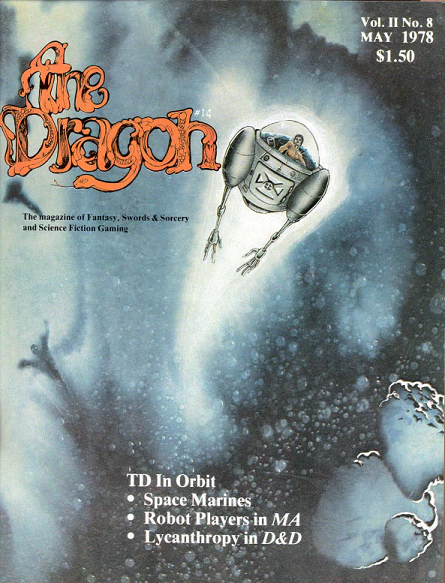
I would have been 6 years old for this one, and 6 years away from discovery D&D. Let’s see what it has to offer …
First up, winners on that “Name the Monster” contest. Conrad Froelich of Wyoming, OH was the winner with “The Creature Some Call Jarnkung”. Runner’s up were Cursed Crimson Crawler by Thomas & Edward McCloud and The Ulik by Ann Corlon (who sez women didn’t play D&D back in the day). The winning stats were as follows:
Jarnkung, Large Magical Beast, Chaotic (NE), High Intelligent: HD 5; AC 3; Atk 1 tail (2d6) and 1 or 2 weapons; Move 20 (or 9 for S&W); Save F10 R11 W12 (or 12 for S&W); XP 500 (CL 6); Special: +1 or better weapon to hit, magic resistance 20%, detect thoughts (ESP) at will, may have psionic powers.
A. Mark Ratner now gives a review of Space Marines (not the later effort by Games Workshop), a game which he designed. Apparently it is a modified Tractics which owes something to Starguard. I wish that meant something to me. What did I learn about Space Marines from this article? Well, it has things like Nuclear Damper Fields, Mekpurrs (inspired by the killer herbivores from Satan’s World by Anderson), canineoid, rauwoofs, hissss*st (based on The Time Mercenaries by Philip High) and Klackons. The article has many rules ideas and additions for the game – mostly involving air combat and underwater combat. Makes it sound like a cool game.
J. Ward offers up a review of Nomad Gods. Unfortunately, this is another game I haven’t played or read, so I can’t comment much about it. Likewise with Tony Watson’s review of Cosmic Encounter.
Barton Stano and Jim Ward present Robots as Players in Metamorphosis Alpha. This one gets down into it, giving players structure points (115) and power points (100) to spend on propulsion, computer units, armor and various physical devices like quills, lead shielding and grasping claws. While this seems like a logical way to handle robots, it also stands as a preview of where RPG’s were going in terms of character building.
Michael McCrery now presents Excerpt From an Interview With a Rust Monster. Apparently this hinges on an NPC who was polymorphed into a rust monster, and now sometimes shows up as a wandering monster in McCrery’s dungeon.
Cool miniatures ad for spaceships …

Five sizes for each, which brings to my mind the ship sizes I used in Space Princess – starfighter, shuttle, corvette, star cruiser and dreadnaught. For their part, the ships are Galactic Dreadnaughts, Galactic Attack Carriers, Galactic Battlecruisers, Stellar Cruisers and Stellar Destroyers. OK – their names are better – I’ll give them that.
Gygax writes From the Sorcerer’s Scroll on D&D Relationships, the Parts and the Whole. This one gets into the edition mess that was forthcoming for TSR – i.e. what is the “Basic Set”, will the Original game be around much longer and what is Advanced D&D.
James Ward pops in now with Monty Haul and His Friends at Play. This appears to be a satirical piece about the folks at TSR. I dug the accompanying art:

And now, a peeved letter to the editor about the Cthulhu Mythos from the February issue. This is classic geek one-ups-manship at its finest, for example:
“First, the Elder Gods, after they defeated the Great Old Ones, stripped Azathoth of a lot of his power, so his hits should be lowered to 200 to 225.”
“If you’re wondering who is number one — YOG-SHOTHOTH his hits should be raised to 400. You can say that is rather powerful; you’re damn right. The Great Old Ones are so powerful, that the total power of the Elder Gods could not destroy them; only imprison them.”
“These may seem trivial, but if Howard Phillips Lovecraft, Augest Derleth, or Robert Howard saw your use, they’d roll over in their graves not once but at least ten times.”
Another one from James Ward – The Total Person in Metamorphosis Alpha. This is a set of random tables for determining a character’s background. I always think these are most useful for Referees working out NPC’s.
Next we have an ogre fight in Wormy and Fineous Fingers being offered up as a sacrifice for a dark knight.
Gregory Rihn writes Lycanthropy – The Progress of the Disease. You can tell D&D is getting more advanced now and a little less free-wheeling for some folks in 1978. I dig this paragraph:
“A low-level werebear who takes six rounds to change fully would fight as follows: round one, normal level; round two, level minus two; round three, level minus four; round four, bear minus four; (claws and teeth have reached minimal offensive effectiveness) round five, bear minus two; round six, normal bear ability. Of course somewhere in here he has to shed his clothes.”
I like the idea of a lycanthrope changing during the course of a battle. The article includes a level table, which I would think was for adjudicating lycanthropes with class levels in the game – it has columns for “Changes Per Day”, “Chance of Involuntary Changes”, “Time Required for Change” and such – except it also has XP for each level. I guess it makes sense – XP determine one’s “lycanthrope level” separately from one’s normal class level.
And that’s it for #14. A few good bits in this one, but not my favorite issue. Even though I don’t always get much use for the articles in these issues, I still find the environment of gaming inspiration in these magazines. Well worth reading, especially for folks who have no grounding in the history of the game.

Quick post this morning, with something that’s probably already been done. So – clerics can turn the undead (i.e. scare them away), but what if they can do a bit more than that. Why not different turning effects, with easier or more difficult turning rolls to go with them?
With all of these effects, assume that a “T” on the Turn Undead chart counts as a “3” and a “D” counts as a “2” in terms of rolling the dice.
 Land of Nod