Twelve Kingly Archetypes

If a campaign goes on long enough, with PC’s gaining more and more power, wealth and ability, there’s a good chance they’ll eventually deal with a king (or queen). But what kind of king? Oh, it could just be a very basic monarch type who hands out a quest in exchange for money or some other royal favor. If the focus is the dungeon, the king doesn’t need to be particularly interesting.

On the other hand, you could leverage the amazing potential kings offer for role playing and campaign play. A monarch can become a very important NPC in a game, hindering and helping the PC’s in a wide variety of ways. A helpful king might have a much less helpful rival in the wings, making him a resource to be protected and making his protectors targets for that rival and his faction. On the other hand, a cruel king might have a more worthy successor somewhere around whom the referee can build a campaign of regime change and revolution. So many possibilities, but only if you put a little time and effort into creating a king worthy of a campaign.

So – today we look at twelve archetypes that you can use in your campaign. Later, I’ll try to do the same for queens later, though clearly these archetypes are as applicable to females and males.

God be praised!

1) THE HERO-KING

The heroic king is a fixture of mythology and folklore. King Arthur is a good example, a storied monarch that founds a nation, protects it, and, after death, is expected to return to usher in a new golden age. In a campaign, you might use the Hero-King when he is a young man, still founding his kingdom, or when he is an old man, largely inactive as an adventurer but commanding a renowned band of knights. Of course, a young adventuring king does present one problem – why is he sending the adventurers on a quest when he might do it himself. Well, even hero-kings have paperwork.

A hero-king is almost certainly going to have levels (at least 9) in a PC class, with fighter, paladin and barbarian being likely candidates.
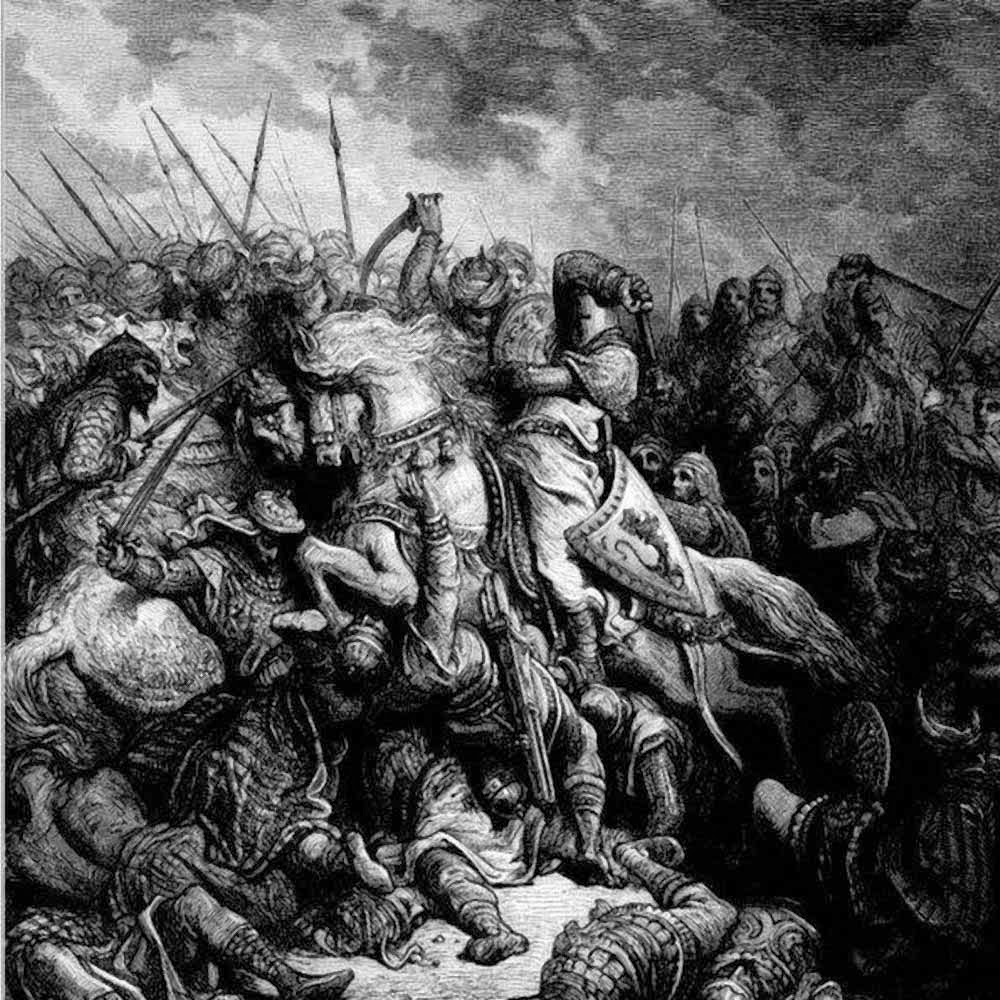
Warrior kings at play

2) THE WARRIOR-KING

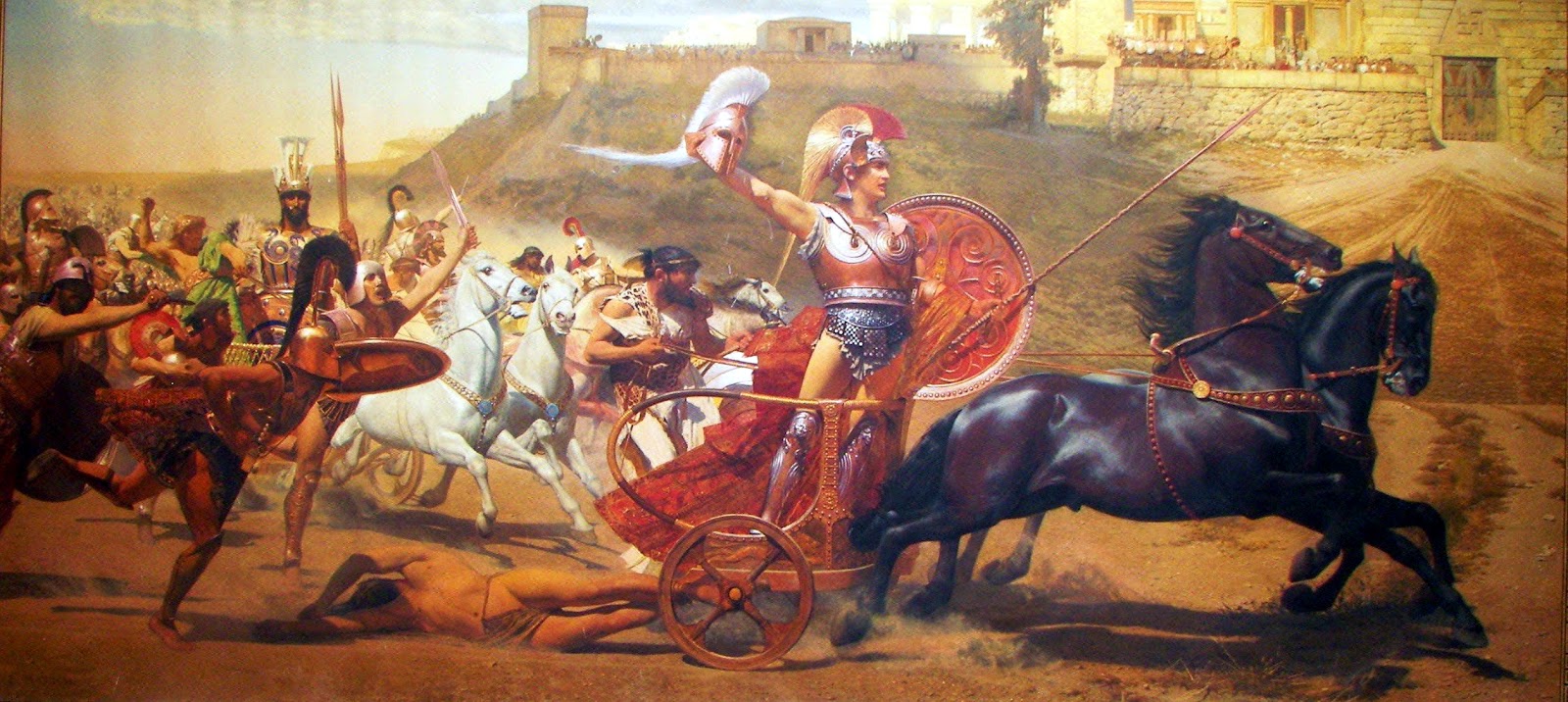
Warrior kings aren’t uncommon in history. After all, it takes a fair bit of war to establish and maintain a kingdom in a medieval or ancient milieu. Famous warrior-kings include Richard I of England (the Lionheart), his rival Saladin (or Ṣalāḥ ad-Dīn Yūsuf ibn Ayyūb to be more precise), Agamemnon, Henry V of England, Gustavus Adolphus of Sweden, Napoleon of France, Genghis Khan and William the Conquerer. All of these men were known for personally leading their followers into battle, and that’s the key to a warrior-king – they actually fight. They may be great strategists and tacticians, or they may just be brave men who like to wade into melee. In either case, they will tend to be resolute and decisive when dealing with adventurers, and they will always be very goal-oriented. Their own past success in battle will tend to make them less accepting of failure on the part of others.

Warrior-kings might be simple aristocrats in armor, but they are more likely to have levels (at least 5 to 6) in fighter or another warrior class.

Bring on the girls!

3) THE LUSTY KING

No man better represents this archetype than Henry VIII of England. The young Henry, for sure, but especially the older, fatter Henry. Lusty kings are all about indulging their passions. They are headstrong, stubborn and do not deal well with being told “no”. Lusty kings are selfish and egotistical, and quests for them may very well be about settling scores and seizing prizes on their behalf. Fail a lusty king and … well, just ask Henry’s wives how that works out (if you have access to a speak with dead spell).

Lusty kings may very well be simple aristocrats with massive egos. If you were to give then class levels, consider barbarian – an enraged lusty king throwing a temper tantrum would be all the more dangerous and entertaining if they have a few levels of barbarian to draw on.
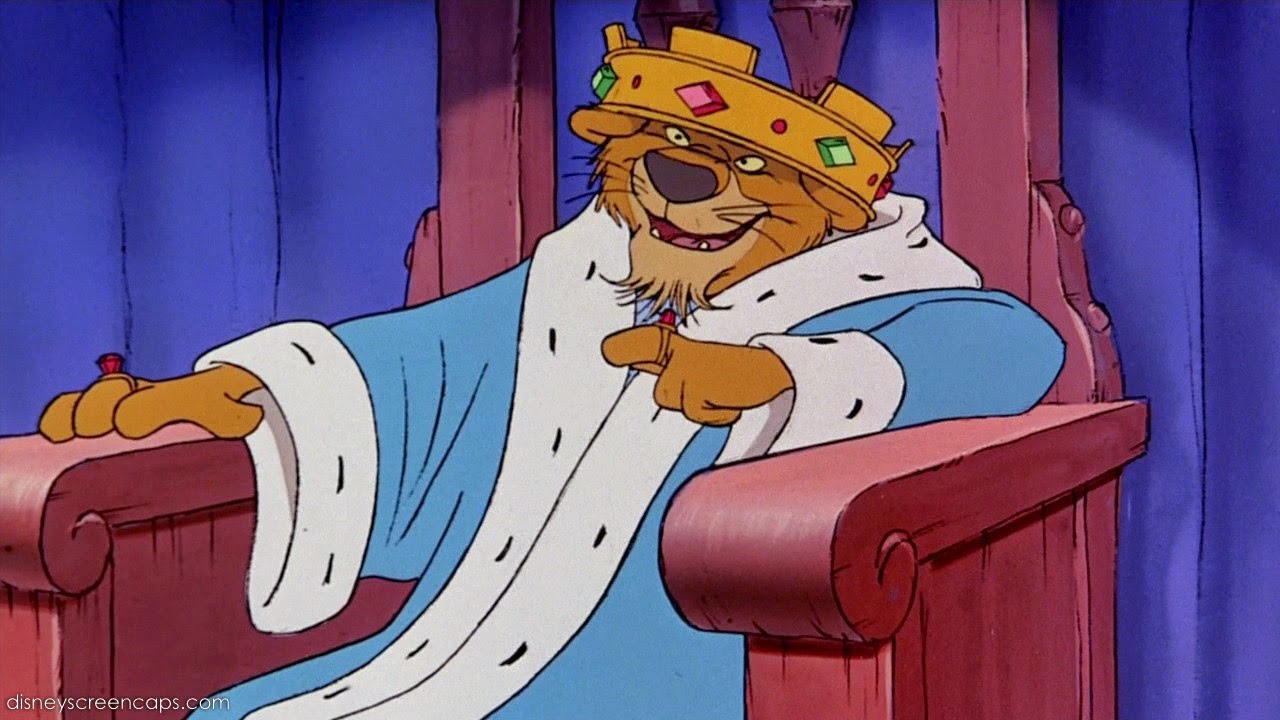
Squeeze every last drop out of those insolent … musical … peasants.

4) THE POLITICIAN KING

Prince, and later King, John, the brother of the Lionheart, has come down to us through the pen of Shakespeare, as a weakling intent on tyranny. Ustinov made him a sniveling moron in Disney’s version of the Robin Hood tale. The real story is a bit different, though to be fair, he did attempt a coup d’etat while Richard was on the 3rd crusade. Still, he proved an able administrator, if not a brilliant leader during war. John represents the politician king – not powerful or popular enough to have his way, he must bargain and triangulate. He is a master of political, if not military, strategy.

Politician kings can rarely be trusted. They are out for number one, and they are willing to get where they want to be though almost any means (or any means, if they are evil) necessary. They are also patient, and understand that to get what they want, they must make a bargain. Adventurers will be fairly paid for their service, but when they become a liability, they’re dropped like a hot potato.

Politician kings are probably just aristocrats with no, or few, class levels. They probably have higher than normal intelligence, wisdom and charisma scores, for without them they would be poor politicians indeed.
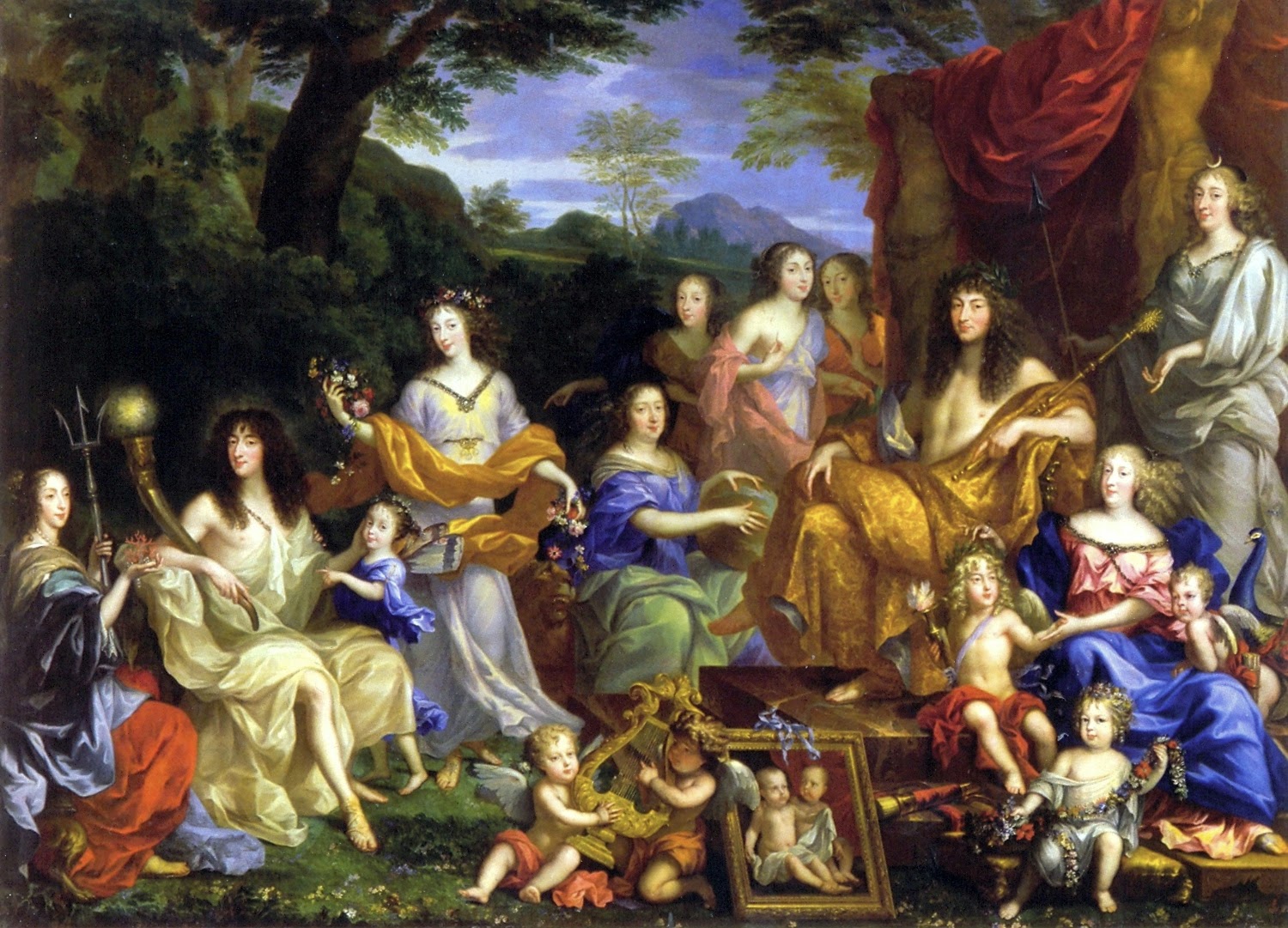
Yeah, he’s every bit as big a d-bag as he looks

5) THE TYRANT-KING

When Europe’s monarchs found themselves in control of nation states, the old relationship between the royal court and the royal subjects changed. With large, standing armies at their disposal, the old parliaments of Europe fell by the wayside, leaving the power of the king virtually unchecked.

Tyrant-kings, like King Louis XIV, believe they are and must be supreme over all their subjects. There is no possibility of power-sharing, in political terms, and more importantly, there can be no intimation that they are not perfect human specimens. They are, after all, placed on their throne by the will of God, and God would not put an inferior man upon the throne.

Tyrant-kings are no picnic, and adventurers, who represent not only an independent streak but also a potentially competing power center, must almost certainly run afoul of them. Even tyrant-kings who are not egomaniacs must behave that way in their dealings with others to preserve the edifice of the absolute monarchy and stave off rebellion. Tyrant-kings will go to any length to maintain their hold on power, so assume they are at least mildly evil in alignment. Their lack of respect for man-made laws would tend to rule out the lawful alignment – neutral, chaotic neutral, neutral evil and chaotic evil are probably the most likely alignments for tyrant-kings.

Caligula – not the most “safe-for-work” Google search you can do

6) THE MAD KING

While Ludwig of Bavaria (Mad King Ludqig) might be the most famous of the mad kings (which is unfortunate, because later evidence suggests he was not insane and that this was merely an accusation made by his ministers to reign in his spending), there have been many over the centuries. Caligula, Charles VI of France (Charles the Mad), Al-Hakim bi-Amr Allah (the Mad Caliph), and Tsar Ivan IV of Russia (Ivan the Terrible) – all lacking in the whole sanity thing.

Mad kings are unpredictable, which means they can be the adventurers’ best friends one moment, and their worst enemies the next. This makes them tricky patrons, but terribly useful to game masters, as they can generate all sorts of fodder for the campaign. Maybe the best way to model a mad monarch is to randomly determine their alignment whenever the adventurers meet them, or maybe begin with a good alignment of some sort, and then begin making some sort of insanity check for the monarch each month. Maybe their alignment changes a bit, maybe it stays the same. If it does change, only change it one step. As time progresses, make those checks once a week, and allow more severe alignment changes. Eventually, the king will be checking each day, with alignments being almost random – though never Lawful.

The Wisdom of Solomon

7) THE MAGICAL KING

Solomon is a by-word for Wisdom – just ask Billy Batson. He is the perfect model not only for a wise king, but for the magical king, for Solomon was by all accounts a magician. He could control devils and genies and the like, and raise palaces in a day and even convince that super-fine Queen of Sheba to drop by for a visit.

A magical king is probably a magic-user rather than a cleric. Solomon was interesting in the stories because his great magical power eventually turned him against his patron, God, and led to his downfall. Fantasy game campaigns are better served by a story arc of this sort than by just sticking a 20th level magic-user on a throne and having him send the adventurers on quests he could probably better perform himself.
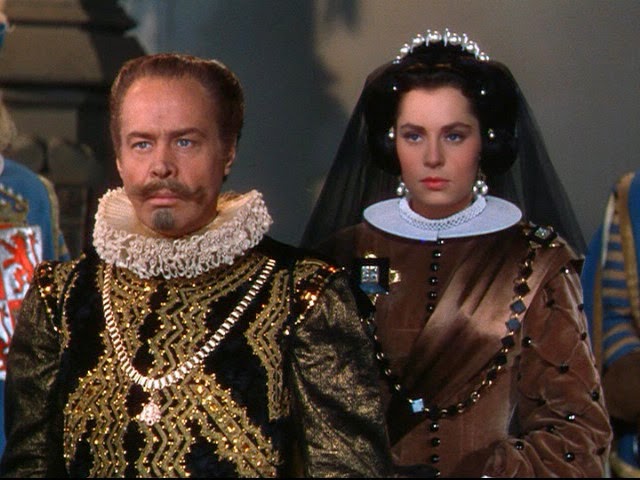
The Queen’s okay, but the king … not so much

8) THE WIMP-KING

Not every king is strong and resolute. Many weak kings – either weak physically, mentally (but not to the point of madness – see above) or morally – have sat on thrones, at least for a while. Boy kings, kings henpecked by their more willful queens, and kings controlled by their advisers are included in this category, as are kings who would be better off if they were being controlled. The depiction of Phillip III of Spain in The Adventures of Don Juan is a great model for this sort of king.

When there is no leadership on the throne, a kingdom soon falls into chaos. What a wonderful place for adventurers to play. The value of a weak king on a throne is probably that his kingdom is embroiled in revolution, rivalry and brigandry – the perfect spot for a brave band of plunderers to work. Those adventurers might also be cast into the role of protecting the kingdom as it disintegrates, hoping to keep it in one piece until a new king can take the throne.

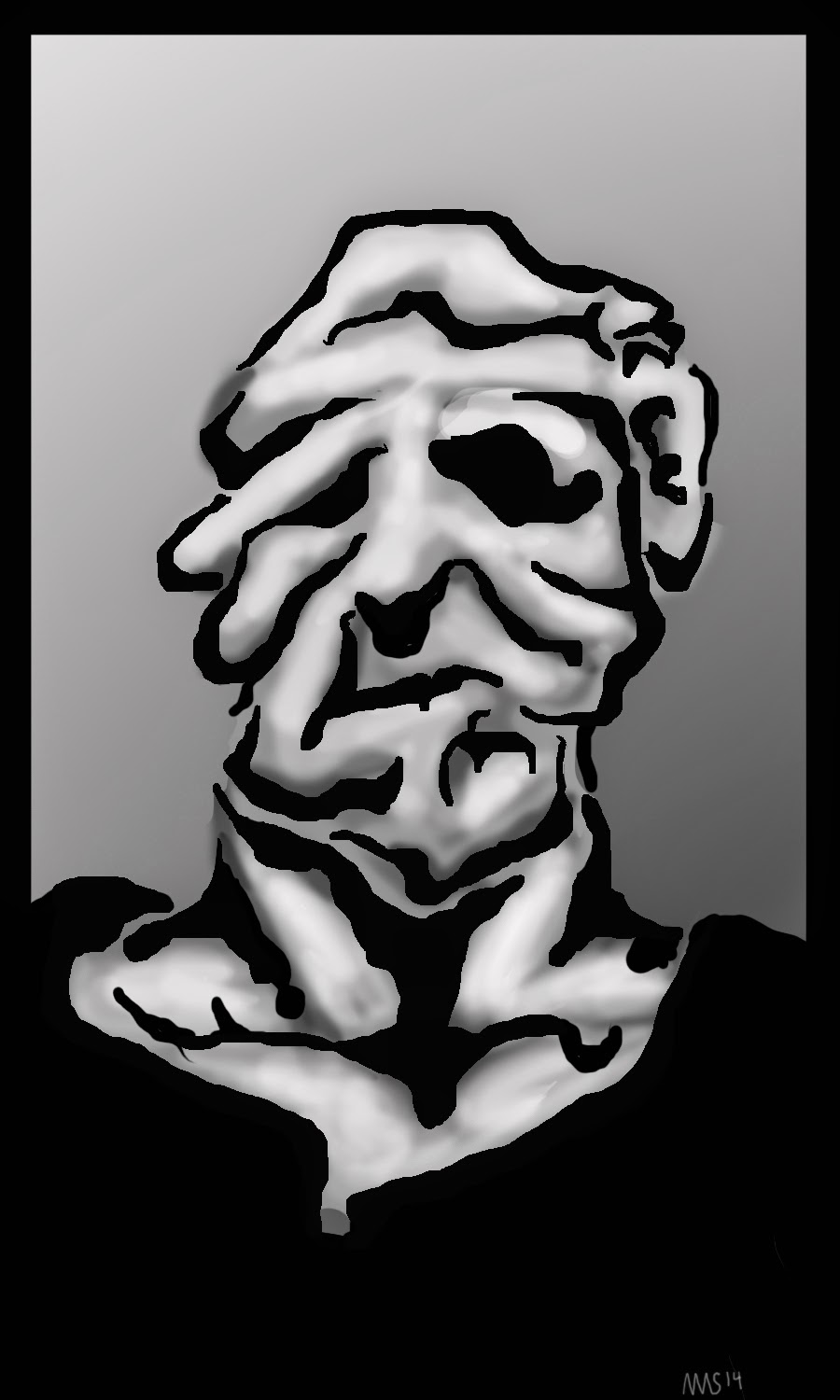
Marcus doing his impression of a Jack Kirby character – Image found HERE

9) THE PHILOSOPHER-KING

Marcus Aurelius has come down in history as a philosopher king, the real-life embodiment of Plato’s philosopher kings that ruled over his perfect society. Setting aside how well academics do when put into positions of power, the ideal philosopher is wise, logical and calm – an able administrator and a preserver of justice.

Boring!

Well, not necessarily. A philosopher-king might rule over a civilized, peaceful land, but in a fantasy world, that peaceful land may have chaos lapping at its shores. Where there is chaos, there is something for adventurers to do – and in the case of a kingdom ruled by a philosopher-king, a safe place to return to when they are done.

As a patron, a philosopher-king is going to be trustworthy and even-handed. Adventurers will have to watch what mischief they get into, as he might not be inclined to tolerate trouble in his kingdom, even by useful allies. Philosopher-kings are probably lawful good or lawful neutral, since they rule within the law rather than above it, and since they generally show an interest in the well-being of their subjects.

Not the nicest fellow in town

10) THE VILLAIN-KING

While the tyrant-king is willing to do evil to maintain his power, and the mad king might well do evil because he has little control over himself, the villain-king is just out and out evil. Villain-kings are needlessly cruel – they hurt people because they enjoy it. They are treacherous and murderous and in all ways not fit company for paladins. Attila the Hun got the reputation for being a villain-king, and Claudius, slayer of Hamlet’s dad, could also fit the bill.

If a villain-king is the patron of a band of adventurers, they can at least take solace in the knowledge that there is nothing they can do that will offend him morally or ethically. On the other hand, the man is not to be trusted, especially if the adventurers seem to challenge his authority in any way shape or form. Because villain-kings are so cruel and despicable, their lives are constantly being threatened. In a fantasy game, it’s likely they’ll need class levels (and extra hit points) just to keep them alive.

Not only saintly, but apparently huge – looks like he’s winking in this shot – “Say no more, nudge nudge, wink wink”

11) THE SAINT-KING

In the real world, a sainted king often received his sainthood for primarily political purposes. Everyone knows that two of Saint Louis’ miracles were card tricks, after all (yeah, I ripped off Father Guido Sarducci). Sainted kings include St Louis of France, St Edward the Confessor, St Alfred the Great, St Stephen I of Hungary and St Charlemagne of France.

In a fantasy world, of course, a sainted king can really be a saint, or at least a trusted ally of the higher (or lower) powers. The saint-king might be a cleric or druid, but they might also simply possess great spiritual powers, a la a demigod in Deities and Demigods or a saint in “Setting Saintly Standards” (Dragon Magazine, Nov 1983).

Assuming the saint-king is lawful good in alignment, he can be a powerful ally and a powerful enemy of a band of adventurers. He’s good, so when they’re serving him they have access to his powers. But when adventurers start acting like, well, adventurers, they may find themselves in a sticky situation.
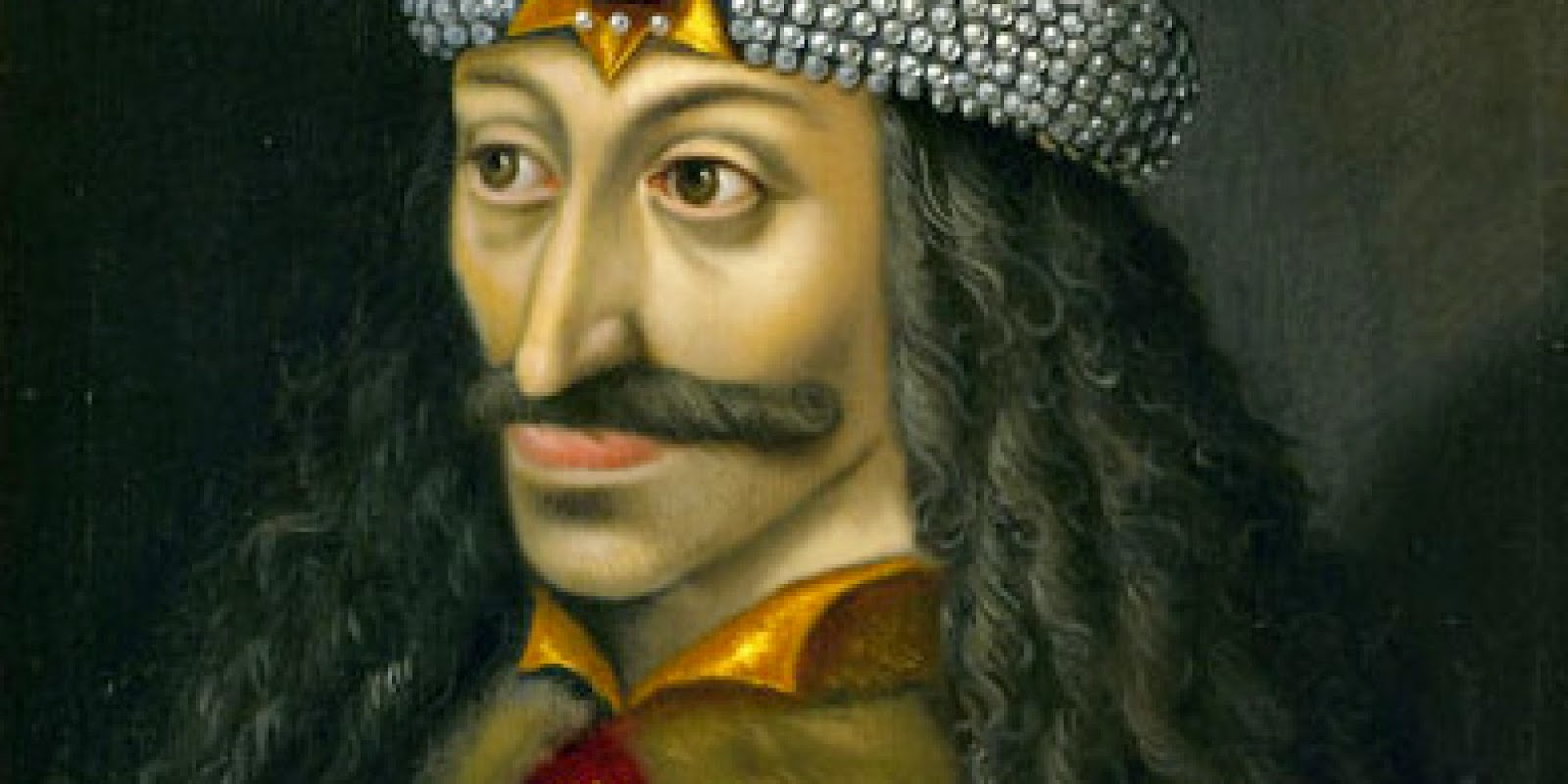
I bid you … welcome

12) THE MONSTER-KING

Vlad Tepes. Enough said. Okay – he was only a count, and in reality he was just a homicidal maniac (at least, from what I gather), but in a fantasy milieu we know that he became a vampire.

A monster-king is literally that – some creature taken from the pages of a monster book and sat upon a throne. In NOD, I have a gynosphinx ruling the pseudo-Egyptian city-state of Ibis, and in the Ende hexcrawls I’m finishing up, four rival city-states are ruled by nagas.

The monster king probably exhibits some aspects of the other archetypes provided here, and those should be referenced based on the monster’s alignment and inclinations. They make obvious foes for a band of adventurers, of course – turning the royal palace into an above-ground dungeon for a group powerful enough to challenge the legal ruler of a kingdom.

Hopefully these archetypes will aid you in creating some memorable monarchs to help and hinder the adventurers in your game.

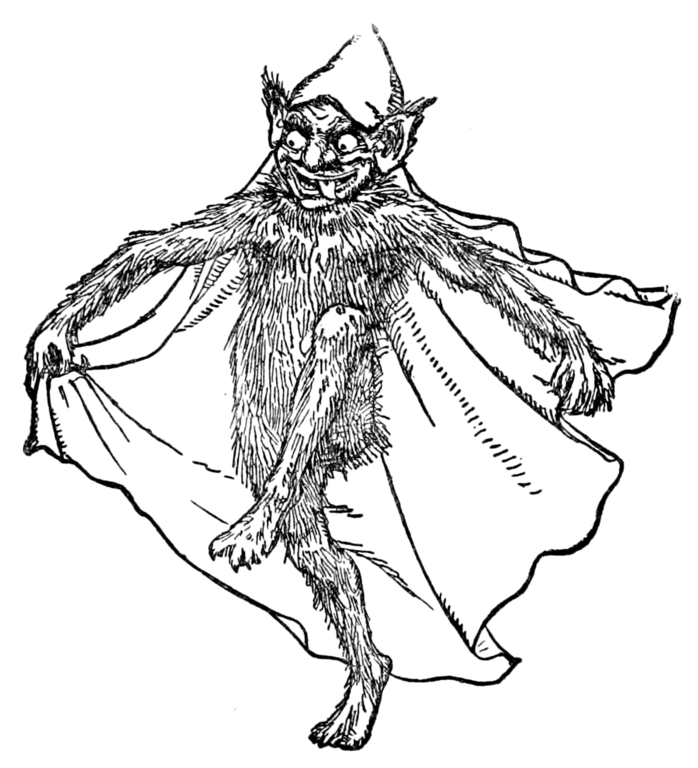
Gads of Goblin Goodies

Goblinoids, especially the lesser versions of kobolds, goblins, orcs and hobgoblins, are crawling all over the average fantasy world. They make great opponents to low-level parties, and in large masses are pretty good against mid-level parties. Eventually, though, their usefulness either runs out, or you and your players just get plain sick and tired of them.

So, how about 100 little modifications you can use to spice up these well-worn monsters?

You can use these to change entire tribes or war bands, or just to spice up individual goblins to make them a bit more distinct and to play up their ties to Chaos.

Enjoy!

Mutations

1. Acid spit – resistance to acid, bite attack +1d6 acid, +1 to sunder items
2. Ape arms – move faster on all fours
3. Bat ears – huge, flapping ears allow fly speed (slow)
4. Big lungs – hold breath longer, +1 save vs. exhaustion
5. Black skin – +1 to hide and surprise in dark areas
6. Boar tusks – gore attack (1d4)
7. Bouncy – jump
8. Cat’s Eyes – +1 to reflex saves, +1 to missile attacks
9. Croc tail – tail attack, save vs. trip
10. Crusty – +1 AC
11. Death saliva – poisonous bite, +1d6 poison damage, can spit 10 feet
12. Dynamo – shocking grasp once per three rounds
13. Evil eye – bestow curse with gaze attack
14. Extra brain – higher intelligence level, +2 to will saves
15. Extra heart – +1 hit point per hit dice, +1 save vs. exhaustion
16. Four arms – extra attack and shield
17. Frog tongue – 10-ft ranged attack to grab items
18. Fullback – +2 to bull rush attacks
19. Gnarled – +2 AC
20. Goblin-queen – remarkably attractive … but no less evil
21. Goliath – one size category larger, but one intelligence level lower
22. Greasy – can slide at double speed down grades, +2 save vs. grapple
23. Green skin – +1 to hide and surprise in woodland environments
24. Hairy – +1 AC, resistance to cold, +1 damage per die from fire
25. Halitosis – breath weapon – 5-ft cone – every three rounds – save vs. nausea
26. Hammer fists – increased unarmed damage and grapple attack
27. Head ridges – head butt attack
28. Hook claws – claw attack, +1 to disarm and grapple attacks
29. Horns – gore attack (1d6)
30. Hound dog – knack for tracking
31. Iron stomach – +1 save vs. poison
32. Lantern-eyes – beams of light can blind
33. Monkey tail – prehensile
34. Nose spike – gore attack (1d3)
35. Pitch-skin – flammable skin, immune to fire
36. Puffer – can blow up, knocking people back, no damage from bludgeoning weapons, piercing weapons can puncture
37. Radioactive – all within 10 feet much pass a fort save or be nauseated; miss by 5 or more energy damage
38. Razor teeth – bite attack, and save or grappled
39. Rooky – crow wings to fly, crow beak to peck
40. Runt – one size category smaller, but one intelligence level higher, chance of spells
41. Scaled – +3 AC
42. Speed demon – +10 speed
43. Spikey – damage from grapple, or when struck by natural weapons
44. Spy – passes for human
45. Stinker – troglodyte stench ability
46. Third eye – immune to illusions
47. Translucent – big bonus to hide and surprise
48. Troll-blood – regenerate 1 hit point per round
49. Wall crawler – climb speed
50. Weird – first level psychic power (offensive, of course)
51. White skin – +1 to hide and surprise in arctic environments
52. Wolf ears – +2 to listen at doors, surprised on d8
53. Wormy – gnaw through stone (burrow 10)

Professions

54. Acrobatic – +2 to reflex saves, slow fall as monk
55. Backstabber – attack, hit points and abilities of first level assassin, one vial of poison
56. Berserker – 2 attacks per round
57. Black knight – weird sense of honor, warhorse, lance, platemail, pennons, squires from lesser goblin race
58. Brigands – brigandine armor (studded leather), longbows, surprise in woods
59. Bushwhacker – attack, hit points and abilities of first level scout, longbow
60. Dark Lord’s man – +1 to hit, upgrade armor and weapons
61. Desert Rat – unaffected by heat and sand movement, +1 bonus vs. fire
62. Evil High Priest’s man – +1 bonus to save vs. cleric spells, chance of 0-level orison
63. Hexenhammer – +2 save vs. spells, 1d6 bolts with silence cast on them, light crossbow, warhammer
64. Hoary – extra hit dice, +1 to will saves
65. Ice Demon – unaffected by cold and ice movement, +1 bonus vs. cold
66. Necromancer’s man – +1 bonus to save vs. magic-user spells
67. Pickin’ and Grinnin’ – attack, hit points and abilities of first level bard, banjo
68. Pilferer – attack, hit points and abilities of first level thief, thieves’ tools
69. Psycho – 2 attacks per round, immune to fear, max hit points, immune to confusion
70. Savage – attack, hit points and abilities of first level barbarian, greataxe
71. Sea Wolf – swim speed, hold breath like lizard man
72. Thugee – attack, hit points and abilities of first level assassin plus four 0-level cleric spells
73. Veteran – attack, hit points and abilities of first level fighter, platemail
74. Warrior princess – females, studded leather, falchions, chakram, ululating battle cries (save vs. fear)

Equipment

75. Amazon – female, longbow, short sword, breastplate
76. Boar rider – rides a battle boar
77. Blitzkrieg – chainmail, spiked tower shield, short sword
78. Cannonball – small cannon – spiked platemail – launches self into battle, 10% chance of living through the experience with 1 hp
79. Canter – 1d6 magic-user scrolls (can cast them), robes, curvy dagger (+1 damage)
80. Costermonger – looks like ugly old man or woman, sells poisonous or magic apples
81. Dashing – leather armor, rapier, ruffles and bows and feathers in wide-brimmed hat, leering eye
82. Fire-breather – petrol, torch, resistance to fire, once per round 5-ft cone of fire (1d6), or 10-ft cone every other round
83. Fire bug – 1d6 alchemist’s fire, leather armor
84. Flailer – great flail (double damage) – attack by hurling self 10 feet, once every two rounds
85. Hacker – black hood, great axe or executioner’s sword (+1 damage), leather armor, dagger
86. Hammerer – great hammer (higher damage) – hurl up to 20 feet once every two rounds
87. Infiltrator – padded armor, silk slippers (+1 to move silently), three daggers, hand crossbow
88. Kamikaze – bat-winged glider, goggles, devil-may care attitude, catapult launch (if necessary), dagger
89. Magic hat – can produce a spell effect from hat, must make Will save to make it work, 10% chance of random spell of level 1d4
90. Plunderer – light warhorse, leather armor, composite bow, short sword, knack for riding
91. Porcupine – spiked scale mail, spiked club, spiked gauntlets
92. Rhino rider – rides a battle rhino
93. Ronin – splint mail, grotesque mask and great helm, scimitar and dagger
94. Sapper – heavy pick, mining helmet, leather armor, dagger, 1d6 bombs, goggles
95. Sea dog – blunderbuss, leather armor, hook hand, dagger in teeth
96. Slimer – 1d6 glass spheres of green slime, +1 bonus to save vs. acid and slimes
97. Tinker – armorer’s tools, portable anvil
98. Twister – two chains, chainmail, chain letter tucked into belt
99. Swineherd – two boars on a chain
100. Wolf pack – two wolves on a chain

The Ocean is the Abyss

I like the idea of taking the building blocks of D&D and then twisting it around a bit. I did a post some time back about changing the planes into different time periods. In my own NOD setting, I combine the concept of the planets with the planes, and I put Hell smack dab in the center of the world, fueling all those evils that haunt the dungeons of the world.

Today I was thinking about the idea of the Leviathan, and it occurred to me that it might be interesting to combine a campaign world’s oceans with the concept of The Abyss – i.e. the plane of chaotic evil demons. The demons dwell in the absolute black, inky depths, and their minions occupy the continental shelves and lurk just beneath the waters that lap the shores of the world.

Imagine the place the evil sea races would hold in such a campaign world. They would be more directly the servants of Chaos (i.e. the Sea) in its war against Law (i.e. the Heavens), with the land the battleground between the two. Orcs, despite their presentation in Tolkien and thus D&D, seem to have had a connection to the sea in folklore, and it would be simple enough in a campaign world to make this connection more implicit – making them Chaos’ “beach head” against the air breathers.

Many myth systems personify Chaos and the Sea as one in the same entity, and make it the mother of monsters. In the old reckoning of the ancient Israelites, the land masses floated in the ocean, the Abyss, and this would place that cold plane of evil beneath the earth, and thus in a wonderful place to disgorge horrors into the equally inky black landscape of the campaign world’s dungeons.

Two New Products and a New Notion

Hey folks. Three items today …

ITEM ONE – BLOODY BASIC IN SOFT COVER

Bloody Basic – Classic Edition is now up for sale as a soft-cover book. A game with characters levels 1 to 6, with elves, dwarves, halflings, fighters, clerics, magic-users, thieves and all the rest of the classic fantasy elements, for $8.99. I’m working on getting the Contemporary Edition out pretty soon as a PDF, and then a hard copy, and then the other editions will follow – Fairy Tale, Chaos, Apocalypse, Jules Verne, etc.

ITEM TWO – BLOOD & TREASURE MONSTER TOME PDF

The PDF of the Monster Tome is now available for download for $6.99. It includes 172 pages of monsters, with 258 monster entries. I hope to have the softcover and hardcover books up for sale in two or three weeks. As I often do, I’ll be offering a free PDF to those who buy the hard cover edition of the Monster Tome, so if you’re planning on buying the hard cover later, you’ll probably not want to buy the PDF now.

Monster Tome II will have to wait for 2015.

ITEM THREE – STRANGE TWIST OF FATE

Just so this isn’t a completely commercial post, here’s a little notion for using a fate mechanic in your adventures.

When you delve back into heroic fiction, back to the days of the Greeks, Romans and Norsemen, it’s hard to avoid the concept of fate. The Fates and Norns measured out the days of a man or woman’s life and cut the string when it was time for them to die.

If you’re running a game set in these times, or any time if you like it, you might want to inject a little fate into the game. You could also inject Doctor Fate into your game, but that’s a matter for another post.

Obviously, you don’t want to use fate as a way of arbitrarily cutting a character’s life short. You can, however, use it as a way to determine whether character’s are beloved or cursed by “the gods”.

You could do this in one of two ways.

The first is to randomly determine a person’s fate for each adventure, every adventure. First, determine which deities are looking down on the player characters by rolling D10.

1. Lawful Good
2. Neutral Good
3. Chaotic Good
4. Lawful Neutral
5-6. Neutral
7. Chaotic Neutral
8. Chaotic Evil
9. Neutral Evil
10. Lawful Evil

If you use the three-tier alignment, roll D6.

1-2. Lawful
3-4. Neutral
5-6. Chaotic

Next, determine the character’s fate for that adventure by rolling 3d6. If the character is the same alignment as the deity, they enjoy a +2 bonus to their roll. If they are the opposite alignment, they suffer a -2 penalty to their roll.

1-2. You are loathed by the gods – subtract -2 from all d20 rolls during this adventure
3-6. You are cursed by the gods – subtract -1 from all d20 rolls during this adventure
7-12. The gods are disinterested – your fate is in your hands
13-16. The gods favor you – add +1 to all d20 rolls during this adventure
17-18. You are beloved by the gods – add +1 to all d20 rolls during this adventure, and re-roll one failed saving throw.

An interested god will be watching over the adventure. Whenever an accursed or loathed character performs an action in accordance with the deity’s alignment (or any element of their alignment), they are permitted to re-roll their fate. Whenever a favored character does something in opposition to the deity’s alignment (or any element of their alignment), they likewise must re-roll their fate.

If you are using this system, you might want to add a couple spells to your game.

Tell Fortune – 1st level spell for clerics, druids and magic-users; it literally tells the character’s fortune (i.e. loathed, cursed, favored, beloved).

Read Signs – 1st level spell for clerics, druids and magic-users; tells you the alignment of the deity watching over the characters during this adventure.

The other way you can use a system like this is to put the characters’ fates into their own hands. Instead of always rolling to determine a character’s fate for an adventure, the player’s instead offer themselves up for judgment. The system works the same way, it just puts the decision in the hands of the players.


Elemental Racial Variations

I’ve always enjoyed coming with variations on a theme, or variations on existing things in games. Of late, I’ve thought about doing themed variations on some of the existing races in Blood & Treasure – themes like the elements, or insects or animals.

For my first theme, I choose elemental earth. These races could work well in a specialty campaign, especially one set underground or on the elemental plane of earth, or can be used in an exotic section of an existing campaign world.

I’m not sure how well balanced these races would be, but you know – sometimes it just doesn’t matter. If they look like fun, use them!

COAL GNOMES
Coal gnomes look generally like normal gnomes, save their flesh is composed of a substance not unlike coal. They have pitch black skin and beady eyes that glow like embers. These eyes give them darkvision to a range of 120 feet. Coal gnomes are not immune to fire, but they do have a strange resistance to it.

When a coal gnome is struck by fire, it ignites and smolders. The coal gnome suffers one point of fire damage per round, and no more. While they smolder, they can score +1 point of fire damage with each successful melee attack.

Coal gnomes have the same alterations to their ability scores as normal gnomes, the same knacks and the same ability to multi-class. They do not have any Spellcasting ability.

GRANITE DWARVES
Granite dwarves are stoic and seemingly emotionless; at least, they do not often show emotion. Logical and resolute, they look like dwarves carved from granite.

Granite dwarves have the same ability score modifications as normal dwarves, and the same knacks. Their skin gives them a natural AC of 12, and they have the ability to freeze as do gargoyles, for a maximum of 10 minutes. Granite dwarves have darkvision to a range of 60 feet.

Granite dwarves cannot multi-class, for their minds are too focused.

CRYSTAL ELVES
Crystal elves are as graceful and lithe as normal elves. Their bodies are seemingly composed of living crystal, in various colors and hues. They rarely wear clothing, but do adorn themselves with jewelry and sometimes capes or cloaks.

A crystal elf’s skin reflects and refracts light, depending on the angle at which it is struck. When fighting in moderate illumination, all opponents engaged in melee combat with the crystal elf must pass a Reflex saving throw when they miss the elf in combat by more than 3 points, or be blinded for one round. In strong illumination, creatures locked in melee combat must pass this save each round, and creatures within 20 feet must do so when they miss the elf in ranged combat as above.

The crystal elf’s body gives them a +2 bonus to save vs. rays. They suffer double damage from sonic attacks.

Crystal elves have the normal ability score modifications and knacks, darkvision to a range of 30 feet, and they cannot multi-class.

SANDLINGS
Sandlings look like normal halflings composed of sand. They are quick and curious and have more abrasive personalities than normal halflings.

Sandlings ignore one point of damage per hit from physical damage, but water and wind deals +1 point of damage per dice (or 1 point of damage if the attack doesn’t normally deal damage) to them. They have the same ability score modifications as normal halflings, the same knacks, and they gain a knack at escape attempts.

When a sandling is struck for full damage by a physical blow (minimum 5 points of damage), they split into two tiny versions of themselves, splitting the damage as well. They must also split their equipment when they split, and their hit point total, but each of these twins retains its normal level, ability scores and special abilities. The personalities of each twin can vary, based on the original’s alignment:

THREE TIER ALIGNMENT
Lawful = Lawful and Neutral
Chaotic = Chaotic and Neutral
Neutral = Chaotic and Lawful

NINE TIER ALIGNMENT
Lawful Good = Lawful Neutral and Neutral Good
Lawful Neutral = Lawful Neutral and Neutral
Lawful Evil = Lawful Neutral and Neutral Evil

Neutral Good = Neutral Good and Neutral
Neutral = Lawful Neutral and Chaotic Neutral
Neutral Evil = Neutral Evil and Neutral

Chaotic Good = Chaotic Neutral and Neutral Good
Chaotic Neutral = Chaotic Neutral and Neutral
Chaotic Evil = Chaotic Neutral and Neutral Evil

The twins cannot re-merge until they get a full night’s sleep. If that sleep is interrupted, they split apart and must remain apart until they get another chance at 8 hours of rest.

1800 – American Empires Revisited and Monster Previews

A couple years ago I had a little brainstorm that resulted in an article for NOD involving fantasy Napoleonic-era wars in a North America divided into a number of competing nations, not unlike the Europe of the real Napoleonic era. I planned to turn it into a game called 1800 – American Empires, and then … well, I got a bit off-track.

First and foremost, I got started on something called Blood & Treasure, and that sure took up a chunk of my time. Secondly, the huge hex map of North America I painstakingly created was lost due to a computer crash (don’t worry, my daughter now has a much better understanding of what we do and do not click on on the internet). That really took the hydrogen out of my blimp.

Well, even though it was put on the back burner, American Empires never completely left my brain. I still love the idea of the thing, and I think it’s just about ripe for development. Now that I’ve put together the framework of Bloody Basic, I think it would serve as a great little engine for the game. (By the by – still need to produce the soft-cover book for Bloody Basic … dang, the time sure flies).

Grit & Vigor still has to take precedence once I’ve finished with the B&T Monster Tome (should be on sale next week, if all goes well). But once G&V is finished, and while I work on the next issue of NOD, I’m going to put some work into American Empires. Four classes (scout, soldier, venturer and magician), just one race, humans (though some other humanoids will show up as monsters, with some options for using them to play), a nice gazatteer of fantasy Napoleonic America (including a Napoleon-ruled Louisiana, Jefferson’s Virginia Commonwealth, the stern Yankees of New England, Aaron Burr’s Texican Republic and those red coats up on Canada), and lots of rules aimed at wilderness exploration (really wilderness as dungeon), armies and stronghold, colony and nation building. Should be a blast, and I look forward to doing it.

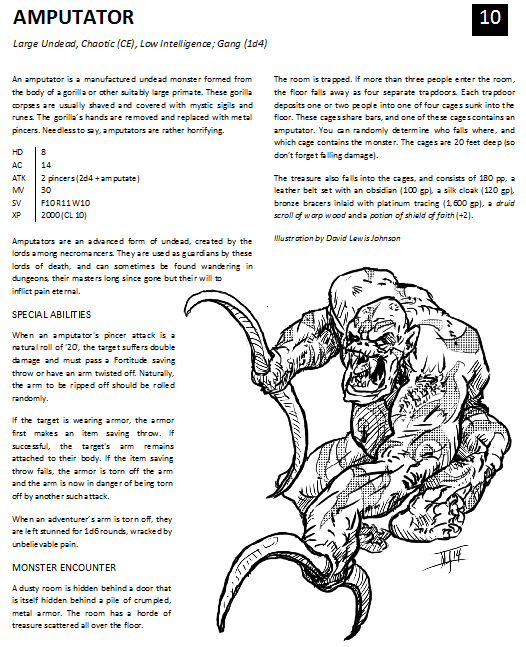
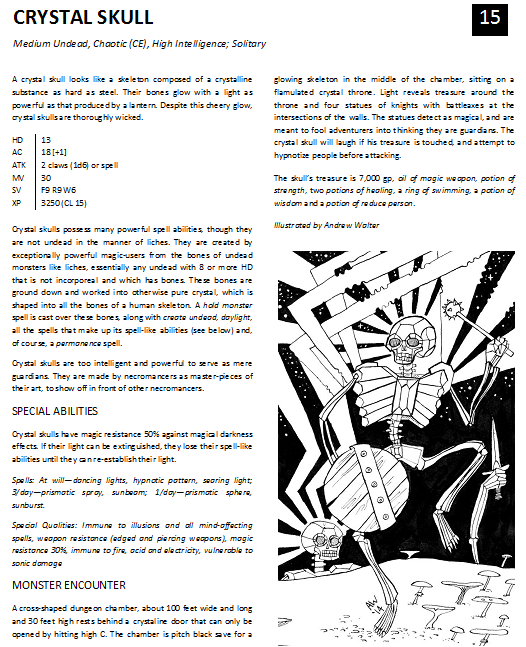
Now, since this post has been nothing but a commercial, I feel compelled to give a couple sample monsters from the Monster Tome, art included.


Two New Reviews – Coming Right at You

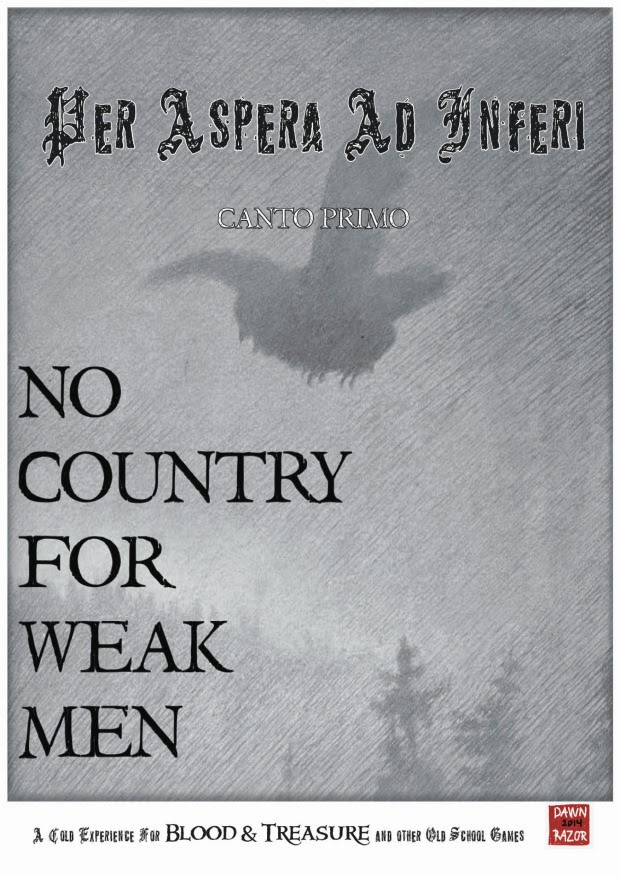
I have a couple books to review and share with all of you out in blog land –  Mad Monks of Kwantoom by Kabuki Kaiser, and No Country For Weak Men by Anders Hedenbjörk Lager.

Mad Monks of Kwantoom is a Labyrinth Lord -compatible sourcebook for Asian-themed adventures. From the intro:

“Are you looking for an Oriental Adventure Companion compatible with whatever system you fancy for your Old School Gaming campaign? A Chinese-style monster manual with a twist? A tome collecting a hundred brand new mundane magic items? An Asian-themed urban setting? A game aid to help you fill in the gaps when improvising? An endless campaign that you can play solo or with your family and friends without a DM? Good, because you’ll find all this gathered together in one nifty package right here.”

There’s quite a lot to be had in the book’s 229 pages, including an Asian setting, new classes and races and, most impressively, a DM-less adventure generator for those who would like to bash heads and gather baubles without the benefit of a referee. Honestly, there’s too much here for me to comment on all of it, but it is a wonderful gaming resource and I think well worth the price. Find it HERE on rpgnow.com.

No Country for Weak Men is a free adventure done for Blood & Treasure (but of course, adaptable to other old school systems), Anders’ first. Appropriate for a band of 3rd to 4th level characters, it is set in the frozen north (or I suppose frozen south if you’d prefer). No Country For Weak Men is a traditional dungeon to explore and, hopefully, plunder. From the book:

“Long before the Northmen came, a cruel and proud people lived here. They were the descendants of the Elder People (Fey Elves). Just like the Fey Elves, they performed great magical experiments, consorted and even interbred with powers from Beyond the Veil. And like the Fey Elves, these experiments eventually brought their doom. In a last attempt to evade fate, the High King weaved a spell to ensure his return once the Stars Were Right. Once revived, he would start to rebuild his realm. Unfortunately, the magics only worked in part. That is what happens when taking hints from Demons. Instead of coming back to life, the High King and his people return as insane undead horrors – the Draugr.”

This looks like a good one – a good old-fashioned dungeon romp against the undead. The dungeon is relatively short – 15 locations – so it could be a great gap-filler for a party making its way through a cold, northern land, or could be used to introduce the northlands to adventurers if a map or other Macguffin was inserted into the dungeon. Check it out HERE.

And Now For Something Completely Different … Salsa!

Every other year, I plant a garden in my backyard. Tomatoes are a mainstay, because they actually do very well in Las Vegas. This year, I also planted a few watermelon vines. I had good luck with them a few years ago, so I’m giving them another go.

This post isn’t about gardening, though – it’s about what to do with the fruits of your gardening labors.

Gaming isn’t just about dice and adventures and rules – it also has an important social aspect. Games are usually hosted by someone, and a good host provides some snacks for his or her guests. It’s not just my rule – Zeus himself frowns upon a stingy host!

Now, those aforementioned tomato plants in my backyard are pretty darn productive. One of things my wife and I like to do with the hundreds of these tomatoes we grow is make salsa. I don’t need to tell you the value of salsa and corn chips as a snack.

What follows is the very simple recipe we’ve come up with for salsa. We do a pretty big batch, so you might want to cut things down (especially if you have to buy your tomatoes from a grocery store).

Ingredients:

  • 16 tomatoes (about 2 inches in diameter, though sometimes some cherry tomatoes and beefsteaks get into the mix)
  • 2 avocados
  • 2 jalapeno peppers (or more – my family is full of lightweights)
  • 2 limes (small)
  • 1 large red onion
  • 1 clove of garlic
  • Frozen corn (one bag)
  • Black beans (one can)
  • Cilantro
  • Salt (we like sea salt)
  • Pepper (fresh ground is best)
  • Red pepper flakes
  • Olive oil

I throw the olive oil, corn and beans and minced garlic into a large skillet and heat it up. Naturally, I throw in a bit of salt and pepper.

While it’s warming up (you don’t really want to cook it), I cut all the tomatoes in half, the avocados in half, the jalapenos in half (and remove the seeds – again, I live with lightweights), the limes in half and the red onion in four parts. The cilantro is chopped up pretty fine – about a half cup.

In a blender, I throw four of the tomatoes, half an avocado, half a jalapeno, a fourth of a red onion, a wad of cilantro, a sprinkle of red pepper flakes and the juice of half a lime. I chop this up in the blender – the tomatoes usually blend pretty good – and dump this into the skillet with the corn and beans.

Repeat the blender part three more times. When everything’s in the skillet, I let it come to a light boil, stirring often. My wife usually chops a few more tomatoes up and we add these when the cooking process is completed, so there are some nice chunks of tomato in the salsa. The blender (or food processor if you prefer) saves a lot of work, and seems to produce a smooth salsa. Obviously, you can add or subtract ingredients as you like – be creative (though maybe not as creative as my daughter, who wants to throw a couple Jolly Ranchers in with the veggies just to see what happens).

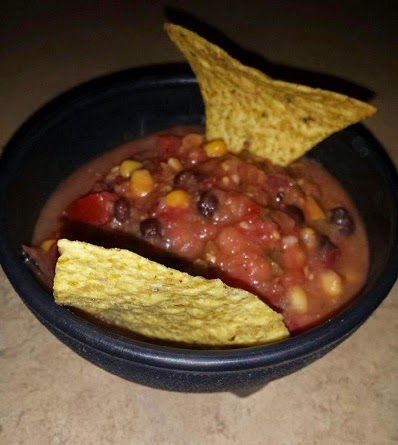
When all is done, we spoon the salsa into some handy jars (we usually get more than three tall jars full – the extra is gobbled up while it’s warm) and enjoy salsa for a couple weeks. Naturally, you want to keep it refrigerated – my wife sometimes freezes it. If you’re into putting up preserves and know what you’re doing, I would suggest using that process to preserve the salsa.

When you have a game, break out the fresh salsa and a bag of chips and have at it!

Odds and Ends (or Monster and Spells to be Precise)

SINOOZE

Large Ooze, Neutral (N), Non-Intelligent; Solitary

HD 8
AC 12
ATK Slam (1d6 + 1d6 acid)
MV see below
SV F10 R11 W11
XP 800 (CL 9)

Sinooze is an ooze that seeks out skeletal remains. It oozes over them and penetrates the bones with microscopic feelers, absorbing and reading the DNA. Using this information, it expands and takes the shape of the creature’s musculature.

The sinooze attacks and moves as the creature whose bones it animated. In addition, the monster deals acid damage when it successfully strikes. This acid damages organic materials and metal, but not stone.

Sinooze are flammable. When struck with fire, it suffers half damage, but is lit on fire. Subsequent successful attacks by the monster deal 1d6 points of fire damage. The monster continues to suffer 1d3 points of fire damage each round while ablaze.

Cold damage forces the ooze to pass a Fortitude saving throw or become thick and sluggish. Its movement is cut in half, and it becomes vulnerable to bludgeoning damage (i.e. takes full instead of half damage).

Special Qualities: Resistance to fire, weapon resistance

Bite of the Wolf
Level: Druid 2
Range: Personal
Duration: 1 hour

The druid’s mouth becomes a wolf’s muzzle. The druid gains a bite attack that deals 1d4 points of damage. Victims of the attack must pass a Reflex save or be tripped and knocked prone.

Coils of the Constrictor
Level: Druid 2
Range: Personal
Duration: 1 hour

The druid’s body becomes sinuous and flexible. On a successful grapple attack, the druid deals 1d4 points of damage and constricts his opponent for 1d4 points of damage per round until the grapple is broken.

Dwarfblood (Transmutation)
Level: Magic-User 1
Range: Personal
Duration: 1 hour

For one hour, the magic-user gains the special racial abilities of a dwarf.

Elfblood (Transmutation)
Level: Magic-User 2
Range: Personal
Duration: 1 hour

For one hour, the magic-user gains the special racial abilities of a elf.

Fangs of the Viper
Level: Druid 3
Range: Personal
Duration: 1 hour

The druid’s mouth becomes fanged. The druid gains a bite attack that deals 1d3 points of damage and injects Poison III into the victim.

Flashing Blade (Transmutation)
Level: Magic-User 1
Area of Effect: One blade
Duration: 1 hour

This spell can be cast on one medium or large blade, which must be touched by the magic-user. For one hour, the blade shines with a bright, blinding light. When the sword is used for an unsuccessful attack, the target of the attack must pass a Reflex save or be blinded until the end of the next round.

Foreboding (Illusion)
Level: Magic-User 2
Range: 30 feet
Area of Effect: One creature
Duration: 6 hours

The target of this spell has terrible feeling of foreboding. While under the effects of the spell, she believes every find trap task check she makes succeeds (i.e. finds a trap), every remove trap task check fails, and all listen at doors task checks result in her hearing weird, threatening noises on the other side of the door.

Gnomeblood (Transmutation)
Level: Magic-User 2
Range: Personal
Duration: 1 hour

For one hour, the magic-user gains the special racial abilities of a gnome.

Horns of the Rhino
Level: Druid 3
Range: Personal
Duration: 1 hour

The druid’s nose and forehead broaden and grow a fierce horn. The druid gains a gore attack that deals 1d8 points of damage. Every gore attack counts as a bull rush attack.

Horseless Carriage (Conjuration)
Level: Magic-User 4
Range: Object touched
Duration: 1 hour

By touching a wagon or similar wheeled conveyance, you imbue with the ability to move on its own. The wagon moves by your command, and in much the same way as a horse would, save that the wagon operates by voice command. For every three levels you possess, the wagon is moved by the equivalent of one horse (i.e. gains one horsepower). A 7th level magic-user could conjure up two horsepower, while a 12th level magic-user could conjure up four horsepower.

Hover (Transmutation)
Level: Magic-User 3
Range: Personal or close
Duration: 1 hour

This spell works like the levitate spell, except that it gives the recipient of the spell the ability to move at a movement rate of 20 forward and backward, and the recipient of the spell only levitates 6 inches above a solid or liquid surface.

Hug of the Bear
Level: Druid 3
Range: Personal
Duration: 1 hour

The druid’s arms become large and furry, and tipped with claws. The druid gains two claw attack each round that deals 1d6 points of damage. If both claw attacks hit a foe, they are automatically grappled.

Monstrous Mein (Transmutation)
Level: Magic-User 3
Range: Personal
Duration: 10 minutes

The magic-user’s creature type changes to monstrous humanoid. The magic-user gains darkvision to a range of 60 feet, is no longer affected by spells that affect humanoids (such as charm person), and gains a +2 bonus on Reflex saving throws. In addition, their visage becomes monstrous, and normal humans and men-at-arms must pass a Will saving throw upon seeing them or become frightened for 1d4 rounds.

Phantom Banker (Transmutation)
Level: Magic-User 2
Range: Close (30 feet)
Duration: Permanent

The magic-user changes one form of currency into the next higher form of currency, thus copper pieces into silver pieces, silver pieces into gold pieces, and gold pieces into platinum pieces. The total value of the coins does not change, thus 100 copper pieces can be changed into 10 silver pieces. Another use of the spell could then turn those 10 silver pieces into a single gold piece.

Polymath (Transmutation)
Level: Magic-User 3
Range: Personal
Duration: 1 hour per level

For the duration of this spell, the magic-user becomes a cleric, fighter or thief of her same level. The magic-user loses all magic-user abilities and restrictions for the duration of the spell, and for this reason they cannot end the spell early – the duration of the effect must be set by them when the cast the spell, up to one hour per level. While in their new class, they gain it’s hit dice (and thus re-roll hit points), saving throws, armor and weapon restrictions, special abilities, etc.

Polymath, Advanced (Transmutation)
Level: Magic-User 5
Range: Personal
Duration: 1 hour per level

As polymath, except the magic-user can become a multi-classed cleric/magic-user, fighter/magic-user or thief/magic-user of one level lower than their magic-user level (follow all normal multi-classing rules), or they can become a bard, ranger, barbarian, druid, assassin, etc. of one level lower than their magic-user level.

Potent Potables (Transmutation)
Level: Magic-User 2
Range: Close (30 feet)
Duration: 1 hour

All liquids within range of the magic-user take on the properties of alcohol for one hour. The liquids still taste the same, and potions still work as advertised, but the imbiber must pass a Fortitude saving throw or become drunk (treat as fatigued, but the player also has to slur their words when the speak and give out a loud, fake hiccup every so often – it’s called verisimilitude dude!)

Pussycat! (Transmutation)
Level: Magic-User 5
Range: Close (30 feet)
Duration: 1 minute

When the magic-user yells “pussycat!”, the most powerful creature (by number of levels or hit dice) is polymorphed into a normal cat for one minute, and it must pass a Will save or be frightened for the duration of the spell.

Quills of the Porcupine
Level: Druid 3
Range: Personal
Duration: 1 hour

The druid grows quills from his back and the back of his head and arms. When they make a successful bull rush attack, they deal an additional 1d6 points of damage, and creatures that miss them in melee combat must pass a Reflex saving throw or suffer 1 point of damage. The druid’s clothing is ruined by this spell, and she cannot cast it while wearing armor.

Sepulchral Power (Transmutation)
Level: Magic-User 5
Range: Personal
Duration: 10 minutes

The magic-user’s creature type changes to undead. The magic-user gains darkvision to a range of 60 feet, is no longer affected by spells that affect humanoids (such as charm person), is immune to illusions and mind-affecting effects, poison, sleep effects, paralysis, disease, stunning attacks, and gains a +2 bonus on Fortitude saving throws. They are still affected by death effects, but are now healed by negative energy and damaged by positive energy. Their appearance becomes gray and decayed, and normal humans and men-at-arms must pass a Will saving throw upon seeing them or become frightened for 1d6 rounds. As undead, they are liable to be turned or rebuked (and thus destroyed or controlled) by clerics and other classes with those abilities.

Spikes (Conjuration)
Level: Magic-User 2, Druid 2
Range: Touch
Duration: 1 hour

Armor touched by the spellcaster gains armor spikes, per the normal rules for armor spikes.

Supernumerary (Divination)
Level: Magic-User 2
Range: Close (30 feet)
Duration: Instantaneous

The magic-user instantly ascertains the exact quantity of one type of item within range, for example all the coins in an area by type.

Telecommunication (Conjuration)
Level: Magic-User 2
Range: Touch
Duration: 1 hour

The magic-user turns two cans, glasses, jars, etc. touched into a “telephone”. The objects are connected by an ethereal “wire” up to 1 mile long, and essentially work as though they were two tin cans connected by a string. There is some danger connected with this spell. When people communicate through it, they send out vibrations into the ethereal plane, and there is a 5% chance per conversation of attracting the attention of a wandering ethereal filcher.

Whitefoot
Level: Druid 2, Ranger 2
Range: Close (30 feet)
Duration: 1 hour

One creature within range leaves white tracks – as though it stepped in white paint – wherever it goes for one hour. This makes tracking a snap under most conditions.

Monsters on Parade

I know – been a little while since the last one. But I’m still editing, and I think I can get this bad boy published within the next 30 days. I hope. Anyhow, here’s J through M …

Melting Man illustration by Andrew Shields

Jabberling (CL 2)
Jenglot (CL 5)
Jiang Shi (Hopping Vampire) (CL 5)
Jinnati (CL 5)
Jolly Roger (CL 3)
Kamaitachi (CL 5)
Kelp Mummy (Template)
Kelp Mummy – Kraken (CL 22)
Lady in Grey (CL 7)
Lamashtu (CL 7)
Lightning Bird (Impundulu) (CL 7)
Lout (CL 1)
Melting Man (CL 4)
Metal Monster, Tiny (CL 1)
Metal Monster, Small (CL 2)
Metal Monster, Medium (CL 3)
Metal Monster, Large (CL 5)
Metal Monster – Advanced (CL 11)
Metal Monster – Keeper of the Cones (CL 13)
Metal Monster – Metal Emperor (CL 13)
Metal Monster – Prophet (CL 6)
Mist Monster (CL 13)
Monkey Folk (CL 1)
Moon Folk (CL 5)
Mothman, Lesser (CL 6)
Mothman, Greater (CL 12)
Mottled Documentarian (CL 8)