The Queens of Elemental Earth

This idea popped into my head today, so I explored it a bit.

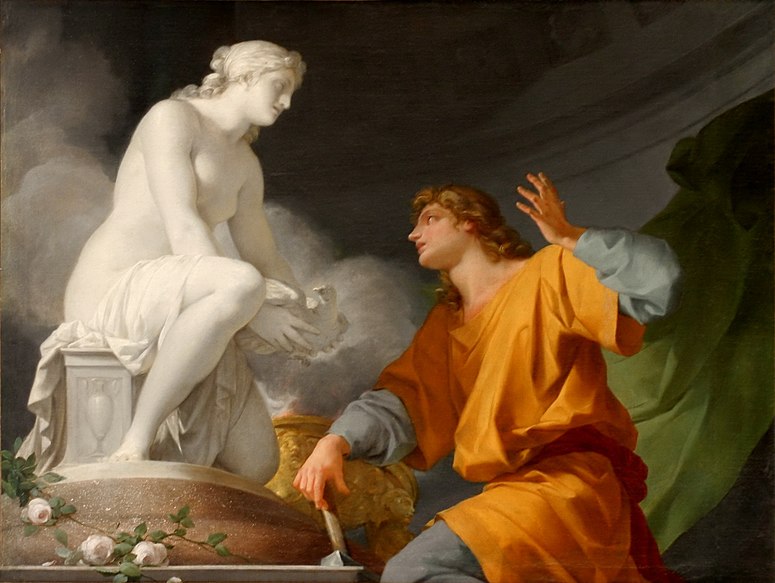
The primal earth has produced many wonders, but none so lovely (and few so powerful) as the so-called Queens of Elemental Earth. These five sisters are worshipped as goddesses by many of the folk who dwell beneath the earth and are honored by all elemental earth creatures.

The queens look like astoundingly beautiful statues of women in their natural state. They are translucent and gleam with an inner light that produces a magical aura. Within their eyes dance shimmering motes of light that affect all upon which they train their gaze. They dwell in luxurious palaces beneath the ground, served by lesser elementals and fey creatures.

While the queens are ground in neutrality, with some preference for order (i.e. Law), they are, as one might expect, possessed of a very keen appreciation for the wonder that is them. They do not like to be disobeyed or their intentions and desires frustrated, and they have no qualms about destroying lesser creatures that get in their way.

All of the queens can move through rock, stone and soil as easily as a human moves through the air. They suffer half damage from all attacks from manufactured and natural weapons.

Adamantia
Adamantia is Queen Diamond. She has a smooth body of translucent crystal with inner reflections of pink. Adamantia is the strongest and most durable of the five sisters, and she is unforgiving in her disdain of imperfection and muddled thinking. She is always under the effect of a true seeing spell and a zone of truth. She is worshipped as a goddess of clarity, truth and perfection. Her stronghold is a fortress of gleaming adamant, with every surface stark white and lit by a soft, pinkish-white glow. Her court includes elemental earth creatures as well as entities of Law and a host of human paladins that have declared her the focus of their courtly, chaste love.

Adamantia produces an aura of truth (see zone of truth above) that also acts a protection aura against chaotic creatures (per protection from evil, 10-ft. radius). Her gaze acts as a hold monster spell.

Adamantia can cast the following spells as innate abilities: At will – charm person; 3/day – break enchantment, charm monster, cure disease, dispel magic, haste (self), invisibility; 1/day – dimension door, ray of enfeeblement, strength, suggestion, wave of exhaustion. She can also cast spells as a 10th level cleric.

Adamantia: HD 21; AC -7 [26]; Atk 2 strikes (4d6); Move 36; Save 3; CL/XP 30/7400; Special: +2 or better weapon to hit, aura, gaze, earth glide, half damage from all weapons, suffers double damage from sonic attacks, immune to fire, resistance to cold (50%), magic resistance (65%), regenerate 3 hp/round.

Rubinia
Queen Ruby, Rubinia, is composed of a translucent red substance. Her hair (though it is merely sculpted on her head) appears wild and unkempt and her eyes gleam with power. She is worshipped as a goddess of fire and passion and strength. Her court includes elemental earth creatures as well as exiled or rebellious elemental fire creatures. Her stronghold is enclosed in a ruby sphere with spherical chambers that look like bubbles within the sphere and connected by curving tunnels that radiate out from her central court. Gravity is completely relative within the sphere, with people able to walk on all surfaces.

Rubinia produces an aura of weakness (10-ft. radius) that forces people to pass a saving throw or be affected per a ray of enfeeblement. Her gaze forces people to pass a saving throw or be enraged (per the emotion or rage spell, depending on which version of the grand old game you play). Enraged folk never turn their anger upon Rubinia or her servants. Her touch ages people as the touch of a ghost.

Rubinia can cast the following spells as innate abilities: At will – augury; 3/day – charm person, divination, dispel magic, haste (self), invisibility; 1/day – dimension door, flame strike, heal, heat metal. She can also cast spells as a 10th level magic-user.

Rubinia: HD 21; AC -6 [25]; Atk 2 strikes (4d6); Move 36; Save 3; CL/XP 30/7400; Special: +2 or better weapon to hit, aura, gaze, earth glide, half damage from all weapons, suffers double damage from sonic attacks, immune to fire, resistance to cold (50%), magic resistance (55%), regenerate 3 hp/round.

Esmeraude
Esmeraude, Queen Emerald, is the most sensuous and beautiful of the sisters, possessed of a green, healthy glow and a warm, though unyielding, touch. Her stronghold is a paen to love and romance, being a series of limestone caverns with jade pools, rushing streams, laughing waterfalls and gardens of flowering trees, ferns and flowers. Her court consists of elemental earth creatures, nymphs and dryads.

Esmeraude radiates an aura of blinding beauty (per a nymph) and her gaze stuns creatures for 2d4 rounds. Her kiss can grant magic-user’s the effects of a mnemonic enhancement for 24 hours, but also imbues upon them a geas that they must visit her once per year and serve her faithfully for one week.

Esmeraude can cast the following spells as innate abilities: At will – cause blindness; 3/day – cure blindness, cause fear, dispel magic, haste (self), invisibility; 1/day – charm monster, dimension door, entangle, plant growth, suggestion. She can also cast spells as a 12th level druid.

Esmeraude: HD 21; AC -5 [24]; Atk 2 strikes (4d6); Move 36; Save 3; CL/XP 30/7400; Special: +2 or better weapon to hit, aura, gaze, earth glide, half damage from all weapons, suffers double damage from sonic attacks, resistance to cold and fire (50%), magic resistance (55%), regenerate 3 hp/round.

Amethysta
Queen Amethyst appears as a woman of translucent purple crystal accompanied always by three legendary panthers with purple-black fur. She is a queen of dreams who commands a court of elemental earth creatures, succubi and illusionists. Her court is held in a palace of mottled purple walls set in a maze-like layout, with many secret chambers where visitors can rest themselves on comfortable beds stuffed with celestial goose down and sleep under silk and satin, perhaps never to wake again.

Amethysta produces a purple aura of slumber (as the daze spell) and her gaze causes confusion. Those struck by her, even lightly, must pass a saving throw or fall into a deep sleep. She can deliver a kiss that drains levels per a succubus.

Amethysta can cast the following spells as innate abilities: At will – sleep; 3/day – cause fear, dispel magic, haste (self), invisibility; 1/day – dimension door, dream, nightmare, phantasmal killer, poison. She also casts spells as a 10th level illusionist.

Amethysta: HD 21; AC -5 [24]; Atk 2 strikes (4d6); Move 36; Save 3; CL/XP 31/7700; Special: +2 or better weapon to hit, aura, gaze, earth glide, half damage from all weapons, suffers double damage from sonic attacks, resistance to cold and fire (50%), magic resistance (45%), regenerate 3 hp/round, life drain.

Zaffira
Zaffira is a bubbly, almost giddy queen of sapphires. She appears as a beautiful, young woman with translucent blue skin, her eyes like star sapphires and her hair tumbling like cascades of water down her back to her ankles. She dwells in a floating palace of sapphire walls and misty, damp halls occupied by elemental earth creatures as well as sylphs and other exiled air creatures and giant eagles. Zaffira is worshipped as a goddess of innocence, truth and courage.

Zaffira produces an aura of euphoria. Folk who enter it must pass a saving throw or be calmed, losing all desire to commit violence or even engage in argument. Her gaze causes people to break into uncontrollable laughter (per the spell).

Zaffira can cast the following spells as innate abilities: At will – hold person; 3/day – cause fear, discern lies, dispel magic, haste (self), invisibility; 1/day – globe of invulnerability, mark of justice, ray of enfeeblement, resilient sphere, strength. She also casts spells as a 12th level cleric.

Zaffira: HD 21; AC -6 [25]; Atk 2 strikes (4d6); Move 36; Save 3; CL/XP 23/5300; Special: +2 or better weapon to hit, aura, gaze, earth glide, half damage from all weapons, suffers double damage from sonic attacks, resistance to fire and cold (50%), magic resistance (65%), regenerate 3 hp/round.

Image found HERE. Painted by Jean-Baptiste Regnault (1786).

Magical Prehistory Tour

Dinosaurs. Awesome, right? Lots of them, though – hard to keep track, especially when scientists keep changing their darn minds about them (they’re brontosauruses because that name is cooler, and triceratops are so a species of dinosaurs, so shut up scientist man). Here’s a handy dandy guide to basic forms and a few handy “mutations” to keep your players guessing.

DINO TYPES

Not scientific, but just a quick batch of stats for some basic dino types. And yes – I already know it doesn’t cover everything, just the stuff that pops up most often in old dinosaur movies and the Flintstones.

CERATOPSIANS
These are the fellows with the lovely head fringes and horns, like triceratops. Assume the basic ceratopsian is about 30 feet long.

CERATOPSIAN: HD 15; AC 0 [19] front, 5 [14] back; Atk 1 gore (4d8); Move 12; Save 3; CL/XP 15/2900; Special: None.

PTEROSAURS
Technically not dinosaurs, but if they’re on the Flintstones, they’re close enough for me. These are the flyers. The basic pterosaur has a wingspan of about 15 feet and a length of about 5 feet.

PTEROSAUR: HD 5; AC 2 [17]; Atk 2 claws (1d4), 1 bite (2d8); Move 9 (Fly 24); Save 12; CL/XP 6/400; Special: None.

SAUROPODS
The big boys – quadrupeds with long necks who make little tremors when they walk. Assume that the basic sauropod is around 150 feet long.

SAUROPOD: HD 25; AC 6 [13]; Atk 1 stomp (4d10); Move 9; Save 3; CL/XP 25/5900; Special: None.

THERAPODS
The therapods cover the bipedal carnivores, of which the T-Rex and Velociraptor are now the most famous. Assume that the basic therapod is huge in size (i.e. around 30 feet long). When a therapod bites prey, it grabs the victim in its jaws, shaking and chewing for automatic damage in subsequent rounds. Only victims with shells, bone frills, or spines can avoid the horrendous tearing damage.

THERAPOD: HD 18; AC 4 [15]; Atk 1 bite (4d8); Move 18; Save 3; CL/XP 19/2400; Special: Chews and tears.

THYREOPHERANS
These are the quadruped armored or spiked dinosaurs, like stegosaurus and ankylosaurus. Assume that the basic thyreopheran is about 20 feet long.

THYREOPHERAN: HD 15; AC 2 [17]; Atk 1 bite (1d8), 1 tail (4d6); Move 9; Save 3; CL/XP 15/2900; Special: None.

MUTATIONS
No more humdrum dinos for us, my friend. Let’s make them fabulous!

1D30 / MUTATION
1-2 Small and quick – reduce HD by half (and modify saving throws accordingly) and double their speed. In addition, they get a bonus to initiative (how much depends on what you roll, +1 if d6, +2 if d10, +3 if d20; if you roll d8, you’re weird and I just can’t help you). Decrease damage by one dice size.

3 Big and beefy – increase HD by 50%, cut movement in half and if they are at least 60 feet in length they can cause an earthquake (as the spell) once per day in a 100-ft radius. Increase damage by one dice size.

4 Red scales – dinosaur is immune to fire.

5 Blue scales – dinosaur is immune to lightning.

6 White scales – dinosaur is immune to cold.

7 Gold scales – dinosaur is immune to non-magic weapons and +2 to save vs. magic.

8 Black scales – dinosaur surprises on 3 in 6 at night, has darkvision.

9 Woolly – dinosaur has fur. This gives it a +1 bonus to AC and resistance (50%) to cold.

10 Massive Brain – dinosaur has high intelligence and can use a psychic blast (30-ft cone, save or stunned for 1d4 rounds) three times per day.

11 Draconic – as small and quick, plus dinosaur has dragon wings and the flight speed and breath weapon of a random dragon; 1 = Black; 2 = Blue; 3 = Gold; 4 = Green; 5 = Red; 6 = White. Dino-dragons can never speak or cast magic spells.

12 Spitter – can spit poison (30-ft range; save or blinded and 1d6 damage) or belch acid (10-ft cone, 2d6 damage).

13 Leaper – can leap up to 20 feet forward or 10 feet backward. When leaping to attack, treat as a charge.

14 Gorgonoid – has metallic scales as a gorgon; increase AC by +4.

15-16 Horns – has two horns or two extra horns; gains an additional gore attack for 2d6 damage.

17 Manticoroid – has tail spikes that can be fired like those of a manticore for 1d6 points of damage.

18 Displacement – per the mirror image spell (4 additional images), can be used three times per day.

19 Blink – per the blink dog.

20-21 Camouflage – surprises on a roll of 1-3 on 1d6.

22 Stone Cold Awesome – has a petrifying bite, per the cockatrice. Dinosaur can swallow and ingest the stone if a carnivore.

23 Laser eyes – can fire searing beams from eyes three times per day. Range of 60 feet, 3d6 points of damage, ranged attack required.

24 Scream – per the shout spell, usable three times per day.

25 Rider – dinosaur is ridden by a caveman bounty hunter (per dwarf fighter level 1d4+4). Rider wears the equivalent of leather armor and carries a club and three throwing spears.

26 Trill – dinosaur can trill as a remorhaz.

27 Song – dinosaur produces a vibration that causes sleep (as the spell). Usable three times per day.

28 Song – dinosaur produces a vibration that causes a charm monster effect. Usable three times per day.

29 Song – dinosaur produces a vibration that causes a hold monster effect. Usable three times per day.

30 Construct – dinosaur is made of metal and gears. Increase AC by +5. There is a 5% chance it can change its shape to that of a stone giant (also made of metal and gears, AC +5). Constructs are immune to mind effecting spells, poison and disease and take half damage from fire and lightning.

Have any other ideas? Put them in the comments – let’s take this table to 100!

Image from Golden Age Comic Book Stories, by the great Charles Knight.

Martians!

BAH!

Ah – December! The crisp air, the smell of expensive holiday-themed candles, fruit cakes … it always brings one thing in particular to my mind. Martians!

In particular, the hapless buggers who dared kidnap Santa Claus. Having had the annual viewing of the MST3K classic riffing of Santa Claus Conquers the Martians, and with the eminent release of Space Princess, I figured it made sense to mash the two together. When the Christmas season rolls around and you’ve gathered your friends to play some Space Princess over a glass of eggnog, you’ll be well prepared.

Martian
The Martians are green-skinned humanoids of a (formerly) warlike race. From an early age Martians are educated by thought waves projected from computer banks and received by cybernetic antennae jutting from helmets almost always worn on their heads. These helms act as communicator devices (see Super Science). Martians arm themselves with freeze ray guns. Most wear skin-tight green costumes, while leaders are designated by their use of cloaks.

Martians dwell in subterranean cities that abut their famous canals, which transfer water from the poles to the warmer climes. Martians require very little air and are immune to cold. Despite their planet’s lower gravity, they appear to be just as strong as human beings.

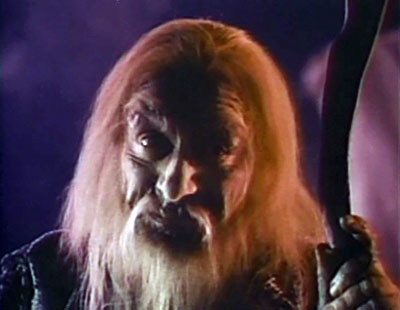
The elders of the Martian race are called chochems. These mystics can employ four psychic powers. They dress in robes and carry staves.

For the past generation, Kimar has served as the leader of the Martian people. It was he who personally led the expedition to bring Santa Claus and Christmas to the Martians. In the time since the arrival of Santa, the Martians have become less warlike and more generous. Still, some elements among them seek a return to the old ways. A leader among these rebels is Voldar, a mustachioed thug with a cruel sense of humor.

MARTIAN WARRIOR: HD 2; DEFENSE 6; MELEE 6 (fists 1d4); RANGED 6 (freeze ray gun); MOVE N; STR 4; DEX 4; MEN 3; KNOW 5; DL 2; SPECIAL: Immune to cold.

CHOCHEM: HD 1; DEFENSE 4; MELEE 4 (staff 1d6); RANGED 4; MOVE N; STR 3; DEX 3; MEN 5; KNOW 7; DL 2; SPECIAL: Immune to cold, four psychic powers (activate +12).

VOLDAR: HD 6; DEFENSE 9; MELEE 12 (fists 1d4); RANGED 9 (freeze ray gun); MOVE N; STR 6; DEX 4; MEN 3; KNOW 5; DL 6; SPECIAL: Immune to cold.

KIMAR: HD 8; DEFENSE 13; MELEE 12 (fists 1d4); RANGED 13 (freeze ray gun); MOVE N; STR 4; DEX 5; MEN 4; KNOW 6; DL 8; SPECIAL: Immune to cold.

By the way – if any artist out there would like to draw their rendition of Capt. Kirk performing his famous flying kick on Voldar while Santa and Spock look on, well, I’m sure we’d all like to see it!

Images found here and here.

MEGA-MONSTERS: The Anaxim

The SRD is a pretty big document, with plenty of neat things to make use of, even for old school gamers. This is one of the reasons I’ve embarked on the Blood and Treasure project – make a system with old school rules that attempts to embrace just about everything the SRD has to offer – thematically, it would be Basic rules with all the Advanced classes, spells and monsters. If you started playing back in the ’80s, you probably know what I’m talking about. Recently, I was perusing some of the epic-level monsters in the SRD and though that any one of them might make a neat center piece to a massive campaign of the kind suggested in Mentzer’s BECMI set of rules. Thus – MEGA-MONSTERS.

The conversion below is for both Blood and Treasure (as it currently stands in my mind) and Swords and Wizardry, with S-n-W stats being behind the slash where necessary.

ANAXIM
Huge Construct, Intelligent, Lawful
Hit Dice: 30
Armor Class: 27 / -8 [27]
Attacks: 2 spinning blades (2d8), 6 projectile spikes (2d8, 120’) and lightning bolt (10d6, 300’) or sonic blast (10d6 + deafness, 60’ cone)
Move: 60 (Fly 200) / 18 (Fly 30)
Saving Throws: F8, R2, W2 / 3
Special: Summon iron golem, +2 or better weapon to hit, regenerate 3 hp/round, resistance to fire and cold (50%), immune to polymorph, petrification and illusions, blindsight (500’), telepathy (1,000’)
Spells: At will – Displacement, ethereal jaunt, greater dispel magic, greater invisibility / Dispel magic, invisibility, etherealness (as the potion)
XP: 38,000 / 39/10,100

Anaxims, or God-Machines, are massive constructs shaped something like beetles and are as large to an iron golem is as an elephant is to a human being. In place of mandibles that have two spinning blades on iron arms and their bodies are studded with six massive spikes that can be launched at enemies up to 120 feet away. They can also emit lightning bolts and sonic blasts. Four times per day, an anaxim can summon an iron golem to fight by its side.

Anaxims might be the product of titans or hordes of lawful creatures like formians. They are created to smash the forces of chaos (in a final, end of Law vs. Chaos way) or guard the secrets of Creation.

Regenesis
The Regenesis campaign pits the adventurers against a secret cult dedicated to re-creating the universe. The current universe, they believe, is tainted by chaos and thus not perfectible. They wish to create an anaxim and set it upon the forces of Law, smashing the machinery of creation and allowing the universe to collapse in on itself and, in their belief system, be recreated from a single, perfect mainspring. Of course, they are insane, but that doesn’t stop them from being dangerous.

BASIC: Basic adventures pit the adventurers against the foot soldiers of the cult. To create their anaxim, the cultists have struck out in search of pure metals and master smiths and engineers, enslaving them. Each individual cell of the cult is responsible for a single part of the finished anaxim, as guided by a group called “The Divine Architects”. Perhaps the ultimate basic adventure would have the adventurers penetrating the slave factory of one cell as they prepare to place their part of the anaxim in the hands of a visiting, extra-planar Architect.

EXPERT: The expert adventurers force the adventurers to strike out into the wilderness to attack other cells of the cult. Perhaps there are three key factories all trying to produce a single part of the anaxim, and at least one must be stopped to slow down the cult’s plan. Golems of various kinds should come into play at these levels, along with conspirators of the cult – sages, magic-users, nobles, etc.

MASTER: The master level adventures involve moving beyond the material plane. The plan of the cult, which is spread across the cosmos (i.e. not only on the adventurer’s home world), has put the Divine Architects (formians) in conflict with the polyhedroids who maintain the mystic gears of the cosmos. A perfect mainspring has been stolen, and the cosmos is grinding to a halt. The adventurers must find the clandestine base where the various parts of the anaxim are being assembled, for it is hidden in a pocket dimension somewhere in creation.

EPIC: The final adventurers involve an assault on the pocket dimension of the true powers behind the cult and the Divine Architects – a band of rebellious titans who seek the cosmos’ destruction for their own purposes, as each believes he can create his own little universe – a multi-verse, one might call it – with he or she taking the role of Creator. The pocket dimension houses a small world (about the size of an asteroid), and deep within this world sits the anaxim, ready to be activated.

A couple notes on Blood and Treasure

For Armor Class conversions (SRD to BnT), I’m using the following formula:

AC 10 to 18 = keep the same
AC 19-20 = 19
AC 21-22 = 20
AC 23-24 = 21
AC 25-26 = 22
AC 27-28 = 23
AC 29-30 = 24
AC 31-32 = 25
AC 33-35 = 26
AC 36-38 = 27
AC 39-41 = 28
AC 42-44 = 29
AC 45+ = 30

Determining XP in Blood and Treasure will (at the moment, I might change my mind) be done as follows:

For monsters with no special combat abilities, XP = HD x 10

For monsters with minor special combat abilities, XP = HD x 100

For monsters with major special combat abilities, XP = HD x 1,000

And no, I haven’t yet figured out what will count as minor and major special abilities. Spells of 0 to 4th level will probably be minor, spells of 5th level or higher are major; resistance to damage (i.e. half damage) will be minor, immunity major; only harmed by silver weapons minor, magic weapons major, etc.

The saving throws are just the number you have to equal or beat on a d20 roll for monsters. Characters would be adding the appropriate ability bonus (constitution to Fortitude saves, dexterity to Reflex saves, wisdom to Will saves). If the save is considered “difficult” – for example, if saving against a creature with 5 HD or levels more than you or because of some extenuating circumstance determined by the Referee, there is a -5 penalty on the saving throw. I’m trying to keep bonuses and penalties to a bare minimum in Blood and Treasure.

I’m going to cap monster Hit Dice and Armor Class at 30. From Kobold to Orcus (or Anaxim), I think a range of 0 to 30 is sufficient. Character levels run from 1 to 20.

Oh, and yeah, I’m still working on Space Princess (art is being produced by Jason Sholtis as we speak, and it rocks! I need to write a sample space fortress …), 1800 – American Empires (holding pattern until Space Princess is finished) and Action X (holding pattern until American Empires is finished – oh, and I think I found a font I like for the title today!). Also almost finished with Hex Crawl Classic 6 (this weekend for sure), still working on NOD 12 and I should dive into Rappan Athuk at some point soon. Busy and happy!

Old School Monster Party

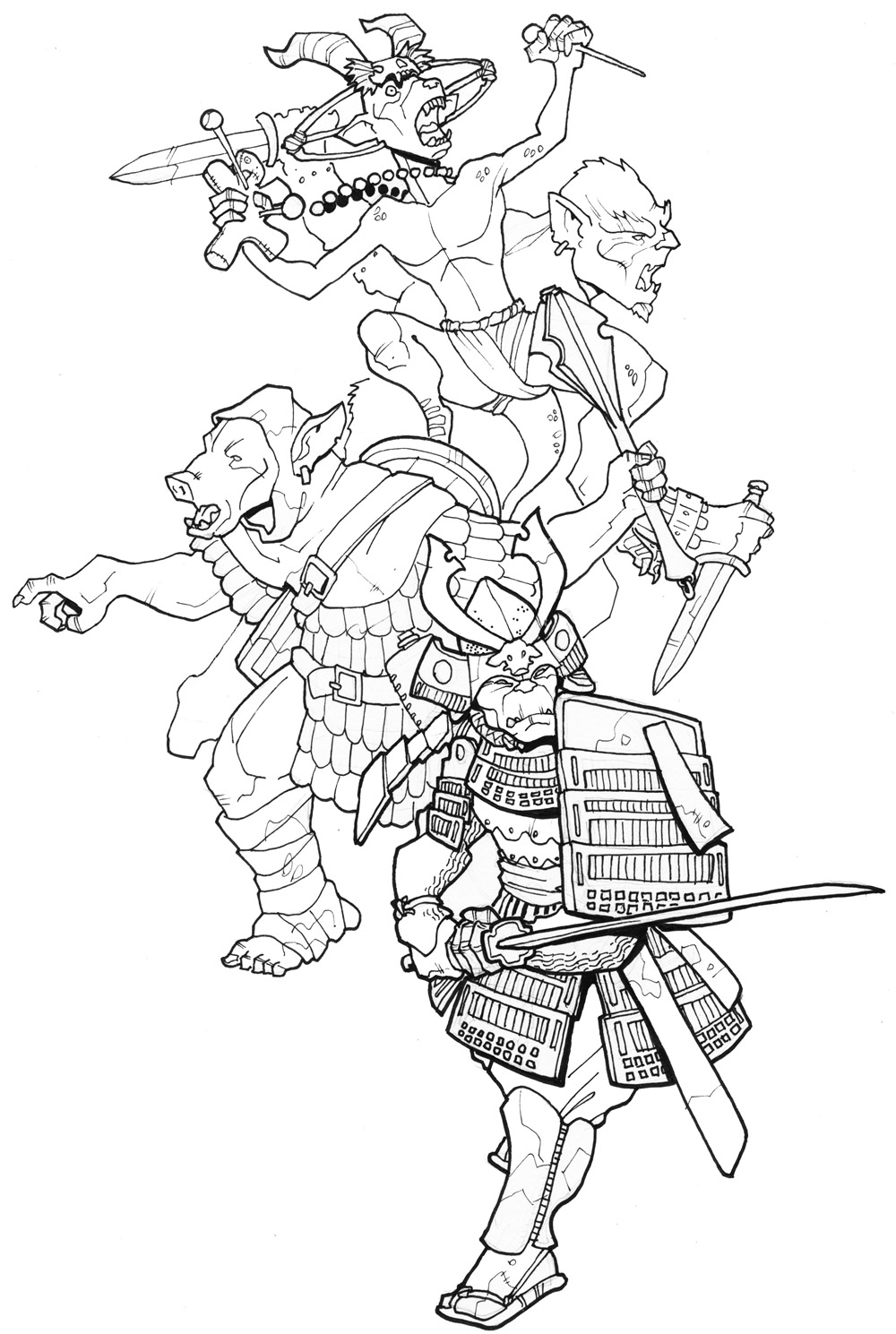
Quick post today – I’m in meetings pretty much all day. I said a couple days ago I was going to work out some rules for using drow, duergar, svirfneblin, hobgoblins, orcs, kobolds and bugbears as PCs – mostly because they make sense in terms of running a campaign in the Hell hex crawl I’m writing. My hope is that I can come up with something unique and flavorful for these folks – some random characteristics, racial stats, race-as-class stuff, etc. I commissioned Jon Kaufman to draw a couple “monster parties” for me and I got the results yesterday. Here’s one of them …

This would be a hobgoblin fighter, orc cleric, bugbear thief and kobold magic-user inspired by their original monster designs in ye old Manual of Monsters.
I have the art, now I just need to write the article!

When Dragons of Different Colors Fall in Love

Now that I’ve covered all the various shades of “color dragons”, it’s time to pull one more blog post out of this concept and look at cross-breeds.

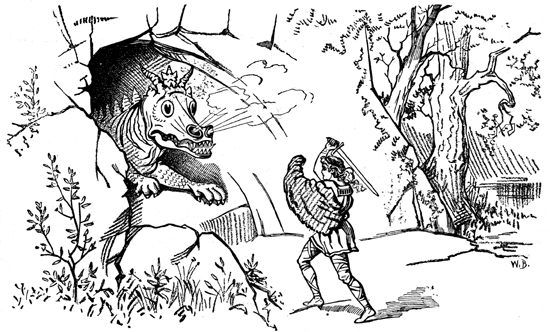
Dragons are haughty creatures, so interbreeding between different colors is rare. For one thing, they tend to live in different regions and are quite territorial, hunting in and defending their territory and rarely moving outside of it. But, in the course of draconic events, it does happen that a macho blue dragon will wander into the territory of a sexy green dragon and nature takes its course. The product is a dragrel (mongrel dragon).

Dragrels are not favored by their pure-blooded parents for a variety of reasons. First and foremost, inter-species couplings produce only a single egg. Since dragons are not rapid breeders, sitting on a single egg for several months is an inefficient way to survive. Dragrels are also smaller than pure dragons and wingless, resembling reptilian wolves or greyhounds. They are not as physically powerful as dragons, but make up for it with intelligence and magical ability, and this enhanced magical ability that makes them a threat to their parents. A dragon mother will hatch a dragrel, but then usher it out of her cave and only permit it to dwell in her territory for a few years. Finally, dragrels, like mules, are sterile, making them a genetic dead-end for their parents. Dragrels are always male.

Making A Dragrel

A dragrel has a number of Hit Dice equal to the average of a small dragon of its parents’ color types. In other words, a blue-green dragrel will have hit dice equal to the average of a small blue dragon and a small green dragon.Dragrels have the lower of their parents’ Armor Classes. They attack with two claw attacks for 1d4+1 points of damage and a bite attack for 2d6 points of damage. They have a movement rate of 15 and cannot fly, though their claws allow them to climb at a movement rate of 12.

Dragrels do not have a breath weapon, but they are immune to the breath weapons of their parents. Dragrels always have the power of speech and they always cast spells, combining the spell abilities of their parents’ color types.

Most dragrels live apart from other creatures, avoiding true dragons. Some move close enough to human or humanoid settlements to cultivate a small cult or following, trading their magical abilities and intellect for worship and tribute.

A dragrel’s scales combine the colors of its parents. You can roll on the following table to see how this comes out:

1. Striped, with the father’s color being the dominant color on the dragon.
2. Spotted, with the mother’s color being the dominant color on the dragon.
3. Mottled, with neither color predominating.
4. Blended, as in blue-green or, for the issue of a red and white dragon, pink.

Sample Dragrels
Using the two combinations mentioned above …

River Dragrel (cerulean father and moss mother)
When a gregarious cerulean dragon came across a moss dragon with an inferiority complex, he found her quite easy to charm. The result was Rochtorine, a dragon with cerulean scales covered by a winding pattern of mossy stripes. Rochtorine now dwells in the river county upstream from his mother, annoying travelers with his tall tales, insistence on tribute and need to outdo everybody he meets in everything they do (and tendency to destroy those he cannot best).

Rochtorine: HD 7 (34 hp); AC 2 [17]; Atk 2 claws (1d4+1) and bite (2d6); Move 15 (C12); Save 9; CL/XP 10/1400; Special: Immune to electricity and green slime, spells (4 x first level, 4 x second level).

Pink Dragrel (white father and red mother)
There is an immense volcano that slumbers noisily in the northlands, its base covered in snow most of the year. A red dragoness dwells in a cave near the peak, toasting her scales in the lovely warmth, while an old white dragon, savage and canny, dwells near the base overlooking a creeping glacier. The two once produced an offspring that calls himself Kandovesus. Upon reaching maturity, Kandovesus beat a hasty retreat from the peaks into the wooded valleys below, and now dwells in a moss-covered cave in the shadow of his mother’s and father’s territories. He preys on travelers, selling them “protection” in return for an ox or a few baubles. Kandovesus has scales of a deep, coral hue.

Kandovesus: HD 7 (31 hp); AC 2 [17]; Atk 2 claws (1d4+1) and bite (2d6); Move 15 (C12); Save 9; CL/XP 10/1400; Special: Immune to cold and fire, spells (4 x first level, 1 x second level, 2 x third level).

Image from HERE

Titans: What Are They Good For?

Orcus and Demogorgon, solars and planetars, but whence the titans? These big guys and gals seem to be on a pretty even footing with the demon lords and archangels (depending on which version of the game you adhere to), but they don’t get much love or use. I think this is a shame. To my way of thinking, titans represent a third way when it comes to the solars and the demon princes and dukes of Hell – neutral powers that can stand with the powers of Law and Chaos.

Perhaps the titans are the children of minor gods and goddesses. I’m talking Alala and Eleos, here, not Zeus and Aphrodite. Their parentage is divine and immortal, but they’re not. Well, maybe they are immortal in terms of aging, but they are creatures of the Material Plane and thus mortal in terms of “can be killed”. Where demon lords and solars hang out in the outer planes, titans live in the Material Plane, lording it over lesser beings as kings and queens by dent of their divine birth and tremendous power. How much more interesting to discover that the city-state you just wandered into is ruled by King Criomenos, the son of Moros, demi-god of impending doom and Eunomia, demi-goddess of law and legislation. You walk into this court to announce yourselves as great heroes, and find not a little man with a long, white beard, but a titan, head wreathed in gold, hand resting atop a golden sceptre as tall as your paladin and eyes that have seen centuries.

With that in mind, I decided that any titan that shows up in Nod is going to have a name, a heritage and powers commensurate with that heritage. According to S-n-W, the primary power of titans is spells – two spells of first to seventh level from both the magic-user and cleric lists, for a total of 28 spells. I decided to alter that a bit. Drawing on the old d20 SRD, I decided to instead give them all the spells (level 1 to 9) from the two cleric domains that most befit their parents. Since that gives them only 18 spells (still probably plenty), I decided to make up for it with a special defense (see below) and with the ability to commune with mommy and daddy once per day.

To determine the titan’s parentage, I decided to just make a random table of the cleric domains, rolling once for mom and once for dad. I listed some potential parents from Greek mythology behind each domain.

Roll D30 – Parent

1. Air – Aello (F), Aeolus (M), Aura (F)
2. Animal – Britomartis (F), Ichnaea (F), Krotos (M), Priapus (M)
3. Artifice – Acmon (M), Aristaeus (M), Hecaterus (M), Philomelus (M), Rhapso (F)
4. Chaos/Evil – Adikia (F), Eris (F), Dysnomia (F), Kakia (F), Kydoimos (M)
5. Charm – Eros (M), Hedone (F), Iynx (F), Peitho (F)
6. Community – Eunomia (F), Harmonia (F), Hymenaios (M), Nomos (M), Praxidike (F)
7. Creation – Euporie (F), Othorsie (F), Porus (M)
8. Darkness – Charon (M), Erebos (M), Nyx (F), Tartarus (M)
9. Death – Macaria (F), Melinoe (F), Thanatos (M)
10. Destruction – Alecto (F), Enyo (F), Moros (M), Nemesis (F)
11. Earth – Chrysus (M), Plutus (M)
12. Fire – Phlegethon (M)
13. Glory – Agon (M) , Eucleia (F), Kalokagathia (F), Nike (F), Pheme (F)
14. Good/Law – Arete (F), Astraea (F), Dike (F), Eunomia (F), Nomos (M), Peitharch (F)
15. Healing – Aceso (F), Eirene (F), Eleos (M), Eupraxia (F), Panacea (F), Philophrosyne (F)
16. Knowledge – Polymatheia (F)
17. Liberation – Momus (M)
18. Luck – Tyeche (F)
19. Madness – Deimos (M), Lyssa (F), Epiales (M)
20. Magic – Astraios (M), Circe (F), Despoina (F), Telete (F), Zagreus (M)
21. Nobility – Kalokagathia (F)
22. Plant – Amphictyonis (F), Carmanor (M), Chloris (F), Karpo (F), Silenus (M), Thallo (F)
23. Protection – Soter (M)
24. Strength – Bia (F), Kratos (M), Ponos (M)
25. Sun – Alectrona (F), Eos (F), Helios (M), Hemera (F)
26. Travel – Angelia (F), Arke (M), Ioke (F), Iris (F)
27. Trickery – Apate (F), Ate (F), Dolos (M)
28. War – Alala (F), Enyalius (M), Homandos (M), Polemos (M)
29. Water – Amphitrite (F), Galene (F), Glaucus (M), Proteus (M), Thetis (F), Thalassa (F)
30. Weather – Briareus (M), Chione (F), Tethys (F), Typhon (M)

A few of the categories are pretty sparse when it comes to divine representation, but what can you do.

You can find the various domains HERE and HERE. The spells that don’t show up in your favorite version of the game are easy enough to convert. If you don’t like conversions, use another spell that fits. Personally, I like the idea of a titan throwing down a spell the party clerics and magic-users have never heard of – maybe if they make a good impression and grovel a bit, the titan will teach them the secret!

Special Defenses
Special defenses should relate to the parentage, and the Ref might want to give them more than one special defense. Defenses for the titan might include:

+5 to save vs. poison or disease
Cannot be attacked by different kinds of creatures like reptiles, birds or plant creatures
Cannot be surprised
Immune to energy drain or falling damage
Immune to a class of spells – i.e. illusions, death spells or mind control
Magic resistance (maybe 15% for the least titans, with a 5% bump per additional hit dice)
Only harmed by +1 weapons
Resistance (half damage) from iron weapons or missile weapons, etc.
Resistance (half damage) to cold, fire, electricity, acid, etc.

You can probably think of others.

Using the example above, King Criomenos might have the following stats:

KING CRIOMENOS, Titan: HD 20 (109 hp); AC –1 [20]; Atk 1 sceptre (2d8) or javelin (2d6); Move 21; Save 3; CL/XP 22/5100; Special: Immune to death spells, spells (bless, cause disease, cause critical wounds, cause light wounds, disintegrate, earthquake, greater status, harm, heroes’ feast, implosion, mass cause light wounds, mass heal, prayer, refuge, shatter, status, sympathy, telepathic bond), commune with Eunomia and Moros.

Shades of Black

The last color dragon to be given the shade treatment, though not the last article in this series. Shades of black really turned into shades of dark gray, but hopefully you’ll find these reptilian horrors useful.

ARSENIC DRAGON: The arsenic dragon is small and serpentine, with small, clawed legs that allow it to scamper and climb. Frills run along its sides that allow it to glide at a speed of 18 for a distance equal to 3 x the height at which is begins its flight. Arsenic dragons can always speak, and are quite talkative. They never cast spells because they are immune to magic. They dwell in small places, being able to curl up into a surprising small ball (3-ft in diameter) and stash their treasure all over their territory in tiny parcels usually wrapped in animal skins. An arsenic dragon’s bite is poisonous, forcing folk to pass a save or suffer one of the following effects: Fail by 1 to 3 points – fall asleep for 1d3 turns; fail by 4-6 points – paralyzed for 1d3 rounds; fail by 7+ points – suffer damage equal to normal breath weapon damage.

ARSENIC DRAGON: HD 6; AC 2 [17]; Atk 2 claws (1d4), bite (3d6 + poison); Move 9 (F18); Save 11; CL/XP 10/1400; Special: Poisonous bite, immune to magic.

BISTRE DRAGON: These large dragons dwell in large rivers and occupy a niche similar to whales. They are quite graceful when swimming, but become lumbering brutes on land. One often finds them floating on their backs in the midst of a river, seemingly immune to the current and snoozing or daydreaming. Bistre dragons are sagacious and have acerbic personalities – they are not as thoroughly evil as black dragons, but have a general disdain for others only overcome by their need to dominate them intellectually. Bistre dragons have a 90% chance to speak, and those who can speak have a 25% chance to cast 1d4 first level magic-user spells and 1d3 second level magic-user spells. A bistre dragon’s acidic spit does not affect flesh, but corrodes, tarnishes and rusts all forms of metal as the touch of a rust monster destroys iron. Creatures that are spat at must pass a saving throw or lose one random piece of metal equipment.

BISTRE DRAGON: HD 8; AC 2 [17]; Atk 2 claws (1d4), bite (3d6); Move 6 (S24); Save 8; CL/XP 10/1400; Special: Corrosive breath.

CHARCOAL DRAGON: These medium-sized dragons despise life. They dwell alone, rarely interacting with other dragons and often turning chance meetings into fights to the death. They are surrounded by a miasma of fumes that burn the eyes and throat and can vomit an acidic tar that sticks to flesh, clothes, etc and deals 1d6 points of damage until it can be scraped or peeled away (one can do nothing else, and must pass an open doors check to rid themselves of the tar). Charcoal dragons have the normal chance to speak and cast spells. They dwell in burrows.

CHARCOAL DRAGON: HD 7; AC 2 [17]; Atk 2 claws (1d4), bite (3d6); Move 9 (B6, F24); Save 9; CL/XP 9/1100; Special: Acidic tar.

LIVER DRAGON: Liver dragons are tall beasts with a body shaped reminiscent of a reptilian, winged giraffe. They are quick runners, with over-large heads, downward curving horns and saucer-like eyes that never seem to close. Liver dragons despise pretense and have a puritanical love of severity and honesty. They can see through all illusions and have the normal chance for a black dragon to speak and use magic. Their breath weapon is a cone of black energy that strips people of their lies and pretenses. Those struck are incapable of lying and deceiving in any way for 24 hours; they must also pass a saving throw or have their appearance altered to represent their inner selves (up to the player and Referee how this works out). This change in appearance is permanent unless one can be polymorphed or otherwise magically altered.

LIVER DRAGON: HD 8; AC 2 [17]; Atk 2 claws (1d4), bite (3d6); Move 12 (F18); Save 8; CL/XP 10/1400; Special: Immune to illusions, strip away pretense.

TAUPE DRAGON: Taupe dragons are small, quick and persistent dragons. They ooze acid from their teeth, claws and scales and are thus a blight on any landscape. Taupe dragons are territorial, marking their territory by rubbing their acidic bodies against trees and eating away the bark. Pools they visit frequently are often mildly acidic. Taupe dragons are more obsessed with treasure than most black dragons, using the precious metals as bedding, for precious metals are immune to their acidic bodies. Victims of the dragon’s claw and bite attacks may make a saving throw to avoid the extra acid damage. Touching a taupe dragon’s body causes 1d4 points of acid damage, and normal weapons used against a taupe dragon might be eaten away. Each time a hit is scored on a taupe dragon, a saving throw must be made. If failed, the weapon’s damage dice is reduced by one dice size (i.e. 1d6 to 1d4 or 1d4 to 1d3). A weapon reduced to 0 damage is useless. Weapons can be repaired, but will only regain one dice size at a maximum. Magical weapons need not make this saving throw. Each time a victim suffers acid damage from a taupe dragon, their armor’s armor bonus is reduced by one (no save). Again, magical armor is unaffected. Taupe dragons have a 25% chance of speech and the normal chance for black dragons for casting spells.

TAUPE DRAGON: HD 6; AC 2 [17]; Atk 2 claws (1d4 + 1d4 acid), bite (3d6 + 1d6 acid); Move 12 (F24); Save 11; CL/XP 8/800; Special: Acidic body and bite.

ONYX DRAGON: Onyx dragons have glistening black scales, short, thick necks, faces reminiscent of pit bulls with a double pair of horns, one curving upward, the other downward. They are stocky, with long, powerful tails that they make use of in combat to knock their opponents off balance. Each round in melee combat, those who fail to hit the dragon must pass a saving throw or be knocked off balance, suffering a 1d4 point penalty to AC for that round. Onyx dragons are lazy, physically and mentally, but no less arrogant for it. They consider themselves the most intelligent of creatures, when in fact their ignorance is monumental. When forced into discourse, they prattle on about this and that, vomiting streams of jargon and referencing obscure texts but never really proving anything. The acidic breath of an onyx dragon seeps into one’s bloodstream and affects the mind. Those hit by the breath must pass a saving throw or suffer one of the following hallucinogenic effects: Fail save by 1-3 = confusion for 1d6 turns; fail save by 4-6 = waking nightmare (per the spell); fail save by 7-9 = phantasmal killer effect (as the spell). Onyx dragons have a 65% chance of speaking, and those with speech can use telepathy out to 120 feet. They have a 15% chance of using 1d6 first level magic-user spells as psychic powers (i.e. they need not speak or move to engage them).

ONYX DRAGON: HD 7; AC 2 [17]; Atk 2 claws (1d4), bite (3d6); Move 9 (F24); Save 9; CL/XP 10/1400; Special: Hallucinogenic breath, tail slap.

Illustration from Karen’s Whimsey

Alien Critter Generator

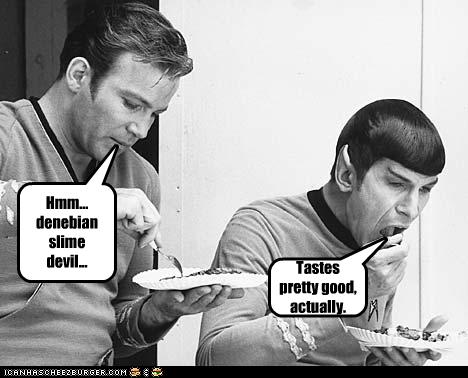
Any viewer of mainstream sci-fi has heard a few alien animal names that consist, usually of three elements. First, is their place of origin. Perhaps a planet orbiting the star Deneb. Then a descriptor – maybe this creature is slimy or dwells in slime. Finally, a noun – perhaps this irascible creature can best be described, like the well-known critter from Tasmania, as a devil. Hence Denebian slime devil. Okay, so how about a random table to do the same and stat the critter out.

Place
1. Venusian
2. Martian
3. Jovian
4. Saturnian
5. Mercurian
6. Plutonian
7. Neptunian
8. Denebian
9. Altairan
10. Cygnian
11. Betelgeusian
12. Polarian
13. Andromedan
14. Cetian
15. Algolian
16. Pleiadeian
17. Rigelian
18. Aldebaran
19. Antarean
20. Arcturan

* Note, if you prefer your beasties to be from distant stars rather than planets, just re-roll if Martian or Venusian, etc comes up. Or make your own table you lazy bugger – what do you want for free? You might also want to alter the critter’s stats based on the conditions of the planet (i.e. high gravity, etc.)

Descriptor
1. OOZE/SLIME: Creature may be covered in slime, granting it DEFENSE +3 vs. grabbing or wrestling attempts. Otherwise, just lives in a slimy environment.
2. ROCK/STONE: Creature may have DEFENSE +2. Otherwise, simply lives in a rocky environment.
3. DEATH: Creature either has a deadly poison bite or +2 hit dice.
4. SHADOW: Creature surprises opponents on a roll of 1-3 on 1d6 in darkness.
5. DUST/DESERT: Creature dwells in the desert, enjoys STRENGTH +1.
6. TREE/FOREST: Creature dwells in woodlands, enjoys DEXTERITY +1.
7. GIANT/GREAT: Creature has double hit dice.
8. CRYSTALLINE: Creature has DEFENSE +2 against all attacks except those from bludgeoning weapons and DEFENSE +5 against ray guns.
9. ICE: Creature suffers half damage from cold attacks.
10. LAUGHING/HISSING: Creature makes a laughing or hissing noise when threatened.
11. SCALED/FEATHERED: Creature is DEFENSE +1.
12. SPECKLED/SPOTTED: Creature has speckled or spotted hide. Heck, you could do stripes as well.
13. ACID: Creature has an acidic bite that inflicts +2 damage.
14. FIRE/STAR: Creature suffers half damage from fire and ray attacks or has ray attacks from eyes (weapon rating +5).
15. FANGED/HORNED: Creature has +1 weapon rating to bite or horn attack and +1 to bite or horn damage.
16. VAPOR/MIST: Creature either surrounded by a weird fog (opponents -1 to hit with SHOOT attacks) or creature dwells in misty area.
17. STINK/MUSK: Opponents must pass a Strength test or suffer -2 penalty to hit this creature in combat.
18. SEA/RIVER: Creature dwells in the sea or rivers and is equipped to swim at its normal speed.
19. CLOUD/SKY: Creature has a flying speed one category faster than its land movement.
20. LEAPING/HOPPING: Creature’s land movement is one category faster.

* Other special abilities could include spitting (poisonous spit, like cobra), long-necked, long-legged (faster movement), dwarf (half normal hit dice – probably meaningless for animals with only one hit dice to begin with), burrowing (gains slow burrow speed) and hypno- (can paralyze with eyes)

Noun
Stats are for Space Princess – you can no doubt find stats for Swords and Wizardry or Dungeons and Dragons if you just snoop around a bit.

1. DEVIL/BADGER: HD 1; DEFENSE 9; FIGHT 5 (claws and bite +0); SHOOT 8; MOVE N; Burrow S; STR 10; DEX 17; MEN 6; KNO 2; DL 2; Special: Flies into rage when damaged (+1 to hit and damage).
2. CRAWLER/CREEPER: HD 1; DEFENSE 8; FIGHT 5 (bite +1); SHOOT 7; MOVE F / Climb F; STR 10; DEX 15; MEN 2; KNO N/A; DL 2; Special: Poisonous bite (1d6 damage).
3. BAT: HD 1; DEFENSE 7; FIGHT 1 (bite +0); SHOOT 7; MOVE S / Fly F; STR 3; DEX 15; MEN 4; KNO 2; DL 1; Special: See in dark with echolocation.
4. DOG: HD 2; DEFENSE 8; FIGHT 7 (bite +1); SHOOT 8; MOVE F; STR 14; DEX 15; MEN 6; KNO 2; DL 2; Special: None.
5. CAT: HD 1; DEFENSE 7; FIGHT 3 (claws and bite +0); SHOOT 7; MOVE N; STR 6; DEX 15; MEN 7; KNO 2; DL 1; Special: None.
6. BIRD: HD 1; DEFENSE 7; FIGHT 3 (talons and bite +0); SHOOT 7; MOVE S / Fly F; STR 6; DEX 15; MEN 6; KNO 2; DL 1; Special: None.
7. HOG/PIG: HD 3; DEFENSE 8; FIGHT 9 (tusks +1); SHOOT 7; MOVE F; STR 16; DEX 10; MEN 4; KNO 2; DL 3; Special: +2 to strength tests to ignore pain.
8. BEETLE: HD 1; DEFENSE 7; FIGHT 5 (bite +2); SHOOT 5; MOVE N; STR 10; DEX 11; MEN 7; KNO N/A; DL 1; Special: None.
9. LION/TIGER: HD 6; DEFENSE 13; FIGHT 16 (claws and bite +2); SHOOT 12; MOVE F; STR 20; DEX 15; MEN 6; KNO 2; DL 7; Special: Pounce (two attacks when it wins initiative).
10. BEAST/ELEPHANT: HD 11; DEFENSE 17; FIGHT 26 (tusks +7 or stomp +5); SHOOT 15; MOVE N; STR 25; DEX 10; MEN 5; KNO 2; DL 12; Special: Trample (all in melee combat must make a dexterity test or suffer 1d6 damage).
11. BEAR: HD 6; DEFENSE 12; FIGHT 19 (claws and bite +3); SHOOT 11; MOVE F; STR 23; DEX 13; MEN 6; KNO 2; DL 7; Special: Creatures hit must make a strength test or be hugged for automatic damage each round until a successful strength test is made.
12. PINCHER/CRAB: HD 1; DEFENSE 7; FIGHT 5 (bite +2); SHOOT 5; MOVE N; STR 10; DEX 11; MEN 7; KNO N/A; DL 1; Special: None.
13. MOLE/RAT: HD 1; DEFENSE 7; FIGHT 2 (bite +0); SHOOT 7; MOVE S / Climb S; STR 4; DEX 15; MEN 2; KNO 2; DL 1; Special: Bite may cause disease.
14. APE: HD 4; DEFENSE 10; FIGHT 12 (claws and bite +2); SHOOT 10; MOVE N; STR 18; DEX 15; MEN 7; KNO 2; DL 4; Special: None.
15. LIZARD/SNAKE: HD 3; DEFENSE 10; FIGHT 10 (bite +1); SHOOT 9; MOVE M; STR 17; DEX 15; MEN 2; KNO 1; DL 3; Special: May be poisonous.
16. ANTELOPE/DEER: HD 2; DEFENSE 10; FIGHT 6 (antlers or horns +1); SHOOT 9; MOVE F; STR 12; DEX 17; MEN 4; KNO 2; DL 2; Special: None.
17. SPIDER: HD 1; DEFENSE 9; FIGHT 4 (bite +0); SHOOT 8; MOVE N / Climb N; STR 8; DEX 17; MEN 2; KNO N/A; DL 2; Special: Poison (2d6 damage).
18. BRUTE/RHINOCEROS: HD 8; DEFENSE 14; FIGHT 22 (horn +5); SHOOT 12; MOVE N; STR 24; DEX 10; MEN 2; KNO 2; DL 9; Special: Charge for double damage.
19. SNAIL/SLUG: HD 2; DEFENSE 4; FIGHT 4 (bite +0); SHOOT 4; MOVE S; STR 6; DEX 6; MEN 2; KNO N/A; DL 2; Special: None.
20. FISH/SHARK: HD 3; DEFENSE 10; FIGHT 8 (bite +1); SHOOT 9; MOVE F; STR 13; DEX 15; MEN 2; KNO 1; DL 4; Special: Blood frenzy (+1 to hit and damage when blood is in the water).

* You might want to swap out toad/frog for fish/shark, maybe throw turtles in somewhere.

Some Examples …

ANTAREAN ICE CREEPER: HD 1; DEFENSE 8; FIGHT 5 (bite +1); SHOOT 7; MOVE F / Climb F; STR 10; DEX 15; MEN 2; KNO N/A; DL 2; Special: Poisonous bite (1d6 damage), half damage from cold attacks. I’m picturing a stark white centipede of great size that hides beneath the snow. It has pockets on it in which it stores bodily fluids sucked from victims. It draws sustenance and heat from the decay of these fluids.

POLARIAN SEA BIRD: HD 1; DEFENSE 7; FIGHT 3 (talons and bite +0); SHOOT 7; MOVE S / Fly F / Swim S; STR 6; DEX 15; MEN 6; KNO 2; DL 1; Special: None. Polarian sea birds resemble Earth penguins except they are as large as dolphins and have coloration and habits reminiscent of killer whales. They have horn-like crests on their heads that allow them to make a low-frequency rumbling that can be heard by other sea birds miles away.

CETIAN HORNED SLUG: HD 2; DEFENSE 4; FIGHT 4 (bite +0, horn +1); SHOOT 4; MOVE S; STR 6; DEX 6; MEN 2; KNO N/A; DL 2; Special: None, horn does +1 damage. These slugs are the size of lions and are covered by a shiny, pink segmented shell. The forward-most shell piece has curved horns that the beast can use to attack.

Image from HERE.

Monsters of Space Princess

Here are a few sample monsters – “aliens”, in fact, from the Space Princess game. The game is coming along pretty well – just a bit more writing to do and then some artwork and she’s ready for testing!

Devil Girl
Devil girls come from a female dominated society with a declining male population. Devil girls are undeniably attractive, but merciless in their treatment of others. They wear uniforms of a black, vinyl-like substance that is a surprisingly good armor. Devil girls suffer only half damage from cold, electricity and fire and they can blanket a 60-ft radius area around themselves in complete darkness once per day for 10 minutes. Devil girls are capable of seeing in this weird darkness, but other creatures are not, giving the devil girls a +5 bonus and the others a -5 penalty to attack.

DEVIL GIRL: HD 4; DEFENSE 12; FIGHT 9 (strike +1); SHOOT 9 (ray gun +5); MOVE N; STR 13; DEX 13; MEN 9; KNO 12; DL 5; Special: Darkness, resistance to damage.

Space Amazon
Space amazons are women of tremendous strength and dexterity who are sometimes hired as elite guards in a space fortress, or perhaps were captured and subsequently escaped, living as outlaws in the fortress’s myriad tunnels and chambers. Space amazons stand about 8 feet tall and have green skin, white hair, and long antennae. Large groups of space amazons are commanded by a myrmidia. Each myrmidia has a 5% chance of secretly falling in love with a male star warrior and betraying her sisters on his behalf. If spurned by him, her berserk fury is doubled against him.

SPACE AMAZON: HD 4; DEFENSE 8; FIGHT 10 (axe +2); SHOOT 8 (ray gun +5); MOVE N; STR 15; DEX 12; MEN 12; KNO 10; DL 5; Special: Berserk Fury (+2 FIGHT and +2 damage vs. males).

MYRMIDIA: HD 6; DEFENSE 10; FIGHT 13 (axe +2); SHOOT 10 (ray gun +5); MOVE N; STR 16; DEX 13; MEN 13; KNO 11; DL 5; Special: Berserk Fury (+2 FIGHT and +2 damage vs. males), chance to fall in love, double fury when spurned.

Trilodite
Trilodites are protoplasmic aliens consisting of a ooze-like interior and a pink, rubbery exterior. Trilodites “stand” about three feet tall, usually on three pseudopods. They often have three additional pseudopods emerging from higher on their bodies that they use as arms. Trilodites can use these pseudopods to manipulate small objects as a human uses hands, and can retract or grow additional pseudopods as they like, though eight seems to be their useful limit. Trilodites have a high sensory awareness, and are thus rarely surprised. Because of their alien structures and minds, they enjoy a +2 bonus on tests to resist psychic powers that attempt to control or influence them. Their elastic forms give them a +2 bonus to DEFENSE to resist attempts to grab or hold them.

TRILODITE: HD 2; DEFENSE 8; FIGHT 7 (weapon +2); SHOOT 5 (ray gun +5); MOVE S; STR 14; DEX 8; MEN 10; KNO 10; DL 2; Special: Resist psychic powers, hard to hold.

Voltan
Voltans are a humanoid species with slightly pointed ears and bald heads covered with peaked ridges. They are quite strong and very intelligent. Some voltans have red skin, while others have blue skin. The red voltans tend towards contemplation and a love of logic, while the blue voltans are emotional, over-bearing and militant. Blue voltans arm themselves with jagged blades and ray guns and wear steel mesh tunics. Red voltans do not wear armor or carry hand weapons, but do use ray guns.

BLUE VOLTAN: HD 3; DEFENSE 9; FIGHT 9 (weapon +2); SHOOT 7 (ray gun +5); MOVE N; STR 16; DEX 10; MEN 14; KNO 14; DL 3; Special: Immune to fear.

RED VOLTAN: HD 1; DEFENSE 5; FIGHT 7 (open hand +1); SHOOT 5 (ray gun +5); MOVE N; STR 16; DEX 10; MEN 14; KNO 14; DL 3; Special: ESP, stunning grasp, immune to fear.