I Dream of Uranians [Space Princess]

Uranians have been known, from time to time, to fall in love with handsome astronauts.

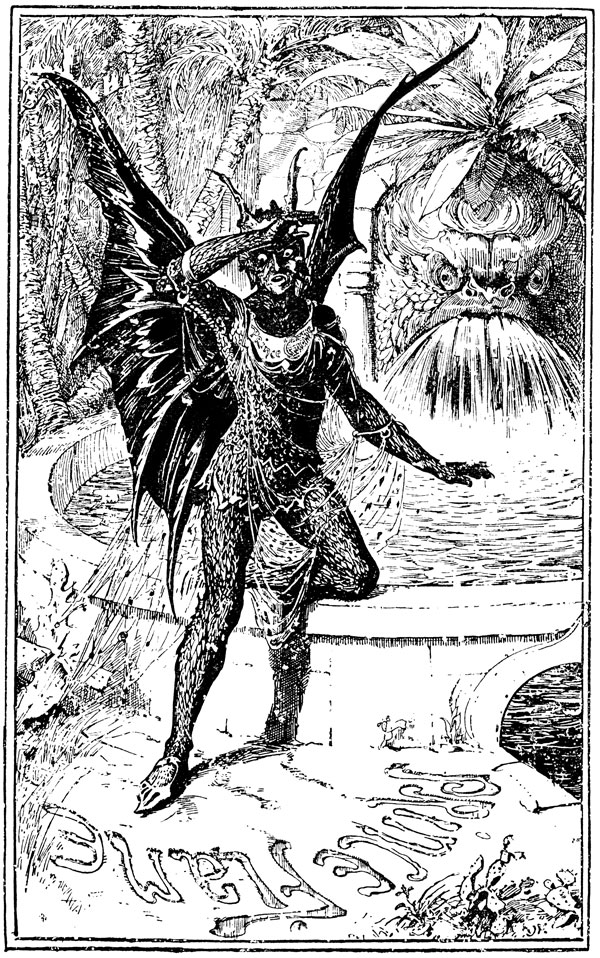
The Uranians, also known as space genies or radiation genies, are powerful entities of energy who have learned the secret of transforming matter into energy and energy into matter. They usually appear to material folk as masculine or feminine humanoids, sometimes with pointed ears or other such flourishes. Immensely powerful, most folk know to treat them with respect, and it is not unknown for them to perform favors for folk who impress them. A uranian’s powers can be completely contained with a force box or sphere (super science DC 25 to project a small force cube or sphere, DC 30 to project a large force cube or sphere) and should they enter the circuits of a super science device, it is possible to trap them within (invention test, DC 25).

Uranians can emit energy beams that deal 2d6 points of damage and steal away one point of STR (which can be healed normally). They are capable of changing themselves into pure energy, in which form they are immune to most attacks or taking material form. In energy form, they are effectively immaterial and cannot harm material creatures. Uranians are capable of changing ambient energy into matter or matter into ambient energy three times per day (or once per day if they are creating or dematerializing something larger than man-sized). They can alter the size of others or themselves, making them up to a tenth of their normal size or up to twice their normal size (modify STR and DEX as you see fit). Finally, they can, once per day, make themselves invisible and remain invisible until they attack or otherwise interact with another person.

Uranians suffer only half normal damage from ray guns and other energy-based attacks.

URANIAN: HD 6; DC 18; FIGHT 12 (strike 1d6); SHOOT 12 (energy beam 2d6); MOVE F; STR 6; DEX 6; MEN 6; KNO 5; DL 10; Special: Invisibility, transmute matter and energy, energy form, enlarge or reduce self or others.

Beware the Genomes!

Can stats for Spaceman Spiff be far behind?

Genomes are small humanoid aliens with highly variable features (highly variable!) because of their penchant for body modification. I’m not talking about tattoos and piercings, folks. I’m talking about genetic engineering, mutagenic gases and the grafting of flesh onto flesh.

The standard stock for these genetic whiz-kids is that of a small humanoid, about 3 to 4 feet tall, with slightly hunched shoulders, a large, sensitive nose (per super scent), skin ranging from nut-brown to creamy white and very bright, clear eyes that pierce the darkness per infra-vision. Due to the aforementioned body modifications, most have 1d3 different “mutations” in play. These mutations mimic the different special abilities of alien characters.

MUTATION
1 Increase random ability score by +1
2 Bulk
3 Climbing
4 Electrical Field
5 Leap
6 Multiple Arms
7 Multiple Legs
8 Stunning Grasp
9 Super Hearing
10 Super Vision

Genomes operate in bands of 2d4 individuals, always looking to harvest genetic material for their experiments. They are as capable as scientists in terms of identifying and operating super scientific devices, and always carry medi-kits and mutation-rays. Creatures struck by a mutation ray suffer 1d3 points of damage to a random ability score (1 = Str, 2 = Dex, 3 = Men, 4 = Kno) and must pass a Strength test (DC 10) or be transmogrified into a random monster under the control of the genome for 10 minutes. At the end of 10 minutes, the character can make a Mentality test (using their normal MEN score). If they succeed, they change back to normal. If not, they remain in their monster form, but are no longer under the control of the genome. If captured, the creature can be changed back to normal provided his or her comrades have captured a mutation ray gun (and figured out how to use it) or they have a scientist capable of designing a mutation ray gun (super science DC 25).

RANDOM MONSTER
1 Ankheg
2 Baric
3 Flail Snail
4 Gelatinous Cube
5 Giant Beetle
6 Giant Lizard
7 Giant Spider
8 Great Horned Ape
9 Killer Shrew
10 Random Alien Animal

GENOME: HD 1; DEF 15; FIGHT 4 (vibro-pick 1d8); SHOOT 6 (mutation ray); MOVE N; STR 3; DEX 5; MEN 4; KNO 8; DL 3; Special: Infra-vision, super scent, 1d3 mutations, mutation ray.

B&T Lost Classes: The Dragon Disciple

I love classes. Since I picked up my first Dragon ages ago and discovered the concept of the “NPC class” (like we weren’t going to try to play them), I’ve loved classes. I’ve posted quite a few on this blog. When it came to Blood & Treasure, I wanted to stick to the classes in the SRD – i.e. the classic classes of AD&D plus the sorcerer. I decided, to make Blood & Treasure a little different, I would throw in one more, in this case converting the Duelist prestige class into a class of its own. That gave me 13 classes, which I somewhat doubled by giving examples of variant classes one could create with a little reassembly of existing parts.

All along, though, there were a few other classes I wanted to throw in. The psychic (my version) was one of them, but I decided with four dedicated spell casters in the game already (cleric, druid, magic-user and sorcerer), one more was overkill. From the SRD, three other classes caught my eye. The first was the soulknife, and it nearly made it in. The other two, both prestige classes, were the shadowdancer and dragon disciple. I’m calling these three the “lost classes” of Blood & Treasure, and I’m posting them here, starting with the dragon disciple.

And yeah, I know, I’m posting “lost classes” from a book that hasn’t been published yet. So sue me.

DRAGON DISCIPLE
Dragon disciples are men and women who enter into secret dragon societies with the object of harnessing the powers of dragons and eventually transforming themselves into dragons. All of them have the mystic blood of dragons flowing through their veins, and by energizing their chakras, they can become dragons themselves.

Requirements: Dragon disciples must have intelligence, constitution and charisma scores of 13 or higher.

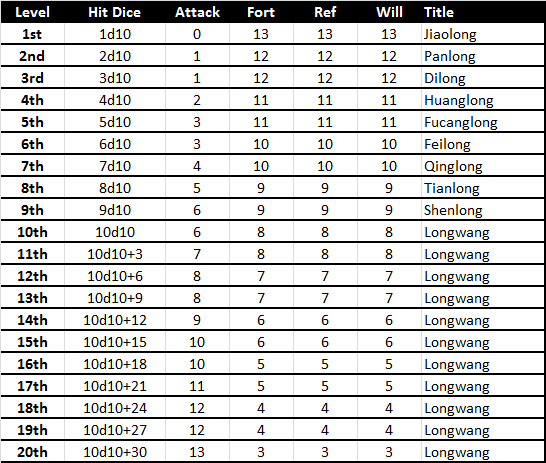
Hit Dice: d10 (+3 hit points per level from 10th to 20th).

Armor: None.

Shield: No.

Weapons: Club, crossbow (any), dagger, hand axe, javelin, kama, nunchaku, punching dagger, quarterstaff, sai, shuriken, siangham, sling and spear.

Skills: Escape, find secret doors and listen at doors (see Heroic Tasks below).

CLASS FEATURES
Dragon disciples are scholars as much as they are warriors, and have the abilities of a sage (see Henchmen).

At 1st, 4th, and 7th level, a dragon disciple gains a +1 bonus to their existing natural armor. As his skin thickens, a dragon disciple takes on more and more of his progenitor’s physical aspect.

At 2nd level, a dragon disciple gains claw and bite attacks if he does not already have them. Medium-sized dragon disciples deal 1d6 points of damage with bite attacks and 1d4 points of damage with claw attacks. Smaller dragon disciples reduce these values by one dice size, while larger dragon disciples increase these values by one dice size.

As a dragon disciple gains levels, his ability scores increase as follows:

Level | Boost
2nd | Str +1
4th | Str +1
6th | Con +1
8th | Int +1

At 3rd level, a dragon disciple gains a minor breath weapon. The type and shape depend on the dragon variety whose heritage he enjoys (see below). Regardless of the ancestor, the breath weapon deals 2d6 points of damage of the appropriate energy type.

Dragon Variety |  Breath Weapon
Black |  Line of acid
Blue |  Line of lightning
Green | Cone of corrosive gas (acid)
Red |  Cone of fire
White | Cone of cold
Brass |  Line of fire
Bronze | Line of lightning
Copper |  Line of acid
Gold |  Cone of fire
Silver |  Cone of cold

At 7th level, the damage of the breath weapon increases to 4d6, and when a disciple attains dragon apotheosis at 10th level it reaches its full power at 6d6. Regardless of its strength, the breath weapon can be used only once per day. A line-shaped breath weapon is 5 feet high, 5 feet wide, and 60 feet long. A cone-shaped breath weapon is 30 feet long.

At 5th level, the dragon disciple can use nonvisual senses to notice things it cannot see. He usually does not need to make checks to notice and pinpoint the location of creatures within 60 feet, provided that he has line of effect to that creature.

Any opponent the dragon disciple cannot see still has a tactical advantage against him.

At 9th level, a dragon disciple grows a set of draconic wings. He may now fly at a speed equal to his normal land speed.

At 12th level, a dragon disciple takes on the half-dragon template. His breath weapon reaches full strength (as noted above), and he gains +2 to strength and +1 to charisma. His natural armor bonus increases to +4, and he acquires the low-light vision of elves, darkvision to a range of 60-ft, immunity to sleep and paralysis effects and immunity to the energy type used by his breath weapon.

Monster Matinee – Attack of the Crab Monsters

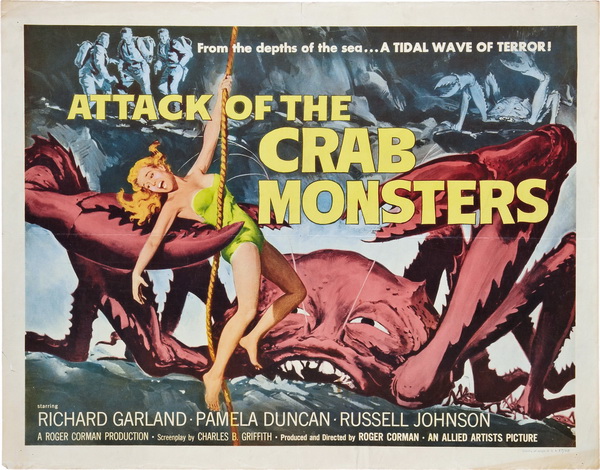
I’m working my way through the public domain sci-fi/horror movies on Pub-D-Hub, and last night I took in Roger Corman’s Attack of the Crab Monsters (1957).

Spoilers are a comin’, so be warned.

The combination of “Corman” and “Crab Monsters” doesn’t fill a person with much hope. The monsters, I assumed, would either be men in rubber suits or green-screened crabs made to look giant harassing a bunch of strangers, etc. I have to say I was pleasantly surprised. It is a movie in the sub-genre of “group of people menaced by monsters, dying one by one”, but had some pretty clever details – oh, and one of the characters is played by Russell Johnson, better known as the Professor on Giligan’s Island!

Still trying to get a transmitter to work, and not a coconut in sight

The “crab monsters” in the title weren’t what I expected. They were giant crabs altered by atomic tests on an island. As it was described in the movie, they weren’t just enlarged crabs. Their atoms had been detached from one another in such a manner that they were in a semi-liquid state – liquid given a permanent shape. Their weird atomic structure has given them additional abilities. When the crabs consume people, their atoms simply join the crab’s atoms, making them a sentient part of the crab. Several people’s minds and memories can exist within the crab simultaneously, and though they retain their memories, their personalities change. They now seek the continued survival of the crab, even if that means killing former friends. The crab’s are also capable of transmitting telepathic messages via bits of metal, these messages being in the voice of the people that have absorbed. The crabs can regenerate body parts and generate significant amounts of heat, but electricity turns them quickly to dust.

The giant crabs, there are two in the film initially, are intent on destroying their island to keep people from discovering their existence. One of them is “with child”, and once the crabs have increased their numbers under the waves, they plan on expanding their dominion. They are destroying the island using dynamite they have captured from the various groups of soldiers and scientists that have come to investigate an aircraft that crashed near the island.

Naturally, a monster this creative needs some game stats!

Crab Monster (Blood & Treasure)
Large Magical Beast, Neutral, Average Intelligence; Cast (1d6)

HD 6; AC 14; Atk 2 claws (2d6 + grapple); Speed 30 (Swim 20); Save F6, R7, W10; XP 600; Special: Immune to fire, generate heat, resistance to physical weapons, vulnerable to electricity, consume memories, telepathy 300-ft. (transmits through metal).

Crab monsters can generate heat in a radius of 30 feet. This can be done three times per day and 10 minutes at a time, and all in the radius suffer 1d4 points of damage per round. Metal in the area of effect is affected as per the heat metal spell.

Crab Monster (Mystery Men!)

Level 6; Physique 5; Mentality 5; DC 16; SPD 2; XP 2800; ATK 2 claws (2d6); POW consume memories*, correspond, energy burst (fire), energy immunity (fire, lasers), energy vulnerability (electricity), half damage from physical attacks

When a crab monster consumes a person, they add their mind to their own. These minds remain independent, but are now part of the crab and work for the crab’s survival and interests, even turning on former allies. The crab can correspond telepathically using the voices of the people it has consumed. Increase the crab’s Mentality score to that of the highest Intelligence it has consumed. Any psychic powers possessed by a person consumed by the crab monster are now possessed by the crab monster.

Crab Monster (Space Princess)

HD 6 | DEF 19 | FIGHT 12 (2d6) | SHOOT 11 | MOVE N | STR 6 | DEX 5 | MEN 4 | KNO 4 | DL 9

Crab monsters are immune to fire and heat, and suffer only half damage from lasers and ray guns and from physical attacks. Electricity attacks inflict double damage on them. Crab monsters absorb the KNO and MEN of people they consume, increasing their values to the highest value they have consumed. They also absorb the psychic powers and knowledge-based skills of people they consume, though they might not be able to use these skills due to physical limitations. Crab monsters communicate telepathically using the voices of the people they have absorbed. This telepathy can only be heard through metal.

The Corundar

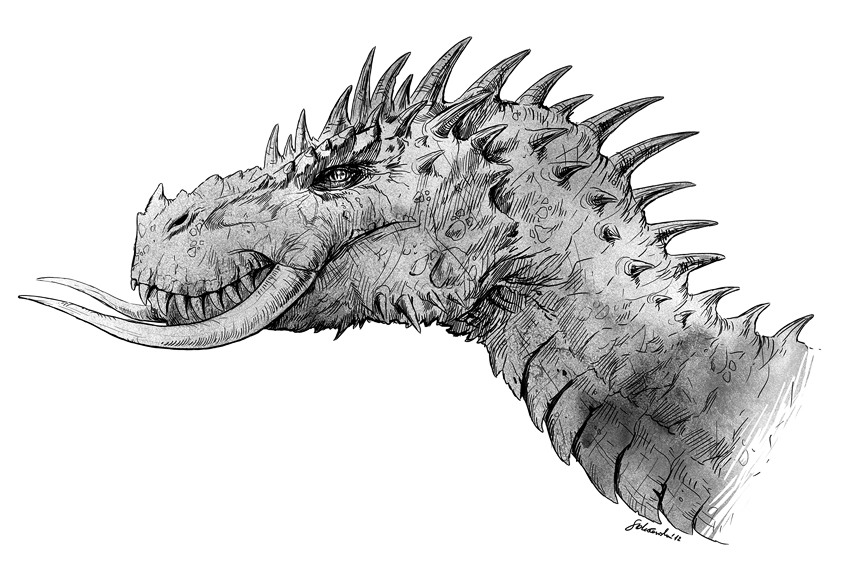
Image by John M. Stater

Edit: Now with crappy art by yours truly

The corundar are a silicon-based lifeform native to volcanic areas. They grow in and consume mineral salts in solution, but can survive on humanoid blood if necessary. Most corundar lair around a mineral spring, preferably underground, using the spring as a hatchery and as their main source of food.

Corundar consider themselves creatures of perfection. They attempt to beautify their lairs by making the walls, floors and ceiling smooth and angular. They likewise favor perfection in living creatures, both in mind and body. Corundar will always attack creatures with a combined intelligence and charisma score of less than 20, and always attack creatures with the lowest combined score first. Generally, three corundar will rush the imperfect creature, while others will circle them and provide defense until the imperfect specimen has been destroyed.

Corundar look like pyramidal lumps of crystal, about 3 to 4 feet in height and colored red, blue, orange or green. They are supported on four stubby, crystalline legs and have three long mineral straws protruding from their main body mass. These straws can move in the manner of tentacles, and are razor sharp on the edges. Corundar have tiny motes of light moving through their bodies, originating in their hollow center, where they maintain a pocket of mineral salt solution. They can control these motes as a means of communication (a difficult language to learn, requiring a minimum intelligence of 15). They can see with their entire bodies, making them very difficult to surprise. They can sense vibrations from the air and ground as well, making it possible for them to understand speech.

Corundar attack with their straws, whipping and slicing with them or using one of them to spray a corrosive solution of mineral salts (10-ft. long cone, 2d6 points of acid damage, save for half damage, usable once per day). Corundar are immune to acid and cold and suffer only half damage from fire and electricity.

Corundar (Pars Fortuna)
HD 4; AC 16; Atk 3 straws (1d6+1) or spray; Move 9; Save 13; CL/XP 6/400; Special: Immune to acid and cold, resistance to fire and electricity (50%), surprise on 1 on 1d10, acid spray (see above).

PC Race: +1 Con, -2 Dex; surprised on 1 on 1d10; acid spray 1/day, immunities and resistances; knack for finding secret doors

Corundar (Space Princess)
HD 4; DEF 16; FIGHT 10; SHOOT 7; MOVE S; STR 6; DEX 3; MEN 5; KNO 4; DL

PC Species: Mineral (new type, see below) / multiple arms and multiple legs (must spend 1 point of Luck to play a Corundar)

Mineral Alien: Mineral aliens are composed of rock or crystal. They have slow movement and DEF +2.

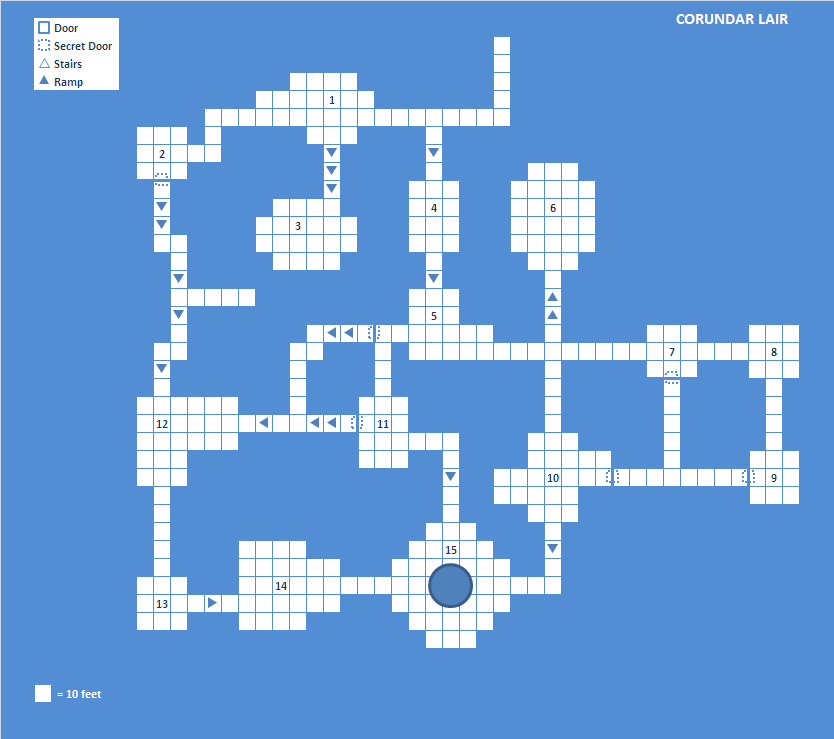
Sample Lair:

1. Empty Cavern: This cavern is untouched by the corundar, who use it as a buffer between their lair and the outside world; they have erected a crude “scarecrow” here – essentially a skeletal corpse on a slab of rock

2. Guard Post: Two corundar are always on guard here; when not otherwise occupied, they are grinding the walls with their straws

3. Low Cavern: This cavern hosts a hot spring that was insufficiently infused with minerals to serve the corundar; it is a 10-ft. deep pool of scalding water (2d6 damage per round) that sends a thick mist into area [1]

4. Guard Post: Three corundar are always on guard here

5. Workshop: Five corundar work here grinding stone into tools and other pleasing shapes and turning shed crystal into lenses for the temple

6. Temple: The corundar worship a clear crystal pyramid that represents perfection to them; small lenses are hung from the ceiling by thin chains; the temple is guarded by two corundar and the idol is attended by a priest who cast spells as a 5th level magician

7. Laboratory: The corundar high priest [7] maintains a laboratory here; the walls are carved into shelves holding various jars and beakers of mineral solutions; a vat has been carved from the stone in the center of the room – there is a 1 in 10 chance that it holds the makings of a potion

8. Guard Post: Two corundar are always on guard here

9. Forge and Foundry: This room contains a vent of super-heated, poisonous gas (the corundar are immune, of course, since they need not breath, but the gas does mar their appearance) that they use for purifying and working copper ore; there is a 30% chance that two corundar are here working

10. Mine: This cavern connects to a seam of copper that is mined by the corundar; there are usually 2d6 corundar here collecting the ore

11. Rest Chamber: Corundar need to sleep about 6 hours a day; this chamber holds 2d6 sleeping corundar

12. Mud Chamber: This chamber is filled with steaming hot mud; the corundar have created a pool for the mud and channels leading from the walls; they bathe in the mud when damaged

13. Guard Post: Two corundar guards

14. Vibro-Chamber: This space has acoustics that allow the corundar to create pleasant vibrations – in essence, a corundar concert chamber

15. Mineral Baths: There are 3d6 young here and 2d4 adults

My Dinosaur Art Heroine!

Most small time rpg publishers like myself understand the importance of public domain art. Don’t get me wrong – I love commissioning artists. Most of the money I’ve made on NOD and my other products has gone to commissioning art, and if I made ten times as much money, I’d commission ten times as much art. But when your margins are especially tight, you can’t afford not to use the free stuff, especially when so much of the fantasy art produced pre-1923 is so dang good! Of course, your choices can be a bit limited, which is why the mother lode I recently found must be shared with the world!

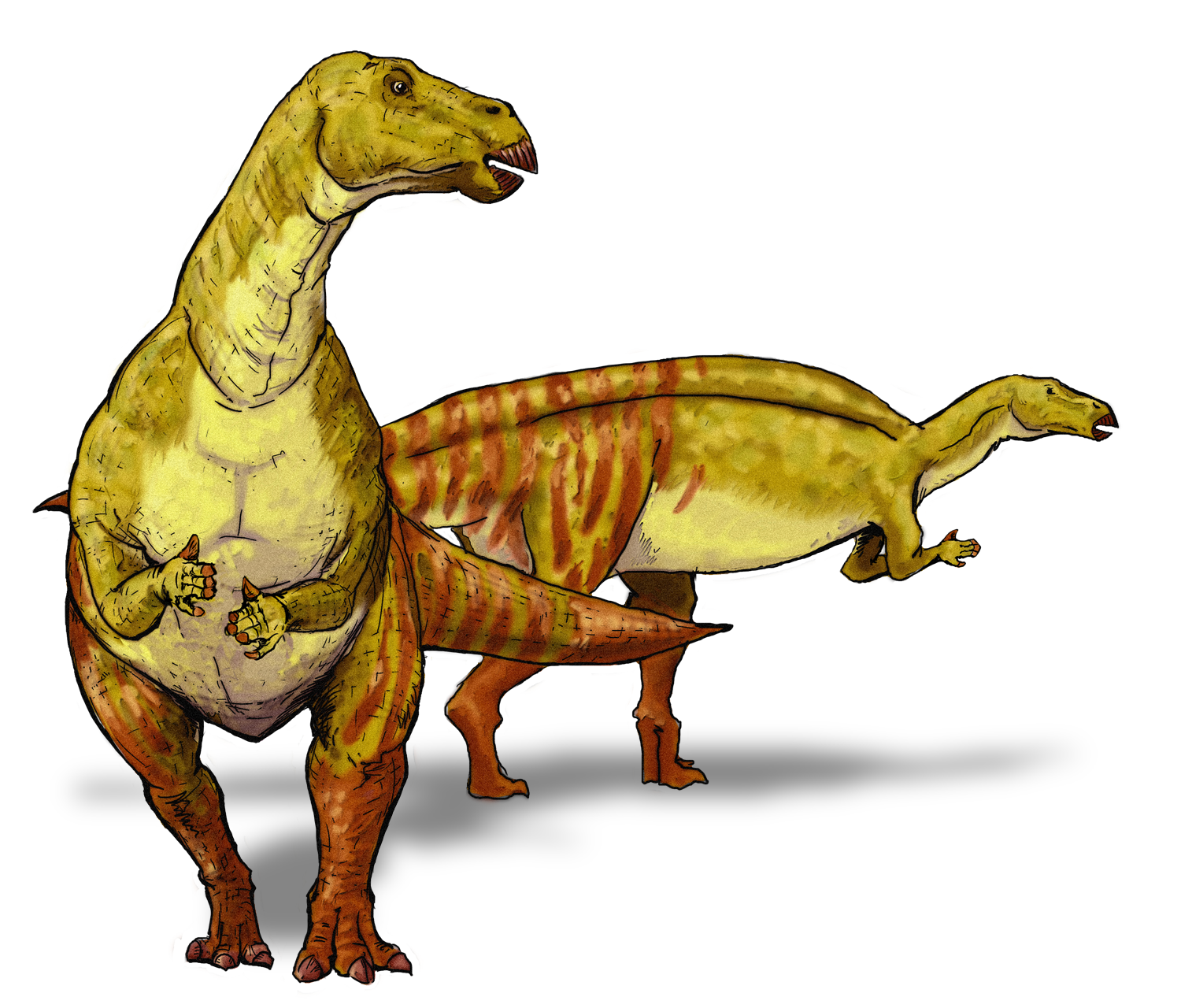
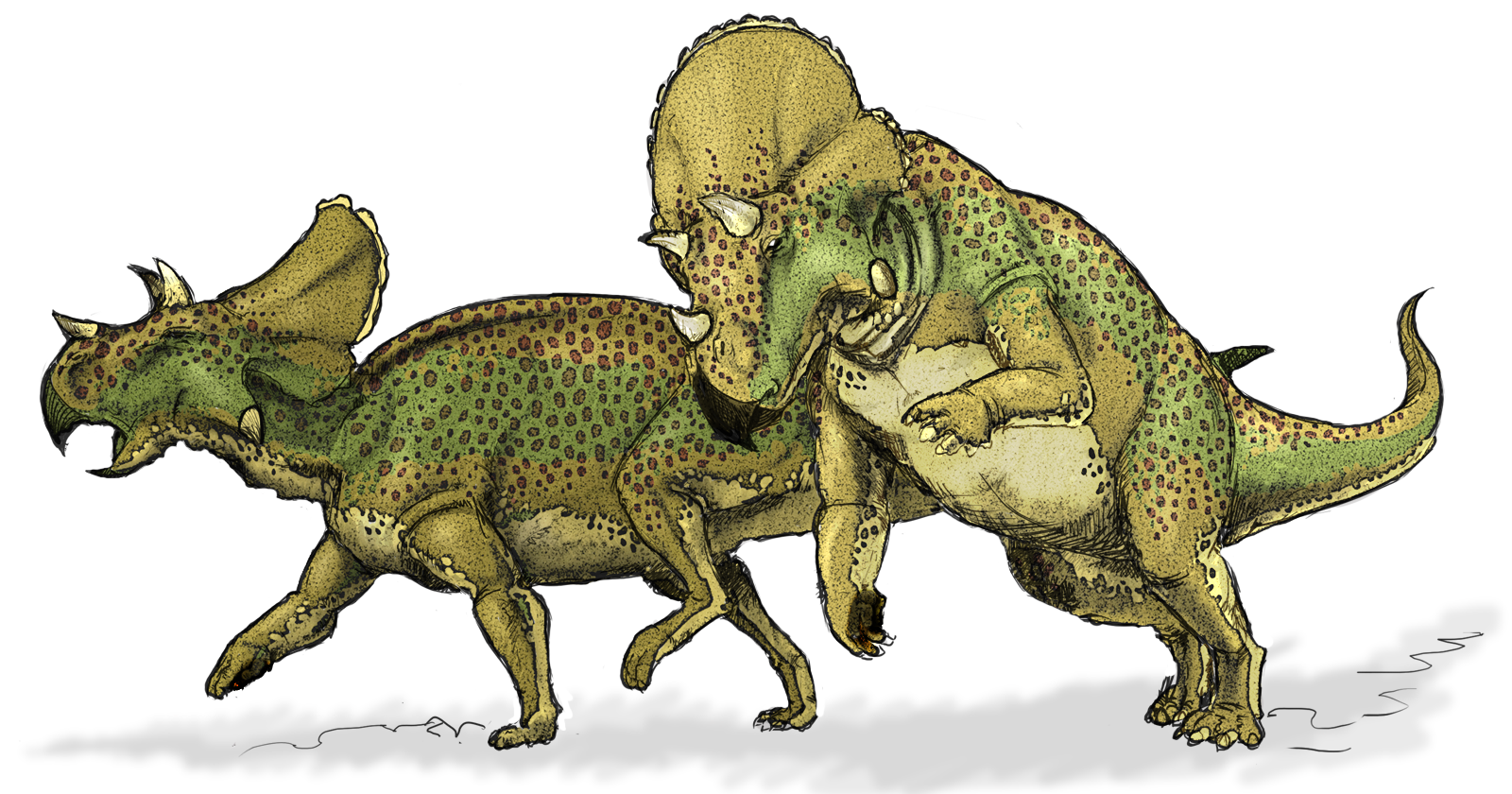
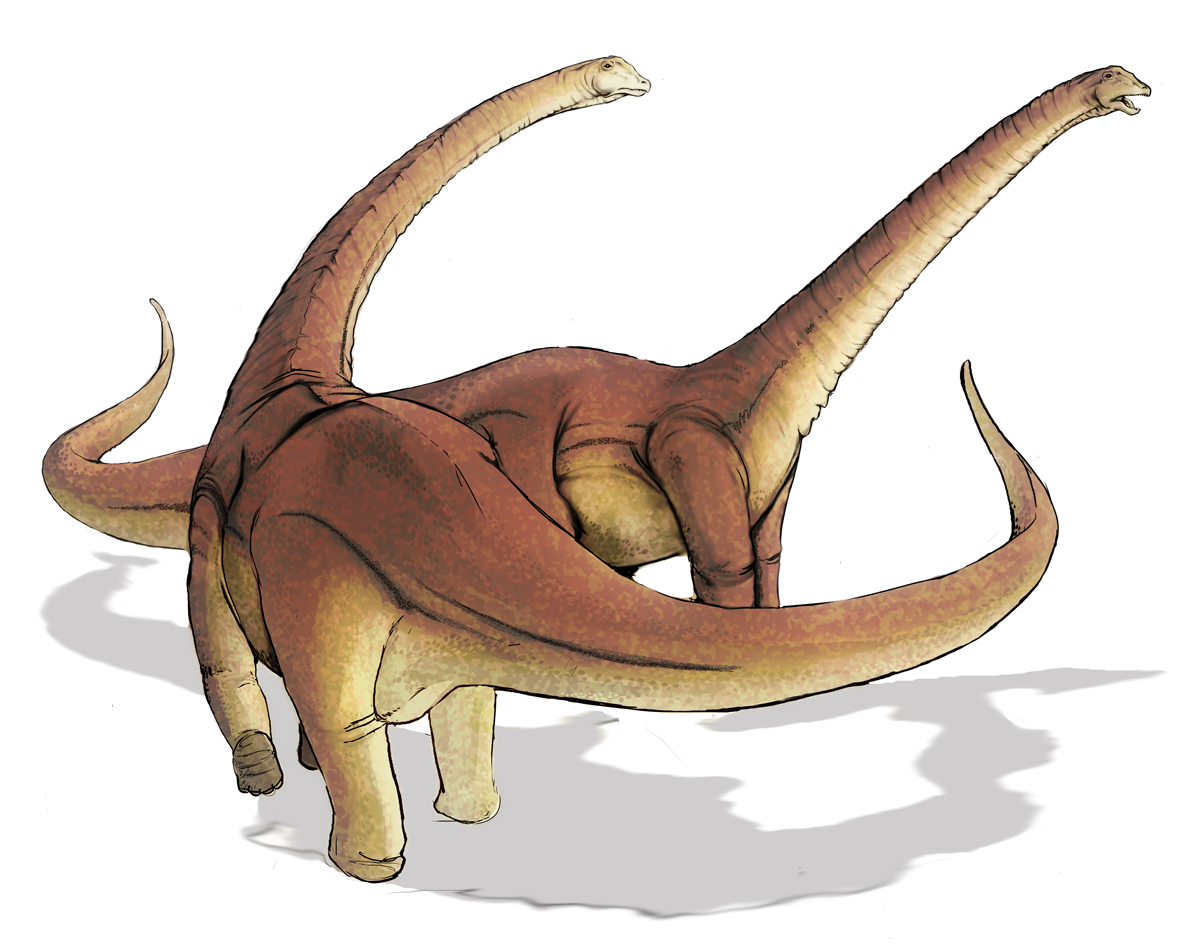
Mariana Ruiz – who goes by the handle lady_of_hats on Wikimedia Commons has drawn quite a few groovy dinosaurs and released them into the public domain. God bless her! Check these beasties out …

Pretty groovy. If you want more, just go to Wikimedia Commons and do a search by her name. There are lots of other science illustrations (mostly technical) mixed in, as well as this kick ass image of a three-headed knight (I call dibs!)

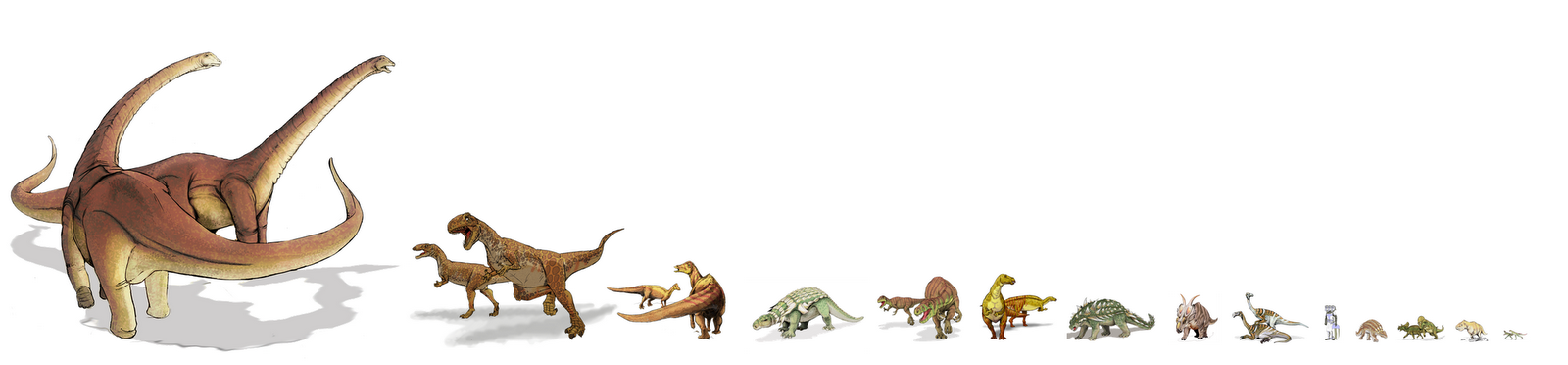
And just for shits and giggles, a size chart (hey, got me lots of page views last time!) I threw in the three-headed knight for comparison purposes, assuming he’s the same size as a human being.

The size range in dinosaurs always astounds me.

On a side note – I finished writing Space Princess over the weekend … well, mostly. There are a few sci-fi monsters I want to add, but for all intents and purposes it is now in the editing stage. I added some vehicles for the game (hover cars, battle tanks, war walkers) and an additional class – the Space Ranger (maybe I’ll change it to Astro-Ranger or Cosmic Ranger to avoid any clashes with a certain space ranger that works for that very litigious mouse who resides in Anaheim).

When I publish Space Princess, I’m going to launch a new blog devoted to a community effort (well, assuming the community wants to do it) at populating a pulp sci-fi planet – Kepler-22B.

Details to come, but I’m hoping it will turn into a fun project and provide sci-fi buffs with a place to run adventures. Naturally, my first contribution will be a jungle sector teeming with dinosaurs and ruined Preserver Domes (whatever those are). Stay tuned!

Okay – you can actually check the blog out now. It’s called Strange New World.

The Mother of All Size Charts

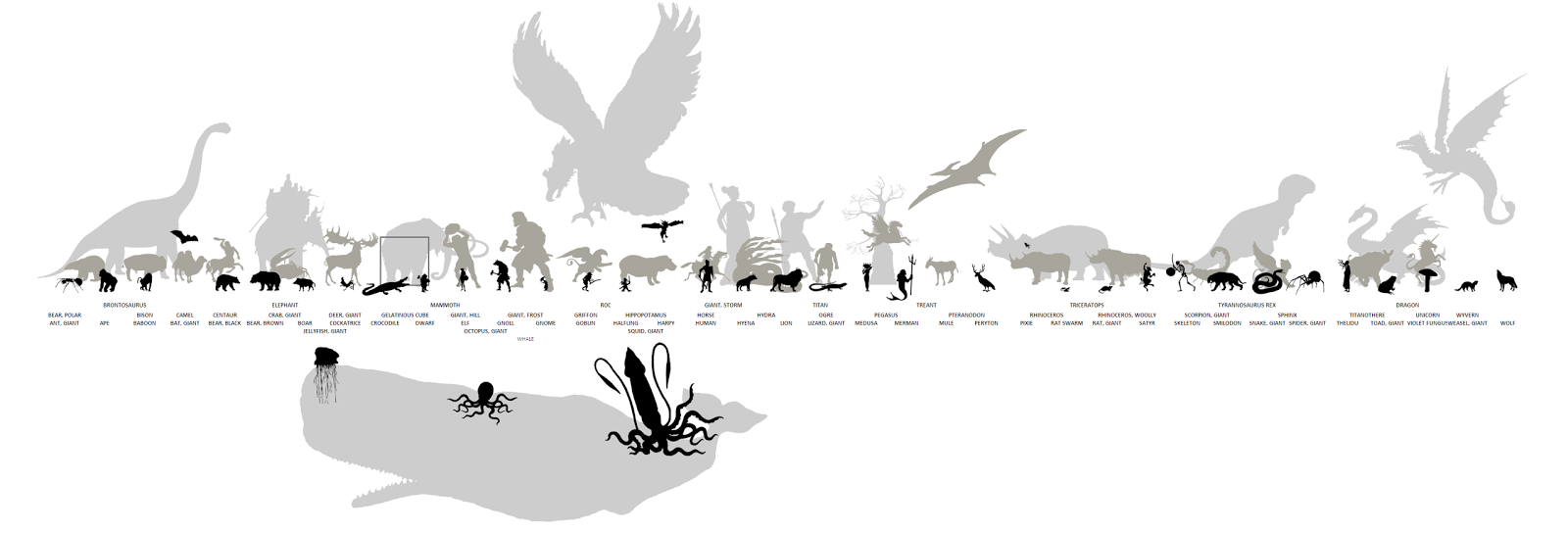
Cobbled this up over the last couple of days using the silhouettes created by Telecanter.

Click to see full size and enjoy!

EDIT: Made some adjustments to the chart, and I added a storm giant and gelatinous cube. I was way off on the wyvern, the giants needed some tinkering and my treant was too big. Of course, sizes vary. I might do some more work on the sea critters as well.


On a side note – the print copy of NOD 12 is now up for sale at Lulu. Sorry it took so long – wanted to make sure it came out okay. 144 pages for $11.00. Map of Hell still didn’t reproduce as well as I would like, but you can still grab a better looking version HERE.

Dragons in Blood and Treasure

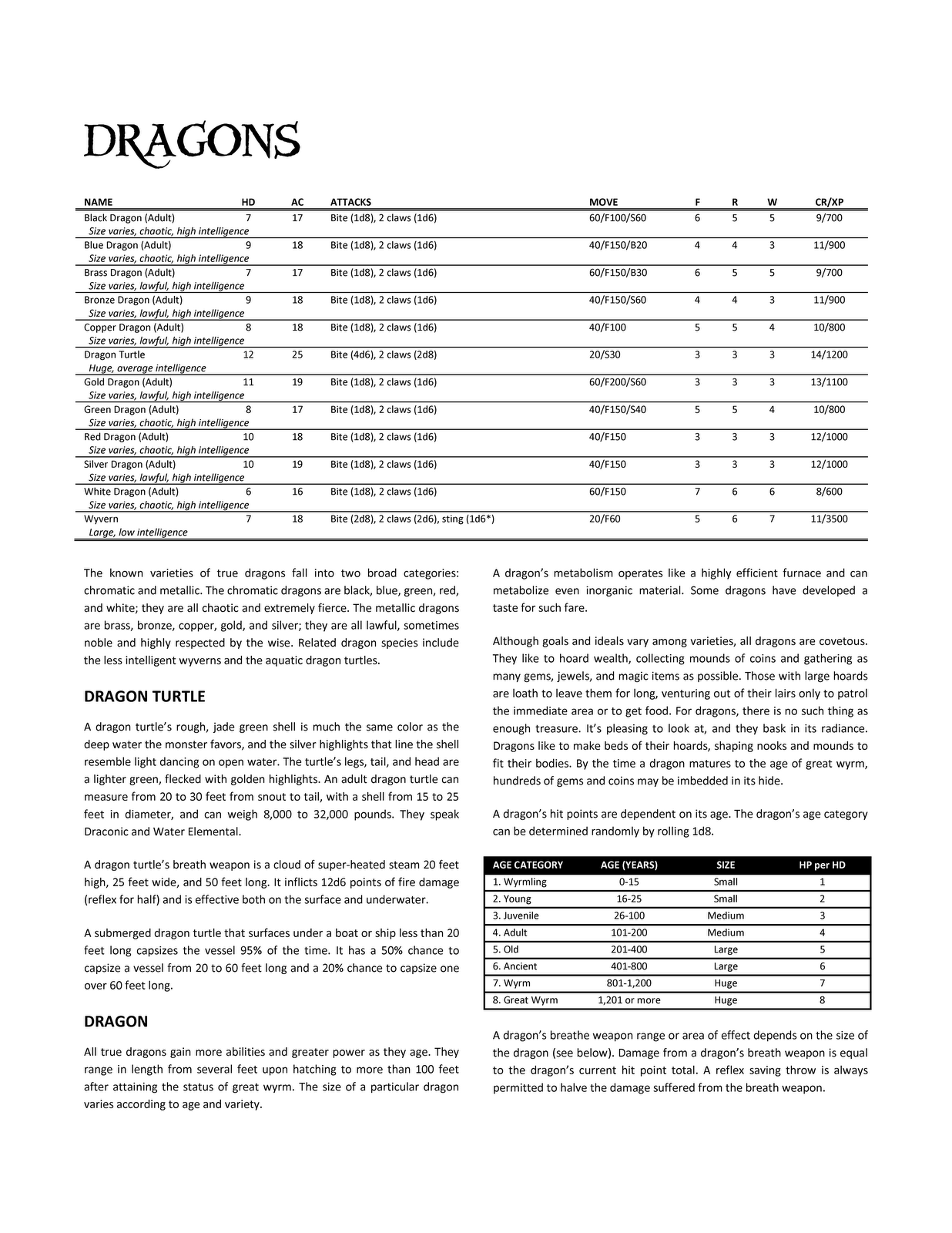
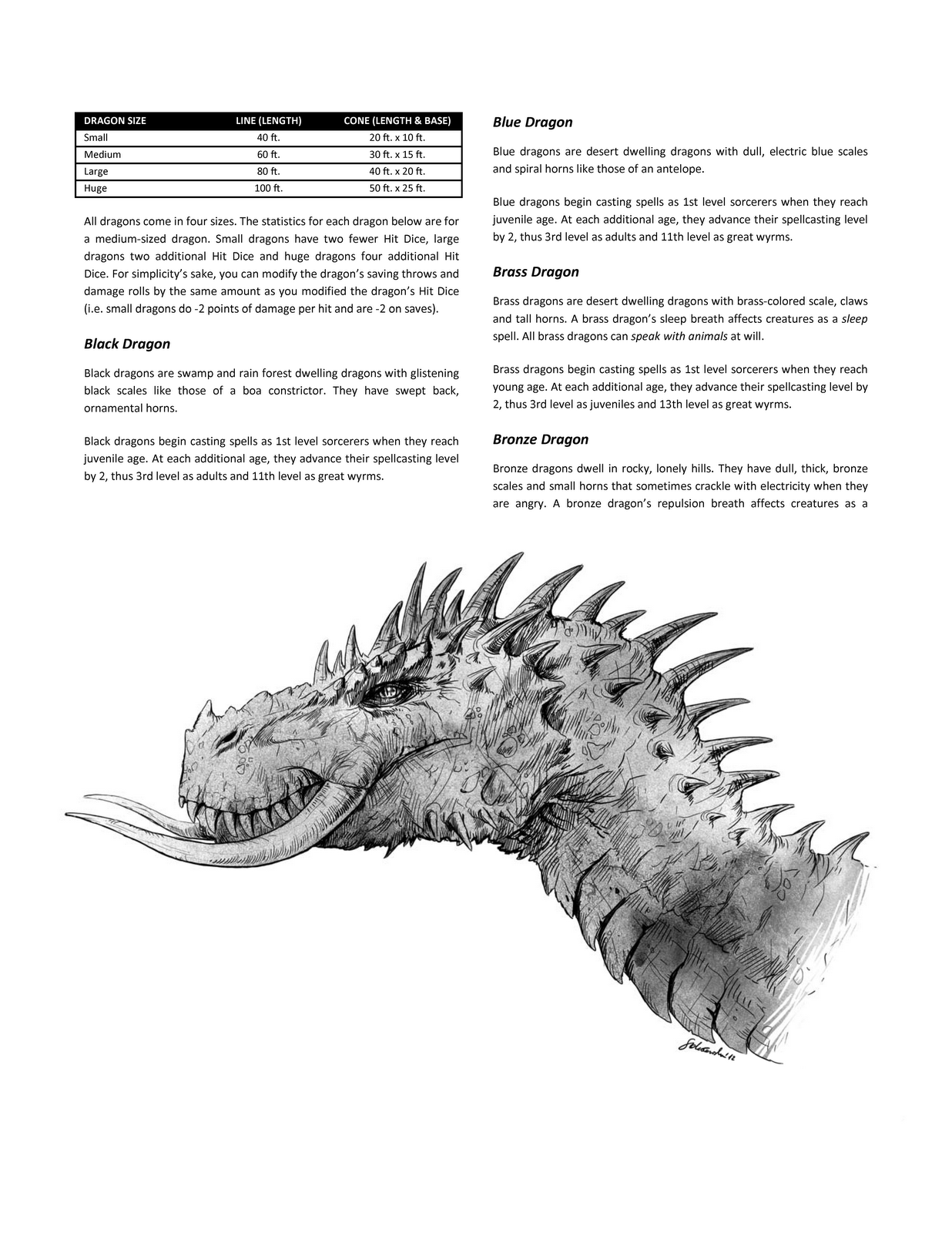
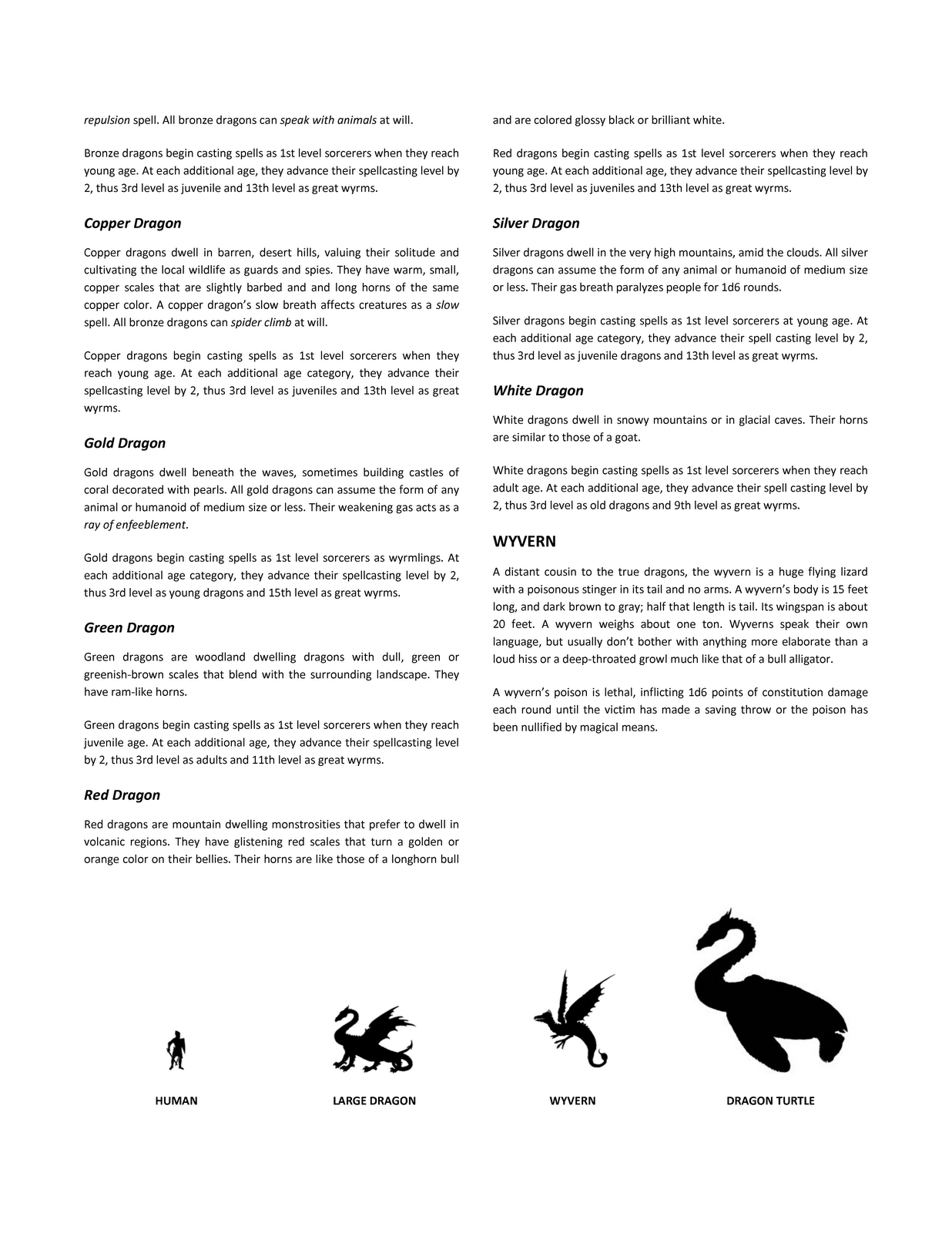
While this is a preview of the dragon stats in Blood and Treasure, it is really more of a question that I’m posing to you, the reader, about the format of the monster chapter in the book.

Initially, I intended to do a fairly straightforward layout – monster name followed by a little table of stats and then the monster description. The same basic layout that has been used for generations in fantasy RPG’s, from Moldvay to the various Monster Manuals.

Yesterday, I started thinking about doing something a bit different – somewhat inspired by the layout that I think they used in the earliest versions of the game – a table grouping all of the monster stats together, and then the monster descriptions below that.


You’ll notice some silhouettes of monsters from Telecanter, the most excellent master of silhouettes in the OSR blog community, if not the world, to show the size comparison.

I decided to give it a whirl using the monsters of the “dragon” type in the game. It still needs a little work (I need to include the organization information for the monsters – probably as a line beneath the description), and I need to play with the stats a bit, but I think it just might work. Printed out, it is very readable, and might make scanning for stats a little easier for the busy Referee.

What do you think?

Big Announcement in the World of Fantasy RPGs!

I got the dragon art I commissioned a few weeks ago for one of the alternate blue dragons I published last year – indigo, to be precise. The artist is Marta S., and I think her dragon profiles are stunning. Check it out. I’m planning on commissioning a couple more for future articles.

What? You were expecting maybe a discussion of 5E? This is NOD baby – we’re about content, not controversy!

Merry Christmas from the Land of Nod!

Nothing geek or game related. Just a wish for a Merry Christmas to all within the sight of my pixels!

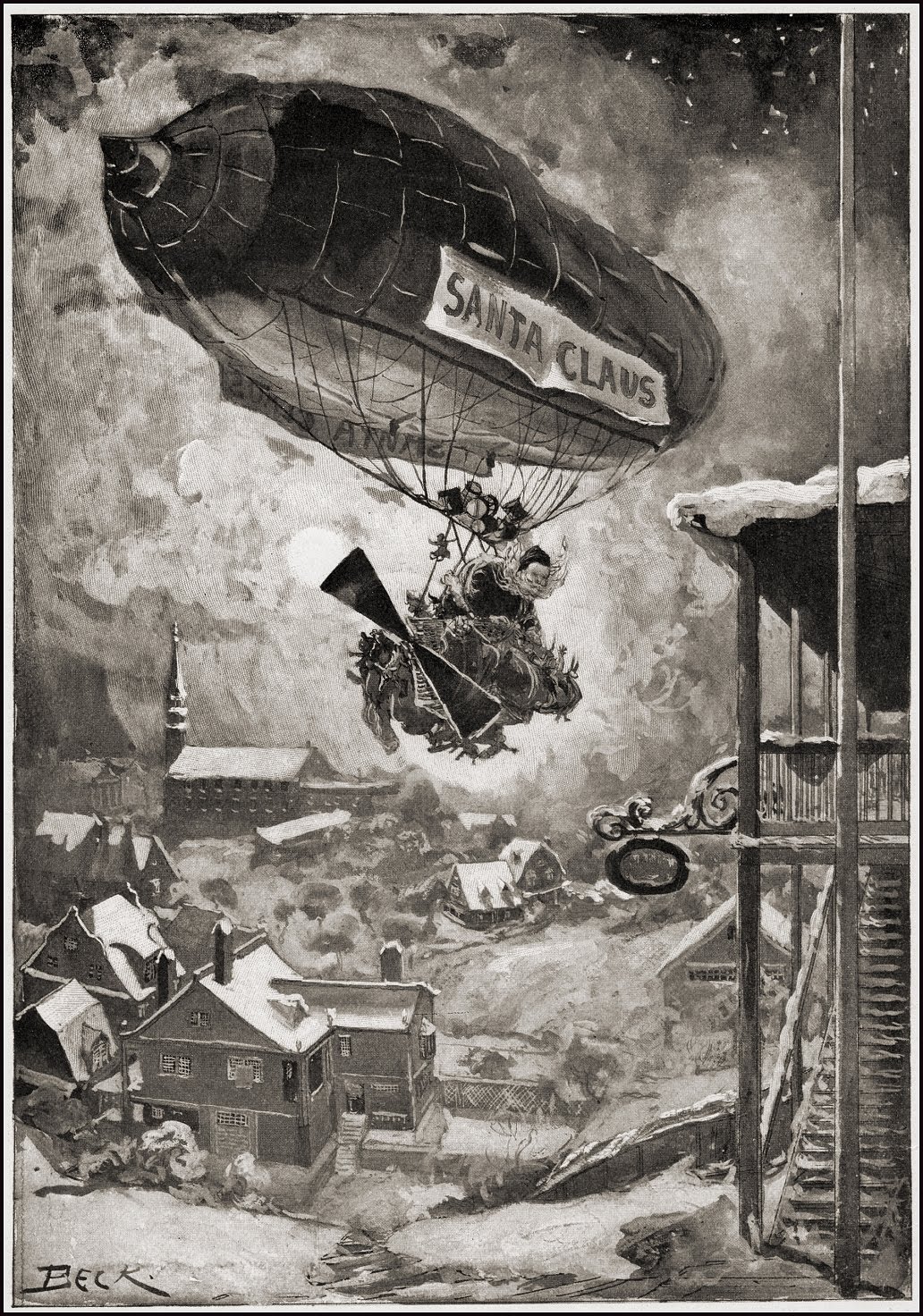
(Well, okay, the Santa image to the right is kinda steampunk, so I guess there’s  a little something geek related).

(And I said pixels, and that’s a bit geeky.)

Oh – what the heck …

FLYING REINDEER
Flying reindeers are more than just magical beasts – they are cherished creatures of the forces of Law. They appear as large, handsome reindeer with a golden tinge to their fur and a crystalline sheen to their antlers. They are uncommonly intelligent and immensely patient, though they fly into battle with creatures of chaos at the drop of a hat. The most famous of the flying reindeer are part of the team used by Saint Nicholas to make his one-per-year trip around the world to deliver gifts and tokens to all the Lawful boys and girls in the world.

Flying reindeer are capable of using the following spells: At will – detect evil, sanctuary; 3/day – haste; 1/day – time stop. They are always under the effect of a protection from evil 10-ft radius spell.

FLYING REINDEER: HD 6; AC 3 [16]; Atk 1 gore (2d6) and 1 bite (1d4); Move 15 (Fly 36); Save 11 (9 vs. abilities of chaotic creatures); CL/XP 11/1700; Special: +1 or better weapon to hit, immune to cold, turn undead as 10th level cleric, spells, smite evil 1/day (double damage if gore attack is successful, forces demons and devils to save or be thrown back into Hell), magic resistance (15%).

Image from Golden Age Comic Book Stories