Pretty Good Sword Fights

Lazy post today – but what they hey! So, a few days ago I posted a video from a 1950’s movie called Knights of the Round Table – a keen little film with some great fight scenes – fast and violent without all the quick cuts common in modern films. Here are a couple others (and yeah, my membership in the Grumpy Old Men of America might show up here a little) …

I wanted to throw in the final fight scenes from Flynn’s Adventures of Don Juan and Adventures of Robin Hood (which, by the way, features the film debut of Trigger as Maid Marion’s horse), but no dice. If you haven’t already seen them, go look for them. Don Juan also has one of my favorite Flynn leading ladies, Viveca Lindfors.

So – Mark of Zorro. Awesome fight scene – every bit the equal of Flynn vs. Rathbone. Please notice that without all the goofy special effects, they had to go to the trouble of constructing an interesting and satisfying scene both in terms of the sword play and the story. I have a hard time believing that CGI and special effects are cheaper than solid writing, but maybe I’m wrong.

I think my favorite fight scene of all time is this one from  Cyrano de Bergerac – “As I end the refrain, thrust home!” I was first shown this film in my freshman English class. There were a few of us D-N-D players in the class – one of my friends carried a briefcase to school and used it to hide the fact that he was reading the DMG and Monster Manual instead of paying attention to the teacher – and I remember having no interest in Cyrano. Poetry, thin swords, etc – no interest. Then I watched Cyrano and discovered not only my favorite literary hero, but also  that the world was much, much wider than the pop culture universe I had been inhabiting. Thanks English Class!

Shields Again and Knights of the Round Table

So, I’m watching Knights of the Round Table on TCM right now and thought – I need to blog this. I don’t think I’ve ever seen it before, and I rather like the way the aforementioned knights are not treated as super-heroes, but rather men in armor with weapons trying to kill each other – some heroically, some villainously. The fight scenes are nice as well – a good antidote to modern movie fights, which I must admit tend to leave me cold.

Anyhow – Armor vs. Weapons – A little notion popped into my head earlier today about armor and weapons, so I figured I’d throw it into this post as well. Armor at one point was sometimes classified as “proof” against a weapon – usually firearms. This made me think that, assuming you use variable weapon damage, you could classify armor as proof against a damage dice, such that weapons using that dice or smaller would suffer a penalty to hit someone in that armor. So, for example:

Platemail is proof against 1d6
Chainmail is proof against 1d4
Leather is proof against nothing

Thus, attacking a platemail armored knight with a short sword or hand axe or dagger is done at a -1 penalty. Likewise, attacking a man in chainmail with a dagger or club. Obviously, you could alter the specifics as you like. Or perhaps in place of a penalty, you allow those weapons to do but minimum damage (i.e. 1 point plus strength bonus). This could also allow you to reduce the armor modifier for plate, chain and leather and boost the bonus for using a shield. Maybe change the modifier for leather/chain/plate to +1/+2/+3, while shields grants a +3 bonus to AC.

Mystery Men! Public Domain Theatre Presents …

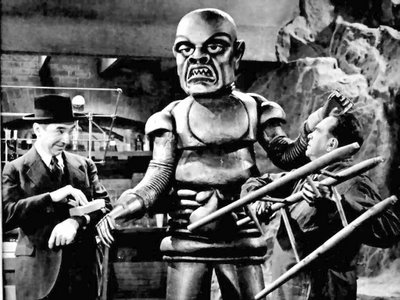
The Phantom Creeps (1939)

I caught a bit of this on MST3K a few nights ago (God has blessed me with a daughter who loves MST3K and bad movies in general) and knew I had to do something with it. When I found out it was in the public domain, I was doubly determined.

This is the story of Dr. Zorka, a mad genius who discovered a radioactive meteorite in Africa and has used it to power all sorts of inventions. Foreign governments are after the meteorite and the inventions, so Zorka’s assistant Dr. Mallory brings in the U.S. Government. Zorka isn’t happy about that and so he plants one of his mechanical, exploding spiders on Capt. Bob West’s plane. Unfortunately, Zorka is unaware that West is taking Zorka’s wife back to HQ for questioning, and though West escapes from the explosion with a parachute, Zorka’s wife is killed. Zorka naturally swears vengeance upon all mankind and decides to conquer the world.

Zorka is a great representation of the mad scientist archetype, and has been statted out accordingly.

Among his inventions are:

The Devisualizer Belt – Invested with Invisibility – costs 15,000 XP of his science pool.

Guardian Robot – As seen in the monster section of the MM! rules.

Mechanical Spider – A robot spider that is attracted to a magnetic disc (Locate – magnetic disc only) and then explodes with a poison gas (Sleep) – costs 6,000 XP of his science pool.

On the subject of Mystery Men! – I’ve finished my edits and I’m now preparing the file for upload to Lulu. Shouldn’t be long now!

Best D-n-D Movie Ever?

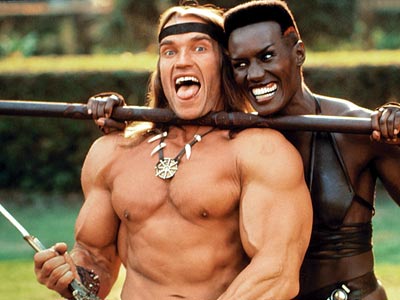
Watched a D-n-D movie this weekend. Three fighters (or a fighter, barbarian and monk, if you’re more Advanced), a thief and a magic-user head out into the wilderness, tackle a wizard’s keep, delve into a forgotten temple and wind up the session by killing a demon. The chaotic thief steals a jewel and backstabs a guy on a horse, the magic-user casts find person, knock and maybe eyebite, the fighting-men kill lots of cultists, men-at-arms and the aforementioned wizard and demon – pretty good game, all in all.

So here’s my question – did D-n-D influence Conan the Destroyer? Was Roy Thomas playing the game back in the day? Or is it just two things influenced by the same material?

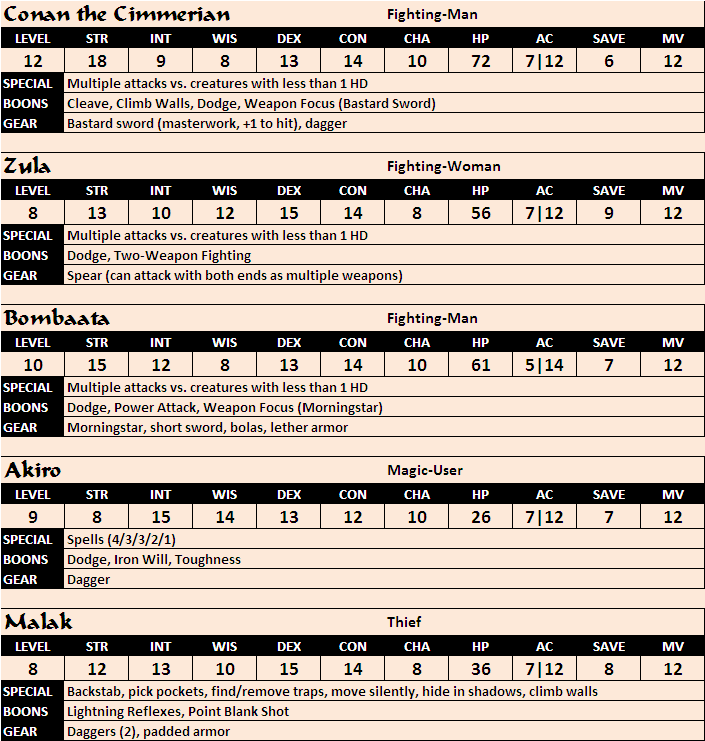
Using a 1-12 range for levels, one of the old 3E arrays for ability scores and the boon from HERE, I’m thinking stats would be something like this …

Side note – how cruel is it that blogging is one of the great tools ever to come about for role-playing games, and yet the one character in blogging that screws up your posts time after time is the freaking ampersand, the queen mother of RPG characters.

If You’re Looking for Inspiration …

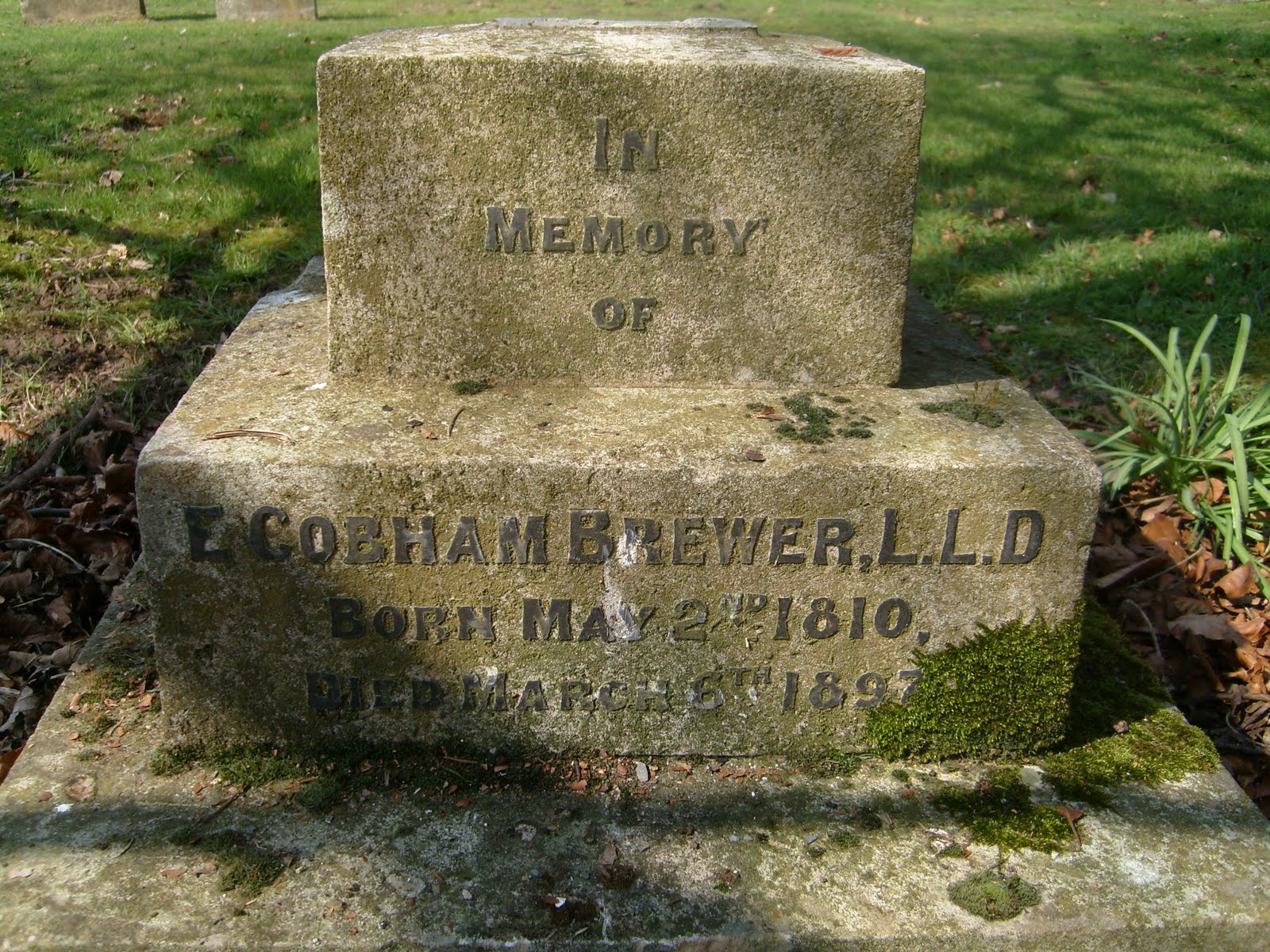
… you could do worse than peruse Brewer’s Dictionary of Phrase & Fable. Apparently, it helped Alan Moore hatch a good many of his great ideas. Written in 1898, it is packed with great tidbits of folklore and mythology, all seen through the lens of Victorian* scholarship (i.e., lots of it is not quite correct). More importantly, it is a great aid when trying to give a setting an oldey-timey feeling – i.e. walking into a tavern and being offereda “cool tankard” or “cobbler” rather than a boring old ale.

A few examples from the “C”s …

Cobbler A drink made of wine (sherry), sugar, lemon, and ice. It is sipped up through a straw. (See Cobbler’s Punch )

“This wonderful invention, sir, … is called cobbler,- Sherry cobbler, when you name it long; cobbler when you name it short.”- Dickens: Marten Chuzzlewit, xvii.

Cock Mahomet found in the first heaven a cock of such enormous size that its crest touched the second heaven. The crowing of this celestial bird arouses every living creature from sleep except man. The Moslem doctors say that Allah lends a willing ear to him who reads the Koran, to him who prays for pardon, and to the cock whose chant is divine melody. When this cock ceases to crow, the day of judgment will be at hand.
     Cock. Dedicated to Apollo, the sun-god, because it gives notice of the rising of the sun. It was dedicated to Mercury, because it summons men to business by its crowing. And to Æsculapius, because “early to bed and early to rise, makes a man healthy.”
     A cock on church spires is to remind men not to deny their Lord as Peter did, but when the cock crew he “went out and wept bitterly.” Peter Le Neve affirms that a cock was the warlike ensign of the Goths, and therefore used in Gothic churches for ornament.
     Every cock crows on its own dunghill, or Ilka cock crows on his own midden. It is easy to brag of your deeds in your own castle when safe from danger and not likely to be put to the proof.
     Latin: Gallus in suo sterquilinio plurimum potest.
     French: Chien sur son fumier est hardi.
     Spanish: Cada Galla canta en su muladar.
     Nourish a cock, but offer it not in sacrifice. This is the eighteenth Symbolic Saying in the Protreptics of Iamblichus. The cock was sacred to Minerva, and also to the Sun and Moon, and it would be impious to offer a sacrilegious offering to the gods. What is already consecrated to God cannot be employed in sacrifice.
     That cock won’t fight. That dodge wouldn’t answer; that tale won’t wash. Of course, the allusion is to fighting cocks. A bet is made on a favourite cock, but when pitted he refuses to fight.
     To cry cock. To claim the victory; to assert oneself to be the superior. As a cock of the walk is the chief or ruler of the whole walk, so to cry cock is to claim this cockship.

Cock and Bottle A public-house sign, meaning draught and bottled ale may be had on the premises. The “cock” here means the tap. It does not mean “The Cork and Bottle.”

Cool Tankard (A) or Cool Cup. A drink made of wine and water, with lemon, sugar, and borage; sometimes also slices of cucumber.

Coon (A) means a racoon, a small American animal valued for its fur. It is about the size of a fox, and lodges in hollow trees.
     A gone coon. A person in a terrible fix; one on the verge of ruin. The coon being hunted for its fur is a “gone coon” when it has no escape from its pursuers. It is said that Colonel Crockett was one day out racoon-shooting in North America, when he levelled his gun at a tree where an “old coon” was concealed. Knowing the colonel’s prowess, it cried out, in the voice of a man, “Hallo, there! air you Colonel Crockett? for if you air, I’ll jist come down, or I know I am a gone ‘coon.”
     Martin Scott, lieutenant-general of the United States, is said to have had a prior claim to this saying.
 

Saturday Grab Bag

Not much today –

What The? Department

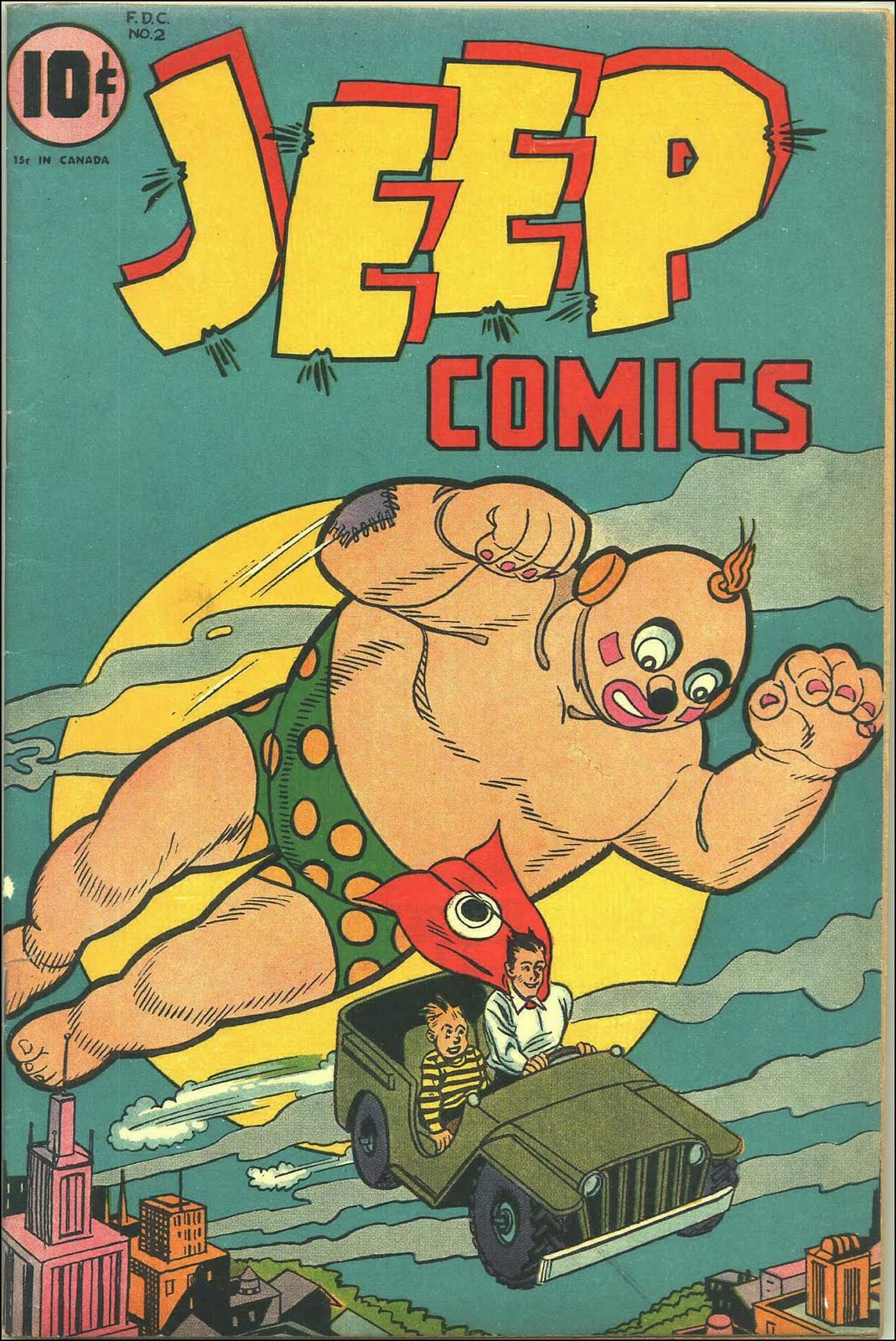
Found HERE – What the heck is going on here, and who wants to work up some Mystery Men! stats for, well, any of it? You know what I do like about that cover, though – it was not done ironically. Now we have many people trying to manufacture weird, consciously, where as once upon a time that was not so common. In other words – what’s more interesting – the person (and culture) who drew that cover or a hack like Lady Gaga who goes to great pains to be “shocking” and “weird” in the most lucrative manner possible? Or was that cover artist just pissed that he was making a living drawing a comic book cover instead of living his dream as an artiste’, so he decided to go all “subversive”? Discuss.

Bonus knowledge – jeeps got their name because they were designed as General Purpose vehicles for the military – GP – Jeep.

Reskinning the Past Department

So, we’re probably all aware of people who make their living by taking the skeleton of a long extinct animal and drawing in the musculature and skin to give us an idea of what it looked like when it was alive. Which is interesting, if you think about it – most folks these days think we know what a t-rex looks like, but in truth nobody really does – not even scientists – and we never will. Anyways – has anybody ever thought of taking a modern animal skeleton as a base, and then designing an imaginary creature around it. The above skeleton is probably a bad example, since I think it’s an extinct species of elephant. Either way – could be a fun artistic exercise or blog contest.

Via KA-CHING!

Sick of the Rapture Department

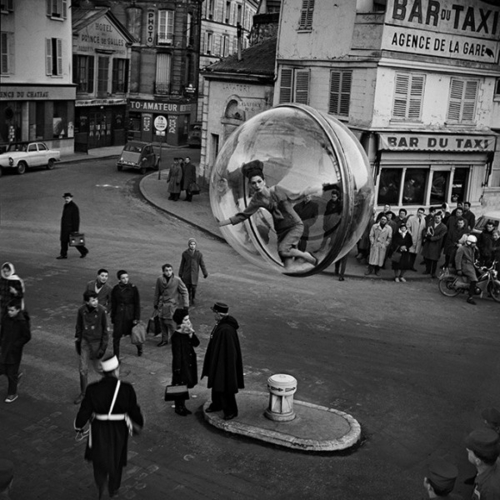
Here’s a picture of a woman being carried away in a bubble. No relation.

Via KA-CHING!

Greatest Book You’ll Ever Get Your Hands On?

Somehow I doubt this book lives up to its cover blurb.

Meanwhile, some Wonder Woman stats for Mystery Men! – just ’cause.

In response to a comment that has now disappeared – Super Will should have been +3, not +6. When I create these hero/villain stats, I’m now assuming ability scores of 3 across the board, and then adjusting them up from there. Of course, I also adjust them down as appropriate.