Beware the Used Armor Salesman

Image from Wikipedia

The difference between life and death for a low level warrior can turn out to be the difference between chainmail and platemail. The problem for the novice adventurer, of course, is a lack of funds. Platemail is expensive. In order to earn enough coin to buy it, a warrior has to stick his neck out enough that he might lose it.

Another option might be used, cut-rate armor. Plenty of warriors kick the bucket every year, and plenty of suits of old armor are dragged out of dungeons every day (well, presumably), so clearly used armor is widely available, and just as presumably, that armor is going to be cheaper than a new suit.

Any purchaser of a used car, though, knows well the dangers. Maybe that suit of platemail you just bought cheap is a lemon – maybe it is way more trouble than it is worth.

The following tables are a way to determine just what is wrong with that cheap suit of armor a character just bought.

Every used suit of armor comes with 1d4-1 defects. In this system, a used suit of armor sells for a base 10% discount, +10% per defect. This represents the lowest price the salesman will accept. Naturally, they’re going to try to get more than that. I’ll let you handle the haggling yourself.

Leather-Based Armors (leather, studded leather, ring mail, scale mail)
1. Loose studs – studs, bolts or scales on the armor are loose; every hit you suffer in combat has a 1 in 6 chance of reducing the armor bonus by 1 as several pieces fall off.
2. Loose fit – the armor rides down with wear, imposing a -1 penalty to Reflex saves (or saves vs. rays and dragon breath) and reducing movement by 5 feet
3. Poor workmanship – armor bonus is one lower than normal
4. Squeaky – armor squeaks in a cool environment (like most dungeons), imposing a -2 penalty to move silently checks (or a -10% penalty, depending on the system you use)
5. Stench – the armor just don’t smell right, especially once it’s been on for a while and warmed up – imposes a 1 point penalty to surprise foes (or a 2 point penalty if those foes have sensitive noses)
6. Tight fit – the more you wear it, the more is chafes, imposing a -1 penalty to hit in combat and reducing movement by 5 feet
7. Weak buckle – every time you’re in a fight there is a 1 in 6 chance per round that it snaps or falls apart, imposing a -1 penalty to the armor’s armor class bonus and a -1 penalty to hit
8. Cursed – suit is -1 cursed armor

Mail Armors (mail shirt, chainmail)
1. Jingle – armor jingles and rattles, imposing a -2 penalty to move silently checks (or a -10% penalty, depending on the system you use)
2. Loose fit – the armor rides down with wear, imposing a -1 penalty to Reflex saves (or saves vs. rays and dragon breath) and reducing movement by 5 feet
3. Loose rivets – every hit you suffer in combat has a 1 in 6 chance of reducing the armor bonus by 1 as several links fall off.
4. Poor workmanship – armor bonus is one lower than normal
5. Tight fit – the armor just doesn’t let you breath, imposing a -1 penalty to hit in combat and reducing movement by 5 feet
6. Weak backing – any hit with a weapon that deals more than 3 points of damage causes links to break and stick in your flesh
7. Weak buckle – every time you’re in a fight there is a 1 in 6 chance per round that it snaps or falls apart, imposing a -1 penalty to the armor’s armor class bonus and a -1 penalty to hit
8. Cursed – suit is -1 cursed armor

Plate Armors (banded mail, splint mail, platemail, plate armor)
1. Creaks – armor creaks and groans, imposing a -2 penalty to move silently checks (or a -10% penalty, depending on the system you use)
2. Loose fit – the armor rides down with wear, imposing a -1 penalty to Reflex saves (or saves vs. rays and dragon breath) and reducing movement by 5 feet
3. Loose rivets – every hit you suffer in combat has a 1 in 6 chance of reducing the armor bonus by 1 as several links fall off.
4. Poor workmanship – armor bonus is one lower than normal
5. Tight fit – the armor just doesn’t let you breath, imposing a -1 penalty to hit in combat and reducing movement by 5 feet
6. Weak buckle – every time you’re in a fight there is a 1 in 6 chance per round that it snaps or falls apart, imposing a -1 penalty to the armor’s armor class bonus and a -1 penalty to hit
7. Visor – the visor on the helm has a tendency to slam shut; whenever you attempt a task check or saving throw outside of combat there is a 1 in 6 chance that this happens, imposing a -1 penalty to the roll
8. Cursed – suit is -1 cursed armor

3d6 All the Way Revisited – A Random Excel Generator!

Illustration of leech by Jon Kaufman from the NOD Companion (still in progress)

From the brilliant mind of Arjen Lissenberg, who gave us the excel document to generate random classes with that last hare-brained scheme of mine, comes a new Excel doc to do the same with the 3d6 for everything method.

Download it HERE!

Thanks again to Arjen – I love being able to supply things like this to the wider gaming community!

An (Un-) Common Dungeon

A little experiment tonight – I’m going to work up the skeleton of an adventure using the “random file” function at Wikimedia Commons. Now, you can’t do anything with some of these random files, so I’m going to take every single one in turn, but I’ll do my best with most of them to fit them into the scheme of the thing.

STEP ONE – LOCATION
Every good dungeon needs an entrance. My first image is actually a cheat – I’m using the picture of the day, the Temple of the God Wind in a Mayan ruin.

There’s the entrance to our adventure site – a ruined temple. Even though “God Wind” sounds like it has something to do with divine flatulence, we’ll assume we’re talking about a wind deity. Let’s work out some wandering monsters:

1. Wind Priests – half-naked blokes with censors of poisoned gas (sleep gas; they’re immune) and light maces

2. Small Air Elemental

3. Fusillade of poisoned darts (save vs. paralysis)

4. Giant Constrictor (wandered into the place from the jungle)

5. Pirates (exploring the ruin; their ship is anchored off the coast)

6. Albino Apes (just because they have a place in any ruined temple)

STEP TWO – THE BIG BAD GUY
Since I’m thinking more in terms of a short adventure than a mega-dungeon, it’s nice to have some monster or NPC sitting on top of the food chain. Not only is he/she/it the ultimate challenge of the place, knowing their identity in advance let’s you weave their presence throughout the place.

My random file – Barack Obama. I’d love to expand on this, but I like to keep politics out of this site, so I’ll try again. The next file is EZ Tondo – some sort of German store I suppose. The image doesn’t help, but how about an exiled Teutonic Knight who dabbled in black magic and has now taken up residence in the bowels of this pagan temple, adopting the identity of Tondo, Son of the God Wind, and cowing the locals into serving him.

Tondo will be a 4th level fighter and 6th level anti-cleric (dual-classing, dontcha know), and always accompanied by four of the aforementioned wind priests (2 HD each).

STEP THREE – THE MACGUFFIN
Now we need a reason for the adventurers to delve in the place, beyond simple loot. I get “Cathagenian ruins in Tunisia”, which brings Hannibal to mind, of course, and elephants, and thus a figurine of wondrous power, a pretty spiffy relic to delve for.

STEP FOUR – THE FIRST GREAT CHALLENGE
Just within the entrance, we need some wondrous challenge to whet the players’ appetites. I randomly get an image of an altar in a church. Our first great challenge, then, is a trapped altar dedicated to the God Wind. Maybe it looks like a pipe organ. You have to play the proper tune to open the doors into the dungeon, with each mistake summoning a monster or bolt of lightning or gust of razor-wind – something like that. The notes are secreted within a bas-relief of a gaggle of sylphs with open mouths, as though singing or shrieking, the mouths being at different heights and thus corresponding to musical notes. No, the ancient Mayans did not use this sort of musical notation, but since the players probably are not ancient Mayans, the concept works for them.

STEP FIVE – GUARDIAN OF THE FIRST LEVEL
We need a good (or evil) guardian of the first level – a monster or trap who keeps people from getting to the lower level, where the MacGuffin and Big Bad Guy are hiding. I get this …

Honestly, I have no idea. But it does give me some inspiration – I’m picturing a person grabbed by legs and arms and pulled in a most inconvenient way. But how?

Perhaps a well lined with hundreds of manacles embedded in the walls. The way to descend would be to either climb down a rope or climb down using the manacles as hand- and footholds. Naturally, the things are animated, and at some point attempt to clamp down on people’s wrists and ankles (Reflex save to avoid). Maybe they then pull the person, or maybe they just hold them while some winged goblins fly up from the darkness and attack. Either way, it would make for an interesting and challenging combat.

STEP SIX – THE BIG MYSTERY

We need a mystery on the lower level to keep the player’s guessing. I now get the image of a statue holding a sword and a torch or oil lamp of some kind. This we’ll place in a circular room at the meeting of four passages. The passages lead to outer portions of the lower level – your basic rooms with monsters and traps and scant treasure. By lighting the statue’s lamp, though, and rotating it so that the light falls on bare walls in the rotunda, it also reveals extra-dimensional passages to four sub-levels, each dangerous. Once one walks through one of these openings, they see a wall behind them, so escaping from the sub-levels will be one of the challenges of the dungeon. One of the sub-levels hides a tiger’s eye gemstone that, when affixed to one of the the statue’s eye sockets (the empty one), animates it. It retains its perch and fights like a devil, but if defeated, the pedestal it stands on fades away, revealing a spiral stair that leads to the inner sanctum of Tondo.

So, six images gives us the framework for a (hopefully) entertaining dungeon. We would now need to draw up the levels and sub-levels and stock the chambers with monsters, traps and treasure. Remember, random isn’t just good in a game, it’s also good for creating a game – random inspirations to set your little grey cells to firing and creating things even you could never have known were lurking in you campaign world.

Adventuring in the Himyarite Kingdom

I know, I know – like you need yet one more blog post talking about using the Himyarite Kingdom as a setting for a fantasy RPG. But here we go, just the same …

So, you can call it the Himyarite Kingdom, the Homerite Kingdom (kinda like that one better) or Himyar, but what we’re talking about is a Judeo-Christian kingdom or empire in Yemen, just a hop-skip-and-a-jump away from the pre-Islamic Arabs in the north (“Men, Nomads” is covered), the Egyptians and Ethiopians across the Red Sea, the Romans to the north, Persia just across the Persian Gulf and near much-storied Baghdad and India (and their martial artists – so we have monks covered) across the Indian Ocean.

Himyar was established round about 110 BC, with a capital at Zafar (Sana’a). The kingdom of Sheba (you might have heard of it) was conquered in 25 BC, Qataban in 200 AD and Hadhramaut in 300 CE. Himyar remained dominant until 525 AD.

From my extensive reading (and article on Wikipedia counts as “extensive”, right?), it sounds like the period from 115 BC to 300 AD might be the most interesting. Himyar conquer Sheba, but its trade is failing due to domination of the north by Nabatea (or orcs, if you prefer), domination of naval routes by the Romans, who have just freshly conquered Egypt, and due to inter-tribal warfare. In other words lots of turmoil and thus lots of opportunity for conflict and gaming.

Because Himyar is a Christian state, it makes a great base of operations for clerics. Allow all the pagans, be they Arabs, Egyptians or Romans, to use druids but save the clerics for the Judeo-Christians. The Israelites and Ethiopians would probably also use clerics. This could make for an interesting ancient zombie apocalypse campaign, with only a few peoples having access to clerical turning – perhaps the Roman conquest of Egypt has awakened the entombed pharaohs, who are now, as mummy lords, leading armies of the undead all over the world.

Some of the local kingdoms other than those mentioned are such fabled lands as Punt, Kush, Aksum, Damot and Awsan.

Demihumans – what about the elves and dwarves and halflings? Well, you can either distribute them throughout and not worry about whether they belong there, or you could replace them in name only. The elves are replaced by the jinn, the doughty halflings by the amazons (Themiscyra is just north in Asia Minor, after all) and the dwarves by the wondrous blemyes (no heads, faces in chests) who apparently live along the coast on the Africa side of the Red Sea!

Armor and Weapons
Most of the fantasy standards would be available in a campaign like this, with the exception of platemail (though perhaps the mirror armor of India would suffice) and maybe some of the later European pole arms.

Landscapes and Sights
“Look, Sahib, there is the way to Ubar. It was great in treasure, with date gardens and a fort of red silver. It now lies beneath the sands of the Ramlat Shu’ait.”

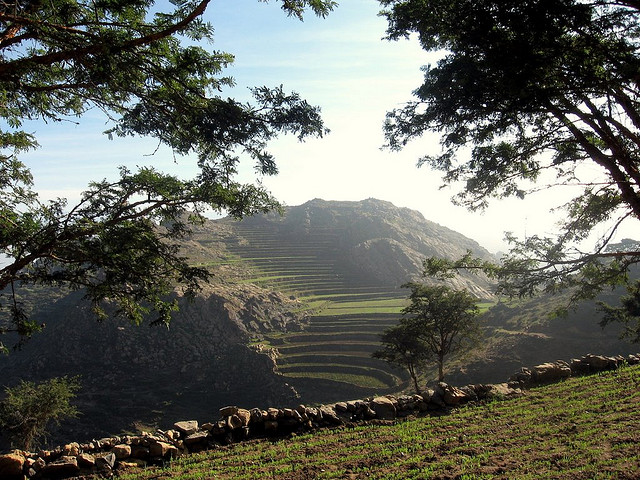
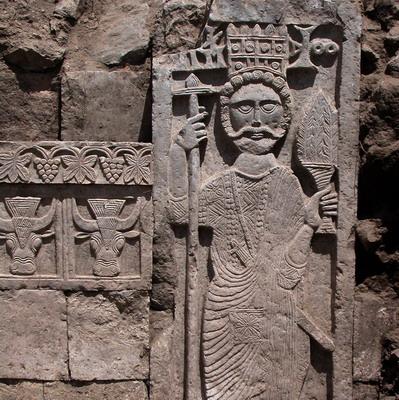
Yemen is mountainous (i.e. dwarves, dragons and dungeons are not out of place here, and an old bas-relief from Hadhramaut features a griffon) and somewhat lush, but is otherwise surrounded by arid deserts and sea. Pirates have plenty of places to play, and desert nomads are covered as well. Perhaps one could mix in some desert orcs with the Arab tribes.

So, what is there to explore and plunder in this region? Well, the mega-dungeon known as Irem of the Pillars is lurking somewhere in the Arab sands (remember, this is fantasy Irem, it doesn’t have to be the ruins of Ubar – maybe Ubar is another mega-dungeon) and not far from this fabled site of God’s vengeance one finds Lovecraft’s Nameless City.

Across the Red Sea, you have pyramids galore to plunder in Egypt, and in Ethiopia, if you dare, there sits an honest-to-goodness artifact – The Ark of the Covenant – guarded by, one must believe, a brotherhood of Ethiopian paladins and their paladin-king, the Lion of Judah – maybe they are all mounted on celestial lions?

Over sixteen megalithic standing stones were found on the coast of Tihamah – no doubt they are involved in some sort of dimensional portal, a thin bastion against an invasion from Hell, Asgard, the Mind Flayers of Dimension X or the femazons of Venus.

The Thamudi cliff dwellings have to form a dungeon with some sort of amazing secrets, given that they were apparently punished by a soundwave from God for some manner of infraction. Maybe it wasn’t a punishment from God, but rather an experiment of super-science gone horribly wrong – a weird monster unleashed on the world at large, but trapped within their subterranean city!

The Wabar Craters – what created them? Was it something from the mysterious rogue planet Nibiru? Did it burrow into the sands? Is it dining on the King of Baghdad’s caravan as we speak – the one that was carrying his daughter south to be married to the King of Himyar?

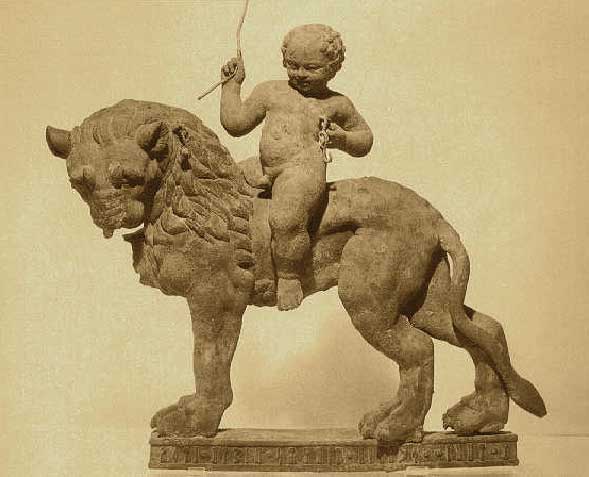
Imagine if the astral devas looked like cherubs mounted on lions


Murder, Most Random!

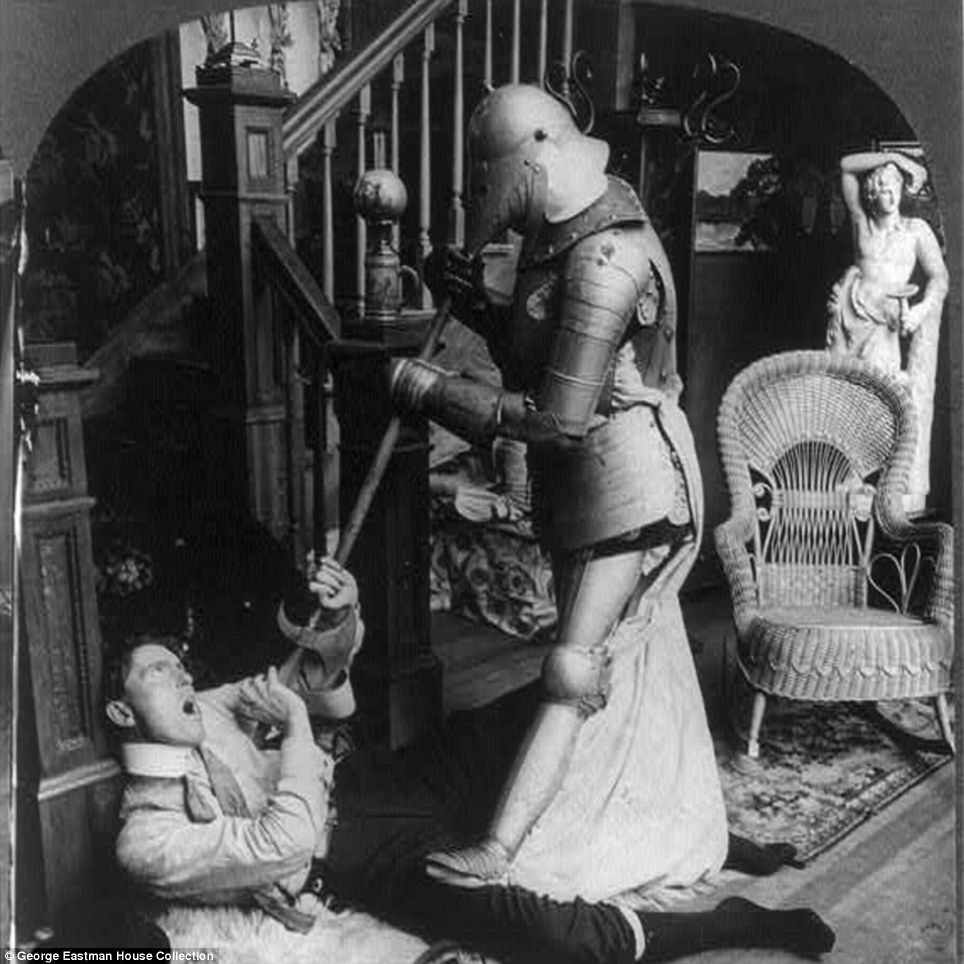
Halloween brings to mind ghost and goblins, yes, but also creepy or imposing Victorian mansions, and thus, MURDER!

The next time you need to generate a random murder for characters to solve, or perhaps explain the origin of the ghost they are busting, these random tables might come in handy …

WHERE? (d30)

1. Attic
2. Ballroom
3. Bathroom
4. Bedroom (upstairs)
5. Billiard Room
6. Buttery
7. Cellar / Undercroft
8. Dining Room / Eating Room
9. Drawing Room / Parlour
10. Dressing Room
11. Fainting Room (nudge nudge)
12. Gentleman’s Room
13. Great Chamber
14. Hall / Great Hall
15. Housekeeper’s Room
16. Kitchen
17. Larder
18. Library
19. Long Gallery
20. Lumber Room
21. Master Bedroom
22. Pantry / Butler’s Pantry
23. Picture Gallery
24. Scullery
25. Servant’s Quarters
26. Smoking Room
27. Solar / Solarium / Sunroom / Conservatory
28. Store Room
29. Study
30. Wine Cellar

WHO? (d30)

Note: This table can be used to generate the victim and the murderer, as well as the wrongly accused

1. Baronet / Lord
2. Lady of the House
3. Blustering Industrialist
4. Arrogant Playboy
5. Bold Explorer
6. Virile Sportsman
7. Member of Parliament
8. Spoiled Son/Daughter
9. Imperious Son/Daughter
10. Dowager Aunt
11. Doddering Uncle
12. Brainy Professor
13. Idiot Nephew
14. Sly Courtesan
15. Impassioned Suffragette
16. Intellectual Son/Daughter
17. Silly Son/Daughter
18. The Butler
19. Kitchen Maid / Scullery Maid
20. Cook
21. Valet
22. Driver / Chauffeur
23. Companion
24. Lady’s Maid
25. Nanny / Governess
26. Tutor
27. Chambermaid
28. Page / Houseman / Footman
29. Gamekeeper / Master of Hounds
30. Master of Horse

WHAT? (d8)

1. Poison (Arsenic, Curare)
2. Shot (revolver)
3. Stabbed or Slashed (knife, dagger, razor blade, something more archaic)
4. Bludgeoned (candlestick, wrench, statuette)
5. Strangled (rope, scarf, bare hands)
6. Electrocuted (where available)
7. Suffocated (or gassed)
8. Drowned

WHY? (d8)

1. Jealousy
2. Envy
3. Greed
4. Boredom
5. Ambition
6. Revenge
7. For the cause!
8. Because of the voices!

So, what is Chief Inspector Macintosh up against this week?

Doddering old Dr. Rolston has been found murdered in the fainting room! Egad! He appears to have been poisoned, and the most likely suspect is the very intellectual daughter of the family, Felicity, who had been conducting a bit of research into poisons. But why?

If Macintosh is smart, he’ll discover that the true murderer was the footman, Joseph, who did it out of jealousy – he envied those “hysteria treatments” the doctor had been giving to the scullery maid, Eliza, so he put a little extra kick in the old man’s brandy, and when next the two met in fainting room, the good doctor expired!

A World With Multiple Sentient Races?

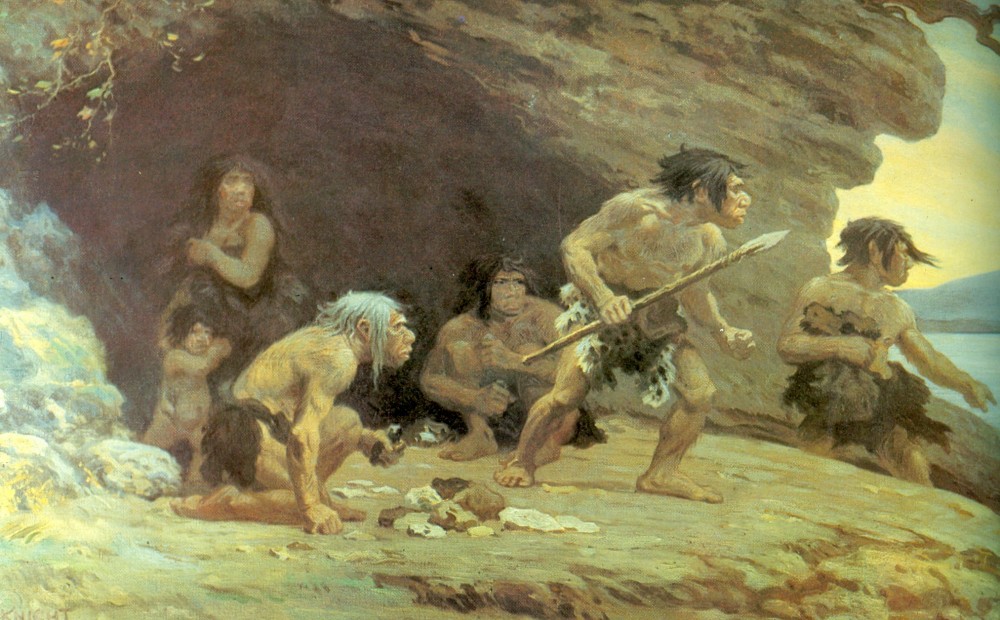
I was reading an article about primitive humans gettin’ busy (yeah, I’m street like that) with Neanderthals. Apparently, we did share the planet with a few other homo sapiens – maybe not as exotic as sharing it with elves, dwarves and halflings (well, maybe halflings), but it makes me think again about the fun of running a game with neanderthals and other “humanoids”, especially if you smash it together with an REH-style Atlantean age of fantastic adventures and ancient civilizations. Imagine an ancient, pre-ice age Europe swarming with prehistoric beasts and powerful stone age (maybe even Flintstone-style) civilizations that are antecedents to the known ancient civilizations of Europe. Naturally, we’re going to bend reality a bit to make this work.

First, let’s look at our players:

Humans

You probably know these guys. Just use whatever rules you would normally use for humans in your favorite system.

For our purposes, we’ll say the humans are the new kids on the block, moving in from Africa, so they’re going to take the roll of nomadic raiders and conquerors, a’ la the Huns or Mongols. Maybe they ride swift hill ponies, and use stone-tipped spears and arrows and stone axes in combat. Assume that stone weapons do one dice-type less of damage than metal versions – so spears do 1d6, hand axes 1d4 and short bows/arrows 1d4.

Armor in this setting is simple enough anyhow, but for humans it probably consists of furs (AC +1) or cured hide armor (AC +2). Maybe they use wicker shields as well.

If you use something like “favored classes”, maybe these humans favor the barbarian class.

Neanderthals

Neanderthals are close kin to human beings. In our setting, they are the high tech stone users, building cities of stone (again, Flintstone-style) and building primordial empires (maybe on the bones of pre-human civilizations like those of the ophidians and elder things). Since we’re used to Neanderthals being depicted as the “dumb cousins”, I like the idea of them being the most civilized people in the game, with a well-organized chieftain system, armies, organized religion (probably druids, but clerics would be cool as well), etc. Of course, the greatest of the Neanderthal kingdoms should be in the Neander valley – this is their Carolingian Empire – imagine how cool their Roland would be!

(Oh – what about theme-ing the Neanderthal city-states off of different stones – the Sapphire City, the Emerald City (well, maybe not that one), the Obsidian City, etc.)

You can probably use the dwarf racial abilities for your Neanderthals, making them tough guys who are hard to kill and who have expertise when working with stone and delving into cave systems. Neanderthal males stand 5.5 feet tall, females 5 feet tall.

Neanderthals have the same basic weapons as human beings, but also have armor that uses horn and bone in its construction (AC +3).

If you use favored classes, neanderthals probably favor the fighter class.

Homo Erectus

Homo erectus appear to have been slightly more primitive hominids than the early humans and Neanderthals. They are hunter-gatherers who use primitive tools and rely more on brawn than brains, and could therefore be an analog for half-orcs in the game (without the mixed parentage). Since homo erectus is more primitive and “close to nature”, you could use the druid as their favored class.

Otherwise, they might make good brigands and pirates, sniping at the edges of Neanderthal civilization without any real ability to conquer it. Heck, maybe the Neanderthal legions use homo erectus and hobbit (see below) auxiliaries as scouts and light infantry in their battles with the orcs and hobgoblins.

Flores Man (‘hobbits’)

So they weren’t discovered in Europe – how do you do cave man fantasy gaming without including the recently discovered ‘hobbits’? And I’d call them hobbits too! The hobbits are small humanoids, maybe a bit harrier than the humans and neanderthals, who dwell in thick woodlands in burrows. You can use the traditional halfling racial abilities for the the hobbits. They stood about 3 to 4 feet tall and used stone tools – probably on par with the humans.

The hobbits (well, as near as they can figure – remember, they might not really be a separate species) lived on an island with giant rats, Komodo dragons, elephants (stegodons) and giant lizards – they’re totally D&D, and must have been pretty slick little operators to survive. You might want to change their favored class, if you use such things, to ranger.

Meganthropus

Indonesia produces all the best hominid fossils! Meganthropus is the opposite of the hobbits – giant humanoids who were probably also related to homo erectus. Since we don’t have elves in this setting (unless we do – see below), they might make a good additional race. Meganthropus stood about 8 feet tall and is probably best represented with the half-ogre race (whichever version you prefer). They would be about as advanced as homo erectus and the hobbits, and probably rely on their great strength more than tools. If you use favored classes in your game, fighter or barbarian probably works for meganthropus.

Other Notions

If you really need to have “elves” in your game, I’d suggest replacing them with ophidians, or even just using them as-is – beautiful fey creatures who are shepherding the humanoids on their way to civilization.

Weapons do a bit less damage in this campaign, but there is less Armor to go around, so things should probably even out in that regard. To keep fighters and clerics (and paladins and whatever else you use) the “most armored” classes in the game, maybe restrict the other classes that can use armor to nothing more than furs (AC +1), no shields.

Spellbooks might not make sense, though scrolls consisting of stone tablets or animal hides are fine. In place of spellbooks, you could equip the magic-users with the aforementioned animal hides (one hide per spell, regardless of the spell’s level) or they could carve runes into staves and use them for memorization. Really, as long as the possibility of magic-users being without one’s source of spells is still present, you’re probably okay.

If you’re feeling gonzo, insert dinosaurs along with the prehistoric mammals, and of course use all of them as mounts.

Now – evil humanoids. They’re still there, of course. Gnolls and their hyaenodons, kobolds worming their way through the earth, goblins hiding in the woods, orcs and hobgoblins giving the early humans a run for their money. Do I even need to mention the lizard men and troglodytes? (And yeah, if your lizard men don’t look a lot like Sleestaks, you’re just not getting the point!) Heck, maybe you could re-cast all of the “evil humanoids” as having dinosaur features – T-Rex hobgoblins, triceratops orcs, ‘raptor goblins, etc.

Most of the mythological creatures are appropriate – after all, many were born from the blood of the “mother of monsters”. Dragons are great, bulettes and ankhegs are perfect, and a setting like this just begs for packs of blink dogs and worgs. A few metal-based monsters – rust monsters, iron golems, giant robots – should be avoided unless they are remnants of the ancient ophidians found in the mega-dungeons they have left behind.

Oh, and also this …

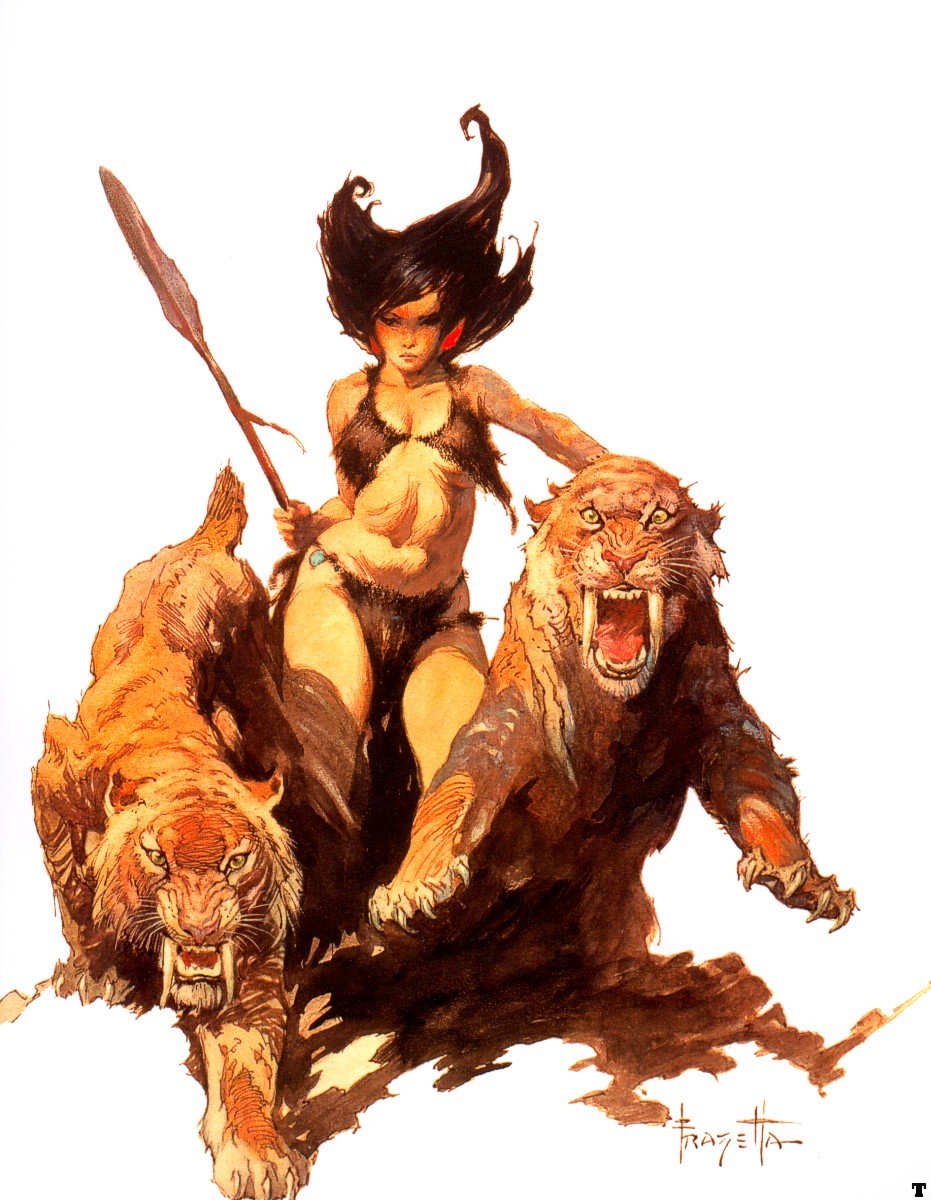
So, find your inner Frazetta and get primitive!

Here Comes the Bogeyman – Part 4 – Killing Rituals

The point of a bogeyman is to create a campaign (or mini campaign or side trek) around figuring out how to kill the damned thing. That means researching the killing ritual. Here, horror movies aren’t quite as helpful as they’ve been before, because most horror movies that involve a bogeyman become series that NEVER FREAKING END. The only killing ritual that can put Jason, Michael Myers or Freddie down permanently is low ticket sales … and even then only until Hollywood thinks it can pull off a “re-boot”. For our purposes, though, we need to have an end to these campaigns of terror.

The how of killing might have something to do with the bogeyman’s origin, and then again, it might not. It could also just be some weird ritual that must be taught by the reclusive monks in those far-away mountains you’d like to introduce to your players.

The killing ritual should involve one or more element or step. The more experienced the players (not the characters), the more elements you can get away with, but more than three is probably going to get tedious. There might be a teacher or dusty old tome that can reveal the entire killing ritual, or perhaps the adventurers must track down each element separately. In such a case, it might be a good idea to weave the killing ritual in with the monster’s history (an example to follow), so that as players learn about the bogeyman’s history, they gain clues on how to destroy him.

Some elements you might consider for your killing ritual:

Hit Location – much like a vampire needing a stake to the heart to keep it down, Achilles’ infamous heel or Smaug’s missing scale, the monster can only be killed if struck at a certain point on its body. Unless the monster is stunned/paralyzed/subdued/etc., this brings a combat element into the game and might please the more combat-oriented players who otherwise couldn’t give a copper for solving the monster’s riddle.

Substance – the idea of needing special substances to kill monsters is not new to D&D – silver for lycanthropes, cold iron for some fey, wooden stakes for vampires, magic weapons to harm demons, etc. For a bogeyman, think outside these narrow bounds – Loki using mistletoe to kill Baldr comes to mind, or how about a silver spearhead anointed with a virgin’s tears? It might also be a particular weapon – the sword of Sir Magnus the Moldy, for example – that necessitates a brief quest to find the weapon (a quest which, incidentally, might help to keep the dungeon crawlers in the party happy).

Actor – the monster might require a specific kind of actor to kill it. This can get a bit dicey, as it might take the adventurers of the game just a little bit. Sure, they have to work hard to find the seventh son of a seventh son and convince him to accompany them to kill some monster he’s never heard of, but then the final stroke of the campaign comes from an NPC and that might lessen the satisfaction of the victory for the players. An “actor” requirement could also be something like, “a person who has kissed the Blarney Stone” or “a person who has lost a loved one to the monster” – something that can qualify one or more characters. Even using a PC as the final actor can create trouble – what if the killing blow falls on the shoulders of the halfling thief and two or three other PC’s buy the farm while that player suffers through some lousy hit rolls? An actor is definitely an appropriate element to the killing ritual, but just use it with your eyes wide open to the potential problems it can create.

Time – The time element involves something like: Can only be killed under a new/full/crescent moon; can only be killed at sunrise; can only be killed on a holy day; etc.. The value of a time element is to create a sense of urgency. Whatever the time element, it should be soon, so the adventurers must race to meet the deadline or suffer through another day or week of attacks that might claim new victims. You probably want to keep the interval between potential killings short, else the bogeyman side trek might outstay its welcome at the game table.

Place – A special place to kill a bogeyman might be fun as well, as it means the players have to figure out a way to lure the bogeyman to its undoing. Now, obviously, an intelligent bogeyman should not willingly let itself be lured to the one place it can be destroyed, so try to remember you’re working with an archetypal story here – just roll with it. It doesn’t have to be easy to lure the monster, but don’t make it ridiculously difficult. Good places might be the site of the bogeyman’s creation, an abandoned temple in a lonely wilderness, a holy site, the crater left over from a meteor impact, an active (or soon to be active) volcano, etc.

Here’s an example of a killing ritual tied to a particular bogeyman …

A maiden desperately in love with a wicked man was lured by promises of marriage into a lonely wood, where she was murdered. Now, on nights when the moon is new, a bogeyman composed of the psychic residue of the unfortunate woman (i.e. she isn’t undead) might appear to travelers (the locals know better than to travel during a new moon, but they don’t know why – just an old superstition) as a beautiful maiden with red-rimmed eyes who is accompanied by an audible heart beat – it throbs in people’s ears and causes fear (especially in henchmen and animals).

The murdered maiden will be drawn to killing any men in the party, and will also begin attacking descendants of her murderer, who still live in the nearby village. Assume the murder happened 50 years ago, so there probably are a few elders who remember what happened and can clue people in to the event. The murderer was probably a high placed person in the village, or perhaps was a cat’s paw for somebody else. Maybe the maiden’s stepmother wanted her out of the way?

In this case, the killing ritual involves plunging a gold ring (it was promised to her, and she might howl about it while attacking) into the bogeyman’s (bogeywoman’s?) heart. The most likely way is to slip the ring onto a blade or arrow. This must be done during the night of a full moon. Her destroyer must also deliver a heartfelt apology or must shed a tear while delivering the killing blow or the bogeyman will only disappear for a year and then will return to plague the adventurers.

Here Comes the Bogeyman!

Here Comes the Bogeyman – Francisco de Goya 1797

What’s a bogeyman? For my purposes, a bogeyman is a unique monster that cannot be defeated by merely hitting it with swords and spells. The bogeyman can take many forms, but all bogeymen share one characteristic: They can only be permanently defeated by finding their one vulnerability and attacking it.

When do you bring out the bogeyman? Well, if you want to make it most effective, you unleash the bogeyman on your party when they’re not expecting it. For example, everyone sits down to the nth in a series of delves into whatever mega-dungeon or mega-wilderness you’ve been running. If the party is in the midst of something mundane (i.e. heading back to town, heading back into the wilderness, resting int town), it’s probably the best time to inflict the bogeyman on them. The initial encounter does not need to be deadly (unless players don’t take the hint of “nothing seems to be harming it”), but should scare the crap out of them and send them running.

Now you’ve just shifted the campaign and put the players on the defensive. What they hell is that thing? What does it want with us? Why don’t it go away? How do we stop it? These are the themes of the bogeyman sub-campaign – essentially a horror that the players didn’t ask for, but which they now must deal with.

Tomorrow, I’ll discuss some of the specifics of the bogeyman …

Random Jeweled Thrones Upon Which Your Barbarian Can Tread

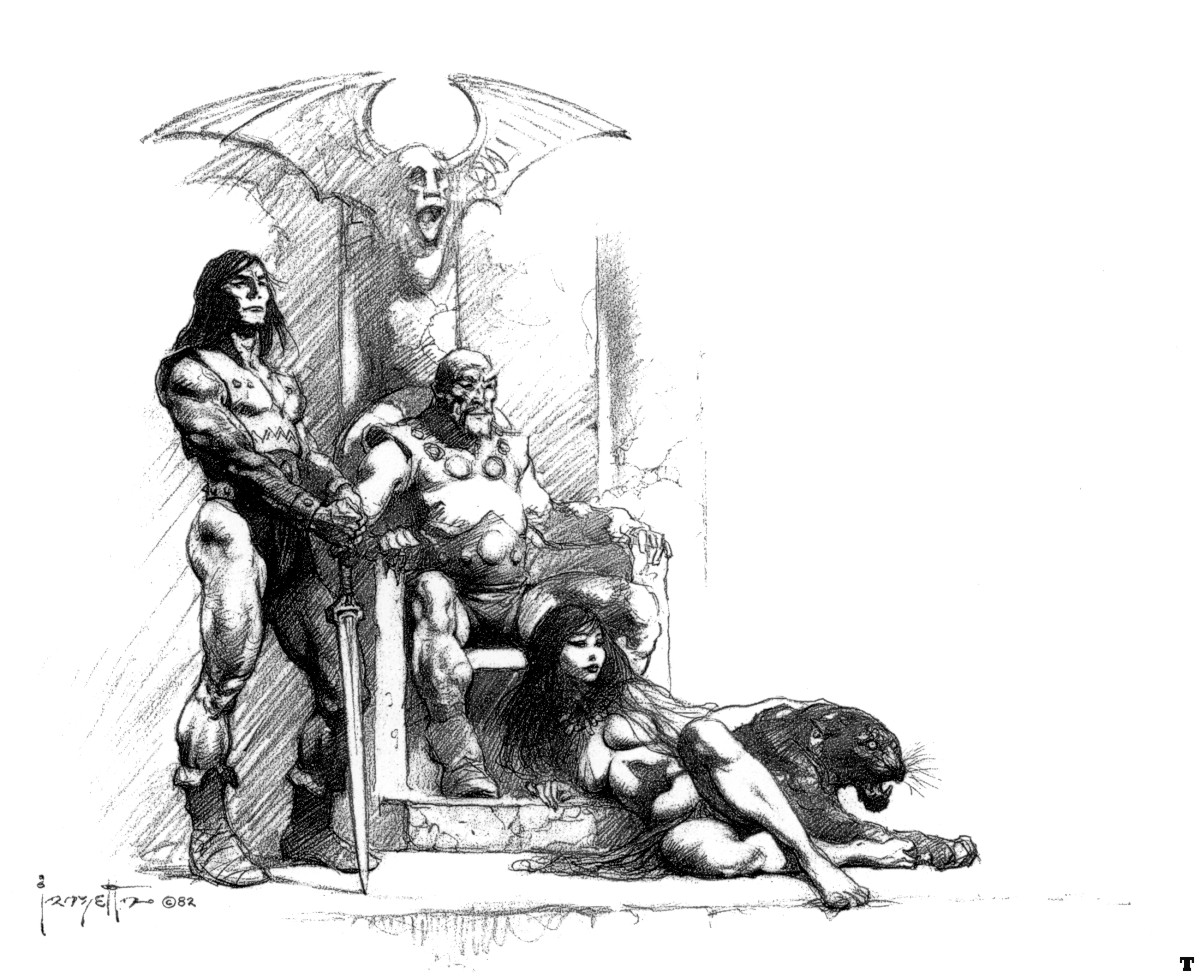
Whenever I’m writing a hex crawl and I it’s time to describe some royal ugly dude’s throne, I have to take a pause. How do I make this interesting? In literary terms, the throne is an extension of the person sitting on it – and in game terms, thrones are one of those things that players should remember – they give an encounter a bit of color and flash – something to fire the imagination.

With that in mind, I present a few tables for randomly generating hopefully interesting thrones.

First things first, you need to know whose butt is going to be planted in it, because their rank will provide a modifier (or no modifier) to the dice rolls:

Knight/Baron: +0
Viscount/Count: +5
Duke: +10
Grand Duke/Prince: +15
King/Queen: +20
Pope/Emperor: +25

For monster monarchs, let their hit dice be your guide:

0 to 5 HD: +0
6 to 9 HD: +5
10 to 14 HD: +10
15 to 19 HD: +20
20+ HD: +25

THRONE MATERIAL (D%)

01-010 – Pine*
11-17 – Elm*
18-24 – Maple
25-31 – Cedar
32-38 – Oak
39-45 – Walnut
46-52 – Cherry
53-59 – Teak
60-64 – Limestone (or granite or basalt)
65-69 – Bone (re-roll if this is too bad ass for you)
70-74 – Iron/Steel (re-roll if this is too metal for you)
75-79 – Kingwood
80-84 – Tulipwood
85-89 – Ebony
90-94 – Blackwood
95-99 – Marble
100-104 – Porphyry
105-109 – Malachite
110-116 – Brass
117-120 – Silver
121-122 – Gold
123 – Platinum
124 – Mithril
125 – Adamantine

* 10% chance that the wood is covered by silver foil or gold leaf

ORNAMENTS (D%)

01-08 – None
09-16 – Carvings (animals, plants, monsters, geometric designs, etc.)
17-23 – Feathers (peacock, griffon, roc, angel, etc.)
24-30 – Fixtures, brass (knobs, spikes, figurines, medallions)
31-36 – Fixtures, silver
37-43 – Inlay, wood (rosewood, zebrawood, holly, cocobo, ziricote, blackwood, ebony, kingwood)
44-48 – Inlay, shells
49-55 – Pillows of silk
56-60 – Pillows of velvet
61-65 – Pillows of damask
66-70 – Inlay, alabaster
71-75 – Inlay, ivory or tusks (elephant, narwhal, catoblepas)
76-79 – Inlay, mother-of-pearl
80-85 – Pietra dure – marble
86-90 – Pillows of leather (monster hide)
91-94 – Fixtures, gold
95-98 – Fixtures, platinum
99-103 – Pietra dure – fancy stones (see Blood & Treasure)
104-106 – Fixtures, mithril
107-109 – Fixtures, adamantine
110 – 114 – Slaves (servants, dancers, musicians) – chained to throne
115-118 – Guard animals (wolves, cheetahs, lions, tigers) – chained to throne
119-122 – Gems (1d12; see Blood & Treasure)
123-125 – Jewels (1d12; see Blood & Treasure)

FOUNDATION (D%)

There is a 1 in 4 chance of the throne being situated on an interesting foundation

01-50 – Dais (1d4+1 steps)
51-75 – Moat – water
76-85 – Moat – perfumed water
86-95 – Moat – wine
96-99 – Moat – flaming oil
100-109 – Statue (i.e. throne atop a statue of a bearer, either an animal or people)
110-114 – Monster (throne actually on the back of a large, subdued monster)
115-125 – Slaves (throne on the back of human or demi-human or non-human slaves)

SPECIAL POWERS (D%)

Chance of special powers equal to 1 + rank modifier on percentile dice

01-06 – Augury (1/day)
07-12 – Charm person (1/day)
13-18 – Command (1/day)
19-27 – Detect evil or good (1/day)
28-33 – ESP (1/day)
34-37 – Summon monster III (1/day)
38-40 – Summon monster IV (1/day)
41-42 – Summon monster V (1/day)
43-46 – Augury (3/day)
47-50 – Charm person (3/day)
51-53 – Command (3/day)
54-58 – Detect evil or good (3/day)
59-62 – Break enchantment (1/day)
63-66 – Cure disease (1/day)
67-70 – Divination (1/day)
71-74 – Remove curse (1/day)
75-78 – ESP (3/day)
79-84 – Magic resistance 5%
85-87 – Detect evil or good (at will)
88-90 – ESP (at will)
91-94 – Magic resistance 10%
95-96 – Contact other plane (1/week)
97-98 – Gate (1/week)
99-101 – Protection from evil or good (constant)
102-104 – See invisibility (constant)
105-106 – Tongues (constant)
107-108 – True seeing (constant)
109-110 – Control weather (1/day)
111-112 – Flame strike (1/day)
113-114 – Insect plague (1/day)
115-116 – Lightning bolt (1/day)
117-118 – Slow (1/day)
119-120 – Magic resistance 20%
121-122 – Summon Monster VI (1/day)
123-124 – Summon Monster VII (1/day)
125 – Wish (1/lifetime)

African Expeditions – Henchmen and Supplies in 1910

In my quest for Africa-related illustration, I’ve delved into a couple old books found at Project Gutenberg. Besides a few usable illustrations, I also found a few interesting tidbits from the age of safaris, when the process for going out into the wilderness wasn’t too different from what it might be like in a game of D&D.

What follows comes from a book called In Africa, Hunting Adventures in the Big Game Country by John T. McCutcheon.

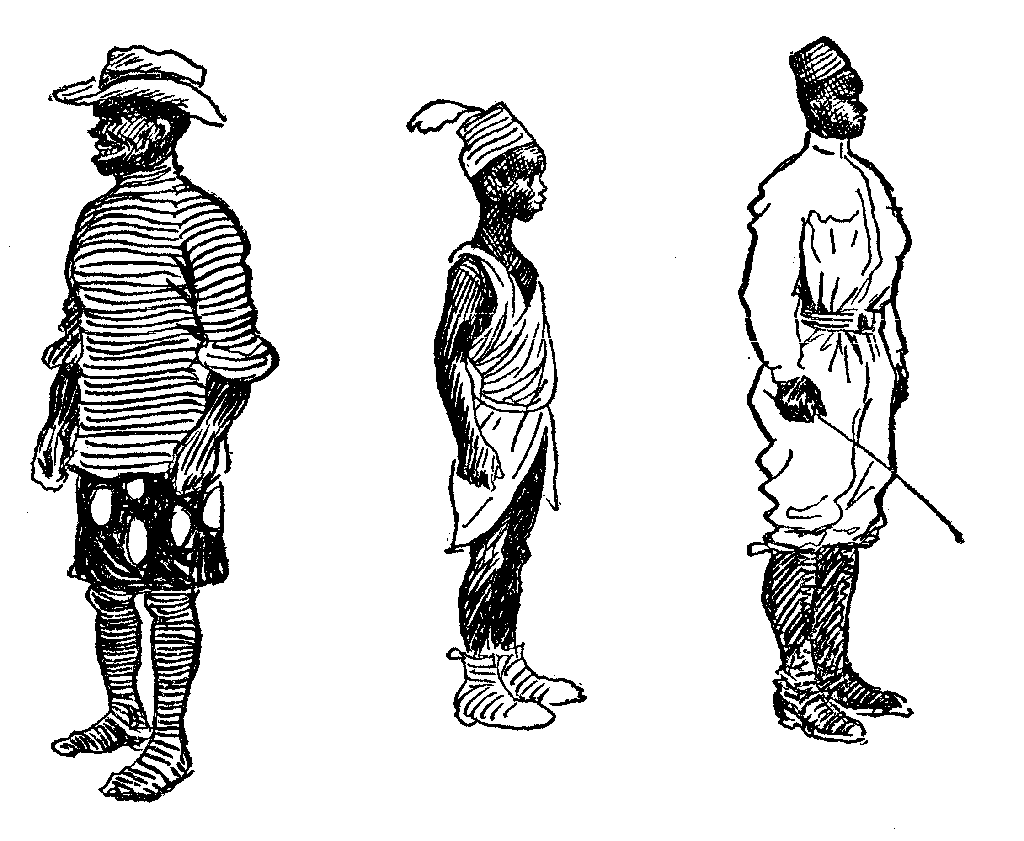
For an African expedition involving four “adventurers”, there were the following “henchmen”
Cook, toto and head man

(1) Head-man: Runs the camp and the other henchmen; paid $25/month

(8) Gunbearers: Carry gun and other key equipment, skin beasts and collect trophies; fire weapons when the boss is down; paid $25/month.
(4) Askaris: Native guards, keep up fires, scare away animals; $5/month.
(1) Cook: $13/month
(4) Tent Boys: Personal servants of the “adventurers”; wait on tables, do washing, make sure water is boiled and purified, fill water bottles; $7/month
(80) Porters: Carry camp from place to place, each carrying 60 lb. on head, then set up camp, get firewood, carry what game is shot by the “adventurers”; $3/month
(4) Saises: Grooms, one for each mule or horse; $4/month
(20) “Totos”: Means “little boy”, they are not hired, but come along as stowaways, carry small loads and help brighten the camp; paid food and lodging.


Gun bearer, askari, tent boy, porter

By my count, that would be something like a sergeant-at-arms, 12 men-at-arms, one specialist (the cook) and 108 “torchbearers”. The total cost is $542 per month.

It was required by law that each porter be provided with, at minimum, a water bottle, blanket and sweater. Uniforms, water bottles, shoes and blankets were provided for all others.

They had 20 tents for the entire expedition – if you assume one tent per adventurer, then you’re looking at an average of seven or eight people per tent – probably more in some tents, since the head-man and cook probably got their own tents.

Supplies for a 6 month trip into the wilderness were as follows:

TWENTY CASES (RED BAND)
    Two tins imperial cheese.
    One pound Ceylon tea.
    One three-quarter pound tin ground coffee.
    One four-pound tin granulated sugar.
    Two tins ox tongue.
    One tin oxford sausage.
    Two tins sardines.
    Two tins kippered herrings.
    Three tins deviled ham (Underwood’s).
    Two tins jam (assorted).
    Two tins marmalade (Dundee).
    Three half-pound tins butter.
    Three half-pound tins dripping.
    Ten half-pound tins ideal milk.
    Two tins small captain biscuit.
    Two tins baked beans, Heinz (tomato sauce).
    One half-pound tin salt.
    One two-pound tin chocolate (Army and Navy).
    Two parchment skins pea soup.
    One one and one-half pound tin Scotch oatmeal.
TWENTY CASES (BLUE BAND)
    Two tins baked beans (Heinz) (tomato sauce).
    One tin bologna sausage.
    One tin sardines.
    One tin sardines, smoked.
    Two one-pound tins camp, pie.
    Five tins jam, assorted.
    Two tins marmalade (Dundee).
    Five half-pound tins butter.
    Three half-pound tins dripping.
    Ten half-pound tins ideal milk.
    Two tins imperial cheese.
    One one and one-quarter pound tin Ceylon tea.
    One three-quarter pound tin ground coffee.
    One four pound tin granulated sugar.
    One quarter-pound tin cocoa.
    Two tins camp biscuit.
    One half-pound tin salt.
    One one and one-half tin Scotch oatmeal.
    One one-pound tin lentils.
    One tin mixed vegetables (dried).
    One two-pound tin German prunes.
    Six soup squares.
    One ounce W. pepper.
    Two sponge cloths.
    One-half quire kitchen paper.
    One two-pound tin chocolate (Army and Navy).
SIXTEEN CASES (GREEN BAND)
    Three fourteen-pound tins self-raising flour.
    Two cases (black band) containing fifteen bottles lime juice (plain) Montserrat.
    Two cases, each containing one dozen Scotch whisky.
    Two cases (red and blue band) thirty pounds bacon, well packed in salt.
    Two cases (yellow and black band) five ten-pound tins plaster of Paris for making casts of animals.
    One case (red and green band) fifty pounds sperm candles—large size (carriage).
    Four folding lanterns.
The following items to be equally divided into as many lots as necessary to make sixty-pound cases:
    Eight Edam cheeses.
    Twenty tins bovril.
    Twenty two-pound tins sultana raisins.
    Ten two-pound tins currants.
    Ten one-pound tins macaroni.
    Thirty tins Underwood deviled ham.
    Eighty tablets carbolic soap.
    Eighty packets toilet paper.
    Ten bottles Enos’ fruit salt.
    Twenty one-pound tins plum pudding.
    Six tins curry powder.
    Twenty one-pound tins yellow Dubbin.
    Six one-pound tins veterinary vaseline.
    Six one-pound tins powdered sugar.
    Six tin openers.
    Twelve tins asparagus tips.
    Twelve tins black mushrooms.
    Six large bottles Pond’s extract.
    Twelve ten-yard spools zinc oxide surgeon’s tape one inch wide.
    Two small bottles Worcestershire sauce.
In addition to the foregoing we added the following equipment of table ware:
    Eight white enamel soup plates—light weight.
    Eight white enamel dinner plates—light weight.
    Three white enamel vegetable dishes—medium size.
    Six one-pint cups.
    Eight knives and forks.
    Twelve teaspoons.
    Six soup spoons.
    Six large table-spoons.
    One carving knife and fork.
    Six white enamel oatmeal dishes.
As our tent equipment and some of the miscellanies necessary to our expedition, the subjoined articles were procured:
    Four double roof ridge tents 10 by 8—4 feet walls, in valises.
    One extra fly of above size, with poles, ropes, etc, complete.
    Five ground sheets for above, one foot larger each way, i.e., 11 by 9.
    Four mosquito nets for one-half tents, 9 feet long.
    Four circular canvas baths.
    Twelve green, round-bottom bags 43 by 30.
    Four hold-all bags with padlocks.
    Two fifty-yard coils 1 1-4 Manila rope.
    One pair wood blocks for 1 1-4 brass sheaves, strapped with tails.
    Four four-quart tin water bottles.
    Two eight-quart Uganda water bottles.
    Four large canvas water buckets.
    One gross No. 1 circlets.
    One punch and die.

This does not include medical and surgery supplies or rifles.

Personal supplies were as follows:

    Two suits—coat and breeches—gabardine or khaki.
    One belt.
    Two knives—one hunting-knife, one jack-knife.
    Three pair cloth putties.
    Three flannel shirts (I actually only used two).
    Six suits summer flannels, merino, long drawers.
    Three pair Abercrombie lightest shoes (one pair rubber soles).
    Three colored silk handkerchiefs.
    Two face towels—two bath towels.
    Three khaki cartridge holders to put on shirts to hold big cartridges, one for each shirt.
    One pair long trousers to put on at night, khaki.
    Two suits flannel pajamas.
    Eight pair socks (I used gray Jaeger socks, fine).
    One light west sweater.
    One Mackinaw coat (not absolutely necessary).
    One rubber coat.
    One pair mosquito boots (Lawn and Alder, London).
    Soft leather top boots for evening wear in camp.
    Five leather pockets to hold cartridges to go on belt.
    Three whetstones (one for self and two for gunbearers).
    One helmet (we used Gyppy pattern Army and Navy stores).
    One double terai hat, brown (Army and Navy stores).
    One six-_or_eight-foot pocket tape of steel to measure horns.
    One compass.
    One diary.
    Writing materials.
    Toilet articles.

How often to PC’s bring changes of clothes with them on adventures?