Navigating a Fantasy World with Google

I was looking at some paintings this morning by British artists working during the Victorian period. The painting below was painted by Richard Parkes Bonington in 1826. It depicts the Rialto in Venice.

From this great blog

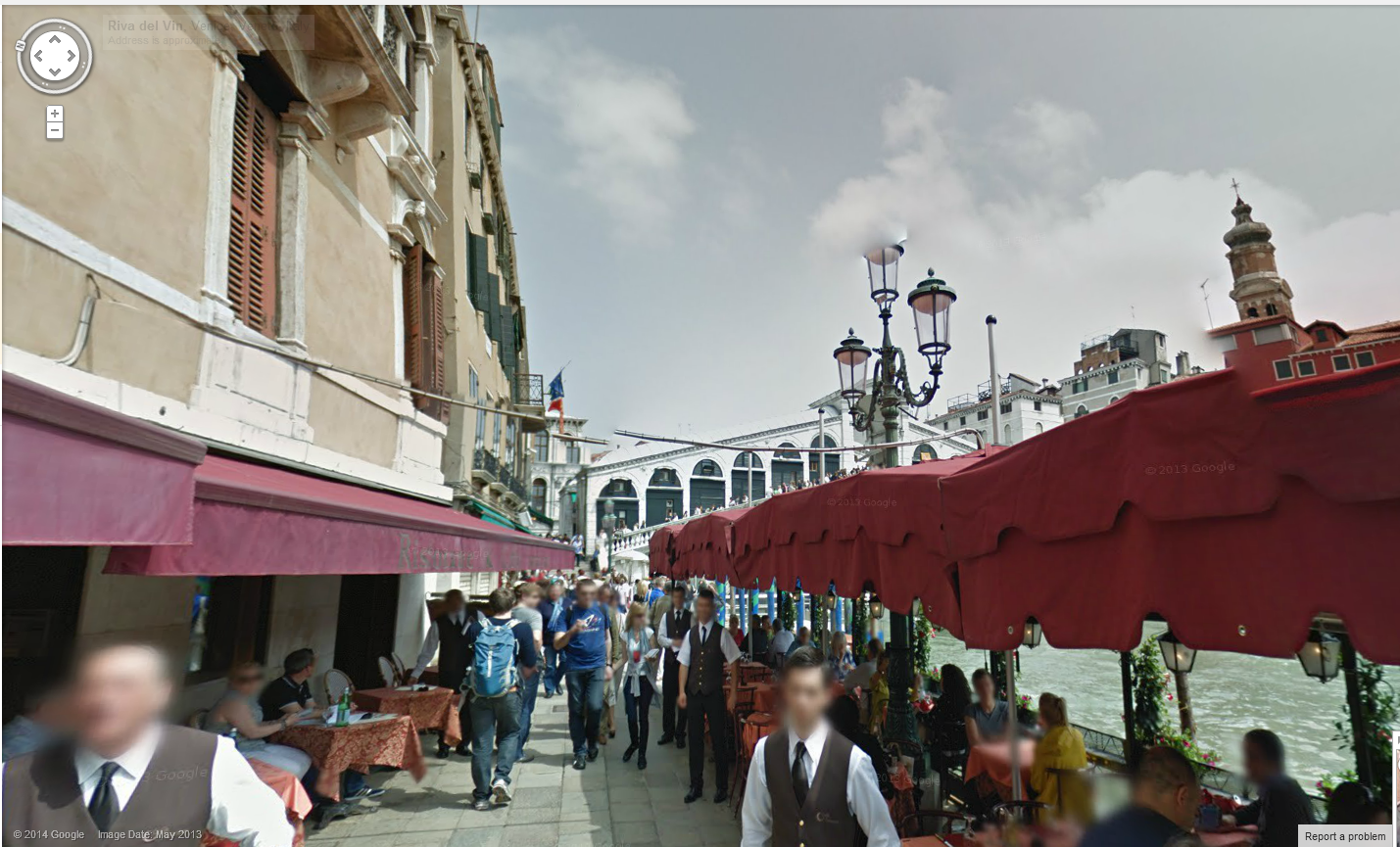
Since the Rialto is a landmark, I decided to have a look on GoogleEarth …


Not the same angle, of course, but close enough. This got me wondering how useful it would be to use GoogleEarth’s street view for fantasy gaming. I’ve used it in the past for a Mystery Men! game, mostly to stage a chase and fight in Chicago IL. That was set in the 1960’s, so not so far in the past that the modern cityscape wasn’t close enough to use “as-is”.

This section of Venice has some nice alleyways that appear to be “walkable” in GoogleEarth, and the buildings don’t seem terribly different from 1826, when the above painting was painted. It makes me think that by picking an old city, and jumping into the old part of that city – the part that’s been kept “oldey-timey” for the tourists – you might be able to turn it into a fantasy city and navigate players through using random encounters and random building tables, and a few set pieces, to facilitate play and give them a better reference point when fights break out or cut purses nab their gold and a chase ensues.

Some other cityscapes that might prove useful …

Carcasonne, France – be sure to have your adventurers stay at the Best Western Hotel le Donjon.

Edinburgh, Scotland

Ghent, Belgium

Prague, Czech Republic

Siena, Italy

Unfortunately, many cities outside of Europe don’t have street views available, such as Algiers’ famous Casbah. You can at least use the street maps, though, and supplement it with old paintings.

You can also use real world landscapes from GoogleEarth for wilderness exploration to provide something more visually stimulating than a simple hex containing a landscape symbol. The NOD hexcrawls use 6-mile hexes. Below, a roughly 7-mile wide chunk of the Himalayas.

Much better than a hex with a triangle in it, don’t you think?

You can zoom in as you play and, depending on the resolution of an area, have a better understanding of the path that has to be taken, and maybe find a convenient spot for a dwarf village or red dragon lair. The pictures can give the players a better understanding of what they’re going through.

You’re walking up a narrow defile. The ground is covered with gravel and boulders, and the slopes tower above you on either side. Strange noises echo down the defile …

And what about random weather? Well, why not just use today’s forecast? How is this bit of the Himalayas doing today? Rainy, fairly warm (well, when this post was written, anyways).

Just a few ideas for leveraging modern technology for better tabletop gaming. If you have any tips and tricks, please wax poetic in the comments, or toss in a link to a blog article you wrote.

The Thirty Years Campaign

Taking of Breisach by Jusepe Leonardo | via Wikipedia

As the land of the Brothers Grimm, Germany seems an obvious inspiration for a fantasy campaign. Castles, tiny kingdoms (or marks, or duchies, or palatinates, etc.), dark woods, tall mountains, Germanic mythology … it all works.

Dungeons & Dragons (or whatever version you prefer), though, has at its heart the idea of the fantasy apocalypse. Adventurers combing through the ruins of ancient civilizations for wealth and fighting the monsters that now control these ruins and wastelands to make the world safe for civilization. Medieval Germany might not be the best place to set a fantasy apocalypse … but how about Germany during the Thirty Years War?

Round about 1618, Catholicism and Protestantism decided to have it out, and Germany was unfortunate enough to be located between the largely Protestant north and the largely Catholic south. As the war dragged on, religion became less of a factor, and the struggle between the Hapsburgs and Bourbons took center stage. Whatever the opposing sides, the German states took the brunt of it. Thousands died from war, famine and disease. Death, war, famine and disease – sounds like the apocalypse to me. Towards the end of the war, witch hunting came into vogue.

A landscape with travellers ambushed outside a small town by Sebastian Vrancx | via Wikipedia

So what do we have? A once prosperous country ravaged by war, disease and famine. Lots of ruins, foreboding landscapes, etc. With all that disease and death, the undead are a natural. Undead that spawn by killing make a great stand-in for plagues. You’re in Germany, so all sorts of fey and dragons make sense. As human civilization retreats, the monsters begin expanding their ranges. You have two formerly Lawful Good religions that have probably become Lawful Neutral (at best) clashing over matters of liturgy and ritual, and opening the doors to Chaos. The goblins have retaken the woodlands! Hobgoblin mercenaries are plundering the countryside! Ruins! Treasure! D&D!

For characters, you can bring in dwarfs from the Alps and elves from the Black Forest, or you can just focus on humans. Germans sure (though German was still a nebulous term – think Saxons and Bavarians and such instead), but the war was also fought by Swedes (led by Adolphus Gustavus), Danes, Bohemians, the French, Lowlanders, Prussians, Transylvanians, the Spanish, the Italians, Scots, Croats, Czechs, Poles, Hungarians, Lithuanians, Austrians … plenty of variety for human characters.

Batalla de Rocroi (1643) por Augusto Ferrer-Dalmau | via Wikipedia

Fighters can be modeled on Halberdiers or Pikemen or, best of all, zweihander-armed landesknechts. Paladins would be great in a setting like this, and Rangers are perfect guides through the wilderness. Most of the armor we’re used to would work fine in this setting. The Thirty Years War also has muskets, pistols and cannon. Oh – and Cyrano de Bergerac!

Clerics can be Catholic or Protestant (and may represent the good members left in those religions, on the hunt for relics to save or destroy) or they can be anti-clerics sewing discontent in the name of Chaos. Jewish clerics would make interesting characters, for sure. Druids could be complicated, and would probably be better modeled as wise women or cunning men from the countryside, or followers of primitive Christianity trying to get back to the basics of life. Cardinal Richelieu is a participant in the wars – wouldn’t he make an interesting patron for a French cleric?

Magic-users could be learned alchemists and pseudo-scientists, or they could be those witches the bishops were hunting down.

Thieves and assassins are naturals in a setting like this – the assassins working for the different political factions, the thieves just being normal folks who have lost everything and had to turn to robbery to support themselves.

So, how about a campaign set in the depths of a fantasy-style Thirty Years War? Bold adventurers delve into ruins in search of loot or holy relics (or both) and battle roving bands of brigands, mercenary companies and the monsters that are emerging from the edges of the empire. Sometimes the adventurers retreat into France or Italy or England to rest, buy supplies and hire retainers. As the campaign continues, they become powers in their own right, rubbing shoulders with kings and princes and generals, and eventually joining in the famous battles of the war – what a great excuse to drag out Chainmail and its fantasy supplement! Maybe the Erlking of the Alps is planning to join the war with his dwarves and elves and trolls and giants? The possibilities are many.

Soldiers plundering a farm during the thirty years’ war by Sebastian Vrancx | via Wikipedia

Twelve Kingly Archetypes

If a campaign goes on long enough, with PC’s gaining more and more power, wealth and ability, there’s a good chance they’ll eventually deal with a king (or queen). But what kind of king? Oh, it could just be a very basic monarch type who hands out a quest in exchange for money or some other royal favor. If the focus is the dungeon, the king doesn’t need to be particularly interesting.

On the other hand, you could leverage the amazing potential kings offer for role playing and campaign play. A monarch can become a very important NPC in a game, hindering and helping the PC’s in a wide variety of ways. A helpful king might have a much less helpful rival in the wings, making him a resource to be protected and making his protectors targets for that rival and his faction. On the other hand, a cruel king might have a more worthy successor somewhere around whom the referee can build a campaign of regime change and revolution. So many possibilities, but only if you put a little time and effort into creating a king worthy of a campaign.

So – today we look at twelve archetypes that you can use in your campaign. Later, I’ll try to do the same for queens later, though clearly these archetypes are as applicable to females and males.
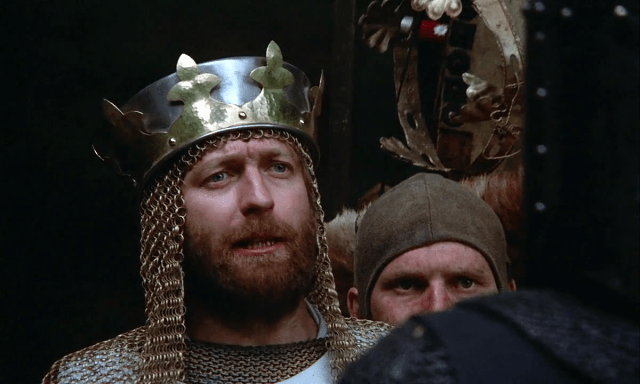
God be praised!

1) THE HERO-KING

The heroic king is a fixture of mythology and folklore. King Arthur is a good example, a storied monarch that founds a nation, protects it, and, after death, is expected to return to usher in a new golden age. In a campaign, you might use the Hero-King when he is a young man, still founding his kingdom, or when he is an old man, largely inactive as an adventurer but commanding a renowned band of knights. Of course, a young adventuring king does present one problem – why is he sending the adventurers on a quest when he might do it himself. Well, even hero-kings have paperwork.

A hero-king is almost certainly going to have levels (at least 9) in a PC class, with fighter, paladin and barbarian being likely candidates.
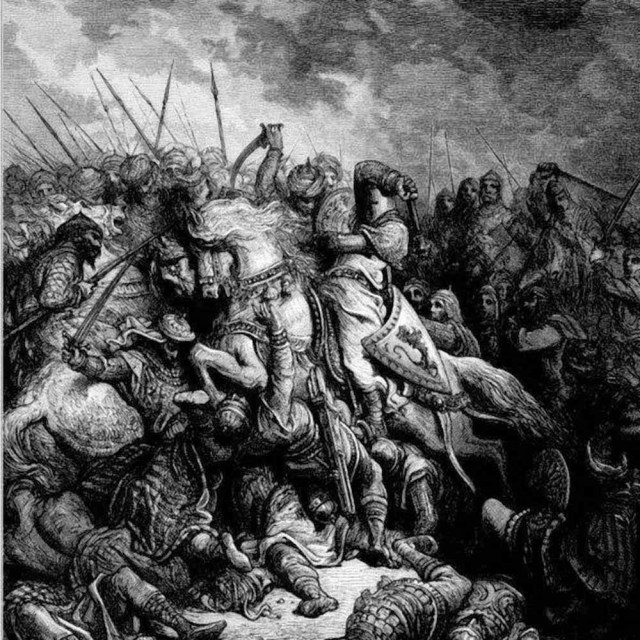
Warrior kings at play

2) THE WARRIOR-KING

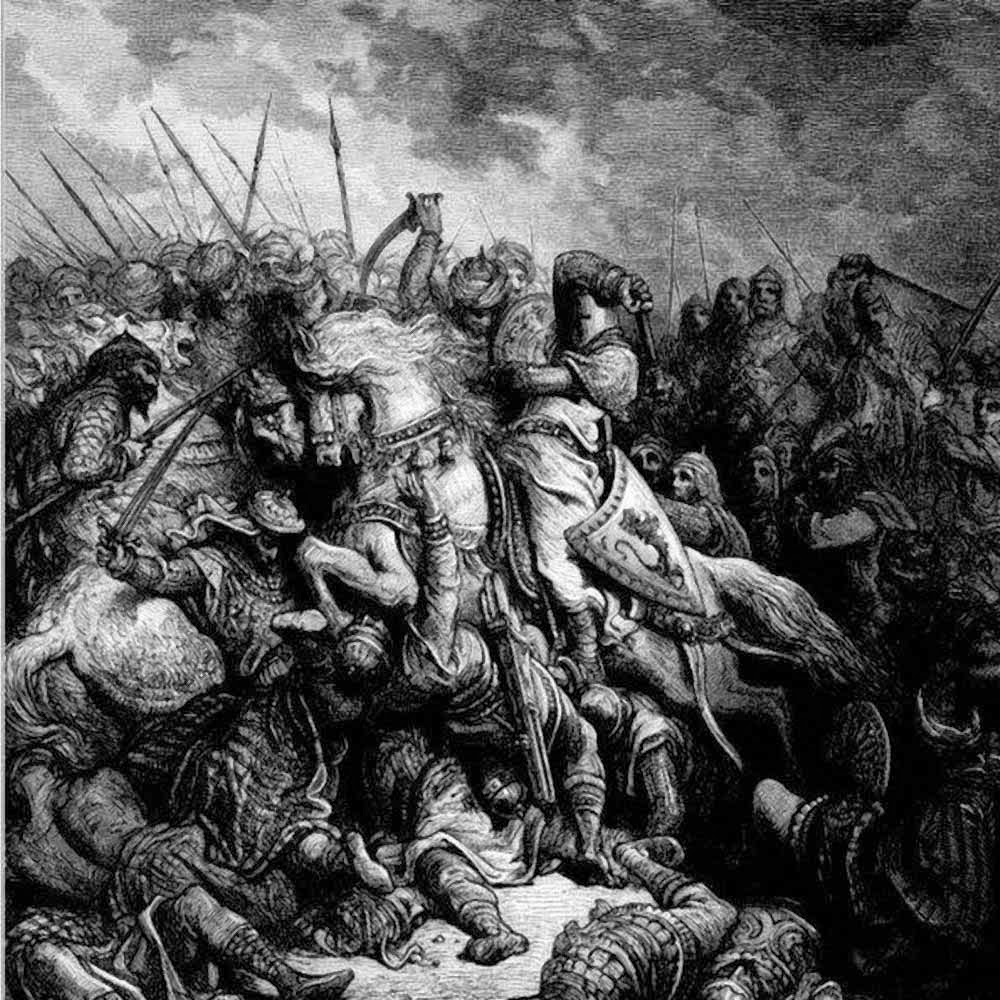
Warrior kings aren’t uncommon in history. After all, it takes a fair bit of war to establish and maintain a kingdom in a medieval or ancient milieu. Famous warrior-kings include Richard I of England (the Lionheart), his rival Saladin (or Ṣalāḥ ad-Dīn Yūsuf ibn Ayyūb to be more precise), Agamemnon, Henry V of England, Gustavus Adolphus of Sweden, Napoleon of France, Genghis Khan and William the Conquerer. All of these men were known for personally leading their followers into battle, and that’s the key to a warrior-king – they actually fight. They may be great strategists and tacticians, or they may just be brave men who like to wade into melee. In either case, they will tend to be resolute and decisive when dealing with adventurers, and they will always be very goal-oriented. Their own past success in battle will tend to make them less accepting of failure on the part of others.

Warrior-kings might be simple aristocrats in armor, but they are more likely to have levels (at least 5 to 6) in fighter or another warrior class.

Bring on the girls!

3) THE LUSTY KING

No man better represents this archetype than Henry VIII of England. The young Henry, for sure, but especially the older, fatter Henry. Lusty kings are all about indulging their passions. They are headstrong, stubborn and do not deal well with being told “no”. Lusty kings are selfish and egotistical, and quests for them may very well be about settling scores and seizing prizes on their behalf. Fail a lusty king and … well, just ask Henry’s wives how that works out (if you have access to a speak with dead spell).

Lusty kings may very well be simple aristocrats with massive egos. If you were to give then class levels, consider barbarian – an enraged lusty king throwing a temper tantrum would be all the more dangerous and entertaining if they have a few levels of barbarian to draw on.

Squeeze every last drop out of those insolent … musical … peasants.

4) THE POLITICIAN KING

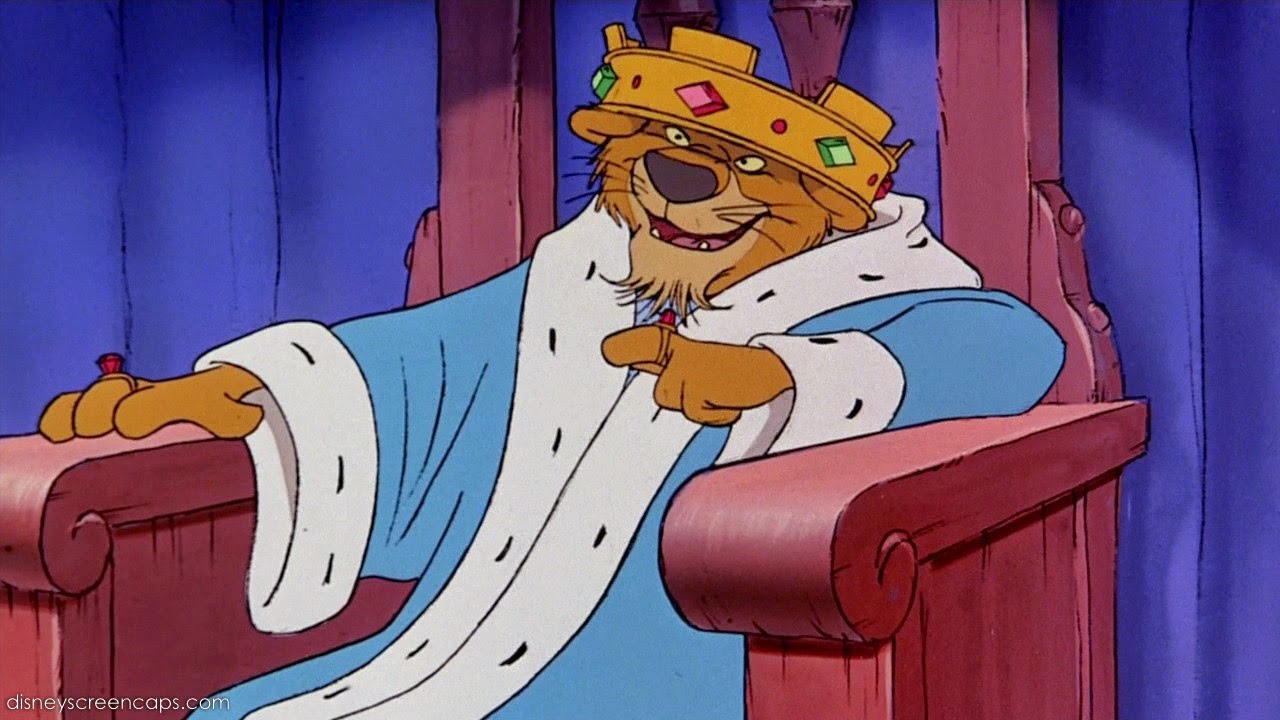
Prince, and later King, John, the brother of the Lionheart, has come down to us through the pen of Shakespeare, as a weakling intent on tyranny. Ustinov made him a sniveling moron in Disney’s version of the Robin Hood tale. The real story is a bit different, though to be fair, he did attempt a coup d’etat while Richard was on the 3rd crusade. Still, he proved an able administrator, if not a brilliant leader during war. John represents the politician king – not powerful or popular enough to have his way, he must bargain and triangulate. He is a master of political, if not military, strategy.

Politician kings can rarely be trusted. They are out for number one, and they are willing to get where they want to be though almost any means (or any means, if they are evil) necessary. They are also patient, and understand that to get what they want, they must make a bargain. Adventurers will be fairly paid for their service, but when they become a liability, they’re dropped like a hot potato.

Politician kings are probably just aristocrats with no, or few, class levels. They probably have higher than normal intelligence, wisdom and charisma scores, for without them they would be poor politicians indeed.
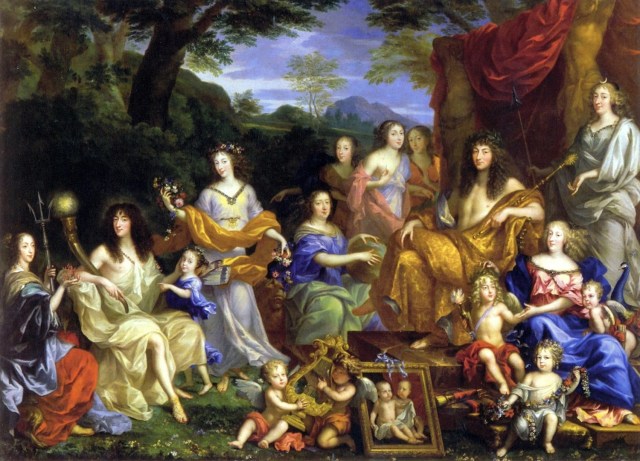
Yeah, he’s every bit as big a d-bag as he looks

5) THE TYRANT-KING

When Europe’s monarchs found themselves in control of nation states, the old relationship between the royal court and the royal subjects changed. With large, standing armies at their disposal, the old parliaments of Europe fell by the wayside, leaving the power of the king virtually unchecked.

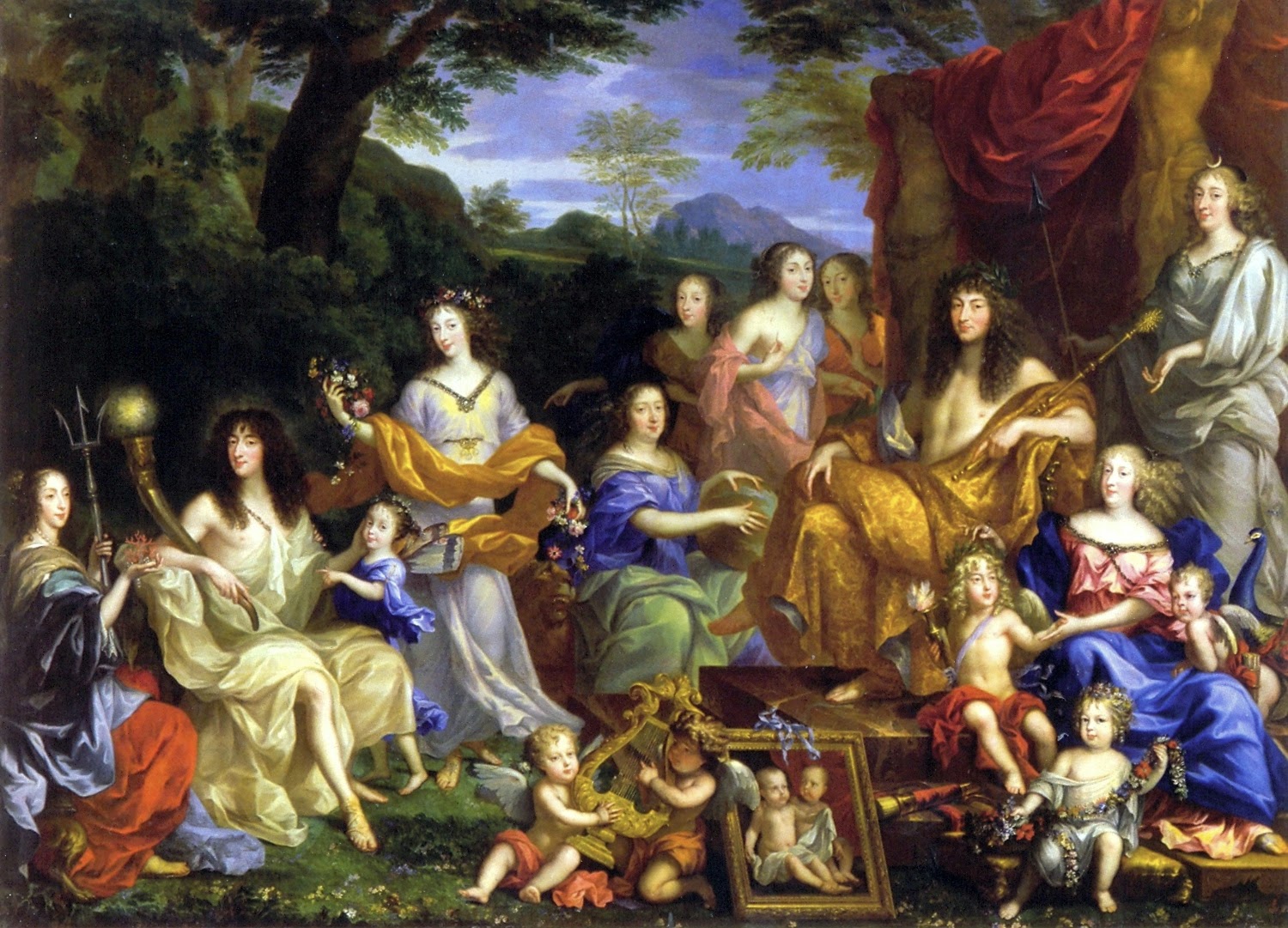
Tyrant-kings, like King Louis XIV, believe they are and must be supreme over all their subjects. There is no possibility of power-sharing, in political terms, and more importantly, there can be no intimation that they are not perfect human specimens. They are, after all, placed on their throne by the will of God, and God would not put an inferior man upon the throne.

Tyrant-kings are no picnic, and adventurers, who represent not only an independent streak but also a potentially competing power center, must almost certainly run afoul of them. Even tyrant-kings who are not egomaniacs must behave that way in their dealings with others to preserve the edifice of the absolute monarchy and stave off rebellion. Tyrant-kings will go to any length to maintain their hold on power, so assume they are at least mildly evil in alignment. Their lack of respect for man-made laws would tend to rule out the lawful alignment – neutral, chaotic neutral, neutral evil and chaotic evil are probably the most likely alignments for tyrant-kings.

Caligula – not the most “safe-for-work” Google search you can do

6) THE MAD KING

While Ludwig of Bavaria (Mad King Ludqig) might be the most famous of the mad kings (which is unfortunate, because later evidence suggests he was not insane and that this was merely an accusation made by his ministers to reign in his spending), there have been many over the centuries. Caligula, Charles VI of France (Charles the Mad), Al-Hakim bi-Amr Allah (the Mad Caliph), and Tsar Ivan IV of Russia (Ivan the Terrible) – all lacking in the whole sanity thing.

Mad kings are unpredictable, which means they can be the adventurers’ best friends one moment, and their worst enemies the next. This makes them tricky patrons, but terribly useful to game masters, as they can generate all sorts of fodder for the campaign. Maybe the best way to model a mad monarch is to randomly determine their alignment whenever the adventurers meet them, or maybe begin with a good alignment of some sort, and then begin making some sort of insanity check for the monarch each month. Maybe their alignment changes a bit, maybe it stays the same. If it does change, only change it one step. As time progresses, make those checks once a week, and allow more severe alignment changes. Eventually, the king will be checking each day, with alignments being almost random – though never Lawful.

The Wisdom of Solomon

7) THE MAGICAL KING

Solomon is a by-word for Wisdom – just ask Billy Batson. He is the perfect model not only for a wise king, but for the magical king, for Solomon was by all accounts a magician. He could control devils and genies and the like, and raise palaces in a day and even convince that super-fine Queen of Sheba to drop by for a visit.

A magical king is probably a magic-user rather than a cleric. Solomon was interesting in the stories because his great magical power eventually turned him against his patron, God, and led to his downfall. Fantasy game campaigns are better served by a story arc of this sort than by just sticking a 20th level magic-user on a throne and having him send the adventurers on quests he could probably better perform himself.

The Queen’s okay, but the king … not so much

8) THE WIMP-KING

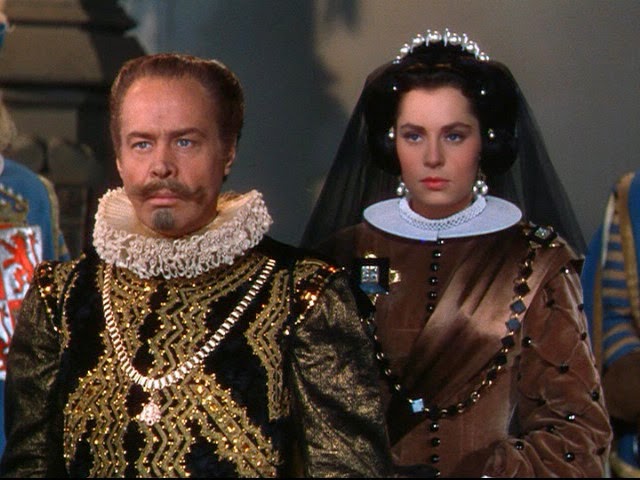
Not every king is strong and resolute. Many weak kings – either weak physically, mentally (but not to the point of madness – see above) or morally – have sat on thrones, at least for a while. Boy kings, kings henpecked by their more willful queens, and kings controlled by their advisers are included in this category, as are kings who would be better off if they were being controlled. The depiction of Phillip III of Spain in The Adventures of Don Juan is a great model for this sort of king.

When there is no leadership on the throne, a kingdom soon falls into chaos. What a wonderful place for adventurers to play. The value of a weak king on a throne is probably that his kingdom is embroiled in revolution, rivalry and brigandry – the perfect spot for a brave band of plunderers to work. Those adventurers might also be cast into the role of protecting the kingdom as it disintegrates, hoping to keep it in one piece until a new king can take the throne.

Marcus doing his impression of a Jack Kirby character – Image found HERE

9) THE PHILOSOPHER-KING

Marcus Aurelius has come down in history as a philosopher king, the real-life embodiment of Plato’s philosopher kings that ruled over his perfect society. Setting aside how well academics do when put into positions of power, the ideal philosopher is wise, logical and calm – an able administrator and a preserver of justice.

Boring!

Well, not necessarily. A philosopher-king might rule over a civilized, peaceful land, but in a fantasy world, that peaceful land may have chaos lapping at its shores. Where there is chaos, there is something for adventurers to do – and in the case of a kingdom ruled by a philosopher-king, a safe place to return to when they are done.

As a patron, a philosopher-king is going to be trustworthy and even-handed. Adventurers will have to watch what mischief they get into, as he might not be inclined to tolerate trouble in his kingdom, even by useful allies. Philosopher-kings are probably lawful good or lawful neutral, since they rule within the law rather than above it, and since they generally show an interest in the well-being of their subjects.
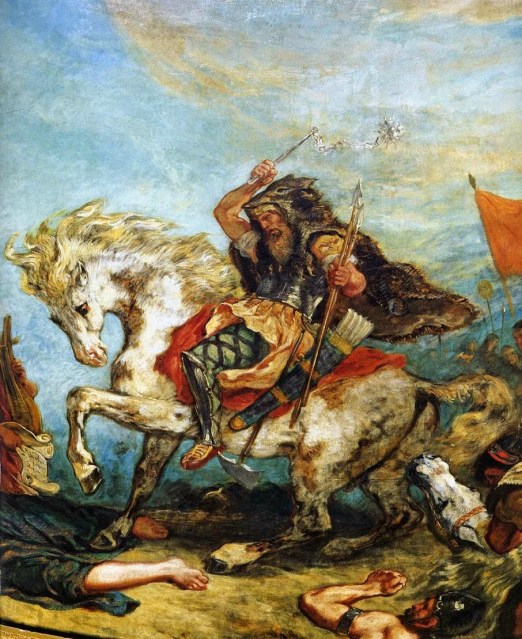
Not the nicest fellow in town

10) THE VILLAIN-KING

While the tyrant-king is willing to do evil to maintain his power, and the mad king might well do evil because he has little control over himself, the villain-king is just out and out evil. Villain-kings are needlessly cruel – they hurt people because they enjoy it. They are treacherous and murderous and in all ways not fit company for paladins. Attila the Hun got the reputation for being a villain-king, and Claudius, slayer of Hamlet’s dad, could also fit the bill.

If a villain-king is the patron of a band of adventurers, they can at least take solace in the knowledge that there is nothing they can do that will offend him morally or ethically. On the other hand, the man is not to be trusted, especially if the adventurers seem to challenge his authority in any way shape or form. Because villain-kings are so cruel and despicable, their lives are constantly being threatened. In a fantasy game, it’s likely they’ll need class levels (and extra hit points) just to keep them alive.
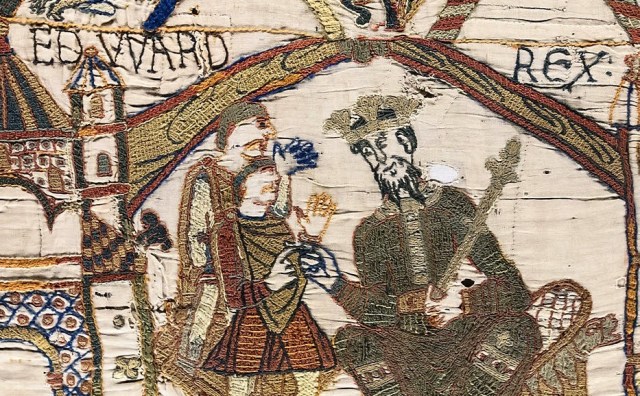
Not only saintly, but apparently huge – looks like he’s winking in this shot – “Say no more, nudge nudge, wink wink”

11) THE SAINT-KING

In the real world, a sainted king often received his sainthood for primarily political purposes. Everyone knows that two of Saint Louis’ miracles were card tricks, after all (yeah, I ripped off Father Guido Sarducci). Sainted kings include St Louis of France, St Edward the Confessor, St Alfred the Great, St Stephen I of Hungary and St Charlemagne of France.

In a fantasy world, of course, a sainted king can really be a saint, or at least a trusted ally of the higher (or lower) powers. The saint-king might be a cleric or druid, but they might also simply possess great spiritual powers, a la a demigod in Deities and Demigods or a saint in “Setting Saintly Standards” (Dragon Magazine, Nov 1983).

Assuming the saint-king is lawful good in alignment, he can be a powerful ally and a powerful enemy of a band of adventurers. He’s good, so when they’re serving him they have access to his powers. But when adventurers start acting like, well, adventurers, they may find themselves in a sticky situation.

I bid you … welcome

12) THE MONSTER-KING

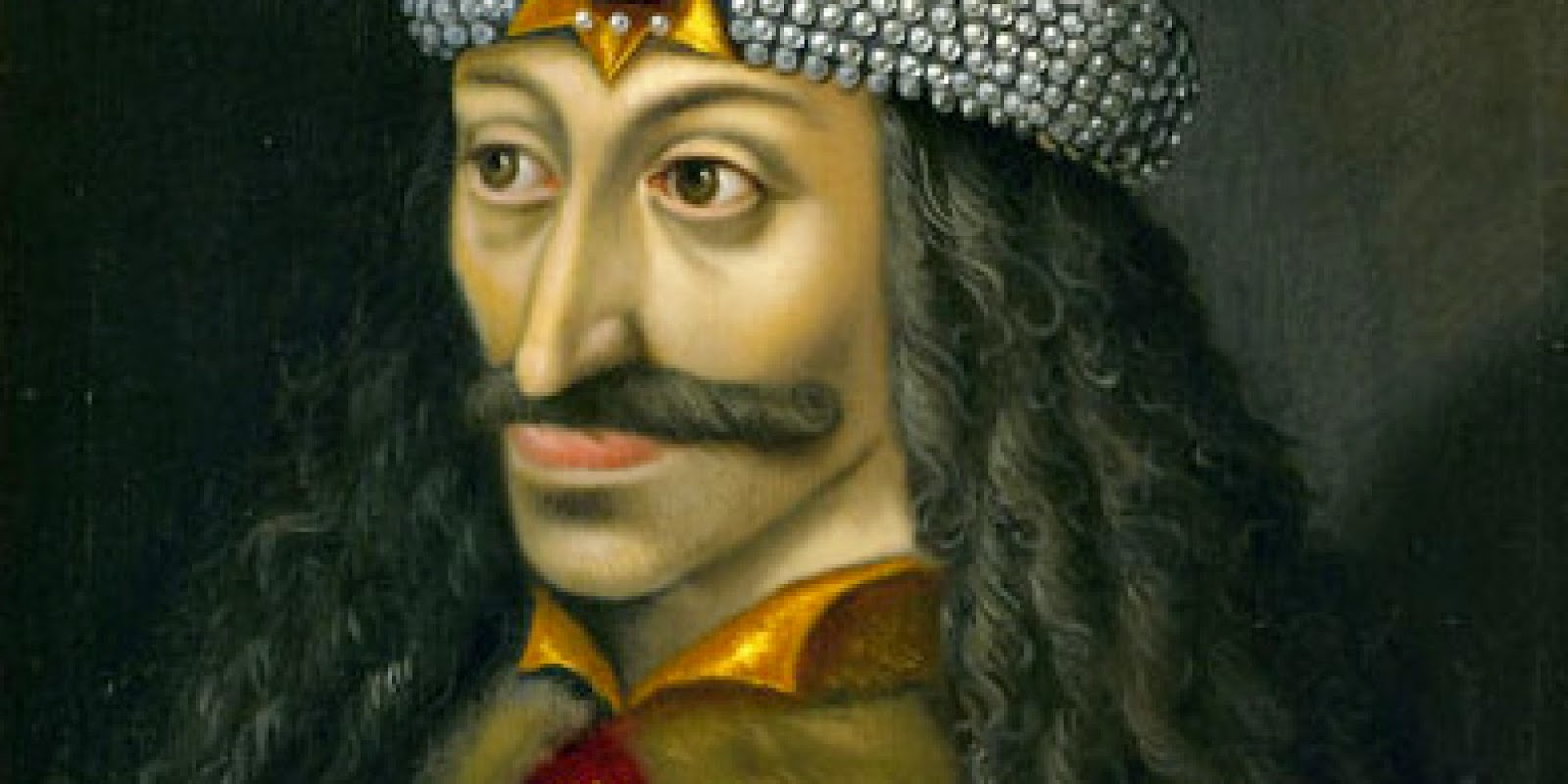
Vlad Tepes. Enough said. Okay – he was only a count, and in reality he was just a homicidal maniac (at least, from what I gather), but in a fantasy milieu we know that he became a vampire.

A monster-king is literally that – some creature taken from the pages of a monster book and sat upon a throne. In NOD, I have a gynosphinx ruling the pseudo-Egyptian city-state of Ibis, and in the Ende hexcrawls I’m finishing up, four rival city-states are ruled by nagas.

The monster king probably exhibits some aspects of the other archetypes provided here, and those should be referenced based on the monster’s alignment and inclinations. They make obvious foes for a band of adventurers, of course – turning the royal palace into an above-ground dungeon for a group powerful enough to challenge the legal ruler of a kingdom.

Hopefully these archetypes will aid you in creating some memorable monarchs to help and hinder the adventurers in your game.

The Ocean is the Abyss

I like the idea of taking the building blocks of D&D and then twisting it around a bit. I did a post some time back about changing the planes into different time periods. In my own NOD setting, I combine the concept of the planets with the planes, and I put Hell smack dab in the center of the world, fueling all those evils that haunt the dungeons of the world.

Today I was thinking about the idea of the Leviathan, and it occurred to me that it might be interesting to combine a campaign world’s oceans with the concept of The Abyss – i.e. the plane of chaotic evil demons. The demons dwell in the absolute black, inky depths, and their minions occupy the continental shelves and lurk just beneath the waters that lap the shores of the world.

Imagine the place the evil sea races would hold in such a campaign world. They would be more directly the servants of Chaos (i.e. the Sea) in its war against Law (i.e. the Heavens), with the land the battleground between the two. Orcs, despite their presentation in Tolkien and thus D&D, seem to have had a connection to the sea in folklore, and it would be simple enough in a campaign world to make this connection more implicit – making them Chaos’ “beach head” against the air breathers.

Many myth systems personify Chaos and the Sea as one in the same entity, and make it the mother of monsters. In the old reckoning of the ancient Israelites, the land masses floated in the ocean, the Abyss, and this would place that cold plane of evil beneath the earth, and thus in a wonderful place to disgorge horrors into the equally inky black landscape of the campaign world’s dungeons.

Star Apocalypse

Image by NASA via Wikipedia

The universe (or should that be Universe) is going to die someday. Well, maybe – I’m no physicist – I don’t even play one on TV. But let’s assume that all the stars in the sky will someday cool or collapse, and leave a universe very short on energy. All the star empires and rogue traders will be left to scavenge what they can from self-sufficient star bases and colonies, plundering once fertile planets that are now cold and almost lifeless, etc.

In other words – Star Apocalypse.

The idea here is to combine the two gaming genres of Traveller-style sci-fi and Gamma World-style post-apocalyptic gaming. The main point would not be the gathering of power, but of just keeping ahead of the cold, entropic embrace of Death. Every alien species and human star empire and god-like superbeing in the universe is dying, and the players are just trying to outlast them.

The best rules for such a campaign would probably sci-fi rules modified to allow for scarcity and the idea that the best and brightest are gone and those who remain maybe do not understand the technology they use quite as well as they should.

Where would the adventures take place? Isolated colonies (under glass domes, of course) and star bases eager for trade, but wary of strangers (think in terms of isolated towns in Westerns), ruins of ancient civilizations, and drifting hulks (as in spaceships) in deep space. The play would often be dungeon-style – exploring a physical space and battling monsters and traps, but the drivers would be the need for supplies – energy, fuel, food and water, replacement parts for the spaceship. Of course, there could also be a meta-driver – the belief that some super-scientist somewhere built a portal that allows one to leave the dying universe for a parallel universe that remains young and vital. This Shangri-la could be the overall focus of the campaign – something akin to Battlestar Galactica‘s plot of a caravan of spaceships seeking Earth.

Just a thought – and probably not an original one at that.

Bedevil Your Players with NPCs

OMG – Did you hear what the magic-user said about the illusionist?

While city-based adventures can be a nice change of pace in RPG games that spend most of their time in dungeons, I think that cities and towns should usually be safe places for adventurers to visit. After all, of the three setting types in most fantasy games – settlements, wilderness and dungeons – two of those three are supposed to be geared towards killing the players. Settlements should be a place where adventurers can heal, resupply and prepare for the next delve into danger (well, except at night, when the vampires, assassins, chaos cultists and thieves are stalking the streets). Without the chance to recover and build, how are they going to do what the game intends them to do?

That being said, there is no reason why settlements cannot present new and interesting challenges to the players. Challenges is the key word here , not dangers. Challenging NPCs can make a visit more interesting without killing or harming the characters physically.

Here are a few ideas for obstreperous NPC’s to bedevil the player characters …

Obstreperous NPCs

1. The Spy – Always nosing into the adventurer’s business, and selling their secrets to interested parties (i.e. the man in the shadows). Spies can help move an overarching plot that develops slowly, and eventually become a source of adventures.

2. The Gossip – Spreads rumors and gossip around town concerning the adventurers, and not always that accurately. The gossip can tip off rivals* and piss off neutrals and allies, making life more difficult and expensive for the adventurers.

* Rival adventurers, of course – I strongly suggest rolling up one or two rival adventuring parties. They use the same town as their base of operations, and thus bump into the adventurers in the local tavern and compete for hirelings. More importantly, when adventurers are trying to clear out a dungeon, the rivals might get to key rooms first, or even run into the adventurers as a wandering monster.

3. The Buffoon – An idiot who wants to help the party, but his help always turns out to hinder (e.g. Gilligan or Joxer the Mighty). The idiot really does mean well, so non-evil characters may have a hard time getting rid of him.

4. The Braggart – A loud-mouth braggart who challenges the PCs at every turn, but couldn’t possibly handle him- or herself in a duel. Unfortunately, the braggart can make things tough on the PCs if they fight back – perhaps their father is wealthy or powerful.

5. The Nemesis – Counts one or all of the PCs as her enemies, to be crushed, destroyed, demoralized or generally messed with. The reason lies in the past, and may be an event so minor the PCs don’t remember doing it. Naturally, the nemesis does not attack openly, and may even appear as a friend and ally. The nemesis attacks through others, and has friends in high places.

6. The Fanatic – The PCs biggest fan, a person with no life of his or her own who has latched onto the PCs, living vicariously through their adventures. The fanatic brags about them, which can create problems with rivals, and begs for chances to adventure with them. If the fanatic’s illusions are shattered, they will turn quickly against their former idols.

7. The Mixer – Likes to start trouble, especially between the adventurers and their allies or retainers, or within the ranks of the party itself. The mixer is cunning and seemingly harmless and innocent, and almost always poses as a concerned advisor and friend.

8. The Schmuck – The schmuck is genuinely likeable and good … and completely hopeless. They are always in need of money or help because they bit off more than they can chew (gambling debts, a fight with a bully, trouble with the tax man or loyal aristocracy, etc.). No matter how much the adventurers help, the schmuck will always screw it up or require more help.

Think about introducing one or two of these annoyances in your next city adventure, and spend enough time on them to make them worthy of being reoccurring NPCs in your game.

Who’s Under that Mask?

You’ve fought your way into the evil lord’s citadel or the inner sanctum of the chaos cult. You’ve eliminated the guards. You are locked in battle with the masked overlord of all evil and in a brief pause in the fighting reach out and snatch away their mask. You gasp as you see …

1-2. The Archduke or Archduchess

3-4. Your doppelganger (literally, a doppelganger in your form)

5-6. A faceless horror, or something with tentacles so the party can say, “Seriously, more Lovecraft?”

7-8. A goblin (he’s standing on another goblin’s shoulders)

9-10. Your old teacher

11-12. Your ex-lover or ex-mate or ex-best friend who always secretly resented you

13-14. Your mom!

15-16. The captain of the guard

17-18. The sergeant of the guard

19-20. Second man-at-arms from the left at the front gate who, now that you think of it, was giving you a funny look when you entered the city

21-22. The hunchbacked hedge wizard who hawks magic charms in the town square – turns out he’s a 15th level magic-user

23-24. The high priest of the local Law Cult

25-26. The pirate lord of the western seas

27-28. The queen of the gypsies

29-30. A sleestak

31-32. A mannequin [gasp]

33-34. The mummified face of some the ancient pharaoh on display in the museum

35-36. Nosferatu!

37-38. The princess royal

39-40. A ghoul [chomp]

41-42. Your evil twin brother or sister who was thought to have died in the barn fire

43-44. The head of the local merchant company

45-46. The local guildmaster of thieves

47-48. A bearded devil

49-50. A polymorphed fire giant, and that mask was what kept the spell in play

51-52. A brilliant light (choose a color) in place of a head that messes with your mind

53-54. A succubus – pucker up!

55-56. A tangle of vines and two emerald orbs for eyes

57-58. An elf lady knight from the far woodlands

59-60. A flesh golem with a psychic’s disembodied brain sutured to its head

61-62. A serpent man with a cobra’s ability to spit

63-64. The undying caveman

65-66. A grey alien with a headband of pain of dominance

67-68. A 15th level amazon

69-70. The wizened old magic-user you thought was your greatest ally

71-72. The dark pope of the holy assassins

73-74. A demi-god or goddess

75-76. A quasi-god or goddess

77-78. A primordial ooze thing that collapses into a blob of destruction

79-80. That dummy used by the seemingly harmless bard in the local tavern

81-82. A super-intelligent gorilla

83-84. A really stupid and confused gorilla

85-86. A heavily scarred visage

87-88. The twisted face of a maniac

89-90. A 15th level duelist who is actually left-handed

91-92. The emperor everyone thought was lost

93-94. The mad genius that designed the automaton palace guards

95-96. An astral deva that has taken Lawful Good to an unhealthy level

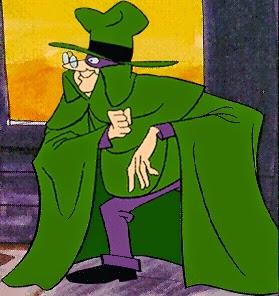
97-98. The Riddler (unfortunately played here by John Astin, not Frank Gorshin*)

99-100. The robe collapses, because the meme has been revealed

* Look, I love Astin, but just not as the Riddler

Adventurers Face Death, Yes, But Also Taxes

Image found HERE – Click through for more info on medieval taxes

We all know the formula. Start in town, buy equipment, journey into the unknown, hopefully find lots of money, come back to town, buy more and better equipment (and maybe healing), rinse and repeat.

I have found that in practice, there are three ways this can go. The first, of course, is perfectly. More often, adventurers either come back without enough to support themselves in the hyper-inflationary economy they’re all creating in town, or they come back with more dough than they can spend (assuming they’re like mine and stubbornly refuse to hire men-at-arms).

It seems like the latter might have been more of a problem than the former in the old days. In AD&D, Gygax introduced “training costs” to, as I understand, siphon money away from successful mid- to high-level adventurers.

Another option is the bane of man’s existence from the earliest days of civilization … The Taxman!

Folks who regularly read the blog will know I was recently delving into the pages of Adam Smith’s Wealth of Nations. He does a long chapter on taxes, and as I was reading about the myriad forms of taxation that existed in the 18th century, it occurred to me that a random taxation table could be fun, with adventurers never sure just how the local prince was going to steal their money.

The idea here, of course, is not to make life needlessly difficult for adventurers. If they’re relatively poor, the taxes will be relatively light, and an inability to pay them will result in being impressed into doing work for the sovereign, which can be used as a way to introduce new adventures and even entire campaigns (Robin Hood, anyone?). Adventurers tend to be outsiders and ne’er-do-wells anyways (why else are they delving in dungeons instead of holding down respectable jobs?), so another reason to bristle at authority should help to keep them on the adventuring path.

To get this rolling, we need to determine how heavy the taxation is in the locality, who is collecting it, and what the actual taxes are.

HOW HEAVY ARE THE TAXES?

Different kingdoms/city-states/whatever have different expenses, and folks who spend tax money tend to overspend rather than underspend.

Each community will impose 1d4+1 taxes (see below) on adventurers.

THE TAXMAN

The tax collector is usually a normal human, but might also be a captain (5 HD) or an aristocrat (3 HD). In rare cases (1%) he is a fighter or thief of 4th to 7th level.

The tax collector is not a popular fellow, so he is always accompanied by 1d6+4 men-at-arms (light infantry usually).

Not all tax collectors are created equally, of course, so we will differ them by their alignments. Roll as follows:

LAW vs. CHAOS (D6)

1-2. Lawful = Cannot be bribed or frightened easily from his appointed duties

3-4. Neutral = Can be bribed (Charisma check, -2 penalty) with an amount of money equal to half the taxes owed; can be frightened, but will return with triple the number of men-at-arms

5-6. Chaotic = Can be bribed (Charisma check) as above, but there is a 1 in 6 chance he will return later and pretend no taxes were ever collected; can be frightened, but will hire 1d6 assassins or thieves to get revenge.

GOOD vs. EVIL (D6)

Note, if you use the three-fold alignment system, consider Good to be implicit in Law above and Evil to be implicit in Chaos above.

1-2. Good = Is willing to fudge the tax bill down a bit (maybe 10%) if people look hard on their luck.

3-4. Neutral =No special behavior.

5-6. Evil = Will overestimate taxes by at least 10% if one is not very careful.

Where’s the Taxman?

The taxman is usually stationed at the front gate of a stronghold, village, town or city, but may be encountered as a random encounter outside of town, but rarely in the wilderness.

THE TAXES

1. Tax on coins: A tax of 1d4 x 5% on all coinage carried is assessed.

2. Tax on cargo: A tax of 1d6 cp is assessed for every 20 pounds of goods, above and beyond one’s own clothing, they carry into the settlement. If the goods are “valuable”, this is increased to 1d6 cp per pound.

3. Tax on arrows and bolts (and quarrels): The arrow tax is 1d6 cp per arrow, bolt or quarrel. There is a 1 in 6 chance they will also assess a 1d6 cp tax per foot length of bows and crossbows. This protects the local bowyers and fletchers.

4. Tax on iron and steel: A surtax of 1d6 cp is assessed for every pound of objects composed mostly of iron or steel. This protects the local iron industry.

5. Tax on copper: A surtax of 1d4 cp per pound of copper (including coins), bronze and brass carried into the settlement.

6. Tax on silver: A surtax of 1d4 sp per pound of silver (including coins) and electrum carried into the settlement.

7. Tax on gold: A surtax of 1d4 gp per pound of gold (including coins) and platinum carried into the settlement.

8. Tax on gemstones: A tax of 1d4 x 5% of the value of gemstones carried into the town; those who cannot pay have their stones confiscated until they can pay, but must pay an additional 10% fee for failure to pay and for storage.

9. Tax on magic items: Obviously, this requires the presence of a person in the tax collector’s retinue who can cast detect magic, or obviously magical items. A premium of 10 gp per item is collected, and items of a demonic or diabolic nature will be confiscated by local church authorities, with 10% of the item’s value (determined by the church authorities) to be paid to the original owners, unless they are determined to be Chaotic (Evil), in which case they are clapped in irons and sent straight to the dungeon.

10. Tax on magic-users: Those who appear to be magic-users (the spellbook is a dead giveaway) must spend 1d6 nights patrolling with the night watch, or else must buy out of this duty at a rate of 1d10 sp per night.

11. Tax on holy symbols: Foreign holy symbols are assessed a blasphemy tax of 10 sp (wooden or stone or common metal holy symbols) or 10 gp (precious metal holy symbols). Each healing spell cast in court on behalf of the king/mayor/prince/etc. is the equivalent of 5 sp of the assessed tax.

12. Tax on strength: Settlements always have hard work that needs doing on civic projects. Characters who look sturdy (i.e. Strength of 10 or higher) are impressed into a work gang for 1d6 days, or else must buy out of this duty at a rate of 1d10 cp per day for able-bodied folk, 1d10 sp per day for muscular folk (i.e. Strength of 13-15), and 1d10 gp per day for the truly mighty (i.e. Strength of 16+). If a creature does not look as strong as he or she is, use your best judgment as  TK as to whether this applies to them.

13. Tax on beauty: The local ruler has an eye for beauty; those with Charisma scores of 13 or higher are tasked with attending court in their finery (or finery will be provided) for 1d6 days while in the settlement to impress visitors, or else must buy out of this duty at a rate of 1d10 sp per day.

14. Tax on feet: A tax of 1 cp per unshod foot/hoof, 1 sp per sandaled or shoed foot or shoed hoof or 1 gp per booted foot is assessed. If your game includes centipede men, they’re going to hate this!

15. Tax on wheels: A tax of 1d6 sp per wheel is assessed.

16. Tax on beards: The locals have had trouble with dwarves, and so they assess a tax of 1 gp per inch of beard length on all (not just dwarves) who enter town. If you don’t know how long a character’s beard is, guess or roll randomly. If the dwarf’s player has ever mentioned looking like “the dudes from ZZ Top”, he’s going to regret it.

17. Tax on warriors: The locals need strong warriors to deal with the humanoids and monsters of the wilderness. Anyone who looks the part of a warrior (leather armor or more) is impressed into patrol duty for 1d6 days, or else must buy out of this duty at a rate of 1d10 sp per day.

18. Tax on finery: Jewelry, silks, mithral, adamantine, cloth-of-gold and the like are assessed a tax equal to 1d4 x 5% of their value.

19. Tax on hides and pelts: Hides and pelts are assessed a tax of 1d10 sp for animal skins, 1d10 gp for magical beast skins (and similar) and 1d10 pp for dragon skins. If the tax cannot be paid, the hides are confiscated into the treasury of the settlement or king.

20. Tax on retinues: In order to support the local labor market, a tax of 1 sp per hireling or man-at-arms is assessed.

You’ll note that there is no tax on thieves’ tools – that’s because they’ll probably just arrest a person who has them or toss them out of town.

If taxes cannot be paid, the offenders are either barred entry to the settlement and its environs (i.e. sent back into the wilderness under armed guard) and threatened with being declared outlaws if they again return without their assessed taxes, or is taken into custody until they can work their bill off (i.e. a great adventure hook!).

The Greyhawk Tomb of Horrors Company – A Campaign Notion

I’m still reading Adam Smith’s Wealth of Nations (it’s not a small book), and I’m now reading about the various merchant companies that held monopolies to trade with various colonies of the U.K. This got me thinking about using a similar concept in fantasy rpg’s.

In this case, you would have countries or city-states establish control over a mega-dungeon and the immediate region around it. This actually makes some sense, when you consider the incredible wealth (monetary and magical) held in a mega-dungeon. For a fun campaign, you would probably want to establish multiple mega-dungeons in a campaign world, with different countries controlling them.

Each of these mega-dungeons has a different adventurer company that holds a monopoly on its exploration and exploitation, with a percentage of all proceeds going to the government that gave it the charter. The adventurer company might be a joint stock company, in which different NPC’s (wealthy merchants, sinister types, aristocrats, and the adventurers themselves) hold stock, with an annual dividend based on how well the adventurers have done in their explorations. The adventurer company could have multiple adventurers in it, of varying levels – so players could have multiple adventurers, bringing new ones in at times as old adventurers die off or rise to higher levels and need apprentices and squires.

Moreover, as the adventurers hit the name levels, the strongholds they establish could be in the region of the mega-dungeon, as a means for the company to control the area. Of course, rival nations would want to wrest control of the dungeon away from the company and its country, so now wargaming can enter into the campaign. The adventurers might also get involved in conquering other mega-dungeons, and even establishing their own companies to exploit them.

As adventurers become more wealthy, they can attempt to buy more shares in the company, maybe rising the level of directors and having to engage in all the intrigue that surrounds big money and royal courts.

I imagine this could make for a fun framework for running a campaign.

Human and Humanoid Armies, the Adam Smith Way

I have of late been reading Adam Smith’s Wealth of Nations. It’s a great book, and very enlightening, not only for his insights into the operation of economics, but also for his asides regarding the evils of slavery, the American revolution and, in a latter chapter, his investigations into war.

Specifically, his investigations into the costs of maintaining an army in times of war and peace. He doesn’t get too deep into the weeds, of course, but reading Book V: Chapter I: Part I reminded me a bit of reading the demographics that Gygax inserts, piecemeal, into the Monster Manual and elsewhere in the AD&D canon.

The chapter in question regards the costs to a sovereign in maintaining an army. It gives some ideas on different phases of human development, and their effect on manpower and expense.

Smith divides human development into three categories, with the earliest being hunters, the second shepherds and the third farmers and craftsmen. In Gygaxian, D&D terms, we could think of the humanoids (orcs, goblins, etc.) and human tribesmen as hunters, the human nomads and dervishes as shepherds, and the settled humans and demi-humans as the farmers, husbandmen and craftsmen.

I found the following paragraphs interesting:

“Among nations of hunters, the lowest and rudest state of society, such as we find it among the native tribes of North America, every man is a warrior, as well as a hunter. When he goes to war, either to defend his society, or to revenge the injuries which have been done to it by other societies, he maintains himself by his own labour, in the same manner as when he lives at home.”

“An army of hunters can seldom exceed two or three hundred men. The precarious subsistence which the chace affords, could seldom allow a greater number to keep together for any considerable time.”

In other words, most humanoid encounters are going to be with warriors and their wives and children. To put it another way, the wild folks you encounter in the wilderness in D&D are all warriors. He would also place the size of these tribes at a maximum of 300 warriors.

“Among nations of shepherds, a more advanced state of society, such as we find it among the Tartars and Arabs, every man is, in the same manner, a warrior. Such nations have commonly no fixed habitation, but live either in tents, or in a sort of covered waggons, which are easily transported from place to place. The whole tribe, or nation, changes its situation according to the different seasons of the year, as well as according to other accidents. When its herds and flocks have consumed the forage of one part of the country, it removes to another, and from that to a third. In the dry season, it comes down to the banks of the rivers; in the wet season, it retires to the upper country. When such a nation goes to war, the warriors will not trust their herds and flocks to the feeble defence of their old men, their women and children; and their old men, their women and children, will not be left behind without defence, and without subsistence. The whole nation, besides, being accustomed to a wandering life, even in time of peace, easily takes the field in time of war. Whether it marches as an army, or moves about as a company of herdsmen, the way of life is nearly the same, though the object proposed by it be very different. They all go to war together, therefore, and everyone does as well as he can. Among the Tartars, even the women have been frequently known to engage in battle. If they conquer, whatever belongs to the hostile tribe is the recompence of the victory; but if they are vanquished, all is lost; and not only their herds and flocks, but their women and children become the booty of the conqueror. Even the greater part of those who survive the action are obliged to submit to him for the sake of immediate subsistence. The rest are commonly dissipated and dispersed in the desert.

The ordinary life, the ordinary exercise of a Tartar or Arab, prepares him sufficiently for war. Running, wrestling, cudgel-playing, throwing the javelin, drawing the bow, etc. are the common pastimes of those who live in the open air, and are all of them the images of war. When a Tartar or Arab actually goes to war, he is maintained by his own herds and flocks, which he carries with him, in the same manner as in peace. His chief or sovereign (for those nations have all chiefs or sovereigns) is at no sort of expense in preparing him for the field; and when he is in it, the chance of plunder is the only pay which he either expects or requires.”

“An army of shepherds, on the contrary, may sometimes amount to two or three hundred thousand. As long as nothing stops their progress, as long as they can go on from one district, of which they have consumed the forage, to another, which is yet entire; there seems to be scarce any limit to the number who can march on together.”

In D&D terms, this applies to nomads and dervishes, and maybe those barbarian tribes a high level barbarian can summon. Smith would again make warriors of all the men in the tribe, and a even a few women.

“Agriculture, even in its rudest and lowest state, supposes a settlement, some sort of fixed habitation, which cannot be abandoned without great loss. When a nation of mere husbandmen, therefore, goes to war, the whole people cannot take the field together. The old men, the women and children, at least, must remain at home, to take care of the habitation. All the men of the military age, however, may take the field, and in small nations of this kind, have frequently done so. In every nation, the men of the military age are supposed to amount to about a fourth or a fifth part of the whole body of the people.”

So now we’ve reached settlements, and we find that their men-at-arms number about 20% to 25% of the population. An encounter with 500 nomads might include 250 warriors (assuming about 50% male/50% female), while you would need a settlement of 1,000 people to muster up 250 men-at-arms.

“The number of those who can go to war, in proportion to the whole number of the people, is necessarily much smaller in a civilized than in a rude state of society. In a civilized society, as the soldiers are maintained altogether by the labour of those who are not soldiers, the number of the former can never exceed what the latter can maintain, over and above maintaining, in a manner suitable to their respective stations, both themselves and the other officers of government and law, whom they are obliged to maintain. In the little agrarian states of ancient Greece, a fourth or a fifth part of the whole body of the people considered the themselves as soldiers, and would sometimes, it is said, take the field. Among the civilized nations of modern Europe, it is commonly computed, that not more than the one hundredth part of the inhabitants of any country can be employed as soldiers, without ruin to the country which pays the expense of their service.”

This now creates a distinction between the ancient civilizations and the modern (i.e. 18th century) – the ancient putting about 20% of the population in the field to fight, the 18th century about 1% of the population.

“A shepherd has a great deal of leisure; a husbandman, in the rude state of husbandry, has some; an artificer or manufacturer has none at all. The first may, without any loss, employ a great deal of his time in martial exercises; the second may employ some part of it; but the last cannot employ a single hour in them without some loss, and his attention to his own interest naturally leads him to neglect them altogether. Those improvements in husbandry, too, which the progress of arts and manufactures necessarily introduces, leave the husbandman as little leisure as the artificer. Military exercises come to be as much neglected by the inhabitants of the country as by those of the town, and the great body of the people becomes altogether unwarlike. That wealth, at the same time, which always follows the improvements of agriculture and manufactures, and which, in reality, is no more than the accumulated produce of those improvements, provokes the invasion of all their neighbours. An industrious, and, upon that account, a wealthy nation, is of all nations the most likely to be attacked; and unless the state takes some new measure for the public defence, the natural habits of the people render them altogether incapable of defending themselves.”

Here we see a justification for 1 HD nomads and humanoids versus 0-level humans. The humans are mostly farmers and craftsmen, and don’t have much time for training. Maybe we could say 1d8 hit points of nomads and hunters, 1d6 for farmers and 1d4 for city folk would be about right.

“In these circumstances, there seem to be but two methods by which the state can make any tolerable provision for the public defence.

It may either, first, by means of a very rigorous police, and in spite of the whole bent of the interest, genius, and inclinations of the people, enforce the practice of military exercises, and oblige either all the citizens of the military age, or a certain number of them, to join in some measure the trade of a soldier to whatever other trade or profession they may happen to carry on.

Or, secondly, by maintaining and employing a certain number of citizens in the constant practice of military exercises, it may render the trade of a soldier a particular trade, separate and distinct from all others.

If the state has recourse to the first of those two expedients, its military force is said to consist in a militia; if to the second, it is said to consist in a standing army. The practice of military exercises is the sole or principal occupation of the soldiers of a standing army, and the maintenance or pay which the state affords them is the principal and ordinary fund of their subsistence. The practice of military exercises is only the occasional occupation of the soldiers of a militia, and they derive the principal and ordinary fund of their subsistence from some other occupation. In a militia, the character of the labourer, artificer, or tradesman, predominates over that of the soldier; in a standing army, that of the soldier predominates over every other character; and in this distinction seems to consist the essential difference between those two different species of military force.”

The distinction between militia and standing army is interesting. In D&D terms, the militia are the 0-level humans and the soldiers are the 1 HD men-at-arms, with perhaps a few of the better of the men-at-arms being capable of becoming 1st level fighters.

So – read your Adam Smith, and everything else you can find – for you never know where you’ll glean something useful for your hobby.