It Came from the Sky!

Roll d30 if your players are futzing around in the wilderness boring you to death, and inflict one of the following random encounters on them …

1. A silver bird dropping silver daggers (low quality, but useful given the plague of apparitions in the neighborhood)

2. A tiny meteorite (1% chance of hitting somebody)

3. The sound of trumpets (all LG characters receive bless for 24 hours)

4. Waves of crimson sound that warn of … Murder!
From HERE

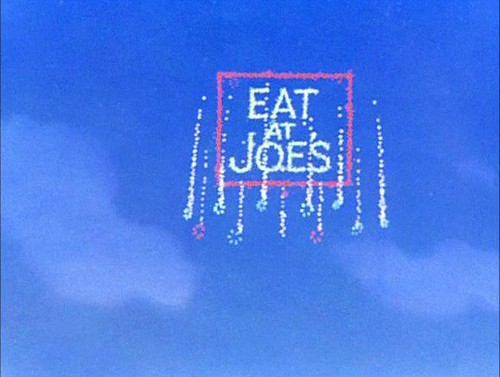
5. A red dragon spelling out “Eat at Joes” in smoke

6. A green luminescence that causes all plant-life to grow wild (per entangle), causes 1 in 10 trees to turn into treants, and heals 1d6 points of damage to all living things

7. Acid rain (1d6 acid damage per round, item saves for objects, lasts 1d6 minutes)

8. A silver canister of the mi-go (holds the brain of a 1d4+3 level magic-user)

9. A frozen black sphere (when it thaws in one minute it becomes a black ooze)

10. 3 and 20 blackbirds, recently released from a pie and bent on revenge against humanity (treat as enraged bat swarm with 2 attacks per round)

From HERE

11. A flight of pegasi, willing to give good characters a lift (I won’t say exactly what they’ll do to the evil, but it involves gaining altitude first)

12. A senile old giant owl who has mistook the halfling or gnome for a giant rat

13. A WW1-era biplane with a confused pilot

14. A disk of glowing orange metal crewed by 20 ultra-troglodytes (troglodytes in shiny orange jumpsuits with bulging brains, genius IQ’s and psychic powers)

15. An errant catapult stone (1% chance it lands on a character, dealing 10d6 damage)

From HERE

16. A sylph floating gently to the ground, love in her eyes and a song in her heart – she is soon joined by many others, who put on an impromptu ballet until a bunch of satyrs show up to ruin everything

17. A flight of seven harpies with a barbed net

18. The head of a frost giant, recently knocked from its should a few miles away by the hammer of the mighty Thor (or whatever native giant species and thunder god works in your campaign)

19. Confetti – it rains for hours

20. A rain of frogs, thrown into the atmosphere by a water spout

21. Sky pirates on a flying clipper – they bungee down to attack and plunder

22. An angel of the Lord, with grave tidings – the nearest metropolis is to be laid low for its sins

23. Two dozen giant bees, looking for a new home, their old one having been sacked by a clan of werebears

24. A holy sword, which embeds itself in the ground; it can only be removed by the rightful
Emperor-Pope of All Paladins (first paladin to 20th level can claim it)
From HERE

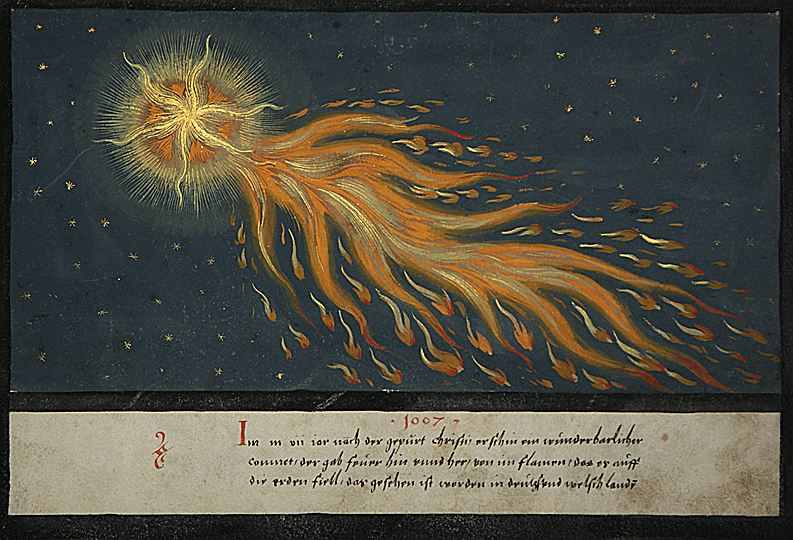
25. A black comet that sends out waves of revulsion and decrepitude

26. A black cloud, moving fast and against the wind and carrying with it the sounds of a clash of swords – perhaps a combatant will wing down to pick up the adventurers as reinforcements

27. 15 bird men – they seek ornaments for their queen, who is brooding

28. The Imam of the Jinn, on a magic prayer rug (treat as magic carpet), seeking converts to the Lawful Neutral faith and warriors for his crusade against the efreet

29. Mana from heaven (treat as triple strength create food spell)

30. A storm giant’s castle on a floating island; it’s on a crash course that will cause havoc and destruction about one mile from here (and it creates one heck of a great dungeon to explore)
 

Found Under the Loose Dungeon Floor Tile …

Before we get to the random table, I’d like to announce that Bloody Basic – Sinew & Steel Edition is now up for sale at Lulu.com as a PDF (the book will follow). This is basic role-playing without the magic – imagine if the original fantasy game had been based on the medieval war game rules without the fantasy supplement included.

Races are exchanged for Social Ranks, classes are Armsman, Scholar and Villein, and to make up for all the space normally taken up by spells, fantasy monsters and magic items, I included some simple rules for mass combat, sieges, jousting and archery tournaments. The rules are still pretty short, so the book only costs $6.99 – not too bad. Click on the title to check it out at Lulu.

I should get NOD 26 up for sale tonight as a PDF. When I get my review copies, the books will follow. More on that later.

And now, back to our regularly scheduled program …

What I Found Under the Loose Dungeon Floor Tile (Roll d20)

1. A yawning abyss – it is cold, and light flute music can be heard from within it

2. A giant, leering eye

3. A rope loop – pull it to set off all the traps on this level of the dungeon

4. A wooden box – holds …
A. The ashen remains of a vampire
B. Mummy bandages
C. Incense cubes – varying scents, one casts a cloudkill spell
D. Candle stubs – one holds a key to an important room in this dungeon
E. Chicken bones
F. Shuriken, one is a +1 shuriken
G. 1 week of iron rations
H. A vial of holy water
I. A collection of glass eyes
J. Silver pince-nez

5. An iron strong box – holds …
A. Copper coins – ancient and verdigrised
B. Silver coins – all pierced and defaced
C. Gold coins – the edges have been sharpened
D. Silk handkerchiefs (5)
E. A velvet glove (allows a single vampiric touch then decays into dust)
F. Shards of delicious peanut brittle

6. Goop – smells terrible, stains skin and clothes muddy purple – treat as stinking cloud

7. Green slime – actually forms a layer under the entire floor, and will bubble up through the cracks at an inopportune time

8. Last will and testament of a high level adventurer

9. Map of a lower level (incomplete)

10. Intense light (save vs. blindness)

11. Nothing – but causes a steel cage to materialize around the adventurers

12. Nothing – but removing it causes the dungeon illusion the adventurers have been in to disappear, revealing they are in an alien laboratory (break out Star Frontiers!)

13. An oil slick (Texas tea!) – begins pouring up and soon covers most of this level of the dungeon (same effect as grease spell)

14. An intelligent +2 dagger with a note – the dagger will obey so long as its wielder commits to assassinating a local dignitary or royal within 1 week; turns into a -2 cursed dagger if this is not done

15. A long, narrow shaft to a pocket dungeon level or just a lower level of the dungeon

16. A grasping hand on a long arm (treat as a ghoul or wight)

17. A silver spike driven into the ground – it was driven into a vampire’s heart, which will regenerate if the silver spike is removed

18. A carved stone that tells the dungeon’s history (or fills in gaps in the characters’ knowledge)

19. Black tentacles (per the spell) erupt from the floor

20. A portal back to the dungeon entrance (works once, afterwards, it just sends people to random rooms on deeper levels)

Random Royal Thank You

When you’ve done the king or queen of a small kingdom a favor, it’s only natural to expect a thank you. Just roll 3d8 (because how often do three d8’s get to work together) and see what you get …

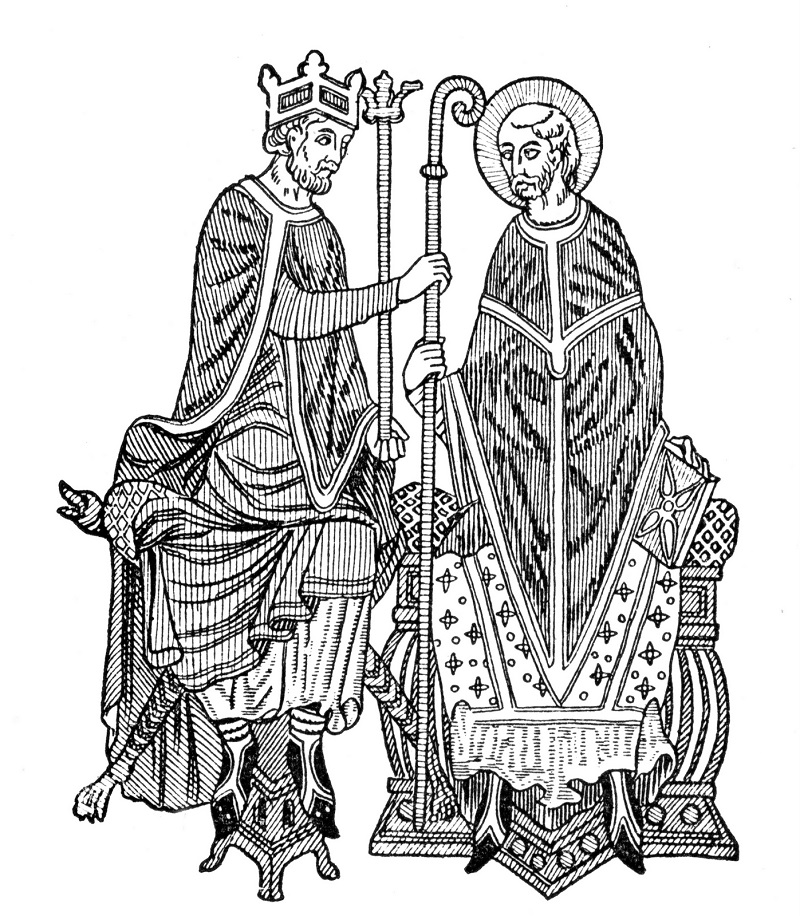
3. Position as royal cup bearer with a 120 gp a year salary and weekends off

4. A night in the royal wine cellar – no questions asked

5. Right to kiss the queen’s hand

6. Entry into the lists at the next tournament

7. Box seat at the opera (and invitation to the post-opera ball)

8. The hand of a maid-in-waiting’s hand in marriage

9. An acre of land

10. A pension of 10 gp per year for the life of the king or queen

11. A gold medal (100 gp)

12. A place of honor at the next royal feast

13. A firm handshake (slipping you a platinum piece)

14. A garland of roses (and a necklace of silver roses worth 50 gp)

15. An adamantine weapon

16. A mithral shirt

17. An abandoned motte-and-bailey castle (a fixer-upper with no peasants and 1d6 acres of really crappy land)

18. Charter to a royal tin mine for one year (worth 1d12 gp per month, 1 in 6 chance of labor dispute per month)

19. Cloak of elvenkind

20. Suit of rich clothes and a fitting with the royal tailor

21. Invitation to the royal unicorn hunt

22. Dubbed a knight in a very minor and honorary order (with rights to lodge in their house and borrow money at 10% interest)

23. A very fine warhorse or riding horse (or pony)

24. A golden goblet studded with fancy stones (worth 300 gp)

Copper Age Heroes II – The Quickening

Very quick post today to show off my revised map for the Copper Age campaign idea I’ve been working on. I’ve cleaned up the settlements, color coded them by culture, and made up new names where they were needed for settlements and cultures. I’ve also added in some more mythological places. The red dotted indicates the extent of copper use in the prehistoric world circa 3500 BC. The yellow circles show areas where copper was mined.

The next step for me is fleshing out these fantasy prehistoric societies.


Copper Age Heroes

Works continues apace on the next issue of NOD, and I’m doing research for my Age of Heroes campaign idea, which will probably show up in NOD later this year. The late Neolithic and Chalcolithic are really fascinating, and I’m enjoying the research immensely. Research is, of course, only the first step. I like to get an idea of what really was before I start making nonsense up to lay over the top of it and turn it into a fantasy campaign. I’m still not finished, but today I thought I’d share my working map.

I’ve mapped out settlements that would have been active (or nearly active in the case of Troy – I’d really like to include it but I probably will not) around 4000 to 3500 BC, drew out some broad cultural areas to work with (not entirely accurate, but again, this is a fantasy campaign, not a dissertation), included a couple locations of known ancient monsters (Chimera, for example) and sketched out the location of mythical Atlantis in North Africa. After all, every good fantasy campaign needs an ancient, ruined empire to plunder. In some case, I’ve started the process of giving these sites names – primarily in the west, using Basque and the Berber tongues as guides. Lots of work left to do, but it’s getting there and is being refined and nudged constantly.

Obviously, any person who does this for a living could find a million problems with this map, but for my purposes of creating a Chalcolithic fantasy world with lost kingdoms and monsters, I think it will do.

I should note that the base map comes from Natural Earth Data. Very useful – I wish I had known about it when I was working on some of the other Campaign Workbooks I’ve published.

Getting Primitive

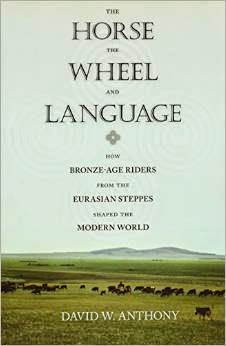
I have a tendency to run with ideas. The current one is an Age of Heroes campaign outline for NOD, or maybe Bloody Basic … or maybe both. I’ve been reading The Horse, the Wheel and Language by David W. Anthony, and it got me thinking about a stone age/copper age setting from before the movement of Proto-Indo-Europeans into Europe and India. Now, I’m not going to get into whether this theorized movement actually happened – I don’t have the background in it, and frankly, when I’m inventing a fantasy world to play in, I don’t care.

My current thinking is to set the game in approximately 3500 BC in Europe, the Near East and the adjacent regions. This means stone age technology, with a few advanced societies using copper weapons (which may have been ceremonial, but who cares.) Armor would be padded and leather, and probably no shields. Weapons include bows, javelins, spears, daggers, maces, clubs, and hand axes. Since most are made of stone or copper, the damage should be reduced from normal, which mitigates the lack of armor to some degree. Hey – it was a rough time to be alive.

I’m thinking I’ll take metal weapon damage back two steps for stone, with a chance of breakage on a natural “1” – maybe a simple item saving throw. For copper weapons, take damage back one step, with a similar chance of item’s being ruined on a natural “1” attack roll. For armor, I might draw on the post I wrote about fighting naked like the ancient Greek heroes were depicted doing in art.

Horses (ponies really) will be rare, and the knowledge and technology of riding will be very limited. In fact, it was probably unknown in this period, but here’s where we fudge things a bit.

Monsters will be geared towards prehistoric hold-overs from previous ages and the mythic monsters of the cultures of Europe and the Near East – manticores, chimeras, etc.

I’m working on a preliminary map of the cultures that were floating around in 3500 BC. Here, there will be some fudging and wholesale creation of ancient cultures. Mythology will be plundered, and something akin to Howard’s Hyborian Age will be woven from the strands of what little we know. This is where the “Age of Heroes” idea comes in – the idea that the heroic stories of ancient peoples were really set in this prehistoric age. Hercules, Jason, etc. will be featured in one guise or another. Here, I want to make use of the demigod class I wrote up a while ago – the idea is that the player characters are demigods walking the world, creating the stories that will be told for centuries after by the tribes and kingdoms they found.

It’s been a fascinating journey through prehistory for me so far – there was plenty I didn’t know, primarily about the extent of stone age urbanization. I’ll update you as I proceed. I’m still writing the next hex crawl. Sinew & Steel is pretty close to completion. Weird Fantasy is on hold while I bone up on my Dunsany and CAS. Still, all is proceeding nicely.

The Eco-Post-Apocalypse That Wasn’t

Image found HERE

I was reading today about some of the dire predictions made around the time of the first Earth Day in 1970 about the world we would be living in today. Grim stuff … but not a bad premise for a post-apocalypse game that does not involve nuclear destruction, and one that escapes many of the norms for games of that type.

A few of the key predictions that we can use:

* Civilization will end in 30 years (i.e. by 2000)

* Between 1980 and 1989, 4 billion people will starve to death, including 65 million Americans | The world population in 1990 was 5.2 billion and America’s was 250 million. That would leave the U.S. with 185 million people in this alternate 1990, and the world with only 1.2 billion people. If we continued these death rates to 2000, we might be left with only 270 million people in the world, and 137 million of them in the United States! This is about as many people who lived in the U.S. in 1940.

* Pollution is so bad that people have to wear gas masks to survive. Nitrogen build-up in the atmosphere is bad enough that the world exists in perpetual twilight.

* New York and Los Angeles (and presumably other cities) become “smog disasters” by the 1980’s, killing hundreds of millions of people.

* Oxygen in rivers is used up by decaying life, killing off all fresh water fish.

* Life expectancy for Americans is only 42 years (I’d have died last year!)

* Earth has run out of crude oil, copper, lead, tin, zinc, gold and silver. | No new copper, silver or gold pieces!

* 75-80 percent of all animal species are extinct.

* A new ice age has begun.

So, what are we left with.

Civilizations as we know them have ended – Western Civilization, China, India, etc – all gone. Most of planet Earth is empty of human habitation and most animal habitation, the exception being the country formerly known as the United States of America. With crude oil gone, most internal combustion engines are useless, though presumably coal is still used and so some machinery could be in use … but … so many other materials have run out, that I’m not sure how useful they would be. Most people are probably hunter/gatherers, while “civilized” people live with Medieval, Renaissance or maybe early Victorian technology.

Food is universally scarce, which means that cannibalism probably exists everywhere. People don’t live very long. An ice age grips the earth, with glaciation pushing into the northern United States and Asia. An ice age also means increased desertification – the Sahara would expand, as would the Gobi desert, and the Great Plains are probably back to being a Great Desert. Most humans are going to live in the tropics and sub-tropics, which I guess means that those Americans who are still alive are concentrated in the Southeastern United States, where the climate is still rather cool. Fires burn almost constantly, because there’s so little light and so little warmth.

The old cities are ruins, having been cleared out by deadly smog. The poisons might still lurk, but the engines that created the pollution is now silent. Pollution will take the place of radiation here for the universal mutagen, because what’s the point of running post-apocalyptic fantasy if you don’t have mutations?

I’m envisioning scenarios of survival on the fringes of the sub-tropics – Mad Max-style nonsense, perhaps, or maybe bands of adventurers from what small civilizations still exist (could Atlanta be the largest human city on earth, with maybe a giant population of 25,000 people?) delve into the icy, poisonous ruins in the northern hemisphere in search of ancient knowledge and machinery. Perhaps we mix both – those explorers use armed vehicles that run on whatever small amounts of fuel are left to delve into the icy north.

Hopefully there are a few gameable ideas for people here. After I get Grit & Vigor published, I want to do an expansion book for post-apocalyptic gaming. I plan to include my Mutant Truckers of the Polyester Road idea, as well as Apocalypse 1898 … and now this one. I guess I need to get my butt in gear and finish up G&V.

Rankin-Bass is My Dungeon Master

A party of misfits

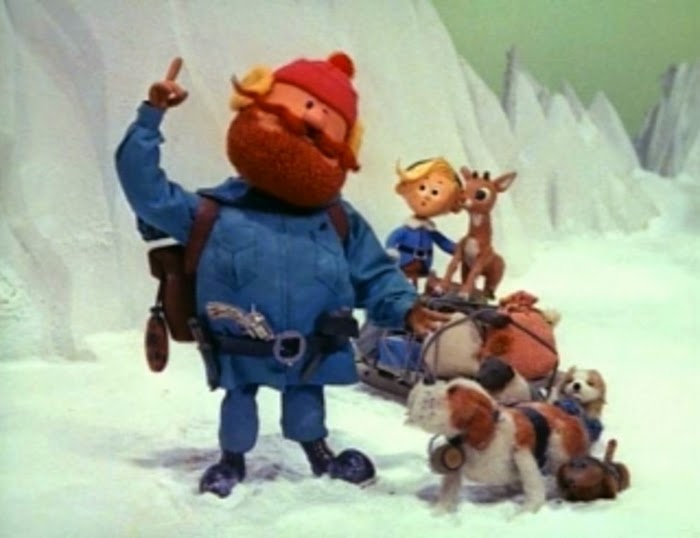
If you ever spent time as an American kid in the 1970’s or 1980’s, you surely are aware of Rankin-Bass holiday specials. And back then, they were special. No VCR’s, DVD’s or internet, so you had once chance each year to see Rudolph, and if you weren’t home, you didn’t see it! Egad!

R-B did more than just Rudolph the Red-Nosed Reindeer in 1964 though. In Christmas specials alone, they produced The Little Drummer Boy (1968), Frosty the Snowman (1969), Santa Claus is Comin’ to Town (1970, my favorite), The Year Without a Santa Claus (1974), The First Christmas: The Story of the First Christmas Snow (1975), Rudolph’s Shiny New Year (1976), The Little Drummer Boy, Book II (1976), Nestor the Long-Eared Christmas Donkey (1977), Jack Frost (1979), Rudolph and Frosty’s Christmas in July (1979), Pinocchio’s Christmas (1980), The Leprechaun’s Christmas Gold (1981), and The Life and Adventures of Santa Claus (1985).

So many holiday specials … and thus so much material to mine for a little RPG nonsense. So, in the spirit of Mother Goose is my Dungeon Master …

Races and Classes

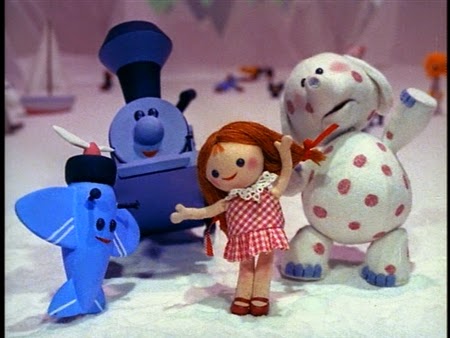
First and foremost, we don’t have adventurers in Rankin-Bass D&D. We have “misfits”. Characters in this game are weirdos who don’t quite fit in, and thus leave Santa’s Castle or the Island of Misfit Toys to do some adventuring! Silver and Gold!

I’ll be your narrator for this adventure

Moreover, the DM isn’t a DM. He or she is the narrator, and they have to do the whole game impersonating an old celebrity. Something like The Caves of Christmas Chaos narrated by Sean Connery.

Humans have to be included as a playable race because of Yukon Cornelius. Other options could be elves (shorter than the traditional D&D elves) and reindeer (definitely a candidate for “race as class”). How about toys? Winter sprites? Lots of options there.

Classes – prospector, knight, winter warlock, dentist? Dentist!? Heck, you could even just stick with the old fighter, cleric, thief, magic-user standbys. A 3rd level elf magic-user, a 5th level reindeer fighter, a 2nd level dolly thief. How can you beat that?

Clerics need divine patrons, and R-B gives you Father Time, Mother Nature, Father Winter and of course Old Saint Nick himself.

Monsters

Only high-level misfits better tangle with this character

The bumble, King Moonracer (a shedu), giant vultures, town guards, elemental misers and their miserlings (mephits fit the bill very nicely for these guys), keh-nights (mechanical knights from Jack Frost) – many options here. Rankin-Bass adventures seem to be more centered around big villains with a collection of minions around them. That villain had better be threatening Christmas or New Years, too, or what’s the point?

Adventure Sites

You’re just loaded here. The North Pole, with Santa’s Castle and the reindeer caves and Yukon’s peppermint mine is a good home base. Burrow heavily from Candy Land and get a candy cane forest and gumdrop mountains. The Island of Misfit Toys is nearby, with its Shedu ruler King Moonracer. The weird Sea of Time that shows up in Rudolph’s Shiny New Year could and should be the site of a mega-campaign all on its own. Seriously – if you haven’t watched it, watch it. Great imagination fuel. You can go further afield with the Holy Land, Sombertown (apparently somewhere in Central Europe), the Russian Steppe and its Miserable Mountain, Southtown, etc.

The Game

It’s Christmas Eve, and your friends are over. Pull out Basic D&D or one of its clones, pick a place to adventure, make up a villain or bring back Burgermeister Meisterburger or Kubla Kraus, figure out how they’re trying to screw up the holidays and then roll up some elven dentists and human knights and jack-in-the-box whatevers and get to adventuring.

Oh, and don’t forget to put a little of that goodwill towards men in your hearts. Share your +1 short sword. Don’t be stingy with the healing potions. Give a little love, and get a little love back. It is Christmas, after all.

And no pouting and shouting if your character dies. Santa’s got his eye on you!

Note – All images are the property of their copyright owners. No intended infringement in this post – just a bit of holiday fun.

After the Fall of Troy

It’s the end of the late Bronze Age world, and I feel fine

If D&D represents a fantasy post-apocalyptic world, it makes sense to look for ancient fallen civilizations to use as inspirations for campaigns. What better than Troy?

THE LEGEND

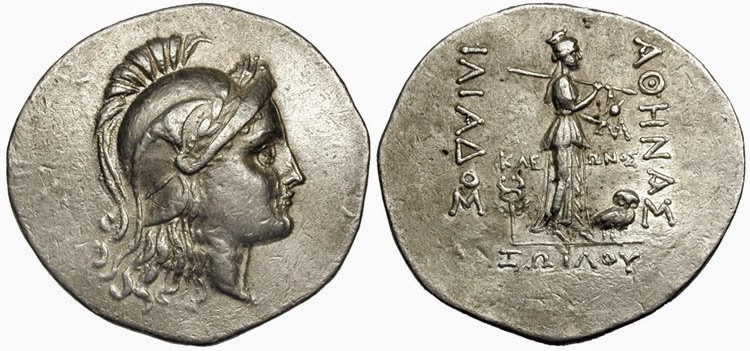
A silver piece from Troy

Helen was a drop dead gorgeous (and a demigoddess, the daughter of Zeus), apparently, and Paris, prince of Troy, was smitten. So smitten, in fact, that he convinced her to run away with him to Troy where they would live happily ever after.

Well, not so fast. Apparently, Helen’s husband, Menelaus, the King Sparta (those happy-go-lucky fellows) was none too happy about this situation. More importantly, he had managed to extract an oath from all her old suitors (also kings and lords) when he married her. They swore that they would lend him military aid if anyone tried to steal her away as a way to ensure that none of the other great Greeks would try kidnapping her. Menelaus rallies the Greeks and off they go to lay siege to Troy for a really long time. The gods get involved here and there, and ultimately Troy falls due to the trickery of Odysseus more than the rage of Achilles. The Greeks go too far, of course, and sack the temples and are visited with many troubles.

This, ladies and gentlemen, is the Age of Heroes, the days when the great heroes of Greek mythology trod the earth and the gods and goddesses took a very active interest in the world, moving people around like pawns in a great game only they understood.

THE HISTORY

Eventually, the actual existence of Troy was proven, by Frank Calvert in 1865 to be precise. It’s mythic history was then woven into the historic period called the Late Bronze Age Collapse. The Greeks would have called it the Golden Age Collapse, but why quibble – a collapse is a collapse.

The walls of Troy, as they were

The collapse involved the transition from the late bronze age to the early iron age, and the disruptions that resulted from this technological shift. Power structures are built on the now, and the new often causes things to tumble. According to Wikipedia, “The palace economy of the Aegean Region and Anatolia which characterised the Late Bronze Age was replaced, after a hiatus, by the isolated village cultures of the Greek Dark Ages.” During this period, from 1206 to 1150 BC, we have the fall of the Mycenaean Kingdoms, the Hittite Empire, the New Kingdom of Egypt.  Not only was Troy destroyed (twice, apparently), but also the Hittite capital of Hattusas, and the city of Karaoğlan.

That sounds like D&D – small villages and brand new ruins to loot and plunder.

WHAT’S DIFFERENT?

So what is different about a Post-Troy fantasy campaign than the standard D&D campaign?

Bronze Weapons: The fighting-men of this era are fighting with bronze weapons, rather than iron or steel. Iron was not unknown in this period, but iron weapons were probably still relatively rare – they were the high-technology of the time. With this in mind, it probably makes sense to allow bronze weapons to have the standard weapon statistics in your game (short sword 1d6 damage, etc.), and make iron weapons something akin to magic weapons in your campaign. A +1 bonus to hit probably makes sense, especially since they’re being employed against bronze armor. It might also make sense to treat them something like silver weapons when fighting supernatural creatures, since the manufacture of iron, and thus blacksmiths in general, was considered magical by many people (any technology advanced enough, etc. etc.)

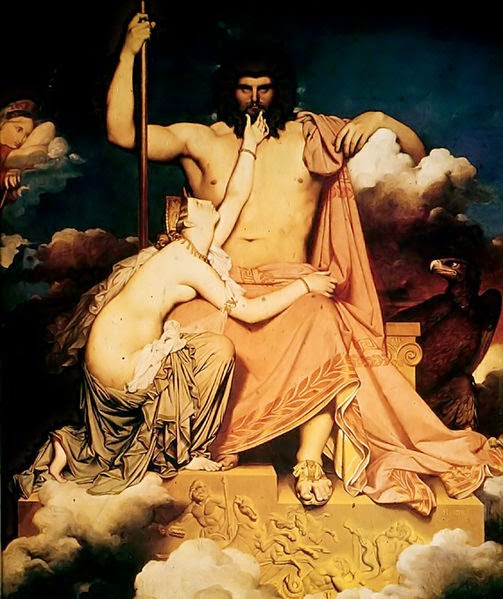
Come on Zeusy – my boy needs a cleric spell.

Divine Champions: In the Iliad and the Odyssey, we are introduced to the concept of certain characters being favored by the Greek gods and goddesses. This brings up the idea of casting clerics not as simple priests, but rather as extraordinary men and women favored by the gods, and perhaps descended from the gods. Odysseus, for example, had the blood of Hermes flowing through his veins, and Achilles was the son of the nymph Thetis, who could intervene on his behalf with Zeus. The idea here would be that these champions could pray to the gods and get solid, concrete results because they were part of the extended divine family. One might also use the demigod class I came up with in a campaign like this. At a minimum, feel free to make the gods and goddesses active participants in the campaign.

PLACES TO VISIT, PEOPLE TO SEE

First and foremost, the Fall of Troy campaign provides a great megadungeon in the ruins of Troy. Sacked by the Greeks, a battleground (indirectly) of the gods, the famous horse, the sacked temples, the great palace, etc. Obviously, we’ll need to bring in a subterranean aspect to the city – catacombs, caverns, etc. Making Troy a total ruin allows one to populate it with monsters – goblins and the like – bubbling up from the Hades’ realm.

Any spot in Greek mythology is fair game, of course. The island of the gorgons, entrances to the underworld, the amazons’ queendom (or its remnants), the oracle at Delphi (imagine the dungeon that exists below the oracle, from whence come the strange fumes that drive her prophecies), etc.

Maybe the perfect campaign in this setting is one patterned on the journeys of Odysseus. This would be an island-hopping campaign, with the adventurers and their henchmen traveling from place to place, maybe trying to get home, maybe searching for a new home (i.e. Aeneas) and maybe just looking for treasure and adventure.

For another wrinkle, the Late Bronze Age Collapse might have also been the time period in which a prince of Egypt, by the name of Moses, led his people across the wilderness to a land promised to them by a mysterious deity who was really going to shake things up on the deific scene. Adventurers might have a chance to meet the guy who pretty much invented the Sticks to Snakes spell (or at least, the guy who cast it first).

Partial spell list: Sticks to snakes, part water, insect plague …

A Fall of Troy campaign offers up an addition opportunity – brand new places to see. One of the famous stories that comes from the Fall of Troy is the founding of Rome by the exiled Trojan prince Aeneas. In a traditional D&D campaign, high level characters work hard to found strongholds, essentially medieval fiefs. In a Fall of Troy campaign, high level characters can work to lead their followers to a new land to found new city-states. The follow-up, of course, is a campaign of ancient war, the forging of new empires and ultimately the redrawing of the map of the ancient Mediterranean.

Keep on Trucking!

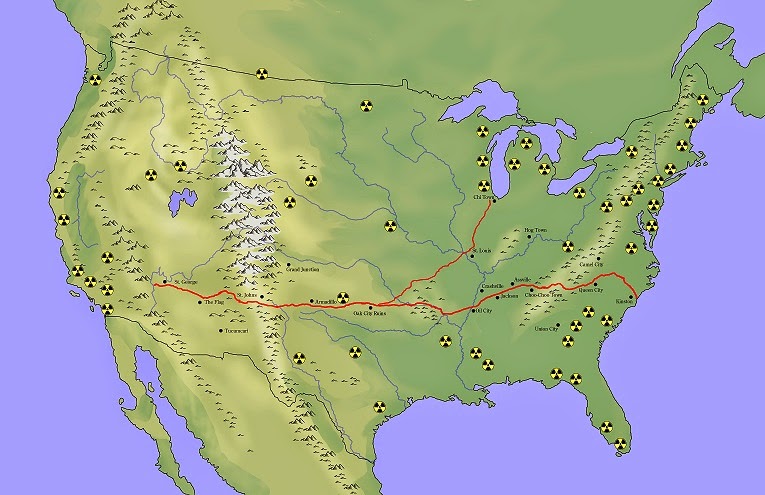
A while back, I posted and then published a campaign idea and mini-game called Mutant Truckers of the Polyester Road. Illustrator Aaron Siddall is running a campaign based on that idea, and he has produced a nice map and character sheet to go along with it. Samples below, but proceed with all due haste to his website (CLICK HERE) to see more, and for all sorts of stuff related to Blood & Treasure (he’s done some nice work on doing something like Spelljammer with B&T) and Grit & Vigor (and I haven’t even published it yet!). Good stuff – well worth checking out.

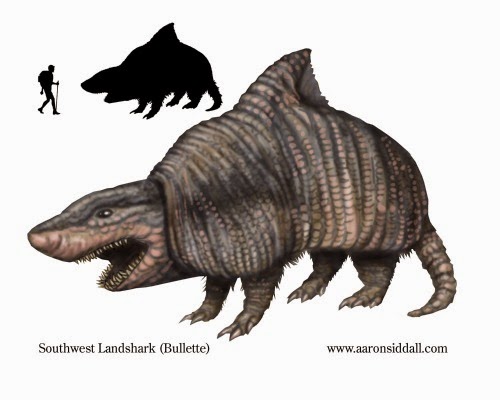
Mutant armadillo / bullette – perfect for moonlight strolls through post-apocalyptic deserts


Way prettier than my map!


Never thought of using the madflap girls – how did I never think of using the mudflap girls?

Once I get Grit & Vigor out there, I want to do a post-apocalypse supplement book that will hit on Mutant Truckers, No Mutant’s Land (WW1 that never ends, with weird chemicals subbing for radiation) and Apocalypse 1898 (my idea for a post-Mars invasion New York during the time of Tammany Hall and the notorious street gangs). Until then, check out Siddall’s stuff!