Mines and Mining – Part Four

This post covers minerals M through R.

Part One, Part Two, Part Three.

Marble
Marble (4 gp / lb); Architecture, Art

Marble is formed from the metamorphism of limestone. It is mostly comprised of crystals of aragonite and dolomite. The name derives from the Greek for “shining stone”. Pure white marble comes from very pure limestone. The swirls seen in most marble are impurities from clay, silt, sand, iron and other materials. Green coloration is usually from the presence of serpentine. Marble’s relative softness, resistance to shattering, and color made it a popular medium for sculpture and architecture.

Mercury
Cinnabar (3 gp / lb); Alchemy, Art
Mercury (10 gp / lb); Alchemy, Art
Vermillion (2 gp / oz); Pigment (Red)

Mercury, also called quicksilver or hydrargyrum, is the only metal that is liquid at room temperature. It is a silvery metal found in deposits of calomel, livingstonite, corderite and cinnabar. Cinnabar is a scarlet to brick red mineral that is found in alkali hot springs and near volcanoes, often with dolomite.

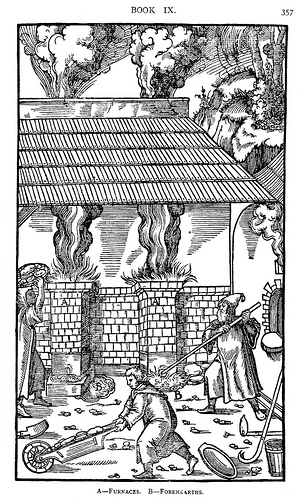
Mercury is separated from cinnabar and other minerals by roasting. The mercury condenses easily into a condensing column and then collected and shipped in iron flasks.

Alchemists would heat elemental mercury with aqua fortis to prepare mercuric oxide. The reaction produced a thick, red vapor over the surface of the solution, while the mercuric oxide fell out of solution as red crystals. The oxygen released from this solution was called “dephlogisticated air” by Joseph Priestley.

Cinnabar is a source of vermillion, an orange-red pigment that has been used since prehistoric times. To the Romans, who called it minium, It was the most valuable pigment. The imperial government fixed the price at 70 sesterces to the pound, ten times more expensive than red ochre, because of the incredible demand and the short supply of cinnabar. Like many ancient pigments, it was toxic. The Olmecs and Mayans relied on its toxic reputation to repel tomb robbers, putting it in burial chambers and inserting it into limestone sarcophagi. The Chinese used it in carved lacquer ware, the layer of lacquer protecting people from the toxicity of the cinnabar.

Mercury dissolved gold and silver, making it useful in plating those two metals over other materials. Alchemists combined mercury with tin, sal ammoniac and flowers of sulfur to make mosaic gold, a yellow, crystalline powder used as a pigment in bronzing and gilding wood and metal.

Obsidian
Obsidian; Equipment, Minor Gem

Obsidian is volcanic glass that occurs in obsidian flows near active or dead volcanoes. It is usually black, but impurities can make it dark green to brown and even colorless. Obsidian with fluffy white inclusions is called snowflake obsidian. Gas bubbles can produce obsidian with a golden or rainbow sheen. Obsidian has been used since prehistoric times to craft blades, tools and projectiles. It can also be cut as a gem and used in art objects and jewelry.

Olivine and Peridot
Olivine; Minor Gem
Peridot; Medium Gem

Olivine is a greenish mineral common on Earth, the Moon, Mars and in comets. Gem quality olivine is called peridot. Peridot occurs in lava rocks. It is a rare gem and always colored olive green. Peridot is the only gemstone found in meteorites. Olivine is supposed to provide protection from magic spells, while peridot wards off enchantments.

Opal
Fire Opal; Medium Gem
Opal; Medium Gem

Opals are a mineraloid gel commonly found in sandstone and basalt. The water content in opals can be quite high, up to 20%. Opals range from colorless, white, gray, red, orange, yellow, blue, green, magenta, rose, pink, slate, olive, brown and black. Opals that have red against black are the rarest, while white and green opals are the most common. Fire opals are translucent, transparent opals of warm colors, such as yellow, orange or red. Opals were believed to be lucky stones and to cause invisibility if wrapped in a bay leaf and held in the hand.

Pearl
Pearl; Minor Gem

Pearl is not a stone, though it does have a mineral base. Pearls are produced by a living, shelled mollusk. They are made from layers of nacre, or mother-of-pearl. The best pearls are produced by oysters, but they are quite rare. In a haul of 3 tons, only 3 or 4 oysters will produce perfect pearls. The largest pearl yet found came from a giant clam, and weighed 14 pounds. White and black pearls are the most common and popular pearls, but there are also pink, blue, champagne, green and purple pearls.

Phosphorus
Phosphorus (7 gp / oz); Alchemy
Proto-Match (1 gp); Equipment

Phosphorus does not occur free in nature, but can be found with many other minerals, especially apatite. White phosphorus was discovered in 1669, by German alchemist Hennig Brand. It was named for Phosphorus, the light-bearer, i.e. Lucifer.

The most common way of obtaining phosphorus was from human waste. The process involves boiling urine to produce a residue which was heated to produce phosphorus gas which would condense into a white powder. The powder is flammable and capable of blistering fingers and burning holes in cloth. It takes 2,000 gallons of urine to produce one pound of phosphorus.

Hennig Brand eventually sold the recipe for 200 thalers (approximately 80 gp) and others eventually figured out the recipe from clues left by Brand. In 1680, Robert Boyle made the forerunner to modern matches when he used phosphorus-coated paper to ignite a sulfur-tipped wooden splint that he rubbed across the paper.

Pitchblende (Uranium)
Pitchblende (100 gp / lb); Art, Magic Items

Pitchblende, or uraninite, is a black mineral that contains uranium, lead, thorium, rare earth minerals and radium. The radium and lead are due to the decay of the uranium. Pitchblende was usually found with silver deposits.

Refined uranium is a silvery white metal. The element was discovered in 1789 by the apothecary Martin Heinrich Klaproth, but the metal was not isolated until 1841 by chemist Eugene-Melchior Peligot, making it unlikely to have been discovered in most fantasy settings. Unrefined pitchblende, however, was added to glass and mosaic tiles to give them a yellow-green to orange-red color. This uranium glass was usually about 2% uranium. Given the composition of pitchblende, a Referee who is running a science-fantasy game might want to require it as an ingredient for making magical objects.

Platinum
Platinum (1,000 gp / lb); Coins, art objects

Platinum is a silvery metal that is resistant to corrosion and acid and malleable enough to work. It occurs with copper and nickel ores, often in the sands of rivers.

Like gold, platinum dissolves in aqua regia, and this substance was used to isolate pure platinum in the 18th century. More often, natural platinum, which is combined with other metals in the platinum family, is found and was worked by ancient peoples.

Platinum is harder than gold or silver, and with a much higher melting point. Platinum was unknown in Medieval Europe, but the peoples of pre-Columbian Central and South America were aware of a naturally occurring gold-platinum alloy and used it to make jewelry. Once the Europeans obtained platinum, they found they had no way of making a fire hot enough to melt it, which prevented them from minting the platinum coins sometimes seen in fantasy games. Such coins, had they existed, would have probably been made from the aforementioned alloy (and thus worth 5 gp each).

Porphyry
Porphyry (5 gp / lb); Architecture, Art

Imperial porphyry is a deep brownish-purple rock used to build monuments and buildings in ancient Rome and in hardcarving. It is an igneous rock that contains crystals of quartz (q.v.) and feldspar (q.v.). It came from a single quarry in the rocky wastes of Egypt’s eastern deserts.

Quartz
Amethyst; Major Gem, Protection from Drunkenness
Aventurine; Medium Gem
Banded Agate; Minor Gem, Sleep
Carnelian; Medium Gem, Protection from Evil
Chalcedony; Medium Gem, Protection from Undead
Chrysoprase; Medium Gem, Invisibility
Citrine; Medium Gem
Jasper; Minor Gem, Protection from Poison
Moss Agate; Minor Gem, Sleep
Onyx; Medium Gem, Cause Chaos
Rock Crystal; Minor Gem
Rose Quartz; Minor Gem
Sard; Medium Gem
Sardonyx; Medium Gem
Smoky Quartz; Minor Gem
Tiger’s Eye; Minor Gem, Protection from Ethereal Creatures

Quartz is the second most abundant mineral in the Earth’s crust after feldspar. It occurs with granite, shale, schist, sandstone, and gneiss. Pliny believed it was permanently frozen ice because it was often found near glaciers, but not volcanoes, and in spherical form would cool the hands and act as a prism. Quartz deposits often contain gold (q.v.).

Many forms of quartz are precious stones. Pure quartz is rock crystal, citrine is pale yellow, rose quartz is pink, amethyst purple, smoky quartz gray, milky quartz (the most common) white, jasper reddish brown, tiger’s eye is gold and red-brown and hawk’s eye is blue.

Agate, a form of quartz, comes in many varieties, including banded agate and moss agate. Onyx is a black agate with bands every color but blue and purple. Sardonyx replaces the black of onyx with brown. Both are cut into cabochons and used for intaglios (i.e. engraved gems).

Chalcedony is a white or lightly colored quartz. It can also be banded. Aventurine is translucent chalcedony with shimmering inclusions. Carnelian is translucent orange-red, while sard is a brown carnelian. Chrysoprase is gemstone quality chalcedony that is apple green to deep green.

The native Americans called quartz geodes that contained agate, jasper or opal “thunder eggs”. They believed that they were thrown by thunder spirits at one another.

Rhodochrosite
Rhodochrosite; Medium Gem

Rhodochrosite is a precious stone that varies in color from rose red to pink or pale brown. The purest form of the stone is rose red in color. Rhodochrosite occurs in hydro-thermal veins in silver ore deposits. The Incas believed it to be the hardened blood of their ancient kings. As a soft mineral with perfect cleavage, it is difficult to facet.

Mines and Mining – Part Three

Entries D-L. Click for Part One and Part Two.

Diamond
Diamond; Major Gem

Diamonds are the hardest known minerals. Perfect diamonds are clear and colorless, while other diamonds contain impurities that lend them a tint. These colors, in order of their rarity, are yellow, brown, blue, green, black, translucent white, pink, violet, orange, purple and red. Diamonds are the product of deep, volcanic eruptions and thus appear in volcanic areas, often in river deposits. Diamonds can also be formed by meteor impacts. The name is derived from the Greek for “un-breakable”. Indians venerated them as religious icons. The undead are vulnerable to diamonds.

Feldspar, Moonstone and Sunstone
Moonstone; Minor Gem
Sunstone; Medium Gem

Feldspar is an igneous rock formed from magma flows. It is one of the most common rocks in the Earth’s crust. The name derives from the German for “field” and “a rock that does not contain ore”. It is a common ingredient in the production of ceramics and it is used as an abrasive.

There are two forms of feldspar that are considered precious stones. Moonstone is a feldspar with a pearly, luminescent luster. Moonstones were believed to cause lycanthropy. Sunstones are a transparent, reddish feldspar with a spangled appearance. Sunstone is believed to ward spells, evil spirits and poison.

FlintFlint (7 cp / lb); Architecture, Equipment

Flint has been mined since prehistoric times. It is a form of quartz known for its hardness. Flint occurs as nodules and masses in sedimentary rocks such as chalk and limestone. Inside the nodule, it is a dark grey, black, white, green or brown in color, and usually glossy. When struck, flint splits into sharp flakes or blades. This process is called knapping, and was used during the stone age to made tools and weapons. When struck against steel, flint produces sparks. This alone makes it useful to adventurers. Because of its ability to create sparks, flint was used in flintlock firearms. Flint was also used a building material. Nodules of flint will explode if heated by fire.

Garnet
Garnet; Medium Gem

Garnet is a group of minerals that has been used since the Bronze Age as gemstones and abrasives. Among their number are carbuncles (almandine), a deep red stone that occurs in mica schists. Carbuncle was believed to have been present in the Garden of Evil. Pyrope (“fire eyed) is a transparent garnet colored deep red to nearly black. Uvarovite is a bright green garnet that occurs in crystalline marbles and schists, but it too small to facet. Carbuncles are supposed to give one the keen sight of a dragon.

Glass
Faience (5 gp / lb); Art
Glass (3 sp / lb); Art

Glass is made from silica and other compounds, typically soda, lime, lead and even pitchblende. The impurities might make the glass easier to work, glossier or tinted. Naturally occurring glass, like obsidian, were used by primitive people to make tools and weapons. The first true glass was made in the Middle East. The earliest glass products are beads, but by the Bronze Age people were making colored glass ingots and vessels. By the Middle Ages, most of the glass items we are used to today, such as windows, dining ware and mirrors, were in production.

Faience is an early ceramic invented by the Egyptians. Faience contains no clay. Rather, it is composed of crushed quartz or sand, with small amounts of lime and other ingredients. In the early days, it was given a blue-green glaze and used as a substitute for precious stones of that color, such as turquoise or lapis lazuli.

Gold
Electrum (50 gp / lb); Art, Coins
Gold (100 gp / lb); Art, Coins

Gold, or aurum, is a shiny, yellow mineral that has been valued by humans since ancient times. It is found in quartz deposits, usually with silver, sometimes in the form of electrum. The Romans uncovered gold deposits by unleashing pent up water to wash away the top soil. The quartz was then mined with picks and shovels, crushed, and washed in placers to separate the gold.

Gold is inert and malleable, making it an excellent material for coins and other art objects. Gold was alloyed with copper to create orichalcum and hepatizon. In quartz deposits, It was found as a natural alloy with silver called electrum. Electrum is harder and more durable than gold, so it was used as an early coinage. Unfortunately, the difficulty in determining the exact ratio of gold to silver in electrum meant it was impossible to determine the true value of an electrum coin. For this reason, silver soon replaced electrum as the metal of choice for coinage. Most electrum is 75% gold and 25% silver and copper. For fantasy coinage, it is simple enough to assign electrum coins a value between gold and silver.

Gold was associated with the Sun. It was believed to be the perfect, most noble metal because it is inert and only dissolved in aqua regia. The secret of turning base metals into gold was not merely a quest for wealth. Rather, the mystic alchemist was attempting to reach perfect spiritual purity, transforming his mortal form into a divine form.

GraniteGranite (3 gp / lb); Architecture

Granite is an igneous rock formed from magma. It has a coarse texture and can be pink to dark grey to black. Outcrops of granite tend to form tors or rounded massifs, and sometimes occur as round depressions surrounded by hills. The name is derived from the Latin for “crystalline rock”. Granite is hard, tough and heavy, and thus favored as a building material. Some of the pyramids were built of granite blocks, or a combination of granite and limestone.

Hematite
Hematite; Minor Gem
Ochre (6 sp / oz); Pigment
Tomb Dust (100 gp / lb); Trap

Hematite is black to reddish brown to red mineral found in bodies of water or near volcanoes. It usually occurs in banded iron deposits, which are found in primordial sedimentary rocks, usually with thin bands of shale and chert. Hematite is an iron-bearing ore (see Iron), but has many uses in its own right.

Hematite gives ochre clay its color. Ochre was a common cosmetic in ancient and medieval times, being used by Egyptian women to color their lips and Pict warriors to color their bodies for war. In powdered form, it is used as a trap in tombs. The powdered hematite is scattered thickly on the floor to be stirred up by tomb robbers. Once airborne, it irritates the skin, eyes and nose, eventually causing siderosis, a lung disease. Hematite is used as a gemstone in jewelry, especially as an engraved gem.

Hematite is believed to have the power to heal wounds and can aid fighters in combat. It is also supposed to be good for ailments of the blood.

Iron
Copperas (5 sp / lb); Equipment (Ink)
Iron (8 sp / lb); Equipment
Iron Pyrite (2 sp / oz); Equipment (Guns)
Steel (5 gp / lb); Equipment

Iron, or ferrum, occurs in the mineral iron pyrite and in banded iron deposits. Iron pyrite, also called brazzle or fool’s gold, looks vaguely like gold ore. Iron pyrite creates sparks when struck with steel, and is thus useful for starting fires and igniting guns. Banded iron deposits are found in primordial sedimentary rocks with thin layers of shale and chert. Banded iron deposits also contain hematite and lodestone.

Iron was first gathered by humans from meteors. This meteoric iron had a high nickel content, and was used to make tools and weapons. Iron was harder and more durable than bronze, and thus highly valued. The Hittites traded silver for it at 40 times the weight of the iron. Bog iron was used by the Celts and Vikings, and in Colonial America. Bog iron occurs where iron is eroded from stone by a river and then settles in a bog.

Iron is smelted from iron pyrite using bloomeries, blast furnaces and fineries. Most processes create either wrought iron or bar iron, which can be used to make cast iron objects. There are various methods for refining iron into steel by removing carbon impurity.

Iron pyrite is used in wheel-lock firearms. It was also used to make copperas (see below). This was done by heaping it up and allowing it to weather, the acidic runoff being boiled with iron to produce copperas. Copperas, in turn, was an ingredient in vitriol, or sulfuric acid (see Sulfur).

Alchemists used iron in the production of copperas, which they nicknamed the green lion. Copperas is iron-sulphate, a blue-green powder. It was used in the manufacture of gall iron ink and in wool dyeing. Gall iron ink was the standard writing ink of Medieval Europe. It was made by mixing copperas with gallotannic acid and gum arabic. Gallotannic acid is extracted from oak galls and fermented. Gum arabic is the sap of the acacia tree. The result of the mixture was a pale grey solution which darkens to a purple-black color when put on vellum or paper. It cannot be erased or washed away, only scraped, making it a good ink to use in spellbooks and important documents. Gall iron ink must be stored in a stoppered bottle and becomes unusable after a time. Its high acid content eventually destroys the paper and vellum it is put on.

Folklore often held that fairy-folk had an aversion to iron, or were in fact harmed by it. A Referee might want to allow iron or steel weapons to do +1d6 points of damage to fairy creatures, and maybe +1 damage to elves. This would leave elves using bronze weapons.

Jade
Jade; Minor Gem, Muscial Skill

Jade is actually two metamorphic stones called nephrite and jadeite. Nephrite is white or a variety of greens, while jadeite might be blue, lavender, mauve, pink or emerald green. Translucent green jade is the most valuable.

Jade has been carved since prehistoric times. It has the same toughness as quartz and has been carved into beads, buttons, axe heads, knives and all manner of art objects. Jade is usually worked with quartz or garnet sand and polished with bamboo or ground jade.

Jade’s name is derived from the Spanish for “loin stone”, as it was reputed to cure ailments of the loins and kidneys. It was the imperial stone of China and considered more valuable than gold or silver. It was the favored medium for carving scholarly items and opium pipes, because inhaling the fumes through jade would insure long life.

Jet
Jet; Minor Gem

Jet is a black or dark brown mineraloid that forms from decaying wood under extreme pressure. In essence, jet is a precious form of coal. Jet has been used in jewelry since 17,000 BC. Hard jet is the result of carbon compression and salt water, while soft jet results from fresh water.

Lapis Lazuli
Lapis Lazuli; Minor Gem

Lapis lazuli is a rock, not a mineral. It occurs in limestone deposits in Badakhshan province in Afghanistan. The rock has been mined, and valued, for 6,000 years. Lapis lazuli is made into jewelry, carvings, boxes, mosaics, ornaments and vases and is also used to clad the walls and columns of palaces and temples. Lapis lazuli is also ground into a powder to make ultramarine pigment for painting. It was used by the Assyrians and Babylonians for making seals and favored by the Egyptians for making amulets.

Lead
Lead (1 gp / lb); Alloy, Coins, Forgeries

Lead, or plumbum, is a bluish-grey metal that is very soft. It tarnishes very quickly, taking on a dark grey color. Lead is found in a mineral called galena. Galena is a silver-grey mineral that contains lead, silver, sulfur and arsenic.

Galena was initially mined from surface deposits using the fire-setting technique. It was then followed into veins that usually followed vertical fissures. Surface deposits are found in blighted areas, as lead is poisonous.

Lead was originally smelted from galena in boles, large fires built on a hill that used wind to stoke the flames. This required two days of strong wind and left a large heap of ore. Later, water mills powered bellows that stoked furnaces fueled by “white coal” (dried branches). The ore would be washed and smashed into bits and then smelted in these furnaces and cast into ingots. By-products of this smelting included silver and arsenic.

Galena was used in its own right as kohl, an Egyptian cosmetic for the eyes that was used to reduce the glare of the desert sun and to repel flies. Kohl was also used into Elizabethan times to give the skin a noble pallor.

Lead was most famously used by the Romans to cast pipes for their water and sewage systems. The Romans also used it to make terrerae, tokens distributed by the emperor that entitled the holder to food or money, and as a food preservative. The Chinese used lead to mint coins. Lead is part of the copper alloy called potin, which was also used to make coins. Geishas in Japan used lead carbonate for face-whitening make-up. Lead was also used in forgeries by plating it with gold.

Alchemists once made “sugar of lead”, or lead acetate. The substance has a sweet taste, and was used as a reagent to make other lead compounds, a fixitive for many dyes and as a sugar substitute. The Romans would produce it by boiling grape juice in lead pots. This would yield a sugar syrup called defrutum, which was further concentrated into sapa. The syrups were used to sweeten wine and to sweeten and preserve fruits. One possible result of using this syrup is, of course, lead poisoning.

Limestone
Limestone (1 sp / lb); Architecture
Quicklime (2 sp / lb); Alchemy
Travertine (2 gp / lb); Architecture

Limestone is a sedimentary rock comprised of calcite with measures of chert, flint, clay, silt and sand. Limestone makes up about 10% of the world’s sedimentary rocks, and is a common building material. The Great Pyramid at Giza is made entirely of limestone blocks. The English used a variety called beer stone in their churches. Crushed, lime-stone makes a solid base for road construction. Limestone can also be roasted down to create quicklime. The English once used quicklime as a weapon against a French fleet, throwing it in the eyes of their opponents. Quicklime was also an ingredient in Greek Fire, for when combined with water it increases its temperature to above 150-degrees and ignites the fuel.

Lodestone
Lodestone (25 gp); Magnet

Lodestone, or magnetite, is the most magnetic of the minerals. It can be found in the form of black sand on beaches and in banded iron deposits with hematite (q.v.) and iron (q.v.). Lodestones are black minerals.

Animal Movement Rates – the British Way!

I was just reading Al Nofi’s CIC at Strategypage, and he showed some information on animal movement rates from Sir Garnet Wolseley’s The Soldier’s Pocket-book for Field Service. Sir Garnet was apparently the inspiration for Gilbert & Sullivan’s “Modern Major General”. I thought these figures might be useful for RPG’ers, at least as a comparison to the overland rates given in our favorite RPG’s. All of the following is drawn from Nofi’s post …


Animal Speed Pack Load Draught Load Work Day
Ass * 4.0 mph 150-175 pds 900 pds 15-16 miles
Camel 2.5 300-600 1000 20
Dog * 6.5 na 160 60 by sleigh
Elephant 3.5 800-1200 8000 15-20
Horse 4.0 250-400 350 15-16
Human 2.5 40-80 120-150 4-8
Llama * 2.5 65-125 na 12-18
Mule 4.0 150-300 500 15-16
Ox 2.2 160-200 300-500 4-6
Reindeer 18 na 300 50-100 by sleigh

Note: Since Sir Garnet didn’t campaign in places where some types of beasts of burden were in common use, we’ve added a few of these, as indicated by an asterisk. Pack Load includes weight of the pack; Draught Load includes that of the vehicle; na, not applicable for military usage.

Thought I add to this – the work days, in NOD hexes, would work out to …

Ass: 2 to 3
Camel: 3
Dog: 10 (by sleigh – impressive)
Elephant: 3
Horse: 2 or 3
Human: 1
Llama: 2 or 3
Mule: 2 or 3
Ox: 1
Reindeer: 8 to 16 (again, by sleigh wow!)

The sleigh pulling animals are quick – could be a good magic item – a sleigh that makes its own snow. We usually went by the rule of thumb of 1 hex on foot, 2 by mount, which isn’t too far off, though maybe 1 hex on foot, 3 by mount is better.

Mines and Mining – Part Two

This post includes minerals A-C. My original document, made as it was for personal use, was adorned with many photo references of metals, gems and old alchemical symbols. If any of the text refers to a picture that is not there, just google it and I’m sure you will find a usable reference.

With each material, I give a value in parentheses and then a quick list of its general uses. Art usually refers to jewelry (as in stuff that shows up on treasure lists). Minor, medium and major gems refers to the treasure generation system in Swords and Wizardry and do not give values, since such values are randomly determined. I should also note that in my NOD campaign, I used a measure of 100 coins to the pound, rather than the 10 coins to the pound that appears in games like OSRIC and Swords and Wizardry – adjust values of metal accordingly. The rest is, I’m sure, self explanatory.

Alabaster
Alabaster (6 sp / lb); Art

The alabaster that was used in ancient times was a carbonate of calcium. Alabaster occurs as a deposit on the floors and walls of limestone caves. Alabaster was a common stone used for hardcarving. The Egyptians used it to make perfume bottles, ointment vases and canopic jars. Small vessels used to hold perfume and precious oils were called alabastrons. There is even a record of an entire sarcophagus carved from a block of alabaster. When cut thin, alabaster could be used as a window, a technique used in many Medieval churches.

Amber
Amber; Minor Gem

Amber is fossilized tree resin (sap). It has been valued since prehistoric times. Amber is usually yellow-orange-brown, but can range from whitish to pale lemon yellow to brown and almost black. There is even red, green and blue amber, the blue being very rare and highly sought after. Oltu stone is a black amber found in Asia Minor. It is formed from fossilized resin and clay or lignite, and is used to make beads and jewelry. Amber can often be collected after it washes up on sea shores. Amber is supposed to have the power to ward off disease.

Antimony
Butter of Antimony (300 gp); Poison

Antimony, or stibnum, is a blue-white metal that is very brittle and thus easily crushed or powdered. It is most often found in the mineral stibnite, a soft, grey crystalline substance.

Antimony has a low melting point and is thus easy to cast. It is used to alloy tin, copper or lead.

Alchemists once prepared a substance called butter of antimony, or antimony trichloride. It was so called because of its waxy appearance. Butter of antimony is a soft, colorless solid with a pungent odor. Paracelsus called it Mercury of Life, and used it as a medicine. Unfortunately, butter of antimony is quite poisonous, and all Paracelsus managed to do with it was commit suicide. Butter of antimony was used to make powder of Algaroth, also known as spirits of philosophical vitriol. This was a white powder that was a powerful emetic.

Glass of antimony was also an emetic. It was prepared by putting ground antimony in an earthen crucible over a vigorous fire until it no longer fumed. The remaining substance, called calx, was then vitrified in a wind furnace, creating a transparent, reddish glass.

Antimony was symbolized by the wolf, as it was linked with man’s free spirit or animal nature.

Arsenic
Arsenic (1 gp / lb); Poison, Alloy
Orpiment (2 cp / oz); Pigment, Poison
Realgar (2 cp / oz); Pigment, Poison

Arsenic’s name is derived from the Persian for “yellow orpiment”. It is a metallic grey in color as a metal. Mispickel, realgar and orpiment are the most common arsenic-bearing ores. Mispickel, or arsenopyrite, is a hard, heavy steel grey to silver white mineral. It is found in hydrothermal vents and volcanic areas. Mispickel is also an indicator of gold-bearing ores, especially in reefs.

Realgar, called sandarach by Aristotle, is a soft, orange-red mineral with a sub-metallic luster. The name comes from the Arabic “rahj al-gar”, or “powder of the mine”. In India it was called manseel. Its decayed form, a yellow powder, is called pararealgar.

Orpiment is a yellow to orange mineral found near volcanoes, hydrothermal vents, hot springs and from the decay of realgar. Its name is Latin for “yellow pigment”, and it is also called “King’s Yellow” and hartal.

Dissolved in nitric acid, mispickel produces arsenic fumes and elemental sulfur. As a metal, arsenic was refined from realgar. The realgar was roasted, creating “cloud of arsenic”, or arsenius oxide. This vapor was then reduced to obtain the metal arsenic.

Arsenic’s main use was for murder, especially among nobles. It was called “Poison of Kings” or “King of Poisons” for this reason. The infamous Aqua Tofana was a poison made by a Giulia Tofana in Palermo for 50 years. It was sold both as a cosmetic and as a devotionary object in vials with pictures of St. Nicholas (as “Manna of St. Nicholas of Bari”) to women who wanted to kill their husbands. Aqua Tofana contained arsenic, lead and belladonna, and was colorless and tasteless, and thus easily mixed into drinks.

Arsenic was also alloyed with bronze to make a harder bronze called arsenical bronze. Orpiment and realgar were used as pigments in painting. The Chinese used both as an ingredient in medicines, and the Chinese also incorporated realgar into household ornaments (wine pots, wine cups, and paperweights) to ward off disease. The highly toxic nature of both pigments made them useful as fly poisons and as a poison (Type I) applied to arrows.

Alchemists turned arsenic into a substance they called flowers of antimony, or arsenic trioxide. This substance was obtained by roasting orpiment or realgar. The Chinese used flowers of antimony to treat cancer and other medical conditions, although it is really quite toxic.

Barium
Glowstone (2 gp); Equipment, Poison (Weak)

Although not isolated during the Middle Ages, barium was known through the mineral barite. Large deposits of barite in pebble form were found around the city of Bologna, and thus the pebbles were called Bologna stones. Apparently, Bologna stones, if exposed to light, would glow for years, making them attractive to alchemists and witches, and, in a fantasy setting, to dungeon delvers. In a fantasy milieu, they might be called glowstone. Glowstones produce as much light as a candle, but they are quite poisonous.

Beryl
Aquamarine; Medium Gem
Beryl; Medium Gem, Protection from Evil
Emerald; Major Gem

Beryl is a precious stone named by the Greeks for a blue-green color. It is found in granite called pegmatite and in mica schists. It can be found in a variety of colors including green-yellow, pure yellow and pink. Blue-green beryls are called aquamarines and pure green and pure red beryls are called emeralds and scarlet emeralds. Some emeralds, called trapiche, have a six-pointed grey star pattern. Beryl deposits are also a source of tin (q.v.).

Chalk
Chalk (8 cp / lb); Equipment

Chalk is a form of limestone composed of calcite. It is formed under deep marine conditions from the accumulation of tiny shelled creatures. Because it is more resistant to weathering than the clays that surround it, chalk often forms tall columns or cliffs. Chalk is white and soft, and thus useful for writing.

Chrysoberyl
Alexandrite; Medium Gem, Divination
Chrysoberyl; Medium Gem, Protection from Possession
Cymophane; Medium Gem

Chrysoberyl is a precious stone that bears no relationship to beryl. It occurs in granite and mica schists, near dolomitic marble and in sands and gravel from river deposits along with corundum (q.v.), garnet (q.v.) and topaz (q.v.). Chrysoberyl is the third hardest gemstone, ranking between corundum and topaz. It develops into twinned crystals in three varieties: ordinary chrysoberyl is yellow-green in color, cymophane is light green with a band of light, and alexandrite is emerald green, red and orange-yellow in coloration.

Cobalt
Smalt (3 gp / lb) Blue pigment

Cobalt is a hard, gray metal named for kobolds. It got the name because early attempts to smelt the metal failed, but managed to produce a toxic arsenic gas. Cobalt is found in a grey mineral called cobaltite. Cobaltite contains cobalt, arsenic, sulfur and iron (10%). It is found with magnetite and sphalerite in metamorphic rocks. Another source of cobalt, and more useful in ancient times, was smaltite. Smaltite is a grey mineral that contains cobalt, iron, nickel and arsenide.

Cobalt, the metal, was not isolated until 1735 by chemist Georg Brandt. The metal was used in ancient times, however, as blue pigment. A mixture of smaltite, quartz and potassium carbonate was roasted, yielding a dark blue glass which was ground into a powder and used as a pigment in glass, ceramics, glazes and paint.

Copper and Malachite
Billon (5 gp / lb); Coins
Bronze (1 gp / lb); Art, Coins, Equipment
Brass (2 gp / lb); Art, Coins
Copper (1 gp / lb); Art, Coins
Hepatizon (2 gp / lb); Art, Equipment
Malachite; Minor Gem
Orichalcum (10 gp / lb); Art
Potin (5 sp / lb); Coins
Speculum (6 sp / lb); Mirrors
Verdigris (3 cp / oz); Pigment (Green)

Malachite is a green stone that is often found with azurite, a blue stone. Malachite occurs in limestone deposits. It is the principal ore containing copper. Copper can also be found in bornite, or peacock copper, and chalcocite, also called copper-glance and vitreous copper. Bornite is a brown to copper red mineral that tarnishes to blue and purple. Chalcopyrite is a brassy to golden yellow color. Bornite occurs in porphyry (q.v.) deposits. Chalcopyrite occurs in granite, diorite and porphyry deposits.

Malachite is valued in its own right as a fancy stone. It is carved into vessels and statuary and is used in green paint.

Copper is a reddish ore that is harder than silver and gold, but softer than iron. Copper can be used to make jewelry and other ornaments. It was once used to make weapons and tools, but was replaced by its many alloys.

Copper is a component in several alloys. Bronze is an alloy of copper and tin (80:20). Bronze is harder than copper, but softer than iron. For thousands of years, bronze was used to make tools, weapon and armor, eventually being replaced in that capacity by iron and later steel. Even after this, it was used to make art objects and coins. Bronze does not corrode easily, making it a useful material for tools and fasteners to be used aboard ships or near the shore. Most copper coins were made from bronze or brass.

Brass is an alloy of copper and zinc (90:10). Brass is harder than copper and softer than bronze. It can be polished to be as shiny as gold, and is thus primarily used as a cheaper alternative to gold in art objects. As mentioned above, many copper coins were really made of brass. Brass has the same value as copper and bronze.

Billon is an alloy of copper and silver, with copper making up more than 50% of the alloy. It was a common material for coins. In a fantasy game, a billon piece (bp) could be placed between a copper piece and silver piece in value. Potin is an alloy that combines copper, lead, tin and zinc. It was primarily used for minting coins. In a fantasy economy, a potin coin could be worth half a copper piece.

Orichalcum was an alloy of copper, gold and silver (50:33:12). By fantasy game standards, orichalcum is worth the same as silver. Hepatizon, or shakudo in Japan, is an alloy of copper, gold and silver (84:8:8). Used in art objects, hepatizon takes on a purple-black patina as it ages. One pound of hepatizon is worth about 20 sp. Speculum was an alloy of bronze and tin (66:33). It is a brittle, white metal that can be polished to a high shine, and is thus used to make superior mirrors.

Copper was also used to produce verdigris. Verdigris was used as a green paint or pigment. It was made by hanging copper plates over hot vinegar in a sealed pot until a green crust formed, or by attaching copper strips to a wooden block with acetic acid and then burying the block in dung. Either process took a few weeks.

The Greeks believed that Demeter’s throne was fashioned from malachite and decorated with gold images of swine and ears of barley. Malachite was believed to provide protection from falling. Copper was associated with Venus.

Coral
Coral; Minor Gem

Coral is not a mineral, but rather the skeletons of thousands of tiny aquatic creatures that form a colony. Coral under the sea is alive, but coral that has emerged from the sea is dead. The Greeks believed that coral was seaweed that had been doused by the blood of Medusa as Perseus flew over the sea with her severed head. It usually grows on rocky sea bottoms with low sedimentation and usually in dark environments like the depths or inside caves. Deposits of precious coral can grow at depths of 25 to 800 feet.

Coral can be polished to a glassy shine. It is red to pink in color and is usually cut cabochon or used to make beads. The people of India believed it to be highly magical, and a brisk coral trade developed between the Mediterranean and India. Gauls decorated their arms and armor with it.

Romans would hang coral around the necks of children to ward off danger. They also believed it cured poison from snakes and serpents and diagnosed disease by changing color. Poseidon’s palace is made of coral and gems.

Corundum (Ruby and Sapphire)
Ruby; Major Gem
Sapphire; Major Gem

Corundum is a mineral found in schist, gneiss and some marbles. It is mined from alluvial deposits or underground workings. When it is red, it is called a ruby. All other colors of corundum, blue, brown, green, orange, pink, yellow and colorless, are called sapphires. Some rubies and sapphires have a white, star-shaped inclusion in them, and are thus called star rubies and star sapphires. These stones were highly valued by the ancient Greeks. The rarest stones are called color change sapphires, which show different colors when placed in different lights.

It was believed that rubies brought good luck, and that sapphires aided in understanding problems, boosting magical abilities and killing spiders.

Mines and Mining – Part One

You realize how much you don’t know about the world when you try to build one yourself. The first mine I had to describe made this fact abundantly clear to me – my only experience with mines up till that point was in Temple of Doom (and other shows and movies) and MarioCart. So, I consulted the finest research tool known to man (Wikipedia – hey, I was running a C-n-C game, not shooting for a doctorate) and this is the result …

Mines & Mining

This document will attempt to explain the methods, materials and products of mining during ancient and medieval times. The first section will address how mining was done before steam shovels and dynamite. Each of the following sections will describe a different mineral that was known and used by ancient and medieval people, explaining where it occurred, how it was mined, its value and the things it was used for. In most cases this document will use archaic rather than modern terms. It is not a scholarly document by any means, and will always focus on making the material herein useful in gaming.

History
Mining began during prehistoric times. Primitive man mined flint, greenstone, hematite, obsidian, jade and other minerals, often digging into the earth using antler picks to get to them. Ochre was clay that was turned into body paint. The Picts used it for war paint, some Africans for body paint, and Egyptians as a cosmetic for the eye lids and lips. Flint, obsidian and jade were used to make tools and weapons, as they could be cleaved to form an extremely sharp edge. The Egyptians quarried granite, limestone, marble, diorite, alabaster and basalt. They also mined for copper, tin, turquoise, beryl, amethyst, lapis lazuli and malachite. The patron goddess of Egyptian miners was Hathor. Beyond antiquity, people learned to process the seven classic metals: gold, silver, copper, tin, zinc, iron and mercury, as well as dozens of variety of stones. The Chinese improved smelting with the invention of the blast furnace and the method of puddling iron ore. Medieval Muslim engineers built on the Roman’s use of water mills, creating grist mills, stamp mills and steel mills.

Mining Techniques
Ancient miners used a few main methods to extract minerals from the ground. The most basic involved the collection of minerals from alluvial deposits, which is to say deposits of gravel and stones made by rivers. This was probably the way that primitive man first began using minerals, by picking them up off the ground and gradually discovering their uses. Archaeology has revealed that primitive man used a variety of minerals in his crafts, including (but not limited to) ochre, flint, obsidian, jade, copper, electrum and platinum.

Sometimes, however, the minerals are in plain sight. The Romans used a hydraulic mining to clear soil and get to the bedrock, especially quartz containing gold. Roman engineers would direct multiple aqueducts (presumably smaller ones than those which supplied towns and cities with their drinking water) to a mining site. The aqueducts would be used to fill a number of large tanks. Once they were full, the tanks were opened and the rushing water cleared topsoil from the bedrock. Fire-starting, described below, was then used to get to the gold. The Romans and other cultures also used water to power mills that could pump water out of mines, smash ore, and eventually to power bellows attached to furnaces used for smelting.

Salt was also sometimes mined using water. A salt pit would be filled with water. Once inundated with the salt, the water, now called brine, was scooped up and boiled down until nothing but salt crystals remained. Salt pans, large tubs made of a cheap ceramic material, were also used to boil down seawater.

Once one has collected all the minerals they can the easy way, they must become more inventive. Following a seam or vein of minerals underground could be accomplished in a couple different ways. One ancient method was called fire-setting. In this technique, a large fire is built next to stone, especially limestone. The fire causes the stone to expand and crack. Once cracks appear, miners can pound the stone into chunks using hammers. These chunks of stone are then processed to get to the valuable mineral inside them.

The process of fire-starting would eventually lead miners underground. This could involve open pit mining, which was often used to obtain copper and iron. In pit mining, one merely digs a large pit, processing the ore as they go. Miners also followed veins and seams by digging shafts into the ground in a process called deep mining. Deep mining involved fire-starting as well as picks powered by human muscle. Shafts would be horizontal whenever possible, digging into the side of a hill or mountain. These shafts were called adits, and they provided ventilation and easy way to extract ore. Other times, shafts would be sunk vertically, with hand holds or stairs built into the shaft. Vertical shafts would be connected by horizontal shafts in a complex that mimics the dungeon of classic fantasy role-playing. Salt mines dug in this way often grow to monstrous sizes, as they are usually the remnants of dry sea beds and thus cover a great deal of area. Ancient salt mines in Poland and Iran feature thousands of tunnels and hundreds of chambers, including temples.

In 1627, a new method was devised to replace fire-setting, namely black powder. While this would not be quite as powerful as the dynamite one associates with mining in the Old West, the effect was the same.

Smelting
While stones like granite and marble can be quarried from large pits and dragged away intact, most minerals, especially metals, require some processing. The most basic form of processing is washing the stones off. Washing is a common way of removing gems from ore. Placer mining, often used for gold, involves smashing the ore into dust and then washing it with water using pans. The heavier gold drops to the bottom of the pan while the rest of the material floats away.

When dealing with metals, smelting is the order of the day. Smelting involves smashing the ore into chunks and then using a furnace to melt away the metal, which is collected in some manner of receptacle. Different metals melt at different temperatures, allowing them to be separated from one another as well as from the ore. The oldest ways to smelt ore were open fires powered by the wind and clay ovens. Open fires and clay ovens, however, only get so hot, and thus can only be used for metals that have a low melting point.

Bloomeries were more powerful furnaces used for smelting iron. A bloomery looked something like a chimney, and it was stoked with a bellows operated either by people or with wind or water mills. The bloomery created a slag called a bloom, or sponge iron. The bloom could be further processed into wrought iron. Bloomeries were powered by charcoal, which is to say wood. Bloomeries need a large supply of wood.

Blast furnaces are more powerful than bloomeries. They were invented by the Chinese. Where a bloomery makes sponge iron, a blast furnace makes pig iron, which is further refined in a forge called a finery to make bar iron. The Chinese also invented puddling. Puddling consists of stirring molten metal in the open air to remove carbon and become wrought iron. Wrought iron was then mixed with pig iron to make steel, essentially iron containing a very small amount of carbon. As the Chinese gradually lost their forests to their iron industry, they began using bituminous coal in its place, which saved their forests and produced much hotter fires.

The Minerals
Each mineral entry will include the following information: the ore it comes from and what it looks like, the types of rock the ore is associated with, the methods of mining and smelting the metal from the ore (if applicable), the uses put to the mineral and its general value in a fantasy economy. Legends surrounding the mineral are also addressed, as they are often useful in a fantastic setting.

The value of metals is stated in terms of how many coins (gold pieces, silver pieces, copper pieces, etc) can be rendered from a pound of the material. Precious stones are divided into three categories to determine value. All precious stones are assumed to weigh 4.5 grams, the same as the standard coin (thus 100 stones to the pound).

[Note – I wrote these rules while playing C-n-C. In C-n-C treasure generation, gems are fairly common, and I got tired of writing each gem and what it was worth. So – I decided to have three categories of gems with a base value, and then roll for the actual value (1d6: 1-2 half normal, 6 double normal) when players tried to sell them. I now prefer the S-n-W treasure tables, and have adjusted the text on gems (which follows in parts 2 and 3) to represent the minor, medium and major gemstone categories used in S-n-W]

Minor gems (fancy stones) have a base value of 5 gold pieces (gp). Medium Gems (semi-precious stones) have a base value of 50 gp. Major Gems (jewels) have a base value of 500 gp. Using these three categories saves Referees and players the trouble of keeping track of the individual values of precious stones.

Part Two will begin listing different types of minerals and metals. Stay tuned …

Wilderness Adventures in Literature

I’ve been listening to H. R. Haggard’s King Solomon’s Mines the last couple days while processing data at work. I highly recommend it to Referees whose players are about to embark on a wilderness trek. You can also read it here.

After we get some introductions out of the way, you get to see the process of hiring a wagon, team of oxen and henchmen, and choosing what arms to take along – not to mention an old map that came from a dying Portuguese adventurer.

Once they get moving, you have random encounters with lions and elephants and the problems of food and water while traveling through the desert and mountains.

All good stuff – check it out.

Organizing My Thoughts on Sandboxes

From issue to issue, I’m trying to improve my sandbox hexcrawl designs. I don’t know if I always succeed, but I’m definitely trying. The first one, the Wyvern Coast, was really just a matter of trying to be original and interesting and, honestly, just seeing if I could put together a product and put it in front of people. With Nabu, I tried to produce some little dungeons to explore – so, less a description of what a place could have, and more an inventory of what the place actually had in it. I see sandboxes as tool-boxes – the writer is supplying readers with ideas that they can use to build fun sessions with their friends. With the next one, I want to take things up a notch, which means spit-balling some ideas.

1. I’ve sketched connections between named NPCs before (X hates Y, Y loves Z), but I think I need to go a bit further on this count. Each named NPC (including the monsters) should have some connection to two or three other NPCs – a history, motivation, emotion, alliance/enmity, relationship, etc – something to drive explorers from one person to the next so that the hex crawl is not only a matter of “what direction do you want to go today” (but, of course, can be exactly “what direction do you want to go today” if that makes the players happy)

2. Some NPCs should hold “pieces to the puzzle” – important rumors, knowledge about a dungeon or another NPC or a lost secret (magic item, spell, way to kill a powerful monster)

3. I should sketch out one big dungeon for each ½ region (i.e. what I publish in a given issue of NOD) and detail the intro level. The big dungeon should probably be well hidden, thus necessitating exploration and interaction for the players to find it. The big dungeon should hold a powerful MacGuffin that ties the region together – maybe an artifact, or a secret, or the catalyst of an important event

4. Each ½ region should also have at least 5 smaller dungeons – a few basic dungeons (for levels 1 to 3), and a few expert dungeons (for levels 4 to 8). What gets turned into a dungeon?

a. A monster lair
b. A tomb or mystic place
c. A stronghold
d. A village
e. A city-state, etc.

One advantage to sticking to this formula is that players will eventually pick up on it, but they won’t necessarily know which stronghold in the region has the dungeon underneath it. This gives them a reason to visit and interact and, hopefully, cause trouble.

5. The dungeons should have connections between them – clues, maps, portals, etc. and should have a connection to the big dungeon

6. I need to do more with the city-states – I’ll always try to detail at least one city-state in each ½ region like I did with Ophir in NOD #2 – Ibis, City of Sorcerers, will be the next. But for the others, I’d like to spread around some interesting, important NPCs that players will probably want to meet, or will want to avoid

a. A master artisan who can craft magical things (nothing too powerful, but useful and maybe vital to the big dungeon)
b. A demon cultist of terrible power
c. A mystic who can tell the future / heal wounds / etc for a price
d. A master rogue/bard/merchant who knows everything and can find anything – again for a price
e. A fierce fighting-man/woman who commands a company of unique mercenaries and can be a great friend or awful rival (or both)
f. A famous inn with important secrets
g. An awesome tavern – the nexus of all adventurers and no-good-niks in the region
h. A monster prince – vampire, ogre mage, etc – something powerful who can drive adventures more than be a simple target for killing and plunder
i. A sage with vital information and his own agenda
j. A valiant noble
k. A villainous noble
l. A monster who is more than it appears and holds a key that cannot easily be claimed with violence (or perhaps a “good” monster that can only provide the key if killed)
m. A demi-god in the flesh – perhaps Hercules is touring the region, or a massive, deified purple worm roosts below a city taking sacrifices from the “innocent” citizens
n. An animal trainer/beast master with wondrous mounts/pets [I’m shaky on this one, but I’m trying to think of the different hirelings that fit into the game and that players might want to visit]
o. A mysterious faction/brotherhood/sisterhood that can be a persistent thorn in the players’ sides

I guess the main thing is that I want to create an environment in which (A) There is a reason to play a game in this region vs. any other region I might invent and (B) the adventurers will have reasons beyond simple wandering to travel hither and yon as they interact with the region. I don’t, however, want to create a narrative that people are bound to follow – rather, I want gentle, passive clues that people can pick up on or ignore, but that nevertheless exist beneath the surface of the sandbox for those who wish to dig into things and occupy the space rather than just visit.

So – any thoughts from the community?

Artwork by Damascus5

Eulion, the Wandering City

I made mention in my “On the Drawing Board” in the sidebar that I’m working on making a free, completely open content (probably one of the creative commons licenses) fantasy city. I plan on keeping it either system neutral, or throwing in multiple sets of stats (thus – the wandering city, as it can wander from one setting to another – at least theoretically). The idea came about when I was playing with some of the random generators at Chaotic Shiny. Anyhow, I hope to have it include a brief description of the place, a map, descriptions of the inhabitants and a low-level “dungeon” linking a ruined monastery and a large graveyard – making the product useful for starting a new campaign. Naturally, Eulion is on the back burner while I work on PARS FORTUNA and NOD, so it probably won’t show up until late 2010 or 2011. Anyhow – a preview of the rough draft for the map is below …

Eulion

On Wilderness Adventures – Part Two

First part of article here.

Battle Conditions
Once a Referee knows where a battle will occur and what the adventurers will be fighting, he still must determine other factors that can influence the outcome of the fight.

Before a battle, one adventurer (usually a ranger) must roll a saving throw. If successful, the encounter proceeds as normal. If the saving throw is failed, conditions are applied to the encounter based on how badly the saving throw failed (i.e. the difference between the character’s saving throw number and the number the player rolled). If any condition does not make sense, apply the condition above it instead.

1-2. Mist/Dust
3-4. Precipitation
5-6. Wind
7-8. High Ground
9-10. Surrounded
11-12. Storm
13-14. Earthquake
15+ Roll 1d10 twice on table

Earthquake
The battlefield is wracked by an earthquake. All creatures must succeed at a saving throw or fall down. Those who remain standing suffer a -10 penalty to all actions and can only move at half their normal rate. Spell casters must roll saving throws to cast their spells.

There is a 5% chance each round of a fissure 10 feet deep opening up beneath each creature. These unfortunates must succeed at a dexterity saving throw or suffer 1d6 points of damage. There is a 5% chance each round that a fissure will slam closed, killing anyone inside it. An swampy areas, these fissures will drain away the water leaving a quicksand that sucks in creatures who fail a dexterity saving throw. On cliffs, fissures that occur near the edge of the cliff actually drop creatures of the cliff, where they suffer 8d6 points of damage.

High Ground
If there is high ground on the battlefield, the monsters have it. High ground gives them two advantages. They receive a +1 bonus to hit against creatures on lower ground, and creatures trudging up to meet them do so at half normal movement.

Mist and Dust
The battlefield is shrouded in a thick mist or clouds of dust. Creatures 5 feet are -5 to hit with missile weapons. Creatures more than 5 feet away are -10 to be hit by missile weapons. The chance of surprise is increased by 1 for both forces.

Precipitation
A storm is soaking the battlefield. All combatants more than 10 feet away are -5 to be hit by missile weapons. Creatures move at half their normal movement rate safely, but must succeed at saving throws or fall prone if attempting to move any faster. Charging creatures will slide 3d6 feet when they fall prone.

Storm
The battle takes place during a lightning storm. Movement is cut in half due to the rain. Creatures more than 10 feet away are -10 to be hit by missile weapons. There is a 1 in 6 chance each round of lightning striking a random combatant, inflicting 5d6 points of damage and stunning them for 1d4 rounds. Creatures trying to fly in storms must make a saving throw each round to avoid falling.

Surrounded
The adventurers begin combat surrounded by their opponents. If only a single monster is encountered, ignore this result and give it the high ground instead.

Wind
High winds roar across the battlefield. Unprotected flames are extinguished and missile attacks are made at a -3 penalty to hit. Small flying creatures must make a saving throw to avoid being blown off of the battlefield and out of the battle. Larger fliers must make a saving throw each round to move through the air.

Monster Encounters
The monsters common to a wilderness region are detailed in that region’s description. Simply choose a monster or roll it randomly, roll for the number encountered, and proceed. If you want to challenge the party, assume an equal number of monster hit dice to the party’s hit dice.

If the Referee wishes, 1 percent of random monster encounters can be with an elemental or extra-planar creature. These are often quite dangerous and so should probably be reserved for experienced adventurers.

Extraplanar Creatures
1. Achaierai
2. Barghest
3. Belker
4. Couatl
5. Djinn
6. Efreet
7. Elemental
8. Ghost
9. Hag, Night
10. Hellhound
11. Ghost
12. Nightmare
13. Quasit
14. Salamander
15. Shadow Mastiff
16. Tavis Wyrm
17. Titan
18. Vampire
19. Xorn
20. Zetan

Traveler Encounters
Encounters with travelers are not intended to threaten the adventurers. Instead, they are meant to present role-playing opportunities or lead to side adventures.

Leaders of groups of travelers are level 3 to 12 level (1d10+2). The leader’s assistant is half the level of his boss. While the character class of a leader of a group of travelers is usually obvious, other details can be determined by rolling on the following tables:

Alignment
1-2. Lawful
3-5. Neutral
6. Chaotic

Race (Human, with a 1 in 6 chance of being demi-human)
1 Beastman
2 Centaur
3 Dwarf
4 Elf
5 Gnome
6 Half-Elf
7 Halfling
8 Mechanical Man

Caravan
A caravan consists of several wagons or, if at sea, one or more merchant ships. Each caravan consists of 3d6 traders and guards based on the value of the cargo they are transporting (see below). There is one sergeant for every 6 men-at-arms and a 2 in 6 chance that of spell caster of some sort is with the caravan.

Caravans travel from one city-state to another, hauling whatever the Referee deems appropriate. Assume that each trader has a team that carries 1,000 pounds of goods. A team consists of one of the following:

• A wagon pulled by 2 draft horses, 2 oxen or 4 mules
• A single elephant
• A train of 4 camels or 5 giant lizards
• A sledge pulled by 2 porpoises

For the sake of player interest, it is best to use valuable or useful cargo. If you wish, you can roll randomly for each team’s cargo on the table below.

Roll – Cargo (Value) – Guards

01-12. Ale (50 gp) – 1 man-at-arms

13-22. Iron (100 gp) – 3 men-at-arms

23-32. Oil, lamp (100 gp) – 3 men-at-arms

33-38. Copper Ingots or Dust (500 gp) – 3 men-at-arms

39-44. Tools (1,000 gp) – 6 men-at-arms

45-50. Weapons (2,000 gp) – 6 men-at-arms

51-56. Wine (2,000 gp) – 6 men-at-arms

57-60. Salt (5,000 gp) – 10 men-at-arms

61-64. Silver Ingots or Dust (5,000 gp) – 10 men-at-arms

65-68. Wine, fine (10,000 gp) – 10 level 1 fighters

69-72. Wood, rare (10,000 gp) – 10 level 1 fighters

73-75. Linen (10,000 gp) – 10 level 1 fighters

76-78. Coffee (50,000 gp) – 10 level 2 fighters

79-81. Gold Ingots or Dust (50,000 gp) – 10 level 2 fighters

82-84. Tea (50,000 gp) – 10 level 2 fighters

85-87. Cocoa (100,000 gp) – 10 level 3 fighters

88-89. Silk (100,000 gp) – 10 level 3 fighters

90-91. Tobacco (100,000 gp) – 10 level 3 fighters

92-93. Cinnamon (200,000 gp) – 10 level 3 fighters

94-95. Ginger (400,000 gp) – 10 level 4 fighters

96. Pepper (400,000 gp) – 10 level 4 fighters

97. Cloves (500,000 gp) – 10 level 4 fighters

98. Mithril Ingots or Dust (500,000 gp) – 10 level 4 fighters

99. Platinum Ingots or Dust (500,000 gp) – 10 level 4 fighters

100. Saffron (500,000 gp) – 10 level 4 fighters

Patrol
A patrol consists of 6d6 men-at-arms (with one sergeant per 5 troops) led by a fighting-man or 6d6 longbowmen (sergeants as above) led by a ranger. There is a 2 in 6 chance that a spell caster of some sort is with the patrol.

Pilgrims
A group of pilgrims consists of 6d6 people led by a cleric or druid. There is a 1% chance per 10 pilgrims of there being a magic-user and/or thief with the group. All of the pilgrims share the alignment of their leader.

There is one man-at-arms mounted on a warhorse per five pilgrims. The troops are led by a fighting-man and sergeant, also mounted on warhorses. In a lawful group of pilgrims, the fighting-man can be replaced by a paladin.

Pilgrims travel on foot (60%), donkeys (30%), or horses/camels (10%). Classed NPC’s are always mounted. The pilgrims are heading to a wilderness shrine or to a temple in a city-state and will be glad to travel with like-minded adventurers.

Pilgrims wear a badge symbolizing the shrine to which they are heading. This badge could be a feather of a particular color, a shell, a straw hat, a cloak of sack-cloth, or a bit of embroidery over their heart.

Strongholds
A stronghold is a structure established by a high-level adventurer and manned by his followers. You can randomly determine the type of stronghold encountered by a roll of the dice. About two strongholds out of six are ruins inhabited by monsters.

Abbey
An abbey is a religious manor inhabited by clerics or druids. Abbeys are always dedicated to a saint or deity. An abbey is established by a patriarch (level 9 to 12 cleric) or archdruid (level 9 to 12 druid) called the abbot or abbess. It houses 3d6 low level clerics or druids and 5d6x10 lay brothers (normal humans). Additional clerics, druids or paladins can be visiting at the Referee’s discretion.

A traditional abbey consists of a square outer wall. Inside there is a courtyard surrounded by a two story structure consisting of dormitories, a chapel, storage and work rooms, a stable and a bell tower. The abbey is surrounded by fields that are worked by the inhabitants. Medicinal gardens are maintained either within the walls or just outside the walls. The abbey’s armory is stocked with mail hauberks, shields, maces, slings, throwing hammers and whatever weapon is favored by the patron deity (i.e. longbows for abbeys of Apollo Helios).

Castle
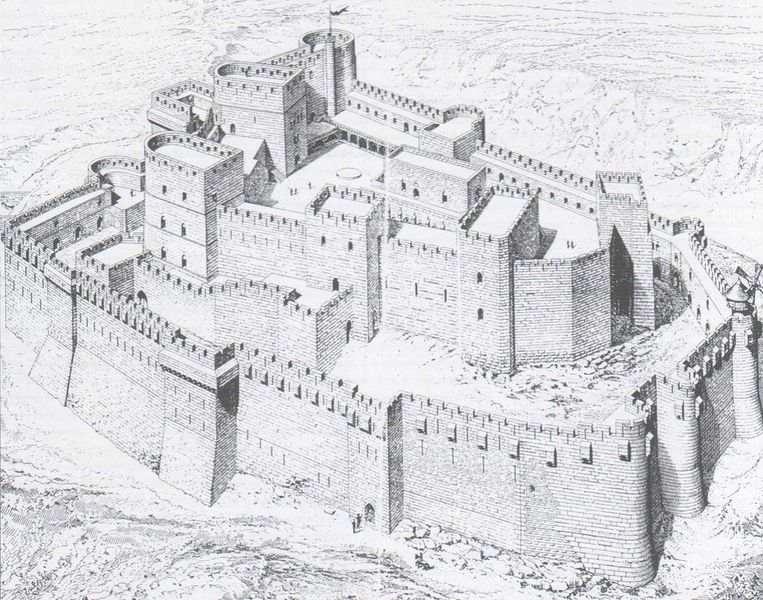
A castle is established by a warlord (level 9 to 12 fighting-man), paladin (level 9 to 12) or ranger (level 9 to 12). The castle is a feudal manor supported by 1d4 villages. The castle is defended by a number of men-at-arms commensurate with its size. The lord of the castle is assisted by one sergeant per 10 men-at-arms, and a cleric (or druid) and magic-user of half the level of the lord.

Motte-and-Bailey: 2d6 men-at-arms
Keep: 4d6 men-at-arms [or tower keep or shell keep]
Concentric Castle: 8d6 men-at-arms

Grove
A grove is established by an archdruid (level 9 to 12 druid) with the permission of his or her order. The grove consists of several trees around a clearing. An altar rests in the middle of the clearing. The founding archdruid and 2d6 level 1 to 3 druids dwell in a nearby lodge. The lodge is a gathering place for elves, rangers, the fair-folk and forest creatures.

Monastery
A monastery is not much different from an abbey except that it is inhabited by monks rather than clerics. It is established by an abbot (level 9 to 12 monk). The abbey contains a training ground surrounded by a shrine, armory and barracks. The monastery houses 1d6 monks of level 2 through 5 and 3d6 level 1 monks.

Tower
A magic-user’s tower is built in a hard-to-access spot that offers unique magical properties. It is to these places an adventurer must travel if they wish to commission a magic item or to obtain spells of level 5 or higher. Magic-users have 1d4 apprentices and 1d3 level 1 magic-users.

On Wilderness Adventures – Part One

This is some information I cobbled together when I was trying to create some guidelines for my campaign regarding wilderness adventures. I found the move a hex, roll for encounter stuff a bit boring, and was trying to find a better way. These guidelines might prove useful to some, though I never felt as though I had them right. I’ll mention that the movement rates are what they are because I was using 6 mile hexes.

Travel
The following table shows the normal rate of travel (in miles per day) for different modes of travel. The first number is over easy terrain, the number in parentheses for difficult terrain.

Foot, unencumbered: 12 (6)
Foot, encumbered: 6 (3)
Camel*: 16 (8)
Donkey/mule: 12 (6)
Elephant: 12 (4)
Horse, Draft: 8 (4)
Horse, Riding: 24 (12)
Horse, War: 12 (6)
Ox: 6 (4)

Easy terrains are grassland and tundra. Difficult terrains are highlands, mountains, taiga, wastelands, wetlands, and woodlands. Camels treat deserts as easy terrain.

Events
Each day, there is a 1 in 6 chance that a random encounter occurs. In addition, each wilderness hex the adventurers travel through holds set encounters they might find. Adventurers may come across one of these encounters accidentally (1 in 6 chance) or by searching.

Random monster encounter tables should be provided for each wilderness area. In addition to the threat of the monsters, the Referee must determine the battleground on which the encounter takes place. Battleground in this case includes not only the terrain where the encounter occurs, but also the weather and tactics of the enemy. Battlefields and battlefield conditions are addressed later.

Wilderness Types
The following wilderness categories are used in NODTM.

Aquatic
Aquatic areas are filled with fresh water and include lakes, rivers, streams and canals.

Aquatic Battlefields
1-3 Sandy Ground
4-7 Rocky Ground
8-9 Kelp Forest (movement cut in half, -5 penalty to missile attacks)
10 Chasm

Grassland
A grassland is a flat area or an area of gentle, rolling hills that supports grasses, sedges, herbs and few to no trees. Prairies, meadows and savannas are all grasslands. Steppes are semi-arid grasslands that usually separate deserts from woodlands.

Grassland Battlefields
1-6 Meadow
7-10 Tall Grass (movement cut in half, surprise chances increased by 1)

Highland
A highland is a rugged area of hills covered by grasses, herbs and sedges and sparse trees. A highland with heavy tree cover is considered a woodland. A highland with very little rainfall or grass cover is considered a wasteland.

Highland Battlefield
1 Meadow
2-5 Gentle Slope (movement cut in half, creatures with high ground are +1 to hit)
6-9 Steep Slope (movement cut in half, creatures with high ground are +1 to hit, if hit for damage must make saving throw or roll down slope for 1d3 damage and knocked prone)
10 Cliff (if hit for damage must make saving throw or go over cliff)

Mountains
Mountains are very tall highlands bordered by highlands or separated from other mountains by passes or valleys.

Mountain Battlefields
1 Meadow
2-4 Gentle Slope (movement cut in half, creatures with high ground are +1 to hit)
5-7 Scree Field (if moving at full speed must make saving throw or slip and fall)
8-10 Boulder Field (-3 penalty to missile attacks)
11-17 Steep Slope (movement cut in half, creatures with high ground are +1 to hit, if hit for damage must make saving throw or roll down slope for 1d4 damage and knocked prone)
18-19 Cliff (if hit for damage must make saving throw or go over cliff)
20 Chasm (if hit for damage must make saving throw or fall into chasm)

Tundra
Tundra is a scrubland or grassland located in a cold area. They are often marked by permafrost. A tundra can be flat, rugged or mountainous.

Tundra Battlefields
1-4 Meadow
5-9 Rocky Ground (if moving at full speed must make saving throw or slip and fall)
10 Ice Sheet (if moving at full speed must make saving throw or slip and fall for 1d3 damage)

Wastelands
Wastelands are hot, arid expanses of sandy or rugged terrain. Rocky deserts that support succulents and/or scrub. Sand sea deserts are covered with shifting dunes that can measure over one hundred feet in height. Either kind of wasteland might have scattered oases. An oasis is a fresh spring surrounded by vegetation. Some oases are large enough to support strongholds and villages.

Wasteland Battlefields
1 Meadow
2-5 Rocky Ground (if moving at full speed must make saving throw or slip and fall)
6-10 Sand Dunes (movement cut in half)

Wetland
A wetland is land inundated with water. A marsh is a wetland dominated by grasses, while a swamp is a wetland dominated by trees. Marshes can be filled with salt water or fresh water from springs (bogs) or rain (fens). Marshes can also be called moors. Salt water swamps are called mangrove swamps.

Wetland Battlefields
1-4 Meadow
5-6 Tall Grass (movement cut in half, surprise chances increased by 1)
7-9 Shallow Water (movement cut in half, surprise chances increased by 1)
10 Deep Water (movement cut in half, no missile attacks, surprise chances increased by 2)

Woodland
A woodland is covered by a closed or opened canopy of trees. It might be flat or hilly. Jungles are tropical woodlands that often contain swampy areas. Taiga are coniferous forests found in cold climates.

Woodland Battlefields
1-3 Meadow
4-5 Undergrowth (movement cut in half, surprise chances increased by 1)
6-9 Lightly Wooded (missile attacks at -3)
10 Heavily Wooded (missile attacks at -5)

Dangers
Dangers are threats one must plan for and deal with while traveling through the wilderness. Each danger listed below can be avoided by taking a number of precautions. Failure to do so results in penalties that accrue before a battle or by the end of the day.

Most of the dangers result in fatigue. Each source of fatigue an adventurer (or his mount) suffers results in a -1 penalty to all actions (attacks, saving throws, attribute checks) and one half penalty to movement.

Cliffs
Adventurers that are traveling through mountains and rugged highlands need to link themselves with ropes and carry miner’s picks. Most importantly, they need to avoid being anything more than lightly encumbered.

Equipment: Rope (100 ft.), pitons/spikes, hammer, miner’s pick.

Penalty: 1d6 points of damage from falling and exertion, half with a successful dexterity saving throw.

Cold Weather
Characters need double food rations in cold weather. Characters must find shelter at night and start a camp fire (requires a flint and steel and a tinder box or a saving throw). Shelter can be an existing cave or it can be built. Building a shelter requires such items as pickaxes (for an igloo), hammer, string and axe.

Equipment: Bedroll, flint and steel, tinder box, winter clothing (or furs), winter blanket.

Penalty: 1d6 points of damage and fatigue.

Getting Lost
Besides using proper equipment, one should take the time to climb trees and hills to sight the area (when possible). Spells like find the path are a perfect substitute for proper equipment and smart adventuring.

Equipment: Maps, charts, lodestone.

Penalty: Fatigue.

Hot (Dry) Weather
Characters should only travel at night and must consume an extra water ration each day to avoid dehydration. If traveling during the day, one must keep the sun off their skin by dressing in robes, cloaks, caftans and hats. Characters should avoid any armor heavier than a mail shirt. It is also important to rest often by cutting daily travel distance in half.

Equipment: Caftan or hat, cloak or robes (i.e. Arabic dress), extra water ration per day, lack of armor (see below).

Penalty: 1d6 points of damage and fatigue.

Hot (Humid) Weather
Humid weather is draining. One should avoid wearing much clothing (natives of such environments are naked or practically naked), including armor. Characters must rest often by cutting their daily travel distance in half.

Equipment: Lack of clothing, extra water ration per day.

Penalty: 1d6 points of damage and fatigue.

Hunger
Bring food or bring somebody who can hunt for food. Spending time hunting cuts daily travel distance in half. Bringing traps and/or fishing gear gives a +1 bonus to survival saving throws. The spell create food and water makes enough food for three humans or one horse per caster level. This food will spoil after a couple of days.

Equipment: Rations, animal traps, fishing gear.

Penalty: Each day without food results in fatigue. A week without food inflicts 1d4 points of damage. Creatures brought to less than half their normal hit points from lack of food will suffer one point of random ability score damage each day.

Swimming
A creature can swim at one quarter of their movement rate for a number of rounds equal to its constitution score. Swimming for each round beyond that requires a saving throw.

If forced to stop swimming, a creature can tread water for a number of rounds equal to their constitution score. Treading water for each round beyond that requires a saving throw.

Failure to tread water results in sinking. A creature will sink 5 ft each round. Creatures can hold their breath for a number of rounds equal to their constitution score. Holding one’s breath for each round beyond that requires a saving throw. When a single such saving throw is failed the creature drowns.

Thirst
Most environments allow for the collection of water as one goes; unfortunately, this water is not always safe to drink. This problem can be solved with a purify food and drink spell. Without it, adventurers run a 30% chance of being sickened, with a failed constitution saving throw indicating nausea and forcing the adventurers to make camp for 1-3 days.

Clerics can use create food and water to create enough water for four humans per caster level. This water does not go bad, but must be stored somewhere. The cleric/druid spell create water creates 2 gallons per caster level.

Equipment: Canteen, water skin.

Penalty: Humans and demi-humans require a half gallon of water per day. Horses and oxen require 10 gallons a day. Camels require 2 gallons of water per day. Elephants require 30 gallons of water per day.

A day with sufficient water leaves one fatigued. A day without any water inflicts 1d6 points of damage and causes fatigue. Creatures brought to less than half their normal hit points from lack of water will suffer one point of random ability damage each day.

Vermin
Depending on the terrain, vermin are almost impossible to deal with. Food can be kept in water skins and hung from trees to make it safer from vermin. Adventurers can sleep in tents and burn sticks on incense to ward away mosquitoes and other disease carriers. Boots should be shaken vigorously before being put on in the morning. Complex perimeters formed of string and little bells are of dubious utility.

Equipment: Tents, incense sticks.

Penalty: Lose one day of rations and succeed on a constitution saving throw or suffer fatigue from sickness and poisonous stings.

Wear and Tear
Each night, armor and weapons must be oiled and stowed away. Bows should be unstrung (a spare bow could be unstrung during the day and kept strung at night). Metal weapons should be sharpened. One can use a mending spell if without proper equipment.

Equipment: Armor and weapon oil, whetstone.

Penalty: -1 AC if wearing armor. -1 penalty to hit if using weapons.

Tomorrow I’ll post info on battlefield conditions, different types of encounters and strongholds.