Here Comes the Bogeyman – Part 4 – Killing Rituals

The point of a bogeyman is to create a campaign (or mini campaign or side trek) around figuring out how to kill the damned thing. That means researching the killing ritual. Here, horror movies aren’t quite as helpful as they’ve been before, because most horror movies that involve a bogeyman become series that NEVER FREAKING END. The only killing ritual that can put Jason, Michael Myers or Freddie down permanently is low ticket sales … and even then only until Hollywood thinks it can pull off a “re-boot”. For our purposes, though, we need to have an end to these campaigns of terror.

The how of killing might have something to do with the bogeyman’s origin, and then again, it might not. It could also just be some weird ritual that must be taught by the reclusive monks in those far-away mountains you’d like to introduce to your players.

The killing ritual should involve one or more element or step. The more experienced the players (not the characters), the more elements you can get away with, but more than three is probably going to get tedious. There might be a teacher or dusty old tome that can reveal the entire killing ritual, or perhaps the adventurers must track down each element separately. In such a case, it might be a good idea to weave the killing ritual in with the monster’s history (an example to follow), so that as players learn about the bogeyman’s history, they gain clues on how to destroy him.

Some elements you might consider for your killing ritual:

Hit Location – much like a vampire needing a stake to the heart to keep it down, Achilles’ infamous heel or Smaug’s missing scale, the monster can only be killed if struck at a certain point on its body. Unless the monster is stunned/paralyzed/subdued/etc., this brings a combat element into the game and might please the more combat-oriented players who otherwise couldn’t give a copper for solving the monster’s riddle.

Substance – the idea of needing special substances to kill monsters is not new to D&D – silver for lycanthropes, cold iron for some fey, wooden stakes for vampires, magic weapons to harm demons, etc. For a bogeyman, think outside these narrow bounds – Loki using mistletoe to kill Baldr comes to mind, or how about a silver spearhead anointed with a virgin’s tears? It might also be a particular weapon – the sword of Sir Magnus the Moldy, for example – that necessitates a brief quest to find the weapon (a quest which, incidentally, might help to keep the dungeon crawlers in the party happy).

Actor – the monster might require a specific kind of actor to kill it. This can get a bit dicey, as it might take the adventurers of the game just a little bit. Sure, they have to work hard to find the seventh son of a seventh son and convince him to accompany them to kill some monster he’s never heard of, but then the final stroke of the campaign comes from an NPC and that might lessen the satisfaction of the victory for the players. An “actor” requirement could also be something like, “a person who has kissed the Blarney Stone” or “a person who has lost a loved one to the monster” – something that can qualify one or more characters. Even using a PC as the final actor can create trouble – what if the killing blow falls on the shoulders of the halfling thief and two or three other PC’s buy the farm while that player suffers through some lousy hit rolls? An actor is definitely an appropriate element to the killing ritual, but just use it with your eyes wide open to the potential problems it can create.

Time – The time element involves something like: Can only be killed under a new/full/crescent moon; can only be killed at sunrise; can only be killed on a holy day; etc.. The value of a time element is to create a sense of urgency. Whatever the time element, it should be soon, so the adventurers must race to meet the deadline or suffer through another day or week of attacks that might claim new victims. You probably want to keep the interval between potential killings short, else the bogeyman side trek might outstay its welcome at the game table.

Place – A special place to kill a bogeyman might be fun as well, as it means the players have to figure out a way to lure the bogeyman to its undoing. Now, obviously, an intelligent bogeyman should not willingly let itself be lured to the one place it can be destroyed, so try to remember you’re working with an archetypal story here – just roll with it. It doesn’t have to be easy to lure the monster, but don’t make it ridiculously difficult. Good places might be the site of the bogeyman’s creation, an abandoned temple in a lonely wilderness, a holy site, the crater left over from a meteor impact, an active (or soon to be active) volcano, etc.

Here’s an example of a killing ritual tied to a particular bogeyman …

A maiden desperately in love with a wicked man was lured by promises of marriage into a lonely wood, where she was murdered. Now, on nights when the moon is new, a bogeyman composed of the psychic residue of the unfortunate woman (i.e. she isn’t undead) might appear to travelers (the locals know better than to travel during a new moon, but they don’t know why – just an old superstition) as a beautiful maiden with red-rimmed eyes who is accompanied by an audible heart beat – it throbs in people’s ears and causes fear (especially in henchmen and animals).

The murdered maiden will be drawn to killing any men in the party, and will also begin attacking descendants of her murderer, who still live in the nearby village. Assume the murder happened 50 years ago, so there probably are a few elders who remember what happened and can clue people in to the event. The murderer was probably a high placed person in the village, or perhaps was a cat’s paw for somebody else. Maybe the maiden’s stepmother wanted her out of the way?

In this case, the killing ritual involves plunging a gold ring (it was promised to her, and she might howl about it while attacking) into the bogeyman’s (bogeywoman’s?) heart. The most likely way is to slip the ring onto a blade or arrow. This must be done during the night of a full moon. Her destroyer must also deliver a heartfelt apology or must shed a tear while delivering the killing blow or the bogeyman will only disappear for a year and then will return to plague the adventurers.
Here Comes the Bogeyman – Part 3

Last time, I talked about what a bogeyman might look like. Today, I promised to talk about the bogeyman’s powers, but first I need to touch on motivation.

Why has the bogeyman shown up to harry the adventurers? I mean, other than because it makes for an interesting sub-campaign. Here are a few ideas – and they might be important, because the way to defeat a bogeyman might involve delving into its history.

– The bogeyman is killing to survive, i.e. a hunter

– The bogeyman likes to kill, i.e. a murderer

– The bogeyman must kill the adventurers to save itself or its future

– The bogeyman wants something the adventurers have or something they have taken (“I Want My 2 Dollars!”)

– The bogeyman was sent (or conjured) by an enemy

– The bogeyman wants revenge – maybe on the adventurers in particular, or on society in general

What powers does the bogeyman bring to the table? Here’s where it gets tricky.

The bogeyman is going to fight the PCs, so he needs to have combat stats. However – the bogeyman cannot be defeated in normal combat – it has a specific vulnerability that must be discovered and exploited to destroy it. Think of it as a killing ritual that must be performed (we’ll talk about the killing ritual tomorrow).

The bogeyman’s stats should be commensurate to the power of the adventurers it is challenging. If the PCs are all 8th level, then the bogeyman needs enough Hit Dice, a high enough Armor Class and the ability to deal enough damage to challenge the 8th level party. If underpowered, the bogeyman becomes a strange annoyance, not a terrible menace. If too powerful, the bogeyman will wipe out the adventurers before they can embark on the quest to figure out what/who it is, what it wants and how to destroy it.

In general, I’d give it two more Hit Dice than the party average – thus 10 HD for an 8th level party. Give it an Armor Class about four points higher (or lower depending on the system) than the party’s second best fighter can hit regularly. I know this is vague – so in Blood & Treasure terms, if you’re second best fighter has an attack bonus of +4, has a strength bonus of +1 and is wielding a +1 sword, then she has a total attack bonus of +6. On an average d20 roll, she’ll hit an AC of 16 about 50% of the time. So, maybe give the bogeyman an AC of 18 – hard enough to hit to give him some staying power against the adventurers, but not so impossible to hit that he cannot be defeated – remember, he must be defeated in that first combat to launch the quest to figure him out.

The bogeyman can have whatever powers make sense for its form, but keep in mind that the bogeyman should have some sort of fear effect – an aura, a gaze, etc. A bogeyman is almost made of fear, so a fear power just makes sense.

Now – how about those immunities?

There are two tacks you can use here – we’ll call them the Jason Concept and the Doomsday Concept.

In the Jason Concept, you have a bogeyman that can apparently be killed … but which always returns to fight again. A bogeyman like this shouldn’t have any obvious immunities (or at least not many) – it takes damage and falls, and then comes back again and again and again. There is no rule for this – no need to specify a regeneration ability. This is campaign stuff, not monster stuff. You might want to vary the bogeyman’s return time – i.e.

D6 / Return Time
1. Returns in 1d6+4 minutes, half healed
2-3. Returns in 1d6 turns, fully healed
4-5. Returns in 1d6 hours, fully healed
6. Returns in 1d6 days, fully healed

The Jason Concept works on the attrition model – he’s slowly wearing down the adventurers, depleting their resources and making them more and more vulnerable until he starts eliminating them one by one.

In the Doomsday Concept, you have a bogeyman that simply cannot be hurt – except by its killing ritual. This concept is more dangerous, because it means you’re going to lose party members until they realize they have to run. You might want to limit the damage output of a Doomsday or make sure it is slow moving enough that it can, at least initially, be escaped. With a Doomsday, it needs to have a high magic resistance, immunity or resistance to most energies, only hit by magic weapons, etc. It should probably also have a regeneration ability – either like a trolls (so it’s always regenerating), or one that kicks in when it seems to have been killed. The idea here isn’t to fight a war of attrition with this thing, but rather to have to retreat, regroup and come up with a new plan.

Whichever concept you’re using, you’re skating on thin ice with a group of players who really hate character death.  If you’re playing a system where it is assumed that any obstacle/challenge can be overcome, you run the risk of players who are going to feel cheated. If you have players like this, you’ll probably want to use the Jason Concept – a foe they can defeat, but who keeps coming back.

Tomorrow – Killing Rituals and how to discover them.

Here Comes the Bogeyman – Part 2

So you’ve decided to freak your players out and really test their mettle (and I mean their mettle, not their characters’ imaginary mettle). You need to know what your bogeyman looks like – here are some ideas.

Body-wise, you have three categories you might work in:

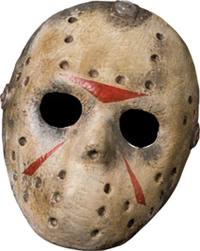
HUMANOID: This is probably the bogeyman most often used in horror movies, be it Jason, Freddie, etc. The humanoid bogeyman can look like virtually anything, and be as drab and mundane or hellish and frightening as you like. Bogeymen without faces (again, Jason comes to mind). The bogeyman can be completely silent (often unnerving) or can bark out a few words and taunts.

A humanoid bogeyman can be particularly effective because the form gives the players a shot of false confidence right from the get-go – it looks human, so we should be able to chop it (or fireball it) like a human.

A few ideas for medieval fantasy bogeymen:

A traditional black knight sort, maybe with a horse, maybe without

The less traditional “white knight” – perhaps in the tattered garb of a crusader

The little girl – throw in a red riding hood or even a twin to set people on edge

A peasant who’s face is hidden in shadows beneath a wide-brimmed hat or a hooded cloak

A man or woman shrouded in the tattered robes of a leper

A man or woman who looks like somebody the players have encountered before

MONSTROUS: A monstrous bogeyman probably looks challenging (or even unbeatable) as soon as it is encountered. It is usually big – the size difference between it and its victims being a key aspect in the fear is causes them – and might be scaled, hairy, etc. It’s natural weapons are probably impressive, or perhaps it holds a large sword or axe. The monstrous bogeyman might look like an undead, but it should not technically be “undead” – you don’t want a cleric spoiling the encounter with a lucky turn undead roll. Maybe the monstrous bogeyman looks like it belongs to the wilderness in which it is encountered, something akin to Swamp Thing or Man-Thing or the Heap. To be most effective, the monstrous bogeyman should probably attack without warning – the adventurers are walking through the woods and BOOM, it’s there and charging. The humanoid bogeyman might be more effective if first seen from far away, as though waiting for the adventurers to approach. The monstrous bogeyman, on the other hand, should be about the noise and confusion – Jaws might be the best way to describe it.

FORMLESS: When I think about the “formless” bogeyman, my mind first goes to the cloud monster in “Obsession”, a second season episode of Star Trek. The formless bogeyman lack of form presents a particular challenge to adventurers, as it renders physical weapons obviously ineffective – it is also harder to wrap one’s head around – no face to read (well, that applies to many humanoid bogeymen as well) – nothing physical to get a grip on. Formless bogeymen can also be shimmering curtains of energy or invisible psychic vampires – perhaps only a sound or smell announces their presence.

Whatever the form the bogeyman takes, its motives should, at first, be inscrutable. Like the trucker in Duel, it simply appears and presents itself as implacably hostile to the adventurers. It is an obstacle they cannot avoid and must deal with, and to deal with it, they’re going to have to be creative.
Next, I’ll get into the specifics of the bogeyman’s powers and vulnerabilities.

Here Comes the Bogeyman!

Here Comes the Bogeyman – Francisco de Goya 1797

What’s a bogeyman? For my purposes, a bogeyman is a unique monster that cannot be defeated by merely hitting it with swords and spells. The bogeyman can take many forms, but all bogeymen share one characteristic: They can only be permanently defeated by finding their one vulnerability and attacking it.

When do you bring out the bogeyman? Well, if you want to make it most effective, you unleash the bogeyman on your party when they’re not expecting it. For example, everyone sits down to the nth in a series of delves into whatever mega-dungeon or mega-wilderness you’ve been running. If the party is in the midst of something mundane (i.e. heading back to town, heading back into the wilderness, resting int town), it’s probably the best time to inflict the bogeyman on them. The initial encounter does not need to be deadly (unless players don’t take the hint of “nothing seems to be harming it”), but should scare the crap out of them and send them running.

Now you’ve just shifted the campaign and put the players on the defensive. What they hell is that thing? What does it want with us? Why don’t it go away? How do we stop it? These are the themes of the bogeyman sub-campaign – essentially a horror that the players didn’t ask for, but which they now must deal with.

Tomorrow, I’ll discuss some of the specifics of the bogeyman …

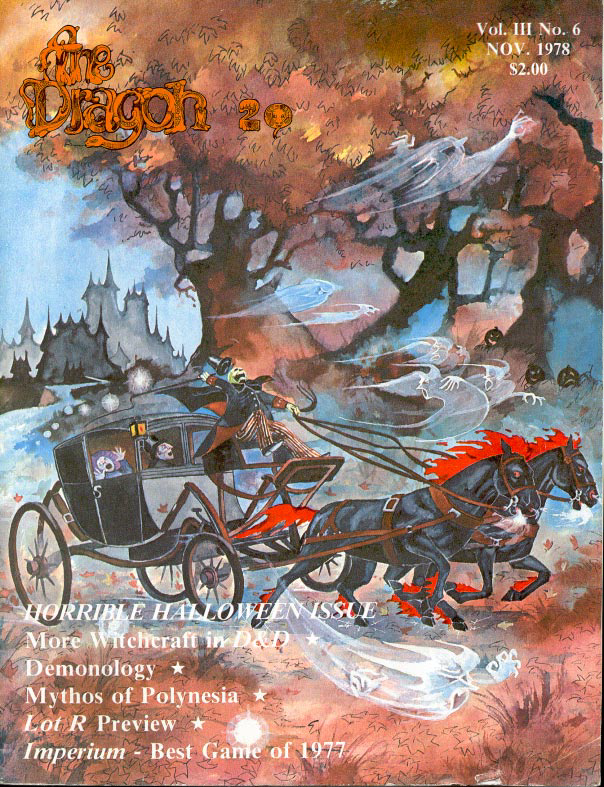
Dragon by Dragon – November 1978 (20)

And so we come to November of 1978, which is notable … for nothing that I’m aware of, other than this magazine. This appears to be their Halloween issue (why November? Kask explains it’s because November is the dreariest month of the year – what with all the football and Thanksgiving? – and thus a good month for horror stories).

Whatever the reason, let’s see what Dragon #20 has to offer.

Designer’s Forum – The Making of a Winner: Imperium – Outstanding Game of 1977 by Marc Miller

Yeah, that Marc Miller. In this article, Miller describes the origins of Imperium. Apparently it began as two games, Imperium being a giant sci-fi game of economics and conquest, and StarFleet, which was on a smaller scale. Ultimately, StarFleet was put on the back burner while Traveler was made. When Lou Zocchi mentioned that the name could get them in trouble with the Star Trek folks, and when they decided Imperium was too big to publish, they decided to take what they had learned making Traveler and apply to StarFleet, which would now be renamed Imperium.

Anywho – the article goes on to describe the design process behind Imperium, and to also provide some rules clarifications and addenda.

I enjoyed this bit …

Whatever happened to that guy?

Distributing Eyes & Amulets in EPT by Mike Crane

One of those great articles that makes perfect sense to people who play the game. The article is just a series of random tables that makes sure “rare” eyes and amulets show up less often than “common” eyes and amulets.

The Mythos of Polynesia in Dungeons & Dragons by Jerome Arkenberg

This article covers everyone from Tangoroa, God of the Ocean, to Pele the Destroyer, to Miru, God of the Underworld. The heroes seem more interesting …

The Polynesian Heroes were born in non-human form, and were brought up by their maternal grandparents, from whom they derived their magic. When in human form, they could transform, stretch, or shrink themselves, fly, take giant strides, and perform great feats of strength.

Maui is, of course, the badass of the crew (and he happens to look like a buffoon with eight heads) – here are some stats for Blood & Treasure.

Maui, Challenger of the Gods: Magic-User 18 and Fighter 15; HP 140; AC 12; ATK 4 slams +7 (1d3+5); MV 30 (Fly 40); F 6 R 9 W 4; XP 4500; Special: Dominate foes with 0 HD or less, 4 attacks per round, spells per day (4/4/4/4/4/4/4/3/3/2); Str 20, Int 18, Wis 18, Con 18, Dex 17, Cha 3.

Wormy

In this episode, Frank and Dudley abscond with one of the demon eggs to spring them on the ogres. It’s amazing how engaging this strip was right from the beginning.

D&D Variant: Another Look at Witches and Witchcraft in D&D by Ronald Pehr

Love the editor’s note:

Editor’s Note: This seems to be a well thought out class-variant. At the very least, it makes an excellent NPC or hireling/acquaintance. For those DM’s bold enough to try it, it provides a very viable character for ladies; be they sisters, girlfriends, lady gamer or others. D&D was one of the first games to appeal to females, and I for one, find it a better game because of that fact.

It manages to be both inclusive and a bit sexist at the same time.

So, what do the ladies get with this witch? It’s actually a nice class, and, I believe, the origin of the later witch class that showed up in Dragon in the 80’s. Witches here are not Satanists, but more nature lovers who use magic to charm and control – I guess what you would call an enchanter in more modern versions of the game – and who can brew potions, narcotics, hallucinogens, etc. Witches get eight levels of spells, many of them new, and they appear to straddle the normal magic-user/cleric divide.

D&D Variant: Demonology Made Easy by Gregory Rihn

This article is all about conjuring demons (and devils). The key here is learning a demon’s name, and the process is simple and clever: You research a demon or devil’s true name the same way you research a spell:

Demon prince, arch-devil = 9th level spell
Type VI, pit fiend = 8th level spell
Type V, ice devil, succubus = 7th level spell
Type IV, horned devil, night hag = 6th level spell
Type III, bone devil = 5th level spell
Type II, barbed devil = 4th level spell
Type I, erinyes, misc. = 3rd level spell

Definitely one of those, “Why the heck didn’t I think of that” moments.

Once you get down to the conjuration, you roll some percentile dice to see if what you call is what you get. Calling a demon prince, for example, has the following chances:

01-50 = Type V demon
51-75 = Type VI demon
76-00 = Demon Prince

High level conjurations require assistants and sacrifices, and there are additional chances for failure for characters below 20th level. Very good article.

GenCon XI Photo Album

Greg Costikyan of SPI … I believe I recognize the woman as Gygax’s daughter
That Gygax fellow
J Eric Holmes and his son Chris
Jeff Perren
Lou Zocchi and Woody … proving that GenCon’s best days are clearly behind it
Marc Miller
Mike Carr
Tim Kask
Tom Shaw of Avalon Hill

Review: See Africa and Die! or, Mr. Stanley, Meet Dr. Livingstone by Gary Gygax

Gygax reviews Source of the Nile here. Apparently, this is a super long play game. It is pretty extensive review, and it looks like a pretty cool game. Best line of the review:

Be certain to read and KNOW the rules before you attempt to play. The rules are not well organized, nor are they very complete. In fact, in many ways they remind me of those originally written for D&D®.

Gygax also gives some additional ideas for the game.

The Asimov Cluster by William B. Fawcett

This article discusses the problems inherent in recreating scenes from sci-fi novels in games of Traveler. It also provides stats for the planets of the Asimov Cluster from the Foundation Trilogy.

Advert for the drow modules. The drow are going to change quite a bit over the next 30 years.

Preview: The Lord of the Rings by Allen Hammack

This preview is for the Bakshi animated version (which I’ll admit I like, sue me). It mostly gathers together some stills from the movie and a few production notes from Bakshi.

It’s a Good Day to Die by Lyle Fitzgerald

This article compiles death statistics of a D&D campaign in Saskatoon. In two to three years, this campaign racked up 600 deaths of PCs and their advance-able hirelings. Wow! I know the old game was deadly (I’ve played it), but this does seem excessive. The top killers are Miscellaneous Causes (14.6 percent) and goblin races (10.1 percent). Dragons were responsible for 7.5 percent of the kills and giants 5.7 percent – respectable numbers for the big guys. War only caused 6 deaths – I guess one of the four horsemen needs to be replaced by a goblin.

War of the Ring Variant by Allen Hammack

Simple rule change – hide the movement of the fellowship so the bad guys don’t have to pretend they don’t know where they are. Honestly – can’t believe the designers didn’t think of this.

Fineous Fingers

A dragon throws a stupid paladin off a cliff. Nice tactic – fake a subdual.

Demonic Possession in the Dungeon by Chas. Sagui

This article takes the rules to task on the inability of demons to possess victims. In Chas’ rules, only demons of Type IV or higher can possess mortals. Interesting line:

The rule of the thumb is that only those demons that are immune to all but magical weapons and therefore exist upon two planes at once may possess.

One of those, “wait – is that really why, or did he just make that up?” lines.

The basic idea is that the DM let’s the players all know they might be possessed. Everyone rolls a saving throw, but only one character is really the victim. The victim is chosen “randomly” – i.e. first person into a room, last person, etc. A save vs. magic is allowed to avoid the possession.

The possessed dude has his normal AC, but attacks as the possessing demon. They cannot use lawful-aligned magic weapons. The demon can use its normal powers, provided its new body doesn’t preclude it. All damage is taken by the body, not the demon.

There’s more, but you’ll need to read the article.

Not a bad issue, really. The witch and the demon conjuration articles are my favorites. I’d recommend hunting it down.

Deviant Friday – Recent Favorites

Here are a few of the illustrations I’ve “favorited” (yeah, favorite is now a verb – get used to it) on DeviantArt recently. Enjoy!


(always one of my favorites – I should be getting the recreation of Morgan Ironwolf in the mail soon!)


(Shame this game wasn’t made – probably would have been fun)


(I so prefer this to the more anime-inspired armor and weapons that show up in many fantasy RPG products these days.)


If you like these, be sure to visit the artists galleries as DeviantArt and their websites – maybe purchase a print.

See you all tomorrow with a Dragon by Dragon!

Astro Creeps [Space Princess Monster]

Astro Creeps

HD 5 | DEF 13 | FIGHT 10 | SHOOT 11 | MOVE N | STR 5 | DEX 6 | MEN 8 | KNO 4 | DL 6

The conquest of space did not happen overnight, and it didn’t happen without a few casualties. Many of those souls who were lost in the spaceways found it impossible to slip the mortal coil entirely, their thirst for adventure and discovery being so keen. These men and women are known as astro creeps.

Astro creeps appear as space suits, usually of an old vintage. In place of faces, the astro creeps have two glowing orbs that seem to serve as their eyes. They drift through space, searching for new starships that they may inhabit (haunt, one might say) and turn to their own mysterious purposes.

An astro creep can attempt to seize control of a ship’s computer, using this control to chart a new course (usually to reach the destination they set out for when they were alive) or even to shut down random functions (life support, weapons, etc.). The chance of success depends on the size of the ship they are attempting to control:

Starfighter 79%
Shuttle 68%
Freighter 46%
Blockade Runner 46%
Corvette 34%
Star Cruiser 13%
Dreadnaught 6%

Note: Astro creeps rarely seize control of starfighters due to the cramped conditions.

Characters can use their identify and use device skill each round to attempt to regain control, rolling against a DC of 14 to succeed.

Astro creeps can unleash a piercing, manic laugh in combat, once every 1d4 rounds. Those within 30 feet of the laugh must pass a MEN test or be struck with panic, dropping whatever they are holding and fleeing at top speed for 10 rounds minus their MEN score.

Astro creeps can, at will, phase themselves through solid bulkheads and walls – moving through up to 3 feet of solid material. They are otherwise solid, and cannot use this ability to avoid being hit in combat.

The Bar Fight Matrix – A Way to Handle Fantasy Slugfests

The bar fight – classic stuff, and a pain in the ass to run. Try this …

First and foremost – how big is this thing? Either find the number of combatants on the table below, or roll randomly:

“Hit Points” refers to the total hit points of the faceless crowd. When hit points are down to zero, the fight is over because all the non-PC combatants have either fled or are unconscious.

Each round, PC’s can choose one of the following actions:

FIGHT: The character jumps into the fight with feet and fists flying – he’ll take all comers

FLEE: The character tries to scramble out of the fight

HIDE: The character is hiding under a table or hiding behind the bar

LOOT: The character wades through the fight picking pockets or stealing drinks

SEEK: The character wades through the fight looking for a specific target; the target could be a person or an item

The Referee rolls 1d10 and checks the matrix below, cross-referencing with each character’s stated action. Any time a character suffers damage, they must pass a saving throw (Fortitude, or vs. petrifiation) with a penalty equal to the damage to avoid being either stunned (lose turn for 1d3 rounds) or knocked unconscious for 1d10 minutes. There is a 50% chance of either. A stunned character is considered to have chosen “Hide” as his action each round he is stunned.

A is for “Attacked”
The PC is attacked by other combatants, and can attack them back, roll 1d6

1 = AC 10, Attacks with +0 bonus for 1d2 points of damage
2 = AC 11, Attacks with +1 bonus for 1d3 points of damage
3 = AC 12, Attacks with +2 bonus for 1d4 points of damage
4 = AC 13, Attacks with a +3 bonus for 1d6 points of damage
5 = AC 14, Attacks with a +4 bonus for 1d8 points of damage OR attacked by a special combatant who happens to be in the bar (an ogre, minotaur, mind flayer, flumph – whatever)
6 = Attacked by two combatants, roll 1d5 to determine each one; if struck by both of these combatants, the PC must make a save (Fortitude or vs. petrification) or be lifted and thrown:
     / 1-2 = Slid down bar for additional 1d6 points of damage and knocked prone
     / 3-4 = Thrown out door and into street for 1d6 points of damage and knocked prone
     / 5 = Thrown out window and into street for 2d4 points of damage and knocked prone
     / 6 = Thrown off balcony or stairs onto a table, suffering 2d6 points of damage and knocked prone; if this doesn’t make sense, re-roll

B is for “Bystander”

The PC catches sight of an innocent (or not) bystander

1-2 = Child (or maybe a halfling) hiding from the fight; lawfuls must attempt to save them, first by seeking and then by fleeing
3-4 = A dancing girl or guy (we’re urbane and sophisticated in the Land of Nod) motions you over to a door; you must “Move” to get there (it is 2d10 feet away), and once there are pulled inside and either:
     / 1-2 = Quit the fight and do some more enjoyable wrestling (50% chance of being slipped a Mickey or simply being pick pocketed, 10% chance you are hunted down by a jealous lover afterwards) – either way, you earn XP per a 3 HD monster you dog!
     / 3-4 = Suckered into an ambush, roll as per “A” above, but roll 1d3+3, and you don’t get to hit back
     / 5-6 = Punched by the girl/guy (AC 10, attack at +1, 1d2 points of damage) – this is a surprise attack, so you don’t get to hit back
5-6 = See a damsel faint, roll attack vs. AC 15 to catch her for XP (per a 1 HD monster) and now must fight with a -2 penalty to hit

F is or “Flying Debris”

The PC is struck by flying debris; monks can make a deflect arrows roll to avoid this, but for everyone else it is just the luck of the draw. Roll 1d6

1-3 = Hit by bottle for 1d3 points of damage; save vs. stunning or unconscious
4 = Hit by chair for 1d6 points of damage; save vs. stunning or unconscious
5 = Hit by a flying body for 2d4 points of damage; save vs. stunning or unconscious; if a compatriot was thrown this round, you were hit by them
6 = Hit by a random spell (1st or 2nd level), type depends on what spell casters are present; if no spell caster is present, roll again.

L is for “Looting”

The PC acquires some loot – roll 1d6

1 = Acquire a single mug of ale or a shot of whiskey
2 = Make pick pocket roll to acquire 1d10 cp worth of goods
3 = Make pick pocket roll at -5% to acquire 1d10 sp worth of goods
4 = Make pick pocket roll at -10% to acquire 1d10 gp worth of goods
5 = Make pick pocket roll at -15% to acquire 1d10 pp worth of goods
6 = Make pick pocket roll at -20% to acquire a treasure map or some other plot-driver
On a failed pick pockets roll, you are attacked (see “A” above)

M is for “Movement”

The PC moves 1d10 feet towards his chosen exit (door, stairs to second floor, etc.)

N is for “Nothing”

Nothing happens to you this round, nor do you get to do anything

R is for “Reach Target”

PC reaches the target they were looking for!

“Okay, Break it up!”
Each round of the fight, there is a 1 in 20 chance that the town guard shows up in force to break up the fight. Assume a number of men-at-arms equal to the number of PCs, plus 1 man-at-arms per 3 hit points worth of crowd remaining. Combatants, including the PC’s, will be arrested (unless they fight their way out or find a way to sneak out). If the guard is on its way, there is a 50% chance that the round before they arrive some bystander yells “Cheese it! The Cops!” to give the combatants a warning.

Bringing a Knife to a Fist Fight
Pulling a weapon or casting a damage-dealing spell during a bar fight is a chaotic act (small “c” chaotic, not big “C” summoning-Cthulhu-to-destroy-the-world chaotic – i.e. you’re a dick); and results in you being avoided by other combatants for the duration, but suffering a -4 penalty to reaction checks in this settlement forevermore. Also, it just isn’t any fun.

Death and Dismemberment
Bar fights shouldn’t really result in PC death – death just isn’t the point of these things – but your mileage may vary. At 0 hit points, assume that a PC has been knocked out and will awaken in jail (or the stocks) if not rescued by a compatriot.

Random Jeweled Thrones Upon Which Your Barbarian Can Tread

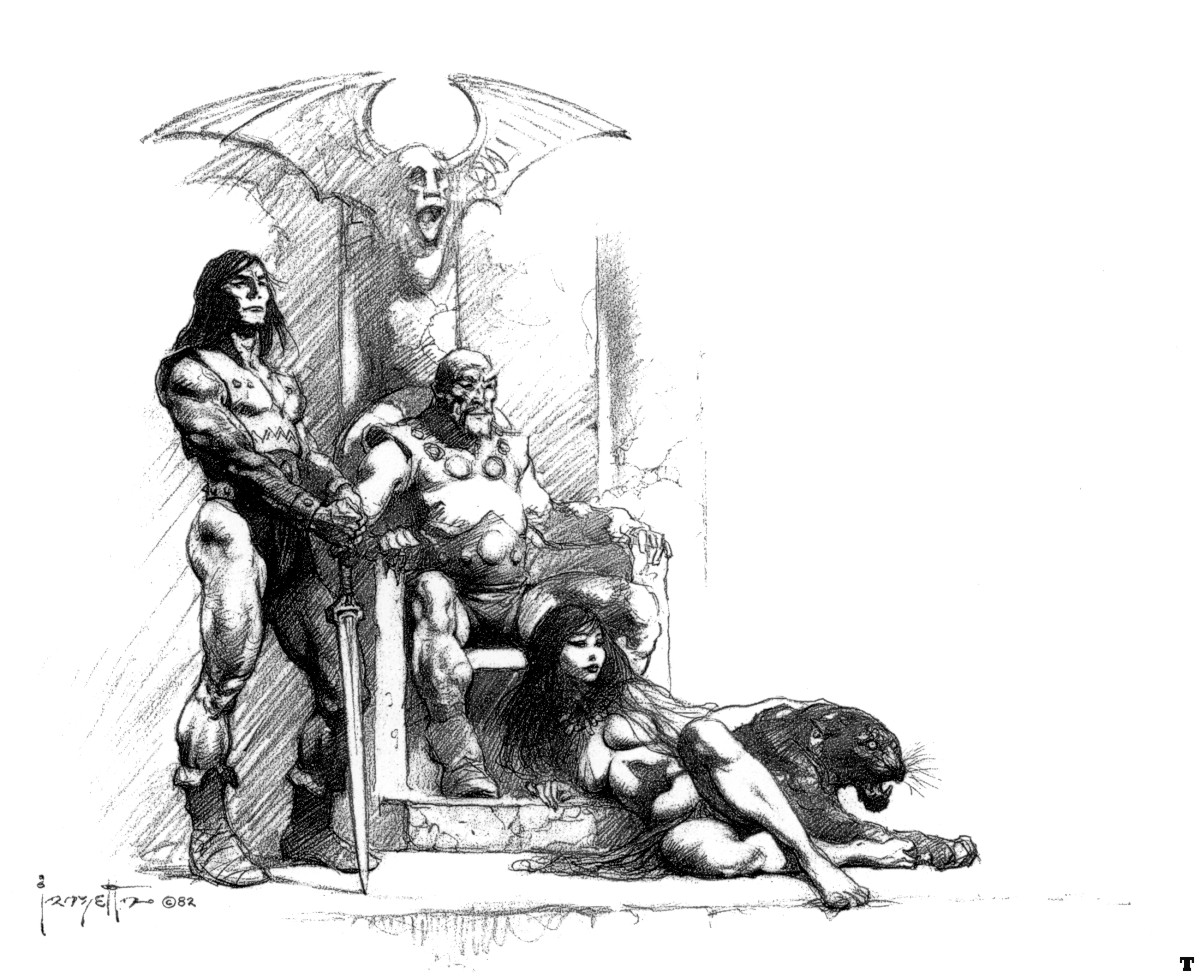
Whenever I’m writing a hex crawl and I it’s time to describe some royal ugly dude’s throne, I have to take a pause. How do I make this interesting? In literary terms, the throne is an extension of the person sitting on it – and in game terms, thrones are one of those things that players should remember – they give an encounter a bit of color and flash – something to fire the imagination.

With that in mind, I present a few tables for randomly generating hopefully interesting thrones.

First things first, you need to know whose butt is going to be planted in it, because their rank will provide a modifier (or no modifier) to the dice rolls:

Knight/Baron: +0
Viscount/Count: +5
Duke: +10
Grand Duke/Prince: +15
King/Queen: +20
Pope/Emperor: +25

For monster monarchs, let their hit dice be your guide:

0 to 5 HD: +0
6 to 9 HD: +5
10 to 14 HD: +10
15 to 19 HD: +20
20+ HD: +25

THRONE MATERIAL (D%)

01-010 – Pine*
11-17 – Elm*
18-24 – Maple
25-31 – Cedar
32-38 – Oak
39-45 – Walnut
46-52 – Cherry
53-59 – Teak
60-64 – Limestone (or granite or basalt)
65-69 – Bone (re-roll if this is too bad ass for you)
70-74 – Iron/Steel (re-roll if this is too metal for you)
75-79 – Kingwood
80-84 – Tulipwood
85-89 – Ebony
90-94 – Blackwood
95-99 – Marble
100-104 – Porphyry
105-109 – Malachite
110-116 – Brass
117-120 – Silver
121-122 – Gold
123 – Platinum
124 – Mithril
125 – Adamantine

* 10% chance that the wood is covered by silver foil or gold leaf

ORNAMENTS (D%)

01-08 – None
09-16 – Carvings (animals, plants, monsters, geometric designs, etc.)
17-23 – Feathers (peacock, griffon, roc, angel, etc.)
24-30 – Fixtures, brass (knobs, spikes, figurines, medallions)
31-36 – Fixtures, silver
37-43 – Inlay, wood (rosewood, zebrawood, holly, cocobo, ziricote, blackwood, ebony, kingwood)
44-48 – Inlay, shells
49-55 – Pillows of silk
56-60 – Pillows of velvet
61-65 – Pillows of damask
66-70 – Inlay, alabaster
71-75 – Inlay, ivory or tusks (elephant, narwhal, catoblepas)
76-79 – Inlay, mother-of-pearl
80-85 – Pietra dure – marble
86-90 – Pillows of leather (monster hide)
91-94 – Fixtures, gold
95-98 – Fixtures, platinum
99-103 – Pietra dure – fancy stones (see Blood & Treasure)
104-106 – Fixtures, mithril
107-109 – Fixtures, adamantine
110 – 114 – Slaves (servants, dancers, musicians) – chained to throne
115-118 – Guard animals (wolves, cheetahs, lions, tigers) – chained to throne
119-122 – Gems (1d12; see Blood & Treasure)
123-125 – Jewels (1d12; see Blood & Treasure)

FOUNDATION (D%)

There is a 1 in 4 chance of the throne being situated on an interesting foundation

01-50 – Dais (1d4+1 steps)
51-75 – Moat – water
76-85 – Moat – perfumed water
86-95 – Moat – wine
96-99 – Moat – flaming oil
100-109 – Statue (i.e. throne atop a statue of a bearer, either an animal or people)
110-114 – Monster (throne actually on the back of a large, subdued monster)
115-125 – Slaves (throne on the back of human or demi-human or non-human slaves)

SPECIAL POWERS (D%)

Chance of special powers equal to 1 + rank modifier on percentile dice

01-06 – Augury (1/day)
07-12 – Charm person (1/day)
13-18 – Command (1/day)
19-27 – Detect evil or good (1/day)
28-33 – ESP (1/day)
34-37 – Summon monster III (1/day)
38-40 – Summon monster IV (1/day)
41-42 – Summon monster V (1/day)
43-46 – Augury (3/day)
47-50 – Charm person (3/day)
51-53 – Command (3/day)
54-58 – Detect evil or good (3/day)
59-62 – Break enchantment (1/day)
63-66 – Cure disease (1/day)
67-70 – Divination (1/day)
71-74 – Remove curse (1/day)
75-78 – ESP (3/day)
79-84 – Magic resistance 5%
85-87 – Detect evil or good (at will)
88-90 – ESP (at will)
91-94 – Magic resistance 10%
95-96 – Contact other plane (1/week)
97-98 – Gate (1/week)
99-101 – Protection from evil or good (constant)
102-104 – See invisibility (constant)
105-106 – Tongues (constant)
107-108 – True seeing (constant)
109-110 – Control weather (1/day)
111-112 – Flame strike (1/day)
113-114 – Insect plague (1/day)
115-116 – Lightning bolt (1/day)
117-118 – Slow (1/day)
119-120 – Magic resistance 20%
121-122 – Summon Monster VI (1/day)
123-124 – Summon Monster VII (1/day)
125 – Wish (1/lifetime)

After Earth RPG

I got an email a few days ago from Jeremy Penter asking if I’d post about a game he and some other folks are working on called After Earth. Now, I’m always a bit squeamish about promoting things not directly tied into old school gaming on this blog – I don’t want to invoke eye-rolling from the core audience. On the other hand, plenty of folks out there have been nice enough to mention my nonsense and drive readers/customers to me, so I figure I should return the favor.

After Earth sounds like its a fantasy, post-apocalypse RPG that uses playing cards for task resolution. The Kickstarter page has some nice art on it as well as a bit more description of the rules and the game setting.

If you like post-apocalyptic settings, you might give this game a look-see.