Six Delightful Demons

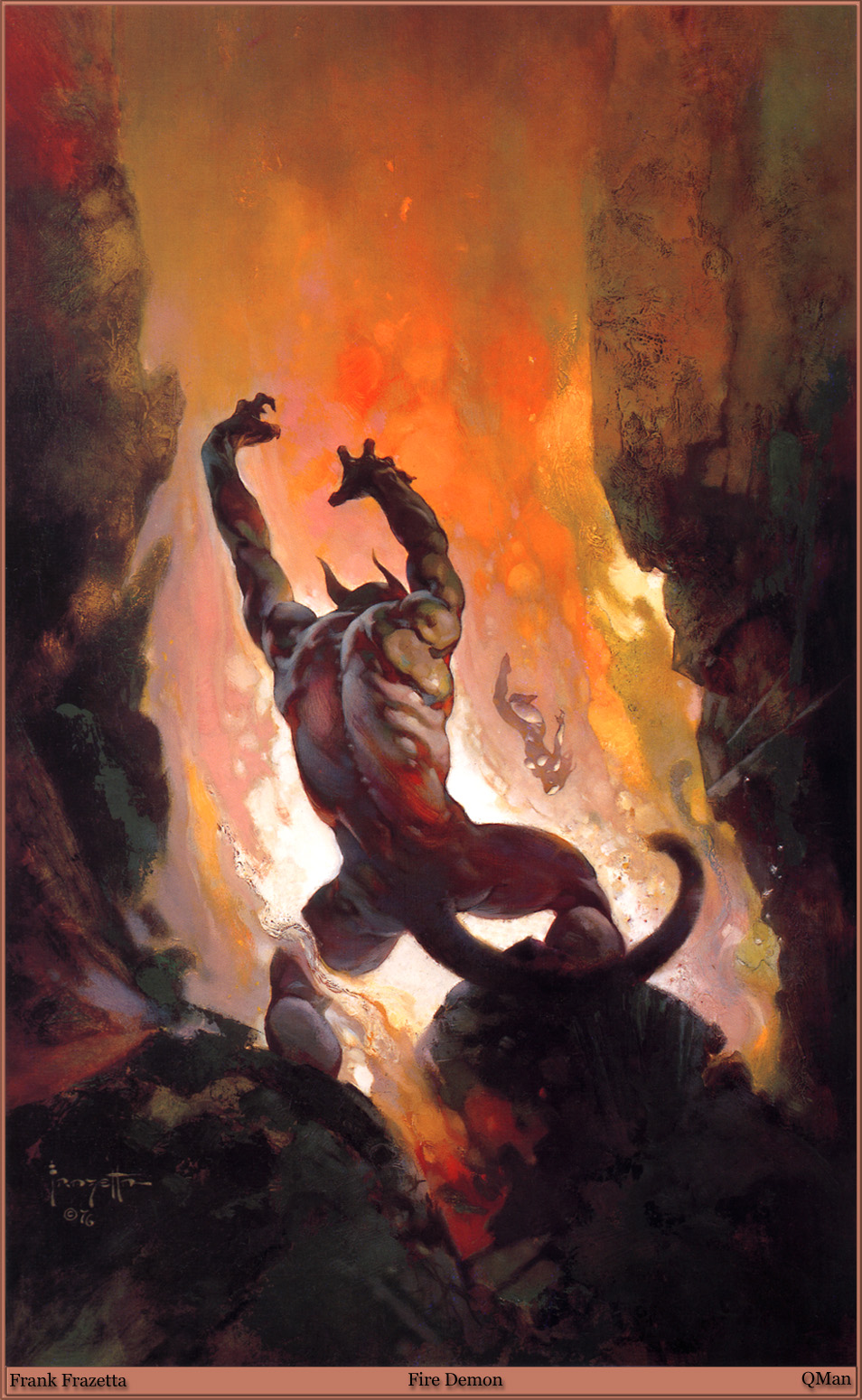
Who doesn’t like a good demon (well, not good – you know what I mean). Today, I present six delightful demons that have fallen prey to the bindings of earthbound conjurers.

Izalph

Izaph is a type I demon that once stalked the woodlands around an ancient castle that was inhabited by a coven of diabolists. The villages that bordered the woods were beset for many years by the temptations and depredations of Izalph, and many a knight and maiden were cast into ruin by the demon’s actions. Finally, a trio of spellcasters, a cleric, druid and magic-user, joined forces to deal with the infamous ‘Demon of the Wood’. The trio found a grove of ancient oak trees and carved runes of power into them. They then drew lots. The cleric lost and served as bait for the demon, fleeing from it and drawing it into an especially large, ancient oak tree. As the demon followed the cleric into the tree, the magic-user and druid completed their spellwork and activated their magic circle, binding the demon into the tree. The cleric, alas, lost his life. Izalph is still trapped in the great oak, brooding and cursing his fate. Seven dryads dwell in the smaller oaks that serve as the anchors of the magic circle, and they delight in tormenting the captive demon.

Izalph: HD 8; HP 28; AC 20 [+1]; ATK 2 claws (2d8) and bite (1d8); Move 30 (Fly 50); F8 R9 W8; AL C (CE); XP 2000; Special: See B&T.

Phimzael

Phimzael is a type II demon that looks like an especially large, warty, frog with bilious green flesh streaked with gold. For many long years, the wizard Yurk researched Phimzael, learning his true name and the symbols required to conjure and hold him. Yurk desired a very ancient spell involving transportation to and from the gem-like worlds that dot the Firmament, and his inquiries convinced him that the Celestial Circle, a band of magic-users known in ancient Irem, had been the last to perfect this spell, and that they had had contact with Phimzael. Yurk also knew that Phimzael was not to be trifled with. He constructed a long shaft, like a well, with a circular room at the bottom. Here, he drew his magic circle and, accompanied by his apprentices, conjured the demon. Phimzael was a cunning opponent, and time and time again he fed Yurk false information about the spell he sought. Eventually, he corrupted Yurk’s most promising apprentice and, during an especially long and frustrating audience with the demon, the apprentice stabbed Yurk in the back (literally) and released Phimzael from the magic circle. It was then that Phimzael learned just how canny Yurk was, for the rim of the shaft also formed a magic circle, more powerful than the first and obscured by illusions. Phimzael was again trapped in a magic circle, and this time there was nobody capable of releasing him. In a fit of anger he slew the apprentices and consumed their souls. He still sits at the bottom of the shaft, which is now filled with water, in the ruins of Yurk’s manse.

Phimzael: HD 9; HP 35; AC 21 [+1]; ATK 2 claws (1d8) and bite (4d6); Move 30; F8 R9 W8; AL C (CE); XP 2250; Special: See B&T.

Zuron

Zuron was a type III demon that specialized in providing engineering knowledge to those who conjured and commanded him. It was in this capacity that was conjured by the archimage Thebea to advise the gnomish engineer Walprict in the crafting of an especially large and impressive iron golem. Unfortunately, dealings with demons are never easy, and Zuron proved to be more than Thebea could handle. She arrived in her laboratory one morning to find that Walprict had killed himself in an especially macabre fashion, and that Zuron was free of his magic circle. Thebea had prepared for this, though, and grabbing the only item handy, a bronze cog, pronounced a powerful spell that trapped Zuron within the cog. She hid the cog away and, in the course of many years, was killed on an adventure. Her manse fell into disuse and ruin, and one day became the target of locals, who scavenged the ruins for building materials. It was in this way that a scrounger came across the cog and other mechanical items, and traded them to a clockmaker in a far away city, who used the parts to fashion a wondrous clock tower, in which each day a parade of automatons would act out various acts of knightly valor when the clock struck noon. The demon cog, however, corrupted this machine. If it can spill the blood of three innocents, Thebea’s ancient spell can be broken and Zuron released. The demon clock has already claimed one victim, a workman who was cleaning the mechanism when he was struck by the sword of one of the clockwork automatons.

Zuron: HD 10; HP 35; AC 23 [+1]; ATK 2 pincers (2d10), 2 claws (1d6) and bite (1d8); Move 40; F5 R8 W7; AL C (CE); XP 2500; Special: See B&T.

Rahorezs

Rahorezs was a rather grandiose and gluttonous pig of a type IV demon who was brought into the fabric of the material plane by the renowned demonologist Praction as a wedding gift for his beloved, Halia Rathsdottir, scion of a family that claimed descent from the rebel angels. The demon was conjured into a tapestry, his depiction fixed there with a magical golden thread. The demon could still communicate from the tapestry, but was otherwise powerless. Still, communication was enough, as Praction and Halia found themselves slowly giving way to gluttony themselves. In time, their inexhaustible appetites drove their subjects to revolt, and the two, despite Praction’s power, were destroyed. Rahorezs had hoped a revolt would result in the tapestry being burned or otherwise destroyed, thus releasing him. Unfortunately, it was merely looted and has been handed down through several owners, always bringing upon them the same curse that finally destroyed the demonologist and his bride.

Rahorezs: HD 11; HP 37; AC 23 [+1]; ATK 2 claws (1d8) and bite (2d8); Move 30 (Fly 40); F5 R8 W5; AL C (CE); XP 2750; Special: See B&T.

Saherael

The demoness Saherael, a type V demon, fought in the epic Battle of Borok’s Grave, where 20,000 demons and devils, manipulated by the demodands, destroyed themselves in a quest to claim an artifact that did not exist. Neither side tells of the incident today, of course, but the damage was done. Saherael was not killed in the battle, but she was gravely wounded and weakened, and in this state was captured by a coven of witches loyal to Baalzebul. The witches held and tormented the demon for nine long months before finally tearing her, body and soul, apart. Her body they threw to their devil swine, but her soul they captured in six small rubies, each a piece of a larger gemstone. These rubies they set in the hilts of six magic swords that now thirst to be united so that Saherael can reform in the Underworld and seek vengeance on the souls of those who wronged her.  The Six Swords of Saherael are as follows:

+1 Bastard Sword, makes bearer immune to electricity

+1 Broadsword, bearer can cast project image and detect invisibility 1/day

+1 Greatsword, bearer can summon one marilith 1/day with a 20% chance of success

+1 Longsword, grants bearer a +4 bonus to save vs. spells

+1 Scimitar, bearer can cast project image and telekinesis 1/day

+1 Short Sword, bearer can cast blade barrier and teleport without error 1/day

Each of the swords is intelligent and chaotic (CE), and yearns to be re-united with its siblings. All six will fill the heads of their owners with the notion that all six swords united will grant a single wish (which is actually true, as they will allow Saherael’s fondest wish to come true). Assume each sword has an Ego of 6 and can speak and communicate telepathically. They all have 120-ft darkvision.

Currently, the longsword is in the possession of Sir Galt, a formerly shining knight in the process of becoming a chaotic warlord. The scimitar and bastard sword are in the vault of a king, and cry out constantly for their sisters. The other three are scattered about in various dungeons, seeking new pawns to carry them to their ultimate desire.

Saherael: HD 8; HP 25; AC 24 [+1]; ATK 6 swords (2d10) and tail (4d6 + constrict); Move 40; F8 R9 W8; AL C (CE); XP 2000; Special: See B&T.

Dosoharh

Dosoharh is a type VI demon that has tired of immortality. He seeks ultimate release from existence, and can only achieve this by being slain in the depths of Hell. Dramatic to the end, he has concocted a grandiose quest involving three (three!) virginal maidens, a silver chalice that holds the preserved eyes of six of the world’s greatest diviners, a down-on-its-luck red dragon called Jorvax the Bloody, the comedy stylings of Thobad (a renowned jester of Yex) and a cast of thousands. Powerful adventurers encountering any of these people or things might take up a thread of this plot and follow it into Hell, where Dosaharh awaits his fate impatiently. What those adventurers will not know is that Dosoharh is a manic depressive, and he’s just about ready to go from the blackest sadness to joy unrestrained (and joy in a demon is a terrible, terrible thing).

Dosoharh: HD 20; HP 66; AC 26 [+3]; ATK +1 vorpal longsword (1d10+7) and +1 flaming whip (1d6+1 + 1d6 fire); Move 40 (Fly 90); F3 R3 W3; AL C (CE); XP 5000; Special: See B&T.
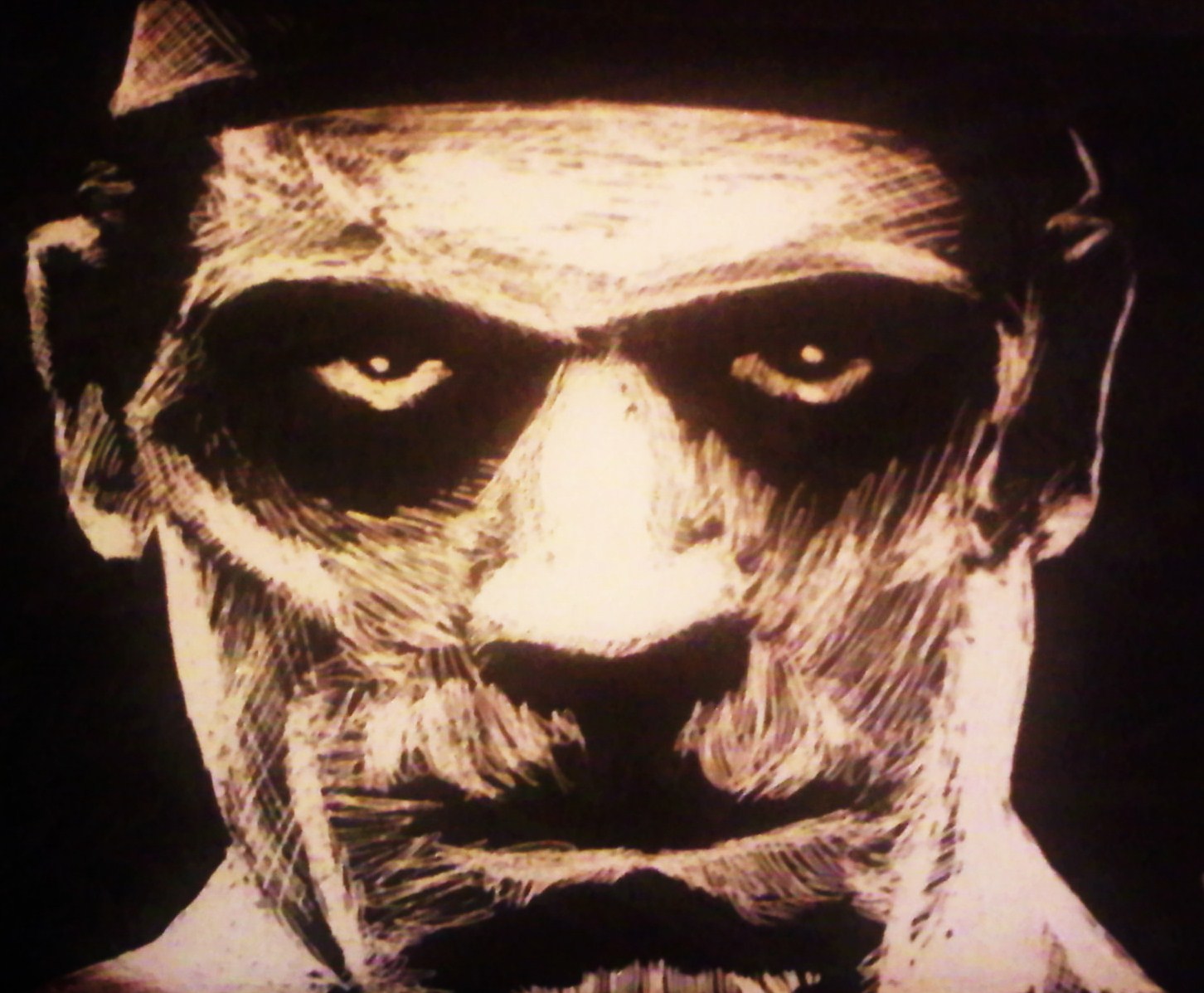
Six Malevolent Mummies

Mummies are a natural monster for fantasy games due to their lineage in horror movies (good and bad). The traditional mummy is Egyptian (or faux-Egyptian), but that need not be the case …

BROST

Brost was a trader 300 years ago who plied the high mountains, carrying silver ornaments down from the bat-headed people to the towns and villages in the green valleys far below. It so happened one day that Brost made a serious miscalculation with the daughter of a local lord with a well known lack of temper, and he found it necessary to make an unscheduled trip into the mountains. Winter had already come to the valley, and the mountain passes were exceptionally dangerous when he set out, and alas, one misstep was all it took to end Brost’s life. He lie in a crevasse that was soon filled with snow and ice, preserving his body while a taste for revenge preserved his spirit (in a fashion). The next year, Brost rose from his icy tomb and closed the pass to traffic, defying the petty priests of the valley and cutting the people of the valley off from civilization. He demands single combat with the lord who chased him out of the valley, and will not rest until he has gotten it.

Unlike most mummies, Brost’s touch does not cause disease. Rather, it is an icy grip that drains a person of 1 point of dexterity per round (or 1 point of AC if the victim has no known dexterity score). This dexterity damage cannot be healed normally; healing first requires the curse of the ice man to be removed.

Brost: HD 8; HP 33; AC 19; ATK 1 slam (1d8 + icy grip); MV 20; F11 R11 W10; AL C (NE); XP 800; Special: Fearsome visage, vulnerable to fire, immune to cold.

ADANA

Adana was a sneak thief who operated in a northern town, using her charm and nimble fingers to relieve visiting merchants and sailors of their worldly goods, and, on occasion, their lives. Finally caught by the duke’s soldiers, she was tried and hung, her body thrown into a bog. Thirty years later, the slow process of “bog mummification” was finished, and her tormented spirit, which had long roamed the bog as a will-o-wisp, settled back into its old home. She now haunts the wilderness as an undead robber, casting aside coins in favor of jewelry to adorn her black, leather hide. She currently wears a golden torc (worth 200 gp), several bronze bracelets (worth a total of 30 gp) and a golden anklet (worth 300 gp), plus whatever random jewelry you might roll for her.

Unlike most mummies, Adana’s touch does not cause disease Rather, it delivers acid damage that deals 1 point of damage per minute until a remove curse spell is cast to counter it. A delay poison spell halts the acid damage for a time, as does submersion in bog water.

Adana: HD 8; HP 27; AC 19; ATK 1 slam (1d8 + acid touch); MV 20; F11 R11 W10; AL C (CE); XP 800; Special: Fearsome visage, immune to acid, surprise (2 in 6), back attack x2. 

TITENA

Titena was the slave and close confidant of a high priest of Seth. She served her master loyally for many years, tending his every need, always desirous of one day being freed. It finally passed that an assassin found his mark, and the high priest was killed. His acolytes quickly swept up his servants and animals and slayed them that they might be mummified so that they could serve their master again in the afterlife. So it was that Titena, filled with wrath, was made a mummy and sealed in the crypt of the high priest. Whether the others made the journey to the other world is unknown, for she awoke as a mummy, alone and consumed with hatred. She quickly defiled her master’s body and now waits for release from her seemingly eternal prison. She has a single gem of true seeing lodged in her forehead.

Titena: HD 8; HP 29; AC 19; ATK 1 slam (1d8 + mummy rot); MV 20; F11 R11 W10; AL C (CE); XP 800; Special: Fearsome visage, vulnerable to fire. 

VADUN

Vadun was a monk and mathematician who underwent the process of living mummification (a strict dietary regimen, exercise and poisoning) that he might be preserved for all time. After death, he was sealed into an alcove with bricks, to be unsealed three years later. Unfortunately, between his death and his appointed time of release, the monastery was sacked, its monks killed, its treasures carried away. Vadun now remains a prisoner in the monastery, his staggering intellect bent on taking revenge on the world for his humiliation.

Unlike most mummies, Vadun does not spread disease with his touch. Rather, his touch is poisonous (per poison III). Damage from this poison can only be healed after a remove curse spell has been received by the victim.

Vadun: HD 8; HP 31; AC 19; ATK 1 slam (1d8 + poison touch); MV 20; F11 R11 W10; AL C (LE); XP 2000; Special: Fearsome visage, vulnerable to fire, cast spells as 9th level cleric. 

ZURANTHULA

Zuranthula was a powerful warlord among the Kith-Yin. After death, he was mummified by his followers, that he might continue to lead them on their raids in the Astral Plane. Unfortunately, before he could awake, his people were attacked by their rivals. Zuranthula’s sarcophagus was cast out into Astral Space to float for eternity. It would have done just that, but the conjuring of a curious wizard brought it into the Material Plane. Surprised by the contents, the wizard was soon killed, and Zuranthula, now crazed, began haunting the wizard’s dungeon complex, still seeking a return to the Astral Plane.

Zuranthula: HD 8; HP 32; AC 19; ATK 1 slam (1d8 + icy grip) or silver sword (1d6+1); MV 20; F11 R11 W10; AL C (NE); XP 800; Special: Fearsome visage, vulnerable to fire, spells as kith-yin. 

CASTILLOS

Castillos was a very wicked man, though his wickedness was subtle. Most folk considered him a rather dashing figure, fairly honest, and good company. His squire, Manuel, knew better. He had seen him dally with the affections of many women, and when Castillos dared turn his eye upon Manuel’s own lady love, Castillos’ fate was sealed. On one night, after a drunken revel, Manuel led his master into a dank catacomb, ostensibly in search of a cache of elven wine he had heard tell of. In truth, he clubbed his master over the head and bricked him into a chamber, his body sealed inside a cask of wine. Castillos died there, but the alcohol preserved him, and now he seeks Manuel, who inherited his estate.

Unlike most mummies, Castillos does not spread disease with his touch. Rather, his touch brings on a sort of manic drunkenness (per the hideous laughter) spell.

Castillos: HD 8; HP xxx; AC 19; ATK 1 slam (1d8 + hideous laighter); MV 20; F11 R11 W10; AL C (NE); XP 800; Special: Fearsome visage, vulnerable to fire. 

Six Spooky Spectres

Although spectres traditionally seem to be played as actively hostile entities (chaotic, and all), they don’t have to be, and in fact can make for pretty excellent ghost encounters. Level drain does a great job of recreating, for the players and thus their characters, of the sheer fright and revulsion of being touched by “that which should not be!”. 

FORLOTH & BRENA

Forloth was a great man in life – great in deed in his youth, and great in girth in his dotage. Always a man of monumental hunger and thirst, he spent his later years in his favorite tavern at his favorite table, regaling the customers with stories of great deeds in far away lands, his wine goblet and lap rarely empty and his coin flowing freely. And so it was when he died – a small belch, a rolling of the eyes, and gone. It took four strong men to remove the body, and the whole town attended the funeral – even the Lord Mayor. A couple weeks later, the first dead body was found in the cellar – a serving wench – long in the tooth but no less beautiful for her years of service and always the favorite of Forloth – keeled over on a barrel of wine, her hair turned stark white. When Brena’s laughter began being heard echoing in the rafters and the wine began turning sour, the townsfolk soon quit the tavern and the landlord was forced to move his establishment. The tavern still stands empty, but a few brave souls have claimed to peek in the thick windows at midnight and see Forloth at his table, Brena in his lap, a ghostly goblet of spirits in his hands.

Forloth: HD 7; HP 22; AC 15 [silver]; Atk 1 strike (1d8 + energy drain); Move 40 (Fly 80); F12 R12 W9; AL C (NE); XP 1750; Special – Incorporeal, powerless in sunlight.

Brena: HD 5; HP 14; AC 15 [silver]; Atk 1 strike (1d8 + energy drain); Move 40 (Fly 80); F13 R12 W10; AL C (CE); XP 1250; Special – Incorporeal, powerless in sunlight.

COBHAR THE BEGGAR KING

Cobhar was born a beggar and thief, and spent his childhood learning how to steal and get away with it. Always an angry man, he hid it well and made a reputation for himself of a leader among the beggars and outlaws of the city – an unofficial ambassador of the underclass whose company was enjoyed by commoners, aristocrats and adventurers alike. Alas, he was a man of ambition, and one of those ambitions was to forge his beggars into a corps equal to the guild of thieves. The master of thieves, Lord Nock, couldn’t allow that, and so one night Cobhar took his last drink of rum and had his body unceremoniously dumped in the harbor, wrapped in heavy chains. The very next night, the thieves were surprised in their shadowy citadel by the appearance of a waterlogged man in chains. Few escaped that hideout, Lord Nock among them, and the reign of the thieves was over. Their hideout remains empty, the lair of Cobhar’s spectre and, stories say, still flush with the plunder of the guild. What nobody knows, though, are how many of the old thieves now haunt the halls of the guildhouse …

Cobhar: HD 7; HP 27; AC 15 [silver]; Atk 1 strike (1d8 + energy drain); Move 40 (Fly 80); F12 R12 W9; AL C (CE); XP 1750; Special – Incorporeal, powerless in sunlight.

MAELA THE MOURNFUL

Maela was a simple woman who lived in a small village by a river. Married to the miller, she was a respected member of her community who wanted, more than anything, to give birth to a child. After many years, she and the miller were blessed with a child, bright of eye and blithe of spirit. All was well for many years, until the coming of the orcs. In a flash, the village was razed, the mill set alight with Maela’s husband and child sealed within. The woman rushed into the blaze, but was unable to save them, and in her trauma rose a month later as a spectre. The charred remains of the mill still stand by the river, and the village is still abandoned. Maela has a powerful compulsion to care for people in distress, and a keen desire to embrace children and other small humanoids (gnomes, halflings). She is not hostile unless rebuffed.

Maela: HD 7; HP 20; AC 15 [silver]; Atk 1 strike (1d8 + energy drain); Move 40 (Fly 80); F12 R12 W9; AL N; XP 1750; Special – Incorporeal, powerless in sunlight.

GUILLA OF THE AUBURN LOCKS

Guilla was the prettiest girl in town – rosy cheeks, auburn curls, brilliant green eyes, etc. – and always popular with the men of the town (young and old). There were stories, of course, that she was perhaps to desirous of their caresses, but she denied everything and her father and mother would not hear of her indiscretions. It was when an adventuring bard entered the picture that things went awry. Handsome and dashing, for the first time in her life, Guilla herself fell in love. In the past, she had always had the upper hand, but now things were different. The bard stayed in town for a couple weeks, and spent nearly every waking moment of that time in her company, until the jealous men of the town had had enough and vowed to end his tenure as Guilla’s lover. It so happened that the bard finally acquiesced to Guilla’s pleading and vowed he would steal away with her on Midsummer’s night. The couple would make their way to the great city over the mountains and there live happily ever after. On his way to window, though, the bard was waylaid by the townsmen and, beaten and bloody, sent down river tied to a raft, never to be heard from again. Guilla waited the night through, and when the next day she heard that the bard had crept away in the night, her heart broke. Two days later, in a daze, she drank from a vial of poison and ended her life. At the next Midsummer night, during the revels of the young, a beautiful woman was seen gliding through the streets. One reveler was surprised by her, especially when he recognized her as Guilla, and when she embraced him, he died. Now, every Midsummer night, the ghost of Guilla glides through the streets of the town, seeking the love and adoration she once had in life, accompanied by the spectres of those she has embraced. There are three such spectres – fawning young men with eyes for none but Guilla. They will defend her to the “death”.

Guilla: HD 7; HP 32; AC 15 [silver]; Atk 1 strike (1d8 + energy drain); Move 40 (Fly 80); F12 R12 W9; AL C (CE); XP 1750; Special – Incorporeal, powerless in sunlight, men must pass a Will save upon seeing her face or be stunned for 1 round.

Spectral Lover: HD 3; AC 15 [silver]; Atk 1 strike (1d8 + energy drain); Move 40 (Fly 80); F14 R13 W11; AL C (LE); XP 750; Special – Incorporeal, powerless in sunlight, energy drain steals only one level.

SCENTH, THE SENTINEL OF BAGWELL HALL

Scenth was a man-at-arms in the employ of Baron Pirpasko, a man with many enemies who was ever fearful of the assassin’s blade. It so happened one night that Scenth was stationed outside the baron’s room as sentinel. While the baron was fast asleep, the baroness, a raven-haired beauty of questionable morals, crept out of bed and stole away with the sentinel for a midnight dalliance. The couple finished their lovemaking and she returned to her lord’s chamber while Scenth returned to his post. The young warrior had barely got to his post, though, when a scream broke the nocturnal silence. Opening the door, he saw the baroness clutching the bloody baron to her chest, a cruel smile on her lips.

“The baron has been murdered,” she screamed, her smile turning into a look of horror as other warriors reached the room.”An assassin got past that foolish boy and killed his master!”

Despite his protestations and accusations, the lad was found guilty of shirking his duty and was summarily hanged. The next night, though, as the household prepared to retire, they discovered the young man back at his post, his head still crooked and scarred by the noose. The baron’s squire challenged the ghostly lad and was nearly killed when his body was run through by Scenth’s ghostly sword. The man was left a shaken wreck, and the rest of the guard soon quit the manse, along with the duplicitous baroness, the baron’s chest of treasure locked away in the chamber beyond her reach.

Scenth: HD 7; HP 31; AC 15 [silver]; Atk 1 strike (1d8 + energy drain); Move 40 (Fly 80); F12 R12 W9; AL C (LE); XP 1750; Special – Incorporeal, powerless in sunlight.

PARIL

Paril was a thief, and one of the best in the world in his day. No vault had ever foiled him, and no ancient temple or forbidden boudoir had proved proof against his cunning. So it was that he delved deep beneath the earth in search of a sceptre of wondrous powers – one more challenge to be overcome. He stole past dozens of guards and wards, tricked a cyclops, walked a wire of spider silk and plucked the sceptre from under the nose of the demon Tessasses. Sceptre in hand, challenge overcome, he made his way out of the dungeon and was, quite suddenly, crushed by a bit of ancient masonry. His back broken, he fell prey to giant rats. An ignoble end to a master thief. Now, his spirit haunts the corridor, the sceptre still in his mortal form’s skeletal hand, beneath the tumbled masonry.

[The idea here is a spectre appearing on the 1st level of a dungeon in a corridor that leads to deeper levels]

Paril: HD 7; HP 22; AC 15 [silver]; Atk 1 strike (1d8 + energy drain); Move 40 (Fly 80); F12 R12 W9; AL C (NE); XP 1750; Special – Incorporeal, powerless in sunlight, surprise on roll of 1-3 on 1d6.

Guns! Guns! Guns!

Do you feel lucky punk? Well, then roll for initiative …

I’m not exactly a gun nut. I’ve fired a gun, once, at a Christmas outing, but other than that I’ve never had much of a fetish for the things. Yet, now I find myself working on Action X and needing to educate myself about the things.

The Modern SRD, on which I’m loosely basing Action X, has gun stats, of course, but I need a bit more. I plan on including in Action X a variety of “eras” in which to game – Victorian, Pulp, Atomic, etc. That means I need to chart guns from the 1860’s or so to the modern game, and therefore need a system, of sorts, to figure out what’s what with these things.

One way to go would be to simplify it – pistols, rifles, battle rifles, sub machine guns, light machine guns, medium machine guns, heavy machine guns, with damage following suit: Pistols do 1d6, rifles do 1d8, battle rifles 1d10, etc. I think, though, that many folks who are attracted to modern gaming like the idea of different guns – Bond’s Walther PPK, Dirty Harry’s S&W Model 29 .44 Magnum, etc. So, again, I need a system.

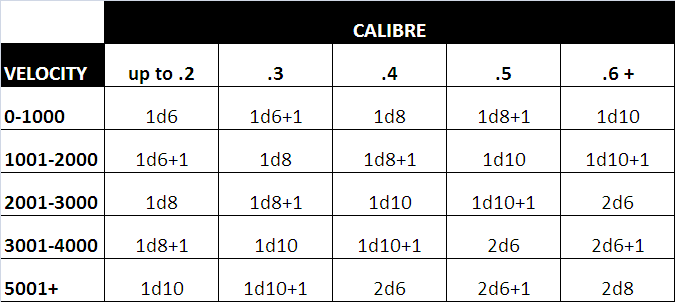
My solution (at the moment, anyhow) is to base damage on two factors – calibre and muzzle velocity. In other words, how much mass is hitting the target and at what speed. Rate of fire I think I’ll handle with an abstract “burst” mechanism – probably handled as a burst multiple that can either count as multiple damage on a single target or can spread among multiple targets, with the traditional penalty to hit multiple targets. So, a gun with a burst factor of “x3” could either be used to score triple damage on a single target, or used to score normal damage on up to 3 targets.

Anyhow – here’s my little matrix for gun damage. I’m beginning the damage at d6, and dropping damage by one dice size for balls vs. bullets.

Calibre is rounded off, and muzzle velocity is in feet per second. Using these numbers, Bond’s Walther PPK does 1d6+1 points of damage, while Dirty Harry’s .44 magnum (Smith & Wesson Model 29) does 1d8+1 points of damage.

Currently, I’ve been gathering data from Wikipedia on various guns – have a little database of 416 so far, with quite a few more to go and plenty of missing pieces of data – and should be able to put together some decent gun lists for each era of the game. And yes, I’ll be putting the database up on Google Docs for folks to download at some point.

Six Vile Vampires

Today, I introduce you to six vile vampires who stalk the streets of Nod, or your own campaign. Note, for Blood & Treasure players and TK’s – I’m varying the Hit Dice of these vamps – feel free to do the same in your games.

Typhus the Rat

Typhus is a small man, both in terms of physique and spirit. A peddler of tin items he hammered himself, he was bitten one night as he cut through an alley on the way home, hoping to avoid the city guard. Buried* in a pauper’s cemetery in a cheap coffin, he soon arose from his grave and place several of the city’s beggars under his control. With their help, he exhumed his coffin and secreted it in a cave just outside the city. Here, he has become something of a pack rat, hoarding baubles that he steals from the luminaries of the city and feasting on drunks who have fallen asleep in alleys, so as not to alert the authorities of his presence.

Typhus the Rat: HD 6; HP 18; AC 15 [silver]; Atk 1 bite (1d6) and slam (1d6 + energy drain); Move 30; F12 R12 W9; AL Chaotic (CE); XP 1,500; Special – See B&T – seriously, vampires are loaded with special abilities and vulnerabilities.

Viliann the Bat

Viliann the Bat was a simple tavern wench in life, a tavern wench subjected to much unwanted attention because of her bonny looks, and subjected to an especially unwanted attack one night in the wine cellar of her tavern by a vampire. Viliann was buried in a simple ceremony in a graveyard just outside town and rose as a vampire in her own right one week later. She now haunts the city as an avenger in a dark, hooded cloak, destroying the undead when she can and preying only on men of an evil disposition. She has only once created a spawn herself, and came to regret it. She keep’s that spawn’s head in a box in her cramped hiding place (in the sewers of the city) as a reminder of her mistake. Viliann appears as a beautiful woman of about 18 years, with spooky eyes and jet black hair.

Viliann the Bat: HD 11; HP 50; AC 15 [silver]; Atk 1 bite (1d6) and slam (1d6 + energy drain); Move 30; F10 R10 W7; AL Chaotic (LE); XP 2,750; Special – See B&T – seriously, vampires are loaded with special abilities and vulnerabilities.

Alaron the Owl

Alaron was a sage in life, and an easy target for a visiting vampire. Killed one night after he invited a stranger in for a late consultation, the sage’s body was hidden in a trunk, which now serves as his coffin. Most folk never noticed when the man stopped leaving his home in the daytime, and he still makes himself available for consultations at night. Alaron is fairly selective about whose blood he consumes, preferring the blood of noble students, but taking just enough to sate his thirst and not rouse suspicions. He has managed to enthrall several of the apprentice mages in the city, and uses them to spy on their masters. He carries a hope that a spell or formula might one day appear that can reverse his curse.

Alaron the Owl: HD 8; HP 29; AC 15 [silver]; Atk 1 bite (1d6) and slam (1d6 + energy drain); Move 30; F11 R11 W8; AL Chaotic (NE); XP 2,000; Special – See B&T – seriously, vampires are loaded with special abilities and vulnerabilities.

Dallach the Cat

Dallach the cat is a wanderer, settling in a city long enough to hunt down the most powerful game and then moving on. He usually finds a lonely place to hide his coffin near a city, and then spends about a week in the city sizing up the possible prey – if adventurers are not present, he usually focuses on the local lord, captain of the guard or parish priest. Dallach appears as a tall, ruggedly handsome man with pale, green eyes and long, platinum blond hair tied in a tail. He dresses well, but not too well, and carries a sword and dagger on his belt.

Dallach the Cat: HD 9; HP 36; AC 15 [silver]; Atk 1 bite (1d6) and slam (1d6 + energy drain); Move 30; F11 R11 W8; AL Chaotic (CE); XP 2,250; Special – See B&T – seriously, vampires are loaded with special abilities and vulnerabilities.

Mithlo the Cricket

Mithlo was an itinerant minstrel in life, roaming a large region and stopping for a week or two at different road houses and taverns to entertain before moving on. A handsome lad, he was always popular with the local females, but was careful not to overstay his welcome with the local men. On one of his nocturnal travels to woo the daughter of a local lord, he was taken by a vampire and left in the woods, his body stuffed in a hollow log in a gully. A few days later, he awoke as a vampire, the log serving as his “coffin”. His looks, alas, did not survive his death completely intact, as some rotting had set in. He now continues to roam the same region, using his music (he has the musical and spell casting abilities of a 7th level bard) to serenade women at night and lure them to their death. Mithlo has created several spawn, who sometimes gather for moonlight revels around his coffin. His finest conquest was the Lady Bethony, who serves him willingly in hopes of achieving eternal life.

Mithlo the Cricket: HD 7; HP 26; AC 15 [silver]; Atk 1 bite (1d6) and slam (1d6 + energy drain); Move 30; F12 R12 W9; AL Chaotic (NE); XP 1,750; Special – See B&T – seriously, vampires are loaded with special abilities and vulnerabilities; he also has the spellcasting ability and musical abilities of a 7th level bard.

Lothic the Wolf

Lothic was an adventuring fighter who made the greatest mistake of his life when he delved into a haunted ruin in the mountains and drank from a magical fountain. Killed by the blood red wine of the fountain and turned, his already chaotic nature drove him to hunt down his former companions and establish himself in the ruin as a petty robber baron. Soon, he gathered a small army of outlaws to him, and now he preys on the nearby villages and towns, plundering them and seizing women for his vampire harem. Lothic is known for his wolf-skin cape, crimson plate armor and two-handed axe.

Lothic the Wolf: HD 10; HP 44; AC 18 [silver]; Atk 1 bite (1d6) and slam (1d6 + energy drain) or battleaxe (1d8+3); Move 30; F10 R10 W7; AL Chaotic (CE); XP 2,500; Special – See B&T – seriously, vampires are loaded with special abilities and vulnerabilities.

* This just occurred to me: In games and fiction (especially modern fiction), we often see people bitten and drained and turned into vampires right on the spot. But part of the vampire mythos is that they must return to their coffin in dawn – so wouldn’t these insta-vamps be toast the next day (or, at least in game terms, be unable to regenerate/heal) if they had never had a coffin in the first place? I think it would make more sense to allow the person to die, be buried, and then begin appearing as a vampire – maybe give it a few days. This might make for more atmosphere, as the person’s friends and family would never be sure unless they cut off the corpse’s head or took some other precautions. Just a thought.

Monsters by Email

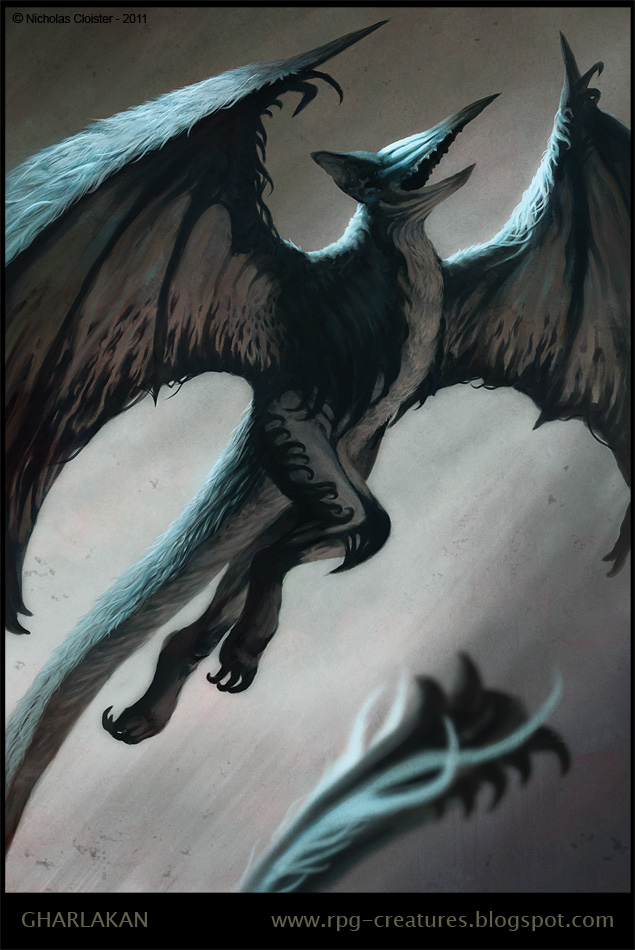
No, this isn’t a project I’m working on – but it is a project I’m supporting. Artist Nicholas Cloister has started a new project to deliver images of original monsters by email to subscribers, monsters that they can use in their publishing ventures provided they follow a few provisos and a couple quid pro quo (to quote a famous genie).

The price is super reasonable, and, as you can see from the following images, the art is top notch. He’s looking for more subscribers to make this a going concern, so if you’d like to see a few of these beauties (well, not these beauties, but new beauties) given monster stats in the pages of NOD or other of my publications, and if you have some projects of your own or just want some nice art to use at your table, give it a look HERE. For more samples of his art, click HERE.

Copyright Nicholas Cloister

Copyright Nicholas Cloister

Copyright Nicholas Cloister

Six Ghastly Ghouls

What follows are six ghastly ghouls (well, actually five ghastly ghouls and a single ghoulish ghast), men and women who circumstances (or not) made into cannibals and death made into ghouls.

VEDORINA

Vedorina and her family were part of a large caravan making its way across the mountains in early fall. Winter came early that year, and the band became trapped in a high valley. It didn’t take long before the food ran out, and the party was forced to consume their dead. Vedorina’s mother and father did their best to hide this from their daughter, but when in desperation her mother turned on her father, she fled the encampment and soon froze to death in the wilderness. Naturally, she arose as a ghoul, and now haunts the mountain passes to this day, a blue-skinned girl in a threadbare tunic, her face still wearing a look of shocked horror.

Vedorina, Ghoul: HD 2; HP 7; AC 14; Atk 2 claws (1d4 + paralysis) and bite (1d6); Move 30; F15 R15 W13; AL C (CE); XP 200; Special – Paralysis.

SCARSDALE

Scarsdale was one of many who succumbed to a plague that ravaged the towns and villages on the edge of the great desert. One by one, people were falling ill and dying, until bodies littered the streets as a feast for the rats and ravens. When the caravan of merchants came to the town with word of a cure – an efficacious powder – those who retained the strength crawled to them and promised them everything they owned for the cure. The merchants acquiesced, and left the village laden with wealth. What they left behind was a powder ground from the bodies of mummified corpses that had been uncovered during a desert storm. As the villagers continued to die, they rose one by one as ghouls and trod into the desert in search of the merchants. Scarsdale was one of many, and to this day he attacks caravans in the desert along with his feral friends, their faces grotesque, twisted masks of hate and rage, their bodies browned and wrinkled from the sun.

Scarsdale, Ghoul Thief: LVL 4 (Dodger); HP 15; AC 14; Atk 2 claws (1d4 + paralysis) and bite (1d6); Move 30; F14 R15 W13; AL C (CE); XP 400; Special – Paralysis, backstab x2.

KNORRA

Knorra was a great war-dame of the northern lands. Her feast hall was decorated with the skulls of hundreds she had bested at war, and after her glorious battles, when her war maidens gathered at her tables to partake of the spoils of war, Knorra sat enthroned above them, axe in her lap, serving lads carrying on silver trays the cooked entrails of whatever lord or lady she had just vanquished. Had Knorra’s warriors not been berserkers, they probably would have quit at the first of these macabre feasts, but they every one believed in the power of consuming one’s foes, though the honor was reserved for their lady alone. Eventually, the great Knorra was slain in battle, her corpse left to rot on a stinking field. She rose, not as a mere ghoul, but as a ghast, her flesh pock marked by the beaks of the ravenous crows, her once golden hair caked with mud and blood. She walked back to her feast hall to find it toppled, and now dwells in the ruins, gathering what undead she can find into an army to once again strike fear into the hearts of her enemies and their descendants.

Knorra, Ghast Barbarian: LVL 10 (Barbarian Princess); HP 55; AC 17; Atk 2 claws (1d4 + paralysis) and bite (1d8) or battle axe (1d8) and bite (1d8); Move 40; F8 R12 W11; AL C (CE); XP 1,000; Special – Paralysis, rage 3/day, sixth sense.

ZIMBOK

Zimbok was, like most of the folk of his tribe, a practicing cannibal. Unlike most of his tribe, he was possessed of a wanderlust, and eventually left his home island to serve on a whaling vessel that plied Mother Ocean for years. In many of its ports-of-call, Zimbok found the urge to consume human flesh more than he could resist, even among the foreigners, and in time his crimes were revealed. He was hung by the neck and cast into a communal grave for criminals and the indigent. Zimbok was too tough a customer, though, and in death he clawed his way out the grave as a ghoul. He now appears as a tall islander with a crooked neck, a necklace of teeth around his neck. He wears leather trousers, no boots, and carries a well-cared for harpoon and a razor-sharp knife with whale tooth inlay.

Zimbok, Ghoul Ranger: LVL 6 (Pathfinder); HP 34; AC 14; Atk 2 claws (1d4 + paralysis) and bite (1d6); Move 30; F10 R10 W13; AL C (CE); XP 200; Special – Paralysis, favored enemy (sea animals), spells (1).

OLD MARZA

Old Marza was called “Old Marza” even when she was still fairly young. For years, she worked in the “Tavern in the Wood”, a roadhouse frequented by adventurers and travelers. More than a few of the less friendly patrons who wound up fall-down drunk found their way into Marza’s wine cellar – more specifically in a secret room connected to the wine cellar. Bit-by-bit they would find themselves turned into sausages and meat pies for Marza’s own enjoyment. In time, her murderous reign was discovered and she was cornered in the tavern and burned along with it. After death, she became a ghoul who still haunts the woods, looking like a charred, gaunt old woman garbed in the tattered clothes of a harmless old woman, a bottle of wine from her cellar in one hand and a hatchet in the other.

Old Marza, Ghoul: HD 2; HP 7; AC 14; Atk 2 claws (1d4 + paralysis) and bite (1d6); Move 30; F15 R15 W13; XP 200; Special – Paralysis.

UGOLIO 

Ugolio was a minor aristocrat who found himself on the wrong side of a schism in the royal court. He and his son were cast into a dungeon in an old keep and literally forgotten when the royal city was attacked by a horde of orcs. Ugolio did not survive his captivity, but his son died first, and as a result of Ugolio’s hunger, his own death was followed by his undeath as a ghoul. Ugolio still dwells in his dungeon cell underneath what is now the old, ruined keep. Over time, he has managed to claw his way out, and he now hunts on the edges of the royal city by night and returns to his cell by day, dragging his victims behind him.

Ugolio, Ghoul Aristocrat: LVL 8; HP 38; AC 14; Atk 2 claws (1d4 + paralysis) and bite (1d6); Move 30; F12 R9 W9; XP 800; Special – Paralysis, legend lore, commanding voice (fascinate, suggestion).

Six Wicked Witches!

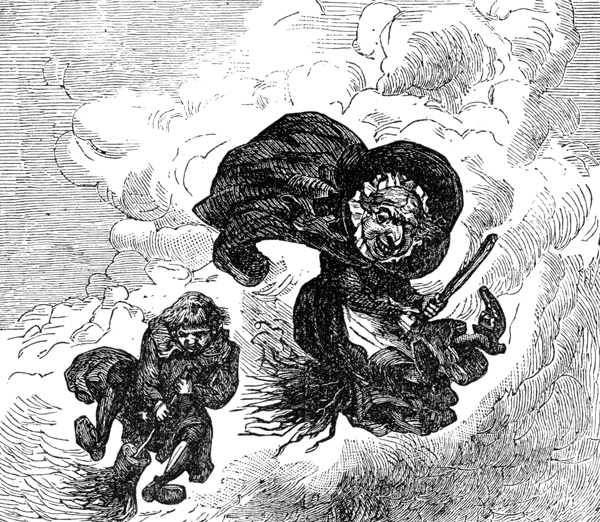
Starting a new series today for the Spooky Season. Below you will find six wicked witches (no, I’m not saying all practitioners of witchcraft are wicked … just that these particular ladies are) you might use in your game. Stats for Blood & Treasure are included.

Enjoy!

Beleve

Beleve is a homey little midwife who operates in a burgeoning village. Short and plump, with curly auburn hair and twinkling green eyes, she is a flurry of activity – everywhere doing everything for everyone is Beleve.

Unfortunately, Beleve is also deeply wicked. She harbors a terrible and irrational hatred of men and the women who attract them. Several of the children she has delivered have been replaced with changelings (demons, doppelgangers, whatever is appropriate for your campaign), and her wholesome stews often contain cunning poisons when they are delivered to villagers who she feels have crossed her (they are often unaware of the cross) or in some way hurt her feelings.

Beleve: Human Magic-User: LVL 1 (Adept); HP 3; AC 10; ATK by weapon -1 (1d4-1); MV 30; F14 R15 W12; XP 100; AL Chaotic (CE); Special – Spells (3/2); Str 7 Int 16 Wis 14 Dex 9 Con 8 Cha 12.

Mabel

Mabel is a morose woman of dark demeanor – she dresses in black, as though in constant mourning, her eyes are downcast, her face slack. She dwells in a small town, where she works with the local thieves’ guild, providing what magical assistance she can in exchange for protection and a small piece of the action. She does more than this, though. Mabel is in mourning – for the loss of her fiance many years ago at the hands of the local constabulary. The death came after he got into yet another of his drunken brawls and took a cudgel to the skull. A small guilt offering was made to the grieving bride-to-be, but it only stoked the flame of revenge in her heart. She will have the baron’s heart in payment for her beloved’s demise, and she is slowly worming her way into the luminaries of the guild as a way of getting it. Despite her grieving face, Mabel remains a beautiful woman, and her tale of woe pulls on the heartstrings. Two thieves have already fallen for her dolorous charms and have sacrificed themselves on foolish forays into the baron’s keep. How many more will follow?

Mabel: Human Magic-User: LVL 3 (Invoker); HP 7; AC 11; ATK by weapon +0 (1d4); MV 30; F14 R13 W12; XP 300; AL Chaotic (NE); Special – Spells (4/3/2); Str 8 Int 17 Wis 11 Dex 13 Con 11 Cha 16.

Gwynever

Gwynever is a bubbly woman with cascades of red, curly hair framing her pretty face and ample bosom and blue eyes so deep they almost count as a gaze attack. Most people thought her a pretty little scatterbrain – warm and wonderful and destined to make some lucky man a very expensive wife – and most folk believe that is precisely what happened. At the ripe old age of 16 she did marry, to a timber merchant in a large town. Ten years later, the blush of her youth still radiates from her rosy cheeks and her husband is now a silk and spice merchant, owner of two merchant cogs and proprietor of the estate vacated by old Lord Pasmere (who took ill and died so suddenly, and sadly after his three heirs died in a freak barn fire). Now, Squire Benthick looks forward to the lord mayorship and maybe an elevation into the peerage – no thanks to his silly, expensive, oh so lovely wife.

Gwynever: Human Sorcerer: LVL 5 (Whiz); HP 7; AC 10; ATK by weapon -2 (1d4-2); MV 30; F14 R14 W10; XP 500; AL Chaotic (NE); Special – Spells per day (6/7/5), spells known (6/4/2); Str 5 Int 9 Wis 14 Dex 8 Con 7 Cha 17.

Cadmina

Cadmina is a woman with a severely beautiful face and calm, almost passive demeanor that, when presented with wickedness and vice falls like a stone to reveal a frightening passion for denouncement and finger pointing. Well known in her town for her simple and goodly ways, she dresses simply despite being the wife of a wealthy man, and speaks simply despite coming from a family once known for its stagecraft and rhetoric. Most people know she possesses a talent for magic, and they know too that she has become a veritable bulwark against evil, her denouncements of people powerful and powerless whipping the population of the city-state into a frenzy of witch burning, despite the admonitions of the Lawful church. What people do not know is that Cadmina is the spawn of a succubus, who seduced her father and brought ruin on her family – a ruin that struck behind the scenes and is generally unknown by people at large. She delights in sewing the seeds of suspicion in her city-state, and has no greater aim than the spread of hatred between neighbors.

Cadmina: Fiendish Human Magic-User: LVL 7 (Marvel); HP 20; AC 10; ATK by weapon +0 (1d4-2); MV 30; F13 R13 W10; XP 1,750; AL Chaotic (LE); Special – Spells (4/5/3/2/1), +1 or better weapon to hit, resistance to fire, magic resistance 10%, +2 to hit and damage vs. Lawful (Good) creatures; Str 5 Int 13 Wis 10 Dex 10 Con 9 Cha 12.

Avira

Avira is a strange woman who dwells in the rugged hills around Kalok’s Bowl – a wooded valley watered by natural springs that is surrounded by granite hills. The hills are haunted by trolls, who avoid their “sister” Avira, the daughter of a green hag by a trader from the valley who disappeared 20 years ago. The people of the valley are farmers who do their best to avoid the notice of neighboring kingdoms. When they’ve no other choice, they send delegations into the hills with gifts for Avira and any troll they might run into. Avira looks like a gaunt, but attractive woman. She brews potions for sale and looks forward to adding to the collection of maidens she keeps chained in her gloomy cellar.

Avira: Fiendish* Human Magic-User: LVL 9 (Wizard); HP 17; AC 10; ATK by weapon +3 (1d4); MV 30; F12 R12 W9; XP 2,250; AL Chaotic (CE); Special – Spells (4/5/4/3/2/1), +1 or better weapon to hit, resistance to fire, magic resistance 10%, +2 to hit and damage vs. Lawful (Good) creatures; Str 12 Int 13 Wis 10 Dex 11 Con 12 Cha 8.

Saphon

Saphon is a glorious, radiant queen who took the throne of a small mountain kingdom after her husband, the lake Duke Elleran, was slain by rebellious hill people while on a pilgrimage to the holy city of Walwick. The Duchess quickly took control of the situation and rallied Elleran’s knights to her cause, though the beloved court magician Aswill was sadly slain in the peasant uprising that followed the duke’s death (an uprising few peasant remember having happened). Since then, many of the duke’s heirs have died in the campaign by malefactors that the duchess’ constable has been trying to stamp out. One now remains, the duke’s daughter Alwisse, from his first marriage. A small body of knights worries over her safety, and might look to foreign adventurers to steal her away from Saphon’s reach.

Saphon: Human Magic-User: LVL 11 (Wizard); HP 21; AC 10; ATK by weapon +3 (1d4-1); MV 30; F11 R11 W7; XP 1,100; AL Chaotic (LE); Special – Spells (4/5/4/4/3/2/1); Str 8 Int 14 Wis 13 Dex 9 Con 10 Cha 13.

Next up … Six Groovy Ghouls

18 Strength! – A Goofy Google Experiment

I’m laid up with a sore foot at the moment and trying to get some work done on NOD 17, which is due out this month (God willing), and needed a break. Checked email, Lulu.com (2 sales today – yippee!) and a few other sites and was still bored. What to do? Google image sort, of course. I started with “most beautiful woman in the world”, just wondering what would come up, and then thought – “hey, could be an interesting experiment to see, via Google, what people with 18’s in their ability scores would look like. Here’s what I found:

STRENGTH 18 – “Strongest woman in the world”


Now, the list below tends to be male dominated – don’t blame me, blame the internet community. So, for strength I decided to specifically search for the strongest woman in the world, and found Becca Swanson (no relation to Ron, as far as I know). Why don’t we get more women like this in fantasy games? I don’t know – but we really should.

INTELLIGENCE 18 – “Smartest person in the world”


The smartest person in the world is an easy search, but a tough choice, as there are many claimants to the throne, some of whom draw a very sharp distinction between “intelligence” and “wisdom” (see below for more on that) – the smartest man in the world who thinks eugenics is a great idea in particular. In the end, I had to go with Hawking.

WISDOM 18 – “Wisest person in the world”


Ah yes, wisdom. A tough stat, originally designed to govern how good one was at being a cleric and later expanded into “that stat kinda like intelligence, only not intelligence”.  When I searched for “wisest” on Google, I mostly got “smartest”, except for the gentleman pictured above. Apparently, humanity has gone through a real dry spell in terms of wisdom for the last few thousand years.

DEXTERITY 18 – “Greatest archer in the world”


Anybody who has put any thought into the dexterity stat knows that it is highly problematic, as it encompasses quickness of action, aim, how steady one’s hands are and how nimble one’s fingers are. A search for “most dextrous” yielded nothing (we geeks have larger vocabularies than many of our fellow human beings, thanks to Uncle Gary). Quickest went to Usain Bolt, but of course one’s dexterity score has nothing to do with one’s movement rate in D&D. “Most agile” got me a monkey. But, since D&D is about killing things and taking their stuff, I decided on “greatest archer in the world”, and according to the Denver Post, that’s Brady Ellison.

CONSTITUTION 18 – “Toughest person in the world”


If Minnesota Monthly can be believed, this gentleman, Pierre Ostor (last name would make a good D&D name) is the toughest man alive.

CHARISMA 18 – “Most beautiful person in the world”


Gawker asks if this is the most beautiful woman in the world – and I reply “I dunno”. Science says she is, but science once thought forced sterilization was a good idea, and that you could determine a person’s intelligence by measuring their skulls. Still, she looks pretty good to me.

A World With Multiple Sentient Races?

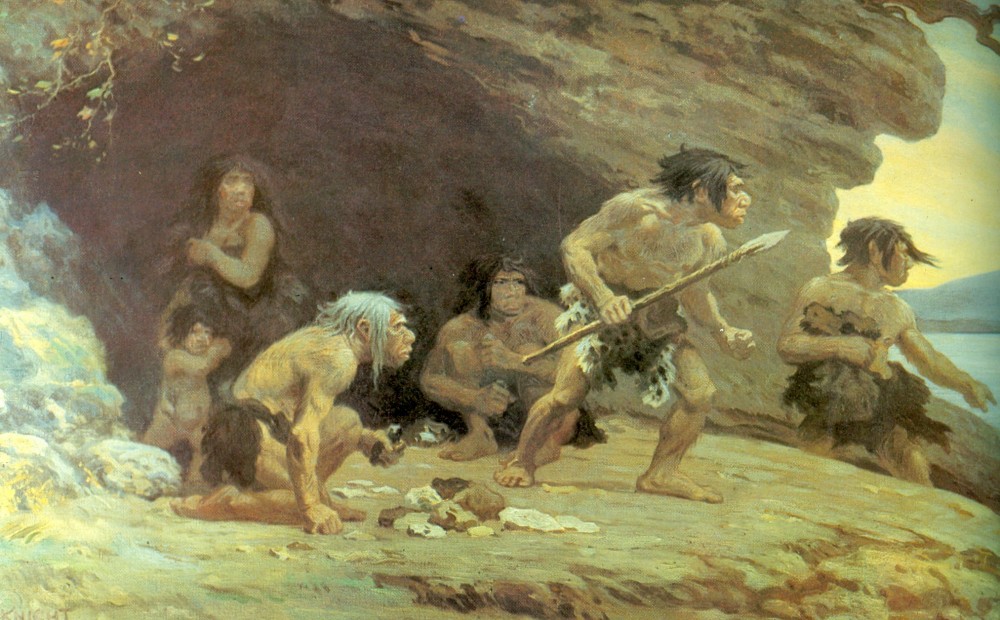
I was reading an article about primitive humans gettin’ busy (yeah, I’m street like that) with Neanderthals. Apparently, we did share the planet with a few other homo sapiens – maybe not as exotic as sharing it with elves, dwarves and halflings (well, maybe halflings), but it makes me think again about the fun of running a game with neanderthals and other “humanoids”, especially if you smash it together with an REH-style Atlantean age of fantastic adventures and ancient civilizations. Imagine an ancient, pre-ice age Europe swarming with prehistoric beasts and powerful stone age (maybe even Flintstone-style) civilizations that are antecedents to the known ancient civilizations of Europe. Naturally, we’re going to bend reality a bit to make this work.

First, let’s look at our players:

Humans

You probably know these guys. Just use whatever rules you would normally use for humans in your favorite system.

For our purposes, we’ll say the humans are the new kids on the block, moving in from Africa, so they’re going to take the roll of nomadic raiders and conquerors, a’ la the Huns or Mongols. Maybe they ride swift hill ponies, and use stone-tipped spears and arrows and stone axes in combat. Assume that stone weapons do one dice-type less of damage than metal versions – so spears do 1d6, hand axes 1d4 and short bows/arrows 1d4.

Armor in this setting is simple enough anyhow, but for humans it probably consists of furs (AC +1) or cured hide armor (AC +2). Maybe they use wicker shields as well.

If you use something like “favored classes”, maybe these humans favor the barbarian class.

Neanderthals

Neanderthals are close kin to human beings. In our setting, they are the high tech stone users, building cities of stone (again, Flintstone-style) and building primordial empires (maybe on the bones of pre-human civilizations like those of the ophidians and elder things). Since we’re used to Neanderthals being depicted as the “dumb cousins”, I like the idea of them being the most civilized people in the game, with a well-organized chieftain system, armies, organized religion (probably druids, but clerics would be cool as well), etc. Of course, the greatest of the Neanderthal kingdoms should be in the Neander valley – this is their Carolingian Empire – imagine how cool their Roland would be!

(Oh – what about theme-ing the Neanderthal city-states off of different stones – the Sapphire City, the Emerald City (well, maybe not that one), the Obsidian City, etc.)

You can probably use the dwarf racial abilities for your Neanderthals, making them tough guys who are hard to kill and who have expertise when working with stone and delving into cave systems. Neanderthal males stand 5.5 feet tall, females 5 feet tall.

Neanderthals have the same basic weapons as human beings, but also have armor that uses horn and bone in its construction (AC +3).

If you use favored classes, neanderthals probably favor the fighter class.

Homo Erectus

Homo erectus appear to have been slightly more primitive hominids than the early humans and Neanderthals. They are hunter-gatherers who use primitive tools and rely more on brawn than brains, and could therefore be an analog for half-orcs in the game (without the mixed parentage). Since homo erectus is more primitive and “close to nature”, you could use the druid as their favored class.

Otherwise, they might make good brigands and pirates, sniping at the edges of Neanderthal civilization without any real ability to conquer it. Heck, maybe the Neanderthal legions use homo erectus and hobbit (see below) auxiliaries as scouts and light infantry in their battles with the orcs and hobgoblins.

Flores Man (‘hobbits’)

So they weren’t discovered in Europe – how do you do cave man fantasy gaming without including the recently discovered ‘hobbits’? And I’d call them hobbits too! The hobbits are small humanoids, maybe a bit harrier than the humans and neanderthals, who dwell in thick woodlands in burrows. You can use the traditional halfling racial abilities for the the hobbits. They stood about 3 to 4 feet tall and used stone tools – probably on par with the humans.

The hobbits (well, as near as they can figure – remember, they might not really be a separate species) lived on an island with giant rats, Komodo dragons, elephants (stegodons) and giant lizards – they’re totally D&D, and must have been pretty slick little operators to survive. You might want to change their favored class, if you use such things, to ranger.

Meganthropus

Indonesia produces all the best hominid fossils! Meganthropus is the opposite of the hobbits – giant humanoids who were probably also related to homo erectus. Since we don’t have elves in this setting (unless we do – see below), they might make a good additional race. Meganthropus stood about 8 feet tall and is probably best represented with the half-ogre race (whichever version you prefer). They would be about as advanced as homo erectus and the hobbits, and probably rely on their great strength more than tools. If you use favored classes in your game, fighter or barbarian probably works for meganthropus.

Other Notions

If you really need to have “elves” in your game, I’d suggest replacing them with ophidians, or even just using them as-is – beautiful fey creatures who are shepherding the humanoids on their way to civilization.

Weapons do a bit less damage in this campaign, but there is less Armor to go around, so things should probably even out in that regard. To keep fighters and clerics (and paladins and whatever else you use) the “most armored” classes in the game, maybe restrict the other classes that can use armor to nothing more than furs (AC +1), no shields.

Spellbooks might not make sense, though scrolls consisting of stone tablets or animal hides are fine. In place of spellbooks, you could equip the magic-users with the aforementioned animal hides (one hide per spell, regardless of the spell’s level) or they could carve runes into staves and use them for memorization. Really, as long as the possibility of magic-users being without one’s source of spells is still present, you’re probably okay.

If you’re feeling gonzo, insert dinosaurs along with the prehistoric mammals, and of course use all of them as mounts.

Now – evil humanoids. They’re still there, of course. Gnolls and their hyaenodons, kobolds worming their way through the earth, goblins hiding in the woods, orcs and hobgoblins giving the early humans a run for their money. Do I even need to mention the lizard men and troglodytes? (And yeah, if your lizard men don’t look a lot like Sleestaks, you’re just not getting the point!) Heck, maybe you could re-cast all of the “evil humanoids” as having dinosaur features – T-Rex hobgoblins, triceratops orcs, ‘raptor goblins, etc.

Most of the mythological creatures are appropriate – after all, many were born from the blood of the “mother of monsters”. Dragons are great, bulettes and ankhegs are perfect, and a setting like this just begs for packs of blink dogs and worgs. A few metal-based monsters – rust monsters, iron golems, giant robots – should be avoided unless they are remnants of the ancient ophidians found in the mega-dungeons they have left behind.

Oh, and also this …

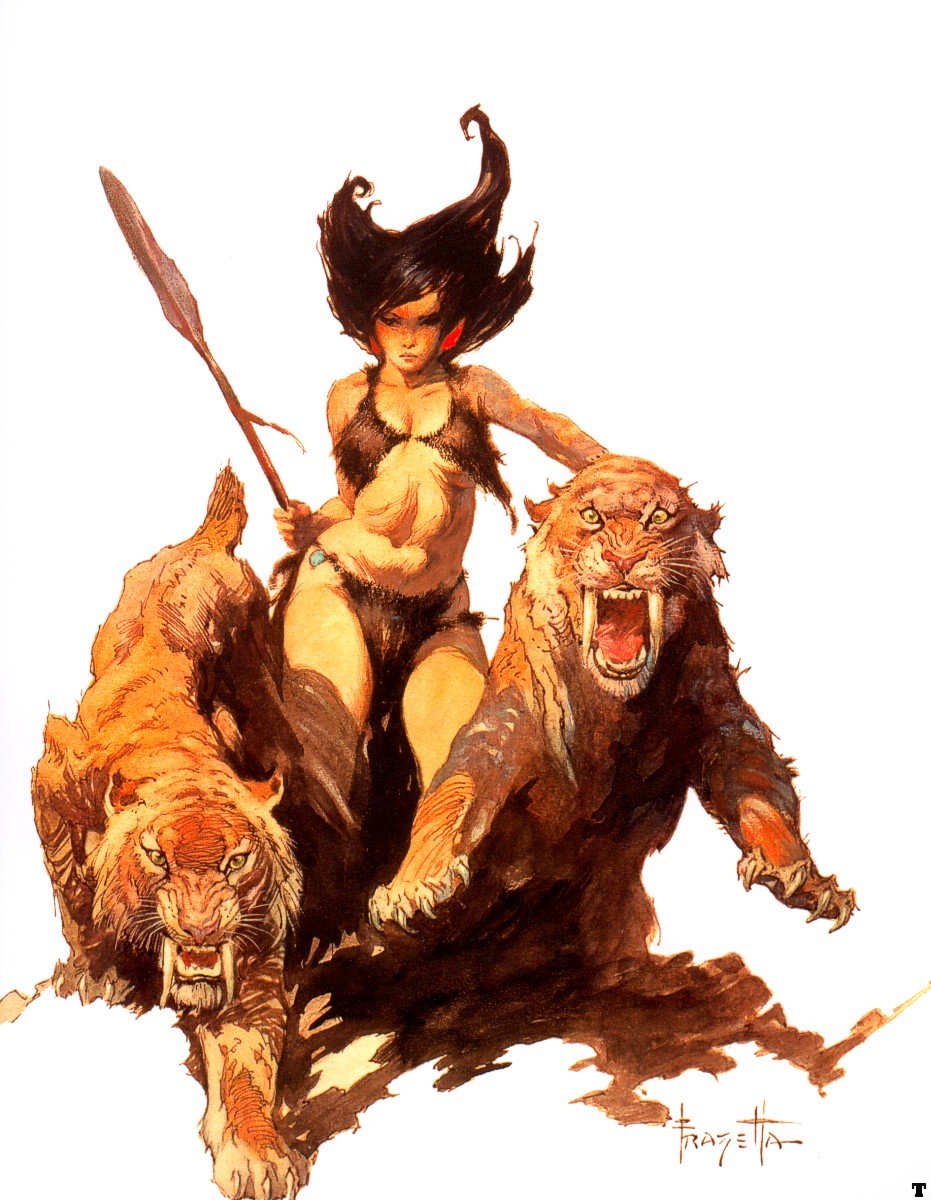
So, find your inner Frazetta and get primitive!