Seasonal Beasties: The Forlorn Grey

Forgot to mention that my last post was number 1000. If that means anything to anyone.

Now then …

FORLORN GREY

Image from 7art

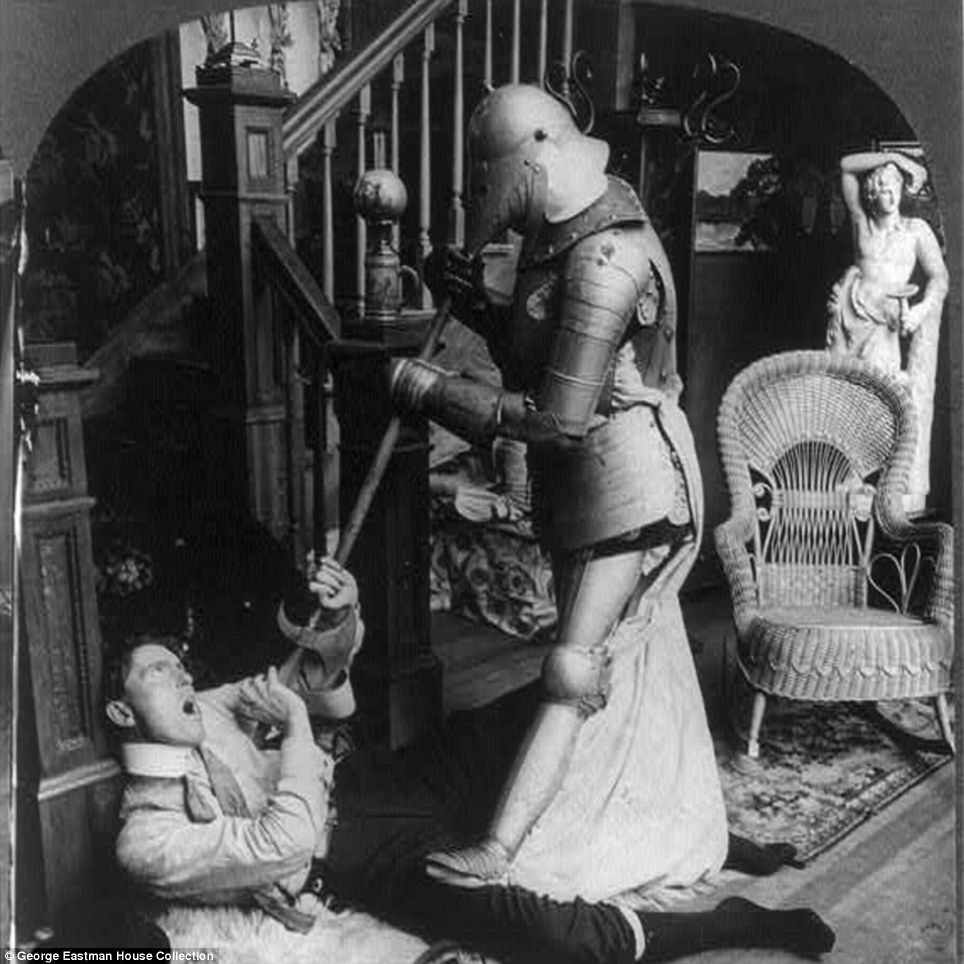
Sometimes that grey mist in the corridor or tunnel is just a bit of water vapor. Sometimes, though, it’s a monster that has been nicknamed “the forlorn grey”.

The forlorn grey appears as a grey fog, usually about 20 feet long and 10 feet wide. To the touch, it is clammy and chilly, and an astute observer might notice that it does not leave a damp residue on people who walk through it.

A forlorn grey usually allows a group to get within it, and then moves along with them. It obscures vision, so most folks think that they are just moving through a very long patch of fog. Each round a person spends in the fog, their minds are attacked by the strange monster.  The adventurer must pass a Will save, or lose a bit of their zest for living, not to mention suffer 1 level of energy damage. The TK should prepare several strips of paper outlining the apathy that has befallen a character who fails a saving throw. Some examples might be:

“You realize you don’t really want to be in this stupid dungeon.”

“Treasure isn’t everything.”

“That serving wench really wasn’t all that attractive.”

“It occurs to you that you don’t really have any friends.”

Once a creature within the forlorn grey reaches effectively 0-level, they take on a dull appearance, their eyes turning grey and losing their spark of life. They remain 0-level monsters at this point, normal humanoids of their type who are apt to wander aimlessly for the rest of their lives, begging for scraps and generally avoiding the company of others. They can again be restored to vigor through the use of a wish or restoration spell, and can otherwise be used as torchbearers by their former friends – they don’t care one way or the other about it.

Fighting the mist is difficult. It can only be struck for full damage by magical edged weapons, and silver edged weapons deal half damage to the creature. Bludgeoning and piercing weapons deal no damage to a forlorn grey, magical or otherwise. If actively fought, the forlorn grey can manifest tendrils of super-chilled mist, with which it can make feeble physical attacks that, on a natural attack roll of ’20’, snake down people’s throats (or through their noses), dealing double damage and forcing the victim to pass a Fortitude save or be stunned for 1d3 rounds. The creature can manifest three such tendrils.

Forlorn Grey, Large Elemental (Air), Average Intelligence: HD 7; AC 16 [+1]; Atk 3 tendrils (1d3 + see above); Move Fly 30; F11 R10 W12; AL Chaotic (NE); XP 1750; Special – Only damaged by edged weapons, silver weapons deal half damage, energy damage, stunning attack, immune to cold and acid.

Seasonal Beasties: The Gorger

October is all about horror, and obviously horror-inspired monsters (i.e. undead). November, to me, is all about fall (or autumn, if you prefer), and I figured I would try to work up a few fall-themed monsters. The reapers last week was one of them, but they also meshed pretty well with Halloween – consider them a transition monster. Today I’m presenting the Gorger!

GORGER

Gorgers are akin to trolls and giants. They have a strange life cycle, hibernating (so to speak) most of the year and then emerging from their slumber in the fall to consume mass quantities and prepare for their next hibernation. They are not terribly bright, and seem to exist solely to produce offspring.

Most gorgers live in small bands, burying themselves in loose earth while hibernating, and then emerging when the air becomes crisp and the crops are in. They are omnivorous, and even a small group is capable of eating a small village out of house and home.

Gorgers looks like warty, grey trolls with over-sized mouths and ponderous bellies. Their feet and hands are tipped by massive claws (useful for burrowing as well as killing) and their legs are stubby and a bit bandy. They always attack as a group, and though not terribly bright, they are cunning and capable of tactical planning. Most uproot a small tree to use as a double-handed weapon, relying on their claws only if they are unarmed or forced to fight in tight quarters or when they are bent on swallowing an opponent whole.

When a gorger swallows a victim whole, they begin to take on that victim’s intellect (though not personality) and skills after 1 round of digestion. Each round thereafter, a gorger gains one level’s worth of their victim’s skills and special abilities (regardless of alignment restrictions) until they have the same level as their victim. For example, if a gorger swallows a 4th level thief, they would, one round after swallowing them, gain the abilities of a 1st level thief. The next round, they would have the abilities of a 2nd level thief, and then a 3rd level thief in the round after that, until finally capping off as a 4th level thief. These special abilities are retained by the gorger for 1 hour, at which point they fade at the same rate (one level per round) that they were gained. If a gorger swallows a monster, it gains the monster’s special abilities after a number of rounds equal to half the monster’s hit dice total.

Gorgers regenerate as do normal trolls.

Gorger, Large Giant, Low Intelligence: HD 8; AC 16; ATK 1 weapon (3d4) or 2 claws (1d6) and bite (1d6 + swallow whole); Move 30 (Burrow 15); F8 R11 W12; XP 800; Special – Absorb skills and special abilities, regenerate.

Noah Webster is My Dungeon Master

Here’s a goofy idea to try out – Dictionary, the RPG:

Character Creation

Open the dictionary to a random page. Find a noun – that’s what you are and, by extension, what you should be skilled at. Find an adjective – it describes you. If the first page you open to doesn’t provide enough in the way of nouns and adjectives, try again.

Task Resolution

State what you wish to accomplish. Open the dictionary to a random page. If you can find a verb on that page that can be used to accomplish the task, you succeed.

If you cannot find such a verb, you can try another page IF what you are (the noun + adjective) would suggest you should be good at what you’re trying to do. Otherwise, the task does not go as you would like, introducing a new problem to be solved. Perhaps this new problem is suggested by a word on the page you’ve flipped to.

Advancement

Each successful adventure gives you a free flip you can use to get through a later adventure.

Example

Let’s say you’re ridiculously lucky, and you flip to a page that allows you to be a Nimble Ninja. Your nimble ninja decides it need to clunk a guard over the head to sneak into a castle. You open to a random page of the dictionary and find no words that can help. But you’re a nimble freakin’ ninja, so you should be good at sneaking up on the guard and clunking him on the head, so you open to a new page. Dang – still nothing. What a crappy dictionary. So, you’ve failed. How? Perhaps you step on a stick and are forced to hit the ground. The guard knows somebody is there and he calls for help. They’re now searching the area. Your new task is to creep away unnoticed by the guards, so you open to a random page of the dictionary …

Conceivably, you could play this game alone, or with a game master (the Word Master? the Grammarian?) who controls the actions (and success thereof) of the NPC’s.

One Last Trick

Here’s a monster that popped into my mind yesterday …

REAPER

Reapers look like long-armed goblins with glossy black skin and magnesium green eyes that have a slight phosphorescence. Some wear carved pumpkins over the heads, like masks. They travel in small packs and are armed with very sharp cutting blades, each one carrying a mild enchantment that makes it especially dangerous.

A creature hit by a reaper’s blade and suffering 5 or more points of damage must pass a Fortitude saving throw (or save vs. petrification) or have one of their arms lopped off. The severed arm instantly comes to life and begins grabbing at its former owner or performing any other task the reaper sets it to. Arms have the same armor class as their former owner, and 1d4 hit points. If an arm is “killed” it is destroyed. Otherwise, the arm can be reattached (remember, there’s magic involved) to its original owner once the reaper has been killed.

Some especially lucky (or talented) reapers ride strange mounts composed of severed arms. These mounts look something like centipedes.

Reaper, Small Humanoid, Average Intelligence: HD 3; AC 16; ATK 2 blades (1d6 + sever limb); Move 30; F13 R14 W14; AL Chaotic (CE); XP 300; Special – Sever and control limbs.

Manopede, Large Aberration, Non-Intelligent: HD 4; AC 14; ATK 2 slams (1d4+1 + grapple); Move 50; F13 R13 W11; AL Neutral (N); XP 400; Special – Grapple.

Severed Arm, Tiny or Small Aberration, Non-Intelligent: HD 1; AC varies; ATK 1 slam (1d3 + grapple); Move 10; F16 R16 W13; Special – Grapple.

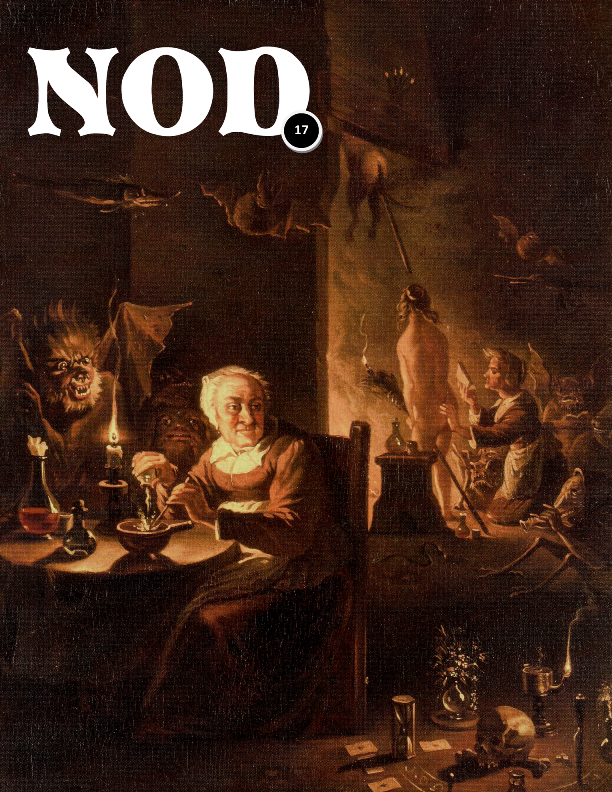
NOD 17 – Just in Time for Halloween!

It was a struggle today (embedding fonts in Adobe can be more frightening than a teenaged werewolf!) but NOD 17 is finally up for sale as a PDF!

Within it’s 50 pages you will find …

IXUM, City of the Savannah – a fantasy city on the savannah of Pwenet with over 60 locations.

36 MONSTERS OF DISTINCTION – If you’ve been following the blog this October, you know what to expect here – 36 Halloweeny monsters that are more than just a set of stats

DINOSAURS WITH A DIFFERENCE – A random table of modifications to make dinosaurs more memorable

IT’S THE MONSTER’S TURN – Four monstrous classes for Blood & Treasure – The Demon, the Devil, the Red Dragon and the Vampire. It ain’t just humans who like to kill things and take their stuff!

BAR FIGHTS – The bar fight matrix (and an excellent illustration by Jon Kaufman)

A SKELETON FOR EVERY OCCASION – 18 skeletons to challenge characters of any level

QUEENS OF ELEMENTAL AIR – Radiant elemental queens from the Plane of Air

SWORDS, SORCERY AND MYSTERY MEN! – A short guide to running heroic fantasy adventures  using Mystery Men!

MEET THE MACABRES – A “mysterious and spooky” race for fantasy games.

Hope folks enjoy it! The print edition will be out as soon as I get my review copy – probably about 10 to 12 days.

NOD 18 in two months will complete 3 years of this little effort of mine – can’t wait!

PURCHASE IT HERE!

Action X Firearms Database

For those who have been interested in the gun posts, and my attempt to wrap my head around firearms, I’ve uploaded my database to Google Drive. It is still a work in progress, with many empty fields to be filled (I maintain a massive commercial real estate database at work, so believe me, empty fields are a hateful thing to me).

The database is not a collection of every firearm that has ever existed – I’ve mostly focused on firearms from the “great powers” with a few other interesting specimens thrown in for good measure. It also doesn’t attempt to categorize every variation on these firearms – I’m using it for a game, so I don’t need to be that thorough.

A few explanations:

Nation might refer to the nation or origin or the nation most associated with the weapon – it’s a mishmash at the moment

Era is broken down into Pre-Modern (i.e. before the main scope of the game), Victorian (1860-1901), Pulp (1910’s to 1950’s), Cold War (1960’s to 1980’s) and Modern (1990’s to present).

Type is the general classification of the weapon. At the moment, I’m classifying anti-materiel weapons as sniper rifles.

Caliber is in inches.

Muzzle velocity is in feet/second. When italicized, it is a value I found for the ammunition, not the weapon – beggars can’t be choosers.

Bullet weight is in grains; originally, I was using place holders here originally, so some of the values might be off for the type of ammunition indicated. I’ll clean this up later.

TKOF is a calculated field – The Knock Out Factor – a useful abstraction for coming up with damage ranges.

Rate of fire is in rounds per minute.

Range is in yards, and (hopefully) represents the weapon’s effective range, not maximum, though data sources are not always clear.

Ammo refers to the weapon’s ammunition loading mechanism (or whatever the heck you want to call it).

Damage is a calculated field (essentially dividing TKOF by 20). For now, the damage values I’m going to use, based on the Modern SRD and different from previous posts, are as follows:

0 = 2d4
1 = 2d6
2 = 2d8
3 = 2d10
4 = 2d12

5 and beyond, I’m not sure yet, but 0-4 should take in most of the personal firearms, which is what I’m primarily interested in at the moment.

Cost is in dollars at the time the weapon was introduced – and this column is about 99% blank at this point. Ultimately, costs in the game are going to relate to how effective the weapon is – I just wanted a little info here on which to base my later calculations.

Rate of Fire – a calculated field showing rounds per 10-second round.

Ammunition is the type of ammunition used in some of the other fields (bullet weight, etc.). Many of these are blank because I didn’t initially keep track of this data, so I’ll need to go back through and fill these in.

Notes are just what you would think – notes.

The second Year column was just a convenience for me, so I could organize the weapons either alphabetically or by year introduced.

Since this isn’t my only copy of the database, I’m going to open it to the public for editing. Be gentle with it. My one request – if you add or change data, please highlight the cell that you changed, as well as the cell containing the weapon’s name, in yellow. It will make it easier for me to track down new information and put it into my other copy of the database. Please only make changes if you have a reliable source of data to work with, and please make a note of that source of data in the Notes field.

You can access the file HERE

Enjoy!

What Gave the Magic-User a Headache?

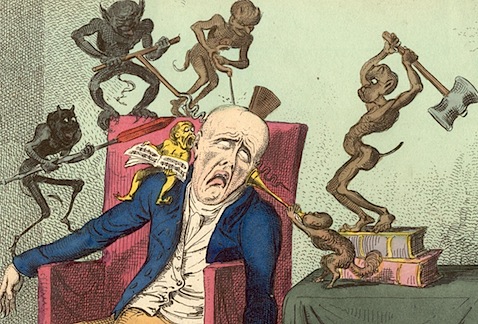
Magic-users are brain guys, and since they use their brains so much (and use them in such odd ways), they’re prone to frequent headaches. It’s not that different from swimmer’s suffering from swimmer’s ear or tennis players suffering from tennis elbow.

In play, whenever a random encounter roll is made and a “3” is rolled, there is a chance of the magic-user coming down with an aching  head. Let the magic-user roll a reverse saving throw (i.e. they need to fail the save to avoid the headache) – since the higher level a magic-user is, the more stress they put on the old grey matter. If a headache is indicated, roll d% on the following Random Magic-User Headache Table and inflict some agony.

01-04. Spell Residue: When a spell is imprinted on a magic-user’s brain and then unleashed, it often leaves behind a bit of itself – a spell residue, so to speak. This leads to a throbbing of the temporal lobe. The headache lasts until the magic-user unleashes all of his spells and then goes 24 hours without preparing any new spells OR until the magic-user can pass a once daily saving throw (as above). While suffering the headache, the magic-user suffers a 5% chance of spell failure and -2 penalty to all saving throws or skill throws involving concentration.

05-14. Dehydrated: Absent-minded as they are, magic-users often forget things like basic maintenance. The magic-user has become dehydrated, and this has started a headache. While suffering, the magic-user suffers a -1 penalty to all d20 rolls until he spends a day drinking a double ration of water.

15-16. Cerebral Parasite: The magic-user has picked up a cerebral parasite. The parasite lowers his intelligence score by 1d4 points (roll randomly each day) until removed with a cure disease spell.

17-19. Withdrawal Symptoms: Sometimes, a magic-user develops an addiction to a spell he or she has impressed on their minds. Randomly determine (or choose) a spell that the magic-user has memorized in the past, but which they do not have memorized now. Until the magic-user memorizes that spell and casts it for three days in a row, they suffer from a headache that gives them a 10% spell failure chance. If they go more than two days with this headache, they develop a nauseous stomach. If they go a week without memorizing the spell, they beat the addiction and are fine. If they eliminate the headache by memorizing the spell, they feed the addiction, and thereafter must memorize and cast the spell at least once per week or suffer from the withdrawal symptoms again.

20-35. Slept Funny: The magic-user must have slept funny, giving them a stiff neck and sore head. They suffer a -2 penalty to reflex saves (save vs. dragon breath, traps) and a -1 penalty to will saves (i.e. saves vs magic).

36-40. Tension – Fear: The magic-user has developed a headache from the stress and tension involved in dungeon delving. They must go 24 hours without encountering a monster or trap to remove the headache; otherwise, they suffer a -1 penalty to all will saves (save vs. magic) and a -3 penalty to all saves vs. fear.

41-45. Tension – Greed: The magic-user has developed an obsession with some piece of wealth owned by another character. Until they steal this item, they suffer a -1 penalty to all will saves (save vs. magic) and suffer a 15% spell failure chance any time they cast a spell that would be beneficial to the owner of the object of their desire.

46-50. Tension – Lust: The magic-user has developed an obsession with a fellow party member – one they would normally find attractive. Until they admit their feelings, they suffer from a -2 penalty to all will saves (saves vs. magic).

51-55. Allergies – Creature: The magic-user has developed an allergy to an animal owned by themselves or another party member, to a monster often encountered in the dungeon they are exploring (i.e. one of the monsters on the random encounter chart) or to another member of the party. When they get within 10 feet of this allergen, they suffer a headache that imposes a 5% spell failure chance and a -2 penalty to all will saves (saves vs. magic).

56-60. Allergies – Iron Rations: As above. The magic-user suffers the symptoms for 1d6 hours after consuming iron rations.

61-65. Allergies – Rope: As above. The magic-user suffers the symptoms for 1d6 hours after touching hempen rope.

66-70. Allergies – Magic Item: As above, but the allergy is to a particular magic item the magic-user recently came into possession of. The symptoms are suffered while the item is in his possession.

71-78. Pressure: The headache is caused by being more than 2 “levels” underground. The magic-user must either ascend to a higher level of the dungeon or suffer through the symptoms for 1d4+1 hours. While suffering, the magic-user suffers a 5% spell failure chance per dungeon level below 2 and a penalty to will saves (saves vs. magic) equal to the dungeon level they are on -2.

79-88. Light: Having spent so much time underground, the magic-user’s eyes are sensitive to light. They can stand torchlight, but must be at least 10 feet away from the torch. Anything else causes them to suffer a -2 penalty to all d20 rolls. This lasts until they have been exposed to pain-causing light for at least 4 hours.

89-99 Eye Strain: The eye strain caused by reading spell books, scrolls and ancient chaos carvings has caused a headache. The magic-user suffers a -1 penalty to all will saves (saves vs. magic) and a 5% spell failure chance until they rest their eyes for 48 hours.

100. Headache Demons: The magic-user is beset by 1d6 invisible headache demons:

Headache Demon, Tiny Outsider: HD 1; AC 14; ATK 1 implement of torture (1d4 + headache); MV 30 (Fly 40); F16 R13 W12; AL Chaotic (CE); XP 100; Special: Natural invisibility (per improved invisibility spell), yhose hit by the implements of torture must pass a will save or suffer a throbbing headache (-1 to all will saves, 5% spell failure chance; duration 1 hour) – additional spell failures increase the duration by one hour; three failed saves results in 1d4 points of intelligence, wisdom or charisma damage.

More Guns – Victorian Pistols [Action X]

A week or so ago I wrote about gun in Action X. Here’s my first crack at taking the data and making it usable – a collection of “Victorian” revolvers and pistols. What I’m still playing with is the column headed “APR” – or attacks per round. When the machine guns show up, that’s going to get tricky. I’ll probably look to d20 Modern SRD for inspiration there.

For now, though, check out what I’ve got …

Of course, the main goal here, as with Blood & Treasure, is to keep it simple and playable and not get hung up on the intricacies. At the same time, though, you want gun fights to have a special flare, since they’ll be a big part of any modern game.

You’ll note that at the top, I have “generic revolver”. That’s for people who don’t want to bother with the individual firearms, or maybe for a Referee who wants to keep it simple with the NPCs. The generic version basically averages the data I have for all the weapons from the same time period and type, including weapons that do not appear in the table above.

The feed column: C stands for “Cylinder”, as in revolvers. M stands for “magazine” – a very generic term including clips, boxes, drums, etc. I’ll also use B for “belt” when the belt-fed machine guns show up. Reloading a magazine or belt should be fairly quick – maybe you can do it in place of an attack or move during a round. Cylinders would take maybe a full round, or one could take a 1/2 round to load 1d4 shots – something like that.

Anyhow – it’s a start, and I’m sure there will be many changes before I’m finished writing the game.

Murder, Most Random!

Halloween brings to mind ghost and goblins, yes, but also creepy or imposing Victorian mansions, and thus, MURDER!

The next time you need to generate a random murder for characters to solve, or perhaps explain the origin of the ghost they are busting, these random tables might come in handy …

WHERE? (d30)

1. Attic
2. Ballroom
3. Bathroom
4. Bedroom (upstairs)
5. Billiard Room
6. Buttery
7. Cellar / Undercroft
8. Dining Room / Eating Room
9. Drawing Room / Parlour
10. Dressing Room
11. Fainting Room (nudge nudge)
12. Gentleman’s Room
13. Great Chamber
14. Hall / Great Hall
15. Housekeeper’s Room
16. Kitchen
17. Larder
18. Library
19. Long Gallery
20. Lumber Room
21. Master Bedroom
22. Pantry / Butler’s Pantry
23. Picture Gallery
24. Scullery
25. Servant’s Quarters
26. Smoking Room
27. Solar / Solarium / Sunroom / Conservatory
28. Store Room
29. Study
30. Wine Cellar

WHO? (d30)

Note: This table can be used to generate the victim and the murderer, as well as the wrongly accused

1. Baronet / Lord
2. Lady of the House
3. Blustering Industrialist
4. Arrogant Playboy
5. Bold Explorer
6. Virile Sportsman
7. Member of Parliament
8. Spoiled Son/Daughter
9. Imperious Son/Daughter
10. Dowager Aunt
11. Doddering Uncle
12. Brainy Professor
13. Idiot Nephew
14. Sly Courtesan
15. Impassioned Suffragette
16. Intellectual Son/Daughter
17. Silly Son/Daughter
18. The Butler
19. Kitchen Maid / Scullery Maid
20. Cook
21. Valet
22. Driver / Chauffeur
23. Companion
24. Lady’s Maid
25. Nanny / Governess
26. Tutor
27. Chambermaid
28. Page / Houseman / Footman
29. Gamekeeper / Master of Hounds
30. Master of Horse

WHAT? (d8)

1. Poison (Arsenic, Curare)
2. Shot (revolver)
3. Stabbed or Slashed (knife, dagger, razor blade, something more archaic)
4. Bludgeoned (candlestick, wrench, statuette)
5. Strangled (rope, scarf, bare hands)
6. Electrocuted (where available)
7. Suffocated (or gassed)
8. Drowned

WHY? (d8)

1. Jealousy
2. Envy
3. Greed
4. Boredom
5. Ambition
6. Revenge
7. For the cause!
8. Because of the voices!

So, what is Chief Inspector Macintosh up against this week?

Doddering old Dr. Rolston has been found murdered in the fainting room! Egad! He appears to have been poisoned, and the most likely suspect is the very intellectual daughter of the family, Felicity, who had been conducting a bit of research into poisons. But why?

If Macintosh is smart, he’ll discover that the true murderer was the footman, Joseph, who did it out of jealousy – he envied those “hysteria treatments” the doctor had been giving to the scullery maid, Eliza, so he put a little extra kick in the old man’s brandy, and when next the two met in fainting room, the good doctor expired!

Six Lovable Lycanthropes

We round out the “6 Monsters” series with six lycanthropes that might be lurking about the next city or dark wood your PCs visit.

Emma Scholt

Emma Scholt is a fierce woman, with a grave countenance and nary a sign of joy or lightness in her. A librarian, she is a pinnacle of order and reason, relied upon by the traveling sages and professors of Hogyth College for their research. Her staff fear more than respect her, for they have had occasion to see the mask slip every so slightly, to see the blood rise to her face and the rage within bubble to the surface even momentarily when something was found out of place or improperly handled. She keeps her office in the sub-level of the old church-come-library at the college, within the confines of the forbidden section, where heretical and valuable texts are locked away behind an iron door. Here, she prowls when the moon is full and she has taken on the aspect of the wolf (after making sure the volumes here are safely locked behind iron bars and away from her more destructive impulses.) It was two summers ago that one of her staff, a dashing fellow from the north, crept into the forbidden section in a bid to woo the librarian, for he had seen her flush with anger and was captivated by the beauty that anger revealed. Of course, he never left the forbidden section, and what remained of him the next day was hidden away to be a nagging worry in the back of Emma’s mind that, one day, he will be discovered and she will have to flee.

Emma Scholt: HD 4; HP 10; AC 16 [silver]; ATK 2 claws (1d4) and bite (1d6); MV 30; F14 R11 W11; AL C (NE); XP 400; Special – Lycanthrope.

Hemix

The docks of Sampthr are a wild place, sitting as they do at “the end of the world”, where the northern lights adle the brain and the bitter cold drives men and women to all manner of extremes to survive. The docks will be an even wilder place soon, for a werewolf has been introduced to the mix. Hemix was a sailor from a far away land who was traveling north, to the empty, snowy quarters there that he might quit humanity and live out his curse in relative peace. Alas, an accident aboard the ship that was carrying him left him unconscious and with amnesia. Recovering on the icy streets of Sampthr, he spent a week regaining his strength under the ministrations of a tavern girl named Muirion, who liked the look of him. A strong lad, he soon found work on the docks and has taken up with the girl, blissfully unaware that in just two days, when the moon is full, his true nature will reveal itself.

Hemix: HD 4; HP 11; AC 16 [silver]; ATK 2 claws (1d4) and bite (1d6); MV 30; F14 R11 W11; AL N currently, but normally C (CE); XP 400; Special – Lycanthrope.

Talyn

Talyn was a soldier of Rurit who was captured during a fierce battle with the Duwoldi Empire. He and his fellows were gathered up, bound in chains, and sold off to Rolla the Slave Trader, who in turn sold Talyn and a few others to work on the villa of Chazadar, a spice merchant who had made a name for himself in Duwoldi politics. A mercenary, his fellow soldiers knew little about him, and they have learned little since. Talyn is a werewolf, and though he was at first loathe to be a slave, he has since found it excellent cover for his disease. Hunting his fellow slaves is like shooting fish in a barrel, and he has set his eyes on Chazadar’s wife. At the next full moon, he will creep into his “master’s” villa, slaughter the household and bite the beautiful Latzme, infecting her and making her his mate.

Talyn: HD 4; HP 14; AC 16 [silver]; ATK 2 claws (1d4) and bite (1d6); MV 30; F14 R11 W11; AL C (CE); XP 400; Special – Lycanthrope.

Minri
Minri is a girl of about 12 years who lives on the rough and tumble streets of Tricardis. One of many street urchins, she makes her way as a beggar and thief, leading (from behind) a large gang of urchins. They dwell in a number of abandoned buildings or beneath bridges or in the sewers, picking pockets during the day and sometimes carrying off more ambitious heists at night. When the moon is full, Minri takes on her rat nature and infects the new members of the gang with lycanthropy. Those who survive become full fledged “street rats”, and are brought to the gang’s sanctum sanctorum in an abandoned and forgotten dungeon beneath one of the city’s old watch towers, where they feast and dance and dream of conquest.

Minri: HD 2; HP 7; AC 16 [silver]; ATK 1 bite (1d6) and 1 dagger (1d4); MV 30; F15 R12 W12; AL C (CE); XP 200; Special – Lycanthrope, pick pockets as 6th level thief.

Samera

Samera is a princess, regal and cruel, who rules over a small principality on the shores of a great, inland sea. Her land of rugged hills and tangled woods is known for its horses and its blue-furred tigers. Samera is a strong ruler who has had many consorts, but has not yet been wed. Her family is tight-knit, and the house servants fear them, for they are casually cruel and seem not to have a drop of human kindness in them. When the moon is full, the servants are dismissed from the house and the family perform rituals and sacrifices to the moon goddess to ensure their country remains fertile and strong – or so they say. It is also during these revels that the blue tigers of the hills become exceptionally aggressive, attacking not only livestock, but people (usually hapless travelers) who wander out of doors at night.

Samera: HD 7; HP 34; AC 16 [silver]; ATK 2 claws (1d8) and bite (2d6); MV 30; F11 R10 W10; AL C (LE); XP 700; Special – Lycanthrope.

Yao the Peddler

Yao is a wandering peddler of boar bristle brushes and other odds-and-ends he scavenges on his travels. He travels on foot, visiting the villages and towns between the eastern hills and the tranquil sea, his fat, red face well known in the region. Most folk are suspicious of the man, who never sleeps a night in a civilized village, always preferring to camp a mile or so away. His products are good enough, and he doesn’t cheat folks, but he tends to stare with his piggish little eyes, and one gets the feeling he is sizing them up for a meal. He is, of course, a wereboar. An intelligent man, he makes sure to get himself far away from civilization when the moon is nearing full, only rarely allowing himself the luxury of killing a human being, and only then when that person has cheated or offended him in some way. Travelers might encounter him in the wilderness, where they will find him evasive and hostile if they are kind to him, and uncomfortably pleasant if they are unkind.

Yao: HD 4; HP 18; AC 16 [silver]; ATK 1 gore (1d6) or light mace (1d4+1); MV 30; F14 R11 W11; AL N; XP 400; Special – Lycanthrope.

Image found at Brian’s Drive-In Theatre