Mutant Truckers of the Polyester Road

I’m still working on my hex crawl for the next issue of NOD – it will feature the eastern half of Mu-Pan hex crawl first presented in NOD 8 – and was brainstorming on other articles I could include. Of course, the Chimera generator will show up, maybe with some refinements. Some magic items will pop in, I think, but I what I really wanted to do was feature another Campaign Sketchbook, like the one that has now morphed into 1800 – American Empires.

The most likely candidate was the Polyester Road post-apocalyptic notion I had a few months ago, but I couldn’t come up with a satisfying hook and wasn’t sure what I was going to do. And then, on the drive home yesterday, I happened to hear this …

I started thinking, “You know, Shy Town and Shakeytown sound like names for cities in a game of Mutant Future …” and then it all came together.

So – NOD 10Mutant Truckers of the Polyester Road. I’m envisioning a mini-game with quick character generation, a small list of mutations (and negative side effects), four classes (driver, mechanic, gunner and outrider), some equipment – mostly focusing on taking a century old big rig and equipping it for post-apocalyptic highways, some info on the surviving cities, buying and selling cargo, breaking the drive into “legs” with random events (break downs, gang attacks, bear patrols, freak storms) occurring on each leg, town encounters, etc. Hopefully will come together and be cool. I’ll definitely need some artwork, though – of all the public domain artwork floating around the internet, I doubt there are many mutant truckers floating around out there.

Friends in High Places (Mystery Men!)

In the world we know, the nation of Tibet was conquered by the communist Chinese in 1950. In the world of Mystery Men!, however, things might have gone a bit tougher for the Chinese, as Tibet has produced an astounding array of super heroes. Also notable is the proclivity for Tibet-trained heroes to eschew much clothing.

With the likes of Amazing Man and Phantasmo on their side, I think it’s a safe bet that Tibet remains an independent nation in the world of public domain comic books.

Amazing Man (Super Hero)
Created by Bill Everett, 1939

John Aman was an orphan chosen by Tibet’s Council of Seven to be trained to mental and physical perfection. At age 25, his training finished, he returns to the United States to battle crime with the assistance of private investigator Zona Henderson and her kid brother, who becomes Tommy the Amazing Kid. His greatest enemy is The Great Question, an exile from the Council of Seven.

Dr. Diamond (Super Hero)
Created by Al Ulmer, 1941

Dr. Drake Gorden was stranded on a deserted island when his freighter is struck by a typhoon. The island is home to a Tibetan monk, who gives Diamond a magical black diamond that gives him the strength of 50 men.

Flame (Super Hero)
Created by Will Eisner and Lou Fine, 1939

Washed downstream to Tibet after a flood (a neat trick), the infant Gary Preston is found by a group of lamas. With the lama’s mystic training, he learns to control fire and heat.

Green Lama (Super Hero)
Created by Kendell Foster Crossen, 1940

Jethro Dumont is a New York millionaire who travels to Tibet to study to be a lama. After ten years he learns the mantra “om mani padme hum”, which gives him an array of powers. He also gains powers from his scientific knowledge of radioactive salts. His secret guise is as the Buddhist priest Dr. Pali.

Human Meteor (Super Hero)
Unknown Creator, 1940

Duke O’Dowd was serving in the Foreign Legion stationed in Bavakuria when he meets Wah Le, the ruler of an ancient lost city of Tibet. Wah Le gives the soldiers a magic belt with which to combat evil. Back in New York, O’Dowd works as a taxi driver. He is assisted by Toby, a shoeshine boy.

Mr. Mystic (Super Hero)
Created by Will Eisner and Bob Powell, 1940

A man known only as Ken gained sorcerous powers after receiving a mystic tattoo on his forehead while visiting Tibet. He returned to the United States and took up the fight against crime.

Phantasmo (Cosmic Hero)
Created by E. C. Stoner, 1940

Phantasmo spent 25 years in Tibet learning the mystic secrets of the lamas before returning to the United States to fight crime. He takes the name Phil Anson, and pays bellhop Whizzer McGee to watch his body while he travels astrally.

Wonder Man (Super Hero)
Created by Will Eisner, 1939

Radio engineer Fred Carson travels to Tibet and meets a yogi who gives him a magic ring that gives him all manner of wondrous powers.

Mu-Pan Eastern Encounter VII

4505. Island of Dust: This island was once covered by lush grasses and macacque peach (kiwifruit) trees, but the destruction of the islands of the Nakdani sent a wave over the island that carried away the soil and sowed what remained with salt. The island is now inhabited by two factions – the men of the barren high plateau and the men of the shore, which is covered with scrub. The only fresh water comes from springs on the plateau, making the men of the plateau the island’s masters. They demand a heavy tribute in shellfish from the men of the shore, as well as taking their most beautiful daughters to be their wives.

The fresh spring on the plateau arose after the disaster. It followed a trio of pearl-skinned demons that looked like glistening children with black eyes that burrowed up from the underworld. The spring does provide plenty of sweet water, but those who drink from the spring itself lose their ability to sympathize with others, gradually becoming cold and humorless and thoroughly chaotic.

The men of the high plateau live in burrows, while the men of the shore dwell in little huts of driftwood.

4547. Qatu of the Nine Fingers: Qatu is an elder shugenja that lost a finger to the belly of a tiger whose skin now forms her cape. Qatu is a big-boned woman of Amazonian stature, with gray-green eyes and dull brown hair worn in thick braids.

Qatu’s tower is a pagoda of fulgarite bricks bound in copper bands. The roof is peaked, and electricity courses down the length of the building, making it very dangerous to approach without invitation or some manner of protection. A lightning elemental is bound in a globe of glass in the roof of the building, powering the pagoda’s defenses and other bizarre devices kept by the shugenja.

Qatu has a treasure of 1,430 sp, 1,520 gp, a rose quartz worth 200 gp, 22 black bear skins worth 5 gp each, a brass locket holding the skin of a human thumb (worth 5 gp with or without the skin), a brass toe ring worth 95 gp and, her greatest treasure, a strange salt-glazed jug shaped like a squat samurai. The jug holds a giddy wine in which resides the essence of Manai, a warrior who adventured with the shugenja in olden times before tangling with a lich and winding up in his strange, pitiable state.

The Luminaries of 1800

Just to get folks into the spirit of the time, here’s a list of some of the personalities active in 1800, with a few notations concerning the alternate history of the game.

John Adams (Age 65) – President of the Massachusetts Commonwealth.

Johnny Appleseed (Age 26) – John Chapman, A missionary from Massachusetts known for his planting of apple orchards in the Ohio Country. Follower of the The New Church of the Christian mystic Emanuel Swedenborg.

John Armstrong (Age 45) – Frontiersman, soldier and jurist born in New Netherland, explorer of the Ohio Country.

John Jacob Astor (Age 37) – Merchant involved in fur trading, real estate and opium; An immigrant to New Netherland from Germany, he becomes the continent’s first multi-millionaire.

Jane Austen (Age 25) – English novelist, has completed Lady Susan, First Impressions and Sir Charles Grandison or the happy Man, a comedy in 6 acts and is working on Northanger Abbey.

Tony Beaver (Age ???) – Woodsman from Vandalia Territory of Virginia; champion griddle skater of the Virginia Commonwealth.

Daniel Boone (Age 66) – Old scout from the Transylvania Territory of Virginia and founder of the territorial capitol Booneborough, he has by 1800 moved into the French territory of Louisiane, to the Femme Osage territory and has hunted far into the “Mysterious Interior”

William Augustus Bowles (Age 37) – Also known as Estajoca, a Marylander who settled among the Muskogee of Florida and now serves as the leader of the Muskogee Republic.

Meshach Browning (Age 19) – Backwoodsman from Maryland; hunter and explorer of the North Branch Potomac and Youghiogheny Rivers.

Nathaniel “Natty” Bumppo (Age 87) – Old frontiersman from New Netherland, now settled among the Kansa in Lousiane.

Paul Bunyan (Age ???) – French canadian logger of massive proportions dwelling in the northern woods.

John C Calhoun (1782-1850, Age 18) – Farmer living in the backwoods of Carolina.

Jean Pierre Chouteau (Age 42) – “River Baron” and fur trader in St. Louis, Lousiane.

William Clark (Age 30) – Soldier from the Transylvania Territory of Virginia.

Henry Clay (Age 23) – Lawyer and warhawk of Transylvania Territory, he accompanied Aaron Burr on his adventure into the west, helping establish the Texican Republic.

Count of St. Germain – An immortal alchemist who developed the elixir of life and wrote The Most Holy Trinosophia. Was known as Francis Bacon in 16th century England.

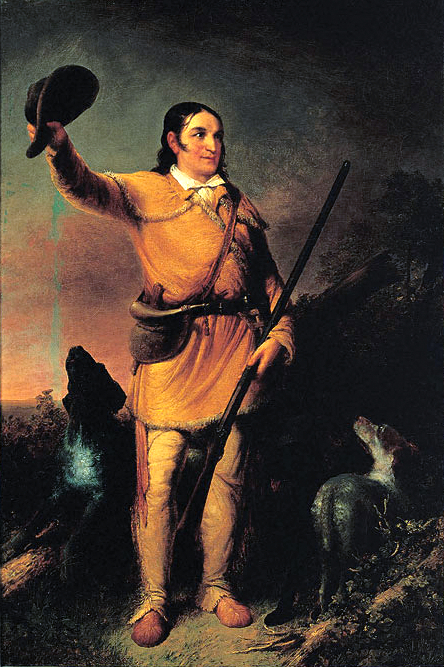
Davy Crocket (Age 14) – Young man from the Franklin Free State, by 14 he’s already spent a few years in the wilderness after running away from home over not going to school.

Don Alejandro de la Vega (Age 46) – Popular alcalde of Reina de los Angeles, elevated to the Presidente of the California Republic.

Louis Claude de Saint-Martin (Age 57) – French philosophe; in 1771 he left the French army to become a preacher of mysticism. His properties confiscated during French Revolution, he fled with the Queen and her son to Lousiane.

Mike Fink (Age 30) – “King of the Keelboaters”, born in Fort Pitt in New Netherland, he operates boats on the Ohio and Mississippi Rivers.

Hezekiah Frith (Age 37) – British gentleman privateer from Bermuda.

Robert Fulton (Age 35) – American engineer and inventor of steam-driven boats; working on a submarine design (Nautilus) for Napoleon.

Gasparillo (Age 44) – Jose Gaspar, last of the Spanish buccaneers who raids the Florida coast.

Simon Girty (Age 59) – Born in New Netherland, he and his brother were kidnapped and adopted by Senecas; Girty preferred the Native American way of life and dwells with them in the Ohio Country.

William Henry Harrison (Age 27) – Soldier of Virginia, serving in that nation’s attempted colonization of the Ohio Country.

Inali (Age 54) – Also Black Fox, he is the brother-in-law of Dragging Canoe and chief of Ustanali town in the Cherokee Nation.

Incalatanga (Age 56) – Also Doublehead; feared warrior of the Cherokee during the Chickamauga War.

Andrew Jackson (Age 33) – A lawyer and politician dwelling in the wilds of Carolina’s western territory of Tennessee; soon to lead a Carolinian army against the Franklin Free Staters.

Thomas Jefferson (Age 57) – President of the Commonwealth of Virginia, he would like to see his country remain independent (i.e. he is an opponent of the unionists) and spread into the Illinois Country and beyond.

John the Conqueror (Age ???) – Also known as High John the Conqueror, John de Conquer; African prince sold as slave in America, he escapes and survives as a trickster figure. John fell in love with the devil’s daughter Eulalie.

Simon Kenton (1755-1836, Age 45) – Frontiersman born in the Bull Run Mountains in Virginia; fled into the wilderness of Transylvania at Age 16 because he thought he had killed a man.

Diedrick Knickerbocker (Age ???) – Elderly scholar of New Amsterdam.

Konieschquanoheel (Age 75) – Also known as Hopocan or Captain Pipe, he is a chief of the Lenape and a member of the Wolf Clan. He was allied with the British during the revolution and attacks settlements in western New Netherland; eventually leads his people into the Ohio Country.

Kunokeski (Age ???) – Also John Watts or Young Tassel, a leader of the Chickamauga (Lower Cherokee). He is kin to Doublehead and Pumpkin Boy and uncle of Sequoyah. Principal chief of the Chickamauga.

Jean Lafitte (Age 24) – Born in Saint-Dominque (Haiti); moved with his mother to La Nouvelle-Orleans after she marries merchant Pedro Aubry; explorer of the Bayou.

Marie Laveau (Age 6) – Future voodoo queen of La Nouvelle-Orleans. Daughter of white planter and free Creole woman of color.

Meriwether Lewis (Age 26) – Former soldier and favorite of Virginia’s President Jefferson.

Manuel Lisa (Age 28) – Scoundrel and fur trader from St. Louis in Louisiane.

George Lisle (1750-1820, Age 50) – Born into slavery in Virginia, he was eventually taken to Georgia, he was converted to Christianity by Rev. Matthew Moore; freed by his owner Henry Sharp, he traveled to Savannah and founded a Baptist congregation. He migrated with the British to Jamaica to avoid slavery in post-revolution Georgia.

Little Turkey (Age 42) – Elected First Beloved Man by the general council of the Cherokee after murder of Corntassel in 1788; he is the Principal Chief of the Cherokee Nation.

Samuel Hall Lord (Age 22) – Buccaneer of Barbados; owns a castle-mansion.

Makataimeshekiakiak (Age 33) – Sauk war leader also known as Black Hawk; dwells in the Illinois County claimed by the Commonwealth of Virginia.

Samuel Mason (Age 61) – Virginian; Former captain of militia during the revolution; leader of river pirates and highwaymen on the Ohio and Mississippi Rivers. Presumably he has clashed with Mike Fink on more than one occaision.

Franz Mesmer (Age 66) – A German philosophe living in Paris, he theorized the existence of animal magnetism and other spiritual forces grouped together as mesmerism – his ideas led to the development of hypnotism by Scottish surgeon James Braid.

Zebulon Montgomery Pike, Jr. (Age 21) – A captain in the army of New Netherland, he is serving in the Ohio Country.

Philip Nolan (Age 29) – Horse-trader and freebooter who helps Aaron Burr found the Texican Republic; born in Belfast and well-educated. Now leads the Texican Rangers.

Nunnehidihi (Age 29) – AKA Major Ridge; Cherokee leader born into the Deer Clan in Cherokee town of Great Hiwassee. Grandfather was a highland Scot. He participates in wars against the Franklin Free Staters.

Thomas Paine (Age 63) – Author, pamphleteer, radical inventor, intellectual, revolutionary. Dwelling in France and planning with Napoleon the invasion of England, possibly with the help of Fulton’s submarines.

Joseph Priestly (Age 67) – English theologian, Dissenting clergyman, philosophe and educator; discovered oxygen and invented soda water, explored electricity with Benjamin Franklin. He now dwells in New Netherland.

Paul Revere (Age 65) – Prominent Bostonian, he meets at the Green Dragon Tavern with the Massachusetts Charitable Mechanic Association.

Benjamin Rush (Age 54) – Member of the Sons of Liberty and a Freemason. New Netherlander physician, writer, educator, humanitarian and Christian Universalist, as well as founder of Dickinson College. Opponent of slavery and capital punishment, the real Dr. Rush would be called on to provide medicines to the Lewis & Clark expedition, including Turkish opium for nervousness, emetics to induce vomiting, medicinal wine and 600 of Dr. Rush’s Bilious Pills – Rush’s Thunderbolts or thunderclappers – mega-laxitives containing 50% mercury.

Sacagawea (1788-1812, Age 12) – Shoshone maiden kidnapped by the Hidatsa and taken to their village in far northern Louisiane.

Sequoyah (Age 30) – Also George Guess; Cherokee silversmith. His mother was of the Paint Clan and his brother John Watts (q.v.).

John Sevier (Age 55) – Governor of Franklin; born in Virginia of French Huguenot blood. Served in the revolutionary army.

Daniel Shays (Age 53) – Led a rebellion against the Commonwealth of Massachusetts over unpaid wages to veterans of the revolution. Pardoned by then Pres. Hancock, he now lives in New Netherland.

Philip Shuyler (Age 67) – Grand Pensionary of the United Provinces of New Netherland.

Venture Smith (Age 71) – African slave brought to America as a child; born Broteer Furro in Guinea, the son of a prince with several wives. He purchased his freedom in 1765. Dwells in New Netherland as a woodsman; over 6 feet tall, weighed 300 pounds and carried a 9 pound axe for felling trees.

John Stevens (Age 51) – Lawyer, engineer and inventor of New Netherland. Captain in the revolutionary army, he is interested in powering boats with steam engines.

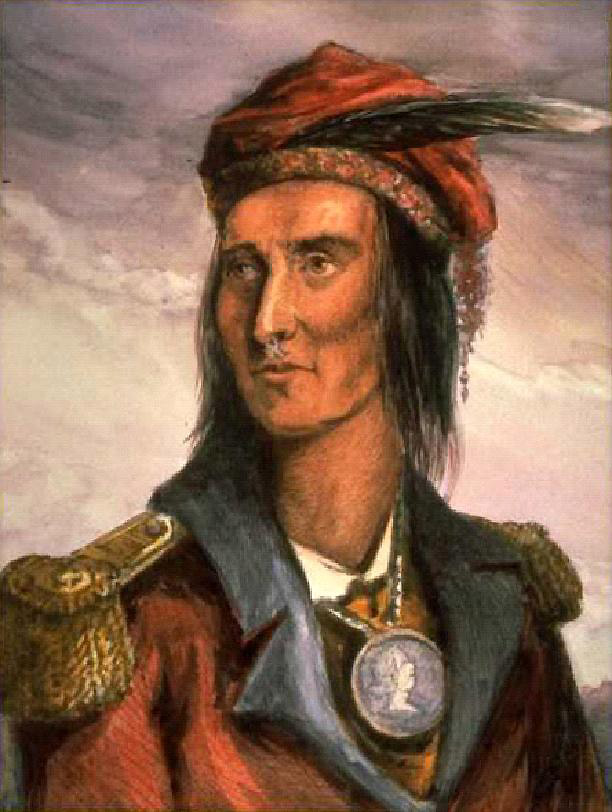
Tecumseh (Age 32) – Shawnee war leader licking his wounds in the vicinity of Fort Green Ville in the Ohio Country (founded by Gen. “Mad” Anthony Wayne of New Netherland, recently deceased).

Thayendanegea (Age 57) – Also known as Joseph Brant; a Mohawk of the Wolf Clan, he dwells in Upper Canada and plots with the French to effect a revolution.

Isaac Tichenor (Age 46) – Governor of the Vermont Republic, a secret unionist of New Netherland extraction.

Rip Van Winkle (Age ???) – Ordinary fellow and supernatural curiosity dwelling in New Netherland.

Daniel Webster (1782-1852, Age 18) – Schoolmaster in Massachusetts’ New Hampshire province. He hasn’t yet encountered Old Scratch.

Mason Locke Weems (1759-1825, Age 41) – American author and book agent, a unionist who has written apocryphal stories of the men who fought the revolution; called Parson Weems. A Marylander, he now dwells in the Commonwealth of Virginia.

Eli Whitney (Age 35) – Inventor from Massachusetts, invented cotton gin in 1793 and is manufacturing muskets with interchangeable parts for the Mass. army.

Dominique You (Age 25) – Haitian artillerist, half-brother of Jean Lafitte.

The Fat Little Nothing

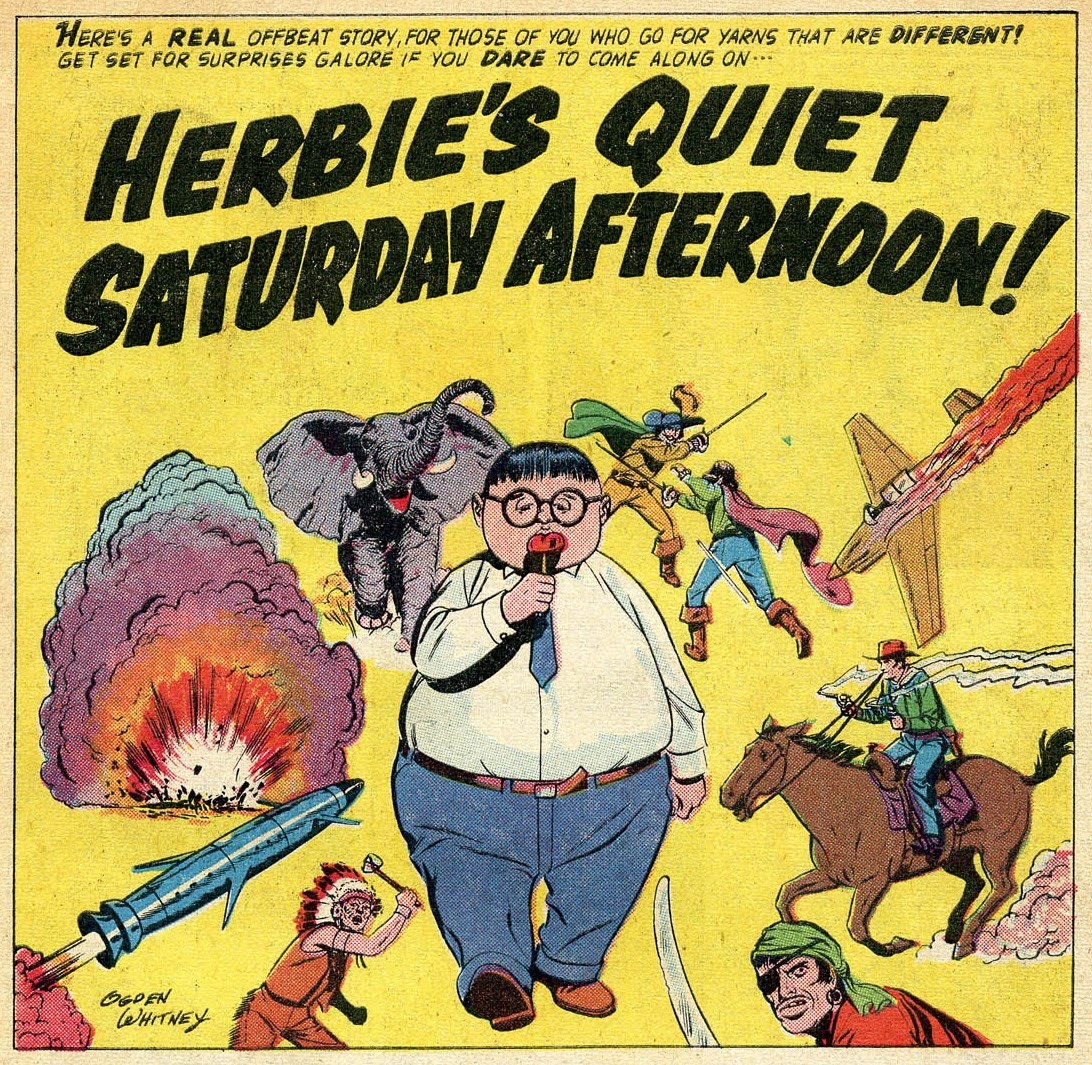
Cosmic heroes don’t come any more blase’ than Herbie Popnecker. Dismissed as a “fat little nothing” by his father, Pincus, Herbie’s lifelong addiction to seemingly mystic lollipops has made him easily one of the most powerful entities in the universe. Galactus – Ha! Superman – Don’t make him laugh! (Well, he wouldn’t laugh, of course, but don’t even try). Herbie always seems to sleeping, and even when awake he’s half asleep. That probably makes him a powerful dreamer, in the vein of Randolph Carter, who either inhabits his own world of dreams or is able to impose his fancies on the world around him.

Image from Silver Age Comics

Space Princess: Pick Your Species

Here’s where species (not races – that hasn’t been the right word for about a century now) currently stand in Space Princess.

Human
Human characters have no special bonuses or penalties, but they do begin the game with one extra Destiny Token to help them get out of dangerous situations intact. Humans begin with a standard Defense Rating of 10 and a standard Movement Rate of 40.

Android or Gynoid
Androids are sentient robots that generally resemble males, while gynoids are sentient robots that generally resemble females. Of course, your android character can look however you like – it need not even be humanoid in configuration, although such a shape could influence how it interacts with the environment in the game (i.e. it is unable to climb a wall because it has no arms or legs, etc). Androids are immune to mental domination, fear and poison. Androids have a standard Defense Rating of 12 and a standard Movement Rate of 40.

Alien
Aliens come in a variety of different shapes and sizes. You can either invent your own alien species on the spot, or your Referee might provide you with a selection. Aliens have a standard Defense Rating of 10 and a standard Movement Rate of 40, unless otherwise stated below. Aliens are built as follows:

1. Choose Kingdom: Crustacean, Fungus, Humanoid, Insect, Mammal, Mollusk, Plant, Reptile or Silicon-Based.

Crustaceans: Crustacean aliens have a thick carapace that grants them a standard Defense Rating of 12. The player can choose to give them pincers in place of normal hands. These pincers make it difficult for them to handle ray guns (-2 to hit) and perform acts of fine manual dexterity (-10%).

Fungoids: Fungoids have thick skin and their lack of internal organs makes them resistance to damage, giving them a standard Defense Rating of 12. They are immune to poisons not designed to kill fungus (i.e. fungicides) and their alien intellects give them a +10% bonus to resist mental domination and fear.

Humanoid: Humanoid aliens look like human beings with slight physical differences – pointed ears, red skin, six fingers on each hand or four toes on each foot. Humanoid aliens enjoy a +2 bonus to one ability score (chosen by the player), but suffer a -2 penalty to another ability score (chosen by the Referee).

Insects: Insect aliens have chitin that provides a standard Defense Rating of 11. Their powerful mandibles add +1 to their damage when engaged in unarmed combat.

Mammals: Non-humanoid mammals might resemble other members of the mammal kingdom, from dogs to cats to elephants and gazelles. They have thick fur or skin that gives them a Defense Rating of 11 and their natural weaponry (claws, fangs, antlers) add +1 to their damage when engaged in unarmed combat.

Mollusks: Mollusk aliens that can leave the water are usually covered with a mucus membrane that makes them difficult to grapple in combat (-2 to the attempt). Their tentacle-like limbs make them expert grapplers (+2 to the attempt).

Plants: Plant aliens have the same general benefits as Fungoids.

Reptilians: Reptilian aliens have a standard Defense Rating of 11 due to their scaly hides. If deprived of warmth, they become sluggish and their Movement Rate is cut in half. A reptilian’s natural weapons (fangs, claws) grant it a +1 bonus to damage when engaged in unarmed combat.

Silicon-Based: Silicon-based life forms are essentially living rocks. Like androids, they might take almost any form the player can imagine, with the same consequences. Silicon life are immune to all poisons and seemingly require no sustenance to stay alive. They have a standard Defense Rating of 12, but their standard Movement is reduced to 20.

2. Choose One Special Ability: You can add an additional special ability by permanently spending one Destiny Token.

Ability Bonus: The alien can improve one ability score by +2.

Bulk: The alien is especially bulky and heavy, making it difficult to knock over in combat.

Climbing: The alien can climb walls and ceilings as easily as it walks on a flat surface.

ESP: The alien can attempt to read another’s mind by making physical contact. The alien must make a Mentality saving throw to make contact, and the target can make a mentality saving throw to resist. The ESP reads the surface thoughts of the target. Attempting to access deeply personal secrets permits the target to make a second saving throw to resist.

Hearing: The alien has hearing well beyond that of human beings.

Infra-Vision: The alien can see in the dark via infra-red radiation – in essence, it sees body heat.

Leap: The alien can leap up to 20 feet in any direction.

Mind Control: Whether by hypnotic eyes, intoxicating spores or simple brain waves, the alien can attempt to impose its will on others. The target of the mind control can make a Mentality saving throw to negate the effect. The mind control makes the victim believe the alien is a good and trusted friend. The alien cannot use the mind control to order the person to kill themselves, and orders that seriously counter the target’s personal beliefs (like having them attack a loved one or betray a very valued cause) allow them a second saving throw to shake off the control.

Multiple Arms: Multiple arms allows the alien to hold more objects than normal and to make one additional attack during combat.

Multiple Legs: Multiple legs increases the alien’s Movement Rate by +5.

Stunning Grasp: The alien can stun others with their touch. They must make a normal, unarmed attack in combat to make contact. The victim suffers normal unarmed damage and must pass a Mentality saving throw or fall unconscious for one combat round.

Deviant Friday – janaschi edition

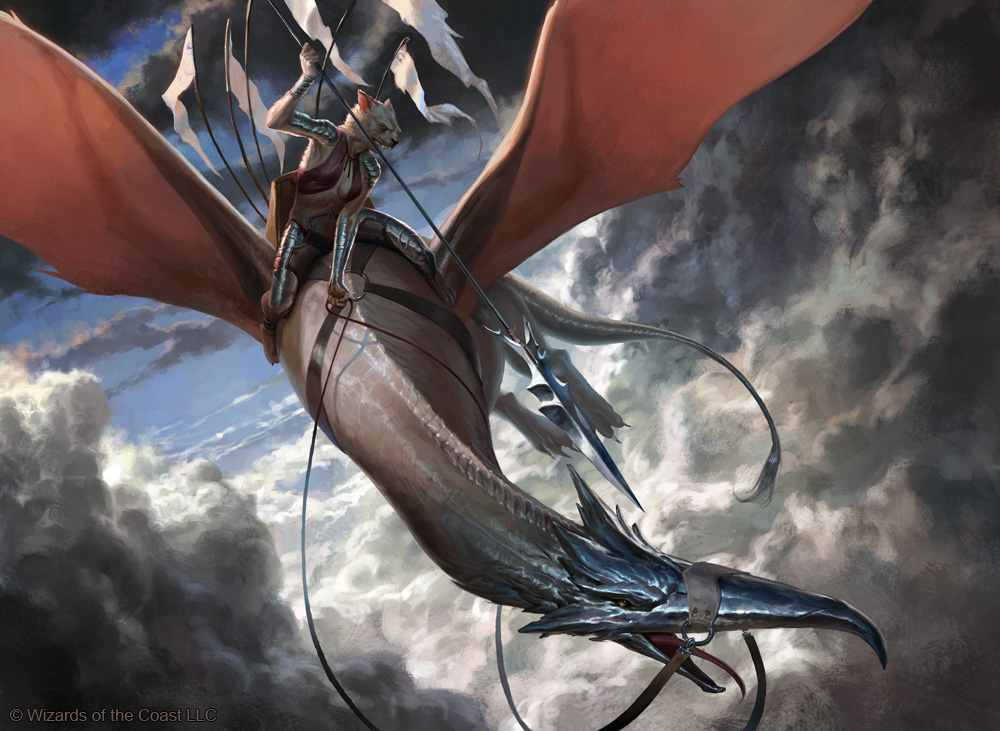
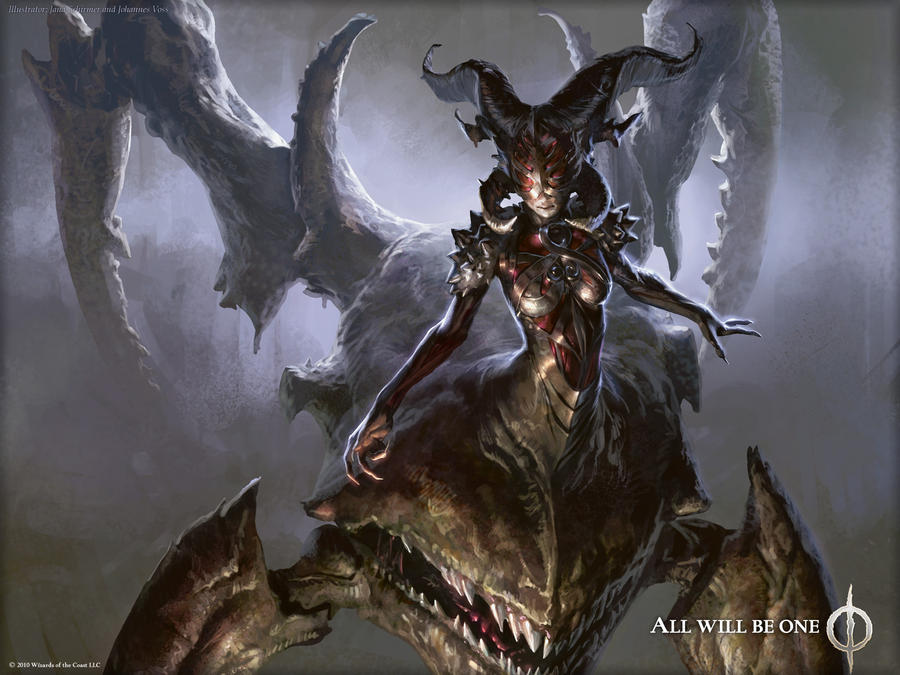
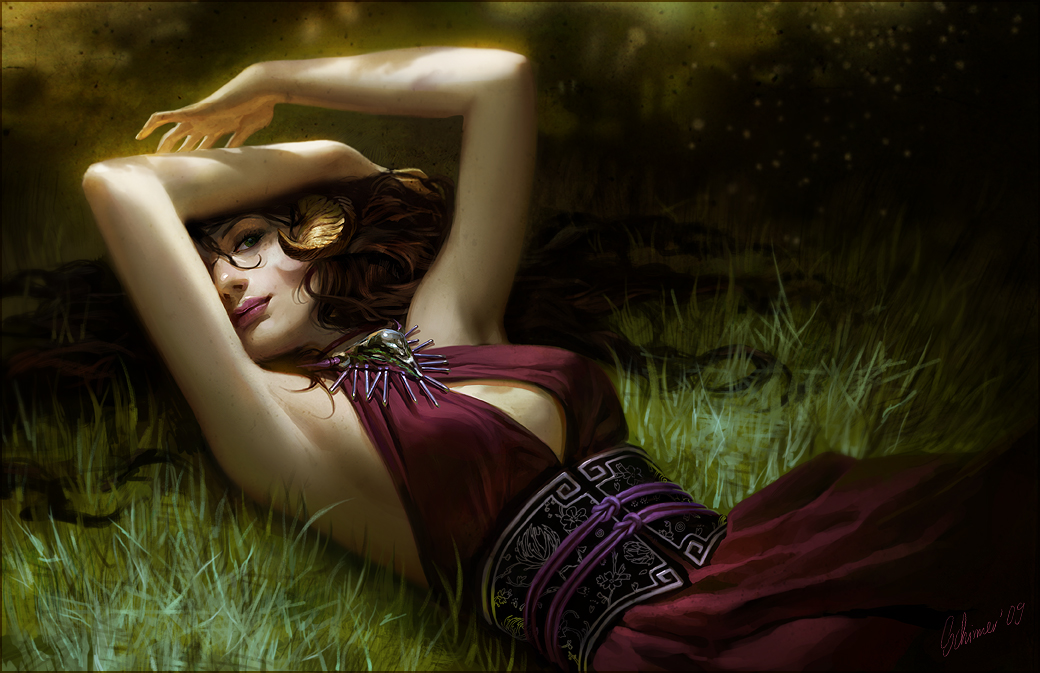
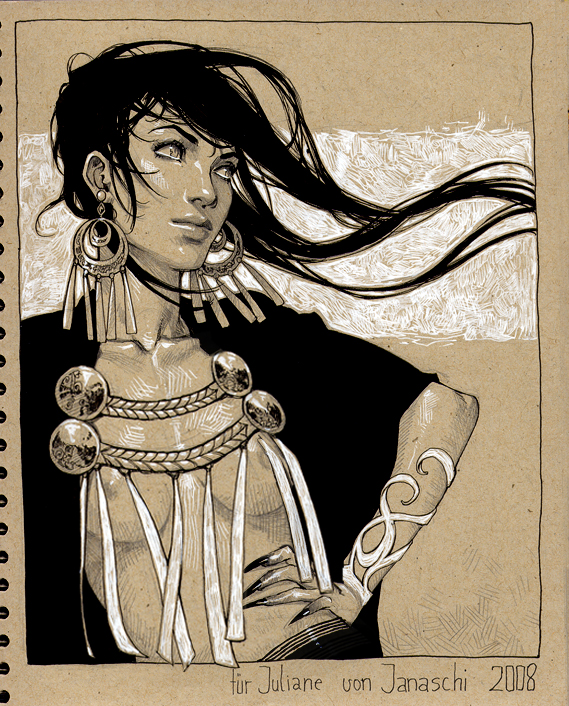
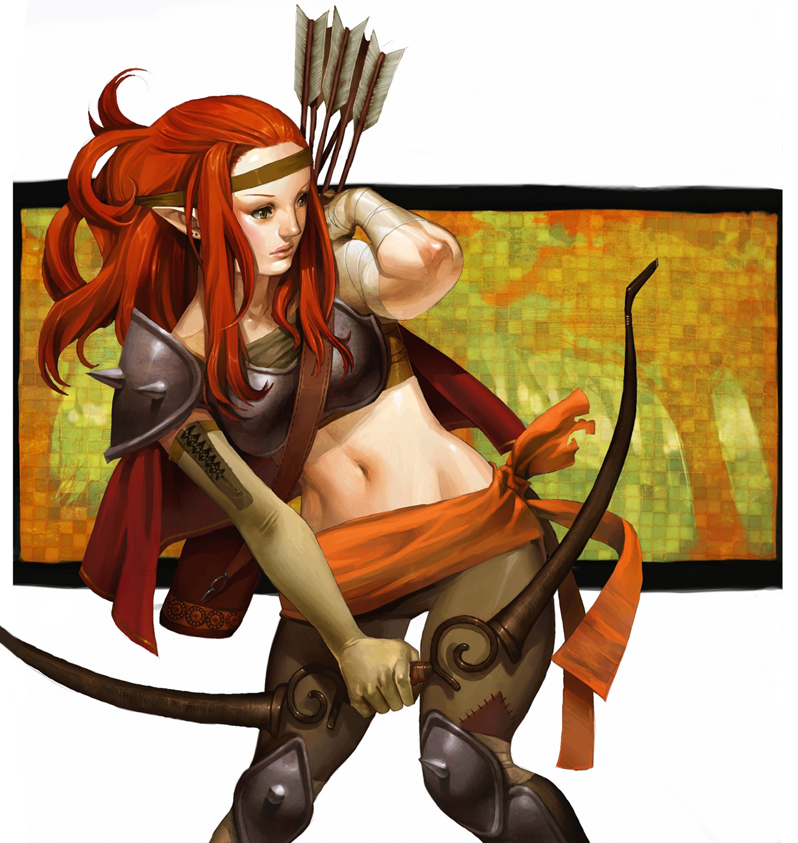
Say what you might about Magic: The Gathering, but it certainly keeps artists busy. One of those artists is janaschi, who does some really nice color work – pretty women in the anime/elven vein – a fantasy artist I would put in the Todd Lockwood school.

Short gallery today – check it out. Later – Space Princess aliens and maybe tonight one of the most powerful super heroes ever conceived given Mystery Men! stats.

MtG: Leonin Skyhunter


MtG: Sheoldred, Whispering One


eggs


conhon entry 2.0


giftart


over30.000hits Oo


Magic in 1800

My last 1800 post sparked some discussion (okay, two comments) about magic. Here are my thoughts …

Regarding replacing magic because the setting is more ripe for science – I originally thought about going the science route. It was done in Northern Crown and I’ve certainly mixed science with fantasy in other projects, but for this one I wanted to go the pure magic route. Why? First and foremost, I think the “steampunk” concept tends to completely take over a setting and game. I didn’t want to do that with 1800. I wanted the game to focus on wilderness exploration, which (point number two) leaves science types without the use of a workshop or spare parts, and thus forces us to really stretch the imagination to fit him in. Of course, one can also just use magic and call it science, but that wasn’t a satisfying option for me.

Finally, science and non-human powered machinery as we know it today is really just at its beginnings in 1800 – you’ve had a manned flight in balloon across the English Channel and some demonstrations of steam engines, but steam power hasn’t come to dominate the imagination and landscape just yet. Magic, superstition and pseudo-science, on the other hand, are still alive and well. Consider that the medical training Lewis received for his and Clark’s western exploration involved lots of bleeding and laxatives that were 50% mercury (and that mercury in the explorers’ droppings has apparently helped historians track the Corps of Discovery’s progress across the continent), the presence of esoteric groups like the Freemasons, Rosicrucians, Illuminati and the Invisible College (well, the Royal Society, by this time), and, most importantly, the existence of Native American medicine men and shamans.

This, along with my desire to include fantasy-style monsters in the “Mysterious Interior of America” seemed to make old-style magicians, powered down a bit for the setting, the way to go. Of course, somebody running an 1800 campaign could remove the magic or even introduce a more science-intensive class (perhaps the Mechanician) as they like. Once I publish something, you can house rule it to death for all I care!

So, what will the Magician class look like in the game. My initial sketch has it looking something like this (all subject to change, of course) …

Magician
Magicians are men and women who have learned through long study and practice to work magic – breaking the laws of nature and delving into the secret knowledge of the supernatural through the use of special formulas of words, movements and materials. Magicians come in many different varieties, from the intellectual European tradition typified by the likes of John Dee, Isaac Newton and Benjamin Franklin to the servants of the Abrahamic God and the workers of folk magic, be they Dutch hexenmeisters, witches from Naumkeag or Native American medicine men.

Skills: Decipher Code (Knowledge), Identify Plants (Knowledge), Predict Weather (Knowledge), Translate Language (Knowledge), Work Magic (Knowledge)

Choosing a tradition determines one’s spell powers. To work magic, a magician has a percentage chance equal to their skill bonus + knowledge score – the difficulty of the magic (see below). Failure always has a consequence, and they can potentially be dire.

Missionaries, Friars and Soldiers of God
Cantraps: Calm Emotions, Chant, Cure Light Wounds, Protection from Evil (10’ Radius)
Spells (-25%): Divination, Flame Strike, Heal, Holy Smite
Rituals (-50%): Control Water, Control Weather, Earthquake, Holy Word
Master Ritual (-90%): Summon Angel

Alchemists, Philosophers and Freemasons
Cantraps: Dispel Magic, Divination, ESP, Invisibility
Spells (-25%): Break Enchantment, Fly, Hold Monster, Lightning Bolt
Rituals (-50%): Astral Projection, Legend Lore, Repulsion, Shapechange
Master Ritual (-90%): Summon Elemental

Witches, Hexenmeisters, Hoodoo Men, Medicine Men and Granny Women
Cantraps: Calm Animals, Divination, Plant Growth, Wind Wall
Spells (-25%): Commune with Nature, Control Winds, Fly, Summon Animal
Rituals (-50%): Control Weather, Shapechange, Summon Monster [i.e. creatures from folklore and mythology], Whirlwind
Master Ritual (-90%): Summon Spirit [White Buffalo, Rainbow Serpent, Thunderbird – maybe something different for the European folk magic practitioners]

There would also be an NPC category dedicated to Black Magic. The spell descriptions would  include an idea of the material components required. Cantraps could be cast in a round, spells maybe in 2 successive rounds, rituals in 3 and the master ritual over 4. Obviously, we don’t want master magicians pulling angels and elementals out of their hats very often.

That should give you an idea of where my mind is on this subject at the moment. I’ll probably fool with the spell lists some more.

Final bonus – the map continues to shape up. I’ve filled in the Yucatan and some of the islands of the Caribbean and added a few settlements, mostly in the Deep South and in the area of Maine. When all of the settlements are done, I’ll be able to focus on drawing rivers and coasts.

Mu-Pan Eastern Encounter VI

4415. Cloud Giant: A lanky giantess has made her home here atop a cloud that covers the entire hex and appears each day at sunset. The sunbeams shining through the cloud crystalize and allow one to climb to the top of the cloud, where the giantess, Dalun, has her castle. Dalun has skin like a desert sunset during a sandstorm and eyes as blue as the sky. She dwells with her seven children in her castle, which is filled with her sculptures, many of which can be animated by her voice. She does not seek the company of others, and has a cruel streak when dealing with unwanted visitors.

4440. Master of Constellations: There is a tall tower of golden bricks that dominates the landscape here. The tower seems to be the sources of a thick, clammy mist that fills the hex. Folk walking through the mist feel as though they are being watched and sometimes touched.

The tower belongs to Tagab, a tall, studious shugenja who goes by the moniker “Master of Constellations”. Tagab is an astrologer and diviner who lures the distraught and desperate to his tower to read their fortunes. Those he finds pleasing or fascinating (he’s quite eccentric and often takes a strange fancy to people) he makes his prisoner, holding them in one of the many rooms of his tower.

Tagab has as a staff of (nearly) unseen servants that appear as floating star sapphires. His tower is guarded by the mist – actually a monster that congeals from the mist and appears as a great, blubbery shape with dozens of beady eyes. The creature is covered in wriggling, hair-like tendrils and a luminous gray slime.

| Mist Monster: HD 12 (46 hp); AC 9 [10]; Atk 1 bite (1d8); Move 18; Save 3; CL/XP 12/2000; Special: Surprised on roll of 1 on 1d8, immune to cold, slime (save vs. charm monster).

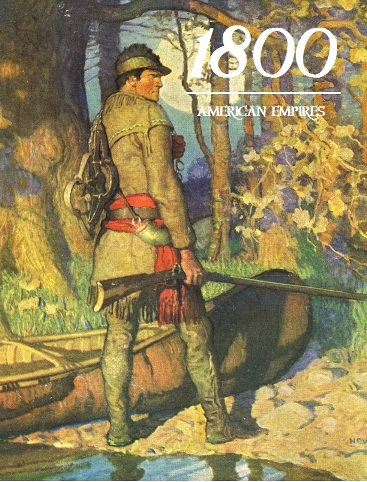
1800 – American Empires

I swear I wasn’t looking for another project. It’s just that I’m a history guy – majored in it in college – and this idea has just worked it’s way into my imagination. 1800 is a pretty interesting time in American history – even an alternate history – and couched as it is between the Revolutionary War and the Civil War it gets less attention that it probably should.

So, what is 1800 – American Empires going to be? At its heart, a homage to old school RPGs and the greatest school video game ever conceived – The Oregon Trail.

Simple RPG based around wilderness exploration, so old school logistics looms large (i.e. how much gunpowder should you pack for a 6 months – 2 year foray into the wilderness?)

Four classes – scout (man vs. nature), soldier (man vs. man), venturer (does the caller and mapper) and magician (with three “traditions” – free mason, missionary and shaman/witch, each with their own small list of usable spells). I’m going to go with the Space Princess concept here of three-tiered classes based on what you want to play rather than “start and level 1 and work your way up”. If you start young (a lieutenant, for example), you begin with more luck. If you start old (a colonel), you begin with no luck and have to rely on skill. Major discoveries and acts of heroism can earn anyone luck.

Rules for exploration and combat – wilderness exploration rules adapted from an early issue of NOD, combat from old versions of “the original fantasy RPG”

A few set hex encounters (major settlements, mostly) + a BIG set of random exploration tables based on the different environments. That way, every campaign will present a different American interior, complete with what you would expect (Native American settlements, herds of buffalo, droughts and blizzards, new rivers, diseases and mishaps), things our forefathers thought they might discover (Welsh indians, cities of gold, mammoths, a Northwest Passage) and things they never imagined (griffons and storm giants in the Rocky Mountains, bulettes on the Great Plains).

A big list of monsters, including many from Native American folklore and some of the “fearsome critters” of lumberjack folklore. I’ll probably also throw in some stats for actual and fictional personalities of the time – Daniel Boone, Natty Bumppo, Johnny Appleseed and Black Hawk, for example.

Settlement rules – what we in the old school would call “domain rules” – establishing forts, attracting settlers, defending the fort from other proto-Empires. Mass combat rules will probably be adapted from Swords and Wizardry to keep them simple.

So, that’s the basic idea. An old school RPG that swaps out the mega-dungeon for a mega-wilderness, with enough heft that one could spin it into other directions – maybe a spy mission in New Spain, fighting night hags in Salem or helping in the Free Mason’s conspiracy to actually unite the independent states of America into a single nation.