 Those of you who use the Swords & Wizardry rules probably know that the guidelines for treasure allocation stipulate that there is a 10% chance (i.e. a roll of 10 on 1d10) that coins will be swapped out for gems, jewelry or magic. In general, I love these rules because magic, gems and jewelry remain fairly rare. However, I do feel as though this system leaves out many alternative forms of wealth, i.e. goods. I’m no stickler for realism in my games, but piles and piles of gold coins do stretch plausibility pretty far, and can become pretty boring. Coins were pretty rare things for most medieval folk. In an inventory of one of Charlemagne’s smaller estates, for example, one comes across a mere 13 shillings and large numbers of livestock, household goods, grain and cheese. For this reason, I began swapping out coinage for trade goods on the roll of “1” on 1d10, using the following guidelines for amounts and values. I went ahead and organized the information so one could randomly determine the goods found. Feel free to change values, especially if a particular item is either rare or exceedingly common in a particular region. When adventurers try to sell these trade goods, you can simulate price fluctuations by rolling 1d6, with a 1-2 meaning half the normal value and a 5-6 meaning double the normal value. Obviously, this can also be used for determining the contents of a caravan or merchant cog.
In Place of 100 gold pieces (roll 1d100)
1-2. 1d10 tons of raw wool (20 gp/ton)
3-4. 2d100 ingots of lead (10 lb ingots, 7 sp/ingot)
5-6. 2d100 ingots of iron (10 lb ingots, 1 gp/ingot)
7-8. 1d8 x 100 pounds of buckwheat (25 cp/lb)
9-10. 1d6 x 100 pounds of millet (3 sp/lb)
11-12. 1d6 x 100 pounds of oats (3 sp/lb)
13-14. 1d6 x 100 pounds of rye (3 sp/lb)
15-16. 1d6 x 100 pounds of walnuts (3 sp/lb)
17-18. 1d6 x 100 pounds of yellow (sulfuric) dye (3 sp/lb)
19-20. 1d100 ingots of tin (5 lb ingots, 4 sp/lb)
21-22. 1d4 x 100 pounds of hazelnuts (200 lb), 5 sp/lb
23-24. 1d4 x 100 pounds Red (iron) dye (200 lb), 5 sp/lb
25-26. 1d8 x 10 ingots of steel (5 lb ingots, 6 sp/lb)
27-28. 1d8 x 10 ingots of zinc (5 lb ingots, 8 sp/lb)
29-30. 2d20 ingots of brass (5 lb ingots, 1 gp/lb)
31-32. 2d20 ingots of bronze (5 lb ingots, 1 gp/lb)
33-34. 2d20 ingots of copper (5 lb ingots, 1 gp/lb)
35-36. 4d8 barrels of ale (barrel holds 30 gal., weighs 250 lb, worth 6 gp)
37-38. 2d10 barrels of wine (barrel holds 30 gal., weighs 250 lb, worth 9 gp)
39-40. 2d10 x 10 pounds of barley (1 gp/lb)
41-42. 2d10 x 10 pounds of blue dye (1 gp/lb)
43-44. 2d10 x 10 pounds of coal (1 gp/lb)
45-46. 2d10 x 10 pounds of green dye (1 gp/lb)
47-48. 2d10 x 10 pounds of gum arabic (1 gp/lb)
49-50. 2d10 x 10 pounds of ocher dye (1 gp/lb)
51-52. 2d10 x 10 pounds of chestnuts (1 gp/lb)
53. 2d10 x 10 pounds of cinnamon (1 gp/lb)
54. 2d10 x 10 goats (1 gp/goat)
55. 2d10 x 10 peacock feathers (1 gp/feather)
56. 1d10 x 10 pounds of ginger (2 gp/lb)
57. 1d10 x 10 pounds of lentils (2 gp/lb)
58. 1d10 x 10 pounds of pepper (2 gp/lb)
59. 1d10 x 10 raccoon skins (2 gp/skin)
60. 1d10 x 10 squirrel skins (2 gp/skin)
61. 1d10 x 10 sheep (2 gp/sheep)
62. 1d8 x 10 pounds of jasmine oil (25 sp/lb)
63. 1d6 x 10 pounds of almonds (3 gp/lb)
64. 1d6 x 10 pounds of ambergris (3 gp/lb)
65. 1d6 x 10 pounds of camphor (3 gp/lb)
66. 1d6 x 10 pounds of indigo dye (3 gp/lb)
67. 1d6 x 10 pounds of purple dye (3 gp/lb)
68. 1d6 x 10 pounds of chick peas (3 gp/lb)
69. 1d6 x 10 pigs (3 gp/pig)
70. 1d6 x 10 square yards of velvet (10 lb per yard, worth 3 gp/sq yd)
71. 1d6 x 10 deer skins (4 gp/skin)
72. 1d6 x 10 gallons of honey (gallon weighs 12 lb gal; 4 gp/gal.)
73. 1d6 x 10 square yards of linen (5 lb per yard, 4 gp/sq yd)
74. 1d6 x 10 pounds of vermilion dye (4 gp/lb)
75. 2d20 bear skins (5 gp/skin)
76. 2d20 square yards of lace (3 lb per yd, 5 gp/sq yd)
77. 2d20 pounds of rice (5 gp/lb)
78. 2d20 pounds of salt (5 gp/lb)
79. 4d8 sheep skins (6 gp/skin)
80. 2d12 pounds of calamus (8 gp/lb)
81. 2d12 marten skins (8 gp/skin)
82. 2d12 pounds of mercury (8 gp/lb)
83. 2d12 wolf skins (8 gp/skin)
84. 2d10 pounds of pine nuts (10 gp/lb)
85. 1d10 ingots of silver (2 lb ingot, worth 20 gp)
86. 2d10 square yards of silk (10 gp/sq yd)
87. 2d10 cattle (10 gp/cattle)
88. 2d10 cigars (10 gp/cigar)
89. 2d10 coconuts (10 gp/coconut)
90. Sable skin (9), 11 gp/skin
91. 2d8 mink skins (12 gp/skin)
92. 2d6 fox skins (14 gp/skin)
93. 2d6 pounds of cardamon (15 gp/lb)
94. 2d6 panther skins (15 gp/skin)
95. 2d6 pounds of pistachios (15 gp/lb)
96. 2d6 pounds of saffron (15 gp/lb)
97. 2d6 shark skins (15 gp/skin)
98. 2d6 pounds of cloves (15 gp/lb)
99. 2d6 oxen (15 gp/ox)
100. 1d8 big cat (jaguar, leopard, lion or tiger) skins (25 gp/skin)
In Place of 1,000 gold pieces (roll 1d2 and 1d20)
1-1. 1d20 casks of molasses (barrel holds 25 gal., weighs 300 lb, 100 gp each)
1-2. 1d4 x 100 pounds of rice (5 gp/lb)
1-3. 1d4 x 100 pounds of salt (5 gp/lb)
1-4. 4d8 casks of olive oil (cask holds 12 gal., weighs 100 lb, 60 gp each)
1-5. 2d12 x 10 marten skins (8 gp/skin)
1-6. 2d12 x 10 wolf skins (8 gp/skin)
1-7. 2d10 x 10 pounds of pine nuts (10 gp/lb)
1-8. 1d100 ingots of silver (2 lb ingot, 20 gp each)
1-9. 2d8 casks of sesame oil (cask holds 12 gal., weighs 100 lb each, 120 gp each)
1-10. 2d10 x 10 square yards of silk (12 lb per yard, 10 gp/sq yd)
1-11. 2d10 x 10 cattle (10 gp/cattle)
1-12. 2d10 x 10 cigars (10 gp/cigar)
1-13. 2d10 x 10 coconuts (10 gp/coconut)
1-14. 2d10 x 10 sable skins (11 gp/skin)
1-15. 2d8 x 10 mink skins (12 gp/skin)
1-16. 2d6 x 10 fox skins (14 gp/skin)
1-17. 2d6 x 10 pounds of cardamon (15 gp/lb)
1-18. 2d6 x 10 panther skins (15 gp/skin)
1-19. 2d6 x 10 pounds of pistachios (15 gp/lb)
1-20. 2d6 x 10 pounds of saffron (15 gp/lb)
2-1. 2d6 x 10 shark skins (15 gp/skin)
2-2. 2d6 x 10 pounds of cloves (15 gp/lb)
2-3. 2d6 x 10 oxen (15 gp/ox)
2-4. 1d10 x 10 pounds of cashews (20 gp/lb)
2-5. 2d8 x 10 big cat (jaguar, leopard, lion or tiger) skins (25 gp/skin)
2-6. 2d8 x 10 pounds of jasmine oil (25 gp/lb)
2-7. 1d6 x 10 pounds of groundnuts (30 gp/lb)
2-8. 1d6 x 10 pounds of jujubes (30 gp/lb)
2-9. 1d6 x 10 pounds of sandalwood oil (40 gp/lb)
2-10. 1d4 x 10 pounds of dried coconut (50 gp/lb)
2-11. 1d4 x 10 pounds of myrobalans (50 gp/lb)
2-12. 1d4 x 10 pounds of tea (50 gp/lb)
2-13. 1d30 pounds of dried lotus fruit (70 gp/lb)
2-14. 1d30 pounds of maple sugar (75 gp/lb)
2-15. 2d10 pounds of galingale (80 gp/lb)
2-16. 2d10 pounds of black walnuts (100 gp/lb)
2-17. 2d10 pounds of cocoa (100 gp/lb)
2-18. 2d10 pounds of fagara (100 gp/lb)
2-19. 1d6 ingots of gold (3 lb ingots, 300 gp each)
2-20. 2d10 pounds of tobacco (100 gp/lb)
In Place of 5,000 gold pieces (roll 1d3 and 1d12)
1-1. 4d8 x 10 pounds of groundnuts (30 gp/lb)
1-2. 4d8 x 10 pounds of jujubes (30 gp/lb)
1-3. 2d10 x 10 pounds of dried coconut (50 gp/lb)
1-4. 2d10 x 10 pounds of myrobalans (50 gp/lb)
1-5. 2d10 x 10 pounds of tea (50 gp/lb)
1-6. 2d6 x 10 pounds of dried lotus fruit (70 gp/lb)
1-7. 2d6 x 10 pounds of maple sugar (75 gp/lb)
1-8. 2d6 x 10 pounds of galingale (80 gp/lb)
1-9. 1d10 x 10 pounds of black walnuts (100 gp/lb)
1-10. 1d10 x 10 pounds of cocoa (100 gp/lb)
1-11. 4d8 ingots of gold (3 lb ingots, 100 gp each)
1-12. 1d10 x 10 pounds of tobacco (100 gp/lb)
2-1. 1d10 x 10 vanilla beans (100 gp/bean)
2-2. 1d6 x 10 pounds of ginger (150 gp/lb)
2-3. 1d6 x 10 pounds of pecans (150 gp/lb)
2-4. 1d6 x 10 pounds of sasparilla (150 gp/lb)
2-5. 1d6 x 10 pounds of frankincense (160 gp/lb)
2-6. 1d6 x 10 pounds of myrrh (160 gp/lb)
2-7. 1d6 x 10 pounds of butternuts (200 gp/lb)
2-8. 1d6 x 10 pounds of hickory nuts (200 gp/lb)
2-9. 1d4 x 10 pounds of cubeb (250 gp/lb)
2-10. 1d4 x 10 pounds of manioc flour (250 gp/lb)
2-11. 1d30 pounds of chili powder (300 gp/lb)
2-12. 1d30 pounds of dried pineapple (300 gp/lb)
3-1. 1d30 pounds of pumpkin seeds (320 gp/lb)
3-2. 1d30 pounds of zedoary (320 gp/lb)
3-3. 1d20 pounds of mace (400 gp/lb)
3-4. 1d20 pounds of turmeric (400 gp/lb)
3-5. 1d20 pounds of nutmeg (500 gp/lb)
3-6. 1d20 pounds of paprika (500 gp/lb)
3-7. 2d8 casks of fine wine (cask holds 12 gal., weighs 100 lb, worth 600 gp)
3-8. 2d8 pounds of pimentos (650 gp/lb)
3-9. 1d4 ingots of platinum (2 lb ingots, 2,000 gp each)
3-10. 1d6 pounds of long peppers (1,500 gp/lb)
3-11. 1d6 pounds of tamarind pulp (1,500 gp/lb)
3-12. 1 ingot of mithral (1 lb ingot, 4,000 gp)
I think the fun of using these items is that they challenge player’s assumptions. Most players are keyed in on the shiny stuff, so they’ll have to think a bit to avoid passing over something valuable like pimentos. Of course, some might see this as a dirty trick, and they might be right, but I figure its no dirtier a trick than a mimic or collapsing staircase. If you want to bypass some of the larger logistical headaches (i.e. several tons of raw wool), then just use the last 20 or 30 items on each list.
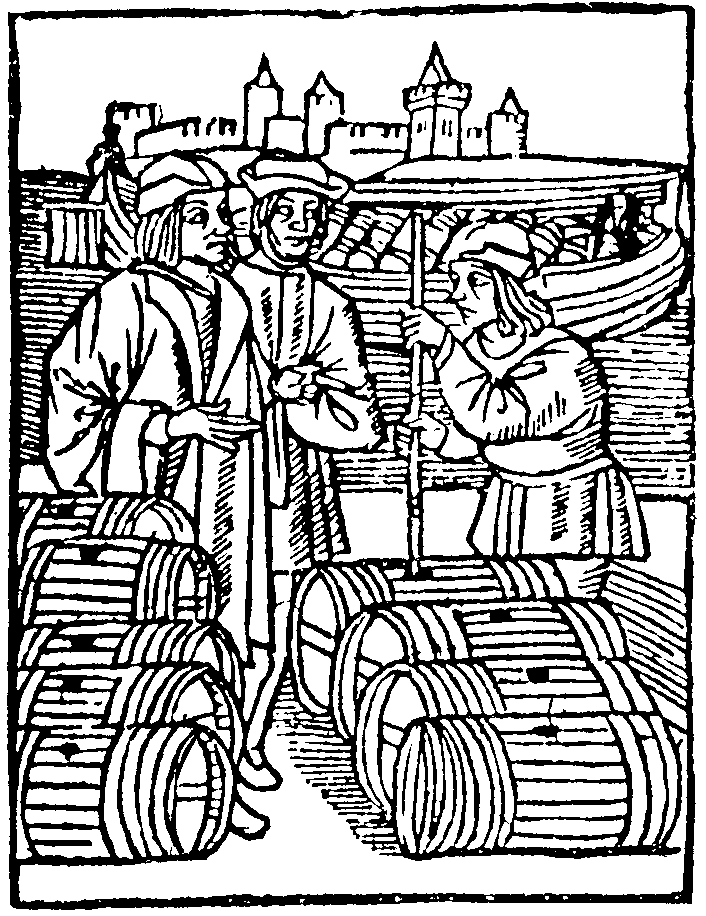
Image of wine merchants from Economic History Blog.
 Land of Nod