Deathbot Battle Redux

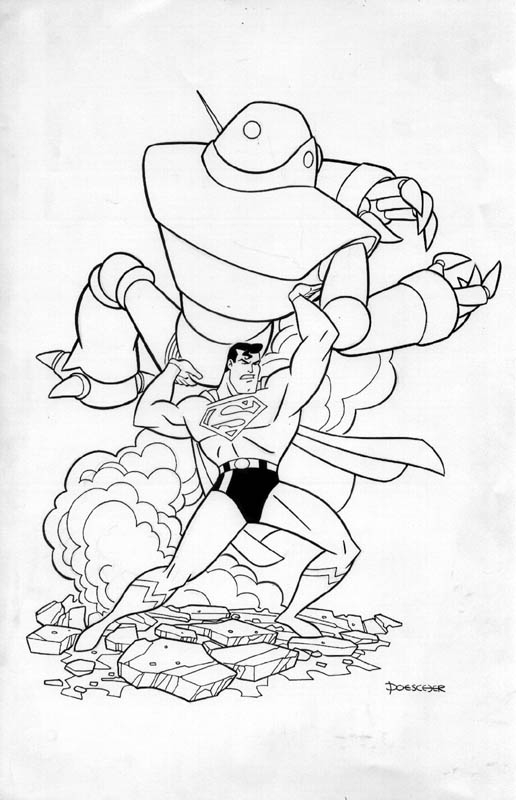
When last I pitted the Deathbot in battle against Captain Triumph, I had to admit that the good Captain, a 30,000 XP character, was a bit outmatched. I wondered then how the Deathbot would fare against someone more powerful – enter Superman.

Superman is built using 150,000 XP and I assigned his ability scores to make him just about as tough as I could. Truth be told, you just can’t roll this guy up in Mystery Men! using the rules  you bump the number of starting ability dice – an option I plan to include in the finished rules.

Here, then, are the stats for the Man of Tomorrow … and of course, these stats are not intended to infringe on or threaten DC Comics’ intellectual property or copyrights.

Str 30 (+9)
Int 8 (+2)
Wil 10 (+3)
Dex 30 (+9)
Con 30 (+9)
Cha 4 (+0)

XP: 70,000
LVL: 20
HP: 288
DC: 23
AB:+15
FB: +9
SPD: 7 (8 flying)

Powers (All Permanent)
Fly
Energy Ray (Heat) – 30’ range, 4d6 damage, ranged attack vs. DC 10+Dex
Armor – +4 DC
Endure Elements – comfortable in hot and cold environments
Stoneskin – damage reduction 3
Super Strength* – +4 Str
Super Dexterity* – +4 Dex
Super Constitution* – +4 Con
Super Speed – increase speed by 5

*I assigned the ability scores, but still figured he should have to pay for super strength, dexterity and constitution

And yes, Superman probably has about 100 other powers – I’m hitting the old tried and true with this list.

The last Deathbot was toned down a bit – Superman is going to face off with a fully powered giant robot with the following stats:

DEATHBOT
HD 18 (100 hp); DC 30; Attacks with 2 slams for 4d6 damage; Speed 1; XP 6450; Powers: Darkvision, energy bolt (from eyes, ), iron body.

This battle will take place on a street in a major city, and Superman will begin the battle in flight. Let’s fight …

ROUND ONE

Initiative Order (1d10 + Spd + Dex): Superman [22], Deathbot [6]

Superman is always going to win initiative against the Deathbot, so we’ll forgo future initiative rolls to speed this up. Because of his speed (7) is seven times higher than the giant robot, Superman gets 3 actions per round.

In round one, Superman is first going to charge into the Deathbot and attempt to knock it down. This will give him +1d6 damage for the attack, but reduce his DC by 3, to 20. Superman rolls 1d20 + FB + Str and gets [32], scoring 1d6+9 + 1d6 damage and rolling [17] and scoring only 12 damage due the robot’s iron body. He follows up with a blast of his heat rays and then another wallop from his fists (or fisks, if you happen to be Popeye). He rolls a [41] for the heat rays and a [26] for the punch, scoring a hit from the heat rays. He rolls 13 damage. The Deathbot rolls a feat of constitution and gets [25], enough to cut the damage in half to 6. The Iron Body power of the Deathbot cuts that in half again, to 3.

The Deathbot strikes back with his own energy bolts (electricity). He rolls a [25], enough to hit Superman, and causes 72 points of damage. Superman rolls a feat of constitution to halve the damage and gets [17], not enough to save.

We end the round with the Deathbot having 85 hit points and Superman reduced to 216 hit points.

ROUND TWO

Superman has three actions again. The heat rays were pretty ineffective, so he’s going to focus on grappling the robot and lifting it. He can lift 100 tons without difficulty, so I would rule that he could do it. To grapple it (i.e. grab it) he’s going to have to beat the robot’s DC of 30 by 5, i.e. he needs to roll a 35. Even if he just beats the DC of 30, he’ll manage to cause some damage. This round, he rolls [33] and then [42] for his first two actions. The first attack scores [13] damage, reduced to 8 due to iron body. The second attack scores [14] damage, reduced to 9. The second attack beats 35, so he manages to grab the robot. He’ll use his last action to fly the robot about 1 mile up (he could go up to 50 at his speed, but 1 mile should be sufficient).

The Deathbot is in pretty serious trouble, but being a robot he focuses on the task at hand. He’ll attempt to make two slam attacks against Superman, rolling [37] and [24]. He scores two hits, rolling [8] and [13] damage. Superman’s stoneskin power reduces these to 5 and 10.

At the end of Round Two, Superman has 201 hit points left, the Deathbot has 68.

ROUND THREE
Last round of combat, most likely. Superman is going to let the beast fall. Falling damage, like in the original game, is 1d6 per 10′, with a maximum of 20d6. On the way down, I’ll let the Deathbot make a final energy bolt attack. He rolls a [21] and then rolls [59] points of damage. Superman makes a constitution feat, rolling [15] – not enough to cut the damage in half. When the Deathbot hits the ground, he takes 58 points of damage, reduced to 53 because of iron body. The Deathbot gets a dexterity feat to take half damage from the fall and rolls a [7], failing. Technically, Superman still has two actions left, so he’s going to use one to fly back down and the other to punch the Deathbot. This will count as a charge. He rolls a [44] to hit. Since he wasn’t using any other special attack, beating the ‘bot’s DC by more than 5 means double damage. He rolls 2d6+18 plus another 1d6 for the charge, getting [19], which is reduced to 14 because of iron body.

At the end of Round Three, Superman has 142 hit points. The Deathbot has 1 hit point. Tough little guy, isn’t he.

ROUND FOUR
Nothing fancy this time. Superman is going punch, punch and punch. He rolls [28] [25] and [35]. All three punches do damage, and the last punch does double damage. He rolls a total of 55 points of damage, reduced to 40 because of iron body. More than enough to finish off the Deathbot.

WHAT I LEARNED
Superman outclassed the Deathbot, but only at 150,000 XP. Reduce his starting XP to 100,000 and his level drops to 11 – that means far fewer hit points and a reduced attack bonus, and Superman is in for a far tougher fight. Given that the giant robot is supposed to be a useful monster in the game, I’m definitely going to knock him down a few pegs – specifically the DC, probably to 25. I also think I’ll cap the energy bolt, in fact all damage from powers, at 10 dice.

Image by Erik Doescher from comicartfans website.

Mystery Man Test II – Captain Triumph vs. Thugs

Last time we witnessed Captain Triumph outclassed by a giant Deathbot (yeah, I still need to stage a combat between the Deathbot and Superman or Thor – not enough time in the day …). Today, we’ll pit him against five humans to see how one vs. many works out in Mystery Men!

The Setup
Captain Triumph sneaks into the island headquarters of Doctor Death. While moving through a large audience chamber, he sets off an alarm and is attached by four thugs armed with machine guns and their leader, a ninja.

The Bad Guys
The thugs are human warriors: HD 2 (9 hp each); DC 12; Attacks with fists for 1d4 damage or with handgun for 2d6 damage; Speed 2; XP 200.

The ninja is a human elite: HD 3 (18 hp); DC 13; Attacks with fists for 1d6 damage or with sword for 1d6+2 damage; Speed 2; XP 300.

Round One
Initiative Order (1d10+Speed+Dex Mod): Triumph [9], Thugs [8], Ninja [6]

The thugs stand at the end of the room, blocking its only exit, the ninja behind them. We’re going to pretend that Triumph has already used his Invisibility I power this turn, and thus cannot use it during this fight. He decides to charge (+1d6 damage, -3 DC) at one of the central thugs and belt him. He has the same speed as these combatants, so only gets one attack per round. Triumph’s attack roll is 1d20 + Attack Bonus of +8 plus Strength Bonus of +5. With a total bonus of +13, Triumph cannot miss against the thug’s DC of 13. though the Referee might want to use the roll of a natural “1” as an opportunity to introduce a complication to the situation. So, Triumph rolls a [31] to hit (why couldn’t he do this against the Deathbot more often?), slugging the thug for 12 points of damage and knocking him unconscious at -3 hp.

The remaining thugs open up on the charging hero with their gats – dangerous, but they know they’re facing an ubermensch. I’ll rule that on a natural roll of “1”, the thugs hit one another with their bullets. The thugs roll 1d20 + Hit Dice (2), getting rolls of [8], [8] and [10]. Even at Triumph’s lower DC (because he charged), they don’t hit him, but they don’t hit one another either.

Question: Bonus for attacking at Point Blank Range? Have to think about that.

The ninja takes a swipe at Triumph with his sword. He rolls 1d20 + Hit Dice (3), getting a roll of [23]. Since he’s striking to kill, he scores double damage for beating Triumph’s current DC of 14 by 5 or more points, and rolls 11 points of damage.

At the end of the first round of combat, there are three thugs and a ninja left unhurt, and Triumph has been reduced to 84 hit points.

Round Two
Initiative Order: Thugs [11], Triumph [10], Ninja [10]

The thugs roll high initiative this round, and do the same thing as last round, rolling [20], [4] and [10]. No friendly fire this time, and Triumph takes 8 points of damage.

Tied initiative goes to Triumph, since he has the higher Dexterity score (since average normal human Dex is 3 and max normal human Dex is 6). He leaps at two of the thugs and attempts to clunk their heads together. This counts as making a multiple attack (i.e. one additional attack), so he suffers a -3 penalty to hit. He rolls [18] and [26], scoring two hits. No double damage, because Triumph isn’t attacking to kill, just stun. He rolls [6] and [7] for damage. Because he beat their DC’s by more than 5, and was attacking to stun, the thugs have to make feats of Constitution to avoid being stunned. They roll 1d10+2 and need to beat a 9 (5 + Triumph’s Feat Bonus of 4). They each roll a [5], failing the feat roll and becoming stunned – i.e. cannot move or attack next round, drop their guns, etc.

Final attack goes to the ninja, who rolls a measly [7] and misses.

At the end of this round, we have an unharmed ninja and thug, two stunned thugs with 3 and 2 hit points and Captain Triumph with 72 hit points.

Round Three
Initiative Order: Triumph [14], Ninja [12], Thugs [7]

Captain Triumph now goes for the third thug, again attacking to stun. He rolls a [30] and scores 8 points of damage. The thug rolls a Constitution feat and gets a [5], failing. He’s now stunned.

Our ninja sees the writing on the wall. He throws a smoke pellet (Fog Cloud) and backs out the door.

No thugs can attack this round – the other two were stunned last time, and the third thug is stunned now.

Combat round ends with two thugs clearing their heads (they have 3 and 2 hit points, respectively) and the third thug, with 1 hit point, just starting to shake things off. The ninja is gone, and Captain Triumph still has 72 hit points.

Round Four
Initiative: Triumph [12], Thugs [7]

Round four begins with everyone caught in a Fog Cloud. It lasts three rounds. Nobody in the cloud can see anyone more than 5 feet away, and suffer a -4 penalty to attack the enemies they can see.

Triumph decides to smack the thug he can see – the one he stunned last round. He’s going to attack to stun, and decides to forgo his Strength bonus to damage to avoid accidentally killing the guy. He rolls a [10] due to the fog, and misses the thug.

The thug dropped his gun when he was stunned, but he decides to take a swing at Triumph. He rolls a [10] and also misses. The other two thugs decide they’ve had enough and use the fog as cover to run away.

For all intents and purposes, this fight is over. If Triumph can’t defeat a simple thug with 1 hit point, he doesn’t deserve the name “Triumph”.

What Did I Learn?
I think this combat went pretty well. It made sense and the rules seem to support the kind of combat I would associate with comic book heroes. Triumph outmatched the thugs just as much as the Deathbot outmatched him, but the fight still took four rounds (well, five technically, if we assume Triumph knocks out the last thug in one more round), and the thugs had a chance to resist the stunning attacks. I could have made the ninja more impressive, but that would really involve building him like a comic book villain rather than as a minion, and I’m going to save the hero vs. villain fight for next time.

Captain Triumph vs. Giant Deathbot

The following is a test of the Mystery Men! combat rules. If this were an actual game session, all of the rules would work perfectly …

When you’re attempting to place a giant laser on the Moon, curious heroes can really get in the way. To keep Captain Triumph occupied, Doctor Death decides a rampaging giant robot is in order …

GIANT DEATHBOT
Hit Dice: 15 (90 hp)
Defense Class: 20
Speed: 1

Attacks: 2 slams (4d6 damage)
Powers: Darkvision (P), Energy Bolt (P), Iron Body (P)

Energy Bolt: Deals 1d6 damage per hit dice (i.e. 15d6)*
Iron Body: Ignores 15 damage per hit, half damage from acid and fire, vulnerable to rust.

* Just noticed the damage was missing in the rules – another piece of errata and proof that play testing is necessary!

I’ve modified this giant robot to put it closer to Captain Triumph’s weight class, so to speak. I’ve reduced the Hit Dice by 3 and the DC by 10.

This fight will take place on a city street flanked by tall buildings. Police, fire and rescue have cleared most of the civilians out of the way, and the giant deathbot is mostly just causing property damage – it’s trying to draw the hero in and waste his time while Doctor Death launches a rocket into space. Captain Triumph will enter the combat flying and invisible

ROUND ONE
Initiative: Each combatant rolls 1d10+speed+Dex bonus. That means 1d10+1 for the giant robot, 1d10+5 for Capt. Triumph. Since Triumph begins the round invisible, I’m going to give him a free attack in the first round. Since his speed is double that of the giant robot, he gets two actions per round against it.

Capt. Triumph: Triumph knows that tackling this metal monstrosity is going to be tough. It’s hard to damage (too hard maybe – I might need to revise Iron Body) and the Energy Bolts are quite deadly (they cap damage in d20 – I might need to do the same). For his first round of combat, he’s going to use both actions to roll special attacks, trying to trip the thing. He’ll be invisible for the first attack, gaining a +2 bonus to hit.

So, special attack rules state that you make a normal attack, but if you beat the opponents DC by 5 or more you pull off the special attack. Unfortunately, this means Triumph needs to roll a 25 or better to trip the deathbot. So, Triumph is going to roll 1d20+Attack Bonus+Strength Bonus, or 1d20+13 for melee attacks (plus an additional 2 for the first attack, because he’s invisible). He rolls a [17] and [24]. Both attacks fail to trip the deathbot, but the second attack does beat the deathbot’s DC and inflicts damage. Capt. Triumph rolls 1d6+5, getting an [11] – not enough to score damage on the deathbot, because of the Iron Body power. Now – Capt. Triumph should be able to inflict some damage on this thing – the damage reduction for the Iron Body power has to be reduced. I’m going to make a command decision here and drop it to a 6. That keeps somebody with Iron Body impossible to damage by a normal human using their fists. So, with our revised Iron Body power, Capt. Triumph scores 5 points of damage on the Death Bot, reducing its hit points to 85.

ROUND TWO
Initiative: Deathbot rolls [11], Triumph [15] – Triumphs attacks first.

Triumph: Triumph is standing behind the deathbot, and wants to avoid those eye beams. So, he’s going to fly up to the deathbot’s head (one action) and then try to pound away at it (second action).Triumph rolls a [23] to hit, and causes 9 points of damage. With the deathbot’s damage resistance, it comes out to 3 points of damage, reducing the deathbot to 82 hit points.

Deathbot: The deathbot needs to get Triumph off his back, so he’s going to attempt a grapple special attack to grab him. For attacks, he rolls 1d20+18 and needs to beat Triumph’s DC of 17 [yeah, just noticed I put AC on the character sheet – old habits die hard!] by 5 or more to grab him. With a roll of 29, he grabs him easily, scoring 10 points of damage in the process, bringing Triumph’s hit points down to 85.

ROUND THREEInitiative: Deathbot rolls [3], Triumph [8]

Triumph: So, with his two actions, Triumph is first going to try to break out of the deathbot’s grip – this is treated as a special grapple attack. Triumph rolls a [20] – enough to score damage (4 points), but not enough to break the grip. With his second action, he tries again, rolling a [24] and missing his goal yet again. He rolls a [6] for damage, which isn’t enough to harm the deathbot. At the end of his turn, Capt. Triumph has now reduced the deathbot to 78 hit points.

Deathbot: The deathbot now unleashes some lightning bolts from its eyes. Triumph needs to make a feat of Dexterity (1d10+7) vs. a 20 – meaning he has no shot at cutting the damage in half [do I need to reduce monster feat bonuses to half their hit dice?]. The robot rolls 15d6 and scores [57] damage, reducing his hit points to 28. One more shot like that, and Triumph joins his ghostly brother in the afterlife.

ROUND FOUR
Initiative: Deathbot [5], Captain Triumph [6]

Triumph: Triumph still needs to break the robot’s grip, so he tries another special grapple attack, rolling a [30] this time, scoring damage (2 points) and breaking the grip. Deciding he needs something heavier with which to do damage, he flies 200-ft down the street (out of the energy bolt range and behind the deathbot) to find a handy wrecked car he can use next round. The deathbot now has 76 hit points.

Deathbot: Well, sucks to be slow. The deathbot turns around and lumbers toward Capt. Triumph, closing the distance from 200 to 150.

ROUND FIVE
Initiative: Deathbot [5], Captain Triumph [8]

Triumph: Fortunately for Capt. Triumph, he continues to beat the deathbot on initiative. He picks up a car (his strength allows him to lift 4 tons, so a car is within his capabilities) and flies directly above the deathbot’s head with his first action. With his second action, he launches the car straight down at the lumbering robot. We’ll call this a ranged attack, which brings up a couple items that need to be addressed in the rules. I now notice that I include ranges for some weapons, but no discussion about how range influences attack rolls. Range for hurled items should probably be based on Strength – for now I’m going to punt on this rule and impose no penalty – I want to think about it a bit more. The second issue is one of damage – how much damage does a car inflict? Knives do 1d6, arrows 2d6 and bazookas 6d6 – I think given the weight of the car, 6d6 sounds about right – but I’ll also make a note that thrown objects need to be covered in the rules (’cause heroes like to throw things in comic books!). So, Triumph rolls a ranged attack with the car (1d20+11) and gets a [25]. Since he wasn’t using a special attack, beating his opponent’s DC by 5 nets him double damage, or 12d6. He rolls a [36], dropping the deathbot’s hit points to 40.

Deathbot: Deathbot figures that what’s good for the goose is good for the gander. He picks up a car of his own and hurls it at the flying Triumph, rolling 1d20+18 to attack and getting a [28] – that means double damage as well. The deathbot rolls a [54], sending Triumph into Valhalla.

LESSONS LEARNED
1. I need to work up some range rules, especially for hurled objects.
2. I need to work up some damage guidelines for hurled objects.
3. Iron Body needs to be revised and Energy Bolt needs to have damage added to its description.
4. Giant robots, as written, are deadly as all get out. I should probably revise those stats, or maybe include a lesser and greater version of them. I definitely learned that even a weak giant robot is too much for a single 35,000 XP hero to survive. I might work up some stats for Superman, Thor or Hulk and do this battle again to see how it would play out.
5. In playing this out, a smarter player might have started hurling cars earlier in the battle, and thus might have survived and won. Tactics should be at least as important as statistics in affecting the outcome of a fight.

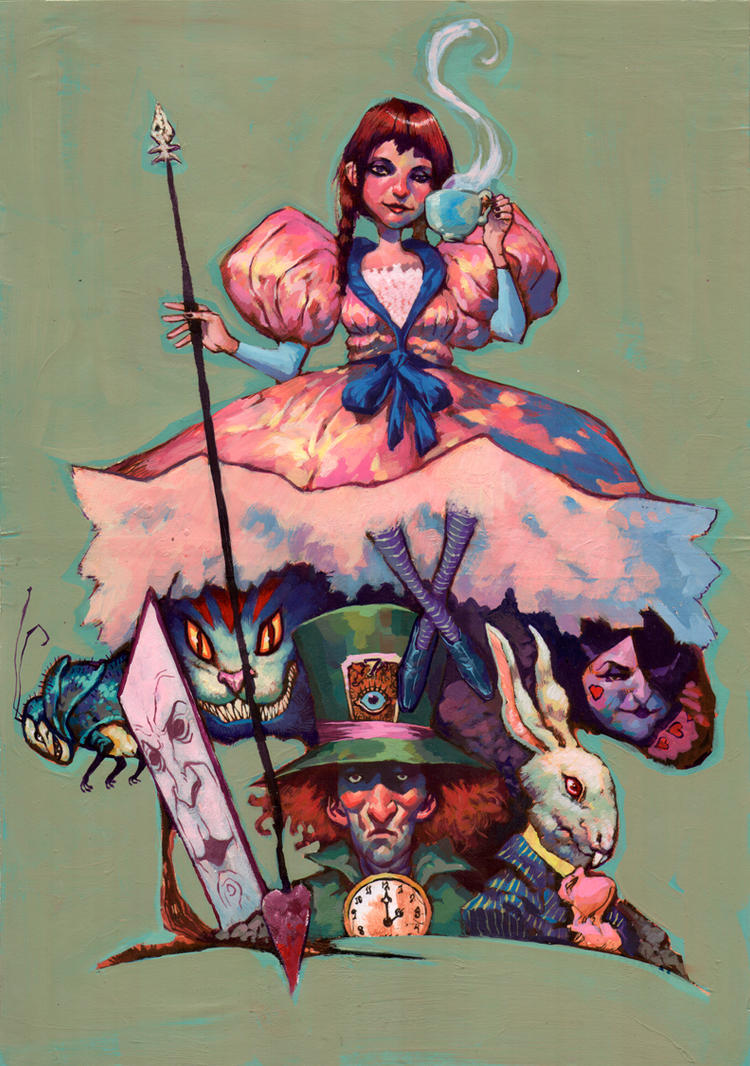
Image by Joel Carroll. All rights reserved.

Mystery Men! Character Sheet

How’s this look?

Just click, save and print!

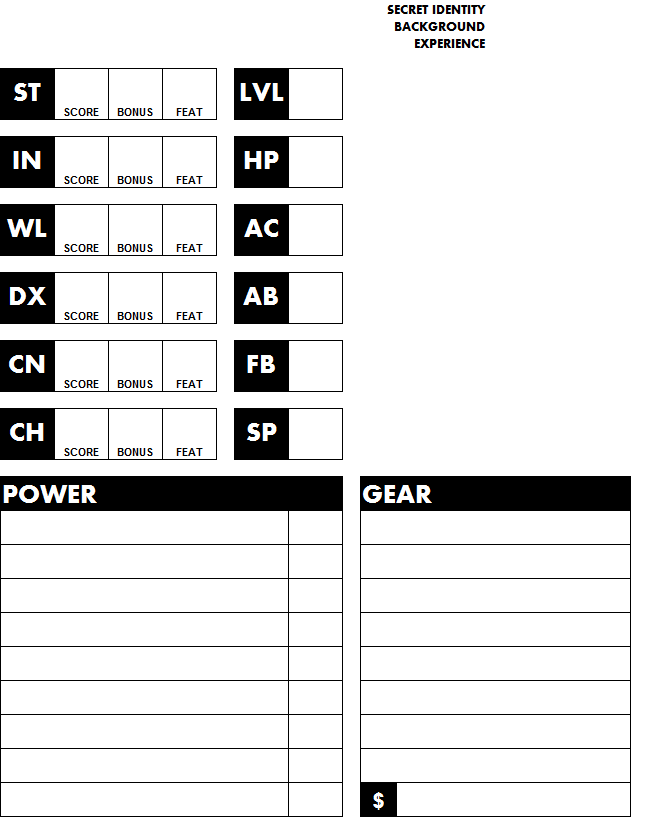
AB = Attack Bonus, FB = Feat Bonus. The square marked FEAT next to each ability score is for one’s total of ability modifier + feat bonus. The little squares for each power is for whether the power is permanent, limited or single-use.

Here’s a version filled out for Captain Triumph!

And if you haven’t downloaded the game and rolled up a hero yet – what are you waiting for? Get to it, man!

I’m also looking into setting up a message board for MM!. I figure it can’t be too hard, but I’ve never looked into it before. We’ll see. In the meantime, I’m going to set up a specific Mystery Men! page on this blog, where I’ll throw in errata, a link to the downloads, etc.

Mystery Men! Anyone?

Well, I’ve finished my draft of the Mystery Men! Beta Document and put it on the free downloads page. Here’s what you in the studio audience can do to help me produce a free/cheap superhero game that everyone can enjoy:

* If you read it, please let me know what you like and what you dislike and any errors that you notice.

* If you play it, please let me know what works and what doesn’t, and when you email me include your name and the names of other play-testers so I can credit you in the finished product.

I’m going to initiate some play-testing myself, but I really value the opinions of people outside my little circle of friends. In the coming weeks, I’m going to put some stats for the heroes and villains that will appear in the final product up for people to use as they see fit. In the meantime, make some heroes and villains and have a fight or two. Enjoy!

Scaling Speed in Mystery Men!

I’ve mentioned before that the trick of writing a super heroic RPG is dealing with scale. Whatever system you use has to be able to handle 98 lb weaklings and guys who can bench press locomotives, and it needs to do so in such a way that the two can adventure together – i.e. you have to part ways with reality a bit to make it all work.

If scaling Strength in a comic book hero game is hard to do, scaling speed is just as hard. Again, you need to have a system that accommodates normal (even slow) human beings and folks who can zip around at the speed of light, and you need to integrate speed with the other rules systems to make super speed meaningful, but not overpowering.

My initial idea was to use the traditional movement rate concepts from old school games, but expressed in yards or meters per minute. Thus, a movement rate of 100 became standard. The problem, of course, was that cars, for example, would have a normal movement of about 900, and other vehicles higher than that. That means super speedsters would have the same speed advantages. With most of the action in a comic book hero game taking place in fairly confined quarters, speeds of 900+ don’t have much relevance, and when you get into the 1000’s they become fairly unwieldy. So, I decided to change my scale.

Playing around on Wikipedia, I discovered the concept of “orders of magnitudes of speed”, and decided alter it to fit my purposes. Mystery Men! will have ten speed bands, ranging from 1 (slow humans) to 2 (normal humans) to 10 (speed of light). People can move from one speed band to a higher speed band by running, maintaining the higher speed with feats of Constitution, and reaching even higher speeds (just momentarily) by a feat of Strength.

The speed scale is as follows:

1 – 50 yards/round – old folks, children
2 – 100 yards/round – healthy adult human
3 – 200 yards/round – bicycles, many animals
4 – 500 yards/round – cars, motorcycles
5 – 1500 yards/round – high-speed rail, airplanes
6 – 5000 yards/round – jet airliners
7 – 20,000 yards/round – sound
8 – 100,000 yards/round – supersonic speed
9 – 10,000,000 yards/round – sub-light speed
10 – 20,000,000 yards/round – light speed

Obviously quite a leap from “old lady” to “light speed”, but I think in the context of the game it should work. You’ll have your normal speed, rated 1 to 10 – characters begin with a normal speed of 2. You can run at the next highest speed for 1 round, and thereafter can continue at that speed with a feat of Constitution each round. You can generate a burst of speed at 2 speed levels higher than your normal speed by making a feat of Strength, but the burst only lasts 1 round, max. You always have the option to move at a slower speed, of course. The table included in the rules will show speed per round, speed per turn and mph/kph for each speed rating.

Initiative. which was to be determined by speed, will now be determined by a d10 roll modified by your Dexterity bonus and speed (so, with a 30 Dex and 10 Speed, you’d end up with a +19 to initiative – pretty hard to beat). Speed will also govern how many actions a character can take during a round. When engaged in combat with a foe, compare your speed to his speed. If your speed is twice his speed, you can make two actions (move, attack, activate power, etc) per round. If your speed is triple his speed, you can make three actions. In order to keep super speedsters from being unbeatable, we’ll cap it at three actions per round for now.

Hopefully, this will make speed a relevant ability in the game, while keeping it easy to track and not something that will break the game.

And yes, I think I’ve decided to drop the panel/page/issue time concept for the more traditional rounds/turns, etc. MM! is supposed to be a reworking of old school games to make learning it simpler, so it makes sense to stick with language most gamers already know.

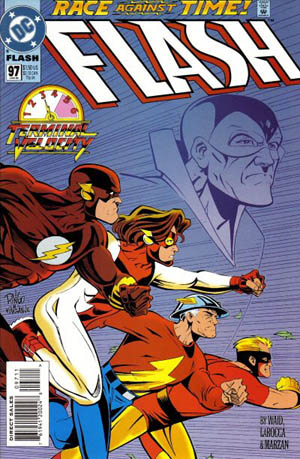
Art by Mike Wieringo

RANDOM ANNOUNCEMENTS

Currently, I’m working on NOD 7, which will feature 3 cities. Blackpoort is written and I’m working on Lyonesse now and then have to write Antigoon. Right now, I’m on schedule to publish in the middle of February.

After I adjust the speed rules, I’ll be ready to put the Mystery Men! beta rules out for play testing. If this project interests you, please consider downloading the rules and running a quick game, or even just going through character generation and running a fight. If you do play with the rules (or even just read them), I hope you’ll give me some feedback. The beta rules won’t include the sample setting or all the explanatory text on “what is role playing”, “how you roll dice” – that will be included in the final product. Right now, looks like the final game will come in at a slim 60 pages, so it should be pretty affordable in print, and the e-book will be free.

I’m also working on writing my third Hexcrawl Classic for Frog God Games. The first should see print in February – very excited, as it’s my first freelance sort of gig. I’ve just been tapped to be a part of a much larger project for the Frog God, which I’ll be cranking on for the next couple months. Despite the work load (being busy is a blessing!), I’ll continue to post to the blog just about every day.

Speaking of posting – I’m getting lots of page views on the Megacrawl 3000 posts, but nobody is playing along in the comments – not for the last 2 posts. Since I inteded Megacrawl 3000 as a game for the community at large and not a creative writing exercise for me, I’ll probably drop it after this last episode for lack of participation. If you want to see it continue, by all means get involved!

That’s all for now. Should make another Blackpoort post tonight, and then start posting on Lyonesse later this week. I also want to do some more retro-engineering on Darkness & Dread, have Noble and Everyman classes that need to see the light of day, and want to begin statting out some demon lords for NOD. Lots to do.

Thinking About Feats in Mystery Men!

So, one thing to come out of my little play-test of Mystery Men! yesterday was that my “feats” concept had some serious flaws. Essentially, feats in MM! are meant to be a catch-all ability check, skill check, saving throw system. It was inspired by the old “X in 6” method of old school fantasy games and the “roll under your ability” score concept we also used back in the day. The trouble with Mystery Men! is one of scale.

Traditional fantasy games have ability scores ranging from 3 to 18. This encompasses the whole of human experience, with a 3 being fairly pitiful and an 18 being the human maximum. Characters in old school fantasy are either human or close enough to human that a simple X in 6 chance works pretty well. Most folk have a 1 in 6 chance to do things, extraordinary folk knock this up to 2 in 6 or 3 in 6. For ability checks, you can roll 1d20, with pitiful characters having a 15% chance of success and amazing characters a 90% chance of success.

In Mystery Men! you need a system that will handle both Willy Lumpkin and The Hulk. This makes a flat 1 in 6 chance a problem, because the Hulk can do things that Lumpkin does not have a 1 in 6 chance of doing. Likewise with “roll under ability score”.

My first instinct was to roll different dice ranges for different types of tasks, trying to roll under an ability score. Initially, I was going to do 1d10 for normal feats (i.e. things a normal person could do with great effort and a bit of luck), 1d20 for heroic feats, 1d20+10 for super feats (things well beyond the capacity of normal human beings) and 1d20+20 for epic feats (things best left to the gods). This meant that Willy Lumpkin, with ability scores probably ranging from 1 to 3, had no chance of performing super or epic feats, and only 10-30% chance of performing normal feats and a 5-15% chance of performing heroic feats. Okay, problem solved.

And then I started playing out the combat. Resisting a power or attack was going to be classed as normal, heroic, super or epic based on the level of the attacker or power user. With Catwoman being 16th level, resisting her attacks and powers would be a super task, and usually beyond the ability of Invisible Woman. A game where a hero or villain always succeeds or always fails against another one is not terribly playable, especially when Invisible Woman and Catwoman were not that far apart in levels.

In my combat example, I decided to change the dice rolls from 1d10 / 1d20 / 1d20+10 / 1d20+20 to 1d10 / 2d10 / 3d10 / 4d10. That removes the problem of Invisible Woman not being able to resist Catwoman, but it reintroduces the problem of Willy Lumpkin having a slim chance (5%) of performing super feats, like leaping over buildings. So, no solution there.

I could bump the feat bonus a character gets, having it match the character’s level. But then level trumps raw ability, and Invisible Woman, with human levels of Strength, can leap over buildings. Not going to work.

I could ditch the idea of using feats for saving throws, and institute a single save value a’ la Swords and Wizardry (which means high level heroes are almost never taken down by powers, and low level heroes are almost always taken down by powers) or even institute different types of saves (Death Rays, Poison, etc) with generally the same effect.

What I’m thinking of doing is giving feats a flat number that one must meet or beat by rolling 1d10 and adding ability score bonus and feat bonus (and also ditching the “normal” feat category) –

Heroic Feats  – meet or beat a 10
Super Feats – meet or beat a 15
Epic Feats – meet or beat a 20

Resisting an opponent’s powers requires you to meet or beat 5 + your opponent’s feat bonus. That would put even 20th level characters in the upper ranges of the heroic level, giving most heroes some chance to resist the powers of their opponents. I’m going to drop the “save vs. attacks” angle, because it’s a pain in the rear and easier to just ditch the “instant knockout” idea. This means the more powers you have the lower your level and thus the easier your powers are to resist, and vice versa.

Now, pathetic man, a 1st level hero with an ability score of 1, is rolling 1d10-1, meaning he can’t perform heroic feats. I can live with that. Not everyone can be a hero all the time, and if this is a character, he doesn’t have a score of 1 in every ability.

Normal woman, a 3rd level hero with an ability score of 3, is rolling 1d10+1, meaning she can perform heroic feats 20% of the time.

Excellent dude, a 6th level hero with an ability score of 6, is rolling 1d10+3, meaning he can perform heroic feats 40% of the time.

Amazing woman, a 10th level hero with an ability score of 10, is rolling 1d10+7, meaning she can perform heroic feats 80% of the time, and super feats 30% of the time.

Maxi-Man, a 20th level hero with an ability score of 30, is rolling 1d10+18. He cannot fail at heroic or super feats, and he performs epic feats 80% of the time. Since this character represents the absolute pinnacle, I think I’m okay with this.

I might also add an optional rule wherein a roll of “1” always introduces a complication to the situation – i.e. you leap over the building, but land on the mayor’s car or crash through the street on the other side. That way, Maxi-Man still has to roll for heroic and super feats, and though he’ll always succeed, the Referee can introduce a complication of some kind 10% of the time.

I’m open to suggestions on this one – what do you think?

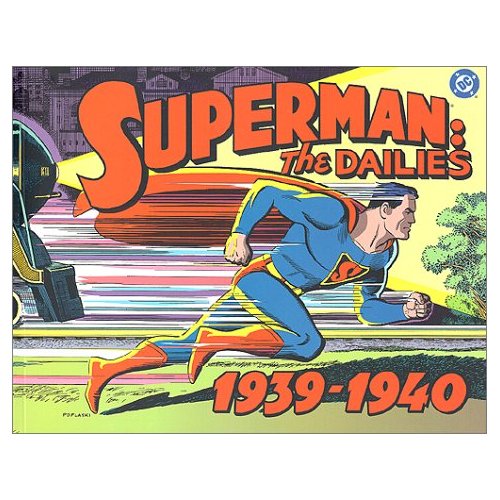
Picture taken from Amazon. I just finished reading Superman: The Dailies, 1939-1940, and it was great.

Catwoman vs. Invisible Woman

Now there’s a blog title that has to get some attention, right?

Well, a couple weeks ago I statted up Catwoman and Invisible Woman using the alpha rules I’m writing for Mystery Men! I’m about one or two weeks away from putting my beta rules out there for the world to playtest. The stats below take into account a couple changes from alpha to beta …

Invisible Woman (Sue Richards)

Class: Adventurer
Level: 11
Hit Points: 51
Armor Class: 15 (+1 Dex, +4 Armor)
Feat Bonus: +5
Attack Bonus: +11

Abilities: Str 3 (+0), Dex 5 (+1), Con 5 (+1), Int 10 (+3), Wis 14 (+4), Cha 11 (+3)

Permanent Powers: Force Missile, Invisibility II, Shield
Limited Powers: Force Sphere, Invisibility Sphere, Wall of Force

Catwoman (Selina Kyle)

Class: Adventurer
Level: 16
Hit Points: 53
Armor Class: 18 (+6 Dex, +2 Armor)
Feat Bonus: +7
Attack Bonus: +16

Abilities: Str 5 (+1), Dex 19 (+6), Con 3 (+0), Int 5 (+1), Wis 3 (+0), Cha 10 (+3)

Permanent Powers: Alarm, Feather Fall, Find Clue
Single-User Powers: Moment of Prescience

Now that I have some stats for a hero and a villain, the only thing left to do is have them fight.

Getting wind that a valuable statue of Bast taken from the tomb of the Living Mummy was recently locked in the vault at the Baxter Building, Selina Kyle decides a trip to New York is in order. Doing her homework, she discovers that on one particular night, three of the Fantastic Four will be away from home, Johnny doing some publicity stunt in L.A., Reed lecturing at Medfield College on the possibility of a computer’s circuits being impressed upon a human mind, and Ben Grimm involved in some sort of team up. That left the Invisible Woman alone to hold down the fort, giving the infamous Catwoman odds she could live with.


Having picked her way through the building’s security (involving many heroic feats of Dexterity and Intelligence – see the rules document for an explanation of feat rolls), she finally gets to the vault. Unfortunately, one of those feats was unsuccessful, and the Invisible Woman, getting the alert, proceeds to the vaults to confront what she figures is a routine malfunction. As she enters, the Catwoman strikes …

Panel One
Since CW and IW have the same movement rate, initiative is decided with the roll of 1d10 + Dexterity Modifier. CW rolls 8 while IW rolls a 6. With the initiative, Catwoman decides she better try to knock IW out quickly. In Mystery Men!, you can declare a special attack every round. If you beat your opponent’s DC by 5 or more, you succeed on your special attack. If you beat your opponent’s DC without beating it by 5 or more, you still score a hit and do damage. If you don’t wish to do a special attack, you simply score double damage if you beat your opponent’s DC by 5 or more. For this attack, CW is going to try to knock IW out – if successful with her attack, she’ll score normal damage and IW will have to roll a feat of Constitution to maintain consciousness. So, CW lunges at IW and rolls a 21 (4 + 1 for Str +16 for attack bonus). This not only scores a hit for 2 points of damage, but also forces IW to roll a feat of Constitution to avoid being knocked cold.

Feats replace skills and saving throws in Mystery Men! The dice you roll for a feat depends on the difficulty of the feat, rolling 1d10 for normal feats, 2d10 for heroic feats, 3d10 for super feats and 4d10 for epic feats. To succeed at the feat, you must roll under your ability score + your feat bonus. In IW’s case, she needs to roll under a 10 to make a feat of Constitution. Since CW is 16th level, avoiding her powers and attacks requires a super feat, thus rolling 3d10. IW gets lucky, rolling a 9 and maintaining consciousness.

IW backs off a bit and launches some force missiles. Although based on the magic missile spell, I decided that a power that can potentially be used every round had better require a ranged attack, in this case against a DC of 10 + the opponent’s Dexterity modifier, or 16 in CW’s case. As an 11th level adventurer, IW can launch five missiles, rolling 26, 28, 21, 26 and 13, and thus hitting with four missiles for 4d6 damage + 1 per die for IW’s Dexterity bonus, rolling a 13.

IW still has 49 hit points, while CW is down to 40.

Panel Two
CW rolls a 14 for initiative, IW a 9. CW decides to use her whip this round, making a ranged attack against IW’s DC of 15. Her special attack this round will be tripping, needing a 21 to trip IW and knock her prone. CW has an attack bonus of +16 and a Dex bonus of +6 and rolls a 23 total, scoring 12 points of damage (1d6+6 for high Dex) and forcing IW to make a super feat of Strength to avoid being knocked over. She rolls an 18 and needed to roll an 8 or lower, meaning she hits the floor.

IW has had enough of this nonsense and fortunately can use her Force Sphere while flat on her back. She tries to capture the Princess of Plunder, who must make a heroic feat of Dexterity (roll 2d10) under 27 to avoid it – in other words, she can’t help but flip out of the way, and IW is going to have to take another tack if she’s going to win this fight.

IW has 37 hit points and CW still has 40.

Panel Three
CW rolls 10 for initiative, and IW 4. CW is going to try to knock IW out again, rolling 27 against a DC of 15 and scoring 3 damage and forcing another super Con feat to avoid falling unconscious for 1 page. IW rolls an 18 this time, passing out and leaving CW to make another stab at cracking the vault.

Cracking the vault will also take 1 page, meaning she’ll be dealing with a conscious IW whether she succeeds or not. Cracking the vault, designed by Reed Richards himself, will require a super feat of Intelligence. Catwoman needs to roll a 12 or lower on 3d10, getting a 17 and failing, just as IW returns to consciousness.

IW has 37 hit points and CW still has 40.

Panel Four
CW rolls 9 this time and IW 10. IW decides to activate her invisibility power. Catwoman, noticing that her foe has disappeared, decides to make a run for it. She climbs the wall (a heroic feat, which, with her 19 Dexterity and feat bonus of +6, she can’t fail). Normal climb speed is 30 yards per page (or 3 yards per panel), and we’ll say the vent CW is heading for is about that high off the ground, meaning she makes it to the vent opening on this round and begins crawling through it.

IW has 37 hit points and CW still has 40.

Panel Five
CW rolls a 16 for initiative, IW 6. CW climbs into the vent. Frustrated, but happy that the vault was not breached, IW heads for an elevator to see if she can catch CW on the roof and continue the fight there.

So, the rules are still pretty rough, but I think they’re workable. I think I might lower the attack bonus progression, since Defense Class in Mystery Men! is generally not going to keep pace with attack bonuses the way AC in d20 games kept pace with attack bonuses. I think this makes special attacks too easy to pull off. For that matter, I might change the “knocking out” special attack to a stun for 1 panel special attack. I still need to run some tests with lower powered heroes and something with epic heroes to see how things work at those levels.

Art by Bruce Timm – originally two separate pieces that I combined.

Deviant Friday – Paul Harmon Edition

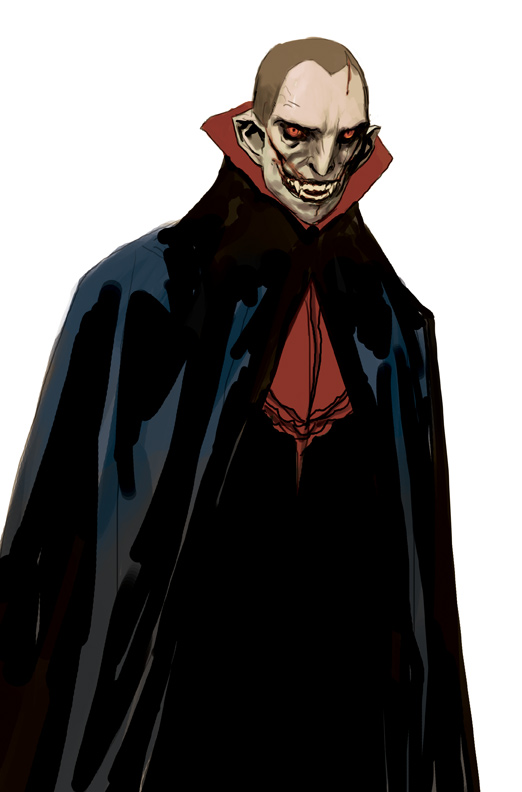
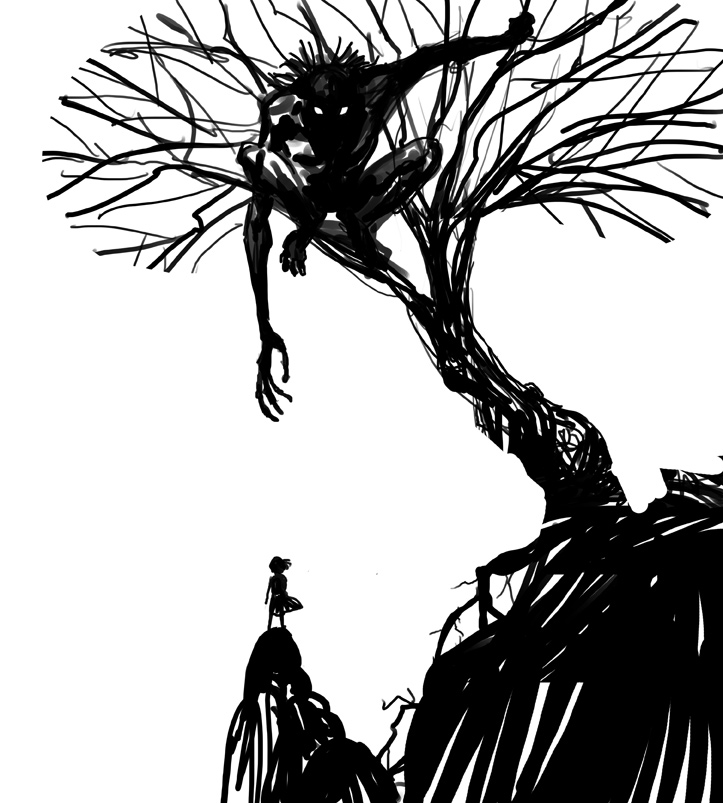
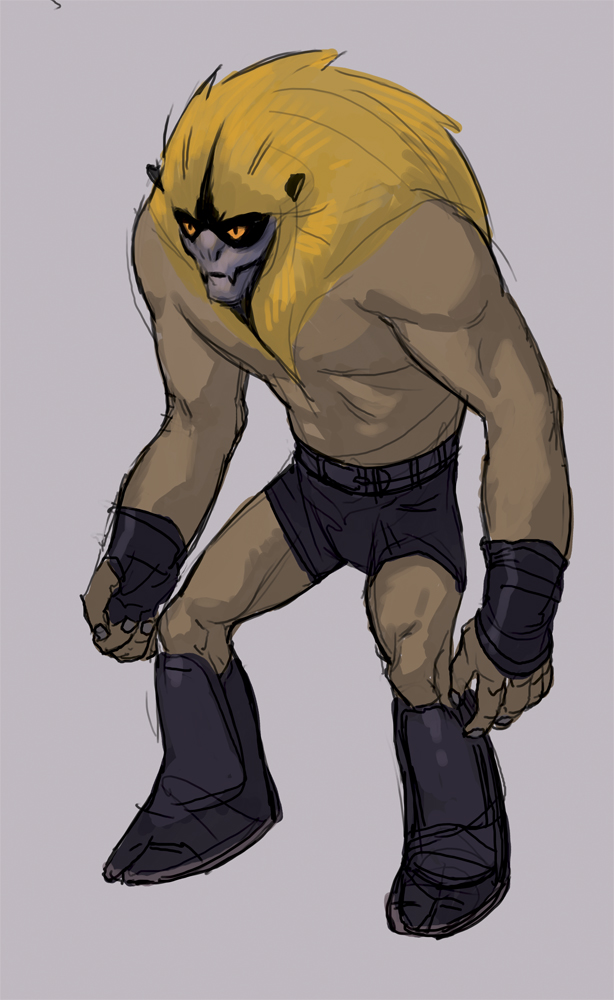
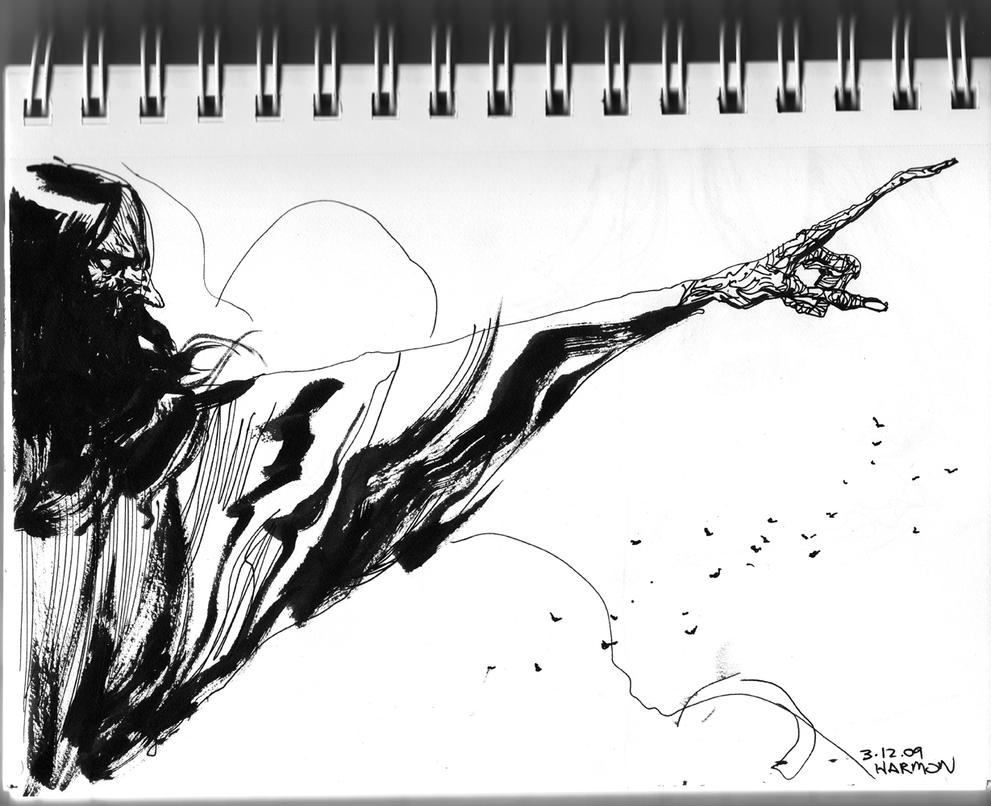
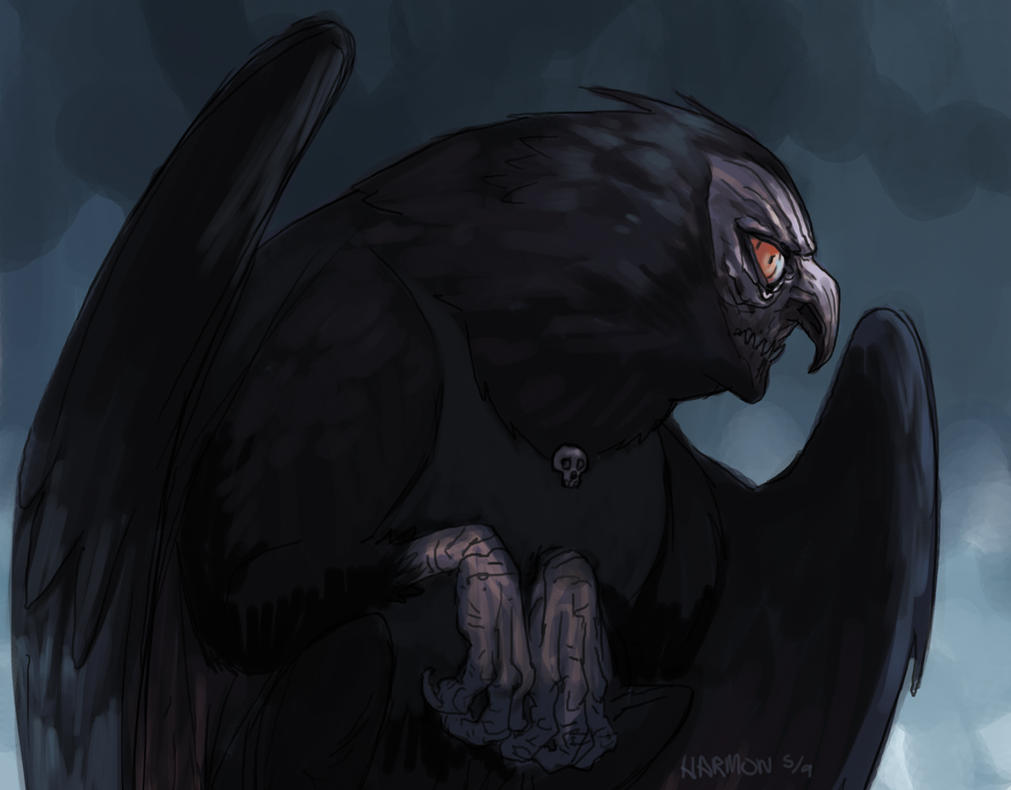
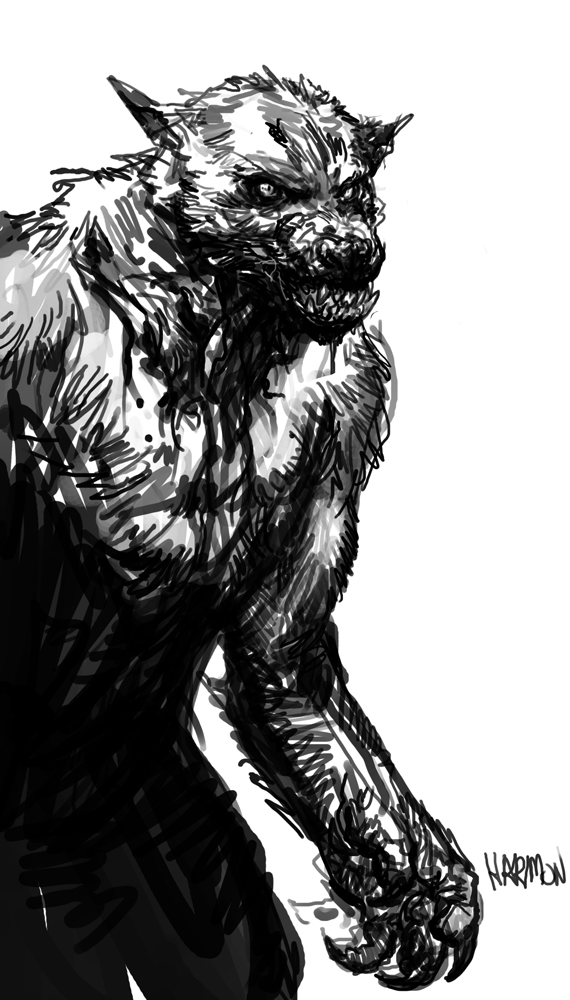
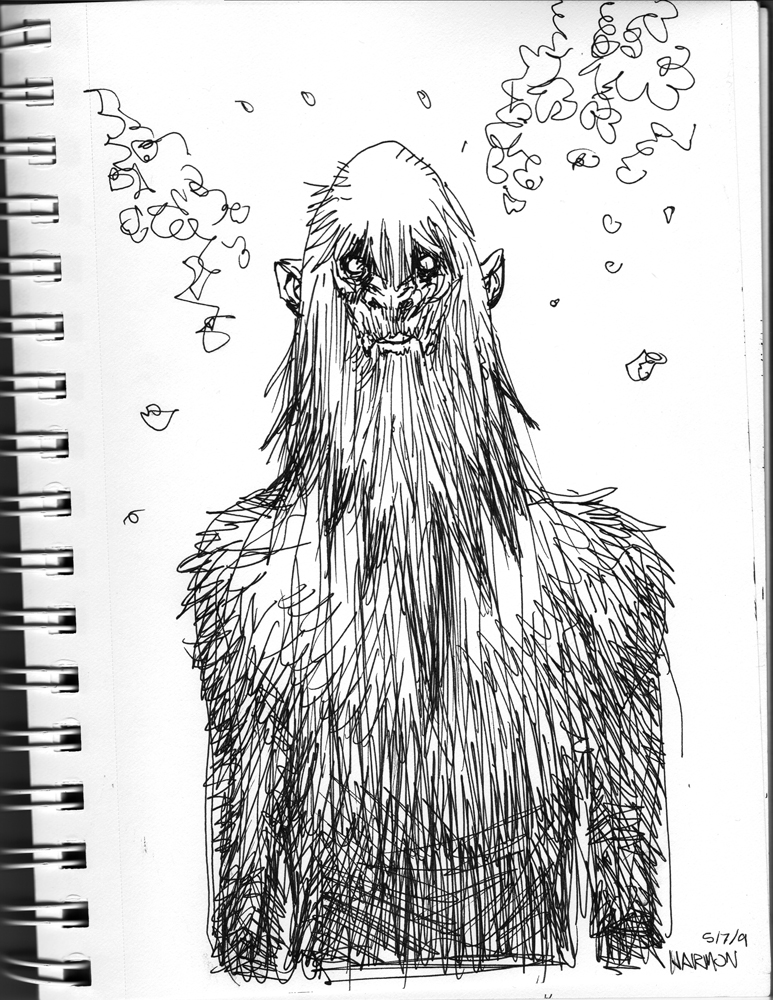
Okay, I guess I’m not done posting this month/year after all. Today’s deviant is Paul Harmon, aka dogmeatsausage. A few different encounters in NOD were inspired by his work – enjoy the last Deviant Friday of 2010!


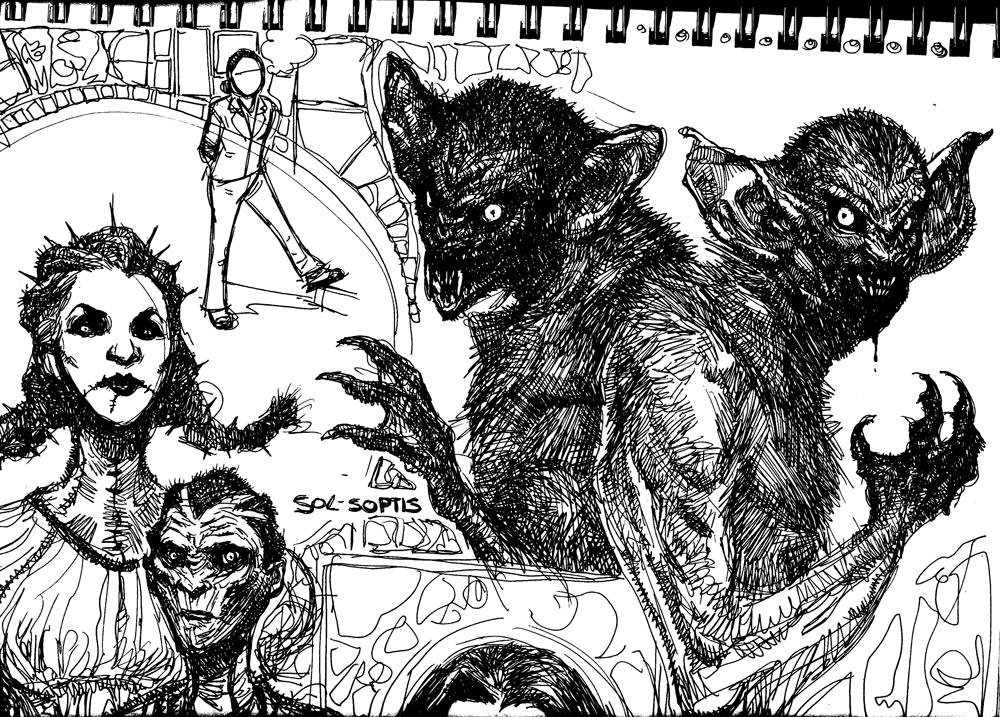
Bats


I remember the first time I saw that bat dude on the right – immediately decided he lived somewhere in the Klarkash Mts.


Thundarr was my introduction to the post-apocalyptic world concept – still love it.


Elder


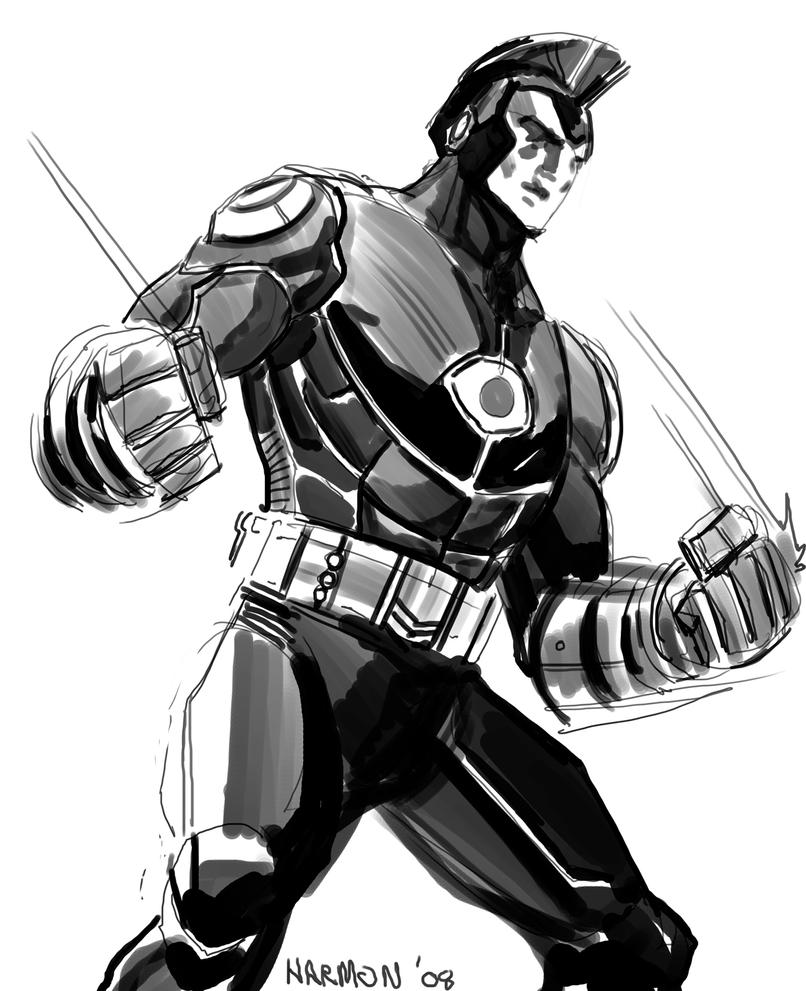
Just for fun, some OMAC stats for Mystery Men! using 10 dice for ability scores and 25,000 XP for powers.
 OMAC
4th level adventurer
Str 8/+2, Dex 7/+2, Con 8/+2, Int 3/+0, Wis 7/+2, Cha 2/+0
HP 32, DC 16, Move 100, Save 13, XP 3200
Powers
Limited – Super Constitution (12/+3), Super Dexterity (11/+3), Super Strength (12/+3)
Single-Use – Armor, Correspond (Brother Eye), Energy Bolt, Endure Elements, Fly, Haste, Heroism I, Jump, Regenerate, Stoneskin