Raiders of Lost Tombs

I love new classes for games – anyone who reads the blog knows this, but I have to qualify that statement. I love new classes that excite the imagination. Not because they have kickass new powers – though sometimes because somebody finds a clever way to spin an old rule or concept – but because they scratch a certain itch for some archetype – and maybe even an archetype I didn’t know I wanted to play. I’m a big fan of basing a new class on a character, rather than a general occupational concept, much as the AD&D ranger is really just an Aragorn (and I wish they could have called it that – far cooler to say “I’m a chaotic good 8th level Aragorn”).

I’ve done this several times now – the she-devil is Red Sonja, the puritan is Solomon Kane and the beastmaster is Tarzan – using the character as a basis for the class (and throwing in some weird specifics, to me, is fun – i.e. the way rangers can use crystal balls), but going a bit further afield when necessary. With this in mind, I present …

The Tomb Raider
Tomb raiders distinguish themselves from common thieves and plunderers by their mental faculties. In many ways, they are sages who have abandoned the staid and safe halls of learning for the field, venturing out into the wilderness to discover firsthand the secrets of the ancients.

Requirements: Dexterity and Intelligence 13+

Hit Dice: d6 to 10th level, +2 hit points per level thereafter

Armor Permitted: Leather armor, no shields or bucklers

Weapons Permitted: Club, crossbow (hand or light), dagger, dart, light mace, light pick, pistol, quarterstaff, short sword, whip

Skills: Break Down Doors, Decipher Codes, Escape Bonds, Find Secret Doors, Find Traps, Jump, Open Locks, Remove Traps

Tomb raiders are well-educated men and women, and are capable of using the same legend lore ability that bards possess.

Although they are not as practiced as thieves with robbing the living, they do have a great deal of experience at avoiding traps left to guard the dead, and enjoy a +2 bonus to save against the effects of traps, mundane and magical.

Tomb raiders have learned from experience the value of two particular weapon/tools to their chosen profession – the whip and the quarterstaff. When employing these weapons, a tomb raider enjoys not only a +1 bonus to attack, but also a +2 bonus on task checks when using those weapons, such as attempting to vault over a chasm using a quarterstaff or slam a door closed using a whip to grab the handle, and with special maneuvers when using the weapon.

Tomb raiders have to finance their activities, but they shy away from pawning objects of historical value. Such items, they believe, belong in libraries, museums or universities. A tomb raider that allows such an important item to be sold or kept for private use is immediately cursed by a quest spell to retrieve that item and see it placed in the hands of the proper academic authorities.

Note: If you don’t name your tomb raider after one of the nations or city-states in your campaign, i.e. Greyhawk Jones or Waterdeep Smith, you really aren’t getting the full experience this class provides.

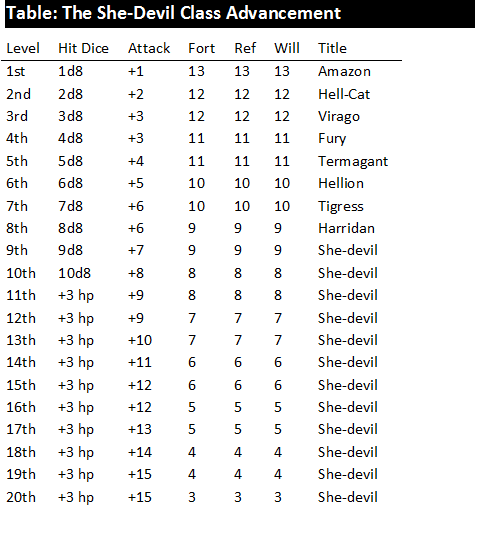
The She-Devil

She-devils are females possessed not only of a righteous rage towards oppressors – especially male oppressors – but also the gift of puissance at arms from the goddess Scathach (or whatever war goddess best fits your milieu). Although she-devils often look the part of barbarians for their lack of armor (it is considered cowardly) and lack of covering (they have no shame in showing their feminine strength), they should not be confused for simple berserkers. She-devils are peerless swordswomen who draw their power from their vows of purity and dedication.

She-devils advance using the paladin XP scheme (see Blood & Treasure Players Tome).

Requirements: Strength and wisdom 11+, dexterity and charisma 14+

Hit Dice: d8 to 10th level, +3 hit points per level thereafter

Armor Allowed: Mail shirts (or shirts of leather, scale or ringmail*), shields and bucklers

Weapons Allowed: Any

Skills: Bend bars, break down doors, riding

She-devils must make a vow of chastity that can only be broken for a lover who has first defeated them in combat. If this vow is not upheld, the she-devil loses her special abilities. Her attack bonuses are reduced to that of a thief of the same level. She must atone to regain her abilities and must kill the person for whom she broker her vow. In addition, she-devils may not hire male henchmen, though they may use male hirelings and may adventure with male characters.

A she-devil enjoys a blanket +2 bonus to Armor Class due to her fluid fighting style and the blessings of Scathach. She-devils armed with a medium or larger weapon can deflect missiles, as a monk.

Although they balk at intimate human contact, a she-devil has a particular ability to affect the emotions of men. Once per day per level, a she-devil can exude an aura (30-ft. radius) that affects all men within the aura as either a crushing despair or cause fear spell. They can alternatively use this aura to inspire women as though using either the good hope or rage spell.

A she-devil can fly into a righteous rage under the following conditions: If she sees the weak being threatened or harmed by the powerful, if she sees a female humanoid being threatened or harmed, or if she is reduced to less than half her normal hit point total by a male humanoid (or monstrous humanoid). A raging she-devil enjoys a bonus to all saving throws, Armor Class and attack rolls equal to her charisma modifier. This rage lasts for 6 rounds. When it is over, the she-devil is fatigued (see conditions) for 1 hour. A she-devil can fly into this rage no more than three times per day.

A 6th level she-devil (hellion) may attack twice per round with a melee weapon.

A 9th level she-devil may establish a stronghold. She attracts a sisterhood of 2d6 amazons (of an alignment comparable to her own) and 4d6 commoners, all women and children, seeking shelter and safety.

A 12th level she-devil may invoke her righteous rage against male (or masculine) outsiders. In addition, the she-devil generates an effect equivalent to the protection from evil spell against these outsiders. 

* A shirt of armor grants a bonus to Armor Class one lower than a full suit – thus, a ringmail shirt grants an AC bonus of +2 instead of the +3 granted by a full suit of ringmail.

Dragon by Dragon – July 1978 (16)

Dragon #16 holds great promise based on the cover alone – a bad-ass barbarian and the word “ninja” …

To begin with, a gentle commentary from Kask regarding the amount of fiction in the magazine:

“Due to the length of the conclusion of THE GREEN MAGICIAN, we found it necessary to add an additional four pages this issue. Contrary to what some Philistines might think, this is not a fiction magazine. The Philistines I refer to are the ones that don’t want to see any fiction at all in these pages. To forestall the howls, the extra four pages were added to compensate, not that the story NEEDS compensating for.”

Gerald Guinn kicks this issue off with a rebuttal to a letter criticizing The Cthulhu Mythos Revisited. An entertaining exchange one would now expect to see … well, on every message board and blog frequented by geeks.

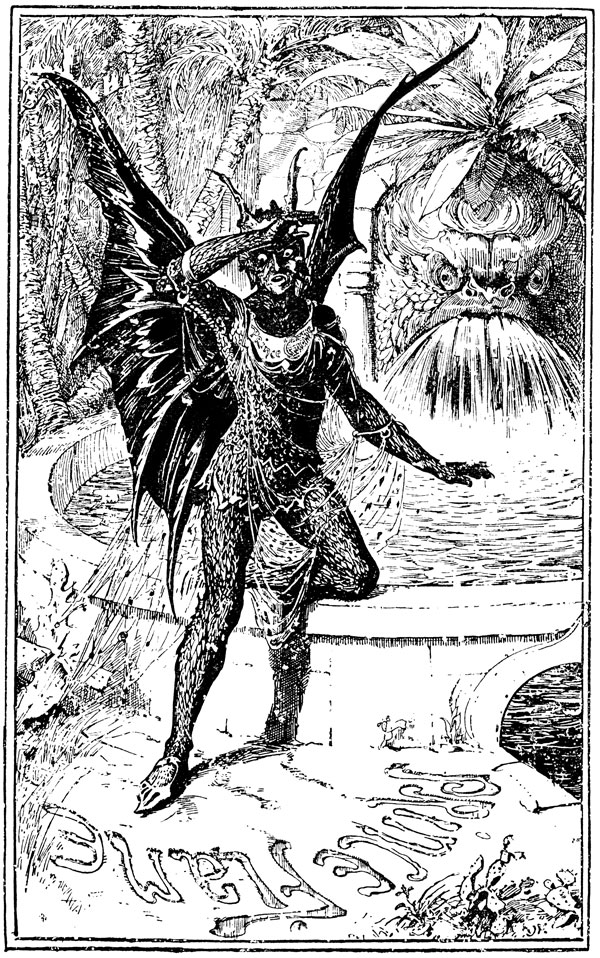
Jerome Arkenberg brings us the Near Eastern Mythos. Like the other articles in this series, it keeps it short and sweet and covers quite a bit of ground – everyone from An(s) to Ziusudra(s). The heroes in this article would be especially useful for swords and sandals campaigns – heck, this article, a map of the Near East and a few dungeon maps would be all you need to run a great campaign. The scorpion men are worth a look …

Scorpion Man: HP 240 (holy crap!), AC 1, MV 20″, Magic as 15th level wizard, fighter ability as 15th level lord and Class I psionic ability.

Okay, gonzo stats, but a sweet piece of art. I also love the fact that the “artifacts” presented would, in modern D&D circles, be considered fairly weak magic items.

After the Near Eastern mythos, we have the big article of the issue – The Ultimate NPC: Ninja – The DM’s Hit Man by Sheldon Price. I can hear the audible gasps of the “dick DM” crowd and the clicking of their teeth. To be honest, they have a point, but I think the article also needs to be seen in the context of the time. With characters bouncing around from game to game, there was the real danger of a ridiculously powerful character (probably played by a cheater) showing up to ruin everyone’s fun.

Here’s the rundown – Ninjas are limited to 16th level and must be neutral; they cannot use psionics. Their special abilities include seeing in the dark, tracking (as ranger with 20% penalty), simulate death, poison use (lots of rules here), far travel (2nd to 5th level 50 miles a day, 6th to 9th level 75 miles per day, 10th level or higher 100 miles per day – a unique ability), they prefer no armor but will wear leather or chainmail and they have a special shield called a neru-kuwa, they attack as a fighter, can attack open-handed as a monk and use judo as a samurai (originally in … uh, some other issue), they get a save vs. all damage, save as magic-users of one level higher against spells and can attack with any weapon at a -3 penalty, save ninja weapons they have mastered and weapons associated with a disguise class they have learned. Otherwise they save as a fighter. Their disguises are learned randomly. The article goes on a bit … go read it. It’s actually not too shabby in terms of being overpowered, especially since it’s assumed that one or two ninjas will be taking on an entire party and their retinues.

James Ward does another The Adventures of Monty Haul #3. This involves Freddie and his love of the weird. A sample:

“We appeared on a frosty plain of ice and snow with four Storm Giants swinging their weapons and Monty chuckling something about “minor guards”. We heard the sound of three clubs and a magic sword going smash, smash, smash, and chop. Mike’s gargoyle was a grease smear on one of the clubs, Tom’s Monk was down to one hit point, Dave’s cleric was really hurting, and Jake’s golem had one of its arms cut off by the vorpal sword. Robert clove one in two with his sword while Ernie’s and my cold rays took care of two more (and the sword, we found out a bit later). The last one was missed by the rest of the group, but it didn’t miss me for thirty-six points of bruises and nicks. With the next round, we were able to finish the giants off before the last one did any more damage. They didn’t have a copper coin’s worth of treasure on them, and we weren’t pleased. After a bunch of cure spells and a raise dead on the gargoyle, we still hadn’t figured out what to do about the golem’s arm. We just let it go and traveled on. Tim and Brian put on some of the dead guard’s clothes (which everyone thought was a good idea) and we were on our way towards a batch of caves.”

E. Gary Gygax covers a bit of ground in the Sorcerer’s Scroll with Role-Playing: Realism vs. Game Logic; Spell Points, Vanity Press and Rip-offs.  The essence is – some people are morons when they propose fixes to D&D, and they are an irritation to Gygax not because of vanity, but because they don’t understand game logic. Two quotes:

“The uniform element amongst these individuals is a complete failure to grasp the simple fact that D&D is a game. Its rules are designed and published so as to assure a balanced and cohesive whole.”

“D&D encourages inventiveness and originality within the framework of its rules. Those who insist on altering the framework should design their own game. Who can say that such an effort might not produce a product superior to D&D? Certainly not I.”

The bit about Weapon Expertise being stupid considering that any fighting-man worth his salt would practice with all arms all the time is funny, considering he had just published the AD&D Player’s Handbook with the weapon proficiency rules.

In a Design Variant article, Charles Sagui explains Why Magic Users & Clerics Cannot Use Swords. In essence: For balance in the game, and Tolkien didn’t write D&D, so I don’t care if Gandalf could use a sword. Sagui works out a system where clerics can use edged weapons, but whatever damage they score with those weapons must be paid with by losing spells or, if they’re out of spells, losing their own hit points. Weird, but kinda fun.

A. Mark Ratner presents Metamorphosis Alpha Modifications. This one covers the lack of mutants having a leadership potential, and thus being unable to use devices and weapons they find. I’m not sure that wasn’t the intention in the rules, but Ratner proposes a mechanical aptitude ability for mutants. More importantly, he presents a great big chart of mutated animals, including pigmy elephants, so you know it’s legit.

Next up is the second part of The Green Magician by L. Sprague deCamp.

“Shea’s intention was to jerk the blade loose with a twist to one side to avoid the downcoming slash. But the point stuck between his enemy’s ribs, and, in the instant it failed to yield, Nera’s blade, weakened and wavering, came down on Shea’s left shoulder. He felt the sting of steel and in the same moment the sword came loose as Nera folded up wordlessly.”

Hard not to fall in love with Belphebe.

Wormy involves Irving the imp selling dwarf burgers to a hungry crowd that includes a wereboar. Frank the tree troll takes him out with a club. Almost forgot Dudly and Frank – excellent characters. The gaming world really lost out when Wormy ceased.

Fineous Fingers, meanwhile, turns back to help his pals against the evil knight.

We finish up with a Design Forum article by James Ward on Game Balance. This involves the rate at which magic item treasure is given out – Gygax, Kask and Kuntz all want it restricted – Ward, on the other hand, loves it. He introduces the idea of Game Equilibrium. In this concept, the DM doesn’t care how much magic the players have. He uses plenty of it in his hordes … but he lets the defenders of those hordes use the magic items. In essence, Ward embraces the DM vs. players concept wholeheartedly, like a great big game of Spy vs. Spy. Not a bad style of play, in my opinion, if everybody involved is a good sport.

Well – I got steaks to grill. Have fun on the internet folks, and make sure you buy a copy of Blood & Treasure!

Dragon by Dragon – February 1978 (12)

The cover of this baby trumpets an exclusive preview of Andre Norton’s D&D novel, Quag Keep! Let’s see what else this issue has to offer …

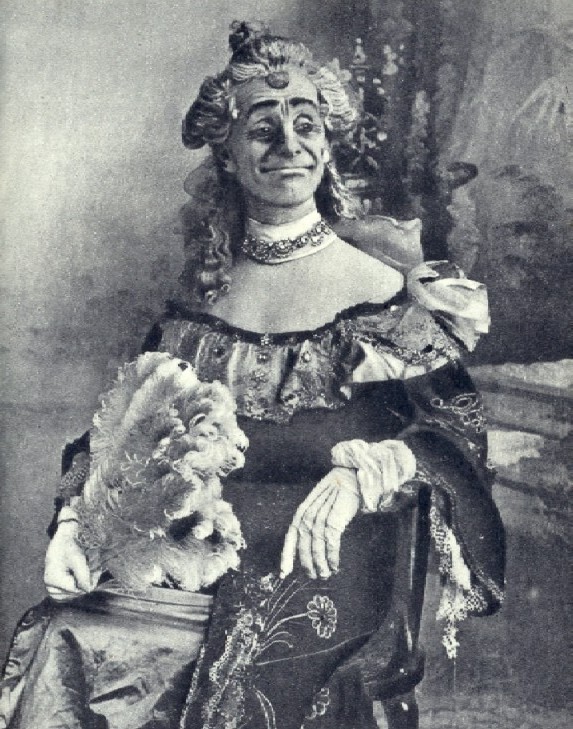
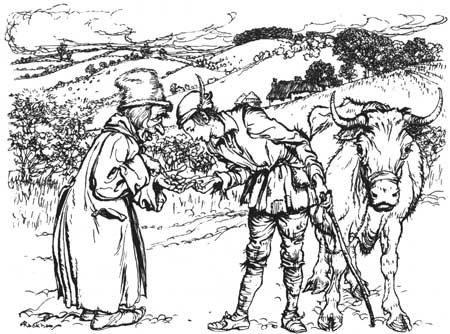
The first article is Leon Wheeler‘s The More Humorous Side of D&D, which, if I’m honest, is the literary equivalent of “Let me tell you about my character”. My preference was for the little illustration …

Simple but effective line art … something missing from the more modern products, I think. But maybe I’m just an old fart.

Up next is a “D&D Variant” – A New Look at Illusionists by Rafael Ovalle. Rafael’s illusionist has a 7% chance per level of discerning an illusion created by a creature (i.e. rakshasa, succubus, leprechaun) and, if I’m reading this correctly, always can tell another illusionist’s handiwork. Their spells can affect astral and ethereal creatures because they involve light. A few new spells are added as well, including improved displacement, sensory displacement, discord, gaze of umber hulk, create spectres and basilisk gaze.

Jerome Arkenberg now provides us with The Persian Mythos. This is a quick list, and provides an Armor Class, Move, Hit Points, Magic Ability, Fighter Ability and Psionic Ability for each of the deities. Vohu Manah, “Good Mind”, for example, has the following stats:

Armor Class: 2

Move: 18″

Hit Points: 250

Magic Ability: Wizard – 20th

Fighter Ability: Lord – 15th

Psionic Ability: Class 1

Short and sweet, and probably enough to run a combat, if a combat was actually needed.  I’m sure more modern players will scoff at the AC, which would be 17 or 18 in modern games, but with 250 hit points and all that magical and fighting ability, it’s probably sufficient to clean a few old school clocks. More importantly, a combat encounter with this guy in old school rules would last about as long as it would with new school rules, just without a page of stats that will largely turn out to be useless.

It’s actually a pretty thorough list, and includes several heroes and archdemons.

Hey, check out the ad for this game …

Breaking new ground, those fellas.

In the Design Forum, James Ward lends us Some Thoughts on the Speed of a Lightning Bolt. In the article, he sings the praises of the new rule (or variant rule) on melee rounds in Eldritch Wizardry. It’s an odd article that, these days, would just be a post on a forum discussing the new TSR book.

James Endersby and John Carroll now offer another “forum comment” describing a Ship’s Cargo from some game they played involving a voyage to Japan.

James Bruner now has an article about The Druids. Probably a good synopsis of the current knowledge on druids, but much of what people thought of the druids in the 1970’s has turned out to be faulty. Still, some of it appears to be dead on, and I’m sure it was a useful article in its day, if only to veer people away from the “Druid = Fantasy Hippy” syndrome that sadly persists to this day.

Another neat ad …

If the Persian gods weren’t enough for you, Rob Kuntz now presents The Lovecraftian Mythos in Dungeons & Dragons. Apparently, J. Eric Holmes was primarily responsible. So, here’s what you all want to know …

Cthulhu

Armor Class: 2

Move: 12″

Hit Points: 200

Magic Ability: (see below) [when you see below, you see nothing about magical ability]

Fighter Ability: 15th level

Psionic Ability: Class 1

Those who see him must save vs. fear, and if released from his sleep, all within 100 miles must save or go insane. He regenerates 10 hit points per round, can teleport 1/2 mile, is resistant to water, cold and vacuum and can call 10d10 deep ones up from the sea bottom. He retreats from the Elder Sign. He can attack physically and psionically each round – meaning, I suppose, that he can make an attack and use a psionic power each round.

A later issue has stats for Conan. When I come across it, I’ll have to pit Conan vs. Cthulhu and see how it turns out.

Another great ad, this time for All the World’s Monsters vol. 2.

It is followed by a quick, unbiased review for the new AD&D Monster Manual. The review calls it “An absolute must for every D&D enthusiast everywhere”.

The preview of Norton’s Quag Keep is next …

Milo Fagon, swordsman, and Naile Fangtooth, were-boar berserker, have met in an inn in the Thieves’ Quarter of Greyhawk. They have one thing in common, each wears on his wrist a wide copper bracelet in which are set a number of unusually shaped dice. Puzzling over this strange bond, they are also uneasily aware that something momentous is about to happen to them both, though they cannot see that any of the other people in the inn are paying any attention to them. 

Well, not a terrible issue – the pantheons might have come in handy, but much of the rest seems like the equivalent of chit chat. We finish with the following …

Mother Goose is my Dungeon Master!

I was watching Babes in Toyland the other day (like you do), mostly because the daughter and I had a hankerin’ for Laurel and Hardy, and while viewing it, a strange thought popped into my head.

“If Mother Goose wrote D&D, little pigs would be a playable race.”

Naturally, one thing led to another …

Mother Goose & Goblins

The basic rules here are B/X D&D (or Labyrinth Lord, if you please). I’m not going to repeat everything in the rules (for now …), so if I don’t mention it, it works like B/X. The concept here is “what if Gygax was inspired more by nursery rhymes and fairy tales than swords & sorcery”. The game is still meant to be about exploration, treasure hunting (with some good deeds thrown in, of course) and fighting monsters, just with a veneer of (slightly tongue-in-cheek) Mother Goose-isms.

CLASSES
MG&G has seven classes, as follows:

PRINCE
The prince works essentially like the fighter – can use any weapon or armor, d8 for hit points, etc. Princes are young, handsome men, and are always the children of one king or another (kings are as copious in fairy tales as grains of sand on a beach).

A prince with a 17 Charisma who has reached at least 4th level can elect to become a Prince Charming. A Prince Charming must serve either the King of Hearts or the King of Diamonds. His kiss can dispel any magical effect, he enjoys a +2 bonus to saving throws against evil magic, and he is bound to fight evil dragons, rescue helpless damsels and give generously to the needy.

JOAN OF ARC RULE: A female character with a Strength of 12 or higher can become a Princess (i.e. a female version of the Prince).

FAIRY GODMOTHER
Fairy Godmothers are always elderly women of an elfin demeanor. They fill the roll of the magic-user and generally follow the rules for that class, save that a fairy godmother knows all the spells (assuming you’re just using the spells in B/X) of a level she learns to cast (much as a cleric), and must possess her magic wand to cast any spell. If a knave is adventuring with a fairy godmother, the fairy godmother must adopt them as a godchild and do their best to teach and protect them.

KNAVE
Knaves are boys and girls of common ancestry (1% chance of being the child of a king and queen who was hidden away with a peasant family to avoid a terrible curse). They fill the role of the thief, with the same skills and abilities, though some skills are renamed slightly for flavor:

Ask/Solve Riddle (replaces find/remove trap)*

Climb Beanstalk (i.e. climb walls)
Hear NoiseHide in Shadows
Creep Quietly
Steal Tarts (i.e. pick pockets)

* Traps do not play a big part in fairy tales and nursery rhymes, but the idea of confusing an opponent with a riddle, or needing to solve a riddle to get past a problem does crop up now and again. Naturally, players can still have their characters look for traps, and can devise ways to get past them without rolling dice; now they can instead roll dice to get past riddles or stun a foolish opponent (for 1d6 rounds) by asking them a real puzzler (the victim gets a saving throw even if the “ask riddle” roll is successful).

Each naughty or wicked act of a knave carries with it a cumulative 1% chance that they will be given a conscience (in the form of a talking cricket or something similar) to attempt to guide them into a more law-abiding and honorable way of life.

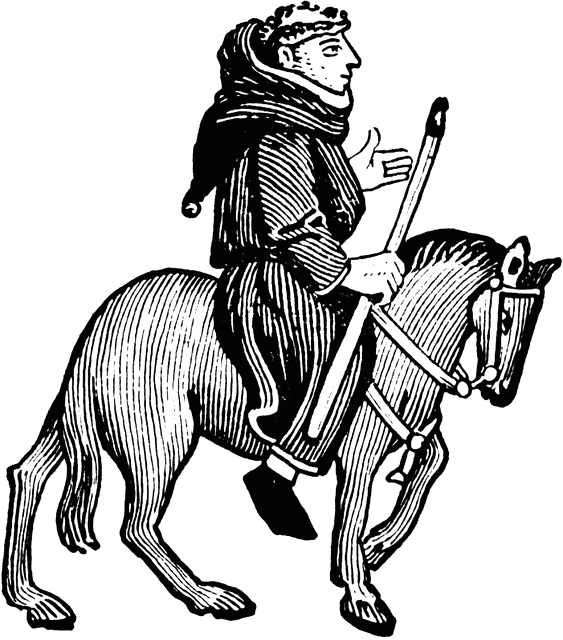
CURTAL FRIAR

Curtal Friars are men with tonsured scalps who cultivate a healthy paunch (in order to demonstrate the great abundance of the Lord), wear simple robes (with a mail coat beneath, usually) and wield a club or mace in the name of God Almighty. They are, essentially, clerics in terms of rules, though their ability to “turn undead” works on a slightly different set of monsters (as not all of the B/X monsters appear in fairy tales or nursery rhymes).

Monster
Pixie/Leprechaun (replaces skeletons)
Revenants (i.e. zombies)
Devil (i.e. imp – replaces ghoul)
Changeling (i.e. doppelganger – replaces wight)
Ghost (i.e. wraith)
Troll (replaces mummy)

Naturally, one can play a Nun instead of a Friar, though warrior nuns are generally pretty scarce in fairy tales.

DWARF
One of a group of seven who left his brothers to see the world. Dwarfs conform to the Dwarf class in B/X D&D. Each has a particular physical or personality trait that dominates their character, and for which they are named.

LITTLE PIG
The Little Pig replaces the Halfling in MG&G. Little pigs have a +2 bonus to save vs. fear (“who’s afraid,” they inquire, “by the Big Bad Wolf?”) and a particular skill at building houses and at setting traps (for wolves or others).

FAIRY KNIGHT
The fairy knight (or fairy dame) replaces the Elf class in B/X. They are permitted to wear up to mail, and though beautiful, they have no souls and thus are not to be completely trusted.

ALIGNMENT
Whereas B/X has three alignments, Lawful, Neutral and Chaotic, MG&G has four alignment which correspond with four royal houses in fairy tale land. A character must pledge his or her troth to one of these alignment (though they need not always cleave faithfully to that faction – unless somebody is watching).

Hearts: The character is pledged to the ideal of Love. He or she gets a +1 bonus to hit when defending this ideal (i.e. defending a loved one), but must pass a save vs. magic when confronted with the temptation of Lust.

Diamonds: The character is pledged to the ideals of Truth and Beauty. He or she gets a +1 to hit when defending beauty or seeking out the truth, but must pass a save vs. magic when confronted with the temptations of Envy and Avarice.

Spades: The character is pledged to the ideal of Judgment. He or she gets a +1 bonus to hit when fighting against outlaws and other evils, but must pass a save vs. magic when confronted with the temptation of Vengeance.

Clubs: The character is pledged to the ideal of Mirth and Merriment. He or she gets a +1 bonus when fighting spoil sports and bullies, but must pass a save vs. magic when confronted with the temptation of Cruelty.

Next installment will cover Grimm Tales (i.e. monsters & treasure)

APPENDIX N (A brief version, anyways)

Snow White
Cinderella
Beauty and the Beast
Little Mermaid
Pinnochio
Three Little Pigs
Three Billy Goats Gruff
Hansel & Gretel
Red Riding Hood
Rose RedBlue Beard
Puss in Boots
Gingerbread Man
Rumpestiltskin
Jack and the Beanstalk (Jack the Giant Killer)
Humpty Dumpty
Cat and the Fiddle
Tom Thumb/Thumbellina
Princess and the Pea
Frog Prince
Little Boy Blue
Simple Simon
Pied Piper
Tom Tom the Piper’s Son
Old Woman in a Shoe
Old Mother Hubbard
Old King Cole
Little Jack Horner

Supplement I – Wonderland
Supplement II – Oz

Dragon by Dragon – October 1976 (3)

Three issues into The Dragon and we have our first sci-fi cover! What lies within? Well – not much sci-fi …

First up we have an editorial by Tim Kask about fantasy. He brings up at least one good point – your ability to imagine something is predicated on your past experience. To my mind, that means get out there and experience as much as possible, even if it is just through art. The more you have seen, the more you will see and can imagine. Tim then goes on to remark that fiction, in future, will be better laid out (people complained), but that The Dragon will still feature fiction.

Next, Gary Gygax asks “Does Anyone Remember War of the Empires?” If he was asking me, the answer would be “I’ve never even heard of War of the Empires, Gary, tell me more.” The game was a very early sci-fi wargame (circa 1966) that seemed geared to postal play, pitting Terran commanders against one another working for either the Greatest Empire or the League of Worlds. He goes on to tell the tale of its demise (twice) and the difficulty in running such a game. These days, it would probably be a snap. Alas.

The next page has a sweet illustration in an advert for Starweb, a PBM sci-fi game.

Dig it!

The next article is one of my favorites, for no other reason than it defies belief these days. Len Lakofka explains how one can play … a female!!!

What can the ladies do in D&D? They can be fighters, magic-users, thieves and clerics. They can do just as well as men in magic and can surpass them as thieves, but they are behind men in all ways in terms of fighting … though they have “attributes their male counterparts do not!” (God, it hurts a little writing this). Elven female clerics can rise to especially high levels. Because, you know … elven females are just really good clerics. I guess.

For attributes, women roll 1d8+1d6 for Strength, 3d6 for Wisdom, Intelligence, Dexterity and Constitution (and any woman with a 13-14 in Strength adds +1 to her Con score) and roll 2d10 to determine Beauty (not Charisma). Beauty is apparently important to thieves, fighters and magic-users if its exceptional (15+), but may not be used by clerics if they are lawful or neutral.

He then goes through all the level titles and XP requirements for women (which are different from men) – and honestly, I do dig the level titles, which feature Battle Maiden, Shield Maiden, Heroine, Valkyrie and War Lady for fighters, Superioress and Matriarch for clerics, Witch (in place of Wizard) for magic-users, and a few cringe-inducing titles for thieves (wench, hag, jade, succubus, adventuress, soothsayer, gypsy and sibyl).

Female adventurers have slightly different stats than their male counterparts – most especially in that high-level thieves and fighters who are particularly beautiful learn to cast some spells – which mostly boil down to charming and seducing men and tarot reading.

Simply put, this is one hell of a sexist article, entertaining only in the context of how far gaming has come since then.

“Garrison Ernst” continues with another part of “The Search for the Gnome Cache”. You know, I did enjoy his Gord the Rogue material – I’ll have to read through these one of these days.

Brad Stock and Brian Lane present some nice birth tables for D&D – 30% chance of commoner, 55% chance of merchant class, 10% gentleman and 10% noble, then you roll for sibling rank and then more rolls to determine you “sub-class” and initial money, monthly allowance from family (a neat idea) for first year of adventuring or until 3rd level, whichever comes first) and starting skills. A very wealthy noble, for example, starts with 400 gp, a monthly allowance of 60 gp and four skills from group 1, three from groups 2 and 3. He might, thus, end up with the following skills: woodsman, miner, jeweler, sailor, mason, normal merchant, scribe, artist, adventurer (3rd level fighter) and Don Juan. Not sure if it really makes sense for nobles to have so many skills.

There are several other tables for nobles and some for rolling one’s race randomly, including “half-goblin/half-orc”, “half-elf” and the infamous and lawsuit-inspiring “hobbit”.

Page 17 has a Fineous Fingers comic strip … I think this might be the first one in The Dragon. We also see the first letters page “Out on a Limb”, which in retrospect really isn’t a play on dragons or fantasy. Garry F. Spiegle writes maybe the best line concerning Gnome Cache – “the writing was so good about a subject so terrible”. Scott Rosenberg was pissed that they wouldn’t let him Xerox tables for GM’s and sell them (at cost). Lewis Pulsipher doesn’t like all the ads and illustrations (waste of space) and writes a critque of that “Three Kindreds of the Eldar” article that’s about two or three times longer than the original article, made even longer by a response from Larry Smith who, believe it or not, disagrees with Lewis. The exchange reminds me of Triumph the Insult Comic Dog’s answer to the question, “What material was Han Solo frozen in?” – A: “Who gives a shit?”

Next: “A Plethora of Obscure Sub-Classes”, including the Healer by C. Hettlestad, the Scribe by David Mumper and the Samurai by Mike Childers (modified by Jeff Kay).

Larry Smith offers a “New View of Dwarves”, with some sweet level titles for dwarf fighters (dwarf – warrior – spearman – dwarf hero – swordbearer – axewielder – champion – dwarf lord – dwarf king) and the revelation that there are only 7 dwarf families 😉 and thus 7 dwarf kings, the tribe of Durin being the most prestigious. They have some rules for dwarf clerics and thieves, and my favorite two lines:

Dwarves as Magicians, Assassins, Monks, Paladins, Illusionists, Rangers or Sages.

The above is not allowed.

We round it out with John Pickens’ Berserker, Gordon Davidson’s Idiot and Charles Carner, William Cannon and Pete Simon’s Jester.

The issue ends with a table of “Combat Modifications for Dexterity” by Steve Cline, with percentile ranges for high dexterity. These include modifiers for melee attacks, ranged attacks, damage and defense.

Dragon by Dragon – August 1976 (2)

August of 1976 – A month after the bicentennial, and Marvelites were grooving to such titles as Planet of the Apes, The Champions and Black Goliath, the Seattle Seahawks were playing their first game, Big Ben breaks down in London, Viking 2 enters orbit around Mars, the Ramones make their first appearance at CBGB, and The Dragon’s second issue hits the stands. So what did the gaming geek of 1976 get for his money?

John M. Seaton devises a procedure for “monkish” promotional combat (i.e. knock off the master to assume his level). I love this kind of thing, and given the recent popularity of FlailSnails Jousting, I wonder if there isn’t a market for FlailSnails Monkish Combat.

The procedure would be similar – write up 6 rounds of combat, denoting your strike, kick, block or other maneuvers, and then we see where it goes.


Lots of fiction in this issue.

The second installment of Gygax’s Gnome Cache is in this issue. I’ll freely admit this here – I almost never read the fiction in Dragon. I probably missed out on something.

Speaking of fiction, Jake Jaquet gives us the conclusion to “Search for the Forbidden Chamber”. Didn’t read this either.

Gardner Fox (you might have heard of him) has a short story in this issue called Shadow of a Demon which is covered very capably at Grognardia.

Another installment of “Mapping the Dungeons”, wherein DM’s of the 1970’s try to hook up with players via The Dragon. St. Louis appears to have had a surplus of DM’s looking for players – 8 of them in this issue.

Some dude named Paul Jaquays was running the Spring Arbor College Dungeoning Society in Spring Arbor MI. Wonder if he ever amounted to anything.

Through the magic of Google, I found the following DM’s online:

Keith Abbott of Muskegon MI

Michael Dutton of Mountain View CA might have done some art for WOTC – could be a different guy

Bill Fawcett of Schofield WI kinda founded Mayfair Games

Karl Jones – could be this guy?

Drew Neumann – maybe a composer of film and television scores – he was at Wylie E. Groves High School in Detroit at the right time (Class of ’77). Could have known Ellen Sandweiss, who was in Evil Dead. Did music for Aeon Flux

Scott Rosenberg of Jamaica NY – has a couple issues of The Pocket Armenian floating around online.

Ed Whitchurch has achieved some level of DM’ing fame

Joe Fischer gives us more tips for D&D Judges. He covers interesting entrances for dungeons (i.e. under stuff you don’t expect them to be under) and “friendly” traps that aren’t necessarily harmful. He also provides a random table for treasure chests that are, 50% of the time, trapped thus …

D% Trap
0-30 – 1d4 spring-loaded daggers fire when chest is opened
31-50 – Same as above, but daggers are poisoned
51-65 – Poisoned gas released when chest is opened
66-75 – When opened, chest acts as mirror of life trapping
76-85 – When opened, chest explodes for 1d6+1 dice of damage (wow!)
86-90 – When opened, an enraged spectre comes out [which can be read a couple ways, either of them endlessly entertaining]
91-95 – All characters within 5 feet lose one level [after the first use of this trap, I guarantee everyone will give the thief plenty of space when opening chests]
96-98 – All characters within 5 feet lose one magic item
99-00 – Intelligent chest with abilities of 2nd – 9th level magic-user [nice!]

He also mentions intelligent gold pieces that scream when removed from a room, or replacing real gold pieces in a dragon’s horde with chocolate coins (though as valuable as chocolate was in the “olden days”, that might actually be a step up). He also brings up the idea of creatures with odd alignments (chaotic dwarves, for example).

A couple more spotlights (Joe Fischer rocks!)

Monster Gems are 500 gp gems that can be commanded to turn into monsters (per rolling a wandering monster) for one week – when the week is up, or they are killed, the gem is destroyed as well. It might be fun to rule that every gem worth 500 gp (exactly) is a monster gem.

Hobbit’s Pipe (by Marc Kurowski) – Clay pipe, when smoked, gives ability to blow multi-colored smoke rings (4 per turn, moving at 4” (40’) per turn – love the specificity). The pipe can be smoked 3/day. He also offers up five magic pipeweeds, a bag of infinite wealth, helm of forgetfulness, and ring of infravision.

Lynn Harpold give a long account of Quetzalcoatl and his cult in Central America.

Creature Features gives us the remorhaz. Love the “stat block”:

Move: 12”
Hit Dice: 6/10/14 (8 sided) dice
% in Lair: 20%
Type Treasure: F
Bite for 3-36 points
Breath for 3, 5, or 7 dice of fire damage
Magical Resistance: 75%
Low Intelligence
Neutral
Number Appearing: 1 (1-4 if in lair)
Description: 30’ long. Blue Hued underneath, wings & head backed with red.
Armor Class: Underside: 4. Back: 0 plus special. Head: 2.

Apparently, the standardization bug had not yet bitten.

Jon Pickens presents the Alchemist, a new D&D class. They don’t label this one as an “NPC Class”, so I guess it is fair game for all you D&D-ers out there. I’ll roll one up quickly for FlailSnails:

Xander Wort, Neutral 1st level Alchemist (Student)
Str: 5; Int: 13; Wis: 16; Dex: 16; Con: 7; Cha: 10
HP: 2; Attack: As Cleric; Save: As Fighter (+2 vs. poison and non-magic paralyzation)

Special:
Max. AC is 5
Can use one-handed weapons (excluding magic swords)
Use poisons and magic items usable by all classes
Psionic ability as fighters (replace Body Weaponry with Molecular Agitation)

Special Abilities:
Detect Poison 20%
Neutralize Poison 10%
Neutralize Paralyzation 15%
Identify Potion 5%
Read Languages 80% (one attempt per week)
Prepare poisons (strength level equal to their level; costs 50 gp and 1 day per level) and drugs (as poisons, but knocks unconscious for 4 hours)
Prepare a potion of delusion

Potions:
None – until 3rd level (Scribe)

His bit on poison is pretty cool. If the HD of the poisoner or level of poison is equal to or greater than the victim’s HD, they must save or die. If at least half their HD, they are slowed until a constitution check is passed, trying once per hour. If less than half, there is no effect, but the poison accumulates in the blood until it’s enough to slow or kill the person. A very nice system!

This is actually a very groovy class. The hit points are low, so I don’t know how long Xander would have to live, but he can wear some decent armor and load up on poisoned darts and a poisoned long sword and might just make it to 2nd level.

Jon Pickens also presents optional weapon damage, allowing fighters and thieves to gain mastery in different weapons, increasing the damage they deal with them (except with dwarf hammers, military picks, pikes, pole arms and arrows). Fighters master one weapon per three levels, thieves one weapon per four (and are limited to sword, dagger and sling). Those with a Dex of 13 or better can gain mastery with a combination of two weapons, gaining the ability to strike with both weapons per round or with one weapon and treat the other as a shield. Sword and sword or flail and morningstar combos require a Dex of 16 or better.

Another good system – very clean and simple to use.

All in all, a pretty good issue. Lots of neat rules ideas and some good pulp literature.

Stabbing You With Their Minds

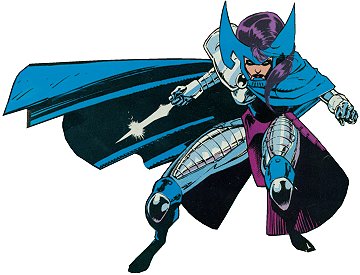
The last of the three “lost classes” of Blood & Treasure is the soulknife. The soulknife is certainly more gonzo than the classic fantasy archetypes, but they have some cool precedents in sci-fi entertainment, specifically in the form of the ubiquitous light saber and in the redesigned Psylocke (kinda miss the old one, to be honest) and her mind blades. The overall concept is pretty decent, and it was a close one to make it into the final game. I especially liked the idea of illustrating it (or having it illustrated for me, to be precise) as an Indian warrior with glowing katars. So … the soulknife for Blood & Treasure (which is about a month away from being finished, FYI).

SOULKNIFE

Soulknives are men and women with a natural surplus of psychic energy but no ability to manifest it in the form of psychic powers. Instead, they learn, through rigorous training and meditation, to unlock their chakras and focus their psychic energy into a blade-shaped construct. Soulknives follow a strict warrior code – the Kshatriya Dharma. This states, “Stand straight and never bow down, for this alone is manliness. Rather break at the knots than bend!”

Requirements: Soulknives must have a dexterity and wisdom score of 13 or higher.

Hit Dice: d8 (+3 hit points per level from 10th to 20th).

Armor: Padded, leather, ring mail, studded leather and all shields.

Weapons: Club, crossbows (any), dagger, dart, javelin, mace, morningstar, punching dagger, quarterstaff, rapier, sap, shortbow, short sword, sickle, sling and spear.

Skills: Climb, Find Secret Doors, Hide, Jump, Listen at Doors and Move Silently.

CLASS FEATURES

A soulknife can create a semisolid blade composed of psychic energy distilled from his own mind. The blade is identical in all ways (except visually) to a short sword (for medium-sized soulknives), dagger (for small-sized soulknives) or longsword (for large soulknives). The wielder of a mind blade gains the usual modifiers to his attack roll and damage roll from their strength score.

The blade can be broken (it has an AC 15 and 10 hit points); however, a soulknife can simply create another on his next turn. The moment he relinquishes his grip on his blade, it dissipates (unless he intends to throw it; see below). A mind blade is considered a magic weapon for the purpose of hitting monsters only hit by magic weapons.
A soulknife’s mind blade improves as the character gains higher levels.

A soul knife of 2nd level or higher can throw his mind blade as a ranged weapon with a range increment of 30 feet. Whether or not the attack hits, a thrown mind blade then dissipates. A soulknife of 3rd level or higher can make a psychic strike (see below) with a thrown mind blade and can use the blade in conjunction with other special abilities.

A soulknife of 3rd level or higher can spend one round of combat to imbue his mind blade with destructive psychic energy. This effect deals an extra 1d6 points of damage to the next living, non-mindless target he successfully hits with a melee attack (or ranged attack, if he is using the throw mind blade ability). Creatures immune to mind-affecting effects are immune to psychic strike damage.

A mind blade deals this extra damage only once when this ability is called upon, but a soulknife can imbue his mind blade with psychic energy again by taking another round to imbue it with destructive psychic energy.

Once a soulknife has prepared his blade for a psychic strike, it holds the extra energy until it is used. Even if the soulknife drops the mind blade (or it otherwise dissipates, such as when it is thrown and misses), it is still imbued with psychic energy when the soulknife next materializes it.

At every four levels beyond 3rd (7th, 11th, 15th, and 19th), the extra damage from a soulknife’s psychic strike increases by 1d6.

At 5th level, a soulknife gains the ability to change the form of his mind blade. This one full round; he can change his mind blade to replicate a blade one size larger (i.e. dagger to short sword, short sword to longsword or longsword to bastard sword) or smaller. Alternatively, a soulknife can split his mind blade into two identical blades, suitable for fighting with a weapon in each hand.

At 6th level, a soulknife gains the ability to enhance his mind blade. He can add any one of the Class A weapon special abilities on the table below. At 10th level the soulknife can add a Class B ability to his mindblade. At 14th level, the soulknife can add Class C abilities to his mindblade. At 18th level, the soulknife can add two Class B abilities or three Class A abilities to hit mindblade.

Special Abilities
Class A: Defending, keen, lucky, mighty cleaving, psychokinetic, sundering, vicious
Class B: Collision, mindcrusher, psychokinetic burst, suppression, wounding
Class C: Bodyfeeder, soulbreaker

Bodyfeeder: Weapon grants the wielder temporary hit points equal to the damage inflicted on a natural attack roll of ‘20’.

Collision: Weapon increases own mass at end of swing, dealing 5 extra points of damage.

Lucky: Once per day, the wielder can re-roll a missed attack.

Mindcrusher: Spellcasting or spell-using creatures hit by this weapon lose a random ability or spell slot. They must also pass a Will saving throw or lose 1d2 points of wisdom.

Psychokinetic: Weapon deals +1d4 points of ectoplasmic damage to those it hits.

Psychokinetic Burst: As psychokinetic, plus, on a natural attack roll of ‘20’ it deals an additional 1d6 points of damage.

Soulbreaker: On a natural attack roll of ‘20’, the victim loses one level (per a life drain). One day after losing the level, the victim can attempt a Fortitude saving throw to regain the lost level.

Sundering: Weapon provides a +2 bonus to sundering attacks.

Suppression: Creatures hit by this weapon suffer from a targeted dispel magic effect. The wielder makes a dispel check (i.e. Will save with a penalty equal to the level of the spell to be dispelled).

The weapon ability or abilities remain the same every time the soulknife materializes his mind blade (unless he decides to reassign its abilities; see below). The ability or abilities apply to any form the mind blade takes, including the use of the shape mind blade or bladewind class abilities. A soulknife can reassign the ability or abilities he has added to his mind blade. To do so, he must first spend 8 hours in concentration. After that period, the mind blade materializes with the new ability or abilities selected by the soulknife.

Beginning at 13th level, when a soulknife executes a psychic strike, he can choose to substitute intelligence, wisdom or charisma damage for extra dice of damage. For each die of extra damage he gives up, he deals 1 point of damage to the ability score he chooses.

B&T Lost Classes: The Dragon Disciple

I love classes. Since I picked up my first Dragon ages ago and discovered the concept of the “NPC class” (like we weren’t going to try to play them), I’ve loved classes. I’ve posted quite a few on this blog. When it came to Blood & Treasure, I wanted to stick to the classes in the SRD – i.e. the classic classes of AD&D plus the sorcerer. I decided, to make Blood & Treasure a little different, I would throw in one more, in this case converting the Duelist prestige class into a class of its own. That gave me 13 classes, which I somewhat doubled by giving examples of variant classes one could create with a little reassembly of existing parts.

All along, though, there were a few other classes I wanted to throw in. The psychic (my version) was one of them, but I decided with four dedicated spell casters in the game already (cleric, druid, magic-user and sorcerer), one more was overkill. From the SRD, three other classes caught my eye. The first was the soulknife, and it nearly made it in. The other two, both prestige classes, were the shadowdancer and dragon disciple. I’m calling these three the “lost classes” of Blood & Treasure, and I’m posting them here, starting with the dragon disciple.

And yeah, I know, I’m posting “lost classes” from a book that hasn’t been published yet. So sue me.

DRAGON DISCIPLE
Dragon disciples are men and women who enter into secret dragon societies with the object of harnessing the powers of dragons and eventually transforming themselves into dragons. All of them have the mystic blood of dragons flowing through their veins, and by energizing their chakras, they can become dragons themselves.

Requirements: Dragon disciples must have intelligence, constitution and charisma scores of 13 or higher.

Hit Dice: d10 (+3 hit points per level from 10th to 20th).

Armor: None.

Shield: No.

Weapons: Club, crossbow (any), dagger, hand axe, javelin, kama, nunchaku, punching dagger, quarterstaff, sai, shuriken, siangham, sling and spear.

Skills: Escape, find secret doors and listen at doors (see Heroic Tasks below).

CLASS FEATURES
Dragon disciples are scholars as much as they are warriors, and have the abilities of a sage (see Henchmen).

At 1st, 4th, and 7th level, a dragon disciple gains a +1 bonus to their existing natural armor. As his skin thickens, a dragon disciple takes on more and more of his progenitor’s physical aspect.

At 2nd level, a dragon disciple gains claw and bite attacks if he does not already have them. Medium-sized dragon disciples deal 1d6 points of damage with bite attacks and 1d4 points of damage with claw attacks. Smaller dragon disciples reduce these values by one dice size, while larger dragon disciples increase these values by one dice size.

As a dragon disciple gains levels, his ability scores increase as follows:

Level | Boost
2nd | Str +1
4th | Str +1
6th | Con +1
8th | Int +1

At 3rd level, a dragon disciple gains a minor breath weapon. The type and shape depend on the dragon variety whose heritage he enjoys (see below). Regardless of the ancestor, the breath weapon deals 2d6 points of damage of the appropriate energy type.

Dragon Variety |  Breath Weapon
Black |  Line of acid
Blue |  Line of lightning
Green | Cone of corrosive gas (acid)
Red |  Cone of fire
White | Cone of cold
Brass |  Line of fire
Bronze | Line of lightning
Copper |  Line of acid
Gold |  Cone of fire
Silver |  Cone of cold

At 7th level, the damage of the breath weapon increases to 4d6, and when a disciple attains dragon apotheosis at 10th level it reaches its full power at 6d6. Regardless of its strength, the breath weapon can be used only once per day. A line-shaped breath weapon is 5 feet high, 5 feet wide, and 60 feet long. A cone-shaped breath weapon is 30 feet long.

At 5th level, the dragon disciple can use nonvisual senses to notice things it cannot see. He usually does not need to make checks to notice and pinpoint the location of creatures within 60 feet, provided that he has line of effect to that creature.

Any opponent the dragon disciple cannot see still has a tactical advantage against him.

At 9th level, a dragon disciple grows a set of draconic wings. He may now fly at a speed equal to his normal land speed.

At 12th level, a dragon disciple takes on the half-dragon template. His breath weapon reaches full strength (as noted above), and he gains +2 to strength and +1 to charisma. His natural armor bonus increases to +4, and he acquires the low-light vision of elves, darkvision to a range of 60-ft, immunity to sleep and paralysis effects and immunity to the energy type used by his breath weapon.

The Esper – A New Class for Space Princess

And so it begins …

ESPER

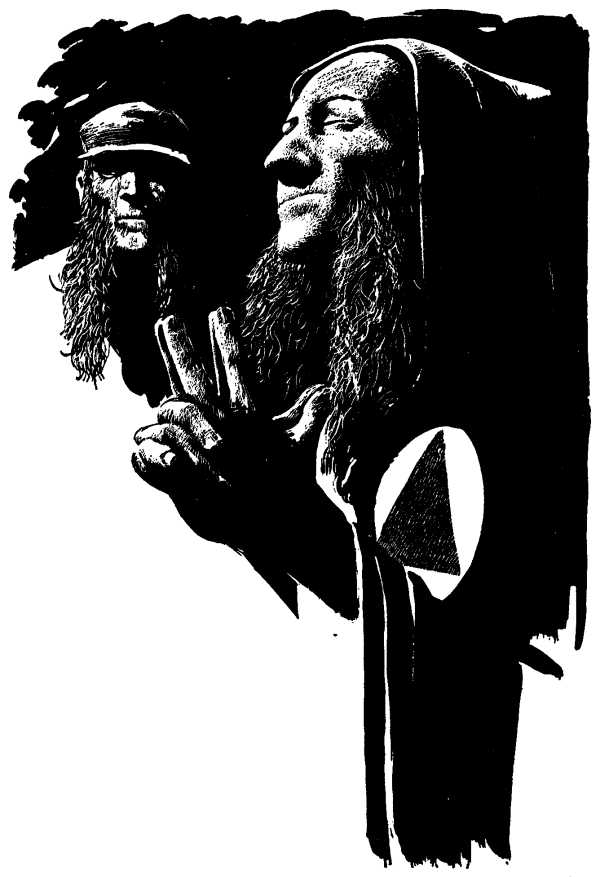
Illustration by John Schoenherr

It’s a well known fact that approximately 0.000056% of sentient beings in the galaxy have latent psionic powers that can, with training, be fully realized.

One path of training goes through the monasteries of the psychics, who combine their psionic training with physical exercise and the art of laser swordsmanship. The other path of training is through the academies of the espers, who ignore the physical to attain mental perfection.

Many espers wear the saffron uniforms of Star Patrol’s Science Section (Psi Division), while others work for governments and private companies, giving them an edge in negotiations and helping them explore strange new worlds for resources. Still others operate independently of organizations as freelance troubleshooters, criminal masterminds or cult leaders.

HIT DICE: Espers roll d6 to determine hit points

REQUIREMENT: STR score of 4 or lower, MEN score of 5 or higher

SKILLS: Espers add their SKILL to the following tests: Activate Psychic Power (MEN)

STARTING GEAR: Ray gun, crystal pendant (for meditation and focus)

.nobrtable br { display: none }

Level Hit Dice Skill Powers Luck
Mentalist 2 4 3 3
Savant 4 8 6 1
Guru 6 12 9 0

The esper has a number of psychic powers depending on his level, plus ESP as a bonus power. Espers can also spend their starting luck points to buy additional powers. To use a power, an esper must make an activation test – essentially a MEN test against a Difficulty Class (DC) determined by the power to be activated. No power can be used more than once per hour. The player can choose these powers from the psychic’s power list in the main rulebook.

Espers can also attempt to activate powers that are not in their repertoire, but suffer a -10 penalty on their activation test to do so. Powers not in an esper’s repertoire can only be activated once per day.