Magical Prehistory Tour

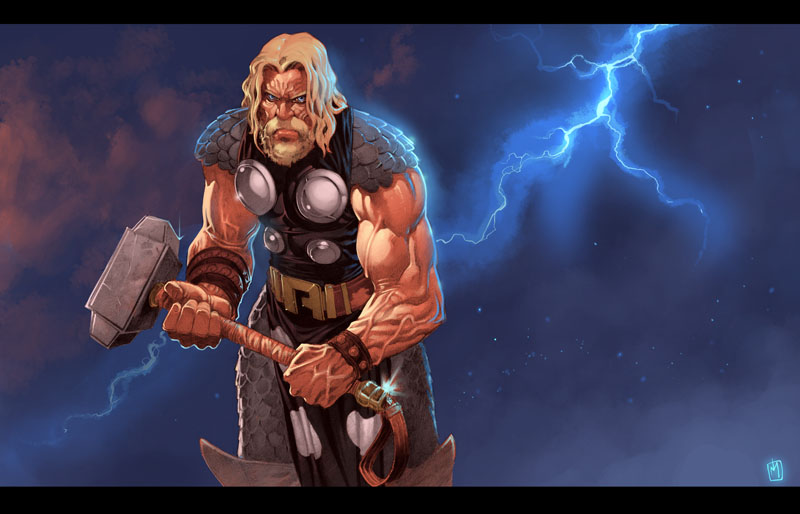
Dinosaurs. Awesome, right? Lots of them, though – hard to keep track, especially when scientists keep changing their darn minds about them (they’re brontosauruses because that name is cooler, and triceratops are so a species of dinosaurs, so shut up scientist man). Here’s a handy dandy guide to basic forms and a few handy “mutations” to keep your players guessing.

DINO TYPES

Not scientific, but just a quick batch of stats for some basic dino types. And yes – I already know it doesn’t cover everything, just the stuff that pops up most often in old dinosaur movies and the Flintstones.

CERATOPSIANS
These are the fellows with the lovely head fringes and horns, like triceratops. Assume the basic ceratopsian is about 30 feet long.

CERATOPSIAN: HD 15; AC 0 [19] front, 5 [14] back; Atk 1 gore (4d8); Move 12; Save 3; CL/XP 15/2900; Special: None.

PTEROSAURS
Technically not dinosaurs, but if they’re on the Flintstones, they’re close enough for me. These are the flyers. The basic pterosaur has a wingspan of about 15 feet and a length of about 5 feet.

PTEROSAUR: HD 5; AC 2 [17]; Atk 2 claws (1d4), 1 bite (2d8); Move 9 (Fly 24); Save 12; CL/XP 6/400; Special: None.

SAUROPODS
The big boys – quadrupeds with long necks who make little tremors when they walk. Assume that the basic sauropod is around 150 feet long.

SAUROPOD: HD 25; AC 6 [13]; Atk 1 stomp (4d10); Move 9; Save 3; CL/XP 25/5900; Special: None.

THERAPODS
The therapods cover the bipedal carnivores, of which the T-Rex and Velociraptor are now the most famous. Assume that the basic therapod is huge in size (i.e. around 30 feet long). When a therapod bites prey, it grabs the victim in its jaws, shaking and chewing for automatic damage in subsequent rounds. Only victims with shells, bone frills, or spines can avoid the horrendous tearing damage.

THERAPOD: HD 18; AC 4 [15]; Atk 1 bite (4d8); Move 18; Save 3; CL/XP 19/2400; Special: Chews and tears.

THYREOPHERANS
These are the quadruped armored or spiked dinosaurs, like stegosaurus and ankylosaurus. Assume that the basic thyreopheran is about 20 feet long.

THYREOPHERAN: HD 15; AC 2 [17]; Atk 1 bite (1d8), 1 tail (4d6); Move 9; Save 3; CL/XP 15/2900; Special: None.

MUTATIONS
No more humdrum dinos for us, my friend. Let’s make them fabulous!

1D30 / MUTATION
1-2 Small and quick – reduce HD by half (and modify saving throws accordingly) and double their speed. In addition, they get a bonus to initiative (how much depends on what you roll, +1 if d6, +2 if d10, +3 if d20; if you roll d8, you’re weird and I just can’t help you). Decrease damage by one dice size.

3 Big and beefy – increase HD by 50%, cut movement in half and if they are at least 60 feet in length they can cause an earthquake (as the spell) once per day in a 100-ft radius. Increase damage by one dice size.

4 Red scales – dinosaur is immune to fire.

5 Blue scales – dinosaur is immune to lightning.

6 White scales – dinosaur is immune to cold.

7 Gold scales – dinosaur is immune to non-magic weapons and +2 to save vs. magic.

8 Black scales – dinosaur surprises on 3 in 6 at night, has darkvision.

9 Woolly – dinosaur has fur. This gives it a +1 bonus to AC and resistance (50%) to cold.

10 Massive Brain – dinosaur has high intelligence and can use a psychic blast (30-ft cone, save or stunned for 1d4 rounds) three times per day.

11 Draconic – as small and quick, plus dinosaur has dragon wings and the flight speed and breath weapon of a random dragon; 1 = Black; 2 = Blue; 3 = Gold; 4 = Green; 5 = Red; 6 = White. Dino-dragons can never speak or cast magic spells.

12 Spitter – can spit poison (30-ft range; save or blinded and 1d6 damage) or belch acid (10-ft cone, 2d6 damage).

13 Leaper – can leap up to 20 feet forward or 10 feet backward. When leaping to attack, treat as a charge.

14 Gorgonoid – has metallic scales as a gorgon; increase AC by +4.

15-16 Horns – has two horns or two extra horns; gains an additional gore attack for 2d6 damage.

17 Manticoroid – has tail spikes that can be fired like those of a manticore for 1d6 points of damage.

18 Displacement – per the mirror image spell (4 additional images), can be used three times per day.

19 Blink – per the blink dog.

20-21 Camouflage – surprises on a roll of 1-3 on 1d6.

22 Stone Cold Awesome – has a petrifying bite, per the cockatrice. Dinosaur can swallow and ingest the stone if a carnivore.

23 Laser eyes – can fire searing beams from eyes three times per day. Range of 60 feet, 3d6 points of damage, ranged attack required.

24 Scream – per the shout spell, usable three times per day.

25 Rider – dinosaur is ridden by a caveman bounty hunter (per dwarf fighter level 1d4+4). Rider wears the equivalent of leather armor and carries a club and three throwing spears.

26 Trill – dinosaur can trill as a remorhaz.

27 Song – dinosaur produces a vibration that causes sleep (as the spell). Usable three times per day.

28 Song – dinosaur produces a vibration that causes a charm monster effect. Usable three times per day.

29 Song – dinosaur produces a vibration that causes a hold monster effect. Usable three times per day.

30 Construct – dinosaur is made of metal and gears. Increase AC by +5. There is a 5% chance it can change its shape to that of a stone giant (also made of metal and gears, AC +5). Constructs are immune to mind effecting spells, poison and disease and take half damage from fire and lightning.

Have any other ideas? Put them in the comments – let’s take this table to 100!

Image from Golden Age Comic Book Stories, by the great Charles Knight.

Magic-Users in Blood and Treasure

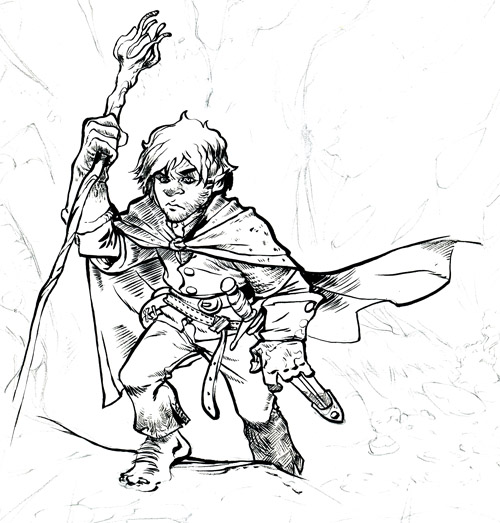
Just a quick sample of the magic-user as it will appear in Blood and Treasure. Nothing earth shattering – mostly did it to show off the sweet illo by Jon Kaufman.

MAGIC-USER

Magic-users are spell casters who can access the widest variety of spells in the game. They are scholars and thus fairly weak combatants.

Requirements: A magic-user must have an intelligence score of 9 or higher.

Hit Dice: d4 (+1 hit points per level from 10th to 20th).

Armor: None.

Shield: No.

Weapons: Club, dagger, dart and quarterstaff.

Skills: Deciphering scripts.

CLASS FEATURES
A magic-user casts spells from the magic-user spell list. A magic-user must choose and prepare his spells ahead of time. Like other spell casters, a magic-user can cast only a certain number of spells of each spell level per day. His base daily spell allotment is given on Table: The Magic-User. Unlike a bard or sorcerer, a magic-user may know any number of spells. He must choose and prepare his spells ahead of time by getting a good night’s sleep and spending one hour studying his spellbook. While studying, the magic-user decides which spells to prepare. He cannot prepare any spell not recorded in her spellbook, except for read magic, which all magic-users can prepare from memory and which they must know to read their spellbook.

A magic-user begins play with a spellbook containing four 0-level spells and three 1st-level spells. At any time, a magic-user can add spells found in other magic-user spellbooks or scrolls to her own or can conduct spell research to learn new or invent spells.

At 9th level (wizard), a magic-user can choose to establish a stronghold in the wilderness and gain followers (see High Level Play below). A magic-user who becomes a lord or lady attracts 1d6 men-at-arms per level (chaotic magic-users can choose to employ goblins, orcs or hobgoblins instead), 1d6 first level magic-users who wish to train under them and one 3rd level magic-user to serve as a lieutenant. These magic-users should be generated as characters under control of the player.

MAGIC-USER SPECIALIZATION
A school is one of eight groupings of spells defined by a common theme. If desired, a magic-user may specialize in one school of magic. Specialization allows a magic-user to cast extra spells from her chosen school, but she then never learns to cast spells from some other schools.

A specialist wizard can prepare three additional spells of her specialty school each day. Each extra spell must be from a different spell level that the magic-user can cast.

The magic-user must choose whether to specialize and, if she does so, choose her specialty at 1st level. At this time, she must also give up two other schools of magic (unless she chooses to specialize in divination), which become her prohibited schools. A magic-user cannot give up the divination school to fulfill this requirement. A magic-user may not change either her specialization or her prohibited schools later. Spells of the prohibited school or schools cannot be cast by the magic-user, even using scrolls or wands.

The eight schools of arcane magic are abjuration, conjuration, divination, enchantment, evocation, illusion, necromancy, and transmutation.

Abjuration: Spells that protect, block, or banish. An abjuration specialist is called an abjurer.

Conjuration: Spells that bring creatures or materials to the caster. A conjuration specialist is called a conjurer.

Divination: Spells that reveal information. A divination specialist is called a diviner. Unlike other specialists, a diviner must give up only one other school.

Enchantment: Spells that imbue the recipient with some property or grant the caster power over another being. An enchantment specialist is an enchanter.

Evocation: Spells that manipulate energy or create something from nothing. An evocation specialist is called an evoker.

Illusion: Spells that alter perception or create false images. An illusion specialist is called an illusionist.

Necromancy: Spells that manipulate, create, or destroy life or life force. A necromancy specialist is called a necromancer.

Transmutation: Spells that transform the recipient physically or change its properties in a more subtle way. A transmutation specialist is called a transmuter.

The Glooms – A Sphinx Says What?

Another quickie preview. Soon, I’ll be previewing some art for Blood & Treasure!

92.99 Criosphinx: A talkative, obnoxious criosphinx has set up shop here on a ledge about 500 feet above the ground. The ledge leads back into a natural amphitheater and several shallow mines dug ages ago by kobolds searching for gold. They finally quit when one group of miners struck an underground river, which flooded the mine and formed a waterfall for years. Eventually, the river shifted and the ledge and mines are now dry and worn very smooth.

99.95 Hidden Ropers: The landscape here contains an old stone road that descends into a deep canyon. The walls of the canyon are streaked with deposits of gold and marred by many ledges and shallow caves that spout clear, fresh springs. The springs empty into rifts in the canyon floor, keeping it from filling with water. The ledges in one mile-long stretch are occupied by several ropers that are hidden beneath a hallucinatory terrain effect created by a duergar magic-user who wants to keep the gold safe until he is ready to clear the canyon of ropers.

102.96 Stone Golem Inn: A band of enterprising svirfneblin have established a rollicking good inn here. The inn is set about 40 feet above the ground in an abandoned cliff dwelling that looks to have once belonged to mantari.

Standing beneath the inn there is a stone golem that has the appearance of a great ape with pearly eyes and upward jutting fangs. The gnomes have nicknamed it “Ook”, and are apparently capable of commanding it, perhaps by dint of their now owning the cliff dwelling. The stone golem is the only means of accessing the inn other than climbing the walls or flying in, and the gnomes only grant access to folk who appear to be no danger and who are willing to dance a lively jig for the entertainment of themselves and their customers.

The svirfneblin number four ex-adventurers and their significant others and children; there are twelve in all. They serve a passable mushroom brew using fresh water that falls down the back of the inn (a subterranean waterfall) and serve thick mushroom steaks and anything else they can get their hands on.
The inn has ten small rooms (15 gp a night), or folks can stay in the common room for 3 gp a night.

107.102 Cracking Ground: The ground here cracks and juts up at random intervals, presenting a terrible hazard to travelers (1 in 6 chance per hour of being struck for 8d6 points of damage). Amidst this chaos, there rests the magnificent Throne of Glooms, a simple throne carved from basalt (and quite rough) and set with three dozen onyx (1d6 x 100 gp each). Each of these stones holds an ethereal shade, who can emerge if a living person sits in the throne. The person is stuck fast to the throne while it drains away their charisma (1 point per round). They can only escape the throne with an open doors check, though the shades do their best to prevent this.

As a person loses their charisma, the color gradually drains away from their skin, eyes and hair. When their charisma is drained to 0, the person transforms into a terrible creature called a gloom, the genius loci of the Glooms, so to speak. At this, the terrible eruptions of the hex end and the ground becomes perfectly smooth and placid.

The newly created gloom will expect its former comrades to become its avid worshippers and help it to facilitate the re-conquest of its domain.

Martians!

BAH!

Ah – December! The crisp air, the smell of expensive holiday-themed candles, fruit cakes … it always brings one thing in particular to my mind. Martians!

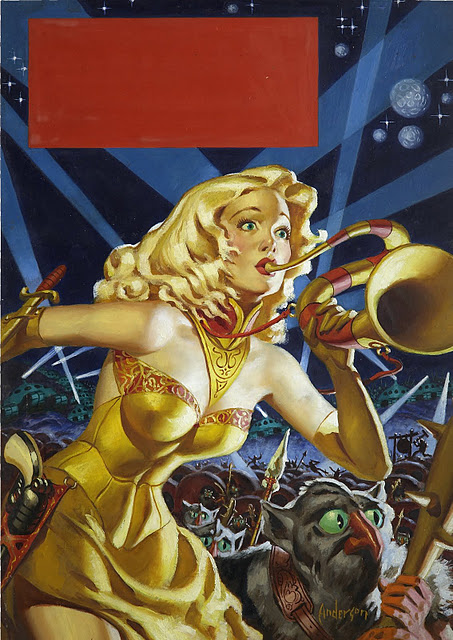
In particular, the hapless buggers who dared kidnap Santa Claus. Having had the annual viewing of the MST3K classic riffing of Santa Claus Conquers the Martians, and with the eminent release of Space Princess, I figured it made sense to mash the two together. When the Christmas season rolls around and you’ve gathered your friends to play some Space Princess over a glass of eggnog, you’ll be well prepared.

Martian
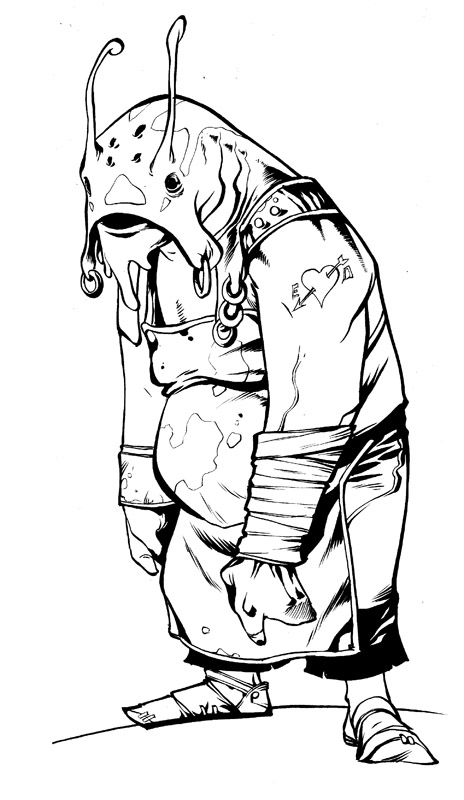
The Martians are green-skinned humanoids of a (formerly) warlike race. From an early age Martians are educated by thought waves projected from computer banks and received by cybernetic antennae jutting from helmets almost always worn on their heads. These helms act as communicator devices (see Super Science). Martians arm themselves with freeze ray guns. Most wear skin-tight green costumes, while leaders are designated by their use of cloaks.

Martians dwell in subterranean cities that abut their famous canals, which transfer water from the poles to the warmer climes. Martians require very little air and are immune to cold. Despite their planet’s lower gravity, they appear to be just as strong as human beings.

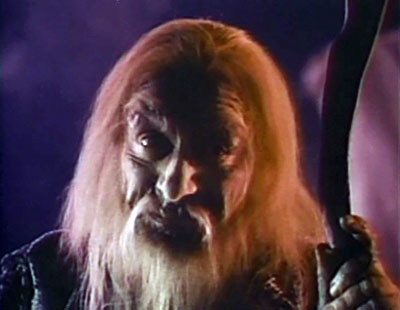
The elders of the Martian race are called chochems. These mystics can employ four psychic powers. They dress in robes and carry staves.

For the past generation, Kimar has served as the leader of the Martian people. It was he who personally led the expedition to bring Santa Claus and Christmas to the Martians. In the time since the arrival of Santa, the Martians have become less warlike and more generous. Still, some elements among them seek a return to the old ways. A leader among these rebels is Voldar, a mustachioed thug with a cruel sense of humor.

MARTIAN WARRIOR: HD 2; DEFENSE 6; MELEE 6 (fists 1d4); RANGED 6 (freeze ray gun); MOVE N; STR 4; DEX 4; MEN 3; KNOW 5; DL 2; SPECIAL: Immune to cold.

CHOCHEM: HD 1; DEFENSE 4; MELEE 4 (staff 1d6); RANGED 4; MOVE N; STR 3; DEX 3; MEN 5; KNOW 7; DL 2; SPECIAL: Immune to cold, four psychic powers (activate +12).

VOLDAR: HD 6; DEFENSE 9; MELEE 12 (fists 1d4); RANGED 9 (freeze ray gun); MOVE N; STR 6; DEX 4; MEN 3; KNOW 5; DL 6; SPECIAL: Immune to cold.

KIMAR: HD 8; DEFENSE 13; MELEE 12 (fists 1d4); RANGED 13 (freeze ray gun); MOVE N; STR 4; DEX 5; MEN 4; KNOW 6; DL 8; SPECIAL: Immune to cold.

By the way – if any artist out there would like to draw their rendition of Capt. Kirk performing his famous flying kick on Voldar while Santa and Spock look on, well, I’m sure we’d all like to see it!

Images found here and here.

Hell South – Preview 5

59.109 Ancient Lake: There is an ancient lake here, the shores of which are thick with tall mushrooms, about ten to twenty feet tall. The mud in the lake bottom is infused with spores that animate corpses as water-logged zombies. A notac-ichat necromancer called Otatach has set up shop on a secluded harbor in a half-ruined tower. He currently has a dozen of these zombies serving him, and is looking for more – a few are already buried in the muck, but new bodies can be added if their current owners die.

70.109 Blue Flame: This hex is a tableland of buttes and wide, empty canyons. The walls of the buttes are a dark gray streaked with white, and there are numerous caves. In the northern portion of the tableland, the ground drops suddenly to form a basin filled with a thin layer of salty water. Amidst this water there is a beacon tower. The tower is 50 feet tall and made of the same gray stone as the buttes. The exterior is studded with spikes and there is a powerful blue flame exploding out of the top of the tower. The flame rises about 20 feet taller than the tower. A stone door descends into the ground when a secret panel near the door is pressed to allow entry.

Inside the tower, which is 15 feet in diameter, there is a spiral stair leading to the top of the tower. The stairs are about four feet wide. In the center of the tower there are glass walls that go from bottom to top. Inside the glass walls one can see the blue fire as it erupts from the ground. At the top of the tower one is exposed directly to the flame, which gives off very little heat.

The flame is actually an ancient red dragon that defied the gods and was turned into this flame as punishment. If one can communicate telepathically they can communicate with the dragon, Vornthek, who will tell its sad tale (all lies, of course) to an adventurer in hope of being changed back, though undoing a deific punishment is no simple matter.
Some folk of the Gloom have been known to spread a tale of the great power that can be acquired by jumping through the flames (not easy, of course, as it is a seven foot jump and a fifty foot drop if one fails). Those who pass through the flames take on draconic powers.

The power comes with a curse, of course. A day after one takes on the draconic aspect, they become a bit smaller and a bit more draconic. After two days, their hands become claws, their nose extends into a snout, etc. By the fourth day the person is noticeably smaller and they have sprouted wings and begun to think like a dragon. This continues until, on the seventh day, they become a little, blue pseudo-dragon.

Draconic Powers: The person who steps through the flame gains the ability to breathe a 30-foot cone of fire for 6d6 points of dragon once per day. In addition, they are immune to fire and their AC improved by four points.

79.106 Well of Evil: A rocky hill here is topped by a shell keep with 30-foot high walls that are 15 feet thick. The walls contain several chambers in which dwell the Platinum Order of dwarf clerics and their servants, three dozen dwarf berserkers who cover their unclothed bodies in violet tattoos and wield two-handed axes.

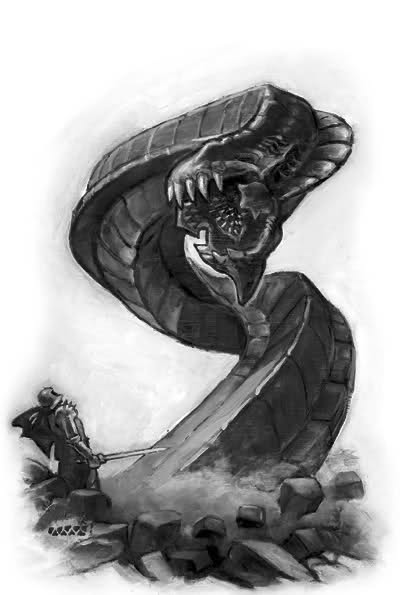
The berserkers and clerics are the official guardians of an ancient iron well in which are bound dozens of ancient (far more ancient than the devils), evil spirits. The dwarf clerics are bound by several tattoos. They cannot speak or cut their hair, must never draw blood. If they break these taboos, the evil spirits are released from the well as a nightcrawler, a shadowy worm of immense proportions.

Family Feuds

The other day, I was thinking about fantasy cities and ways to define them. Most of my cities for NOD are done as a small section of the place with interesting personalities to run into, along with a run down on the ruler, high priest or priestess, etc. Just enough to make the place memorable and with a focus on something special that might bring the players hundreds of miles – the finest armorer in the region, a black market for stolen goods, etc.

The idea of a key industry crossed my mind – think of several industries and specialties and generate one specialty in one industry in which a city excels – i.e. if you want the best éclairs, you have to travel to Barnabas, the City of Eclairs. So, Barnabus would have a bunch of master bakers who produce the best éclairs in the universe, and in fact are so skilled they can bake magical effects into their éclairs (i.e. magic potions). Barnabas would have many excellent normal bakers as well, and to support the baking industry would need associated industries like milling, farming, orchards, jelly makers, beet growers, spice merchants, etc. As I played with working this into a system, I realized that it was breaking my #1 rule for NOD – focus on adventuring. This industry stuff was interesting, but how was this forwarding the goal of sending players on adventures? Putting an hour of work into generating some demographics that will never lead to one daring sword fight, swing across a chasm, assassination attempt, kidnapping or plundered treasure horde just doesn’t make sense to me when we’re working at creating an adventure game.

One thing that did come to me, though, was the idea of rival families. You see, when I was thinking about different medieval industries, merchants came to mind. But how does a city specialize in merchants? Well, maybe banking – but every city needs merchants. And then I thought about great merchant families, and the Montagues and Capulets came to mind and I thought – you know what every fantasy city needs – rival families. Three families at least – one the most powerful, the other the bitter rival and the third the up-and-comer playing one off the other. That can lead to adventures, as players get involved with these folks and their endless machinations. With that in mind …

STEP ONE – THE FAMILY

Every family has a head – the man and woman who holds the legal reins. We need to determine how old they are and what they can do. In this case, all of these families are going to be mercantile in nature. All family heads are going to be venturers. Their level depends on their generation: Adult 1d6+1, Mature 1d8+2 and Old 1d10+3.

1-3. Adult (25 to 35 years old)
4-5. Mature (36 to 55 years old)
6. Old (56 + years old)

Now we need to roll 1d6 for the family head’s siblings. Each sibling has a 50/50 chance of being male or female and comes from the same generation as the head of the family. We’ll presume that any older family members are dead, or else they would be in the leadership position.

The siblings are probably nondescript merchant types or venturers, but might be something else. Roll to find out for sure. At the same time, roll a 1d4 to figure out their general personality.

OCCUPATION

1-6. Merchant (0-level)
7-10. Trader (3 HD)
11-13. Venturer
14. Sage
15-16. Artisan
17. Thief or Assassin
18. Magic-User or Illusionist
19. Cleric* or Druid
20. Fighter or Duelist (1% chance of a paladin)

* Clerics worship as follows: 01-70 – Deity of Trade or Wealth; 71-90 – Lawful Deity that might frown on some business practices; 91-100 – Chaotic Deity/Demon/Devil

PERSONALITY
1. Sanguine (impulsive, pleasure-seeking, sociable, emotional, creative, compassionate)
2. Choleric (ambitious, leader-like, aggressive, passionate, energetic, dominating)
3. Melancholy (introverted, thoughtful, pondering, considerate, artistic, perfectionists)
4. Phlegmatic (relaxed and quiet, lazy, content, kind, accepting, affectionate, shy)

For those with class levels, roll them as follows:

Young* – 1d4
Adult – 1d6
Mature – 1d8
Old – 1d10

* For children of adults

75% of males and females are married and have 1d4-1 children. Each siblings mate is (1-4) from the same generation or (5) one generation older or (6) one generation younger. The children are all from one generation younger than the younger partner in the marriage. Roll up the children’s personalities and occupations as well, unless the children are from the generation younger than “Young”, in which case they are too young to have an occupation.

For each person in the family, roll up their Charisma score as well on 3d6.

Adult or older children of the siblings have the same chance as the siblings as being married with children. Young children of the siblings have a 50% chance of being married and have 1d3-1 children.

STEP TWO – ASSETS

Each of these mercantile families has core assets dependent on the number and age of the family members (not including spouses). Each family also has a town house for the head of the family and each sibling, and the necessary servants for each town house (butler/valet, cook, upstairs maid, etc.)

Young – 1d20 x5 gpAdult – 1d20 x 10 gp
Mature – 1d20 x 50 gp
Old – 1d20 x 100 gp

In addition, the family gets 1d4+1 rolls on the following table of special assets.

ASSETS
1. Tied by blood to a noble family – the head of the family is a (1-3) 3rd cousin, (4-5) 2nd cousin or (6) first cousin to a (1-4) baron, (5-6) count or (7) duke or (8) king.
2-3. Tied by marriage to a noble family – replace the head’s spouse or one of the sibling’s spouses with a person of noble blood (as above).
4-9. Owns a caravan of 2d6 wagons or elephants or 4d6 camels to a nearby city
10-15. Owns a merchant galley that travels to a nearby city
16-20. Owns a caravan of 3d6 wagons or elephants or 6d6 camels that travels to a far away city
21-25. Owns a merchant cog that travels to a far away city
26-27. Owns a valuable heirloom that is (1-3) a major piece of jewelry, (4-5) a major gem or (6) a minor magic item
28-30. Owns 2d4 fine horses
31-33. Owns 3d6 fine hounds
34-36. Owns 3d6 fine falcons
37-38. Owns a single magical beast
39-40. Has a hired magic-user (roll 1d4+1 for level); all family members can cast a single non-offensive 1st level magic-user spell per day
41-43. Has a hired assassin (roll 1d4+1 for level); all family members carry vials of mild poison
44-48. Has a hired duelist (roll 1d4+1 for level); all family members +1 to hit and damage with rapiers
49-50. Has a hired gourmand (roll 1d4+1 for level)
51-55. Owns a fine manse in the city (1d6+6 rooms)
56-59. Owns a fine mansion in the city (1d10+10 rooms)
60-62. Owns a fine villa or manor in the country (1d8+8 rooms)
63-66. Owns a fabled wine cellar (total value of 3d10 x 100 gp)
67-70. Owns a fabled art collection (total value of 3d10 x 100 gp)
71-74. Owns a fabled armor and weapon collection (3d6 pieces, all masterwork and legendary)
75-78. Has a seat on the city council
79-80. Has a seat on the king’s privy council
81-83. Has master of the local merchant’s guild
84-85. Has a dark family secret
86-88. 1d4 x 10,000 sp in additional assets
89-90. 1d3 x 1,000 gp in additional assets
91. 1d2 x 100 pp in additional assets
92-95. Has a letter of marquee from the king
96. Suffers under a family curse
97. Enjoys a family blessing (an ancestor was a saint or martyr)
98. Has an infamous (and rumored) torture chamber
99. Has an infamous (and rumored) cabinet of horrors
100. Has an infamous (and rumored) shrine to a demon or devil lord

SAMPLE FAMILY: THE MONTFLEURS

Arnou Montefleur – Sanguine 4th level Venturer, Adult

Arnou has two sisters:

Gallia is a phlegmatic, adult trader (3 HD) married to Merlin, a young merchant. They have three infant sons, Merlin, Arnou and Delmar.

Allyriane is a sanguine, adult duelist (1st level) married to Octave, an adult merchant. They have three young children, Tristan (3 HD trader), Therese (3 HD trader) and Fleurette, a goldsmith.

The families assets are 10,000 sp and 310 gp in cash money, locked away in the family’s town house.

The family also owns a caravan of 5 wagons that travels to a far away city, 8 fine hounds, a merchant galley and, though this is only rumored, a shrine to the devil Mammon in their cellar (it’s really behind a sliding wall in their dining room).

Notable Nobles – Part the Last

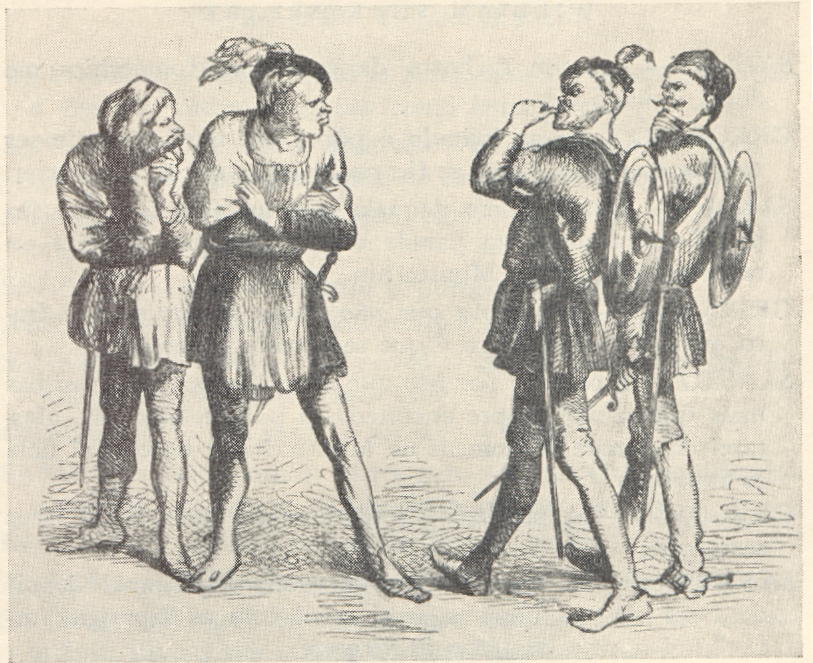
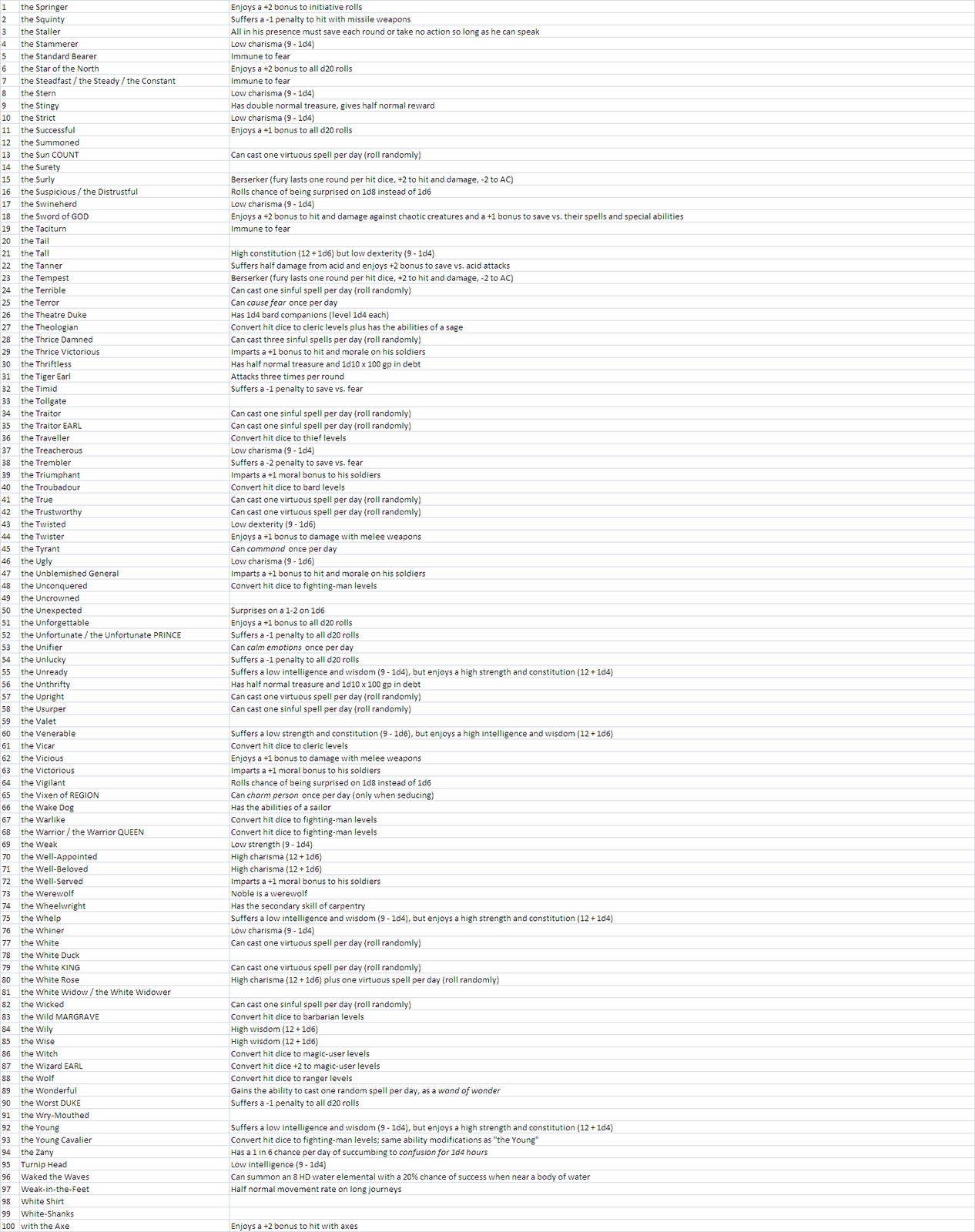
Finally, we come to the last post in the series on noble nicknames, this time with dwarf nobles. I went all out on this one and gave each three nicknames – hey, maybe dwarves like their nicknames.

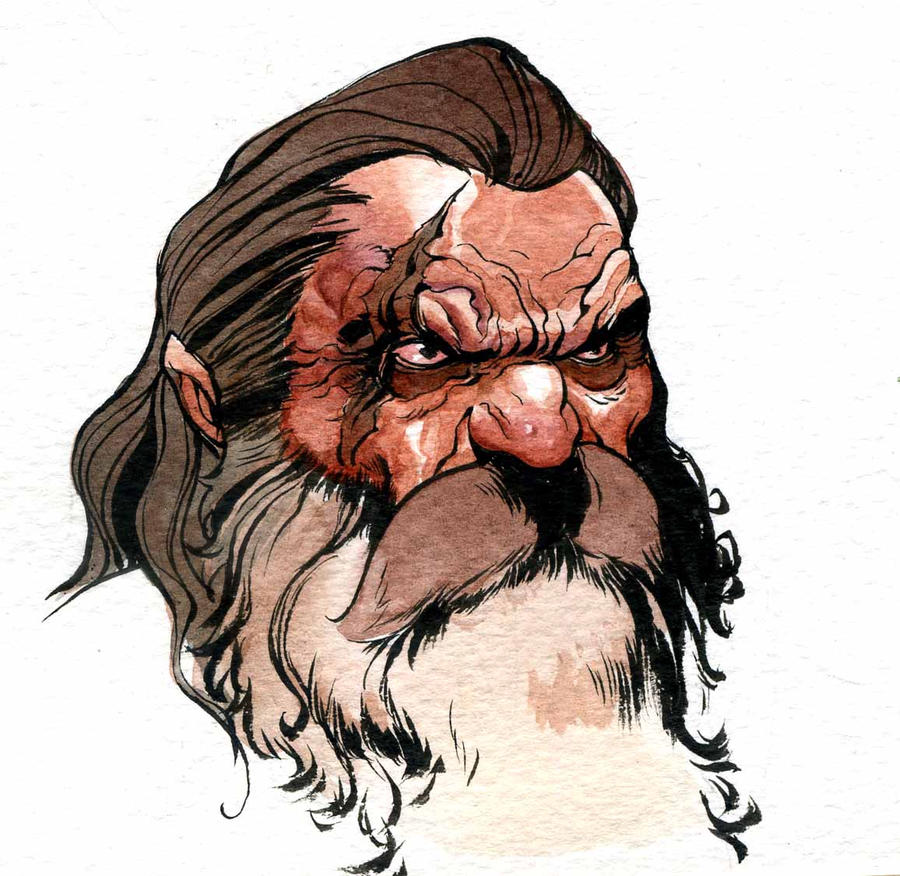
WILDGRAVE OGMUND the Standard Bearer, the Tempest, White Shirt

Ogmund is a ragged, wild-haired dwarf who dwells in the rugged borderlands on the edge of the dwarf kingdom, lands invaded regularly by the goblin races, ettins and trolls. A famed giant-slayer, he is a loyal companion of Jarl Vagn, having gone on many adventures into the giant country with his father, Vagr, when they were both young dwarfs with much to prove. Ogmund’s nephew, Skapti, is rarely far from his side save when Ogmund’s berserkergang comes upon him. His retinue also includes three chroniclers, two dwarf warriors and their sergeant, Odi and Ljot, a 5th level fighter who serves as his champion and bailiff. Ogmund always dresses in a white tunic and white, hooded cloak.

OGMUND: HD 9 (52 hp); AC 2 [17]; Atk 1 weapon (1d8); Move 9 (12 out of armor); Save 5; CL/XP 9/1100; Special: Double normal number of followers, immune to fear, berskerer.

THEGN INGIRID the Treacherous, the Usurper, the Well-Served

Ingirid is the half-sister of Jarl Vagn and his most hated rival. Hated by most of her kin due to her treachery and her dealing with the goblins and orcs, she nevertheless holds fortitided iron mines in the southern mountains that keep her wealthy and influential. Her consort is Vandrad, an exile from the Jarl’s court, two scribes and one orc sergeant, Forox. Her minions are very loyal.

INGIRID: HD 5 (23 hp); AC 2 [17]; Atk 1 weapon (1d8); Move 9 (12 out of armor); Save 12; CL/XP 5/240; Special: Treasure as CL 15, low charisma (6), cast bane (reverse of bless) once per day, +1 morale bonus to soldiers.

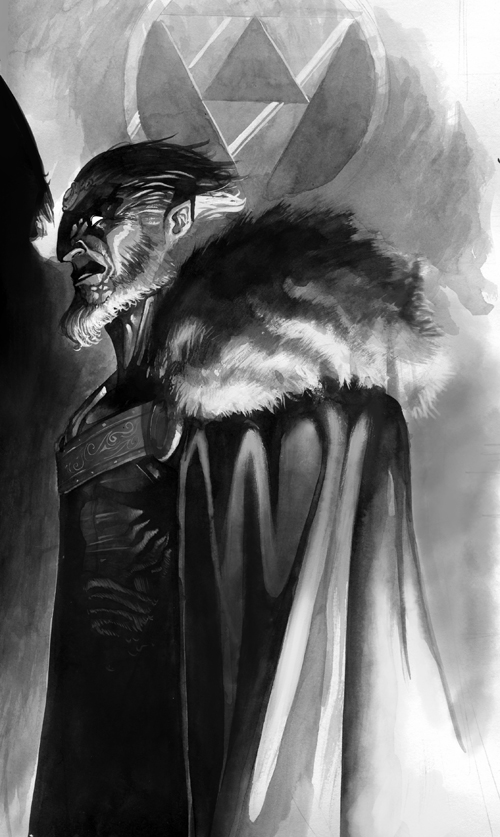
JARL VAGN the Springer, Star of the North, the Tail

Jarl Vagn is the young, dashing king of the dwarfs, having taken the throne when his father Vagr finally passed into the halls of his ancestor. Vagn is a lover of gold and luxury, unlike his more stern father, but his glib tongue, handsome features and strong sense of justice have kept him popular with all but his half-sister Ingirid. Vagn is accompanied by the berserker Bersi, the shieldmaiden Hlif (who drives him mad with desire), four clarks (one a 3rd level fighter/thief in service to Ingirid), five dwarf warriors and their sergeant, Olaf the Round.

VAGN: HD 2 (12 hp); AC 2 [17]; Atk 1 weapon (1d8); Move 9 (12 out of armor); Save 16; CL/XP 2/60; Special: Triple normal number of followers, treasure as CL 20, +2 initiative, +2 to all attacks and saves.


The Gas Mines of Regulon-4

Finally got to sit down with the Daughter of Nod last night and play some Space Princess. You met the core of her crew a few days ago. We added a couple more for this run-through – a veteran gynoid star warrior named XJ9 (pronounced “nye-in”, for those who never saw the cartoon) and a genius scientist named Egon. It gave me a chance to find the missing parts in the game and tinker with the mechanics. It also was pretty fun. Here’s a brief re-cap:

The gas mines are located on a small moon of Regulon-4, which is surrounded by a sort of asteroid belt / ring structure like Saturn. They represent a forward base for the empire of Lord Kang. Recently, one of the space cruisers of Kang overtook the royal yacht of the Princess Miranda and captured her. The dreadnaught took her to the gas mines, where she will be held until Kang can arrive and “convince” her to marry him, thus uniting his empire with the the Space Kingdom of New Avalon. Or something like that.

My daughter’s crew has managed to sneak into the gas mines via a forgotten shaft that runs through an exhaust port for the radium furnaces located beneath the main mine structure. A diversion caused by a wing of star fighters allowed their shuttle to land in a nearby crater on the rocky, barren, slightly radioactive moon.

The action kicked off with them sneaking into the exhaust port. This was a room divided by a 10-ft wide chasm through which radioactive green gasses were vented. There was a door and control panel on the other side of the room that looked as though it extended a bridge. Every so often, gasses would be vented. The crew were in space suits, so being in the presence of the radioactivity was not a problem, but being caught in the exhaust would probably kill them. Declining to use Lum’s “leap and swing” skill to vault the chasm, and instead sent Egon, with his anti-grav belt, across. Once there, he commandeered the control panel and extended the bridge. The crew waited for a venting of the gasses and then hurried across. Egon opened the door and they made their way into the complex.

A few turns later, they were listening at doors. Behind one there were many voices, so they passed it by. Another was fairly silent, so they opened it to find a sleeping carnelian space dragon and dozens of silvery gas canisters. They closed the door before it awoke and tried the door across the hall, which had the sound of industrial machinery.

This room had a balcony overlooking several machines that were extracting gas from the asteroid and packing it in the cannisters. Two maintenance drones were working here and ignored the group. The balcony had, one either end, two silvery discs implanted in the floor. Declining to look at these (I think she forgot they were there), Egon again used his anti-grav belt to reach the floor 20 feet below. Realizing the others were still trapped up there, and with some prodding by dad, she tried out a disc and found that it was a sort of elevator. When the whole crew got to the floor below, they checked out an exit door. This led into a small, 10×10 metal room with another door. Stepping in, they triggered a freeze gas trap, but all managed to duck back out before they were frozen. Egon went to work on the trap and disabled it, allowing them to enter yet another room.

This room was piled high with the gas canisters, all labeled and organized. As they entered, a computer voice asked them their business. Not knowing what to say, they quickly moved checked out another door, which led to another freeze gas trap. A third door led into a long room occupied by a floating black hole. Egon identified it as a graviton, a dangerous creature, so they retreated. Now, the computer voice was asking for a pass code. Egon managed to find a control panel and got lucky, entering a code and quieting the voice.

Passing through the trapped room, they enter a sort of small break room – coffee dispensers, chairs, tables. [Made me think of this – some language NSFW]. Sitting in here were three bounty hunters, which we nicknamed Space Cowboy, Space Pirate and Evil Space Suit. A fight breaks out, and after young Dr. Zaius is nearly killed (he has to spend a luck point to avoid death), the good guys finally prevail. Unfortunately, they’ve taken some damage by now. Egon and Dr. Zaius get to work jerry-rigging a medi-kit from spare parts (they take apart a communicator and locator device found on the bounty hunters, and also find another anti-grave belt and three ray guns for the scientists and psychic). While they’re working on the medi-kit (takes an hour), a wandering probe-bot enters the room, stunning the scientists with an blue cone of light and nearly killing the psychic by the time they’re done. Its spare parts are added to the scientists’ collection, the medi-kit is used to do some healing (three uses, only three were then left), and the group gets a move on.

Their next encounter comes as they enter a large arena, setting off alarms. A slasher (essentially a robotic marilith demon) is lifted into the arena and attacks. it is defeated, but when the group tries to leave the way they entered, they find a squad of soldiers coming their way. They quickly close the doors and Egon locks them. As the soldiers blast at the doors, the group opens the other exit. Only one soldier is posted there, and he is quickly dispatched with a hail of ray gun fire. Running down the long corridor, they trip a pit trap. Zaius and Crow T. Robot fall in and have to be rescued using the anti-grav belts. The group moves to the end of the corridor and finds an elevator.

The elevator, once activated, takes them up to the plush quarters of Lord Kang, who is not present yet. Here, they find the bound Princess Miranda and a hideous Star Inquisitor. The inquisitor uses its mental domination and turns Zaius and Lum against the party. Now, XJ9 and Crow engage the Star Inquisitor while Egon tries to subdue Zaius and Zora Lum. Egon makes pretty quick work of his student, but Lum kills Zora. Egon then subdues Lum. In the meantime, the Star Inquisitor has been slowly beating Crow while the two robots, immune to his psychic powers, chip away at him. In the end, the Star Inquisitor is subdued by a final ray gun blast from Egon (probably the party’s MVP for the session) and Lum and Zaius are released from his grip.

At this point, we stopped because it was getting late. Getting back out of the fortress while it was on alert would have been daunting, but fun.

Addenda: I used my handy dandy chamber generator to make this adventure on the fly while we played. Initially, there were no gas mines, but when the first four rooms ended up with “Gas” as special, it became a gas mining station. That, ladies and gentleman, is the value of random tables.

Alternate Dying Rules

I just wrote up these alternate dying rules for Blood & Treasure. The normal rule is the old fashioned dead at 0 hit points.

ALTERNATE DYING RULES
Some referees (and many players) think death at zero hit points is too harsh and prefer a system that makes dying less common. With those folks in mind, we present this alternate death system. Using this system for most monsters can be a bit of a headache with most monsters, though it might be used for important or unique monsters.

At zero hit points, a character fall unconscious for 1d4 hours. While they are unconscious, they are completely helpless and can be slain by a foe that has the time to slit their throat, stab them in the heart or strangle them with their bare hands. Any amount of healing, either from overnight rest or magic brings them to a conscious state.

If a character is driven into negative hit points, they must pass a fortitude saving throw modified by their current negative hit point total or die.

If such a character does not die, they are considered unconscious and severely wounded. They remain unconscious until their hit point total is brought back to 1 or higher. While severely wounded, a character heals only one hit point of damage per day of rest. Moreover, they must roll on the following table to determine the extent of their severe wounds.

SEVERE WOUNDS TABLE
1-4. Facial scars. Character loses 1 point of charisma permanently.
5. Blindness. This can be cured with remove blindness.
6. Deafness. This can be cured with remove deafness.
7. Mangled limbs. Roll 1d4 to determine the exact limb (1 Left Arm/Hand, 2 Right Arm/Hand, 3 Left Leg/foot, 4 Right leg/foot). Folk with arm or hand damage lose 1 point of strength permanently and suffer from all the obvious effects of such an injury. Folk with leg or foot damage lose 1 point of dexterity permanently and move at half the normal rate.
8. Chest trauma. This might be a punctured lung, broken ribs or other organ damage. The victim loses 1 point of constitution permanently.
9. Severed limb. Roll 1d4 to determine the exact limb (1 Left Arm/Hand, 2 Right Arm/Hand, 3 Left Leg, 4 Right leg). Folk who lose an arm or hand lose 1d3 points of strength permanently and suffer from all the obvious effects of losing such a limb. Folk who lose a leg lose 1d3 points of dexterity permanently and move at half the normal rate. The regenerate spell can restore lost limbs.
10. Head injury. Victim loses 1d3 mental ability score points. For each lost point, roll 1d6 randomly to determine which ability score is affected: 1-2 Intelligence, 3-4 Wisdom, 5-6 Charisma.

Cure serious wounds, cure critical wounds and heal remove the effects of these serious wounds (except for severed limbs) as well as healing hit point damage. Lesser cure spells return lost hit points, but do not remove the effects of these wounds. Some other spells (as noted above) can alleviate these wounds, specifically any spell that heals ability score damage.