Cush and Pwenet – Crimson Fish and Seas of Blood

48.44 Crimson Fish: A small, enchanted stream runs through the jungle here. Whichever direction adventurers are traveling, the stream will present itself as an obstacle. The stream is clear and fresh, and filled with small, darting fish of a deep crimson hue. The watercourse looks about 4 feet across, but people who attempt to leap it will discover it is actually about 6 feet across. Folk who touch the water in the river will find themselves stuck fast in the water (a bend bars check is required to extricate oneself from the river) – attempting to pull a leg or hand out of the water is almost like trying to pull it out of a solid block of ice. When a person is stuck in the water, the crimson fish begin congregating and swimming in a counter-clockwise manner. In mere moments, they emerge as a single, large fish-thing, which moves toward the captured person to attack. The fish thing has razor sharp claws and teeth, and every drop of blood spilled in the river (a hit from the monster’s claws that deals more than 4 points of damage causes blood to flow) becomes one of the small crimson fish, which quickly merges into the fish-thing, healing it of 1 point of damage. If the fish-thing is killed, it collapses into its constituent fish, which rapidly dart away as the stream dries away into nothingness, leaving nothing but a patch of thick, sticky mud behind.

Fish-Thing, Large Magical Beast, Low Intelligence: HD 5; AC 17; Atk 1 bite (1d4) and 2 claws (1d6); Move 30 (Swim 60); F10 R11 W14; AL Neutral (N); XP 500; Special – Healing (see above), 10% magic resistance.

50.12 Land of Giants: The landscape here is dominated by massive hibiscus plants, with flower trumpets as long as two feet. Giant bees buzz around the flowers (1 in 6 chance per hour of encountering 2d4 giant bees), carrying nectar back to their massive hive near the center of the hex, which partially obscures a giant stone slab. The hive is only partially above ground, the remainder filling a number of tunnels. It is inhabited by 36 giant bumblebees, including their queen.

The stone slab that is partially obscured by the above ground portion of the hive measures about 25 feet tall and 10 feet wide. It is actually the top of a massive sarcophagus that has been dug into the ground. If one could remove the slab (they would have to first remove the hive) they would find the remains of an avatar of the goddess Oshun. The avatar has shown no decay, but it is quite dead and cannot be resurrected or raised (or turned into an undead). It is the size of a stone giant, and wears robes of silvery silk and turquoise beads (worth 7500 gp), a headress of silver, electrum and gold beads (worth 3,500 gp) and a gold and ruby ring on one finger (worth 800 gp). If any of these treasures are removed or other-wise molested, a deva will appear to punish the thieves.

52.09 Caravan Remains: This hex holds the remains of a camel caravan. Amid the smoldering corpses, one might find one intact pack that contains a small green bottle of garlic powder, a jar of sweet paste, a small chest containing chunks of dried beef, and several toasted strips of flatbread. In all, they have three days of rations.

52.33. Sea of Blood: The dry hills here become streaked with light grey granite, becoming more and more rugged until they finally become cliffs overlooking a vast, red lake. The people of Pwenet refer to this as the “sea of blood”, though it is actually just normal water tainted by vast iron deposits. The lake is sacred to Ogun. In the midst of the lake, about 500 yards from the shore, there is a granite stronghold on a small island. The stronghold looks as though it is precariously perched there, and might topple into the waters at any moment – though in truth it is quite sound. It consists of a medium-sized tower with a single entrance – an iron door – and a few windows on the upper stories.

The tower is deserted. Within, one finds the rooms filled with sculptures. The highest room, a sort of solarium, holds a half-finished statue of Oshun, the love goddess. Even in its rough state it is quite beautiful, and perhaps too good a likeness, for the sculptor, who now roams the place as a ghost, had his eyes burned out as punishment for daring to capture her likeness to perfectly in stone. The ghost, Lumbabo, generally avoids people, but does use its powers to create impressions in peoples’ minds of the sounds of hammers on chisels, or to make it appear that statues are moving and shifting behind them.

Males who gaze upon the statue of the love goddess must pass a Will save or fall under her spell. They will covet the statue above all things, and desire most of all to have it completed by a master scupltor. If more than one man becomes obsessed over it, it is likely they will fight to the death to possess it unless somehow restrained. Lawful and neutral characters can make a second will save (Lawful characters at a +2 bonus) to avoid killing a friend.

Seasonal Beasties – Leaf Golem

Everyone enjoys jumping in a fresh pile of fallen leaves (okay, actually I don’t know anybody who does that, but just play along, okay), but some piles are better left alone (what a weird phrase to write!)

Leaf golems are constructed by druids in the autumnal months, when leaves have turned yellow, gold and red and fallen from the trees and vines are beginning their retreat before the coming of winter. A vast quantity of this plant material is gathered by the druid and sprinkled with various holy compounds and then left in a clearing under a new moon. When the first hint of moonlight touches the mouldering pile, it stirs and rises as a leaf golem.

Leaf golems look something like shambling mounds – they are vaguely humanoid, stout and thick, and smell of rotting vegetation. Unlike shambling mounds, they are a bit taller than they are wide. They have no faces, but appear to be able to see and hear. They make no sound other than a persistent rustling, even when standing still, but quieted when imitating a leaf pile and ready to attack.

Leaf golems contain dozens of thick, woody tendrils and their interiors are suffused with brown mold. Up to four of these tendrils can be projected from the creature’s body to attack creatures. A creature constricted by a tendril must pass a Fortitude saving throw each round or be dragged 5 feet closer to the monster. When they are right next to the monster, the next dragging pulls them inside the monster. A leaf golem can hold one medium-sized creature at a time, two small creatures or four tiny creatures. Creatures inside the leaf golem begin to suffocate, and are affected per brown mold, suffering 1d6 points of cold damage per round until dead. When dead, they are ejected in a random direction, flying 5 feet and possibly striking another creature for damage (1d3 for tiny creatures, 1d6 for small creatures, 2d6 for medium creatures).

The presence of the brown mold and the dampness of its leafy body give a leaf golem resistance to fire. The monsters are immune to cold and suffer only half damage from piercing weapons like spears and arrows.

Leaf golems are immune to most spells, and those spells that do affect it do so in weird ways (with no save):

– A blight spell drives the golem back 120 feet and deals 3d12 points of damage to it.

– A command plants spell slows a leaf golem for 1d6 rounds and suppresses its magic immunity during that time.

Leaf Golem, Large Construct, Non-Intelligent: HD 9 (45 hp); AC 19; ATK 2 slams (2d8 + constrict) and 4 tendrils (1d4 + constrict); Move 20; F10 R11 W11; AL Neutral; XP 2250; Special – Resistance to fire, magic immunity (see above), suffocate (see above), immune to cold, brown mold, surprise (3 in 6 in leafy areas), weapon resistance (piercing).

Image found at Pixabay

Action X Update

I’ve been sick the last week and had some extra time to devote to Action X. Even though the game is based, at least loosely, on the Modern SRD, it’s been tough going. Blood & Treasure was actually pretty easy, since it was essentially a tribute to various versions of D&D that have been published over the year. I wasn’t attempting to re-think the game – if D&D had rangers at some point, B&T was going to have rangers.

Action X, on the other hand, isn’t really based on a game with much history. d20 Modern wasn’t a terribly successful system, in part, I think, because it didn’t have much spirit. Charismatic Heroes and Strong Heroes might be a rational way to design character classes, but they aren’t exactly concepts to conjure with, and the special abilities read more like a technical read-out than something plucked from fiction or movies – lots of skill bonuses or spending action points. As such, most of my labor so far has gone into making Action X something that might spark a person’s imagination as well as being something easy to play and run.

In the past week, I’ve put most of my efforts into the Character Creation chapter, and in particular character classes. At this point, I’ve actually strained the character classes into only four classes, though a couple of those classes have what I call “sub-classes”. These aren’t sub-classes in the sense of 1st edition AD&D, but rather a choice of special abilities made by a member of the class. The current classes are as follows:

Adept – This is the spell casting class. The adept can use occult rituals (take some time and involve arcane tools) and psychic phenomena (only require some sort of focus and concentration). The adept starts with a few rituals or powers in their repertoire, and adds additional powers at every level. To use these rituals and powers, the adept has to make what is essentially a skill check, with various consequences for failure. In essence, I’ll be using a modified version of the system in Pars Fortuna for this. Vancian magic would have been easier, but I don’t think it fits well with how the supernatural is usually portrayed in modern films and books. Adepts roll d6 for hit points (with firearms in the game, it makes sense to allow for more hit points for characters), has one good save (Will), crappy attack rolls, two skills and four knacks and two starting weapon proficiencies.

Expert – The expert is the skill class. All experts have something called “skill mastery” – this allows them to pick one of their skills and, when rolling task checks, roll two d20, taking the better of the two rolls. There are three expert sub-classes – the daredevil can use adrenaline surges, the face can fascinate crowds (somewhat like a bard) and the infiltrator can make sneak attacks (i.e. back stab). The expert rolls d8 for hit points, has three good saves, mediocre attack rolls, six skills and four knacks and four starting weapon proficiencies.

Mastermind – Best described as a MacGyver or as the Professor from Gilligan’s Island, the mastermind is the go-to guy or gal for answering all sorts of questions, souping up devices and building machines, electronics or brewing up chemical formulas. The Game Master can decide how far out these devices and formula can be. Masterminds roll d6 for hit points, have one good saving throw (Will), crappy attack rolls, four skills and four knacks and two starting weapon proficiencies.

Warrior – These are the front line fighters of the game. They all gain multiple attacks as they rise in level (as the fighter in B&T). There are four warrior sub-classes in the game – the bruiser can go into a frenzy (like a B&T barbarian), the gunslinger can sacrifice attacks for extra damage, the martial artist gets some monk-style abilities and the soldier can improve the performance of other combatants (think Captain America barking out orders to his crew). The warriors rolls d10 for hit points, has one good saving throw (Fort), good attack rolls, two skills and four knacks and eight starting weapon proficiencies.

Characters can be further modified with feats, the kinds of weapons they become proficient with and, of course, by giving them personalities. Alignments at the moment are pretty simple – Hero, Anti-Hero and Villain – but do have an impact on the game. In place of experience points, characters advance by completing missions successfully. This made sense to me since Action X isn’t really an exploration-plunder sort of game like Blood & Treasure.  A hero is your typical white hat. Anti-heroes are like neutrals – they are focused on doing what’s best for themselves, but not to the point of robbing or committing murder. Most film noir protagonists would be considered anti-heroes. Villains are not typically appropriate as characters, though a villain-based game is not out of the question. Heroes have to watch their p’s and q’s, but the bonus they get is that they can consider a mission completed successfully if they manage to protect or save innocent people during the mission, even if their main goal in the mission is not accomplished.

Now that I have the classes more or less figured out, I can focus on the task checks, combat (especially gun combat) and then put some work into the adventure chapter, which will cover a few potential eras of game play – Victorian, Pulp, Cold War and Modern – adding little sub-rules where necessary, throwing in some fun random charts, talking about some “famous villains” of the era, and equipment available in the era.

It will still take a long while to get the game finished – maybe middle of 2013 if I’m lucky – but at least I’ve made some progress.

Cush and Pwenet – Strange Bordellos and Stone Giants

Yeah, still sick. Enjoy some more African screams!

45.15 Stone Giants: A tribe of stone giants is in the process of constructing a giant-sized motte-and-bailey castle. The giants carry large axes, with which they fell the tallest, thickest trees in the forest. So far, they have completed the moat and mound and the palisaded bailey (or courtyard). The bailey contains a barn for their elephants, a lodge, smithy, storehouse, stable and chapel. The higher stronghold is about one third complete.

The giants keep two elephants for pack animals and three cave bears for guard animals and pets. The giants include three brothers, four women and two children. The men have grey skin and long faces with chiseled features. The women, like all female giants, are strikingly beautiful. They are capable of altering their size at will to the size of a human, and can cast spells as 4th level druids.

The stone giant’s treasure is 700 gp and a red-brown spinel the size of a human fist (1,000 gp)

46.36 Strange Bordello: Travelers through these wooded highlands might come across an odd building constructed of pale blonde wood. The building has a domed roof and double doors composed of a lattice. Within, one finds a central chamber with a great hearth and roaring fire surrounded by silk pillows. Chimes hang from the ceiling and produce discordant tones that make people prone to suggestion (-2 to save).

There are three doors in this central chamber. From one of these doors, a succubus will emerge in human form, in a guise particularly enticing to one of the male members of the party. She will offer the adventurers rest for the night in her roadhouse, leading them to one of the three chambers where they will find clean clothes (in their size), enticing victuals and flagons of spiced wine. Once within one of these chambers, the adventurers will find themselves unable to escape until the dawn.

The character that has been singled out by the succubus will, of course, be invited to remain in the main chamber, where she will attempt to seduce them and steal away at least one of their levels.

The next morning, adventurers will awake to find them-selves in the same building, but the door to the outside opens onto a hellish labyrinth of red, burning stone, where the lucky adventurer who slept with the succubus is now hunted by her in the form of a hellcat. The succubus, Zamira, is a strange sort of lycanthrope who prefers to eat her mates. If killed, the succubus fades away and is replaced by a locked bronze chest containing [oh, wouldn’t you like to know!]

48.02 Leather Sack: A trampled leather sack marks the location of a buried treasure. About three feet beneath the earth there is a wooden box containing 45 coins of blackened iron fashioned by dwarfs. They bear the likeness of Djorval, an ancient king of the western dwarfs, on one side and the likeness of a constrictor snake on the other. The coins are worth about 7 sp on the open market, but might draw as much as 500 gp from a dwarf collector.

Cush and Pwenet – Spanish Castles and Phantom Tombs

I’m now ensconced in writing the second half of the Cush/Pwenet hex crawl and, since I’m also fighting off a cold, thought a few previews would make for an easy blog post today!

41.43 Kimbedwe: Kimbedwe is a sizable city-state situated atop a high, dusty plateau that overlooks the rain forest. The plateau is rich in mineral wealth, and highly defensible, and thus has persisted for hundreds of years. By and large, the people of the plateau keep to themselves. They permit no entry into this hex by outsiders, having established trading posts on the edges of the hex to trade their minerals for manufactured goods (especially glass – the sands of the plateau make a very poor quality of glass). The city is constructed of stone, most of it dug up from the depths of the plateau, which is honeycombed with tunnels and mines, and even hides a small subterranean lake from which the people of the plateau pull blind crustaceans that they turn into a delicious stew.

Kimbedwe’s main problem is its isolation and xenophobia, which has led to stagnation. These problems are made worse by (or maybe caused by) the waters of the subterranean lake, which are enchanted. The waters keep people from aging, but also makes them infertile. There have been no children in Kimbedwe for many centuries. The water’s enchantment stems from a strange black stone hidden in its black depths, a stone that attracts the shades of the dead, who haunt the lake and demand tribute from their descendants in the form of palm wine. The lake is surrounded by hundreds of small (and not-so-small) shrines dedicated to these ancestral spirits. The spirits are worshipped by a cult of death priests and assassins, who do their best to keep change out of Kimbedwe.

Kimbedwe’s king, Singado, has ruled for 200 years, having relieved his father of the crown with poisoned wine. He and his warriors oppose (subtly) the death cult. They maintain a large temple to Kokou, the god of war, and keep a flock of arrowhawks which they use to patrol the surrounding jungle. When possible, they kidnap likely mates for themselves and their king, sneaking them back to the plateau in defiance of the assassins.

43.20 Spanish Prison: Traveling through the woods you come upon a narrow dirt path that runs roughly north to south. The foliage on either side has recently been trimmed. Following the path to the north eventually leads to a clearing that contains a stone circle reminiscent of Stonehenge.

Following the path to the south leads to a small valley that contains a lake. Overlooking the lake there is a castle built of pale, grey stone. The castle consists of two long, narrow wards and a central keep. The keep is surmounted by a 115-ft. tall tower with barred windows.

The castle is the home of Don Xavier de Penafiel, a duke who hails from the Kingdom of Spain on our own world. Don Xavier is a melancholy man, and deeply religious. His castle, despite its large size, is staffed by a small band of unseen servants that are enhanced by unspeaking illusions. In times of trouble, the castle is defended by 100 animated suits of armor. The only other inhabitant of the castle is its prisoner, one Francis Bacon. Bacon’s tower prison has had a permanent anti-magic shell cast upon it.

Don Xavier leads a lonely life, his primary companion being his memories of lost love and lost honor. Every few weeks he is visited by a small band of friars who bring the duke sustenance and brief companionship. The oldest of the friars, Brother Garza, is an excellent swordsman and accomplished player of at chess and taroka.

[Note – I actually ran a group through this one. Getting into the tower involved solving three alchemical riddles. I might have lost them when my old external drive went down, but if not I’ll publish it in a future issue of NOD]

44.25 Tome of the Phantom: A high cave here, dry and cool, holds a tome wrapped in ashen sackcloth. The tome is covered in blue leather, and contains the life story of the adventuring wizard Zaxon. Zaxon visited many of the lands surrounding Cush; he made many conquests and bested many dangers before finally passing away 200 years ago. This tome is possessed by his spirit, and this spirit slowly possesses any person who reads the book. For each hour spent reading the tome, one must make a Will save or be effected as per a magic jar spell.

Dragon by Dragon – December 1978 (21)

Just imagine all the spiffy Ronco products people were unwrapping on Christmas day in 1978! A few folks might have also been perusing the December 1978 Dragon magazine while they were waiting for Christmas lunch or dinner. Let’s see what it included …

First up, we have a groovy little advert from Ral Partha that would make a good elven army list or encounter list. Let’s make it random …

01-05. Wood Elf Archers (Longbow and Shortsword)
06-25. Wood Elf Infantry (Longbow and Longsword)
26-30. Woof Elf Cavalry (Lance)
31-50. Sea Elf Pikeman
51-60. High Elf Swordsmen
61-75. High Elf Spearmen
76-95. High Elf Cavalry (Two-Handed Swords)
96-100. Elfin Command Group – Elf Commander (5th level fighter/magic-user), Elf Lieutenant (3rd level fighter/magic-user)

First article this issue is a revisit of the Search for the Nile game. This is basically a response to the article in the last issue of The Dragon by the games creator.

Okay – have to share this next ad with everybody …

Next up, we have a neat little table of titles for powerful NPCs by Brian Blume. This one works like the old menus at Chinese restaurants – choose one bit from column 1, one from column 2, etc. Here are a couple examples:

The Lord Protector, His Most Distinguished Illustriousness, The Crown Prince Bob, the Incomparable Slaughterer of Dragons

The Guildmaster, Her All Triumphant Laduyship, Lady Cassandra, The Terrible Scythe of Honor

Kinda groovy – worth checking out. I’ll probably turn it into a random table and use it for Nod now and again.

Willie Callison now presents a Cure for the “Same-Old-Monster” Blues. Every long-time DM has gone through this. Mr. Callison’s suggestion is to look at the world around you and draw inspiration from nature. The giant snake, for example, can be described as any real species of snake – different types of attacks, different color patterns, etc. You get the idea.

Callison also provides the next article – Inflation in D&D. In 1978, inflation would have been foremost on people’s minds, and Willie complains about the lack of realism inherent in the D&D economy – i.e. too many gold pieces floating around. Unfortunately, he doesn’t really give any solutions to the problem. So, kind of a pointless article.

Prophet Proofing (or how to counter foretelling spells) by David Schroeder attempts to throw a monkey wrench into spells like clairvoyance, clairaudience, wizard eye, ESP and x-ray vision. I’m generally not a fan of ideas on how to screw up powers that players should rightly be able to exercise with the characters. I mean, a fighter with a high strength and two-handed sword sure does kill lots of orcs – shouldn’t there be a way to screw that up? Sneaky tricks are a good thing in D&D – keeps the players on their toes – but at the same time, the clever use of spells to overcome obstacles is one of the points of the game.

Sensible Sorcery is an article by Ronald Pehr that explores ways to make researching spells more difficult for magic-users. I think I’m detecting a theme in this article.

Robert Wagner (no, probably not him) now delivers a Boot Hill Encounter Chart. The chart is for town encounters, and is divided into two parts – Town till 8 p.m. and Town after 8 p.m. The early chart gives a 1 in 6 chance of an encounter, while the late chart gives a 2 in 6 chance. Early encounters include pickpockets, various job offers (a very good idea!), being shot at by 1 or 2 people, being mugged by 1 or 2 people, being falsely arrested or have 1 or 2 deputies after you. The late encounters include jealous husbands, being challenged to a gun fight, seeing a bank robbery, more job offers and being arrested by a U. S. Marshall (maybe this guy!). It’s a very good chart, and easily adaptable to a fantasy game or one set later than the Old West period.

Rod Stevens delivers Encounters with Personality. Here, he provides a few ideas on giving monsters and NPCs a bit of history and personality for encounters. Did DM’s actually not do this back in the day? Perhaps – old D&D had a few elements of wargame/boardgame to it back in the day, but articles like this show the progression to a more story-based game. A couple examples:

1. BLARG: Ftr. Cha/Evil. Hobgoblin. Blarg hates everything but ogres. These he emulates but they hate him.
 

3rd 20 5 16 7 7 6 8 6 +1 +1 shrt. sd.

8. CLARENCE LINDIR: Ftr. Law/Good. Human. He is a constable who is always accompanied by 11 other constables. He will do anything to make an arrest including arresting jaywalkers, people with water in wine skins, or anything else he can think of. He often makes up absurd charges. When in court he will then charge resisting arrest if the party didn’t come peacefully. Of the hundreds of arrests he has made, he has only gotten 2 convictions. The townspeople pointedly ignore him and call him “Clarence the Clown” behind his back.
 

1st 9 7 1 7 9 1 0 9 7 8 + 2 + 2 mace & spear

Next come the game reviews. Olympica is set in 2206, where a human colony on Mars is being conquered by a group mind called “The Web” (prescient in a way, huh?). One player controls the assault group being sent by the U. N., while the other player defends the Web generator from the assault.

Don Turnbull of Cambridge, England presents a section of his Greenlands Dungeon – The Hall of Mystery. It’s quite a long description, but it involves riddles (sort of), mirrors (one a mirror of opposition, the other of life trapping containing a succubus) and a host of monsters in rooms. I will share the map …

Gary Gygax pops in next with a strategy guide for Rail Baron. I’ve heard good things about this game (one wonders if it could have been used in concert with Boot Hill), but I’ve never played it. Since I haven’t played it, I won’t chime in on how good a guide it is, but it does look as though it’s quite thorough. In fact, I think it might be the longest article in the magazine.

A couple more game reviews follow. King Arthur’s Knights, which reviewer S. List describes as being similar to TSR’s DUNGEON. Players choose to be a knight errant, knight at arms or great knight, which increasing levels of power and obligations, as well as tougher victory conditions. The map was apparently gorgeous, the rules book 16 pages long and there were 11 decks of small cards. There are several Magic Places on the board, and on each one places a magic treasure and magic guardian.

Timothy Jones now presents some optional rules for DUNGEON. There are new characters (halfling, dwarf, cleric, thief and paladin), new prizes (including a bag of dung!) and new monsters (red dragons, blue or white dragons, witches, evil wizards and evil priests).

T. Watson then has a review of Tolkien’s Silmarillon. Watson describes it as the bible of Middle Earth, with the Valar as the angels, Melkor/Morgoth as Lucifer and the elves as the chosen people. Watson seems to like it, despite it being long and dry, but also seems to indicate that it’s for folks who really want to know more about the imaginary Middle Earth.

In James Ward’s Monty Strikes Back, we get another installment of gonzo dungeoneering done right. Here’s a sample:

“The three ancient white dragons guarding the door were no problem. It was just a matter of running in the chamber hasted and invisible and throwing three hold monsters at things. They didn’t have any treasure, they were just there to slow us down a bit. As we walked through the door ‘Monty gave his “evil” chuckle (which always meant we were in big trouble) and we were told that we were sliding down a sheet of glare ice. We wound up pinioned against a mass of ice spears and everybody but Freddie had taken damage. He then thought it would be a great idea to use his flaming power to melt the spears away. Ernie and I, knowing the horrors Monty could think up, tried to stop him but it was too late. We were hit from above by partially melted ice stalactites and again Freddie was the only one unhurt.”

This was my point about D&D once being something like a wargame/boardgame. The fun was in moving around the pieces, not telling their life stories.

And that’s it for December. The reviews were interesting, a few of the articles useful, but honestly not among the best issues I’ve read.

Enjoy your Saturday gang!

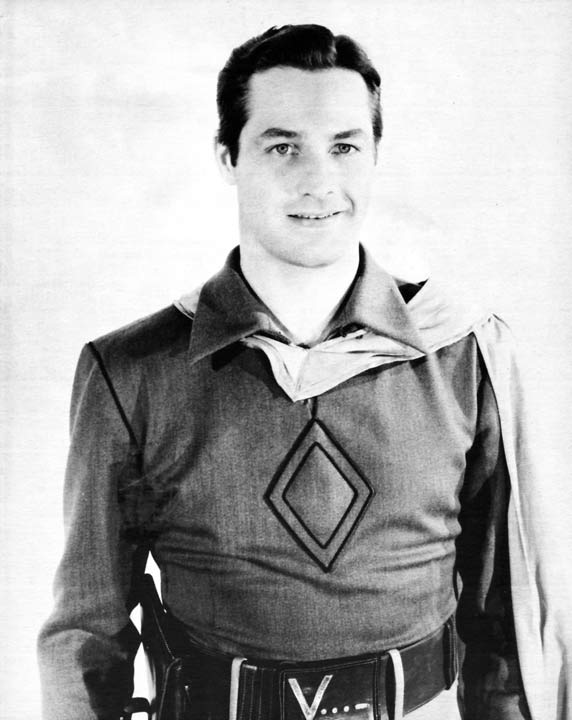
Spy Smasher is Smashing!

Last night, I revved up the old Roku and watched Spy Smasher Returns on Netflix. Spy Smasher Returns is a film created by putting together pieces of the Spy Smasher serial from the 1940’s, and if you’re interested in running any kind of pulp-era adventure game, you need to watch this film.

It’s not for the story – a basic little thing about Nazi saboteurs and spies operating in the United States and getting their orders from a fellow called The Mask who operates from a submarine off the coast (the coast of what – who knows?).

The acting isn’t bad for a serial, but not Oscar caliber either. No – the two reasons you want to watch this film (or the serial) are the stunts and the settings.

Gaming is often about scenes – setting the stage, introducing the players and then shouting “Action!”, which makes movies and television shows excellent fodder for the imagination. Spy Smasher has some excellent settings to drop the players into – a clay factory with roaring ovens, a rickety-looking lumber yard building, a Nazi submarine, a houseboat, a train, a motor boat, etc. All provide interesting obstacles and opportunities for supporting the action.

The second reason has little to do with gaming – the stunts. Absolutely fabulous stunts (and the same goes for the old Captain America serial, which I’ve mentioned before) that remind you how fun movies were before CGI came into existence. These knuckleheads go all out in the fight scenes – leaping around, flipping each other, bludgeoning one another with balsa wood chairs), Spy Smasher roars around on a motorcycle like a madman, a wooden tower gets blown up and collapses, a motor boat takes on a submarine, etc.

So – my highest rating (892 stars) goes to Spy Smasher Returns / Spy Smasher. Check it out HERE folks.


Seasonal Beasties: The Forlorn Grey

Forgot to mention that my last post was number 1000. If that means anything to anyone.

Now then …

FORLORN GREY

Image from 7art

Sometimes that grey mist in the corridor or tunnel is just a bit of water vapor. Sometimes, though, it’s a monster that has been nicknamed “the forlorn grey”.

The forlorn grey appears as a grey fog, usually about 20 feet long and 10 feet wide. To the touch, it is clammy and chilly, and an astute observer might notice that it does not leave a damp residue on people who walk through it.

A forlorn grey usually allows a group to get within it, and then moves along with them. It obscures vision, so most folks think that they are just moving through a very long patch of fog. Each round a person spends in the fog, their minds are attacked by the strange monster.  The adventurer must pass a Will save, or lose a bit of their zest for living, not to mention suffer 1 level of energy damage. The TK should prepare several strips of paper outlining the apathy that has befallen a character who fails a saving throw. Some examples might be:

“You realize you don’t really want to be in this stupid dungeon.”

“Treasure isn’t everything.”

“That serving wench really wasn’t all that attractive.”

“It occurs to you that you don’t really have any friends.”

Once a creature within the forlorn grey reaches effectively 0-level, they take on a dull appearance, their eyes turning grey and losing their spark of life. They remain 0-level monsters at this point, normal humanoids of their type who are apt to wander aimlessly for the rest of their lives, begging for scraps and generally avoiding the company of others. They can again be restored to vigor through the use of a wish or restoration spell, and can otherwise be used as torchbearers by their former friends – they don’t care one way or the other about it.

Fighting the mist is difficult. It can only be struck for full damage by magical edged weapons, and silver edged weapons deal half damage to the creature. Bludgeoning and piercing weapons deal no damage to a forlorn grey, magical or otherwise. If actively fought, the forlorn grey can manifest tendrils of super-chilled mist, with which it can make feeble physical attacks that, on a natural attack roll of ’20’, snake down people’s throats (or through their noses), dealing double damage and forcing the victim to pass a Fortitude save or be stunned for 1d3 rounds. The creature can manifest three such tendrils.

Forlorn Grey, Large Elemental (Air), Average Intelligence: HD 7; AC 16 [+1]; Atk 3 tendrils (1d3 + see above); Move Fly 30; F11 R10 W12; AL Chaotic (NE); XP 1750; Special – Only damaged by edged weapons, silver weapons deal half damage, energy damage, stunning attack, immune to cold and acid.

Seasonal Beasties: The Gorger

October is all about horror, and obviously horror-inspired monsters (i.e. undead). November, to me, is all about fall (or autumn, if you prefer), and I figured I would try to work up a few fall-themed monsters. The reapers last week was one of them, but they also meshed pretty well with Halloween – consider them a transition monster. Today I’m presenting the Gorger!

GORGER

Gorgers are akin to trolls and giants. They have a strange life cycle, hibernating (so to speak) most of the year and then emerging from their slumber in the fall to consume mass quantities and prepare for their next hibernation. They are not terribly bright, and seem to exist solely to produce offspring.

Most gorgers live in small bands, burying themselves in loose earth while hibernating, and then emerging when the air becomes crisp and the crops are in. They are omnivorous, and even a small group is capable of eating a small village out of house and home.

Gorgers looks like warty, grey trolls with over-sized mouths and ponderous bellies. Their feet and hands are tipped by massive claws (useful for burrowing as well as killing) and their legs are stubby and a bit bandy. They always attack as a group, and though not terribly bright, they are cunning and capable of tactical planning. Most uproot a small tree to use as a double-handed weapon, relying on their claws only if they are unarmed or forced to fight in tight quarters or when they are bent on swallowing an opponent whole.

When a gorger swallows a victim whole, they begin to take on that victim’s intellect (though not personality) and skills after 1 round of digestion. Each round thereafter, a gorger gains one level’s worth of their victim’s skills and special abilities (regardless of alignment restrictions) until they have the same level as their victim. For example, if a gorger swallows a 4th level thief, they would, one round after swallowing them, gain the abilities of a 1st level thief. The next round, they would have the abilities of a 2nd level thief, and then a 3rd level thief in the round after that, until finally capping off as a 4th level thief. These special abilities are retained by the gorger for 1 hour, at which point they fade at the same rate (one level per round) that they were gained. If a gorger swallows a monster, it gains the monster’s special abilities after a number of rounds equal to half the monster’s hit dice total.

Gorgers regenerate as do normal trolls.

Gorger, Large Giant, Low Intelligence: HD 8; AC 16; ATK 1 weapon (3d4) or 2 claws (1d6) and bite (1d6 + swallow whole); Move 30 (Burrow 15); F8 R11 W12; XP 800; Special – Absorb skills and special abilities, regenerate.

Noah Webster is My Dungeon Master

Here’s a goofy idea to try out – Dictionary, the RPG:

Character Creation

Open the dictionary to a random page. Find a noun – that’s what you are and, by extension, what you should be skilled at. Find an adjective – it describes you. If the first page you open to doesn’t provide enough in the way of nouns and adjectives, try again.

Task Resolution

State what you wish to accomplish. Open the dictionary to a random page. If you can find a verb on that page that can be used to accomplish the task, you succeed.

If you cannot find such a verb, you can try another page IF what you are (the noun + adjective) would suggest you should be good at what you’re trying to do. Otherwise, the task does not go as you would like, introducing a new problem to be solved. Perhaps this new problem is suggested by a word on the page you’ve flipped to.

Advancement

Each successful adventure gives you a free flip you can use to get through a later adventure.

Example

Let’s say you’re ridiculously lucky, and you flip to a page that allows you to be a Nimble Ninja. Your nimble ninja decides it need to clunk a guard over the head to sneak into a castle. You open to a random page of the dictionary and find no words that can help. But you’re a nimble freakin’ ninja, so you should be good at sneaking up on the guard and clunking him on the head, so you open to a new page. Dang – still nothing. What a crappy dictionary. So, you’ve failed. How? Perhaps you step on a stick and are forced to hit the ground. The guard knows somebody is there and he calls for help. They’re now searching the area. Your new task is to creep away unnoticed by the guards, so you open to a random page of the dictionary …

Conceivably, you could play this game alone, or with a game master (the Word Master? the Grammarian?) who controls the actions (and success thereof) of the NPC’s.