Adventuring in the Himyarite Kingdom

I know, I know – like you need yet one more blog post talking about using the Himyarite Kingdom as a setting for a fantasy RPG. But here we go, just the same …

So, you can call it the Himyarite Kingdom, the Homerite Kingdom (kinda like that one better) or Himyar, but what we’re talking about is a Judeo-Christian kingdom or empire in Yemen, just a hop-skip-and-a-jump away from the pre-Islamic Arabs in the north (“Men, Nomads” is covered), the Egyptians and Ethiopians across the Red Sea, the Romans to the north, Persia just across the Persian Gulf and near much-storied Baghdad and India (and their martial artists – so we have monks covered) across the Indian Ocean.

Himyar was established round about 110 BC, with a capital at Zafar (Sana’a). The kingdom of Sheba (you might have heard of it) was conquered in 25 BC, Qataban in 200 AD and Hadhramaut in 300 CE. Himyar remained dominant until 525 AD.

From my extensive reading (and article on Wikipedia counts as “extensive”, right?), it sounds like the period from 115 BC to 300 AD might be the most interesting. Himyar conquer Sheba, but its trade is failing due to domination of the north by Nabatea (or orcs, if you prefer), domination of naval routes by the Romans, who have just freshly conquered Egypt, and due to inter-tribal warfare. In other words lots of turmoil and thus lots of opportunity for conflict and gaming.

Because Himyar is a Christian state, it makes a great base of operations for clerics. Allow all the pagans, be they Arabs, Egyptians or Romans, to use druids but save the clerics for the Judeo-Christians. The Israelites and Ethiopians would probably also use clerics. This could make for an interesting ancient zombie apocalypse campaign, with only a few peoples having access to clerical turning – perhaps the Roman conquest of Egypt has awakened the entombed pharaohs, who are now, as mummy lords, leading armies of the undead all over the world.

Some of the local kingdoms other than those mentioned are such fabled lands as Punt, Kush, Aksum, Damot and Awsan.

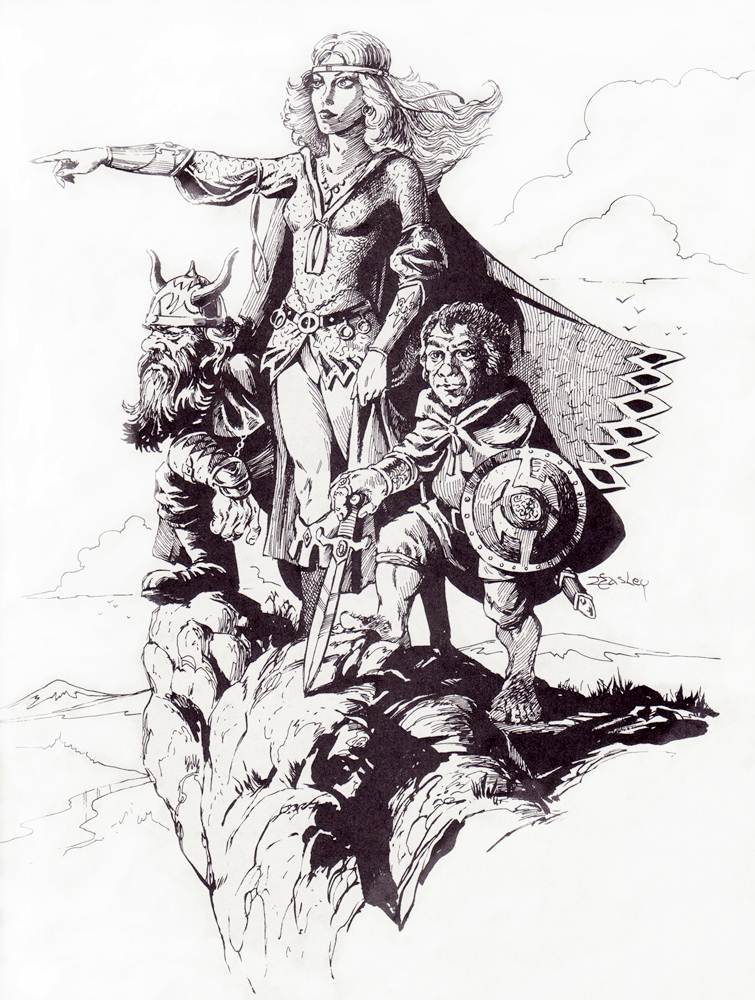
Demihumans – what about the elves and dwarves and halflings? Well, you can either distribute them throughout and not worry about whether they belong there, or you could replace them in name only. The elves are replaced by the jinn, the doughty halflings by the amazons (Themiscyra is just north in Asia Minor, after all) and the dwarves by the wondrous blemyes (no heads, faces in chests) who apparently live along the coast on the Africa side of the Red Sea!

Armor and Weapons
Most of the fantasy standards would be available in a campaign like this, with the exception of platemail (though perhaps the mirror armor of India would suffice) and maybe some of the later European pole arms.

Landscapes and Sights
“Look, Sahib, there is the way to Ubar. It was great in treasure, with date gardens and a fort of red silver. It now lies beneath the sands of the Ramlat Shu’ait.”
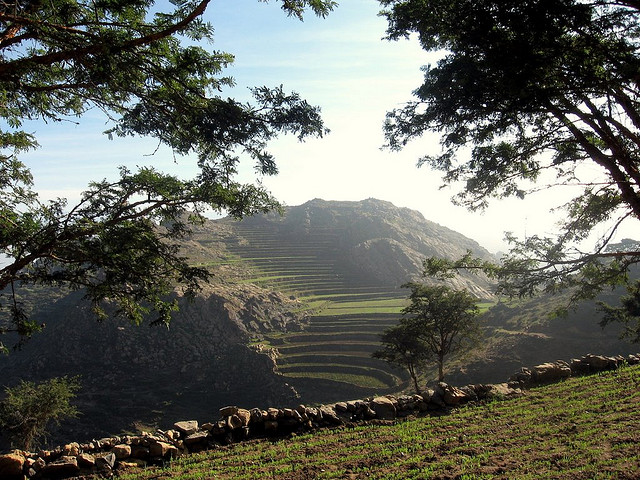
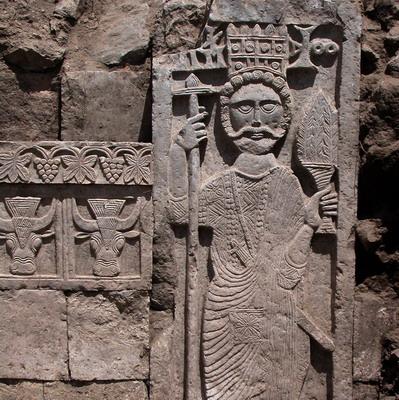
Yemen is mountainous (i.e. dwarves, dragons and dungeons are not out of place here, and an old bas-relief from Hadhramaut features a griffon) and somewhat lush, but is otherwise surrounded by arid deserts and sea. Pirates have plenty of places to play, and desert nomads are covered as well. Perhaps one could mix in some desert orcs with the Arab tribes.

So, what is there to explore and plunder in this region? Well, the mega-dungeon known as Irem of the Pillars is lurking somewhere in the Arab sands (remember, this is fantasy Irem, it doesn’t have to be the ruins of Ubar – maybe Ubar is another mega-dungeon) and not far from this fabled site of God’s vengeance one finds Lovecraft’s Nameless City.
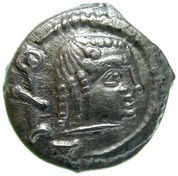
Across the Red Sea, you have pyramids galore to plunder in Egypt, and in Ethiopia, if you dare, there sits an honest-to-goodness artifact – The Ark of the Covenant – guarded by, one must believe, a brotherhood of Ethiopian paladins and their paladin-king, the Lion of Judah – maybe they are all mounted on celestial lions?

Over sixteen megalithic standing stones were found on the coast of Tihamah – no doubt they are involved in some sort of dimensional portal, a thin bastion against an invasion from Hell, Asgard, the Mind Flayers of Dimension X or the femazons of Venus.
The Thamudi cliff dwellings have to form a dungeon with some sort of amazing secrets, given that they were apparently punished by a soundwave from God for some manner of infraction. Maybe it wasn’t a punishment from God, but rather an experiment of super-science gone horribly wrong – a weird monster unleashed on the world at large, but trapped within their subterranean city!

The Wabar Craters – what created them? Was it something from the mysterious rogue planet Nibiru? Did it burrow into the sands? Is it dining on the King of Baghdad’s caravan as we speak – the one that was carrying his daughter south to be married to the King of Himyar?
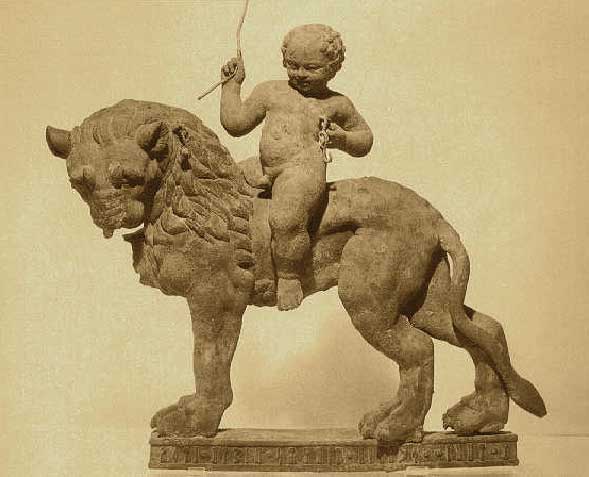
Imagine if the astral devas looked like cherubs mounted on lions


Holly Jolly Warriors for Your Dungeon

‘Tis the season for being goofy, don’t you know, so I present this long overlooked fantasy archetype for your favorite fantasy game. Check you stocking for dice, roll up a kringle, and go slip the hobgoblins some coal (and cold steel) upside their pointy heads.

KRINGLE

H/T Trey’s Sorcerer’s Skull Blog

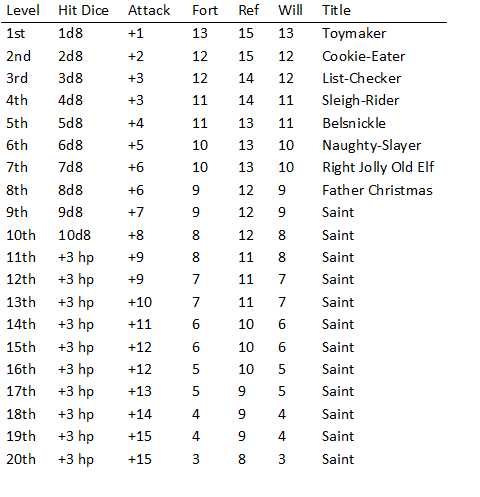
Kringles are holy warriors dedicated to generosity to the poor, protection of the weak and punishment of the wicked. They adventure to take their war on naughtiness into dungeons and to acquire enough wealth to one day build a fortified workshop of their own.

ROLL D8 FOR HIT POINTS

REQUIREMENTS
Strength and Wisdom of 13+; Kringle’s must be Lawful or Lawful Good, depending on what alignment scheme you use.

ARMOR ALLOWED
Any armor and shields

WEAPONS ALLOWED
Any bludgeoning weapon

SKILLS
Escape Bonds, Move Silently, Riding

XP ADVANCEMENT
Kringles advance as paladins

CLASS ABILITIES
A kringle can use the know alignment spell at will; he knows just by looking at you whether you’ve been naughty or nice. In addition, they are capable of squeezing through very small openings, as though they were tiny in size.

A 2nd level kringle is capable of using the minor creation spell, though they can only create an item if they have a sack from which to pull it. At 6th level, a kringle can use minor creation three times per day, and major creation one time per day. A 9th level kringle can use minor creation at will, and major creation three times per day.

A 3rd level kringle is immune to fear. Each ally within 10 feet of him gains a +2 bonus on saving throws against fear. In addition, a xxx gains immunity to all diseases, including supernatural and magical diseases.

A 4th level paladin (gallant) gains the ability to turn constructs, as a cleric turns undead, as a cleric three levels lower.

A 5th level kringle can undertake a quest, guided by a divine vision, to find and gain the service of an unusually intelligent, strong, and loyal reindeer to serve her in her crusade against naughtiness. If the kringle’s mount dies, he must atone (per the atonement spell) and then wait until gaining another level of kringle to undertake the quest again.

A 9th level kringle is capable of using time stop once per day. This increases to three times per day at 16th level.

At 9th level, a kringle is permitted to use crystal balls as though they were magic-users. How else could they know when folks are sleeping or when they’re awake?

An 11th level kringle can choose to establish a workshop in the wilderness and gain followers (see High Level Play below). A kringle who becomes a lord or lady attracts 1d6 gnome artisans per level, 1d6 automatons (1st level fighters – toy soldiers, get it?) and one 3rd level kringle to serve as a foreman. The automatons and the kringle should be generated as characters under control of the player.

Fighter Moves – a Feat Hack

Found at Wikipedia

Anyone who regularly reads this blog knows that I like taking existing mechanics from the SRD and playing around with them. Today, while I was working on the NOD Companion (on the illusionist class renamed as the trickster) an idea for messing with combat feats popped into my head. The idea is based on the excellent maneuver concept in the Dragonfist RPG.

Basically, I took each of the combat feats and assigned it a level from 1 to 5 based on how many prerequisite feats it had. I then used the bard spells per day table as a guide for the number of fighter moves a fighter could perform each day of each level. I suppose other fighting classes could use this as well, perhaps as a fighter one level lower.

Fighters should begin the game knowing two moves, and then gain a new move at each level, choosing from any level of moves they have available to them based on their own level. One could also use the spell research rules to allow fighters to invent new moves.

The list of moves follows – note that it’s extremely spare at 4th and 5th levels – I suppose I could do some open content feat research and flesh it out, but for my purposes of exploring the idea and presenting it to folks who might want to use it, this will do.

The rules – well, on his turn, a fighter could perform a move in addition to attacking. Simple as that. If the move is an action – such as cleave – assume it is “instantaneous”. If the move involves a static bonus – such as weapon focus – then it lasts for a number of rounds equal to the fighter’s level. Simple and straight-forward, and thus there are probably all sorts of holes in it. Again, this is an exploration, not a full-blown system.

FIGHTER MOVES

1st level
1. Blind-Fight
2. Combat Expertise
3. Combat Reflexes
4. Dodge
5. Improved Critical
6. Improved Initiative
7. Improved Shield Bash
8. Improved Unarmed Strike
9. Mounted Combat
10. Point Blank Shot
11. Power Shot
12. Quick Shot
13. Rapid Reload
14. Two-Weapon Fighting
15. Weapon Finesse
16. Weapon Focus

2nd level
1. Cleave
2. Deflect Arrows
3. Diehard
4. Far Shot
5. Greater Weapon Focus
6. Improved Bull Rush
7. Improved Disarm
8. Improved Feint
9. Improved Grapple
10. Improved Overrun
11. Improved Sunder
12. Improved Trip
13. Improved Two-Weapon Fighting
14. Mobility
15. Mounted Archery
16. Precise Shot
17. Rapid Shot
18. Ride-By Attack
19. Stunning Fist
20. Trample
21. Two-Weapon Defense
22. Weapon Specialization

3rd level
1. Great Cleave
2. Greater Two-Weapon Fighting
3. Greater Weapon Specialization
4. Improved Precise Shot
5. Manyshot
6. Snatch Arrows
7. Spirited Charge
8. Spring Attack

4th level
1. Shot on the Run

5th level
1. Whirlwind Attack

Cush and Pwenet – Ophidian Ruins, Angry Books and Sleeping Kings

NOD 18 (wow, 3 years of NOD!) is written, 90% laid out, and just about ready to hit the presses (so to speak). I think I’ll have it ready to go after Christmas, because right now I’m all about getting my holly and mistletoe on and having some Christmas fun!

Guess which one of these guys writes RPGs in his spare time …

Anyhow – since I need an easy post today, I’m going to the Cush and Pwenet well one more time! Have fun, lads and lasses!

62.04 Ophidian Ruin: A portion of the savannah here is marked with strange hemispheres of marble. The marble is ancient and cracked, and the hemispheres are actually domes – parts of an ancient ruin that now lurks beneath the savannah. The ruin belonged to the ophidians, and was long ago destroyed by the forces of the Nabu, assisted by the cosmic beings who helped found that empire.

The domes connect to palaces, temples and other buildings of what must have once been an astounding ancient city. Many of the rooms of these buildings are now collapsed and filled with soil, but many remain intact. Buildings are connected by tunnels or catacombs, while others have been connected by tunnels dug out of the earth by large, reptilian brutes bred by the ophidians as slaves and warriors. The ophidians of the ruins also breed vicious attack lizards. They have retained a small portion of their ancient technology, but most has been lost.

The lost city is ruled by a bloated queen, Sheshuur, the mother of all the ophidians in the complex. The complex is rife with traps – green slime-filled pits, pits of vipers, gouts of poisonous fumes and flaming jets.

64.37 Fortress of the Twin Tomes: Long ago, two rival princes, Trentar and Epham, mages of wondrous ken, were trapped inside magical grimoires by their former patron, Muola. Their mother, the hag queen Gwrga, interred each tome in a tower. The partisans of each prince gathered in these towers, and have for centuries been locked in sporadic battle with one another, each seeking to free their prince and destroy the other while still trapped within his grimoire. Travelers passing through this hex have a 4 in 6 chance to be pressed into service by a roving band of 3d6 miscreant mages intent on using them to destroy their enemies. The mages are loathe to expose themselves to danger, and prefer to use outsiders to settle their scores.

Miscreant Mages, Human Magic-Users: LVL 3; AC 10; ATK 1 staff +1 (1d6); MV 30; F14 R14 W12; AL Neutral; XP 300; Special—Spells (4/2/1); Gear—Spellbooks, quarterstaffs, darts (3).

65.19 Empire of the Sleeping King: This hex of windswept hills and hibiscus trees is eerily quiet. A deep well in the hex, so deep that it reaches into the Underworld, produces a sweet perfume that causes people and animals to fall into a drowsy langour. The outskirts of the hex are marked with small villages filled with laconic villagers and their herds of sleeping cattle. A road of adobe bricks overgrown with weeds winds through the villages to a small town in the center of the hex, from which rules the sleeping king, Kulala. The people of the town walk about as though asleep, and their baskets of food are bare. The people are severely undernourished, as they can barely stay awake long enough to feed themselves. In the center of the town sits the well, with a sort of wavering haze about it.

Just entering the hex forces people to pass a Fortitude save or become fatigued. Those who travel 2 miles into the hex must pass a Fortitude save (once per day) or fall dead asleep for 1d6 hours. Those who travel 4 miles into the hex must pass a Fortitude save (once per day) or fall asleep for 2d6 hours. Those who enter the town at the center of the hex must pass a Fortitude save (once per day) or fall asleep for 3d6 hours. An unlimited number of potions of sleep can be drawn from the well, but the liquid is so powerful that those in possession of it must pass a Fortitude save once per day or become fatigued.

What’s In Santa’s Sack – Halfling Edition

Image from here

Christmas is maybe the most halfling holiday of the year … well, except for Thanksgiving. Either way, you have to imagine that old St. Nick has a few packages in his sack for those little Lawfuls of the Shire …

1. Cheese – and lot’s of it.

2. Mithril mixing bowl – nothing sticks to mithril except dire molasses

3. Jar of dire molasses

4. Rose-colored glasses (+1 to save vs. sadness and fear)

5. Lederhosen – pre-worn in by the elves at the North Pole and thus smelling of peppermint

6. Toe hair combing kit in a fancy leather case

7. Scented foot oil

8. Pennywhistle, mouth-harp and set of musical spoons – to pass the time on long trips

9. Brand new slingshot with a compass and a thing that tells the time in the stock

10. Crushed velvet bag containing 10 silver sling bullets

11. A set of hand-carved bird calls – includes one’s for giant eagles, rocs and giant owls (1 in 6 chance of attracting an owlbear)

12. “Get Out of Gaol Free” card signed by St. Cuthbert himself

13. Stickum – useful for halfling thieves (bonus to climb and pick pocket checks)

14. Autographed copy of There and Back Again

15. Set of three nosegays (+1 save vs. poison gas)

16. Daisy chains, enchanted to never wilt

17. Elven cloak (ever since that book came out, every halfling wants one)

18. New hurling stick (can be used as a club or to hurl things like flaming oil or holy water)

19. A prize pig of surprising intelligence, large enough to be used as a mount

20. Sack of walnuts

21. Shire Army Knife (fork, spoon, knife, toothpick and corkscrew)

22. Silver locket containing a curly auburn lock – find the owner and get a free kiss

23. Embroidered shirt or dress – hand stitching

24. Gnarly, wooden walking stick

25. Sack of jelly babies

26. Glass bottle of bay rum

27. Seat cane with silver top (counts as a silver club for attacking incorporeals and lycanthropes)

28. Dragon-nip – throws dragons off your scent when sneaking into their hordes

29. Silver dagger

30. Book of Riddles – useful for stumping gollums

The Monsters of Henry Justice Ford – Part II

Today, I present three giants to confound (and stomp on) you precious PC’s.

River Giant
Huge Giant; Chaotic (NE); Average Intelligence; Eddy (1d4)

HD 12
AC 17
ATK 1 slam (2d6) or 4 locks (1d4 + constrict)
MV 30 (Swim 40)
SV F4, R9, W9
XP 1200 (CL 13)

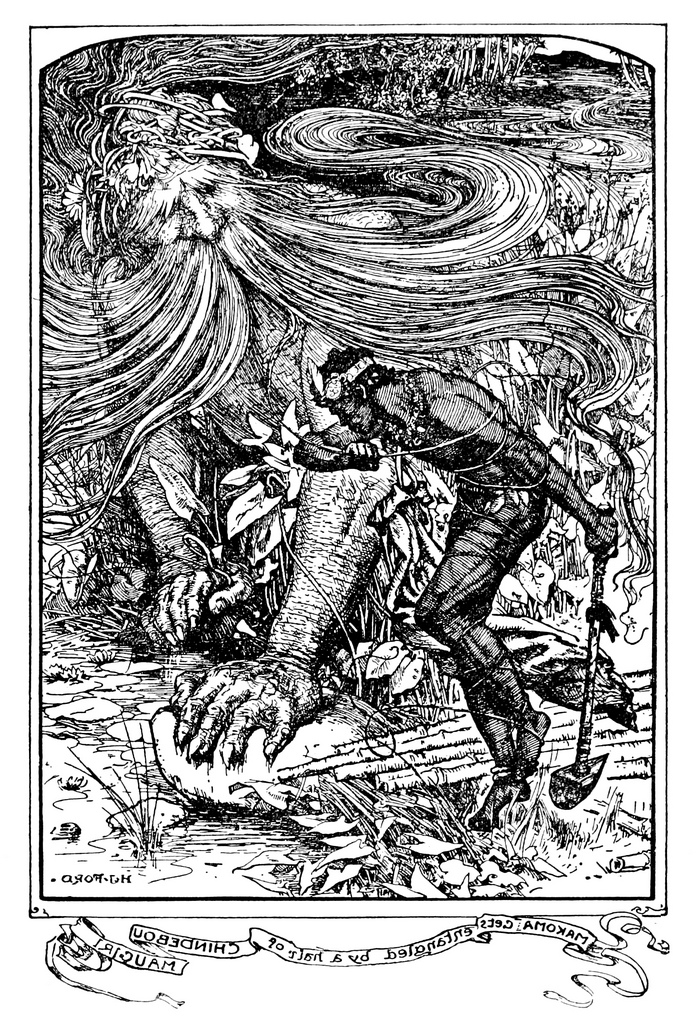
River giants are the children of the great rivers. They appear as massive humanoids with long, grey mustaches and beards which seem to flow and ripple with a will of their own. They dwell within rivers, sometimes in simple caves, but more often in submerged strongholds with courts of nixies and river nymphs.

In combat, a river giant can breathe forth, once per day, a fetid mist per the obscuring mist spell. Those trapped within the mist must pass a single Fortitude saving throw or succumb to filth fever. Their mustaches and beards can be used as tendrils to grab and constrict attackers.

Special Qualities: Resistance to cold

Jinnati
Large Giant; Chaotic (NE); Average Intelligence; Blaze (1d6)

HD 4
AC 14
ATK 1 slam (1d10 + 1d6 fire) or by weapon (+1d4 fire)
MV 30
SV F10, R14, W14
XP 400 (CL 5)

The jinnati, or fire-eaters, are a breed of fire-breathing ogres who dwell in volcanic hills in tropical regions. They have ruddy to dull green skin, lustrous black hair and sparkling eyes that suggest clever malevolence. Jinnati rarely wear armor, though when they do it is usually formed of glowing, red scales, and likewise when they arm themselves they do so with metal weapons. They have a profound lust for reddish and orange gemstones, and will almost anything to possess them, even behave honorably.

Jinnati can breathe a 15-ft. long line of fire once per day. This fire deals as many hit points of damage as the jinnati currently possesses (or half that with a successful Reflex saving throw). They can recharge this fire breath by eating fire – that is, inhaling flames from any sort of source larger than a torch.

Creatures grappled by the monsters suffer as though from a heat metal spell, in addition to suffering normal grapple damage.

Special Qualities: Immune to fire, vulnerable to cold

Stalo
Large Giant; Chaotic (CE); Average Intelligence; Roost (1d6)

HD 6
AC 15
ATK 2 claws (1d6) and bite (1d4)
MV 30
SV F9, R12, W12
XP 600 (CL 7)

Stalos are magical ogres that haunt the northern woodlands and steppes. They have dark brown to nearly black skin, leering yellow eyes and pronounced fangs.

A stalo possesses a set of pipes not unlike those of a satyr. When playing those pipes, those within 1 mile must pass a Will saving throw or be charmed (per the charm person spell) and convinced that they must journey to the source of the piping. Subjects within 30 feet of the piping must make an additional Will save or be held (per the hold person spell) for 1d6 rounds, during which time the stalo will kill them for its supper. A stalo can track unerringly on his home territory.

A stalo has one weakness, and that is running water. While they can cross running water, they do so slowly (movement rate of 5) and must pass a Will save each round or be either frozen with fear for one round.

Spells: At will—calm animals, speak with animals; 1/day—summon nature’s ally II

The Monsters of Henry Justice Ford – Part I

Henry Justice Ford, in case you, the reader, haven’t heard the name, is one of the finest illustrators of fantasy and folklore to have ever come around the bend. Recently, Monster Brains did a very long post showcasing a ton of his work – I highly suggest taking a tour of the post and the site (one of my favorites).

Many of the works depict monsters that were new to me, either in the sense that I was unaware of the fairy tale in which they originated, or they were drawn in a way that sparked my imagination. I decided it might be fun to stat a few up for Blood & Treasure, and, if you continue reading, you will find that that is precisely what I’ve done.

By the by – I think the idea of a monster book divided up by great artists (in the public domain, of course) in the manner the old Deities & Demigods book was divided up by mythos, would be pretty cool, in case anyone wants to collaborate.

Three-Headed Draken
Medium Monstrous Humanoid, Chaotic (CE), Average Intelligence; Band (1d10)

HD: 2
AC:  14
ATK: 2 claws (1d6 + rend) and bite (1d4)
MV: 30
SV: F12 R15 W12
XP 200 (CL 3)

The three-headed draken are goblinoids with skin as black and as shiny as coal. They have feet tipped with cruel talons, mouths full of fangs, and generally lurk in ruins planted with fruit trees. They regard this fruit as a dragon regards its treasure, for the trees to which they are bound are the only ones from which they can draw sustenance.

Special Qualities: Regenerate

Black Master of the Beasts
Large Fey, Neutral (N), High Intelligence; Solitary

HD: 9
AC: 16
ATK: 1 club (2d8) or slam (1d6)
MV: 20
SV: F10 R9 W8
XP: 900 (CL 10)

A black master of beasts is a fey guardian of a particular woodland, having the animals of that woodland under his protection. Black masters appear as black-skinned giants with single eyes in their heads and single legs to support them. They wield massive iron clubs and are capable of summoning 30 HD worth of animals, dragons and magical beasts common to their woodland (i.e. they show up on a random encounter chart) to their service once per day. These animals arrive in 1d4 rounds.

Special Qualities – magic resistance, immune to fear

Spells – 3/day—augury, calm animals, hold animal; 1/day—divination, magic fang, quest

Scylla
Huge Aberration, Chaotic (CE), Average Intelligence; Solitary

HD: 16
AC: 18
ATK: 5 heads (1d8 + constrict)
MV: 10 (Swim 30)
SV: F4 R7 W5
XP: 4000 (CL 18)

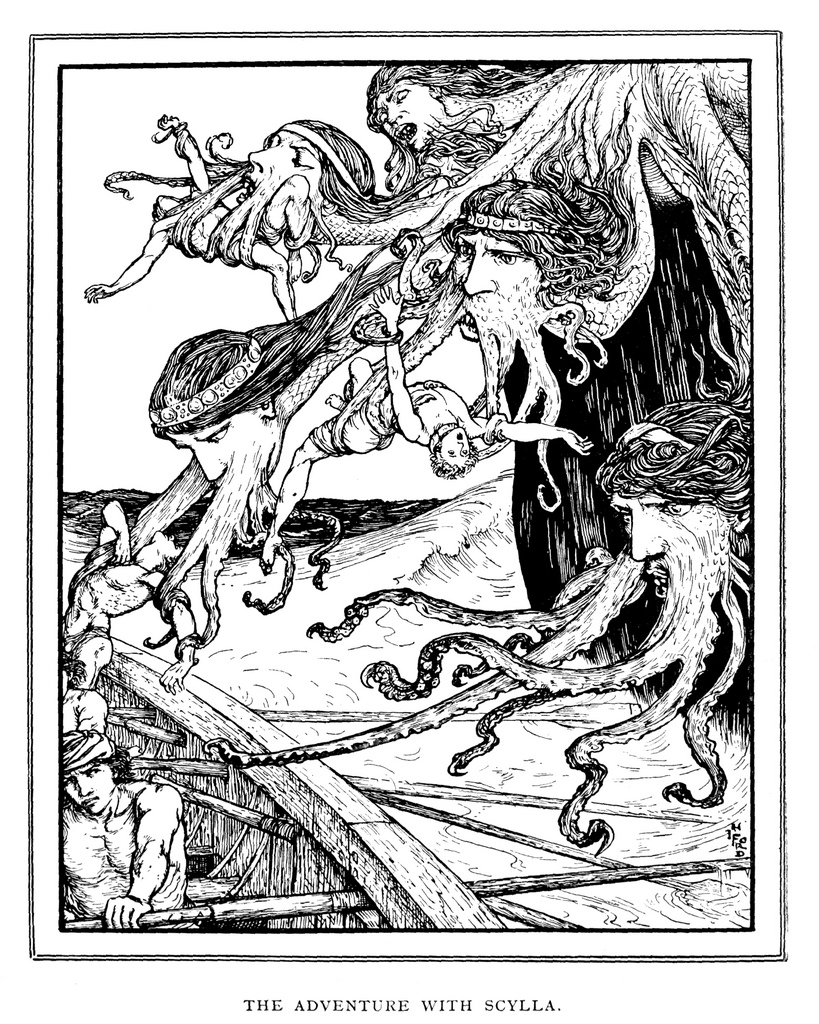
Scyllas are primordial sea monsters, terrible abominations that haunt narrow straits, lying in wait for prey. They have bodies shaped something like hydras, with scaled skin and five thick necks that end in massive humanoid heads. These heads have beards of tentacles, six tentacles each. Scyllas communicate telepathically, and they can induce fear (as the spell) once per day per head in creatures with 5 or fewer hit dice. If one head of the scylla is casting a spell, the others are still capable of attacking.

Special Qualities – Immune to fear, immune to cold, regeneration, magic resistance 40%, resistance to electricity

Spells – 3/day—control water; 1/day—control weather

When In Rome, Kill As the Romans Do

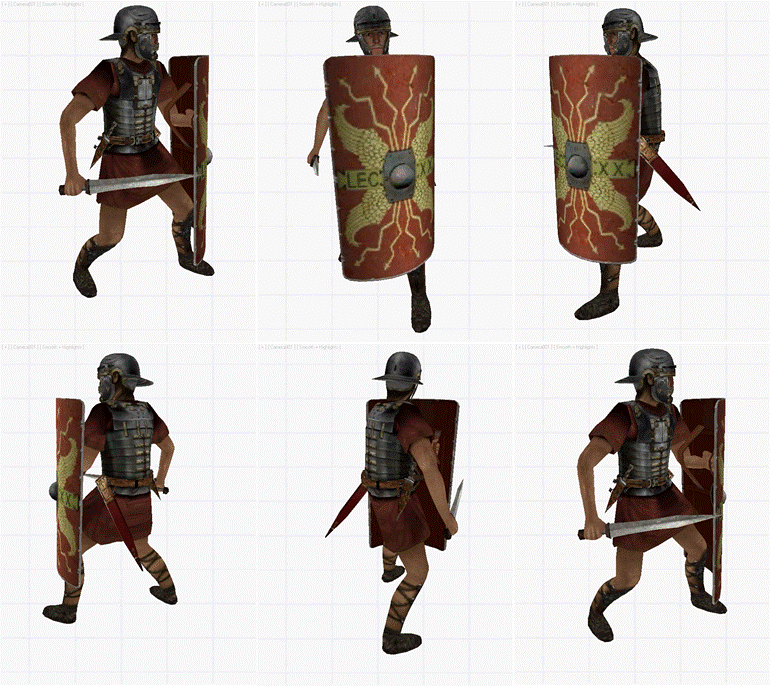
Rome looms so large in European history, and therefore on the ancient and medieval European wargames that informed so much of early fantasy RPG’s, that an article like this seems a bit useless. Of course, I’m writing it anyway, because – dang – you try generating this much web content without being useless once in a while.

Enough preamble. Let’s get down to Roman weaponry …

BIPENNIS
The bipennis, or labrys, is a double-headed axe that, depending on how one pronounces the word, could be a big hit at the gaming table. “You attack the orc with what?”

The weapons were most associated with Minoan civilization and the Greeks, and seem to have taken on quite a significant symbolic meaning, being adopted by Greek fascists, Greek metal heads and lesbians and feminists – clearly it’s a uniter and not a divider (unless used to separate somebody from their head). If you’re a cleric capable of wielding edged weapons, the bipennis might be a good one to wield.

Medium weapon; 1d8 damage; 6 lb.; 10 gp

CESTUS
Probably one of the first, “Dude, I want those” that I ever came across as a young geek getting into RPG’s. Essentially the anti-boxing glove, a cestus was made of leather strips, sometimes studded with metal or bladed, that was worn over the hands and used to beat the living crap out of people. For our purposes, we’ll use all three versions, and allow monks using the cestus, and any character with the Weapon Focus feat in the cestus, to treat them as either unarmed attacks or armed attacks, whichever is more favorable for the situation.

Cestus: Light weapon; +1 damage; 0.5 lb; 5 sp

Cestus, Studded: Light weapon; +2 damage; 1 lb.; 1 gp

Cestus, Bladed (Myrmex): Light weapon; +3 damage; 1 lb.; 1 gp 5 sp

FALCATA
The name is new, but the sword is old. Rome’s Iberian allies and mercenaries employed these slightly curved, thick bladed swords and impressed their Roman pals with how effective they were in a scrap. Because of their shape, and the weight of their blade, a falcata scores a critical hit (if you use such things) on a natural roll of 19 or 20.

Light weapon; 1d4+1 damage; 2 lb.; 15 gp

FALX
Falx are sickle-like weapons employed by the Dacians and Thracians, and later used by the Romans as siege hooks. The single-handed version was the sica, which is essentially just a sickle and is not covered here. The falx was the two-handed version, a pole weapon with a 3-ft. long wooden haft tipped by a long, sickle-shaped blade. The point could pierce helmets and the blade split shields.

Heavy weapon; 1d8 damage; 8 lb.; 8 gp

GLADIUS
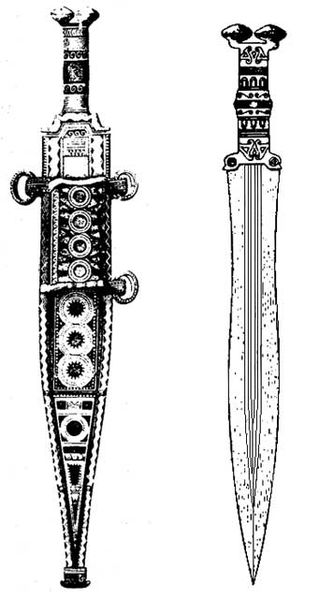
While not the first straight-bladed short sword, the gladius could be one of the best known due to their use by gladiators, who are undeniably cool. The gladius was adopted from the Celtiberians, and was known as the Gladius Hispaniensis, or “Hispanic Sword”.

Light weapon; 1d6 damage; 2 lb.; 10 gp

HASTA
Hasta means “spear”, which is handy, since hastas are, in fact, spears. They were carried by early Roman legionaries, and gave them the name hastate. In later years, they were abandoned for the javelin and short sword, but they still have their place in classical Roman violence. Hasta were about 6.5 feet long.

Medium weapon; 1d8 damage; 6 lb.; 2 gp

PUGIO
The pugio is the Roman dagger, one of the basic weapons of the Roman soldier (along with short sword, javelins and shield). Nothing fancy here, just a cool name.

Light weapon; 1d4 damage; 1 lb.; 2 gp

PLUMBATA
I remember when I first got into AD&D, the darts confused me. The only darts I had ever seen were the ones used with dart boards, and I always pictured with a smile magic-users throwing those little things at people in dungeons. The plumbata is the real deal though, the mother of all lawn darts. These darts are weighted with lead and had barbed heads. Magic-users can hurl these bad boys with their heads held high.

Thrown weapon; 1d4 damage; 0.5 lb.; 5 sp

SCISSOR
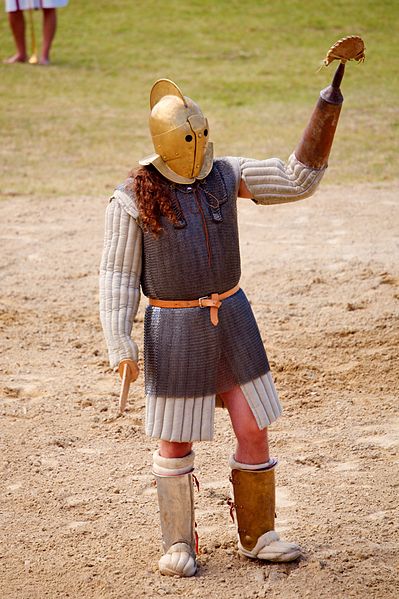
Yes, you can run with this. The scissor is a “maybe” weapon, about which very little is known. It might have consisted of a hollow, metal tube that was worn over the arm. The tube closes over the fist, and projected from this there is a semicircular blade. There was probably a crossbar in the end to assist in a gladiator controlling the weapon. The tube makes it useful as both a buckler and as a weapon.

Light weapon; 1d4+1 damage; 2.5 lb.; 15 gp

SPATHA
The spatha was the Roman long sword. Measuring about 3 feet in length, it was used in war and gladiatorial fights in first millennium AD Europe. Used primarily by the Germans, it replaced the gladius as the primary infantry weapon of the Romans.

Medium weapon; 1d8 damage; 4 lb.; 15 gp


All images found at Wikipedia

What’s In Santa’s Sack? – Elf Edition

Of course, Santa Claus isn’t going to forget about those Chaotic Good demi-humans, close kin to his helpers at the North Pole. Grab a d30 and roll up some loot for your favorite fairy.

1. Bejewelled ear-wax cleaner
2. Pointy hat in glorious velvet
3. New silver bells for one’s formal pointy shoes
4. Magical easy bake oven in the shape of a tree
5. Autographed tapestry of Santa Claus
6. Stereoscope cards of Freyr in all her divine glory
7. A shiny new sword with silver engraving in the shape of acanthus leaves
8. Magical coat of leaves – they match the woodland environment and season and act as camouflage
9. Licorice drops – elves can’t get enough of licorice drops, and each is embossed with an elf-cross
10. Nymphs and Dryads I Have Known, a memoir by Högni Half-Elven
11. Drizz’t plushie and a collection of silver pins (worth 5 gp)
12. A box of flower petals crystalized in sugar
13. A trick flask with two sides to allow one to hide potions or trick enemies into drinking poison!
14. New woolen tights
15. Harp engraved with prancing unicorns
16. False mustache and beard
17. “Brownie-whistle” – a silver whistle only the fey can hear
18. A silver comb
19. An Italian greyhound puppy, since they’re effectively the elves of the dog world
20. 1001 Things to Say to Piss Off a Dwarf – popular old joke book
21. Magical chemise – one can pull an endless number of red roses from the sleeves
22. Silver dagger
23. A sword cane – come on, you know elves would love those things
24. Kerchief of Elvenkind – admittedly, not as useful as the cloak or boots, but a dapper touch nonetheless
25. Quiver of handmade elfshot
26. Wooden sculpture of a feminine leg with a continual light spell cast on it’
27. New longbow
28. Set of three bowstrings woven from the tail hairs of a unicorn (+1 damage, worth 10 gp each, each lasts for 1d20 shots)
29. Flagon of sweet, clear wine
30. Shirt of elven mail

Master Blaster – New Class for Blood and Treasure

Because you, the reader, DEMANDED IT!*

THE MASTER BLASTER

Master blasters are weird combinations of halfling thieves and bone-headed berserkers who join forces to plunder and, when the dungeons just aren’t producing, render methane from pig shit. Hey, it’s just a very specific class – deal with it.

Master blasters have one set of ability scores. The mental ability scores (Intelligence, Wisdom and Charisma) belong to the halfling “master”, while the physical ability scores (Strength, Dexterity and Constitution) belong to the human or humanoid “blaster”. If separated, assume that the master has physical ability scores of 3, while the blaster has mental ability scores of 3.

Master blasters, likewise, have a single hit point total. Again, if separated, assume that 75% of those hit points belong to the blaster, while 25% belong to the master. The character also has a single armor class – both master and blaster must wear the same sort of armor – etc. Heck – if you’re goofy enough to allow this class in your game, you can sort out the details.

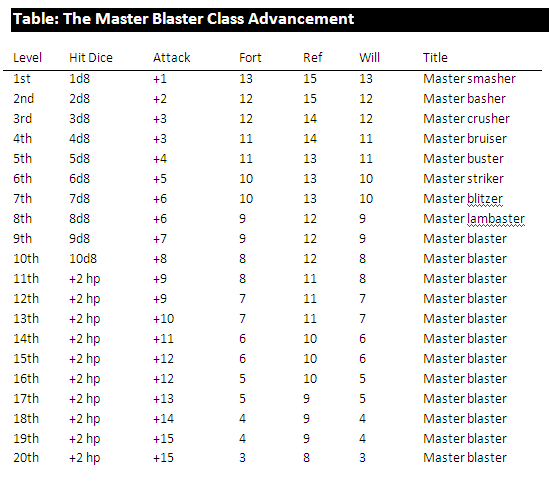
HIT DICE: d8 to 10th level, +2 hit points per level thereafter

REQUIREMENTS: Strength and Intelligence of 13+, non-lawful (good)

ARMOR ALLOWED: Padded and leather armor, no shields

WEAPONS ALLOWED: Any, except bows, crossbows and firearms

SKILLS: Find/remove traps, open locks

ADVANCE AS: Barbarians

Master blasters enjoy a few benefits from their unique partnership. Because they have two sets of eyes and ears, they are only surprised on a roll of 1 on 1d8. In addition, they may attack twice each round. One attack is performed by the blaster, using the character’s normal physical ability scores, while the other is launched master, using his physical ability scores of 3. The master can only use small weapons, and thus, unless fighting a large monster, must usually restrict him or herself to thrown weapons.

Because of their physical configuration, master blasters must purchase a specially made saddle for the master. These saddles cost as much as normal horse saddles, though they are quite different in design.

Masters are trained engineers, and can make a special Will save, modified by Intelligence, to understand and operate machines. When dealing with weird machines of the ancients (or from the future), they suffer a -5 penalty to their roll. If the machinery has no obvious moving parts, they suffer an additional -5 to the roll. If the machine is magical in nature, this also imposes a -5 penalty to the roll.

A 9th level master blaster can choose to establish a stronghold in the wilderness and gain followers (see High Level Play below). The master blaster must engineer this stronghold to create a methane processing station; this methane can be used to power other machineries in the stronghold, including flame projectors and the like.

A master blaster who becomes a lord or lady attracts 1d6 swine (with one swineherd per 6 swine), 1d4 berserkers per level to their retinue, 1d4 first level barbarians as guards and 1d4 first level thieves who wish to learn the finer points of engineering. These barbarians and thieves should be generated as player characters under the control of the master blaster’s player. There is a 5% chance per barbarian that they are actually a wereboar that will be loyal to the master blaster.

* Nobody demanded it – I’m a liar.

Images found HERE