The Anarchist Class

In case anyone is unaware, the following class is based on my reading of the first few chapters of The Man Who Was Thursday, a “surreal” little volume by G. K. Chesterton about the fight between the Central Council of Anarchists and the poets who form the New Police Force.

The Anarchist

There are anarchists – the garden variety of folks who talk about toppling governments in the name of ultimate freedom, and back it up with a bomb or two, and there are the true anarchists, who look to a higher form of anarchy that cannot exist within the human (or, in fantasy terms, the humanoid) community. These fellows seek not the toppling of governments, but the toppling of humanity (or humanoidity – weird word, have no idea if it’s correct) itself.

As this would be an unpopular tack to take among the living, the true anarchists face a great deal of opposition, and therefore must organize themselves, ruthlessly and efficiently, to achieve their goals. To this end, there exists a great organization of anarchists governed by a council of seven, each member of this inner council being named for a day of the week. All anarchists seek to rise to this council, but all anarchists must first start on the ground floor, advancing the byzantine aims of the central council in the world. Just as the forces of Law delve underground in search of treasure and magic to fuel their fight against chaos, so chaos must delve to match them.

Requirements

True anarchists are artists and intellectuals; they must have a Int of 11+ and a Cha of 11+

Armor Allowed

Padded (under their expansive black cloaks), no shields

Weapons Allowed

Bomb, dagger, hand crossbow, pistol, sword-cane (treat as rapier)

Skills

Hide in Shadows, Move Silently, Trickery

Advance As

Thief

Special Abilities

Anarchists bring many special abilities to the table in their fight against Law (especially the likes of vigilantes and paladins – yuck!), but among the most important is their ability to concoct explosives. A 1st level anarchist can concoct normal explosives that become more powerful as they advance in level. In addition, they gradually learn to concoct different forms of explosives, per the following table:

LVL / BOMB / COST TO CREATE
1 Grenade (1d6 damage) 10 gp
3 Smoke grenade (per fog cloud spell) 200 gp
5 Grenade (2d6 damage) 50 gp
7 Gas grenade (per stinking cloud spell) 300 gp
9 Grenade (3d6 damage) 100 gp
11 Death Grenade (spews a black fog, per the cloudkill spell) 500 gp
13 Grenade (4d6 damage) 200 gp
15 Incendiary Grenade (per incendiary cloud spell) 800 gp

All of these bombs have a blast radius of 5 feet. An anarchist of higher than 1st level can choose to sacrifice one dice of damage to increase the radius by 10 feet.

Anarchists have their own secret language, in the manner of the thieves’ cant. Called the “black tongue”, it is, more than anything else, a gobbledygook of quotations and dialectics.

With their bombs and their secret tongue, anarchists are sent into the world to work the will of their shadowy masters. To this end, they are given instructions that must be carried out – instructions they will rarely understand, so dark and brilliant are the workings of their president. Before each adventure begins, an anarchist receives a random instruction. If it is carried out, the anarchist earns an additional +10% earned XP. If the anarchist fails at his mission, he loses 10% of his earned XP.

ROLL / MISSION
1 Must befriend and protect the first to third (1d3) NPC he meets
2 Must kill the first to third (1d3) NPC he meets
3 Must pilfer the first to third (1d3) magic item he encounters
4 Must dispose of the first to third (1d3) magic item he encounters (i.e. get rid of it)
5 Must betray (at all costs) a random comrade
6 Must support (at all costs) a random comrade

A 3rd level anarchist is capable of unleashing a raging oratory that works in some ways as a bard’s ability to fascinate sentient creatures with his music. Those within the sound of the anarchist’s voice must pass a Will saving throw or suffer under the effects of the rage spell and vent their spleen upon the nearby symbols and agents of authority. Lawful individuals enjoy a +6 bonus to save vs. this effect, while chaotic creatures suffer a -3 penalty to save against it.

A 5th level anarchist possesses a madman’s sense of purpose and certainty. By taking a swig from their ever-present flask of brandy, they become immune to fear and magical persuasion for 1 round per level.

A 9th level anarchist may build a hideout beneath the streets of a major city, hiding within it a vast armory of weapons and bombs, and attracting to him or her 1d6 rogues per level, 1d6 first level anarchists who wish to learn from the master and a 3rd level anarchist to serve as his or her lieutenant.

Once an anarchist has a hideout, he or she is eligible to be elected to the central council, gaining a random name from Monday to Saturday. Each game month, there is a 1 in 20 chance that a sitting member will die and must be replaced, and the anarchist has a percentage chance equal to his level of being named to the position (with bonuses for any clever campaigning the anarchist does).

A similar chance exists for anarchists already on the council to assuming the presidency of the council and taking the name Sunday.

The Man Who Was Thursday – Quick Review

Read it.

Longer review …

I’m three chapters into G. K. Chesterton’s novel The Man Who Was Thursday, and I’m loving it. I was wavering through the first chapter until the last few lines. Now I’m completely hooked. Imagine if you will the turn-of-the-century struggle between the Central Council of Anarchists and the poets-turned-police officers assembled to stop them from destroying the world. If you’re into the weird and absurd, you will probably dig The Man Who Was Thursday.

And since the inspiration has struck, I will be presenting, tomorrow, the anarchist class.

That’s all for today kiddies!

A Stroll Through the Virgin Woode – Magic Cloaks, Malevolent Maidens and Dimension X

Yes, ladies and germs, it’s the first preview of the Virgin Woode hexcrawl. Since we always begin in the west of the map, these next few previews will be set in the hinterlands. Let’s see what I have in store …

0105. Forgotten Urns | Treasure
Several ceramic urns, glazed bright red, have been buried here in a shallow hole; a glint of the sun might reveal them as folk pass by (1 in 6 chance). Most of the urns hold nothing but ashes, likely the remains of living creatures. One contains eleven agates of various hues (worth 1d4 x 10 gp each) wrapped in an ocherous cloak. The cloak is magical and cursed, steeped in the blood of a pyrohydra and spat upon by a woman scorned. When worn too near a large fire (campfire size or larger, and yeah, fireballs count), it bursts into flames, burning for one minute and dealing 1d6 points of damage per round. Only after a person has burned in it can they attempt to remove it, the effort still requiring a Will saving throw.

0223. Dimension X | Monster Lair
A cavern in the mountains here is serving as the temporary base of operations for a band of scouts from the shadowy Dimension X. The scouts are humanoid, but their features are obscured by their protective suits, which are formed of a silvery cloth. These jump-suits are loose fitting, and cover the entire body. Over their heads, they wear globes of silvery metal with dark visors. These helms and suits cannot be removed save by the most dire force. If removed, they reveal the humanoids within look like normal humans, save for their eyes, which are entirely black.

The ten scouts are usually found hovering around a column of black metal decorated with dials, knobs and blinking lights of many colors. This device not only opens a portal into their home dimension, it also collects information about the surrounding lands and can project a wall of force for up to 10 minutes.

The scouts carry ray guns (6 charges each; they can be recharged by placing them on the column for 1 hour) that fire beams of negative energy that deal 1d6+1 points of damage per hit.

The presence of the scouts and their weird device are causing the weather in this hex to behave oddly; each hour, there is a 1 in 6 chance of severe weather (lightning storm, hail, high winds).

0321. Cathron’s Hold | Stronghold
Cathron is an ancient elf, a victim of Asur’s curse who was turned into a drow. She did not leave her stronghold, but rather enmeshed it in demonic energies. The stronghold appears as a 200-ft. tall tower of smooth, scarlet stone that writhes with black, choking smoke and drips with demonic ichor. One only enters the place by teleportation.

Cathron is a lithe, athletic drow with silvery hair and tempting eyes. She is a born deceiver, and is quite incapable of love, though that has not disuaded Finnard [0231] or Lowellon [0246] from attempting it.

Within the tower, Cathron is served by a company of fiendish lizard men with glistening black scales and blazing eyes. Her treasure trove is guarded by a young red dragon, Thartwalla, who also serves as her mount when she leaves her tower.

Mythic Races III – The Vedans

From the jungles and deserts of the south come four new mythic races, collectively the vedans.

While the vedans share many traits, the most important is the unique way they multi-class. All vedans are capable of advancing in three classes simultaneously. Unlike most races, though, they only operate under the rules of a single class at a time. A fighter/magic-user/thief, for example, can choose to be a fighter one day, a magic-user the next, and a thief on another day. The choice must be made that night before the vedan sleeps, and it is the vedans heroic dreams that night that align their thinking that they may be born the next morning in their chosen class. Because they act in only one class at a time, they advance using the XP chart of their most expensive class.

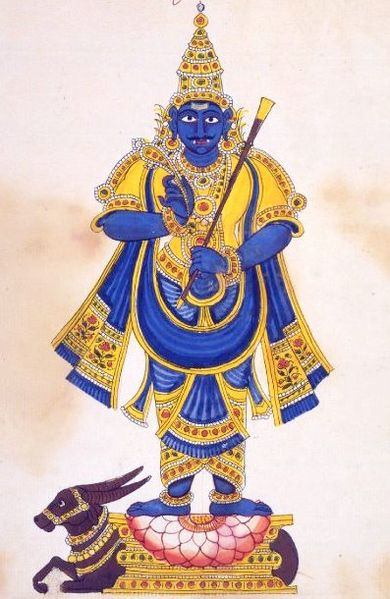
YAMARA | THEY WHO WALK WITH DEATH
Yamarans are green-skinned humanoids associated by other vedans with death. While they have their morbid sides, most cultivate an image of decadent lethargy, lounging about, taking it all in and only acting when it is most advantageous to do so. Yamarans have grim senses of humor, and some hide rather potent tempers beneath their disinterested facades. Yamarans are never Lawful (Good), but they need not be Chaotic (Evil).

Yamarans stand about as tall as human beings. Other than their green skin (and sometimes oversized canine teeth), they generally look like human beings save that their arms fork at the elbow into two separate forearms – they have four hands, but only two arms emerging from their shoulders. Because of this anatomical oddity, armor costs are 10% greater for yamarans than for other humanoids. Because of their multiple hands, they can wield two bucklers in addition to wielding one or two weapons. Generally, their multiple hands are two closely spaced to allow them to wield more than two weapons at a time effectively.

Yamarans may multi-class as assassin/barbarian/cleric, using the rules mentioned above, or as assassin/clerics, assassin/magic-users or assassin/fighters using the normal multi-classing rules. A yamaran that awakens as an assassin finds that his skin has turned a deep blue color, giving him a +2 bonus to hide in shadows. A yamaran that awakens as a barbarian, he finds his skin as become blood red, and his lower canines have grown into tusks, giving him a bite attack that deals 1d3 points of damage. A yamaran who awakens as a cleric retains his green skin, and gains the ability to cast deathwatch once per day as a bonus spell.

Yamarans speak Common and Vedan. They might also speak Goblin, Ogre, Ogre Mage, Sylvan or Fiendish.

RUDRANA | THE STORM CHASERS
Rudrana are vedans of the mountains, storm chasers who thrill to the crack of thunder and flash of lightning. They are outdoorsmen with fiery tempers and an enormous hunger for life and experience. The rudrana become bored easily, and they delight in all the new fads and fashions.

Rudrana stand slightly taller than human beings. They have ruddy skin, three heads and four arms, all based on the human pattern. Because of their strange anatomies, armor costs are 50% greater for rudrana than for other humanoids. Due to their four arms, they can wield up to four weapons (with the normal rules applied for wielding multiple weapons), or replace additional weapons with bucklers.

Rudrana enjoy a +2 bonus to save vs. electricity damage, so in tune are they with lightning. Once per day, they can use the spell shout. Because of their multiple heads, rudrana are only surprised on a roll of 1 on 1d8. Unfortunately, three minds are often distracting, and rudrana suffer a -1 penalty to initiative rolls.

Rudrana may multi-class as druid/ranger/magic-users, using the rules mentioned above, or as ranger/druids or ranger/magic-users using the normal multi-classing rules.

Rudrana speak Common and Vedan. They might also speak Dwarf, Hobgoblin, Storm Giant or Sylvan.

VISHNARU | THE PRESERVERS
Vishnaru are the holy vedans, wise and philosophical preservers of cosmic order. They are intellectual and tend to be very beautiful. Vishnaru are often Lawful (Good), but are never Chaotic (Evil).

Vishnaru stand slightly taller than human beings. They have light blue skin and four arms. Because of their strange anatomies, armor costs are 50% greater for vishnaru than for other humanoids. Due to their four arms, they can wield up to four weapons (with the normal rules applied for wielding multiple weapons), or replace additional weapons with bucklers.

All Vishnaru are surrounded by a halo of light as bright as a torch. They can willingly suppress this halo.

Vishnaru may multi-class as cleric/magic-user/fighters, using the rules mentioned above, or as cleric/magic-users or cleric/fighters using the normal multi-classing rules. Vishnaru that multi-class using the special rules gain the following benefits: In the cleric form, a vishnaru’s halo acts as a paladin’s protection from evil aura. In the fighter form, the vishnaru’s halo grants him extra-sensory powers, denying his opponent’s any bonuses from outnumbering him or attacking from behind. In the magic-user form, the vishnaru’s halo grants him a +2 bonus to Will saving throws vs. spells and spell-like effects.

Vishnaru speak Common and Vedan. They might also speak Elf, Gnome, Celestial, Dragon or Sylvan.

AGNIRI | THE FIRE-BORN
Agniri are born of flame, and enjoy deep passions and a preternatural ability to communicate with others. They are bright and engaging folk, rarely materialistic, who enjoy visiting and experiencing strange cultures. Despite their propensity for travel, agniri always seem to be at home, and they have a knack for making others feel at home.

Agniri stand as tall as human beings. They have bright red skin, two heads and four arms. Because of their strange anatomies, armor costs are 50% greater for agniri than for other humanoids. Due to their four arms, they can wield up to four weapons (with the normal rules applied for wielding multiple weapons), or replace additional weapons with bucklers.

Agniri enjoy resistance to fire and a +2 bonus to save vs. non-damaging fire effects. They have a knack for communicating (treat this as a task roll modified by charisma, allowing them to communicate in very simple terms in languages they do not already know).

Agniri may multi-class as bard/magic-user/fighters, using the rules mentioned above, or as bard/clerics, bard/magic-users or bard/fighters using the normal multi-classing rules.

Agniri speak Common and Vedan. They might also speak any other language they wish, though most learn Dragon, Fire Giant and/or Fire Elemental.

The Virgin Woode – The Next Nod Hexcrawl

My original map of the region*

The Virgin Woode is a narrow coastal plain backed by a wide swathe of wooded hills. The woodland is composed of such trees as oak, hawthorn, elm, birch and magnolia. It runs along the eastern coast of Antilia, from the Bloody Mountains in the south to the Trow Hills in the north. To the west it is bordered by the Purple Mountains.

Upon the disappearance of the Emperor of Nomo and the subsequent decline and fall of that empire, the tributary city-states of the Motherlands sought to claim a portion of their old master’s power. This was first attempted in a series of ineffective wars, as no one city-state was powerful enough that it could best its rivals, separated as they were by vast tracts of wilderness.

Begrudgingly, the aristocracy was forced to turn to “vulgar commerce” to rake in the gold, chartering adventurers to delve into the underworld and merchants to ply the seas or take caravans through the wilderness. The city-state of Guelph really got the ball rolling by their establishment of Port Janus at the midway point in Mother Ocean between the eastern landmass and western landmass. From there, they skirted the Blustering Main and founded the colony of Argentum in Hybrasil, discovering rich veins of silver, gold and electrum.

As the Guelphlings moved this metal back home, the filibusters of Tremayne began sallying forth from their normal haunt, the Tepid Sea, and conducting piracy on the high seas. With the galleons of Guelph so harried on Mother Ocean, the merchants of Antigoon were able to move through Mother Ocean and through the stormwracked Blustering Main to found their own trading post in what came to be called Dweomer Bay, after the strange magical radiations of that landscape.

Eventually, Port Janus fell to the pirates of Tremayne, cutting Argentum off from its metropolis (confusing, I know, but I’m actually using the word “metropolis” properly here). Dweomer Bay continued to thrive, though, as the Virgin Woode beyond produced cargo ships more often than treasure ships, and because the Antigooners and their ilk proved a seafaring match for pirates, where the landlubber Guelphings did not. The wars between the colonists and the pirates continue to this day, of course, but Dweomer Bay’s libertine attitudes and focus on commerce has been an attractive lure to adventurers in search of lucre, merchants desperate to escape overbearing nobles and every weirdo in the world yearning to let his or her freak flag fly has kept brave, hearty souls traversing the pirate haunted waters of the Blustering Main to Dweomer Bay or one of the many village and towns that now dot the shore of the Virgin Woode.

These colonists, scalawags, adventurers, roustabouts and ne’er-do-wells have much to fear, though. By land, the fey and the wild elves harry them at every turn; many a trapper has survived a bear attack only to perish under the gnarled foot of a treant, who marks the occasion with no more than a casual shrug of its woody shoulders and a scrape of the foot on a handy boulder. By sea, an ancient empire has arisen “from the silt” – the aquatic elves of Atlantis desire to expand their empire on land, and seek to choke off the commerce that is Dweomer Bay’s lifeblood.

Wild elves, cunning fey, avaricious Atlanteans, dangerous elven ruins … there’s plenty to see and do in the Virgin Woode.

* I just recently resurrected an external hard drive that had a ton of my original work on the Land of Nod! So excited!

Mythic Races II – The Olympians

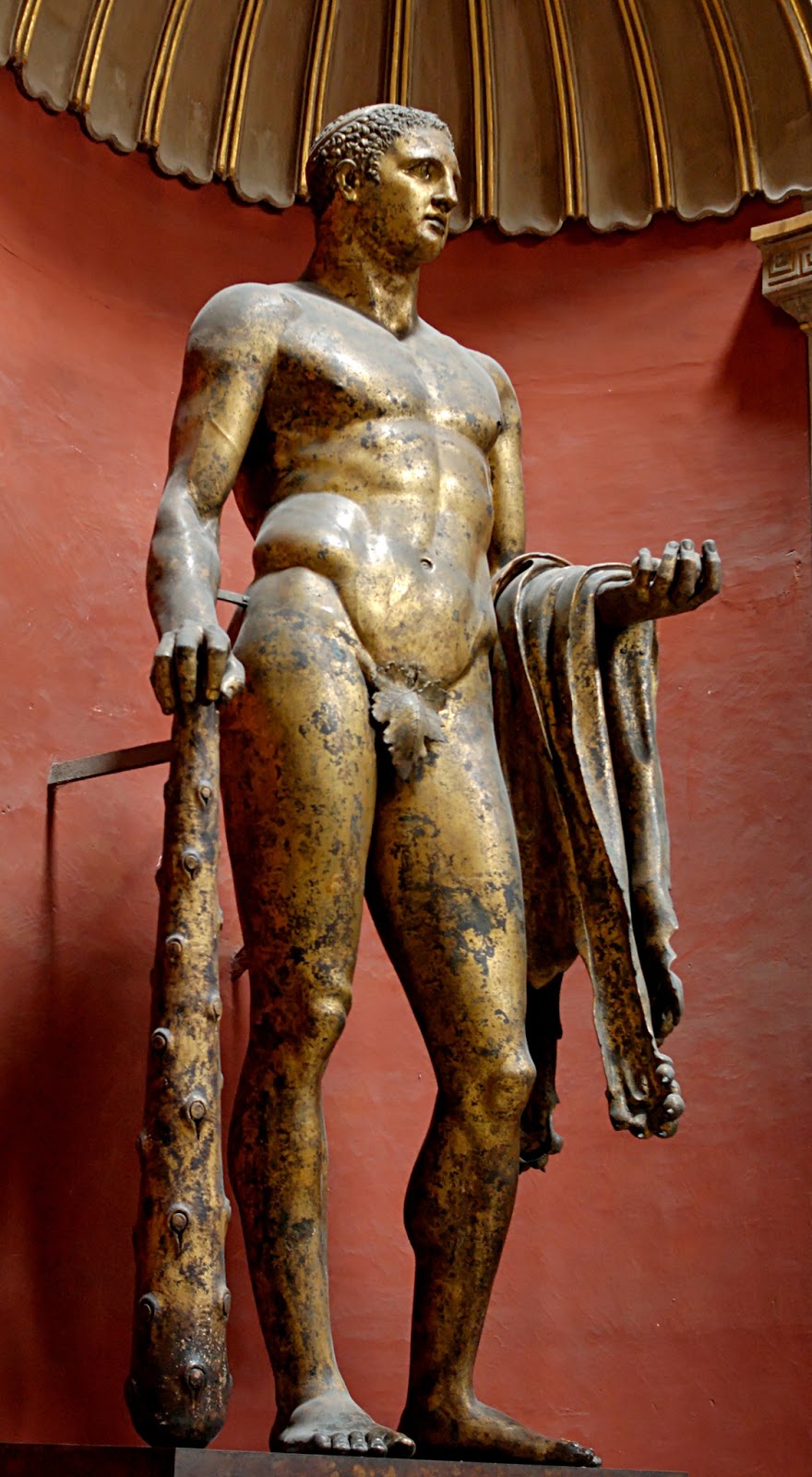
Continuing with the mythic races, today we have the Olympians. In this case, I imagined them as looking like metallic statues of the gods they are named for – enjoy.

HERCULOIDS

Herculoids are large, robust mechanical men with bronze skin. They were built for strength and battle, primarily in arenas, and relish taking on large and huge monsters in front of a crowd. Herculoids like to stay well-oiled and polished. They tend to be arrogant and brash, but more often than not they can back up their bravado with their deeds.

Herculoids stand about 8 feet tall and count as medium-sized creatures. However, when their ire is raised (or when they want to show off for a crowd), they can “flex” their “muscles”, increasing their size to large and gaining the bonuses and penalties associated with that size. They have a movement rate of 30 feet per round and can see up to 60 feet in the dark. Their metallic skin gives them a natural AC of 13. Their construction makes it impossible for them to wear platemail and plate armor.

Herculoids are quite strong, adding two points to their starting strength score. They are not built for brain power, though, and thus lose two points from their starting intelligence score. A herculoid’s starting ability scores cannot be altered above 19 or below 3.

A herculoid’s braggadocio makes them stubborn foes; they enjoy a +2 bonus to save vs. fear and fatigue, and have a knack for bending bars and breaking down doors. They are, however, easily goaded into fights, suffering a -2 penalty to save vs. such mind-affecting effects.

Herculoids are +1 to hit huge monsters, and increase their AC by +4 against dragons and hydras.

Herculoids speak Common and Olympian. They might also speak Earth and Fire Elemental, Cyclopes, Harpy, Sylvan and Dwarf.

Herculoids cannot multi-class, as they have one track minds.

APOLLOIDS
Apolloids look like peerless sculptures of male humans. Their skin is made of gilded steel and dazzles the eyes when struck with sunlight (or magical light). Beautiful and conscious of their beauty, apolloids have a penchant for waxing poetic and commanding the stage. They are generally narcissists with the beauty and charm to get away with it – at least for a while.

Apolloids are medium-sized creatures with a base speed of 30 feet. Their metallic skin gives them a natural AC of 12. Their construction makes it impossible for them to wear platemail and plate armor.

Apolloids are graceful and charming, increasing their starting dexterity and charisma scores by one point. Their egotism and delicate construction mean they suffer the loss of one point to their starting wisdom and constitution scores. These ability modifications cannot increase a score above 18 or reduce it a score below 3.

Apolloids are creatures of light, and can see up to 120 feet in complete darkness. Their honeyed words give them a knack for trickery and a +1 bonus to reaction rolls with all creatures but those who hate the Sun. Apolloids receive a +1 bonus to hit with all bows.

Apolloids can shed light (per the spell) for up to 10 minutes per day. These minutes need not be consecutive. Once per day they can cast daylight.

Apolloids speak Common and Olympian. They might also speak Elf, Sylvan, Air Elemental, Fire Elemental and Dragon.

Apolloids may multi-class as bard/magic-users, bard/clerics and bard/fighters.

ATHENOIDS
Athenoids are warriors born, statuesque fem-bots with steel skin and the minds of tacticians. Athenoids do not look for battle, but never shy from it. They enjoy taking the lead in any situation, but have a tendency to think things through before jumping into battle, unlike the herculoids. They are never Chaotic (Evil) in alignment.

Athenoids are medium-sized creatures with a base movement of 30 feet per round. They can see up to 60 feet in the dark. Their metallic skin gives them a natural AC of 14. Their construction makes it impossible for them to wear platemail and plate armor.

Athenoids are wise and steadfast, enjoying a +1 bonus to their starting wisdom and constitution scores. Their deep thinking, however, makes them slow to act and hard to communicate with, meaning they lose one point from their starting dexterity and charisma scores. These ability modifications cannot increase a score above 18 or reduce it below 3.

Athenoids have a natural affinity for divine spells. An athenoid with a wisdom score of 10 or higher can cast the following spells, each once per day: Virtue, resistance and bless. Athenoids receive a +2 bonus on Will saving throws against chaotic (evil) cleric spells.

Athenoids speak Common and Olympian. They might also speak Celestial, Dwarf, Sylvan, Earth and Air Elemental and Dragon.

Athenoids can multi-class as fighter/war priests (a specialty cleric), fighter/warlocks (a variant of sorcerer) or fighter/scouts (a variant of thief).

PLUTOIDS
The plutoids are grim mechanical men with skin of black bronze. Cthonic folk, they take to darkness and dim deeds like a fish takes to water. Plutoids favor gravity, brevity and dignity; they are not popular at parties. Plutoids are never Lawful (Good), but they need not be Chaotic (Evil).

Plutoids are imposing creatures, always 6 to 7 feet tall, with unsympathetic eyes that can see up to 120 feet in complete darkness. They are medium-sized creatures with a base movement of 30 feet per round. Their metallic skin gives them a natural AC of 13. Their construction makes it impossible for them to wear platemail and plate armor.

Plutoids increase their starting intelligence and wisdom scores by one point, but must deduct two points from their starting charisma scores. These ability modifications cannot increase a score above 18 or reduce it a score below 3.

As creatures of the underworld, they can detect treasures of precious metals and gemstones worth at least 20 gp as though detecting evil or magic (per the spells). In addition, a plutoid with a wisdom score of 10 or higher can cast the following spells, each once per day: Deathwatch, detect undead and detect poison.

Plutoids speak Common and Olympian. They might also speak Goblin, Sylvan, Earth Elemental, Fiendish and Dragon.

Plutoids may multi-class as assassin/cleric, assassin/magic-user or assassin/fighters.

In My Day … The Curmudgeon Class

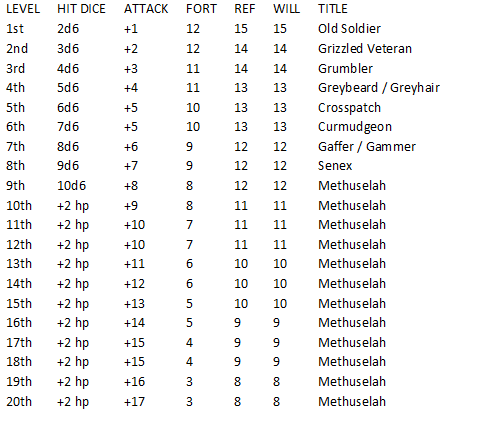
Not every adventuring warrior is a young pup, fresh out of learning the ropes as a caravan guard. A few of those men-at-arms stay on the job until they become sergeants-at-arms and then stay on a bit longer until, old and grey, they finally decide to go out with a bang. Thus, we have the curmudgeon.

Curmudgeons are a bit different than most starting PC’s. For one thing, they begin the game mired in old age, and suffering whatever penalties you decide to a lot to the elderly in your game. For another, while they’re not any more experienced as adventurers than the young folks, they are a bit more experienced than the young ones in other ways.

ROLL D6 FOR HIT POINTS

REQUIREMENTS

A curmudgeon must be old (and suffer all penalties that go with being old), and must have a Strength score of 9 or higher and a Wisdom score of 13 or higher. It also helps if they’re grumpy.

ARMOR ALLOWED

Any armor, all shields.

WEAPONS

Any weapon.

SKILLS

Bend bars, break down doors, find secret doors, riding, trickery.

CLASS ABILITIES

Curmudgeons are men and women who have done years and years of service as men-at-arms, sergeants-at-arms, caravan guards, town guards, etc. In essence, they’ve been NPC’s all their life, and only when their hair turned silver did they finally decide to become adventurers. As such, they aren’t as green as the average 1st level character, and therefore begin the game with 2 Hit Dice.

Curmudgeons tend to be a bit on the grumpy side, and thus suffer a -1 penalty on reaction checks. They don’t scare easily, and enjoy a +1 bonus on saves vs. fear, but they also suffer a -1 penalty on saves vs. fatigue.

Curmudgeons have been around the block a few times, and have probably forgotten more stories and legends than they remember. As such, they can use the legend lore ability of a bard of equal level.

Curmudgeons are famous for their stubbornness and their so-called “old man strength”. Curmudgeons can continue fighting until they have reached -5 hit points, provided they have something worth fighting for. Once per day, they can boost their strength score by 1d6 points for 1 round per level (max. 6 rounds).

Curmudgeons have long experience in mentoring young whippersnappers. When adventuring with characters of 1st to 3rd level, they can, once per day, lend them a bonus equal to the curmudgeon’s own Wisdom bonus on a single attack roll or saving throw.

At 9th level, a curmudgeon can retire to a favorite tavern, attracting a retinue of 1d4 men-at-arms per level as flunkies and admirers. The curmudgeon gets free room and board at the tavern, and also receives 1d3 free rumors each month concerning possible adventures or opportunities.

Demi-Humans Inspired by the Norse Mythos

This idea came to me a few days ago. There is a tradition in RPG’s of turning unique monsters from mythology and turning them into “species of monsters”, Medusa and Pegasus being but two examples. The other day, I was thinking about using the gods of various pantheons as inspiration for designing demi-human races for RPG’s.

This first go at the concept draws inspiration from Norse mythology.

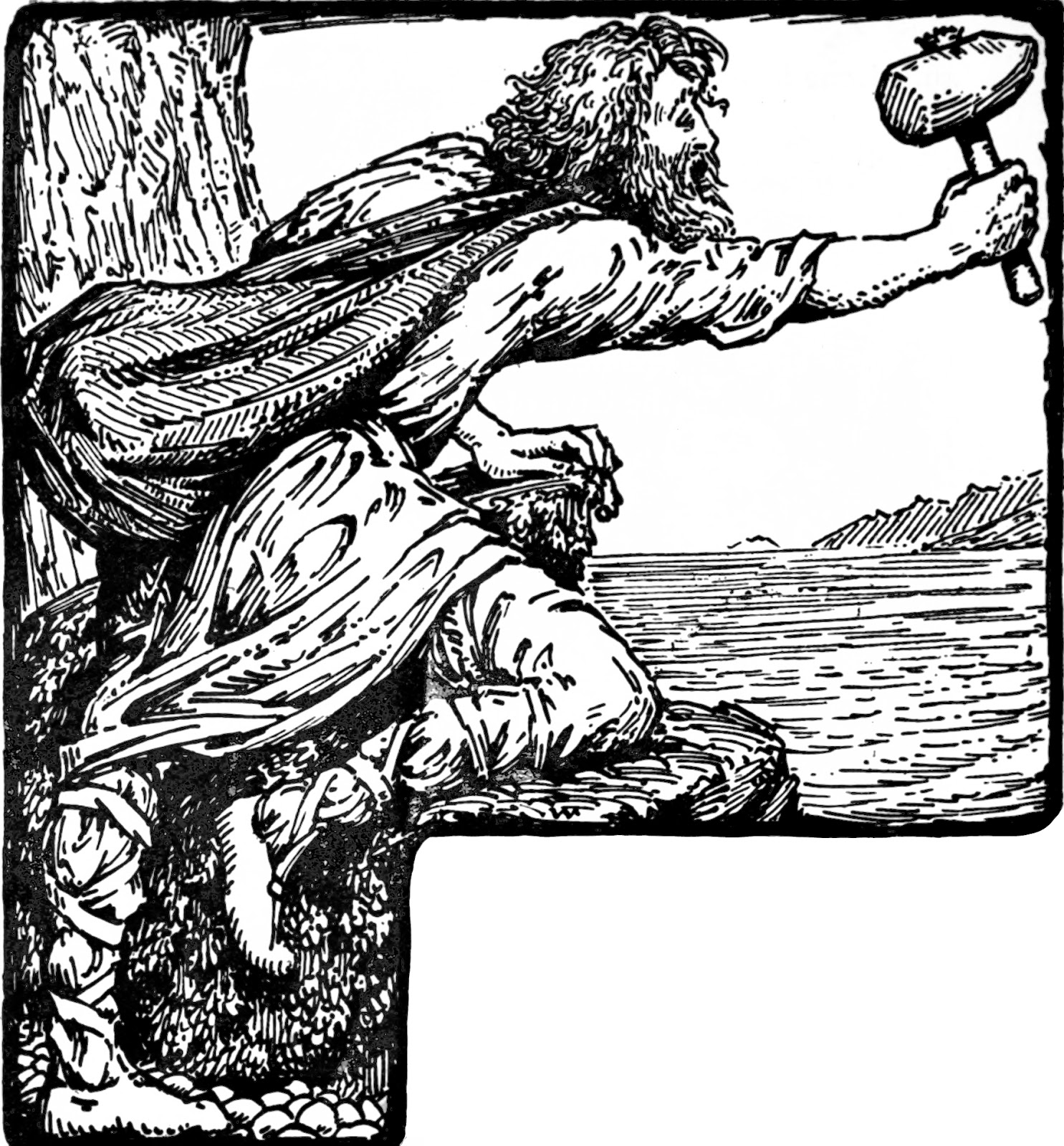
THUNORS
The thunors are tall humanoids with ruddy skin, copious manes of hair in various shades of red (and, very rarely, blond) and eyes that range from blue to grey. They are usually quite strong, with large, meaty hands and faces that suggest an angry Neanderthal. Thunors are good-hearted and hate bullies, but they are also boisterous, assertive, aggressive, stubborn, and prone to solving problems with brute force. Most thunors are aligned with Law.

Despite averaging about 7 feet tall and built like brick houses, thunors are only medium-sized creatures. Their powerful shanks propel them forward at a speed of 30 feet per round. They can see in the dark up to 60 feet. This “darkvision” is in black and white only, but it is otherwise like normal sight.

Thunors are built like oxen and add one point to their starting strength and constitution scores. They are not, however, known for their brain power or self-control, and so must deduct one point from their starting intelligence and wisdom scores. These ability modifications cannot increase a score above 18 or reduce it a score below 3.

Thunors enjoy a +3 bonus on saving throws against electricity and sonic attacks, as well as a +3 bonus on Will saves against magic unless they themselves are spellcasters. Thunor spellcasters lose this bonus to save vs. magic.

Thunors have a mystic connection to both the earth and sky. They are capable of treating half of the damage from their melee attacks with metal weapons as electricity or sonic damage. This is useful for overcoming some creatures’ resistance to weapon damage. When a thunor scores electricity damage, his weapon is surrounded in crackling electricity, and when he scores sonic damage, his hits are accompanied by a thunderous boom.

Thunors are +1 to hit giants, ettins and ogres in combat.

While they do not care much for magic or magic items other than magic weapons and armor, they will deign to use gauntlets of ogre strength and belts of giant strength. Thunor are also capable of using dwarven throwers.

Thunors speak Common and Thunor. They might also speak Dwarf, Elf, Ettin, Kobold and the various languages of the giants.

Thunors can multi-class as barbarian/clerics, barbarian/druids and barbarian/thieves. See Multi-Classing below for how this works.

FREYLINGS

The freylings are lithe, comely folk with large, violet eyes, alabaster skin and hair of copper, silver or gold. Freylings stand about 4 to 5 feet tall, and their narrow frames make them look very fragile. They delight in the sensuous, and have a bad habit of charming people of the opposite sex just for the fun of doing; the feelings of others rarely enter into their calculations.

Because of their height and slender frames, freylings count as small creatures with a base speed of 30 feet.

Freylings tend to be beautiful and vivacious, allowing them to add one to their starting charisma score. Their slight frames tend to be on the weak side, though, so they must deduct one point from their starting strength scores. These ability modifications cannot increase a score above 18 or reduce it a score below 3.

Freylings have darkvision to a range of 120 feet. They can make their bodies glow (per the light spell) for up to a total of 10 minutes. In addition, once per day they can assume the shape of a falcon, cat or boar for 1 round + 1 round per character level. When in this form, they retain their attack bonus and mental ability scores and abilities, but use the attack forms and damage of their new form. They also have any physical abilities of their new form.

Freylings speak Common and Freyr. They might also speak Elf, Gnome, Goblin, Kobold and Sylvan.

Freylings may multi-class as bard/druids, bard/duelists and bard/thieves.

WOTANI
The wotani are a strange, reclusive race of humanoids. They have a slightly simian appearance, their bodies covered with taupe colored hair (it turns white as they age), with only the burgundy colored skin of their faces, palms and the bottom of their feet showing. Wotani walk with a hunch. They have one golden eye, and one eye of pure black.

Wotani are small creatures with a movement rate of 20 feet per round. They have darkvision to a range of 60 feet and have a knack for finding secret doors.

The wotani are wise souls, and add one point to their starting wisdom score. Their propensity to speak in riddles and manipulate people makes them unpopular with folks, and so they deduct one from their starting charisma score. These ability modifications cannot increase a score above 18 or reduce it below 3.

Wotani have a natural affinity for divination spells. A wotani with a wisdom score of 10 or higher can cast the following spells, each once per day: Augury, detect evil and detect magic. Wotani receive a +2 bonus on Will saving throws against divination spells.

Wotani speak Common and Wotan. They might also speak Celestial, the Elemental tongues, Fiendish and Sylvan.

Wotani may multi-class as cleric/diviners, diviner/fighters and diviner thieves. The diviner is a specialist type of magic-user.

LOKAI
Lokais are nimble little bastards, thoroughly untrusthworthy and always scheming. They have swarthy skin, eyes that burn like hot coals (usually red, but intensifying to white and blue when the lokai is scheming) and their hair is actually a flickering flame (bright as a lantern, but they can dim it to a very dim radiance).

The lokai are graceful and slim, and stand about 5 to 6 feet tall. They count as medium-sized creatures and have a base movement rate of 40 feet per round. They have darkvision to a range of 120 feet and have a knack for picking pockets and trickery.

A lokai’s lithe form gives it a bonus of one point to its starting dexterity score. Their silver tongues also give them a one point bonus to their starting charisma score. Unfortunately, they lack in muscle mass and must deduct one point from their starting strength score. These ability modifications cannot increase a score above 18 or reduce it below 3.

Lokai enjoy a +3 save vs. fire and fire spells. They have a +2 bonus to save vs. magic, and can see magical auras (per the detect magic spell). They enjoy a +1 bonus to hit with daggers and darts.

Lokai speak Loki and Common. They might also speak Dwarf, Elf, Gnome, Goblin, Kobold, the various Giant tongues and the secret language of reptiles.

Lokais can multi-class as assassin/enchanters, enchanter/thieves or enchanter/fighters. The enchanter is a specialist type of magic-user.

The Vigilante

The war on chaos cannot be won in the streets alone, for beneath those streets, in hidden places, the lords of chaos lurk and plot the destruction of all that is lawful and good. The vigilante is a warrior against chaos who isn’t afraid to get his hands dirty. He’s not a shining knight, like the paladin, or a beacon of hope like the cleric, but rather a rugged street warrior on par with the thief, but playing for the other side.

The vigilante really doesn’t belong in medieval European fantasy. He is a creature of the lurid penny dreadfuls, dime novels and pulp magazines of the late 19th and early 20th centuries. The Shadow is one of the more famous of these dark avengers, but he is not alone and the stock type survives to this day. Vigilantes are expected to be resourceful, cunning, handy with their fists (and whatever else they can find to bash in their opponent’s head) and sneaky. They employ many of the techniques and skills of their less exotic foes, thieves and assassins, and thus also dress and arm themselves much like these rogues.

ROLL D8 FOR HIT POINTS

REQUIREMENTS
Strength, Dexterity and Intelligence of 13+; Vigilantes must be Lawful (Good)

ARMOR ALLOWED
Padded armor, leather armor, studded leather armor, ring mail, mithral chainmail and bucklers

WEAPONS ALLOWED
Crossbows (any) and all light melee weapons

SKILLS
Balance, climb walls, escape bonds, hide in shadows, jump, listen at doors, move silently, open lock, tracking, trickery

XP ADVANCEMENT
Vigilantes advance as paladins

CLASS ABILITIES
Vigilantes must hide their true identity, lest their value as a crime fighter be negatively affected. While wearing their mask, the vigilante enjoys a +2 bonus to save vs. fear and other mind affects, including mind control. In addition, they can attempt to cause fear (per the spell) in humanoid creatures with no more than half the vigilante’s hit dice. Thus, a 1st level vigilante can cause fear in 0 hit dice creatures, while a 10th level vigilante can cause fear in creatures with 0 to 5 hit dice. If unmasked, the vigilante loses these bonuses and abilities.

Vigilantes have the same need to disable foes quickly that thieves and assassins have, but are often bound by their code of conduct not to kill their victims. A vigilante has the same skill at backstabs as thieves, but any time they would normally kill their target and are employing a bludgeoning weapon, they can instead choose to reduce their victim to 1 hit point and knock them unconscious for 1d6 turns. The victim can attempt a Fortitude saving throw to cut this time in half, but make sure the vigilante is unaware of whether this saving throw is successful or unsuccessful.

Vigilantes are known for their resourcefulness, often having just the piece of equipment they need to beat any situation. As long as a vigilante has at least ten pockets, pouches or sacks (or their equivalent) on their person, they can spend 50 gp to fill them with “miscellaneous gear”. When, during an adventure, a vigilante suddenly needs something that is not on their equipment list other than a weapon, armor, money or magic item, they can attempt a Will saving throw modified by Intelligence to find that item in one of their pouches. If the item costs less than 10 gold pieces, there is no modifier to this saving throw. For every 10 gp of value an item has, this roll is modified by -2. If the roll is successful, the contents of one pouch are now known (i.e. the vigilante can only do this as many times as they have pouches or sacks) and the item is added to the vigilante’s equipment list.

At 6th level, the vigilante can choose an arch-nemesis for themselves. If this is a unique creature (i.e. Gork, the Guildmaster of Assassins in the city of Yorok), the vigilante enjoys a +2 bonus to hit and damage them, a +2 bonus on task checks made to find or defeat them, and a +2 bonus to save vs. their special abilities (if any). Once this unique arch-nemesis is defeated, the vigilante may choose a new arch-nemesis.

The vigilante can, instead of choosing a unique arch-nemesis, choose an entire class of creatures as his arch-enemies. Sample arch-enemies could be goblins, thieves, chaotic magic-users, green dragons or devils. Against his arch-enemies, the vigilante enjoys a +1 bonus to hit and damage them, a +1 bonus on task checks made to find or defeat them, and a +1 bonus to save vs. their special abilities (if any).

A 9th level vigilante can establish a hideout to serve as his secret base of operations within a settlement or in the wilderness near a settlement. This signifies that the settlement is under the vigilante’s protection. The vigilante attracts a 3rd level vigilante to serve as his sidekick and apprentice, and earns one contacts per level within the city-state. Use the following table to determine the general occupation of these contacts.

Contacts are a source of information (and adventures) and have varying amounts of loyalty to the vigilante based on their alignment:

This loyalty is the percentage chance they will cooperate with the vigilante and do special (though not overtly dangerous favors) for the vigilante. Dangerous favors, or resisting torture to protect the vigilante, are made at half normal loyalty.

Merry Christmas from the Land of Nod!

Quick note to wish everyone a Merry Christmas and all the blessings of the season. More than getting everything you wanted, I hope you all have everything you need (and are wise enough to know it, if you do). My Christmas present to you folks today is a quick preview of some new art I’ve commissioned for the forthcoming NOD Companion – all of it drawn by Jon Kaufman – for the classes collected in the book. Enjoy the art, and I hope you all have a wonderful day, whether you’re celebrating or not.

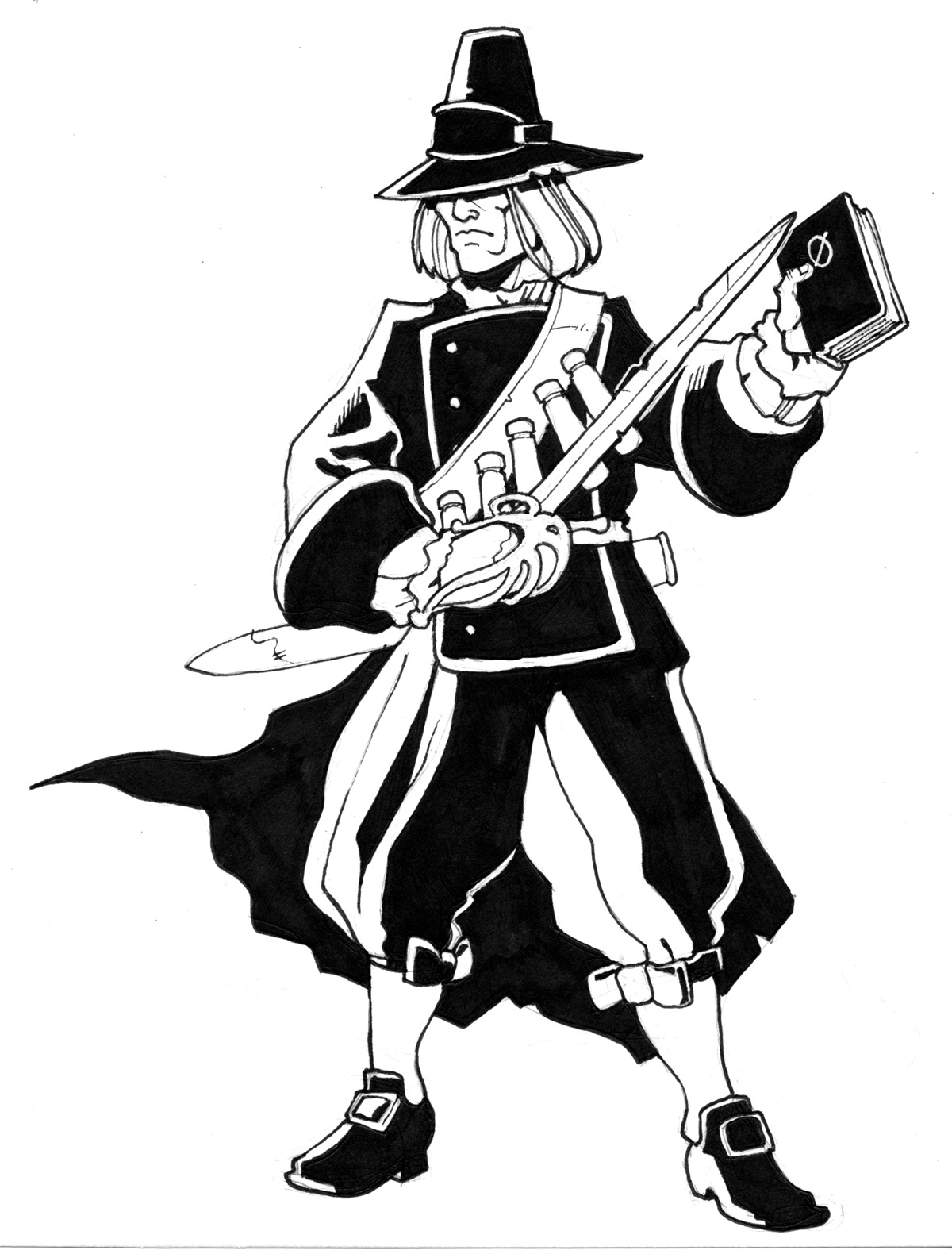
Puritan by Jon Kaufman


Psychic by Jon Kaufman


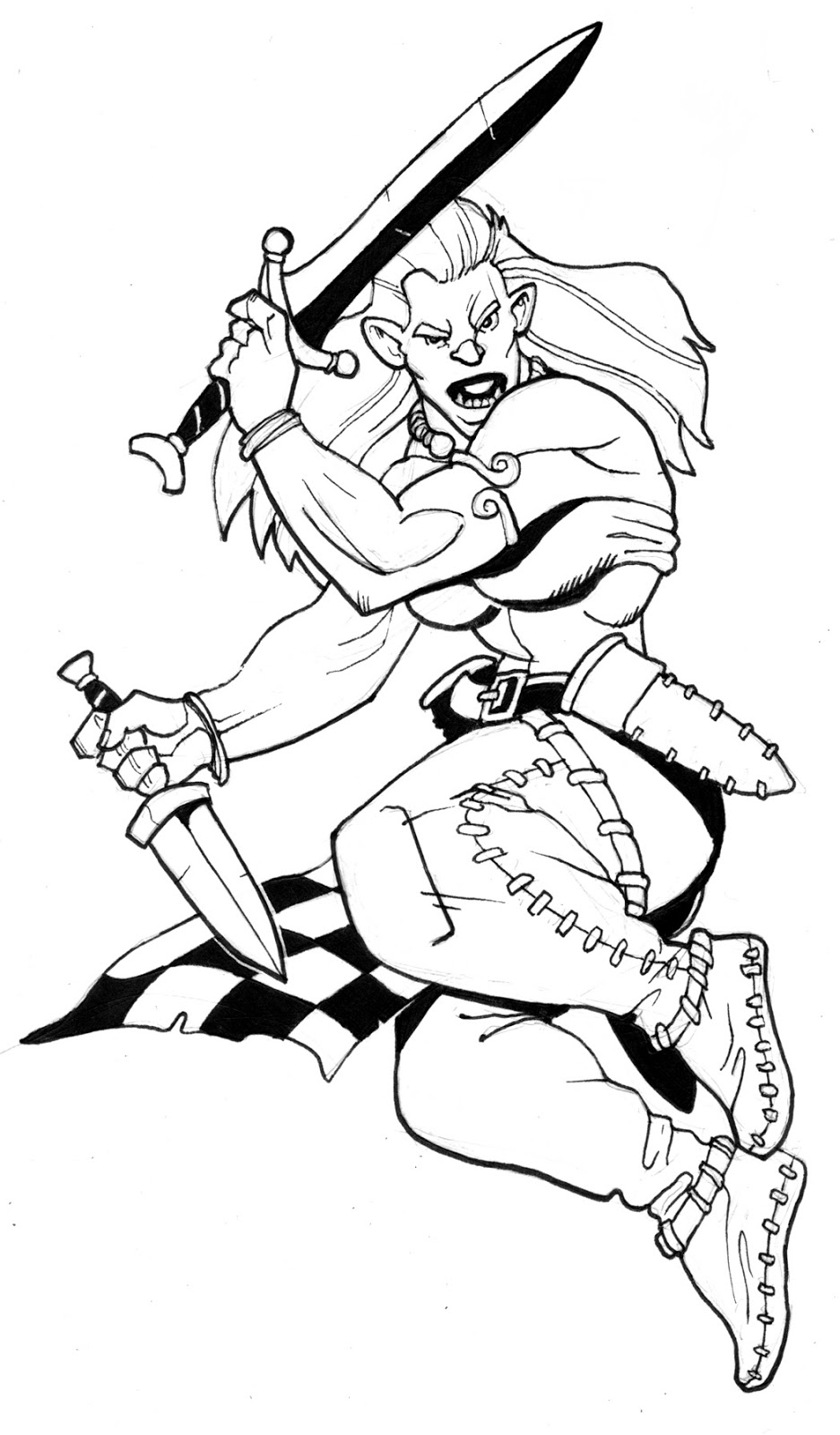
She-devil by Jon Kaufman


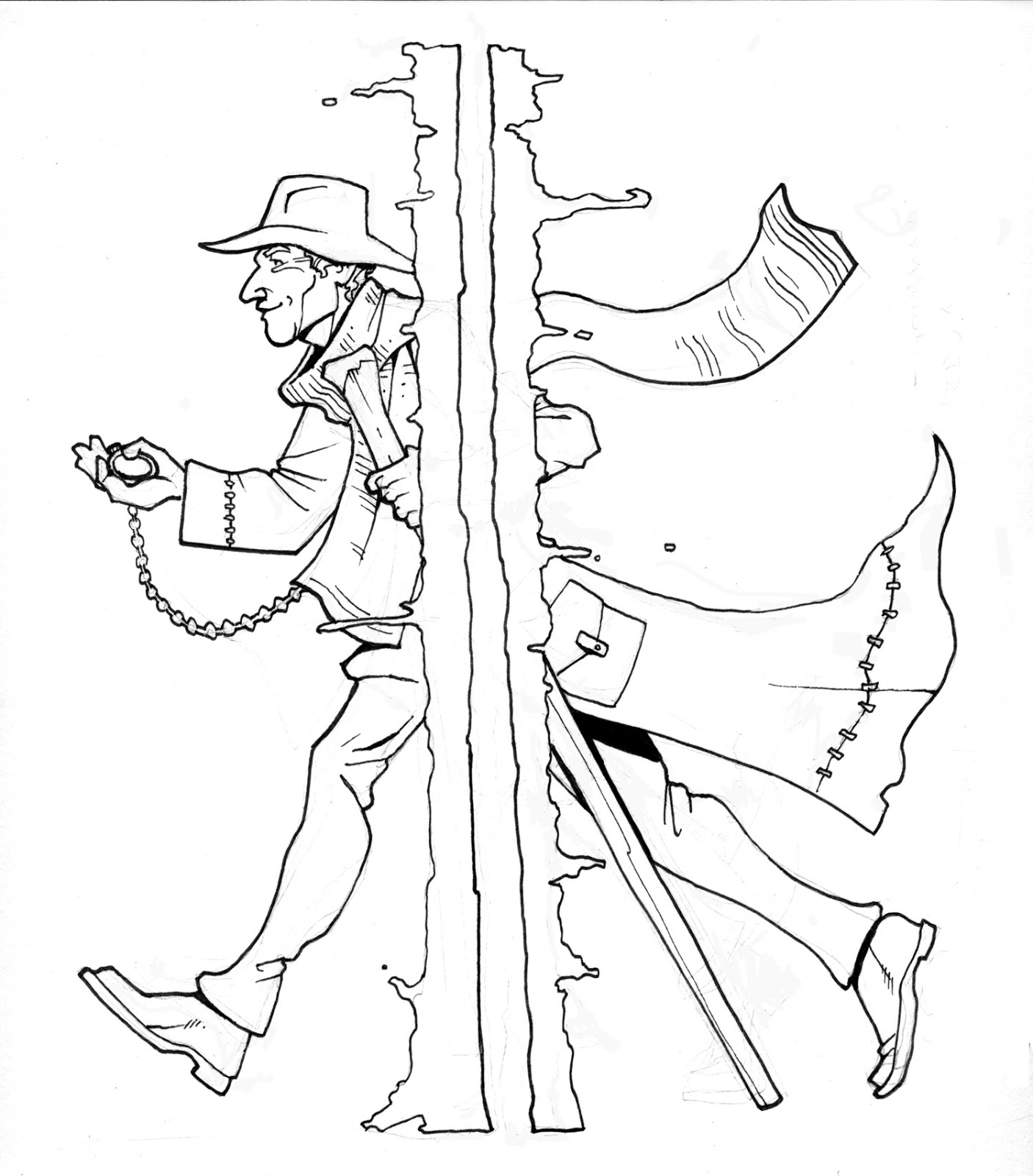
Traveler by Jon Kaufman.

I’ll be posting a couple new ones soon that will appear in the book – The Vigilante and the Femme Fatale.

Merry Christmas folks! Thanks for making me feel like a success with this little hobby of mine. Like many folks of the geeky persuasion, I’ve never had the best self image in the world, and your support over the last few years has done wonders for me. In the coming year, let’s all remember to be kind to one another.