Meme’s Away! The Fantasy Masterworks List

Via The Silver Key

Bold means I’ve read it, italics means I own it but haven’t read it yet. And yes, I’m ashamed at how many I’ve yet to read.

1 – The Book of the New Sun, Volume 1: Shadow and Claw – Gene Wolfe
2 – Time and the Gods – Lord Dunsany
3 – The Worm Ouroboros – E.R. Eddison
4 – Tales of the Dying Earth – Jack Vance
5 – Little, Big – John Crowley
6 – The Chronicles of Amber – Roger Zelazny
7 – Viriconium – M. John Harrison
8 – The Conan Chronicles, Volume 1: The People of the Black Circle – Robert E. Howard
9 – The Land of Laughs – Jonathan Carroll
10 – The Compleat Enchanter: The Magical Misadventures of Harold Shea – L. Sprague de Camp and Fletcher Pratt
11 – Lud-in-the-Mist – Hope Mirrlees
12 – The Book of the New Sun, Volume 2: Sword and Citadel – Gene Wolfe
13 – Fevre Dream – George R. R. Martin
14 – Beauty – Sheri S. Tepper
15 – The King of Elfland’s Daughter – Lord Dunsany
16 – The Conan Chronicles, Volume 2: The Hour of the Dragon – Robert E. Howard
17 – Elric – Michael Moorcock
18 – The First Book of Lankhmar – Fritz Leiber
19 – Riddle-Master – Patricia A. McKillip
20 – Time and Again – Jack Finney
21 – Mistress of Mistresses – E.R. Eddison
22 – Gloriana or the Unfulfill’d Queen – Michael Moorcock
23 – The Well of the Unicorn – Fletcher Pratt
24 – The Second Book of Lankhmar – Fritz Leiber
25 – Voice of Our Shadow – Jonathan Carroll
26 – The Emperor of Dreams – Clark Ashton Smith
27 – Lyonesse I: Suldrun’s Garden – Jack Vance
28 – Peace – Gene Wolfe
29 – The Dragon Waiting – John M. Ford
30 – Corum: The Prince in the Scarlet Robe – Michael Moorcock
31 – Black Gods and Scarlet Dreams – C.L. Moore
32 – The Broken Sword – Poul Anderson
33 – The House on the Borderland and Other Novels – William Hope Hodgson
34 – The Drawing of the Dark – Tim Powers
35 – Lyonesse II and III: The Green Pearl and Madouc – Jack Vance
36 – The History of Runestaff – Michael Moorcock
37 – A Voyage to Arcturus – David Lindsay
38 – Darker Than You Think – Jack Williamson
39 – The Mabinogion – Evangeline Walton
40 – Three Hearts and Three Lions – Poul Anderson
41 – Grendel – John Gardner [I guess the original doesn’t count]
42 – The Iron Dragon’s Daughter – Michael Swanwick
43 – WAS – Geoff Ryman
44 – Song of Kali – Dan Simmons
45 – Replay – Ken Grimwood
46 – Sea Kings of Mars and Other Worldly Stories – Leigh Brackett
47 – The Anubis Gates – Tim Powers
48 – The Forgotten Beasts of Eld – Patricia A. McKillip
49 – Something Wicked This Way Comes – Ray Bradbury
50 – The Mark of the Beast and Other Fantastical Tales – Rudyard Kipling

I guess I’ll have to get busy. Still – no HPL or CAS, and I have another couple Dunsanys that aren’t on the list.

Organizing My Thoughts on Sandboxes

From issue to issue, I’m trying to improve my sandbox hexcrawl designs. I don’t know if I always succeed, but I’m definitely trying. The first one, the Wyvern Coast, was really just a matter of trying to be original and interesting and, honestly, just seeing if I could put together a product and put it in front of people. With Nabu, I tried to produce some little dungeons to explore – so, less a description of what a place could have, and more an inventory of what the place actually had in it. I see sandboxes as tool-boxes – the writer is supplying readers with ideas that they can use to build fun sessions with their friends. With the next one, I want to take things up a notch, which means spit-balling some ideas.

1. I’ve sketched connections between named NPCs before (X hates Y, Y loves Z), but I think I need to go a bit further on this count. Each named NPC (including the monsters) should have some connection to two or three other NPCs – a history, motivation, emotion, alliance/enmity, relationship, etc – something to drive explorers from one person to the next so that the hex crawl is not only a matter of “what direction do you want to go today” (but, of course, can be exactly “what direction do you want to go today” if that makes the players happy)

2. Some NPCs should hold “pieces to the puzzle” – important rumors, knowledge about a dungeon or another NPC or a lost secret (magic item, spell, way to kill a powerful monster)

3. I should sketch out one big dungeon for each ½ region (i.e. what I publish in a given issue of NOD) and detail the intro level. The big dungeon should probably be well hidden, thus necessitating exploration and interaction for the players to find it. The big dungeon should hold a powerful MacGuffin that ties the region together – maybe an artifact, or a secret, or the catalyst of an important event

4. Each ½ region should also have at least 5 smaller dungeons – a few basic dungeons (for levels 1 to 3), and a few expert dungeons (for levels 4 to 8). What gets turned into a dungeon?

a. A monster lair
b. A tomb or mystic place
c. A stronghold
d. A village
e. A city-state, etc.

One advantage to sticking to this formula is that players will eventually pick up on it, but they won’t necessarily know which stronghold in the region has the dungeon underneath it. This gives them a reason to visit and interact and, hopefully, cause trouble.

5. The dungeons should have connections between them – clues, maps, portals, etc. and should have a connection to the big dungeon

6. I need to do more with the city-states – I’ll always try to detail at least one city-state in each ½ region like I did with Ophir in NOD #2 – Ibis, City of Sorcerers, will be the next. But for the others, I’d like to spread around some interesting, important NPCs that players will probably want to meet, or will want to avoid

a. A master artisan who can craft magical things (nothing too powerful, but useful and maybe vital to the big dungeon)
b. A demon cultist of terrible power
c. A mystic who can tell the future / heal wounds / etc for a price
d. A master rogue/bard/merchant who knows everything and can find anything – again for a price
e. A fierce fighting-man/woman who commands a company of unique mercenaries and can be a great friend or awful rival (or both)
f. A famous inn with important secrets
g. An awesome tavern – the nexus of all adventurers and no-good-niks in the region
h. A monster prince – vampire, ogre mage, etc – something powerful who can drive adventures more than be a simple target for killing and plunder
i. A sage with vital information and his own agenda
j. A valiant noble
k. A villainous noble
l. A monster who is more than it appears and holds a key that cannot easily be claimed with violence (or perhaps a “good” monster that can only provide the key if killed)
m. A demi-god in the flesh – perhaps Hercules is touring the region, or a massive, deified purple worm roosts below a city taking sacrifices from the “innocent” citizens
n. An animal trainer/beast master with wondrous mounts/pets [I’m shaky on this one, but I’m trying to think of the different hirelings that fit into the game and that players might want to visit]
o. A mysterious faction/brotherhood/sisterhood that can be a persistent thorn in the players’ sides

I guess the main thing is that I want to create an environment in which (A) There is a reason to play a game in this region vs. any other region I might invent and (B) the adventurers will have reasons beyond simple wandering to travel hither and yon as they interact with the region. I don’t, however, want to create a narrative that people are bound to follow – rather, I want gentle, passive clues that people can pick up on or ignore, but that nevertheless exist beneath the surface of the sandbox for those who wish to dig into things and occupy the space rather than just visit.

So – any thoughts from the community?

Artwork by Damascus5

Venatia – Bodbertus and Argis

Okay – probably the last preview of Venatia’s eastern half. Today, I’m covering five city-states located in (or near) the Golden Coast. Now, when I create these sandboxes, the first thing I do is randomly generate the contents of the hexes using a huge excel document I created. Based on the terrain of each hex, the excel document randomly fills it with a monster lair, natural feature, village, stronghold or, very rarely, a city. Well, when I generated Venatia, I got five cities in the northeast quadrant of the map, not including Ibis, which I had pre-placed myself – all part of the fun of random tables.

4223 Bodbertus: Bodbertus is a river port city of 5,000 people. The Bodberters, as they are colloquially called, are related to the chalkeions of the Golden Coast. They have reddish brown skin, broad, round faces with brown, grey or blue eyes and thick, straight hair of pale blond to auburn that they wear braided. They tend to be tall, averaging 6 feet in height.

Bodbertus is constructed in the lush valley of the River Vusk, which eventually flows through the Grete Myre and finally empties into the Tepid Sea. The valley is well cultivated and dotted with manorial villages. The economy is based on mining in the mountains. The city-state’s currency is the wose, minted in gold, silver and copper. The patron deity of Bodbertus is Eris, goddess of strife, contention, rivalry and war.

The city itself has an outer wall consisting of thick earthen ramparts topped with wooden spikes and patrolled by groups of 2d6 militiamen in leather armor and carrying bill hooks, short bows and long knives. There is also an inner wall measuring 60 feet tall composed of granite blocks and strong towers. The inner wall has three gates of thick, laminated pine reinforced with iron. The inner wall is patrolled by men-at-arms wearing chainmail and carrying pole axe, short sword and light crossbow (see below).

The buildings within the city are tall and narrow and constructed of white granite with sharply peaked roofs of green copper or tarred pine. Bodbertus is notable for its lush gardens, graceful architecture, expansive markets (there is a corn market, livestock market, metal market, cloth market and gem market), local fencing schools and dozens of eccentric hedgemages. In fact, there are so many mages in Bodbertus that each city guardsman is equipped with three +1 crossbow bolts, and each sergeant of the guard is equipped with three +1 bolts that cause 1d4 points of lightning damage when they hit.

The city streets follow a radial pattern, and are narrow and twisty. The most celebrated construction within the city-state is its museum of ancient treasures, an octagonal building with thick, granite walls. It contains, behind four permanent walls of force, a collection of royal regalia dating to the ancient and warlike Venatian chieftains of the woods, from whom the Countess traces her descent.

Bodbertus is ruled by a triumvirate of elected prefects, one elected by the guilds, one by the peasantry and one by the nobility. All three prefects are quite corrupt. The prefects are under the control of the Ophelia, Countess of Bodbertus, who rules the city-state’s domain and from whom the triumverate and the city’s guilds gained their charters. Ophelia has a measure of storm giant blood in her veins, making her a sorceress of no mean ability.

Bodbertus’ domain is populated by 45,000 people. The nobility consists of 25 baronets. There are also eight ecclesiastical manors. The country is divided into two shires, each patrolled by a sheriff – Jeovald north of the river and Guennock south of the river. The two men despise each other and vye for the hand of the Countess Ophelia. The city watch consists of 50 men-at-arms and the city-state’s standing army consists of 300 militia, 20 knights and 19 sergeants-at-arms.

• Ophelia, Magic-User Lvl 7; HP 24; AC 9 [10]; Save 9; Special: Spells (4th); Crimson robes, golden coronet, thin, twisty pine wand that can cause one subject to dance.

• Guennock, Aristocrat: HD 3 (19 hp); AC 2 [17]; Atk 1 weapon (1d8); Move 12 (9 in armor); Save 14; CL/XP 3/60; Special: Soldiers are +1 to damage; Platemail, battle axe, dagger.

• Jeovald, Aristocrat: HD 3 (9 hp); AC 1 [18]; Atk 1 weapon (1d8); Move 12 (9 in armor); Save 14; CL/XP 3/60; Special: Soldiers are +1 to hit; Platemail, shield, long sword, dagger.

5013 Argis: Argis is a fading city of the chalkeions. The city is constructed on a low rocky plateau with steep sides overlooking the Dinar River, with a system of pulleys and a fortified mule trail linking the city proper to its docks. The city has thick walls of stone, a number of small gates of beaten bronze and tall watch towers manned by expert crossbowmen. Argis is dominated by is ancient citadel and known for the three mighty aqueducts that bring fresh water into the city from the Sturmdrangs. Argis’ patron deity is Kubeleya, the great goddess of the Golden Sea pantheon.

The streets of Argis are narrow and maze-like, and almost impossible for outsiders to navigate what with the propensity of the locals to set up temporary booths and carts to sell their goods. Almost 7,500 chalkeions are packed into Argis’ tall, narrow, tower-like buildings. The buildings of Argis are made of fired red brick with dome-like bronze roofs. The city-state is built around a number of medicinal hot springs, and features a multitude of baths.

Argis is also known for its well-stocked shops (and outrageous prices), medicinal gardens, its brotherhood of druids and rangers that comb the hills for monsters and the fact that almost every surface of every wall and building is covered with mosaics or grotesque terracotta sculpture.

The streets are patrolled by a total of 75 hoplites in archaic armor (treat as chainmail) carrying long spears with black shafts, short swords and crossbows.

Argis has a massive temple dedicated to Kubeleya and her consort, the fertility god Atys. As one of the last cities of the chalkeions, it supports temples to Kotys, goddess of the moon, lust, revelry and the hunt, Sabazios, the cthonic horseman, Zalmoxis, the thunder god worshiped by berserkers, Dionysus (who the Motherlanders call Bacchus), Men, the little god of the moon, and the deities of medicinal springs, Vidasus and Thana.

Argis is surrounded by a domain of 67,500 peasants in 50 manorial villages and mines, mostly goat and sheep herds, but also farmers and miners of gold, copper and silver. The metals trade dominates the economy, and has prompted dozens of foreign merchant companies to construct factories in Argis. Argis has an army of 460 light footmen (mostly spearmen, slingers and archers) and a corps of 30 hoplites in platemail with shield, spear and sword.

Argis is ruled by King Thrasophon and his queen, Hyperne. The royal family also includes princes Phomachus and Hierophius and princesses Thrasoipa, Isaphraste and Lysiela. The king never appears in public without his fire drake-skin cloak (+2 save vs. fire) and his golden scepter and spiky crown.

• Chalkeion Hoplite: HD 5; AC 2 [17]; Atk 2 weapons (1d6); Move 12; Save 12; CL/XP 5/240; Special: None.

• Chalkeion Sergeant: HD 6; AC 2 [17]; Atk 2 weapons (1d6); Move 12; Save 11; CL/XP 6/400; Special: None.

• Princes: HD 7; AC 2 [17]; Atk 2 weapons (1d6); Move 12; Save 9; CL/XP 7/600; Special: None.

• King Thrasophon: HD 11 (59 hp); AC 2 [17]; Atk 2 weapons (1d6); Move 12; Save 4; CL/XP 11/1700; Special: None.

6503 Utya: Utya is a city-state of 12,500 men and women that originated as a military fortress of the ancient Nabu Empire. It is constructed on the banks of the Oeagrus River within view of the blasted remains of an ancient chalkeion citadel.

The people of Utya have coarse, fleecy hair of dark brown and eyes of brown, green or hazel that they highlight with kohl (men and women). They are magnificent physical specimens, standing 6 ½ to 7 ½ feet in height with muscular builds, angular faces and light, creamy skin.

Utya is surrounded by a triple wall of wooden palisades and thick earthworks. It has four stone gatehouses (the River Gate, Mountain Gate, Gate of the Blue Men – see [7502] for more information – and Leopard Gate or Gate of Victory) with steel-reinforced doors operated by stone golems. Within the walls are narrow, stinking, muddy streets and rows of squat, flat-topped buildings constructed of grayish-green brick. The city is built on a grid, but the “suburbs” are less ordered than the city center, which is dominated by a Moon Temple dedicated to Khonsu, the Nabu moon god, and the nomarch’s palace, a vast conglomeration of gardens, brick courtyards and square pavilions. The streets are patrolled by men wearing ring mail and carrying shields, throwing axes and curved short swords.

Utya is known for its many religious idols, which seem to glare at visitors from above every arch and around every corner, as well as its wandering gangs of priests who sing psalms (loudly and badly) for alms. Visitors to Utya usually come for its courtesans, men and women wrapped in gauzy robes of pink or midnight blue and carrying blue lanterns, even in the daytime, or the city’s infamous school of wizardry.

Utya’s economy is based on the fruit trade, with the fields around the city producing an especially tasty golden grape that is turned into a sparkling wine, and the many almond and fig orchards. The economy has been weak of late, but the people have remained cheerful through the hard times.

Utya is ruled by a nomarch (the feudal governors of ancient Nabu) named Haspedth. While the nomarch would have been appointed in the days of the empire, they are now elected by the people, with each hopeful nomarch-to-be minting tin coins in his image and people voting by dropping these coins through the front gates of the palace under the watchful eyes of the high priest of Khonsu, Tebet. The night before each election, the candidates are tested in the arena of combat with light, wooden swords, with the winner of the combat usually chosen nomarch the next day.

7215 Lithr: Lithr is an ancient city of 1,000 stone giants built at the mouth of the Oeagrus River. The city has mammoth walls of granite 150 ft tall and four mighty stone towers, each equipped with a ballista that the stone giant use as a heavy crossbow and dozens of throwing stones. The stone giants of Lithr are tall and angular in body, with pale gray skin and not a sign of body hair. They generally dress in greens and grays, usually in light tunics with sandals and, when the weather turns chilly, cloaks.

The buildings of Lithr are pyramidal stone structures, with wide streets and patrols of 1d3 stone giants (always female) each leading a black bear on a chain. Lithr is known for its lush vines of figs, its orchards of apples and the copious quantities of cider it presses each autumn. The stone giants are peaceful by nature, and welcome traders of the small folk so long as they behave. All small folk are kept at a large inn called the Pudding Pot that is run by Porogan, a swarthy Ibisian with a flair for cookery. The inn’s second story is ringed by a gallery where traders can meet with potential giant trading partners, the arrangement being easier for both small and tall. The stone giants mostly trade via barter, but will accept bars of precious metals and large gems.

Besides their apples and cider, the Lithr are known for their massive ziggurat dedicated to Ymir, the progenitor of all giants, and its corps of rangers, stone giants armed with colossal longbows (1d12 damage) and trained giant hunting owls. The temple is overseen by Wall, who has the abilities of a 6th level druid, and the rangers lead by Peorn, who has the abilities of a 3rd level ranger. Lithr’s queen is the stoic and often cruel Sikn.

7502 Palah: Palah is a city of blue-skinned men and women with golden hair and eyes of the lightest gray and blue-green. The palahi are believed to be colonists from another dimension or world – they aren’t telling – by those sages who have managed to visit them. All palahi have the ability to control people’s minds (per the charm person spell, usable at will).

Palah has a population of 17,500, making it the second largest city in the region after Ibis. The hills and valleys around the city have sewn with salt by the palahi to support their soul source of nourishment, a creeping lavender vine that produces bunches of small, purple crystalline berries that taste of salt and lime. Humans can live on the berries for a few weeks before the very high salt intake begins to take a toll on their health. The many acres of lavender vines are cultivated by over 150,000 peasants, who trill strange songs with their throats while they work, using tame giant snails to pull their plows and fertilize the fields with their trails of slime. Palahiland, as it has been termed by sages, is composed of three districts, each ruled by a zim (roughly equivalent to a count). At the extreme western end of the domain there is a small trading town called Zibbul, where outsiders trade exotic goods for mineral salts and smelted metals.

The city boasts an army of over 1,000 footmen armed with repeating crossbows (3 shots per round) and large cleavers with hooks jutting out from the back of their heads. The army also has 74 knights wearing chainmail and carrying shields, lances and cleavers mounted on what appear to mechanical armadillos.

The city-state itself is constructed on a large, flat island in the midst of a shallow acid lake. A long bridge of spun glass spans the lake, but those crossing the bridge at less than a trot must pass a saving throw or be overcome by the acrid fumes and become nauseous for a few rounds and then die choking on blood. The palahi make a living dredging weird salts and metals from the shores of the lake, the workers wearing respirators and using thick, long-handled glass scoops.

The palahi are cheerful, friendly folk. Their city has smoothly cobbled twisty streets (paved in brilliant azure stones) and spacious, multi-storied buildings built in a rococo style. The streets are patrolled by watchmen in chainmail and shield wielding cleaver, man-catcher (one per team) and longbow, and often assisted by thick, white eyeless worms that they have trained like guard animals. The city has 175 watchmen, each deadly in the extreme with their longbows – in fact, it is the fortunate thief indeed who is placed in the city stocks rather than spitted by a barbed arrow.

Palah is home to numerous little museums in the ground floor of noble homes, each a showcase of the odd collections of its owner. It is governed by King Jespers, a monarch elected by the noble families of Palah. The king, in turn, appoints dozens of nobles to his privy council and to oversee the plantations.

The palahi worship an alien god they call Vinin. Vinin’s idols, which are numerous and placed throughout the city, depict a short palahi man with a graceful build and wearing a pointed, onion-shaped red helm. He carries a thick cutlass in one hand and a skull in the other and is apparently a god of killing placated by the sacrifice of young men, who throw themselves from the glass bridge under the fourth full moon of each year in frenzied adulation.

So, the five city-states of eastern Venatia. Over the next week, I’m going to work on the Gods of the Golden Sea, maybe preview a couple other articles I’ve written, and then get to work on the city-state of Ibis.

[Edit – Wow – many spelling errors. Can you tell I posted this at 11 at night?]
Venatia – The Rotting Circus and Azure Road

4718 Sacellum of Mitra: Nomer, a powerful priest of Mitra has established a fortified abbey in a pleasant valley ringed by wooded ridges and sparkling rills. Nomer’s abbey is constructed in the Roman style prevalent in the grand city-state of Nomo, the place of Nomer’s nativity. The principal stone used in construction is limestone, supplemented with marble columns and lintels and gleaming brass ornaments. The abbey houses ten lesser clerics and their warhorses. The abbey sits atop a small rise next to the stream that flows through the valley. It consists of a large chapel to Mitra in which services for the priests and villagers are held each Sunday, storage rooms and simple living cells for the priests, including Nomer. The abbey also has a man-made grotto constructed beneath it in which private rituals are held for the priests. The ultimate goal of the Mitra-ites is to clear the woodlands of monsters and bring Mitra’s light to the villagers of the coast.

The abbey is surrounded by a village of 400 pious yeomen farmers, all free men and women which is defended by a wooden palisade with a moat and three wooden towers. The yeomen farmers live in timber longhouses built atop columns of bricks, for the valley is prone to violent weather and the stream often floods. They raise crops of barley and turnips, and the clerics maintain a vineyard and produce a middling wine. The village is protected by a force of 60 archers (leather armor, short bow, spear) commanded by 4 sergeants and 20 horsemen (chainmail, shield, horseman’s mace, light lance) commanded by 3 sergeants.

A treasure of 3,015 cp, 239 sp, 250 ep, 486 gp and 198 pounds of barley corn (worth 1 gp/lb) is kept in the village. The priests possess 1,147 sp, 2,061 gp, two hyacinths (gemstones worth 1,250 gp each) and ten coconuts given to them by a South Seas trader who sought curative magic. The coconuts are worth 10 gp each.

• Nomer, Cleric Lvl 12: HP 45; AC 1 [18]; Save 4; Special: Spells (6th); Platemail, shield, mace, holy symbol. Muscular and bitter, his love was spurned by a highborn lady of Nomo – this rejection spurred him to become an adventurer, and though he is dedicated to Mitra, his feelings sometimes bubble to the surface, especially around petit brunettes.

• Cleric of Mitra: HD 2; AC 1 [18]; Atk 1 weapon (1d6); Move 9; Save 15; CL/XP 3/60; Special: One 1st level cleric spell; Platemail, shield, mace, holy symbol, blue mantle, white surcoat emblazoned with a blue bull.

4909 Bear Totem: A very shallow cave in the side of a mountain overlooking a rushing stream of white water holds the skeleton of a large cave bear. The skeleton is a mere pile of bones with the skull sitting atop the pile, and it has been decorated with smears of blue paint and eagle feathers. The walls of the cave are decorated with cave paintings of bears and hunters. The skeleton is an idol of Arcturus, the Lord of Bears, and must be propiated with offerings of meat. If such offerings are not made, adventurers passing through the mountains have a 1 in 6 chance each hour of encountering 1d3 cave bears, who will attempt to kill one person and drag their remains back to the idol as an offering.

4921 Rotting Circus: A caravan of brightly colored wagons is circled on a pleasant meadow overlooking a rushing stream. As one approaches, it becomes evident that the wagons are in terrible disrepair and that there doesn’t seem to be any movement around the wagons, although there is a flickering fire. The traveling entertainers, some months back, took a fortune teller named Morcerth into their ranks. Unfortunately, Morcerth turned out to be a necromancer, and in short order the entertainers had been murdered and raised as leper zombies. Morcerth is using them as his guardians while he searches for an entrance to the Netherworld that he believes lies hidden in the Forest of Dread. Morcerth’s treasure consists of 6,219 gp, 29 pp, a terracotta lamp he claims once held a genie and a cursed -1 dagger that he will offer in exchange for his safety, if hard pressed.

• Leper Zombies (19): HD 1; AC 6 [13]; Atk 1 claw or bite (1d6); Move 9; Save 17; CL/XP 3/60; Special: Disease, those slain animate as leper zombies.

• Morcerth, Magic-User Lvl 7: HP 22; AC 9 [10]; Save 9; Special: Spells (4th); Velvet robes of crimson, mauve and saffron, over-large golden turban with pearls (fake) and ostrich plumes, gnarled black wand.

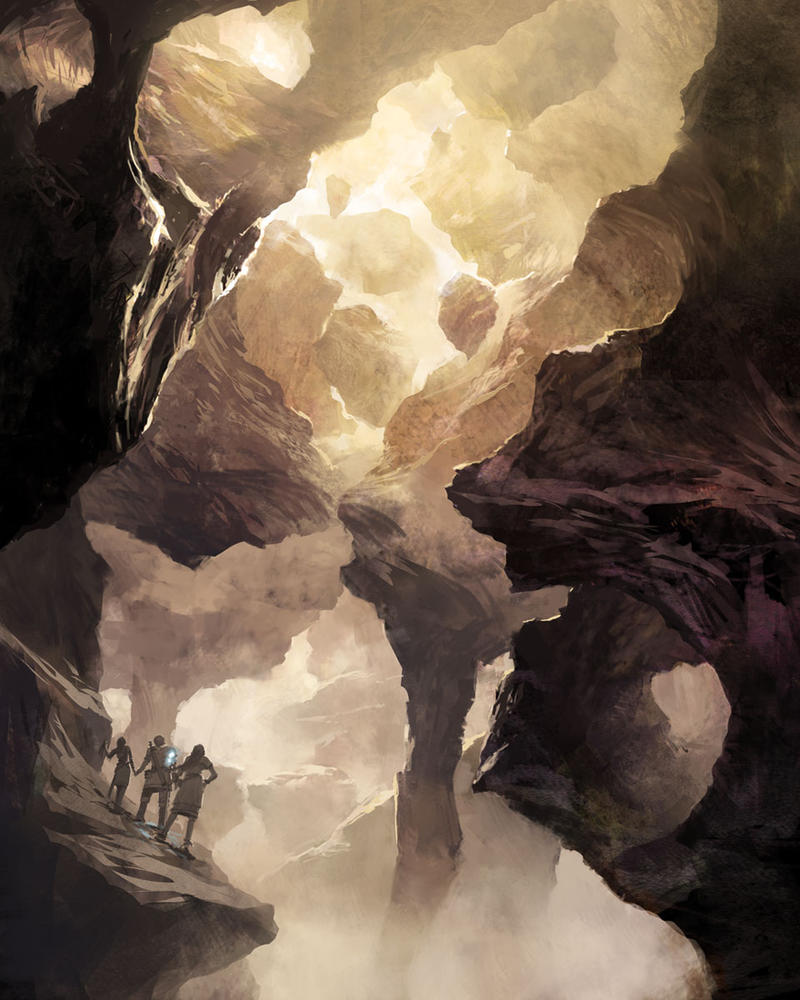
5109 Azure Road: The hills here are divided by a winding avenue of gleaming blue stone that almost looks like a river. Large burrows at the start of the road are home to five giant owls who, if communicated with, will warn people to stay away from the road, for it leads only to their doom. The road extends into the center of the hex, so for about 3 miles as the crow flies, though its winding way actually totals about 5 miles. While walking on the road, there is a 1 in 6 chance each mile of an encounter with 2d6 blue flagstone spiders. The road eventually leads to a dark, wet cave choked with grey moss and hanging vines of a sickly yellow (a yellow musk creeper). The creepers control ten yellow musk zombies. The caverns beyond are said to lead, eventually, to the gates of the Underworld.

• Flagstone Spider: HD 1d4 hp, AC 3 [16]; Atk 2 claws (1d2), bite (0 hp + poison); Move 15; Save 18; CL/XP 1/15; Special: Poison (+4 save or die), surprise on 1-3 on 1d6.

• Yellow Musk Creeper: HD 3; AC 6 [13]; Atk 1 dust burst (2d6 + hypnosis); Move 0; Save 14; CL/XP 5/240; Special: Hypnotic dust, intelligence drain.

• Yellow Musk Zombies: HD 2 (12, 12, 12, 11, 11, 10, 9, 8, 8, 7 hp); AC 4 [15]; Atk 1 slam (1d6); Move 12; Save 16; CL/XP 2/30; Special: Immune to mind affects.

5112 Poisonous Meadow: Towards the center of this hex the hills flatten and become a large meadow. The meadow is lousy with deadly nightshade and holds the lair of seven chaotic pixies with poisonous personalities. Encounters with the pixies are a certainty, for they love to harass travelers. Encounters with giant centipedes occur on a roll of 1-3 on 1d6, night and day.

• Pixie: HD 1 (7, 7, 6, 6, 5, 5, 3); AC 5 [14]; Atk 1 dagger (1d4 + poison) or arrow; Move 6 (Fly 15); Save 17; CL/XP 5/240; Special: Arrows (cause amnesia), magic resistance 25%, spells (polymorph self, invisibility, dancing lights, dispel magic 1/day, permanent confusion 1/day with successful hit and negated by a saving throw).

5317 Retired Veteran: A craggy old borc (a centaur that is half orc and half boar) has retired in this hex to a cave overlooking a stream that flows into a pond. The area has ample game, and the borc has set the surrounding area with a variety of traps. The borc is still rowdy in his old age, and is willing to train fighting-men (especially barbarians) for a jug of wine, ale or spirits and a chance to tell war stories. His treasure, buried in a terracotta pot, consists of 9,814 cp, 1,265 ep, 405 gp, a terracotta statuette of Orcus worth 4 gp and 16 golden wolf skins worth 8 gp each.

• Borc: HD 4 (21 hp); AC 2 [17]; Atk 1 halberd (1d10) or 1 longbow (1d8); Move 15; Save 13; CL/XP 6/400; Special: Berserker (+2 to hit), can fight to -6 hit points.

5503 Boiling Pool: A boiling pool of water sits amidst the ruins of an ancient temple built by the lizard kings to what appears to have been a six-legged crocodilian creature with a single giant, saucer-like eye. The pool is inhabited by vapor cranes, 4 large adults, 8 small adults and 4 fledglings. The bird’s boiling bodies can be deadly to touch. One standing wall of the temple has a secret cache that holds a golden face mask of the crocodilian god worth 100 gp.

• Large Adult Vapor Crane: HD 5; AC 4 [15]; Atk 1 bite (1d4+5); Move 5 (Fly 12); Save 12; CL/XP 6/400; Special: Scalding to touch, steam cloud (1d6+5) in cone or 15-ft radius.

• Small Adult Vapor Crane: HD 2; AC 4 [15]; Atk 1 bite (1d4+2); Move 5 (Fly 12); Save 16; CL/XP 3/60; Special: Scalding to touch, steam cloud (1d6+2) in cone or 15-ft radius.

• Fledgling Crane: HD 1; AC 4 [15]; Atk 1 bite (1d4+1); Move 5 (Fly 12); Save 12; CL/XP 2/30; Special: Scalding to touch, steam cloud (1d6+1) in cone or 15-ft radius.

Pars Fortuna Preview #5 – Magic!

So, part of my concept for PARS FORTUNA is introducing alternate rules. While the RPG will contain the old tried-and-true Vancian system for those who love it, the assumed magic system for the game is something different.

The Spell Interval System
The Spell Interval system assumes that casting spells involves gathering eldritch energies and then releasing them, with the words, gestures and tools that are involved shaping that “energy” to produce the desired effect. The more powerful a spell, the more energy it takes – i.e. the higher the level of the spell, the longer it takes for the magician’s body (and soul?) to absorb the needed energy to power the spell.

The spell level intervals are as follows: Each hour, you may cast one first level spell; each day you may cast one second level spell; each week you may cast one third level spell; each month one fourth level spell; each year one spell each of the sixth, seventh eighth and ninth levels.

Naturally, the average magician will not be satisfied with these restrictions, and will seek a way around them. Magicians can attempt to cast spells over and beyond what is allowed, but doing so can be dangerous. When a spell-caster wishes to cast additional spells of a level, he must make a saving throw, subtracting the level of the spell he wishes to cast from his roll. If successful, he channels and masters the energies necessary and casts the desired spell. If he fails, he must face the consequences, which include mental and physical deformities and supernatural curses. The more powerful the spell a magicians fails to cast, the more potentially disastrous the consequences!

Magical Tools
I’ve always enjoyed the idea of magicians carrying all sorts of odd objects and materials in order to work their art. Advanced versions of our favorite game have included material components for years, and they are often ignored because they are difficult to track. PARS FORTUNA uses a similar concept, as follows:

Level 1 to 3 spells are classified as “Cantraps” and require a fetish to cast. Each spell requires a different sort of fetish, and the fetish is not consumed in casting the spell – it is merely a cheap tool, composed of ordinary, mundane objects, that the magician must hold in his hand to successfully shape his magical energies into a spell.

Level 4 to 6 spells are classified as “Invocations” and require a tool (or set of tools) to cast. These tools are more expensive than the fetishes required by cantraps, and include arthames (mystic knives), censers and wands.

Level 7 to 9 spells are classified as “Rituals” and require expensive gems to cast. Unlike the fetishes and tools, these gems are consumed during the casting of the spell.

Sample Cantraps

Irritation (Cantrap)
Spell Level: 1
Range: 30 ft.
Duration: 1d4 rounds
Focus: Leaves from poison ivy, oak or sumac tied into a bundle with twine

You cover the target’s body in an itching sensation that lasts 1d4 rounds. For the duration, the target takes a –1 penalty on attack rolls, damage rolls and saving throws, and suffers a –1 penalty to its Armor Class if it fails a saving throw. The creature can scratch, negating the penalties for that round. Creatures that have thick hides are immune to this version of irritation.

Pitch Sight (Cantrap)
Spell Level: 2
Range: 30 ft.
Duration: 1 minute per level
Focus: A small piece of phosphorescent lichen held tightly in right fist

The caster and her allies can see normally through normal and magical darkness.

Curse of Light (Cantrap)
Spell Level: 3
Range: Touch
Duration: 1 hour/level
Focus: A tiny sack of phosphorus

You make the subject extremely sensitive to light. Abrupt exposure to bright light blinds the subject for 1d4 rounds. On subsequent rounds, they suffer a –1 penalty to all attack, damage and saving throw rolls.

Sample Invocations

Exorcise (Invocation)

Spell Level: 4
Range: 10 ft.
Duration: Instantaneous
Tool: Bolline (sickle) swung over the target’s head

You negate possession of a creature or object by any force. When you cast this spell, the possessing force may make a saving throw to resist you. If unsuccessful, the possessing creature is ejected from the host and stunned for one round. A creature affected by this spell cannot attempt to possess the same host for one day.

If cast against disembodied spirits, the spell forces those spirits to make a saving throw or flee away from the magician and keep at least 30 feet away for 1 hour.

Ghost Walk (Invocation)
Spell Level: 5
Range: Personal
Duration: 1 minute/level
Tool: Amulet set with a mirror

You become incorporeal, similar to a ghost. While ethereal, other ethereal creatures can harm you, as well as material creatures that use magic weapons and spells. You are immune to all non-magical attack forms, are not burned by normal fires, and are unaffected by natural cold or harmed by mundane acids.

You can move in any direction (including up or down) at will and with perfect maneuverability. You do not need to walk on the ground. You can pass through solid objects at will, although you cannot see when your eyes are within solid matter.

You are inaudible unless you decide to make noise. You pass through and operate in water as easily as you do in air. You cannot fall or take falling damage. You have no weight and do not set off traps that are triggered by weight. You do not leave footprints, have no scent and make no noise.

Your physical attacks are ineffectual against material creatures. Your spells affect material creatures normally.

Gem Guard (Invocation)
Spell Level: 6
Range: See text
Duration: 1 hour per level
Tool: Athame, used to split the focus gem

You transform a gem into a scrying device. When the spell is cast, the two halves of a corundum worth at least 1,000 gp become linked. When you hold one, you may scry on the other at will. You can see everything within 50 ft. of the other half. Any creature with at least a 12 intelligence has a 1-2 on 1d6 chance of sensing your attention. Spells may be cast freely through the linking gem, and may target any creature within its sensor range. Area effect spells may damage the other half of the focus, which has 30 hit points.

Sample Rituals

Infinite Step (Ritual)
Spell Level: 7
Range: Sight
Duration: Instantaneous
Gem: Jacinth (50 gp)

You (with one other willing party) instantly transfer yourself from your current location to any other spot within sight. At 12th level, the magician may make a second step from the destination.

Edge of Oblivion (Ritual)
Spell Level: 8
Range: 60 ft.
Duration: Instantaneous
Gem: Onyx (100 gp)

This spell assaults the mind and body of the subject. The subject must make two saving throws, one boosted by any wisdom bonus the creature enjoys, the other by any constitution bonus. If the subject fails the wisdom saving throw, the spell deals 1d6 permanent ability damage to the target’s intelligence, wisdom or charisma, determined randomly. If the subject fails the constitution saving throw, the spell deals 1d6 permanent ability damage to the target’s strength, dexterity or constitution, determined randomly. The caster is stunned for one round following the casting of this spell.

Prismatic Helix (Ritual)
Spell Level: 9
Range: 60 ft.
Duration: 10 minutes per level
Gem: Opal (500 gp)

The visible effect of the prismatic helix is a stationary, slowly rotating, seven strand helix, one for each color in the spectrum. This helix is 5 feet in diameter and up to 20 feet high. Any creature of 8 HD or less that looks at the helix from less than 60 feet away is fascinated, unable to do anything but stare at the helix. There is no limit to the number of creatures that can be captivated in this manner.

Once per round, the helix shoots one ray at the nearest creature, using the magician’s attack bonus. Roll randomly on the table below for the effect.

1. Red: 2d6 points of fire damage
2. Orange: 4d6 points of acid damage
3. Yellow: 8d6 points of electricity damage
4. Green: Poison (save or die)
5. Blue: Turned to stone
6. Indigo: Stark, raving mad
7. Violet: Sent to another dimension
8. Struck by two rays, roll twice, ignore any “8”

Individual strands are destroyed by opposite effects (as determined by the Referee). If a particular color has been destroyed, and that color is rolled for a ray attack, re-roll until a valid color is selected.

Venatia – Amazons and Goddesses

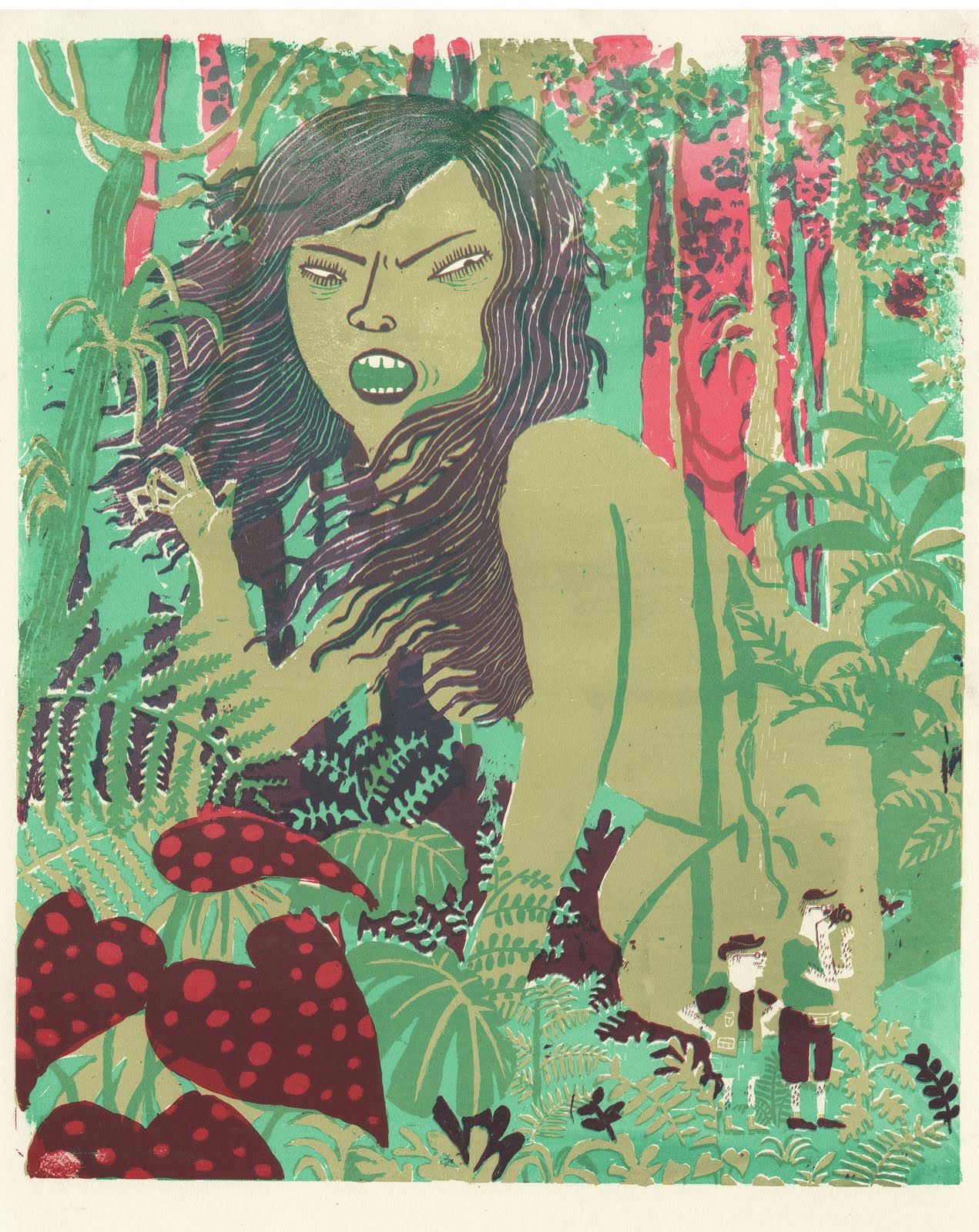
3902 Rhodia: Rhodia is a citadel of 65 amazon warriors and 20 maidens. The citadel is constructed atop a rocky outcropping that has a commanding view of the woods in this hex. The citadel, which appears to predate the amazon habitation, is built of massive limestone blocks covered with shiny red tiles. The citadel sports six tall towers, several courtyards and a fortified palace wherein resides Vierna, a full-figured amazon with ash-blond hair and cool, deep-set gray eyes in a toga of charcoal. Vierna is protected by two bodyguards, Phyta and Minephe. She is never without her silver scepter (treat as a light mace) and steel shield. The palace contains a chapel dedicated to Minerva and tended by Xanaide and her three acolytes. The amazons work their own fields, which dot little clearings that surround the citadel. They mine iron, copper and tin from the surrounding hills with the help of three dozen kobold slaves, and trade finished weapons and armor for supplies with traders from Antigoon. Amazon patrols, consisting of a dozen warriors wearing chainmail and carrying shields, spears and long bows, are common in this hex and usually mounted on tough mountain ponies and accompanied by one of Xanaide’s acolytes bearing a brass owl standard that grants the amazons a +1 bonus to save vs. fear. Beneath the citadel there is a spider-infested dungeon in which the amazons have hidden the mythic Girdle of Hippolyta (treat as a belt of giant strength). Vierna owns a tame fire drake that she uses as a mount in times of dire emergency. It otherwise resides in the entrance to the aforementioned dungeon.

• Amazon: HD 2+1; AC 1 [18]; Atk 1 sword (1d8+1) or 1 bow (1d8+1); Move 15; Save 16; CL/XP 2/30; Special: +1 to hit and damage with sword and bow.

• Vierna, Amazon Fighting-Woman Lvl 10: HP 60; AC 1 [18]; Platemail, shield, long sword, 6 darts. Eccentric and aggressive.

• Xanaide, Amazon Cleric Lvl 7: HP 36; AC 1 [18]; Save 8; Special: Spells (3rd), turn undead; Platemail, shield, warhammer, holy symbol. Large blue eyes, golden hair in a long ponytail, high forehead, somber and severe.

• Phyta, Amazon Fighting-Woman Lvl 4: HP 25; AC 1 [18]; Save 13; Platemail, shield, long sword.

• Minephe, Amazon Fighting-Woman Lvl 3: HP 19; AC 1 [18]; Save 14; Platemail, shield, long sword.

3922 Goddess of the Tree: Lodged in the hollow of a dead tree is a 2-ft tall soapstone idol of a voluptuous women with the head of a gorilla sitting cross-legged with a illegible tablet in her lap. Anyone who argues with the holder of this idol is polymorphed into a toad.

4211 Dangerous Bridge: This hex is trisected by an extremely deep chasm, the lowest reaches of which are filled with a black, murky lake inhabited by sapphire-skinned mountain squid and a dizzying array of shellfish. At approximately the center of this hex, a bridge of three massive bronze spans and mica tiles crosses the chasm from west to southeast and northwest. Three massive gnasher lizards are sunning themselves on the bridge and, though reluctant to move as a rule, will happily charge any prey foolish enough to wander onto their bridge.

• Gnasher Lizard: HD 9 (53, 46, 41 hp); AC 4 [15]; Atk 1 bite (2d6); Move 12; Save 6; CL/XP 12/2000; Special: Behead on natural ‘20’, bite victims must save or br swallowed whole (2d6 acid damage each round).

4308 Stone Forest: A petrified forest fills a magically silent valley in this hex. Even the animals of the forest have been petrified, but their ghosts haunt the dead woods. A partially tumbled tower in the middle of the forest is home to a dragon and a magic sword.

4413 Abandoned Forge: Volcanus and his cyclopean assistants one forged powerful weapons and armor in this volcano, which has now cooled considerably and has thus been abandoned. The forge is located in a giant, vaulted cavern that has been scrupulously carved into palatial splendor. Connected to the forge room are dozens of storage chambers, now all empty save for a few bars of steel and other odds and ends. The center of the main cavern is dominated by a fire pit 30 ft in diameter. The forge’s bellows are still operated by a giant brass chimpanzee, an automaton created by Volcanus himself and abandoned when the forge was abandoned. The chimpanzee keeps the fire pit filled with coal and hot – hot enough that nine fire snakes have made it their lair. They ignore the chimpanzee, and the chimpanzee ignores them. The coal is dug and delivered by five small bronze moles with ruby eyes (worth 50 gp each).

• Brass Chimpanzee: HD 4+1 (18 hp); AC 2 [17]; Atk 1 weapon (1d8+1); Move 12; Save 13; CL/XP 5/240; Special: None.

• Bronze Mole: HD 1+1; AC 4 [15]; Atk 2 claws (1d6+1); Move 6; Save 17; CL/XP 2/30; Special: None.

• Fire Snake: HD 2 (12, 11, 10, 10, 9, 8, 5, 5, 4 hp); AC 5 [14]; Atk 1 bire (1d4); Move 6; Save 16; CL/XP 4/120; Special: Poison, immune to fire, surprise.

4508 Fountain of the Gods: Actually, a fountain of the storm giants, in a great vaulted cavern that connected (via a winding stair) to a palace long since razed to the ground. The cavern walls are mottled with shades of magenta, blue and greenish-yellow and measures 300 ft in diameter and 60 ft from floor to ceiling. The fountain is stark, white marble ornamented with gold filigree (long since stolen) and a center piece with four giant brass heads with spouts in their open mouths. The water flows from the fountain in a such a large quantity that it overflows and in fact form the head waters of two mighty rivers that emerge from caves (which form the principal entrances, north and south, to the cavern). The bottom of the fountain is covered in 2 inches of gold dust that is claimed by the storm giants and thus carries a terrible curse. Anyone attempting to steal the gold will discover their flesh slowly transform into the sparkling metal, starting with their fingers and toes and moving inward a couple inches each day. Just inside the northern cave entrance, in a small alcove of sorts, lies the skeleton of one unlucky robber; three quarters of the woman’s skin was turned to gold and now lies an empty shell but for her dry bones.