Dragon by Dragon – August 1976 (2)

August of 1976 – A month after the bicentennial, and Marvelites were grooving to such titles as Planet of the Apes, The Champions and Black Goliath, the Seattle Seahawks were playing their first game, Big Ben breaks down in London, Viking 2 enters orbit around Mars, the Ramones make their first appearance at CBGB, and The Dragon’s second issue hits the stands. So what did the gaming geek of 1976 get for his money?

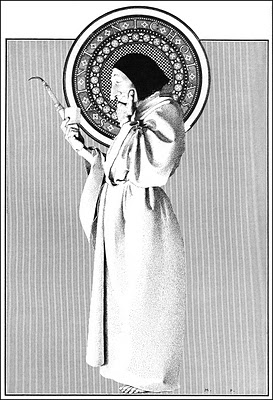
John M. Seaton devises a procedure for “monkish” promotional combat (i.e. knock off the master to assume his level). I love this kind of thing, and given the recent popularity of FlailSnails Jousting, I wonder if there isn’t a market for FlailSnails Monkish Combat.

The procedure would be similar – write up 6 rounds of combat, denoting your strike, kick, block or other maneuvers, and then we see where it goes.


Lots of fiction in this issue.

The second installment of Gygax’s Gnome Cache is in this issue. I’ll freely admit this here – I almost never read the fiction in Dragon. I probably missed out on something.

Speaking of fiction, Jake Jaquet gives us the conclusion to “Search for the Forbidden Chamber”. Didn’t read this either.

Gardner Fox (you might have heard of him) has a short story in this issue called Shadow of a Demon which is covered very capably at Grognardia.

Another installment of “Mapping the Dungeons”, wherein DM’s of the 1970’s try to hook up with players via The Dragon. St. Louis appears to have had a surplus of DM’s looking for players – 8 of them in this issue.

Some dude named Paul Jaquays was running the Spring Arbor College Dungeoning Society in Spring Arbor MI. Wonder if he ever amounted to anything.

Through the magic of Google, I found the following DM’s online:

Keith Abbott of Muskegon MI

Michael Dutton of Mountain View CA might have done some art for WOTC – could be a different guy

Bill Fawcett of Schofield WI kinda founded Mayfair Games

Karl Jones – could be this guy?

Drew Neumann – maybe a composer of film and television scores – he was at Wylie E. Groves High School in Detroit at the right time (Class of ’77). Could have known Ellen Sandweiss, who was in Evil Dead. Did music for Aeon Flux

Scott Rosenberg of Jamaica NY – has a couple issues of The Pocket Armenian floating around online.

Ed Whitchurch has achieved some level of DM’ing fame

Joe Fischer gives us more tips for D&D Judges. He covers interesting entrances for dungeons (i.e. under stuff you don’t expect them to be under) and “friendly” traps that aren’t necessarily harmful. He also provides a random table for treasure chests that are, 50% of the time, trapped thus …

D% Trap
0-30 – 1d4 spring-loaded daggers fire when chest is opened
31-50 – Same as above, but daggers are poisoned
51-65 – Poisoned gas released when chest is opened
66-75 – When opened, chest acts as mirror of life trapping
76-85 – When opened, chest explodes for 1d6+1 dice of damage (wow!)
86-90 – When opened, an enraged spectre comes out [which can be read a couple ways, either of them endlessly entertaining]
91-95 – All characters within 5 feet lose one level [after the first use of this trap, I guarantee everyone will give the thief plenty of space when opening chests]
96-98 – All characters within 5 feet lose one magic item
99-00 – Intelligent chest with abilities of 2nd – 9th level magic-user [nice!]

He also mentions intelligent gold pieces that scream when removed from a room, or replacing real gold pieces in a dragon’s horde with chocolate coins (though as valuable as chocolate was in the “olden days”, that might actually be a step up). He also brings up the idea of creatures with odd alignments (chaotic dwarves, for example).

A couple more spotlights (Joe Fischer rocks!)

Monster Gems are 500 gp gems that can be commanded to turn into monsters (per rolling a wandering monster) for one week – when the week is up, or they are killed, the gem is destroyed as well. It might be fun to rule that every gem worth 500 gp (exactly) is a monster gem.

Hobbit’s Pipe (by Marc Kurowski) – Clay pipe, when smoked, gives ability to blow multi-colored smoke rings (4 per turn, moving at 4” (40’) per turn – love the specificity). The pipe can be smoked 3/day. He also offers up five magic pipeweeds, a bag of infinite wealth, helm of forgetfulness, and ring of infravision.

Lynn Harpold give a long account of Quetzalcoatl and his cult in Central America.

Creature Features gives us the remorhaz. Love the “stat block”:

Move: 12”
Hit Dice: 6/10/14 (8 sided) dice
% in Lair: 20%
Type Treasure: F
Bite for 3-36 points
Breath for 3, 5, or 7 dice of fire damage
Magical Resistance: 75%
Low Intelligence
Neutral
Number Appearing: 1 (1-4 if in lair)
Description: 30’ long. Blue Hued underneath, wings & head backed with red.
Armor Class: Underside: 4. Back: 0 plus special. Head: 2.

Apparently, the standardization bug had not yet bitten.

Jon Pickens presents the Alchemist, a new D&D class. They don’t label this one as an “NPC Class”, so I guess it is fair game for all you D&D-ers out there. I’ll roll one up quickly for FlailSnails:

Xander Wort, Neutral 1st level Alchemist (Student)
Str: 5; Int: 13; Wis: 16; Dex: 16; Con: 7; Cha: 10
HP: 2; Attack: As Cleric; Save: As Fighter (+2 vs. poison and non-magic paralyzation)

Special:
Max. AC is 5
Can use one-handed weapons (excluding magic swords)
Use poisons and magic items usable by all classes
Psionic ability as fighters (replace Body Weaponry with Molecular Agitation)

Special Abilities:
Detect Poison 20%
Neutralize Poison 10%
Neutralize Paralyzation 15%
Identify Potion 5%
Read Languages 80% (one attempt per week)
Prepare poisons (strength level equal to their level; costs 50 gp and 1 day per level) and drugs (as poisons, but knocks unconscious for 4 hours)
Prepare a potion of delusion

Potions:
None – until 3rd level (Scribe)

His bit on poison is pretty cool. If the HD of the poisoner or level of poison is equal to or greater than the victim’s HD, they must save or die. If at least half their HD, they are slowed until a constitution check is passed, trying once per hour. If less than half, there is no effect, but the poison accumulates in the blood until it’s enough to slow or kill the person. A very nice system!

This is actually a very groovy class. The hit points are low, so I don’t know how long Xander would have to live, but he can wear some decent armor and load up on poisoned darts and a poisoned long sword and might just make it to 2nd level.

Jon Pickens also presents optional weapon damage, allowing fighters and thieves to gain mastery in different weapons, increasing the damage they deal with them (except with dwarf hammers, military picks, pikes, pole arms and arrows). Fighters master one weapon per three levels, thieves one weapon per four (and are limited to sword, dagger and sling). Those with a Dex of 13 or better can gain mastery with a combination of two weapons, gaining the ability to strike with both weapons per round or with one weapon and treat the other as a shield. Sword and sword or flail and morningstar combos require a Dex of 16 or better.

Another good system – very clean and simple to use.

All in all, a pretty good issue. Lots of neat rules ideas and some good pulp literature.

The Abacus of St. John the Enumerator

I was inspired reading Grognardia today, and decided to make up a relic.

St. John the Enumerator was a blessed clark and keeper of accounts for the holy church of Nomo. After extended service, in which he kept the church’s accounts afloat even through the years of Pontiff Palaithian the Decadent. For his ability to keep the church in the black, he was named a saint and his abacus was declared a relic of the church.

If only they knew how John kept the church afloat, the deals he made and the price he and others had to pay.

The Abacus of St. John the Enumerator

The abacus is a simple instrument made of oak, copper shafts and glass beads. In the moonlight, a careful observer can make out tiny motes of dancing light within the beads. Within each bead is locked the soul of a young priest of the church, an innocent true believer murdered by John’s own hand and interred in the ossuaries in the catacombs beneath Nomo’s streets, never to be discovered.

The abacus has ten rows divided into two sections. The larger section held five beads on each row, the smaller section held two beads. All of the beads are no longer remaining on the abacus.

The abacus projects a protection from evil, 10′ radius effect that, unfortunately, in ineffective of any evil creature summoned by or connected with the abacus. It also creates a sanctuary effect in whatever building it is placed in, an effect which is also ineffective against evil creatures summoned by or connected with the abacus. Because of these effects, the abacus is believed to be a holy relic rather than an unholy one.

By touching a bead in the larger section and focusing on a person, their current whereabouts appear in the toucher’s mind, per a crystal ball. If the person harbors ill feelings toward the person they are viewing, one of the following effects occurs, even if the user of the abacus does not knowingly will it to occur. The toucher of the abacus must make their own saving throw or one of the following effects occurs:

1. Lose one level or hit dice
2. Lose 1d4 points of charisma; in essence, they are disfigured
3. Lose 1d4 points of wisdom; in essence, they are driven slightly mad
4. Lose 1d4 points of constitution; in essence, they begin wasting away
5. The remains of the victim whose soul is encased in the bead is animated as a spectre and seeks the toucher out to destroy them.
6. They are affected by the bead’s curse instead of the toucher’s target

If any of these effects kill the person, a pit fiend appears in a cloud of sulfur and blue fire and collects their body and soul.

Lust: The target is struck as though by a suggestion spell with no saving throw. They feel the same lust towards the toucher of the abacus and must go to them that night to consummate their feelings. Once the act is consummated, this lust turns to repulsion.

Jealousy: The target’s ability score most tied to the object of jealousy is lowered by 1d4 points and those points are transferred to the toucher of the abacus. The feelings of jealousy are now transferred to the target in relation to the toucher.

Hate: The target is struck with mummy rot. As they slowly rot and die, the toucher is himself struck by a discoloration of the skin, which first turns yellowish, then mottled black and purple and finally a deathly white. When the person finally dies, the toucher returns to normal, but loses the ability to love or be loved.

The beads can also be used in another way. Touching a bead, it can be used to cast a cleric spell of a level equal to the row number minus one. In other words, beads in row one can be used to cast 0-level orisons, while beads in row 10 can be used to cast 9th level spells. When this is done, the bead turns to dust and the soul is released from it with a terrible shriek. The soul then returns to its remains in the catacombs and animates them as a spectre to hunt down the user of the bead. Spells cast from these beads impose a -5 penalty to saving throws made against them.

A lawful cleric using the abacus cannot remain lawful. With the first use, they become neutral, and with the second chaotic. A third use consigns their soul to Mammon, the arch-devil patron who helped John keep the church afloat all those years.

Six Magical Bracelets for Your Viewing Pleasure

Just got an art book by Steve Prescott delivered yesterday (Aggregate – buy it, won’t you) and was inspired by the chick on the cover.

Bangles of Bakram: These two bangles are carved from wood and each bears a small hole in it. The bangles were originally worn as earrings by Bakram, a highly skilled and deadly monk who weighed in the neighborhood of 350 pounds. If worn as earrings again, these items grant the wearer the abilities of a monk 5 levels, or, if you have no levels as a monk, a 5th level monk. Most folk make the mistake of wearing them as bracelets. When put on the wrists, the bangles grant the same ability, but also grant the wearer Bakram’s weight. Ballooning to 350 pounds, the person suffers a -2 penalty to their constitution score and is treated as though they are carrying their extra weight as added encumbrance.

Armlets of Devolution: These armlets, when placed around the biceps, hold tight and cannot be removed. The armlets act as rings of protection +1. Each week, the wearer must pass a saving throw or their body and mind “devolves”. Elves devolve initially into half-elves and then humans. Other demi-humans devolve into humans (of the same general height as their original race). Once human, or if they began as humans, they devolve first into a Neanderthal and then into an albino ape. Once the person has been changed into an albino ape, the armlets release from them. Changing back requires a wish.

Bracelet of Missile Deflection: These thick bracelets of gold, when clasped around the wrists, grant a +2 bonus to Armor Class against missile attacks. Moreover, when the wearer is attacked by magic missiles, they can make a saving throw to not only avoid the attack, but to deflect those missiles back at their caster.

Bracelet of Reaching: This single bracelet is made of bronze and engraved with a triangle pattern. It is normally kept off of one’s wrist, for when it is put on a person’s hand disappears and can be projected, by the wearer, from any similarly sized hole in their view. This could be the top of a vase, another bracelet, a large key ring, a mouse hole, etc. The bracelet can be pushed up to the shoulder if the wearer wishes, with their projected hand (which is part of their body and can be damaged normally) extending to the same length.

Bracers of Magnetism: These iron bracelets are set with large hematites. When clanged together, they can pull any small iron or steel item to the bracelets. If the item is held, the holder can make a strength check to hold onto their item; the bracelets pull with a strength of 25. If a sharp item is pulled to the wearer, they must pass a saving throw to avoid being hit and damaged by that item as though it was wielded by a person with a strength of 25.

Dragon Bracers: These bracers are made from the hide of a blue dragon. Once per day, the wearer can cause the bracers to cover their body with the equivalent of leather armor and granting them immunity to lightning attacks. The armor lasts for 10 rounds, but if struck with lightning immediately retract.

Three (or Six) Dual Helms

Dual helms are constructed in pairs and are connected to one another through subtle strings of being that float through the ether.

Gemini Helms
When little used, Gemini helms allow the two wearers to swap abilities. One category of ability can be swapped at a time for up to 1 hour in a 24 hour period. These categories are as follows: fighting ability (i.e. attack bonus), strength, intelligence, wisdom, constitution, dexterity, charisma, hit points (damage stays with the person damaged, though, so a person who normally has but 20 hit points and swaps it with his comrades 50 hit points will die when the switch it over if he’s taken more than 19 points of damage), saving throws (all categories, if applicable), prepared/memorized spells and spell casting ability and special abilities (i.e. a thief could swap his special thief abilities for a ranger’s special ranger abilities).

Each time a pair of people use the helms, there is a cumulative 1% chance of a feedback, up to a maximum chance of 12%. If a feedback occurs, consult the following table:

ROLL D10
1-6. Memory Swap: Particular memories swamp between the people – perhaps memories of their parents.

7-9. Personality Swap: This could also count as an alignment swap.

10. Combination: The pair average all of their ability scores and lose half of their class levels (-1), gaining half of their comrade’s class levels +1. In other words, a 6th level fighter and 8th level combined would turn into two 4th/5th level fighter/thieves.

Puppet Helms
Each of these helms acts as a helm of telepathy. It also gives its wearer the ability to impose his will on the wearer of the other puppet helm. When this battle of wills occurs, both players should roll 1d20. Whichever rolls the furthest under their charisma score wins the battle and can force their companion to do or say one thing that takes no more than 1 turn (10 minutes). The winner of this contest of wills suffers 1d3 points of charisma damage, the charisma damage disappearing after 8 hours of sleep.

Helms of Summoning
The wearer of one of these helms can remove it, strike it with a small platinum rod and say “Come Hither!” and their comrade appears beneath the helm (and no, not if you’re holding it over the edge of a cliff or under water – don’t be a pain in the ass). The other helm appears on the summoner’s head when his comrade appears. These helms can be used once per day, but with each use there is a cumulative 1% chance that the summoned comrade will actually be their double from another reality. This chance re-sets at the next full moon. If an alternate comrade appears, use the following table to determine what shows up:

ROLL D6
1. Zombie: Retains a feral intellect, thoroughly chaotic. Fights with as many Hit Dice as the person had levels, but loses any special abilities. Those who lose more than half their hit points to the zombie’s attacks must pass a saving throw or become a zombie themselves. Remove disease cures them, but only inflicts 1d6 points of damage per caster level to the summoned zombie.

2. Demonic: Has the abilities of the person summoned (or the reverse, if they were a cleric or paladin), but with a demonic cast and a chaotic alignment. The summoned demon is immune to fire and mind reading and has bat wings that give it a flight speed of 12.

3. Hulk: Summoned person is much larger than normal, with double the strength (or strength bonus, to keep it simple) and an intellect of 1d4+2. Might start calling the summoner “George” and develop a strange fascination with small, furry mammals.

4. Reverse Gender: Summoned person is of the opposite gender. All abilities stay the same, but personality might be slightly altered.

5. Evil Twin: Appears to be the person summoned, but is secretly chaotic and smart enough to realize the situation and use it to their advantage. If the summoned person was chaotic, the evil twin will attempt to kill and replace his or her double. If male, will eventually grow a goatee.

6. Lycanthrope: Summoned person is a lycanthrope (Ref’s choice).

The Wages of Sin

About a copper a soul, actually.

In putting together a hex crawl of Hell, I decided to work off of a swords & planet model – rings of hell with weird-but-recognizable landscapes inhabited by strongholds, cities, dungeons, monster lairs, etc. Generally, I prefer to let D-n-D (or S-n-W) be what it is – a game about exploration with treasure as one of its primary objectives. Given that notion and the high power level one must find in Hell to make it a challenge for high level parties, it was a given that there was going to be a LOT of treasure in the Underworld.

In some ways, this makes sense. Gold, silver, gems, etc. are dug out of the ground, and the ancients sometimes combined their deities of the underworld and wealth for this reason. But on the other hand, it seems a bit silly. Why does Orcus need gold pieces? Or, more to the point, why does Orcus value gold pieces? Okay, maybe because money is power, but in the case of demon lords, hit dice and spell-like abilities are also power.

So, I wanted to set up an alternate economy for Hell based on souls and the value therein … but I also wanted a Hell that could be navigated and enjoyed by treasure-hungry PCs. What to do? Well, I decided to combine the concepts.

The demon lords want souls, and since Nod’s version of Hell is at least vaguely based on medieval notions of the architecture of Creation, I would assume that they would value different souls the way mortals value different autographs. In other words, the soul of Julius Caesar is worth more in Hell than the soul of Jack the Plowboy.

Inspired by the concept of souls paying a copper to Charon for passage into Hell, I decided that souls that pass into Nod’s Hell also bring a coin of commensurate value to their position in society at death. This coin eventually finds its way into the hands of the various demon lords and their minions and serves as a means of trade within Hell. To some degree, if you own the coin, you own the soul, and collecting golds and coppers would be a major pursuit of demon lords.

Each coin in Hell is impressed with the image its linked soul possessed in life – thus, if a PC comes across a coin in Hell with his mother’s portrait on it, he knows that her soul passed through this dark realm after death. In general, the coinage of Hell is linked to souls as follows:

Copper = Common souls like normal folk and men-at-arms
Silver = The most skilled, handsome or manipulative of common folk, including most chaotic PC’s who fall short of “the end game” of fiefs and strongholds
Electrum = Commoners raised into the lesser nobility or minor clergy
Gold = Nobles and high functionaries of the clergy
Platinum = Royals, Emperors, Patriarchs and High Priests

At one point I had thought about renaming the coins, but finally decided against it just in terms of the annoyance of record keeping. A gold piece is a gold piece, after all, to a merchant in Nomo. On the other hand, these coins did need be a little different from normal coinage to be interesting. Thus …

1. Hellcoins cannot be melted down by anything less than the breath of an ancient red dragon or the churning fires of a volcano. Once melted down, they are fit for forging into magic weapons, but always implant a secret curse in these items.

2. Hellcoins are unlucky to those who hold them. Quantity doesn’t matter – any Hellcoin in one’s pocket gives them a -1 penalty to saving throws and enhances by a small amount “wandering misfortunes” like having a commode emptied on them or having the target of one’s insults and jests turn out to be standing behind them, etc.

3. The holder of a Hellcoin can use it as a focus for speaking with its linked soul per the speak with dead spell.

4. Finally, a Hellcoin can be placed in the body of its’ soul’s previous owner and animate that body as a loyal, though sentient, zombie.

Image from Wikimedia Commons.

Magic Belts – American-Style

1. Bible Belt: This wide leather girdle is studded with large (4”-diameter) medallions depicting in relief the faces of seven saints, spaced evenly around the belt. Around the waist of a neutral character, it provides a constant protection from evil effect, but also utters constant corrections for sinful behavior. Around the waist of a chaotic character, the belt constricts for 1d4 damage per round until removed, all while the faces issue forth howls of rage (potentially attracting wandering monsters). Around the waist of a lawful character, the belt acts as it does around the waist of a neutral, plus the faces chant (per the spell) during combat.

2. Sun Belt: The sun belt is a wide belt of polished brass. The surface of the belt writhes with the red whorls of the Sun’s surface. It grants the wearer immunity to fire and throws up around them a zone of withering heat (5’ radius) that inflicts 1d4 points of damage to plant and cold creatures and makes others uncomfortable (-1 penalty to hit and to AC). During combat, the surface of the belt roils and there is a 1 in 6 chance each round that it emits a solar flare in a 10-ft diameter arc in a random direction: 1 = Front; 2 = Back; 3 = Left; 4 = Right. The flare inflicts 3d6 points of damage to all creatures touched by the flare (saving throw negates). After the belt flares, it goes dormant for 1d6 hours, during which none of its powers are operative.

3. Rust Belt: This belt consists of multiple disks of rusted iron connected by a rusted chain. The character wearing the belt gains the attack form of a rust monster, a power they cannot turn off. In addition, the belt puts out the sub-harmonic vibrations that serve as a mating call to rust monsters, increasing the likelihood of encountering them when underground.

4. Corn Belt: This belt consists of hundreds of colorful, dried kernels of corn attached like beads to a leather belt. The wearer of the Corn Belt becomes as strong as an ox (i.e. hill giant strength), but also as dumb as an ox (intelligence reduced to 3).

5. Borsht Belt: This seemingly innocent leather belt turns its wearer into a Borsht Belt comedian. They have a tendency to complain loudly about things, but their over-the-top humor forces humans, demi-humans and humanoids hearing it to pass a saving throw or focus their attention on the comedian until he’s done with his set.

6. Frost Belt: This belt is composed of interlocking hexagons of silver. When worn, the wearer emits a cone of cold (10-ft long by 5-ft wide at base) each time they open their mouth. Potential damage from the cone of cold accrues at the rate of 1d4 points of damage per turn so long as the person keeps their mouth closed, to a maximum of 10d4 points of damage. As soon as they open it, the cone of cold bursts from their mouth, whether they want it to or not, and the potential damage resets to 0.

Hat Tricks – 9 Magic Chapeaus

Because you demanded it (not really) – a collection of magic hats for your game …

1. Swallow-Tail Cap: This long cap of silk has two 3-ft long tails – each conical in shape. The right cone is colored a deep maroon while the other is a happy beige. Embroidery around the seems to writhe and dance if one stares at it for a few moments (save or suffer from minor headache and the feeling of spiders running up and down your spine). The wearer of the cap can use it, by concentrating, to jump between dimensions. Alone, he can use the equivalent of the dimension door spell a number of times per day equal to his charisma bonus (minimum once per day). With one person holding onto the cap, he can teleport once per day. With two people holding onto the tails of the cap, he can plane shift once per day.

2. Feathered Cap: This tricorne of weathered blue-black velvet is elegant despite its age, but lacking a feather. When a feather is inserted into the cap, it gives the wearer powers corresponding to the bird. An ostrich feather might increase one’s running speed and kicking damage, a cockatrice feather might grant them the ability to turn people to stone with their bite, and a roc feather – well, that would probably just give them lots of shade and a stiff neck.

3. Scarlet Capotain: This scarlet capotain (i.e. pilgrim’s hat) with a gold buckle makes you look like whomever you are facing, assuming you are facing a human, demi-human or humanoid of roughly the same size. In addition to gaining the person’s appearance, you gain some aspect of their knowledge (i.e. a random skill, class ability, spell or memory), retaining it for 1 hour afterward.

4. Inky Baladava: This black baladava, when wrapped around the face, causes one’s skin to take on an inky appearance, giving them a +15% (or +3) chance to hide in shadows. Each turn spent this way drains the person of 1 point of constitution. These lost points of constitution can be restored only by eating, with one day’s worth of rations or food required to restore one point of constitution. The lost constitution corresponds to lost body weight (i.e. losing 50% of one’s constitution would correspond to losing 50% of one’s body weight). A person who loses all their constitution rises as a ghoul.

5. Master’s Hat: This top hat of felted beaver fur with a red satin lining gives the wearer the ability to speak with animals. Three times per day, the wearer can control one of the following animals – elephant, lion, gorilla, black bear or dog. Once per day, he or she can polymorph a person into one of the aforementioned animals.

6. Bodacious Bowler: This bowler, when set atop the head, casts an illusion over the wearer, making them look like everything they have ever wanted to be. In return, the person loses their voice as long as they wear the hat.

7. Porkpie of Pratfalls: While wearing this little hat, a person enjoys a +4 bonus to saving throws made against taking damage from falls.

8. Sugegasa of Fujin: This wide, conical straw hat creates cool, refreshing breezes for the person who wears it – essentially, allowing them to ignore heat up to 130-degrees Fahrenheit. If the wearer grasps the hat with both hands and whistles, the hat will lift off, giving them the ability to fly clumsily (as the spell) for 1 hour per day.

9. Hat of Many Surprises: This hat changes shape once per turn. The person wearing it does not realize this and will not be made to believe it, even if presented with a mirror, assuming instead that it takes the shape of their favorite style of hat. When removed, the hat assumes that form and keeps it until worn by someone else. Aside from this quirk, the hat grants the wearer a protection from evil effect. Roll on the following table to determine the hat’s current shape. The Referee should make these rolls and everybody but the wearer of the hat should be informed of the result.

1 – Horned helm (i.e. viking helmet) – wearer goes berserk in combat
2 – Bicorne – bonus on finding direction using the stars and immune to sea sickness
3 – Phrygian cap – freedom of movement
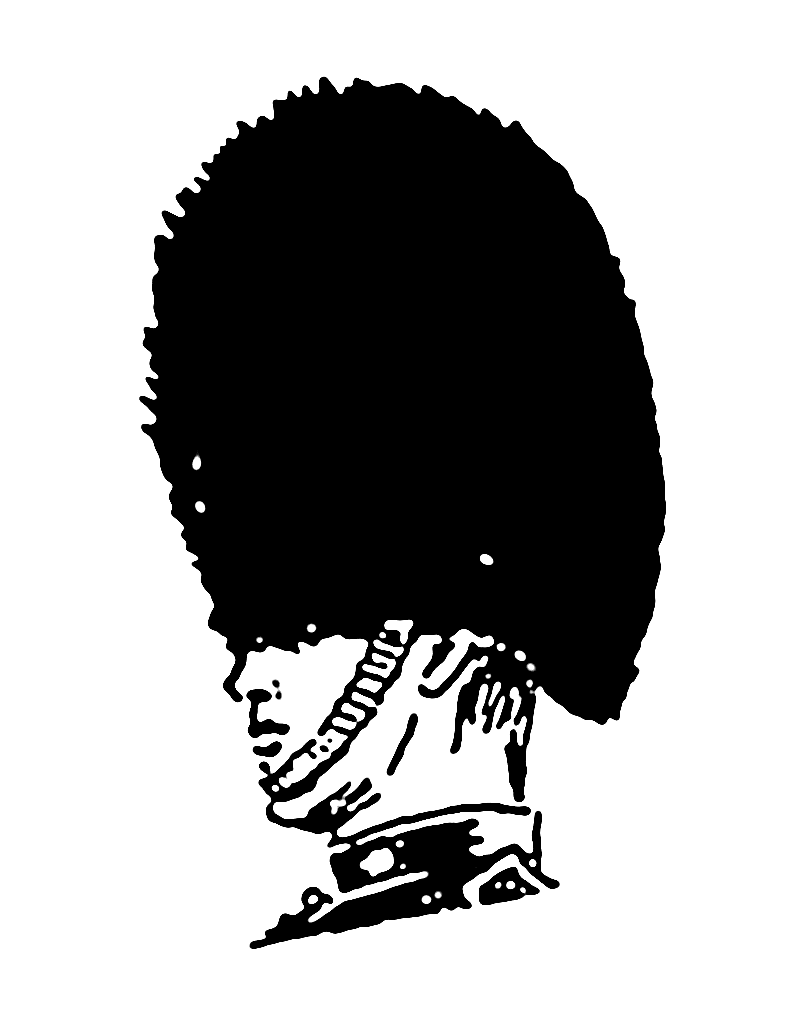
4 – Busby – +2 damage on charge
5 – Propeller beanie – intelligence cut in half
6 – Stovepipe hat – cannot lie, can discern lies, +2 damage from back attacks
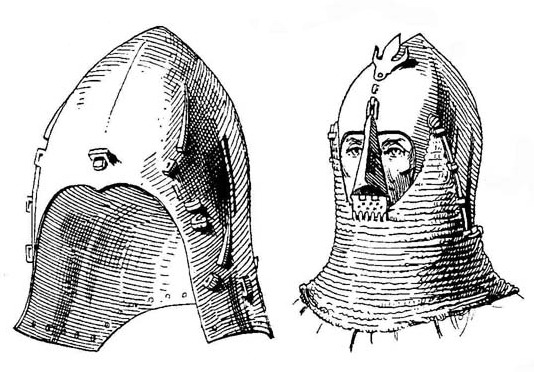
7 – Bascinet – +1 to Armor Class, double normal range of surprise
8 – Scottish bonnet – must save or begin dancing in the presence of drawn swords
9 – Wool cap – head stays warm in cold weather
10 – Dunce cap – struck with confusion whenever asked a question
11 – Wizard’s hat – cast spells as 1st level magic-user (roll known spell randomly)
12 – Jingasa – language changes to Japanese
13 – Bearskin – immune to fear
14 – Beret – personality becomes acerbic, strong desire for a cigarette
15 – Cowboy hat – +1 bonus to missile attacks
16 – Cordobes – +1 bonus to attack with sword
17 – Custodian helmet (i.e. British constable’s hat) – can summon a gang of club-armed bobbies as a horn of valhalla summons barbarians
18 – Deerstalker – find secret doors as an elf, notice stonework as a dwarf
19 – Fedora – darkvision 60 ft
20 – Fez – dude, you get to wear a fez – what more do you want?
21 – Ghutrah – immune to the effects of heat and flame
22 – Montera (matador hat) – +1 dodge bonus to AC, +1 to hit and damage bulls, stench kows and gorgons
23 – Mortarboard – cast legend lore once during the turn
24 – Panama hat –
25 – Pith helmet – can cast locate object once during the turn
26 – Santa hat – can command gnomes and elves (per a rod of rulership)
27 – Sombrero – cast sleep once during the turn, but must also save vs. sleep as well
28 – Toque (i.e. chef’s hat) – immune to poison
29 – Trucker hat – +1 to hit and damage with unarmed attacks
30 – Turban – can charm snakes

Mystic Minerals

If there was a number other than million that started with “m” I would have been clever and used it here, but here are nine magic mineral things. Use them – I command it!

1. A copper-colored crystal, about 4 inches long, that vibrates in the presence of earth elemental creatures. The vibrations begin when you are within 100′ x the Hit Dice of the creature and intensify as you get closer. When you are within 1′ x the Hit Dice of the creature the crystal explodes, sending shards in a 10′ radius and inflicting 1d4 points of damage per person minus their armor bonus.

2. A small, bluish gemstone – maybe 1 inch in diameter. When affixed to the skin of a person’s head, it exudes a soft glow in a 10 foot radius and increases the subject’s intelligence by 1 point (no maximum). Unfortunately, it also permanently robs them of 1d3 points of constitution. One might stud their head with these strange gems, gaining even godlike intelligence at the cost of their health and possibly life. Once affixed, it cannot be removed without boring into the person’s skull. Keep in mind – raising your character’s intelligence to godlike levels is probably useless if there’s no reward for having a godlike intelligence score – see Gods, Demigods & Heroes or Legends and Lore for more.

3. This leather bag of gravel looks, at first blush, to be completely useless. However, it releases a slow stream of gravel as the bearer walks – essentially leaving a trail to allow them to find their way out of whatever nonsense they have walked into. Of course, it also leaves a trail for others to follow. The gravel never runs out completely.

4. This tiny jewel is bright green in color and seems to give off an electric charge when touched. If stuck in one’s nose, it gives them the olfactory senses of a wolf. If placed in the ear, it gives one of the auditory abilities of an elf. If placed in the eye, it hurts. If swallowed, it takes about one week to move through the digestive system. The jewel is actually an alien artifact that was miniaturized when it passed into our dimension. If the jewel is ever in the presence of an enlargement spell, it returns to its full, normal size as a geodesic domed vessel 40 feet in diameter carrying a crew of 30 misshapen avian quadrupeds that look vaguely like a cross between buzzards and orangutans. The creatures, called bangisps, are captained by a suave gentleman called Ufixya who fights as a 7th level fighter.

| Bangisp: HD 2; AC 6 [13]; Atk 1 slam (1d4+1) or 1 weapon; Move 12; Save 16; CL/XP 3/60; Special: Sixth sense – allows them to re-roll all saving throws and improves their armor class by +2 (already included). Soldiers wear plasteel suits (treat as chainmail, but heavy as leather) and carry electro-rods that can deliver 2 dice shocks in melee combat or 1 dice shocks in ranged combat with a max range of 20 feet.

5. This piece of masonry looks like a dull red brick. When tapped forcefully against the floor, it quickly multiplies into a brick wall up to 30 feet long and high. The wall lasts for 1 hour (no more, no less) and is in all respects a normal brick wall (consider it about half as strong as a wall of stone).

6. This large medallion appears to be made of a silvery metal as strong as steel. It is stamped with a symbol consisting of four interlocking circles. When worn as a pectoral, it gives one the fighting abilities of six men (i.e. level 6 fighting-man), but only while rescuing a maiden.

7. This small hammer is highly prized by the dwarves. Lost for several millennia, it has the ability to create a vein of metal (user’s choice) when tapped against stone. The vein runs for 1 mile and must be refined to be of any use. The vein creates as triple strength earthquake on either end when created.

8. This gray cloak, when thrown over the head of a crouching person, not only makes them look like a boulder, but is also as strong as stone.

9. This pebble looks like a tiny river stone. When tossed into a room, it creates a bubble of force that shoves people and objects in the room violently against the walls (1d6 points of damage) – probably only enough to destroy fragile materials and objects. If a person holding the pebble is knocked around a bit, or falls to the ground, there is a 3 in 6 chance the pebble “goes off” inadvertantly.

Ten Uncommon Coins

1. Compacted Cubits: A compacted cubit is a full ton (2,000 lb) of silver dust stuffed into an extra-dimensional space sealed inside a tiny cylinder (coin shaped) of force. They look like grainy, silvery coins but feel perfectly smooth. God forbid you have a few of these in your backpack when somebody casts dispel magic. Depending on how you value coinage, a compacted cubit is worth 20,000 sp or 200,000 sp. And yeah, I know a cubit isn’t a measure of weight. You can blame Battlestar Galactica.

2. Soultaker: Appears as a blank, gold coin. When pressed on the forehead of a recently dead body, it absorbs the person’s soul and their image appears on the coin.

3. Dragon Tokens: Dragon tokens are wooden coins that are steeped in the blood of a freshly slain dragon and then coated with wax to keep the draconic goodness locked inside. Value depends on how much you value dragon blood, but probably not more than 10 gp.

4. Token of Friendship: A tarnished brass coin. Creates a vague emotional connection between you and the person who presented it to you – i.e., you know when they are frightened, happy, etc. The coin can summon the person bodily to you if you call out their name while holding it.

5. Platinum Cone: A small platinum cone, worth 2 pp. When the tiny end is held to the ear it implants a random magic-user spell (level 1d3) in your head, making you capable of casting it if not wearing armor. There is a 1 in 6 chance that the spell is actually reversed, or just not what you thought it was.

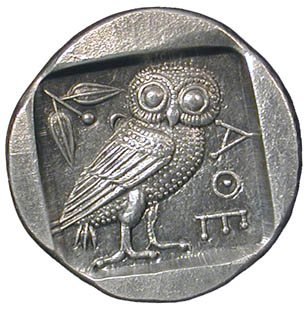
6. Pennywise: A copper coin bearing the image of an owl. It increases one’s Wisdom score by +3 (to a maximum of 18), but makes that person very tight with money.

7. Golden Rad: Radioactive gold coinage, with all that radiation brings (poison, mutation – depends on your campaign). Each coin has a 1 in 20 chance per month of transmuting back to lead.

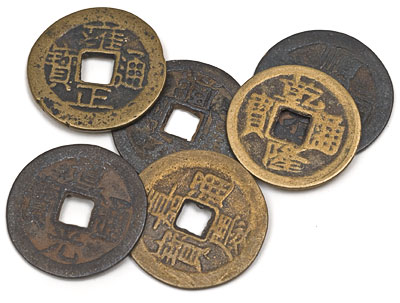
8. Silver Sylph: A silver coin with a hole in the center. If one blows through the hole, the coin produces bubbles of perfume, with a 1% chance of instead producing a sylph. You have no control over the sylph, and if you dragged her away from something important, she might be quite cross with you.

9. Gold Spiral: Gold coin with a spiral design, it can absorb one lightning bolt (no save needed) and then discharges it one hour later. While holding the charge, the holder is immune to electricity.

10. Corpse Coins: Copper coins. If placed on the eyes of a corpse, they completely stop decay. If held over a single eye of a living creature, it makes them invisible to corporeal undead. Of course, one could hold coins over both eyes, but they’d probably run into things.

Merry Christmas and a Magic Item

Nothing fancy in this post – just my wishes that everyone who reads this blog (and everyone who doesn’t) has a fun, healthy Christmas and prosperous, successful New Year – keep on gaming and good luck in all your endeavors!!!

Oh, and since I feel like I should do something game related …

Wand of Ice Missiles: The wand of ice metals is a cobalt blue tube about 12 inches long. By blowing in one end, you can launch a magical dart of ice out the other. The ice darts have a maximum range of 30 feet and deal 1d4 points of physical damage and 1d6 points of freezing damage. The ice darts also numb (effectively paralyze) the body part they hit. Roll 1d10 on the following table:

1-2. Right leg – movement reduced by one half, cannot run
3-4. Left leg – movement reduced by one half, cannot run
5. Left arm – unable to use shield or weapon
6. Right arm – unable to use shield or weapon
7-9. Torso – paralyzed for 1d4 rounds
10. Head – Unconscious for 1 hour

In all cases, the target receives a saving throw to avoid the numbness. Attacking with the ice dart requires a successful ranged attack. The wand can be used four times per day, but only once per hour, unless you are in a cold environment, in which case it can be used once per round, up to 10 times per day.

Image is Maxfield Parrish’s idea of Santa Claus via Golden Age Comic Book Stories.