After a week away from work (the real job), I’m back delving into the wonders of the Las Vegas real estate market. Over the past nine days, I managed to almost finish NOD 29 and got some heavy work done on my World War II supplement to GRIT & VIGOR. I also watched some B-movies, did some yard work, got the hard copy of MYSTERY MEN! Second Edition created and ordered a proof copy (it’s going to be in color), found some cheap old AD&D artifacts at a used record store, watched my daughter in her first Shakespeare play (she played the nurse in Romeo & Juliet) and didn’t shave.
I also didn’t do any blog posts, though I did keep in touch with the gaming community via Google +. For those who didn’t see that, I present two characters for GRIT & VIGOR, one a character from an old movie, the other an actor. For those who did, I’ll throw in a third character – a dangerous lady.
Vince Kane – A Character You Probably Do Not Know
Vince Kane is the main character in an old George Raft picture called A Dangerous Profession (1949). It’s not a great movie, but a movie doesn’t have to be great to inspire usable game material. The beauty of B-movies and simple stories is that they’re usually easier to adapt into modern game scenarios. Much of what makes a movie great – strong characterizations, interesting character relationships, etc. – does not always translate well into a game, or at least should come from the interaction of the players and game master, rather than be programmed and forced on everyone. A good game often revolves around a good plot that is not too hard to follow, since players are usually grasping around in the dark during game play. Vince Kane is also an interesting idea for an detective who isn’t technically a professional detective, much in the way that Matlock and Perry Mason are detectives who are technically lawyers.
Vince Kane is an ex-cop turned bail bondsman. Things heat up when a buddy of his from the police force, Lt. Nick Ferrone (played by Jim Backus) picks up Claude Brackett, who skipped bail a few years back for an embezzlement charge. Checking Brackett’s room, Kane discovers that he’s in town with the woman who broke his heart, who turns out to now be the embezzler’s wife, Lucy Brackett. When Claude Brackett turns up murdered, Kane investigates and discovers a web of lies.
N Private Eye, LVL 8, HP 36, AC 11, MV 40, ATK +5, SV F12 R7 W9
Str 10 Int 12 Wis 15 Dex 14 Con 13 Cha 8
Special: Detect clue (2 in 6), detect lie (4 in 6), get a clue from Venture Master, back stab, note concealed items, +2 save vs. fear
Knacks: Cant*, Influence People
Skills: Cant*, Crack Code, Gather Intelligence, Hide in Shadows, Listen at Doors, Move Silently, Search, Sleight of Hand and Track (humans only)
Feats: Grappler, Iron Will, Lighting Reflexes
* Cant in this context is the tough talk of old Hollywood gangster movies
Hoot Gibson, A Man More Interesting than His Characters
Now we shift from a character to a real person who was, himself, quite a character. It’s not too often you come across an actor’s biography which is more interesting than the characters he played. Hoot Gibson is one of those fellows.
Hoot started riding horses as a boy in Nebraska, and after the family moved to California he started working on ranches. He showed a talent for it, and soon started competing in rodeos, winning several honors. It was during his rodeo days that he started acting in silent movies. After a stint as a sergeant in the Tank Corps in World War I, he went back to rodeo and movies, usually as a bit player and stunt rider. In 1922, when demand was high for cowboy pictures, he moved into starring roles and made a whole slew of pictures. Hoot also learned to fly planes and even got injured in a crash while racing planes.
Like I said, he was an interesting fellow.
N Cowboy/Fighter, LVL 7/3, HP 39, AC 12, MV 40, ATK +4, SV F9 R8 W12, Str 13 Int 9 Wis 11 Dex 16 Con 13 Cha 13
Special: +2 save vs. trample attacks, rope (add half horse’s HD to lasso attacks), select exceptional horses, surprised 1 in 8, no penalty when grappling large animals, extra attack against opponents with fewer HD
Knacks: Don Disguise, Handle Animals, Pilot Aircraft
Skills (Fighter): Bend bars, break down doors, endure, gunnery, jump, lift gates
Feats: Dodge, Knack, Pugilist
Weapons: Colt Single-Action Army (1d6), Winchester M1894 repeating rifle (2d4)
Ma Barker
I don’t know how much cache’ the gangsters of the Depression have these days with the young people, but they once had a standing approaching folk heroes. Bonnie and Clyde, ‘Baby Face’ Nelson, John Dillinger, etc. And then there’s Ma. Ma Barker. Ma Barker had four criminal sons, Herman, Lloyd, Arthur and Fred, and served as their ring leader … or did she?
From the sound of it, Ma Barker as criminal mastermind of her sons’ foul play is the bunk. One gangster, Alvin Karpis, described her as “superstitious, gullible, simple, cantankerous and, well, generally law abiding.” She was clearly an accomplice in the criminal activities of the gang, helping them before and after crimes, but probably was not the gun-totin’ mama of popular culture. When J. Edgar Hoover described her as “the most vicious, dangerous and resourceful criminal brain of the last decade”, he was probably full of shit. I know – J. Edgar Hoover, an agent of the federal government – lying is hard to believe.
But in GRIT & VIGOR, when truth isn’t stranger than fiction, we slap it around a little until it is. Our Ma Barker is the gangster of the movies, engaging in gun play and maybe even chomping on a cigar while her minions rob banks.
NE Rogue, LVL 8, HP 28, AC 10, MV 40, ATK +5, SV F12 R9 W10, Str 8 Int 15 Wis 13 Dex 11 Con 11 Cha 12
Special: Backstab for +2d6 damage, note concealed items
Knacks: Gather Intelligence*, Treat Injury
Skills : Appraise Value, Cant, Don Disguise, Gather Intelligence*, Hide in Shadows, Influence People, Listen at Doors, Move Silently
Feats: Exploit Weakness, Improvise, Iron Will, Leadership
Happy Easter boys and girls. I hope you have a good one – family, friends, fun and a little time for relaxation and meditation. Hopefully, you also have some time to read this review of Dragon 46 (and White Dwarf 23).
I’ll level with you here. The first time I saw this cover, I didn’t quite know what to make of it. There are a few other “cute” Dragon covers, but this one sorta took the cake. It’s not a bad cover, though, and actually relates to a new comic in this issue – Pinsom by Steve Swenston. It’s a style of fantasy I always digged, and one which I wish had had more coverage in Dragon. Check the end of the article for another glimpse of Swenston’s work.
Moving on …
First up – an advertisement (no, not for anything I did)
Yes, for those of us who lived through the transition, there was home entertainment BEFORE Dungeon!, and home entertainment AFTER Dungeon!. You young whippersnappers have no idea.
In all seriousness, if you’ve never played the game, I highly recommend it (at least, the old version that I used to have – I don’t know if they done any crappy re-imaginings lately). It just occurred to me that it might be cool to combine Dungeon! with Talisman – at least, with the “classes” in Talisman.
The first bit of content in this issue is a short story by J. Eric Holmes, “The Sorcerer’s Jewel” – so always worth a read. Great art by Roslof to go with it! Here’s a sample (of art and text) …
“When Tarkan departed from The Green Dragon, only minutes later, Zereth pushed Boinger off the end of the wooden bench on which they both sat. “Follow him,” he ordered, “and be secretive about it.” It was midnight when the little thief returned. His elven companion had left the tavern common room and gone upstairs to the rented room the two shared, but when Boinger roused him he dressed and came down. The noisy crowd at the bar and fire served their secret purpose better than whispering in their room, where ears might be pressed to the adjoining wall.”
That image to the right just screams D&D to me, and the story does as well. I’ll admit I’m not much of a reader of the fiction in The Dragon, which I should probably remedy at some point, given that I dig Gardner Fox, Homes and Gygax. More importantly, It would be interesting to glean some bits of useful lore from the stories that ostensibly come from actual gameplay.
Here’s another Roslof from that issue:
Love the halfling.
This issue goes pretty heavy into variants on Divine Right (which I don’t have) and touches on The Tribes of Crane (which I never played). I mention this in case people have do have or have played those games want to check out the issue.
The “Dragon’s Bestiary” features the Gaund by Ed Greenwood. Greenwood’s monsters are always well thought out, and seem to point to the direction in which games were moving at the time, which I guess you could call fantasy realism.
I’m more enthused about Roger E. Moore‘s “This Here’s Tyrannosaurus Tex”, a Boot Hill Scenario based on The Valley of the Gwangi.
I haven’t seen it in a long time – I need to put it on the list.
Among other things, the article includes a hit location chart for the t-rex …
01-20 Tail
21-50 Rear leg
51-55 Forearm
56-75 Abdomen (1% chance of mortal wound)
76-85 Chest (5% chance of mortal wound)
86-00 Head and neck (2% chance of mortal wound)
Also this handy guide to killing a t-rex with dynamite
“For every two sticks of dynamite used against a Tyrannosaur in one attack, there is a cumulative 50% chance of stunning it for one turn (10 seconds), a 25% chance of inflicting a wound or wounds (d10: 1-2 = one wound, 3-5 = two wounds, 6-8 = three wounds, 9-0 = four wounds), and a cumulative 10% chance of killing it outright. This percentage is reduced by 20% (for stunning, wounding, and killing) for each 2” (12’) that the monster is distant from the explosion. For example, 20 sticks of dynamite exploded 4” (24’) from a Tyrannosaur has a 460% chance of stunning it (500-40=460), a 210% chance of wounding it (250-40=210) and a 60% chance of killing it (100-40=60). Treat any amount of dynamite greater than 40 sticks as 40 sticks.”
Paul Montgomery Crabaugh follows up with another Boot Hill article, “How to ease the Boot Hill identity crisis”. I love the first paragraph …
“Everyone seems to have a place in Boot Hill except the player-characters, who have to be content with a place on Boot Hill. They wander in out of nowhere, invariably causing much havoc and then moving on.”
I have to admit, that sounds pretty good to me – not sure I want to remedy that situation. However, if you do, you’ll find a random table of identities for a Boot Hill character. I dig the fact that female characters have a 2% chance to be nuns. I’d love to play a gunslinging nun.
The feature of this issue is “The Temple of Poseidon” by Paul Reiche III. The intro has nothing to do with the adventure, but it does delve into TSR history …
“I wrote The Temple of Poseidon early in the spring of 1980 as part of an application for employment at TSR Hobbies, Inc. Having grown tired of fourteen straight years of school, I decided to take some time off from college and work full-time for a change. The problem was where to find a job. I had already had several, all of which were boring or (as was with the case with piano moving) physically undesirable.
A year earlier, TSR had hired my good friend Erol Otus as a staff artist. After visiting Erol out in the chilly wastes of Wisconsin, and learning that—contrary to what I had heard—the men and women of TSR were not evil, hateful creatures, I decided that perhaps a job with TSR was the kind of change I was looking for. So with several years of playing experience and authorship of two fantasy roleplaying supplements under my belt (Booty and The Beasts and The Necromican co-authored with Mathias Genser and Erol Otus) I started work on the Temple of Poseidon.”
He goes on to say the adventure was inspired by Lovecraft and CAS – and it’s a great dungeon crawl. Well worth reading and running.
Another dandy by Roslof – casting a spell from a scroll
Here’s a cool bit:
“Time and the way the party spends it plays an integral part in this adventure. Exactly 10 turns after the characters descend the spiral staircase and enter the alien base, the evil priests of Ythog Nthlei will succeed in freeing their master. The only way to prevent them from attaining their goal is to kill them before the end of 10 turns. If they succeed, Ythog Nthlei will instantly move to Room 31 with his treasure: The priests will remain in their room.”
“Giants in the Earth“, by Tom Moldvay, opens things up for contributions. So, no giants this time. Dang.
Time for some sage advice …
Question: What happens when a cornered (as in a deep pit) undead creature is turned?
Answer: The act of turning undead (by a good Cleric) compels the victim to turn directly away from the Cleric and move as fast and as far away as possible for 3-12 rounds. When it is physically impossible for the creature to keep moving away, it will retreat to the most remote (from the Cleric) location in the area and continually face away from the Cleric and his/her holy symbol. — J. Ward, W. Niebling
So basically, it’s like the cleric telling the undead to go stand in the corner and think about what they’re done.
And now we come to the comics, and Steve Swenston‘s Pinsom.
Cool stuff.
And so ends the chronicle of February 1981’s Dragon Magazine. But what were those knuckleheads in the UK up to?
At a minimum, the White Dwarf cover for Feb/Mar 1981 (that would be #23) was putting off a very different vibe than The Dragon. It’s definitely an image with which to conjure.
This issue of WD starts a series by Lewis Pulsipher, “An Introduction to Dungeons & Dragons”. Good series, and worth the read for the newcomers to the hobby – although I’ve always thought learning to play these games is much better done by joining an existing group and playing. In the early days of the hobby, though, this wasn’t always possible and many groups were learning as they went.
Next up is an interview with Marc Miller, covering his origins and the origins of Traveller. If you’re a fan, you might want to give it a look.
You might also enjoy a look at the Marc Miller of 1981 …
The “Fiend Factory” this issue has the Flymen by Daniel Collerton, with art by Russ Nicholson – great monsters, though they’re only a half-inch tall. However, with a handy shrink ray, they could give a party of adventurers plenty of trouble as they look for a way to return to normal size.
Here are the Blood & Treasure stats, first for the tiny-sized fly men in a swarm, and then for the fly men as they would appear to shrunken adventurers:
Flyman, Tiny Humanoid: HD 0 (1 hp), AC 14 (20 when flying), ATK special, MV 5′ (Fly 30′), SV F16 R16 W16, AL Neutral (LN), Special-Swarm surrounds a person’s head blinding them (-4 to hit, 1d4 automatic hits per round), tiny weapons are poisoned and people have a 1 in 20 chance of being allergic and suffering ill effect; roll 1d8; 1-7 renders the area stung swollen and useless, taking 1d4 turns to set in and then lasting for 1d20+24 turns. An 8 means the character falls into a coma in 1d4 rounds and dies in 1d20+24 turns unless the venom is neutralized.
Drone, “Medium” Humanoid: HD 0 (3 hp), AC 12, ATK nil, MV 20′ (Fly 50′), SV F13 R16 W17, AL Neutral (LN), Special-Strength of 17, semi-intelligent, 1d10+10 appearing.
Artisan, “Medium” Humanoid: HD 1, AC 12, ATK 1 weapon, MV 20′ (Fly 50′), SV F 13 R15 W15, AL Neutral (LN), Special-Usually armed with unpoisoned daggers, their skill in metalwork surpasses the dwarves.
Warrior, “Medium” Humanoid: HD 3, AC 14 (carapace, shield), ATK 1 weapon + poison, MV 20′ (Fly 50′), SV F12 R14 W14, AL Neutral (LN), Special-Carry shields, carapace like studded leather, armed with short bow, short sword, dagger, poisoned weapons (save vs. poison, if save suffer 1d6+4 damage, if fail die instantly), allergic people suffer -4 penalty to save, weapons have enough venom for 5 strikes.
Flyguard, “Medium” Humanoid: HD 9, AC 16 (chain, shield), ATK 2 weapon + poison, MV 30′, SV F9 R10 W11, AL Neutral (LN), Special-Carry composite bow, longsword and dagger (poisoned as above), can size-change and have size rods, ride wasps.
Flymage, “Medium” Humanoid: HD 6, AC 16, ATK 1 weapon + poison, MV 30′, SV as 12th level magic-users, AL Neutral (LN), Special-Can size-change and have size rods, has innate powers (locate insects, summon insects, insect plague, creeping doom, size change to medium size for 30 rounds) and powers granted by their god, Ssrrpt’ck (must pray for 5 rounds).
There are five fly mages per hive, and each has extra powers depending on his role. There is the Master Attack, Master Defense, Master Healer, Master Knowledge, Master Worshiper.
The article also includes info on other types of flymen, the Northflies and Sandflies. Awesome stuff – seek it out and use it, for crying out loud. The flymen would make an incredible side trek in a dungeon or wilderness. In fact, the issue includes “The Hive of the Hrrr’l”, also by Daniel Collerton, so you’re all set.
Also: The flymen’s heads can be hollowed out and used as masks.
In addition:
Size-Change
Magic-User 4, Cleric 3
Range: Touch
Duration: 30 rounds
Spell causes a creature to shrink by a factor of 144 (human down to 1/2″ in height).
Spell Focus: A telescoping rod (costs 1,000 gp) that must be pushed in while the spell is being cast.
The White Dwarf isn’t done yet – you also get a new class, The Elementalist by Stephen Bland, the Khazad-class Seeker Starship for Traveller by Roger E. Moore, and A Spellcaster’s Guide to Arcane Power by Bill Milne. That last article involves a spell point system for spellcasting. There are also some keen magic items.
All in all, a really good issue of White Dwarf … in fact, I give it the nod over The Dragon this time around. Happy Easter folks!
Inflation was rough as hell, but if you could scrape it together you could get a new Tandy TRS 80 PC for $150 (or $390 in today’s dollars). This year would see the release of the hostages in Iran, the first flight of the space shuttle Columbia and an attempted assassination of President Reagan.
For the geek set, it was an embarrassment of riches in the movie theaters – Raiders of the Lost Ark, Mad Max 2, Evil Dead, An American Werewolf in London, The Howling, Halloween, Escape from New York, Clash of the Titans, Time Bandits, Scanners, Excalibur, Dragonslayer and, of course, the finest film ever made, Cannonball Run.
How did the venerable Dragon kick off 1981? Let’s see …
From the art in the first article, it would appear it was stinking up the place.
Actually, Robert Plamondon‘s article “Gas ’em Up and Smoke ’em Out” reviews how gases and smoke would work in a dungeon environment. It’s a sign of the times, as Old School (which I now realize means pre-1980) gaming gives way bit by bit to realism, at least for game designers and article writers. Here’s a sample:
“Using the rule-of-thumb design specs of 500 cubic feet per person of room volume and 24 cubic feet per minute per person of ventilating air, and applying a little algebra, we find that the ratio of incoming air volume to room volume is about 1:20.83.”
This article uses a little math and engineering, but also comes across with some useful bits for referees:
A room with standard ventilation will take about 2 hours and 20 minutes for poison gas or smoke to go away. Even without ventilation, poison gas will eventually react with everything in the room and become harmless.
Poison gas costs between 1,000 gp and 6,000 gp per trap.
Gas masks should be easy for an alchemist and leather worker to put together, but inventing them will take 2d4 months and 1d6+1 x 1,000 gp, with a 50% chance of success.
A successful save vs. poison gas means holding one’s breath and escaping the gas. A failed save means breathing the gas and dying. Initially one falls unconscious and dies 5 rounds later.
People who know about the presence of poison gas get a +4 bonus to save against it.
Plamondon also provides a nice table of poison gases, which may come in just as handy for modern games and fantasy games:
Oh, and THIS GUY might be the Robert Plamondon of the article.
The Dragon Tooth miniatures ad would make a nice deep dungeon encounter table:
Roll d20
High Elfin Hero-King in Dragon Helm (Elf Fighter 8/Magic-User 7, helm controls dragons, longsword, chainmail, shield)
Rogue or Thief, Skulkingly Caped (Human Thief 1 or 9, rapier and dagger)
Sorcerer, Sorcerering or Sorceress, Sorcerering (Human Magic-User 9, staff)
Swordswoman armed with Sword and Spear (Human Fighter 3, longsword and glaive)
Rictus, the Zombie King (Zombie with 10 HD, scimitar, skeletal horse)
Gladius-Hero in Roman-Style Armour (Human Fighter 4, breastplate, shield, short sword)
Barbarian Hero wearing Vulture Helmet and Fur (Human Fighter 4, scimitar, leather armor and shield)
Rachir, the Red Archer-Ranger/Fighter with Bow (Human Ranger 3, composite bow, long sword, leather armor, shield)
High Elfin Warrior Maiden Armed with Sword (Elf Fighter 4, broadsword, chainmail)
Gundar the Barbarian with Axe and Sword (Human Fighter 9, leather armor, battle axe, longsword)
Subotai the Mongol-Swordsman with Shield (Human Fighter 3, scimitar, dagger, chainmail, shield)
Swashbuckler Fighter with Cutlass and Dagger (Human Fighter 5, scimitar, dagger)
Next up, we have a couple old school NPC classes – the Astrologer by Roger E. Moore and the Alchemist by Roger E. Moore and Georgia Moore. These are nice and short classes, and could probably be adapted as non-classed NPCs with interesting abilities by most GM’s. Of course, I’d also love to see them used as PC’s in a game.
Here’s a taste of the astrologer:
Here’s a nice bit from the alchemist class:
“For the creation of homonculi, it is suggested that Pseudo-Dragon venom and Gargoyle blood be among, the. required ingredients, as well as the Magic-User’s own blood, since these items bear some relationship to a Homonculous’s poisonous bite and appearance. Costs and time for making a Homonculous are outlined in the Monster Manual.”
And this:
“Formulas for manufacturing cockatrices may be found in L. Sprague de Camp’s book, The Ancient Engineers, Chapter 9, “The European Engineers.” Additional notes appear in The Worm Ouroborous, by E. R. Eddison, “Conjuring in the Iron Tower.” Note that de Camp’s book refers to the cockatrice as a “basilisk,” and tells of an alchemical way of making gold from burnt “basilisk” parts.”
One more reason to read Eddison’s book, and now I want to find de Camp’s as well.
Oh Hell, and this:
“At the Dungeon Master’s option, cloning may be performed by biogenesis-studying Alchemists; this should be considered a very powerful (and very rarely performed) ability that will entail expenditures of 100,000 g.p. or more.”
Philip Meyers‘ article “Magic Items for Everyman” covers random magic items for NPC’s. They’re quite extensive and worth taking a look at.
Bazaar of the Bizarre has a couple nifty magic items. The Eidolon of Khalk’Ru is a real pip if you have a cleric or magic-user in the party (and who doesn’t?). There’s also the Bell of Pavlov, box of many holdings, ruby slippers, ring of oak and pet rocks – man I want to pit a guy with three pet rocks up against an unsuspecting party.
But hey – we’re not done with new classes yet. Len Lakofka presents a new fighter or ranger sub-class, the Archer. Really, it’s the archer, a fighter sub-class, and the archer-ranger, a ranger sub-class. This is accompanied by whole host of advanced rules for missile fire in D&D.
Archers get fewer melee attacks per round than fighters and more missile attacks than fighters. They get an additional +1 with magic bows and arrows. If their intelligence is 9 or higher, they also learn some magic-user spells at 7th level. At 3rd level they learn to make arrows, and they learn to make bows at 5th level.
The main bonus for archers are bonuses to hit and damage, which get pretty big at high levels.
The big feature of this issue was the Dragon Dungeon Design Kit – a bunch of cardboard pieces you could use to create tabletop maps of the dungeon rooms adventurers encountered. You got wall sections, treasure chests and all sorts of dungeon dressing.
Michael Kluever‘s article “Castles, Castles Everywhere” is a nicely researched article about castles. Worth the read.
Roger E. Moore is back again with “How To Have a Good Time Being Evil”, a lighthearted look at the subject. Think over-the-top silver age comic book evil rather than the genuine article. One bit I especially liked was this, as it is a good description of the Chaotic / Evil alignment:
“Now for the group goals. Anyone who’s played Monsters! Monsters! already knows what the goal is in an evil campaign. The goal is to beat up on the good guys. The goody-good Paladins, sneaky Rangers, and less-than-macho elves are going to get what they deserve. What right have they got, breaking into our lairs, killing our underlings and friends, and taking away the treasures we worked so hard to steal? Besides, what we’re doing is the way of the universe. Only the strong survive. Nice guys finish last. I’m number one. If you help all the wimps get ahead in the universe, you undo natural selections and evolution, which is trying to make us tougher. Might makes right. And so on. Working up the goals and general background philosophy of an evil campaign is not difficult (and is actually a little disturbing, as some people say such things in seriousness. How little we know about our own alignments …)”
I think the true test of a great monster is great art. Well, maybe not, but a nice piece of art makes we want to use a monster, regardless of its stats. To whit, the skyzorr’n by Jon Mattson:
Art by Willingham, of course. It’s actually not a bad beastie – nomadic insect people.
Skyzorr’n, Medium Monstrous Humanoid: HD 2+1, AC 16, MV 20′, ATK 1d4 claws (1d4) or 1d2 by weapon; AL Chaotic (LE), Special–Bite for 1d4+1 plus poison, surprise 1-3 on 1d6, immune to natural paralysis (not spells) and 90% of poisons, +2 to save vs. heat and cold attacks, resistance to edged and piercing weapons.
They inhabit deserts and badlands in hive communities (70% underground). They are matriarchal, ruled by queens (they look like grotesque bloated spiders) with High intelligence. They use weapons 50% of the time (longswords, scimitars, military forks, spears and slings). If two claw attacks hit, they get a bite attack. The poison deals 1 point of Strength and Dexterity damage for 2d4 turns.
Read the issue to get the full description – very cool. They also have sand lizards by Marcella Peyre-Ferry and dust devils by Bruce Sears.
I wonder if WOTC would consider making a monster book with all of these creatures in it?
Well – that’s all folks. No White Dwarf supplement this time, since it was bi-monthly. I’ll hit it next week (God willing and the creek don’t rise).
A year later, I decided I like the Steelers better, and was stuck with a Cowboys bike – c’est la vie. I grew up in Las Vegas, so I was pretty fluid in my “favorite team” selection – I switched to the Raiders in 1984 when I was the only kid on my bus who picked them to beat the Redskins in the Super Bowl – I only did it to avoid going with the crowd.
Still, if you were already plays RPG’s in 1980, this issue of Dragon, #44, was what you were perusing over a cup of hot chocolate with some Rankin-Bass on in the background. It looks like a dandy – with a mini-game and everything!
As is often the case, the first thing that caught my eye was the ad by Ral Partha. They usually have the first ad in these old Dragon magazines, and this one is for a number of boxed adventure games they did. The games included miniatures, and look pretty cool.
I found a site with some pictures of the miniatures.
And the mannequin in the hooded robe just gave me an idea for a monster – I’ll post that later in the week.
Dig this missive from Mrs. Lori Tartaglio from Mercerville, N.J. She covers bearded female dwarves and Iran hostage crisis all in one letter.
“Dear Editors:
Will this endless quibbling never cease? Who CARES if female dwarves have beards or not? (TD#41) Why not let each DM or player or gaming group decide for themselves, for Ghu’s sake?!
Answer me this: Will the fact of dwarven women having or NOT having beards affect the outcome of the game in any major capacity? In my humble opinion, the answer is “no.” Not, of course, unless the DM has designed a “beard catcher” as one of his nasty little traps, and a female character of the dwarven persuasion (although no one ever had to persuade me to be a Dwarf-lady!) happens to be one of the party who’d sprung the trap and. . .
OY! This is getting out of hand! Now you’ve got me doing it!
C’mon, EGG and the rest of you guys! Grow up! If you’re going to argue, then do it about something worthwhile — like “do we go techno and nuke Iran off the face of the earth or do we send in a party of chaotic neutral fighter-mage mercs to teleport the hostages home and drop the Ayatollah with a black arrow.”
And by the way – I mentioned a few reviews ago that I was going to commission some bearded lady dwarf art, and I did, from Denis McCarthy – this will appear in the second edition of Blood & Treasure.
Just as some older issues of Dragon had stats for fictional western heroes for Boot Hill, this issue does the same for some fictional secret agents for Top Secret. The article is written by the developer and editor of the game, Allen Hammack.
For those keeping score, here’s some stuff you should know …
Strongest secret agent – John Steed, followed by Derek Flint and James Bond
Most charming secret agent – John Steed, followed by James Bond and Derek Flint
Most courageous secret agent – James Bond, followed by Derek Flint and a tie – Jim Phelps and Number 6
The weakest stats belong to Maxwell Smart and Napoleon Solo. I don’t want to criticize, but not making Emma Peel the most charming seems crazy … at least from my perspective. The article has full stats for all the agents, which is pretty damn cool.
Gregory G. H. Rihnpresents one of the articles that could only be from the early days of the hobby – “Fantasy Genetics I – Humanoid Races in Review”. The article gives scientific names for the fantasy races. Elves, for example, are homo sapiens sylvanus, while orcs are homo sapiens orc. Those two races have to be homo sapiens able to breed with good old fashioned homo sapiens sapiens. I guess they should also be able to breed with homo sapiens neanderthalensis. An elf neanderthal crossbreed would give strong math skills, great strength and pointed ears – so Vulcans, essentially. He makes the kobolds, goblins, hobgoblins and bugbears part of the genus Australopithecus and ogres Ramapithecus. This is an interesting idea, and points to a time when the look of the fantasy races was not established – yeah, there was art in the Monster Manual, but it wasn’t treated as carved in stone.
This is followed up by “Fantasy Genetics II – Half-Orcs in a Variety of Styles” by Roger Moore. This is a cool little article about the fact that half-orcs are always half-human. So you get some monster stats for orc-kobolds, orc-goblins, orc-ogres, orc-bugbears, orc-hobgoblins and orc-gnolls. Short and sweet, and it would be a nice addition to the half-orc playable race.
But we’re not done yet, because John S. Olson gives us “Fantasy Genetics III – What Do You Get When You Cross?”, which is designed to discourage weird crossbreeds. I wonder if the author is this guy from Rice University?
Which, of course, brings us to the end of this discussion. There could be absolutely no more to write on the subject of fantasy genetics – the topic has been so thoroughly dealt with that to continue would be folly!
To paraphrase Johnny Carson, “Not so fast jelly doughnut breath!”
Paul Montgomery Crabaugh brings us “Fantasy Genetics IV – Half + Half Isn’t Always Full”. Honestly, I cannot see the point of this article. Moving on …
Here’s a little piece from Sage Advice that might quash the whole murder hobo mystique:
“Question: Is it okay for a Monk (Lawful Neutral) to sneak up on an opponent and then backstab? (Is this act chaotic? Is this evil?)
Answer: The act of killing a victim without knowing if he/she is truly an enemy (in other words, killing a complete stranger without knowing if he/she presents a threat) is a chaotic act. The act of killing an opponent with the knowledge that there is some other way to overcome him/her is an evil act. It would seem permissible for the Lawful Neutral Monk (or any other similarly aligned being) to attack a known enemy from the back, when circumstances make it necessary to kill that foe. —J. Ward, W. Niebling”
So, if the orcs don’t attack first, and you attack without trying to talk to them, you’re evil.
When I see ads like this:
I always do a search hoping to stump BoardGameGeek.com – hasn’t happened yet.
I know nothing about the game, but the miniature illustrations are cool, and the name “hellborn” is awesome – also Avenging Angels and Saints and Giant Knights. I found the rules for sale for $12.95 by the Gaming Gang and bought a copy – I’ll review them later this month (probably).
This issue’s “Giant in the Earth” switches authorship from Tom Moldvay to Dave Cook. Dave writes stats for C.S. Lewis’ Reepicheep (LG 7th level fighter) and Conan Doyle’s Professor Challenger (LN 16th level fighter with special sage abilities). Challenger’s Express hunting rifle is given a 300 yard range and 2d6 damage, in case you’re interested.
In 3rd edition, all the monsters got stats. In 1st edition, many of the monsters got stats, here and there, haphazardly. Len Lakofka‘s article this issue, “Monsters: How Strong is Strong” is one of those early efforts to codify these issues, and shows the gradual march of the game from “rulings not rules” to “a rule for everything”.
It’s predicated on the fact that a belt of hill giant strength gives a fighter damage that a hill giant doesn’t get, which, of course, cannot be permitted to persist. I guess. For those interested, bugbear chiefs are as strong as ankhegs, but not as strong as gorillas, who are as strong as black bears, but not as strong as carnivorous apes and brown bears. Kobolds roll 4d4 for strength, while leader types have d4+13 strength. He also gives a bit on “how to calculate the combat ability of a monster”. I was going to put in an excerpt, but dang is it long!
Next up is the aforementioned mini-game – “Food Fight” by Bryce Knorr (this guy?). This is set in a high school and features some early art from Bill Willingham (see to the right – maybe that’s Morgan Ironwolf when she was in high school). Make no mistake – for a mini-game about throwing food, it has pretty exhaustive rules. All of the foods have numerous stats, such as:
Ice cream with attack mode D has Range 1, Hit No. 8, App. Damage of 1d6+2, no ability to stun, but the number to splat is 5, slipperiness is 2 and APE is 5. There are different stats for attack mode F and attack mode T.
Oi! I now have a strange desire to make a rules lite version of the game.
By the way, this piece by Jack Crane from the fiction in this issue is all kinds of groovy …
This issue also has a long article by William Fawcett on the Judge’s Guild (I just noticed a Kickstarter popped up for a JG collection), along with reviews of nine of their products.
Speaking of reviews, Mark Herro offers up some reviews of early computer games (or super modern computer games, by the standards of 1980). You can see one of them, Android Nim, in action below:
He also reviews Dungeon of Death and Time Traveller.
Roger Moore has a new monster in the bestiary this month – the Koodjanuk, a monster from Elysium, and the Cryoserpent. I especially like the cryoserpent art. The B&T stats are below:
Koodjanuk, Large (30′ wingspan) Outsider: HD 8, AC 22 [+2], ATK 1 bite (2d6) or 2 talons (4d4), MV 50′ (Fly 110′), SV F8 R6 W8, AL NG, XP 800 (CL 9), Special-Magic resistance 75%, cast cleric spells as 12th level clerics, use psionics, 15% chance found with other good creatures of the upper planes.
Cryoserpent, Huge (50′ long) Monster: HD 12, AC 19, ATK 1 bite (4d6), MV 20′, SV F4 R7 W8, AL CE, XP 1200 (CL 13), Special-Magic resistance 25%, immune to cold, vulnerable to fire, gaze paralyzes creatures with 4 HD or less (save negates), tongue freezes water (12,000 square feet, 6″ deep, lasts 12 minutes), hollow tongue can fire 120′ freeze ray (48 damage, save negates), tongue may launch a 4″ diameter ball of ice (120′, +4 to hit, explodes when hits target for 4d6 damage in 10′ radius) – can use these last three powers up to a total of 6 times per day.
The bestiary also includes the ice golem by Rich Baldwin.
That’s it for #44. As always, I leave you with Wormy …
I miss Bender.
But what about White Dwarf?
The Dec 1980/Jan 1981 issue has the usual cool cover, though the color of the lettering could have been a bit better.
This issue includes aristocracy for Traveller by Rick D. Stuart, some cool magic items for AD&D, a very cool NPC class by Lewis Pulsipher called Black Priests. Here are the highlights:
Black priests must have Wis, Dex and Cha of 13 or higher. They roll d6 for hit points, and they must be evil. If they change alignment, they become thieves. They can wear up to leather armor and use shields when not using thief skills.
A black priest’s chance to move silently and hide in shadows is doubled in their own evil temples (neat touch). They are -1 to hit and damage with swords, and +1 to hit and damage with daggers, and -2 to hit with ranged weapons other than throwing knives. Black priests can “backstab” with a strangling cord (1d8 damage, must have Str 7 or higher to use). They rebuke undead and cast spells as evil clerics, and they can call upon the Lords of Evil to summon a monster each battle (lots of rules governing this ability).
They gather followers at high levels, including other black priests, displacer beasts, gorgons, hill giants werewolves, minotaurs, invisible stalkers (summon 1/wk), trolls, undead and nightmares. Great class!
This issue has an adventure (as most did) – “The Search for the Temple of the Golden Spire” by Barney Sloane. It is intended for seven 2nd-4th level characters.
The monster section goes big time, with the Four Horsemen of the Apocalypse by Ian Cooper (one of them, Ky, is a Supra-Lich), Capricorns by Roger Moore, Crystal Golems by Robert Outram, and Ungoliant, Queen of the Spiders by Peter Cockburn.
Ungoliant, Huge Outsider: HD 38 (225 hp), AC 26 (Body) 14 (Belly) 24 (Eyes) [+3], ATK Bite (3d12 + swallow whole for instant death on natural 20) and 2 legs (2d12) or 2 palps (1d12), MV 90′, SV F3 R3 W3, AL CE, XP 38,000 (CL41), Special-Magic resistance 80% (50% of which is from her unlight (see below), and can be dispelled), immune to psionics, body oozes contact poison (Poison IV, -3 to save), breath 30′ x 30′ x 30′ fear gas 3/day, 10 eyes function as beholder, except 7th eye fires a matter agitation ray (as the psionic discipline) – one eye fires at a random target every 2 rounds, summon 3d10 phase spiders to cover her retreat.
Ungoliant is the originator of all spider kind. She is swathed in unlight (awesome concept – it’s equivalent to 5 darkness spells). She swallows gems, gaining 1 hp per 10 gp value. If she is seriously wounded, she rears up, exposing her belly, and attacks with her bite and 6 legs (2d12). If her unlight is dispelled with five continual light spells, then additional magical light deals 3d10 damage or destroys one of her eyes. A magic whip is embedded in one of her legs. In the hands of a chaotic evil creature it is a +5 flaming whip, +8 vs. good that inflicts 6d6 damage, or 12d6 in the hands of someone with a strength higher than 18.
Wow! Lolth is a piker in comparison.
Lewis Pulsipher also contributes a bit on an explanation of character stats in D&D. Here’s the interesting passage:
“Dragon breath, after all, does not burn the skin to a crisp (or freeze it) – a slightly ludicrous notion even if dragons are magical. Rather the superheated (or supercold) air, if it fills the lungs, does the damage. A victim of dragon fire dies because his lungs are destroyed, and it’s clear enough that turning one’s head away and keeping one’s mouth and nose shut will help reduce the damage.”
So save vs. dragon’s breath involves turning one’s head and holding one’s breath. Interesting concept.
That’s it for the White Dwarf, folks – and this post. Have fun!
It’s time for another review of the grand old Dragon, and this time with a special guest appearance by White Dwarf #21. I figure, why not look at what WD was up to during the same month of Dragon I’m reviewing – see how the gaming communities in the US and UK differed.
First, though, we’ll dip into the Dragon and see what $3 got you back in 1980.
As you might be able to tell from the cover, this issue presents a new version of the Witch as an “NPC” class, written by Bill Mulhausen and revised and edited by Kim Mohan and Tom Moldvay. The first was back in Dragon #20, from November of 1978. I guess November is the month for witches.
This version is much like the one that will appear a few years later, dividing the witch into low (level 1-16) and high (level 17-22) orders. This is reminiscent of the AD&D druid. Here are a few of the essentials of the witch:
Requirements: Intelligence and Wisdom must be 15 or higher, must be human or elf (and elves are limited to 9th level, and can multi-class as witches).
Hit Dice: d4 to 11th level, +1 hit point per level thereafter.
Attack and save as magic-users.
Witches receive bonus spells for high Intelligence, as a cleric does for high Wisdom. Their chance to know each spell and such are as for a magic-user. For younger readers, AD&D magic-users had a percent chance to be able to learn any given spell of a level. This was based on their intelligence. You had to roll for each spell to see if a magic-user could learn it. So yeah, you could conceivably have a magic-user who couldn’t learn magic missile, fireball or lightning bolt.
The witch has rules for followers (gains 1d10x20 at 9th level if she establishes a place of worship), and rules about how many apprentices she can have.) She can apply for membership in the high order at level 10 if her Intelligence and Wisdom are 16 or higher and if she possesses a magic crystal ball, mirror or libram. High order witches can advance to 22nd level, and they receive special high order spells at each level from 16 to 22.
Besides their spells, they can brew poisons and narcotics, which they learn as they advance in level. This includes sleep (3rd level), truth (4th level) and love potions 6th level). She can read druid scrolls with no chance of failure, magic-user and illusionist scrolls with a 10% chance of failure and cleric spells if the spell is also on the witch’s spell list (8th level).
Witches can manufacture one magic candle per month at 9th level. The candles can cause love, offer magical protection, heal damage and other effects. She gets a familiar at 10th level, can brew flying ointment at 13th level, control dolls at 15th level, can fascinate with her gaze at 17th level, use limited wish at 21st level and shape change at 22nd level.
The witch has 8 levels of spells, which involve lots of charming, divination, some healing and a few offensive spells. It’s a cool class, but I can’t help but think you’d be just as well off with a magic-user.
Dave Cook (that one) offers some survival tips for the Slave Pits tournament at GenCon XIII. I only mention it here because those adventures went on to be classics when they were published as modules.
We also learn in this issue that Frank Mentzer won the 4th Invitational AD&D Masters Tournament at GenCon XIII. Dig that crazy shirt …
Speaking of great Dungeon Masters, this issue has a DM Evaluation Form for players to fill out. Here’s a sample …
This runs on for several pages and 43 questions! A couple issues ago, a reader complained that the adventures in the magazine were filler. This, ladies and gentlemen, is filler. I’m guessing GenCon kept them busy.
The Bestiary has some choice bits …
This is an amazon, art by Erol Otus (of course), monster by Roger E. Moore. I’d detail the monster stats here, but frankly, they’re humans and the women do all the “men’s work” and vice versa. Not much to see here – but the art is cool.
Todd Lockwood has a monster called a Tolwar that is basically a trunkless elephant who can telekinetically throw boulders (2d12 damage). They serve as loyal mounts.
Tolwar, Large Monster: HD 6, AC 15, ATK 1 slam (2d4) or 2 boulders (900’/2d12), MV 40′, SV F10 R11 W17, AL Neutral (N), XP 600 (CL 7), Special-Hurl boulders, only surprised on 1, telekinesis (100 lb), catch boulders with telekinesis (75%).
Ed Greenwood presents the lythlyx, a weird spiral creature that whips, constrict and drain blood from people.
Lythlyx, Large Aberration: HD 6, AC 19, ATK 1 whip (2d6 + constrict 3d6 + blood drain 1d4), MV 15′ (Fly 20′, Swim 20′), SV F13 R14 W11, AL Neutral (N), XP 600 (CL 7), Special-Blood drain can be used to heal monster (heal 1 hp per 4 hp taken), immune to charm, command, fear, hold monster and sleep, psionic attacks (all).
Now, give me a bunch of amazon warriors on tolwars hurling boulders at a band of adventurers who have stolen some amazon gold and are hiding in a half-ruined wizard’s tower, and you’ve got an adventure.
Philip Meyers has an article about disbelieving illusions, or more specifically phantasmal force. He comes up with a little system based on the intelligence of viewer and how suspicious they are about what they’re seeing. In the table below, situation 1 represents a character who has been informed about the illusion, and 6 is where the character expects to see what the illusion is depicting – in other words, 1 is super suspicious, and 6 is not suspicious at all.
The number is the percent chance of disbelief. It is increase by +20% if olfactory or thermal components are expected but not present, +20% if aural components are expected but not present, +10% if victim of illusion is an illusionist, -10% if victim is surprised and +10% if victim’s Wisdom is 15 or higher.
I reckon you can do about the same by giving a bonus to save vs. phantasmal force as opposed to improved phantasmal force or spectral force.
This issue contains a Traveller adventure called Canard. I won’t comment, because I’ve never played Traveller, but if you’re a fan, it’s probably worth checking out.
Two reviews which might be of interest – the first a Game Designers Workshop (not Games Workshop, as I originally posted) offering called AzhantiHigh Lightning, about fighting aboard a giant starship. The review was positive, but wonders whether or not they should have tried to tie it to Traveller.
They also review SPI’s DragonQuest, their first “serious” foray into Fantasy RPGs. The reviewer likes it – the intentional rather than random character generation, the action points in combat – but does not care for the way experience is handed out. Overall – positive review, and another reminder that Old School gaming was already becoming “Old School” in 1980.
I’ll also note Hero, by Yaquinto Games. It was an “album game” – “The physical layout is like that of a double record album. The components are stored in the pockets, while the playing surface is printed on the two inside faces.”
Very cool idea, and it would be fun to see something similar done these days, especially considering the connection between Old School gaming and bitchin’ Heavy Metal album art.
I liked this comic …
A scroll of illiteracy would be a great cursed item in a game.
A fair issue of Dragon, with a couple notable bits.
So, what was White Dwarf up to in November (really Oct/Nov) of 1980.
First – cool cover, but there are much better WD covers yet to come. You also notice, right off, that the layout of WD is much more professional than for Dragon at this point. Dragon makes some improvements over the years, but frankly never looked as good, and by the 1990’s and 2000’s looked terrible.
In this issue, Andrew Finch presents some cool material inspired by The Chronicle of Thomas Covenant, Unbeliever. We have a new class, Lore Lords, who combine the spell-casting ability of magic-users and clerics, along with d8 hit dice and studded leather armor. Fortunately, this is balanced by a high XP requirement. Similar classes are the Rhadamaerl, who specialize in the lord of stone, and Hirebrand, who specializes in the lore of wood. There are also Bloodguards, who serve as bodyguards for Lore Lords, songs of summoning and words of power. Having never read the Thomas Convenant books, I cannot rate how accurate these classes are, but for fans they’re probably worth checking out. One bit I liked for Lore Lords was their ability to communicate telepathically with one another. A cool house rule might permit magic-users with intelligence and wisdom of 15 or higher to communicate this way with one another.
Roger E. Moore (yeah, that guy) presents a merchant class. It’s actually pretty close to the Venturer class I did, and I promise I hadn’t seen this write up when I wrote mine. Moore’s merchants can open locks, appraise items and use suggestion and command when speaking with people. These are all percentage skills, like those of the thief. Good class.
Azhanti High Lightning gets a review in this issue – positive as in the Dragon.
The Fiend Factory has several cool monsters, the Brothers of the Pine, Chthon, Enslaver, Micemen, Dragon Warriors, Grey Sqaargs and Cyclops. Here are some quick stats:
Brothers of the Pine, Medium Undead: HD 3, AC 15 [+1], ATK 1 weapon, MV 30′, SV F15 R15 W12, AL Chaotic (LE/NE), XP 1500 (CL 5), Special-Cast one 1st level druid spell per day, shrieking wail (save or flee for 1d8 turns), immune to cold, resistance to electricity, vulnerable to fire, only plant-based spells affect them.
Chthon, Medium Aberration: HD 8, AC 20, ATK nil, MV 0′, SV F13 R- W9, AL Chaotic (LE), XP 800 (CL 10), Special-Mineral intellect that hates all animal and plant life, especially intelligent, control up to 20 plants and animals (save to negate).
Enslaver, Tiny Aberration: HD 2+1, AC 14, ATK special, MV 10′, SV F19 R17 W12, AL Chaotic (CE), XP 200 (CL 3), Special-Blindsight 30′, 90% chance of hiding among rocks, dominate creatures that touch them (save negates), hosts freed from domination must make system shock roll or die, hosts are immune to pain and mind effects.
Micemen (crossbreed of brownie and orc!), Small Humanoid: HD 1-1, AC 13, ATK 1 javelin and dagger, MV 30′, SV F14 R16 W16, AL Chaotic (LE), Special-Infravision 90′, shun bright lights, surprise (4 in 6). Despite the picture, I’d like to see these dudes as evil piglets dressed as Robin Hood.
Dragon Warrior (made from dragon teeth), Medium Construct: HD 5+1, AC special, ATK 1 weapon, MV 20′, SV F14 R14 W14, AL Neutral (N), XP 500 (CL 6), Special-Cannot speak, obey commands, last for a number of turns equal to the dragon’s age category, +1 to hit, +2 to damage, attack as 6th level fighters, immune to parent’s breath weapon type, sleep, charm and hold, clad in scale armor and armed with broadsword, disintegrate when killed or dispelled.
Grey Sqaarg, Medium Construct: HD 6, AC 22, ATK 1 grapple, MV 20′, SV F14 R14 W14, AL Neutral (N), Special-Constructs built by ancient dwarves, never initiate attack, fight with strength bonus to hit and damage equal to combined modifiers of attackers, grapples to incapacitate people, made of solid stone, magic resistance 30%.
Cyclops, Large Giant: HD 6, AC 14, ATK 2 claws (1d6), bite (2d6), MV 30′, SV F10 R14 W14, AL Chaotic (CE), Special-Hypnotic stare, -1 to hit melee, -2 to hit ranged, +2 save vs. illusion, prefer to eat demi-humans to humans, breed with human females.
White Dwarf #21 also contains a sci-fi boardgame called Survival and a dungeon called the Tomb of the Maharaja. It is, I’m afraid, quite short and not terribly interesting.
All-in-all, some pretty cool stuff from the Brits in November 1980 – and of course, lots of art by Russ Nicholson.
Well, that does it for this edition of Dragon by Dragon. As always, I leave you with Tramp …
While the world is embracing Spring outside (at least here in Las Vegas), Dragon by Dragon is getting into Fall, with the cover to the October 1980 issue warning “the doomed only beyond this point”. Let us throw caution to the wind, and dare to plumb the depths of issue #41 of Dragon.
Todd Lockwood also has a piece inside – I’m looking forward to it.
I think it’s important for those who are interested in the history of gaming to understand that the same petty moaning and complaining that goes on on the internet today went on on the letters page of Dragon 30 years ago. This issue we have the ever common “I don’t like it, so nobody else should get to see it because its existence negates my happiness” stuff, but also this little gem …
“While I found the article in #37 on neutral dragons interesting, I should like to point out that there is no real need for them in anyone’s world.”
So there you have it. Mr. X (I won’t reprint his name) has spoken. I’d like to point out that there’s also no real need for idiots in the world, but what would be the point.
Speaking of art that one letter writer probably didn’t like …
… the contribution by Todd Lockwood, I believe. Now, onto the cool stuff in this issue:
First and foremost, we have a selection of new monsters by Tom Moldvay, including Saraphs from the Elemental Plane of Fire, the Apollyon (servants of Death), the Asperim, who are “super-imps” meant to exasperate players and the Hacamuli (one of the messengers of Orcus).
Since the Apollyon got an illustration, I’ll do some quick Blood & Treasure stats for him:
Apollyon: Large Outsider, HD 15, AC 16 [+1], MV 30′, Fly 60′, ATK 2 claws (1d6) and bite (1d8 + Poison IV), Very intelligent, Neutral alignment; Special-Death ray eyes (1d100 damage), wounds from claws will not heal except by magic and bleed for 1d4 damage per round until healed, bite poison can only be neutralized by cleric.
Ashleigh Parker presents some more new monsters, born in the depths of Hell – the Possessors. Their prince is Selm, and there are three types – Kuei, Pisachas and Asuras. These are incorporeal monsters who are used to possess mortals. They would make highly interesting monsters in a campaign of court intrigue – multiple people possessed by different possessors, all serving Hell unwittingly. Just when the players think they’ve gotten to the bottom of it, they realize they’ve only uncovered one layer of the plot.
Lewis Pulsipher chimes in with “Patron Demons”. This is a neat article, with rules for Chaotic Evil characters making pacts with demon princes. By making sacrifices, he or she can call on the demon prince, who will either show up himself, sent a lesser demon, or send a monster to fight with the caller. You could use this article as the basis for some Chaos Cult wars – the players busting chaos cults, who are sacrificing innocents and then can call on demon princes to help them conquer a kingdom or who knows what.
Here’s a clip from George Laking‘s “Restless Dead” article …
“A thief, however, may attempt to steal from the dead. The Dungeon Master should judge the success and the possible repercussions of the attempt on the type and amount of grave goods taken, precautions-magical and otherwise-taken by the thief, methods used and other significant variables.
Note that robbing any burial mound of recent manufacture (defined as up to ten centuries old) will bring back the dead spirit 10-100% of the time, depending on the age of the burial mound. The DM rolls a d 10 to determine age. then percentile dice to see if the spirit responds.”
The article goes on to describe hauntings by various undead NPC’s who the characters were too cheap to bury properly.
Speaking of quotes, this one from Gary Gygax in “Making Monsters Meaningful”
“Too often DMs complain that monsters are too weak, spells and magic too strong, or players too clever. What is actually stated in most such cases is that the DM is a Dungeon Milquetoast rather than Master.”
The Old Man, throwing some shade.
Quite often, I’ve found that I had to hold back because I was a bit better at tactics than my players, and could make minor encounters pretty threatening just by using some common sense. You have to gauge your players – if they’re good, go all in. If they’re not, killing 20 characters a session won’t do anyone much good, so slow down and hope they catch up.
The Gygax article also features a couple new spells, Crystalbrittle and Energy Drain.
I haven’t mentioned G. Arthur Rahman‘s “Minarian Legends” articles for a few issues, but they’re always very impressive and well worth reading for folks working on creating interesting, engaging, deep campaign worlds.
In Sage Advice, one for the “I like where they’re minds are at” file …
“Question: Is it possible for a high-level Cleric and Magic- User to work in conjunction to create a moving Blade barrier? A Telekinesis spell would provide the motion.”
Oh, and apparently, no – it wouldn’t work. But that’s what the spell research rules are for …
Also …
“Question: When an offensive spells range is touch, does the touch have to be with a hand?”
Hmmm
In a Len Lakofka article about the inner planes, there is an interesting table for generating whether encountered monsters with Int scores of 4 or lower are hostile. It depends on the relative strength of the party, if they look rich (Occupy Greyhawk?), if the monsters are hungry, etc. Check it out …
You could probably simplify by saying 5% chance per following condition met: Monsters chaotic, monsters evil, monster’s hungry, party outnumbered (by 2 to 1 or more), party looks rich, party looks weak. That gives a max 30% chance of unintelligent monsters being hostile.
If the monsters are intelligent, you can allow alignment differences to play a role.
I’m of a divided mind on these articles. My instinct would be to let the inner plane be an exotic place with some rules lite ways to make it distinct from the Material Plane. On the other hand, if a group of adventurers has advanced from 1st level to the point where they can enter the elemental planes, maybe you should take some major pains to make it more than just the material plane with some fancy window dressing.
At a minimum, his descriptions of the planes are pretty cool …
“Elemental Plane of Earth: Soils are translucent, though they may be differently colored. Rock and mineral formations are solid (cannot be seen through or passed through) if they are over one cubic foot in volume. Pebbles and the like can be passed through and seen through. Large rock formations might require Passwall or Phase Door spells. Either spell would produce much longer tunnels on the Elemental Plane of Earth than on the Prime Material.”
Giants in the Earth time! Moldvay brings us the following legends this month:
Poul Anderson’s Tauno Kraken’s-Bane (8th level half-elf ranger) from The Merman’s Children – a reminder I need to read more Anderson.
Robert Adams’ Sir Geros Lahvohettos (9th level fighter) from Revenge of the Horseclans – a series I’ve heard of, but never read.
Gordon R Dickson’s James Eckert/Gorbash (0 level teaching assistant/10 HD dragon) from The Dragon and the George – which is sitting on my side table waiting for me to finish The Three Musketeers.
Orvar-Odd (21st level fighter) from Arrow-Odd: A Medieval Novel translated by Paul Edwards and Hermann Palsson
Heidrek (15th level fighter) from Hervor’s Saga
TSR would do well to cobble all of the stats Moldvay did for Norse heroes and legends and put them out as a mini-Legends and Lore.
Andrew South has a new monster in this issue, the Quatsch. The quatsch is a monkey with yellow fur and a skull face. Here are some quick B&T stats:
Quatsch, Small Monster: HD 1; AC 15; MV 40′; ATK bite (1d4); AL CN; XP 100 (CL 2); Special-Voice causes confusion.
From Phil Meyers, there is the Necroton, a sort of metal crab construct made by wizards – super old school cool in the illustration by Roger Raupp
Necroton, Large Construct: HD 8 to 12 (40-60 hp); AC 17/21 [+1]; MV 30′; ATK 2 pincers (2d6); AL N (NE); XP 4,000 to 6,000 (CL 10 to 14); Special-Eyebeams (paralysis for 1d3 rounds or, 1/day, fireball with damage dice equal to monster HD)
Greg Holley introduces the super-intelligent elemental Well Spirit and Jon Mattson brings the Sandbats and Swampbats – giant flying manta rays dudes. Awesome.
The final piece in this issue is “The Mansion of Mad Professor Ludlow” by James Ward. This is D&D, but not quite D&D. From the introductory paragraph:
“You are all young campers on a week-long camping trip through the woods and wilderness. In the middle of a nighttime hike, you become separated from the rest of your group. None of you is worried, however; you have all taken excellent compass directions and are sure you can eventually find your way back to the campsite. So, with this great chance to do a little exploring on your own, you set out into the woods as a group.”
This one begs to be played on Halloween – could be a good Google+ live session. And how about that Willingham art?
As always, I leave you with Tramp’s Wormy. Have a productive week citizens, and if you can’t be Lawful, at least try to be Good.
Between the covers of a Dragon Magazine is the place.
I’m pressed for time today, so let’s get down to business and discover the top ten best things about Dragon Magazine #41 (then I need to kill weeds, mow the yard, get a haircut, edit Mystery Men! and commission art).
1. METHODISTS AND MELEE
Our first article is a time capsule of what was going on in the RPG world at the time, namely the backlash by pseudo-religious folks against D&D.
Written by Arthur W. Collins … or more properly Reverend Arthur W. Collins … who created the neutral dragons from a few issues ago, this one seems like a “let’s get a religious guy who digs D&D to write an article about how great the hobby is, so the other religious people who hate D&D will look worse.”
For example …
“The non-churched population generally views the Christian faith (and religion in general) in terms of a body of rules and regulations designed to keep one from enjoying oneself. This is a false view, but a prevalent one, and voices in the Christian community have been raised of late saying that such things as Dungeons & Dragons are questionable at best (damnable at worst). The double effect of misunderstanding and misguided righteousness on either hand have made fantasy role-playing games a hot topic in the religious community. It is my purpose to lay out a Christian understanding of the uses of fantasy, and then speak from a pastoral perspective on the value of role-playing games.”
Holloway is beginning to appear in Dragon at this point (I think I mentioned him in the last review), which is cool with me. I was always a big fan of his stuff – it had an Osprey quality about it that I always liked – grounding the fantasy in some gritty reality. He’s still learning at this point – the cover is him as well, and isn’t as crisp as later Holloway covers will be. Still – it’s fun watching these artists grow.
3. MOLDVAY’S GIANT IN THE EARTH
Such a great series of article, if for no other reason they offer wonderful opportunities to argue with other nerds about which fictional character could kick which fictional character’s ass.
This one includes stats for some female fantasy favorites, and a couple fellows from the sagas.
C.L. Moore’s Jirel of Joiry (14th level fighter with 18/49 strength)
H. Rider Haggard’s Ayesha (27th level cleric, 9th level fighter with ability scores ranging from 15 to 18/00 – I’m guessing her player used the “roll 20 dice, take the best 3 method”)
Robert E. Howard’s Valeria (17th level fighter, 8th level thief)
Sigurd Fafnirsbane (20th level fighter, 12th level magic-user, 8th level cleric) – this fellow also includes a bit on the Norse runes
Starkad (23th level fighter)
4. DRAGONS HAVE ONE MORE REASON TO WORRY
This issue has two interpretations of the effects of bathing in dragon’s blood, via the sage of Sigurd / Siegfried.
The first is by Robert Plamondon, who gives us the following:
1. AC benefit is one step for every 10 hit points of the dragon, dropping fractions.
2. Successive applications are cumulative to AC 0 (or AC 20 using ascending AC).
3. The only way to beat AC 0 is to slay Tiamat or Bahamut, who give AC -2 and AC -6 respectively.
4. The formula for combining armored skin with actual armor is AC = AC of armor + AC of skin -10. So, AC 9 skin and AC 8 armor combine for AC 7 (=9+8=17-10=7). The formula works for ascending AC as well.
5. The dragon must be dead and must have been slain with edged or piercing weapons. Initial damage cannot have been delivered by heat, cold or electricity. Poison ruins the blood. The magic in the blood lasts for 1 hour. Only one person may bathe in the blood.
6. The toughening of skin is permanent, and only protects against attacks that would pierce the skin, so the bonus can be added to saves against poison needles).
7. There may be a weak spot, where the blood did not cover. The DM knows this, and perhaps assassins could discover this weak spot as well.
The second way to go is Moldvay’s. He points out in the original myth, Sigurd does not bathe in blood, but rather accidentally sucks a blood-covered finger and gains the ability to speak with animals.
To Robert’s system, Moldvay would make the following changes:
1. Armored skin and armor do not stack – use the better of the two.
2. The blood must be the dragon’s heart blood.
3. Only the character that delivered the killing blow can get the benefit of the blood.
5. MAGIC DOORS
Alan Miller in the Bazaar of the Bizarre has a nice random table of magic door abilities, which include intelligent doors, wizard locked doors, illusions, doorknobs that cast fear and doorbells.
6. PRIMITIVE COMPUTER GAMES
There’s a nice article reviewing several Avalon Hill computer games from back in the day. These babies were for the TRS-80 and Apple Pet, and were loaded via cassette. They cost $15 in 1980, which corresponds to about $43 today.
What I really found interesting was the size of these programs, which ranged from a low of 8.5 K to 15 K. Boy, they could do a lot with a byte back in the olden days.
Also this:
“A final note here about pirate copies. Computer programs are just like books and games; they have copyrights. The manufacturer charges the customer for what it costs to research, produce, package, and distribute the games. Some profit is thrown in on top of all this. Without the profit they wouldn’t be in business . . . and you wouldn’t get the games! They are not out to gouge the public. Our markets (oil excluded) are still competitive; if someone else can make a better product for less, the expensive line will either lower prices or fail.
Unlike the recorded music industry, the home computer game field is in its infancy, and there is no real standard yet for just how to market such things. Some companies cloud their programs in machine language, which makes the game harder, but still not impossible, to copy. What it does do is make the program, and the game, next to impossible to change. Other manufacturers, and I heartily applaud Avalon Hill for doing so, put their programs in BASIC (the language most hobby computers speak). This allows the gamer to “play” with his game. You can modify each program in a thousand ways to customize it as you see fit. A gamer can look at every facet of his copy of a board game, throw out the rules he doesn’t like, and make up new ones to suit his fancy. A computer program is no different; let’s keep it this way—and respect those copyrights!”
7. NAPOLEONICS
William Fawcett has a neat article with skirmish rules for 25mm Napoleonic figures. Obviously, I won’t republish them here, but they are well worth a look. If you just added a fantasy supplement to these bad boys …
SIDE TREK – RIDES NEEDED
Yeah, the old days were sure different. Dig this little tidbit …
RIDE NEEDED: I would like to go to Dundracon ’81 and I need a ride from the Los Angeles area. I will help pay for transportation. John Salguero, 449 East Avenue R-7, Palmdale CA 93550.
(Note: Requests and offers for rides to/from convention sites will be printed in this space free of charge for anyone who sends notification to Rides, c/o Dragon Publishing, P.O. Box 110, Lake Geneva WI 53147.)
8. MONSTER ART
The “Dragon’s Bestiary” in this issue features the Silkie by Tom Moldvay. Good monster, and indicative that the game had already started moving beyond the dungeon.
What I really liked about this, however, was the art by Roslof.
Likewise – Ed Greenwood’s Tomb Tapper is all well and good, but dig the art!
9. FINIEOUS FINGERS
I didn’t love this strip like I loved Wormy, but it was probably more D&D than Wormy and probably the first good effort of translating the game into a comic strip. Here’s a nice collection of NPC’s for your own game:
10. THE HALLS OF BEOL-DUR
This is a full adventure by Dave Luther, Jon Naatz, Dave Niessen and Mark Schultz. You have to love an adventure that starts with this:
“It is highly preferable that a large party begin the adventure (attrition will take its toll), and it is essential to the success of an expedition that most, if not all, party members be 8th level or higher.”
It also has a formula for an “original procedure for saving throws” which is really a system for ability checks:
“Roll 3, 4, or 5d6 (the number of dice varies) and subtract one point from the dice roll for every two levels of experience the character has attained. Compare the resulting number to a specified ability (this also varies), and if the adjusted dice roll is less than the character’s score for the ability in question, the saving throw is considered made.”
It’s a solid dungeon delve, with tricks, traps and monsters galore. Also some pretty neat art.
That will do it for Dragon 41, folks. Not the best issue, but a good one overall. Enjoy the day, the Super Bowl, the sunshine, etc.
It’s chilly outside, but this edition of Dragon by Dragon goes back to the balmy summer days of 1980, with the August issue of Dragon! Fantasy and sci-fi films were all the rage in August 1980, from Smokey & the Bandit II to Xanadu to Final Countdown. Well, the last two are fantasy/sci-fi. The first is sort of fantastic.
Let’s see what fantasy & sci-fi offerings the good folks at TSR were serving up …
AUGUST 1980 DRAGON TOP TEN
#1 – PEOPLE CAN COMPLAIN ABOUT ANYTHING
A letter to the editor:
“Dear Editor:
I must get it off my chest: Why do you print so many modules? I agree that it’s a nice concept, a magazine and a module for only $3.00, but there are some people who could do without them and be able to afford this almost perfect magazine. If you must put a filler of some sort in here, why not. make it a game?”
Apparently, the modules were “filler”.
AD BREAK
I’ve seen some interest in Boot Hill and western RPGs recently on Google+, so I thought this ad might be of interest:
I’ve seen many Boot Hill articles, but this is the first ad I remember seeing.
#2 – THE DUELING ROOM
This will sound odd to some readers, but one of the things I like about early D&D was the lack of desire to make it immersive and real. There was already that strain in some players and game masters, but the early breed seemed content to play it as a game that didn’t have to make much sense. Characters had crazy names and did crazy things.
Thus my appreciation for “The Dueling Room” article by Jeff Swycaffer. It’s a place for two players to pit their characters against one another. Why? Because it sounds like fun. Because my character can beat up your character – no he can’t – yes he can – prove it!
Naturally, the dueling room has some random tables attached to it, because the room changes as the duel proceeds, including some “odd events” like fireballs bursting into the room and absolute, unalterable darkness for 6-11 turns. Sounds like fun.
I seem to remember some folks on G+ doing a D&D fight club – this would be the perfect arena for fights like that.
I think I’ll put designing something similar on my list of articles I need to finish for this poor, neglected blog.
SIDE TREK
“Digging the burial mound or building the funeral pyre requires 1-6 hours of labor, depending on the softness of the soil and the availability of firewood. Another 1-3 hours is required for preparation of the body, final rites and actual interment or cremation.” – George Laking
Now you know.
#3 – FLAMING OIL
Flaming oil (and it’s modern cousin alchemist’s fire) have long been popular because they seem like a way to break the melee rules and kill things that would otherwise be difficult to kill. My players have hurled or prepared to hurl flaming oil quite a few times.
“Don’t Drink This Cocktail – Throw It!” by Robert Plamondon is an examination of the stuff. This is one of those articles that deeply explored a D&D concept … to death one might say. The desire to make gaming very complex was there from the start, and the cycle of “more complexity” to “more simplicity” is ongoing. I’m old and crusty enough now that I’m pretty thoroughly stuck in the “keep it simple” camp.
Still, as long as this article is, the rules are pretty easy to boil down:
Only you can prevent fire damage
1 – Make attack roll. If you miss, roll d12 to determine which direction (1 = “1 o’clock”) it goes.
2 – Roll d20 – on a “1” it didn’t break, on a “2” it didn’t light.
3 – If you hit, you score 2d6 damage in round one, and 1d6 in round two.
4 – Splash is3′, creatures get a saving throw (vs. poison) or take 3 damage. Armor doesn’t help.
The article touches upon the flammability of dungeons, and then includes this gem:
“Additionally, rumor has it that pyromaniac players are sometimes attacked by a huge bear in a flat-brim hat who fights with a +6 shovel.”
#4 – THE OTHER WERE
Roger E. Moore presents a number of additional were creatures in this article: Werelions, wereleopards, werejaguars, weresabres (as in sabre-tooth tigers), weredires (as in dire wolves), wererams, wereweasels, weresloths (yep), werebadgers and werebisons.
Not a bad collection. I often just hand wave alternate were creatures and use the existing were creature stats I think are closest – such as using the werewolf for a wereleopard, but why not use this quick and easy chart of monster stats instead:
And dig that werejaguar illustration that accompanied the article.
The article “Giving the Undead an Even Break” by Steve Melancon starts as follows:
“A 22nd-level Mage Lich approaches a band of adventurers. Suddenly, an 8th-level Cleric presents himself forcefully. The DM rolls 19 on a 20-sided die, and the Lich runs in terror.
Such a scene is ridiculous.”
Is it? If the game is meant to be “realistic” to you, or you’re looking for high drama, I suppose it is. If you’re playing a game, then it’s not so bad. Clerics turn undead. The lich is undead. So be it. Monopoly is equally ridiculous, but it’s just a game. So what?
If this does bother you, though, this article might help. It uses a percentile roll for turning undead, to make the tough undead harder to turn. There’s some cross referencing involved as well.
Personally, I’d just allow “name-level” undead a saving throw against the turning effect, giving them another chance to resist. Simpler, probably just as effective.
#6 – INTERNATIONAL MEN OF MYSTERY
Paul Montgomery Crabaugh wrote a nice little article on globe hopping for international spies, for the Top Secret game. It’s nothing fancy, just a d% table of 100 “fun” places to visit on a spy adventure. The game master can use it to help design a convoluted plot – roll for a starting point, then roll three or four more times for where clues might lead … with a few false clues thrown in to make it tough. I won’t reproduce the table here, but check out the issue and the article, especially if you’re doing a Cold War spy game.
SIDE TREK
There’s a long article in this issue about how fantasy worlds should operate, which is interesting but, really, “say’s who?” It is a worthwhile article to read, though, with some neat concepts and tables – again, I suggest one find a copy of the magazine – but what I wanted to point out was an early piece by Jim Holloway for TSR.
If I had the money, and the interest was out there, I’d love to do an expanded Sinew & Steel with art like this in it.
Josh Susser created a pretty cool monster for this issue. The fire-eye lizard is something like a tiny dragon (red, orange, yellow, green, blue, indigo or violet) with blazing, luminescent eyes it can use to blind creatures. It can also make a prismatic sphere of its own color that lasts for 3
turns. Lizards of different colors can cooperate to add layers to the sphere or lizards of the same color can make larger spheres with a longer duration.
Here are the Blood & Treasure stats:
Fire-Eye Lizard, Tiny Magical Beast: HD 1+2 (females 1+3); AC 16; ATK 1 bite (1d4 for males or 1d4+1 for females); MV 5 (F120, S30); F16 R13 W16; XP 100; Special-Blind, prismatic sphere.
I also dig Ed Greenwood’s wingless wonder (illustration to the right), but would mostly love to play one in a game. Here are the quick stats:
Wingless Wonder, Small Aberration: HD 2+2; AC 12; ATK 9 or 12 tentacles (1 + constrict); MV 20; F16 R15 W13; XP 200; Special-Radiate continuous anti-magic shell, immune to fire, eats gems (cannot digest them, 1d4+4 in stomach), psionic blast when killed (-4 to save).
The issue also has stats for Pat Rankin’s flitte and Lewis Pulsipher’s huntsmen.
#8 through #10 … well, nothing. Not as much caught my interest this issue. There were some magic items for Runequest, and some D&D magic items folks might like, and the aforementioned very long article about making faerie “real” in your campaign worlds. Tom Wham also wrote some additions for The Awful Green Things from Outer Space.
See you next time, hopefully with some new content for your game.
It’s been too long since I did a review of The Dragon. Between work and trying to write/edit a few games, Sundays have been just packed, but today I’m diving back in. This week, we’re examining The Dragon #39, released in July of 1980. I can remember those days. I was 8, and I think the entire country was just about fed up with the 1970’s. Despite what you might have picked up in a revisionist history class, the 1970’s sucked. Hard. In RPG land, though, things were heating up – new companies, new games, and TSR and D&D were about to hit the heights.
So, what did July’s issue have to offer? Let’s check out this edition’s Top 10 cool things.
As we often do, we start with an advertisement. This time from Iron Crown Enterprises. I’m trying to remember if I’d seen an I.C.E. advertisement in The Dragon yet, and I don’t think I have. God knows, we’ll see plenty in the issues ahead.
I must say, there’s a bit of humor in an ad that looks like that and boasts about “fine graphics”.
They also left their state off the address – did everyone know where Charlottesville was back in the day?
Anyhow – they would go on to produce some pretty good material – from tiny acorns do mighty oaks grow.
#1: COMPUTERS
Here’s a sign of the times:
“Snap! Crackle! Zap! THE DRAGON computes! Recently, we’ve acquired a TRS-80 computer here at THE DRAGON (for those of you into home computers, it’s the Level II with 16K memory, a 16K expansion interface, two floppy-disc drives, and a printer). In addition to using it in conjunction with Mark Herro’s ‘Electric Eye’ column, we’ll now be able to look at a few of the plethora of game programs now available on the commercial market, and (hopefully) do some reviewing on our own. Please hold off on sending us your own home-brew programs for a bit yet; we’ll have our hands full with what’s on the market already. But electronic gaming is looming on the gaming horizon, and THE DRAGON is going to be ready for it.”
Personally, I don’t think electronic gaming will ever catch on.
#2: FANTASYSMITH
Fantasysmith did some really nice miniatures articles, and the art was always top notch. This one in particular deserves an airing after 35 years:
The one thing left off this guideline: Be good at painting. When I did the miniatures thing, I had no problem choosing the goal … I was just often less than successful in getting there.
#3: THE ANTI-PALADIN
Really, this should be Cool #1, because this article by George Laking and Tim Mesford introduces a “beloved” element of old school gaming – The Anti-Paladin!
We start with awesome art (not sure who drew it), and then move on to the class itself.
The anti-paladin was an NPC class, meaning it couldn’t be used by players. To that end, it gives a guide on rolling up the anti-paladin’s scores, using 12+1d6 for strength, for example, or 10+1d8 for constitution. Charisma has a special formula that uses 1d4: a “1” equals 3, a “2” 4, a “3” 17 and “4” 18. On a charisma of 18, there’s a 25% chance of having an exceptional charisma. Anti-paladins with very low charisma cause fear, while those with very high charisma will charm humanoids and other monsters.
I bring the above up to show how different the game was in the old days. There was much more willingness to invent new sub-systems to do things.
Anti-paladins roll d10 for hit points, gaining 3 per level after 9th. They get a host of special abilities, including causing disease and wounds, protection from good, backstabbing, poison use, rebuking undead and demons, a special warhorse and cleric spell use at high levels. Their special swords are called unholy reavers, which is, by the way, pretty sweet.
SIDE TREK – ALIGNMENT AND GODWIN’S LAW
Why was alignment discussed so much back in the old days? Because alignment was a stand-in for philosophy – moral and ethical philosophy anyways. That made it interesting for lots of people, and contentious as well. A good example is the “Up On a Soap Box” in this issue, in which the following question is asked:
“Is something right just because we think it is right? If Hitler feels that it is right for him to kill six million Jews, is that morally acceptable?”
Heavy stuff for a game magazine. Alignment has become a throw away in many modern games, or has been rendered down into the faction rules it appears to have grown from. The discussions are still being had, though, in the gaming community and beyond.
Oh, and the answer to the above question is NO.
#4: ERA in RPG
Well, we’ve already mentioned Hitler and the Holocaust in an article about alignment, why not delve into equal rights?
The article is “Women Want Equality and Why Not?” by Jean Wells and Kim Mohan, and there’s a follow-up called “Points to Ponder” by Kyle Gray. I’m not going to delve too much into the contents of the article, but I suggest you find a copy online (it’s there) and read through it. It’s worth comparing and contrasting what was being discussed 35 years ago with what is being discussed today.
#5: LAKOFKA’S RANDOM SPELLS
Len Lakofka writes an article called “Starting from Scratch” about starting a new campaign and rolling up a new party. The bit I liked was the random tables for rolling up starting spells. For magic-users it’s pretty straight forward – roll once on each table for a magic-user’s three starting spells:
He also suggests a limited number of starting prayers for clerics – 1d4+2 to be exact, with those spells being rolled randomly and modified according to the cleric’s instructor’s alignment.
The article covers much more ground than this, of course, so it’s worth reading.
#6: GIANTS IN THE EARTH
You know I always like these little Moldvay gems. This edition contains two Norse legends.
Bodvar Bjarki (16th level chaotic good fighter), the son of a Norwegian prince who was turned into a bear during the day. Bjarki wields Lovi, a +3 sword, +6 vs. magic-users.
Egil Skallagrimson (14th level chaotic neutral fighter) who became a viking.
The article also contains a small table of runes.
SIDE TREK: FANTASY VS. REALITY
A question to the sage:
“Question: Why can’t human, half-elf and elven Magic-Users wear armor and still cast spells? Elves and half-elves who are Magic-Users and Fighters can, so I don’t believe it is because of the iron in their armor or weapons. If it is because of training, then Magic-Users could be able to learn how to wear armor and cast spells at the same time—and even a human Magic-User/Fighter could train to acquire the ability.”
My answer – it’s a made up rule to keep the game balanced, you knucklehead. Stop rationalizing make-believe!
#7: GOOD HITS AND BAD MISSES
This article by Carl Parlagreco is one of the classics. It covers critical hits and fumbles, which it describes as “two of the most controversial subject areas in D&D”. His system is fine enough, but the random tables for the effects of critical hits and fumbles are what makes it really groovy. A sample – critical hit effects of missile and thrusting weapons – follows:
#8: OLD SCHOOL AIN’T NEW
I loved this piece by Karl Horak:
“Several months ago I came across a member of the minority that hasn’t acknowledged Gary as final arbiter. The campaign he ran was based on the original spirit of Chainmail instead of the latest revisions. To say the least, the game was fresh and unorthodox. His foundation was the 3rd edition of Chainmail and his vague recollections of the three-volume set of Dungeons &Dragons, which he never purchased.”
Testify, brother!
#9: OLD SCHOOL ADVERTS
I dig the image in the ad to the right – makes you wonder what the Hell is going on. I’m going to turn this into a little side trek into comic books.
When I used to collect the things, the covers were a shorthand blurb about the story in the issue – the idea was to get a kid at a news stand to plunk down their money to find out what was going on.
Now comic book covers are mostly pin-ups, I suppose because they’re aimed at an different audience. They’re usually very well drawn, but personally, I prefer those old covers. They fired the imagination, and were pretty fun. In fact – when I find an old issue, those covers still induce me to buy them. The pin-ups – not so much.
#10: TRAMP
Of course …
That’s all for this week. Hopefully the pace will slow down and I can get another one written next Sunday. I will have some updates this week from the next hex crawl in NOD.
It’s Fall here in Nevada – finally. Summer usually lingers until Halloween (or Nevada Day, if you prefer) and then gets its back broken. But Dragon #38 was published in June of 1980 – summertime!
The guy on the cover is appropriately attired for summer, though somewhat less so for adventuring. It’s worth remembering that the male equivalent of the chainmail bikini was the fur underwear that graced many a barbaric warrior in the 1980’s (and professional wrestlers – it was really the heyday of violent men in their underwear).
So, onto the ten best things about Dragon #38!
We start this post with an advertisement.
The first is S3 – Expedition to the Barrier Peaks, the special Fifth Anniversary Module! Only $8.00 – approximately $23 in today’s dollars. Am I selling my stuff too cheap? Well, I’m not writing classic modules, so probably not.
#1 … In the Weeds with Dragons
I’m not trumpeting this article because it’s a truly great addition to the world of Dungeons & Dragons. Rather, because it takes me back to a day when these sorts of “scholarly” articles about the game were not so unusual.
Lakofka was a master of them (and he perhaps still is). He had a penchant for digging into the elements of the game, thinking deeply about them, and then reworking them for his campaign. Were they better for the attention? I suppose that’s a matter of opinion … but I like that he did it.
In this article, he presents new percentage chances for dragon’s speaking and casting spells. He also comes up with the chances that dragons might cast spells other than magic-user spells. He also presents a three new dragons – Brown, Orange and Yellow. The brown dragon has faerie fire and lightning breath weapons, the orange dragon color spray breath weapon (I dig this) and the yellow dragon has breath weapons that cause disease and blindness.
#2 … Redacted
Merle Rasmussen writes an article about a new game … Top Secret. I never played it, but was always intrigued. I did a quick check, and didn’t see anything about a retro clone of this one – maybe some fan out there can create one. In the meantime, I would suggest checking out Bill Logan’s White Lies. Looks awesome.
#3 … Memories
Speaking of spies and espionage … the Cold War. The advertisement to the right was one of many games about nuclear destruction (or its bizarre aftermath) from the period. I’m never sure if the people writing them didn’t want it happen a little. This one also brought to mind Supremacy. Fun game – I played it often. I remember the f-u move in that game was, when it was obvious you were going to lose, to nuke your own territory and launch a nuclear winter so that nobody won. Tricky, weird, stupid game, but lots of fun with friends. Right up there with RISK and Axis & Allies.
#4 … Gygaxian Sugar Coating
The old man himself speaks on the idea that good characters must be stupid …
“Good does not mean stupid, even if your DM tries to force that concept upon you. Such assertions are themselves asinine, and those who accept such dictates are stupid.”
Which begs the question: Is Raggi the Gygax of his day?
Also:
“Female dwarves are neglected not because of male chauvinism or any slight. Observers failed to mention them because they failed to recognize them when they saw them. How so? Because the bearded female dwarves were mistaken for younger males, obviously!”
I was never big on bearded female dwarves, but I think I’m changing my mind. Time to commission an all-female dwarf party illo for the new Blood & Treasure.
AD BREAK
Always wondered what the heck the deal was with the ducks in that game. Was it Howard the Duck inspired?
#5 … The Seven Magical Planets
Super cool article by Tom Moldvay with great art by Darlene.
The article draws on Agrippa to present the magical correspondences of the different classical planets for use in gaming. For example, here’s the entry for the Sun.
THE SUN
Archetypal Plane: Light (or the Positive Material).
Description of Archetype: A blond, golden-skinned child holding a sceptre. A rooster crowing. A lion roaring. A sleeping gold dragon. The phoenix rising from flames. An individual with a tawny complexion, yellowish eyes, and a short, reasonably hairless, handsome body. A wise, honorable personality, courageous to a fault, but constantly seeking praise.
Planetary Powers: Magic concerned with money. Fortune and destiny in general. Any operation involving peace, harmony, and friendship. Long life and health. Transmutation of the elements. Spells involving light; magic whose prime purpose is goodness.
Tarot Trumps: The Sun, The Wheel of Fortune, The Hanged Man.
This is just one of those really useful articles for generating gaming ideas.
#6 … True Confessions
I freaking love the line drawings for miniatures they used to do in The Dragon. I want to make them all into characters. And, most importantly, I want to learn how to draw something that cool in such a small, compact package.
#7 … Another Damn Ad …
I know, but look at this thing!
#8 … The Civil War
The Electric Eye article by Mark Herro looks at two games – Civil War and Star Trek. Why is this so cool … because when I was a young nerd, my father borrowed a book of programs from an old nerd he worked with and I typed the Civil War program into a computer and played it. So help me God. To kids out there, I might as well be explaining about the day the guy who invented fire showed me how it was done.
#9 … The Flolite
Sometimes it’s the monster’s stats that make you want to use it. Sometimes its the art. For the flolite, it’s the art.
And dig the Dyson-esque hatching on the verges of the lights. So cool.
So what about the stats for Kevin Readman’s little beastie? Here’s the B&T version:
Flolite, Medium Aberration: HD 5+1; AC 15; ATK 1 tentacle (1d4+1); MV Fly 30′; CL/XP 7/1250; Special–Excellent sight and hearing, 30′ radius daylight around creature, when deals max damage with tentacle it drains 1 point of Strength and gains 1d8 hit points, frenzy against flying creatures (+1 to hit, +3 damage).
The monster’s eye, if harvested, protects an adventurer from the level or prime requisite draining abilities of vampires, night hags, wights, etc. What a great adventure hook – the adventurers know they have to take on a vampire in her castle, or follow a night hag into the Astral Plane to retrieve the Christmas dreams of the children of Sombertown, and to avoid the energy drain they must first venture into the desert after some flolite eyes.
#10 … I AM THE GREATEST!
A game by Brian Blume in this issue – Ringside – that simulates boxing. “Match the pros or create your own fighters.”
I admit, I’ve never been into boxing, but this sounds like a fun game for a Saturday afternoon. Invite some friends over, make a championship belt, and have some fights.
The game is pretty simple – Agility, Endurance, Counterpunch and six punches. Combat uses a punching chart. There are basic rules, advanced rules and campaign rules, and stats for 30 of the greats, including Ali, Jack Dempsey and Rocky Marciano.
And that’s it for Dragon #38 – June 1980. Find a copy and enjoy, boys and girls!
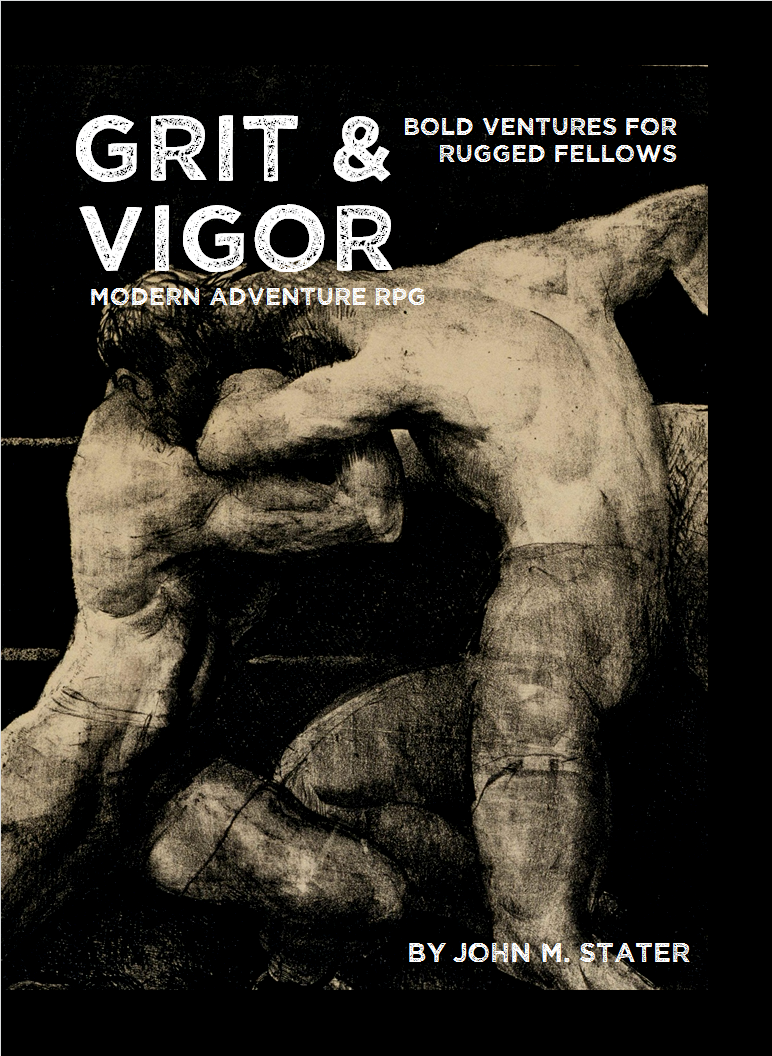

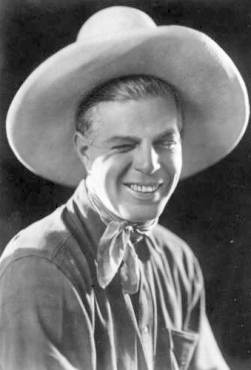

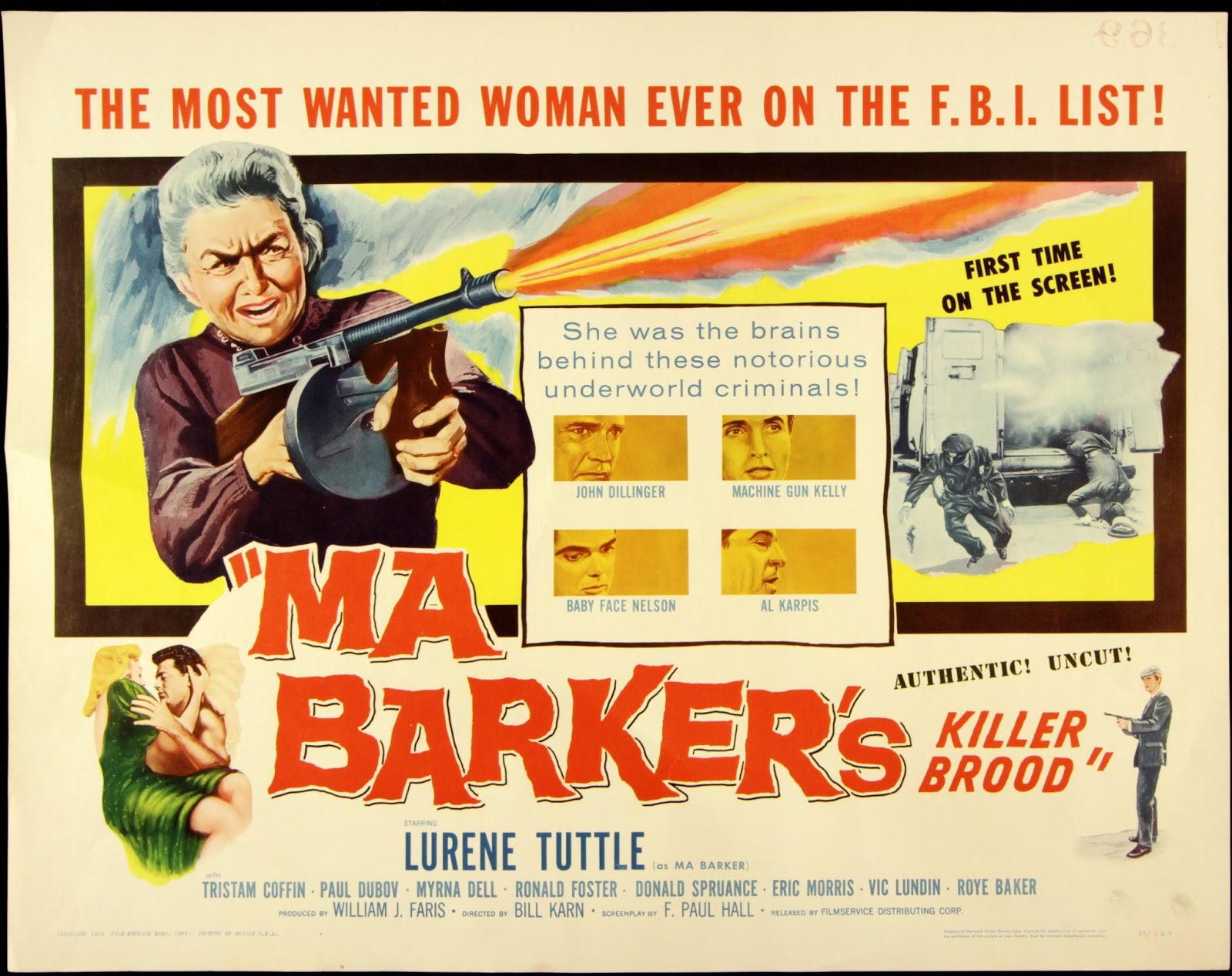
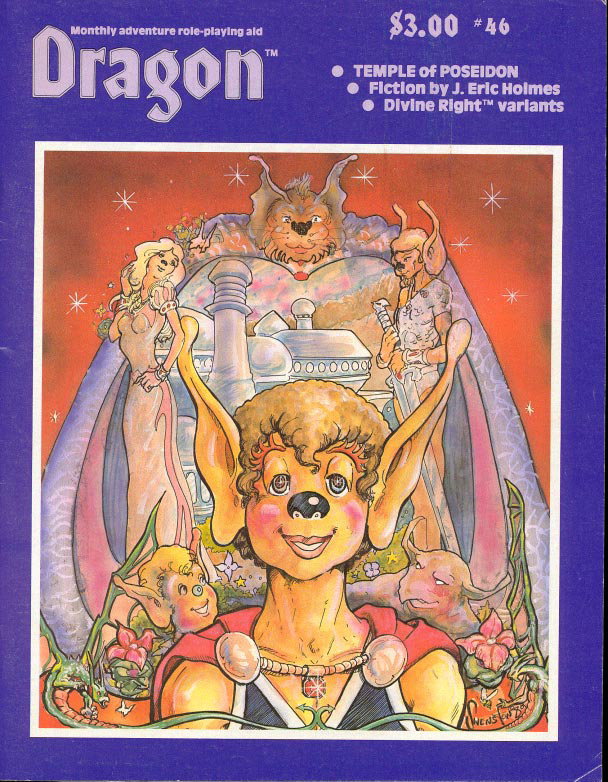
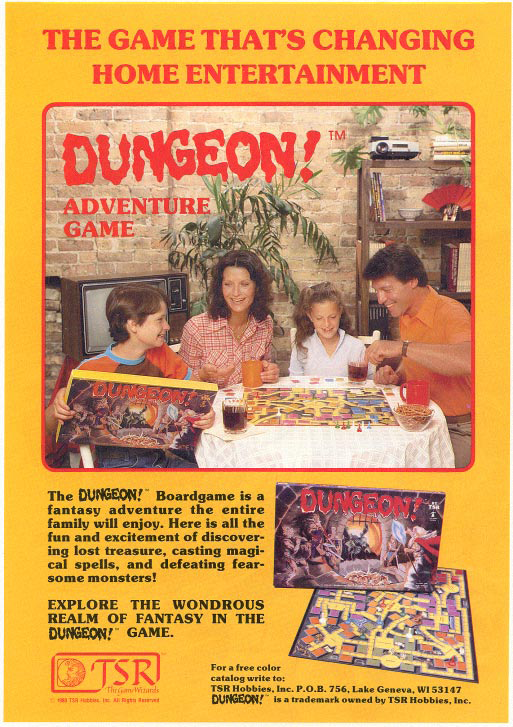


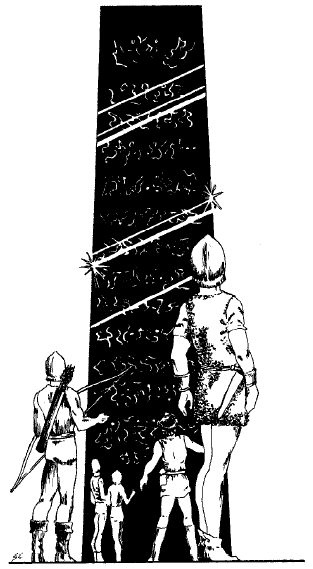


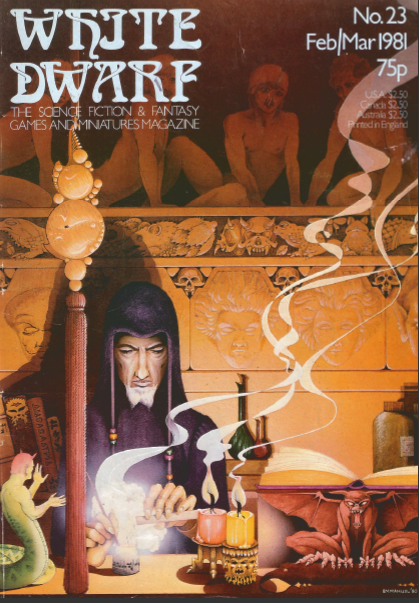


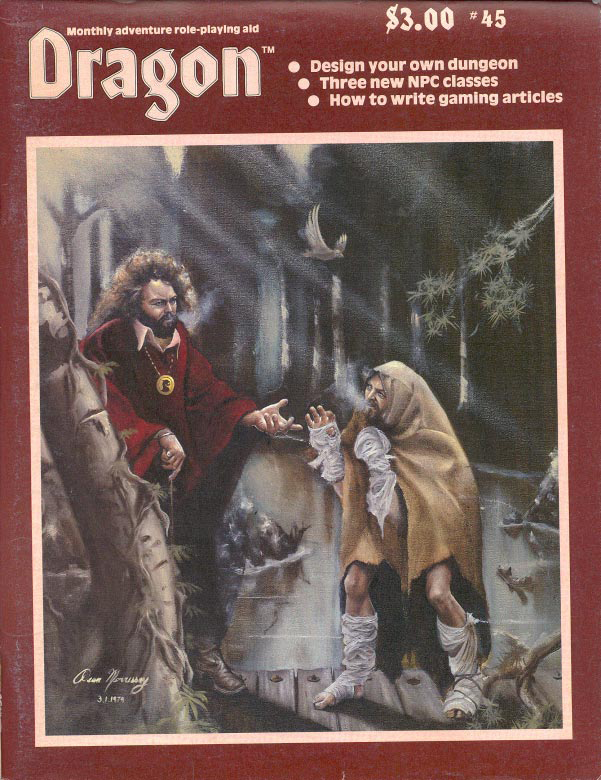
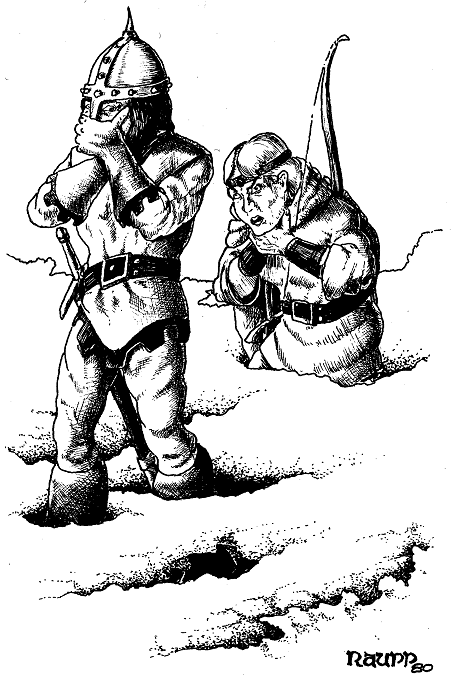


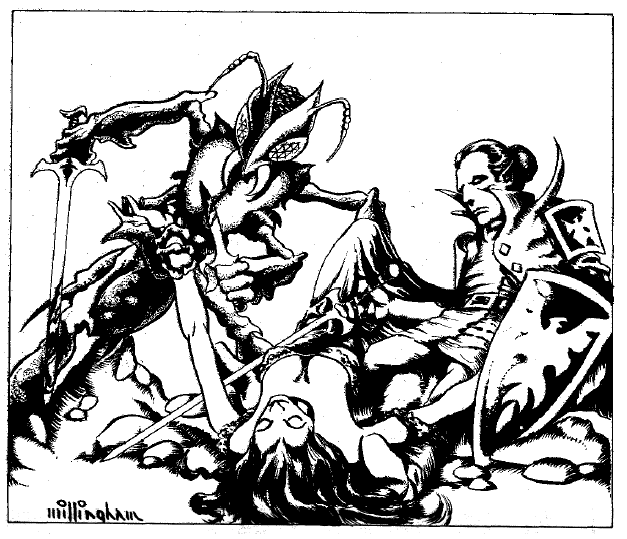



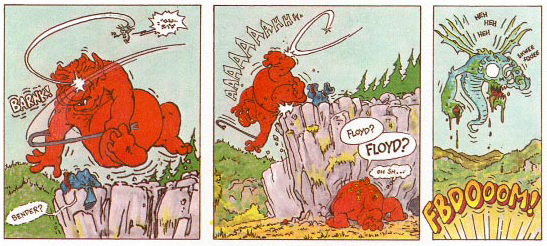

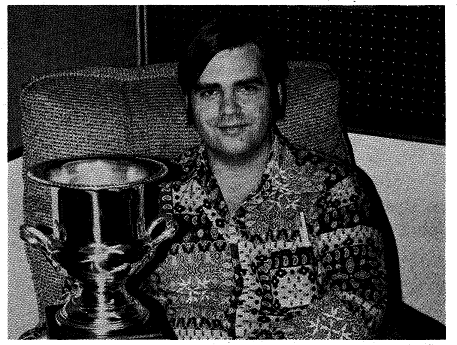

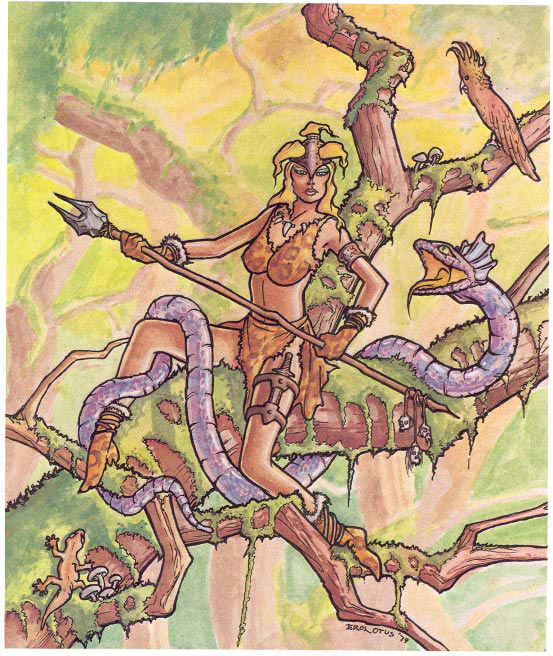
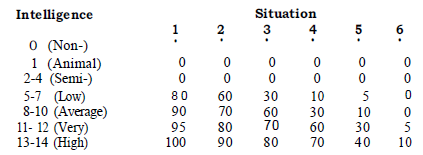
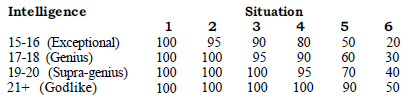
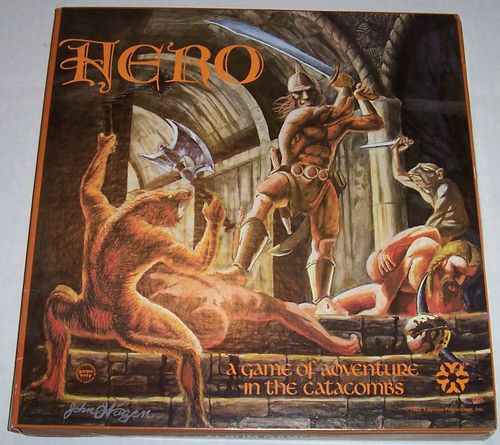

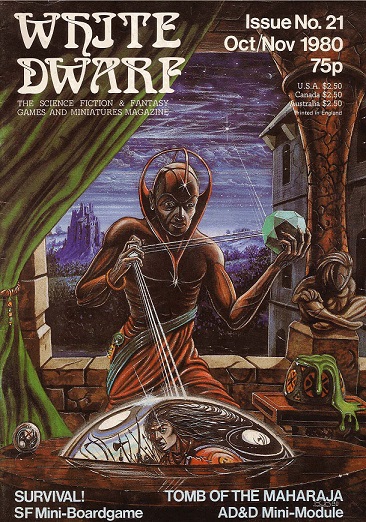


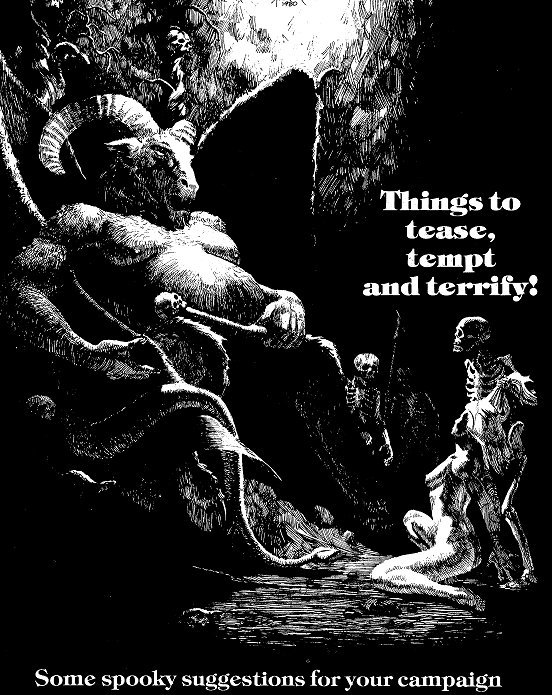


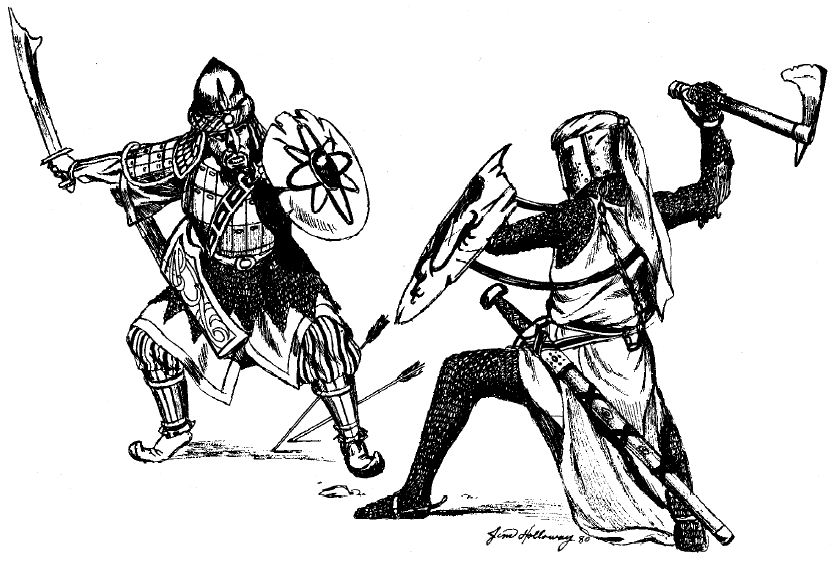


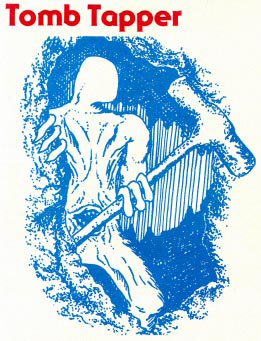


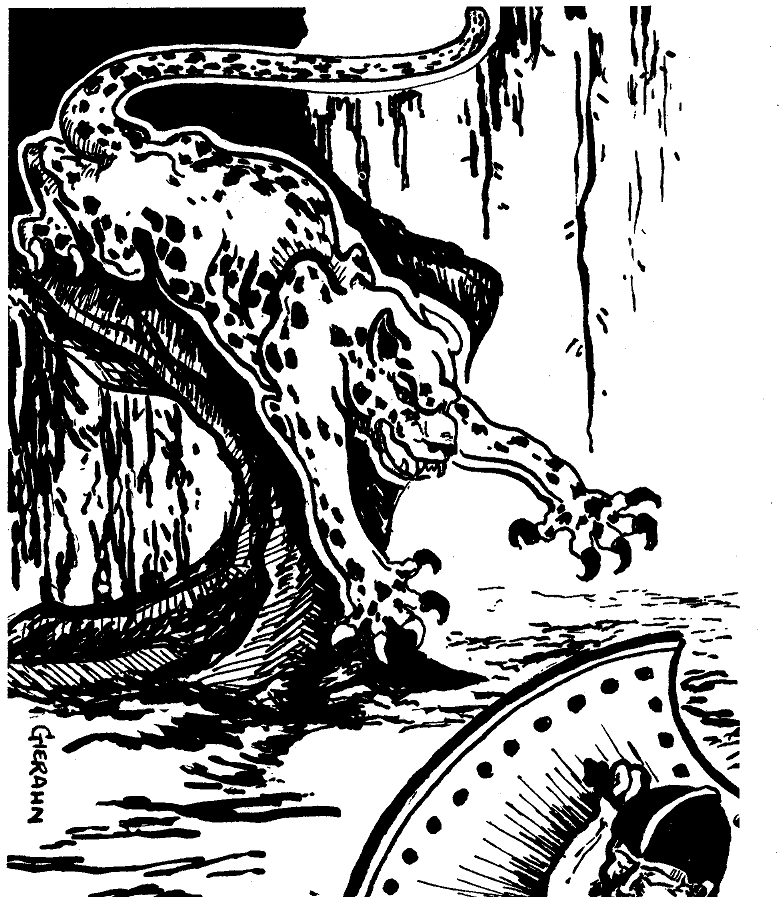
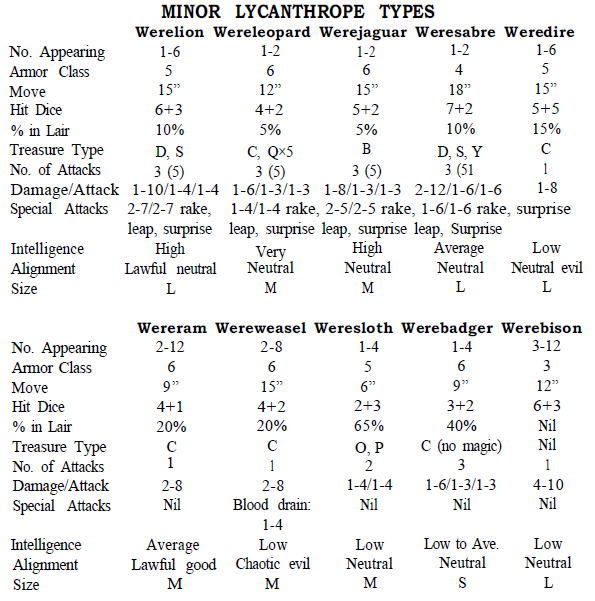

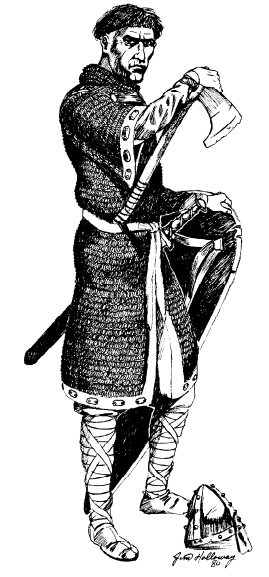


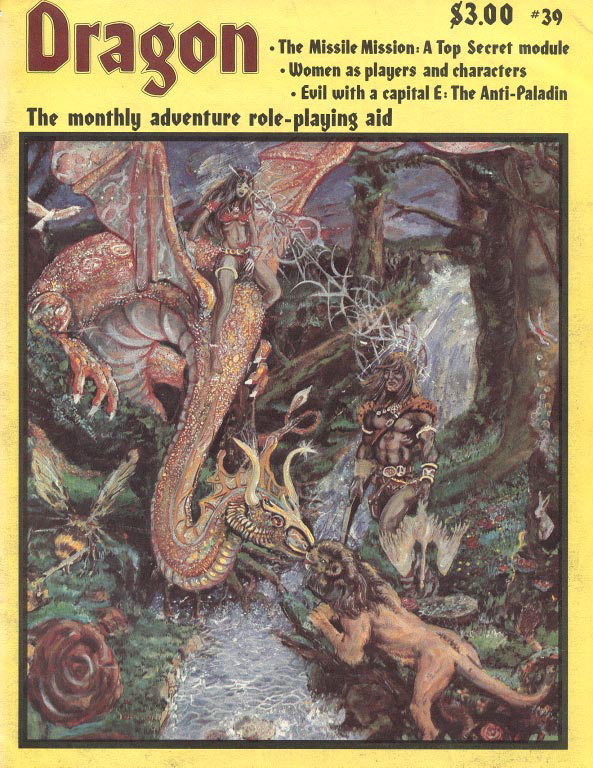
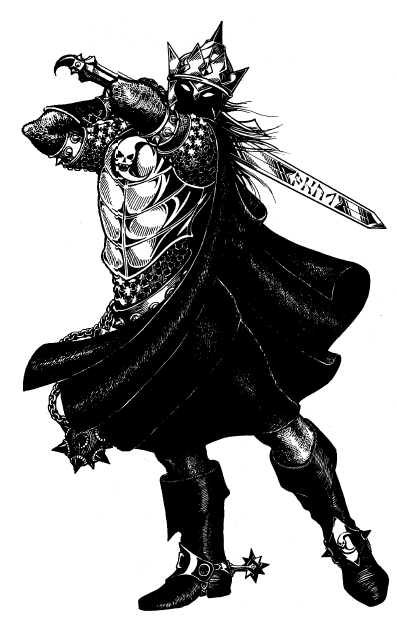
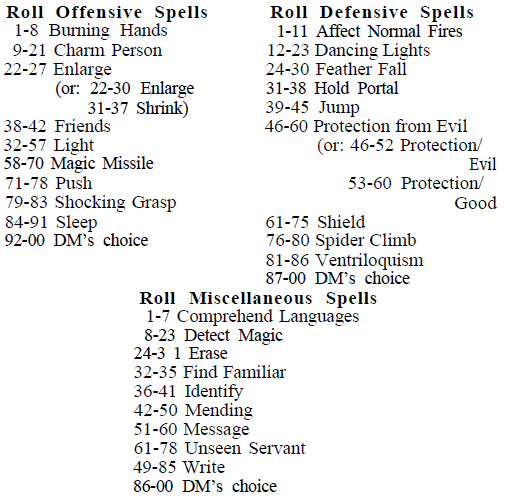
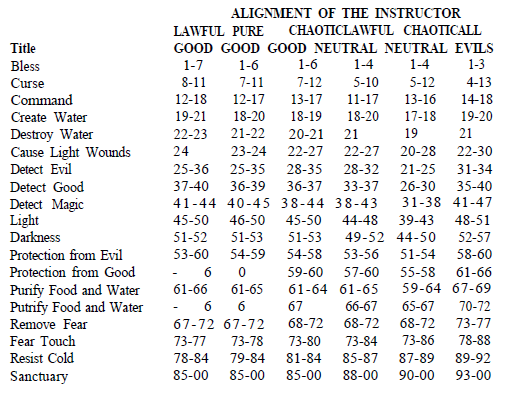

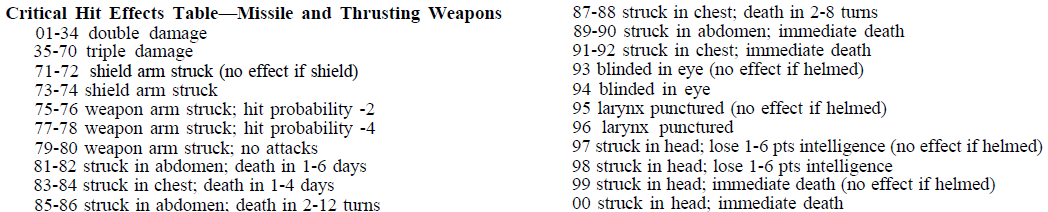

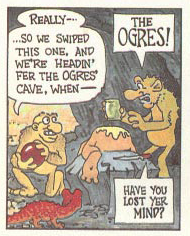
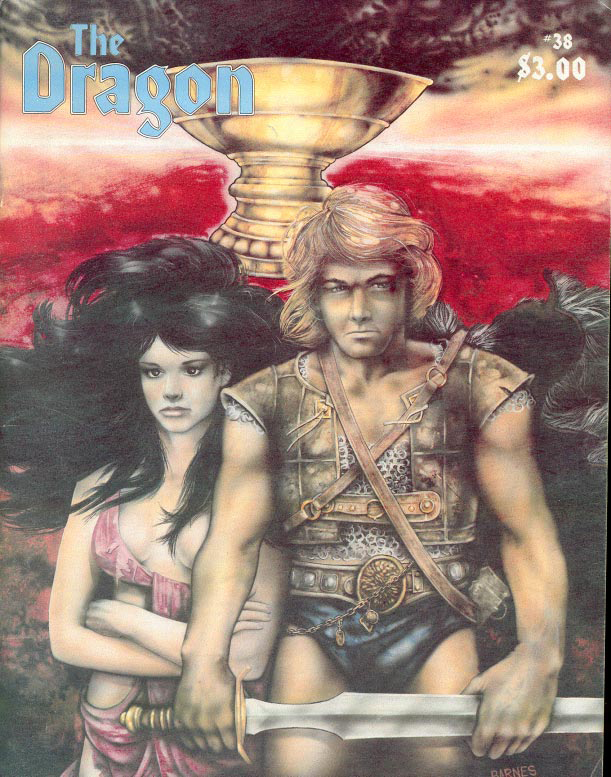
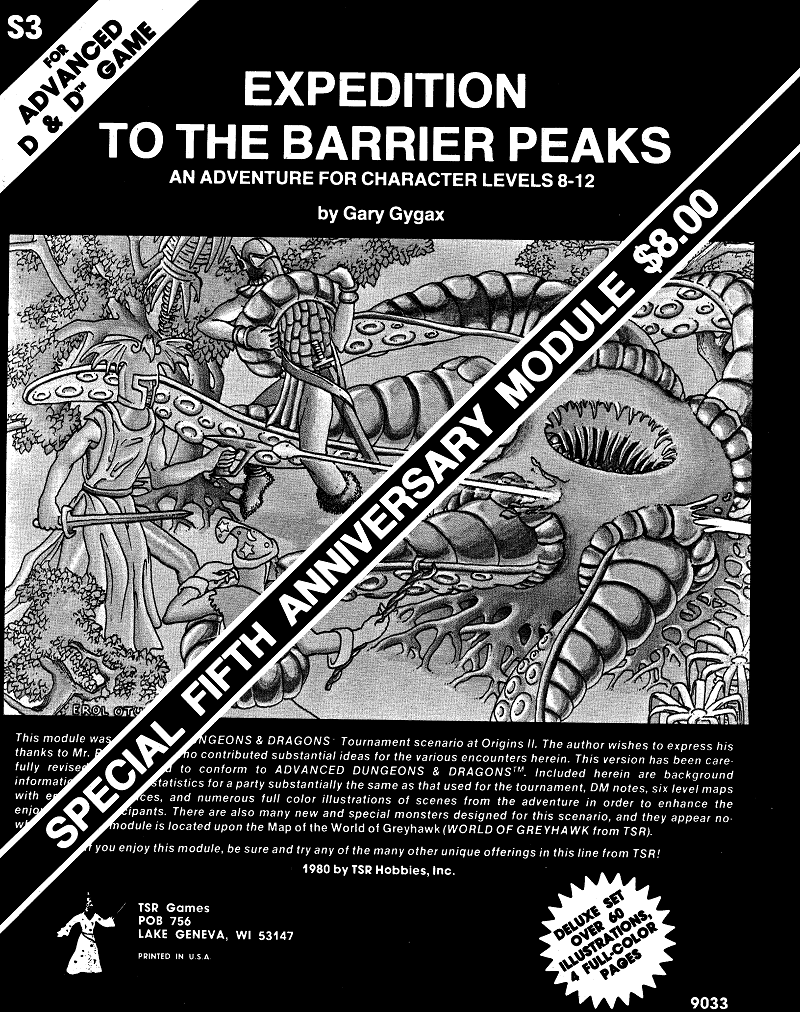


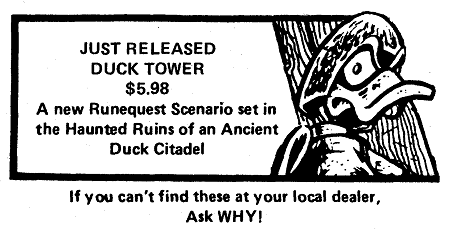



 Land of Nod
