Heroes, Everymen and Underdogs – Part 1

I was listening to a pod-cast today that was discussing the Iliad – a story every gamer geek should probably be familiar with – and an idea struck me.

The Iliad is set in the Age of Heroes (yeah, a TSR, AD&D2E-era book), in which the children of the gods, the heroes, were competing for glory and immortality among mortal beings, and bringing the blessings and the curses of the gods with them. What marked these heroes? Well, if nothing else, their incredible ability scores, to put it in D&D terms. Thus, the idea …

In a campaign that ignores “race” – i.e. and all humans campaign – might it not be fun to divide the characters into broad categories based on their rolled ability scores. Now, this makes the most sense to do if you’re rolling 3d6 (either in order or not doesn’t really matter for our purposes). These categories might go as follows:

Ability Score Total / Category

18-54 / Underdog (and must have at least one score of 6 or lower)

55-77 / Everyman (and may not have any score lower than 8 or higher than 13)

78-108 / Hero (and must have one score of 16 or higher)

Now, what special abilities might go along with these categories? More on that tomorrow.

Fighter Moves – a Feat Hack

Found at Wikipedia

Anyone who regularly reads this blog knows that I like taking existing mechanics from the SRD and playing around with them. Today, while I was working on the NOD Companion (on the illusionist class renamed as the trickster) an idea for messing with combat feats popped into my head. The idea is based on the excellent maneuver concept in the Dragonfist RPG.

Basically, I took each of the combat feats and assigned it a level from 1 to 5 based on how many prerequisite feats it had. I then used the bard spells per day table as a guide for the number of fighter moves a fighter could perform each day of each level. I suppose other fighting classes could use this as well, perhaps as a fighter one level lower.

Fighters should begin the game knowing two moves, and then gain a new move at each level, choosing from any level of moves they have available to them based on their own level. One could also use the spell research rules to allow fighters to invent new moves.

The list of moves follows – note that it’s extremely spare at 4th and 5th levels – I suppose I could do some open content feat research and flesh it out, but for my purposes of exploring the idea and presenting it to folks who might want to use it, this will do.

The rules – well, on his turn, a fighter could perform a move in addition to attacking. Simple as that. If the move is an action – such as cleave – assume it is “instantaneous”. If the move involves a static bonus – such as weapon focus – then it lasts for a number of rounds equal to the fighter’s level. Simple and straight-forward, and thus there are probably all sorts of holes in it. Again, this is an exploration, not a full-blown system.

FIGHTER MOVES

1st level
1. Blind-Fight
2. Combat Expertise
3. Combat Reflexes
4. Dodge
5. Improved Critical
6. Improved Initiative
7. Improved Shield Bash
8. Improved Unarmed Strike
9. Mounted Combat
10. Point Blank Shot
11. Power Shot
12. Quick Shot
13. Rapid Reload
14. Two-Weapon Fighting
15. Weapon Finesse
16. Weapon Focus

2nd level
1. Cleave
2. Deflect Arrows
3. Diehard
4. Far Shot
5. Greater Weapon Focus
6. Improved Bull Rush
7. Improved Disarm
8. Improved Feint
9. Improved Grapple
10. Improved Overrun
11. Improved Sunder
12. Improved Trip
13. Improved Two-Weapon Fighting
14. Mobility
15. Mounted Archery
16. Precise Shot
17. Rapid Shot
18. Ride-By Attack
19. Stunning Fist
20. Trample
21. Two-Weapon Defense
22. Weapon Specialization

3rd level
1. Great Cleave
2. Greater Two-Weapon Fighting
3. Greater Weapon Specialization
4. Improved Precise Shot
5. Manyshot
6. Snatch Arrows
7. Spirited Charge
8. Spring Attack

4th level
1. Shot on the Run

5th level
1. Whirlwind Attack

Noah Webster is My Dungeon Master

Here’s a goofy idea to try out – Dictionary, the RPG:

Character Creation

Open the dictionary to a random page. Find a noun – that’s what you are and, by extension, what you should be skilled at. Find an adjective – it describes you. If the first page you open to doesn’t provide enough in the way of nouns and adjectives, try again.

Task Resolution

State what you wish to accomplish. Open the dictionary to a random page. If you can find a verb on that page that can be used to accomplish the task, you succeed.

If you cannot find such a verb, you can try another page IF what you are (the noun + adjective) would suggest you should be good at what you’re trying to do. Otherwise, the task does not go as you would like, introducing a new problem to be solved. Perhaps this new problem is suggested by a word on the page you’ve flipped to.

Advancement

Each successful adventure gives you a free flip you can use to get through a later adventure.

Example

Let’s say you’re ridiculously lucky, and you flip to a page that allows you to be a Nimble Ninja. Your nimble ninja decides it need to clunk a guard over the head to sneak into a castle. You open to a random page of the dictionary and find no words that can help. But you’re a nimble freakin’ ninja, so you should be good at sneaking up on the guard and clunking him on the head, so you open to a new page. Dang – still nothing. What a crappy dictionary. So, you’ve failed. How? Perhaps you step on a stick and are forced to hit the ground. The guard knows somebody is there and he calls for help. They’re now searching the area. Your new task is to creep away unnoticed by the guards, so you open to a random page of the dictionary …

Conceivably, you could play this game alone, or with a game master (the Word Master? the Grammarian?) who controls the actions (and success thereof) of the NPC’s.

A World With Multiple Sentient Races?

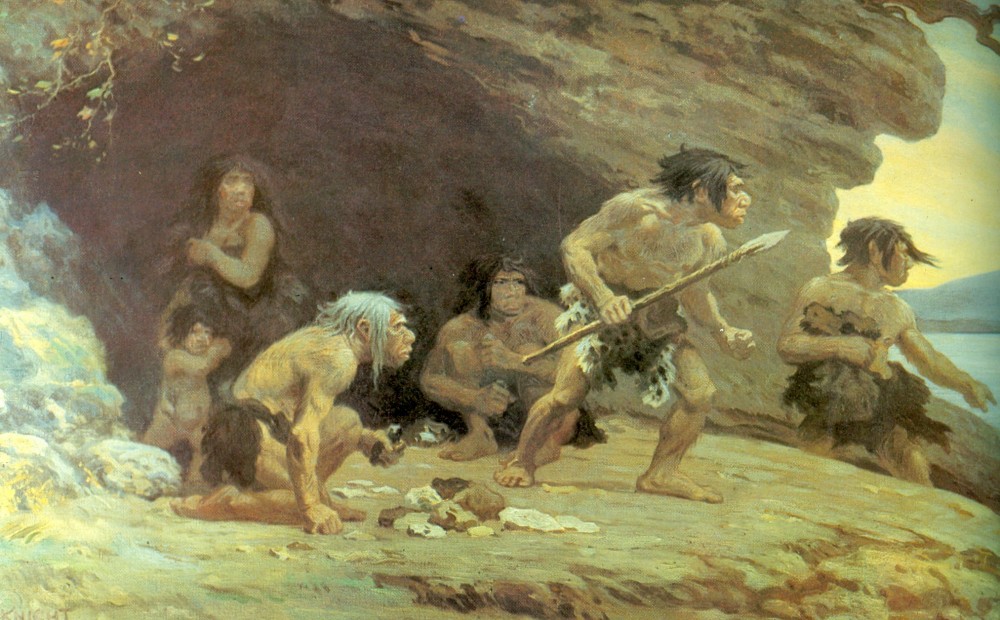
I was reading an article about primitive humans gettin’ busy (yeah, I’m street like that) with Neanderthals. Apparently, we did share the planet with a few other homo sapiens – maybe not as exotic as sharing it with elves, dwarves and halflings (well, maybe halflings), but it makes me think again about the fun of running a game with neanderthals and other “humanoids”, especially if you smash it together with an REH-style Atlantean age of fantastic adventures and ancient civilizations. Imagine an ancient, pre-ice age Europe swarming with prehistoric beasts and powerful stone age (maybe even Flintstone-style) civilizations that are antecedents to the known ancient civilizations of Europe. Naturally, we’re going to bend reality a bit to make this work.

First, let’s look at our players:

Humans

You probably know these guys. Just use whatever rules you would normally use for humans in your favorite system.

For our purposes, we’ll say the humans are the new kids on the block, moving in from Africa, so they’re going to take the roll of nomadic raiders and conquerors, a’ la the Huns or Mongols. Maybe they ride swift hill ponies, and use stone-tipped spears and arrows and stone axes in combat. Assume that stone weapons do one dice-type less of damage than metal versions – so spears do 1d6, hand axes 1d4 and short bows/arrows 1d4.

Armor in this setting is simple enough anyhow, but for humans it probably consists of furs (AC +1) or cured hide armor (AC +2). Maybe they use wicker shields as well.

If you use something like “favored classes”, maybe these humans favor the barbarian class.

Neanderthals

Neanderthals are close kin to human beings. In our setting, they are the high tech stone users, building cities of stone (again, Flintstone-style) and building primordial empires (maybe on the bones of pre-human civilizations like those of the ophidians and elder things). Since we’re used to Neanderthals being depicted as the “dumb cousins”, I like the idea of them being the most civilized people in the game, with a well-organized chieftain system, armies, organized religion (probably druids, but clerics would be cool as well), etc. Of course, the greatest of the Neanderthal kingdoms should be in the Neander valley – this is their Carolingian Empire – imagine how cool their Roland would be!

(Oh – what about theme-ing the Neanderthal city-states off of different stones – the Sapphire City, the Emerald City (well, maybe not that one), the Obsidian City, etc.)

You can probably use the dwarf racial abilities for your Neanderthals, making them tough guys who are hard to kill and who have expertise when working with stone and delving into cave systems. Neanderthal males stand 5.5 feet tall, females 5 feet tall.

Neanderthals have the same basic weapons as human beings, but also have armor that uses horn and bone in its construction (AC +3).

If you use favored classes, neanderthals probably favor the fighter class.

Homo Erectus

Homo erectus appear to have been slightly more primitive hominids than the early humans and Neanderthals. They are hunter-gatherers who use primitive tools and rely more on brawn than brains, and could therefore be an analog for half-orcs in the game (without the mixed parentage). Since homo erectus is more primitive and “close to nature”, you could use the druid as their favored class.

Otherwise, they might make good brigands and pirates, sniping at the edges of Neanderthal civilization without any real ability to conquer it. Heck, maybe the Neanderthal legions use homo erectus and hobbit (see below) auxiliaries as scouts and light infantry in their battles with the orcs and hobgoblins.

Flores Man (‘hobbits’)

So they weren’t discovered in Europe – how do you do cave man fantasy gaming without including the recently discovered ‘hobbits’? And I’d call them hobbits too! The hobbits are small humanoids, maybe a bit harrier than the humans and neanderthals, who dwell in thick woodlands in burrows. You can use the traditional halfling racial abilities for the the hobbits. They stood about 3 to 4 feet tall and used stone tools – probably on par with the humans.

The hobbits (well, as near as they can figure – remember, they might not really be a separate species) lived on an island with giant rats, Komodo dragons, elephants (stegodons) and giant lizards – they’re totally D&D, and must have been pretty slick little operators to survive. You might want to change their favored class, if you use such things, to ranger.

Meganthropus

Indonesia produces all the best hominid fossils! Meganthropus is the opposite of the hobbits – giant humanoids who were probably also related to homo erectus. Since we don’t have elves in this setting (unless we do – see below), they might make a good additional race. Meganthropus stood about 8 feet tall and is probably best represented with the half-ogre race (whichever version you prefer). They would be about as advanced as homo erectus and the hobbits, and probably rely on their great strength more than tools. If you use favored classes in your game, fighter or barbarian probably works for meganthropus.

Other Notions

If you really need to have “elves” in your game, I’d suggest replacing them with ophidians, or even just using them as-is – beautiful fey creatures who are shepherding the humanoids on their way to civilization.

Weapons do a bit less damage in this campaign, but there is less Armor to go around, so things should probably even out in that regard. To keep fighters and clerics (and paladins and whatever else you use) the “most armored” classes in the game, maybe restrict the other classes that can use armor to nothing more than furs (AC +1), no shields.

Spellbooks might not make sense, though scrolls consisting of stone tablets or animal hides are fine. In place of spellbooks, you could equip the magic-users with the aforementioned animal hides (one hide per spell, regardless of the spell’s level) or they could carve runes into staves and use them for memorization. Really, as long as the possibility of magic-users being without one’s source of spells is still present, you’re probably okay.

If you’re feeling gonzo, insert dinosaurs along with the prehistoric mammals, and of course use all of them as mounts.

Now – evil humanoids. They’re still there, of course. Gnolls and their hyaenodons, kobolds worming their way through the earth, goblins hiding in the woods, orcs and hobgoblins giving the early humans a run for their money. Do I even need to mention the lizard men and troglodytes? (And yeah, if your lizard men don’t look a lot like Sleestaks, you’re just not getting the point!) Heck, maybe you could re-cast all of the “evil humanoids” as having dinosaur features – T-Rex hobgoblins, triceratops orcs, ‘raptor goblins, etc.

Most of the mythological creatures are appropriate – after all, many were born from the blood of the “mother of monsters”. Dragons are great, bulettes and ankhegs are perfect, and a setting like this just begs for packs of blink dogs and worgs. A few metal-based monsters – rust monsters, iron golems, giant robots – should be avoided unless they are remnants of the ancient ophidians found in the mega-dungeons they have left behind.

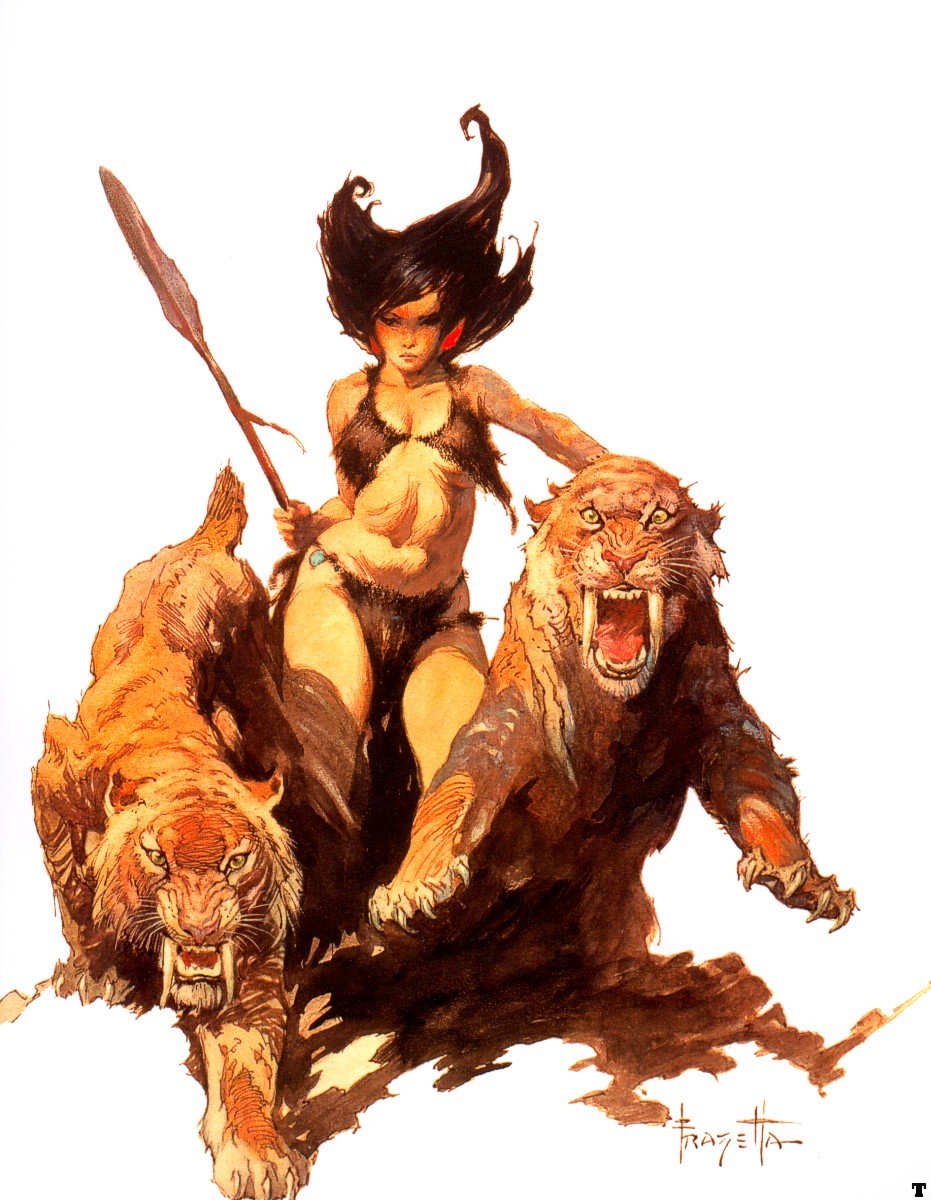
Oh, and also this …

So, find your inner Frazetta and get primitive!

Here Comes the Bogeyman – Part 4 – Killing Rituals

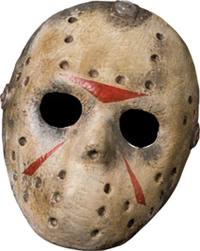
The point of a bogeyman is to create a campaign (or mini campaign or side trek) around figuring out how to kill the damned thing. That means researching the killing ritual. Here, horror movies aren’t quite as helpful as they’ve been before, because most horror movies that involve a bogeyman become series that NEVER FREAKING END. The only killing ritual that can put Jason, Michael Myers or Freddie down permanently is low ticket sales … and even then only until Hollywood thinks it can pull off a “re-boot”. For our purposes, though, we need to have an end to these campaigns of terror.

The how of killing might have something to do with the bogeyman’s origin, and then again, it might not. It could also just be some weird ritual that must be taught by the reclusive monks in those far-away mountains you’d like to introduce to your players.

The killing ritual should involve one or more element or step. The more experienced the players (not the characters), the more elements you can get away with, but more than three is probably going to get tedious. There might be a teacher or dusty old tome that can reveal the entire killing ritual, or perhaps the adventurers must track down each element separately. In such a case, it might be a good idea to weave the killing ritual in with the monster’s history (an example to follow), so that as players learn about the bogeyman’s history, they gain clues on how to destroy him.

Some elements you might consider for your killing ritual:

Hit Location – much like a vampire needing a stake to the heart to keep it down, Achilles’ infamous heel or Smaug’s missing scale, the monster can only be killed if struck at a certain point on its body. Unless the monster is stunned/paralyzed/subdued/etc., this brings a combat element into the game and might please the more combat-oriented players who otherwise couldn’t give a copper for solving the monster’s riddle.

Substance – the idea of needing special substances to kill monsters is not new to D&D – silver for lycanthropes, cold iron for some fey, wooden stakes for vampires, magic weapons to harm demons, etc. For a bogeyman, think outside these narrow bounds – Loki using mistletoe to kill Baldr comes to mind, or how about a silver spearhead anointed with a virgin’s tears? It might also be a particular weapon – the sword of Sir Magnus the Moldy, for example – that necessitates a brief quest to find the weapon (a quest which, incidentally, might help to keep the dungeon crawlers in the party happy).

Actor – the monster might require a specific kind of actor to kill it. This can get a bit dicey, as it might take the adventurers of the game just a little bit. Sure, they have to work hard to find the seventh son of a seventh son and convince him to accompany them to kill some monster he’s never heard of, but then the final stroke of the campaign comes from an NPC and that might lessen the satisfaction of the victory for the players. An “actor” requirement could also be something like, “a person who has kissed the Blarney Stone” or “a person who has lost a loved one to the monster” – something that can qualify one or more characters. Even using a PC as the final actor can create trouble – what if the killing blow falls on the shoulders of the halfling thief and two or three other PC’s buy the farm while that player suffers through some lousy hit rolls? An actor is definitely an appropriate element to the killing ritual, but just use it with your eyes wide open to the potential problems it can create.

Time – The time element involves something like: Can only be killed under a new/full/crescent moon; can only be killed at sunrise; can only be killed on a holy day; etc.. The value of a time element is to create a sense of urgency. Whatever the time element, it should be soon, so the adventurers must race to meet the deadline or suffer through another day or week of attacks that might claim new victims. You probably want to keep the interval between potential killings short, else the bogeyman side trek might outstay its welcome at the game table.

Place – A special place to kill a bogeyman might be fun as well, as it means the players have to figure out a way to lure the bogeyman to its undoing. Now, obviously, an intelligent bogeyman should not willingly let itself be lured to the one place it can be destroyed, so try to remember you’re working with an archetypal story here – just roll with it. It doesn’t have to be easy to lure the monster, but don’t make it ridiculously difficult. Good places might be the site of the bogeyman’s creation, an abandoned temple in a lonely wilderness, a holy site, the crater left over from a meteor impact, an active (or soon to be active) volcano, etc.

Here’s an example of a killing ritual tied to a particular bogeyman …

A maiden desperately in love with a wicked man was lured by promises of marriage into a lonely wood, where she was murdered. Now, on nights when the moon is new, a bogeyman composed of the psychic residue of the unfortunate woman (i.e. she isn’t undead) might appear to travelers (the locals know better than to travel during a new moon, but they don’t know why – just an old superstition) as a beautiful maiden with red-rimmed eyes who is accompanied by an audible heart beat – it throbs in people’s ears and causes fear (especially in henchmen and animals).

The murdered maiden will be drawn to killing any men in the party, and will also begin attacking descendants of her murderer, who still live in the nearby village. Assume the murder happened 50 years ago, so there probably are a few elders who remember what happened and can clue people in to the event. The murderer was probably a high placed person in the village, or perhaps was a cat’s paw for somebody else. Maybe the maiden’s stepmother wanted her out of the way?

In this case, the killing ritual involves plunging a gold ring (it was promised to her, and she might howl about it while attacking) into the bogeyman’s (bogeywoman’s?) heart. The most likely way is to slip the ring onto a blade or arrow. This must be done during the night of a full moon. Her destroyer must also deliver a heartfelt apology or must shed a tear while delivering the killing blow or the bogeyman will only disappear for a year and then will return to plague the adventurers.

Here Comes the Bogeyman – Part 3

Last time, I talked about what a bogeyman might look like. Today, I promised to talk about the bogeyman’s powers, but first I need to touch on motivation.

Why has the bogeyman shown up to harry the adventurers? I mean, other than because it makes for an interesting sub-campaign. Here are a few ideas – and they might be important, because the way to defeat a bogeyman might involve delving into its history.

– The bogeyman is killing to survive, i.e. a hunter

– The bogeyman likes to kill, i.e. a murderer

– The bogeyman must kill the adventurers to save itself or its future

– The bogeyman wants something the adventurers have or something they have taken (“I Want My 2 Dollars!”)

– The bogeyman was sent (or conjured) by an enemy

– The bogeyman wants revenge – maybe on the adventurers in particular, or on society in general

What powers does the bogeyman bring to the table? Here’s where it gets tricky.

The bogeyman is going to fight the PCs, so he needs to have combat stats. However – the bogeyman cannot be defeated in normal combat – it has a specific vulnerability that must be discovered and exploited to destroy it. Think of it as a killing ritual that must be performed (we’ll talk about the killing ritual tomorrow).

The bogeyman’s stats should be commensurate to the power of the adventurers it is challenging. If the PCs are all 8th level, then the bogeyman needs enough Hit Dice, a high enough Armor Class and the ability to deal enough damage to challenge the 8th level party. If underpowered, the bogeyman becomes a strange annoyance, not a terrible menace. If too powerful, the bogeyman will wipe out the adventurers before they can embark on the quest to figure out what/who it is, what it wants and how to destroy it.

In general, I’d give it two more Hit Dice than the party average – thus 10 HD for an 8th level party. Give it an Armor Class about four points higher (or lower depending on the system) than the party’s second best fighter can hit regularly. I know this is vague – so in Blood & Treasure terms, if you’re second best fighter has an attack bonus of +4, has a strength bonus of +1 and is wielding a +1 sword, then she has a total attack bonus of +6. On an average d20 roll, she’ll hit an AC of 16 about 50% of the time. So, maybe give the bogeyman an AC of 18 – hard enough to hit to give him some staying power against the adventurers, but not so impossible to hit that he cannot be defeated – remember, he must be defeated in that first combat to launch the quest to figure him out.

The bogeyman can have whatever powers make sense for its form, but keep in mind that the bogeyman should have some sort of fear effect – an aura, a gaze, etc. A bogeyman is almost made of fear, so a fear power just makes sense.

Now – how about those immunities?

There are two tacks you can use here – we’ll call them the Jason Concept and the Doomsday Concept.

In the Jason Concept, you have a bogeyman that can apparently be killed … but which always returns to fight again. A bogeyman like this shouldn’t have any obvious immunities (or at least not many) – it takes damage and falls, and then comes back again and again and again. There is no rule for this – no need to specify a regeneration ability. This is campaign stuff, not monster stuff. You might want to vary the bogeyman’s return time – i.e.

D6 / Return Time
1. Returns in 1d6+4 minutes, half healed
2-3. Returns in 1d6 turns, fully healed
4-5. Returns in 1d6 hours, fully healed
6. Returns in 1d6 days, fully healed

The Jason Concept works on the attrition model – he’s slowly wearing down the adventurers, depleting their resources and making them more and more vulnerable until he starts eliminating them one by one.

In the Doomsday Concept, you have a bogeyman that simply cannot be hurt – except by its killing ritual. This concept is more dangerous, because it means you’re going to lose party members until they realize they have to run. You might want to limit the damage output of a Doomsday or make sure it is slow moving enough that it can, at least initially, be escaped. With a Doomsday, it needs to have a high magic resistance, immunity or resistance to most energies, only hit by magic weapons, etc. It should probably also have a regeneration ability – either like a trolls (so it’s always regenerating), or one that kicks in when it seems to have been killed. The idea here isn’t to fight a war of attrition with this thing, but rather to have to retreat, regroup and come up with a new plan.

Whichever concept you’re using, you’re skating on thin ice with a group of players who really hate character death.  If you’re playing a system where it is assumed that any obstacle/challenge can be overcome, you run the risk of players who are going to feel cheated. If you have players like this, you’ll probably want to use the Jason Concept – a foe they can defeat, but who keeps coming back.

Tomorrow – Killing Rituals and how to discover them.

Personal Quests – The Quest of the Mind

When I started this, I knew that I wanted to do three versions of the personal quest, one to challenge each of the mental ability scores. The Quest for Romance challenges Charisma, and the Test of Faith challenges Wisdom. What to do with Intelligence, though?

Scientific revolution, of course!


Quest of the Mind

In a quest of the mind, a character challenges the foundations of knowledge in the game world he inhabits. We’re talking Copernicus vs. Ptolomy here, and that makes this maybe the biggest quest of all, since, on a fundamental level, it allows the player to screw with the game world at large. Naturally, allowing such a quest is totally up to the Referee, who might not like to have his game world turned upside down – but if a game world is beginning to get stale, what better way to freshen things up?

So, what counts as a scientific revolution in a fantasy world? Obviously, disproving the function of magic is out of bounds – too many people actually using magic to make that world. A few possibilities might be:

Human beings evolved from apes (or locathah or green slime)

The world is round (or flat or cubical or a dodecahedron)

The Sun is the center of the solar system (or the perfect breasts of Queen Faustina of Zrath or the Golden Needle that lies in the deepest valley in the world)

You get the idea. Whatever is being “proven” must be, according to everything everyone in the game world knows (i.e. what the Referee initially made up), wrong.

I won’t lie to you – guidelines for such a thing are not easy to come up with, so a great deal will be left up to the Referee and player.

Step One

The character makes a very public announcement – perhaps in the court of the World Emperor or, if the printing press exists, in a widely published paper that shocks (SHOCKS) sages all over the world to their core.

The iconoclast must risk points of intelligence here – a maximum of 8 – with failure indicating that something he or she thought was true about the cosmos was wrong – i.e. the iconoclast was not as smart as everything thought they were. The intelligence risked should be commensurate with the impact of the proposed scientific revolution.

Step Two

Now we get to the meat of the quest, and we have to get into some real D&D-isms to make it work, since such a proof is generally not the stuff of grand adventure.

In order to prove his theory correct, the iconoclast must gather evidence – at least one piece of evidence per point of intelligence risked. The iconoclast’s enemies (and they will be many, and may be very powerful) will work actively against her – so beware assassins in the night and annoying bureaucrats in the day.

The pieces of evidence to be gathered should fall into the following categories:

Mathematic – A mathematic proof must always be one of the bits of evidence gathered. Creating this proof is the equivalent of creating a new spell, with the level of the spell being equal to the number of points of intelligence the iconoclast is risking. Normal spell creation rules apply (for whatever system you are using), with the exception that the iconoclast can use the services of a sage rather than alchemist to aid in his research – provided he can find a sage willing to risk his reputation to help the iconoclast. Since this is a pretty dry sort of evidence to collect, you probably don’t want to let the iconoclast do it more than once to count for his evidence.

Ancient Lore – This involves finding ancient lore that might bolster the iconoclast’s theory. Maybe it is an ancient book scribed by a long-dead archmage, a stone tablet made by pre-human fish people or observations on the cosmos worked into the gown of an ancient king by his court astronomers. Whatever it is, the iconoclast must first find a clue that it exists, and then he must find it. This might involve dungeon delving, but it could also involve performing a service for the owner or stealing it from the owner.

Specimens – Natural specimens, be they ancient fossils, samples of elements (i.e. periodic table elements, not “four classical” elements) or samples of animal or plant life (or monster life). Whatever they are, they should be exotic and hard to come by. Again, this dovetails nicely with the traditional focus of D&D, and should help keep the iconoclast’s fellow adventurers happy.

Experiments – This can be a bit tougher, of course, and might best be handled in the same way as mathematic proofs. The idea would be to prove something with a public, physical experiment – i.e. dropping a heavy ball and a light ball from a tower and seeing the rate at which they fall, or measuring shadows cast by obelisks in different towns, etc. Honestly – I’m not sure how this would work – I leave it up to creative players and Referees.

Step Three

However the evidence is gathered, it must at some point be presented to the assembled authorities. An academy of sages must be called forth by one of the great rulers of the land, and they must be given time to assemble. The sages (and this could include magic-users and clerics) should be in number equal to the points of intelligence at risk +2. Thus, if the iconoclast is risking 8 points of intelligence, the academy should include 10 sages. Creating this academy probably means that the iconoclast needs a royal or imperial patron – gaining such a patron can be an adventure all by itself.

Once the authorities are assembled, the evidence is presented to them and the argument is made. The process of debate is handled like a combat. Each person in this mental combat re-rolls their hit points based on their level (you might need to assign “levels” to the sages based on their age and reputation) and modifying these hit points by their Wisdom rather than Constitution. Each debater’s “Armor Class” is equal to 10 plus their Intelligence score. Attacks are rolled on 1d20 and are modified by the debater’s Charisma bonus (i.e. treat Charisma as though it were Strength) – damage is equal to 1d6 modified by Charisma again.

For the first bit of evidence, one opponent comes forth to challenge the iconoclast’s conclusions. The mental combat is waged until one of the combatants has lost all his “hit points”. If the iconoclast loses, then the piece of evidence is rejected. If he wins, then he convinces his challenger that he is correct – he has a new ally who will join him in battle for future fights! At the end of each fight, 50% of the “hit points” lost in that fight are restored. If the academy adjourns for the day (you might assume that each “round” of a combat takes 30 minutes), all hit points are restored with a night of rest.

If the iconoclast has a single ally, his next piece of evidence is challenged by 1d3 rivals. If he has two allies, it is challenged by 1d4 rivals, and so on, until he has convinced a 70% majority of the assembled brainiacs that he is correct.

Step Four

If the iconoclast fails to convince at least half of the assembled authorities that she is correct, she loses the risked Intelligence and any XP earned while gathering her evidence. She is a laughing stock – a kook – and will be regarded as such by commoner, academic and noble alike. Old allies will distance themselves from her, even if they do think she is correct.

If the iconoclast convinces at least half of the authorities that she is correct, she loses only half the intelligence risked, retains half of the XP earned gathering evidence, and has created a schism in the body academic. Academic wars (or real wars, if religion is involved) will rage, and the iconoclast will have to be satisfied with shaking the status quo.

If the iconoclast convinces 70% of the assembled authorities that she is correct, she increases his intelligence score by half the points she risked (max 18, unless you want to let her intelligence go higher), gains 150% of the XP earned while gathering evidence, and she becomes, academically speaking, the most important person in the world (at least until a new scientific revolution takes place). As a celebrity, she will receive offers of patronage from emperors and kings and she will forever more have the abilities of a sage (using whatever sage rules your game uses; but not including new spellcasting abilities).

Note also that the “new reality” that has been birthed may alter the functioning of spells and unearthly creatures – if demons are proven, for example, to be nothing more than illusions of a troubled mind, they might have less power over people. I’ll leave it up to the Referee how far they want things to go.


Personal Quests – The Test of Faith


The test of faith is a personal quest designed for lawful characters (or good characters, whichever version of alignment you use in your game). I’m sure somebody out there can modify it for other alignments, but for now I’m sticking with the good guys.

Step One: The lawful character challenges his deity or faith to test him. Test him down to the marrow in his bones to see if he is truly worthy. The petitioner must wager wisdom points (a minimum of 4) on this personal quest. Each point of wisdom wagered translates into either one month, or one game session, of the test (referee’s choice). During these months, normal XP acquisition is suspended for the character.

In place of normal XP acquisition, the petitioner earns XP for lawful/good acts. We’re talking acts of sacrifice, generosity, caring, love (not lust), etc. The XP value is based on the object of this lawful act, with clerics and paladins (and perhaps rangers, depending on the rules you use) earning double the XP because the stakes of this test are much higher for them.

Close friend or family = 50 XP x level

Associate = 100 XP x level

Stranger = 200 XP x level

Stranger, helpless = 300 XP x level

If the lawful act directly benefits the petitioner, cut the XP in half.

Step Two: The test involved here essentially works like a curse (and one than cannot be magically alleviated, since the petitioner entered into the test on their own volition). Every time the petitioner performs a lawful/good act, they are beset by a misfortune.

During the first month/session of the test, these misfortune’s are fairly minor annoyances – food going bad, a piece of equipment is lost or damaged, they trip over something and make a fool out of themselves. You get the idea. All of these misfortunes affect the petitioner.

During the second month/session of the test, the misfortunes are magnified and more mechanical – penalties to saving throws or attack rolls, weapons or armor breaking in the middle of a fight, etc.

During the third month/session of the test, the misfortunes begin to affect the petitioner’s allies (i.e. party members, henchmen, hirelings). The misfortune’s might be as above, or might be things like surprise diseases or house fires. Each time such a thing occurs, there is, obviously, a good chance an NPC becomes hostile to the petitioner and abandons them. The actions of party members are up to the players, of course.

During the fourth and subsequent months/sessions of the test, the misfortunes begin plaguing random strangers (could be a child, could be a powerful king) in the city or kingdom or region the petitioner is adventuring or living in. Word of the petitioner’s test will have spread, of course, so it is likely that the victim of this misfortune will know who to blame. It’s also very possible that every misfortune will be blamed on the adventurer. Needless to say, these are going to be rough times.

Fortunately, there is a way out …

Step Three: To stop the misfortunes, the petitioner need only renounce his or her god/goddess/faith, publicly and loudly. The adventurer’s alignment is changed to neutral, and all benefits from the lawful alignment are lost (i.e. clerics lose all spellcasting ability, turn undead, paladins become normal fighting-men, etc. – it’s up to the referee if the petitioner can atone to regain his alignment and abilities) The petitioner loses the wagered wisdom points (they have lost their faith), and these cannot be restored by any means.

If, on the other hand, the petitioner survives this test of faith, they receive half as many wisdom points as they wagered as a permanent boost to their wisdom (max. 18) and begin attracting 1d6 zealous followers to their flock each time they advance one level. These followers are in addition to normal retainers allowed by charisma and in addition to followers gained when one builds a stronghold. The adventurer is now known far and wide for his faith, but he might also be despised for the trouble he has caused and have to work diligently to make things right.

Monday – the Test of Intelligence

Personal Quests in Fantasy RPGs

D&D and its many clones is an excellent rule set for exploring dank dungeons and recovering great treasures. Not surprisingly, many folks, inspired by fantasy literature of all stripes, want something more than this. Of course, the old rules don’t explicitly support other styles of play, but they don’t discourage it either – most simply require more interaction between the Referee and players outside the rules, or perhaps a tweaking of the rules (i.e. use find secret doors rules to find clues, such as the blood stains on the hem of the countess’s dress – perhaps she killed the archduke!)

That being said, I think what some players, especially players who approach the game as less of a game and more of a mutual imagination society, want is character development. John Carter wasn’t just a guy running around killing martians – he was driven by his love for Dejah Thoris. Emotional goals can be difficult to model in a game that is driven by the primary reward of experience points, which are typically earned by slaying monsters and finding treasure. For some, the answer is “story awards”, which work well with a group of very like-minded players, but story awards can be off-putting to folks who just want to play the core game concept (i.e. “I don’t want to explore Rogar’s childhood, I want to see what’s beyond that glowing portal – I’m only 10,000 gp away from a down payment on my castle!)

The following ideas attempt to reconcile these disparate play styles, creating an environment where players who want to develop their character’s fantasy lives a bit more can do so without requiring solo play or forcing them to either forgo earning XP along with the others, or giving them bonus XP that will make the others a bit jealous. The system is just a thumbnail, really, and it is completely untested. Think of it as a notion and set of guidelines more than a fully realized set of rules.

Personal Quests
Personal quests are designed to test a character emotionally. In essence, it shifts their play rewards, for a time, from the traditional means of gaining XP to an alternative method of gaining XP. These personal quests are meant to work alongside normal play, though they will, of course, disrupt it to some extent – the player who wants to send his character on a personal quest should first discuss it with the other players, and of course, with the Referee, and get their buy in.

The basic structure of a personal quest is as follows:

Character declares he is undertaking a personal quest

Player wagers some ability score points on the success of his quest

While on the quest, the character earns no XP for normal adventuring, but rather earns XP for accomplishing the quest

Failure means a loss of ability score points and XP

There are three types of Personal Quests (though I’m sure others could devise other quests): Quests of the Heart, Tests of Faith and Quests of the Mind.

Quests of the Heart
Quests of the heart involve romance. Since I’m a heterosexual man, I’m going to describe these quests in terms of men pledging themselves to women; your mileage may vary, and I think the rules of love are applicable to women pledging themselves to men, men pledging themselves to men and women pledging themselves to women, perhaps with some tweaking.

A quest of the heart involves a man becoming cognizant of the most desirable woman in the city/kingdom/world, etc. He decides that he loves her, and more importantly decides that he must make her love him.

Step Zero: The Referee must create a desirable woman as an NPC. She should be beautiful, physically, mentally and spiritually – we’re talking Cyrano and Roxanne here, not the playmate of the month (though I don’t know any playmates personally, so I really shouldn’t comment on their mental and spiritual beauty).

Step One: The man must introduce himself to the woman. Of course, there are any number of ways to do this, depending on the woman’s station in life. This shouldn’t be entirely easy, and while it may be a quick solo move by the character, it could also involve him getting help from his friends or from friendly NPCs. This can be as debonair or devil-may-care as the player wants, but on some level it should be romantic.

Once the man has made his introduction, he must declare (perhaps before witnesses, perhaps before the woman alone) that he loves her and will earn her love in return within the span of one year and one day. The woman will regard this proposal somewhat coolly – after all, if she melts into his arms now, there isn’t much point to the quest, and a woman worth having should be hard to get – but will show at least some interest. In return, she will place her hands on his cheeks and whisper to him a geas (per the spell) that will govern his actions during his quest. The geas can be as whimsical or cruel as the Referee thinks is appropriate for the woman he has created.

Step Two: If the woman is the most desirable woman in a village or market town, she must have a charisma of at least 16, and the man who loves her must wager at least 4 points of charisma in his quest to win her love. If the woman is the most desirable woman in a great city, she must have a charisma of at least 17, and the man who loves her must wager at least 6 points of charisma on his quest. If the woman is the most desirable in the kingdom or region, she must have a charisma of 18 and her suitor must wager 8 points of charisma. If she is the most desirable woman on a continent, she must have a charisma of 19 (yes, beyond the human norm) and her suitor must wager 10 points of charisma on his quest. If she is truly the most desirable woman in the world, she must have a charisma of 20 and her suitor must wager 12 points of charisma on his quest. A suitor cannot wager so much charisma that failure would bring his score below 3. The desirable woman, of course, should also have above average scores in wisdom and intelligence, and might have other high scores as well.

The potential loss of charisma points represents the suitor’s broken heart. Failing to gain the love of his love, life becomes a dark, dreary, pointless place, and he finds it difficult to carry on around others. Life loses its luster and flavor. Ability score points lost on a personal quest cannot be restored – not even with wishes. The player chose to risk them, and there should be no avenue to mitigate this risk.

Step Three: While on his personal quest, the suitor earns no experience points from normal adventuring (i.e. monsters and treasure). He does, however, earn XP for completing his quest, as follows:

Most desirable in village/town – 5,000 XP

Most desirable in city – 10,000 XP

Most desirable in kingdom – 25,000 XP

Most desirable on continent – 50,000 XP

Most desirable in world – 100,000 XP

Adjust these values as you like.

Step Four: The quest is completed when the suitor earns from the woman he loves a kiss of true love (see The Princess Bride if you’re fuzzy on this concept). At least some of this quest involves acting on the part of the player and referee – if this makes either uncomfortable, then a personal quest of this kind is not going to work. Of course, since this is a game, there are also some measurable aspects to the quest – this is heroic fantasy, of course.

The suitor must complete at least three tasks/sacrifices to win his lady’s love:

One of these tasks is the giving of a wondrous gift. Wondrous does not necessarily mean valuable, though if it does, the value should be no less than a fifth of the XP value of the quest in gold pieces (thus 20,000 gp for the most desirable woman in the world). If a gift holds a deep meaning, it need not carry any monetary value at all.

Another task is a test of wits. The player must write a love sonnet (no copying!). The sonnet must be delivered, in character, at the gaming table and must be judged by those assembled. Hey – love hurts, folks, and we aren’t talking hit point damage here.

The final test is one of the body – risking death for the hand of your beloved. This, of course, sis more in line with traditional D&D, save your risking it all for a woman’s heart than a box of coins. The final test must be meaningful to the woman – rescuing her father, who was lost at sea, finding her long lost brother, who might be a bandit in the hills, recovering her family’s magic sword from a dragon’s horde, restoring her mother to her rightful place as queen, venturing into the underworld to bring his love back after she was poisoned by a jealous rival. The difficulty of the quest should be commensurate with the level of the character’s involved – a 12th level lord shouldn’t get off easy just because he’s “only” trying to woo the most desirable woman in his manorial village.

If these tasks have been completed successfully (with the help of the others in the party, of course, but the key player must always try to take the lead) and the role playing has been good, the player may return to his love and again pledge himself to her on bended knee. If she kisses him, he is hers and she is his and true love triumphs. The successful suitor earns the XP, increases his charisma by half as much as he risked (max score of 18), and the character now has a very concrete connection to the game world. If he should ever lose his love, he loses those charisma points earned and wagered and loses the XP earned on the quest – once John Carter wins Dejah Thoris’ heart, he is forever bound to her, after all.

Tomorrow … The Test of Faith
How Much Fight Left in the Fighter?

This is just a silly notion for giving players one more thing to worry about (and wager on) during a game. I won’t claim is shockingly original, but it might prove enjoyable.

First and foremost, players stop tracking their hit points (or ability score points, in terms of suffering penalties and damage to them). Instead, the referee alone will know exactly how many hit points a character has left.

Now, making players go into a fight blind would be silly. After all, a person involved in a fight has at least some idea of how much fight they have left in them – how tired they’re getting, how much pain they’re in, etc.  But without knowing exactly how many hit points a character has left, it is harder for players to do the “bugbears deal about 4 points of damage per round, and with my platemail and shield and their 3 HD, I figure I can last 3 more rounds” calculus. This is where the wager comes into it – do I need to retreat or switch tactics, or can I outlast this bugbear bastard? Do I feel lucky? Well, do I punk?

To model the character’s knowledge of how much fight they have left, the referee instead throws out descriptive language based on the total number of hit points a character has left, cross-referenced to the potential damage his or her opponent is capable of dishing out.

There are really two uses of language here – one to communicate how much damage has just been taken, and the other to communicate how much is left.

First and foremost, we’re going to take a character’s hit point total and divide it by four to produce four zones. We’re going to throw some adjectives out for each of those zones to help the referee describe how a character is feeling.

Zone 1: 75-100% of hit points – Fresh, quick, confident, feeling lucky, vigorous, full of pluck

Zone 2: 50-75% of hit points – Breaking a sweat, blood warm, heart thumping

Zone 3: 25-50% of hit points -Struggling, winded, complaining muscles, mouth dry, feet heavy

Zone 4: 1-25% of hit points – Staggered, sucking wind, feel the icy hand of death, bruised and bloody, lungs screaming for air, lips flecked with foam, stomache churning, see the valkyries hovering overhead

One might also want to extend Zone 4 based on the total potential damage of the opponent being fought. For example, a magic-user with 6 hit points would have the following zones:

Zone 1: 6 hit points

Zone 2: 4-5 hit points

Zone 3: 3 hit points

Zone 4: 1-2 hit points

This is all well and good, but if the magic-user is fighting a monster that can do an average of 4 points of damage per round, it’s likely that the magic-user will know death is just around the corner once it hits zone 3, and thus worth while using the zone 4 language a bit earlier.

The above language gives an idea of how much life the character has left in them. How about how much damage is being suffered?

In this case, we relate the damage dealt to the movement between the zones. A hit that does not drop a combatant from one zone to another is a light hit. A hit that drops a character by one or more zones is a serious hit. The following language might prove useful:

Minor Hits: A near blow takes your breath away, you feel your opponent’s sword/arrow/etc. whoosh by your ears, your arm/leg/shoulder/etc. is nicked by your opponent’s weapon, your opponent’s blade tears through your cape/cloak/puffy sleeve, your opponent’s blow forces you to leap back/duck desperately to avoid being bloodied, etc.

Serious Hits: A palpable hit, skewered by …, slashed by …, a skull-rattling blow, a crushing blow, a near-mortal blow, leaves a trail of blood running into your eye, a buffet that echoes in your head as you scramble desperately back into your stance, etc.

Obviously, this means a 10th level fighter will be suffering far more minor hits than a 1st level magic-user. Just about every hit on the 1st level magic-user will be a serious hit (if it doesn’t kill him outright), which is as it should be. Those long, drawn-out sword duels seen in movies, as unrealistic as they are, are usually fought between mid- to high-level fighters (to use the parlance of D&D), not low-level types always on the edge of expiration.

So, let’s imagine a 3rd level fighter with 14 hit points fighting a bugbear.

The fighter’s zones are as follows:

Zone 1: 11-14 hit points

Zone 2: 8-10 hit points

Zone 3: 4-7 hit points

Zone 4: 1-3 hit points

In round one, the bugbear scores a point of damage on the fighter. The referee describes it thus: “You feel the monster’s morningstar whoosh past your head, but successfully dodge the blow. You feel confident you can best this foul monster.”

In round two, the bugbear scores no damage, and the referee says, “You repel the monster’s clumsy blows with ease, springing back and forth with vigor.”

In round three, the bugbear scores a big 5 points of damage, knocking the fighter’s hit point total down to 8 and into Zone 2. The referee now says, “Damn – a palpable blow from the bugbear, it’s morningstar slamming into your armored shoulder. You grimace in pain from the blow, and you can feel sweat beading on your forehead.”

The player should now be cognizant that the combat has shifted a bit.

In round four, another 3 points of damage are suffered, and the referee says, “The morningstar crashes into your helmet, blurring your vision for a moment and rattling your teeth. Your mouth is dry and your muscles complain at this workout.”

If the next blow takes the fighter down to 1 hit point, the referee might say, “Another crushing blow leaves a stream of blood running down your arm, weakening your grip on your sword. You feel the icy breath of death on your neck!”