What Alignment is the Universe?

More “History of NOD” coming very soon, but a brief thought on alignment in games today.

Is there a God (or gods) and how does He/She/It/Them want people to behave?

This is the big religious question, of course, and one I don’t want to answer here (or have answered in the comments – hint hint). But it got me thinking about religion/mythology/alignment in game worlds.

In many game worlds, the presence, identity and even ultimate aims of the divine powers is rarely in question. In most campaigns, a list of gods and goddesses is provided, each with a portfolio and an alignment, and players with a cleric pick their favorite and off they go.

What, though, would be result if nobody (no players, anyhow) really knew anything about who ran the universe?

Sure, there might still be pantheons that people worship, but what if those pantheons were just collections of names and mythological stories. What if what actually lay beyond the Material Plane was unknown to 99.9999% of the population, and those who did have some knowledge of it were super high level and thus generally unavailable for consultation? To put it in other terms, what if nobody knew what the universe’s alignment was? Clerics and players would have to creep along, wary of breaking an unwritten divine law and suffering the consequences if they did – loss of spell access, no healing, no resurrection, visits from divine enforcers, general bad luck, etc.

You could still have the different angels/demons/devils/demodands/modrons/etc. – you just don’t know which faction is in charge of the universe and which faction is just pretending to be control of the universe. Imagine too the excitement of stepping into the Outer Planes not knowing what you would find or who’s religion (i.e. alignment) was the One True Alignment. Maybe the Universe is Lawful Neutral, maybe its Neutral Good, maybe its Chaotic Evil, maybe it is completely unaligned. You won’t know unless you ascend to the Outer Planes and knock on some doors. In the meantime, players collect clues and interpret portents in-game and do their best to figure it all out, just as folks do in the real world.

However you structure such a game world, it could be for an interesting place to adventure.

Times, Not Planes

This morning, I spent a few moments reading THIS POST. Go on. Click it. Don’t be afraid.

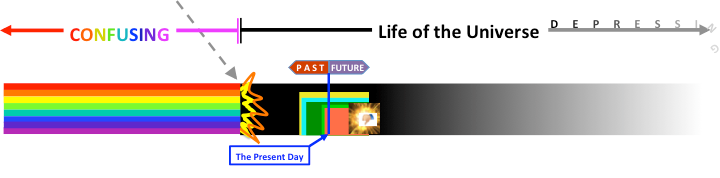
This is the multiverse. It’s a straight line and the Prime Material is Now. Have fun!

It’s a nice little exploration into time, and it got me thinking.

In the traditional D&D cosmos, we have a Material Plane (both Prime and Alternate, of course), Elemental Planes, Astral Planes, etc. While reading the above linked post, the bit about the hell hole Earth used to be – asteroids, volcanoes, magma and such – got me thinking about the Elemental Plane of Fire. I guess really it sounds more like the Para-Elemental (or is it Quasi-Elemental? Dang you Gygax!) Plane of Magma. Either way, it made me think about a system whereby there are no alternate planes, just alternate times.

Plane shifting is actually time shifting, and everyone who is anyone throughout the history of the cosmos wants to get in on the here and now (i.e. the current campaign you’re running) because it’s super bitchin’ and has stuff like assassins, manticores, coffee, magic swords and polymorph self.

So those fire (and magma, and lava and whatever) elementals do not come from the Plane of Fire, they come from many millions of years ago, representing the dominant life forms on Planet X (or whatever you choose to call the place where fighters slay dragons and thieves remove traps in your campaign) when it was just a ball of hot rock beset by asteroids and volcanoes. Water elementals and their ilk come from a more recent past, when the planet was covered by oceans and the only annoying material lifeforms they had to contend with were microbes (ah, the good old days).  When a magic-user conjures them, he is plucking them from their own time and dropping them against their will into the here and now.

Metron or Planetar?

With this system, you replace the idea of demons/devils/angels/demodands/daemons (need I go on) with weird alien creatures from the distant past and distant future. Entities of Pure Chaos (i.e. the slaad) hail from that rainbow period before the Big Bang. The entities of Pure Law dwell at the end of the universe, when heat is gone and there is no change or movement. What dwells in the periods between is up to you. Maybe demons come from the period just after the Big Bang. Maybe solars/planetars/devas are the enlightened future of humanity, their powers derived from genetic manipulation and nanobots rather than magic as magic-users understand it. Just dress them up like the super-advanced aliens from Star Trek and go to town (“Ah, you primitive humans are so violent. To show our enlightened superiority to you, we will pit you against each other in a fight to the death rather than sit down and explain things to you because we’re so amazingly advanced.” Never made sense to me. The whole “humans are ultra-violent and deadly” thing seems a little off as well, when you consider our species has gone from a population of 2 to 7,000,000,000 …). Heck, just gating in a mecha to fight an air elemental (that hails from the time of the gas cloud that precedes the creation of the Solar System, of course) could make the whole concept worth while.

It could make for an interesting variation for your campaign. If you keep the secret of the universe from your players (and they don’t read this post) it might be enjoyable for them to slowly piece it all together and, if they become high enough level, to try to bend the system to their advantage. It also gives entities from the recent future/past a reason to be messing with their recent past/future, as they seek to bend the system to their own advantage, with the hapless PC’s caught in the middle.

Something to consider.

Dungeons That Aren’t Dungeons

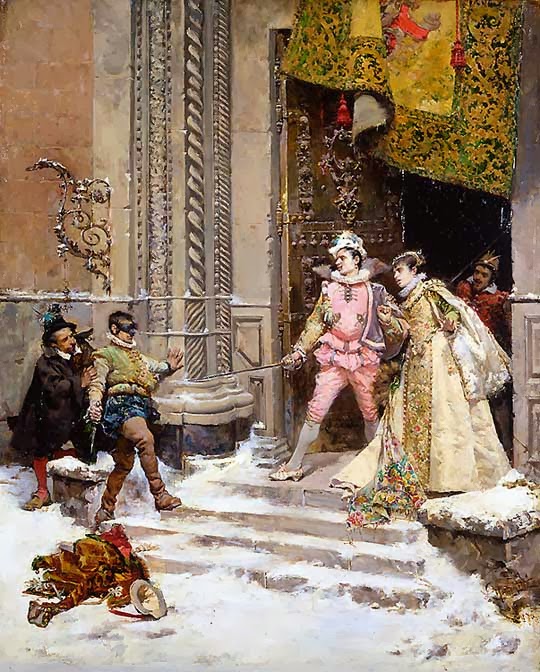
Today, while buzzing through the internet, grabbing a quick bite, I happened across this image.

Ever since I discovered Cyrano, I’ve had a soft spot in my heart for the flashing blade period in all its permutations. The first thought that popped into my head when I saw this was, “You don’t see too many guys like that in dungeons.” If this wasn’t a site about RPGs, that statement would be pretty weird, but everyone here knows what I mean. For just a moment, I started my brain on the path to rectifying that situation by making such swordsmen more amenable to dungeoneering. Then I took a u-turn.

Why not alter the set to suit the actors? Why not break down “dungeon delving” into what lies beneath it – wandering through a “landscape”, meeting challenges and overcoming them (one hopes) and walking away with some manner of reward. In the traditional dungeon, the landscape is the dungeon, the challenges are monsters and traps and the reward is gold and experience. How could we change the particulars for our swordsmen without completely altering the set-up? And how could we do it for other genres?

Side Note: I recently decided it would be fun to build simple, rules lite RPG’s based entirely on the output of an artist whose work is primarily in the public domain. I think that idea and the one below dovetail nicely.

For our swordsmen, the landscape is a great palace. The one in The Adventures of Don Juan starring Errol Flynn comes to mind, since it appeared to have a bit of foot traffic. The challenges might be other swordsmen and guards, of course, but they might also be courtly challenges to one’s reputation. The reward would be power and position (from which flows gold, of course) and maybe romance.

Imagine something like this:

“You enter the double doors and find a large, well-appointed chamber. There are expensive hangings on the walls – tapestries and paintings – and Oriental rugs on the floor. One wall is taken up with a large map of world, indicating the possessions of various empires and kingdoms. There are couches, chairs and other furniture. The room currently contains two courtiers, fops by the look of them, sitting on the couch sipping brandy. They give you a look of disdain as you enter, one of them focusing on the cuff of your shirt, which you tore while wrestling with the lady in waiting in the other chamber.”

Not terribly different from a dungeon-style room containing two orcs and a bag of gold, except in this case the “monsters” are two fops and the reward is their esteem rather than a bag of gold. Of course, we would need to “monetize” that esteem, replacing gold with influence and tying that influence to different spheres. The four-fold church-state-peasants-merchants concept could work well (i.e. hearts-spades-clubs-diamonds). The fops, therefore, might be carrying 10 sp (spade points – influence with the nobility, their kith and kin) and 16 dp (diamond points – influence with merchants, their creditors) that can be obtained by trying to break down their resolve and earn their esteem through compliments and one’s knowledge of proper grooming.

How would all this work? Well, I don’t know for sure. Combat in RPGs tends to be pretty abstract, so I suppose a game like this would need a similar system for personal interactions. Still, the concept could be fleshed out and made to work, and would make for a very different sort of game, but still familiar enough for old hands at D&D to understand.

Anti-Classes

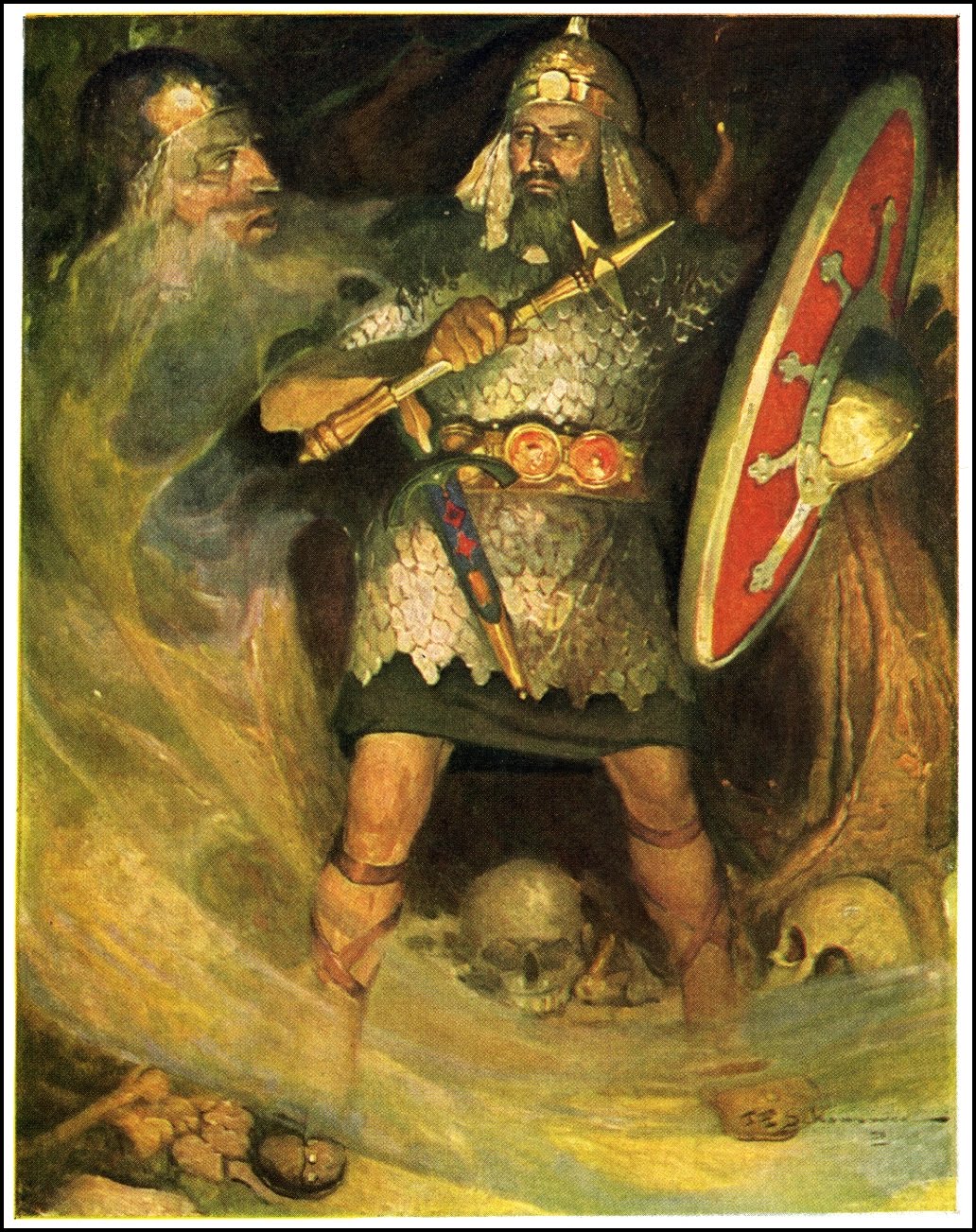
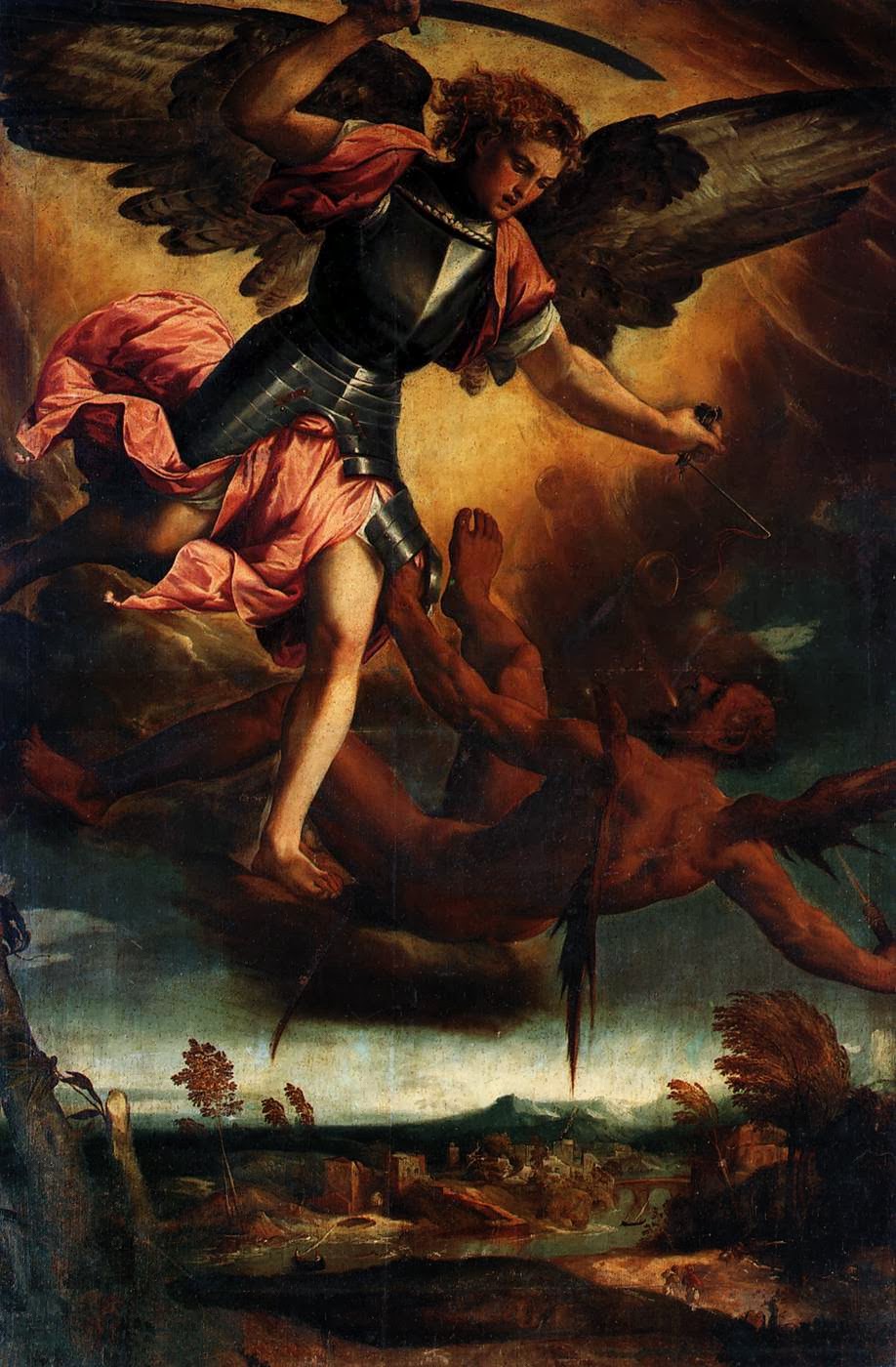
F Schoonover … Nothing to do with the post, just awesome

Those who have delved into the OBBs will recall that the early game had not only clerics, but also anti-clerics. The anti-clerics were, of course, just chaotic clerics who cast the reverse of some of the traditional cleric spells.

Today I started wondering … what about other anti-classes. The cleric’s opposite is based on an opposing alignment. The anti-classes buzzing around in my head, though, are focused on opposing the overall class functions of the other classes to act as an in-game counter to the PC’s.

Anti-Fighters (Harrier): A fighter fights, so an anti-fighter … doesn’t fight? Not much room for a class there. One possibility would be a character that calms tensions and ends fights, but that has more of a magical feel to it, and, frankly, removing combat from the game doesn’t improve the game experience.  To keep our anti-fighter non-magical and to make it fun and interesting, we could instead make the anti-fighter a specialist at countering the tactics and abilities of traditional fighters. When they engage a fighter in combat they slowly improve against that fighter in particular, increasing their AC against them and perhaps forcing the fighter to pass some sort of test or saving through to disengage with them without suffering a free back attack, as many rules allow against combatants that turn and run from a fight. The point of the anti-fighter is to tie up fighters and keep them from doing damage, making them especially potent when accompanied by a large body of 0-level or 1 HD monsters.

Anti-Magic-User (Witch Hunter): This one seems simple. Anti-magic-users cancel out the magical abilities of magic-users. I’m thinking you would use something like the turn undead chart for counter-spelling. In fact, maybe you could extend the concept. Where a cleric destroys or takes control of lesser undead, the anti-magic-user could turn the spell back on the spell caster or block the spell caster from preparing/memorizing the same spell again for a number of days equal to the anti-magic-user’s level. The anti-magic-user should probably have improved saves vs. magic and maybe be able to sniff magic out. Another cool ability would be the ability to drain scrolls, perhaps using that energy to heighten their own magical defenses. Since these dudes wouldn’t have much in the way of fun, active (rather than re-active) abilities, we could ramp up their combat abilities a bit, allowing them to attack as thieves and use the same armor and weapons as thieves.

Anti-Thief (Thief-Taker): The first thing that springs to mind is the classic thief-taker. Where the thing has a set of skills that makes them good at stealing, the anti-thief would have a different set of skills meant to counter them – hide/set traps (find/remove traps), penetrate shadows (hide in shadows), hear footfalls (move silently), silent signals (hear noises), note pilfering (pick pockets) and, well, I can’t think of anything to counter climb walls (nor do I think I need to). I suppose they would also be able to save vs. backstabs, or perhaps their heightened ability to hear the thief creeping up behind them would render back-stabs unlikely. Since their abilities are also focused on defense, one might heighten their combat abilities, perhaps allowing them to attack as a fighter rather than thief, though restricting them to the same equipment as thieves.

So, what do you think? Probably not great as player characters, but they could be interesting as NPCs designed to frustrate the players and force them to switch up their tactics.

I’m picturing a scene where a party busts into an ogre mage’s throne room and finds the ogre mage accompanied by a smattering of goblins (let me at ’em, thinks the party fighters) and four human beings, an anti-cleric, harrier, witch hunter and thief-taker. The party thief attempts to slink into the shadows, but the thief-taker’s eyes follow him unerringly, shouting out his position for the benefit of his comrades in the room. One of the party fighters engages the gibbering goblins, but the other finds himself countered by the harrier, who matches him stroke for stroke. The party magic-user raises his hands to cast magic missile, but finds the spell not only fizzle, but the very knowledge that such a spell exists stricken from his mind! The anti-cleric does his best to match the cleric spell for spell as well.

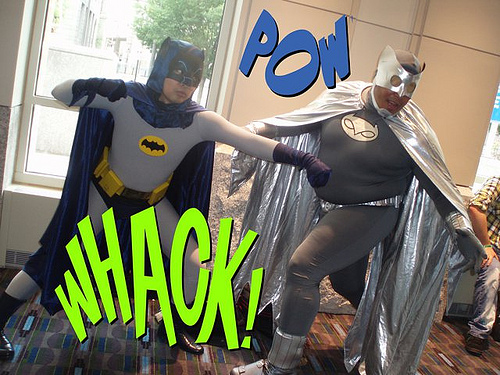
Kinda like this, only more D&D … image found HERE

On Almanacs and Thin Ice

Once upon a time, I was suffering through an earache and a bit of a cold. I had an earache as a baby, and the doctor told my mother I would be susceptible to them for the rest of my life, and he wasn’t wrong. I’d usually get once about once a year, and they’d last about a week.

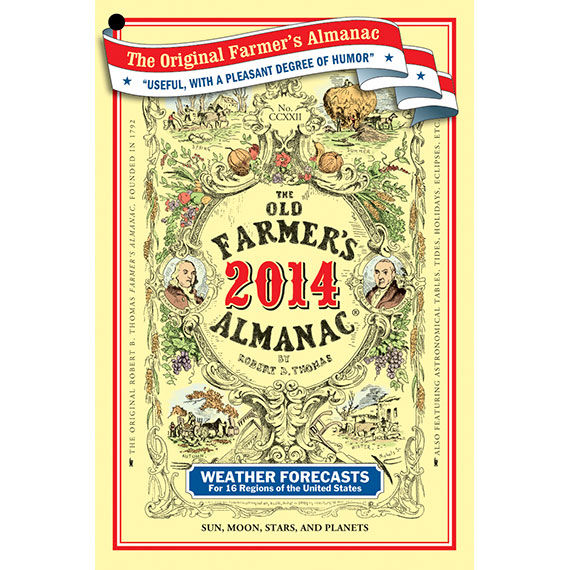
Anyhow – the ear pain would spike in the evening, and I’d seen some goofy commercial on TV about home cures that included using a hair drier to dull the pain of an earache. So there I was, lying on the couch, aiming a hair drier at my ear (it worked, by the way, and still does) and reading a book I’d picked up at the grocery store earlier that day on a whim – The Old Farmer’s Almanac. It was chock full of interesting things to read, and I’ve been a subscriber for many years, the book becoming more valuable once I started growing vegetable gardens.

Believe it or not, The OFA isn’t a bad book to have around if you’re a gamer. The back section of the book is full of interesting tidbits about the natural world, and as a subscriber, I also get a reprint of the OFA from 100 years ago and 200 years ago – right now, I’m looking through the 2014, 1914 and 1814 OFA’s. If you’re running a game set in the early 19th century in the United States, those 19th century Alamanacs could come in quite handy.

One interesting thing I found in the almanac tonight was a bit on ice thickness – in particular, how much weight, in general terms, ice could hold based on its thickness. This brought to mind the usefulness of a random ice thickness table for referees running games set in the frozen north, or in more temperate climes under the grip of Old Man Winter.

ROLL D10

1. Thin ice – breaks on contact
2. Deceptive ice – breaks when one has walked 1d6 paces
3. 3 inches – enough to hold a single humanoid (medium) on foot
4. 4 inches – enough to hold a group of humanoids in single file or a single ogre or frost giant
5. 7 inches – enough to hold 2 tons (a horse, ox or large giant or iron golem or cloud giant)
6. 10 inches – enough to hold 3.5 tons (a fire giant)
7. 12 inches – enough to hold 8 tons (an elephant or storm giant or titan)
8. 15 inches – enough to hold 10 tons (a triceratops)
9. 20 inches – enough to hold 25 tons (a brontosaurus or elder earth elemental)
10. 30 inches – enough to hold 70 tons (half a tarasque?)

All or Nothing (or Head-to-Head) Combat Rolls

On my walk today, I started thinking about variations on Blood & Treasure (and all the games it is based on, of course) combat. The traditional form is for one entity to make an attack roll against a static defense score, followed by its opponent (or opponents) doing the same, each success causing damage until somebody is out of hit points.

It occurred to me that a different effect could be achieved by each entity in a combat rolling a d20 at the same time in an attempt to out-roll their opponent. Whoever rolls the highest in this little duel wins the round and deals damage. Again, repeat until somebody is out of hit points.

The first step to running this combat is to calculate the entity’s total combat bonus (TCB, if you’re an Elvis fan).

Character TCB = Attack bonus + Strength modifier + Dexterity modifier + Armor bonus + miscellaneous modifiers

Monster TCB = Hit Dice bonus + Size bonus (Large +2; Huge +4) + Speed bonus (Fast +2; Very Fast +4) + Armor bonus + miscellaneous modifiers

The miscellaneous modifiers would be from magic weapons, special abilities, fighting with two weapons, or in B&T any tactical advantages a character manages to have.

When it comes time to fight, each combatant rolls 1d20 and adds their TCB. Whoever rolls the highest wins the round and the loser suffers normal damage (or other effects) from the attack form being employed by the attacker.

When multiple entities are attacking a single entity, they can either pool their TCB’s for a single roll, or each can take a tactical advantage and roll separately. If rolling separately, the defender must then roll against each of them, splitting his TCB as he sees fit.

Monsters with multiple attacks (including fighters or two-weapon wielding characters) can either direct each attack (with full TCB added to each) against multiple opponents, or concentrate attacks (combining damage) against single opponents.

This could be an interesting way to alter the generally accepted tactics of B&T-style combat. Things in this system could go badly very quickly, which might make things more “grim and gritty”. Then again, since its totally untested, this system might just completely screw up your game!

If you try this out, let me know how it worked in the comments or via email.

Cracking Open the Manual of Bodily Health

I’m going to depart from the usual rpg stuff to discuss something else that should be near and dear to our hearts, namely … our hearts.

About two years ago I easily fit into a stereotype of the geek – I was male, fat and had a beard. I was also having some heart palpitations and decided to go in for a check up. The heart palpitations turned out not to be a big problem – they were the result of me taking niacin supplements – but I did have some other issues that stemmed from being overweight. At the time, I weighed 280 pounds, and got there by sitting on the couch too much and eating more than I should. I knew I was badly out of shape and wanted to get in better shape so I could enjoy by wife, daughter and potential grandchildren someday, but I frankly needed an extra push. The doctor visit was it.

Over the next year, I did a ton of walking, often on a treadmill, was much more careful about food, and dropped 50 pounds. Eventually, I plateaued at 230 pounds and slowed down on the exercise and got a little sloppy on the food side. Before I knew it, I was no longer plateauing – I was hitting 240. There was no way in hell I was going that route again, so I got serious again – counting calories and stepping up the exercise – and I’m now hovering around 220 pounds with my eye set firmly on 180.

So, why should you care? Let’s be honest. Lots of nerds and geeks are fat (yeah, I’m not going to sugar-coat it with PC language – we’re fat), and being fat means a shorter life, more medical problems and, frankly, less fun. At a time when many of the pioneers of pencil-and-paper gaming are passing away, wouldn’t we love to have their creativity around for a few more years – good, healthy years. And as we geeks of the 1980’s grow into maturity and get married and have children, don’t we want to stick around for their sake? Lots of us need to lose weight and get healthier, and for many it seems like something impossible to do. Don’t have the time. Don’t want to commit. Don’t want to tell ourselves no. You know the story. I’m here to serve as an example that you can get healthier (and believe me, I’m only mid-way through my quest!) and enjoy it.

What follows are some tips on losing weight, drawn from my own experience. They may work for you, they may not, but hopefully they will prove of use to you.

My basic plan is a two-pronged attack: Diet and exercise.

By diet, I do not mean a diet I found in a magazine or online. I mean taking in fewer calories each day than I need to survive, and trying to make healthier choices whenever possible. In my first weight loss phase, I used a program I found on Ask.com that used food units. To maintain an 1800 calorie a day diet, I could have 6 units of protein, 6 units of grains, 6 units of vegetables, etc. I now use an app on my phone called My Fitness Pal. I used it to measure how many calories I’m taking in each day, set up a daily goal based on my current weight and where I want to go (1970 calories per day in my case) and it keeps track of how many calories I’m burning by meshing with another app that I’ll discuss in a moment.

I do my best to avoid foods I know I shouldn’t indulge too much in, but otherwise do not have a special diet. I eat meat, grains, vegetables, fruit, nuts, dairy, diet soda (sometimes with a shot of rum, tequila or bourbon), etc., with the occasional sugary (or sugar-free) indulgence. Not too difficult a regimen – I just watch how much food and drink I take in.

Most weeks, I keep my daily net calorie intake to around 1500 calories. In one week out of every four, I allow myself to average 2000 calories per day so that my body doesn’t get too used to 1500 calories a day.

In terms of exercise, I do both cardio and strength training. Both are very useful. I work out 6 times a week (sometimes more), and usually stagger the workouts – usually cardio (walking and some running, usually for an hour or more) on Saturday, Sunday, Tuesday and Thursday, and strength training (kettle bell, dumbells, weight resistance, interval training usually for 20 to 30 minutes) on Monday and Wednesday. For building muscle, you need to have one or two days of rest between workouts – the workout breaks your muscle down, the rest period builds it back up. Get plenty of sleep and plenty of protein when you’re trying to build muscle. On Friday, I rest – and often hit the town with the wife!

To track my exercise, I use an app called Runtastic and to keep better track of my calorie burn, a Timex heart rate monitor (which my wife affectionately calls my sports bra since it straps around my chest). The heart rate monitor has worked fairly well, though after 6 months of constant use it is having some minor problems. You might want to shop around a bit. For strength training, I’m currently using a 20 pound kettle bell and 15 pound dumbbells, but plan to get some heavier weights soon.

The key to losing weight is grit. You have to exercise when you don’t feel like it. You have to tell yourself NO! more often than not when the donuts show up at work. Once you get into the habit, it really isn’t too difficult to do. Despite the many times I didn’t want to get up and exercise, I have never once not felt great after I did it – and watching the stomach shrink and the biceps grow feels pretty awesome as well. Honestly, on days when I rest from exercising, I have to force myself to sit down and not exercise. It just seems like second-nature now, and it makes me feel so darn good! Now that I’m in the 1500 calorie a day mindset, its remarkable how difficult it is for me to take in 2000 calories in a day – I just don’t need all that food. Get yourself started, stick to it, and I promise these things will become second nature to you.

Now that I’ve lost 60 pounds, I have more energy, more self-confidence and more fun with the wife (wink wink nudge nudge say no more). You can get these things as well if you’ll make the commitment, and you, your family, friends and gaming community will get to enjoy your presence on this earth for years to come.

If you need some more convincing, advice and support, I suggest these two websites:

NERD FITNESS – This one seems pretty obvious, huh. It’s a fitness site run by a nerd who is now in excellent shape, and features advice, pep talks and testimonials from other folks like us. I enjoy the pep talks and the exuberance of Steve Kamb for linking his nerd interests with getting healthy.

THE ART OF MANLINESS – Not just for men (though mainly for men), this site has some good exercise tips and lots of other great articles about being the best man (or person) you can be, emotionally, spiritually and physically. Because of this site, I dress better, shave with a safety razor instead of plastic disposable junk (no, still not man enough for a straight razor or tomahawk shave), read quite a bit more (and not just fantasy and sci-fi novels) and do a much better job of shining my shoes.

Hey, two years ago I was just another fat guy with a beard and glasses. I was a good husband, a good father and a good person, but I was not healthy. Now, I’m still a good husband, good father, good person, probably even more of a nerd since I now produce rpg material as well as consume it, but I’m also healthier, un-bearded, rock the contact lenses once-in-a-while, get compliments from women about how I look and I feel better than I have in two decades.

If you’ve wanted to get healthier and, as Steve Kamb says, “Level up your life”, I urge you to take the plunge. Don’t let the jocks have all the fun!
Using Skills to Evoke a Setting

While OD&D did not have a skill system, it did have skills. They were very focused skills that probably emerged from game play within a dungeon – “find secret doors” and “find traps” rather than a generic “search” skill, for example. OD&D saving throws were similarly specific, with “Save vs. Dragon Breath” being much more evocative than a generic Reflex save. When I wrote Blood & Treasure, I tried to use a similar system in naming skills, keeping them dungeon-centric to evoke memories of the old game and to create a certain dungeon-exploration-atmosphere in the game.

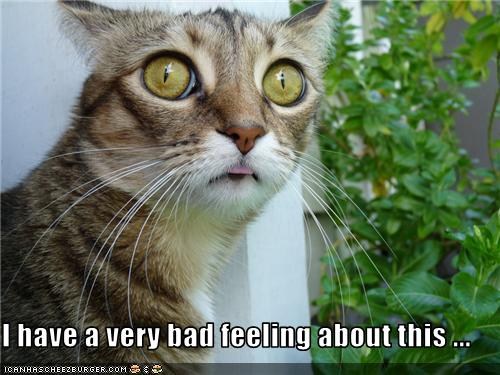
This got me thinking about using a similar structure in making similarly simple games that are meant to be evocative of a period or a genre. Take Star Wars for example. Are there certain tropes in Star Wars that might translate into interesting skills? Maybe “Bad Feeling About This” to handle something like an intuition that the adventurers are heading into something wrong or dangerous. “Swing Across Chasm” might also be appropriate, and I’m sure there are some lines in the movie about R2-D2-oriented actions that could work as well. The point would be that asking a player who is blanching about a course of action to make a “Bad Feeling About This” check would put them into the Star Wars mindset. A Star Trek-inspired game might have skills like “Analyze Spacial Anomaly” and

One can also think of things done more in a particular genre or show or movie than in other genres or shows or movies. You may not need a “Translate Ancient Dialect” check in your average spy game, but in an exploration genre, it makes good sense.

So – for those readers who like to play along at home – how about  throwing out a few genres or franchises with a list of trope-inspired skills for them. They can be a bit comical, but should be skills that would be useful in a game.

Campaign Idea – Sailing the Irish Seas

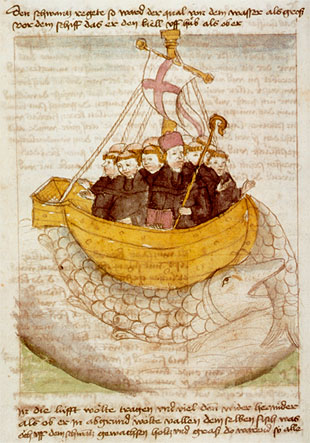
Among other things (whiskey, warp-spasms and fierce women), the ancient Irish had a knack for telling stories about great sea voyages. Seven of these tales, called Immrama, have survived, with the most famous perhaps being the voyage of Saint Brendan.

Most of these voyages were taken by men in currachs, wooden-framed boats covered by tanned hides. Imagine if you will an entire campaign built around a party of adventurers setting off from the coast of Ireland into the Atlantic Ocean in one of these small boats, their sights set upon glory, treasure and reaching the Blessed Land beyond the sea. When Uí Chorra embarked on his voyage, he took with him a bishop, a priest, a deacon, a musician and the craftsman who built the boat, as well as his two brothers. Uí Chorra and his brothers were bandits who turned over a new leaf. In D&D terms, this would be three clerics (one 6th level, one 3rd level, the other, well, who knows), a bard, a 0-level human (I guess we know who was stuck carrying the torches) and three bandits (probably fighters).

So, where did these fellows go? Well, as in all sea voyage tales, they went from island to island – apparently the Atlantic Ocean was lousy with them. In essence, each island could be something like a dungeon in its own right. A list of island visited by Saint Brendan and Máel Dúin follows:

  1. The island of ants, from which the men flee because the ants’ intention is to eat their boat
  2. The island of tame birds
  3. The island of the horse-like beast that pelts the crew with the beach
  4. The island of horses and demons (demonic cowboys?)
  5. The island of salmon, where they find an empty house filled with a feast and they all ate, drank, and gave thanks to God
  6. The island with the branch of an apple tree, where they are fed with apples for 40 nights
  7. The island of the “Revolving Beast”, a creature that would shift its form by manipulating its bones, muscles and loose skin; it cast stones at the escaping crew and one pierces the keel of the boat (cool!)
  8. The island where animals bite each other and blood is everywhere (vampiric animals?)
  9. The island of apples, pigs, and birds
  10. The island with the great fort/pillars/cats where one of the foster brothers steals a necklet and is burned to ashes by the cat (awesome!)
  11. The island of black and white sheep, where sheep change colors as they cross the fence; the crewmen do not go aboard this island in fear of changing color
  12. The island of the pigherd, which contained an acidic river and hornless oxen
  13. The island of the ugly mill and miller who were “wrinkled, rude, and bareheaded”
  14. The island of lamenting men and wailing sorrows, where they had to retrieve a crewmen who entered the island and became one of the lamenting men; they saved him by grabbing him while holding their breath
  15. The island with maidens and intoxicating drink
  16. The island with forts and the crystal bridge, where there is a maiden who is propositioned to sleep with Máel Dúin
  17. The island of colorful birds singing like psalms
  18. The island with the psalm singing old man with noble monastic words
  19. The island with the golden wall around it
  20. The island of angry Smiths (azer?)
  21. A sea of like green crystal, in which they found only rocks, no monsters
  22. A sea of clouds with underwater fortresses and monsters
  23. The island with a woman pelting them with nuts (halflings?)
  24. The island with a river sky that was raining salmon
  25. The island on a pedestal
  26. The island with eternal youth/women (17 maidens)
  27. The island with red fruits that were made as a sleeping elixir
  28. The island with monks of Brendan Birr, where they were blessed (cleric’s stronghold)
  29. The island with eternal laughter, where they lost a crewman
  30. The island of the fire people
  31. The island of cattle, oxen and sheep
  32. An island with a boy who brings bread and water
  33. An island of sheep
  34. The island of Jasconius
  35. An island that is the Paradise of Birds, and the birds sing psalms and praise the Lord (Lawful birdmen?)
  36. The island of the monks of Ailbe, with magic loaves, no ageing, and complete silence
  37. An island with a well; drinking the water puts them to sleep for 1, 2, or 3 days based on the number of cups each man drank
  38. A “coagulated” sea (Sargasso?)
  39. An island of 3 choirs of anchorites (monks) who give them fruit
  40. An island of grapes
  41. A gryphon and a bird in battle
  42. An island that is actually a whale
  43. A “silver pillar wrapped in a net” in the sea
  44. An island of blacksmiths, who throw slag at them (see above)
  45. A volcano inhabited by demons that drag people down to Hell
  46. Judas sitting unhappily on a cold, wet rock in the middle of the sea
  47. An island where Paul the Hermit has lived a perfect monastic life for 60 years wearing nothing but hair and being fed by an otter

The great thing about this formula, of course, is that it can be used in genres other than medieval fantasy. Voyages of this sort were reported in later centuries, and the same formula could be used in a pulp adventure of exploration and sci-fi planet-hopping adventures as those in Star Trek.

To run a campaign like this, you’ll want a hex map covered with islands (when I get around to mapping the South Seas of Nod, you can use it), good rules for sea voyages (ship to ship combat tables maybe, especially if you’re using a larger boat than a currach, a random table of seaborne disasters, etc.) and a pretty good number of pre-drawn dungeon maps that can be pressed into service when a landing is made and the adventurers get drawn into trouble. In fact, you might also want to review a few Star Trek episodes to get some ideas about how to draw the adventurers into the island’s dangers.

Well, back to plant monsters tomorrow – and a couple other fearsome foes that popped into my head today.

Using Combat for Non-Combat Tasks

This post is really just me chasing down the thread of an idea, so don’t expect a finished product. Here’s my thought process:

Real life melee combat, medieval or otherwise, is a pretty tough thing to simulate with pen and paper. Folks are making all sorts of moves, offensive and defensive, that are pretty tough to keep track of. Because of this, Gygax and company developed an abstract combat system with hit points, Armor Class, etc.

What if we take this abstract process and apply it to other tasks – i.e. skill checks? Using combat rules really only make sense for non-combat tasks that are a process, and even then only when time is of the essence. They would be especially useful for tasks being performed while combat is underway. In these situations, though, they might work pretty well and create a pretty cool atmosphere in-game.

Before we get into specific examples, let’s break down the elements of the combat rules.

Offense in combat is governed by one’s attack bonus (or THAC0) and Strength bonus, which modifies “hitting” and damaging. In other tasks, a character using one of his class abilities/skills/concepts will “attack as a fighter of his level”, while those attempting things they know little about (little, but not nothing), would “attack as a magic-user of his level”. GMs could adjudicate situations in between these.

Defense in combat is governed by one’s Armor Class, modified by Dexterity, and Hit Points, modified by Constitution. We’ll refer to these concepts as active defense (AC) and passive defense (HP).

So, for task resolution, we need to know which ability scores govern the “attacker’s” offense, active defense and passive defense. We also need, for the “defender”, Hit Dice and Armor Class. Hit Dice here will represent the overall difficulty of the challenge, and to keep things simple, Armor Class will be 10 plus (or minus, depending on your system) the challenge’s Hit Dice.

Let’s begin simply with picking a lock. Specifically, a thief is trying to pick a lock so that the party can escape a combat they don’t think they can win.

The GM decides the lock, since it’s on the third level of a dungeon, has 3 HD and thus AC 13. For this task resolution, he rolls 3d6 and determines the lock has 9 hit points. It will get one “attack” per round, for 1d6 damage, and it turns out it contains a poisoned needle trap, so the attack actually scores 1d6 points of damage and requires the lock picker to pass a save vs. poison when hit.

The lock picker in this case is a 4th level thief. For this task, she’ll attack as a 4th level fighter – the player rolls 4d8 for her “hit points” during this task and gets 15. She’ll “attack” the lock once per round with her tools (and experience), and score 1d6 damage per hit.

For offense, the thief will use her Dexterity modifier to hit and damage. For active defense, we’ll use Intelligence to modify AC, and for passive defense Wisdom will modify Hit Points. I’m sure one could argue endlessly over which ability scores are appropriate to any given situation, but this is just an example so let’s not worry about it.

So, the thief has a +2 Dex bonus, no intelligence bonus and a -1 Wis penalty. If we’re using Blood & Treasure, the thief has an attack bonus of +4 (+6 with her Dex modifier), scores 1d6+2 damage against the lock, has 11 hit points (15 modified down by Wisdom penalty) and AC 10. If you wanted to argue that leather gloves provide a +1 to AC, you probably could.

Each round during combat, the thief and lock attack one another. If the thief is reduced to 0 hit points, she fails to pick the lock, but does not die (unless she also fails a save vs. poison, since this particular lock is poisonous). Perhaps the lock can even make one of it’s attacks an attempt to sunder the thief’s lock pick. If the lock is reduced to 0 hit points, the lock is picked and the thief can open the door and save the party. Heck, it’s even possible that the thief is poisoned in round one, but manages to survive long enough to pick the lock before expiring. Such dramatic possibilities!

Here’s another idea. Imagine a sub-plot in a modern game requires the adventurers to sneak into a museum and steal a valuable diamond. This wasn’t really planned by the GM, so instead of hastily drawing a museum map, figuring out the security guards and cameras, etc. In this case, the museum would be the challenge – maybe 7 HD and AC 17. The GM might also rule it gets three attacks each round, from security cameras (1d6 damage), patrolling security guards (1d8 damage) and infared beams (1d4 damage). If successful, the adventurers, who are all involved in this combat, get to the diamond and take possession of it. If they fail, they are caught – at which point they might be allowed to choose to go quietly or fight their way out, in which case we would enter traditional combat in a room filled with Egyptian antiquities against two armed guards with the police on their way.

Final notion for now – spellcasting. This might be good for a more modern game or a light magic game. The level of the spell is the spell’s Hit Dice (and thus determines Armor Class). The magic-user’s offense is governed by Intelligence, his active defense by charisma and his passive defense by Wisdom.

If the spell wins, it is beyond the magic-user and he cannot cast it. If the magic-user wins, he casts the spell. Obviously, this would now govern the casting time of spells, and one could dispose of preparing spells, instead simply requiring the magic-user to have a spell in their spellbook to be able to cast it. Perhaps some high-level spells could have “special attacks”, like wisdom drain or paralyzation, to make them more dangerous.

Imagine a 7th level magic-user attempting to cast a 9th level monster summoning spell while the party is holding off a balor demon. Heck, multiple magic-users could now join forces in casting a spell, chanting together, one sprinkling the powdered bone while the other waves the wand.

Anyhow – just an idea. I might explore it further and use it in ACTION X. I’d love to hear what folks think of it.