MST3K RPG

Sometimes, a stupid idea pops into my head, and I think it over – how can I do this? Yesterday, an RPG based on Mystery Science Theater 3000 popped into my head. How could you do that? And then it hit me …

… every game of D&D I ever played was MST3K the RPG.

After all, what is MST3K but three guys making fun of a movie. Every game I’ve ever played in is a group of people both playing the game and making a running funny (well, sometimes funny) commentary on the game we were playing. How do we turn “making fun of each other” into a game? Rules!

Rule #1 – The DM is the audience

Rule #2 – When the DM laughs, the player who made it happen earns XP

Smirk … 10 XP

Snicker … 100 XP

Guffaw … 250 XP

Belly Laugh … 500 XP

ROFL … 750 XP

Releases a beverage from mouth or nose … 2,500 XP

Players can also earn 1,000 XP for singing an impromptu song about something in the game and getting applause from at least 60% of the people at the table

Players use the fighter’s XP level advancement table. Players get the following special abilities:

Level 1 … nothing

Level 2 … gets most comfortable seat at the table, if highest level player

Level 3 … can make the lowest level player fetch them a snack or drink, once per session

Level 4 … can add a bit of narrative that benefits his or her character in a small way (once per character life)

Level 5 … can re-roll a failed dice roll (once per character life)

Level 6 … can make the DM re-roll a successful dice roll (once per session)

Level 7 … player is immune to fire (trust me)

Level 8 … can add a bit of narrative that benefits his or her character in a big way (once per character life)

Level 9 … player gets the right to build a stronghold out of couch cushions and pillows and must be referred to as Lord or Lady by the other players

Misspells

Bonus XP if you know who this is!

When you write as much as I do, you get used to dealing with typographical errors. Some of them are rather amusing – I remember one blog post in which some room trap involved a wench rather than a winch lifting something heavy. I suppose anybody who has ever visited modern D&D message boards knows about that game’s very mysterious “rouge” class (which I have now decided I am going to write).

One area in which I have made more than a few errors, and repeated errors at that, is with spell names. Sometimes, these screwed up spell names actually make a sort of weird sense, and it occurred to me that errors in spelling on scrolls might lead to some amusement in a game of D&D (et. al.) Grammatically incorrect scrolls could be a new category of cursed magic item – the magic-user thinks they’re casting one thing, but discover their spell has a different effect.

A few ideas follow:

Altar Self: The caster is turned into an altar for the duration of the spell. Note sure if I want to know where the holy water comes from.

Animate Trope: This one takes some work for the GM. Think of a role playing trope and make it come to life (literally) during the game.

Baste: Warm meat juice is squirted on the caster, making them more delicious and stickier.

Blank: The caster’s face disappears for the duration of the spell.

Cane of Cold: A walking stick made of ice appears in your hand. Feel free to shake it angrily at your foes.

Charm Parson: As charm person, but it only works on clerics and druids (and the like).

Dorkness: The lights stay on, but the caster becomes socially awkward (Charisma 5) for duration of the spell.

Find Familiar: More of an incorrect inflection than misspelling, this spell causes they caster to find strangers strangely familiar. He just knows he knows them from somewhere, and it’s maddening that he cannot think of who they are. As a result of this frustration, he suffers a -1 penalty to Will saves for the duration of the spell.

Obscuring Mast: The mast of a ship grows from the ground right in front of somebody, obscuring their vision until they move out of the way.

Slaw: A jar of coleslaw appears.

Spectral Ham: A ghostly swine appears and otherwise acts as the spectral hand spell. This one might be an improvement over the original.

Summon Munster: Roll randomly on a d10: (1-2) Herman (i.e. a goofy flesh golem); (3-4) Grandpa (i.e. a vampire); (5-6) Eddie (i.e. a 1 HD werewolf); (7-8) Lily (not sure here – she’s Dracula’s daughter); (9-10) Marilyn (i.e. human female with high Charisma).

Tireball: A belted radial is launched bouncing towards a target point, and then explodes with a loud noise, sending shreds of rubber out. Basically as a fireball, without the “fire” damage and dealing minimum damage within the blast radius.

Have at it folks – I’m sure these can be improved upon and better versions can be invented.

What I Did Over My Christmas Vacation

Back to work today (real work, where I get a paycheck), and I thought I’d get the first post of the new year knocked out before I have to get down to business.

What did I do on my Christmas vacation this year?

But it didn’t stop there. Let’s take a trip down memory lane …

When I was but a young slip of a boy, I was obsessed with three things: Star Wars, World War Two, and Football. I was the original football geek – knew all the stats, knew the team histories, watched the games (rooted for the Steelers first and then the Raiders – I was a Las Vegas kid, so I didn’t have a home team to root for), etc.

While I had never heard of D&D, I was already a gamer at heart. One summer, I invented my own football league. Lots of teams organized into conferences and divisions. Teams like the Las Vegas Aces, Billings Mountaineers, New Jersey Battleships (there’s my WW2 obsession leaking through), Jacksonville Oranges, Birmingham Yellowhammers, Canton Bulldogs (I was retro before retro was cool), Georgia Peaches and my personal favorite, the Ottumwa Hogs (my family hails from Ottumwa, IA, thus the placement of a professional team in such a small market).

I designed helmets and team colors, and then I invented a very simple way to play games between them using a dice (and when I say dice, I mean d6 – back in those days, that was just a plain old dice, no extra description required). For each quarter of the game, I rolled the dice for each team to see how many points they scored. I don’t remember the exact scheme now, but I’m sure it went something like this:

1 = 0 points
2 = 3 points
3 = 6 points
4 = 7 points
5 = 10 points
6 = 14 points

For example: Ottumwa Hogs vs. Las Vegas Aces

I would roll those dice, total up the scores, and have a winner. Then I recorded the wins and losses and ties, and eventually had them in playoffs and a championship game. I kept it all in a notebook, figuring out the schedules, etc. On a long road trip back to Iowa, it kept me occupied and entertained as only a geek can be entertained by rolling dice.

Flash forward to 2015.

My brother-in-law gets me that electronic football game. I start playing with it, and realize quickly that all those game scores I’m generating are going to waste. What if I resurrected those old pretend football teams, plus a few others, and made a sort of tournament. Yeah. A tournament.

Four conferences – North, South, East and West. Eight teams per conference, so a round of games, then conference playoffs, then conference championship, then league playoffs and league championship.

And I can organize the teams in Excel, with team logos and colors.

Oooh – what if I make a random table for determining off-season stuff, like teams folding or moving to new cities or picking up or losing star players.

Yeah – star players. They can give bonus offense and defense rolls that change the final score of the electronic games.

AND – I can grab demographics on the different MSA’s in the US (metropolitan statistical areas) and the different stadiums, and come up with a random way to determine attendance and TV viewership and generate money earned for each team. Then they could spend money to build the teams even more.

Now I’m trying to figure out how to put together a pen & paper version of this, a little more in depth.

So, that’s what I did with my Christmas vacation, along with writing about half the next issue of NOD (which will cover the Klarkash Mountains) and finishing up the first draft of GRIT & VIGOR.

Oh, and the Ottumwa Hogs are playing for the North Conference championship, against either the throwback Browns (with their classic Brownie logo) or the Minneapolis Marines.

Undead, Yes … But What Else Can We Turn?

Now imagine the cross is a pole, and she’s a chasm. Image found HERE.

The title is making me think of the “Will It Blend?” videos.

At its heart, an RPG (or really any game) is just a collection of mechanics hiding underneath a layer of fluff. In an old school world, simplicity and, to some degree, minimalism is important – that means getting as much mileage as possible from the rules you have, so that you can avoid creating new rules. One rule mechanic that doesn’t get used enough, I think, is the Turn Undead table.Well … let me rephrase that. It gets used all the time when people are turning undead, but the rule concept itself could probably be used to do more than just turn undead.

What follows are a few ideas for how you can tweak the Turn Undead table.

1. Alternate Targets

I’ve used the basic concept of “turning” in my games and unhinged it from the undead. The beastmaster class I wrote, for example, can turn animals. I meant it as a means of representing Tarzan’s ability to cow animals and send them packing without having to necessarily fight them. In Grit & Vigor, I played with the idea of letting the dreadnought (a sort of big, scary guy archetype … think Mr. T) use a table like that to frighten low-level NPCs, or at least stun them into inaction. I’m picturing Mr. T walking into a room and glaring at the thugs while he and the A-Team walk through unscathed, nobody daring to mess with them.

What else can you turn?

Different alignments – perhaps a wretched villainous NPC can force good creatures away through a sort of self-righteous repulsion. Maybe a chaotic troublemaker has the ability to turn authorities, though in this case it would represent the troublemaker avoiding their notice rather than frightening them away.

Different creatures – if the beastmaster can turn animals, maybe a dragon slayer can attempt to turn dragons (probably only succeeding on the little ones). What about turning reptiles, or turning elementals, or turning specific creature types as a lesser special ability?

2. Alternate Effects

I already hit on this above, in the chaotic troublemaker using “turn undead” to avoid the notice of lawful creatures. You could also replace turn/destroy (and rebuke/command) with …

Annoy/enrage (a jester class might use this)

Charm/control (or dominate, great for a succubus class)

Stun/confuse (a riddlemaster? Kirk dealing with computers?)

Capture/kill

Maybe a swashbuckler can “turn blades” as a way to represent a lone swordsman confronted with a multitude of minor combatants. One swipe of his blade, and a random number of lesser swordsmen are “parried/disarmed”.

I’m sure there are many other possible variations. Just think in terms of partial success/complete success, pick a class of targets, and you’re done.

3. Alternate Function

The Elementalist class I wrote used a variation on the turn undead chart to cast spells. For the elementalist, the idea was that the magician was controlling elemental spirits and forcing them to create the magic effects on his behalf, so a turn undead table made sense.

You could further twist the Turn Undead table concept to entertain crowds, convert heathens or solve conundrums. How about turning spells, using the Turn Undead mechanic as a counterspell mechanic.

In fact, the Turn Undead table could probably serve as a general task resolution mechanic – rate the difficulty of a task from 1 to 10 (or skeleton to vampire – “Gee Bob, that chasm’s a real vampire – are you sure you want to try to jump it?) and roll the dice.

Just a few ideas for getting the most out of your chosen ruleset.

Unhinging Clerics from Alignment

A Chaotic cardinal for a Lawful church? Read on …

Since the beginning of the game, clerics (and anti-clerics and druids) have largely been defined by their alignment. In the context of the early game, this made sense. Clerics were based on a combination of Van Helsing the vampire hunter and the religious knights of the crusades. That clerics must be Lawful was logical when you considered that they were based on adherents of a moral religion.

Note – I’m not going to get in a discussion here about the morality of the medieval Christian church. What I mean to convey is the idea that while Jews, Christians and Muslims believe that God created the universe and has some measure of control over nature (i.e. he can control the weather and such), they put their focus on his code of rules (thou shall not kill, etc.). Clerics of God, therefore, should be defined by their alignment.

Almost as soon as the game was written, though, it started to change. Clerics stopped being tied to an implicit Medieval Christianity and instead were tied to polytheistic deities, most of them just anthropomorphized forces of nature. Rather than the pseudo-Templars and Hospitalers that seem to have been intended under the original rules, we got clerics of Thor and Loki. Since Thor was Chaotic Good (if my memory of the Deities & Demigods/Legends & Lore book), his clerics needed to be Chaotic Good as well, which meant they needed to be “crusaders” for enlightened freedom. The Thor of mythology, however, did not seem particularly concerned with moral concepts. He was a personification of thunder and lightning, and, if anything, a ready and eager foe of the giants (i.e. natural calamities). It should have made more sense to use druids as the priests of all the nature deities, but they became saddled with the concept of True Neutrality. Ultimately, several unrelated systems were mashed together to make something that was mostly fun, but also didn’t make much sense.

How about a different concept for clerics? One that keep the basic rules in place (and hopefully the fun), but changes with the whys and wherefores and takes the focus for clerics away from alignment, and puts it back on casting spells in armor and pounding heads with maces.

Clerics, like magic-users, are spellcasters. The universe they inhabit has physical laws that can be broken with magic spells. In other words, the supernatural in thus universe is natural – it’s just a nature with processes that are beyond most mortals. The universe also has gods, goddesses and other divine beings. Maybe they created the universe, maybe they just have a secret knowledge of how it works. Either way, clerics join their cults and learn how to perform rituals that can alter the fabric of reality in ways the gods and goddesses are willing to allow.

Think of the universe as the internet, and clerics as people who have been given passwords to systems by the owners/creators of those systems, as a bank gives a customer a password that allows the customer to access her account information and perform other allowed functions. Because clerics are given this access in exchange for performing the necessary rituals and living by the rules of their temple or order or brotherhood, they have more time to spend on learning to fight than magic-users.

Magic-users are the hackers of the universe. They alter the fabric of reality without anyone’s permission, and it’s not easy. They have to learn the code of the gods and hijack it. This forces them to spend all their time figuring out how to get things done, and gives them little time left over for learning to fight. It also allows them a much wider array of powers than the clerics (though they still haven’t figured out how to hack into the healing spells).

Clerics in this scheme are not champions of an alignment, but champions of their cult/church/temple/brotherhood/etc. They represent their little faction in the very dangerous fantasy worlds in which they live, just as fighters serve kings and thieves serve their guilds. The name of the game is survival and power. In this scheme we do not need to tie the god of thunder to a particular alignment. He has a cult of followers whose existence allows him to play games in the cosmos (think of the scene in Jason and the Argonauts with the gods moving mortals around like chess pieces) or who just brag about how awesome he is. In return for their service he lets them alter reality on his terms. Within this cult, there can be clerics of any alignment, so long as they advance his agenda. In fact, the god of thunder might not even pay much attention to the cult. Maybe he gave his “passwords” to somebody long ago, and they passed the knowledge down to those who would serve them loyally.

Alignments in this sort of universe are not warring cosmic factions (a rather heady concept when you consider that the game is mostly made up of swashbuckling adventures and puzzle solving in a quest for money and experience/power), but rather the personal codes if men and women that determine how they interact with the world.

Clerics of Thor can be lawful, neutral or chaotic. The lawful clerics like to stick up for the little guy, the neutrals serve their order loyally to stay in good with their masters, and the chaotics try to get away with as much as possible without being expelled. This would endow these invented religious organizations a bit more color and intrigue. The lawfuls and chaotics within the cult don’t quite trust each other, and each works to control the cult because they fear the other faction, but they aren’t necessarily at each others throats all the time. The lawful heads of the cult might even understand that the chaotic clerics have their value in the organization, doing things they might shy away from, but which are necessary to advance the cult’s goals in the world.

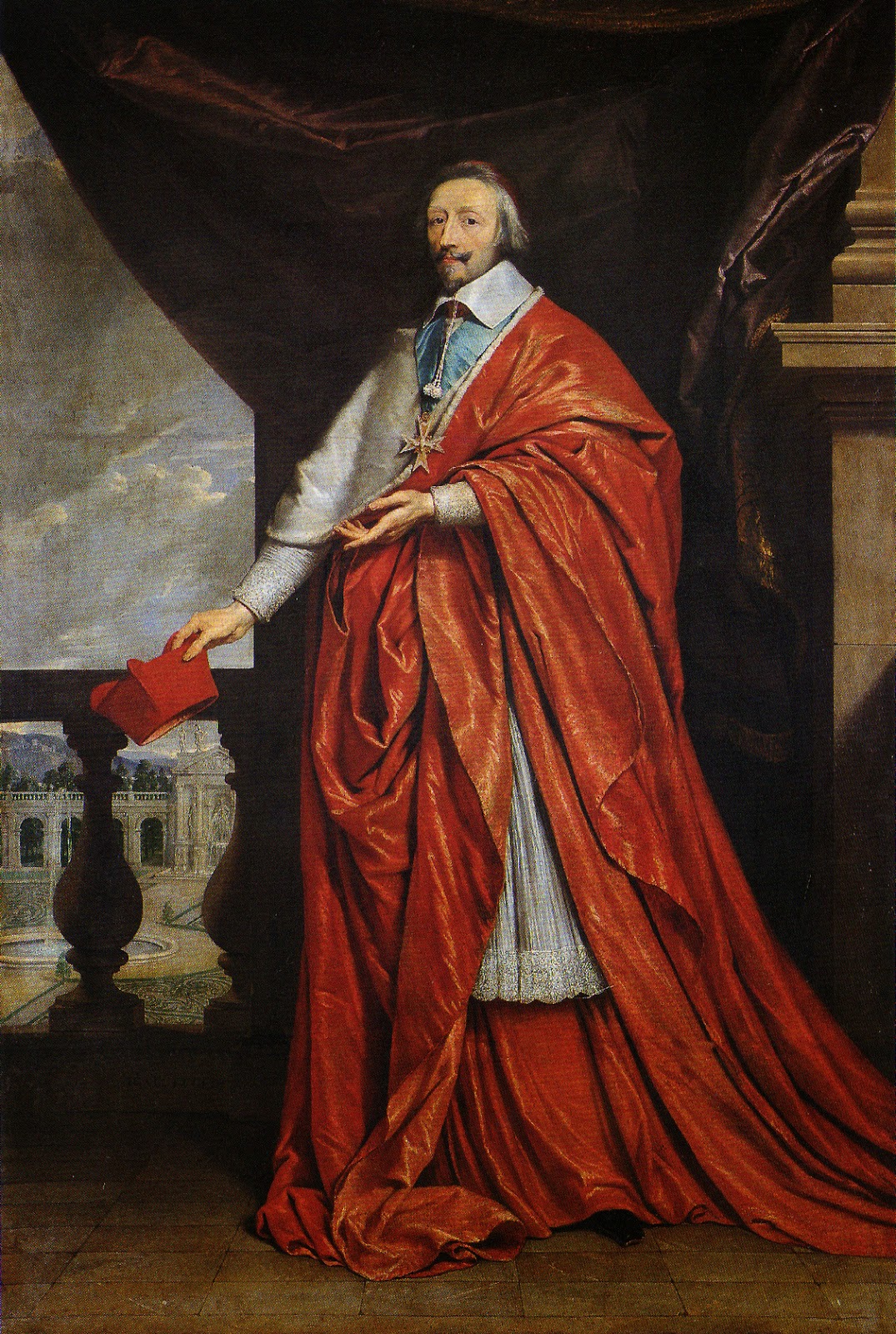
A deity that does represent or espouse a moral or immoral concept might, of course, restrict his or her clerics to a particular alignment. A deity of charity would want his clerics to be charitable – this would make chaotic clerics a bit tricky. Likewise, a god of trickery would want his clerics to be tricky – this might not work well for lawful sorts. Then again, consider Cardinal Richelieu – a member in good-standing of an ostensibly lawful church, and a terrible villain if most accounts are to be believed.

I guess this is a conception of alignment and clerics that would only fit in well in a Robert E Howard-style fantasy world, where the name of the game is power. It certainly wouldn’t be to every player’s taste, but it should please some players or at least prove entertaining for a while to veteran players. At a minimum, it could free clerics in the game from being forced into the role of do-gooder or do-badder, and instead make them more enjoyable to play.

Are Treasure Hordes Too Small?

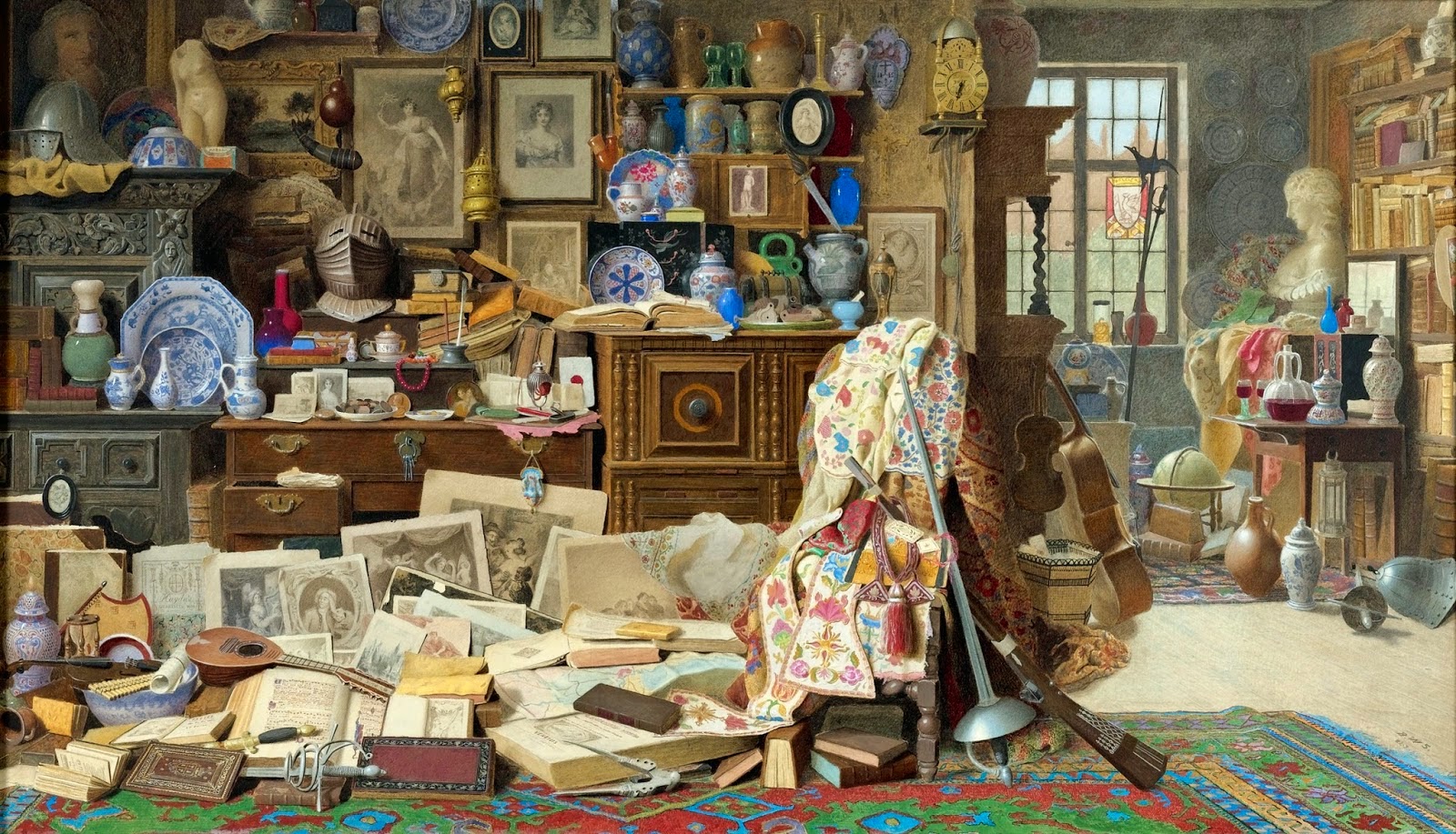
I was looking through some Victorian paintings at the Victorian British Painting blog (not just a clever name), and came across this one by Benjamin Walter Spiers.

One heck of a horde, but fantasy gaming standards. No coins, of course, but in terms of other items … well, here’s my thumbnail inventory:

Books (130)
Bottles/decanters/jugs (33)
Paintings/pictures (21)
Bowls/dishes (18)
Blankets/rugs/tapestries (9)
Vases/urns (9)
Helms (3)
Mirrors (3)
Swords (3)
Boxes (2)
Censers (2)
Daggers (2)
Statues (2)
Violins (2)
Base (1)
Candlestick (1)
Clock (1)
Compass (1)
Globe (1)
Halberd (1)
Hourglass (1)
Inkpot (1)
Lute (1)
Map (1)
Musket (1)
Necklace (1)
Pan pipes (1)
Pipe (1)
Powder horn (1)
Stained glass (1)

255 items by my count, and that’s just items visible to me. I’m sure I missed a few, and of course there would be items obscured from view.

I can well imagine a scene like this in a wizard’s cramped study or in the castle of a lord, and certainly an ancient wyrm should have as many items collected. But how to do this in a game without it just being a huge headache? I admit that I don’t know.

Still, it’s a really wonderful painting.

And speaking of dragon hordes …

Always one of my favorites. By Denis Beauvais, of course.

Twelve Kingly Archetypes

If a campaign goes on long enough, with PC’s gaining more and more power, wealth and ability, there’s a good chance they’ll eventually deal with a king (or queen). But what kind of king? Oh, it could just be a very basic monarch type who hands out a quest in exchange for money or some other royal favor. If the focus is the dungeon, the king doesn’t need to be particularly interesting.

On the other hand, you could leverage the amazing potential kings offer for role playing and campaign play. A monarch can become a very important NPC in a game, hindering and helping the PC’s in a wide variety of ways. A helpful king might have a much less helpful rival in the wings, making him a resource to be protected and making his protectors targets for that rival and his faction. On the other hand, a cruel king might have a more worthy successor somewhere around whom the referee can build a campaign of regime change and revolution. So many possibilities, but only if you put a little time and effort into creating a king worthy of a campaign.

So – today we look at twelve archetypes that you can use in your campaign. Later, I’ll try to do the same for queens later, though clearly these archetypes are as applicable to females and males.
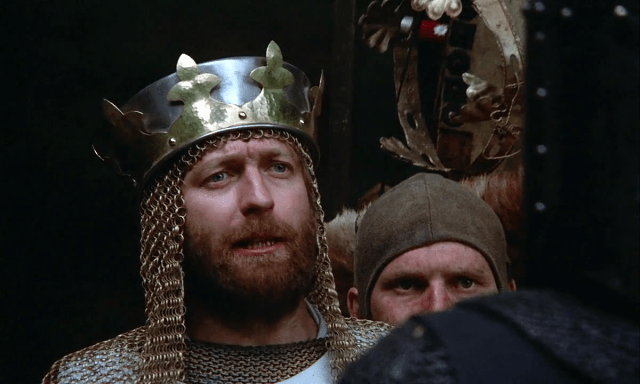
God be praised!

1) THE HERO-KING

The heroic king is a fixture of mythology and folklore. King Arthur is a good example, a storied monarch that founds a nation, protects it, and, after death, is expected to return to usher in a new golden age. In a campaign, you might use the Hero-King when he is a young man, still founding his kingdom, or when he is an old man, largely inactive as an adventurer but commanding a renowned band of knights. Of course, a young adventuring king does present one problem – why is he sending the adventurers on a quest when he might do it himself. Well, even hero-kings have paperwork.

A hero-king is almost certainly going to have levels (at least 9) in a PC class, with fighter, paladin and barbarian being likely candidates.
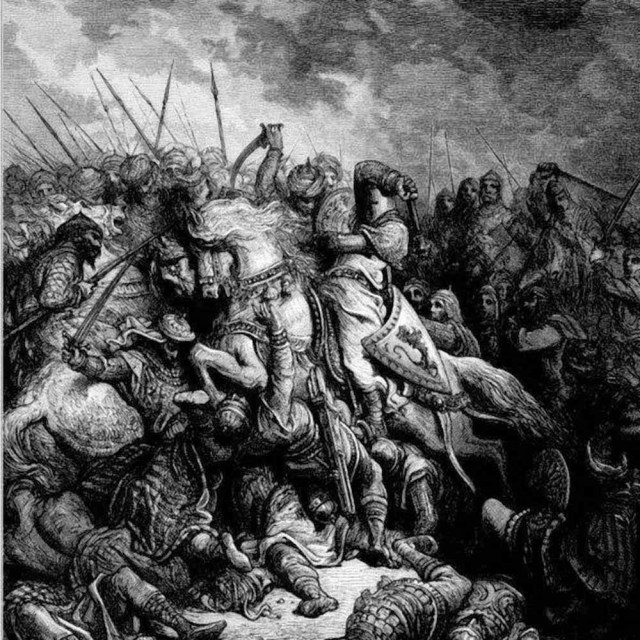
Warrior kings at play

2) THE WARRIOR-KING

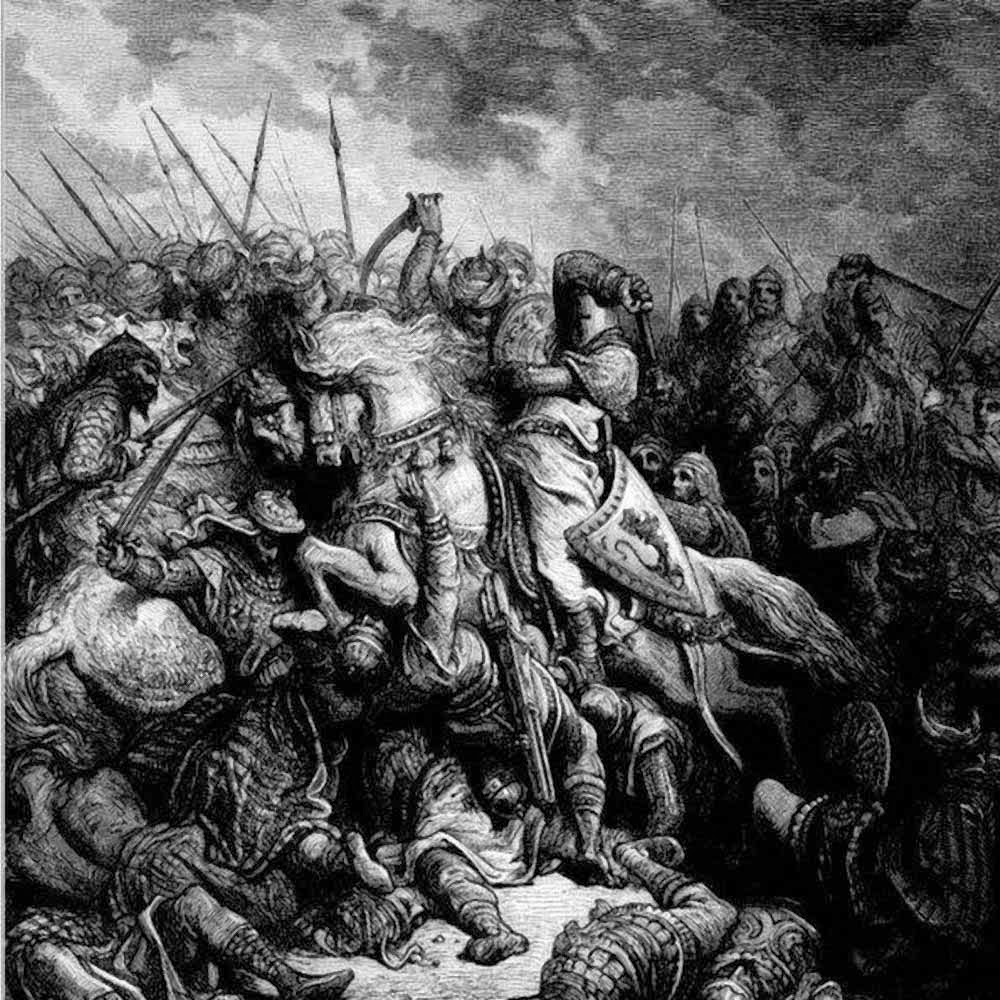
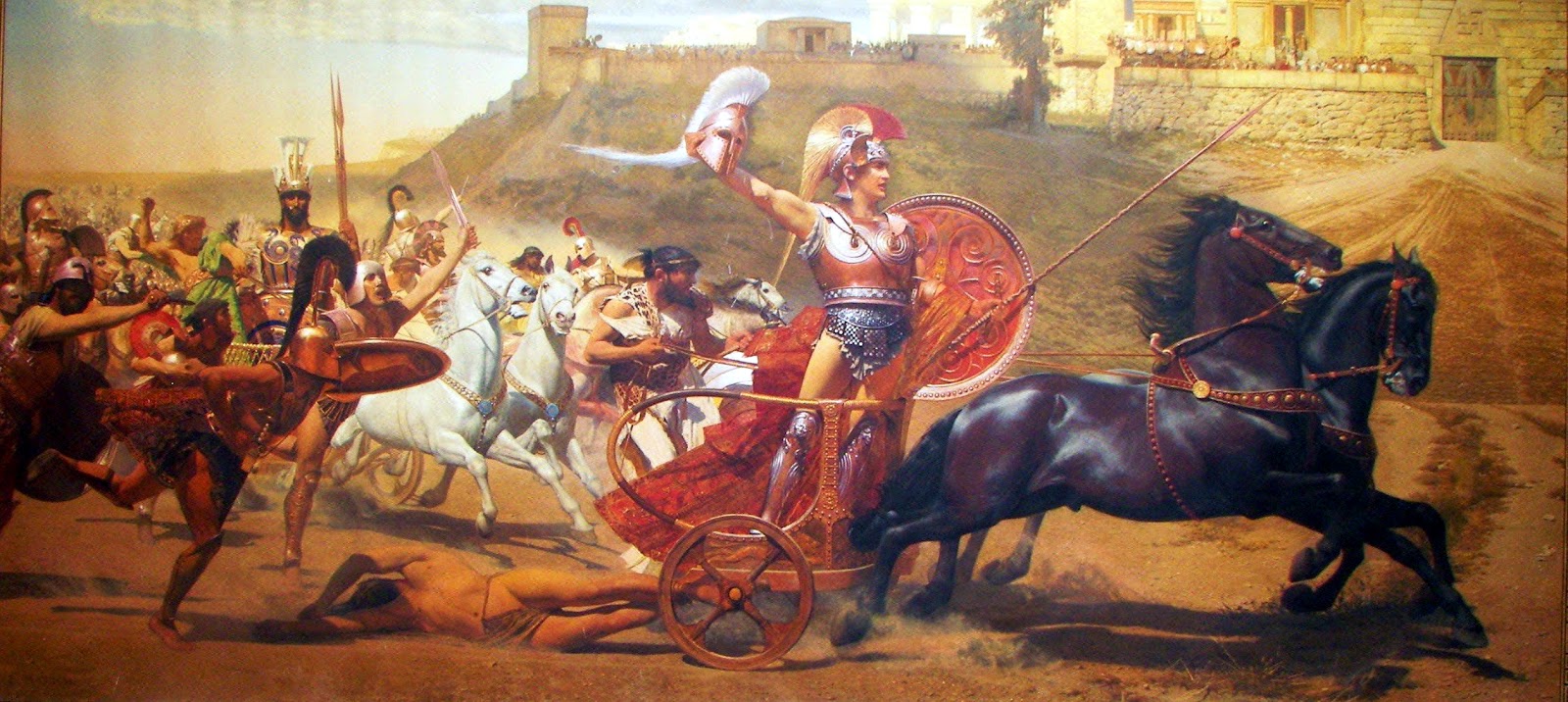
Warrior kings aren’t uncommon in history. After all, it takes a fair bit of war to establish and maintain a kingdom in a medieval or ancient milieu. Famous warrior-kings include Richard I of England (the Lionheart), his rival Saladin (or Ṣalāḥ ad-Dīn Yūsuf ibn Ayyūb to be more precise), Agamemnon, Henry V of England, Gustavus Adolphus of Sweden, Napoleon of France, Genghis Khan and William the Conquerer. All of these men were known for personally leading their followers into battle, and that’s the key to a warrior-king – they actually fight. They may be great strategists and tacticians, or they may just be brave men who like to wade into melee. In either case, they will tend to be resolute and decisive when dealing with adventurers, and they will always be very goal-oriented. Their own past success in battle will tend to make them less accepting of failure on the part of others.

Warrior-kings might be simple aristocrats in armor, but they are more likely to have levels (at least 5 to 6) in fighter or another warrior class.

Bring on the girls!

3) THE LUSTY KING

No man better represents this archetype than Henry VIII of England. The young Henry, for sure, but especially the older, fatter Henry. Lusty kings are all about indulging their passions. They are headstrong, stubborn and do not deal well with being told “no”. Lusty kings are selfish and egotistical, and quests for them may very well be about settling scores and seizing prizes on their behalf. Fail a lusty king and … well, just ask Henry’s wives how that works out (if you have access to a speak with dead spell).

Lusty kings may very well be simple aristocrats with massive egos. If you were to give then class levels, consider barbarian – an enraged lusty king throwing a temper tantrum would be all the more dangerous and entertaining if they have a few levels of barbarian to draw on.

Squeeze every last drop out of those insolent … musical … peasants.

4) THE POLITICIAN KING

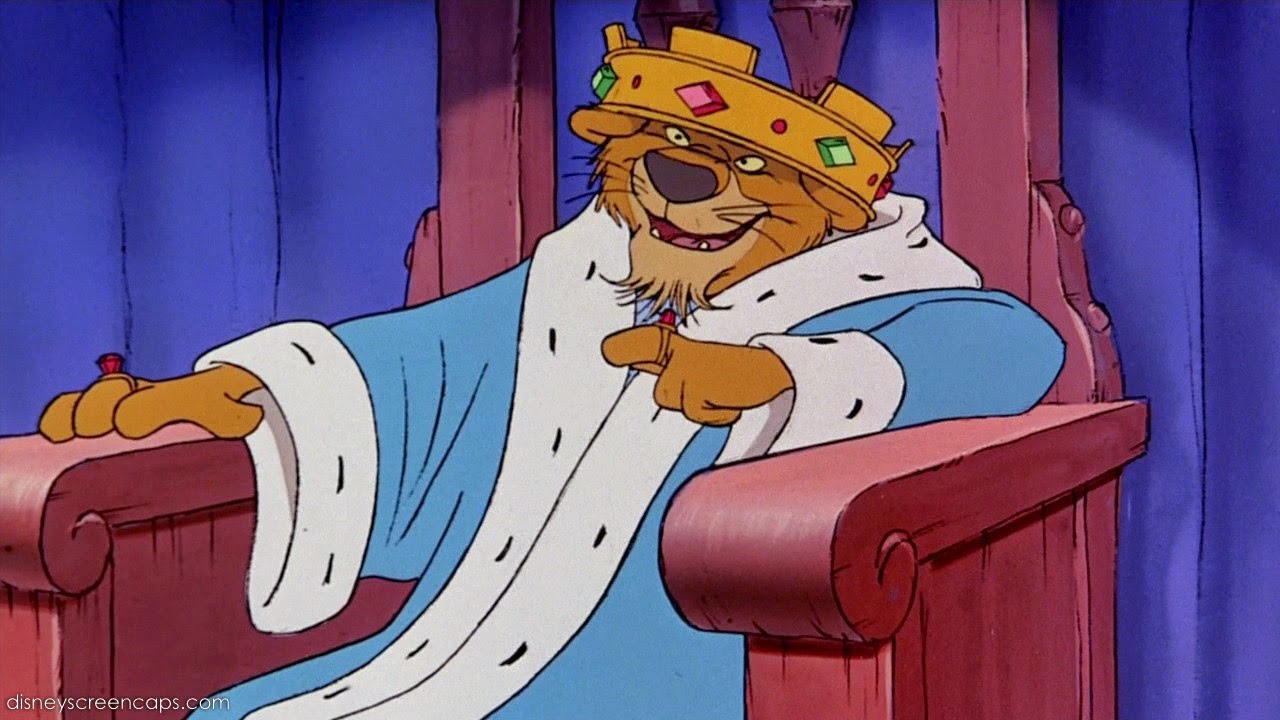
Prince, and later King, John, the brother of the Lionheart, has come down to us through the pen of Shakespeare, as a weakling intent on tyranny. Ustinov made him a sniveling moron in Disney’s version of the Robin Hood tale. The real story is a bit different, though to be fair, he did attempt a coup d’etat while Richard was on the 3rd crusade. Still, he proved an able administrator, if not a brilliant leader during war. John represents the politician king – not powerful or popular enough to have his way, he must bargain and triangulate. He is a master of political, if not military, strategy.

Politician kings can rarely be trusted. They are out for number one, and they are willing to get where they want to be though almost any means (or any means, if they are evil) necessary. They are also patient, and understand that to get what they want, they must make a bargain. Adventurers will be fairly paid for their service, but when they become a liability, they’re dropped like a hot potato.

Politician kings are probably just aristocrats with no, or few, class levels. They probably have higher than normal intelligence, wisdom and charisma scores, for without them they would be poor politicians indeed.
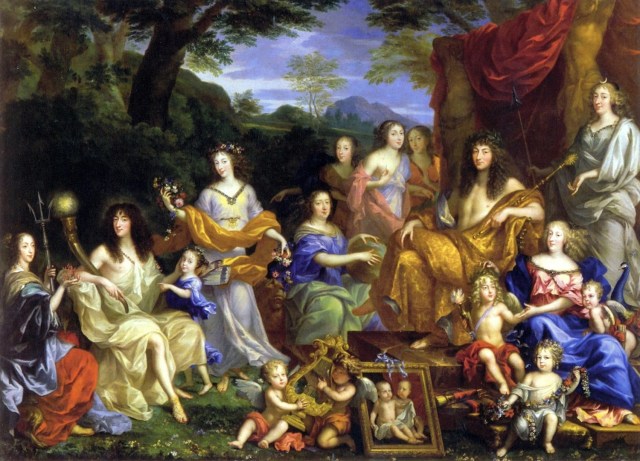
Yeah, he’s every bit as big a d-bag as he looks

5) THE TYRANT-KING

When Europe’s monarchs found themselves in control of nation states, the old relationship between the royal court and the royal subjects changed. With large, standing armies at their disposal, the old parliaments of Europe fell by the wayside, leaving the power of the king virtually unchecked.

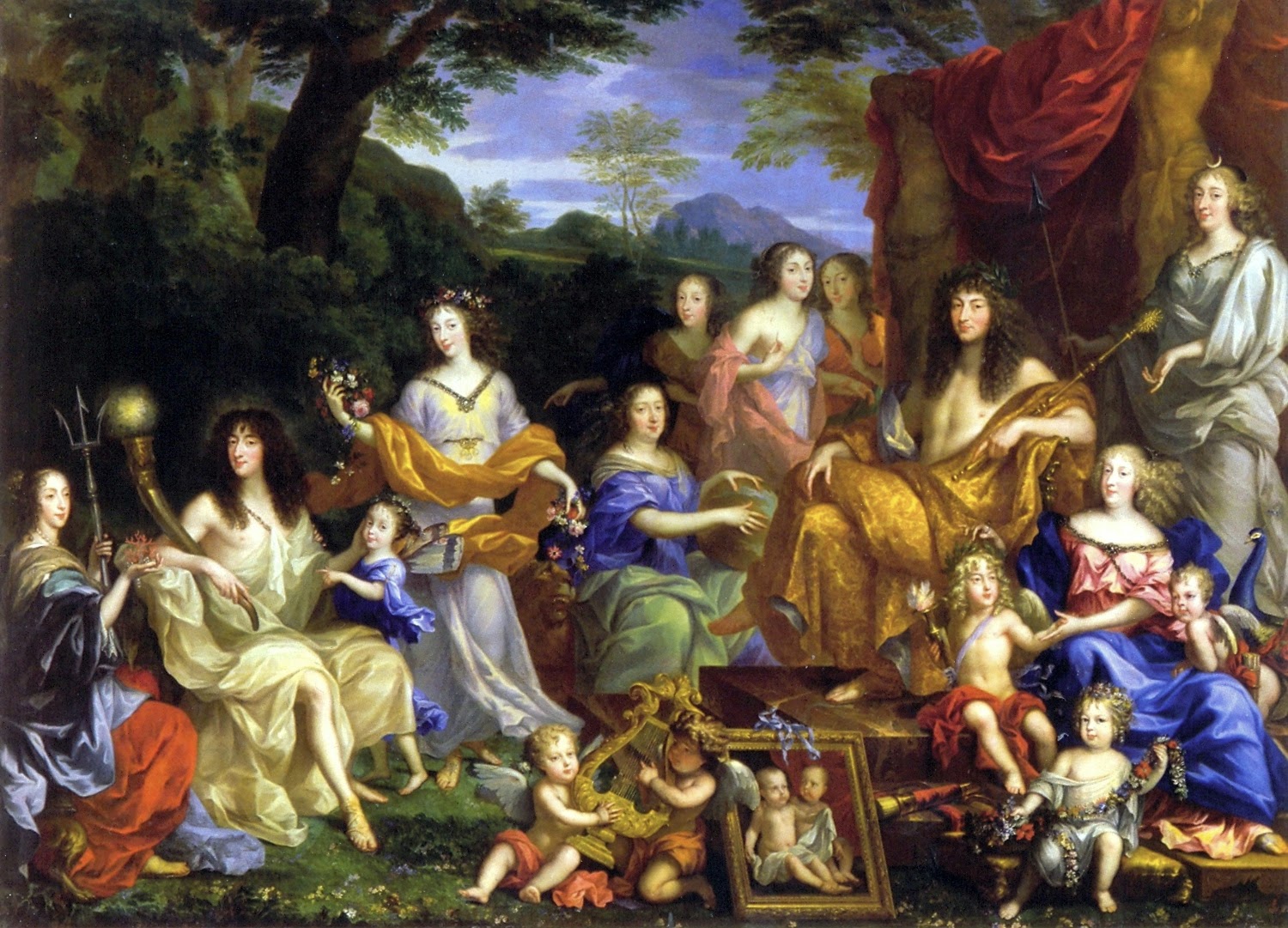
Tyrant-kings, like King Louis XIV, believe they are and must be supreme over all their subjects. There is no possibility of power-sharing, in political terms, and more importantly, there can be no intimation that they are not perfect human specimens. They are, after all, placed on their throne by the will of God, and God would not put an inferior man upon the throne.

Tyrant-kings are no picnic, and adventurers, who represent not only an independent streak but also a potentially competing power center, must almost certainly run afoul of them. Even tyrant-kings who are not egomaniacs must behave that way in their dealings with others to preserve the edifice of the absolute monarchy and stave off rebellion. Tyrant-kings will go to any length to maintain their hold on power, so assume they are at least mildly evil in alignment. Their lack of respect for man-made laws would tend to rule out the lawful alignment – neutral, chaotic neutral, neutral evil and chaotic evil are probably the most likely alignments for tyrant-kings.

Caligula – not the most “safe-for-work” Google search you can do

6) THE MAD KING

While Ludwig of Bavaria (Mad King Ludqig) might be the most famous of the mad kings (which is unfortunate, because later evidence suggests he was not insane and that this was merely an accusation made by his ministers to reign in his spending), there have been many over the centuries. Caligula, Charles VI of France (Charles the Mad), Al-Hakim bi-Amr Allah (the Mad Caliph), and Tsar Ivan IV of Russia (Ivan the Terrible) – all lacking in the whole sanity thing.

Mad kings are unpredictable, which means they can be the adventurers’ best friends one moment, and their worst enemies the next. This makes them tricky patrons, but terribly useful to game masters, as they can generate all sorts of fodder for the campaign. Maybe the best way to model a mad monarch is to randomly determine their alignment whenever the adventurers meet them, or maybe begin with a good alignment of some sort, and then begin making some sort of insanity check for the monarch each month. Maybe their alignment changes a bit, maybe it stays the same. If it does change, only change it one step. As time progresses, make those checks once a week, and allow more severe alignment changes. Eventually, the king will be checking each day, with alignments being almost random – though never Lawful.

The Wisdom of Solomon

7) THE MAGICAL KING

Solomon is a by-word for Wisdom – just ask Billy Batson. He is the perfect model not only for a wise king, but for the magical king, for Solomon was by all accounts a magician. He could control devils and genies and the like, and raise palaces in a day and even convince that super-fine Queen of Sheba to drop by for a visit.

A magical king is probably a magic-user rather than a cleric. Solomon was interesting in the stories because his great magical power eventually turned him against his patron, God, and led to his downfall. Fantasy game campaigns are better served by a story arc of this sort than by just sticking a 20th level magic-user on a throne and having him send the adventurers on quests he could probably better perform himself.

The Queen’s okay, but the king … not so much

8) THE WIMP-KING

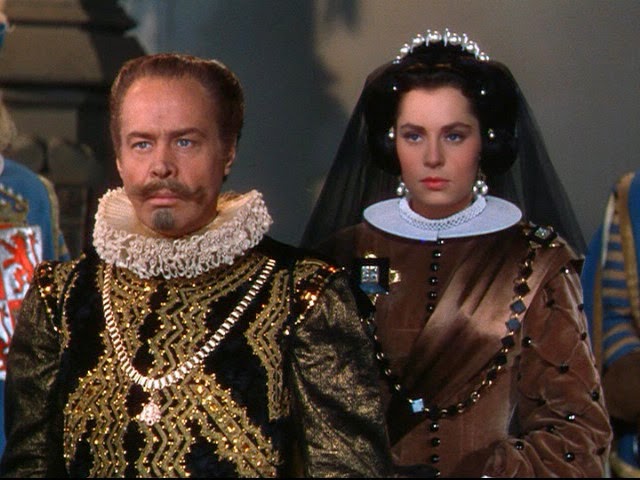
Not every king is strong and resolute. Many weak kings – either weak physically, mentally (but not to the point of madness – see above) or morally – have sat on thrones, at least for a while. Boy kings, kings henpecked by their more willful queens, and kings controlled by their advisers are included in this category, as are kings who would be better off if they were being controlled. The depiction of Phillip III of Spain in The Adventures of Don Juan is a great model for this sort of king.

When there is no leadership on the throne, a kingdom soon falls into chaos. What a wonderful place for adventurers to play. The value of a weak king on a throne is probably that his kingdom is embroiled in revolution, rivalry and brigandry – the perfect spot for a brave band of plunderers to work. Those adventurers might also be cast into the role of protecting the kingdom as it disintegrates, hoping to keep it in one piece until a new king can take the throne.

Marcus doing his impression of a Jack Kirby character – Image found HERE

9) THE PHILOSOPHER-KING

Marcus Aurelius has come down in history as a philosopher king, the real-life embodiment of Plato’s philosopher kings that ruled over his perfect society. Setting aside how well academics do when put into positions of power, the ideal philosopher is wise, logical and calm – an able administrator and a preserver of justice.

Boring!

Well, not necessarily. A philosopher-king might rule over a civilized, peaceful land, but in a fantasy world, that peaceful land may have chaos lapping at its shores. Where there is chaos, there is something for adventurers to do – and in the case of a kingdom ruled by a philosopher-king, a safe place to return to when they are done.

As a patron, a philosopher-king is going to be trustworthy and even-handed. Adventurers will have to watch what mischief they get into, as he might not be inclined to tolerate trouble in his kingdom, even by useful allies. Philosopher-kings are probably lawful good or lawful neutral, since they rule within the law rather than above it, and since they generally show an interest in the well-being of their subjects.
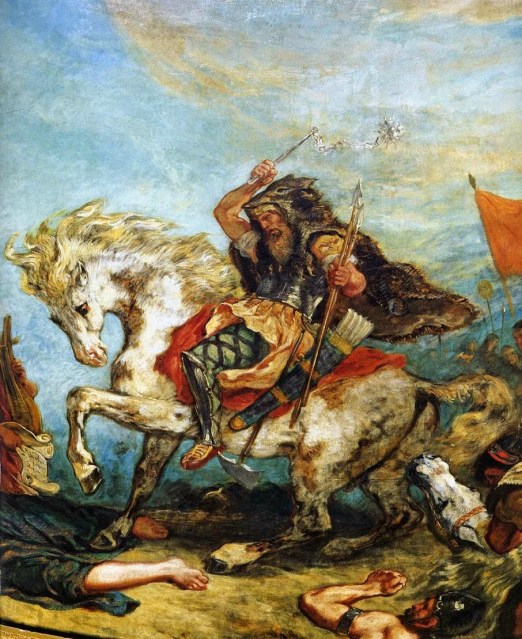
Not the nicest fellow in town

10) THE VILLAIN-KING

While the tyrant-king is willing to do evil to maintain his power, and the mad king might well do evil because he has little control over himself, the villain-king is just out and out evil. Villain-kings are needlessly cruel – they hurt people because they enjoy it. They are treacherous and murderous and in all ways not fit company for paladins. Attila the Hun got the reputation for being a villain-king, and Claudius, slayer of Hamlet’s dad, could also fit the bill.

If a villain-king is the patron of a band of adventurers, they can at least take solace in the knowledge that there is nothing they can do that will offend him morally or ethically. On the other hand, the man is not to be trusted, especially if the adventurers seem to challenge his authority in any way shape or form. Because villain-kings are so cruel and despicable, their lives are constantly being threatened. In a fantasy game, it’s likely they’ll need class levels (and extra hit points) just to keep them alive.
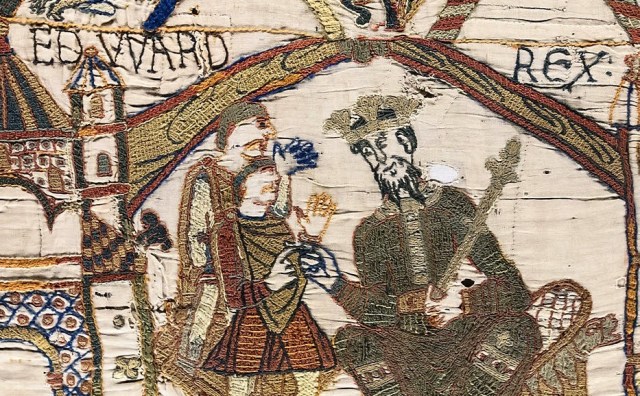
Not only saintly, but apparently huge – looks like he’s winking in this shot – “Say no more, nudge nudge, wink wink”

11) THE SAINT-KING

In the real world, a sainted king often received his sainthood for primarily political purposes. Everyone knows that two of Saint Louis’ miracles were card tricks, after all (yeah, I ripped off Father Guido Sarducci). Sainted kings include St Louis of France, St Edward the Confessor, St Alfred the Great, St Stephen I of Hungary and St Charlemagne of France.

In a fantasy world, of course, a sainted king can really be a saint, or at least a trusted ally of the higher (or lower) powers. The saint-king might be a cleric or druid, but they might also simply possess great spiritual powers, a la a demigod in Deities and Demigods or a saint in “Setting Saintly Standards” (Dragon Magazine, Nov 1983).

Assuming the saint-king is lawful good in alignment, he can be a powerful ally and a powerful enemy of a band of adventurers. He’s good, so when they’re serving him they have access to his powers. But when adventurers start acting like, well, adventurers, they may find themselves in a sticky situation.

I bid you … welcome

12) THE MONSTER-KING

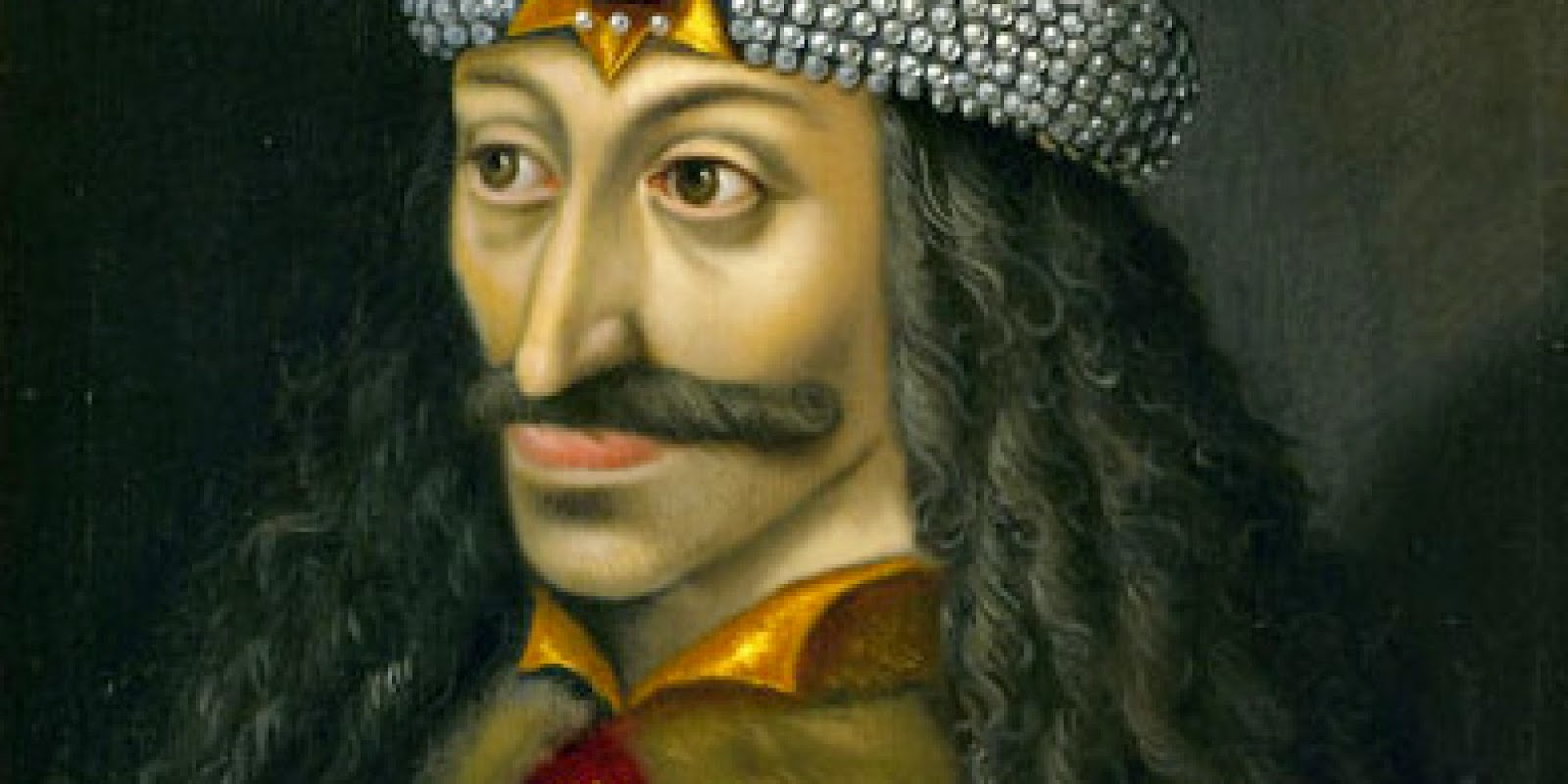
Vlad Tepes. Enough said. Okay – he was only a count, and in reality he was just a homicidal maniac (at least, from what I gather), but in a fantasy milieu we know that he became a vampire.

A monster-king is literally that – some creature taken from the pages of a monster book and sat upon a throne. In NOD, I have a gynosphinx ruling the pseudo-Egyptian city-state of Ibis, and in the Ende hexcrawls I’m finishing up, four rival city-states are ruled by nagas.

The monster king probably exhibits some aspects of the other archetypes provided here, and those should be referenced based on the monster’s alignment and inclinations. They make obvious foes for a band of adventurers, of course – turning the royal palace into an above-ground dungeon for a group powerful enough to challenge the legal ruler of a kingdom.

Hopefully these archetypes will aid you in creating some memorable monarchs to help and hinder the adventurers in your game.
The Ocean is the Abyss

I like the idea of taking the building blocks of D&D and then twisting it around a bit. I did a post some time back about changing the planes into different time periods. In my own NOD setting, I combine the concept of the planets with the planes, and I put Hell smack dab in the center of the world, fueling all those evils that haunt the dungeons of the world.

Today I was thinking about the idea of the Leviathan, and it occurred to me that it might be interesting to combine a campaign world’s oceans with the concept of The Abyss – i.e. the plane of chaotic evil demons. The demons dwell in the absolute black, inky depths, and their minions occupy the continental shelves and lurk just beneath the waters that lap the shores of the world.

Imagine the place the evil sea races would hold in such a campaign world. They would be more directly the servants of Chaos (i.e. the Sea) in its war against Law (i.e. the Heavens), with the land the battleground between the two. Orcs, despite their presentation in Tolkien and thus D&D, seem to have had a connection to the sea in folklore, and it would be simple enough in a campaign world to make this connection more implicit – making them Chaos’ “beach head” against the air breathers.

Many myth systems personify Chaos and the Sea as one in the same entity, and make it the mother of monsters. In the old reckoning of the ancient Israelites, the land masses floated in the ocean, the Abyss, and this would place that cold plane of evil beneath the earth, and thus in a wonderful place to disgorge horrors into the equally inky black landscape of the campaign world’s dungeons.

Two New Products and a New Notion

Hey folks. Three items today …

ITEM ONE – BLOODY BASIC IN SOFT COVER

Bloody Basic – Classic Edition is now up for sale as a soft-cover book. A game with characters levels 1 to 6, with elves, dwarves, halflings, fighters, clerics, magic-users, thieves and all the rest of the classic fantasy elements, for $8.99. I’m working on getting the Contemporary Edition out pretty soon as a PDF, and then a hard copy, and then the other editions will follow – Fairy Tale, Chaos, Apocalypse, Jules Verne, etc.

ITEM TWO – BLOOD & TREASURE MONSTER TOME PDF

The PDF of the Monster Tome is now available for download for $6.99. It includes 172 pages of monsters, with 258 monster entries. I hope to have the softcover and hardcover books up for sale in two or three weeks. As I often do, I’ll be offering a free PDF to those who buy the hard cover edition of the Monster Tome, so if you’re planning on buying the hard cover later, you’ll probably not want to buy the PDF now.

Monster Tome II will have to wait for 2015.

ITEM THREE – STRANGE TWIST OF FATE

Just so this isn’t a completely commercial post, here’s a little notion for using a fate mechanic in your adventures.

When you delve back into heroic fiction, back to the days of the Greeks, Romans and Norsemen, it’s hard to avoid the concept of fate. The Fates and Norns measured out the days of a man or woman’s life and cut the string when it was time for them to die.

If you’re running a game set in these times, or any time if you like it, you might want to inject a little fate into the game. You could also inject Doctor Fate into your game, but that’s a matter for another post.

Obviously, you don’t want to use fate as a way of arbitrarily cutting a character’s life short. You can, however, use it as a way to determine whether character’s are beloved or cursed by “the gods”.

You could do this in one of two ways.

The first is to randomly determine a person’s fate for each adventure, every adventure. First, determine which deities are looking down on the player characters by rolling D10.

1. Lawful Good
2. Neutral Good
3. Chaotic Good
4. Lawful Neutral
5-6. Neutral
7. Chaotic Neutral
8. Chaotic Evil
9. Neutral Evil
10. Lawful Evil

If you use the three-tier alignment, roll D6.

1-2. Lawful
3-4. Neutral
5-6. Chaotic

Next, determine the character’s fate for that adventure by rolling 3d6. If the character is the same alignment as the deity, they enjoy a +2 bonus to their roll. If they are the opposite alignment, they suffer a -2 penalty to their roll.

1-2. You are loathed by the gods – subtract -2 from all d20 rolls during this adventure
3-6. You are cursed by the gods – subtract -1 from all d20 rolls during this adventure
7-12. The gods are disinterested – your fate is in your hands
13-16. The gods favor you – add +1 to all d20 rolls during this adventure
17-18. You are beloved by the gods – add +1 to all d20 rolls during this adventure, and re-roll one failed saving throw.

An interested god will be watching over the adventure. Whenever an accursed or loathed character performs an action in accordance with the deity’s alignment (or any element of their alignment), they are permitted to re-roll their fate. Whenever a favored character does something in opposition to the deity’s alignment (or any element of their alignment), they likewise must re-roll their fate.

If you are using this system, you might want to add a couple spells to your game.

Tell Fortune – 1st level spell for clerics, druids and magic-users; it literally tells the character’s fortune (i.e. loathed, cursed, favored, beloved).

Read Signs – 1st level spell for clerics, druids and magic-users; tells you the alignment of the deity watching over the characters during this adventure.

The other way you can use a system like this is to put the characters’ fates into their own hands. Instead of always rolling to determine a character’s fate for an adventure, the player’s instead offer themselves up for judgment. The system works the same way, it just puts the decision in the hands of the players.


Quicky Alignment Descriptions

Just a quick thought on describing alignment – popped into my noggin last night while watching F Troop and editing Monster Tome (and no, F Troop did not inspire this notion – just a coincidence).

I tend to think that alignment should be kept pretty vague, and should have a little in-game effect to make it worthwhile. I’ve covered the “make alignment count” concept in the past, and even worked it into Bloody Basic.

In the interest of keeping alignment descriptions vague, I thought of some extremely quick (one or two word) descriptions of the alignments that can guide a player without tying them down too tightly. Each one sets up a general goal – the direction they should probably be moving – without dictating how they should behave in every single situation they find themselves.

What does each alignment think is best in life?

Lawful Evil = Power
Neutral Evil = Wealth
Chaotic Evil =  Killing

Lawful Good = Virtue (for self and others)
Neutral Good = Charity
Chaotic Good = Happiness (i.e. freedom to pursue)

Lawful Neutral = Organization
Neutral = Self-Interest
Chaotic Neutral = Anarchy

What of “true neutral” – i.e. balance? Don’t ask me. How is an individual supposed to figure out what the multiverse requires to maintain balance. Is the player supposed to take orders from the GM? How about random rolls to determine which alignment is too powerful at the moment, so the true neutral can behave like the opposite alignment for the session? That should go over well …