Hell Preview 2 – The City of Goblins

Here are a couple more encounters from Nifol – the Ante-Hell.

3.56. Celdrien’s Tomb: The wizard Celdrien was laid to rest here in a fire pit (20 feet deep), his ashes mingling with the ashes of his favorite courtesans and most hated enemy. Secret catches here hidden in the walls of the black bricks that line the pit, each one containing one of his treasures:

– A large tome covered in duergar skin holding three spells: teleport, dimension door and passwall as well as demonic chants that, if repeated, summon 2d6 vrock to attack the reader. Until these vrocks are fought and defeated, the book drives its owner (and anyone who has learned a spell from it) to kill honest men and women they meet.

– An oil lamp of yellow glass. It is non-magical, but was made with pitchblende, causing the owner of such a lamp to pass a saving throw each month or lose one point of constitution from radiation exposure.

– A round +1 shield lacquered bright orange and emblazoned with a black demon head. The shield is -2 against the attacks of demons until the bearer has slain three different breeds of demon and nailed their hands into the wooden frame of the shield. After that, the shield is +3 against the attacks of demons.

– Silk hose of yellow with ribbons of pale lavender and brilliant white. They act as a ring of feather fall, but until they are dyed in the ichor of a demon they make their wearer completely passive (i.e. must save each round to fight, though they can defend themselves).

– A copper locket set with tiny sapphires. The locket provides a +2 bonus to save vs. magic, but also prevents natural healing until hairs from a bearded devil are placed inside the locket.

The pit is guarded by the spirit of Celedrien, who manifests as a raging fire elemental with a vaguely humanoid shape.

FIRE ELEMENTAL: HD 16 (81 hp); AC 2 [17]; Atk 1 strike (3d6); Move 12; Save 3; CL/XP 17/3400; Special: Ignite materials.

5.45. Dal-Berith, City of Goblins: Dal-Berith is a terrible city of goblins located near xxx. The city is constructed of large, crude stone blocks, with narrow, dark lanes in between them. Throughout the city there winds a covered lane with no apparent entrance – one can only enter it via secret doors hidden in buildings. This covered lane houses the true masters of the city-state, the Sages Who Dwell in Shadow. The sages are a cabal of black sorcerers who died and should have gone to Hell but for powerful magics enacted before they died. This gave them the power to resist the pull of Hell, but still left them trapped as shadows. They now lurk in this corridor, lit by ghostly candles, seeking new magic to free them from their curse.

Dal-Berith has a population of 5,000 goblins, hobgoblins, bugbears and orcs living in tense, angry clans always at one another’s throats. One might compare the city-state to Hell’s Kitchen. The presence of a powerful artifact in the hidden corridors of the shadow sages spreads contrariness and dissension, and each night a thousand petty arguments spreads into the streets as all-out war. The artifact looks like a simple necklace of chicken bones.

The walls of Dal-Berith are slimy and irregular. There are no gates – one can only enter through one of a dozen hidden silver mines in the hex. The walls are topped by about 100 gargoyles who guard the city. It is surrounded by foul-smelling streams and fields of mushrooms.

SHADOW SAGE: HD 6+6; AC 7 [12]; Atk 1 touch (1d4 + strength drain); Move 12; Save 14; CL/XP 9/1100; Special: Drain 1 point Str with hit, hit only by magic weapons, spells as 8th level magic-user.

Visit the Bazaar / Preview of Hell

Are you in need of late ’80s or very early ’90s comic books in readable condition? Maybe some 3rd edition books from WOTC or some spell decks from 2nd edition AD-n-D? Then by golly, you are in luck. I just opened a Bazaar to get rid of this crap these wonderful artifacts from another time.

CLICK HERE and name your price or trade, folks. If I can’t shift it here, I’ll probably just give them away to a charity shop here in town.

And now that my crass advertising is finished, enjoy a preview of Hell’s doorstep (i.e. Ante-Hell), which I’m tentatively calling Nifol (“Darkness”) …

1.91. Temple of Amfelyn: A trail of phosphorescent flagstones leads to a plaza of similar construction in the middle of this tunnel. The plaza measures about 100 feet on each side and has a crypt in its center and four round towers at each corner. These towers and the crypt are carved from polished obsidian. The crypt is square and about eight feet tall, with no obvious entrance. The towers have circular bases and measure about four feet in diameter. They are also eight feet tall. Each tower is really just a stairwell for a narrow, spiral staircase that leads about twenty feet below the tunnel floor to a large cavern littered with the dead bodies of drow. Each drow has had its heart removed with surgical precision, the organ being replaced by an iron sphere.

The crypt has channels carved into the top in an “X” shape with a slight depression at the intersection. These channels extend down the sides and onto the plaza floor. Should a male touch the crypt, the sides become transparent, revealing a female drow interred inside. The woman has the dull, charcoal gray skin of a dead drow, though her form remains lovely. Her eyes are a brilliant violet and their look can dominate any male humanoid (saving throw to negate). When the walls of her crypt become clear, she stirs and attempts to use her gaze, commanding any person so dominated to deliver her the heart of a comrade. The heart must be placed atop the crypt, allowing blood to flow into the tiny channels and down the sides. When filled with blood, these side channels form the sides of a portal, which opens to allow access to the crypt. The female drow, Amfelyn, is a vampire of sorts. She will emerge from crypt and attempt to slay the dominated man, feasting on his heart. If the man is a priest, as the ones below the crypt were, the iron heart grows in their wound and animates them as a huecuva. Otherwise, their body is simply cast into the darkness to feed the oozes. Amfelyn can remain out of her crypt for one year and one day when she feasts on a heart, and then must return to her supernatural slumber.

As mentioned above, the eight bodies below the crypt are all huecuvas. They animate when the crypt is touched, but only interfere if it looks as though the dominated man will fail to slay a victim and open the crypt. The crypt, which measures about 12 feet on either side, contains Amfelyn’s treasure of 1,500 gp, a horn fashioned of white gold (1,000 gp), a Morningstar, a container of salve that grants a +1 bonus to save vs. poisons, a large bottle of green liquid (potion of heroism), a bone wand (10 charges, lightning bolt) and a single agate worth 250 gp.

HUECUVA: HD 2; AC 2 [17]; Atk 1 claws (1d4+1 + disease); Move 12; Save 16; CL/XP 5/240; Special: Change self, disease, silver or +1 weapon to hit.

AMFELYN, VAMPIRE: HD 9 (49 hp); AC 2 [17]; Atk 1 bite (1d10 + level drain); Move 12 (F18); Save 6; CL/XP 12/2000; Special: +1 weapon to hit, gaseous form, regenerate 3 hp/rd, change into giant bat, summon bat swarm, charm gaze (-2 to save), drain levels (bite, 2 levels).

NOD 10 Goes Live!

NOD 10 – the August issue – is finally live. The Mutant Trucker article was holding things up, but since I had enough material without it, I’m pushing it back to next issue and getting this show on the road. Here’s the description …

NOD is rounding out Summer with the remainder of the Mu-Pan hex crawl begun in issue 8. It also presents the Leech, a new playable class, randomized chimerae, two new races for PARS FORTUNA, two new Demon Lords and a continuation of Phantastes. 80 pages. 

E-Book (PDF) is up for sale at $3.50. I’ll get the print book up once I get my proof copy. You can visit my Lulu shop HERE.

Hopefully, I’ll get a more entertaining and useful post up later today.

Ruminations on the Netherworld

Rebellion seemed like a good idea at the time …

So – a hex crawl through Hell. What to expect.

The basic architecture of the Netherworld here will be from Dante’s Inferno, with some touches drawn from Milton’s Paradise Lost. The rest will be pulled out of my imagination, which is fueled by any of a thousand images I’ve seen or read over the years. One thing it will not do is sync well with the old Gygaxian cosmology of the alignment-planes. Hell here is about Chaos, and the idea that demons, devils, daemons and demodands are all something fundamentally different will be ignored.

Dante can only be used up to a point though. While some aspects of his cosmology are appropriate for NOD, given the fact that it uses a Medieval Christian architecture for the basis of its cosmology. Some aspects are not as appropriate. A “Limbo of virtuous pagans”, for example, doesn’t make much since in a world with a profusion of deific identities, even if they may not actually be “gods” in the sense that ancient peoples imagined them to be. So, the first circle has to be changed. I’m taking inspiration from Hades’ Fields of Asphodel and making it a ring of grasslands – long, gray-green blades of grass and a profusion of asphodels and deadly trees. Under an eternal twilight the grasses are grazed by stench kows, hellephants and other demonic beasts who are in turn hunted by various terrible things. Essentially, it’s Hell’s savannah, with caravans of shades on their way to the Palace of Minos to be judged and sentenced. Many lesser demonic lords have their fiefs in Asphodel, marshalling their hellish hosts in service to more powerful lords below.

A goodly portion of Dante’s Inferno is also designed to portray his political enemies in the bowels of Hell getting their just rewards – since 14th century Italian politics plays no major role in NOD, that stuff doesn’t quite work either.

From Dante we get the architecture, but the meat of NOD’s Hell will be owed more to Burroughs. Essentially, I’m taking a Sword & Planet tack with depicting Hell since, in my opinion, everything in a fantasy role-playing game should be geared towards running adventures for players. In other words – there will be “people” living in hell – tribes and nations among the demon lords – like the drow, duergar, sahitim and other “evil humanoid” communities from fantasy gaming. There will be dungeons to delve and treasures to find in this weird little pocket dimension locked in the center of NOD.

Light in Hell
One of the hallmarks of Hell in the Christian cosmology, and similarly in other beliefs about the Underworld, is the absence of light. In Christian cosmology, light represents more than just physical illumination – it is also about spiritual enlightenment and reason.

The uppermost layer of Hell is given illumination in Dante, since it isn’t so much a place of punishment as it is a place of no reward. As mentioned above, I’m giving it an eternal twilight. Lower rings of Hell, however, are without light. The regions of upper Hell are simply dark. Fire provides no illumination – it is as black as night – so adventurers must rely on magic (spells, magic swords) and their own inner light. This manifests as a dim, gray glow for chaotic characters, a warm twilight for neutrals and a brilliant daylight for lawful characters to a range determined by their wisdom score. This radius grows smaller as people go deeper.

The deeper portions of Hell are swathed in spiritual as well as physical darkness. Here, one’s faith and reason (i.e. intelligence and wisdom) are ever assaulted and chipped away at, and even magical light ceases to function without supreme effort (i.e. magic resistance toward light, divination and healing spells).

A Brief Tour

Limbo: Before one enters Hell, they enter Limbo, a sort of ante-Hell. These caverns lead to the rocky vault through which flows the Acheron, plied by Charon and his assistants. They can give one access to the gates of Hell, which are not easily penetrated. Hell is surrounded by a massive wall guarded by demons and the gates are guarded by Sin and Death. Shades can simply pass through the gates, but living petitioners have a harder time. The shore of Acheron is beset by stinging vapor wasps that torment the souls waiting for passage across the river. The walls of Hell can be seen beyond – massive, basalt walls with insets holding tormented angels that remained neutral in the War of Heaven, forced to hold up the battlements of Hell eternally.

Asphodel: Mentioned above, this is a hellish savannah plied by caravans of the damned. Easily the most dangerous safari you’ll ever go on. Perhaps this is Persephone’s garden – a gesture of growth and beauty twisted by the entropic energies of the Underworld. Designed for 10th level parties.

Eerebus: A bleak, stony plain constantly ravaged by hurricane-force winds and freezing rains. There are gullies and canyons and flash floods and mist-shrouded moors and worn, stone castles. Eerebus is a place of shadows and dreams. Its constant rain is the source of the lower rivers of Hell – they form streams that flow into the bog that is the third circle of Hell. I imagine it populated by frogs, water weirds, tempting undead (vampires, baobhan sith) and, of course, succubi and incubi. The transition between Erebus and Abbadon is the easiest to make, for one circle simply flows into the other. Designed for 11th level parties.

Abbadon: Abbadon is just miles and miles of bog (and I mean that in both the sense of a swamp and the slang term for a toilet). A drizzle of human waste falls from the sky, landing on the souls of gluttons too fat to move, and the circle of Abbadon is absolutely crawling with otyughs. Mushrooms of every shape and size (and some ambulatory) grow in the bog. Few demon lords dwell in Abbadon, Jubilex being one of the few. Cerberus guards the entrance to Gehenna.

Gehenna: Gehenna is a desert of gray sands and swirling winds. Gangs of tethered slaves drag massive blocks of stone about the desert, but never finish dragging them – there is no destination – nothing here is every completed. The remnants of great cathedrals and pyramids rise from the sands, staffed by corrupt clerics that have been turned into huecuvas.

Stygia: Beyond Gehenna there is a muddy swamp that is, in fact, the flood plain of the River Styx. This swamp is filled with the souls of the wrathful, biting and rending one another and anything else they can get their hands upon. Islands in the swamp hold the citadels of demon lords, their followers fishing for souls and other critters in the swamp. Phlegyas ferries souls across the river to the quays of Dis.

At this point, NOD 11 should contain the first half of these upper circles of Hell – the northern half, so to speak. NOD 12 will finish it with the second half. NOD 14 will cover the lower hells.

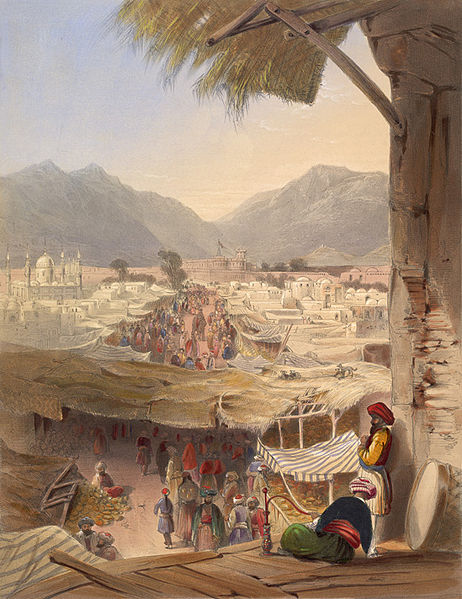
Dis: Dis is the great metropolis of Hell. It covers an entire circle of hell, and does for the souls imprisoned within what modern cities do to their inhabitants – the torture of a thousand daily frustrations. The city is a maze of dark alleys, burning plazas, tombs, sepulchers, catacombs, brazen towers and the great parliament of Hell, the Pandaemonium. I’m picturing Dis with a Persian/Byzantine feel. Many demon lords have “townhouses” within Dis.

Dis will probably occupy NOD 13 – an appropriate issue for it, I suppose.

Avernus: Avernus is the first of the lower Hells, and here Dante started regretting the whole nine circles of Hell thing, because he starts packing different geographies into each circle. The seventh circle has three geographies, which Dante presents as rings (and I do this on my initial map), but I’m now thinking of doing as bands instead. The first is a badland of jagged, maze-like canyons inhabited by minotaurs. The burning river of Phlegethon flows through these canyons. This boiling river is home to tyrants and warlords. As they attempt to escape the river, they are set upon by the centaurs that patrol the banks.

The Phlegethon then flows into a woodland of black, gnarled trees that are actually the souls of wastrels. The woods are haunted by hell hounds and harpies. Beyond the woodland is a desert of burning, black sands, where charred blasphemers are staked out on the sands to writhe and burn. Mulciber’s forge is located here, and sparks from this hammer fall from the sky like a rain of fire. The center of the ring is a great ravine of dark water – the River Eridanos – which flows over the side as a roaring waterfall. Here dwells Geryon, the only creature capable of carrying folk to Malebolge beyond.

Malebolge: Malebolge is a land of tall mountains and deep valleys, each valley being given over the a different punishment. The valleys are inhabited by the Malebranche devils, who do not permit folk to pass through unchallenged. Looking over the edge of Malebolge one sees the imprisoned titans chained to the miles high cliffs that lead down to the deepest hell, Cocytus.

Cocytus: Cocytus is a frozen land of icy mountains surrounding a great lake covered in ice of varying thickness. Great, gray afancs swim beneath the ice, sometimes breaking through to feast on intruders. At the center of Cocytus lies Lucifer, ruling his dark realm from chains.

Going to Hell!!

Here’s a first glimpse at my Hell hex crawl. Came out a little lopsided, but hey – nobody is perfect. The uppermost layer is Ante-Hell – essentially a 9th level dungeon level writ large. It is divided from Asphodel – a twilight land of rolling meadows grazed on by stench kows and populated by shades – by the river Acheron. The hexes on this one are 12-mile rather than 6-mile. It is designed to force adventurers to circumnavigate each layer to go from “entrance” to “exit”. So, roll up some paladins and clerics and you can send them on the ultimate hex crawl, beginning in a couple months!

Nodian Oddities

When I’m writing a hex crawl for NOD, I like to let my mind wander once and while and create a new species or two on the fly. I’m going to collect a few of these Nodian oddities here, with some guidelines for using them as a playable race. To start with, I have three from Mu-Pan …

DIDI
The Didi are small (halfling-sized) creatures. They look like nothing but skin and bones, with large, round heads and pointed ears. Didi’s are covered with velvety, platinum-blond fur and have ugly, wan, drawn faces. Despite their appearance, they are uncommonly kind and renowned for their knowledge of the healing arts. The didi dwell underground. Seemingly immune to the chill environment of their subterranean home, they do not wear clothing, though they often don leather armor or aprons when they prove useful to their work.

Didi have a knack for medicine and herbcraft. Those under their care heal +1 hit point per night of rest and receive a +1 bonus to saving throws against the effects of diseases. Because of their frail physiques, they suffer a -3 penalty to their constitution roll at character creation, though this penalty cannot reduce their constitution score below 3. Didi have magic resistance equal to their wisdom score (i.e. a 13 wisdom grants 13% magic reistance). Didi can see in the dark as well as dwarves.

Didi are permitted to advance as cleric/magic-users (up to 5th level max.), cleric/thieves (5th/7th level max.) or as pure thieves (9th level max.). Didi clerics worship nature spirits and deities of darkness, healing and generosity.

KETEKete are tall humanoids with stark white skin, black eyes and toothless mouths. They have no hair and wear kilts and tunics of interlocking steel rings (i.e. chainmail, though sometimes so light as to be no more protective than padded armor). Kete are surrounded by an aura of heat, and they require no teeth because food simply burns away in their mouths. This heat aura gives them an unarmed attack damage of 1d4 (or +1 to damage for monks) and the blurry aura gives them a -1 [+1] adjustment to Armor Class. Kete suffer only half damage from fire attacks and enjoy a +1 bonus to saving throws against dragon fire and fire spells. Once per day they can sheath themselves in roaring flames, causing 1d4 points of fire damage to all within 10 feet of them and possibly setting flammable objects aflame.

Kete cannot wear or use objects constructed of wood, leather or cloth (hence their chainmail clothing). They can advance as fighters up to 6th level (7th level with a strength of 14+), thieves of 8th level (9th level with dexterity of 15+) or fighter/thieves up to 5th/7th level.

ZOUSHOU
There are few creatures in Mu-Pan as strange as the zoushou. They look like large, grotesque human heads balanced atop four human legs, forcing them to walk like a crab or to hop about. Zoushou have deep, purple skin. Their long toes allow them to grasp items with fine manual dexterity. While they cannot wield weapons or use shields, they can wear armor that is specially made.

Zoushou can leap five feet vertically and up to 1d6+5 feet horizontally. They can kick in combat for 1d4+1 points of damage. Because of their rugged bodies, zoushou characters begin the game with 2 hit dice (though they are still limited in the total number of hit dice they can have based on their class). Three times per day, they can use x-ray vision per the ring of x-ray vision. In place of this, they can focus this vision one time per day on a single subject within 20 feet, inflicting 1d6 points of damage.

Zoushou advance as fighters up to 5th level (6th level with strength of 13+) or thieves up to 7th level (8th level with dexterity of 15+).

Note: For players of Ruins & Ronin, didi can advance as shugenja up to 6th level, kete can advance as bujin up to 7th level and zoushou can advance as bujin up to 6th level.

At some point I’m going to have to commission art for these oddballs. Should be fun!

News from the Land of Nod and a little more Mu-Pan

Busy weekend, but a good one. I finished my fifth Hex Crawl Chronicle The Pirate Coast – and just need to send it along to the good people at Frog God Games. Next up is The Troll Hills, in which I try to incorporate every version of troll I can. If you have an OGL troll you’d like stuck into those very dangerous hills, let me know.

Oh – for that matter – the Tome of Horrors Complete is now available. I have scads of lairs in that tome and did the conversions of the monsters from Tome 1.

I’m about 1 week away from publishing NOD 10. Contents should be …

Mu-Pan – continuation of the hex crawl in NOD 8. I’ve been running excerpts all month.

Polyester Road – this is a mini-game/mini-campaign about truckers hauling goods on post-apocalyptic highways. The technology is mid-1970’s and the mutations not too gonzo.

Monstrous Evolutions – two race/classes for Pars Fortuna in the tradition of beast-people. In this case, the “beasts” are a rust monster and owl bear. Will include an illustration and a mini-adventure.

Chim-Chimera-Cheree – The random chimera generator I posted on this blog with a nice illustration.

The Leech – A fantasy doctor/surgeon class for Swords and Wizardry – think of this class as the medical equivalent of Indiana Jones’ archaeologist.

Phantastes – a few more chapters of the fantasy classic.

Coming up for NOD 11 – A journey into Hell (hex crawl inspired by Dante’s vision of the underworld), Action X (mini-game of special operations teams in the Cold War) and probably something spooky for Halloween – probably a dungeon crawl in a haunted manor.

And now, two encounters – one from Mu-Pan, the other from the Pirate Coast. Enjoy …

0108. The floor of this valley is a chain of shallow lakes linked by channels of sandy, sluggish streams. The lakes are heated geo-thermally, and this has made the valley steamy and verdant. In ages past, great creatures akin to reptiles lived in the valley until they were hunted to extinction by the ancient elves – many an old elven sword has a pommel wrapped in leather cured from their skin and ancient elf lodges often have their strange, massive heads mounted on the walls.
While these massive beasts no longer roam the valley, their spirits do, and are encountered here on a roll of 1-2 on 1d6 (1-4 on 1d6 during a full moon). Use the following table to determine what kind of animal is encountered.
1-3
Ankylosaurus: HD 8; AC 0 [19]; Atk 1 clubbed tail (special); Move 9; Save 8; CL/XP 8/800; Special: None.
4
Brontosaurus: HD 25; AC 6 [13]; Atk 1 stomp (special); Move 9; Save 3; CL/XP 25/5900; Special: None.
5-6
Stegosaurus: HD 15; AC 2 [17]; Atk 1 bite (special), 1 spiked tail (special); Move 9; Save 3; CL/XP 15/2900; Special: None.
7-8
Triceratops: HD 15; AC 0 [19] front, 5 [14] back; Atk 1 gore (special); Move 12; Save 3; CL/XP 15/2900; Special: None.
9-10
Tyrannosaurus: HD 18; AC 4 [15]; Atk 1 bite (special); Move 18; Save 3; CL/XP 19/2400; Special: Chews and tears.
The dinosaur spirits are ethereal, and can thus only be harmed by silver or magical weapons and spells of force or dispelling. Their attacks cause 2d6 points of chilling cold damage and force a victim to save or be drained of one level.
One of the shallow lakes is an illusion, hiding an ivory palace of the ancient elves – one that has been abandoned and forgotten for centuries. The palace is composed of eighty-one cells, each with a vaulted ceiling and connected to four adjacent vaults via a short (5 feet long) passage. These passages are blocked by walls of force, each one a shimmering curtain of one of five colors – cerise, ultramarine, gamboge, myrtle and heliotrope.
The palace has four entrances; each of these entrance cells has only three curtains for force blocking further access to the palace. One of these entrance cells contains a colored tetrahedron of metal, the exact color being determined randomly (see below). In the middle of each cell there is a tripedal stand which fits this tetrahedron. By placing the tetrahedron in the base and tapping it with something metallic, the corresponding colored curtain of force disappears for 1 minute. The colors of the curtains in each cell should be determined randomly with a d10 (1-2 = cerise, 3-4 = ultramarine; 5-6 = gamboge; 7-8 = myrtle; 9-10 = heliotrope), and the color of the tetrahedron changes (using the same random table) when it is brought into a new cell. This makes moving through the strange palace quite a chore, and potentially dangerous as there is a slight chance one will enter a cell and be unable to exit due to the color of the tetrahedron.
Each time a cell is entered, there is a 1 in 1d6 chance of a random monster (CL 3) appearing in the cell. These monsters are given the same random colors as the rooms and tetrahedron, and the color of the creature makes it vulnerable to a single form of attack: Cerise = cold, Ultramarine = fire; Gamboge = silver; Myrtle = steel and Heliotrope = wood. All of these beasts can be harmed by magic missiles. Their bodies disappear after one leaves their cell.
The center cells of the palace are combined into a single large chamber. In the middle of this chamber there is an elf-hewn idol of a four-faced, eight-armed and eight-legged goddess. Each pair of hands holds a golden plate hidden by a pelt of sable. The plates face the curtains of colored force, and these colors determine what secrets are etched on the plates. The plate facing a cerise curtain is attuned to fighters (and rangers and paladins). The plate facing an ultramarine curtain is attuned to clerics (and druids). The plate facing a myrtle curtain is attuned to thieves (and assassins and monks) and the plate facing a gamboge curtain is attuned to magic-users. A plate facing a heliotrope curtain is replaced by a portal into the void, per a sphere of annihilation.
Looking upon a plate not attuned to their class forces a character to save vs. blindess. Looking upon the proper plate grants a magic-user a new spell of their highest spell level (though it must be written into their spellbook), a cleric or druid access to a magic-user spell that can be associated with their deity, a fighter-type a +1 bonus to wield a random weapon and a thief-type a +10% bonus to use one of their skills.
7238. Dinsan: Dinsan is a city of 6,000 people situated atop a plateau that rises 200 feet above the surrounding landscape and looks over the source of the river. The city is quite ancient and the buildings show their age. Although the people are productive, growing sweet, golden barriers (sun berries) and turning them into a very potent liqueur favored by the Ying nobility.
The city is notable for seven grand constructions. The first is a central tower with a single, large wooden gate. This tower is the entrance to the plateau, as it connects with a tunnel that spirals up through the plateau. This tunnel is guarded by albino apes chained to the walls. The roof of the tower is conical and set with six mirrors. As the sun hits these mirrors, it sends a beam of light to strike the face of one of the six statues.
The six statues represent the six founders of the city. Each of the founders is represented by a faction in the city, and while the face of a faction’s founder is illuminated, that faction governs the city absolutely. This makes for rather confused government, though the locals are fairly used to the arrangement and almost take pride in it.
The first faction was founded by Binua, a priestess of Inzana. Her sohei are now commanded by Temang, a muscular woman with a round face and long grey hair. The sohei wear armor lacquered red and brass masks meant to depict Inzana, the sun maiden. The sohei are warlike and easily annoyed, and demand almost constant tribute to their goddess and her sacred monkeys.
The second faction are the samurai descended from the army of Chireng and now ruled by Agchaan. Agchaan is a straight-forward, brash woman with fiery green eyes. Agchaan is big boned and has a small-featured face. She and her samurai rule with wisdom and restraint, following the bushido code zealously.
The third faction are the shugenja of the White Order, a band of moralists who outlaw alcohol, gambling and promiscuous behavior while they are in charge. They are all ascetics who wear simple white loincloths and who anoint their bodies with the oil of stinging herbs. The White Order was founded by Manalch and governed by Haampi, a small man with a thin face and sunken eyes.
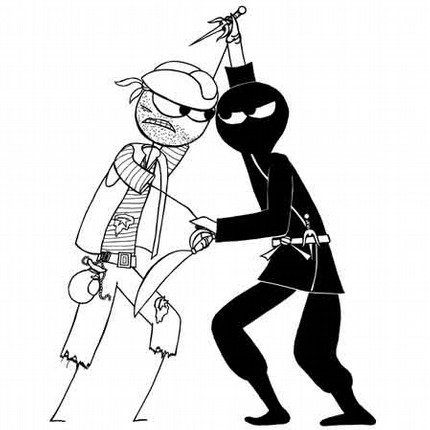
The fourth faction are the ninja of Geri, the so-called Jade Prosperity Society. The ninja are a crime syndicate of smugglers and assassins who run protection rackets even when they are not in power. The ninja are ruled by Uncle Take, a secretive man, tall, with a long face, who runs a shop of calligraphers and keeps white mice.
The fifth faction are the wushen of Geran, a monkey hengeyokai who preached the values of laughter and festivities. The city takes on a Mardi-Gras atmosphere while the monkey lords are in power (though not all of them are monkey hengeyokai). The wushen are governed, loosely, by their eldest member, Mudar. Mudar is a willowy men with a heart-shaped face. He and his priests dress in silk tunics and pantaloons, carry staves and wear monkey masks.
The sixth factions are the descendants of the slaves who constructed the city-state and the tunnel through the plateau. They are no longer slaves, and most of the time work on repairing buildings and constructing new buildings. When they are in power, however, they run rampant through the city destroying the work they had done and causing new destruction – though never to the houses of the other factions or the central tower. They are led by the half-ogre Suhaz.
|    Temang, Sohei Lvl 6: HP 20; AC 3 [16]; Save 9 (7 vs death & poisons); CL/XP 7/600; Special: Banish undead, spells (4th). Kabuto, haramaki-do, haidate, masakari, prayer beads.
|    Agchaan, Bujin Lvl 6: HP 6d6+1; AC -1 [20]; Save 11 (10 vs death & poison); CL/XP 6/400; Special: Follow through. O-yoroi, dadao, daikyu.
|    Haampi, Shugenja Lvl 5: HP 19; AC 9 [10]; Save 11 (9 vs magic); CL/XP 4/120; Special: Spells (3rd). Bo staff, spellbook.
|    Uncle Take, Ninja Lvl 7: HP 23; AC 9 [10]; Save 8 (6 vs. death & poison); CL/XP 4/120; Special: Move silently, hide in shadows, climb sheer surfaces, backstab x3, read languages. Bo staff, hankyu.
|    Mudar, Wushen Lvl 5: HP 14; AC 9 [10]; Save 10; CL/XP 5/240; Special: Spells (3rd), turn undead, xxx, xxx. Kama, prayer beads.
|    Suhaz, Half-Ogre: HP 7; AC 9 [10]; Save 16 (15 vs death, 12 vs. poison & disease); CL/XP 1/15; Special: Follow through, ogre’s ferociousness, open door on 1-4 on 1d6.


Image by jurer2, found HERE.

Mu-Pan Eastern Encounter XII

Finally finished writing all the Mu-Pan encounters over the weekend! Now I just have to clean up the rough edges, insert some game stats here and there, write the intro stuff (regions, monster encounter tables, etc) and figure out what I want to do (or need to do) about art. I’m about 90% complete with Mutant Truckers as well – finished writing up some monster stats (all re-purposed from the d20 SRD) and just need to write a few more and then drop them into encounter tables. I’ll probably do a play-through in the next few days with some folks on Google + and see if things actually work. In the meantime …

6038. Umborodom’s Abbey: There is an ancient fortress-monastery constructed here of red bricks and tall, peaked roofs of copper. The roof is covered with hundreds of tall, copper spires that attract lightning. The monastery is dedicated to Umborodom, whose hound was the thunder. The monastery is inhabited by 16 low-level sohei and their abbess, Deneg, a temperamental woman with blue-gray eyes and a powerful hatred of the Jade Empress, who quells her lovely storms and keeps her “hounds” hungry.

The “hounds” are three lightning elementals that dwell within a golden matrix that serves as the monastery’s idol. The monastery is surrounded by a village of red brick buildings inhabited by about 150 tin miners. The mines are of ancient vintage, but still producing tin and a few tourmalines and topaz each month. Tourmalines are claimed by the sohei and topaz by the empress.

The sohei of the monastery wear blue armor and carry large, steel-shod mallets.

6111. Ghost Town: These dusty hills are crossed by numerous trails, for the hills once hosted the grand city-state of Ganiz. Ganiz is now a ghost town – literally. Travelers see wisps of people walking through ghostly streets and the outlines of buildings when one squints or looks away from the sun. The buildings and people are more pronounced in the moonlight. The people move slowly and are completely unaware of the living. They are almost certainly not undead, as they are unaffected by turning and cannot be spoken to using the speak with dead spell. Likewise, they do not seem to inhabit the Ethereal Plane, for they still appear as ghostly images in that place and the Astral Plane. Sages do not know what to make of the phenomenon and prefer to ignore it and avoid the hex.

Mu-Pan Eastern Encounter XI

Still cranking away – I think I’m about 5 days away from finishing the encounters – then I have to draw some maps, write all the regional/random encounter stuff, etc. Mutant Truckers is looking pretty good as well – these two articles will make up the bulk of NOD 10. Then I just have to figure out what the heck I’m doing with NOD 11 – anyone interested in a hexcrawl set in a pseudo-Dante’s Hell?

5916. House of Clones: At the foot of the mountains there is an old manor built of wood, with domed towers and a peaked roof. The manor has extensive gardens of cherry trees, creeping junipers, roses, chrysanthemums and ponds of goldfish. The manor is home to a secret society of men and women who are clones – created by a shugenja, Jutem, as part of his plan to conquer the empire. The men and women are clones of nobles now largely deceased, aged and replaced by their sons or daughters, or removed from power with the change of imperial control.

The clones are now unable to serve their original purpose, but they are still ambitious and possessed of a desire to rule. They have thus begun the slow task of gathering an army of humanoids from the mountains, their first target being the port of Artuk.

6021. Plateau of Jackals: Much of this hex is taken up by a rugged plateau of rocky outcroppings and long grass. The plateau is surrounded by an abyssal chasm that exhales foul gases (save or suffer 1d6 points of burning damage to the lungs). In the south, there is a single wooden bridge with a 10 foot gap in its center and signs of burning – perhaps the work of a fire breathing dragon.

The plateau is hunted by three packs of jackals. Each pack contains 1d3 x 10 animals. There was once a sprawling village of grass huts in the center of the hex, but those huts have long since been burned to the ground. The village is now a series of shallow graves, many disturbed. Night encounters with ghouls (1d6+1) occur on a roll of 1-3 on 1d6. The ghouls have burrows into the earth, most of them rather small, but some networking into a series of deeper tunnels that smell of the same acrid smoke of the chasm, but without the negative effects.

The ghouls of the plateau number 30 in all. Roll treasure for them randomly as they are encountered – their burrows can also be generated randomly. They go no deeper than 3 levels, and at the bottom level there dwells their chief, an oversized brute called Myan. Myan possesses the great treasure of the plateau, a pair of +1 sode constructed of leather scales dyed black and ornamented with ivory carvings. The sode give the wearer an acid touch (1d6 damage) and likewise cause any weapon they wield in anger to drip with acid, causing an additional 1d6 damage per hit.