Monsters of Mu-Pan II

Let’s do another round of Mu-Pan monstrosities …

On a side note – I really want to commission an illustration of the shamshir (4-armed snakey dudes), but I’m having no luck contacting artists. If you’re an artist and you’re up to making some bucks, let me know. If your rates are reasonable enough, I might have a couple other commissions to go along with it.

Baku (Japanese)
Hit Dice: 10
Armor Class: 2 [17]
Attack: 2 claws (2d6), gore (2d8)
Saving Throw: 5
Special: Astral and ethereal travel, +1 or better weapon to hit, protection circle, remove curse
Move: 12
Alignment: Law
Challenge Level/XP: 12/2000

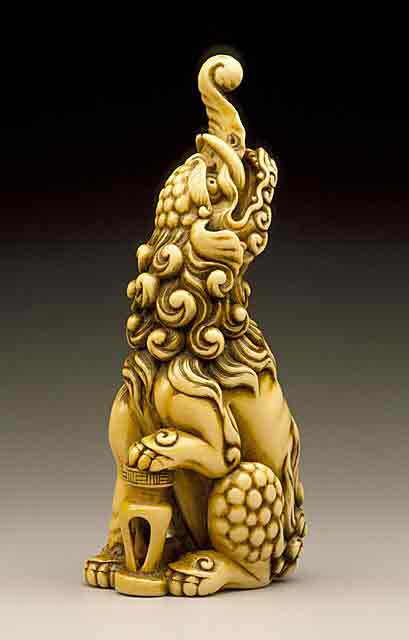
A baku is an otherworldly creature that devour dreams and nightmares. It has an elephant’s trunk and tusks, rhinoceros’ eyes, ox tail and tiger paws. They constantly project a magic circle against evil and are capable of dispelling nightmares and curses (per remove curse). Baku can travel astrally and ethereally.

Harionago – Barbed Woman (Japanese)
Hit Dice: 5
Armor Class: 6 [13]
Attack: 1d10 hair barbs (1d4)
Saving Throw: 12
Special: Animated hair, undead
Move: 12
Alignment: Chaos
Challenge Level/XP: 6/400

These frightening ghouls appear as lovely women with extremely long hair. Their hair is tipped with barbs and can be controlled by the ghoul and used to attack and grapple. Barbed women usually attack young men. When a young man is encountered, the barbed woman laughs at them. If the young man laughs back, the barbed woman attacks. Barbed women eat the people they kill.

Kamaitachi (Japanese)
Hit Dice: 4
Armor Class: 3 [16]
Attack: 3 claws (1d6)
Saving Throw: 13
Special: Knock down, surprise on 1-3 on 1d6
Move: 24
Alignment: Neutrality
Challenge Level/XP: 6/400

The kamaitachi is a bizarre monster that looks like a trio of weasels with sickle-like claws riding on a swirling wind. The monster has three “attacks”, each made by a separate weasel. The monster gets three attacks per round, and uses the first to attempt to knock its opponent prone.

Monkey Folk (Chinese)
Hit Dice: 1d6
Armor Class: 6 [13]
Attack: Bite (1d3) or weapon (1d6+1)
Saving Throw: 18
Special: High strength and dexterity
Move: 12/12 (climbing)
Alignment: Neutrality
Challenge Level/XP: B/10

Monkey folk are intelligent monkeys that dress and behave like humans. Being monkeys, they are chattery and sometimes unpredictable. Monkey folk are known for their high dexterity and strength (+1 bonuses). This strength allows them to wield weapons meant for man-sized creatures without penalty. They are expert climbers.

Large troupes of monkey folk are led by a sage (5th to 8th level shugenja). He is assisted by two apprentices (2nd or 3rd level). For every 20 monkey folk there will be a 3rd level ninja, and for every 100 a 5th level ninja. Most monkey folk wield staves or nine ring broadswords. When they wear armor, it is rarely heavier than a haramaki, but a few bodyguards will wear haramaki-do (AC 15).

Monsters of Mu-Pan I

I don’t know for certain how many of these I’ll do, but we’ll call this Part I just in case.

Bakeneko – Monster Cat (Japanese)
Hit Dice: 3
Armor Class: 6 [13]
Attack: 2 claws (1d4), bite (1d4)
Saving Throw: 14
Special: Spells
Move: 15
Alignment: Neutrality (5% are Law)
Challenge Level/XP: 5/240

Monster cats have a plethora of magical powers. Although they never appear to be anything more than a normal domestic cat, a monster cat can grow to as long as five feet in length. They have the following spell abilities: Dancing lights (3/day), ghost sound (3/day) and polymorph self (1/day). Monster cats can animate fresh corpses into zombies by jumping over them. They are also capable of walking on their hind legs. A monster cat that lives long enough has its tail split; such creatures, called forked-tails (neko-mata), have 6 HD. About 5% of monster cats are actually lawful in alignment.

Basan (Japanese)
Hit Dice: 8
Armor Class: 6 [13]
Attack: 2 scratch (1d6), peck (1d8)
Saving Throw: 8
Special: Ghostfire
Move: 12
Alignment: Neutrality
Challenge Level/XP: 9/1100

Basans are 10-foot tall roosters with brilliant plumage and fiery crests. They are capable of breathing cones of ghostfire (15 feet long, 10 feet at base) from their beaks. This ghostfire deals 3d6 points of damage, even to creatures normally immune to fire, because it burns one’s soul. Victims can make a saving throw for half damage.

Fox Woman
Hit Dice: 8+1
Armor Class: 3 [16]
Attack: Bite (1d6) or weapon (1d6)
Saving Throw: 8
Special: Alternate form, charm person, entourage, silver or magic weapons to hit
Move: 18
Alignment: Chaos or Neutrality
Challenge Level/XP: 10/1400

The fox woman is a lycanthrope than can assume the form of a silver fox, a vixen (half-fox, half-nymph) or nymph. Fox women can use the charm person spell on men at will. They dwell in lonely woodlands, accompanied by 1d4+1 charmed males who will do anything to protect their mistress. At least one male is a bujin or fighting-man of 2nd to 5th level. There is a 50% chance that another male is a bujin or fighting-man of 1st to 4th level. There is a 10% chance that one of the remaining males is a shugenja or ninja. There is a also 10% chance the fox maiden has stolen a beautiful infant girl to raise as her own.

Gashadokuro (Japanese)
Hit Dice: 5+1
Armor Class: 5 [14]
Attack: Strike (2d6)
Saving Throw: 12
Special: Decapitate, minimum damage from edged or piercing weapons, surprise on roll of 1-3 on 1d6
Move: 15
Alignment: Chaos
Challenge Level/XP: 8/800

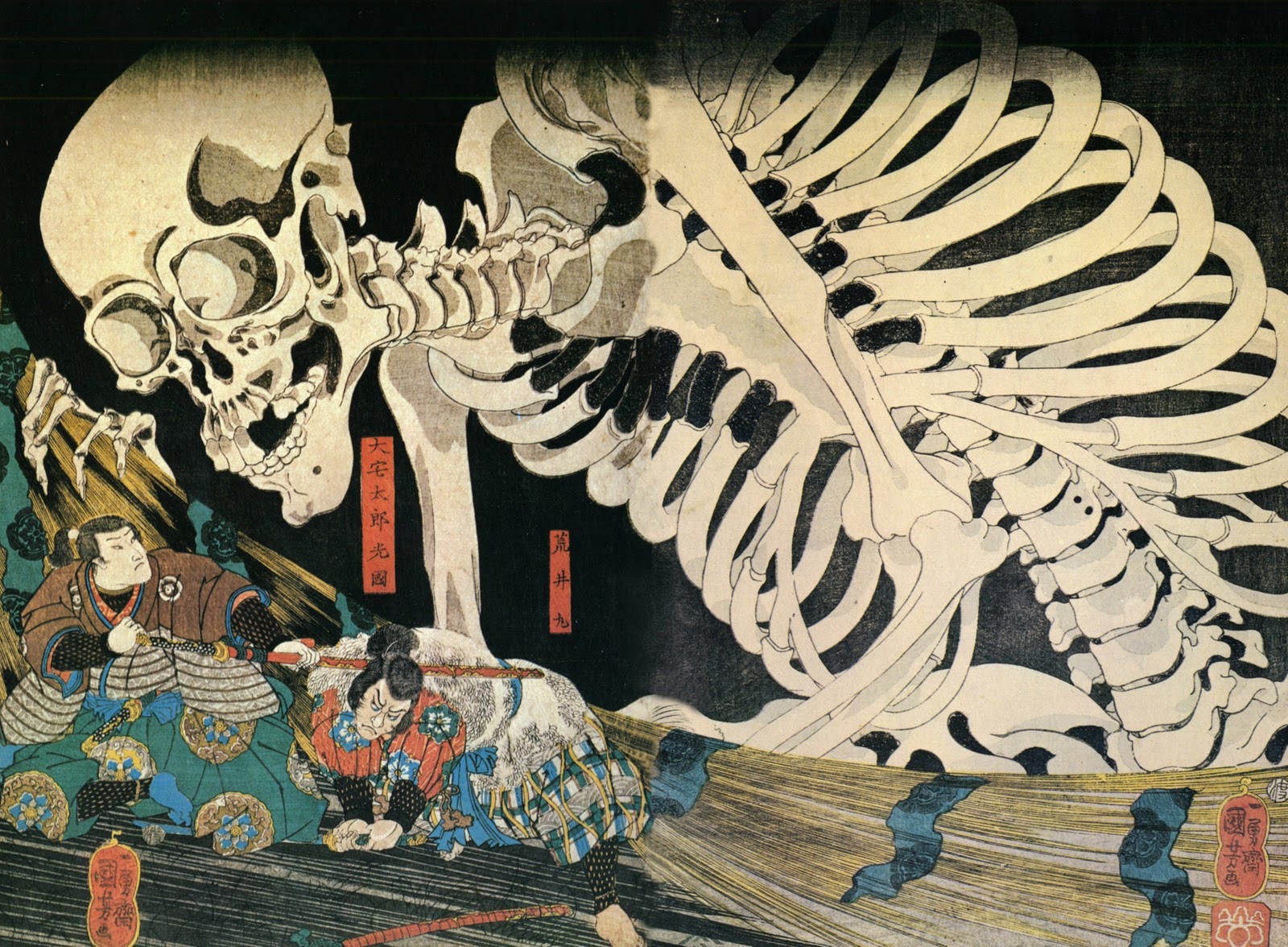
Gashadokuro are giant skeletons with a burning hunger for human flesh. They attack human beings on sight, trying to grapple them with their massive, bony fingers. If successful, the gashadokuro will attempt to bite their head off (-4 to hit, 5d6 damage) each round. Gashadokuro are created from the bones of people who have starved to death. Gashadokuro, despite being fifteen-foot-tall skeletons, are incredibly quiet and stealthy.

Hitotsumi-Kozo – One-Eyed Boy (Japanese)
Hit Dice: 3
Armor Class: 6 [13]
Attack: Weapon (1d4)
Saving Throw: 14
Special: Bad luck, frightful appearance, ray of enfeeblement, silence, true seeing
Move: 9
Alignment: Neutrality
Challenge Level/XP: 7/600

A one-eyed boy looks like a small humanoid with a single, giant eye and a long tongue. They enjoy frightening people, but despise noise. One-eyed boys are immune to illusions and can see through invisibility. Creatures with fewer than 3 HD must succeed at a saving throw to avoid fleeing from a one-eyed boy. The creatures can use the silence spell at will and can fire a ray that reduces the target’s strength to 3 for 1 hour unless the target succeeds at a saving throw. The weakness ray can be fire once every 3 rounds. Anyone viewing a one-eyed boy must succeed at a saving throw or fall under the effects of a curse for one month. One-eyed boys usually wield bo staves and slings.

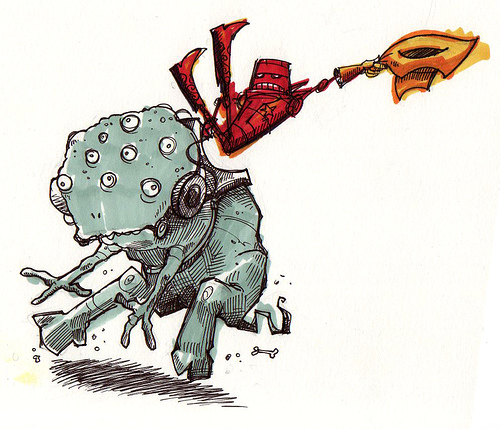
Mecha-Rust Monster

Chris Burdett just posted his interpretation of the rust monster. Posing the question “What kind of monster has a propeller tail?”, he decided it had to be some arcane-mechanical creation.

I thought it was a very creative interpretation of the original, so I had to share for the benefit of folks not following his blog (and if you’re one of them, what are you waiting for – follow him already!)

Articles I’m pondering or working on – Gods of Mu-Pan (of course), Seven Samurai (a run-down of seven famous samurai from Mu-Pan, along with some ideas on customizing the class) and the Mechanicians, a new race/class for Pars Fortuna. Stay tuned, gentle reader.

Oh – and regarding the gods of Mu-Pan. I’m thinking of two options – one is to use Ampersand-ized versions of Chinese and Japanese gods, the other is to use Ampersand-ized versions of the Gods of Pegana, with a few real gods and goddesses thrown in for good measure. Any preferences out there? Mana-Yood-Sushai just sounds right for Mu-Pan.

The Ripper …

Just finished watching my first episode of Kolchak: The Night Stalker (note, the presence of a colon in the title does not necessarily mean its a White Wolf product). I love it – which means thanks to Netflix I’ve had the chance to become a fan of two great old TV series, Doctor Who being the other.

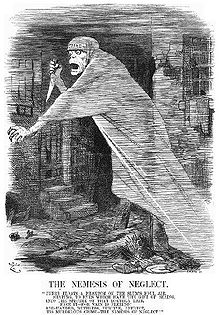
So, the first episode concerned an immortal or ghostly Jack the Ripper. For fun, here’s some stats for the ripper for both Swords and Wizardry and Mystery Men!

JACK THE RIPPER

Hit Dice: 8 (60 hp)
Armor Class: 2 [17]
Attack: 1 weapon (1d8+2)
Save: 3
Special: +1 or better weapon to hit, immunity to cold, fire and poison, double damage from electricity, magic resistance (40%), spells
Move: 15
CL/XP: 12/2000

The Ripper may once have been a man, but long ago he slipped into legend as an immortal spirit of murder. He appears every few years in a different city, murders five women and announces his murders with rhyming letters sent to the authorities and then disappears. The Ripper can use the spells at etherealness, haste, jump and levitate at will. The Ripper consumes the souls of the women he kills (and only women). With each soul consumed, he gains one additional Hit Dice, six additional hit points and improves his Armor Class by one. Once five souls have been consumed, he is able to teleport to another city to continue his murder spree, his statistics being set back to those presented above.

Retro-Engineering: Creature Catalog

Every so often I wander over to the Creature Catalog to see what they’re up to. Besides being the source of the very excellent Tome of Horrors (without which NOD would be much less interesting), the CC has converted hundreds of old school creatures for use in 3rd edition games. Many years after 3rd edition going out of print and the end to the first phase of the d20 revolution, CC is still cranking out these conversions, often of monsters I had never even heard of. Here’s their ten latest conversions retro-engineered into a more old school format.

Tirichik
Tirichiks look like a hybrid of white dragon and centipede, with two tentacles tipped by sharp spikes. Tirichiks are an apex predator of the tundra. They attack from ambush, hiding in snowdrifts or crevasses and then springing out at their prey. They can momentarily detach their skull from their spinal column, allowing them to make quick strikes from 10 ft away. These quick strikes score double damage if they hit, but attempting them lowers the tirichik’s AC by 2. Sensory organs on the beast’s tentacles give it a heightened ability to detect foes, lowering its chances to be surprised to 1 in 1d8. Tentacles can be attacked separately from the body, having an AC of 0 [19] and 2d6 hit points. They are severed when reduced to 0 hp, though severed tentacles are regrown in 2d10+10 days. Tirichiks are immune to cold and can walk on ice with no penalties to movement.

Tirichik: HD 13; AC 1 [18]; Atk 1 bite (3d6), 2 tentacles (1d6); Move 12 (B6); Save 3; CL/XP 14/2600; Special: Elongate neck, ice-walking, immune to cold.

Copyright 1992 Wizards of the Coast, Inc.
Originally found in FR 14 – The Great Glacier

Shee (Banshee Rider)
Shee look like eyeless fey maidens with long, white hair. They wear highly ornamented plate armor and ride long-maned, eyeless horses. Shee always carry long, insubstantial lances composed of shadow-stuff. Shee are undead creature. Although they appear to be a rider and mount, they are in fact a single creature, inseparable without the use of a sharp axe backed up by mighty thews. Shee can ride over any surface, including water, without penalty. Shee exist to destroy – even attacking other undead when there is nothing else to slay. A turned undead will not flee, but only turn its attention to a different creature. A shee that is struck in combat utters a terrible scream that kills the four nearest creatures unless they pass a saving throw. The scream can only be uttered once every 1d4 rounds and no more than 3 times per day. After screaming, the shee vanishes, moving magically to a distant place. Creatures that are struck by a shee and survive are treated as being blessed, but only against other undead. This effect is permanent, although it can be removed with a wish spell. A shee’s shadow lance ignores non-magical armor and, in addition to normal damage, inflicts 1d3 points of strength damage. If separated from the shee, the lance disappears and reforms in the shee’s hand the next round.

Shee: HD 9; AC -2 [21]; Atk 1 lance (1d10 + Strength drain) or 2 hooves (1d6); Move 24 (F20); Save 6; CL/XP 13/2300; Special: Death wail, shadowlance, vanish.

Copyright 1990 Wizards of the Coast, Inc.
Originally found in FA1 – Halls of the High King

Opinicus

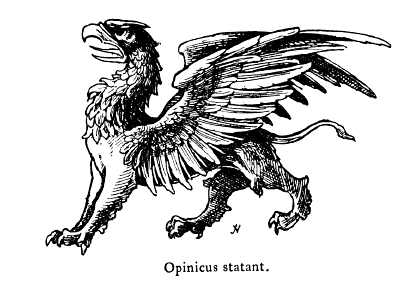
An opinicus is a griffin with the head and wings of an eagle, the body of a lion and the tail of a camel. They wander alone or in pairs in desert wastelands and are champions of They can use the following psychic powers as a 7th level psychic: Astral projection, id insinuation, mind thrust and telekinesis. They can also cast spells and turn undead as a 7th level cleric. The gaze of an opinicus flames with divine fire; all wicked creatures within 30 feet who meet this gaze suffer 2d6 damage and are blinded for 1 round (save negates blindness). The opinicus can use its gaze once every 1d4+1 rounds.

Opinicus: HD 7; AC 2 [17]; Atk 2 claws (1d6), beak (1d4); Move 20 (F30); Save 9 (8 vs. mental effects); CL/XP 10/1400; Special: Psychic powers, spells, sun sparkles, turn undead.

Copyright 1983 Wizards of the Coast, Inc.
Originally found in Monster Manual II

Netherbird
Netherbirds are the black, grotesque carion crows of Hell, serving devils and demons as messengers. They dwell on craggy moors in flocks of 3d10 birds. Their eggs are black and leathery and hatch unattended, being warmed by an inner hellfire. Netherbirds are 3 feet long and have wingspans of 6 to 7 feet. They are intelligent and can speak.

Netherbird: HD 2; AC 7 [12]; Atk 2 claws (1d4), bite (1d3); Move 6 (F24); Save 16; CL/XP 2/30; Special: Immune to fire.

Copyright 1989 Wizards of the Coast, Inc.
Originally found in FRE1 – Shadowdale

Kupuk
Kupuks look like large dogs (6′ long, 3′ tall at shoulder) with walrus-like hides, grey or yellowish fur and spiked tails.The people of the tundra and taiga use them as pack animals, for they are very loyal companions. Kupuk’s are egg-layers, like the platypus. When defending its eggs or pups, the kupuk gains a +1 bonus to hit and damage. Training a kupuk is fairly easy, taking about six weeks to teach them a trick. Kupuk young are worth 1,000 gp, and professional animal trainers charge 500 gp to train them. Kupuks can carry up to 200 pounds without losing any speed.

Kupuk: HD 5; AC 3 [16]; Atk 2 claws (1d4), bite (1d8), tail (1d12); Move 9 (S18); Save 12; CL/XP 5/240; Special: Frenzy, immune to cold.

Copyright 1992 Wizards of the Coast, Inc.
Originally found in FR 14 – The Great Glacier

Gorse
A gorse looks like a 3″ tall elf child with delicate wings. They carry small bows and swords and quivers of tiny arrows. They live under gorse bushes, and although secretive, they are friendly towards folk who bring them fruit, bread or milk. Gorse are fond of magic potions, and usually have 1d3 in their lair. Gorse have several magical abilities they can use once per day: They can create magical distractions (save or look away); magically exterminate small vermin within 20 feet (save or die); cast Mirror Image and cause thorn bushes within a 5-ft square area grow rapidly. These thorn bushes slow people moving through them to one half-speed and cause 1d3 points of damage. Gorse tip their arrows with a poison that causes confusion for 1d4 rounds unless a saving throw is passed. All gorse can cast the spell Mirror Image once per day. Once

Gorse: HD 1d2; AC 3 [16]; Atk 1 sword or bow (1 dmg); Move 3 (F12); Save 18 (16 vs. spells); CL/XP 1/15; Special: Poison, sprout, exterminate.

Copyright 1992 Wizards of the Coast, Inc.
Originally found in Dragon Magazine #180

Bramble
Brambles resemble tiny (3″ tall) elves with swarthy, wrinkled skin and long nails on its hands and feet. They wear plate armor, the back of which is covered in a brace of spines. They are among the most vicious and aggressive of the fair folk, taking delight in hunting pixies and sprites and other small fey. They can charm small animals into serving as their mounts. Brambles are fierce warriors, and charging bramble scores an additional 3 points of damage with its attacks. A brambles spines inject a poison that causes a sickened condition (-1 to all rolls) for 2d4 rounds (save applies). Once per day, they can target the wings of a small creature with a net of entangling thorns. With a successful ranged attack, the creature’s wings are bound and useless for 6d6 rounds.

Bramble: HD 1d3; AC 3 [16] or 1 2 [17] in plate armor; Atk 1 lance (1 dmg) or spines (1 dmg + poison); Move 3 (F12); Save 18 (16 vs. magic); CL/XP 1/15; Special: Poison, charm mount, spines.

Copyright 1994 Wizards of the Coast, Inc.
Originally found in Dragon Magazine #206

Behemoth (Giant Hippopotamus)
Behemoths are massive hippos (12′ long, 3 tons), capable of overturning good-sized boats. They are as aggressive and territorial as their smaller cousins.

Behemoth: HD 10; AC 3 [16]; Atk 1 bite (3d6); Move 9 (S15); Save 5; CL/XP 10/1400; Special: None.

Copyright 1983 Wizards of the Coast, Inc.
Originally found in Monster Manual II

Pseudo-undead (Template)

Pseudo-undead are living humanoids who resemble specific types of undead creatures. You can turn any humanoid into a pseudo-undead by altering its stats as follows:

– A pseudo-undead gains any claw and bite attacks of the undead creature is resembles, dealing 1d4 points of damage with its claws and 1d6 points of damage with its bite.

– Pseudo-undead can see in the dark.

– Pseudo-ghouls have a paralyzing touch (save or paralyzed for 1d3 rounds).

– Pseudo-ghasts have a paralyzing touch (see above) and are surrounded by an overwhelming stench; creatures within 10 feet must pass a saving throw or be sickened (-1 to all rolls) for 1d6+4 rounds.

-Pseudo-wights spread a disease with their touch. This fever deals 1d4 dexterity and constitution damage each day until the afflicted succeeds at a saving throw vs. disease at a -5 penalty.

– Pseudo-wraiths have physical forms, but always wear wispy shrouds or robes to obscure their bodies. They walk so lightly as to leave no trace. Their claw attacks are poisonous, causing 2d4 points of damage on a failed save.

– Pseudo-spectres have physical forms surrounded by a faint luminosity. Their claw attacks are poisonous, the poison weakening (-2 to hit and damage) a person for 1 day.

– Pseudo-vampires are like feral savages clad in the silk finery of civilization. They usually wear armor and fight with weapons. They have claw and bite attacks. Their bites cause persistent bleeding that saps a person of 1 hit point per round until staunched or magically healed. Their claws spread the “red ache”, a disease that robs a person of 1d6 points of strength each day until they succeed at a saving throw vs. disease at a -6 penalty.

Copyright 1983 Wizards of the Coast, Inc.
Originally found in Monster Manual II

Two Bad Brothers That We Know So Well

One of my favorite game mechanicians of the d20 era was Erica Balsley. She was a monster gal – did some great stuff for the Tome of Horrors and Creature Catalog and did some neat conversions for Bard Games’ old Atlantis setting. Years ago, I came across a template she wrote for the “Mephit Lord”. The mephit lord template was applied to mephits to make high-powered elemental baddies like the Steam Lord, Smoke Lord, etc. All mephit lords had an attack called a “clutch”, which tipped off their origins …

Now, I’ve long since lost track of that original template – it was on some message board somewhere – but it eventually showed up in the Book of Templates Deluxe Edition. I still have the stats for Heat Lord and Snow Lord, though, and here they are in Swords & Wizardry format.

Fire Lord: HD 12; AC -3 [22]; Atk 2 claw (1d6+4) or 1 clutch (4d6); Move 15 (Fly 24); Save 3; CL/XP 18/3800; Special: Fire mephit abilities + breath weapon (4d4), clutch, regenerate 4 hp/round, only harmed by +2 or better magic weapons.


The clutch of the Heat Lord deals 4d6 points of fire damage to living opponents, and instantly melts or incinerates any non-living, non-magical matter of man-size or smaller. Magic items are allowed a saving throw to resist this effect.
Ice Lord: HD 12; AC -3 [22]; Atk 2 claw (1d6+4) or 1 clutch (4d6); Move 15 (Fly 24); Save 3; CL/XP 18/3800; Special: Ice mephit abilities + breath weapon (4d4), clutch, regenerate 4 hp/round, only harmed by +2 or better magic weapons.
The clutch of the Snow Lord deals 4d6 points of cold damage to living opponents and instantly freezes and shatters any non-living, non-magical matter of man-size or smaller. Magic items are allowed a saving throw to resist this effect.
Mephit Lords are always accompanied by 2d6 mephits of the appropriate type. They can summon 1d6 mephits with a 75% chance of success.
The relevant mephit stats are:
Fire Mephit

A fire mephit breathes a 15-foot cone of fire that deals 1d8 damage (saving throw for half). Once per hour it can cast burning hands, and once per day it can heat metal. A fire mephit regenerates if it is touching a flame at least as large as a torch.

• Fire Mephit: HD 3; AC 2 [17]; Atk 2 claw (1d6); Move 12 (Fly 21); Save 14; CL/XP 5/240; Special: Harmed by magic weapons, breath weapon, burning hands, heat metal, regenerate, summoning.

Ice Mephit

Ice mephits breathe a 10-foot cone of ice shards that deals 1d4 damage (saving throw for half) and imposes a -2 penalty to AC and attack rolls. Once per hour an ice mephit can cast magic missile and once per day they can chill metal. An ice mephit regenerates if touching a piece of ice of or if the ambient temperature is 32°F. or below.

• Ice Mephit: HD 3; AC 1 [18]; Atk 2 claw (1d6); Move 12 (Fly 21); Save 14; CL/XP 5/240; Special: Harmed by magic weapons, breath weapon, chill metal, magic missile, regenerate, summoning.

And if you use these guys against your players, make sure you have them do the song and dance first – it will make the TPK that much more satisfying. Nobody likes to get their butt kicked by a song and dance man.

Image from Patrick Owlsley – check out his blog if you love old cartoons!

An Owlbear for Every Occaision

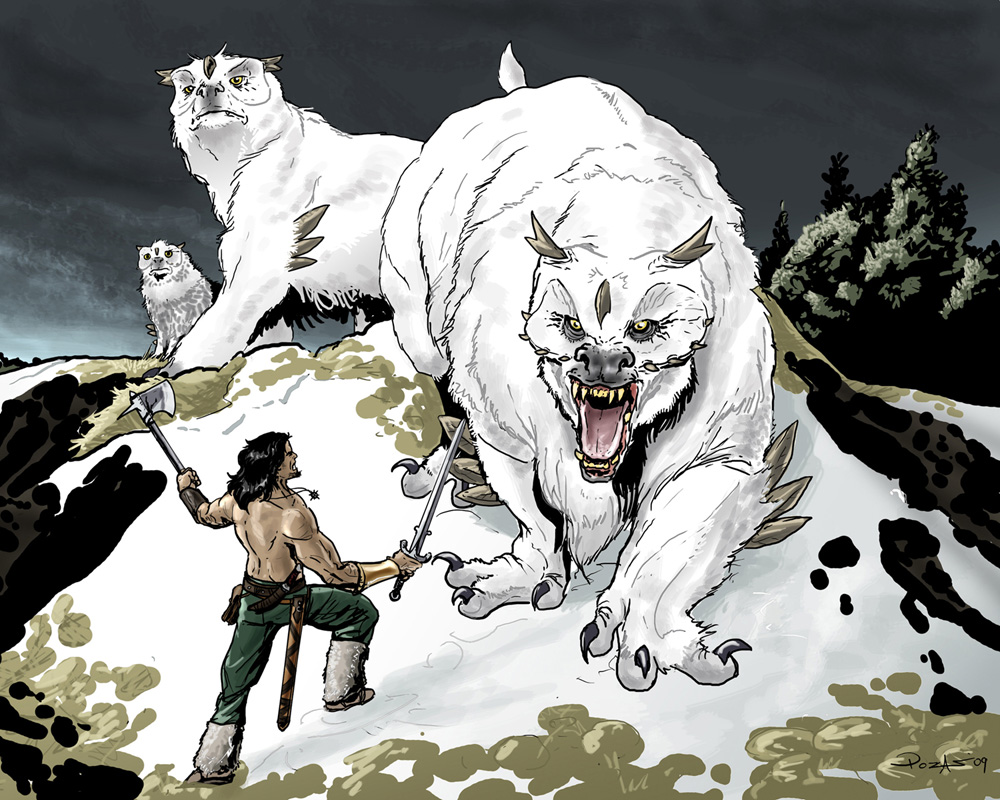
My last post involved a mama owlbear and her cubs. When you write as many encounters as I do, you have to provide some descriptive text to make one monster encounter feel different from another. In the case of the owlbear, I described it as a “great horned owlbear”, meaning it has the head and face of a great horned owl on a bear’s body. With that in mind, I present this little table to roll up a random owlbear. Just roll d12 for a body and d12 for a head. If you want to know what a sun bear or elf owl look like, use Google or Wikipedia.
 
Roll
Head
Body
1
Barn Owl (M)
Black Bear (S)
2
Boreal Owl (S)
Blue Bear (M)
3
Eagle Owl (L)
Brown Bear (M)
4
Elf Owl (S)
Cave Bear (L)
5
Fearful Owl (M)
Grizzly Bear (L)
6
Great Horned Owl (L)
Moon Bear (M)
7
Laughing Owl (M)
Panda Bear (M)
8
Pygmy Owl (S)
Polar Bear (L)
9
Screech Owl (S)
Shortfaced Bear (L)
10
Snow Owl (L)
Sloth Bear (S)
11
Spectacled Owl (M)
Spectacled Bear (S)
12
Stygian Owl (M)
Sun Bear (S)
 

The S, M and L refer to the size of the animal. For every “L” in an owlbear, it gains +1 hit dice and +1 to damage. For every “S” in an owlbear, it loses 1 hit dice and +1 to Armor Class.

And since owlbears are supposed to be magical hybrids, feel free to throw some weird special abilities in. Maybe a stygian owl-headed owlbear has some demonic powers, or a sun bear-bodied owlbear can radiate intense light. Surprise your players – they love that kind of thing. Really.

Image is by Claudio Pozas for the Owlbear challenge run by the ArtOrder blog.

The Unpublishables

Just about every GM / DM / Referee, over the course of their “career” stats up monsters inspired by sources protected by that pesky little thing called copyright – monsters you can feel free to use in your home campaign, but that you couldn’t otherwise put in print. Well, instead of throwing out the next installment of the Gods of the Motherlands (which I will do tomorrow), I’m presenting my thinly veiled (one so thinly veiled that its positively indecent, and a couple others working entirely in the raw) unpublishables. Since I can’t publish them, I didn’t go to the trouble of making them particularly compliant with any set of rules.

Astral Knight
Astral knights patrol the dimensions fighting evil, particularly the undead. Their armor increases their strength and gives them the ability to fly. It can seal itself from the depredations of hostile environments, allowing the astral knight to ignore extreme heat and cold and the absence of air. An astral knight can seal its systems for a full day, after which they must resupply their air supply.

Astral knights have three special items they can employ, all of them being stored in a pocket dimension (per a bag of holding). All of an astral knight’s weapons resemble guns. The “neutralizer” fires a ray that acts as a dismissal spell against extra-planar and undead creatures or deals 2d6 points of energy damage against normal corporeal creatures. The analyzer fires a ray that acts as both a true seeing and know alignment spell. The universal translator acts as a tongues spell when held by an astral knight and pointed at a speaking creature. Astral knights speak the cosmic tongue and their alignment language.

If stripped of their armor, they lose all access to their abilities and are merely humanoid warriors with 2 hit dice.

| Astral Knight: HD 4+1; AC -1 [20]; Atk 1 slam (1d6) or 1 weapon; Move 12 (Fly 24); Save 13; CL/XP 5/240; Special: Sealed system, special items.

Astral Ninja
Astral ninjas are descended from elves enslaved millenia ago by the alien thulids, from whom they long ago won their freedom. They are related to the astral pirates, with whom they war constantly. The astral ninjas are governed by an undying wizard-king. Being monastic creatures, the astral ninjas use very plain weapons and equipment. They maintain a few strongholds in the material plane. These squat towers are quite strong, being constructed of adamantine and housing 500 ninja. Astral ninjas are rarely encountered outside their strongholds.

Outside of their strongholds, most astral ninjas are encountered in groups of four. Each of these groups will consist of two astral ninjas, a warlock and a sensei.

Temporary lairs will contain 1d10+10 astral ninjas, 8 warlocks, and 2 sensei. Astral ninja lairs will contain 2d8 magic items.

Silver Sword: Silver swords are powerful magical weapons employed by both astral ninjas and astral pirates. Silver swords are +3 two-handed swords, which, if used astrally, have a 20% chance each round of cutting the silver cord (does not affect psionicists using psychic defense). The supreme leaders use more powerful versions of this weapon that are +5, vorpal, and can cut the silver cords of psychics using psychic defense.

| Astral Ninja: HD 2; AC 6 [13]; Atk 1 two-handed sword (2d6); Move 15; Save 16; CL/XP 4/120; Special: 50% magic resistance, powers (mind blast, obfuscation, telekinesis).

| Warlock: HD 5; AC 4 [15]; Atk 1 two-handed sword (2d6); Move 15; Save 13; CL/XP 9/1100; Special: 50% MR, powers (mind blast, obfuscation, telekinesis), 5th level magic-user.

| Sensei: HD 7; AC 4 [15]; Atk 1 silver sword +3 (2d6+3); Move 15; Save 9; CL/XP 11/1700; Special: 50% MR, powers (mind blast, obfuscation, telekinesis), 7th level magic-user.

| Wizard-King: HD 16 (120 hp); AC -6 [25]; Atk 2 vorpal sword (4d6); Move 15; Save 3; CL/XP 24/5600; Special: 75% magic resistance, powers (mind blast, obfuscation, telekinesis), 16th level magic-user.

Astral Pirate
Astral pirates are descended from elves enslaved millenia ago by the alien thulids, from whom they long ago won their freedom. They are related to the astral ninjas, with whom they war constantly. Astral pirates have levels in fighter, wizard or fighter/wizard. They are led by a lich-queen. Astral pirates use baroque armor (splint mail +4) and weapons. They dwell in mighty castles on the astral plane or aboard astral pirate ships. All astral pirates are capable of manifesting themselves in the material plane at will.

Outside of their castles, most astral pirates are encountered in groups of four. Each of these groups will consist of two astral pirates, one sergeant, and a knight.

Temporary lairs and astral pirate ships will contain 1d10+9 astral pirates, 10 mates and 5 captains. Material plane lairs will contains 1d6+4 magic items.

Astral pirates have a special pact with a group of large red dragons. In return for food and shelter, the dragons allow the astral pirates to use them as mounts; each can carry anywhere from 5 to 11 pirates depending on their size.

Silver Sword: Silver swords are powerful magical weapons employed by both astral ninjas and astral pirates. Silver swords are +3 two-handed swords, which, if used astrally, have a 20% chance each round of cutting the silver cord. The supreme leaders use more powerful versions of this weapon that are +5, vorpal.

| Astral Pirate: HD 2; AC -1 [20]; Atk 1 two-handed sword (2d6); Move 15 (100 on astral plane); Save 16; CL/XP 3/60; Special: Powers (astral travel, mind blast, telekinesis).

| Mate: HD 5; AC -1 [20]; Atk 1 two-handed sword +1 (2d6+2); Move 15 (100 on astral plane); Save 12; CL/XP 6/400; Special: Powers (astral travel, mind blast, telekinesis).

| Captain: HD 8; AC -3 [22]; Atk 1 silver sword +3 (3d6); Move 15 (100 on astral plane); Save 8; CL/XP 11/1700; Special: Powers (astral travel, mind blast, telekinesis), protection from good, cause disease 1/week.

| Lich-Queen: HD 12; AC 1 [18]; Atk 1 vorpal sword +5 (3d6); Move 15 (100 on astral plane); Save 3; CL/XP 2/30; Special: Powers (astral travel, mind blast, telekinesis), 12th level magic-user.

Dolok
The doloks are a race of aberrations dedicated to the destruction of all life. Outside of their vehicles they look like anemic little squids and can be destroyed easily with a single weapon blow. Inside their vehicles, however, they are quite formidable. Doloks will instantly attack any living creature that crosses their path, shouting endlessly “destroy, destroy” in their high, metallic voices. They attack by firing a disintegration ray from their forward cannons. This ray works like the spell disintegrate. Doloks are immune to fear and other mind-affecting effects. Doloks can be encountered on the astral plane.

| Dolok: HD 6; AC -6 [25]; Atk 1 ray (disintegration); Move 6 (Fly 9); Save 11; CL/XP 10/1400; Special: Disintegrate ray, fearless.

Dune Raider
Beyond the shallow, black seas of the moon and the fungus forests that crowd those shores are the windswept lunar deserts. These deserts are frightening places; broiling hot in the daytime and freezing cold in the night, with fine, choking gray dust. The beasts who dwell in these deserts are fierce survivors, and the barbarians who hunt them are doubly fierce.

The dune raiders live in small hunting tribes. They live their entire lives wrapped in silk scarves and thick, woolen cloaks meant to protect their skin from the elements and their lungs from the lunar dust. They are built as humans, but have deep, croaking voices that betray their alien nature.

Dune raiders use massive woolly lunar caterpillars (10 HD, AC 18, MV 30, SV P, slam for 2d6 damage) as their mounts. These creatures are larger than elephants and exist in their caterpillar stage for over one hundred years before burrowing in the sand and emerging a century later as a lunar moth. The caterpillars are mostly inoffensive creatures capable of sustaining themselves on nutrients sifted from the sand. The raiders use their silk to weave their scarves and their hair to weave robes and cloaks.

Dune raiders use morningstars made of petrified seedpods found beneath the lunar sand. They are as effective as metal weapons and affect lycanthropes as though they were silver. The light weight of the seeds allow their wielders a +1 bonus to initiative.

They also arm themselves with ancient jezzails (rifles), the origin of which are unknown. An explosive powder and metallic balls are procured somewhere in the desert. These weapons have a range of 200 ft and deal 2-16 damage with a successful hit. They jam about one time in ten, and have such an explosive recoil that their firers must succeed at a CC 15 strength check to avoid being knocked prone.

The most important device the dune raiders have at their disposal, and another mystery for wizards, is their breathing tube. Anchored beneath their necks, these copper tubes sneak beneath their scarves and provide them with cool, dust-free air.

All dune raiders have the abilities of 3rd level rangers. If the dune raiders have a religion it is unknown, and spell casters have never been encountered among their kind. They make their way hunting the sands and raiding small settlements. On rare occasions they will seek to trade their silk and wool for seemingly worthless baubles; they are especially fond of glass and copper.

| Dune Raider: HD 3; AC 7 [12]; Atk 1 weapon (1d6); Move 12; Save 14; CL/XP 4/120; Special: 3rd level rangers.

Jeep
Jeeps are rare, dog-like creatures that live in Africa. They originate in the 4th dimension, and their extraplanar origin gives them the ability to use the following spells at will: dimension door, ethereal jaunt and spider climb. Jeeps eat only orchids, making them expensive pets to keep. They never tell lies and are loyal to the end.

“A Jeep is an animal living in a three dimensional world-in this case our world- but really belonging to a fourth dimensional world. Here’s what happened. A number of Jeep life cells were somehow forced through the dimensional barrier into our world. They combined at a favorable time with free life cells of the African Hooey Hound. The electrical vibrations of the Hooey Hound cell and the foreign cell were the same. They were kindred cells. In fact, all things are to some extent are relative, whether they be of this or some other world, now you see. The extremely favorable conditions of germination in Africa caused a fusion of these life cells. So the uniting of kindred cells caused a transmutation. The result, a mysterious strange animal.”

| Jeep: HD 2; AC 5 [14]; Atk 1 bite (1d4); Move 15; Save 16; CL/XP 3/60; Special: Dimension door, ethereal jaunt, spider climb.

Klingen
Klingens are a race of humanoids with swarthy skin and black hair. Both males and females have hard features and thick eyebrows. Male klingens usually cultivate beards and mustachios. Although klingens live in a highly regimented society, one should not come to the conclusion that they are lawful. Advancement in their society is through murder of those of higher rank, and klingen groups are rife with factions and double-dealing. All klingen warriors (and most civilians) can back attack for double damage.

Klingen warriors wear mail shirts and wield ray guns and daggers. Their ray guns fire a beam that can either inflict 2-12 points of subdual damage or 2-12 points of lethal damage. For every 10 klingen warriors there is a commander with 2 HD and the ability to back attack for triple damage. For every 5 commanders there is a 3 HD lieutenant with the death attack ability of a 2nd level assassin. For every 5 lieutenants there is a 5 HD captain with the death attack ability of a 4th level assassin.

Klingen player characters have a +1 bonus to wisdom and a -1 penalty to charisma. Typical classes are assassin, fighter and rogue. Klingen player characters have a +1 bonus to making rear and flank attacks, over and above normal bonuses. Their thick skin and unique physiology gives them a +1 bonus to armor class.

| Klingen: HD 1+1; AC 4 [15]; Atk 1 weapon (1d4) or 1 ray gun (2d6); Move 12; Save 17; CL/XP 2/30; Special: Backstab x2.

| Commander: HD 2+1; AC 4 [15]; Atk 1 weapon (1d4) or 1 ray gun (2d6); Move 12; Save 16; CL/XP 3/60; Special: Backstab x3.

| Lieutenant: HD 3+1; AC 4 [15]; Atk 1 weapon (1d4) or 1 ray gun (2d6); Move 12; Save 14; CL/XP 4/120; Special: Death attack as assassin.

| Captain: HD 5+1; AC 4 [15]; Atk 1 weapon (1d4) or 1 ray gun (2d6); Move 12; Save 12; CL/XP 6/400; Special: Death attack as assassin.
Pars Fortuna Monster Preview!

To celebrate commissioning some awesome monster drawings from Michael Stewart and finally finishing statting all the monsters in the game, I present this preview of a few of the beasts …

Armadillox
Armor Class: 5 [14]
Hit Dice: 4
Attacks: Claws and bite (2d6)
Saving Throw: 13
Special: Surprise on 1-2 on 1d6 due to camouflage
Move: 9
Challenge Level/XP: 4/120

These giant armadillos are the size of oxen, and are used in much the same way by the natives of Fortuna’s Wheel. In the wild, they dig massive burrows and feed on giant insects and other small creatures.

Environment: Grasslands and wastelands.

Moggie (Giant Cat)
Armor Class: 7 [12]
Hit Dice: 1
Attacks: Claw and bite (1d4)
Saving Throw: 17
Special: Surprise on 1-2 on 1d6
Move: 12
Challenge Level/XP: 1/15

Moggies are giant versions of the normal cat. They are the size of mastiffs and retain their specie’s love of stalking and playing with their prey.

Environment: Any.

Gongthrottle (Bronze Ape)

Armor Class: 2 [17]
Hit Dice: 6+6
Attacks: 2 Fists (1d6+2)
Saving Throw: 11
Special: Gong, throttle
Move: 9
Challenge Level/XP: 7/600

Gongthrottles are castings of gorillas in black bronze, with seams at their neck, arm and leg joints. They are hollow, and animated by wrath. A gongthrottle can pound its chest, sending out reverberations like those of a bell being struck. Creatues within 30 feet suffer 1d6 damage from the sonic waves and must pass a saving throw or be deafened for 24 hours. Gongthrottles who successfully attack with both fists grab their opponent and throttle them each round for an automatic 2d6 points of damage.

Hamazak

Armor Class: 5 [14]
Hit Dice: 3+1
Attacks: Greatsword or Axe (2d6) or net
Saving Throw: 14
Special: None
Move: 12
Challenge Level/XP: 3/60

Hamazaks are amazons with scarlet skin and blue-black hair that they wax into bizarre shapes reminiscent of horns or complex antlers. They are tall and athletic, and excellent warriors. Hamazak warriors wear light armor in the form of hides and furs and wield two-handed swords and axes as well as heavy crossbows that fire bundled nets. Treat attacks from these weapons as ranged grapple attacks. Hamazaks are slavers and plunderers. Bands of hamazaks are accompanied by 2d6 slaves (random folk, usually commoners).

Environment: Highland, Montane, Wasteland and Sub-terranean environments.

Qward

Armor Class: 3 [16]
Hit Dice: 2+1
Attacks: Flail (1d6)
Saving Throw: 16
Special: Misfortune
Move: 12
Challenge Level/XP: 3/60

Qwards look like stocky, humanoid felines with long, indigo fur and long, braided mustachios. Warriors wield heavy flails and wear medium armor in the form of brigandines.

Qwards are a nomadic people who ride giant beetles across the grasslands, alternately trading and raiding with the people they meet. They live in groups called clowders that are ruled by their females, or mollies. Mollies have shorter, grayer fur than the males and can afflict people with an eyebite (saving throw or suffer -1d4 penalty to all d20 rolls for the rest of the day). Qwards sometimes serve powerful adventurers as bodyguards. Mollies wear necklaces of tiny skulls.

Environment: Grasslands, in beetle caravans.

Zwunker

Armor Class: 6 [13]
Hit Dice: 1
Attacks: Rod (1d6)
Saving Throw: 16 (14 vs. magic)
Special: Control winds, magic resistance 10%
Move: 9
Challenge Level/XP: 2/30

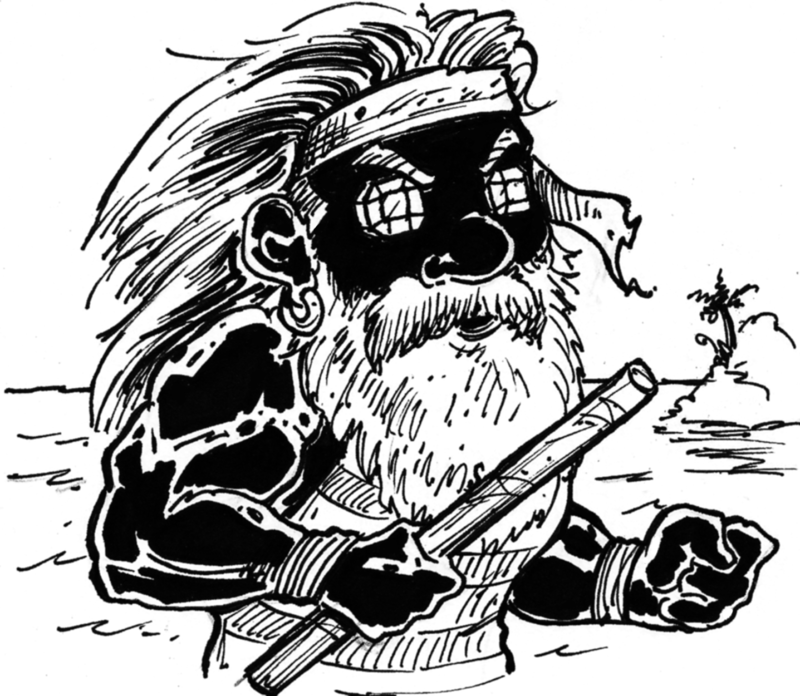
Zwunkers are black-skinned dwarves with long manes of gold hair. Their eyes are faceted and resemble yellow diamonds. Zwunkers live in caves overlooking the sea. They are skilled sailors and love nothing more than to feel the wind whipping through their manes. Once per day, a zwunker can control the winds, either calming them or whipping them into a frenzy. Zwunkers are highly resistant to magic, and their presence actually absorbs magical energy. Essentially, a zwunker’s magic resistance applies to all magical effects within 30 feet of of the zwunker. Zwunkers wear elaborate leather armor and carry steel rods for weapons.

Environment: Caves overlooking the sea.

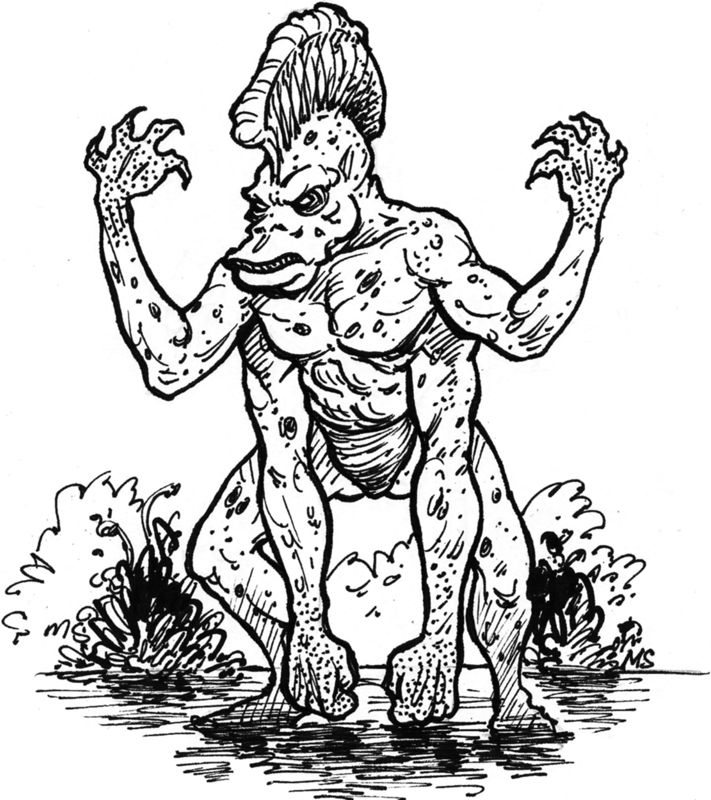
Kruk

Armor Class: 5 [14]
Hit Dice: 6+2
Attacks: 4 slams (1d6)
Saving Throw: 11
Special: None
Move: 12
Challenge Level/XP: 7/600

Kruks are a tall race of white-skinned humanoids with four arms, duck-like bills and tall, bony crests which allow them to communicate over long distances with rumbling roars. They dwell in subterranean caverns they have carved into perfect squares, with each cavern connected to others via underground canals filled with oily water. Kruks trade humanoid flesh and slaves in markets well attended by other creatures of the underworld.

Environment: Underground

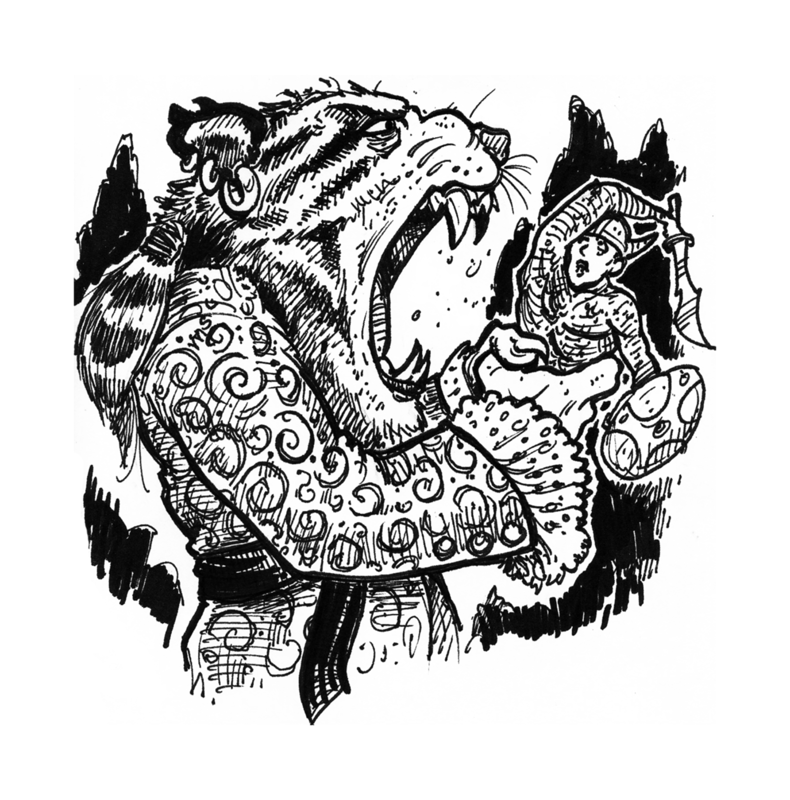
Rhuup

Armor Class: 4 [15]
Hit Dice: 5
Attacks: Bite (2d6)
Saving Throw: 11
Special: Swallow whole
Move: 12
Challenge Level/XP: 6/400

Rhuups are portly, furred ogres with a tigerish cast. They adore jewelry and fine clothes, and are remarkably intelligent (i.e. can answer questions about obscure lore with a successful saving throw). Rhuups have large, cavernous maws with frightful teeth, and their jaws are hinged in such a way that they can swallow people whole. Any bite that kills an opponent can also be assumed to result in the person being swallowed. This heals the Rhuup of 2d6 points of damage, and allows them to absorb the knowledge of the person swallowed.

Environment: Subterranean

Fiend
Armor Class: 3 [16]
Hit Dice: 3+3
Attacks: Claw and bite (1d6) or weapon (1d6+2)
Saving Throw: 14
Special: Half damage from non-magic weapons, immune to cold, fire and poison
Move: 12
Challenge Level/XP: 6/400

Fiends are the foot soldiers of the demonic dimensions. They have a highly variable appearance, often taking forms so bizarre and unnerving that the mind reels. Each fiend has one of the following aspects (roll 1d4).

Random Aspect
1 Scaly, covered in matted fur, scabby: Improve AC to 1 [18]
2 Horns, tusks, spines, spikes, serrated limbs: Improve bite/claw damage by +2
3 Special Attack (see below)
4 Spell Ability (see below)

Random Special Attack
1 Venomous: Poisonous bite, save or 2d6 damage
2 Vomit acid on opponent: 1d6 damage and armor bonus reduced by 1
3 Belch fire in 10-ft cone: 2d6 damage
4 Sulpherous Blast forms a 20-ft diameter circle; those within suffer a -2 penalty to hit and 1d3 damage each round

Random Magical Ability
1-2 Random level 1 spell, use once per day
3 Random level 1 spell, use once per round
4 Random level 2 spell, use once per day
5 Random level 2 spell, use once per round
6 Random level 3 spell, use once per day

Mulling Over Monsters

I’ve been mulling over monsters for PARS FORTUNA the last couple of days – creating stats but also trying to figure out where they fit in to the larger scheme of “killing things and taking their stuff”. For most fantasy role-playing games, right back to the first, monsters were drawn from mythology, folklore and fantasy literature – you have the basic concept and you just apply some stats. As monsters are added, they slowly fill in some “ability gaps” – i.e. we have a monster that can hit, but maybe we need one that can hit AND is immune to fire. With PARS FORTUNA, the process is a bit different. The monster concepts come from random generators, but the stats do not, so right from the start I’m trying to figure out where a given monster fits in as far as how powerful it is, how it endangers the PCs and where it lives. And, of course, you want to do this in such a way that the beasties don’t just seem to have been stacked and sorted in a spreadsheet – you want them to live and inspire (probably too lofty a word, but it will work for now) and make the game experience enjoyable (I won’t say “fun” or the heavens may split and the hand of Raggi* may descend to smite me verily).

To my thinking, there are four classes of opponents in most RPGs

Muscle – Your basic creature who kills you with weapons, sometimes a claw or slam, usually roughly humanoid, few (if any) special abilities – in other words (and to use Swords and Wizardry terminology) the Hit Dice and Challenge Level are usually the same. The main different between these creatures is the Hit Dice and maybe Armor Class and Damage – usually all ascending at the same time. This category has the axis of kobold – goblin – orc – hobgoblin – gnoll – bugbear – ogre, but also probably includes the minotaur and the simpler giants.

Magic – The flip side of muscle, these guys have a big gap between Hit Dice and Challenge Level because they are really all about the special powers, which are usually magical. What these creatures lack in hit points they need to make up with difficulty in hitting, or the fights will be too short to be interesting. Here, you can file the dryads, nymphs and pixies, among others.

Monsters – This category is just muscle + special attacks and defenses, physical and magical. The focus here is usually on a physical attack form (constriction, poison, etc) or maybe a magical power (petrification, confusion). They often have multiple attack forms, so unlike the muscle, which challenge with numbers, the monsters can take on a full party by themselves. These things can be humanoid, but usually are not. Things like chimeras, giant spiders and gorgons.

Ubers – The uber category combines Muscle and Magic, and are often used as BBEGs in the game – rakshasas, hags, ogre magi, storm giants, etc.

Of course, no little system, especially one so hastily assembled, can fit everything in, but it seems to me that these are the four bases to cover in monster design – you want a good variety of these kinds of monsters at different power levels to scale with the adventurers as they gain levels and keep each dungeon from being exactly the same – i.e. you would like multiple “monsters” for “mid-level” play, so the mid-levels of every dungeon don’t play quite the same.

So – is there anything I am missing here? Let me know.

Art from Robots and Monsters, a charity website that produces custom-made drawings to help others. Check it out.

* I think I’m adding a St. Iggar to NOD. Or maybe St. I-Gar.