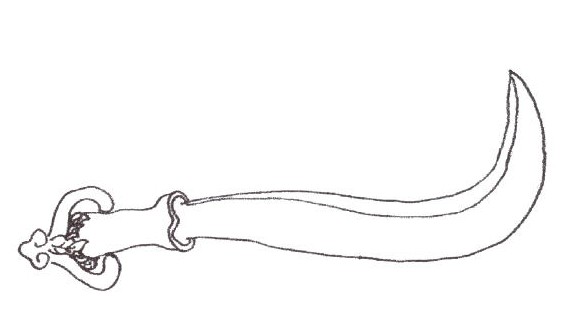
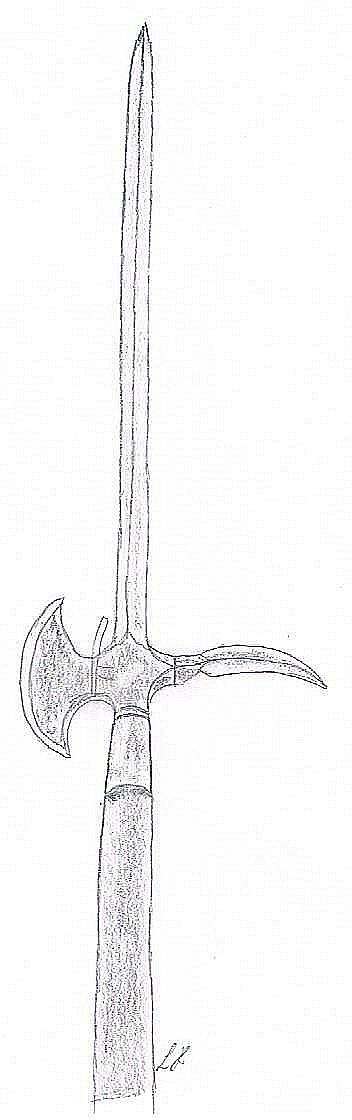
Weapons are a big part of fantasy role-playing. They are one of the main tools of the trade for vanquishing evil (or promoting it) and relieving the local humanoids of their ill-gotten booty. They are also a way that many players, especially those playing fighting-men, define their characters – archer vs. swordsman vs. weird guy who specializes in the flail.
The thousand variations on the D&D theme have introduced a few different ways of handling weapons in play, from the concept of everything doing 1d6 damage in 0E, to the introduction of variable damage types soon after, to 3rd edition’s variable damage + variable critical hit ranges + variable critical hit multipliers + different sizes + different weapon types (bludgeoning/piercing/slashing and simple/martial/exotic). AD&D’s weapon speeds and weapon vs. AC table was another way of differentiating one weapon from another, i.e. making one’s choice of weapon (or weapons) an element that could influence success or failure in the course of play.
Now, I like lots of variety in gaming, but I also like enough simplicity that I can store the vital game rules in my brain so that I rarely have to consult a book or table during play. For this reason, my desire for weapon differentiation extends about as far as variable weapon damage. Unfortunately, as a person who likes to write game material, and as an ardent devotee of Clark Ashton Smith, describing NPCs with maces and short swords can get a bit boring. So, using my dog-eared copy of Palladium’s Compendium of Weapons & Armor (one of the essential books for a Referee or a write of game material in my humble opinion), I present this handy list of weapon synonyms, along with their region of origination or most common use. The weapon types are based on Moldvay’s Red Book.
Axe, Battle (1d8)
• Africa – Elephant Axe
• Ancient – Khetan (Egypt)
• Central & South America – Maquahuilt
• East Asia – Masakari
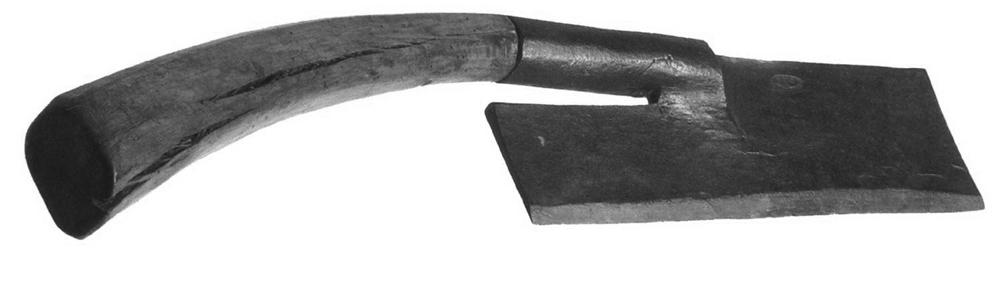
• Europe – Bearded Axe, Bipennis, Doloire (wagoner’s axe), Sparte, Taber Axe, Toporok, Tuagh-gatha, Woodsman’s Axe
• India – Bullova, Tabar, Tabar-i-zin, Tungi, Venmuroo
• Near East – Ay-Balta
• Oceania – Balestarius, Head Axe, Udlimau
Axe, Hand (1d6) – includes sickles (*)
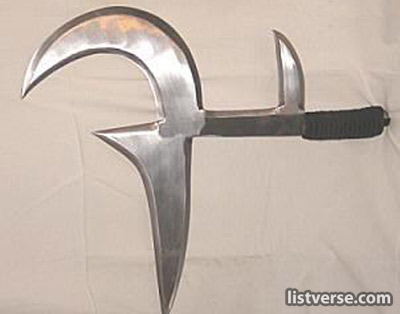
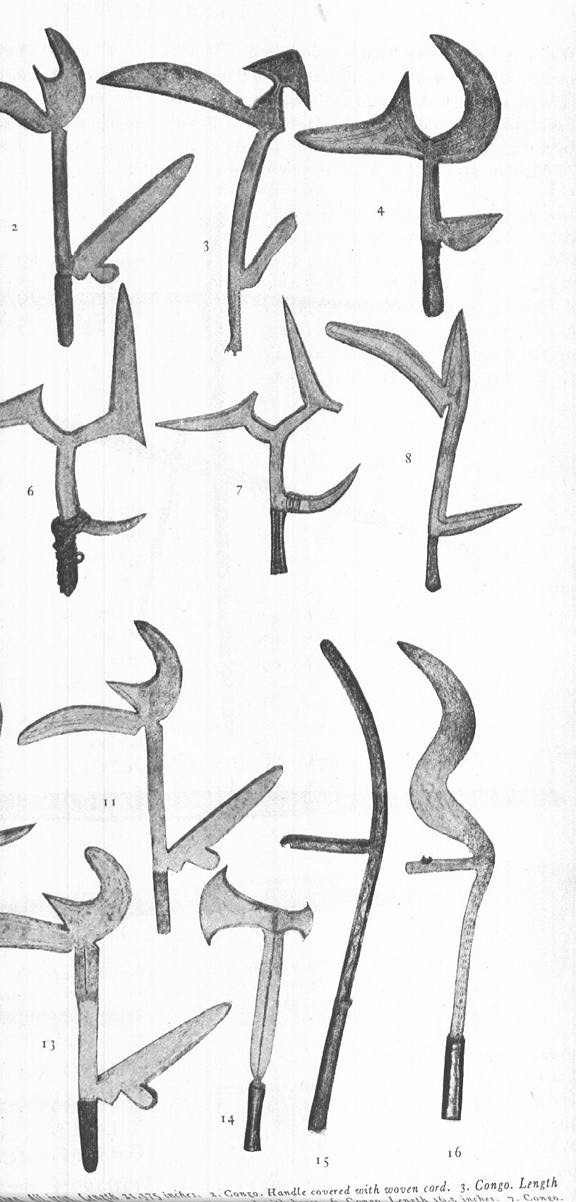
• Africa – Hunga-Munga, Shoka, Silepe, Throwing Irons
• Ancient – Dolabra (Rome), Epsilon Axe (Mid-East), Eye Axe (Mid-East), Novacula (Cyprus *)
• East Asia – Biliong, Kama, Kusarigama* (attached to chain), Toki Kakauroa, Piau
• Europe – Francisca, Hatchet, Hurlbat, Miner’s Axe, Thin Axe, Thrusting Axe
• India – Ancus (elephant goad), Galraki, Hoolurge, Kharga (sacrificial axe), Kodelly, Tongia
• Near East – Balta
• North America – Tomahawk
• Oceania – Adze, Arit, Kadjo, Kapak, Keerli, Pareh
Club (1d4) – includes staves (#)and throwing sticks (*)
• Africa – Kasrullah, Kerrie *, Rungu, Trombash *
• Ancient – Aclys * (Rome), Lisan (Egypt), Naboot # (Egypt)
• Central & South America – Iverapena, Macana, Pagaya
• East Asia – Bo #, Bokken (practice sword), Jo #, Kiam Bokiam, Tonfa, Yoribo
• Europe – Baculus, Blackjack, Cudgel, Maul, Quarterstaff #, Sap, Slung Shot, Truncheon
• India – Kirasoo *, Mugdar
• North America – Ga-Ne-U-Ga-O-Dus-Ha (deer antler club), I-Wata-Jinga, Ja-Dagna, Ja-Weti, Mandehi-Liguje (coup stick), Tiglun
• Oceania – Baggoro, Bi-Teran, Boomerang *, Burrong, Dowak *, Flat Club, Hoeroa, Japurunga, Kangaroo Rat *, Kauah, Kotiate, Kujerong, Kunnin *, Leonile, Lil-lil, Mabobo, Mattina, Meeri, Merai (jade club), Muragugna, Nil-li, Pacho, Pahu, Patu, Periperiu, Potu, Purijimala, Quirriang-an-wun, Rang-kwan, Sapakana, Siwalapa, Tambara, Tabutje, Tawha-tewha, Tindil, U’u, Ulas *, Uramata *, Waddy, Wahaika, Wairbi, Wakerti, Watilikri *, Weerba, Wirka, Yeamberren
Dagger (1d4) – includes knives
• Africa – Baswa Knife, Bracelet Dagger, Fantail Dagger, Forked Tongue Dagger, Kummya, Mongwanga, Pokwe, Telek
• Ancient – Falx Supina (Rome), Harpe (Greece), Parazonium (Greco-Roman), Pugio (Rome), Sica (Rome)
• East Asia – Aikuchi, Bade-Bade, Chopper, Dhaw, Golok, Hamidashi, Heyazashi, Himogatana, Koshigatana, Kozuka, Kubikiri, Kujungi, Kwaiken, Mit, Parang Ginah, Parang Latok, Piso Raut, Pisu Tonkeng, Raut, Rentjong, Siangkam (not quite a dagger, but close enough), Tanto, Tjaluk, To-Su
• Europe – Batardeau, Bodkin, Cinquedea, Chuchillo (folding knife), Degan, Dirk, Estradoit, Kidney Dagger, Main Gauche, Mattucashlass, Misercorde, Pavade, Poignard, Roundel Dagger, Scramasax, Sgain Dubh, Skain, Stiletto, Triple Dagger
• India – Bank, Buhj, Bich’hua, Bundi Katari, Chilanum, Choora, Haladie, Horn Dagger, Jamdhar Katari, Karoula, Katar, Katar Bank, Katar Dorlicaneh, Kukri, Maushtika, Moplah, Paiscush, Para-i-tutti, Phurbu, Pichangatti, Piha Kaetta, Saffdara, Vinchu
• Middle East – Acinaces. Bichaq, Chaqu (folding knife), Jambiya, Kard, Khanjar, Khanjarli, Khyber Knife, Kindjal, Pesh-Kabz, Qama, Zirah Bouk (mail-piercer)
• Oceania – Badik, Barong, Bayu, Beladau, Bolo, Buyu Knife, Halasan, Karambit, Kira (quartz blade), Kudi, Kudi Tranchang, Labo Belange, Lading, Mandaya Knife, Pahua (wooden), Palitai, Panabas, Sabit, Sadoep, Sakin, Sekin, Sewar, Tadji, Todo, Tolaki, Tombak Lada, Tuba,Wedong
Flail (1d6) – includes whips (*)
• Ancient – Flagellum (Rome)
• East Asia – Hui-Tho (bladed rope), Kau Sin Ke, Manriki Gusari, Nagegama, Nunchaku, Rante, Rante Ber Gangedug
• Europe – Ball & Chain, Bullwhip *, Cat-o’ Nine Tails *, Goupillon, Mace & Chain, Military Flail
• India – Binnol, Cumber-Jung
• Middle East – Kamcha *
• Oceania – Chemeti *, Kalus *, Laingtjat, Petjut *, Sa Tjat Koen
Mace (1d6)
• East Asia: Gunsen (war fan), Kiseru (smoking pipe), Suang-tu-fung
• Europe – Bouzdykan, Bulawa, Chacing Staff, Fist Mace, Hercules Club, Holy Water Sprinkler, Massuelle, Mazule, Pernat, Plombee, Quadrelle, Schestopjor
• India – Dhara, Gargaz, Garz, Lohangi, Ox Mace, Quoit, Shashpar, Sickle Mace, Singa (steel boomerang)
• Middle East – Dabus, Ox Mace
• Oceania – Gada, Ganjing
Pole Arm (1d10) – includes pikes (#) and tridents (*)
• Ancient – Romphaea (Greece), Sarissa # (Greece), Taru # (Egypt)
• Central & South America – Tepoztopilli
• East Asia – Bisento, Fang, Feruzue (concealed ball & chain), Half Moon, Hwa-Kek, Kongo-Zue, Kumade, Lajatang, Magari Yari *, Nagamaki, O-No, Shakujo Yari (concealed blade), Shinobi-Zue (concealed blade), Sjang Sutai, Shakwo, Sode Garami (sleeve tangler), Tetsubo, Tiger Trident *, Toyak
• Europe – Ahlspiess #, Awl Pike #, Beaked Axe, Berdysh/Berdiche, Bill, Bohemian Ear-Spoon, Brandestoc, Chauves-Spuris, Couteau De Breche, Croc, Falcastra, Falx, Feather Staff (concealed blades), Fuscina *, Glaive, Godendag, Halberd, Half Moon, Hippe, Jedburg Axe, Korseke, Langue De Boeuf (Ox Tongue), Lochaber Axe, Lucerne Hammer, Military Fork, Partizan, Pike #, Pitch Fork, Plancon A Picot #, Pole Axe, Runka, Sabre Halberd, Scaling Fork, Scorpion, Scythe, Spetum, Spontoon #, Sudis #, Voulge
• India – Khatramkha *, Kunjukdan, Saintie #, Veecharoval
• Oceania – Arbir, Hani
Spear (1d6) – includes lances (*) and throwing spears (#)
• Africa – Assegai #, Golo, Hinyuan, Kikuki, Koveh, Mahee, Makrigga, Mkuki, Sudanese Spear
• Ancient – Angon # (Franks), Cateia # (Celtic), Contus * (Rome), Egchos (Greece), Falarica (Rome), Framea * (Franks), Gaesom # (Rome), Jaculum # (Rome), Javelin # (Greece), Pelta # (Greece), Pilum # (Rome), Saunion # (Samnites), Spiculum # (Rome)
• East Asia – Dung, Hak, Hoko, Jarid #, Kamayari, Ken Shoka #, Lembing, Makura Yari, Nageyari #, Su Yari, Te Yari #, Yari
• Europe – Boar Spear, Harpoon #, Lance *, Lance-Ague * #, Pill, Zegaye *
• India – Ballam, Barchi, Bhala *, Garvo, Khundli P’Hansi, Laange, Patisthayana, Sang * (from camel back), Sangu, Shail *, Tschehouta
• Middle East – Rummh, Sinan
• North America – Ja-Mandehi *, Kahsita #
• Oceania – Aunurgith, Bandang, Bilari #, Budiak, Chimbane, Do-War, Enhero, Fal-Feg, Granggang, Irpull, Jiboru, Kadji, Kannai, Kapun, Kiero, Koy-Yung, Kujolio, Kuyan, Larna-Pe, Mon-Gil Mon-Gil, Mongile, Mu-Rungal, Nandum, Nerau, Pillara, Pouwhenua (also a staff), Sangkoh, Sanokat, Shanen Kopaton, Siligis #, Simbilan #, Sligi, Tahr Ruan, Tao, Tawok, Telempang, Tirrer, Tjunkuletti, To-Ono, Tombak, Tumpuling, Wainian, Wallunka, Wi Valli
Sword (1d8)
• Africa – Flyssa, Kaskara, Seme, Shotel
• Ancient – Spatha (Rome)
• East Asia – Dha, Dukn, Han Dachi, Katana, Sondang, Tashi
• Europe – Broadsword, Colichemarde, Craquemarte, Estoc, Falchion, Fleuret, Foil, Halstatt Sword, Karabela, Longsword, Pappenheimer, Rapier, Reiterpallasch, Sauschwerter (boar sword), Schiavona, Schnepfer, Spadroon, Tuck, Verdun
• India – Abbasi, Ahir, Dao, Firangi, Fish Spine Sword, Goliah, Gupti, Halab, Kastane, Katti Talwar, Khanda, Nagan, Pata, Pattisa, Pulouar, Ram Da’o, Sapola, Sirohi, Sosunpattah, Sultani, Talwar, Tegha
• Middle East – Karabela, Killj, Pala, Quaddara, Saif, Scimitar, Shamshir, Shashqa, Zulf-I-Khar
• Oceania – Campilan, Isau, Jumgheerdha, Pakayun, Peudeueng, Sikim Gala
Sword, Short (1d6)
• Africa – Babanga, Manople, Takouba, Wasa
• Ancient – Carp’s Tongue Sword (Europe), Gladius (Rome), Herebra (Phoenicia), Kledyv (Wales), Kopsh (Egypt), Machera (Greece), Sapara (Assyria), Seax (Anglo-Saxon), Xiphos (Greece)
• East Asia – Ama-Goi-Ken, Kamashimo Zashi, Ken, Kenuki Gata Tachi, Klewang, Luris Pedang, Ninjato, Opi, Pedang, Pira, Senangkas Bedok, Wakizashi
• Europe – Backsword, Badelaire, Baselard, Bilbo, Braquemar, Coustil A Croc, Cutlass, Dusack, Kantschar, Katzbalger, Palache, Sabre, Small Sword, Straight Sword
• India – Alamani , Ayda Katti, Kapee Dha, Kora, Shah Nawaz Khani, Surai, Zafar Takieh
• Middle East – Chereb, Goddara, Sassanid Sword, Yatagan
• Oceania – Beledah, Chundrick, Kris, Lopu, Manpau, Mentok, Perang Bedak, Parang Nabur, Parang Pandit, Piso Podang, Talibon, Tapak Kudak, Thinin
Sword, Two-Handed (1d10)
• Ancient – Dacian Falx (Celts, Germans)
• East Asia – Beheading Sword, No Dachi
• Europe – Bastard Sword, Claymore, Espadon, Executioner’s Sword, Flamberge, Zweihander
• India – Mel Puhah Bemoh
• Oceania – Dalwel
War Hammer (1d6) – includes picks (*)
• Europe – Bec-de-Corbin, Bisacuta *, Crowbill, Dagger Mace, Horseman’s Hammer, Martel de Fer, Oncin *, Tschekan Hammer
• India – Lohar *, Sabar *, Zaghnal *
• North America – Taavish
A few things I noticed while compiling this list …
Axes loom large in every culture. I’m no expert in weapon making, but my understanding is that axes only require a small strip of really good steel for their edge, so they’re much cheaper to make and maintain than swords.
Africa has some really cool axes, especially the throwing axes.
A band of kshatriyas armed with cumber-jungs sounds cooler than a band of fighting-men with flails. I would run away from both, but the former would make for a more picaresque story if I survived the experience.
Any player who was cool enough to have his fighter specialize with the Bohemian ear-spoon would probably get a secret +1 to all saving throws from me.
Oceania is club central, and if you set a game there you would probably want to differentiate the different types of clubs with different damage values.
East Asia has a penchant for making weapons that defy categories. The jitte, for example, is a parrying weapon that might be considered a mace. Other parrying weapons are the sai, segu, tau-kiev and tjabang. The adarga is a Moorish combination of spear and shield used for parrying. Europe had similar weapons; the lantern shield and sword shield. The bagh nakh, or “tiger claw” is an Indian weapon that is a bar with four or five curved blades sticking from it. Entangling or capturing weapons incude the bolas, lasso/lariat and catch pole (or mancatcher). I might do a post on exotic, strange weapons at a later date.
Daggers are ubiquitous. I’m convinced that every NPC you ever deal with should have a dagger on his or her person.

 Land of Nod