 |
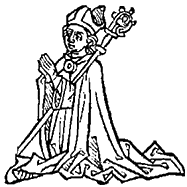
| A Chaotic cardinal for a Lawful church? Read on … |
Since the beginning of the game, clerics (and anti-clerics and druids) have largely been defined by their alignment. In the context of the early game, this made sense. Clerics were based on a combination of Van Helsing the vampire hunter and the religious knights of the crusades. That clerics must be Lawful was logical when you considered that they were based on adherents of a moral religion.
Note – I’m not going to get in a discussion here about the morality of the medieval Christian church. What I mean to convey is the idea that while Jews, Christians and Muslims believe that God created the universe and has some measure of control over nature (i.e. he can control the weather and such), they put their focus on his code of rules (thou shall not kill, etc.). Clerics of God, therefore, should be defined by their alignment.
Almost as soon as the game was written, though, it started to change. Clerics stopped being tied to an implicit Medieval Christianity and instead were tied to polytheistic deities, most of them just anthropomorphized forces of nature. Rather than the pseudo-Templars and Hospitalers that seem to have been intended under the original rules, we got clerics of Thor and Loki. Since Thor was Chaotic Good (if my memory of the Deities & Demigods/Legends & Lore book), his clerics needed to be Chaotic Good as well, which meant they needed to be “crusaders” for enlightened freedom. The Thor of mythology, however, did not seem particularly concerned with moral concepts. He was a personification of thunder and lightning, and, if anything, a ready and eager foe of the giants (i.e. natural calamities). It should have made more sense to use druids as the priests of all the nature deities, but they became saddled with the concept of True Neutrality. Ultimately, several unrelated systems were mashed together to make something that was mostly fun, but also didn’t make much sense.
How about a different concept for clerics? One that keep the basic rules in place (and hopefully the fun), but changes with the whys and wherefores and takes the focus for clerics away from alignment, and puts it back on casting spells in armor and pounding heads with maces.
Clerics, like magic-users, are spellcasters. The universe they inhabit has physical laws that can be broken with magic spells. In other words, the supernatural in thus universe is natural – it’s just a nature with processes that are beyond most mortals. The universe also has gods, goddesses and other divine beings. Maybe they created the universe, maybe they just have a secret knowledge of how it works. Either way, clerics join their cults and learn how to perform rituals that can alter the fabric of reality in ways the gods and goddesses are willing to allow.
Think of the universe as the internet, and clerics as people who have been given passwords to systems by the owners/creators of those systems, as a bank gives a customer a password that allows the customer to access her account information and perform other allowed functions. Because clerics are given this access in exchange for performing the necessary rituals and living by the rules of their temple or order or brotherhood, they have more time to spend on learning to fight than magic-users.
Magic-users are the hackers of the universe. They alter the fabric of reality without anyone’s permission, and it’s not easy. They have to learn the code of the gods and hijack it. This forces them to spend all their time figuring out how to get things done, and gives them little time left over for learning to fight. It also allows them a much wider array of powers than the clerics (though they still haven’t figured out how to hack into the healing spells).
Clerics in this scheme are not champions of an alignment, but champions of their cult/church/temple/brotherhood/etc. They represent their little faction in the very dangerous fantasy worlds in which they live, just as fighters serve kings and thieves serve their guilds. The name of the game is survival and power. In this scheme we do not need to tie the god of thunder to a particular alignment. He has a cult of followers whose existence allows him to play games in the cosmos (think of the scene in Jason and the Argonauts with the gods moving mortals around like chess pieces) or who just brag about how awesome he is. In return for their service he lets them alter reality on his terms. Within this cult, there can be clerics of any alignment, so long as they advance his agenda. In fact, the god of thunder might not even pay much attention to the cult. Maybe he gave his “passwords” to somebody long ago, and they passed the knowledge down to those who would serve them loyally.
Alignments in this sort of universe are not warring cosmic factions (a rather heady concept when you consider that the game is mostly made up of swashbuckling adventures and puzzle solving in a quest for money and experience/power), but rather the personal codes if men and women that determine how they interact with the world.
Clerics of Thor can be lawful, neutral or chaotic. The lawful clerics like to stick up for the little guy, the neutrals serve their order loyally to stay in good with their masters, and the chaotics try to get away with as much as possible without being expelled. This would endow these invented religious organizations a bit more color and intrigue. The lawfuls and chaotics within the cult don’t quite trust each other, and each works to control the cult because they fear the other faction, but they aren’t necessarily at each others throats all the time. The lawful heads of the cult might even understand that the chaotic clerics have their value in the organization, doing things they might shy away from, but which are necessary to advance the cult’s goals in the world.
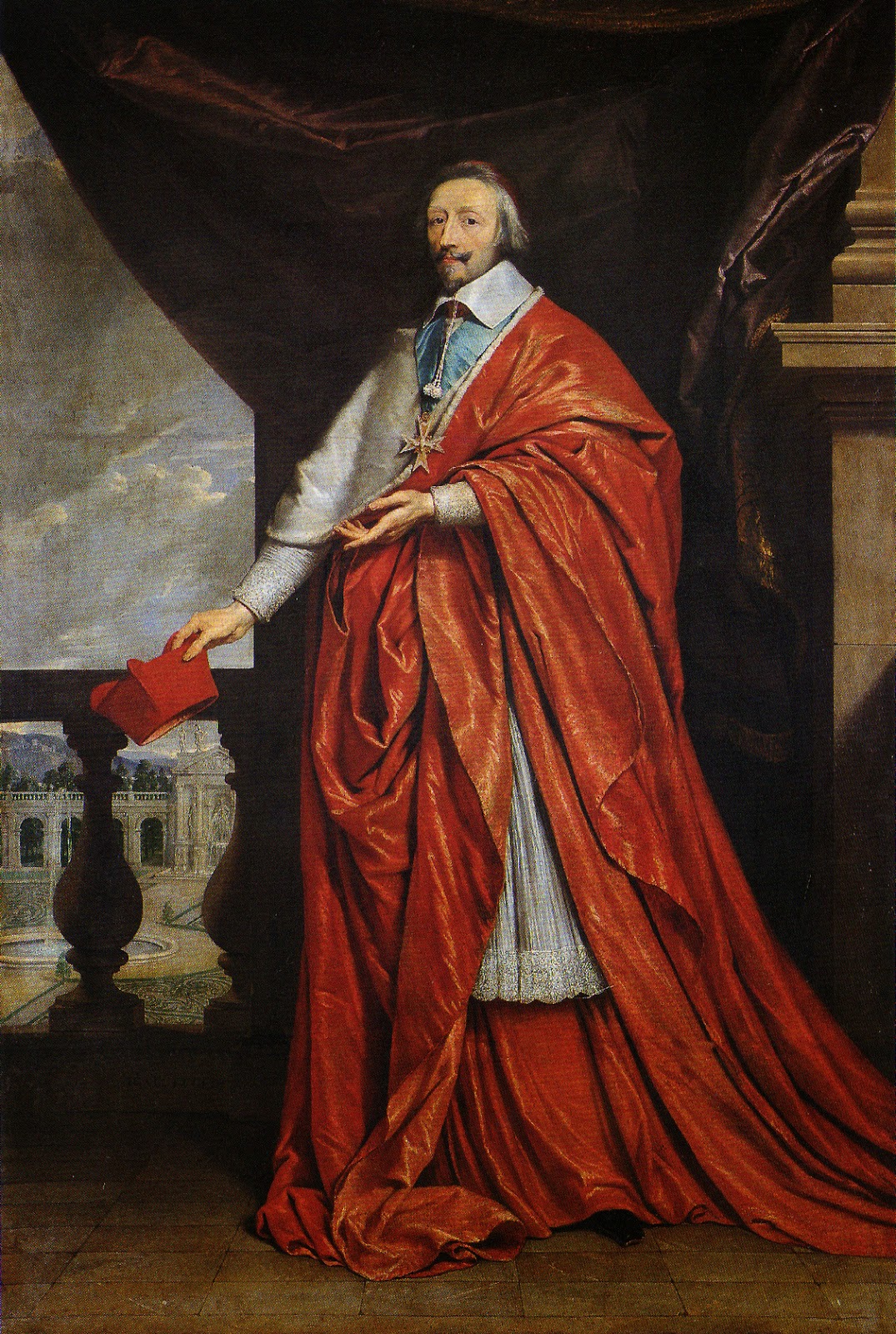
A deity that does represent or espouse a moral or immoral concept might, of course, restrict his or her clerics to a particular alignment. A deity of charity would want his clerics to be charitable – this would make chaotic clerics a bit tricky. Likewise, a god of trickery would want his clerics to be tricky – this might not work well for lawful sorts. Then again, consider Cardinal Richelieu – a member in good-standing of an ostensibly lawful church, and a terrible villain if most accounts are to be believed.
I guess this is a conception of alignment and clerics that would only fit in well in a Robert E Howard-style fantasy world, where the name of the game is power. It certainly wouldn’t be to every player’s taste, but it should please some players or at least prove entertaining for a while to veteran players. At a minimum, it could free clerics in the game from being forced into the role of do-gooder or do-badder, and instead make them more enjoyable to play.




 Land of Nod