Inspiring Churches and Undersea Gardens

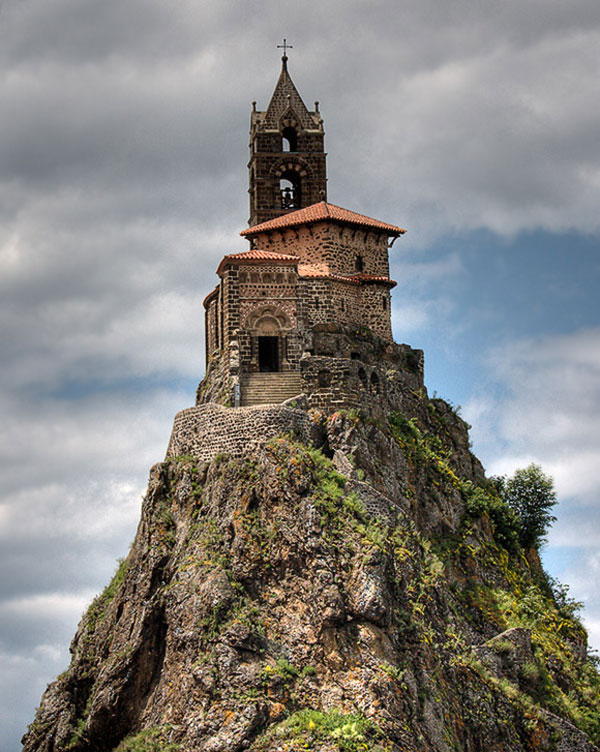
Visit this site for photos of 50 amazing churches – good inspiration for those who need to erect a few astounding temples to forgotten gods in their sandbox.

Visit this site for photos of undersea gardens in Asia – good inspiration for those who have dedicated themselves to treating the aquatic portions of their sandboxes the same as they treat their non-aquatic ones (what the heck was I thinking?)

And visit my site later today for my first downloadable issue of NOD. I hope. It’s going to be a long day.

On Urban Adventures – Part Four

Manorial Villages
City-states are surrounded by a patchwork of manorial villages. About 15 percent of a city-state’s manorial villages are held by the prince, 60 percent by aristocrats and 25 percent by the church.

Each manorial village consists of a manor (often a castle) and approximately 4 hamlets. Each village is 1,500 acres in size and supports a lord, his family and retainers and about 1,200 peasants. Each manor is expected to provide one knight, one sergeant and eight men-at-arms for service in the prince’s army. Each manor also contributes 12 peasant militia wearing padded armor and armed with spears. Each manor is considered a parish and is served by a parish priest.

Upon approaching a manor, a party of adventurers should be challenged by the manor’s lord and his sergeant (or by the sergeant and a few men-at-arms). They ask the adventurers their business, do their best to assess whether they pose a threat (and deal with that threat if necessary) and may charge them a toll. Since manors are approximately 1 to 3 miles apart, a party will pay many tolls while traveling through civilization.

Near a settlement, 95% of lords will be human nobles with no class. The remainder will either be low-level heirs of name level (i.e. level 9 and up) adventurers or actual name level adventurers.

Manorial villages do not have inns or taverns. Instead, one might lodge with a yeoman or the lord of the manor. The divine laws of Jove demand such hospitality be shown and the traditions of chivalry dictate that lords show hospitality to fellow knights. In place of taverns, peasants open their homes to customers when they finish brewing a batch of ale, cider or wine.

Events
In some cases, a Referee will want to use the city-state as a place for PCs to relax, heal and purchase supplies. Other times, a Referee will make visiting the city-state more memorable by introducing drama and conflict. In such cases, you might choose one of the following events.

Disaster
The city is going through a drought or flood. Food prices are 5 times higher than normal and people are starving.

Vistas: Citizens wailing in the streets, dead bodies littering the streets, hungry men and women boiling shoe leather and grass, a distinct lack of livestock, rats everywhere, priests in sack-cloth imploring the gods for deliverance

Fire
The city is ablaze. It will burn for several days unless put out by a strong rain or magic.

Vistas: A thick column of smoke rising into the sky, the screams of the injured, the wail of displaced peasants mourning the loss of life and property, fire brigades, lines of men, women and children conveying buckets of water from wells, fountains and the nearest body of water, a fine ash covering everything, homeless folk camped outside the city, clerics attending to the wounded and heartbroken, pick pockets working the crowds

Peasant Revolt
The peasants are rioting and executing nobles and merchants because they’re fed up with their lot in life.

Vistas: Bands of 3d6 angry club-wielding peasants, aristocratic heads on pikes, burning buildings, looted shops that would normally be frequented by peasants, an exodus of carriages, noblemen disguised as women trying to escape, knights putting peasants to the sword, rabble rousers being tortured or burned at the stake.

Plague
The city-state is infected by a plague. PCs must make constitution saves each day to avoid fatigue and 1d6 points of damage. Alternately, the city is dealing with a plague of spawn-creating undead (see random encounters).

Vistas: Hundreds of coughing, retching people, corpses littering the streets, priests doing their best to fight the demonic infection, censor-bearers, masked doctors, carts piled high with dead bodies, mass graves being dug outside the city, nobles fleeing the city-state for their manors

Shortage
The city is going through a shortage of the first thing an adventurer tries to purchase, with the prices ten times higher than normal and then only available from the black market (i.e. den of thieves).

Vistas: Smugglers traveling by night, men shouting offers in the streets, closed shutters and barred doors, mobs of citizens converging on shops

Siege
The city is under siege by a rival city or by the local barbarians. Assume from one to four times as many attackers as defenders. Siege engines are present (or, in the case of some barbarians, siege beasts or giants).

Vistas: Bands of mercenaries raiding the countryside for food, columns of smoke rising to the heavens, loud speeches rallying the troops, the crack of boulders hitting fortifications, displaced peasants begging by the roadside, the colorful pavilions of the besieging captains.

Tournament
The city is in the midst of a tournament. There will be jousting, melee and archery contests as well as feasting and dancing. There may also be athletic competitions and team sports. Clerics of Minerva and Hercules will be on hand to manage the proceedings. A champion for each of the events (level 6 to 12) should be generated.

Vistas: Strolling minstrels and jongleurs, peddlers selling trinkets and bits of roasted meat and vegetables, colorful pavilions and banners, processions of knights in gleaming armor, the crack of lance on shield, the roar of the crowd.

Random Encounters
While monsters are more common in the wilderness than in civilization, they can also be encountered in a myriad of forms. Assume a 1 in 6 chance of a challenging encounter every time the adventurers turn a corner, with that chance doubled at night to 2 in 6. Roll 1d12 to determine the level of NPCs encountered in this manner.

Daytime Encounters
1-1. Assassins (1d6)
1-2. Bards (1d6)
1-3. Clerics (1d6)
1-4. Doppelganger, in human guise
2-1. Giant flies (2d6)
2-2. Giant rats (3d6)
2-3. Illusionist, playing the charlatan
2-4. Magic-users (1d6) or psychics (1d6)
3-1. Men-at-arms (2d6) or fighting-men (1d6)
3-2. Moneylender with 1d6 men-at-arms
3-3. Noble procession* or paladin
3-4. Sailors (2d6) or barbarians (1d6)
4-1. Students (2d6), drunk and disorderly
4-2. Tax Collector and 1d6 men-at-arms
4-3. Thieves (1d6)
4-4. Wererats (2d6), in human guise

Night Encounters
1-1. Assassins (1d6)
1-2. Clerics (1d6), chaotic cultists
1-3. Doppelganger
1-4. Flesh golem, berserk
2-1. Ghouls (2d6)
2-2. Giant flies (2d6)
2-3. Giant rats (3d6)
2-4. Magic-users (1d6) or psychics (1d6)
3-1. Men-at-arms (2d6) or fighting-men (1d6)
3-2. Sailors (2d6) or barbarians (1d6)
3-3. Spectres (1d6)
3-4. Students (2d6), drunk and disorderly
4-1. Succubus
4-2. Thieves (1d6)
4-3. Vampire
4-4. Wererats (2d6), in human guise

* A noble procession consists of a nobleman and his wife in some sort of conveyance, anything from a sedan chair to a carriage. They are accompanied by 1d6+6 heavily armed and armored men-at-arms, a similarly equipped sergeant, and servants as needed.

On Urban Adventures – Part Three

Taxes
Taxes have been the bane of mankind since the dawn of civilization. Taxes can take many forms in a medieval milieu. Taxes that only apply to the citizens of a city-state are not covered here.

Tolls: Tolls are charged on most rural roads by the communities tasked with maintaining said road. These tolls will usually amount to about a single silver piece if traversing the domain of a city-state. Entering a city-state’s walls will cost about 1 gp per foot or 2 gp per wheel. Thus a man riding a horse that is pulling a wagon would have to a toll of 12 gp.

Tithes: The medieval church expected everyone to pay one tenth of their income to the church. For players who draw some or all of their power from the divine, this be more like 10 gp per level per month in sacrifices. For other adventurers, you might require they pay a tithe in order to enjoy the benefits of divine spells (i.e. pay up or no healing).

Money Changing: This is not technically a tax, since it isn’t levied by the government. None-the-less, changing from one metal to another or from metal to gem will usually carry with it a 10% surcharge.

Civic Organizations

Colleges
A college is an association of priests under the leadership of a high priest or pontiff. The college, with the monarch’s blessing, appoints the heads of the city-state’s temples and enforces ecclesiastic law. These concepts may seem more appropriate to a monotheistic faith based on the medieval Christian church than to a fantasy polytheistic system, but they are based on the system used in pagan Rome that was later adopted by the early Christian church.

The Roman college of priests had several responsibilities, including regulation of the divine spell casting, consecration of temples and sacred places, regulation of the calendar, administration of the law relating to burials and adoptions, superintendence of marriages and maintenance of historic archives and keeping a list of judges and recording the minutes of their courts.

Rome had a greater college of 13 priests of local gods and a lesser college of 15 priests of foreign gods.

Towns have one or two temples, each staffed by a priest and 20 to 30 clergy. Cities have from 8 to 12 temples representing the chief deities of the local pantheon. A metropolis has 30 to 40 temples dedicated to major and minor members of the local pantheon and popular deities of foreign pantheons.

The largest temple in a city-state is dedicated to its patron deity. The city’s high priest (a cleric or druid of level 5 to 8 or a sage with the same spell casting ability) is a devotee of the city’s patron deity and a former adventurer elevated to his position by the city-state’s college of priests. Lawful and neutral temples sell holy water, but not potions.

Most city-states also have one or more cults dedicated to demon princes, arch-devils or elder gods. A cult consists of a level 3 to 12 cleric, 1d4 level 1 clerics and several lay members (peasants, artisans, nobles, etc).

Companies
Merchants are organized into chartered companies. They get the right to trade in return for their monarch getting a percentage of their earnings. Merchant companies have many investors that never leave the city-state, as well as merchant-adventurers who venture out on ship or caravan to actually trade (see traders above). Merchant companies consist of 2d6 merchant adventurers of level 3 to 12.

Merchant companies provide their members with a strong box for the storage of valuables for free and to non-members for a fee. They maintain alms-houses, fund vocational schools and support churches dedicated to their patron deity. They are usually granted monopolies by the crown; this may be a monopoly on a particular trade or a particular geographic area. Many colonial companies mint their own coinage. They are usually required to fly their city-state’s flag, use only ships built in their city-state and pay a percentage on each shipment to the crown. Company rules might dictate that members may not belong to other companies, members must pay a fee to join (upwards of 10 gp) and members will not break the rules under which the company is chartered.

Notable merchant companies include the Merchants of the Staple, Mystery and Company of Merchant Adventurers for the Discovery of Regions, Dominions, Islands and Places Unknown, Society of Merchant Venturers, Fellowship of English Merchants for the Discovery of New Trades and the Honorable East India Company.

Guilds
City-states organize their artisans into chartered guilds (also called mysteries or livery companies). Guilds are led by an elected guildmaster and a council of masters. Every profession has its own guild and guild house with an attached chapel dedicated to a deity associated with the guild’s profession. Guildhouses provide a strong box for the storage of valuables to guild members for free and to non-members for a fee.

The chief spokesman of the guilds is the lord mayor of the city-state. The leading delegates of the guilds are the city-state’s aldermen. The other guild members are burghers.

Guilds are ordered in prestige according to the time of their founding and occupy rotating seats on a guild council in this order. A town has a single guild house for all of its guilds, while cities have a single guild house for the smaller guilds and separate houses for the larger guilds. Guildsmen swear oaths to the guild and to the crown. Each guild has the right to display a coat-of-arms.

Mercenary Bands
Mercenary bands often camp outside a city-state’s walls while their captains look for employment. Assume a 1 in 6 chance during spring and summer and a 4 in 6 chance during autumn and winter. Mercenaries are willing to work for adventurers, but they will not enter a dungeon, lair or ruin until it has been cleared of monsters.

A mercenary company is commanded by a captain (1 in 6 chance of being a level 5 to 8 fighting-man). The captain is assisted by a sergeant. The company consists of 1d4+1 units, each consisting of 12 men-at-arms under the command of a sergeant. The type of warrior in each unit can be rolled randomly.

1. Archers: Leather armor and shield, bow, sword
2. Archers, Elf: Leather armor, longbow, longsword
3. Archers, Mounted: Leather armor, bow, sword
4. Crossbowmen: Studded leather, crossbow, sword
5. Crossbowmen, Mounted: Studded leather, crossbow
6. Heavy Infantry: Chainmail and shield, halberd, sword
7. Heavy Infantry, Dwarf: Platemail, shield, warhammer
8. Light Infantry: Studded leather, shield, spear, dagger
9. Heavy Cavalry: Platemail and shield, heavy lance, axe
10. Light Cavalry: Chainmail and shield, light lance, mace
11. Slinger: Padded armor, sling, club
12. Slinger, Halfling: Leather armor, sling, short sword

Mounted archers and crossbowmen ride normal horses and do not fight on horseback. Cavalry ride warhorses.

Historic mercenary band include the Dove Company, Ventura Companies, Company of St. George, Star’s Company, the White Company of John Hawkwood, the Little Hat Company and the Company of the Rose.

Thieves’ Dens
A thieves’ den is led by a thief of level 9 to 12. This makes the master of the den one of the most powerful adventurers in the city-state, which goes a long way to explaining the corrupt nature of most cities. Assassins, bards and illusionists can be in spy rings of similar organization.

The den consists of 2d6 level 1 thieves, 1d6 level 2 thieves, 1d3 level 3 thieves and 1d2 level 4 thieves. The den has a lieutenant of half its leader’s level. Towns have a single den of thieves. Cities may have several competing gangs.

Universities
A university is a guild for sages. Universities need not occupy a physical space. Classes might be taught wherever there is room. Some universities rent space (like the modern University of Phoenix ) and eventually some are granted buildings by generous aristocrats. Universities are found only in big cities.

Universities come in three types, depending on who pays tuition. In the first model the teachers are paid by the students, thus putting the students in control. These universities generally specialize in the study of law.

In the second model, the teachers are paid by the local temple. Naturally, theology is the main course of study in such universities and teachers have complete control over their students. Students in theological universities are afforded legal protection by the clergy, in effect being considered junior clergy and thus immune to secular laws.

In the third model, the teachers are paid by the state and given the protection of the crown.

Students enter university at age fifteen. They live in rented rooms or houses provided by benefactors. These houses are organized on the basis of one’s nationality. It takes six years for students to complete their studies in the faculty of arts (arithmetic, geometry, astronomy, music theory, grammar, logic and rhetoric).

Once a Bachelor of Arts has been obtained, students choose one of four faculties (law, medicine, theology, or science, i.e. lawyer, healer, priest or alchemist) in which to pursue their master’s degree and doctorate degree. Each degree takes six years to complete.

Classes are taught around single books, not subjects. Classes are not elective – all students must complete the same classes. Classes begin at 5:00 AM. Students will make up approximately 1 percent of a city-state’s population. There is one sage for every ten students.

Inns & Taverns
The average town has one inn and six taverns. Cities have 5 inns and 25 taverns. A metropolis has 25 inns and as many as 125 taverns. For the Referee’s purposes only a few of these places need be described.

Rate these places as being poor (1 gp per night), middling (5 gp per night) or good (10 gp per night). The quality of meals and number of services will depend on the quality of the inn. Most guests sleep in the common room downstairs. Individual rooms can be purchased at triple the normal price. These rooms rarely have locks on their doors and the cleanliness is always questionable.

When designing taverns, do not limit yourself to the tried and true alehouse. A tavern might also be an upper class club, a coffee house frequented by wealthy merchants, a tea house or even an opium den.

On Urban Adventures – Part Two

Notable Citizens
The only citizens you really need to develop are those that will be sought out by the adventurers or that will come into conflict with the them. This list includes alchemists for potions, armorers for armor and weapons, barbers for gossip and healing, priests for healing and holy water, sages for information, moneylenders for high interest loans, the captain of the guard after the inevitable tavern fight and the city-state’s aristocrats for high-level missions. It is best to detail only one or two of each, since reoccurring characters are more engaging to the players and less work for you.

Alchemists
Alchemists are proto-scientists specializing in the creation of special items. In reality, the world’s greatest alchemists, the Moslems, invented, discovered or improved acid, flaming oil, perfumes, soap, distilled spirits (i.e. alcohol), distilled water, glue (made from cheese), syrups, sherbet, gunpowder, artificial pearls and gemstones, fire-proof clothing and many medicines. They also advanced the arts of ceramics and glassblowing, including the grinding of lenses and perfection of mirrors. In Nod, alchemists are also the source of lodestones, poisons and antitoxins. Alchemists can be hired by magic-users to help in the creation of magic items. A hired alchemist will cut in half the time it takes a magic-user to craft a magic item.

One alchemist in six (and all gnome alchemists) can manufacturing potions and know one alchemical secret:

1. The manufacture of homonculi and other vat-grown creatures
2. The manufacture of alkahest, the universal solvent
3. The manufacture of sovereign glue.
4. The manufacture of aqua vitae (a potion that heals all damage, neutralizes all poisons, cures all diseases and restores lost ability score points)

One alchemist in twenty is actually a low-level* magic-user. Because they work with dangerous substances, 1 in 100 alchemists is insane. Alchemists carry daggers and 1d4 vials of acid and fight as normal men with 1d4 hit points.

Animal Trainers
Animal trainers are capable of teaching animals one trick each week. One in six animal trainers (and all halfling animal trainers) can train monsters and dragons at the rate of one trick per month (with one month of training before the creature is willing to be taught). One animal trainer in twenty is actually a low-level ranger. Animal trainers carry clubs, whips and sacks of treats favored by their pupils and fight as normal men with 1d6 hit points.

Armorers
Armorers are smiths that specialize in crafting, maintaining and repairing armor and weapons. An armorer can craft 25 gp worth of an item per month or repair 25 gp worth of an item per day. Lords must employ one armorer for every 100 men-at-arms they employ and provide for them a forge and living quarters. One in twenty armorers is a level low-level fighting-man. Armorers carry light hammers and other tools and fight as normal men with 1d6 hit points.

All armorers can make leather, ring, chainmail, shields and all weapons. One armorer in six (and all dwarf armorers) can manufacture platemail and masterwork items. Masterwork weapons and armor cost 300 gp more than normal. Masterwork weapons are +1 to hit (but are not magical) and masterwork armor grants an additional +1 to armor class. Elf armorers know how to make elven chainmail.

Barber
Barbers are the medieval equivalent of dentists, surgeons and hair stylists, all wrapped into one. They tend to be talkative and well informed about their community and its surroundings, knowing 1d6 rumors. Additionally, barber’s can provide medical care (i.e. double natural rate of healing) for wounded characters. One in twenty barbers is a low-level bard. Barbers charge 100 gp for medical care, 5 gp per rumor and 1 gp for a hair cut (or 10 gp for the works). Barbers carry shears, jars of leeches and bandages and fight as normal men with 1d6 hit points.

Beggar
Beggars are peasants who have bought their freedom or been thrown off their lord’s estate and forced to make their living in a town or city. Characters may wish to hire a beggar to do some spying (with a 2 in 6 chance of success) or they may buy rumors from them. Each beggar has 1d3 rumors he is willing to sell at the cost of 1 gp per rumor. A beggar’s rumors may not be true and could be a ruse to lure the unwary into an ambush. One in twenty beggars is actually a low-level thief, and 1 in 100 beggars is insane. Beggars carry begging bowls and crutches and fight as normal humans with 1d6 hit points.

Blacksmith
Blacksmiths make and repair metal goods other than armor, weapons and precious metals. Blacksmiths craft metallic objects at the same rate as armorers. In fact, there are a wide variety of smiths, each specializing in working a different metal, with blacksmiths specializing in iron. For simplicity’s sake, we’ll pretend that blacksmiths work with all metals. One blacksmith in twenty is a low-level fighting-man. Black-smiths fight as normal men with 1d6 hp.

Bowyer
Bowyers are craftsmen that specialize in making bows, crossbows, slings, bolts and arrows. Bowyers can produce 25 gp worth of goods per week. About 1 in 6 bowyers (and all elf bowyers) can make masterwork bows that are +1 to hit. One bowyer in twenty is a low-level fighting-man or ranger. Bowyers carry tools, longbows and 20 arrows and fight as normal men with 1d6 hit points.

Engineer
Engineers are learned in mathematics, carpentry, masonry and mining. They are essential for building or besieging a castle, for they alone understand how to build and operate siege engines (catapults, ballistae, etc). One engineer in 6 can build clocks and clockwork creatures. One engineer in twenty is a low-level magic-user. Engineers have charts, maps, sextants, tools and daggers and fight as normal men with 1d4 hit points.

Fence
A fence can find and dispose of stolen goods, including magic items. They have a 5 in 6 chance to properly appraise the value of an item, and a 2 in 6 chance to identify a magic item (per the spell identify), hide in shadows and move silently. Finding magic items for adventurers is difficult, time-consuming and costly, and costs 100 gp per month of searching with a 1 in 6 chance per month of success. One fence in ten is a low-level thief. Fences have hooded cloaks, daggers and have a 5% chance of carrying a magic item. Fences fight as normal men with 1d6 hp.

Guide
Guides know their way around wilderness areas. For adventure groups without rangers, guides are a must. They know about all set encounter areas within 30 miles (5 hexes) of their home. They always know what sort of gear one needs to survive in their wilderness and can use all ranger skills successfully on a roll of 1-3 on a 1d6. One guide in twenty is a low-level ranger. Guides have padded armor, hand axes, longbows, 20 arrows and survival gear. They fight as men-at-arms.

Healers
Healers are capable of providing care that double’s their patient’s normal healing rate and provides them a +1 bonus on saving throws against poison and disease. One healer in twenty is a low-level cleric of a healing deity such as Apollo Helios. Healers have staffs, silver daggers and surgeon’s tools. They are assisted by apprentices (treat as students). Healers fight as normal men with 1d4 hit points.

Herbalist
Herbalists deal in herbs and herbal concoctions. In Nod, they are equivalent to apothecaries. Besides local herbs and imported herbs, herbalists can prepare herbal remedies for poisons and diseases common to the local are at the cost of 30 gp. Each of these preparations (elixirs, poultices, etc.) grants a +1d4-1 bonus to saves vs. disease or poison. Several types of flora are useful to spell casters as potion ingredients. Most herbalists fight as normal men with 1d4 hit points, but about one in twenty is a low-level druid. Herbalists carry sickles and sacks of herbs.

Innkeepers and Landlords
Innkeepers own and operate inns, while landlords own and operate taverns. For our purposes, we’ll define an inn as a building in which adventurers can sleep, drink and eat, while a tavern is a building in which adventurers can drink and eat. Some medieval inns were as many as four stories tall and offered a variety of services including stables and hot baths. Most innkeepers and landlords fight as normal men with 1d6 hit points, but one in twenty is a low-level fighting-man or thief.

Jewelers
Jewelers are smiths that work with precious metals and stones. They work at the same rate as armorers (25 gp per week). Jewelers are also likely customers for precious metals and stones found by adventurers, and they can appraise such items as well as a fence. Most jewelers fight as normal men with 1d6 hit points, but one in twenty is actually a low-level thief.

Lawyer
Lawyers are a must for adventurers charged with crimes in a city-state (unless one wishes to go the bribery route). They are knowledgeable about the laws of their city-state and the personality and quirks of the local ruler, who presides over court cases. Many cases take 1d6 days to come to trial. A skilled lawyer can cut this time in half and has a 1 in 6 chance of getting the adventurer off without a fine, imprisonment or mutilation. Most lawyers fight as normal men with 1d4 hit points, but one in twenty is a low-level bard. Lawyers carry walking sticks (treat as clubs).

Merchant
Merchants own or finance ships, caravans and voyages of discovery. They are among the wealthiest non-noble members of society and are often resented by craftsmen (from whom they have taken power in most city-states) and nobles (who they are rapidly eclipsing in wealth). Merchants are ostentatious in their display of wealth and worldly in their tastes and habits. A merchant’s silver tongue gives her a +1 bonus to reactions. Most merchants fight as normal men with 1d6 hit points, but one in twenty is a low-level bard. Merchants are usually accompanied by a low-level bodyguard and a scribe. Merchants carry long swords (rapiers) and daggers. Merchants can also play the role of moneylender, providing loans for collateral and at a 10% interest rate (compounded monthly).

Nobles
Nobles are born into positions of wealth and authority. They are loyal (at least outwardly) to the monarch of their city-state and are assigned by him to positions at court. Nobles are knowledgeable about courtesy, singing, dancing, diplomacy and law. Most are educated in history and rhetoric. Nobles are usually accompanied by bodyguards (or rakes) and servants. Most nobles fight as sergeants with 3d8 hit points, but one in twenty is a low-level fighting-man. Nobles have platemail (worn on the battlefield), shields, long swords and daggers. Assume that a city-state has one noble family per one-thousand citizens.

Prostitute
Prostitutes are men and women who provide a night’s comfort and entertainment in exchange for coins. Their charisma should be rolled on a 3d6, with their fee being 10 gp per point of charisma. Most prostitutes fight as normal men with 1d6 hit points, but one in twenty is a low-level thief or assassin. There is a 4 in 6 chance that a prostitute works for and is protected by a rake, and thus charges double her normal fee. Prostitutes carry hidden daggers.

Rake
Rakes are professional duelists, hired by the wealthy to humiliate or kill their enemies. When not on the job, they are drunkards and louts, picking fights to show off and test their skill. Rakes fight with long sword and dagger, gaining a cumulative +1 bonus to hit each round (the Referee may want to set a maximum bonus, or may not). They have a base Armor Class of 4 [15] from their long experience at fighting unarmored. Young nobles often surround themselves with rakes, who demand a wage of 200 gp per month. Most rakes fight as sergeants with 3d8 hit points, but about one in ten is a level 4 to 6 fighting-man. Rakes carry long swords, daggers and bucklers.

Sage
The sage is a polymath scholar, a “renaissance man” who dabbles in all manner of scholastics. He is not a practicing scientist; that role is left to the alchemist. A sage spends his time teaching (to pay the bills) and writing. Sages can be consulted to answer questions. Essentially, this works as a legend lore spell and takes 1d4 weeks to accomplish (there is research to be done, books to borrow from other sages, tests to be made, etc). Sages are often accompanied by students (see below). Elf sages can answer questions in half the normal time, but charge triple the normal wage.

Sages demand a wage of 50 gp per week. Most sages fight as normal men with 1d4 hit points, but about one in twenty is a low-level cleric, druid, illusionist or magic-user. Normal sages have a 5% chance of having a spell book in their library, and a 1% chance of having a magical tome (i.e. tome of gainful exercise) in their library.

Sailor
Sailors are necessary to operate a ship. Sailors have a 3 in 6 chance to climb and they have a natural Armor Class of 6 [13] due to their practice at fighting unarmored. Gangs of sailors encountered at night may be press gangs under the command of a sergeant (mate). Sailors are paid 2 gp per month. Most sailors fight as bandits, but about one in ten is a low-level barbarian. Sailors carry hand axes or clubs.

Scribe
Scribes are literate men and women capable of writing. About 1 in 6 scribes is a master who can read and write in several languages, has a 4 in 6 chance to decipher scripts, and is capable of helping magic-users prepare magic scrolls (see alchemist). Scribes might be hired to read or write a message at a rate of 10 gp per page, or hired as secretaries and clerks. Most scribes fight as normal humans with 1d4 hit points, but one in twenty is a low level bard or cleric. Scribes carry writing kits.

Spy
Spies come in every shape and size. They have a 3 in 6 chance of performing the functions of an assassin. To simulate an information gathering mission, assume a chance in twenty of success equal to fifteen minus the level or hit dice of the target. To simulate an assassination mission, assume a chance in twelve of success equal to twelve minus the level or hit dice of the target. Spies charge 500 gp per mission. Most spies fight as sergeants with 3d8 hit points, but one in twenty is a level 4 to 6 assassin. Spies have padded armor, daggers, vials of poison, invisible ink, disguises and false papers.

Student
Students are the children of wealthy merchants and craftsmen sent to study under one or more sages, usually to acquire basic knowledge in reading, writing, history and arithmetic, but sometimes on their way to becoming alchemists, lawyers, priests or sages. Students have a reputation for boorish, even criminal, behavior, spending more time fencing and carousing than studying. Their masters don’t care, so long as their parents kept paying their tuition. Students fight as normal humans with 1d6 hit points. They have rapiers, daggers and writing kits.

Tax Collector
Employed by lords to collect taxes, tithes and other fees, tax collectors are usually accompanied by a band of men-at-arms. A tax collector’s salary is 10 gp per month and 1% of all taxes collected. Tax collectors have a 4 in 6 chance of discerning lies and an uncanny ability to detect the presence of valuables. One tax collector in twenty is a low-level fighting-man or thief. Tax collectors have ring armor, light maces, daggers and writing kits and fight as normal men with 1d6 hit points.

Torchbearers
These poor folk are desperate enough for money to accompany adventurers into the underworld holding nothing but luggage. If their employers so desire, they can be equipped with padded or leather armor and simple weapons like clubs. Torchbearers fight as normal humans with 1d6 hit points.

Traders
Traders are sellers of foodstuffs, dry goods and used armor and weapons. Used armor has an armor class one point lower than new armor, and used weapons are -1 to hit. They sell for one-tenth the price of new items. There is a 5 in 6 chance that a trader has in stock an item that costs less than 10 gp and a 2 in 6 chance of having in stock more expensive items. Traders never have alchemical items or masterwork armor and weapons. Traders fight as sergeants with 3d8 hit points, but one in twenty is a low-level fighting-man or thief. Traders can be found in souks, bazaars, marketplaces and emporiums.

* Low-level corresponds to levels 1 to 3.

Next post will cover taxes, organizations, inns and taverns and temples.
On Urban Adventures – Part One

Civilization in Nod is composed of settlements called city-states. City-states are defined by their alignment and their size, among other factors. City-states are surrounded by settled lands in a 5 to 15 mile radius, and separated by vast tracts of monster-infested wilderness. The key factors to consider when creating a city-state include its overall alignment,

Alignment
A city-state’s alignment gives the Referee a quick snapshot of the social life of its citizens. In true medieval fashion, the alignment of a society can be seen in the physical character of the settlement and its citizens.

Lawful city-states have a dominant ruling class and a large bureaucratic class. Law enforcement is strict (i.e. bribery is expensive). Adventurers are given more scrutiny in a lawful city-state, and they stand a higher chance of being harassed by guardsmen. Lawful city-states fit easily into the feudal system. Unlike true medieval cities, lawful city-states are neat and tidy. Right angles and straight streets are the norm. Lawful citizens are sober, well-mannered and tidy. They are considered in their speech and cautious in their actions. Once they make a decision, though, they are stubborn and resolute in seeing it through.

Neutral city-states put a high value on personal freedom and initiative. They are as likely as lawful city-states to be ruled by a monarch, but often have a mayor as well (see guilds below), or the monarch may be elected by (and from) noble families. Neutral city-states fit well into the scheme of the mercantile renaissance city-state. They are crowded, manic and vital. The streets and buildings are crooked and jumbled. The citizens are flashy, loud and brash, and are known for their powerful passions.

Chaotic societies put a premium on power and survival. Murdering one’s way to the top is not unknown and ruthlessness in politics and business is expected. A chaotic society may pay lip service to benevolent deities, but in the end acquisition of power trumps all other concerns. Chaotic city-states look dangerous. They are shadowy even in the daytime. Chaotic cities are corrupt and crime-ridden. Their citizens are sharp, suspicious, violent and greedy.

Population
City-states can be categorized as towns, cities or metropoli based on their population. Towns have from 1,000 to 8,000 people, but average 2,500 citizens. Cities have from 8,000 to 12,000 citizens, averaging 10,000. Metropoli have 12,000 to 200,000 citizens, averaging 50,000. Cities of more than one million people existed in medieval times, but were quite rare.

Each city-state is ruled by a monarch or by a lord mayor and his council of aldermen. The city-state is surrounded by manorial villages and a rural population much larger than the urban population (more on the rural population later).

City-states are rarely home to high level adventurers, since those folk prefer the freedom and power of wilderness strongholds they have established. In truth, a monarch has no desire for powerful rivals close to home, preferring to put them on the borderlands where they can fight monsters and extend his rule! Low to mid-level adventurers may settle in city-states, taking jobs with the government, opening taverns or investing in (or leading) merchant companies. In practice, this means that one will rarely find NPC’s higher than level 6 in a city-state. Consequently, arcane and divine spells higher than level 3 are difficult to come by in city-states. If adventurers seek powerful spells or magic items, they must venture into the wilderness.

Theme & Vistas
A city-state’s theme refers to a a quick thumb-nail sketch of the kind of genre into which it best fits. This could be a specific time and place (i.e. renaissance Italian city-state), a literary genre (i.e. gothic romance) or a reference to one or more literary works.

Vistas are a sketch of the sights, sounds and smells of the city-state. One can assume that all city-states will be crowded and stinking, with pigs and chickens roaming the streets, beggars, peddlers and urchins everywhere one turns, nobles in carriages or sedan chairs, etc. But beyond the things common to every city-state, each settlement in the game should have a character and style that makes it distinctive, and thus memorable.

Citizens
City dwellers are usually normal humans without levels in any adventuring class. The only high-level NPC’s common to city-states are its high priest and the leader of its criminal underworld, with high-level bards (if such a class is used in your game) a distinct possibility.

The rest of the citizens are either peasants, burghers (usually artisans) or aristocrats. The artisans that adventurers deal with are masters that own their own shops. A master might be assisted by a journeyman and one or two apprentices. A few artisans are classed as “grand masters” capable of manufacturing items of extraordinary quality. Masters and grand masters always belong to a guild (more on guilds and other organizations later).

It is important for players to understand how a medieval artisan worked. Medieval artisans generally did not produce surpluses (i.e. they didn’t work when they weren’t being paid) and thus did not have shops where goods can be purchased “off the rack”. While the apprentices and journeymen might spend their day making cheap items (less than a gold piece in value), masters make more valuable items to order. Assume that most goods can be completed in 1d20 days. If the players don’t like this, they’d better invent capitalism.

Social Classes
For our purposes, there are three social classes: Aristocrat, burgher and peasant.

Aristocrats are 1 to 2 percent of the population. This class includes royalty, nobility, knights and dames. Maybe 1 in 100 aristocrats have levels in a PC class, typically cleric, fighting-man, magic-user or paladin. Aristocrats earn anywhere from 600 gp to 10,000 gp a year (i.e. d20 gp per day).

Burghers, or townsmen, are the middle class. They make up about 10 to 20 percent of the population and include merchants, guild masters, officials, abbots, priests, lawyers, scholars, explorers, officers, inn and tavern keepers and artisans. Burghers earn about 30 gp to 200 gp per year (i.e. d100 sp per day). Maybe 1 in 100 burghers have levels in a PC class, typically cleric, druid, fighting-man, illusionist or monk.

Peasants represent most of the remainder of a city-state’s population. They include servants, tutors, farmers, herdsmen, fishermen, men-at-arms and apprentices. These folk earn from 10 to 20 gp per year (i.e. 1d6 cp per day). About 1 in 100 peasants has levels in a PC class, typically bard, fighting-man, ranger or thief.

The underclass includes actors, assassins, beggars, gypsies, outlaws, peddlers, prisoners, rebels, runaways, strolling minstrels, thieves, tinkers and vagabonds. They represent about 10 percent of the population and their earnings can vary widely. Typical classes of these people are assassin, barbarian, bard and thief.

Next installment – the notable citizens your players will want to visit.

Random Village Table

Stocking dozens of large, sandbox style hex-maps is much easier when random tables come into play. A few months ago I put together a large spreadsheet file that can stock any size map with monster lairs, demi-human lairs, strongholds, ruins, dungeons and villages. What follows are charts I put together to create a random village, slightly modified since the spreadsheet can generate random number in any range, whereas these need to work with a set of dice.

Matt’s Random Village Generator

How many live in the village?

Roll 1d6 x 100

What do the villagers do? (Roll 1d6)

1. Fishermen
2. Herdsmen
3. Hunters
4. Miners
5. Peasants
6. Woodsmen

What are the villagers like? (Roll 1d30)

1. Ragged
2. Foppish
3. Swarthy
4. Fair-skinned
5. Chaotic
6. Lawful
7. Jovial
8. Somber
9. Militant
10. Peaceful
11. Licentious
12. Pious
13. Lanky
14. Stout
15. Dour
16. Hard-working
17. Thrifty
18. Lazy
19. Honest
20. Deceitful
21. Ill-tempered
22. Loutish
23. Friendly
24. Rude
25. Diplomatic
26. Literate
27. Cowardly
28. Bombastic
29. Wrathful
30. Meek

What do the villagers live in? (Roll 1d6)

1. Huts
2. Houses
3. Longhouses
4. Cottages
5. Domes (1 in 6 chance of domes, otherwise re-roll on this table with 1d4)
6. Towers (1 in 6 chance of towers, otherwise re-roll on this table with 1d4)

What are the dwelling made of? (Roll 1d8)

1. Adobe
2. Bricks
3. Stone
4. Thatch / wicker
5. Timber / logs
6. Wattle & daub
7. Decorative stone, i.e. marble, porphyry (1 in 6 chance, otherwise re-roll on this table with 1d6)
8. Metal, i.e. iron, bronze (1 in 6 chance, otherwise re-roll on this table with 1d6)

What protects the village from invasion? (Roll 1d6)
(note, 1 in 6 chance of moat, 1 in 6 chance of watch towers)

1. Thicket
2. Earthen rampart
3. Wooden palisade
4. Stone wall
5. Metal wall (1 in 10 chance, otherwise re-roll on this table with 1d4)
6. Geodesic dome (1 in 100 chance, otherwise re-roll on this table with 1d4)

Where do the villagers get their water? (Roll 1d4)

1. Stream / river
2. Well
3. Cisterns
4. Aqueduct or reservoir

Who rules the village? (Roll 1d6)

1. Council of elders
2. Mayor and aldormen
3. Aristocrat / noble
4. Reeve of the nearest royalty
5. NPC with class levels (1 in 6 chance, otherwise re-roll on this table with 1d4)
6. Monster (1 in 10 chance, otherwise re-roll on this table with 1d4)

Does the village have a specialist? (Roll 1d10)

1. Alchemist
2. Armorer or Bowyer
3. Den of assassins
4. Guide
5. Healer
6. Sage
7. Temple with cleric or druid
8. Tavern
9. Inn
10. No specialist

What are the villagers known for throughout the land? (Roll 1d6 and 1d6)

1-1. Their fine beer / ale
1-2. Their fine wine
1-3. Their legendary livestock
1-4. Their beauty
1-5. Their cunning
1-6. Their brawn
2-1. Their vigor
2-2. Their magical abilities
2-3. Their fine orchards
2-4. Their skill at weaving
2-5. Their skill at stoneworking
2-6. Their skill at woodworking
3-1. Their skill at smithcraft
3-2. Their domesticated monsters
3-3. Their strange customs
3-4. Their outlandish costumes
3-5. Their thick accents
3-6. Their impenetrable keep
4-1. Their vampire problem
4-2. Their melodious voices
4-3. Their were-(fill in the blank) problem
4-4. Their athleticism
4-5. Their love of gambling
4-6. Their haunted manor
5-1. Their suspicious lack of crime
5-2. The guardian spirit that protects the village
5-3. The friendly neighborhood druid who stops by now and again
5-4. Their fey allies
5-5. Their fey tormentors
5-6. Their awful weather
6-1. Their rare herbs
6-2. Their outstanding breads and pastries
6-3. Their love of a good donnybrook (i.e. the fight scene from The Quiet Man)
6-4. Their xenophobia
6-5. Their visitations from beyond
6-6. Their dark secrets

If anyone out there in internet land has some ideas to add to this, I would love to hear them!

On Coins & Coinage


In a previous post I went over the concept of huge coins and how they aren’t completely unrealistic. Nonetheless, I use 100 coins to the pound in my games, primarily because the challenge of logistics isn’t something my players were into.

The other way that coinage in Nod differs from the core rules is in the different types of coins I use. To the standard gold – silver – copper I added the platinum and electrum of my youth. To whit …

Platinum Piece (pp)
Platinum is difficult to work and thus fairly uncommon in coinage or art. Most platinum pieces in circulation were minted to commemorate special events (coronations, conquests, etc), and thus should carry some history with them.

1 pp = 10 gp, 20 ep, 100 sp and 1,000 cp

Gold Piece (gp)
Gold pieces are less common than silver, and often used for large transactions. They are the most common coinage carried by adventurers, whose wealth often rival that of the great merchant houses and minor nobility.

1 gp = 1/10 pp, 2 ep, 10 sp and 100 cp

Electrum Piece (ep)
Electrum is a naturally occurring alloy of gold and silver. For a brief time it was a common material for coinage, but the inability to determine the proportion of gold to silver caused it to fall out of favor. Most electrum coins found in hordes are, therefore, of ancient manufacture.

1 ep = 1/20 pp, 1/2 gp, 5 sp and 50 cp

Silver Piece (sp)
The most common coins in circulation and the basis for all economies. Adventurers prefer gold, of course, to lighten their loads, but the vast majority of non-player characters in Nod carry silver coins.

Orichalcum: Orichalcum is an alloy of bronze and gold, and thus in fantasy terms about as valuable as silver. A Referee might want to have his adventurers find a horde of orichalcum coinage in order to fool them into thinking their toting around gold coins (or maybe fool them into thinking they are just copper coins).

1 sp = 1/100 pp, 1/10 gp, 1/5 ep and 10 cp

Copper Piece (cp)
Coins were rarely minted from copper. Most of the copper pieces in the game would actually have been made of bronze, brass, billon or potin. Bronze is an alloy of copper and tin (80:20). Brass is an alloy of copper and zinc (90:10). Billon is an alloy of copper and silver, with copper making up more than 50% of the of the alloy. Potin was an alloy of copper, lead, tin and zinc. Coppers are carried by the peasantry, who prefer barter to coinage.

1 cp = 1/1000 pp, 1/100 gp, 1/50 ep and 1/10 sp

Other Materials
Coins have also been minted from less valuable materials, including lead, iron, tin, shells and wood. In general, I would count these items as one tenth as valuable as copper, though the folks using them might value them more highly.

On Allegory

Your average fantasy rpg is set in a medieval world, which means knights and dragons and disease. Knights and dragons are easy enough to stat up, or I suppose they are since every game has them in one form or another. Disease, on the other hand, can present a few problems. If disease is going to play a roll in the game, it needs to be a real obstacle. If we’re being realistic, we know that many diseases, if contracted, must have the power to kill or really screw up a PC. That’s problem number one – explaining to a player why the character he has lovingly nursed through countless acts of daring to a lofty level is now dying from some pox he picked up when he was foolish enough to enter a town to buy supplies and train. It’s a real anti-climax and seems either terribly random or terribly unfair – a couple rolls of the dice, and microscopic entities that the locals haven’t even discovered have just accomplished what the Dark Lord and all his minions could not. Problem number two, of course, is that none of this will actually happen, because the chance that the afflicted cannot find a cleric to cast cure disease (or remove disease, depending on your edition) is slight. So, you go to the trouble of introducing the black plague, the disease that ravaged Europe and and maybe changed the course of human history, and the players see it as a mere inconvenience – slightly less annoying than death, but nothing that can’t be handled. To me, this just won’t do.

When designing my campaign, I wanted disease to be represented and I wanted it to be a problem. I looked at many different disease systems, from Arneson’s in Supplement II to Gygax’s in the old DMG and the ability score damage in 3rd edition, and none of them solved the aforementioned problems for me. And then, I started thinking allegorically.

I don’t run a historically realistic campaign. Nod is a world of folklore, fairy tales, mythology and superstition. The medieval mind did not see disease for what it was. Rather, it imagined that disease was a punishment from God. The Black Plague was God’s judgment on mankind. It was one of the most morally, spiritually and psychologically damaging event in European history, right up there with the First World War and its trench warfare and chemical weapons (which were a major inspiration for Tolkien’s Mordor.) This “psychic damage” is quite apparent in Peter Brueghel’s Triumph of Death (a detail of which can be seen above). And that painting got me thinking. A disease is terrible on a personal scale because it scars, weakens and kills. But disease is terrible on a grand scale because it infects and spreads. What monsters in the game we all love infect and spread? The undead, of course – or at least some undead. That’s when I decided to embrace the medieval and ancient allegories (symbols) that fantasy role-playing turns into creatures and makes real with stats. So, those disease rules that I could never quite get right were out, and plagues of undead took their place. The Black Death in Nod would not be an outbreak of bubonic plague transmitted by fleas and rats, but rather a terrible judgment from Heaven by which the dead rose from their graves and spread devastation and madness throughout the land. This was something that players could deal with – opponents to be overcome and mysteries to be solved (why are the gods angry? how can we placate them?) – with their skill at the game rather than a couple arbitrary dice rolls. Of course, mummy rot and lycanthropy were still in – you can’t have a proper campaign without mummy rot and lycanthropy. But otherwise, the undead, especially those who can spawn with a touch of their spectral hands, would take the place of disease in my campaigns.

My Great Big Setting

Generally, I like to keep things simple. My personal rule for campaign design is: Create nothing you don’t absolutely need to create. If you’re not running a game in which adventurers are going to engage in deep, political intrigues at court, then don’t bother designing a political system and the political power players of the aforementioned court. You’re wasting time that could be spent designing something your players are going to see / hear / touch / smell / taste / fight, etc. After all, most Referees have lives outside of the game – full time jobs, families, etc. When I have time to create things for the game, I want to get the most bang for my buck.

This is the reason I went from running a 3rd edition D&D game to running a Castles & Crusades / Swords & Wizardry hybrid. Less time spent on rules and number crunching, and more time to describe lost temples, majestic city-states and dank orc lairs.

When it came to designing my campaign world, I started off in the vein of classic Greyhawk. I drew a map of the continents, penciled in the national borders, threw in some settlements (thank you Medieval Demographics Made Easy), grabbed the coolest heraldry that I could find, and wound up with a nice little encyclopedia of facts and figures that never came into play once my player’s boots hit the ground. In short, I forgot that I was designing a game setting, and got caught up in the fun (for me) of designing a world. So, it was time to retool. Gone were the nation states and in came a few islands of human civilization surrounded by a vast, chaotic wilderness. Gone were the Encyclopedia Britannica maps and in came the hex maps. Gone was a vast world with dozens of regions, and in came a small, tightly focused … well, not so fast.

One of the things I like best about this planet we live on is the diversity. Paging through an atlas, you might see things like “United States of America” and “China”, but get beneath the surface of those black lines crisscrossing the globe and you’ll find thousands of unique cultures. The internet, especially sites like Google and Wikipedia make it possible for an average person to discover, on a daily basis, peoples, places and things of which I had never heard. When you consider how different many modern societies are from our own, the mind boggles at how different societies were a thousand years ago from our own. The world is incredibly rich, and with my love of exploring it, I was going to need way more than a single region for my fantasy campaign. Imagine the possibilities. If you’ve decided that a band of adventurers in something approximating medieval England need the quills of a manticore for whatever mystical nonsense they’ve involved themselves in, how cool is it that they have to travel half-way across the globe, to India, to get them. Because India is the only place on earth where manticores can be found. When I first let my players glimpse my partially completed atlas, there was an immediate interest in visiting the places on the map, places like Amazonia, the Klarkash Mountains and the Plains of the Emu Riders. That was the campaign I was going for; adventurers getting outside the bounds of stuffy civilization and seeing what was over the next hill, and knowing that Amazonia in Hybresail and the Forest Perilous in the Motherlands are going to be dramatically different places – different cultures, different sights and sounds and smells and different monsters. So, when it came to making my world, I simplified everything but the map. For the map, I went big.

NOD

What you see here is the product of a ridiculous number of hours spent filling in hexes. Every square on that map represents a map measuring 75×45 hexes (give or take – the further north or south you go, the more those maps are stretched out). Initially, I used a free hex mapping software, and the finished regions on this map were done with that software. Recently, I bought the pro license for Hexographer, designed my own hex graphics, and began the process of re-drawing those regions.

Nod is arbitrarily divided into six “continents”. On the east coast of Mother Ocean are the Motherlands, my fantasy Europe. To the South is Lemuria, a mash-up of African in the north and India and Southeast Asia in the south. To the east of the Motherlands and Lemuria lies the Mu-Pan Empire, my fantasy China. North of that is Ultima Thule, the continent of prehistoric giant mammals and barbarians in fur swim-wear. On the west side of Mother Ocean we find Antilia in the north and Hybresail to the south. Beneath the surface of Nod are several underworld vaults inspired by pulp fiction, with the deepest vault holding something akin to Dante’s Hell. Beyond Nod there is Astral space and a Copernican system of planets to explore. And maybe someday, some adventurer will get all the way to the Firmament and try to drill through to whatever lies beyond.

Monstrously Large Fantasy Coinage

How big are fantasy role-playing coins? In older editions of D&D, there were 10 coins to the pound, and since different metals have different masses they would vary in size. In more recent incarnations there are 50 coins to the pound, and I’ve often used 100 coins to the pound to keep things more realistic (yeah, I know) and to make encumbrance accounting less of a chore. If you peruse the internet you can find a fair amount of information on ancient and medieval coins, how much they weigh and how much they were worth. For the purposes of a game, none of the minutia of coinage is all that important. One can simply imagine a “gold piece” to be an expression of weight (and therefore value) rather than a coin itself. A chest of 100 gold pieces could contain a thousand delicate golden leaves minted by the elves or 10 large trade coins used by the merchants of Antigoon, the city of merchant-princes. It could also be two or three bags of gold dust or a large gold plate. Doesn’t really matter. But, since it’s fun to imagine the things your players find while delving into their neighborhood mythic underworld, the following picture might be of interest. It depicts several different thaler coins (the forebear of the dollar) along with a modern U.S. quarter for size comparison.

Thaler

These coins might represent the 10 gold pieces to a pound coinage of OD&D. In fact, the real coins pictured above would come in a bit lighter than that, but their existence at least makes such large and heavy coinage not entirely out of the realm of possibilities. In my own game, I went back and forth with coin size, weighing the cool factor of giant coins with the logistical problems of toting them around. After all, I wanted the focus of the game to be on exploration rather than logistics, and I had a group of players that weren’t terribly excited about hiring mules, mule drivers, torchbearers, etc. I finally went for the 100 coin pound, but had I to do it all over again, I think I might go for the 10 coin pound.

And check out the lower lip-chin on that mug in the lower right-hand corner. The reformation was not kind to the royal gene pool in Europe.

Save