While I’m clicking away at an article about nymphs, a travelogue for the NOD Companion and a few bits and pieces for Action X, Neko-kun at Flaming Oil has produced this awesome character sheet for Blood & Treasure. Check it out, ladies and gents.
Blood and Treasure
The Creeps (Part 2)
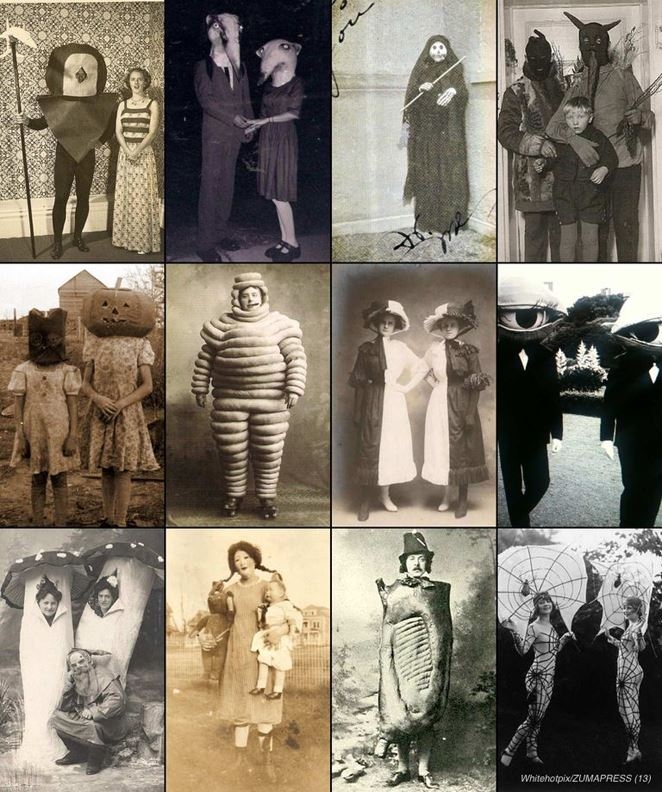
Today I have the second installment of the Creeps. Enjoy!
GEMINETTES
Medium Fey, Chaotic (LE), Average Intelligence; Pair
HD: 4
AC: 13
ATK: 1 strike (see below)
MV: 30
SV: F 14 R 11 W 11
XP: 500 (CL 5)
Geminettes always appear in pairs, with cold, calculating eyes and graceful forms. In combat, they attempt to maintain contact with either their white or black hands; while in contact, they suffer a -2 penalty to hit and a -2 penalty to AC, but gain 25% resistance to magic and can only be harmed by silver and magical weapons.
When a geminette strikes with its black hand, the effect is per a chilling touch spell. When it strikes with its white hand, the effect is per a shocking grasp spell.
All creatures within 20 feet of a pair of geminettes find themselves becoming conflicted. In any round in which they attempt an action, they must pass a Will save. If they fail the save by 1 to 5 points, they hesitate and do nothing during that round. If they fail the save by 6 or more points, they decide to do the opposite of their desired action (or, if “the opposite” simply does not make sense, then nothing at all). Whenever such a save is failed, the adventurer suffers 1 point of charisma damage and the geminettes gain a +5% bonus to their magic resistance.
AWFUL EYEFUL
Medium Fey, Chaotic (LE), High Intelligence; Solitary or Pair
HD: 8
AC: 17
ATK: 1 slam (1d4) or eye ray
MV: 30
SV: F 11 R 9 W 8
XP: 800 (CL 9)
Awful eyefuls consider themselves the nobility of the creeps. They always dress well (whatever era they are found in), and they have the ability to mask their true appearance with that of a vaguely handsome man.
Awful eyefuls walk among mortals, causing them to feel envy and feeding off their petty (and not so petty) jealousies. All creatures within sight an awful eyeful must pass a Will save anytime they see another person doing something they cannot, or doing at a higher level than they can. If they fail this save, they become intensely jealous, suffering a point of intelligence damage and immediately spending a round attempting to outdo that person.
As awful eyefuls feed, they gain the following special abilities:
INT DAMAGE INFLICTED: ABILITIES GAINED
0-2: None
3-5: Detect thoughts (ESP) at will and +1 bonus to hit, damage and AC
6-8: Steal the fighting ability or skills of one creature per round within 20 feet; this translates into applying a 3 point penalty to an opponent’s attack bonus or skill bonus and gaining a like bonus themselves
9+: Steal the spellcasting ability of one creature per round within 20 feet; the awful eyeful steals one spell from an opponent and gains the ability to cast it one time.
SWAMM
Small Fey, Chaotic (CE), Average Intelligence; Band (1d8)
HD: 3
AC: 14
ATK: 1 touch (poison III)
MV: 20
SV: F 15 R 12 W 12
XP: 300 (CL 4)
Swamms appear as dancing mushrooms, surrounded by a sparkling cloud of spores in a 10-ft. radius. Folk who breathe in these spores must pass a Fortitude save each round or find themselves becoming sluggish and lazy. This translates into a -1 penalty to hit and to AC, and a -3 penalty to base movement, as well as 1 point of charisma damage. The loss of charisma represents a loss of ambition. Creatures that have lost half their charisma score to a swamm’s spore cloud are affected per a sleep spell. Each time a victim of a swamm suffers a point of charisma damage, the swamm heals 1d3 points of hit point damage.
MAD MUM
Medium Fey, Chaotic (CE), Average Intelligence; Solitary
HD: 5
AC: 15
ATK: 1 strike (1d4 + confusion)
MV: 30
SV: F 13 R 11 W 11
XP: 500 (CL 6)
Mad mums feed on love and the desire to protect loved ones. Mad mums never speak, and in fact appear to hate loud noises of any kind. They appear as plastic faced women holding dolls. These dolls are their murderous moppets, dirty-faced, greasy-fingered tots that, when thrown by the mad mum, animate and attack, fighting as well as gnolls.
The touch of a mad mum returns people to an infantile state (per the confusion spell) if the target fails a Will save. Gestures of love or protection made in front of a mad mum force the protector to pass a Will save or become obsessed with the creature they are trying to defend. They suffer 1 point of intelligence damage, and find themselves unable to move more than 3 feet away from the object of their obsession, and they do nothing but fight defensively, lending their bonus to AC to the person they are trying to defend.
Spells: At will—silence
Special: Vulnerable to sonic damage
TUCK
Medium Fey, Chaotic (CE), Average Intelligence; Buffet (1d6)
HD: 1
AC: 16
ATK: 1 kick (1d6)
MV: 30
SV: F 15 R 13 W 13
XP: 100 (CL 2)
Tucks appear as dancing bits of meat. They appear before hungry people, dancing about, taunting them. All tucks operate under a displacement effect (per the spell), making them difficult to catch or hit.
Their taunting of the hungry causes desperation and frustration, which they feed upon. Each time a person attempts to hit or grapple them and fails, they must pass a Will save or suffer 1 point of wisdom damage. Each time this happened, the tuck gains 5 points of movement and increases its AC by 1 (to a maximum of 60 feet per round and AC 20).
LOB-LOLLY
Medium Fey, Chaotic (NE), Average Intelligence; Web (1d6)
HD: 3
AC: 14
ATK: 1 parasol (1d4 + stun for 1 round) or strike (1d3 + poison I)
MV: 40
SV: F 14 R 12 W 12
XP: 300 (CL 3)
Lob-lollies appear as spidery women in webbed outfits. They carry similarly webbed parasols, which they use to deadly effect in combat. With each step they take, they send out a web of psychic energy through the ground, forcing all within 10 feet to pass a Will save or be held (per hold person) for 1d4 rounds.
Lob-lollies can walk on walls and ceilings (per spider climb). They can spin their parasols in combat, causing a hypnotic pattern (per the spell). While holding their parasols and able to move, they enjoy the benefits of the protection from normal missiles spell.
Lob-lollies always laugh gaily as they fight, and their moves are sensuous. Males and some females watching them them must pass a Will save each round or become loathe to attack them (-2 penalty to hit, 1 point of wisdom damage). If a person loses half their wisdom to this effect, they attempt to defend the lob-lolly, trying to win their affection (and impossible task). Each time a person loses a point of wisdom, the lob-lolly regains one lost hit point.
But before we go … one more sort of creep to annoy your players …

JINKS
Small Fey, Chaotic (CE), Average Intelligence; Band (1d8)
HD: 0
AC: 13
ATK: 1 strike (1d3) or small weapon (1d4)
MV: 50
SV: F 17 R 12 W 13
XP: 50 (CL 1)
Jinks are goblin-like creeps that look like children wearing grotesque masks. They gather in gangs in dark places – they even enter settlements at night – and prey on the fears and superstitions of people. They generally lurk in the shadows (hiding as well as a 6th level thief) and use their spells to unnerve people. Anyone failing a saving throw against one of their spells also suffers a point of wisdom damage (or 1d4 points of wisdom damage if they succumb to the jinks’ cause fear spell) as they become more jittery and prone to fright. A person who has lost half their wisdom to the jinks spells must pass a Will saving throw each round or become frightened for 1 turn. For each point of wisdom damage caused by a jink, it gains a +1 bonus to hit and damage for the remainder of a fight.
Spells: At will—audible glamer; 3/day—mage hand, phantasmal force; 1/day—cause fear
The Creeps (Part 1) [Monsters]
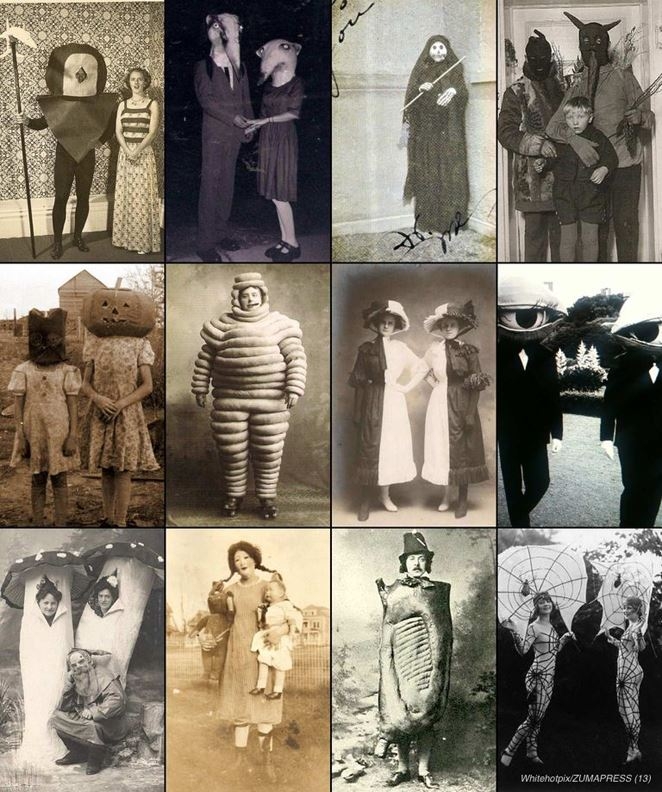
Creeps are a breed of being akin to the fey. While there are many sub-species (so to speak), as one can see from the picture, they all have one thing in common – a love of fear. All creeps feed on emotions in one way or another, so they have a tendency to pray on the weak (i.e. folks who tend to fail saving throws).
The creeps, seen to the right, are as follows (top to bottom, left to right): Sparoo, snozzle, wall hag, hood, pompion, gumble, gimenettes, awful eyeful, swamm, mad mum, tuck, lob-lolly.
SPAROO
Medium Fey, Chaotic (CE), Average Intelligence; Peck (1d4)
HD: 4
AC: 16
ATK: 1 rapier (1d6)
MV: 50
SV: F 14 R 10 W 11
XP: 400 (CL 5)
Sparoos appear as bird-headed men, always dressed in silks and satins and always armed with spears. They are lightning fast in combat, and fight in a flashy, bounding style while their bird eyes dart back and forth, their heads cocked to the side in a manner quite offputting, as though the head and the body are not entirely in league with one another.
Sparoos feed off courage and grit, and they have the ability to inspire combatants to get in over their head. When combat begins, a sparoo points its spear at a foe and cocks its head in a sort of challenge; the target must pass a Will save or duel them, shouting at others to stay out of the fight and even turning on allies who attempt to assist them.
As the foe of a sparoo loses hit points, their will to fight on feeds the sparoo. When a sparoo’s foe has lost one third of its hit points and decides to fight on it loses 1 point of intelligence and the sparoo gains a +1 bonus to hit and damage against them. When a sparoo’s foe has lost one half its hit points and continues to fight one it loses 1d4 points of intelligence and the sparoo gains a +2 bonus to AC against their foe. Finally, when a sparoo’s foe has lost three-quarters of its hit points it loses 1d8 points of intelligence and the sparoo gains an additional attack each round against them.
SNOZZLE
Medium Fey, Chaotic (NE), Low Intelligence; Snuffle (1d8)
HD: 6
AC: 16
ATK: 1 trunk slap (1d6) and 2 slams (1d4)
MV: 30
SV: F 12 R 10 W 11
XP: 600 (CL 7)
Snozzles are rather thick (in terms of a lack of intelligence and in terms of powerful muscles and sturdy bones) humanoids, with elephantine trunks. Their large eyes allow them to see through illusions (+3 to save) and invisibility (invisibility works as the blur spell against snozzles).
Each round, they can either use their trunks to slap their foes (up to 3-ft range) or exhale one of the following spells: Glitterdust (at will), obscuring cloud (3/day) or cloudkill (1/day).
Snozzles feed on pity. They always pick on the weakest member of a group (they can sense this innately); those witnessing this must pass a Will save each round or attempt to defend the target of the snozzle’s attacks, placing themselves between the snozzle and their victim and always fighting defensively.
Each round they succumb to this urge, they suffer one point of wisdom damage and the snozzle gains 1d6 hit points. Hit points over the snozzle’s normal maximum are retained only during the snozzle’s current battle. When a snozzle has gained 5 hit points more than its normal maximum, the snozzle grows, becoming a large monster (Fort save 11, +1 to hit and damage). When a snozzle has gained 10 hit points more than its normal maximum, it becomes huge (Fort save 9, +3 to hit and damage).
WALL HAG
Medium Fey, Chaotic (CE), High Intelligence; Covey (1d3)
HD: 5
AC: 15
ATK: 2 claws (1d6)
MV: 30
SV: F 13 R 11 W 10
XP: 500 (CL 6)
Wall hags are born from despair, germinating within the walls of places that have known not only sadness, but hopelessness. They dwell in the walls, moving in and out of them as though using a meld with stone spell (works on wood but not metal).
Wall hags despise metal, suffering +1 points of damage when struck with bronze weapons, +2 from iron and steel weapons and +3 from adamantine and mithral weapons. They exude a terrible chill in a 10-ft radius that affects metal per the chill metal spell and sentient creatures per a chilling touch spell; creatures and items must save against this effect each time they enter the aura, though not each round they spend in the aura.
Wall hags feed on despair and hopelessness. Each time they are missed in combat, and each time they pass a saving throw, they gain the ability to weave a magic-user spell; the first time, this is a 0-level spell, the second time a 1st level spell, and so on, the ability capping at 3rd level spells. Those who miss the hags or fail to hit them with their spells must pass a Will save or suffer one point of charisma damage.
HOODS
Medium Fey, Chaotic (LE), Average Intelligence; Mantle (1d4)
HD: 3
AC: 14
ATK: 2 claws (1d3) and gore (1d4) – gore is for males only
MV: 30
SV: F 14 R 12 W 12
XP: 300 (CL 4)
Hoods are rotten bullies, appearing as humanoids wearing black hoods. Males have horns on their hoods, while females do not. Hoods have no faces or heads beneath their hoods, and delight in raising their hoods and freaking people the heck out.
When a hood raises its hood, all within sight must pass a Will saving throw or go into fight or flight mode. The adventurer can choose the effect – either they become frightened and flee or they go into a fury (+2 damage, -2 AC). Hoods are expert at avoiding the clumsy attacks of a person in a fury, and each time a person misses them with an attack, they lose 1d4 hit points. Once a person has lost 10 hit points from their flailing about, they must pass a Fortitude save each round or become fatigued (see conditions). Once a person is fatigued while fighting a hood, they suffer 1 point of constitution damage each round they continue to fight.
Once a hood has worn a person down, they make quick work of them and soon are feasting on their heart.
POMPION
Medium Fey, Chaotic (CE), Average Intelligence; Patch (1d4)
HD: 1
AC: 14
ATK: 2 claws (1d4)
MV: 30
SV: F 15 R 13 W 13
XP: 100 (CL 2)
Pompions look like humanoids with great pumpkin heads. They are kin to the jinks (see Part 2, tomorrow), and if encountered alone probably (65% chance) have 1d6 jinks with them.
Pompions are surrounded by a 30-ft. aura of shadows, the only illumination within this aura coming from the flames within their devilish heads. When they make these flames crimson, they can breathe a 10-ft. cone of flames each round that deals 1d6 points of damage. When their flames are emerald, they allow the pompion to exhaule a stinking cloud that follows them about in a 10-ft. radius around the pompion. When the flames burn yellow, the shadows around them rear up into frightening shapes, forcing those within the shadows to pass a Will save each round or become frightened. A pompion can only maintain a color of flame for a maximum of three rounds during a single fight.
When creatures are frightened by a pompion, they suffer 1 point of wisdom damage per round. Each frightened creature within a pompion’s aura of shadows grants the pompion a +5% to magic resistance and 1 point of damage reduction from each physical blow they suffer.
GUMBLE
Medium Fey, Chaotic (CE), Low Intelligence; Solitary
HD: 8
AC: 18
ATK: 2 slams (1d8)
MV: 30
SV: F 11 R 9 W 10
XP: 800 (CL 9)
Gumbles look like … oh heck, they look like the Michelin Man. Their hides are thick and rubbery (as in literally made of rubber), and absorb the blows of bludgeoning weapons. When struck with a bludgeoning weapon, the gumble suffers no damage. The striker rolls damage anyhow; the damage value becomes a penalty to a Fortitude save which, if failed, results in the striker being knocked prone and suffering half the damage they would have caused to the gumble.
Gumbles can jump (per the spell) at will, bouncing off walls and ceilings as they do. People watching this must pass a Will save each round or begin giggling and laughing; the gumbles feed off of this amusement, their foes suffering 1 point of intelligence damage each round, and the gumble gaining 1 point of damage reduction from physical attacks for each point of intelligence damage their antics cause.
Psionics of Lore by Tanner Yea
Tanner Yea of the Pulpwood Blog, who wrote the SUP 1 – Heroes of Lore and SUP 2 – Races of Lore products you can find on the Blood & Treasure page on this blog, has just finished up SUP 3 – Psionics of Lore. This is based on the SRD psionics system, for those who want to run a psionics-based Blood & Treasure campaign, or who want a system easily adaptable to other old school rules.
The book includes psionic races, classes, feats (if you’re into that sort of thing) the psionic powers, psionic monsters and psionic treasures.
You can download the book HERE.
If anybody else out there would like to write for Blood & Treasure, I’d be happy to provide the layout work as I did on Tanner’s three books. Your writing remains your own to do with as you please, of course – I’m just happy to be able to provide support for my game.
Juggernauts – Bring the Hulk into a Dungeon Near You!
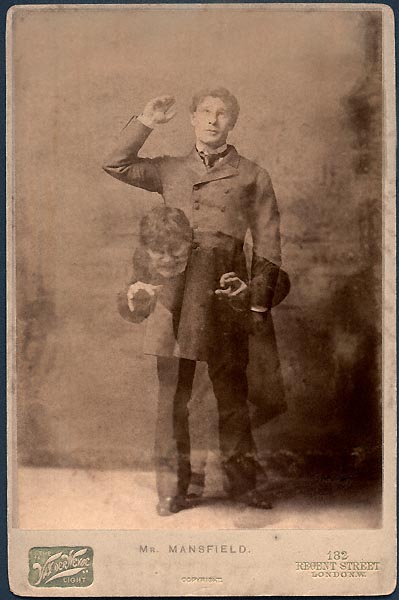
Fantasy worlds are loaded with alchemists, who either spend their time making weird nonsense like tanglefoot bags (ugh) or assisting magic-users in making magic items. Presumably, they also spend some time brewing up headache powders and distilling spirits, because that’s where the gold pieces are.
Some alchemists are meant for bigger things, though. Not every brilliant young person gets a gig working as an apprentice to a magic-user or gets training for some other PC class with a high intelligence requirement. A few of these young geeks are bound to walk down the path of one Dr. Jekyll, and one or two of them might suffer the same fate and then run around sacking dungeons. Well, I mean it could happen. Just go with me on this one.
Juggernauts are alchemists with the ability to transform into something much worse, a la Mr. Hyde.
REQUIREMENTS
Intelligence 15 or higher, strength 8 or lower, constitution 12 or lower
HIT DICE
D4 per level until 10th, +1 per level thereafter
ARMOR ALLOWED
None
WEAPONS ALLOWED
Club, dagger, dart, quarterstaff; maces and mauls when transformed
SKILLS
Decipher Codes, Find Secret Doors, Listen at Doors
ATTACK AND SAVE AS
Magic-User
SPECIAL ABILITIES
Juggernauts spend most of their time in human form, as 90-pound weaklings in the garb of alchemists. In this form, they have the following abilities:
Identify Potions & Magic Items—A juggernaut can make a Will save modified by his Intelligence modifier to attempt to identify a magic item, potion or poison per the identify spell.
Brew Potions—Juggernauts can brew potions as magic-users. Alchemists begin the game knowing the formulas for 1d4 + their intelligence bonus in 0-level magic-user spells and one 1st level magic-user spell. They can learn other formulas by recovering magic-user spellbooks and scrolls and researching them. To do this, they need a laboratory and one day per spell level (or one day for 0-level spells) and must make a successful Will save modified by their Intelligence modifier and with a penalty equal to the level of the spell.
Once a juggernaut knows a potion’s formula, he or she can brew the potion using the normal rules.
Alchemists are also capable of aiding magic-users in manufacturing magic items.
When angry, frightened or after suffering at least 6 points of damage from a single blow, a juggernaut makes a startling transformation, truly becoming a juggernaut. Juggernauts have the following traits:
• They re-roll their hit points using d12 in place of d4. When they return to normal, they regain their original hit point total.
• Their alignment becomes chaotic. Thus, lawful people become chaotic juggernauts, and lawful good people become chaotic good juggernauts.
• Their natural Armor Class and strength increase based on their level (see below).
LEVEL: ABILITIES
1-3: +2 to AC; ogre strength (+3 to hit and damage and Fortitude saves and strength task checks)
4-6: +4 to AC; hill giant strength (+4 to hit and damage and Fortitude saves and strength task checks), gains Knock-Back attack
7-9: +6 to AC; stone giant strength (+5 to hit and damage and Fortitude saves and strength task checks), becomes Large size, gains Knock-back and Stomp attack
10-12: +8 to AC; fire giant strength (+6 to hit and damage and Fortitude saves and strength task checks), becomes Large size, gains Knock-Back, Stomp attack and Thunderous Clap attack
13-15: +10 to AC; frost giant strength (+7 to hit and damage and Fortitude saves and strength task checks), becomes Large size, gains Knock-Back, Stomp attack and Thunderous Clap attack
16+: +12 to AC; storm giant strength (+8 to hit and damage and Fortitude saves and strength task checks), becomes Large size, gains Knock-Back, Stomp attack and Thunderous Clap attack
The juggernaut remains transformed for an entire battle. After the battle, they remained transformed for 1d4 hours. While transformed, they are arrogant, blustering and violent. This can be a real problem when trying to sneak around or solve puzzles.
Juggernauts get the following special attacks:
Knock-Back (4th level)—When the juggernaut causes damage with a physical attack, the victim must pass a saving throw or be affected as per an Bull Rush attack.
Stomp (7th level)—The juggernaut can stomp on the ground, creating a minor earth tremor. All creatures within 10 feet must pass a Fortitude save or be knocked prone.
Thunderous Clap (10th level)—The juggernaut can clap its big hands together and create a shockwave in a cone 30 feet long and 30 feet wide at the base. All creatures within the cone must pass a Fortitude save or be deafened and suffer 1d6 points of damage (2d6 if tiny sized); creatures within 10 feet must pass a Fortitude save or be knocked prone. Open, natural flames within the cone are snuffed out and gases are blown out of the cone of effect.
We Have Puddings and Jellies … Why Not Custards?

I like my dungeons a bit on the goofy side, I’ll admit. I dig the freewheelin’ olden days when there was no good reason not to have three green martians hanging out in a room next to a tribe of orcs who had just tangled with the dalek on level 6. I don’t necessarily want to do that kind of thing all the time, but it certainly keeps people guessing and keeps the gaming atmosphere light and fun.
With that in mind … dungeon custards. No – not a topic on kobold cookery (though God knows we need one), but rather a new form of ooze that’s maybe not quite as oozy as other oozes. I mean, if we have puddings and jellies, why the heck not custards?
Custards are a bit thicker than the average ooze, which hampers them a bit, but also gives them a bit more punch and a few extra special abilities. Rather than invent some new ooze monsters, I’m going to present this monster as a template you can add to existing ooze monsters – yes, even if you don’t normally use templates.
Here goes …
1. Custards are made of sterner stuff than normal oozes, so they gain one hit dice, and improve their armor class by 1 step. This makes them vulnerable to attacks by all sorts of weapons (i.e. they lose immunity to certain types of weapon, not including oozes that are only struck by silver or magic weapons).
2. Custards are not quite as flexible as most oozes. They can flow through cracks and such, but reduce their speed by half when doing so.
3. When custards are exposed to fire damage equal to at least half their current hit point total (or to out it another way, when a custard takes half its hit points in fire damage), it liquifies somewhat and takes on the characteristics of a normal ooze of its type.
4. Custards suffer half damage from cold.
5. Custards do not divide or engulf – they’re too thick – but they do cling. Whenever a creature is struck by a custard in combat and suffers damage, it must pass a saving throw (Reflex save in B&T) or have the ooze cling to him. This allows the ooze to inflict automatic acid damage each round (1d4 if you don’t have a different acid damage value already) and the character counts as entangled. The ooze can be cut away or the victim can free herself with a bend bars/open doors check, but some of the ooze remains clinging to the victim, and more importantly, begins to use their body heat to grow.
If the adventurer is wearing armor, it is assumed that the custard is clinging to the armor. In this case, the armor must make an item saving throw vs. acid each round. If successful, it holds up and the adventurer suffers no acid damage and does not begin to grow. If an item saving throw fails, the armor in that spot is ruined and the custard begins dealing damage and growing.
Each round that the ooze deals damage to the character, it grows by 1 HD, eventually reaching the normal maximum hit dice for an ooze of its type. This process can be stopped in the following ways: The ooze can be scraped away with a blade, the ooze can be burned away with fire or the ooze can be defeated with a cure disease spell.
If using a blade, the victim suffers 1d3 points of damage with each attempt, and the custard gets a saving throw to resist. When the custard fails a save, the scraping has been successful. Fire works the same way, though the damage is equal to 1d4 points of damage per round. If using a fire spell that deals more damage, impose a penalty to the ooze’s save equal to -1 per 2 points of additional average damage (i.e. average torch damage is 2.5; average 5 dice fireball damage is (3.5 x 5) or 17.5; the custard would suffer a -7 penalty (rounding down) to its saving throw if its victim was exposed to the full fury of a 5 dice fireball).
There you have it. So how about a sample custard for Blood & Treasure?
BLACKBERRY CUSTARD (BLACK PUDDING)
Huge Ooze, Neutral (N), Non-Intelligent; Solitary
HD 11
AC 4
ATK Slam (2d6 + 2d6 acid + cling)
MV 20 (Climb 20)
SV F 7, R 10, W 10
XP 1,100 (CL 12)
The typical blackberry custard measures 15 feet across and 2 feet thick. It weighs about 22,000 pounds. The creature secretes a digestive acid that dissolves organic material (50 points of damage per round) and metal (20 points of damage per round), but does not affect stone. Any hit by the monster deals acid damage, and the target’s armor and clothing dissolve and become useless immediately unless they succeed on an item saving throw. A metal or wooden weapon that strikes a blackberry custard also dissolves unless it passes a saving throw. A blackberry custard that strikes a victim clings to it (see above).
There are other varieties of blackberry custards in existence. Chocolate custards (brown puddings) (12 HD) dwell in deserts. Vanilla custards (white puddings) (10 HD) dwell in snowy regions and dissolve stone instead of metal. Mocha custards (dun puddings) (9 HD) dwell in tropical jungles and only dissolve organic materials.
Special Qualities: Immune to mind effects, resistance to cold
The Centurion Class – Go Into Battle With Friends!
Wow – been very busy lately. Sorry for the lack of posts of late, but I’m currently trying to finish writing the NOD Companion, Action X, I’m doing some more freelance stuff for Frog God Games (Tome of Horrors IV!) and I’m putting the finishing touches (editing and layout) to Tanner Yea’s new supplement for Blood & Treasure, Psionics of Lore. It looks like a winner folks.
That being said, I needed to get something posted this week, so …
THE CENTURION
 |
| Image from HERE |
Fighters might come from many backgrounds, but most adventuring fighters avoid the chaos of the battlefield for the relative simplicity of bashing heads in a dungeon. Centurions, on the other hand, are born and bred for mass combat in the name of king or emperor. They glory in wading into an enemy host with their comrades. When they delve into the lightless depths, they bring friends and know how to make the most of them.
ROLL D8 FOR HIT POINTS (+3 HP PER LEVEL AFTER LEVEL 10)
REQUIREMENTS
Centurions must have a Strength and Charisma of at least 13. They cannot be Chaotic in alignment
ARMOR PERMITTED
Padded, Leather, Studded Leather, Ring, Scale, Chainmail Shirt, Chainmail; All Shields
WEAPONS PERMITTED
Crossbows (All), Dagger, Hand Axe, Javelin, Long Sword, Spear, Short Sword
SKILLS
Bend Bars, Break Down Doors
ADVANCE AS
Fighter
ATTACK AS
Fighter
SAVE AS
Fighter
SPECIAL ABILITIES
Centurions can command double the normal henchmen usually permitted by their Charisma scores, provided those henchmen are men-at-arms armed and armored in the same way as the centurion. Men-at-arms under the command of a centurion gain a +1 bonus to attack, to saving throws and to morale checks. The bonus to morale checks increases to +2 at 4th level, and +3 at 8th level.
When in battle, centurions can lock shields with other centurions, fighter-types and their own men-at-arms. This increases the AC of all involved by +2. While locked, the warriors can still attack with spears, but do so at a -1 penalty to hit. The warriors also gain a +2 bonus to save vs. special maneuvers while in a shield wall.
Centurions are trained as sentries, and thus are only surprised on a roll of 1 on 1d8.
A 3rd level centurion can bestow their shield bonus to AC to any ally within 5 feet, and still attack as normal.
A 6th level centurion learns the skills of an engineer in relation to operating siege weapons.
A 9th level centurion (legatus) can built a fort and design a standard to be flown over his fort and over his person when he is engaged in battle. When he does so, he attracts 1d6 men-at-arms per level, 1d6 first level centurions that wish to train with him and make up his personal guard, and a third level centurion to act as his lieutenant. The centurion’s bonus to his men-at-arms extends to all of his new followers when they share the battlefield with him and they can see his standard.
LVL / TITLE
1 Miles
2 Duplicarius
3 Decanus
4 Cornicularius
5 Optio
6 Centurion
7 Praefectus
8 Tribunus
9+ Legatus
Hippity-Hop Into the Dungeon – The Easter Bunny Class!

Easter bunnies are fey creatures who are the heralds and servants of Ys, the goddess of spring and fertility (substitute your own campaign’s spring goddess if you please). When not performing their Easter functions for children all over Nod, they are adventurers bold and daring.
[Okay – this was a brainstorm Easter morning, so this is a bit scanty – please forgive and, most importantly, have a Happy Easter, even if you’re not a Christian. A happy day and a chocolate bunny are fundamentally good things, regardless of your beliefs!]
Hit Dice: d6 / +2 hit points per level after 10th level
Advance as: Thief
Attack as: Thief
Save as: Bard
Armor: Padded and leather
Weapons: Any weapon that does not involve metal; they can use flint-tipped spears and arrows, which deal one dice size less damage than their metal counterparts
Skills: Find Secret Doors, Hide in Shadows, Jump, Listen at Doors, Move Silently, Trickery
Special Abilities
Easter bunnies can charge into combat with a mighty leap that carries them up to 15 feet forward.
Easter bunnies can speak with animals and plants at will. They also have “faerie fire vision”, which they can invoke for up to 2 rounds per level each day.
Easter bunnies cannot use iron or steel weapons, and in fact suffer +1 damage per hit from such weapons.
Easter bunnies can lay magic eggs. An Easter bunny can lay one egg per day, each one imbued with a magic ability of the Easter bunny’s choice as limited by their level. A first level Easter bunny starts with three magic eggs.
For a magic egg to affect a person (willingly or not), it must be cracked over them or it must strike them. To affect an area, it need only be thrown into that area. To summon nature’s ally, it is cracked and the creature sort of magically pours out of it.
Magic eggs can have the following effects – one effect per egg – based on the Easter bunny’s level:
Level 1 – bless, charm person, cure light wounds, entangle, grease, hold person, light, obscuring mist, phantasmal force, sleep, summon nature’s ally I, explosive (1d6 damage in 10’ radius)
Level 3 – animal messenger, blindness, calm emotions, cure moderate wounds, darkness, fog cloud, glitterdust, gust of wind, hypnotic pattern, improved phantasmal force, mirror image, reduce animal, silence, sound burst, summon nature’s ally II, summon swarm
Level 6 – charm monster, confusion, cure disease, cure serious wounds, daylight, deep slumber, diminish plants, dispel magic, fear, good hope, phantom steed, plant growth, remove curse, slow, spectral force, spike growth, summon nature’s ally III, wind wall
Level 9 – command plants, cure critical wounds, dimension door, dominate person, hallucinatory terrain, hold monster, rainbow pattern, spike stones, summon nature’s ally IV, zone of silence
A Dungeon Where Apes Evolved from Men?

If one were to draw a Venn diagram of people into fantasy RPG’s and people into Planet of the Apes, I think there would be a pretty good overlap. Likewise, I think there is a pretty good overlap between the Planet of the Apes concept and fantasy gaming – i.e. the ape campaign.
First, let’s get our stuff straight here. Planet of the Apes, the movie franchise, and Planet of the Apes, the book, are two very different animals. There are similarities to be sure, but the differences are pretty major.
The movies were part of the bleak sci-fi period that included such gems as Omega Man, Logan’s Run, Soylent Green and Herbie Goes Bananas (a controversial stand on the last one, but I’m standing behind it). Here, we have mankind destroying itself with nuclear weapons, creating what one might call a “Gamma World” to coin a phrase, this being preceded by presumably genetically-modified apes staging race riots.
The book, written by Pierre Boulle, is quite different. First – it’s fairly boring. One can think of it as a book in the style of Gulliver’s Travels, as it’s mostly a matter of social critique. In this scenario, man grew decadent, using trained apes to do his work. As the apes learned more and more, they grew dissatisfied and eventually threw man out of his own home. Apes didn’t need us anymore. And humans … they didn’t fight back. They wandered into the woods, seemingly content to live as animals. Apes just took up where we left off, the difference being that while they understood our technology, they weren’t very creative.
Applying either scenario to a fantasy world – some magical apocalypse or the flow fall of man into decadence and the rise of a new order – works. You have ancient ruins (a place to adventure), some semblance of civilization (a place to rest between adventures) and, most importantly for fantasy gaming, you have multiple “races” to adventure with. Imagine porting into the world of Greyhawk to discover that Ape Law has been imposed there. Sounds pretty fun.
A few notes before I begin. I’m writing these ape “races” as though they are still physically indistinguishable from normal apes – i.e. I’m not making them people in masks as in the movie franchise. Second – apes are strong. Really strong. I’m not shying away from this, so expect high strength bonuses. If you were running nothing but apes in a game, you can adjust for this higher damage output and let them advance as far as they want in various classes. If you’re running these apes with other races, you’ll need to limit their class advancement to some extent. I’ve included these class level limits below in italics.
Gorillas
Gorillas are the warriors of the apes; burly and brash and easily annoyed. Gorillas add +6 to their starting strength (max. 24). They modify their starting constitution by +1 and reduce their starting intelligence by 1 (max. 18, min. 3). When not using a weapon, a gorilla can make a claw or bite attack each round, scoring 1d4 points of damage. They are capable of launching into a menacing display of power that forces creatures with 0 HD or less than half the gorilla’s hit dice to pass a Will saving throw or be frightened for 1d4 rounds. Gorillas are limited to 7th level, except as fighters, at which they can advance to 9th level.
Chimpanzees
The chimps are the scholars of the ape people, always curious and often chattering. Chimps add +2 to their starting strength (max. 20). They modify their starting intelligence by +1 and reduce their starting wisdom by 1 (max. 18, min. 3). Chimps have a knack for climbing sheer surfaces. In place of a weapon attack, a chimp can make a claw or bite attack that deals 1d3 points of damage. Chimps are limited to 9th level, except as magic-users, at which they can advance to 11th level.
Orangutans
Orangutans are the “wise old men” of the ape community, bureaucrats, clergy and leaders. Orangutans add +4 to their starting strength (max. 22). They modify their starting wisdom by +1 and reduce their starting charisma by 1 (max. 18, min. 3) due their stodginess and superior attitudes. Orangutans have a knack for climbing sheer surfaces. In place of a weapon attack, an orangutan can make a claw or bite attack that deals 1d4 points of damage. Orangutans are limited to 8th level, except as clerics, at which they can advance to 10th level.
Fear the Forms!
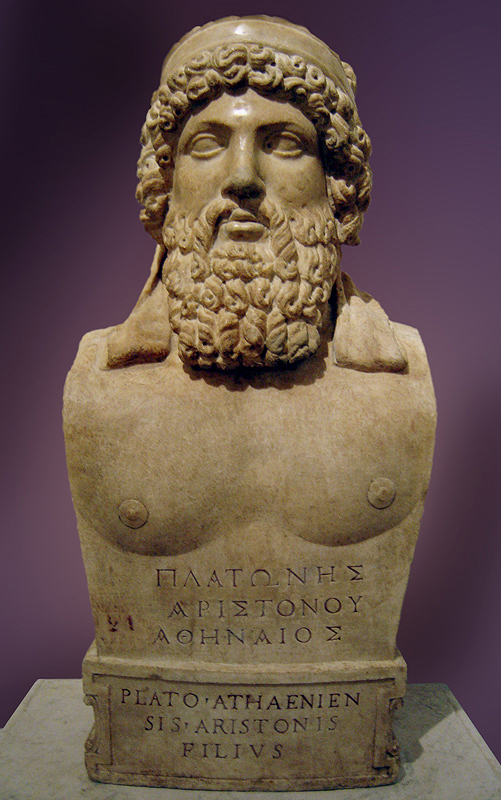
I was perusing the Art of Manliness blog a few days ago (I highly recommend it), and they had a post about Plato’s Parable of the Chariot. I’ll let you do the reading yourself.
Being an RPG guy, my mind is constantly scanning for things to adapt. While reading that article, I was struck with the concept of the forms – Truth, Beauty, etc. Now, I suppose the forms would make great deities for a game, but how often do you get to play with deities in a game? I figured they might make great monsters.
The basic idea is a monster that personifies some concept, physical or mental, to a perfect degree. Today, I’m going to do two forms based on ability scores, Strength and Intelligence.
STRENGTH
Medium Outsider, Neutral (N), Average Intelligence; Feat (1d4)
HD 7
AC 18 [+1]
ATK 2 slams (2d6 + bull rush)
MV 30
SV F10 R10 W10
XP 1,750 (CL 9)
Forms of strength look like perfect humanoid physical specimens, with perfect musculature, though lacking heads. How they see, hear, scent, etc. is unknown. They speak in a booming voice that is simply emitted from their bodies.
Targets struck by a form of strength must pass a Fortitude saving throw, modified by their strength modifier, or be knocked-back as though hit with a bull rush attack. They are capable of stomping (per the spell stomp) up to 3 times per day.
Forms of strength are capable of leaping up to 30 feet backwards, forwards, up or down (without falling damage). Likewise they are skilled at jumping, breaking down doors and bending bars. They have an effective strength score of 25.
Once per day, a form of strength can cause a creature it has struck to begin adhering to its conception of perfection. Each round, it gains 1 point of strength and loses one point of each of its mental ability scores. When the victim’s mental ability scores are reduced to 6, they themselves become forms of strength; this state can only be reversed by a wish spell.
Special: Weapon resistance to bludgeoning weapons
INTELLIGENCE
Medium Outsider, Neutral (N), Super Intelligence; Feat (1d4)
HD 5
AC 18 [+1]
ATK 1 incorporeal touch (1d6 + stun 1 round)
MV 30 (Fly 60)
SV F11 R10 W8
XP 1,250 (CL 7)
Forms of intelligence are ephemeral, incorporeal beings. They have over-large heads with smooth pates; these heads are transparent, revealing the massive brains beneath, that spark with their unceasing pondering. Their thin, wispy bodies suggest atrophy. They generally float above the ground and usually move by flying. Forms of intelligence communicate telepathically, to a range of 200 feet or with other forms of intelligence up to any range.
A form of intelligence’s touch attack ignores armor (except for magical armor) and forces those who suffer damage to pass a Will save or be stunned for 1d4 rounds.
The incredible intelligence of a form of intelligence allows it to work out the possible and likely movements of their foes to several rounds, and as such gives them the effective protection of a displacement spell (without they actually be displaced as the spell describes). They are capable, three times per day, of reciting such mind-numbing conundrums and theories that those within 10 feet must pass a Will save or be struck with confusion (per the spell) for a number of rounds equal to 5 minus their intelligence modifier.
Once per day, a form of intelligence can cause a creature it has struck to begin adhering to its conception of perfection. Each round, it gains 1 point of intelligence and loses one point of each of its physical ability scores. When the victim’s physical ability scores are reduced to 6, they themselves become forms of intelligence; this state can only be reversed by a wish spell.
Spells: At will – detect thoughts (ESP); 1/day – ego whip, id insinuation, mind blank
Special: Incorporeal
 Land of Nod