Month: June 2010

Clerics & Druids
My first attempt at blogging from MSWord – hopefully it comes out okay. This is my take on the cleric and druid. In truth, my only contribution to the cleric is the level titles.
This post is Open Game Content.
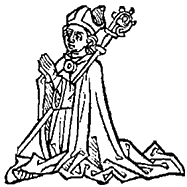
THE CLERIC
Clerics are armored priests who serve a patron deity and an alignment ethos (law, good, chaos or evil). Regardless of the details, you are a champion of your faith and moral alignment. You might be a sinister witch-hunter, an exorcist of demons, or a shining knight of the faith. Because most of a cleric’s abilities are oriented toward healing and protecting, clerics tend to play a support role during combat, backing up the front line, but able to stand shoulder to shoulder with the party’s fighting-men if need be, at least for a while. High level clerics often establish fortified temples or monasteries in the wilderness, clearing the area of monsters and attracting followers and soldiers.
Prime Requisite: Wisdom (13+gives +5% experience bonus).
Hit Dice: 1d6+1 (+2 hp per level after 9th).
Armor/Shield Permitted: Any.
Weapons Permitted: Blunt weapons only.
Spells (1st): The spells available are listed on the cleric spell list. A cleric is limited to a certain number of spells of each level per day. A table shows the number of spells per day a character of the class may cast. Clerics prepare spells each day through prayer to their deity, followed by contemplation and study.
Banishing Undead (1st): Clerics can “Turn” the undead, making them flee from the cleric’s holiness (or, in the case of an evil cleric, bringing them to heel as servants and minions). A Referee might decree that a cleric can use this ability against other supernatural creatures hostile to his patron deity or religion.
|
Spells Per Day (By Spell Level) |
|||||||||||
| Level | Experience |
Hit Dice |
Attack |
Save |
Title |
1 |
2 |
3 |
4 |
5 |
6 |
| 1 | 0 |
1 |
+0 |
14 |
Beadle |
– |
– |
– |
– |
– |
– |
| 2 | 2,250 |
2 |
+0 |
13 |
Almoner |
1 |
– |
– |
– |
– |
– |
| 3 | 5,000 |
3 |
+1 |
12 |
Chanter |
2 |
– |
– |
– |
– |
– |
| 4 | 9,000 |
4 |
+1 |
11 |
Friar |
2 |
1 |
– |
– |
– |
– |
| 5 | 18,000 |
5 |
+2 |
10 |
Prester |
2 |
2 |
1 |
– |
– |
– |
| 6 | 35,000 |
6 |
+2 |
9 |
Vidame |
2 |
2 |
1 |
1 |
– |
– |
| 7 | 70,000 |
7 |
+3 |
8 |
Exarch |
2 |
2 |
2 |
1 |
1 |
– |
| 8 | 140,000 |
8 |
+3 |
7 |
Hierophant |
2 |
2 |
2 |
2 |
2 |
– |
| 9 | 300,000 |
9 |
+4 |
6 |
Patriarch |
3 |
3 |
3 |
2 |
2 |
– |
| 10 | 425,000 |
+2 |
+5 |
5 |
Patriarch |
3 |
3 |
3 |
3 |
3 |
– |
| 11 | 650,000 |
+4 |
+5 |
4 |
Patriarch |
4 |
4 |
4 |
3 |
3 |
– |
| 12 | 900,000 |
+6 |
+6 |
3 |
Patriarch |
4 |
4 |
4 |
4 |
4 |
1 |
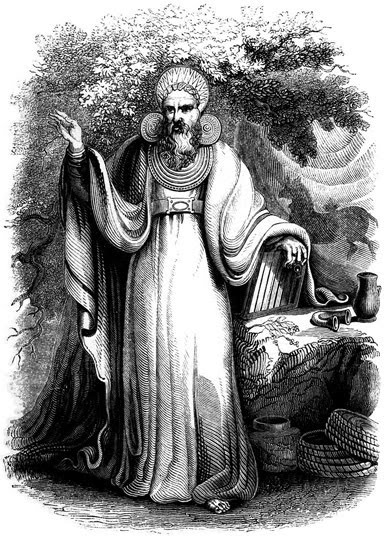
The Druid Sub-Class
The druid is a sub-class of cleric who worships a pantheon of nature divinities in place of the cleric’s patron deity and ethos. Because druids worship a wide variety of deities and respect each deity’s place in the greater scheme of things, they are always neutral in alignment. Druids draw energy from the natural world to cast divine spells and gain strange supernatural powers.
Prime Requisites: Intelligence & Wisdom (13+ gives +5% experience bonus).
Hit Dice: 1d6+1 (+2 hp per level after 9th).
Armor/Shields Permitted: Leather armor, shields.
Weapons Permitted: Club, dagger, dart, hand axe, hammers, sling, sickle, spears, swords, and staves.
Spells (1st): The spells available to a druid are listed on the druid spell list (coming soon). A druid is limited to a certain number of spells of each level per day. The druid table shows the number of spells per day a character of the class may cast. Druids prepare spells each day by praying for them.
Secret Language (1st): Druids have a secret language and alphabet used for communicating with one another. They are forbidden from teaching either language or alphabet to any but their brethren. It is this language that the druids use to cast their spells.
Nature Lore (1st): A druid can identify plants and animals with perfect accuracy. This ability is automatically successful when used in the type of environment in which the druid was trained or currently lives. In unfamiliar environments, the druid must succeed at a saving throw to successfully use this ability.
Resist Elements (2nd): At 2nd level, druids gain a +1 bonus to saving throws against fire, water, earth, air, cold and lightning attacks.
Woodland Stride (3rd): At 3rd level, druids gain the ability to move through natural thorns, briers, overgrown areas, and similar terrain at normal speed and without suffering damage or other impairment. When doing so, druids leave no trail in the natural surroundings and cannot be tracked. Areas that are enchanted or magically manipulated to impede motion still affect druids.
Shapechange (6th): At 6th level, druids gain the ability to change into a small or medium-size animal and back again once per day. This ability operates like the spell polymorph. Upon attaining this ability, a druid must choose an animal shape, usually an animal sacred to her religious traditions or patron deity. The selection is permanent, and cannot be changed.
Each time a druid uses this ability, the character regains 1d3 hit points. At 7th and 8th levels, the druid gains a new animal shape. Each shape can be assumed once per day. At 12th level, the druid gains the ability to take the shape of a large (maybe prehistoric) version of one of the previously chosen animal forms. This large form can be assumed once per day, and the druid can decide between the three forms each time this ability is used. When assuming the large version of an animal form, the druid heals 4d6 hit points.
|
Spells Per Day (By Spell Level) |
|||||||||||
| Level | Experience |
Hit Dice |
Attack |
Save |
Title |
1 |
2 |
3 |
4 |
5 |
6 |
| 1 | 0 |
1 |
+0 |
14 |
Neophyte |
– |
– |
– |
– |
– |
– |
| 2 | 2,000 |
2 |
+0 |
13 |
Initiate |
1 |
– |
– |
– |
– |
– |
| 3 | 4,250 |
3 |
+1 |
12 |
Ovate |
2 |
– |
– |
– |
– |
– |
| 4 | 8,500 |
4 |
+1 |
11 |
Soothsayer |
2 |
1 |
– |
– |
– |
– |
| 5 | 17,000 |
5 |
+2 |
10 |
Magus |
2 |
2 |
1 |
– |
– |
– |
| 6 | 35,000 |
6 |
+2 |
9 |
Shaman |
2 |
2 |
1 |
1 |
– |
– |
| 7 | 70,000 |
7 |
+3 |
8 |
Magister |
2 |
2 |
2 |
1 |
1 |
– |
| 8 | 180,000 |
8 |
+3 |
7 |
Druid |
2 |
2 |
2 |
2 |
2 |
– |
| 9 | 275,000 |
9 |
+4 |
6 |
Archdruid |
3 |
3 |
3 |
2 |
2 |
– |
| 10 | 400,000 |
+2 |
+5 |
5 |
Archdruid |
3 |
3 |
3 |
3 |
3 |
– |
| 11 | 525,000 |
+4 |
+5 |
4 |
Archdruid |
4 |
4 |
4 |
3 |
3 |
– |
| 12 | 650,000 |
+6 |
+6 |
3 |
Archdruid |
4 |
4 |
4 |
4 |
4 |
1 |
Coming Soon – Druid spells
Medieval Woodcut of a Bishop from “Gode Cookery”
Conquering Space
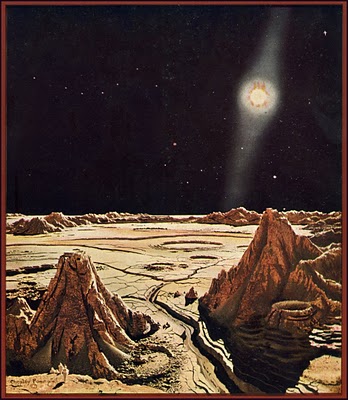
If you’re heading to Titan to investigate those methane-based life forms, you might as well conquer space while you’re there.
New Life and New Civilizations

Methane-based life on Titan? Maybe …
Weapon Art
I’ve been working on some simple illustrations for an article on weapons in NOD #2. Not the greatest stuff in the world, but I’m pretty happy with it.
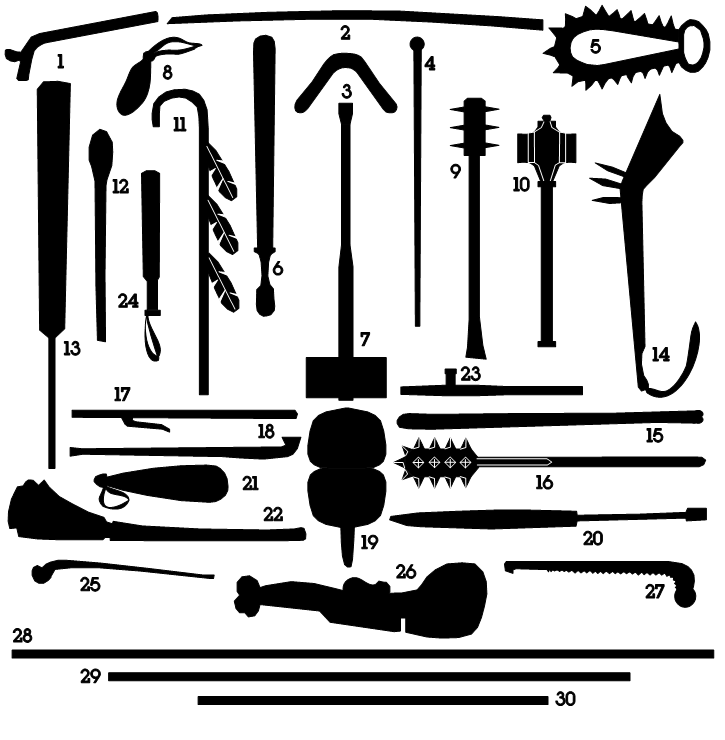
Clubs, Staves and Maces

Axes, Picks and Chopping Blades
Liberace’s Bathtub …
Per my reply to cyclopeatron’s comment in my last post …

Yes, Las Vegas is just as weird as you would expect it to be.
Pinball Magic-Users
In the days of D-n-D’s infancy, it seems as though fantasy art had three main avenues of presentation – softcover, digest-sized reprints of ’30s pulp stories, the sides of vans and pinball machines.
Last weekend I visited the local Pinball Hall of Fame and snapped a few shots apropos to the blog.

I’ve mastered this one on the Wii, but the real machine eludes me.
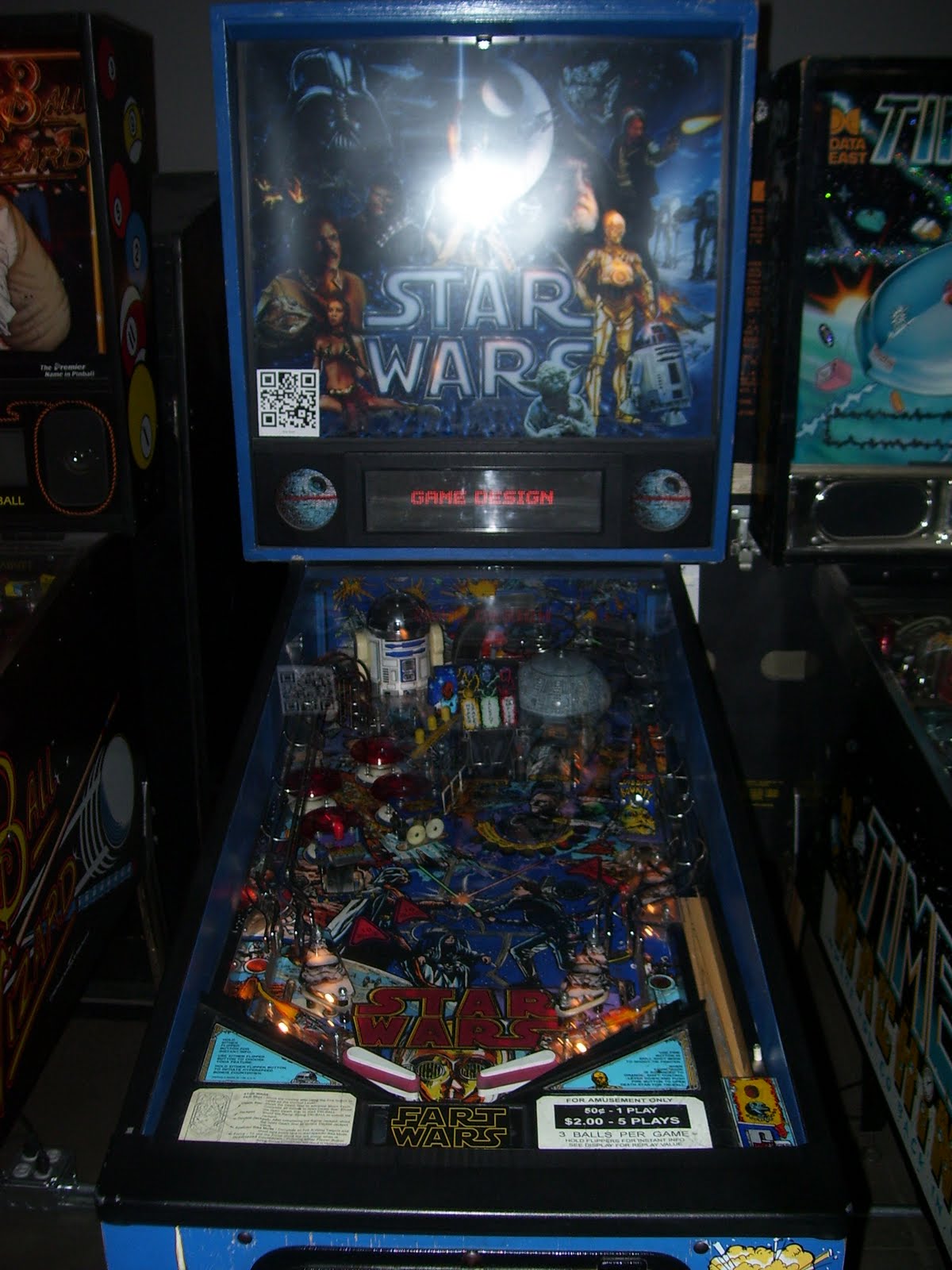
Just noticed the alternate name at the base of this machine …


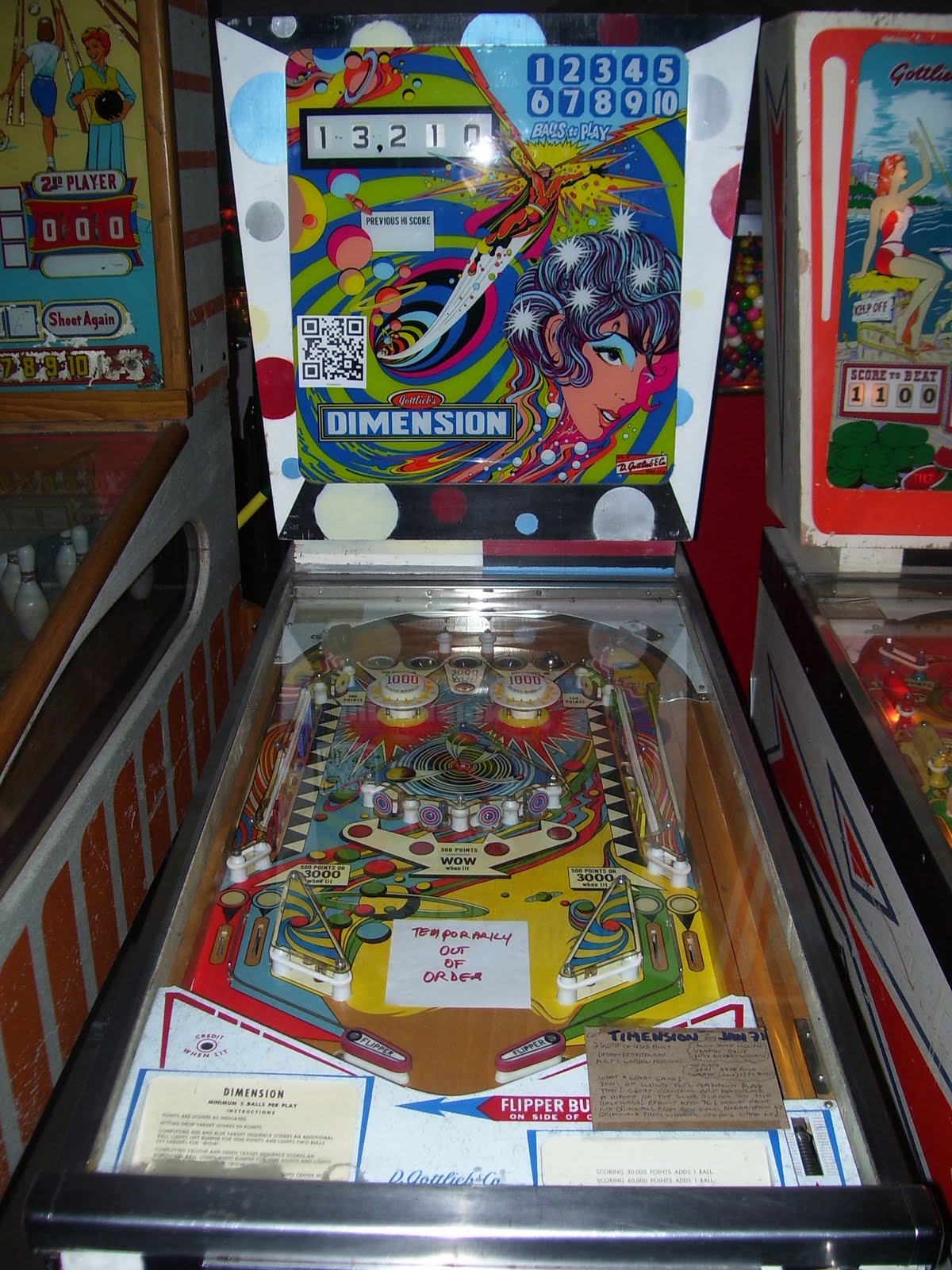
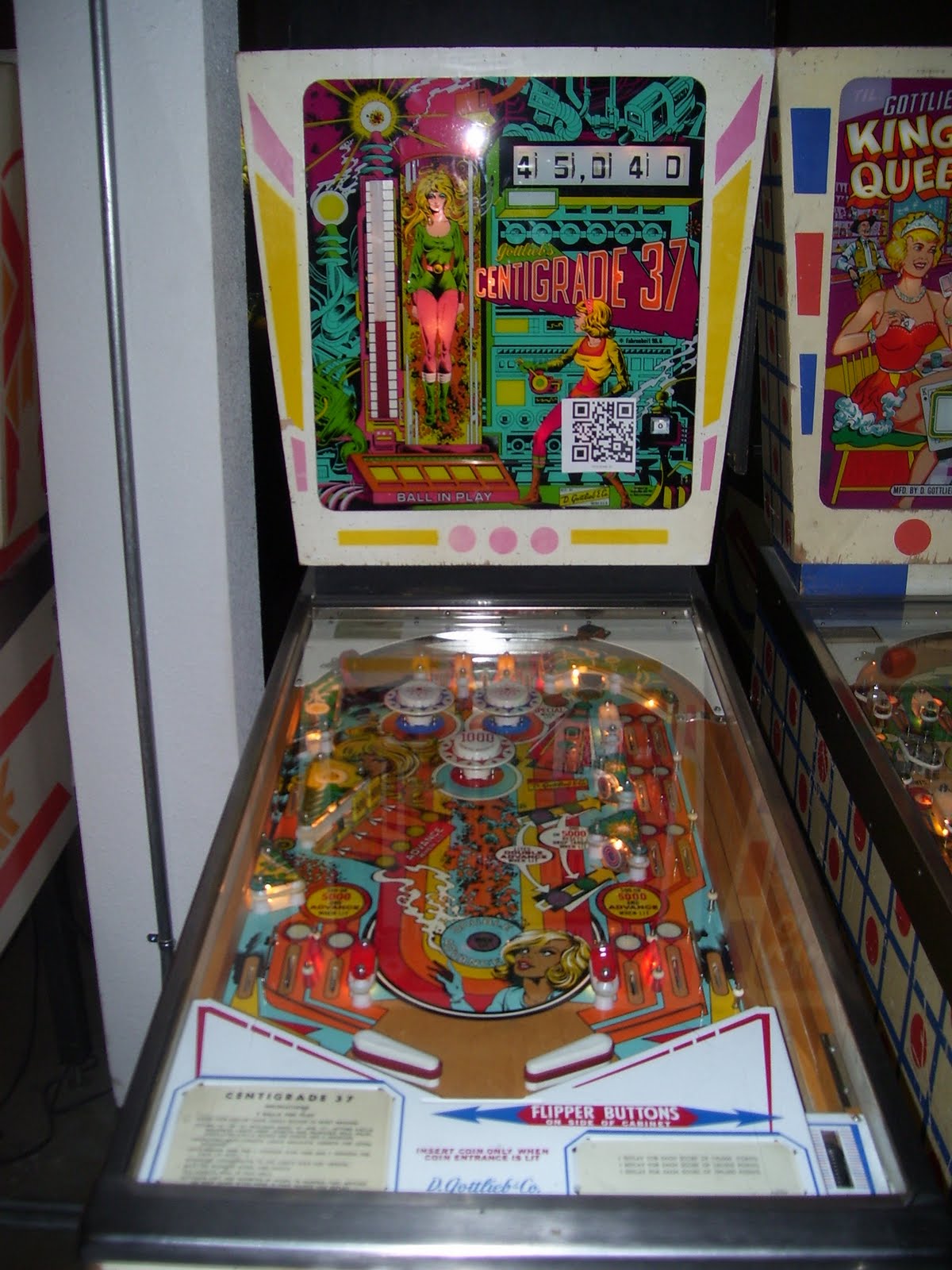
Centigrade 37 – get it? get it?

With a name like Abra Cadabra, you’d think he was a magic-user. Trust me – he’s a thief.

Not pinball, but still …

Nabu – Vipers, Coffers and Wizards
 7408 Sandstone Quarry: An ancient Nabu quarry of sand-stone has been re-opened by a clan of 324 dwarf exiles. The dwarfs live in burrows dug into the upper portions of the quarry and have created a great hall, a shrine of Pluto and Vulcanus and a fortified treasure room guarded by a sand trap. The community has 15 warriors in scale armor with shield and axe and a similarly armed and armored sergeant named Hvaxi. The miners are led by a council of elders. They also tend goats and make a potent liquor from mushrooms grown in their burrows.
Dwarf Warrior (15): HD 1 (8 hp); AC 4 [15]; Atk 1 weapon (1d8); Move 6; Save 17; CL/XP 1/15; Special: Detect stonework.
Hvaxi: HD 3 (24 hp); AC 4 [15]; Atk 1 weapon (1d8+1); Move 6; Save 14; CL/XP 3/60; Special: Detect stonework.
7435 Mekhosis the Mind Master: A powerful psychic called Mekhosis has repaired an abandoned castle and keep located near the western border of this hex. The castle is built atop a granite prominence within sight of the river. Here, Mekhosis plumbs the depths of the Astral Plane and has congress with strange creatures from beyond.
The castle is constructed of sandstone and consists of an outer wall (30’ tall, 10’ thick), courtyard with fountains and gardens of mind-altering herbs, fruit trees and mandrake root and a keep (30’ tall, 40’ square).
Mekhosis employs 36 men-at-arms and a gruff sergeant-at-arms named Gamil to maintain order. The warriors wear tall, saffron turbans and Egyptian-style kilts over their ring armor. They arm themselves with spears, tulwars and short bows, and are accomplished horse archers. Mekhosis employs 50 servants, including cooks, maids, jongleurs and musicians. He also has a court astrologer named Haphis and an overbearing major domo named Stavro. Haphis and Stavro are lovers, but also bitter rivals.
Mekhosis keeps a harem of seven psychic women, all students and devoted lovers of the Mind Master. The harem consists of Umbalna of Cush, Semphis and Azalia of Ibis, Kiva the Chalkeion (HD 5, hp 20, AC 5 [14]), Jambe of Kirikersa, Kamlaa the Aziza* and Shashua of Mu-Pan. All of the women save Kiva attack as level 3 monks (HD 3, hp 18, AC 7 [12]) and are capable of reading minds.
Mekhosis is usually benign, but he does suffer from rare and violent mood swings. He is a true gourmand, and weighs nearly 300 pounds. He is usually found in his hall, seated atop a pile of velvet cushions, his body swathed in silken robes that part enough to reveal his bulging, sweaty form beneath, an ivory pipe carved to resemble two wrestling youths (50 gp) clenched between his teeth. He is always surrounded by a dozen warriors and his sergeant and a flurry of serving boys and maids catering to his every whim. His castle stores include almost any food, drink or spice one might think of, some of it plucked from the weird planets that float in the Astral Plane, the rest purchased from trading ships who visit regularly from Ibis. The great hall is decorated with rich tapestries (12,600 gp).
Mekhosis’ treasury is a small demi-plane of sapphire sand and amber skies that can be reached using astral travel. It is protected by an enslaved djinn called Mazimik. The treasure is kept in a large alabaster cistern carved in weird alien designs that causes confusion in those who gaze upon it and fail a saving throw. The treasure consists of 6,300 cp, 2,037 sp, 2,475 ep, 228 gp, 111 pp, a bronze figurine of a boy with a massive, cubic head (3 gp), a silver signet ring decorated with tourmalines (20 gp), two masterwork weapons, a heavy mace and a trident, made of bronze and covered in swirling silver tracery (100 gp each) and a cursed papyrus scroll which de-magics the nearest magic item when read.
Mekhosis, Psychic Lvl 10: HP 48; AC 9 [10]; Save 6 (4 vs mind magic); Special: Astral projection, ESP, memerism, psionic blast, telepathy, sixth sense, mental resistance +2; silver dagger, vial of perfume, vial of poison, potion of giant control (orange and opaque, biting taste, conical glass container).
* Aziza are tall, gaunt, mahogany-skinned elves from the jungles of Cush.
7532 Fortress of the Lurker: An old Nabu tower rests here. Built of limestone and sandstone, it rises 20 feet tall and has a 10-ft square base. The tower is empty save for a ceiling lurker on the top floor.
Ceiling Lurker: HD 10 (60 hp); AC 6 [13]; Atk 1 crush (3d6); Move 1 (Fly 7); Save 5; CL/XP 10/400; Special: Smother.
7534 Great Pyramid: The great pyramid of Ikhsos, second priest-king of Nabu, lies here, within sight of the river but buried in 30 feet of shifting sands. The entrance to the pyramid is located about 15 feet below the surface of the sand. From the entrance there is a long, wide passage containing a variety of simple traps (spring-loaded spears, rolling lead weights, spiked pits). Narrow passages that branch from this passage lead to a series of connected chambers containing lesser mummies, golem-like guards, minor treasures and goods intended for the next life.
At the end of the long passage there is an antechamber decorated to look like Nabu of many millenniums ago, with its lush savanna, gleaming geodesic domes and strange, flying chariots. This chamber contains terracotta jars filled with ancient spices and resins and bronze sculptures of primitive herd animals and ancient plants. A hidden trap-door in the middle of the chamber leads to a passage that descends two hundred feet into the ground to a chamber of a size similar to the first, but decorated very differently.
The lower chamber is clad entirely in obsidian blocks. Four hundred crystal studs are set into the walls and ceiling and resemble the starry sky of 5,000 years ago. When any source of light is brought into the room, beams of light erupt from the crystal studs, crisscrossing the room and acting as burning hands spells. In the middle of the room there is a black pool of still water. One can dive into the water and find themselves standing in a massive pyramid of crystal looking out at the Astral Plane.
The crystal pyramid is roughly 300 feet long and wide and 250 feet tall at its pinnacle. Four pools, like the one the adventurers stepped in to enter the place, are placed along each wall, while in the middle there is a platform ringed by magic circles and ever-burning braziers. The pools all lead to different places, specifically Luna, Saturnis and the Ethereal Plane. Atop the platform there is a sarcophagus cast in orichalcum and decorated with black opals and champagne pearls (4,000 gp). The sarcophagus holds the mummy of Ikhsos. The mummy wears an alabaster death mask that reveals a gaunt face, pointed chin and large eyes. Around his neck is a silver vial hanging from a silver chain. The vial contains a milky, white liquid with a spicy flavor that is a potion of diminution. The tomb proper is guarded by an army of 50 shadows, all former servants of the priest-king. Against the black floor and inky darkness of Astral space, the shadows are virtually invisible until they attack and even then enjoy a +4 bonus to Armor Class unless countered with a light spell.
Stepping upon the sarcophagus platform causes the platform to disappear, leaving a 30’ deep circular pit (6d6 falling damage) with black, glassy walls. The sarcophagus will continue to float above the pit. In the bottom of the pit, there is a serpentine shadow dragon (i.e. black dragon with the powers of a shadow) guarding a treasure horde.
The horde consists of 10,000 cp, 1,500 sp, 1,600 ep, 500 gp, 24 pp, 9 stones (mostly amber and pearls), 2 gems (topaz and carnelian), 1 sapphire, a vellum scroll containing the spell floating disc and a suit of +2 leather armor that looks like a blue, halfling-sized skinsuit.
Mummy: HD 6+4; AC 3 [16]; Atk 1 fist (1d12); Move 6; Save 11; CL/XP 7/600; Special: Rot, hit only by magic weapons.
Shadow (50): HD 3+3 (20 hp); AC 7 [12]; Atk 1 touch (1d4 + 1 str); Move 12; Save 14; CL/XP 4/120; Special: Only hit by magic weapons.
Shadow Dragon: HD 8 (48 hp); AC 2 [17]; Atk 2 claws (1d4 + 1 str), bite (3d6); Move 9 (Fly 24); Save 8; CL/XP 10/1400; Special: Spit acid, only hit by magic weapons.
7615 Roc Remains: In a small crater there lies the skeleton of a roc. A carriage of sorts is strapped to the back of the great bird. The carriage is a flat wooden platform surrounded by a guide rail. It is apparent that six wooden stools surrounding the skeleton were once attached to the platform, which is held together by thick leather straps. The whole contraption is now warped beyond repair.
7630 Gazelle People: This portion of the riverbank is especially fecund, giving rise to a large grassland. The primary inhabitants of the grassland are a tribe of gazelle people. The gazelle people are quick and graceful, but easily fooled. They live by hunting the herds of basidirond that live in the spongy grasslands near the river. The primary hunting implements of the gazelle people are stone-tipped javelins thrown with an aklys. They also make use of blowguns with bone needles dipped in poisons harvested from the basidirond.
The gazelle people live in huts woven from grass. The tribe has two males, Gnoor and his young son Looor. The rest of the tribe consists of Gnuur’s harem of 18 females. The females share huts with their sisters. Looor lives with his mother and sister, while Gnuur moves from hut to hut. Gnuur owns an old-but-usable sickle-sword which he claims is magical. The primary danger to the gazelle people (aside from wandering adventurers) are the cat people who hunt them. The tribe’s entire treasure consists of 270 gp that Gnuur keeps in a leather sack.
Gazelle Man: HD 2; AC 6 [13]; Atk 1 gore (1d6) or 1 weapon (1d4); Move 15; Save 16; CL/XP 2/30; Special: +1 initiative.
Looor, Fighting-Man Lvl 1: HP 5; AC 6 [13]; Save 16; Spear, javelins (3), +1 initiative.
7640 Marble Quarry: A wide, paved trail now overgrown with prickly weeds leads to an abandoned quarry of white marble. The quarry contains a very shallow pool of water govered by viscous brown slime (non-hazardous). The trail becomes a raised, paved highway through the desert. The highway is covered by dunes in some places, but can still be followed without too much difficulty. It leads to a sandstone tower inhabited by Rufus, a reclusive wizard and clockmaker. The tower rests on a small hill about 300 yards from the river and has its own quay (though no boat).
The wizard lives off fish and crayfish he captures with clever clockwork traps made of copper. The lands around his tower are patrolled by a troupe of six clockwork cavaliers called Primus, Secundus, Tertius, Quatrus, Quintus and Sextus. Two of these clockworks are stationed by the entrance to the tower, while the others patrol the hex on living camels. Besides their scimitars, they carry muskets and 10 shots of ammunition and powder.
The ground floor of the tower has a diameter of 25 feet and a 20-foot high ceiling. Serving as Rufus’ laboratory, it is a tangle of wires, gears and scavenged pieces of armor. The middle of the laboratory is dominated by a giant robot in the midst of construction. The robot is surrounded by scaffolding. During the day, the laboratory is patrolled by three bronze cobras.
Rufus lives alone above the laboratory in a room crowded with books, scrolls and plans. He doesn’t sleep enough and he rarely bathes. One wall of his room has a mirror he uses to spy on his lady love, Petra , a beautiful sorceress married to his late rival Fodwic. Three iron chests with puzzling locks (-6 to open) and poisoned needles contain 43,900 sp.
Clockwork Cavalier (6): HD 5 (30 hp); AC 3 [16]; Atk 1 sword (1d8) or 1 musket (3d6); Move 12; Save 13; CL/XP 5/240; Special: Slows down, immune to sleep, charm, hold and non-magic piercing weapons, explodes if beheaded.
Rufus, Magic-User Lvl 10: HP 30; AC 7 [12]; Save 6; Special: Spells (5th); +1 dagger, repeating crossbow, potion of healing, spellbook.
7647 Tomb of Hashminep: Hashminep was a wizard of the Nabu empire who once governed over the savanna south of the River of Death . He once ruled a great fortress that was surrounded by a thriving river port called Yatum. During the cataclysm, the town was wiped from the face of Nod by a burning wind. Successive river floods then buried the remainder in silt, and soon the grasses and shrubs of the savanna completed the work of erasing the existence of Yatum from human memory. All that remains of the town is the 60’ tall limestone tower of Hashminep , girded with magical power. The tower is now Hashminep’s tomb, for though he had planned to become a lich, his rituals were interrupted. The tower’s battlements now rise about 10’ above the surface of the savanna and serve as the aerie of a giant owl and its young. A search of the tower’s top will reveal an ancient, rusted trap door.
Inside the tower one will find three floors, each separated by a circular stair that rises from a central pillar. The pillar is composed of smooth marble inlaid with electrum tracery that runs the length of the pillar and makes of the place impossible to enter or exit dimensionally without holding a sapphire scarab that serves as a magical key. This scarab lies at the bottom of the place in the grasp of Hashminep.
The highest level of the tower was Hashminep’s lab. It is a large, circular room 30’ in diameter. The floor is lined with glazed terracotta tiles, all a mute brownish-red. The molded remains of laboratory tables and shelves litter the room, along with dust that would have once represented a well-stocked library of scrolls. One might make out the tattered remains of wall hangings as well. Five tiles, completely unremarkable (consider them secret doors) hide coffers that contain the wizard’s treasure (see below). All of these coffers are traced with explosive runes and removal of the treasures from the tower invoke powerful curses. One corner of the room is blanketed in complete darkness, and herein dwells a type II grue.
Grue: HD 6 (40 hp); AC 2 [17]; Atk Bite (2d6); Move 12; Save 11; CL/XP 11/1700; Special: Immune to all but light/magic weapons and spells with light component/effect, extinguish lights within 100’, restores own HP with damage inflicted on enemies.
The wizard’s treasure is divided as follows:
Coffer #1 contains 10,000 cp, 5,000 sp, 2,600 ep, 45 gp, a tiara of silver and chalcedony (190 gp) and one ounce of myrrh (10 gp) in a sealed clay jar.
Coffer #2 contains 8,000 cp, 8,000 sp, 100 gp, 3 pp, 5 moss agates and a jargoon.
Coffer #3 contains 3,000 cp, 516 sp, 1,200 ep, a glass lense (100 gp) and a vase carved from olivine (140 gp).
Coffer #4 contains 6,000 cp, 1,000 sp, 1,000 ep, 15 gp and a masterwork light mace (+1 to hit, 100 gp) wrapped in an oilskin cloak and a ring of blinking (9,800 gp/1,960 XP).
Coffer #5 contains 4,000 cp, 550 sp, 650 ep, a rosewood yarting (40 gp), a fertility idol carved from sardonyx (170 gp), an ivory pendant bearing the royal seal of Nabu, a double-headed phoenix (70 gp), a vial of antitoxin (50 gp) and a royal outfit from the days of ancient Nabu (300 gp).
The second level of the tower was composed of dozens of small cells with barred doors. Here, the central stairs become very narrow, with the cells being built into the walls at varying levels. Some of the cages are no more than one or two cubic feet in size, while other are long and low and still others could uncomfortably hold a hunched human figure. It was here that Hashminep kept the subjects of his grisly examinations into mortality. The cages now hold nothing but dried bones, the tortured souls that once inhabited them now empowering a poltergeist. Bronze keys and iron pokers hang from the walls beside the barred doors and can be used by the poltergeist, along with the bones, to cause considerable damage.
Poltergeists (8): HD 1d4 (4 hp); AC 9 [10]; Atk None; Move 6; Save 18; CL/XP 2/30; Special: Fear, invisibility, incorporeal, only harmed by magic or silver weapons.
Passing through this gauntlet, one will find themselves in Hashminep’s reception room. Most of the room is filled with desert sand that was blown through the door and completely obscures a second set of stairs that led to the tower’s only entrance. Here, one may find Hashminep, charred and preserved by the burning sands resting on a divan. He wears a platinum signet ring (1,500 gp). Other furniture, similarly burned and broken, lie beneath the sand – small tables, a second divan, a chair. In one corner, again, beneath the sand, there are a half dozen canopic jars containing the organs of notables that the wizard planned to use in his bid for immortality. The tormented, disembodied spirit of Hashminep still lurks in this chamber, mad and murderous. It manifests as a 10 headed serpent, not unlike a hydra, composed of sand.
Hashminep: HD 10 (66 hp); AC 5 [14]; Atk 10 heads (1d8); Move 9 (Burrow 9); Save 5; CL/XP 13/2300; Special: Half damage from blades, only harmed by magic or holy weapons, bite causes loss of 1 level (temporary, save to avoid).
7730 Necropolis: This hex holds the infamous ruin of Nabu, center of an empire that covered Map J11 and portions of Maps J12 and K11. The city-state was originally founded by a zetan called Nabu. Nabu organized the slaves of the debauched lizard kings that ruled the savanna into an army and vanquished them once and for all. He established his tower in a bend on the river along with a fortress. Over time, this settlement grew into a powerful city-state. After Nabu passed on, a succession of wizard-kings, all descending from Nabu and human women, ruled Nabu. Some brought it glory, others infamy. The last ruler of Nabu was a woman called Necotis. Necotis was a black magician and poisoner who eventually became a vampire. Under her rule, the empire became especially cruel and was eventually vanquished in what sages label the Cataclysm. Just what caused this destruction is unknown, but it turned the Nabu Savanna into a desert.
The city-state of Nabu proper is no more than dust. What survives of the city-state is its old necropolis located a few miles into the hills. The necropolis is a collection of cave tombs, monuments and fortress-tombs constructed in a canyon that once supported a tributary of the River of Death . Many of these tombs connect, whether by design or by excavation by ghouls and other subterranean monstrosities such as mummies, mummy golems, bats, cat-weres, vipers, spitting cobras, basilisks, ghouls and grimlocks. The subterranean pleasure palace of Queen Necotis is reputed to lie deep beneath the surface. The Queen is still said to rule here, attended by mechanical men, man-apes and fiendish leopards.
7802 Petrified Forest: You see a vast forest of petrified trees hemmed in by tall dunes. The petrified trees rise anywhere from 5 to 30 feet above the sand. The entire place has an eerie feeling to it; one often hears footfalls in the sand but finds nobody present to make them. The forest is haunted by a tree ghost. Her tree is the largest in the forest and one can make out vaguely humanoid shapes that it has absorbed. Should one care to dig in the sand around her tree, they may (1 in 6 each hour) find a scroll of remove fear (magic-user).
Tree Ghost: HD 3 (13 hp); AC 6 [13]; Atk Claws (1d3) or thorns (poison); Move 12; Save 14; CL/XP 10/1400; Special: Charisma drain, insect plague, animate wood, immune to normal weapons, cold, electricity, acid and non-magical fire.
7807 Vipers: This entire hex is infested with crystal vipers. They become thicker as one heads toward the center of the hex. The Referee should make five encounter checks as adventurers move through the hex, with the chance to encounter 1d12 crystal vipers beginning at 2 in 6 and increasing to 4 in 6 as one moves through the hex. Buried twenty feet below the dunes, roughly in the center of the hex, is a crystalline orb approximately 5 feet in diameter. Touching the orb transports one to a dimension made entirely of crystal and gemstones and inhabited by an advanced civilization of crystalines.
Crystal Viper: HD 2; AC 1 [18]; Atk 1 bite (1d4); Move 15 (Burrow 12); Save 16; CL/XP 4/120; Special: Poison (1d6), natural invisibility.
7825 Skeleton: Half buried in the sand is a skeleton wrapped in the robes of a wizard and wearing an Egyptian-style headdress composed of gold and tattered, faded purple cloth (20 gp). His left hand clutches a large emerald that appears to have been chipped from a larger gem (400 gp). His right hand juts from the sand, pointing to the southeast. This is a clue to the whereabouts of the Emerald Tablet of Thoth. Those possessed of a sixth sense can use the chip of emerald to guide them vaguely toward the Tablet. Unfortunately, its emanations have a 1 in 20 chance each day of attracting 1d10 hostile hounds of chronos.
Hound of Chronos: HD 3; AC 7 [12]; Atk 2 claws (1d4), 1 bite (1d6); Move 18; Save 14; CL/XP 5/240; Special: Temporal jump, heal.
7828 Bandit Caravanseray: An old caravanseray in this hex has been turned into a small village by a band of bandits. The village is protected by earthworks (20’ tall) that are embedded with shards of yellow glass. The radioactivity of the glass interferes with magic-user spells, causing them to fail 1 out of 10 times. The village houses 80 people, most of them bandits, prostitutes and the children of same. The village is supported by a bowyer named Creop. The village is a democracy. The leader is a level 7 dwarf thief named Zmep. Upwards of 200 bandits will be camped around the caravanseray. Bandit leaders often stay in the structure, while their men camp outside.
7834 Poplar Grove: A grove of white poplars, with their characteristic greenish-white, diamond-checked trunks, grows along the river bend here. The trees reach about 50 feet in height. The trees are sacred to Harpocrates (Horus) and must not be violated. A copper idol of the deity, green in color, rests amidst the great trees.
7847 Korbin the Hunter: This hex contains the camp of Korbin, a hunter from Antigoon. Korbin has been coming back to this camp for years, and this season he has amassed a small fortune in rare pelts and animal goods.
The camp consists of three pavilions, all made of white canvas on iron poles. The largest pavilion belongs to Korbin, and includes a traveling chest (changes of clothes, a stash of ammunition, an extra dagger, 20 glass beads worth the equivalent of a gold piece with the more primitive humanoids and 100 gp), cot, desk and chair. The pelts (3,000 gp worth, including the neck scale of a bulette) and other goods he has taken are kept with Korbin and guarded by his war dog, Zash (12 hp).
One smaller pavilion serves as a barracks of sorts for Korbin’s eight bearers (0-level humans, 3 hp each) and his shieldmaiden, Swala. The other pavilion is used for storage of supplies (barrels of flour, wine, salted fish and meat).
Korbin doesn’t take too kindly to being surprised by strangers, but if approached cautiously he will prove to be friendly enough. He will expect to be paid for any kindness shown, and he is easily offended.
Swala, Fighting-Woman Lvl 2: HP 12; AC 7 [12]; Save 15; Spear, shield, dagger.
Korbin, Ranger Lvl 9: HP 61; AC 3 [16]; Save 7; Special: Favored enemy is the lion; Musket (treat as heavy crossbow), +1 short sword, dagger.
Zash, War Dog: HD 2 (12 hp); AC 7 [12]; Atk Bite (1d6); Move 14; Save 16; CL/XP 2/30; Special: None.
—
Photo is actress Theda Bara as Cleopatra
—
And so we leave Map J11 behind as we continue our tour of NODTM. I believe next we will go north to Venatia, a land of thick forests and several competing city-states, including Lyonesse, a city of knights and dames, Antigoon, trading capital of Mother Ocean and Blackpoort, city of smugglers and thieves. Venatia has a more Western European feel, so it should be a nice change from the Mediterranean/N. African vibe of the Wyvern Coast and Nabu.
Before I hit Venatia, though, I have a druid class and spell list to write …
Nabu – Echoes and Bones
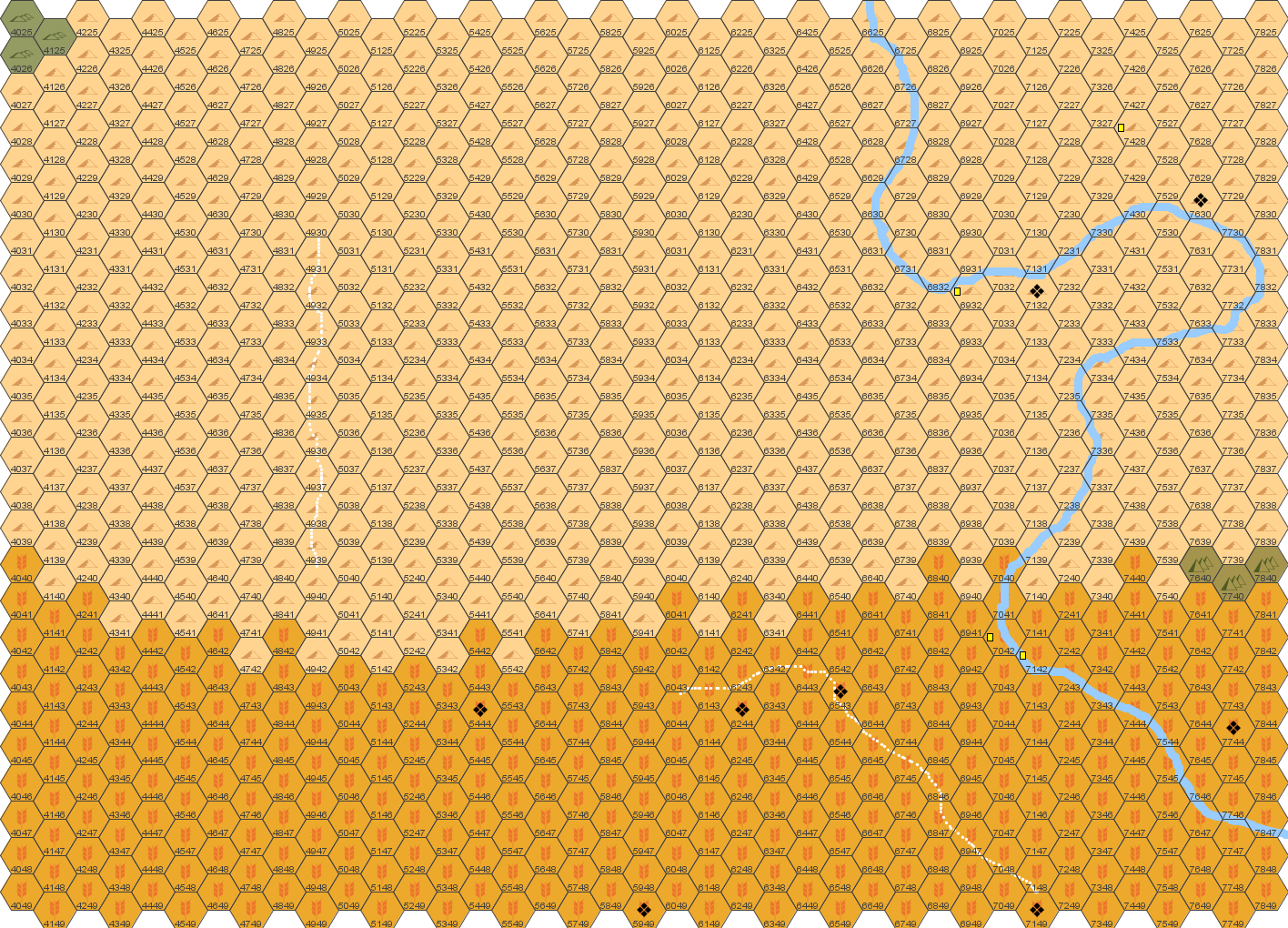 4146 Village of Echoes: The adventurers stumble upon a small, abandoned village. The village is surrounded by a picket of sharpened stakes and tangled thorn bushes. It also has a wooden gate that has been left open. Keen eyes might note a partial human skeleton buried in the ground in front of the gate.
Although the adventurers cannot see anyone, the village is inhabited by echoes. The echoes are all that remains of the villagers after being cursed. Some years before, a dying wizard came before the gates of the village, begging for assistance. The greedy villagers lifted not one finger to help the man and so he cursed them with his dying breath. They were shunted into a space between dimensions, their only anchor to the material world being their voices, which could only echo the voices of others.
The only way to communicate with the villagers now is through the use of drums and call-response style songs. The call-response songs are the only way the cursed villagers can answer questions. Using this method, curious adventurers may learn of the village’s curse.
The curse can only be broken by carrying the wizard’s bones into the village and throwing them a great feast. Unfortunately, the skeleton is not complete. The skull is in the possession of Bonolo [7744]. The skeleton’s right arm was carried away by a lion, and now resides two hexes to the southwest [3947]. A locate object spell will lead adventurers to these bones.
Once the curse is broken, the villagers will return to the material world none the worse for wear. Unfortunately, they are as greedy as ever, and their rescuers will be hailed by a chorus of complaints: “Where are our animals? What will we eat?” While it may be possible to hire some of the villagers as bearers or even men-at-arms, they will prove to be quarrelsome and disloyal.
4426 Boiling Springs: Amidst the sandy dunes there is a small meadow of dry grasses, in the midst of which there are boiling hot springs. The springs themselves are surrounded by a caldera of sorts composed of mineral deposits. Shamans from the surrounding area trek to this place to gather minerals, and there is a 1 in 6 chance that a druid and his acolytes are present. Not far away from the springs is a half-finished shrine built of large sandstone blocks. The shrine was meant to be dedicated to Selchis, but was never finished. Various rare earths can be taken from the site by an alchemist, and water from the springs has medicinal qualities (+1 save vs. disease).
4447 Castle of Bones: A small limestone castle lies in this hex, abandoned save for a terrible multitude of bleached bones. The walls of the castle rise 30 feet from the ground and are crenelated. Each corner of the walls boasts a square tower 40 feet tall. The northeast tower has collapsed and the others will soon join it. Presently, they show the signs of a terrible fire. Two fifty foot tall towers flank the castle gate, which is shut by a portcullis of rusty wrought iron. Through the portcullis, one can see that the courtyard beyond is covered with humanoid bones, with some “drifts” being 3 or 4 feet deep. The castle’s keep is fifty feet tall with a base 80 feet square. Within the keep there is a fairly common layout; great hall and kitchen on the ground floor, barracks and storage on the second floor, living chambers on the third and an armory and treasure room on the top level. All of these rooms are similarly piled with bones, which seem to catch on clothes and get under feet while one passes through. The castle holds no treasure. The bones are an illusion created ages ago by a godling in revenge for the blasphemies committed by the inhabitants, who long ago left the morbid place to rot.
4648 Abbey of Melkarth: Adrubal, a patriarch of Melkarth has constructed an abbey in this hex. The abbey consists of a 30-ft tall central keep flanked by four lower structures lined with pillars. The abbey is constructed of limestone clad in reddish marble. The main doors, looking east, are wood clad in bronze bas-relief. The keep has a dozen arrow slits facing in each direction. The smaller structures of the abbey comprise an eating hall, kitchen, living chambers (small cells stacked atop one another and accessible by ladders for the brothers, a larger chamber for the abbot) and a training room. All of these structures are connected by narrow passages. The central keep houses the great idol of Melkarth. While the exterior of the keep is square, the interior is octagonal. In the middle of the room there is a 25-ft tall idol of Melkarth. Each corner in the room has a bronze brazier, with incense kept burning throughout the day. Ladders lead up to wooden platforms that allow the brothers to use the aforementioned arrow slits. The abbey is surrounded by walled gardens (cooking and medicinal) and several quince trees.
Below the keep and accessible from the living quarters, is what the brothers call the Well of Souls. The well is located in a natural, limestone cavern clad in coral. In the middle of the cavern there is a natural well that contains cloudy, reddish water. The floor of the cavern has been worked to create an octagonal pool with steps leading to the central well. The brothers have also carved out storage and meditation alcoves around the pool area. Non-lawful creatures stepping into the pool with cause it to freeze over; a saving throw (with a penalty based on how deep one goes) is required to avoid being frozen in place and suffering 1d6 damage each round until freed.
The abbey’s treasure, located behind a secret door in one of the aforementioned alcoves, consists of 10800 cp, 10920 sp, a sardonyx worth 500 gp, a gnomish cloak (10 gp, +1 to hide) and a cursed scroll that kills its reader with a rotting disease in 2d4 turns. Adrubal keeps a stuffed crocodile (90 gp), a papyrus scroll on art & music (30 lb) and a masterwork longspear (100 gp, +1 to hit) in his living quarters. He wears a copper toe ring set with a citrine (500 gp) and an ivory locket (40 gp) and carries a pale yellow potion of fire resistance with an earthy taste in a conical bottle and a masterwork heavy flail (150 gp). The brothers have ring armor, shields, maces and pellet bows (fire stones, like slings, same damage but short bow range).
- Acolytes (20): HD 1; AC 5 [14]; Atk 1 weapon (1d6); Move 9; Save 16; CL/XP 2/30; Special: Turn undead.
- Adrubal, Cleric Lvl 10: HP 69; AC 4 [15]; Save 5; Special: Spells (5th), +1 to hit with heavy flail; Heavy flail, chainmail, potion of fire resistance.
4838 Roasting Crater: The ground rises here to form the walls of a great crater one-half mile in diameter. The floor of the crater is solid glass and capable of roasting people alive during the day (3d6 damage per round).
5350 Abbey of Medusa: A small rise of jagged stone there stands a small fortress. Built of sandstone, the fortress is inhabited by a convent of twelve nuns dedicated to the worship of Medusa. The nuns draw their members from the ranks of women wronged by men. They are normal humans from many walks of life, but fight as berserkers against men using sickle-swords and daggers. The nuns are led by Mother Betresh and her adepts, Henna and Maia.
The fortress is twenty feet tall and consists of two stories. The roof is vaulted and made of stone. The roof has a cistern for collecting water (connected to the kitchen via a clay pipe) and a chimney (also to the kitchen) blocked by an iron grate. To enter the fortress, one must first negotiate the jagged outcropping it is built upon. One must climb 15’ to get to the entry, and risks falling and cutting themselves to do so. There is a small ledge before the entryway, which is flanked by two statues of women in Egyptian garb, facing away from the door. The door itself is constructed of iron and always kept locked. A sliding panel on the door allows the nuns to spy on their visitors.
The bottom floor of the temple consists of a small entry hall decorated with very fine statuary, much of it weathered and cracked from age and the elements. From the entry hall there are three wooden doors heading north, east and west.
The north door leads to a dining hall for the nuns. It features a long table set with earthenware bowls, spoons and goblets. There are twenty chairs along the table, including a chair carved from marble and set with precious stones of green and yellow (1,000 gp total, gems worth 200 gp if removed) at the head of the table. Bas-reliefs of dancing women along the walls are designed to hold candles. A door in the eastern wall leads to the kitchen.
The eastern door from the entry chamber leads to a storage room. It is piled high with bolts of green cloth (used to make robes), barrels of hard cheese, jars of pickled olives and fish and three amphorae of white wine (worth 10 gp each). There are hundreds of mushrooms and strips of fungus hung in nets to dry and a dozen baskets that appear to be used to collect them. A door in the northern wall of the storage chamber leads to the kitchen.
The kitchen consists of a couple tables, a fireplace and a wash basin (connected to the cistern on the roof). A cauldron hangs in the fireplace and bowls, plates and knives are scattered on the tables. A few stools allow the nuns to sit while working.
The western door in the entry hall leads to a stairwell. The stairs are made of stone with wrought iron railings. They spiral up to the second floor. Along the western wall several stone masks representing faces twisted in horror, misery or agony hang on hooks on the wall. Removing a mask will reveal wire tied to the back, allowing them to be worn over the face (though without the benefit of seeing). In each corner of this room there are sculptures of warriors in archaic armor shielding their eyes. It is readily apparent to anyone who examines them that their upraised arms can be rotated. The statue in the northwest corner is a trigger that causes the stairwell to sink into the ground, leaving a hole in the ceiling but allowing access to the caverns beneath the nunnery. The other three statues have glyphs of warding carved into their horrified faces. The northeast statue has a blast glyph that deals 7d4 points of acid damage. The southwest and southeast statues have spell glyphs; blindness and cause disease respectively. All glyphs were cast by a 7th level evil cleric.
When ascending the stairs to the second story, one finds themselves in a chapel dedicated to Medusa. The chapel contains a small marble altar supported by statues of two small children and a headless idol of Medusa herself. Chains on one wall suggest that sacrifices are performed here; the chisels and hammers on the wall, all of ornate design, reinforce this suggestion. A single door to the east allows access to a hallway. The hallways allows access to several living cells to the south. To the north, a door gives access to the abbess’ study (filled with religious objects and a writing desk, in which there is a map showing an entrance to the underground queendom of the medusas beneath the Carnelian Coast), which in turn allows access to her simple living chamber (bed, wardrobe, Egyptian-style plate armor and a gorgon-visaged helm on a stand, three maces on a rack, the first silver, the second masterwork, the third carrying a +2 enchantment and the ability to cast flesh to stone once per day when the command word “Justice” is uttered). A locked chest trapped with a poisoned needle (permanent paralysis) contains the nuns’ treasure: 997 gp, delicate electrum clasp in shape of a coiled basilisk (2,000 gp), etched crystal ring (1,500 gp) and brass dinnerware (60 gp).
The caverns beneath the nunnery are not extensive. The nuns believe that the outcropping and its little underworld were created when drops of blood from Medusa’s severed head touched the ground here in ancient times. The stairwell leads to a cramped cavern decorated with carvings of dancing priestesses. A small chute leads downward from this room, large enough to allow a fully armored human to crawl their way through. Those trying to crawl through the chute without first disarming its trap (by rotating all of the eyes of the dancing priestesses to make them look closed) are likely to be impaled by iron spears set with springs. The spears fire and then pull back, meaning that each person moving through the chute will suffer 1d6 attacks from a 3 HD “creature”.
At the bottom of the chute there is a larger cavern with a vaulted roof. A fountain in the shape of Neptunus spits water into a carved basin in the center of the room. The statue’s head is turned to face east while his trident points to the west. The entire room is quite damp, and hundreds of edible mushrooms are being cultivated on the floor and walls. There are three exits from the cavern, all of them low, narrow passages cut from the stone.
The water in the fountain has one magical property: If applied to the eyes of the masks (from the stairwell above), they become transparent, allowing the wearer to see but still be impervious to gaze attacks. When the water dries, the effect ends (assume it lasts 2 turns in the damp caves). Only the water from this fountain has this effect.
The eastern passage winds its way in a curve to the western passage. The western passage is blocked by an iron portcullis that is locked down and thus cannot be lifted. Ten feet into the eastern passage, adventurers will come upon an alcove filled with bas-relief sculpture showing a beautiful woman surrounded by courtiers. After another 10’ there is a second alcove filled with a sculpture of Neptunus embracing the woman. A third alcove ten feet further on shows, again in bas-relief, the goddess Athena hovering over the woman who now bears the face of a medusa. At this point, anyone wearing a mask who does not express sympathy with Medusa (by word or tear) will be cursed, their face taking on the appearance of the mask they wear and giving them an effective charisma of 5.
The western portcullis is 10 feet away from the third alcove and contains a lever on one wall that releases the lock and allows the portcullis to be lifted.
The northern passage leads to a vertical shaft. The shaft is set with iron rungs and descends twenty feet into the earth. When adventurers are half-way down the shaft they will trip the trap therein unless they are lucky enough to skip the iron rung that triggers the trap. The trap causes spring-loaded blocks of stone to fire, trapping those already in the shaft against the opposite wall of the shaft. The bludgeoning deals 1d6 damage and the pressure forces them to hold their breath until the trap can be disarmed. A secret door in the floor of the passageway allows access to a gear that winds the springs back. Turning the gear requires strength saving throws, made once each round. Tally the amount by which each save is beaten; when a total of 20 is reached, the stone blocks recede and allow those trapped to breath and continue downward.
The vertical shaft ends in a large cavern filled with statuary. It is home to a greater medusa called Caelia (40 hp). Caelia’s treasure consists of 1,500 gp, a delicate crystal sculpture of a cat (80 gp), a masterwork short sword with a pommel bearing the visage of a boar (90 gp, +1 to hit), a delicate brass bracelet (8 gp), a lotus-shaped clasp of ebony (10 gp) and a massive, ostentatious gold ring (500 gp).
- Betresh, Cleric Lvl 7: HP 39; AC 1 [18]; Save 8; Special: Spells (3rd), petrifying gaze (1/day), snake poison (paralysis for 1d6 rounds), immune to medusa gaze, command earth creatures; Plate mail, mace (petrifies), holy symbol.
- Henna & Maia, Cleric Lvl 2: HP 15; AC 3 [16]; Save 13; Special: Command earth creatures.
- Caelia, Greater Medusa: HD 8; AC 3 [16]; Atk 1 snakes (1d4 + paralyze), 1 weapon (1d6); Move 12; Save 8; CL/XP 10/1400; Special: Petrify, poison, poisonous blood (1d6 strength).
5826 Dry Seabed: This hex and all of those adjacent to it were at the bottom of an ancient sea. Walking into this area, adventurers (especially dwarves and gnomes) will recognize that they are heading down a gentle slope. The temperature will grow hotter as they descend to [Hex 5826]. The entire area is home to hundreds of giant crab exoskeletons (2 in 6 chance to encounter 1d4 per day in the Dead Sea, per hour in this hex).
At the center of the Dead Sea an irregular block of greenish-grey stone rises from the sands. The crab exoskeletons will not approach within 20’ of this stone.
There is a portal in the stone that heads downward into the sands. The passage will lead downward at a 20-degree slope for about 200 feet and then turn right, continuing along the same slope. The passage will continue its descent in 200’ increments until they have descended 300’ into the earth (10 sections).
At this point, the passage will enter a flat gallery. The air here is cold and dead and clammy; the walls and floor are damp and a bit slimy. The walls are lined with ten sarcophagi (give on each side) carved in monstrous, hideous shapes, like a combination of fish and men with bulging eyes and wide, toothy mouths. Each sarcophagus holds an alien mummy. The sarcophagi can be opened with a total 24 points of strength. If opened, the mummies will not attack unless attacked. The mummies (50 hp) attack with giant swords (2d6 damage) that can infect their targets with mummy rot.
At the end of the 100’ long gallery there is a stairway spiraling 30’ downward. At three points along the stairway the steps are trapped to generate walls of force 6’ behind the intruders. These walls are invisible and make no sound, and will likely not be noticed unless the party is large enough that some members are cut off by the walls.
At the bottom of the stairway there is a small antechamber and a large door. The adamantine door bears the image of Tsathoggua in bas-relief and a symbol of death inscribed by a 12th level high priest. The door can be moved with 60 points of strength. If the door is touched, the mummies in the chamber above will awaken and shamble toward the intruders.
Beyond the door there is a domed chamber. The floor and walls are covered by a layer of brown mold. In the center of the chamber there is a large crystal vessel containing a black, viscous liquid. Approaching within 5 ft of the vessel will activate magic mouths on the wall that will warn the intruders away in several archaic languages (those of the fish men, serpent men, dragons and yithians). The crystal vessel is secured with molten adamantine. Several explosive runes (6d6 damage) have been worked into the adamantine. Inside the vessel there is a black pudding. As soon as it is released, it will begin consuming everything in its path and growing.
6143 Animal Trail: Even a non-ranger can pick out an obvious trail here used by migrating herd animals. It moves from east to west, meandering slightly, across the hex. Umbrella thorn trees proliferate along the trail.
6244 Fomu Village: The Fomu are a tribe of 50 families who herd goats with large, double sets of horns and grow emmer wheat with the help of six giant cisterns and a network of irrigation canals. The cisterns, constructed of limestone blocks, are connected by a wall of earth 40 feet tall and 20 feet thick with gates to the east and west. The Dawn Gate is constructed of granite and decorated with brass nails. The Dusk Gate is decorated with iron nails. A road of adobe bricks joins the two gates, which are approximately 1 mile apart. The road is lined with grass huts, an adobe granary, a limestone temple dedicated to Nomkhumbulwane, goddess of farming, rain, rainbows and beer. The temple is five feet above the ground and consists of a large chamber containing the goddesses idol, carved from green marble and decorated with ostrich feathers and painted gourds. Just beyond the temple there is a long limestone building inhabited by the temple’s eight brewer-acolytes. The remainder of the building houses six large, wooden vats used for brewing beer. The largest hut in the village belongs to Hudarr, an elf ranger and village chieftain. Aside from the priests and chief, the village also boasts a chariot maker (the warriors ride two to an ass-drawn chariot, one man driving, the other hurling bronze-tipped javelins) and a bowyer who crafts pellet bows (short bows that cast stones for 1d4 damage) made of goat horns and the aforementioned javelins.
The village treasure, kept in locked wooden chests in Hudarr’s hut, consists of 9,600 cp, 1,900 sp, 5,200 ep, 50 gp, 20 pp, a terracotta figurine of a charioteer (4 gp) and 6 porcelain dishes (180 gp).
- Hudarr, Elf Ranger Lvl 9: HP 55; AC 4 [15]; Save 7; Special: Ranger abilities; Ring armor, shield, 6 javelins, spear, gold disk earrings (40 gp), gauntlets of ogre strength.
6247 Elephant Graveyard: A depression in the grasslands obscures an elephant graveyard. Those poking about for a few hours can collect 1d12 tusks worth 200 gp each. Living beneath the graveyard in narrow tunnels dug into the black soil are a tribe of barrow wights that look like tribesmen with flaky, gray skin and clawed hands and feet that are attached backwards. The wights feed on the dying elephants, but never disturb their bones or tusks. The wight tunnels can be entered through several holes obscured by piles of bones. The tunnels seem to weave randomly, but often end in small, man-made caverns. These caverns invariably hold one or more large, terracotta vessels that are either turned over or burst apart. The bottom of these vessels contain treasure amounting to 1,800 cp, 400 sp, 500 ep, 10 gp and a potion of water breathing that is thick and opaque, with blue, red and yellow swirls. The potion tastes like lime juice and is kept in a crystal vial. Encounters in the tunnels occur on the roll of 1-3 on 1d6 and always involve 2d6 wights, with a total of 20 wights living beneath the graveyard.
- Wight: HD 3; AC 5 [14]; Atk 1 claw (1 hp + level drain); Move 9; Save 14; CL/XP 5/240; Special: Drain 1 level with hit, hit only by silver or magical weapons.
6449 Stone Fort: Atop a rocky hill there is a simple fort built of stacked stones. A single watchtower built of stone rises from the midst of this encampment. The inhabitants are a tribe of 46 intelligent skeletons. They are harassed every night by 30 hell hounds. The skeletons are not chaotic, but they are not particularly friendly either. They know the secret of creating more of their kind, and will likely find visiting adventurers of more value as their own kind than as potential foes.
Most of the skeletons (31) conform to the normal statistics for skeletons. These warriors wear scraps of armor and carry spears, shields and short bows. There are also eight exploding bones, two blazing bones and one black skeleton (54 hp) the others call “The Black Prince”.
The skeletons do not know where they came from or why they are here; many consider their lives as something akin to a nightmare and seriously doubt the reality of the situation. Until they wake up, they spend their days strengthening their defenses and their nights fighting off the hounds of hell.
- Skeletons (31): HD 1; AC 7 [12]; Atk 1 weapon (1d6+1); Move 12; Save 17; CL/XP 1/15; Special: None.
- Exploding Bones (8): HD 2; AC 8 [11]; Atk 1 weapon (1d8); Move 12; Save 16; CL/XP 3/60; Special: Explode for 1d6 damage when killed.
- Blazing Bones (2): HD 8; AC 2 [17]; Atk 1 weapon (2d6); Move 9; Save 8; CL/XP 9/1100; Special: Immune cold & fire, half damage from piercing weapons, heat aura (as heat metal, 20’ radius).
- Black Skeleton: HD 6 (48 hp); AC 0 [19]; Atk 2 claws (1d4) or 2 weapons (1d8); Move 15; Save 11; CL/XP 9/1100; Special: Only harmed by magic weapons, frightful, half damage from slashing and piercing weapons, strength damage.
- Hell Hounds (30): HD 4; AC 4 [15]; Atk 1 bite (1d6); Move 12; Save 13; CL/XP 5/240; Special: Breathe fire (8 hp).
6543 Dromo’s Village: Dromo is an elf thief who rules a village of 30 bandits and their families. The village was originally built as a prison. It is surrounded by earthworks 20 feet tall and 10 feet wide. The village is entered through a stone tunnel in the wall that is barred by two steel grates. Within the village, the earthen walls are studded from top to bottom by thousands of wooden spikes that stick a mere two inches beyond the surface of the wall.
The wall encloses approximately 3 acres of land. Within, there are four long houses with flat roofs. The houses are constructed of adobe brick and have barred doors and no windows. These prison barracks are now occupied by the bandits and their wives and children. Each one is equipped with several straw mattresses and a smattering of stools and small tables. Fire pits are located just outside the front doors, and all are topped by tripods and cauldrons.
In the middle of the barracks there is a squat, square tower constructed of adobe bricks and topped by a stone cupola that holds as many as four crossbowmen at a time. The ground floor of the tower is a mess hall with a 15-ft high vaulted ceiling, an long, uneven table, two benches and a tall chair that has seen better days. This is where Dromo and his sergeant, Kabil, take their meals, served by the prettier wives of the ville with wooden trenchers and pewter goblets (2 gp). An iron cage hangs suspended from the ceiling. A brick staircase leads both up and down.
Below the ground floor there has been dug a crude dungeon, held up by thick timbers of mouldering wood and a scattering of flagstones. The little cells are iron boxes.
The second story of the tower is an armory filled with seven crossbows, 250 quarrels, two dozen spears and eight short swords. It also contains 60 weeks of iron rations, a barrel of salt (30 lb) and a barrel of pickled fish (20 lb). A straw mattress here is used by Kabil and contains his treasure of 200 cp, 600 sp and 40 gp. Kabil wears a mail shirt and carries a shield and masterwork broadsword.
The third floor, also reached by brick stairs, is Dromo’s chamber. It contains a feather mattress, an iron strongbox (locked and trapped with a poisoned needle), a long bench and a wooden chest that contains a change of clothes, a spare set of thieves’ picks and tools, a jar of soot (used to blacken one’s face and weapons), an oilskin cloak (8 gp) and charts of the coast from Ophir to Kirikersa (23 gp). Dromo’s longbox contains 760 sp, 120 ep, a stone tablet on medicine written in hieroglyphics (380 gp), a rose quartz (65 gp) and a platinum belt (1,200 gp).
Some distance away from the barracks and tower there is a prison graveyard marked by a boundary of white stones (chalk) that bar chaotic beings from entering. The graveyard is hallowed and the bandits avoid it, choosing to bury their own dead on the savanna well away from their village. In the middle of the graveyard there is an old shrine built of clay and straw in the shape of a beehive. Inside the shrine there is a mahogany idol (now cracked from the heat, for it has not been anointed with oil for decades) of Anubis, along with a bronze brazier and a stone case that holds a scroll of Anubian proverbs.
- Bandits (30): HD 1 (5 hp); AC 7 [12]; Atk 1 weapon (1d6); Move 12; Save 17; CL/XP 1/15; Special: None.
- Kabil, Sergeant: HD 3 (16 hp); AC 5 [14]; Atk 1 weapon (1d8); Move 12; Save 15; CL/XP 3/60; Special: None.
- Dromo, Elf Thief Lvl 5: HP 11; AC 3 [16]; Save 10; Special: Back stab for triple damage; Leather armor, shield, scimitar, longbow, 12 arrows, 3 silver arrows.
6548 Wasp Lair: A hive of 30 giant wasps dwells here inside a tower of dried mud. The tower is 60 feet tall with a diameter of 30 feet. It can be entered from a single opening near the top, which leads to a spiral tunnel that branches many times into tiny cells. At the bottom of the tower there is a 10’ diameter chamber in which dwells the queen and is kept the hive’s treasure, 700 cp, 2,000 sp and 2,300 ep. Wasp encounters occur in this hex on a roll of 1-3 on 1d6, and are usually followed up each day until the intruders have traveled 21 miles.
- Giant Wasps (30): HD 4 (24 hp); AC 4 [15]; Atk 1 sting (1d4 + poison), bite (1d8); Move 1 (Fly 20); Save 13; CL/XP 6/400; Special: Paralyzing poison, larva.
6646 Brick Road: A narrow road of adobe bricks built three to four feet above the level of the savanna cuts across this hex from southeast to northwest. At every mile a diamond-shaped limestone brick is set into the road and decorated with a religious saying in the triangular alphabet of Pwenet. The road is built between the villages in [6543] and [7149].
6728 Magic Gateway: A band of twelve druids, led by an archdruid named Ganur, maintain and protect a magic gateway. The gateway is constructed three miles east of the River of Death . It consists of deep, glassy pool in the midst of a garden. The garden and pool are surrounded by a sandstone wall 20 feet tall and 5 feet wide. The exterior of the wall is studded with shards of yellow glass. Planted around the inside perimeter of the wall are dozens of tangle weeds. The remainder of the garden consists of aromatic trees (acacia, myrrh), brilliantly colored bulbs, and wild roses, all planted with seemingly no rhyme or reason. Small cells constructed in the inner wall serve as living quarters for the brotherhood of druids that protects and nurtures this place. The brotherhood are all men. They are completely shaven, from head to toe, and wear wide-brimmed leather hats and simple loin cloths. Each brother bears a ruby stud in his nose and carries a staff or myrrh which maximizes the effects of their spells.
The pool itself is surrounded by hallucinatory terrain depicting tall, thick reeds of papyrus. These reeds seem to thwart all attempts at cutting through them until one disbelieves in the illusion. At that point, the reeds seem to part, allowing access to the pool. The pool is completely natural, and should one dive into it, they would not be able to find a bottom. The water in the pool is cool and clear. If one drinks from the pool, they will swoon and awaken to find themselves on the jungle planet of Venus.
- Druid , Lvl 6 (12): HD 6d6+6; AC 9 [10]; Atk 1 staff (1d4); Move 12; Save 9; CL/XP 8/800; Special: Spells (3rd), change into lions.
- Ganur, Druid Lvl 12: HP 56; AC 7 [12]; Save 4; Special: Spells (6th), druid abilities; Papyrus scroll (wall of wind), ring of freedom of movement, staff, leather armor.
 Land of Nod