Nabu – Vipers, Coffers and Wizards

7408 Sandstone Quarry: An ancient Nabu quarry of sand-stone has been re-opened by a clan of 324 dwarf exiles. The dwarfs live in burrows dug into the upper portions of the quarry and have created a great hall, a shrine of Pluto and Vulcanus and a fortified treasure room guarded by a sand trap. The community has 15 warriors in scale armor with shield and axe and a similarly armed and armored sergeant named Hvaxi. The miners are led by a council of elders. They also tend goats and make a potent liquor from mushrooms grown in their burrows.

Dwarf Warrior (15): HD 1 (8 hp); AC 4 [15]; Atk 1 weapon (1d8); Move 6; Save 17; CL/XP 1/15; Special: Detect stonework.

Hvaxi: HD 3 (24 hp); AC 4 [15]; Atk 1 weapon (1d8+1); Move 6; Save 14; CL/XP 3/60; Special: Detect stonework.

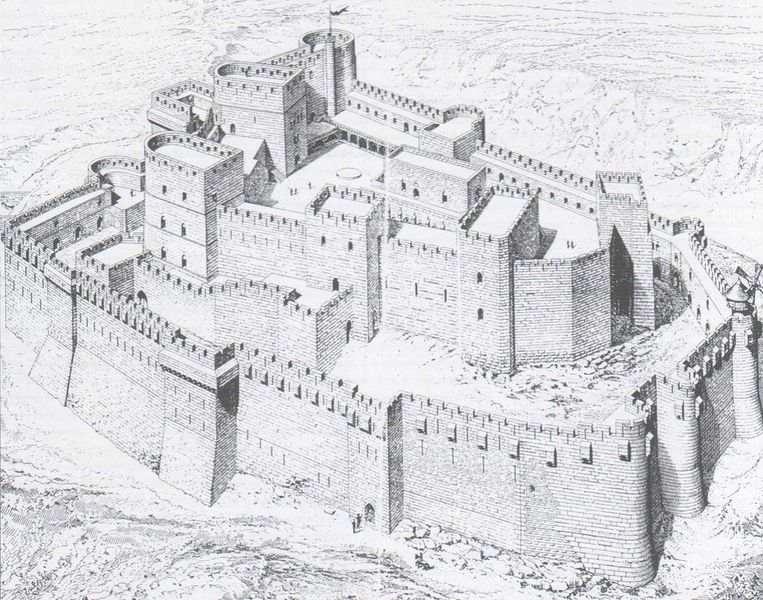
7435 Mekhosis the Mind Master: A powerful psychic called Mekhosis has repaired an abandoned castle and keep located near the western border of this hex. The castle is built atop a granite prominence within sight of the river. Here, Mekhosis plumbs the depths of the Astral Plane and has congress with strange creatures from beyond.

The castle is constructed of sandstone and consists of an outer wall (30’ tall, 10’ thick), courtyard with fountains and gardens of mind-altering herbs, fruit trees and mandrake root and a keep (30’ tall, 40’ square).

Mekhosis employs 36 men-at-arms and a gruff sergeant-at-arms named Gamil to maintain order. The warriors wear tall, saffron turbans and Egyptian-style kilts over their ring armor. They arm themselves with spears, tulwars and short bows, and are accomplished horse archers. Mekhosis employs 50 servants, including cooks, maids, jongleurs and musicians. He also has a court astrologer named Haphis and an overbearing major domo named Stavro. Haphis and Stavro are lovers, but also bitter rivals.

Mekhosis keeps a harem of seven psychic women, all students and devoted lovers of the Mind Master. The harem consists of Umbalna of Cush, Semphis and Azalia of Ibis, Kiva the Chalkeion (HD 5, hp 20, AC 5 [14]), Jambe of Kirikersa, Kamlaa the Aziza* and Shashua of Mu-Pan. All of the women save Kiva attack as level 3 monks (HD 3, hp 18, AC 7 [12]) and are capable of reading minds.

Mekhosis is usually benign, but he does suffer from rare and violent mood swings. He is a true gourmand, and weighs nearly 300 pounds. He is usually found in his hall, seated atop a pile of velvet cushions, his body swathed in silken robes that part enough to reveal his bulging, sweaty form beneath, an ivory pipe carved to resemble two wrestling youths (50 gp) clenched between his teeth. He is always surrounded by a dozen warriors and his sergeant and a flurry of serving boys and maids catering to his every whim. His castle stores include almost any food, drink or spice one might think of, some of it plucked from the weird planets that float in the Astral Plane, the rest purchased from trading ships who visit regularly from Ibis. The great hall is decorated with rich tapestries (12,600 gp).

Mekhosis’ treasury is a small demi-plane of sapphire sand and amber skies that can be reached using astral travel. It is protected by an enslaved djinn called Mazimik. The treasure is kept in a large alabaster cistern carved in weird alien designs that causes confusion in those who gaze upon it and fail a saving throw. The treasure consists of 6,300 cp, 2,037 sp, 2,475 ep, 228 gp, 111 pp, a bronze figurine of a boy with a massive, cubic head (3 gp), a silver signet ring decorated with tourmalines (20 gp), two masterwork weapons, a heavy mace and a trident, made of bronze and covered in swirling silver tracery (100 gp each) and a cursed papyrus scroll which de-magics the nearest magic item when read.

Mekhosis, Psychic Lvl 10: HP 48; AC 9 [10]; Save 6 (4 vs mind magic); Special: Astral projection, ESP, memerism, psionic blast, telepathy, sixth sense, mental resistance +2; silver dagger, vial of perfume, vial of poison, potion of giant control (orange and opaque, biting taste, conical glass container).

* Aziza are tall, gaunt, mahogany-skinned elves from the jungles of Cush.

7532 Fortress of the Lurker: An old Nabu tower rests here. Built of limestone and sandstone, it rises 20 feet tall and has a 10-ft square base. The tower is empty save for a ceiling lurker on the top floor.

Ceiling Lurker: HD 10 (60 hp); AC 6 [13]; Atk 1 crush (3d6); Move 1 (Fly 7); Save 5; CL/XP 10/400; Special: Smother.

7534 Great Pyramid: The great pyramid of Ikhsos, second priest-king of Nabu, lies here, within sight of the river but buried in 30 feet of shifting sands. The entrance to the pyramid is located about 15 feet below the surface of the sand. From the entrance there is a long, wide passage containing a variety of simple traps (spring-loaded spears, rolling lead weights, spiked pits). Narrow passages that branch from this passage lead to a series of connected chambers containing lesser mummies, golem-like guards, minor treasures and goods intended for the next life.

At the end of the long passage there is an antechamber decorated to look like Nabu of many millenniums ago, with its lush savanna, gleaming geodesic domes and strange, flying chariots. This chamber contains terracotta jars filled with ancient spices and resins and bronze sculptures of primitive herd animals and ancient plants. A hidden trap-door in the middle of the chamber leads to a passage that descends two hundred feet into the ground to a chamber of a size similar to the first, but decorated very differently.

The lower chamber is clad entirely in obsidian blocks. Four hundred crystal studs are set into the walls and ceiling and resemble the starry sky of 5,000 years ago. When any source of light is brought into the room, beams of light erupt from the crystal studs, crisscrossing the room and acting as burning hands spells. In the middle of the room there is a black pool of still water. One can dive into the water and find themselves standing in a massive pyramid of crystal looking out at the Astral Plane.

The crystal pyramid is roughly 300 feet long and wide and 250 feet tall at its pinnacle. Four pools, like the one the adventurers stepped in to enter the place, are placed along each wall, while in the middle there is a platform ringed by magic circles and ever-burning braziers. The pools all lead to different places, specifically Luna, Saturnis and the Ethereal Plane. Atop the platform there is a sarcophagus cast in orichalcum and decorated with black opals and champagne pearls (4,000 gp). The sarcophagus holds the mummy of Ikhsos. The mummy wears an alabaster death mask that reveals a gaunt face, pointed chin and large eyes. Around his neck is a silver vial hanging from a silver chain. The vial contains a milky, white liquid with a spicy flavor that is a potion of diminution. The tomb proper is guarded by an army of 50 shadows, all former servants of the priest-king. Against the black floor and inky darkness of Astral space, the shadows are virtually invisible until they attack and even then enjoy a +4 bonus to Armor Class unless countered with a light spell.

Stepping upon the sarcophagus platform causes the platform to disappear, leaving a 30’ deep circular pit (6d6 falling damage) with black, glassy walls. The sarcophagus will continue to float above the pit. In the bottom of the pit, there is a serpentine shadow dragon (i.e. black dragon with the powers of a shadow) guarding a treasure horde.

The horde consists of 10,000 cp, 1,500 sp, 1,600 ep, 500 gp, 24 pp, 9 stones (mostly amber and pearls), 2 gems (topaz and carnelian), 1 sapphire, a vellum scroll containing the spell floating disc and a suit of +2 leather armor that looks like a blue, halfling-sized skinsuit.

Mummy: HD 6+4; AC 3 [16]; Atk 1 fist (1d12); Move 6; Save 11; CL/XP 7/600; Special: Rot, hit only by magic weapons.

Shadow (50): HD 3+3 (20 hp); AC 7 [12]; Atk 1 touch (1d4 + 1 str); Move 12; Save 14; CL/XP 4/120; Special: Only hit by magic weapons.

Shadow Dragon: HD 8 (48 hp); AC 2 [17]; Atk 2 claws (1d4 + 1 str), bite (3d6); Move 9 (Fly 24); Save 8; CL/XP 10/1400; Special: Spit acid, only hit by magic weapons.

7615 Roc Remains: In a small crater there lies the skeleton of a roc. A carriage of sorts is strapped to the back of the great bird. The carriage is a flat wooden platform surrounded by a guide rail. It is apparent that six wooden stools surrounding the skeleton were once attached to the platform, which is held together by thick leather straps. The whole contraption is now warped beyond repair.

7630 Gazelle People: This portion of the riverbank is especially fecund, giving rise to a large grassland. The primary inhabitants of the grassland are a tribe of gazelle people. The gazelle people are quick and graceful, but easily fooled. They live by hunting the herds of basidirond that live in the spongy grasslands near the river. The primary hunting implements of the gazelle people are stone-tipped javelins thrown with an aklys. They also make use of blowguns with bone needles dipped in poisons harvested from the basidirond.

The gazelle people live in huts woven from grass. The tribe has two males, Gnoor and his young son Looor. The rest of the tribe consists of Gnuur’s harem of 18 females. The females share huts with their sisters. Looor lives with his mother and sister, while Gnuur moves from hut to hut. Gnuur owns an old-but-usable sickle-sword which he claims is magical. The primary danger to the gazelle people (aside from wandering adventurers) are the cat people who hunt them. The tribe’s entire treasure consists of 270 gp that Gnuur keeps in a leather sack.

Gazelle Man: HD 2; AC 6 [13]; Atk 1 gore (1d6) or 1 weapon (1d4); Move 15; Save 16; CL/XP 2/30; Special: +1 initiative.

Looor, Fighting-Man Lvl 1: HP 5; AC 6 [13]; Save 16; Spear, javelins (3), +1 initiative.

7640 Marble Quarry: A wide, paved trail now overgrown with prickly weeds leads to an abandoned quarry of white marble. The quarry contains a very shallow pool of water govered by viscous brown slime (non-hazardous). The trail becomes a raised, paved highway through the desert. The highway is covered by dunes in some places, but can still be followed without too much difficulty. It leads to a sandstone tower inhabited by Rufus, a reclusive wizard and clockmaker. The tower rests on a small hill about 300 yards from the river and has its own quay (though no boat).

The wizard lives off fish and crayfish he captures with clever clockwork traps made of copper. The lands around his tower are patrolled by a troupe of six clockwork cavaliers called Primus, Secundus, Tertius, Quatrus, Quintus and Sextus. Two of these clockworks are stationed by the entrance to the tower, while the others patrol the hex on living camels. Besides their scimitars, they carry muskets and 10 shots of ammunition and powder.

The ground floor of the tower has a diameter of 25 feet and a 20-foot high ceiling. Serving as Rufus’ laboratory, it is a tangle of wires, gears and scavenged pieces of armor. The middle of the laboratory is dominated by a giant robot in the midst of construction. The robot is surrounded by scaffolding. During the day, the laboratory is patrolled by three bronze cobras.

Rufus lives alone above the laboratory in a room crowded with books, scrolls and plans. He doesn’t sleep enough and he rarely bathes. One wall of his room has a mirror he uses to spy on his lady love, Petra , a beautiful sorceress married to his late rival Fodwic. Three iron chests with puzzling locks (-6 to open) and poisoned needles contain 43,900 sp.

Clockwork Cavalier (6): HD 5 (30 hp); AC 3 [16]; Atk 1 sword (1d8) or 1 musket (3d6); Move 12; Save 13; CL/XP 5/240; Special: Slows down, immune to sleep, charm, hold and non-magic piercing weapons, explodes if beheaded.

Rufus, Magic-User Lvl 10: HP 30; AC 7 [12]; Save 6; Special: Spells (5th); +1 dagger, repeating crossbow, potion of healing, spellbook.

7647 Tomb of Hashminep: Hashminep was a wizard of the Nabu empire who once governed over the savanna south of the River of Death . He once ruled a great fortress that was surrounded by a thriving river port called Yatum. During the cataclysm, the town was wiped from the face of Nod by a burning wind. Successive river floods then buried the remainder in silt, and soon the grasses and shrubs of the savanna completed the work of erasing the existence of Yatum from human memory. All that remains of the town is the 60’ tall limestone tower of Hashminep , girded with magical power. The tower is now Hashminep’s tomb, for though he had planned to become a lich, his rituals were interrupted. The tower’s battlements now rise about 10’ above the surface of the savanna and serve as the aerie of a giant owl and its young. A search of the tower’s top will reveal an ancient, rusted trap door.

Inside the tower one will find three floors, each separated by a circular stair that rises from a central pillar. The pillar is composed of smooth marble inlaid with electrum tracery that runs the length of the pillar and makes of the place impossible to enter or exit dimensionally without holding a sapphire scarab that serves as a magical key. This scarab lies at the bottom of the place in the grasp of Hashminep.

The highest level of the tower was Hashminep’s lab. It is a large, circular room 30’ in diameter. The floor is lined with glazed terracotta tiles, all a mute brownish-red. The molded remains of laboratory tables and shelves litter the room, along with dust that would have once represented a well-stocked library of scrolls. One might make out the tattered remains of wall hangings as well. Five tiles, completely unremarkable (consider them secret doors) hide coffers that contain the wizard’s treasure (see below). All of these coffers are traced with explosive runes and removal of the treasures from the tower invoke powerful curses. One corner of the room is blanketed in complete darkness, and herein dwells a type II grue.

Grue: HD 6 (40 hp); AC 2 [17]; Atk Bite (2d6); Move 12; Save 11; CL/XP 11/1700; Special: Immune to all but light/magic weapons and spells with light component/effect, extinguish lights within 100’, restores own HP with damage inflicted on enemies.

The wizard’s treasure is divided as follows:

Coffer #1 contains 10,000 cp, 5,000 sp, 2,600 ep, 45 gp, a tiara of silver and chalcedony (190 gp) and one ounce of myrrh (10 gp) in a sealed clay jar.

Coffer #2 contains 8,000 cp, 8,000 sp, 100 gp, 3 pp, 5 moss agates and a jargoon.

Coffer #3 contains 3,000 cp, 516 sp, 1,200 ep, a glass lense (100 gp) and a vase carved from olivine (140 gp).

Coffer #4 contains 6,000 cp, 1,000 sp, 1,000 ep, 15 gp and a masterwork light mace (+1 to hit, 100 gp) wrapped in an oilskin cloak and a ring of blinking (9,800 gp/1,960 XP).

Coffer #5 contains 4,000 cp, 550 sp, 650 ep, a rosewood yarting (40 gp), a fertility idol carved from sardonyx (170 gp), an ivory pendant bearing the royal seal of Nabu, a double-headed phoenix (70 gp), a vial of antitoxin (50 gp) and a royal outfit from the days of ancient Nabu (300 gp).

The second level of the tower was composed of dozens of small cells with barred doors. Here, the central stairs become very narrow, with the cells being built into the walls at varying levels. Some of the cages are no more than one or two cubic feet in size, while other are long and low and still others could uncomfortably hold a hunched human figure. It was here that Hashminep kept the subjects of his grisly examinations into mortality. The cages now hold nothing but dried bones, the tortured souls that once inhabited them now empowering a poltergeist. Bronze keys and iron pokers hang from the walls beside the barred doors and can be used by the poltergeist, along with the bones, to cause considerable damage.

Poltergeists (8): HD 1d4 (4 hp); AC 9 [10]; Atk None; Move 6; Save 18; CL/XP 2/30; Special: Fear, invisibility, incorporeal, only harmed by magic or silver weapons.

Passing through this gauntlet, one will find themselves in Hashminep’s reception room. Most of the room is filled with desert sand that was blown through the door and completely obscures a second set of stairs that led to the tower’s only entrance. Here, one may find Hashminep, charred and preserved by the burning sands resting on a divan. He wears a platinum signet ring (1,500 gp). Other furniture, similarly burned and broken, lie beneath the sand – small tables, a second divan, a chair. In one corner, again, beneath the sand, there are a half dozen canopic jars containing the organs of notables that the wizard planned to use in his bid for immortality. The tormented, disembodied spirit of Hashminep still lurks in this chamber, mad and murderous. It manifests as a 10 headed serpent, not unlike a hydra, composed of sand.

Hashminep: HD 10 (66 hp); AC 5 [14]; Atk 10 heads (1d8); Move 9 (Burrow 9); Save 5; CL/XP 13/2300; Special: Half damage from blades, only harmed by magic or holy weapons, bite causes loss of 1 level (temporary, save to avoid).

7730 Necropolis: This hex holds the infamous ruin of Nabu, center of an empire that covered Map J11 and portions of Maps J12 and K11. The city-state was originally founded by a zetan called Nabu. Nabu organized the slaves of the debauched lizard kings that ruled the savanna into an army and vanquished them once and for all. He established his tower in a bend on the river along with a fortress. Over time, this settlement grew into a powerful city-state. After Nabu passed on, a succession of wizard-kings, all descending from Nabu and human women, ruled Nabu. Some brought it glory, others infamy. The last ruler of Nabu was a woman called Necotis. Necotis was a black magician and poisoner who eventually became a vampire. Under her rule, the empire became especially cruel and was eventually vanquished in what sages label the Cataclysm. Just what caused this destruction is unknown, but it turned the Nabu Savanna into a desert.

The city-state of Nabu proper is no more than dust. What survives of the city-state is its old necropolis located a few miles into the hills. The necropolis is a collection of cave tombs, monuments and fortress-tombs constructed in a canyon that once supported a tributary of the River of Death . Many of these tombs connect, whether by design or by excavation by ghouls and other subterranean monstrosities such as mummies, mummy golems, bats, cat-weres, vipers, spitting cobras, basilisks, ghouls and grimlocks. The subterranean pleasure palace of Queen Necotis is reputed to lie deep beneath the surface. The Queen is still said to rule here, attended by mechanical men, man-apes and fiendish leopards.

7802 Petrified Forest: You see a vast forest of petrified trees hemmed in by tall dunes. The petrified trees rise anywhere from 5 to 30 feet above the sand. The entire place has an eerie feeling to it; one often hears footfalls in the sand but finds nobody present to make them. The forest is haunted by a tree ghost. Her tree is the largest in the forest and one can make out vaguely humanoid shapes that it has absorbed. Should one care to dig in the sand around her tree, they may (1 in 6 each hour) find a scroll of remove fear (magic-user).

Tree Ghost: HD 3 (13 hp); AC 6 [13]; Atk Claws (1d3) or thorns (poison); Move 12; Save 14; CL/XP 10/1400; Special: Charisma drain, insect plague, animate wood, immune to normal weapons, cold, electricity, acid and non-magical fire.

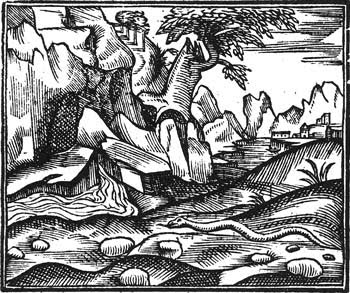
7807 Vipers: This entire hex is infested with crystal vipers. They become thicker as one heads toward the center of the hex. The Referee should make five encounter checks as adventurers move through the hex, with the chance to encounter 1d12 crystal vipers beginning at 2 in 6 and increasing to 4 in 6 as one moves through the hex. Buried twenty feet below the dunes, roughly in the center of the hex, is a crystalline orb approximately 5 feet in diameter. Touching the orb transports one to a dimension made entirely of crystal and gemstones and inhabited by an advanced civilization of crystalines.

Crystal Viper: HD 2; AC 1 [18]; Atk 1 bite (1d4); Move 15 (Burrow 12); Save 16; CL/XP 4/120; Special: Poison (1d6), natural invisibility.

7825 Skeleton: Half buried in the sand is a skeleton wrapped in the robes of a wizard and wearing an Egyptian-style headdress composed of gold and tattered, faded purple cloth (20 gp). His left hand clutches a large emerald that appears to have been chipped from a larger gem (400 gp). His right hand juts from the sand, pointing to the southeast. This is a clue to the whereabouts of the Emerald Tablet of Thoth. Those possessed of a sixth sense can use the chip of emerald to guide them vaguely toward the Tablet. Unfortunately, its emanations have a 1 in 20 chance each day of attracting 1d10 hostile hounds of chronos.

Hound of Chronos: HD 3; AC 7 [12]; Atk 2 claws (1d4), 1 bite (1d6); Move 18; Save 14; CL/XP 5/240; Special: Temporal jump, heal.

7828 Bandit Caravanseray: An old caravanseray in this hex has been turned into a small village by a band of bandits. The village is protected by earthworks (20’ tall) that are embedded with shards of yellow glass. The radioactivity of the glass interferes with magic-user spells, causing them to fail 1 out of 10 times. The village houses 80 people, most of them bandits, prostitutes and the children of same. The village is supported by a bowyer named Creop. The village is a democracy. The leader is a level 7 dwarf thief named Zmep. Upwards of 200 bandits will be camped around the caravanseray. Bandit leaders often stay in the structure, while their men camp outside.

7834 Poplar Grove: A grove of white poplars, with their characteristic greenish-white, diamond-checked trunks, grows along the river bend here. The trees reach about 50 feet in height. The trees are sacred to Harpocrates (Horus) and must not be violated. A copper idol of the deity, green in color, rests amidst the great trees.

7847 Korbin the Hunter: This hex contains the camp of Korbin, a hunter from Antigoon. Korbin has been coming back to this camp for years, and this season he has amassed a small fortune in rare pelts and animal goods.

The camp consists of three pavilions, all made of white canvas on iron poles. The largest pavilion belongs to Korbin, and includes a traveling chest (changes of clothes, a stash of ammunition, an extra dagger, 20 glass beads worth the equivalent of a gold piece with the more primitive humanoids and 100 gp), cot, desk and chair. The pelts (3,000 gp worth, including the neck scale of a bulette) and other goods he has taken are kept with Korbin and guarded by his war dog, Zash (12 hp).

One smaller pavilion serves as a barracks of sorts for Korbin’s eight bearers (0-level humans, 3 hp each) and his shieldmaiden, Swala. The other pavilion is used for storage of supplies (barrels of flour, wine, salted fish and meat).

Korbin doesn’t take too kindly to being surprised by strangers, but if approached cautiously he will prove to be friendly enough. He will expect to be paid for any kindness shown, and he is easily offended.

Swala, Fighting-Woman Lvl 2: HP 12; AC 7 [12]; Save 15; Spear, shield, dagger.

Korbin, Ranger Lvl 9: HP 61; AC 3 [16]; Save 7; Special: Favored enemy is the lion; Musket (treat as heavy crossbow), +1 short sword, dagger.

Zash, War Dog: HD 2 (12 hp); AC 7 [12]; Atk Bite (1d6); Move 14; Save 16; CL/XP 2/30; Special: None.

Photo is actress Theda Bara as Cleopatra

And so we leave Map J11 behind as we continue our tour of NODTM. I believe next we will go north to Venatia, a land of thick forests and several competing city-states, including Lyonesse, a city of knights and dames, Antigoon, trading capital of Mother Ocean and Blackpoort, city of smugglers and thieves. Venatia has a more Western European feel, so it should be a nice change from the Mediterranean/N. African vibe of the Wyvern Coast and Nabu.

Before I hit Venatia, though, I have a druid class and spell list to write …
Nabu – Echoes and Bones

4146 Village of Echoes: The adventurers stumble upon a small, abandoned village. The village is surrounded by a picket of sharpened stakes and tangled thorn bushes. It also has a wooden gate that has been left open. Keen eyes might note a partial human skeleton buried in the ground in front of the gate.

Although the adventurers cannot see anyone, the village is inhabited by echoes. The echoes are all that remains of the villagers after being cursed. Some years before, a dying wizard came before the gates of the village, begging for assistance. The greedy villagers lifted not one finger to help the man and so he cursed them with his dying breath. They were shunted into a space between dimensions, their only anchor to the material world being their voices, which could only echo the voices of others.

The only way to communicate with the villagers now is through the use of drums and call-response style songs. The call-response songs are the only way the cursed villagers can answer questions. Using this method, curious adventurers may learn of the village’s curse.

The curse can only be broken by carrying the wizard’s bones into the village and throwing them a great feast. Unfortunately, the skeleton is not complete. The skull is in the possession of Bonolo [7744]. The skeleton’s right arm was carried away by a lion, and now resides two hexes to the southwest [3947]. A locate object spell will lead adventurers to these bones.

Once the curse is broken, the villagers will return to the material world none the worse for wear. Unfortunately, they are as greedy as ever, and their rescuers will be hailed by a chorus of complaints: “Where are our animals? What will we eat?” While it may be possible to hire some of the villagers as bearers or even men-at-arms, they will prove to be quarrelsome and disloyal.

4426 Boiling Springs: Amidst the sandy dunes there is a small meadow of dry grasses, in the midst of which there are boiling hot springs. The springs themselves are surrounded by a caldera of sorts composed of mineral deposits. Shamans from the surrounding area trek to this place to gather minerals, and there is a 1 in 6 chance that a druid and his acolytes are present. Not far away from the springs is a half-finished shrine built of large sandstone blocks. The shrine was meant to be dedicated to Selchis, but was never finished. Various rare earths can be taken from the site by an alchemist, and water from the springs has medicinal qualities (+1 save vs. disease).

4447 Castle of Bones: A small limestone castle lies in this hex, abandoned save for a terrible multitude of bleached bones. The walls of the castle rise 30 feet from the ground and are crenelated. Each corner of the walls boasts a square tower 40 feet tall. The northeast tower has collapsed and the others will soon join it. Presently, they show the signs of a terrible fire. Two fifty foot tall towers flank the castle gate, which is shut by a portcullis of rusty wrought iron. Through the portcullis, one can see that the courtyard beyond is covered with humanoid bones, with some “drifts” being 3 or 4 feet deep. The castle’s keep is fifty feet tall with a base 80 feet square. Within the keep there is a fairly common layout; great hall and kitchen on the ground floor, barracks and storage on the second floor, living chambers on the third and an armory and treasure room on the top level. All of these rooms are similarly piled with bones, which seem to catch on clothes and get under feet while one passes through. The castle holds no treasure. The bones are an illusion created ages ago by a godling in revenge for the blasphemies committed by the inhabitants, who long ago left the morbid place to rot.

4648 Abbey of Melkarth: Adrubal, a patriarch of Melkarth has constructed an abbey in this hex. The abbey consists of a 30-ft tall central keep flanked by four lower structures lined with pillars. The abbey is constructed of limestone clad in reddish marble. The main doors, looking east, are wood clad in bronze bas-relief. The keep has a dozen arrow slits facing in each direction. The smaller structures of the abbey comprise an eating hall, kitchen, living chambers (small cells stacked atop one another and accessible by ladders for the brothers, a larger chamber for the abbot) and a training room. All of these structures are connected by narrow passages. The central keep houses the great idol of Melkarth. While the exterior of the keep is square, the interior is octagonal. In the middle of the room there is a 25-ft tall idol of Melkarth. Each corner in the room has a bronze brazier, with incense kept burning throughout the day. Ladders lead up to wooden platforms that allow the brothers to use the aforementioned arrow slits. The abbey is surrounded by walled gardens (cooking and medicinal) and several quince trees.

Below the keep and accessible from the living quarters, is what the brothers call the Well of Souls. The well is located in a natural, limestone cavern clad in coral. In the middle of the cavern there is a natural well that contains cloudy, reddish water. The floor of the cavern has been worked to create an octagonal pool with steps leading to the central well. The brothers have also carved out storage and meditation alcoves around the pool area. Non-lawful creatures stepping into the pool with cause it to freeze over; a saving throw (with a penalty based on how deep one goes) is required to avoid being frozen in place and suffering 1d6 damage each round until freed.

The abbey’s treasure, located behind a secret door in one of the aforementioned alcoves, consists of 10800 cp, 10920 sp, a sardonyx worth 500 gp, a gnomish cloak (10 gp, +1 to hide) and a cursed scroll that kills its reader with a rotting disease in 2d4 turns. Adrubal keeps a stuffed crocodile (90 gp), a papyrus scroll on art & music (30 lb) and a masterwork longspear (100 gp, +1 to hit) in his living quarters. He wears a copper toe ring set with a citrine (500 gp) and an ivory locket (40 gp) and carries a pale yellow potion of fire resistance with an earthy taste in a conical bottle and a masterwork heavy flail (150 gp). The brothers have ring armor, shields, maces and pellet bows (fire stones, like slings, same damage but short bow range).

  • Acolytes (20): HD 1; AC 5 [14]; Atk 1 weapon (1d6); Move 9; Save 16; CL/XP 2/30; Special: Turn undead.
  • Adrubal, Cleric Lvl 10: HP 69; AC 4 [15]; Save 5; Special: Spells (5th), +1 to hit with heavy flail; Heavy flail, chainmail, potion of fire resistance.

4838 Roasting Crater: The ground rises here to form the walls of a great crater one-half mile in diameter. The floor of the crater is solid glass and capable of roasting people alive during the day (3d6 damage per round).

5350 Abbey of Medusa: A small rise of jagged stone there stands a small fortress. Built of sandstone, the fortress is inhabited by a convent of twelve nuns dedicated to the worship of Medusa. The nuns draw their members from the ranks of women wronged by men. They are normal humans from many walks of life, but fight as berserkers against men using sickle-swords and daggers. The nuns are led by Mother Betresh and her adepts, Henna and Maia.

The fortress is twenty feet tall and consists of two stories. The roof is vaulted and made of stone. The roof has a cistern for collecting water (connected to the kitchen via a clay pipe) and a chimney (also to the kitchen) blocked by an iron grate. To enter the fortress, one must first negotiate the jagged outcropping it is built upon. One must climb 15’ to get to the entry, and risks falling and cutting themselves to do so. There is a small ledge before the entryway, which is flanked by two statues of women in Egyptian garb, facing away from the door. The door itself is constructed of iron and always kept locked. A sliding panel on the door allows the nuns to spy on their visitors.

The bottom floor of the temple consists of a small entry hall decorated with very fine statuary, much of it weathered and cracked from age and the elements. From the entry hall there are three wooden doors heading north, east and west.

The north door leads to a dining hall for the nuns. It features a long table set with earthenware bowls, spoons and goblets. There are twenty chairs along the table, including a chair carved from marble and set with precious stones of green and yellow (1,000 gp total, gems worth 200 gp if removed) at the head of the table. Bas-reliefs of dancing women along the walls are designed to hold candles. A door in the eastern wall leads to the kitchen.

The eastern door from the entry chamber leads to a storage room. It is piled high with bolts of green cloth (used to make robes), barrels of hard cheese, jars of pickled olives and fish and three amphorae of white wine (worth 10 gp each). There are hundreds of mushrooms and strips of fungus hung in nets to dry and a dozen baskets that appear to be used to collect them. A door in the northern wall of the storage chamber leads to the kitchen.

The kitchen consists of a couple tables, a fireplace and a wash basin (connected to the cistern on the roof). A cauldron hangs in the fireplace and bowls, plates and knives are scattered on the tables. A few stools allow the nuns to sit while working.

The western door in the entry hall leads to a stairwell. The stairs are made of stone with wrought iron railings. They spiral up to the second floor. Along the western wall several stone masks representing faces twisted in horror, misery or agony hang on hooks on the wall. Removing a mask will reveal wire tied to the back, allowing them to be worn over the face (though without the benefit of seeing). In each corner of this room there are sculptures of warriors in archaic armor shielding their eyes. It is readily apparent to anyone who examines them that their upraised arms can be rotated. The statue in the northwest corner is a trigger that causes the stairwell to sink into the ground, leaving a hole in the ceiling but allowing access to the caverns beneath the nunnery. The other three statues have glyphs of warding carved into their horrified faces. The northeast statue has a blast glyph that deals 7d4 points of acid damage. The southwest and southeast statues have spell glyphs; blindness and cause disease respectively. All glyphs were cast by a 7th level evil cleric.

When ascending the stairs to the second story, one finds themselves in a chapel dedicated to Medusa. The chapel contains a small marble altar supported by statues of two small children and a headless idol of Medusa herself. Chains on one wall suggest that sacrifices are performed here; the chisels and hammers on the wall, all of ornate design, reinforce this suggestion. A single door to the east allows access to a hallway. The hallways allows access to several living cells to the south. To the north, a door gives access to the abbess’ study (filled with religious objects and a writing desk, in which there is a map showing an entrance to the underground queendom of the medusas beneath the Carnelian Coast), which in turn allows access to her simple living chamber (bed, wardrobe, Egyptian-style plate armor and a gorgon-visaged helm on a stand, three maces on a rack, the first silver, the second masterwork, the third carrying a +2 enchantment and the ability to cast flesh to stone once per day when the command word “Justice” is uttered). A locked chest trapped with a poisoned needle (permanent paralysis) contains the nuns’ treasure: 997 gp, delicate electrum clasp in shape of a coiled basilisk (2,000 gp), etched crystal ring (1,500 gp) and brass dinnerware (60 gp).

The caverns beneath the nunnery are not extensive. The nuns believe that the outcropping and its little underworld were created when drops of blood from Medusa’s severed head touched the ground here in ancient times. The stairwell leads to a cramped cavern decorated with carvings of dancing priestesses. A small chute leads downward from this room, large enough to allow a fully armored human to crawl their way through. Those trying to crawl through the chute without first disarming its trap (by rotating all of the eyes of the dancing priestesses to make them look closed) are likely to be impaled by iron spears set with springs. The spears fire and then pull back, meaning that each person moving through the chute will suffer 1d6 attacks from a 3 HD “creature”.

At the bottom of the chute there is a larger cavern with a vaulted roof. A fountain in the shape of Neptunus spits water into a carved basin in the center of the room. The statue’s head is turned to face east while his trident points to the west. The entire room is quite damp, and hundreds of edible mushrooms are being cultivated on the floor and walls. There are three exits from the cavern, all of them low, narrow passages cut from the stone.

The water in the fountain has one magical property: If applied to the eyes of the masks (from the stairwell above), they become transparent, allowing the wearer to see but still be impervious to gaze attacks. When the water dries, the effect ends (assume it lasts 2 turns in the damp caves). Only the water from this fountain has this effect.

The eastern passage winds its way in a curve to the western passage. The western passage is blocked by an iron portcullis that is locked down and thus cannot be lifted. Ten feet into the eastern passage, adventurers will come upon an alcove filled with bas-relief sculpture showing a beautiful woman surrounded by courtiers. After another 10’ there is a second alcove filled with a sculpture of Neptunus embracing the woman. A third alcove ten feet further on shows, again in bas-relief, the goddess Athena hovering over the woman who now bears the face of a medusa. At this point, anyone wearing a mask who does not express sympathy with Medusa (by word or tear) will be cursed, their face taking on the appearance of the mask they wear and giving them an effective charisma of 5.

The western portcullis is 10 feet away from the third alcove and contains a lever on one wall that releases the lock and allows the portcullis to be lifted.

The northern passage leads to a vertical shaft. The shaft is set with iron rungs and descends twenty feet into the earth. When adventurers are half-way down the shaft they will trip the trap therein unless they are lucky enough to skip the iron rung that triggers the trap. The trap causes spring-loaded blocks of stone to fire, trapping those already in the shaft against the opposite wall of the shaft. The bludgeoning deals 1d6 damage and the pressure forces them to hold their breath until the trap can be disarmed. A secret door in the floor of the passageway allows access to a gear that winds the springs back. Turning the gear requires strength saving throws, made once each round. Tally the amount by which each save is beaten; when a total of 20 is reached, the stone blocks recede and allow those trapped to breath and continue downward.

The vertical shaft ends in a large cavern filled with statuary. It is home to a greater medusa called Caelia (40 hp). Caelia’s treasure consists of 1,500 gp, a delicate crystal sculpture of a cat (80 gp), a masterwork short sword with a pommel bearing the visage of a boar (90 gp, +1 to hit), a delicate brass bracelet (8 gp), a lotus-shaped clasp of ebony (10 gp) and a massive, ostentatious gold ring (500 gp).

  • Betresh, Cleric Lvl 7: HP 39; AC 1 [18]; Save 8; Special: Spells (3rd), petrifying gaze (1/day), snake poison (paralysis for 1d6 rounds), immune to medusa gaze, command earth creatures; Plate mail, mace (petrifies), holy symbol.
  • Henna & Maia, Cleric Lvl 2: HP 15; AC 3 [16]; Save 13; Special: Command earth creatures.
  • Caelia, Greater Medusa: HD 8; AC 3 [16]; Atk 1 snakes (1d4 + paralyze), 1 weapon (1d6); Move 12; Save 8; CL/XP 10/1400; Special: Petrify, poison, poisonous blood (1d6 strength).

5826 Dry Seabed: This hex and all of those adjacent to it were at the bottom of an ancient sea. Walking into this area, adventurers (especially dwarves and gnomes) will recognize that they are heading down a gentle slope. The temperature will grow hotter as they descend to [Hex 5826]. The entire area is home to hundreds of giant crab exoskeletons (2 in 6 chance to encounter 1d4 per day in the Dead Sea, per hour in this hex).

At the center of the Dead Sea an irregular block of greenish-grey stone rises from the sands. The crab exoskeletons will not approach within 20’ of this stone.
There is a portal in the stone that heads downward into the sands. The passage will lead downward at a 20-degree slope for about 200 feet and then turn right, continuing along the same slope. The passage will continue its descent in 200’ increments until they have descended 300’ into the earth (10 sections).

At this point, the passage will enter a flat gallery. The air here is cold and dead and clammy; the walls and floor are damp and a bit slimy. The walls are lined with ten sarcophagi (give on each side) carved in monstrous, hideous shapes, like a combination of fish and men with bulging eyes and wide, toothy mouths. Each sarcophagus holds an alien mummy. The sarcophagi can be opened with a total 24 points of strength. If opened, the mummies will not attack unless attacked. The mummies (50 hp) attack with giant swords (2d6 damage) that can infect their targets with mummy rot.

At the end of the 100’ long gallery there is a stairway spiraling 30’ downward. At three points along the stairway the steps are trapped to generate walls of force 6’ behind the intruders. These walls are invisible and make no sound, and will likely not be noticed unless the party is large enough that some members are cut off by the walls.

At the bottom of the stairway there is a small antechamber and a large door. The adamantine door bears the image of Tsathoggua in bas-relief and a symbol of death inscribed by a 12th level high priest. The door can be moved with 60 points of strength. If the door is touched, the mummies in the chamber above will awaken and shamble toward the intruders.

Beyond the door there is a domed chamber. The floor and walls are covered by a layer of brown mold. In the center of the chamber there is a large crystal vessel containing a black, viscous liquid. Approaching within 5 ft of the vessel will activate magic mouths on the wall that will warn the intruders away in several archaic languages (those of the fish men, serpent men, dragons and yithians). The crystal vessel is secured with molten adamantine. Several explosive runes (6d6 damage) have been worked into the adamantine. Inside the vessel there is a black pudding. As soon as it is released, it will begin consuming everything in its path and growing.

6143 Animal Trail: Even a non-ranger can pick out an obvious trail here used by migrating herd animals. It moves from east to west, meandering slightly, across the hex. Umbrella thorn trees proliferate along the trail.

6244 Fomu Village: The Fomu are a tribe of 50 families who herd goats with large, double sets of horns and grow emmer wheat with the help of six giant cisterns and a network of irrigation canals. The cisterns, constructed of limestone blocks, are connected by a wall of earth 40 feet tall and 20 feet thick with gates to the east and west. The Dawn Gate is constructed of granite and decorated with brass nails. The Dusk Gate is decorated with iron nails. A road of adobe bricks joins the two gates, which are approximately 1 mile apart. The road is lined with grass huts, an adobe granary, a limestone temple dedicated to Nomkhumbulwane, goddess of farming, rain, rainbows and beer. The temple is five feet above the ground and consists of a large chamber containing the goddesses idol, carved from green marble and decorated with ostrich feathers and painted gourds. Just beyond the temple there is a long limestone building inhabited by the temple’s eight brewer-acolytes. The remainder of the building houses six large, wooden vats used for brewing beer. The largest hut in the village belongs to Hudarr, an elf ranger and village chieftain. Aside from the priests and chief, the village also boasts a chariot maker (the warriors ride two to an ass-drawn chariot, one man driving, the other hurling bronze-tipped javelins) and a bowyer who crafts pellet bows (short bows that cast stones for 1d4 damage) made of goat horns and the aforementioned javelins.

The village treasure, kept in locked wooden chests in Hudarr’s hut, consists of 9,600 cp, 1,900 sp, 5,200 ep, 50 gp, 20 pp, a terracotta figurine of a charioteer (4 gp) and 6 porcelain dishes (180 gp).

  • Hudarr, Elf Ranger Lvl 9: HP 55; AC 4 [15]; Save 7; Special: Ranger abilities; Ring armor, shield, 6 javelins, spear, gold disk earrings (40 gp), gauntlets of ogre strength.

6247 Elephant Graveyard: A depression in the grasslands obscures an elephant graveyard. Those poking about for a few hours can collect 1d12 tusks worth 200 gp each. Living beneath the graveyard in narrow tunnels dug into the black soil are a tribe of barrow wights that look like tribesmen with flaky, gray skin and clawed hands and feet that are attached backwards. The wights feed on the dying elephants, but never disturb their bones or tusks. The wight tunnels can be entered through several holes obscured by piles of bones. The tunnels seem to weave randomly, but often end in small, man-made caverns. These caverns invariably hold one or more large, terracotta vessels that are either turned over or burst apart. The bottom of these vessels contain treasure amounting to 1,800 cp, 400 sp, 500 ep, 10 gp and a potion of water breathing that is thick and opaque, with blue, red and yellow swirls. The potion tastes like lime juice and is kept in a crystal vial. Encounters in the tunnels occur on the roll of 1-3 on 1d6 and always involve 2d6 wights, with a total of 20 wights living beneath the graveyard.

  • Wight: HD 3; AC 5 [14]; Atk 1 claw (1 hp + level drain); Move 9; Save 14; CL/XP 5/240; Special: Drain 1 level with hit, hit only by silver or magical weapons.

6449 Stone Fort: Atop a rocky hill there is a simple fort built of stacked stones. A single watchtower built of stone rises from the midst of this encampment. The inhabitants are a tribe of 46 intelligent skeletons. They are harassed every night by 30 hell hounds. The skeletons are not chaotic, but they are not particularly friendly either. They know the secret of creating more of their kind, and will likely find visiting adventurers of more value as their own kind than as potential foes.

Most of the skeletons (31) conform to the normal statistics for skeletons. These warriors wear scraps of armor and carry spears, shields and short bows. There are also eight exploding bones, two blazing bones and one black skeleton (54 hp) the others call “The Black Prince”.

The skeletons do not know where they came from or why they are here; many consider their lives as something akin to a nightmare and seriously doubt the reality of the situation. Until they wake up, they spend their days strengthening their defenses and their nights fighting off the hounds of hell.

  • Skeletons (31): HD 1; AC 7 [12]; Atk 1 weapon (1d6+1); Move 12; Save 17; CL/XP 1/15; Special: None.
  • Exploding Bones (8): HD 2; AC 8 [11]; Atk 1 weapon (1d8); Move 12; Save 16; CL/XP 3/60; Special: Explode for 1d6 damage when killed.
  • Blazing Bones (2): HD 8; AC 2 [17]; Atk 1 weapon (2d6); Move 9; Save 8; CL/XP 9/1100; Special: Immune cold & fire, half damage from piercing weapons, heat aura (as heat metal, 20’ radius).
  • Black Skeleton: HD 6 (48 hp); AC 0 [19]; Atk 2 claws (1d4) or 2 weapons (1d8); Move 15; Save 11; CL/XP 9/1100; Special: Only harmed by magic weapons, frightful, half damage from slashing and piercing weapons, strength damage.
  • Hell Hounds (30): HD 4; AC 4 [15]; Atk 1 bite (1d6); Move 12; Save 13; CL/XP 5/240; Special: Breathe fire (8 hp).

6543 Dromo’s Village: Dromo is an elf thief who rules a village of 30 bandits and their families. The village was originally built as a prison. It is surrounded by earthworks 20 feet tall and 10 feet wide. The village is entered through a stone tunnel in the wall that is barred by two steel grates. Within the village, the earthen walls are studded from top to bottom by thousands of wooden spikes that stick a mere two inches beyond the surface of the wall.

The wall encloses approximately 3 acres of land. Within, there are four long houses with flat roofs. The houses are constructed of adobe brick and have barred doors and no windows. These prison barracks are now occupied by the bandits and their wives and children. Each one is equipped with several straw mattresses and a smattering of stools and small tables. Fire pits are located just outside the front doors, and all are topped by tripods and cauldrons.

In the middle of the barracks there is a squat, square tower constructed of adobe bricks and topped by a stone cupola that holds as many as four crossbowmen at a time. The ground floor of the tower is a mess hall with a 15-ft high vaulted ceiling, an long, uneven table, two benches and a tall chair that has seen better days. This is where Dromo and his sergeant, Kabil, take their meals, served by the prettier wives of the ville with wooden trenchers and pewter goblets (2 gp). An iron cage hangs suspended from the ceiling. A brick staircase leads both up and down.

Below the ground floor there has been dug a crude dungeon, held up by thick timbers of mouldering wood and a scattering of flagstones. The little cells are iron boxes.

The second story of the tower is an armory filled with seven crossbows, 250 quarrels, two dozen spears and eight short swords. It also contains 60 weeks of iron rations, a barrel of salt (30 lb) and a barrel of pickled fish (20 lb). A straw mattress here is used by Kabil and contains his treasure of 200 cp, 600 sp and 40 gp. Kabil wears a mail shirt and carries a shield and masterwork broadsword.

The third floor, also reached by brick stairs, is Dromo’s chamber. It contains a feather mattress, an iron strongbox (locked and trapped with a poisoned needle), a long bench and a wooden chest that contains a change of clothes, a spare set of thieves’ picks and tools, a jar of soot (used to blacken one’s face and weapons), an oilskin cloak (8 gp) and charts of the coast from Ophir to Kirikersa (23 gp). Dromo’s longbox contains 760 sp, 120 ep, a stone tablet on medicine written in hieroglyphics (380 gp), a rose quartz (65 gp) and a platinum belt (1,200 gp).

Some distance away from the barracks and tower there is a prison graveyard marked by a boundary of white stones (chalk) that bar chaotic beings from entering. The graveyard is hallowed and the bandits avoid it, choosing to bury their own dead on the savanna well away from their village. In the middle of the graveyard there is an old shrine built of clay and straw in the shape of a beehive. Inside the shrine there is a mahogany idol (now cracked from the heat, for it has not been anointed with oil for decades) of Anubis, along with a bronze brazier and a stone case that holds a scroll of Anubian proverbs.

  • Bandits (30): HD 1 (5 hp); AC 7 [12]; Atk 1 weapon (1d6); Move 12; Save 17; CL/XP 1/15; Special: None.
  • Kabil, Sergeant: HD 3 (16 hp); AC 5 [14]; Atk 1 weapon (1d8); Move 12; Save 15; CL/XP 3/60; Special: None.
  • Dromo, Elf Thief Lvl 5: HP 11; AC 3 [16]; Save 10; Special: Back stab for triple damage; Leather armor, shield, scimitar, longbow, 12 arrows, 3 silver arrows.

6548 Wasp Lair: A hive of 30 giant wasps dwells here inside a tower of dried mud. The tower is 60 feet tall with a diameter of 30 feet. It can be entered from a single opening near the top, which leads to a spiral tunnel that branches many times into tiny cells. At the bottom of the tower there is a 10’ diameter chamber in which dwells the queen and is kept the hive’s treasure, 700 cp, 2,000 sp and 2,300 ep. Wasp encounters occur in this hex on a roll of 1-3 on 1d6, and are usually followed up each day until the intruders have traveled 21 miles.

  • Giant Wasps (30): HD 4 (24 hp); AC 4 [15]; Atk 1 sting (1d4 + poison), bite (1d8); Move 1 (Fly 20); Save 13; CL/XP 6/400; Special: Paralyzing poison, larva.

6646 Brick Road: A narrow road of adobe bricks built three to four feet above the level of the savanna cuts across this hex from southeast to northwest. At every mile a diamond-shaped limestone brick is set into the road and decorated with a religious saying in the triangular alphabet of Pwenet. The road is built between the villages in [6543] and [7149].

6728 Magic Gateway: A band of twelve druids, led by an archdruid named Ganur, maintain and protect a magic gateway. The gateway is constructed three miles east of the River of Death . It consists of deep, glassy pool in the midst of a garden. The garden and pool are surrounded by a sandstone wall 20 feet tall and 5 feet wide. The exterior of the wall is studded with shards of yellow glass. Planted around the inside perimeter of the wall are dozens of tangle weeds. The remainder of the garden consists of aromatic trees (acacia, myrrh), brilliantly colored bulbs, and wild roses, all planted with seemingly no rhyme or reason. Small cells constructed in the inner wall serve as living quarters for the brotherhood of druids that protects and nurtures this place. The brotherhood are all men. They are completely shaven, from head to toe, and wear wide-brimmed leather hats and simple loin cloths. Each brother bears a ruby stud in his nose and carries a staff or myrrh which maximizes the effects of their spells.

The pool itself is surrounded by hallucinatory terrain depicting tall, thick reeds of papyrus. These reeds seem to thwart all attempts at cutting through them until one disbelieves in the illusion. At that point, the reeds seem to part, allowing access to the pool. The pool is completely natural, and should one dive into it, they would not be able to find a bottom. The water in the pool is cool and clear. If one drinks from the pool, they will swoon and awaken to find themselves on the jungle planet of Venus.

  • Druid , Lvl 6 (12): HD 6d6+6; AC 9 [10]; Atk 1 staff (1d4); Move 12; Save 9; CL/XP 8/800; Special: Spells (3rd), change into lions.
  • Ganur, Druid Lvl 12: HP 56; AC 7 [12]; Save 4; Special: Spells (6th), druid abilities; Papyrus scroll (wall of wind), ring of freedom of movement, staff, leather armor.

On Nabu – Dragon Men and Quicksand

6722 Golems: On a broad, sandy plain, six clay golems shuffle slowly about, their heads bent to the ground as though searching from something. They will not attack people moving through unless they are first attacked or the travelers appear to be searching as well. The creator of the golems is long since gone, so the specifics of their mission will remain unknown.

  • Clay Golem (6): HD 12 (50 hp); AC 7 [12]; Atk 1 fist (3d10); Move 8; Save 5; CL/XP 14/2700; Special: Immune to slashing and piercing weapons, immune to most spells.


6801 Shadow Wolves:
The toppled remains of an ancient building serve as the lair of a pack of 6 shadow wolves. At night, they prowl the desert looking for prey. They have long plagued the nomads of [6703].

  • Shadow Wolves (6): HD 4 (24 hp); AC 6 [13]; Atk 1 bite (1d4 Str); Move 21; Save 13; CL/XP 7/600; Special: Incorporeal, blend with shadows, strength damage.

6814 Quicksand: Hundreds of patches of quicksand dot this hex. Travelers have a 4 in 6 chance of wandering into a patch and sinking quick.

6910 Meteorite Strike: Three days ago a meteorite hit the ground here, creating a crater of glass and spewing glass globes all over the immediate area. The meteor has cooled down now, but it is buried in the center of the crater. Two groups are on their way to claim the meteor and will arrive at just about the time the adventurers plan to leave (or just after they settle down).

The first adventure group is working for an astronomer of Ophir, the second for a wizard of Ibis. Each group consists of three adventurers and 2d6 men-at-arms.

The meteorite is a source of meteoric iron and many substances useful in the arts of alchemy and sorcery. It is a rich reward, and one both groups are willing to fight for.

7015 Dragon Shrine: There is a dock on the river here obscured by tall reeds. The dock is attached to a small mud-brick shrine that is often (10%) visited by groups of 1d6+3 cultists of Gorvax the blue dragon (see Hex 7121).

The floor of the shrine is decorated with a sun-wheel depicting the different hours of the day. Each phase is associated with a different animal; there is a hawk for the dawn, an aardvark for noon and a cow for the twelfth hour of daytime. A blue serpent coils in the center of the sun-wheel, its head facing the noon hour, its body making three revolutions and its tail pointing to the eighth hour.

The purpose of the snake is to lead to the lair of Gorvax; one must set out at noon, following the sun south, for three days. At that point, they must follow the sun at its point two hours before noon, turning southeast for one day. Those who continue south may come across the false lair of Gorvax.

7018 Dragon Man Village: A village of 110 dragon men is located here between the riverside dragon shrine in [7015] and the lair of Gorvax the dragon in [7121]. The village consists of several adobe buildings, including a large meeting hall interspersed by a few gravel and dirt streets. The village is surrounded by a 40-foot tall, 10-foot thick wall of sun-dried brick studded with blue glass.

The village has 6 warriors and a captain named Osho. The warriors carry shields, axes and javelins. Guards atop the walls are armed with glass globes of poison gas (2d6).

The dragon men support themselves by raising scarabs in subterranean dung caverns and by hunting and gardening along the river. The village has an armorer named Khashai.

The village is matriarchical, and has been ruled by a long line of witches, the latest being Ibony. Ibony has two daughters, Shamisi and Barere. They dwell in a large asobe hall, beneath which is a cellar containing 1,700 ingots of silver (1 lb, 10 gp) stamped with the seal of Ammenu, fifth pharaoh of Nabu.

  • Shamisi, Dragon Woman Magic-User Lvl 1: HP 4; AC 6 [13]; Save 15; Special: Spells (1st); Light mace, spellbook.
  • Barere, Dragon Woman Magic-User Lvl 2: HP 8; AC 6 [13]; Save 14; Special: Spells (1st); Staff, spellbook.
  • Ibony, Dragon Woman Magic-User Lvl 4: HP 16; AC 6 [13]; Save 12; Special: Spells (2nd); Silver dagger, spellbook, gold amulet designating leadership (200 gp), potion of human control.
  • Osho, Dragon Fighting-Woman Lvl 6: HP 56; AC 3 [16]; Save 11; Falchion, light crossbow, chainmail, shield, bejeweled anklet (2000 gp).

7106 Nomad Camp: A tribe of 90 nomads has pitched a camp within an oasis surrounding a deep water hole. The nomads live in white tents and wrap thick, blue scarves around their heads and faces. They wear leather armor and carry shields, lances, short bows and broad swords. The tribe includes 45 warriors and 4 sergeants. They are led by a level 4 paladin named Kafik, who wields a masterwork bearded axe and carries a sandalwood box containing paper, ink and a quill. On this paper he writes songs of love dedicated to the memory of a Ophirian noblewoman he once glimpsed from afar. The tribe’s treasure amounts to 700 sp, 15 gp and 7 pp.

  • Kafik, Paladin Lvl 4: HP 17; AC 5 [14]; Save 12; Special: Cure disease 1/wk, divine aura, immune to disease, heal 8 hp/day, turn undead, divine mount; Leather armor, shield, lance, broad sword, short bow.

7114 Road: A road constructed of thick (2’x2’), limestone blocks runs from the River of Death south to [7115]. The road is in good condition and is patrolled by warriors (3 in 6 chance of encounter) from [7217]. The warriors wear ring armor and carry shields, spears and crossbows. Pipes buried beneath the road carry water.

  • Men-At-Arms (10): HD 1 (6 hp); AC 5 [14]; Atk 1 spear (1d6) or 1 crossbow (1d6); Move 12; Save 17; CL/XP 1/15; Special: None.
  • Sergeant: HD 3 (20 hp); AC 5 [14]; Atk 1 spear (1d8) or 1 crossbow (1d8); Move 12; Save 14; CL/XP 3/60; Special: None.

7121 Dragon Lair: The lair of the ancient dragon Gorvax is in this hex. There is a 40% chance he is patrolling his territory when adventurers enter the hex. Otherwise, he will be sleeping in his subterranean vault.

Gorvax has the build of a traditional dragon. His scales are bright blue and he is perpetually engulfed in blue fire. Although not terribly intelligent, and without spell-casting ability, he has an animal’s cunning and complete faith in the value of brute force. Gorvax is an arcanovore, meaning that he sustains himself by draining magic items of their enchantments.

Gorvax’s vault can be entered by burrowing through 100 feet of shifting sand. His vault is all that remains of a pre-human city. It is a dome-like structure approximately 200 feet in diameter and 100 feet from floor to ceiling. The interior of the dome is decorated with bits of colored glass in dizzying geometric shapes. The floor is composed of yellow tiles, most of them cracked and chipped.

Gorvax’s treasure occupies a 3 foot deep depression at the center of the dome. It is surrounded by a magic circle traced on the floor in gold filigree. Any attempt to cross the circle without first dispelling its magic results in the treasure being teleported to Gorvax’ false lair in [7015]. Aside from 1,300 gp kept loose, the treasure is contained in five large titanium cylinders. Each cylinder is formed of three twist-able rings. The rings are covered with geometric patterns that must be put in the correct order to unlock the cylinder. Five explosive runes are worked into each cylinder, exploding for 6d6 points of damage. Each cylinder has a different combination which can be rolled randomly using 1d6 for each ring. To solve each combination, the players will have to arrange the dice in the correct order. For each point of intelligence bonus in the group, allow one do-over. The treasures are as follows:

Cylinder 1: 302 gp, a blue sapphire and jasper.

Cylinder 2: 780 gp, onyx (50 gp), porcelain bracelet decorated with red flowers (1,000 gp), potion of poison.

Cylinder 3: 92 gp, smooth wood paperweight shaped like a hippo (90 gp), cursed steel buckler -1.

Cylinder 4: 1,233 gp, three gemstones worth 75 gp (pearl, spinel, topaz), slippers of spider climb (cursed to act as slippers of grease).

Cylinder 5: 326 gp, black pearl and a spell scroll containing animal trance (see below).

  • Gorvax: HD 14 (112 hp); AC -2 [21]; Atk 2 claws (1d6), 1 bite (3d8); Move 12 (Fly 30); Save 3; CL/XP 17/3500; Special: Spit lightning, flaming aura (1d4 damage).

Animal Trance (Druid 2) Range: 30 feet Duration: Concentration You compel animals and magical beasts to do nothing but watch you. Trained animals receive a saving throw, and intelligent creatures are unaffected. Roll 2d6 to determine the total number of HD worth of creatures that you fascinate.

7210 Castle of Lord Skath: Lord Skath is a wereweasel. He rules over a household of ten such creatures, all of them appearing to be gaunt, dirty children in human form. They dwell in a weathered old castle of sandstone, with round towers and marble battlements and stout gates of iron and brass decorated with hunting lions. Their great hall is like a carnal-house, bloody and wrecked. Their rooms are in a similar state, their armory filled with bones, the idols in their chapel battered and smeared with feces. Their treasury is barred by an iron door and contains 4,000 cp, 100 gp and 20 pp. Lord Skath wears an ivory pendant (70 gp) and always keeps a bottle of spirits (140 gp) close to him. His hall is “decorated” with a copper gong (200 gp).

  • Wereweasel (11): HD 3+2; AC 4 [15]; Atk 1 bite (1d6) and 1 weapon (1d8); Move 15; Save 14; CL/XP 5/240; Special: Drain blood, lycanthropy, +1 initiative, only hit by magic or silver weapons.

7217 Castle of Lord Yaphet: Lord Yaphet has a large, walled castle with a keep. The castle is surrounded by a village of low, brick huts with flat roofs. The huts are dug into the soil. The villagers keep camels and raise crops, their land irrigated by pipes beneath the road in [7114-7116]. The castle is constructed of limestone and has 20’ high walls and a 30’ tall keep.

Lord Yaphet is a warrior from Pwenet with dark skin, hazel eyes and a shaved head. He wears garments of silk and velvet. His guard consists of 16 men-at-arms and a sergeant named Kobi, all wearing scale armor and carrying shields, spears and crossbows. He is also attended by a magic-user called Remtep, an astronomer of the old school, and his chapel is tended by Ulanna, a cleric of Onuris. Yaphet also employs an armorer and bowyer.

Yaphet is a haughty ruler, but a fair man and one always on the lookout for a bargain. He has designs on Ulanna, but has made little progress. He would like to extend his dominion over the village in [7313] and has a fascination with elves.

His treasure consists of 26,000 cp, 2,800 sp, 9,600 ep, 53 gp, 9 pp, jasper (20 gp), beryl (300 gp), gold aspergill (45 gp), 10 masterwork arrows (10 gp, +1 to hit), terracotta statuette (3 gp), silver snuff box (30 gp), map of Pwenet (26 gp), platinum goblet (800 gp), banner (250 gp), sardonyx locket (190 gp) and silk robes (100 gp).

  • Yaphet, Fighting-Man Lvl 12: HP 81; AC 1 [18]; Save 5; Special: Dex 18, Con 13; Platemail, shield, masterwork longbow, efficient quiver, spear, robe of blending.

7306 Ute: This village of 300 sandstone quarrymen living in timber longhouses is surrounded by a wooden palisade with a crocodile-infested moat. The village is ruled by a council of elders and has the services of a healer. They gather their water in sandstone cisterns and are known for their woodworking. Ute is defended by 3 men-at-arms with ring armor, shields, pole arms and longbows and 15 militia with wicker shields and spears.

7307 Pleasure Barge: At sunset, the adventurers will spot an ancient-looking pleasure barge rowing up or down the river. The barge is approximately 20’ wide and forty feet long, with a row of 30 oars on each side. The decks are of polished oak and the hull is composed of ebony. The barge’s figurehead is a wooden carving of Bast, painted to look alive. Colorful shields bearing explosive runes line the decks.

A pavilion of silk as blue as lapis lazuli on the aft deck provides shade and shelter for the sorceress Labyris. A red pavilion on the foredeck is furnished with silk pillows and wool rugs for Labyris’ guests. Servants unseen but for their ivory hands attend the every need of the hostess and her guests; serving delightful and exotic viands (oysters on the half-shell, dates soaked in wine, spiced crocodile, etc), pouring sparkling wines and liquors of sapphire, ruby, amethyst and amber from crystal decanters into chilled chalcedony goblets and playing delightful music on golden dulcimers and harps.

Should the barge be hailed, Labyris will use her magics to scry the identities and demeanor of the intruders and then either ignore them or invite the aboard, halting the barge and casting a prismatic bridge from barge to shore.

Boarders will be greeted by Geb, Labyris’ bodyguard and loyal companion of many years. Geb was a gladiator in the arenas of Zinj before buying his freedom and taking up the life of an adventurer. Labyris is also accompanied by her pet jaguar, Felix, which she acquired in the jungles of Hybresail several years ago.

As mentioned above, Labyris is a powerful sorceress. The barge is her “tower”, a peaceful place for study, reflection, experiment and decadence. She maintains a laboratory and library below-deck, and is not averse to selling her services for the right price (usually an exotic, esoteric ingredient not to be found on Nod or a lost scroll or book that she requires to advance her studies. To date, she has never accepted an apprentice.

Labyris keeps her treasure in an invisible iron chest behind her throne. It is locked and protected by a fire trap. It contains 5,200 gp (mostly scruples from Ibis), an etched glass paperweight (1,100 gp), a delicate ebony figurine of Bast (60 gp) and an ornate bone music box (600 gp).

  • Geb, Fighter-Monk Lvl 4/9: HP 72; AC 4 [15]; Save 8; Special: +2 short sword (glows in presence of chaos), short bow, 20 arrows.
  • Labyris, Magic-User Lvl 11: HP 27; AC 9 [10]; Save 5; Special: Spells (6th), Empower Spell, Extend Spell; Amulet of health, scroll of fly, spellbook.
  • Felix, Jaguar: HD 3 (22 hp); AC 6 [13]; Atk 2 claws (1d3), 1 bite (1d6); Move 16; Save 14; CL/XP 4/120; Special: None.

Animate Objects (Magic-User 6)
Range: 100 feet
Duration: 1 round/level

You imbue non-magical inanimate objects with mobility and a semblance of life. You may animate one small object per caster level. A medium object counts as two small objects, a large object as four. This spell cannot animate objects carried or worn by a creature. Animate objects can be made permanent with permanency.

7313 Edurumuyi: This is a village of 600 hunters living in longhouses thatched from reeds. The village is surrounded by a wooden palisade. Wamew is ruled by Ifipiyu, a noble. The village has the services of a neutral temple dedicated to Neith, goddess of the hunt. Wamew is known for its medicinal herbs. The village is defended by 6 men-at-arms with scale armor, shield, spear and longbow and 30 militia with padded armor, longbow, hand ax.

7404 Thin Lake: There is a thin lake here fed by natural springs. On the shore is an abandoned complex of baths with quays attached to it. A pleasure barge is anchored in the middle of the lake. The complex looks to be over three hundred years old and in a state of advanced disrepair. The medicinal springs still flow, but the steamy interior of the complex now supports a menagerie of fungal life forms.

The pleasure barge is a typical representative of its type, with a wide hull, flat deck and an ornate aft-castle filled with couches and incense burners, all in the Greco-Egyptian style one associates with Cleopatra. Whatever happened to the original paty-goers on the barge must have happened quickly, as a considerable amount of treasure has been left on the barge, including a delicate latice-work bracelet carved from marble (800 gp), a brass plate (120 gp), a carved harp of exotic wood with ivory inlay and zircon gems on a marble stand (700 gp) and a silver flask holding a dose of oil of invisibility. Thrown over a couch there is a scarlet robe. The robe has three interior pockets, one containing an ivory scroll case (50 gp). Another pocket holds a long black feather encased in a tube of amber glass. The device works as a wand of shocking grasp with 3 charges.

Scattered about the deck, as though dropped by someone in a hurry, are 500 gp of the ancient Nabu Empire, a 700 gp alexandrite and a fist-sized blue sapphire worth 6,000 gp. Unfortunately, the blue sapphire is cursed, doubling one’s chances of random encounters.

Below the main deck is the oar deck. Where there were once twenty pairs of oars, now there are only five. Most of the oars are either missing or splintered and snapped. A weird glow emanates from below one bench. The glow comes from a +1 beheading sword* with a jade pommel and a jade-inlaid hilt (4,800 gp). The blade is covered with a purplish ichor that is sticky to touch, despite being covered by a thin layer of dust.

The oar deck is also inhabited by a star-mouthed worm. It lies motionless, curled up in the forward end of the vessel, attacking only when victims are close enough to be charged. Every round of fighting with the worm carries with it a cumulative 3% chance that the ship’s hull will be damaged and the vessel will begin to sink. It will take 10 rounds before water begins filling the oar deck, 5 rounds more before the oar deck is submerged and another 5 rounds before the ship has completely sunk into the lake.

Behind the worm, excreted from its last meal, are 800 gp.

* A beheading sword is a weapon from Mu-Pan, mostly used in executions. It can be treated as a battle axe.

  • Star-Mouthed Worm: HD 10 (80 hp); AC 4 [15]; Atk 3 mouths (1d10); Move 9; Save 5; CL/XP 12/2000; Special: Swallow whole on 19 or 20.

7607 Zimphael: Zimphael is a camp of 60 sahitim. The camp contains two dozen crimson pavilions held up by brass spears. Zimphael is without women and children, the men forming a brotherhood of unholy warriors. They raid nearby villages [7306, 7409, 7313 and 7815] and carrying off captives for sacrifice to the nether powers. There are usually 1d6 captives in the camp awaiting a bloody, terrifying death. The raiders are led by a wild-eyed level 7 cleric called Baphot. Baphot’s left hand has been replaced by a hook, and one of his eyes has been replaced with a large agate. The tribe also contains three level 3 fighting-men, seven level 1 clerics, one level 3 magic-user, two level 3 clerics, two dretches and 20 skeletal archers. The warriors of the tribe are mounted on warhorses in chainmail barding, with Baphot riding a skeletal fury called Plaguewind. The tribe’s treasure consists of 850 cp, 81 sp, 690 ep and 20 gp kept in leather sacks with scorpions.

  • Sahitim: HD 1; AC 3 [16]; Atk 2 weapon (1d8); Move 12; Save 17; CL/XP 3/60; Special: ½ damage from acid, cold, fire, prot. from good.
  • Warhorse: HD 3 (15 hp); AC 4 [15]; Atk 1 bite (1d2), 2 hooves (1d3); Move 18; Save 15; CL/XP 3/60; Special: None.
  • Dretch Demon (2): HD 4 (25 hp); AC 2 [17]; Atk 2 claws (1d4), bite (1d6); Move 9; Save 13; CL/XP 6/400; Special: Stinking cloud 1/day, teleport 1/day, cause darkness (10’) 1/day, summon 1d4 giant rats 1/day.
  • Skeleton Archer (20): HD 1 (5 hp); AC 8 [11]; Atk 1 weapon (1d6); Move 12; Save 17; CL/XP 1/15; Special: None.
  • Sahitim Lvl 3 Fighting-Men (3): HP 24; AC 2 [17]; Save 14; Special: Protection from good, half damage from acid, cold and fire; Curved two-handed sword, platemail.
  • Sahitim Lvl 1 Anti-Clerics (7): HP 6; AC 2 [17]; Save 14; Special: Command undead; Platemail, shield, mace, unholy symbol.
  • Trago & Gespik, Sahitim Lvl 3 Clerics: HP 18; AC 2 [17]; Save 12; Special: Spells (1st), command undead; Mace, platemail, shield, unholy symbol.
  • Skafar, Sahitim Lvl 3 Magic-User: HP 9; AC 9 [10]; Save 13; Special: Spells (2nd), empower spell; Silver dagger, staff, brass skull cap, brass tips on horns.
  • Baphot, Sahitim Anti-Cleric Lvl 7: HP 34; AC 1 [18]; Save 8; Special: Spells (3rd), command undead; Wavy-bladed dagger, mace, platemail, shield, unholy symbol.
  • Plaguewind: HD 3 (24 hp); AC 4 [15]; Atk 2 claws (1d6), gore (1d6); Move 12 (Fly 12); Save 14; CL/XP 3/60; Special: Immune to sleep, charm and mind-erasing.

7609 Wrecked Trebuchet: The remains of a trebuchet lie in this hex, half-covered in sand and pitted with hundreds of holes. A nest of scarabs that produce acidic excretions lives beneath the trebuchet and will quickly swarm (as insect swarm + 1d4 acid damage each round) anything that gets near their home. Digging in the sand around the trebuchet will reveal the skeletal remains of four adventurers who got to close. The remains have been stripped of treasure.

7721 Kheph Fortress: The kheph have a mighty fortress here that looks like a 200’ tall tower of solidifed sand. The fortress was erected by genies under the command of the kheph, and thus bears no crack or masonry join.

The tower is surrounded by a complex of twenty domed sandstone buildings connected by covered passages. Each building can be entered via a secret door that only opens with a magical command word. In this complex live a band of 200 brigands who work for the kheph, gathering items and people they require. The brigands wear large, bronze helms made to resemble animals of the desert, scale tunics, bronze bracers and sandals. They are armed with long, charged rods of a silvery metal. These rods hold 20 charges and can inflict electricity damage upon touch (as shocking hand, costing 1 charge) or fire bolts of lightning (3d6 damage, 3 charges). The brigands also carry bronze truncheons and silver daggers. The brigands are led by 20 sergeants and 10 human warlocks (level 1d6 fighter-magic-users).

In their tower, the kheph are working on a means to absorb the chaotic energies that keep the former savanna of Nabu barren, so that they may re-invigorate the land and establish a new empire, a base from which they may conquer Nod. The tower contains numerous laboratories, a library containing a dozen or more tomes on history, alchemy, biology, geology, cosmology and other sciences, hydroponic gardens, summoning chambers and rooms filled with bizarre machines, the purpose of which is only known to the kheph and which even the highest level scientists of Nod might only guess. The tower holds 15 kheph warriors, 9 magi and a council of 3 elders.

  • Kheph Warrior (15): HD 8 (48 hp); AC 3 [16]; Atk 2 scimitars (1d8); Move 12; Save 8; CL/XP 8/800; Special: +2 to hit.
  • Kheph Magi (9): HD 10 (60 hp); AC 6 [13]; Atk 1 scimitar (1d8); Move 12; Save 5; CL/XP 13/2300; Special: Magic-user spells (5th), symbol of fear, plane shift.
  • Kheph Elder (3): HD 11 (66 hp); AC 4 [15]; Atk 1 scimitar (1d8); Move 12; Save 4; CL/XP 15/2900; Special: Magic-user spells (6th), cleric spells (6th), symbol of death, plane shift.

Nabu – Hags, Sandy Beaches and Lillith

And now for the meat of the sandbox (meat of the sandbox?) – now for the sand of the sandbox.

4012 Sandman Beach: A gang of 12 sandmen dwells on this beach. When foolish mortals intrude, they use their sleep power to disable them, steal their possessions (throwing them into the sea to be carried away by the tide) and then carry them into the hills.

4503 Lone Samurai: A lone samurai, in poor health, rests against a rock writing something in a thick book. Although he will know the adventurers approach, he will make no move until they are within 60 feet, at which point he will ask their business. If the adventurers want to fight, he will prove a significant challenge.

If engaged in conversation, the samurai will reveal that his name is Mizaki, and he is a servant of the Empress of Mu-Pan. He and six comrades were charged with charting the coastline of the Sea of Stars , from start to finish. They embarked on this mission many years ago and through the years all of his comrades have perished. Only Mizaki remains, and he knows that his time is drawing close. Will the adventurers be willing to take up his mission and maintain his honor? If not, the samurai will never be seen again. If they do, he will accompany them for as long as possible. Those who make it back to Mu-Pan will discover that a new empress sits on the throne, and Mizaki’s mission has been forgotten. Mizaki’s main treasure is his book, which contains charts and commentary on the lands he has visited. The book is in a difficult code, but can be understood by most magic-users and bards with some effort.

Lord Mizaki, Fighting-Man Lvl 10: HP 45; AC 2 [17]; Save 9; Special: Str 14, Dex 14, Con 8, Wis 14; Long sword, splint armor, longbow, 8 arrows, throwing axe, silver dagger, maps & charts, 8 gp.

4723 Stone Prism: A stone prism rises seven feet above the desert sands. Egyptian-style bas-reliefs cover the sides; the northwest side shows a hippo with a crocodile in its mouth, the south shows three women hanging from an acacia tree with a lotus at their feet and the northeast side a stately pharaoh with dead eyes sitting on a throne, small humans under his feet. Sitting atop the monolith is a wailing desert hag in tattered black robes plucking flakes of manna from the air and groveling before unseen masters.

Desert Hag: HD 6 (36 hp); AC 3 [16]; Atk 2 claw (1d6), 1 bite (1d4); Move 12; Save 11; CL/XP 9/1100; Special: Confusion, magic resistance 25%, spells, vulnerable to lapis lazuli.

5020 Angel Statue: A stone statue of an angel juts up from the sands at a strange angle. Appeals to lawful powers have a +5% chance of being heard and acted upon when made below this statue. Blasphemies are met with a curse that doesn’t allow natural healing. Appeals to Astarte by name result in all non-chaotic creatures present being healed of 1d6 points damage. This healing will only occur once for a given creature.

5402 Igniguana Lair: A craggy depression serves as the lair for four young igniguanas. Several humanoid and animal skeletons litter their lair, including one still wearing a golden band inscribed with the name “Lorna” (50 gp).

Igniguana (4): HD 4 (20, 19, 17, 10 hp); AC 4 [15]; Atk 1 bite (1d6); Move 6; Save 14; CL/XP 6/400; Special: Breathes fire (20’ cone, 2d6).

5422 Stone Prism: A stone prism rises 7’ above the desert sands. Egyptian-style bas-reliefs cover the sides; the north side shows a vulture poised atop a lion’s corpse, the southwest a dog-headed man with a human hand grasped in its jaws and the southeast side a stately pharaoh with dead eyes sitting on a throne, small humans under his feet. Sitting atop the monolith is a wailing desert hag in tattered black robes plucking flakes of manna from the air and groveling before unseen masters.

Desert Hag: HD 6 (36 hp); AC 3 [16]; Atk 2 claw (1d6), 1 bite (1d4); Move 12; Save 11; CL/XP 9/1100; Special: Confusion, magic resistance 25%, spells, vulnerable to lapis lazuli.

5508 Fiendish Centaurs: In a high cave over-looking a sandy valley live three fiendish centaurs who call themselves the “Daughters of Demogorgon”. Their names are Mala, Dione and Hadai. When intruders enter their valley they descend from their cave at a gallop, intent on killing all but one, who they will tear limb from limb on their father’s altar. In a hidden compartment behind the altar there is 11,880 cp, 283 sp, 270 ep and 19 gp.

Fiendish Centaur: HD 4+4; AC 4 [15]; Atk 2 kicks (1d6), 1 flail (1d6+1); Move 18; Save 13; CL/XP 8/800; Special: Immune to fire, magic resistance 10%, heat metal.

5725 Stone Prism: A stone prism rises 7’ above the desert sands. Egyptian-style bas-reliefs cover the sides; the north side shows a mass of worms in a roughly humanoid shape, the southwest a swirling shape with a small, round depression in the middle and the southeast side a stately pharaoh with dead eyes sitting on a throne, small humans under his feet. Sitting atop the monolith is a wailing desert hag in tattered black robes plucking flakes of manna from the air and groveling before unseen masters.

Desert Hag: HD 6 (36 hp); AC 3 [16]; Atk 2 claw (1d6), 1 bite (1d4); Move 12; Save 11; CL/XP 9/1100; Special: Confusion, magic resistance 25%, spells, vulnerable to lapis lazuli.

6022 Mysterious Platform: A square stone platform with sides 60’ long. The platform is 10’ tall, but half of it is buried in the sand. The platform is built with massive, greenish-grey stone blocks. Four ramps, at each of the cardinal directions, leads up to the top of the platform. On the top, lights that glow at night are set into the platform’s surface. A mage might recognize the constellation Hydra.

A secret door on the northern side of the platform, to the right of the stairs, leads into a dark tunnel approximately 15’ long ending in a locked steel door. Beyond the door the corridors are metallic tubes that show no signs of joins or seams. The tube corridor snakes around a bit, ending in another locked, sealed steel door. A dwarf or gnome might be able to tell that the corridor slopes down-ward.

Beyond the second door there is a 15’ x 15’ room constructed with the same metal. The ceiling in this chamber is 20’ high. The walls of the chamber are studded with glass bulbs, levers and wheels. There is a pile of rubble (metal chairs, wires, and other scraps the adventurers will be unable to identify) in the middle of the room. Amidst the rubble are three humanoid skeletons. Their skulls suggest that they are reptilian. Each wears a tunic of a silver cloth that almost seems metallic (20 gp value) and metallic bands around their forearms with slim, titanium daggers attached by some kind of static attraction. One of the skeletons has a spherical, crystalline stone of scarlet and blue (an ioun stone) under its skull.

Bunches of wires hang from the ceiling, along with three bulging, reddish cysts of some organic material. The cysts are fairly thick, with an AC 18. Each cyst can withstand 20 points of damage before splitting. The cysts are home to Venusian brain bats in hibernation. They were sealed into this chamber by the previous users, having already taken over three of their ancient astronauts. They have been in hibernation for millenia, and will be ravenous when released from their cysts. Once adventurers enter the room, they will detect their body heat and begin regenerating; this process takes 10 rounds. Once fully regenerated, they will burst from their cysts and attack with a normal chance for surprise. If released from their cysts before fully regenerated, they will have half their normal hit points and suffer a -1 penalty to attack and save. When fully regenerated, the three will have 21, 17 and 16 hp.

6208 Nest of Stones: The adventurers might come across a nest built of stones in this hex. The nest contains five petrified eggs that look like geodes. They are worth 100 gp each. After being split, or a few weeks after being found, the crystals will hatch small (2 HD) caterprisms. If not fed stone, they will grow violent. The caterprisms will add 1 hit dice of growth per week until they reach 6 hit dice after a month, at which point they will burrow away.

Caterprism: HD 6; AC 1 [18]; Atk 1 bite (1d8) or 4 legs (1d10); Move 12; Save 12; CL/XP 10/1400; Special: Crystal silk, crystalline mandibles, magic resistance 35%.

6602 Demon of the Storm: Each night, when the moon rises in the sky, a sandstorm of terrible intensity sweeps over this hex centered on a shimmering globe of force. Inside the globe is the form of a sleeping demoness.

The hex is patrolled by a man with no name who appears to be a Roman centurion. The man cannot die, at least not permanently. At each sunrise, he is affected by a heal spell or a true resurrection, as is appopriate to his condition. Only complete disintegration will end his life. The man’s purpose is to prevent anyone from releasing the Lilith, the demoness. Besides his magic spear, the centurion wears an amulet engraved with the names “Senoy, Sansenoy and Semangelof” that protects him from demons and devils.

Lilith’s globe can only be breached by being simultaneous struck by a holy sword and subjected to dispel magic cast by a chaotic magic-user. Lilith’s spells are: Animate dead, charm person, darkness, dispel magic, finger of death (2/day), fireball (2d6), ESP, invisibility, know alignment, lightning bolt (4d6 damage. 1/day), limited wish (other), major image, polymorph self, produce flame, pyrotechnics, read magic, see invisibility, suggestion, teleport without error, tongues.

The Centurion, Fighting-Man Lvl 10: HP 61; AC 2 [17]; Save 9; Special: Str 16, Con 13, Wis 8; Banded armor, shield, +3 spear (lawful, save vs. paralysis), magic amulet (see above).

Lilith: HD 15 (71 hp); AC -2 [21]; Atk 2 tail (2d6) or 1 scimitar (1d8+5) or 2 whip (1d8+5); Move 16 (Fly 30); Save 3; CL/XP 25/5900; Special: Immune to fire, ½ damage from cold and poison, silver or magic weapons to hit, 75% magic resistance, spells, radiates fear in 10’ radius, summon 1d2 marilith demons (60% chance of success), regenerate 2.

6621 Ancient Saucer: Adventurers moving through this hex have a 1% chance of falling through the upper hatch of a flying saucer buried in the sand. The saucer was used by a band of zetans who were caught in the conflagration that destroyed the Nabu empire. While there is no hope of reactivating the saucer or any of its major systems, some power can be restored by collecting power crystals (they can be found throughout the ship) and placing the proper colors into small, hexagonal holes located next to the ship’s instrument panels.

The saucer is fifty feet in diameter and two stories tall. The hatch the adventurers fall into opens onto the outer corridor that circles the ship. The superstructure and interior walls of the saucer are made of titanium alloys in a variety of colors. There are no apparent seams between wall and ceiling or floor. Doors are of the sliding variety, and, since there is no power, must be forced open. From the outer corridor on the top level, one can enter the medical bay, elevator shaft, meditation chamber, science chamber, time chamber and command chamber at the center of the saucer. The bottom level is made up of five sleep chambers and a beam chamber. The ship is inhabited by various oozes, vapor rats and phase spiders.

[NOD #3 will have more details on the saucer and its contents]

6703 Nomad Camp: Atop a rocky rise there is an ancient fort of weathered sandstone. The fort’s walls are cracked and unsteady, the steps leading up to the entrance almost weathered into a ramp and crumbling in places, and the entrance itself now lacking a portcullis. Inside this structure a band of nomads descended from the survivors of Nabu’s cataclysm often make camp. When they are in residence (4 in 6 chance), the courtyard of the fortress is entirely filled with their brilliant white pavilions. The nomads number 200. They herd camels and work metal into ornaments and broad swords. The warriors wear mail shirts beneath their robes and carry javelins and broad swords. They are led in battle by 20 sergeants. Their chief is Omblud, a tall man with piercing green eyes. Omblud’s wife is the witch-woman Shamavar. The nomads are often preyed upon by the shadow wolves [Hex 6802] and know about the demon of the storm to the northwest [6602].

Nomad: HD 1; AC 5 [14]; Atk 1 weapon (1d8); Move 12; Save 16; CL/XP 1/15; Special: Avoid blows.

Shamavar, Druid Lvl 3: HP 12; AC 6 [13]; Save 14; Special: Spells (1st); Leather armor, shield, curved long sword, curved silver dagger, potion of healing.

Omblud, Fighting-Man Lvl 5: HP 25; AC 3 [16]; Save 14; Chainmail, shield, long sword, curved dagger, longbow, 20 arrows.

6716 Deserted Friary: Two limestone walls are all that remains of an ancient friary dedicated to Thoth. It was here that the scientist-priests experimented with the technology of their forebears, and ultimately destroyed themselves. The land around the friary is home to all manner of strange plants (assassin vines, shambling mounds) and the area is thick with radiation (saving throw each day or suffer 1d4 points of constitution damage). A sealed and locked iron trapdoor under the sand opens to reveal a 40’ deep winding staircase. The staircase leads down to a small laboratory complex.

SHRINE – At the center of the complex is a small shrine to Thoth. The small idol here is cast from mithral (500 gp). It sits in a small niche framed with ebony. A number of tiny prayer scrolls have been nailed to the wooden frame, most of them pleas (in the strange pictograms of ancient Nabu) for success in one scientific endeavor or another.

ENERGY – This room contains a reactor core glowing so brightly that one must shield their eyes to approach it. The reactor is connected to the walls by lines of gold inlaid into the floors and running along the walls, which are also decorated with images of Ra and his solar barque. Staying in the room for more than a minute results in 1d6 points of constitution damage and the equivalent of sunburns. Attempts to manipulate the levers and buttons on the reactor proper result as follows:

1. The reactor explodes, causing 6d6 points of fire damage and 1d6 points of constitution damage

2. The reactor dims, sputters and dies

3. Nothing occurs

4. A low hum fills the room and all present suffer 1d10 points of fire damage as the reactor flares briefly

5. An arc of lightning leaps from the controls into the would-be controller, inflicting 3d6 points of damage

6. The reactor flares (as 4 above) and then collapses inward, creating a sphere of annihilation

PSYCHOLOGY – Numerous experiments with zetan mind-helmets were performed in this room on test subjects. All of them either died or went insane, with the exception of the subject now trapped in the biology laboratory. At the end of the room is a curious throne of flint connected to the walls by lines of gold (see Energy above). A strange silvery headband rests on the throne, connected to it by gold wire. This headband should activate psychic powers in its wearer, but is faulty and instead forces the wearer to make a saving throw. If successful, they gain the ability to use ESP for 1 week at will and then lose the power forever. If the save is failed, they are struck with insanity (see spell).

BIOLOGY – Test subjects were kept behind mithral bars (100 gp each) in this room. The cages are now empty. In the middle of the room there is a flat table of bronze. The surface of the table is glassy, and appears to have the image of a gorilla with a white face. The table is connected to the walls via gold lines. The table is actually a form of stasis chamber. If the dials on the side of the table are meddled with or the gold lines severed, the creature in stasis, a reigon, will be released to wreak its terrible vengeance on the world.

Reigon: HD 5 (30 hp); AC 4 [15]; Atk 2 claws (1d6), bite (1d8); Move 12 (Climb 12); Save 12; CL/XP 8/800; Special: Psychic resistance 15%, mind blast, psychic defense, telekinetic force.

6719 Citadel of the Black Panther: A basalt citadel rises here from the desert sands, its black color striking against the sand. The citadel is topped by a brass dome. Its gateway is carved from obsidian and features bars of blackened meteoric iron. Above the gateway is a granite carving of the symbol of Seth, the god of darkness.

The citadel is a bulky tower roughly three stories tall. From above, it looks like a circle (the dome) within a diamond (the upper stories) within a square (the ground floor). Each of the upper stories have exits leading to ledges protected by battlements. These ledges are patrolled by scalefolk.

The interior of the citadel is maze-like, with myriad twisting passages ending either in dead ends or oddly shaped chambers. These chambers include sitting rooms, a kitchen dominated by a brass cauldron and a wizened old cook (a desert hag made obedient by powerful magic), an armory containing polished bronze maces (lead filled), shields and scale armor, shrines to Apophis and Typhon, barracks for the scalefolk warriors and human acolytes, a large temple dedicated to Seth and plush living quarters for Kemnabi, the Black Panther, and his scaly allies.

The temple is a hexagonal chamber dominated by a central idol of Seth in a pose of victory, his brother’s body below his feet and the goddess Isis on her kneels, a golden chain around her neck. The idol rests on an obsidian platform and is surrounded by a dozen hepatizon (black bronze) braziers burning cones of stinging incense. Torches line the walls at various levels and above one can see the great bronze dome. The temple is always guarded by 2d6 chaotic acolytes armed with heavy maces and wearing scale armor beneath their black robes.

Kemnabi’s private chambers are accessed via a secret door in the temple. The private apartments include rooms for his serpent man allies, a laboratory for same and a sprawling apartment for Kemnabi himself. Kemnabi’s apartment features a down-filled mattress, velvet pillows, a mahogany wardrobe (robes, courtier’s outfit), a private altar to Seth (an obsidian idol in an ebony cabinet), a porphyry brazier (50 gp) and a terracotta bust of his mother (3 gp). The apartment also includes a private bath. Kemnabi shares his apartment with the wereserpent Ekibe, who wears a turquoise pendant (30 gp) and a gold toe ring (80 gp). Locked iron chests contain 14,000 sp, 9,600 ep, 60 gp, 28 pp, and three gemstones worth 100 gp each – chalcedony, jacinth and alexandrite.

Yellow Scalefolk (24): HD 1; AC 4 [15]; Atk 2 bite (1d3), 1 weapon (1d8) or 2 claw (1d2); Move 12; Save 17; CL/XP 3/60; Special: Acid spit (60’, 1d4 damage for 2 rd), level 1 thieves.

Acolytes (12): HD 1; AC 3 [16]; Atk Weapon (1d8); Move 12; Save 16; CL/XP 2/30; Special: Command undead.

Serpent Folk (6): HD 6; AC 3 [16]; Atk 2 claws (1d4), bite (1d3) or weapon (1d8); Move 12; Save 11; CL/XP 8/800; Special: Spells (cause fear, darkness, neutralize poison, snake charm, sticks to snakes, suggestion, polymorph other), magic resistance 20%.

Kemnabi, Cleric Lvl 12: HP 54; AC -5 [24]; Save 5; Special: Dex 16, Wis 16, Cha 13; Spells 6th; Special: Spells (5th); Platemail, shield, heavy mace, potion of diminution.

The Stone Prisms, if you were wondering, lead to another encounter (which will appear in NOD #3 – hey, I have to hold something back).

On Wilderness Adventures – Part Two

First part of article here.

Battle Conditions
Once a Referee knows where a battle will occur and what the adventurers will be fighting, he still must determine other factors that can influence the outcome of the fight.

Before a battle, one adventurer (usually a ranger) must roll a saving throw. If successful, the encounter proceeds as normal. If the saving throw is failed, conditions are applied to the encounter based on how badly the saving throw failed (i.e. the difference between the character’s saving throw number and the number the player rolled). If any condition does not make sense, apply the condition above it instead.

1-2. Mist/Dust
3-4. Precipitation
5-6. Wind
7-8. High Ground
9-10. Surrounded
11-12. Storm
13-14. Earthquake
15+ Roll 1d10 twice on table

Earthquake
The battlefield is wracked by an earthquake. All creatures must succeed at a saving throw or fall down. Those who remain standing suffer a -10 penalty to all actions and can only move at half their normal rate. Spell casters must roll saving throws to cast their spells.

There is a 5% chance each round of a fissure 10 feet deep opening up beneath each creature. These unfortunates must succeed at a dexterity saving throw or suffer 1d6 points of damage. There is a 5% chance each round that a fissure will slam closed, killing anyone inside it. An swampy areas, these fissures will drain away the water leaving a quicksand that sucks in creatures who fail a dexterity saving throw. On cliffs, fissures that occur near the edge of the cliff actually drop creatures of the cliff, where they suffer 8d6 points of damage.

High Ground
If there is high ground on the battlefield, the monsters have it. High ground gives them two advantages. They receive a +1 bonus to hit against creatures on lower ground, and creatures trudging up to meet them do so at half normal movement.

Mist and Dust
The battlefield is shrouded in a thick mist or clouds of dust. Creatures 5 feet are -5 to hit with missile weapons. Creatures more than 5 feet away are -10 to be hit by missile weapons. The chance of surprise is increased by 1 for both forces.

Precipitation
A storm is soaking the battlefield. All combatants more than 10 feet away are -5 to be hit by missile weapons. Creatures move at half their normal movement rate safely, but must succeed at saving throws or fall prone if attempting to move any faster. Charging creatures will slide 3d6 feet when they fall prone.

Storm
The battle takes place during a lightning storm. Movement is cut in half due to the rain. Creatures more than 10 feet away are -10 to be hit by missile weapons. There is a 1 in 6 chance each round of lightning striking a random combatant, inflicting 5d6 points of damage and stunning them for 1d4 rounds. Creatures trying to fly in storms must make a saving throw each round to avoid falling.

Surrounded
The adventurers begin combat surrounded by their opponents. If only a single monster is encountered, ignore this result and give it the high ground instead.

Wind
High winds roar across the battlefield. Unprotected flames are extinguished and missile attacks are made at a -3 penalty to hit. Small flying creatures must make a saving throw to avoid being blown off of the battlefield and out of the battle. Larger fliers must make a saving throw each round to move through the air.

Monster Encounters
The monsters common to a wilderness region are detailed in that region’s description. Simply choose a monster or roll it randomly, roll for the number encountered, and proceed. If you want to challenge the party, assume an equal number of monster hit dice to the party’s hit dice.

If the Referee wishes, 1 percent of random monster encounters can be with an elemental or extra-planar creature. These are often quite dangerous and so should probably be reserved for experienced adventurers.

Extraplanar Creatures
1. Achaierai
2. Barghest
3. Belker
4. Couatl
5. Djinn
6. Efreet
7. Elemental
8. Ghost
9. Hag, Night
10. Hellhound
11. Ghost
12. Nightmare
13. Quasit
14. Salamander
15. Shadow Mastiff
16. Tavis Wyrm
17. Titan
18. Vampire
19. Xorn
20. Zetan

Traveler Encounters
Encounters with travelers are not intended to threaten the adventurers. Instead, they are meant to present role-playing opportunities or lead to side adventures.

Leaders of groups of travelers are level 3 to 12 level (1d10+2). The leader’s assistant is half the level of his boss. While the character class of a leader of a group of travelers is usually obvious, other details can be determined by rolling on the following tables:

Alignment
1-2. Lawful
3-5. Neutral
6. Chaotic

Race (Human, with a 1 in 6 chance of being demi-human)
1 Beastman
2 Centaur
3 Dwarf
4 Elf
5 Gnome
6 Half-Elf
7 Halfling
8 Mechanical Man

Caravan
A caravan consists of several wagons or, if at sea, one or more merchant ships. Each caravan consists of 3d6 traders and guards based on the value of the cargo they are transporting (see below). There is one sergeant for every 6 men-at-arms and a 2 in 6 chance that of spell caster of some sort is with the caravan.

Caravans travel from one city-state to another, hauling whatever the Referee deems appropriate. Assume that each trader has a team that carries 1,000 pounds of goods. A team consists of one of the following:

• A wagon pulled by 2 draft horses, 2 oxen or 4 mules
• A single elephant
• A train of 4 camels or 5 giant lizards
• A sledge pulled by 2 porpoises

For the sake of player interest, it is best to use valuable or useful cargo. If you wish, you can roll randomly for each team’s cargo on the table below.

Roll – Cargo (Value) – Guards

01-12. Ale (50 gp) – 1 man-at-arms

13-22. Iron (100 gp) – 3 men-at-arms

23-32. Oil, lamp (100 gp) – 3 men-at-arms

33-38. Copper Ingots or Dust (500 gp) – 3 men-at-arms

39-44. Tools (1,000 gp) – 6 men-at-arms

45-50. Weapons (2,000 gp) – 6 men-at-arms

51-56. Wine (2,000 gp) – 6 men-at-arms

57-60. Salt (5,000 gp) – 10 men-at-arms

61-64. Silver Ingots or Dust (5,000 gp) – 10 men-at-arms

65-68. Wine, fine (10,000 gp) – 10 level 1 fighters

69-72. Wood, rare (10,000 gp) – 10 level 1 fighters

73-75. Linen (10,000 gp) – 10 level 1 fighters

76-78. Coffee (50,000 gp) – 10 level 2 fighters

79-81. Gold Ingots or Dust (50,000 gp) – 10 level 2 fighters

82-84. Tea (50,000 gp) – 10 level 2 fighters

85-87. Cocoa (100,000 gp) – 10 level 3 fighters

88-89. Silk (100,000 gp) – 10 level 3 fighters

90-91. Tobacco (100,000 gp) – 10 level 3 fighters

92-93. Cinnamon (200,000 gp) – 10 level 3 fighters

94-95. Ginger (400,000 gp) – 10 level 4 fighters

96. Pepper (400,000 gp) – 10 level 4 fighters

97. Cloves (500,000 gp) – 10 level 4 fighters

98. Mithril Ingots or Dust (500,000 gp) – 10 level 4 fighters

99. Platinum Ingots or Dust (500,000 gp) – 10 level 4 fighters

100. Saffron (500,000 gp) – 10 level 4 fighters

Patrol
A patrol consists of 6d6 men-at-arms (with one sergeant per 5 troops) led by a fighting-man or 6d6 longbowmen (sergeants as above) led by a ranger. There is a 2 in 6 chance that a spell caster of some sort is with the patrol.

Pilgrims
A group of pilgrims consists of 6d6 people led by a cleric or druid. There is a 1% chance per 10 pilgrims of there being a magic-user and/or thief with the group. All of the pilgrims share the alignment of their leader.

There is one man-at-arms mounted on a warhorse per five pilgrims. The troops are led by a fighting-man and sergeant, also mounted on warhorses. In a lawful group of pilgrims, the fighting-man can be replaced by a paladin.

Pilgrims travel on foot (60%), donkeys (30%), or horses/camels (10%). Classed NPC’s are always mounted. The pilgrims are heading to a wilderness shrine or to a temple in a city-state and will be glad to travel with like-minded adventurers.

Pilgrims wear a badge symbolizing the shrine to which they are heading. This badge could be a feather of a particular color, a shell, a straw hat, a cloak of sack-cloth, or a bit of embroidery over their heart.

Strongholds
A stronghold is a structure established by a high-level adventurer and manned by his followers. You can randomly determine the type of stronghold encountered by a roll of the dice. About two strongholds out of six are ruins inhabited by monsters.

Abbey
An abbey is a religious manor inhabited by clerics or druids. Abbeys are always dedicated to a saint or deity. An abbey is established by a patriarch (level 9 to 12 cleric) or archdruid (level 9 to 12 druid) called the abbot or abbess. It houses 3d6 low level clerics or druids and 5d6x10 lay brothers (normal humans). Additional clerics, druids or paladins can be visiting at the Referee’s discretion.

A traditional abbey consists of a square outer wall. Inside there is a courtyard surrounded by a two story structure consisting of dormitories, a chapel, storage and work rooms, a stable and a bell tower. The abbey is surrounded by fields that are worked by the inhabitants. Medicinal gardens are maintained either within the walls or just outside the walls. The abbey’s armory is stocked with mail hauberks, shields, maces, slings, throwing hammers and whatever weapon is favored by the patron deity (i.e. longbows for abbeys of Apollo Helios).

Castle
A castle is established by a warlord (level 9 to 12 fighting-man), paladin (level 9 to 12) or ranger (level 9 to 12). The castle is a feudal manor supported by 1d4 villages. The castle is defended by a number of men-at-arms commensurate with its size. The lord of the castle is assisted by one sergeant per 10 men-at-arms, and a cleric (or druid) and magic-user of half the level of the lord.

Motte-and-Bailey: 2d6 men-at-arms
Keep: 4d6 men-at-arms [or tower keep or shell keep]
Concentric Castle: 8d6 men-at-arms

Grove
A grove is established by an archdruid (level 9 to 12 druid) with the permission of his or her order. The grove consists of several trees around a clearing. An altar rests in the middle of the clearing. The founding archdruid and 2d6 level 1 to 3 druids dwell in a nearby lodge. The lodge is a gathering place for elves, rangers, the fair-folk and forest creatures.

Monastery
A monastery is not much different from an abbey except that it is inhabited by monks rather than clerics. It is established by an abbot (level 9 to 12 monk). The abbey contains a training ground surrounded by a shrine, armory and barracks. The monastery houses 1d6 monks of level 2 through 5 and 3d6 level 1 monks.

Tower
A magic-user’s tower is built in a hard-to-access spot that offers unique magical properties. It is to these places an adventurer must travel if they wish to commission a magic item or to obtain spells of level 5 or higher. Magic-users have 1d4 apprentices and 1d3 level 1 magic-users.

On Wilderness Adventures – Part One

This is some information I cobbled together when I was trying to create some guidelines for my campaign regarding wilderness adventures. I found the move a hex, roll for encounter stuff a bit boring, and was trying to find a better way. These guidelines might prove useful to some, though I never felt as though I had them right. I’ll mention that the movement rates are what they are because I was using 6 mile hexes.

Travel
The following table shows the normal rate of travel (in miles per day) for different modes of travel. The first number is over easy terrain, the number in parentheses for difficult terrain.

Foot, unencumbered: 12 (6)
Foot, encumbered: 6 (3)
Camel*: 16 (8)
Donkey/mule: 12 (6)
Elephant: 12 (4)
Horse, Draft: 8 (4)
Horse, Riding: 24 (12)
Horse, War: 12 (6)
Ox: 6 (4)

Easy terrains are grassland and tundra. Difficult terrains are highlands, mountains, taiga, wastelands, wetlands, and woodlands. Camels treat deserts as easy terrain.

Events
Each day, there is a 1 in 6 chance that a random encounter occurs. In addition, each wilderness hex the adventurers travel through holds set encounters they might find. Adventurers may come across one of these encounters accidentally (1 in 6 chance) or by searching.

Random monster encounter tables should be provided for each wilderness area. In addition to the threat of the monsters, the Referee must determine the battleground on which the encounter takes place. Battleground in this case includes not only the terrain where the encounter occurs, but also the weather and tactics of the enemy. Battlefields and battlefield conditions are addressed later.

Wilderness Types
The following wilderness categories are used in NODTM.

Aquatic
Aquatic areas are filled with fresh water and include lakes, rivers, streams and canals.

Aquatic Battlefields
1-3 Sandy Ground
4-7 Rocky Ground
8-9 Kelp Forest (movement cut in half, -5 penalty to missile attacks)
10 Chasm

Grassland
A grassland is a flat area or an area of gentle, rolling hills that supports grasses, sedges, herbs and few to no trees. Prairies, meadows and savannas are all grasslands. Steppes are semi-arid grasslands that usually separate deserts from woodlands.

Grassland Battlefields
1-6 Meadow
7-10 Tall Grass (movement cut in half, surprise chances increased by 1)

Highland
A highland is a rugged area of hills covered by grasses, herbs and sedges and sparse trees. A highland with heavy tree cover is considered a woodland. A highland with very little rainfall or grass cover is considered a wasteland.

Highland Battlefield
1 Meadow
2-5 Gentle Slope (movement cut in half, creatures with high ground are +1 to hit)
6-9 Steep Slope (movement cut in half, creatures with high ground are +1 to hit, if hit for damage must make saving throw or roll down slope for 1d3 damage and knocked prone)
10 Cliff (if hit for damage must make saving throw or go over cliff)

Mountains
Mountains are very tall highlands bordered by highlands or separated from other mountains by passes or valleys.

Mountain Battlefields
1 Meadow
2-4 Gentle Slope (movement cut in half, creatures with high ground are +1 to hit)
5-7 Scree Field (if moving at full speed must make saving throw or slip and fall)
8-10 Boulder Field (-3 penalty to missile attacks)
11-17 Steep Slope (movement cut in half, creatures with high ground are +1 to hit, if hit for damage must make saving throw or roll down slope for 1d4 damage and knocked prone)
18-19 Cliff (if hit for damage must make saving throw or go over cliff)
20 Chasm (if hit for damage must make saving throw or fall into chasm)

Tundra
Tundra is a scrubland or grassland located in a cold area. They are often marked by permafrost. A tundra can be flat, rugged or mountainous.

Tundra Battlefields
1-4 Meadow
5-9 Rocky Ground (if moving at full speed must make saving throw or slip and fall)
10 Ice Sheet (if moving at full speed must make saving throw or slip and fall for 1d3 damage)

Wastelands
Wastelands are hot, arid expanses of sandy or rugged terrain. Rocky deserts that support succulents and/or scrub. Sand sea deserts are covered with shifting dunes that can measure over one hundred feet in height. Either kind of wasteland might have scattered oases. An oasis is a fresh spring surrounded by vegetation. Some oases are large enough to support strongholds and villages.

Wasteland Battlefields
1 Meadow
2-5 Rocky Ground (if moving at full speed must make saving throw or slip and fall)
6-10 Sand Dunes (movement cut in half)

Wetland
A wetland is land inundated with water. A marsh is a wetland dominated by grasses, while a swamp is a wetland dominated by trees. Marshes can be filled with salt water or fresh water from springs (bogs) or rain (fens). Marshes can also be called moors. Salt water swamps are called mangrove swamps.

Wetland Battlefields
1-4 Meadow
5-6 Tall Grass (movement cut in half, surprise chances increased by 1)
7-9 Shallow Water (movement cut in half, surprise chances increased by 1)
10 Deep Water (movement cut in half, no missile attacks, surprise chances increased by 2)

Woodland
A woodland is covered by a closed or opened canopy of trees. It might be flat or hilly. Jungles are tropical woodlands that often contain swampy areas. Taiga are coniferous forests found in cold climates.

Woodland Battlefields
1-3 Meadow
4-5 Undergrowth (movement cut in half, surprise chances increased by 1)
6-9 Lightly Wooded (missile attacks at -3)
10 Heavily Wooded (missile attacks at -5)

Dangers
Dangers are threats one must plan for and deal with while traveling through the wilderness. Each danger listed below can be avoided by taking a number of precautions. Failure to do so results in penalties that accrue before a battle or by the end of the day.

Most of the dangers result in fatigue. Each source of fatigue an adventurer (or his mount) suffers results in a -1 penalty to all actions (attacks, saving throws, attribute checks) and one half penalty to movement.

Cliffs
Adventurers that are traveling through mountains and rugged highlands need to link themselves with ropes and carry miner’s picks. Most importantly, they need to avoid being anything more than lightly encumbered.

Equipment: Rope (100 ft.), pitons/spikes, hammer, miner’s pick.

Penalty: 1d6 points of damage from falling and exertion, half with a successful dexterity saving throw.

Cold Weather
Characters need double food rations in cold weather. Characters must find shelter at night and start a camp fire (requires a flint and steel and a tinder box or a saving throw). Shelter can be an existing cave or it can be built. Building a shelter requires such items as pickaxes (for an igloo), hammer, string and axe.

Equipment: Bedroll, flint and steel, tinder box, winter clothing (or furs), winter blanket.

Penalty: 1d6 points of damage and fatigue.

Getting Lost
Besides using proper equipment, one should take the time to climb trees and hills to sight the area (when possible). Spells like find the path are a perfect substitute for proper equipment and smart adventuring.

Equipment: Maps, charts, lodestone.

Penalty: Fatigue.

Hot (Dry) Weather
Characters should only travel at night and must consume an extra water ration each day to avoid dehydration. If traveling during the day, one must keep the sun off their skin by dressing in robes, cloaks, caftans and hats. Characters should avoid any armor heavier than a mail shirt. It is also important to rest often by cutting daily travel distance in half.

Equipment: Caftan or hat, cloak or robes (i.e. Arabic dress), extra water ration per day, lack of armor (see below).

Penalty: 1d6 points of damage and fatigue.

Hot (Humid) Weather
Humid weather is draining. One should avoid wearing much clothing (natives of such environments are naked or practically naked), including armor. Characters must rest often by cutting their daily travel distance in half.

Equipment: Lack of clothing, extra water ration per day.

Penalty: 1d6 points of damage and fatigue.

Hunger
Bring food or bring somebody who can hunt for food. Spending time hunting cuts daily travel distance in half. Bringing traps and/or fishing gear gives a +1 bonus to survival saving throws. The spell create food and water makes enough food for three humans or one horse per caster level. This food will spoil after a couple of days.

Equipment: Rations, animal traps, fishing gear.

Penalty: Each day without food results in fatigue. A week without food inflicts 1d4 points of damage. Creatures brought to less than half their normal hit points from lack of food will suffer one point of random ability score damage each day.

Swimming
A creature can swim at one quarter of their movement rate for a number of rounds equal to its constitution score. Swimming for each round beyond that requires a saving throw.

If forced to stop swimming, a creature can tread water for a number of rounds equal to their constitution score. Treading water for each round beyond that requires a saving throw.

Failure to tread water results in sinking. A creature will sink 5 ft each round. Creatures can hold their breath for a number of rounds equal to their constitution score. Holding one’s breath for each round beyond that requires a saving throw. When a single such saving throw is failed the creature drowns.

Thirst
Most environments allow for the collection of water as one goes; unfortunately, this water is not always safe to drink. This problem can be solved with a purify food and drink spell. Without it, adventurers run a 30% chance of being sickened, with a failed constitution saving throw indicating nausea and forcing the adventurers to make camp for 1-3 days.

Clerics can use create food and water to create enough water for four humans per caster level. This water does not go bad, but must be stored somewhere. The cleric/druid spell create water creates 2 gallons per caster level.

Equipment: Canteen, water skin.

Penalty: Humans and demi-humans require a half gallon of water per day. Horses and oxen require 10 gallons a day. Camels require 2 gallons of water per day. Elephants require 30 gallons of water per day.

A day with sufficient water leaves one fatigued. A day without any water inflicts 1d6 points of damage and causes fatigue. Creatures brought to less than half their normal hit points from lack of water will suffer one point of random ability damage each day.

Vermin
Depending on the terrain, vermin are almost impossible to deal with. Food can be kept in water skins and hung from trees to make it safer from vermin. Adventurers can sleep in tents and burn sticks on incense to ward away mosquitoes and other disease carriers. Boots should be shaken vigorously before being put on in the morning. Complex perimeters formed of string and little bells are of dubious utility.

Equipment: Tents, incense sticks.

Penalty: Lose one day of rations and succeed on a constitution saving throw or suffer fatigue from sickness and poisonous stings.

Wear and Tear
Each night, armor and weapons must be oiled and stowed away. Bows should be unstrung (a spare bow could be unstrung during the day and kept strung at night). Metal weapons should be sharpened. One can use a mending spell if without proper equipment.

Equipment: Armor and weapon oil, whetstone.

Penalty: -1 AC if wearing armor. -1 penalty to hit if using weapons.

Tomorrow I’ll post info on battlefield conditions, different types of encounters and strongholds.

Wyvern Coast – Shameful Sons, Feeding Frenzies and Demonic Springs

Twenty-seven more sites to explore in the southwest part of the Wyvern Coast map.

0132 Makronissos: Although King Philostos was a noble triton, his unruly sons were a shame to the entire kingdom. As each came of age, the king dutifully granted them leave to construct a fortress and attract whatever followers would have them. Naturally, Philostomes, the eldest, chose to stay by his father’s side, and it is he who now wisely rules Nimos in [0631]. His brother Mathian is the quarrelsome lord of Makronissos, while the youngest, Sthenelaus, lusty rascal that he is, rules Fleves in [0231]. The three rarely have anything to do with one another, though Mathian and Sthenelaus delight in outdoing their older brother and foiling the plans of the other.

Prince Mathian’s fortress is a three-story shell keep constructed from marble blocks on a trefoil pattern, the courtyards topped by onion-shaped domes of glassy-steel. The keep is surrounded by the homes of his fighting-men and women. These homes are constructed of marble blocks, resembling the courtyard homes of the ancient Romans. Makronissos is home to 99 triton warriors, 82 females and 110 young. Prince Mathian, in a fit of madness, constructed a basalt temple to Oceanus, Titan of the Sea. The temple is overseen by Marta with the help of four assistants. The household is overseen by Erigone, Mathian’s wife and a sorceress in her own right. Mathian’s nine household knights, who ride sea horses into battle, can be identified by the deep crimson kelp they wear as sashes. All of the howling warriors of Makronissos carry tridents and shields. They glory in battle. Prince Mathian himself rides in a bronze chariot pulled by seven sea cats. The treasury of Makronissos lies in a pit beneath a heavy stone slab that takes six tritons to lift. It contains 20,000 sp, 29,000 gp, 500 pp and five amphorae of fine wine.

  • Prince Mathian, Triton Fighting-Man Lvl 9: HP 52; AC 4 [15]; Save 8; Special: Magic resistance 90%; Shield, trident.
  • Marta, Triton Cleric Lvl 10: HP 40; AC 5 [14]; Save 5; Special: Cleric spells (5th), banish undead, magic resistance 90%; Shield, trident, holy symbol (gold conch).
  • Assistant Clerics, Lvl 3: HD 3d6+3; AC 5 [14]; Save 12; Special: Cleric spells (1st), banish undead, magic resistance 90%; Shield, trident (silver conch).
  • Erigone, Triton Magic-User Lvl 8: HP 19; AC 6 [13]; Save 8; Special: Magic-user spells (4th), magic resistance 90%; Silver dagger, grimoire.
  • Household Knights: HD 6; AC 5 [14]; Atk 1 trident (1d8+1); Move 1 (Swim 18); Save 11; CL/XP 7/600; Special: Magic resistance 90%.

0134 Expensive Rubble: A large mound of marble blocks rests here, the remnants of construction by the tritons in [0233] and [0631].

0231 Fleves: Fleves is the stronghold of Sthenelaus, brother and rival of Mathian [0132] and Philostomes [0631]. Sthenelaus is wild and unruly, with a massive appetite for war, women and song. His cadre of retainers are nine devotees of Bacchus. Fleves itself is a coral feasting hall capable of holding Sthenelaus, his retainers, his court druid, Helle, and magician, Talthybios, and his 292 followers (93 males, 94 females and 105 young). The hall’s ceiling is covered in beaten bronze and hangs 40 feet above the floor. The tables, benches and chairs are the remnants of a century’s worth of shipwrecks. The walls are lined with trophies and weapons – the warriors of Fleves prefer barbed spears, bucklers and hoplite-style helms. The tables are always loaded down with the harvest of the sea, including stoppered stone crocks of wine. At one end of the hall is a massive marble idol of Bacchus. Heaped around the statue is the treasure of Fleves: 10,000 sp, 5,500 ep, 17,000 gp, 1,020 pp, an aquamarine (450 gp) and a jasper (6 gp). The idol is guarded by Helle’s four assistants at all time. The feast hall is surrounded by a thick forrest of kelp prowled by twelve sea cats trained to ignore the tritons of Fleves, but to attack anyone else on sight. Sthenelaus goes into battle in a chariot drawn by six hippocampi. His maenads ride hippocampi as well, their green hair tied into long braids, their arms bearing ritual scarification.

  • Sthenelaus, Triton Fighting-Man (Barbarian) Lvl 9: HP 50; AC 4 [15]; Save 8; Special: Magic resistance 90%; Buckler, helm, barbed spear.
  • Maenads, Triton Fighting-Women (Barbarians) Lvl 6: HD 6d6+12; AC 4 [15]; Save 11; Special: Magic resistance 90%; Barbed spear, net.
  • Helles, Triton Cleric (Druid) Lvl 11: HP 41; AC 4 [15]; Save 4; Special: Cleric (Druid) spells (5th), magic resistance 90%; Barbed spear, shield, helm, holy symbol (gold vines, worn around neck).
  • Helles’ Assistants (4), Triton Clerics (Druids) Lvl 3: HD 3d6+3; AC 4 [15]; Save 12; Special: Cleric (Druid) spells (1st), magic resistance 90%; Barbed spear, shield, helm, holy symbol (silver vines, worn around neck).
  • Talthybios, Triton Magic-User Lvl 8: HP 18; AC 5 [14]; Save 8; Special: Magic-user spells (4th), magic resistance 90%; Silver dagger, grimoire.

0233 Tomb of King Philostos: As mentioned in [0132], King Philostos is dead, killed three centuries ago in battle with the sahuagin. In his honor, his sons, putting aside their rivalry, constructed a fabulous tomb for their father. The tomb is built of marble and stands 20-ft wide, 20-ft deep and 20-ft tall. Atop the tomb is a 20-ft tall bronze statue of Philostos. The tomb is surrounded by false columns carved onto 5-ft thick walls. The interior of the tomb is dry, and actually cannot be entered by water under any means. At the center of the tomb chamber is a gold-plated sarcophagus suspended from the ceiling by bronze chains over a pit of charcoal. The walls are covered in bright mosaics depicting the life, death, funeral and ascension of King Philostos.

A captive fire elemental called Horogule guards the tomb. He dwells in the fire pit, but copper piping allows him to move rapidly throughout the tomb chamber. His access to the chamber can be closed by depressing the right eye of the images of Philostos in the chamber murals. He is depicted four times, once on each wall. By depressing the right eyes on the images, the fire pit and pipes are sealed, trapping the fire elemental. There are two clues to this course of action; the first is a charred skeleton by one wall reaching toward the image of Philostos. The other is that the bas-relief of Philostos on his sarcophagus has his right hand over his right eye and his left hand grasping a trident that is impaling a fire-breathing dragon.

The tomb treasure is concealed in four floor spaces. Above each of these spaces there is a trap in the form of a crescent axe that falls from the ceiling, splitting would-be thieves in two (attacks as a 6 HD monster, 2d6 damage). The floor spaces contain 10,000 sp, 5,100 gp and a bronze figurine of Neptunus (500 gp).

  • Horogule: HD 16 (43 hp); AC 2 [17]; Atk 1 strike (3d6); Move 12; Save 3; CL/XP 17/3400; Special: Ignite materials.

0631 Nimos: Nimos is the stronghold of Philostomes, the eldest and favored son of King Philostos. Nimos now rules Nimos and its 118 triton warriors, 93 females and 108 young. He is advised by his aged mother, Diomede, a priestess of Amphitrite. Philostomes is philosopher, poet and warrior. His army is well drilled and schooled in the concepts of chivalry. His personal guard consists of eight knightly warriors led by Aristonike, a chaste paladin and Philostomes’ ideal of beauty. Nimos is a marble citadel atop a sea mount. It is built in the ancient Greek style, and within its thick walls there is a fortified palace, a temple of Neptunus and Amphitrite and stables for the prince’s twenty hippocampi. Beneath the sea mount there is a dungeon protected by roving sea cats and cunning traps. The dungeon’s only resident is the undying eye of a wicked sea titan, killed a milennia ago by King Philostos. A vault in the citadel holds 21,000 sp, 5,500 ep, 27,500 gp, 500 pp, a spinel (7,000 gp), a zircon (10 gp)

  • Philostomes, Triton Fighting-Man (Bard) Lvl 9: HP 45; AC 2 [17]; Save 8; Special: Magic resistance 90%; Helm, scale armor, shield, trident, silver dagger, golden horn, gauntlets of dexterity.
  • Aristonike, Triton Fighting-Woman (Paladin) Lvl 8: HP 34; AC 2 [17]; Save 9; Special: Magic resistance 90%; Helm, scale armor, shield, trident, holy symbol (silver conch), potion of healing.
  • Knights of Nimos, Triton Fighting-Men Lvl 6: HP 6d6+12; AC 3 [16]; Save 11; Special: Magic resistance 90%; Helm, scale armor, shield, trident.
  • Diomede, Triton Cleric (Druid) Lvl 11: HP 44; AC 4 [15]; Save 4; Special: Cleric (Druid) spells (Lvl 5th), magic resistance 90%; Helm, shield, trident, holy symbol (gold image of Amphitrite).
  • Diomede’s Priestesses, Triton Cleric (Druid) Lvl 4: HD 4d6+4; AC 4 [15]; Save 10; Special: Cleric (Druid) spells (2nd), magic resistance 90%; Helm, shield, trident, holy symbol (silver image of Amphitrite).

0640 Eador: Eador is a lair of 345 gnome artisans, 114 gnomewives and 64 gnomelings. They dwell in burrows beneath the roots of a large, gnarled oak tree. The gnomes of Eador produce delicate images in stained glass for trade, most of their contact coming via traders from Ophir or clerics interested in decorating their monasteries. Their work can be seen hanging from the branches of their tree and also lodged between gnarled roots, illuminating some of the burrows beneath. The gnome-king of Eador is Kermid. Kermid’s honor guard is composed of six level 3 fighting-gnomes. The community is also served by a cantankerous druid named Thumbar and his three level 2 assistants. The gnomes keep a flock of sixteen giant ravens as guard animals and messengers. Deep in their burrows, the gnomes keep 2,000 sp, 10,100 gp, 110 pp a matching pair of electrum clasps, each set with 11 tiny topazs (35 gp) and 1,000 gp worth of stained glass.

  • Gnome: HD 1d6; AC 4 [15]; Atk 1 weapon (1d6); Move 9; Save 17; CL/XP 1/15; Special: Simple illusions, +4 AC vs. giant creatures.
  • Kermid, Fighting-Gnome Lvl 5: HP 28; AC 2 [17]; Save 12; Light mace, platemail.
  • Honor Guard, Fighting-Gnome Lvl 3: HD 3d6+6; AC 3 [16]; Save 14; Hand axe, chainmail, shield, crossbow.
  • Thumbar, Gnome Cleric (Druid) Lvl 6: HP 30; AC 6 [13]; Save 9; Special: Cleric (druid) spells (3rd); Club, leather armor, shield, holy symbol (wreath of oak leaves).
  • Thumbar’s Assistants, Lvl 2: HD 2d6+2; AC 6 [13]; Save 15; Special: Cleric (druid) spells (1st); Club, leather armor, shield.
  • Giant Raven: HD 3; AC 5 [14]; Atk 1 bite (1d8); Move 2 (Fly 30); Save 14; CL/XP 4/240; Special: None.

0745 Morix: Morix is a relatively new dwarf stronghold built into the mountains. It is inhabited by 360 dwarfs with 135 females and 55 dwarflings. The dwarfs mine tin (about 20,000 gp worth a month), trading it to Ophir for iron and gold. Morix is ruled by King Okolast and Queen Maiu. Okolasts housecarls are six level 3 fighter/clerics. He is assisted in times of battle by two level 2 sergeants. The entrance to Morix is located 60 feet above the ground in the side of a mountain, with supplies being lowered and raised via pulleys and stout ropes. The dwarfs also maintain two escape tunnels that emerge well away from the entrance and can only be opened from the inside. The halls of Morix are patrolled by seven brown bears. Okolast’s main hall has a vaulted ceiling supported by massive pillars engrave with the name of every dwarf from his clan lost when they were forced to quit the Bleeding Mountains across the sea. His throne is cast from bronze and decorated with goblin skulls. The dwarfs of Morix maintain a dozen forges and a multiple shrines to Volcanus, whom they call Weyland. Their heavily trapped vaults contain 10,000 cp, 10,500 ep, 2,500 gp, 1,100 pp, a cymophane worth 40 gp and jewelry worth 30 gp. They generally have 60 tin ingots (5 lb each, worth 15 gp each) on hand and 15 barrels (60 gp each) of slightly sour wine (as dwarfs prefer it that way).

  • Dwarf: HD 1; AC 4 [15]; Atk 1 weapon (1d8); Move 6; Save 17; CL/XP 1/15; Special: Detect attributes of stonework.
  • Okolast, Dwarf Fighter/Cleric Lvl 5: HP 24; AC 1 [18]; Save 10; Special: Cleric spells (2nd); Platemail, shield, military pick, dagger.
  • Housecarls, Dwarf Fighter/Clerics Lvl 3: HD 3d6+6; AC 1 [18]; Save 14; Platemail, shield, hand axe, dagger, crossbow.
  • Sergeants, Dwarf Fighting-Men Lvl 2: HD 2d6+4; AC 3 [16]; Save 15; Chainmail, shield, hand axe, dagger, crossbow.
  • Brown Bear: HD 4+1; AC 7 [12]; Atk 2 claws (1d3), 1 bite (1d6); Move 9; Save 13; CL/XP 4/120; Special: Hug (+1d8 damage if hits with both claws).

0833 Exiled Merrow: A band of ten exiled merrows have taken residence in a dilapidated keep choked with barnacles. The merrows have no mermaids in their harem and are taking their humiliation out on anything that passes by. They are lead by an especially large and stupid male called Kthuk. The merrows are armed with thick spears and nets. Their treasure consists of 500 ep, 400 gp, a rose quartz (165 gp) and a silver statuette of entwined mermaids (7,000 gp).

  • Kthuk: HD 6 (26 hp); AC 4 [15]; Atk 1 weapon (1d10+3); Move 9 (Swim 9); Save 11; CL/XP 6/400; Special: None.

0930 Feeding Frenzy: A merchant galley recently slipped under the waves, victim of a tusked whale. It carried with it over 100 chained slave rowers, whose corpses are now at the center of a feeding frenzy of thirty lacedons and twenty sharks. The lacedons look like water-logged corpses with feral faces. From the tattered clothing they wear, it is obvious that most are former corsairs and sailors. At the center of the lacedons is a female with stringy, black hair, grey skin and wearing the remnants of a silk gown. Bards may be able to identify her as Ivada, Lady of Comiar in the territory of Ophir, lost at sea six months ago. Her return in a more civilized state could be worth a 200 gp reward from her father, as she was his last heir. Amidst the ship’s wreckage one could salvage 75 gp worth of cedar lumber, hides and skins worth 250 gp, an amphorae of spiced wine (40 gp), 60 gold ingots (1 lb each, 100 gp each) and a collection of marble statuary (2,500 gp) intended for the home of a wealthy merchant of Antigoon.

  • Lacedon: HD 2; AC 6 [13]; Atk 2 claws (1d3), 1 bite (1d4); Move 9; Save 16; CL/XP 3/60; Special: Immunities, paralyzing touch.
  • Shark: HD 5; AC 6 [13]; Atk 1 bite (1d6+2); Move 0 (Swim 24); Save 12; CL/XP 5/240; Special: Feeding frenzy.

0933 Zorix: Zorix is a small, rocky island with several sandy beaches. The center of the island is dominated by a craggy upland, from which flow two streams marked by many waterfalls. One flows to the northern shore of the island, the other to the western shore. The upland has many caves, and most show signs of visitation. One has seen more visitation than the others, and contains a crude, blood-stained stone altar and many black candle nubs. Just beyond the altar the cave floor drops away suddenly; thirty feet below is a grotto. The grotto is filled with icy, cold water. The ceiling is marked with dozens of reddish-orange stalagtites and the floor of the lagoon with similar stalagmites. Hidden among the stalagtites are a dozen piercers. The waters of the lagoon hide a submerged, 20-ft long tunnel that emerges in a large vault. This vault measures forty feet in circumference. The periphery is submerged in icy water, while the center rises above the water in a 20-ft tall black pillar. This pillar is actually Zorix, a massive, demonic roper, believed by cultists from Ophir to be the spawn of Baalzebul and one of his avatars on Nod. They are correct in this assumption, and any aggression committed on Zorix will be noted by the Lord of Flies. A century of offerings to Zorix now lie in the water around his dais and amount to 20,000 cp, 5,500 ep, 1,200 gp, 510 pp, a bronze kyton (100 gp) that once held blood wine.

  • Piercers: HD 1; AC 3 [16]; Atk 1 slam (1d6); Move 3 (Climb 3); Save 17; CL/XP 2/30; Special: A piercer scores 2d6 damage on the roll of a natural 20 to hit, the piercer’s belly is coated with acid that deals 1d6 damage to exposed flesh.
  • Zorix: HD 12 (51 hp); AC 0 [19]; Atk 1 tentacle (weakness), 1 bite (2d10); Move 3; Save 3; CL/XP 17/3500; Special: Tentacles grab and cause weakness (save or lose half strength points), smite good once per day (+12 damage to good creature), cleric spells (one per level, up to 9th), immune to poison, half damage from acid, fire and lightning, magic resistance 25%, only harmed by magic weapons.

[Because the 12-year-old in me still likes piercers and wants desperately for them to finally work!]

0936 Tomb of Clever Eksirossa: Eksirossa was, in her day, the greatest thief to have ever pilfered a vault in Ophir, a city-state noted for its thieves. Her tomb was constructed to her special design by a band of duergar who took her right hand and the jewels on her fingers as payment. The tomb is constructed in a cave overlooking the sea. The cave is filled with twenty feet of water at high tide and about 5 feet of water at low tide. The cave’s ceiling is 35 feet above the floor, thus 15 feet above the water surface at high tide and 30 feet above the water’s surface at low tide. Hanging from the ceiling by a thick, iron chain is a bronze sphere 13 feet in diameter. The sphere is hollow, the skin being 3’ thick. The ball has three obvious, circular portals. None of these portals are trapped, per se, but all are dangerous.

The first two portals are located on the upper surface of the globe. Either requires a master thief to overcome its locks. When one is opened, it reveals inky darkness within the globe. This is a portable hole that sends anyone entering into a cramped, empty space several miles away. This space contains a coffer corpse and a treasure of 500 silver-plated lead coins (worth about 1 gp, but weigh 1,000 lb).

  • Coffer Corpse: HD 2+2 (16 hp); AC 7 [12]; Atk 1 fist (1d6); Move 9; Save 16; CL/XP 4/120; Special: Only harmed by magic weapons (though weapons appear to do damage), false death (if “killed” with normal weapons, will fall and then rise again, causing fear), choking (those hit by fist must save or be choked for 1d6 damage per round).

The second portal is much as the first, but leads to a slick tunnel-slide into a cavern filled almost entirely with bubbling magma. In the center of the cavern there is, atop a basalt dais, a pile of gold coins. Suspended from the ceiling of the magma cavern and leading from the entrance to the dais are nine rings suspended from chains. The second, fourth, sixth and ninth rings wil collapse if any weight is placed on them, the others will hold up to 200 pounds before collapsing. The pile of treasure on the dais is a treacherous treasure. The coinage on its surface amounts to 1,100 gp and 500 ep, all of its ancient and counterfeit and bearing very rude messages in a variety of languages.

  • Treacherous Treasure: HD 7 (31 hp), AC 3 [16]; Atk 1 slam (3d6); Move 6; Save 9; CL/XP 7/600; Special: Surprise foes 40% of the time.

The final portal is located on the bottom of the sphere. It is also a portable hole leading into the center of the sphere. Moving up through the hole actually entails coming in from one side. The interior of the sphere is 10 feet in diameter. The center of the sphere is taken up by a circular cage with steel bars from top to bottom. Inside this space is the skeletal corpse of Eksirossa, identifiable by her missing hand and her broad grin, which reveals a mouth full of gold teeth (10 gp worth). The door of the cage has a very complex lock that requires two successful rolls to open. A failure on the first attempt results in the portable hole detaching and falling into the sea below and trapping the would-be thief inside the sphere. A failure on the second roll results in the sphere detaching from the ceiling and plunging into the water below, causing 5d6 points of damage to anyone inside (or beneath it). Eksirossa’s corpse is wearing a single glove of dexterity, a +1 dagger that glows when within 30 feet of precious metals or gems, and her personal burglar’s tools, crafted by masterful hands and giving thieves a +1 bonus to all thievery rolls.

1034 Delec: Delec is a village of 300 loutish copper miners living in adobe huts. The village has few females, for few women can be persuaded to live among the miners. Delec is surrounded by a stone wall, three stout watch towers and a moat filled by a stream. It is ruled by Lord Shemel, a pompous twit every bit as unpleasant as his subjects. The village knows no crime, primarily because Shemel and many of the miners are actually members of the Brotherhood of the Purple Hood, a clan of assassins that has existed since the times of the Purple Kings. Despite Shemel’s buffonish act, he is the shrewdest and most dangerous man on the Wyvern Coast after Zargo, whose rule he plans to usurp. Delec is defended by 60 men-at-arms in chainmail and toting pole axes, short swords and crossbows. The men-at-arms are commanded by seven sergeants, all assassins under Shemel’s ultimate command. Shemel’s treasure is 1,000 copper ingots (1 lb each, 1 gp each), 20,000 cp, 1,000 sp, 500 ep and 2,800 gp.

  • Sergeants, Assassins Lvl 3: HD 3d6; AC 7 [12]; Save 13; Special: Death attack (save or die, otherwise double damage), surprise on 1-2 on 1d6; Leather tunic (backed with steel plates), short sword, dagger, crossbow.
  • Lord Shemel, Assassin Lvl 7: HP 24; AC 6 [13]; Save 9; Special: Death attack (save or die, otherwise triple damage), surprise on 1-2 on 1d6; Leather tunic (backed with steel plates), spring-loaded cane (treat as javelin), silver dagger, poisoned dagger (save or die).

1036 Zonay: Zonay is a village of 100 pious goatherds living in timber huts surrounded by a thicket and moat. Zonay is governed by Difer, a reeve of Prince Zargo recently arrived from Ophir. Zonay is protected by ten men-at-arms (chainmail and shield, battle axe and crossbows) commanded by Sergeant Phaus. A stream rushes by the village and fills its moat. The goats of Zonay were known to produce the finest cheese on the Wyvern Coast, and thus were highly valued by Prince Zargo. Unfortunately, the arrival of Difer has changed this. For untold ages the people of Zonay paid heed to a kilmoulis named Kolong who tended their herds and produced their excellent cheese. In return, they were careful to ever speak his name reverently and leave nothing but dishes of perfume for his meals. Alas, Difer thought these the acts of fools, and has now brought the wrath of Kolong down on the village, for their milk is curdled and sour and their goats growing thin. A party of adventurers capable of rectifying this situation might attract the patronage of Prince Zargo.

1226 Noromina (West): Noromina island is ringed by reefs. It is dotted with a few small farmsteads that mostly raise sheep and garlic. A remote temple of Melkarth was constructed on the island by cultists several centuries ago. It has a caretaker named Grono and hosts athletic games every seven years in honor of Melkarth. At this time, dozens of adventurers, athletes, aristocrats and merchants crowd onto the island, pitching simple tents and grand pavilions and enjoying competitions that include races, swimming, javelin throws, archery and wrestling. Hidden behind a loose stone in the temple are 1,000 sp and an ivory idol of Melkarth worth 105 gp. The shephards have stout locks on their doors and have holy symbols painted on their doors and each wall of their home, for the other end of their island is plagued by vampires.

  • Grono, Gnome Cleric Lvl 4: HP 20; AC 4 [15]; Save 11; Special: Cleric spells (2nd), banish undead, hear noise on 1-2 on 1d6, communicate with burrowing animals; Chainmail (rarely worn, slightly rusty), light hammer (1d4 damage), holy symbol of Melkarth.

1326 Noromina (East): This side of the Noromina island is mountainous and inhabited by bestial vampire spawn called kalikantzaros. The kalikantzaros look like smallish humans with bestial features (tusks, hairy bodies). They fear the sound of bells. They only come up from their subterranean abodes at night in the dead of winter.

  • Kalikantzaros: HD 4; AC 4 [15]; Atk 1 bite (1d6 + level drain); Move 12; Save 13; CL/XP 7/600; Special: See this blog post.

1336 Vignos: Vignos is a sprawling village of timber huts overlooking the sea. The landward side is protected by an earthen rampart and several watch towers. Vignos is inhabited by 500 dour, xenophobic fishermen ruled by Lord Jerig, himself a paranoid with an intense hatred of elves. The villagers get their water from a large reservoir located in the hills beyond their village. Vignos is defended by 100 men-at-arms (leather armor, long bows, spears) and twelve sergeants under the command of Jerig himself. An old woman named Ronia has a vast knowledge of the Wyvern Coast, and will happily hire on to guide adventurers. Jerig’s coffers contain 20,000 cp, 1,000 ep, 2,500 gp, 20 pp, a garnet (70 gp), a silver ring decorated with scaled dolphins (80 gp) and a painted terracotta wine pitcher (115 gp). Vignos has over 100 fishing boats (worth 30 gp each)

  • Jerig: HD 3 (19 hp); AC 2 [17]; Atk 1 weapon (1d8+1); Move 9; Save 14; CL/XP 3/60; Special: Gives soldiers a +1 boost to morale.
  • Ronia: HD 2 (9 hp); AC 6 [13]; Atk 1 weapon (1d6); Move 12; Save 16; CL/XP 2/30; Special: While under her guidance, the chance of surprise and random monster encounters are rolled on 1d8.

1837 Sabre-Tooth Tribe: A tribe of 63 cavemen, 61 cavewomen and 37 cavechildren dwell in a deep, winding complex of limestone caves. The cavemen wield flint knives in combat. They are led by a prudish, tempermental chieftain called Yog along with four sub-chiefs. They worship sabre-tooth tigers under the guidance of a shaman called Jothag. Yog is always accompanied by his six bodyguards. The sabre-tooth people have persisted in these hills since the days when the Wyvern Coast was an archipelago of tiny islands. They are extraordinarily long-lived, with the elders of the tribe reaching well over 300 years of age.

  • Caveman: HD 1; AC 8 [11]; Atk 1 weapon (1d6); Move 12; Save 17; CL/XP 1/15; Special: None.
  • Bodyguards, Fighting-Man (Barbarians) Lvl 3: HD 3d6+9; AC 8 [11]; Save 14; Flint knife, tiger hide.
  • Sub-Chiefs, Fighting-Man (Barbarian) Lvl 4: HD 4d6+12; AC 7 [12]; Save 13; Flint knife, wyvern hide.
  • Yog, Fighting-Man (Barbarian) Lvl 5: HP 31; AC 7 [12]; Save 11; Flint knife, wyvern hide.
  • Jothag, Cleric (Druid) Lvl 3: HP 9; AC 9 [10]; Save 12; Special: Cleric (druid) spells (1st); Gnarled acacia-wood staff, tiger tooth necklace holy symbol.

1946 Magnolia Grove: A large magnolia grove, a hold over from the days when the savanna was a swamp, covers several acres here. The grove offers shade, but the presence of dozens of castaway spears stuck in the ground suggests danger. This danger comes in two forms. The first are the nine dusky-skinned dryads that inhabit and protect the grove. They are particularly adoring of human hunters, and often lure them into their trees, only to cast them away centuries later. Moreover, living in the branches of the magnolias are a species of pseudo-dragon with white scales. The pseudo-dragons feed on the magnolia nectar with long, curled, pink tongues. At any given time, there will be 2d6 of these pseudo-dragons observing intruders and prepared to attack if they show any inclination to harm the trees.

  • Dryads HD 2; AC 9 [10]; Atk 1 wooden dagger (1d4); Move 12; Save 16; CL/XP 3/60; Special: Charm person (-2 save).
  • Pseudo-Dragon: HD 2; AC 2 [17]; Atk 1 bite (1d3), 1 tail sting (1d3 + poison); Move 6 (Fly 25); Save 16; CL/XP 5/240; Special: Magic resistance 25%, poison (25% lethal, otherwise catalepsy for 1d4 days), invisibility (80% effective).

2028 Absalon: Absalon is the name of an island ringed by high cliffs. The cliffs are dotted with dozens of sea caves, one such cave leading to the surface via steps carved into the stone. The walls of this cavern are decorated with images of bearded men dressed as fish. The surface of the island is green and lush. It is composed of verdant meadows with trickling streams and copses of tall pine trees. In the midst of this paradise there is a large granite upland covered by a sparkling town of white walls and tall, white buildings. A single gate permits access to the town, which is peopled entirely by children. The children of Absalon range in age from infancy to twelve years of age. The children perform the roles of adults – tending the miniature, dun cattle that graze in the meadows, making pottery, woodworking, etc. The recognized leader of the children is a boy named Lodeses. Lodeses is wise for his age, but still a child and in over his head trying to lead the 2,000 young citizens of Absalon. Nonetheless, he and his peers are expert slingers; they wear leather armor and carry slings, javelins and knotty pine clubs into battle. They are determined to defend their village, especially the domed church that sits in the center of town.

The domed church consists of a large, central chamber 30 feet in diameter surrounded by a dozen small rooms used for storage. Seven statues of fish-garbed men, like those in the sea cave, stand against the walls of the church, their hands extended in peace. In the center of the room there is a squat dais upon which rests a large vessel carved from malachite and used to burn incense and offerings of meat. A secret catch on the dais shifts this vessel and reveals a narrow set of stairs that leads to a grotto deep benath Absalon. It is here that the people of Absalon, upon reaching their thirteenth year, descend to undergo a monstrous transformation into a hybrid of fish and man. These bizarre creatures welcome these visitors. Young women are mated with, their children eventually being placed at night in the church to be found and raised by the children of Absalon. The fish people, who call themselves oannes, have pallid, scaled skin, lipless mouths and curled beards (on the men) and large, fishy eyes. They are exceptionally bright scholars and philosophers for many years. But they never stop growing, and eventually turn feral and are forced into the sea, where they complete their transformation into tusked whales.

  • Child Soldiers of Absalon: HD 1d4; AC 8 [11]; Atk 1 weapon (1d4); Move 9; Save 18; CL/XP A/5; Special: None.
  • Oannes: HD 6; AC 2 [17]; Atk 1 bite (1d4) or 1 weapon (1d8); Move 12; Save 11; CL/XP 7/600; Special: Spells (change self, dispel magic, ESP, levitate, magic missile, shield, all once per day each), create small, simple object once per day.

2247 Strange Statue: Half-buried in the soil is a bronze statue (60 gp) of a tall, bald woman with two hands at the end of each arm, each hand holding a dagger. The statues eyes are formed of bone chips and the woman’s face bears an inhumanly wide grin. The statue attracts weird parasites that dwell on the astral plane. These parasites will attach themselves to the astral body of any magic-user present and feed off his magical energies, creating a cumulative 1% chance per day of failure when he tries to cast spells. They can only be removed by casting remove curse while on the astral plane.

2429 Lionweres: A pride of seven lionweres, consisting of one male, four females and two cubs, dwells in a cave. The females hunt during the night, taking the form of beautiful, tawny-haired maidens to get close to their prey. If doing poorly in a fight, their yowls will draw the attention of the male, who will arrive in 1d4 rounds to either save them or take revenge. The lionweres have hidden in their caves a gold ring worth 100 gp, a platinum oil lamp worth 950 gp, trade (1,000 gp), 1,000 sp, 400 gp, 500 ep, 20 pp and a hematite worth 35 gp.

  • Lionwere (females): HD 6 (24 hp); AC 2 [17]; Atk 1 bite (1d8) or weapon (1d8); Move 15; Save 11; CL/XP 7/600; Special: Weakness gaze, hit by silver or magic weapons only.
  • Lionwere (males): HD 6 (36 hp); AC 2 [17]; Atk 1 bite (1d10) or weapon (1d10); Move 15; Save 11; CL/XP 7/600; Special: Weakness gaze, hit by silver or magic weapons only.

2839 Ivory Tower of Kinyoth: Rising above the highlands is a 75-ft tall tower of ivory and limestone. This is the tower of Kinyoth the tower hag. Kinyoth is the undisputed master of this hex and the hexes surrounding it. She stands 9-ft tall. She has steel grey skin, black claws and weathered, black teeth, pale yellow eyes and limp, black hair that falls beyond her shoulders.

The tower has five levels. The first level is approximately 20-ft in diameter. The walls of this level are slick, rippled ivory and seem to sweat a yellowish ichor. The first level is a dumping ground of the magical detritus of several centuries – ruined scrolls, broken vials, magical cabinets, scorched wands, etc. Lurking among the ruined items are ten barics. Winding stairs lead to level two.

  • Baric: HD 5; AC 6 [13]; Atk 2 claw (1d4) and 1 bite (1d10); Move 15; Save 12; CL/XP 5/240; Special: None.

Level two looks much like level one. It is furnished with a multitude of torture devices and has seven sets of manacles attached to the walls and two iron cages hanging from the vaulted ceiling. Three prisoners currently occupy this chamber: An ogre called Tundrun that has been shrank to the size of a halfling, a young woman named Marya in an iron cage who appears to be suffering from leprosy, and a naked, scarred man named Lhumler with wild eyes who is chained to one wall. Lhumler was once a paladin, but successive bouts of torture and rape have reduced him to a mere fighting-man. The room is guarded by two headless screamers.

  • Headless Screamer: HD 4; AC 3 [16]; Atk 1 claw (1d6) or 1 thrown head (1d8); Move 15; Save 13; CL/XP 7/600; Special: Throw and retrieve head, scream, immune to cold.
  • Lhumler, Fighting-Man Lvl 6: HP 7 (39 normally); AC 9 [10]; Atk 1 fist (1d2); Move 9 (due to a limp); Save 11.
  • Marya: HD 1d4 (1 hp); AC 9 [10]; Atk 1 fist (1d2); Move 12; Save 18; CL/XP A/5; Special: Leprosy (treat as mummy rot).
  • Tundrun: HD 4+1 (21 hp); AC 5 [14]; Atk 1 fist (1d4); Move 6; Save 13; CL/XP 4/120; Special: None.

The third level is a dank library lit by candles made from the fat of virgins. A large, wooden chair sits in the middle of the room, and chained to the outer walls are six large tomes (30 lb each) containing magical lore (1d4 spells each). The books are guarded by six inaeds.

  • Innaed: HD 3; AC 0 [20]; Atk none; Move 0 (Fly 18); Save 13; CL/XP 7/600; Special: Invisible, spells, immune to all weapons or normal weapons (depending on state).

Above the library is a laboratory of sorts, stocked with vessels containing preserved animals and body parts, a large wooden storage cabinet with a grisly harvest of human feet and shelves filled with all manner of humanoid bones, organized by type and size.

The top level contains Kinyoth’s personal lair and treasury. It is a round room without light and furnished with a greasy, straw mattress atop four large, wooden chests. The chests are locked and trapped with acid, poison or green slime. They contain 10,000 cp, 11,000 sp, 14,400 gp, 1,100 pp, five blocks of ambergris wrapped in waxed paper (100 gp), a rhodochrosite worth 950 gp and a cursed (-1) staff tipped with steel spheres grasped in demonic talons. Curled up along the wall is a 20-ft long gnasher lizard called Phac. Kinyoth is currently attempting to construct a gate deep beneath her tower that would allow the amphorons of Yothri easy access to Nod.

  • Kinyoth: HD 16 (71 hp); AC 0 [19]; Atk 2 claws (2d6); Move 12; Save 3; CL/XP 26/5900; Special: Spit, claws, tower, spells, only harmed by silver or magic weapons, immune to mind effects, magic resistance 70%.
  • Phac: HD 9 (47 hp); AC 4 [15]; Atk 1 bite (2d6); Move 12; Save 6; CL/XP 2000; Special: Behead, swallow.

3029 Dagul: Dagul is a village of 100 peasant farmers living in stone huts. The village is surrounded by an earthen rampart and there is a tall, stone watch tower in the center of the village. Lady Hunnsa, the village reeve live in a house connected to the watchtower. Dagul is defended by 10 stout men-at-arms under the command of Sergeant Foriz. The village is known for its sheep, who produce incredibly soft, white wool favored by weavers throughout the Tepid Sea region. Hunnsa keeps 1,000 sp, 1,200 gp and a rose quartz (125 gp) in a locked chest trapped with a poison needle.

  • Hunnsa: HD 3; AC 5 [14]; Atk 1 long sword (1d8+1); Move 12; Save 14; CL/XP 3/60; Special: None.
  • Men-at-Arms: HD 2; AC 6 [13]; Atk 1 pole-axe (1d10); Move 12; Save 16; CL/XP 2/30; Special: None.
  • Foriz, Fighting-Man Lvl 4: HP 21; AC 3 [16]; Save 13; Chainmail, shield, pole-axe, short sword.

3247 High and Dry: Embedded in the ground and choked with savanna grasses, is the long and petrified skeleton of a basilosaurus, a primitive, toothy whale.

3538 Village of the Dead: Behind a thicket lies a small village of adobe huts with thatched roofs. From afar, one might see people in the village going about their business with a slow, deliberate manner. Closer examination will reveal the villagers to be brain-eating zombies. At the first sign of life, the twenty remaining villagers will swarm. Scattered about the village is 2,000 sp, 500 ep, 600 gp and a piece of polished coral worth 95 gp.

  • Brain-Eating Zombie: HD 3; AC 8 [11]; Atk 1 strike (1d8); Move 6; Save 14; CL/XP 5/240; Special: Absorb spells.

3546 Demonic Springs: In the midst of the savanna you find boiling, bubbling springs. The springs form a deep pool, the banks of which are caked in rare earths and polychromatic mineral deposits. Within the springs lies a demon called Otstatho the Everburning. Otstatho’s skin gives off a tremendous amount of heat (the source of the pool’s boiling), so it commonly remains beneath the surface of the water. Should Otstatho emerge from the water, it would appear to be large, translucent grey amoeba. Otstatho is capable of telepathic communication, and will hammer into people’s heads the things it has heard other poor adventurers scream as it engulfed and roasted them alive. On an attack roll of a natural ‘20’, Otstatho will engulf its foe, inflicting 2d6 points of burning damage each round.

  • Otstatho the Everburning: HD 10 (48 hp); AC 7 [12]; Atk 2 cilia (1d8); Move 9 (Swim 9); Save 5; CL/XP 13/2300; Special: Telepathy, drain magic from items (2d6 rounds), destroys wood by touch, engulf, immune to fire damage.

3927 Sabres Unsheathed: Two sabre-tooth tigers, brothers, hunt here in a pass through the highlands.

  • Sabre-Tooth Tiger: HD 7 (33, 32 hp), AC 6 [13]; Atk 2 claws (1d4+1), 1 bite (2d6); Move 12 (Swim 6); Save 10; CL/XP 8/800; Special: Rear claws rake for 2 extra claw attacks if first two claw attacks hit.

New Monsters
The following monsters are open game content.

Baric
Barics are 6-legged, rat-like animals notable for their duck-like bills filled with needle-like teeth. They usually grow to be 3 feet long, but some males have grown as long as 7 feet. Barics run in packs in wild forests. Barics can be trained as guard animals or trackers, but it is very difficult and dangerous to do so.

  • Baric: HD 5; AC 6 [13]; Atk 2 claw (1d4) and 1 bite (1d10); Move 15; Save 12; CL/XP 5/240; Special: None.

Gnasher Lizard
Gnasher lizards are 10 to 20-foot long reptiles with stone-colored scales and gaping mouths filled with a double row of dagger-like teeth. They are carnivorous and territorial, usually dwelling near sources of water in woodlands and highlands. They are solitary creatures, except during their mating season in spring and early summer. If a gnasher lizard rolls a natural ‘20’ for its bite attack, it will sever the head of its target. Bite victims who are not beheaded must make a saving throw to avoid being gulped down whole, where they will suffer 2d6 points of damage each round from the beasts digestive juices.

  • Gnasher Lizard: HD 9; AC 4 [15]; Atk 1 bite (2d6); Move 12; Save 6; CL/XP 12/2000; Special: Behead, swallow whole.

Hag, Tower
Tower hags are 9’ tall crones with grey skin and black teeth and nails. They are usually allied to otherworldly creatures of chaos and evil, and work to help them enter our world. Every tower hag lives in a towering fortress made of ivory. To create such a tower, the hag must obtain the first adult tooth from a child. This tooth, wrenched from the mouth, is mixed with the hag’s stony saliva and planted into the ground. The tower immediately sprouts from where the tooth was planted, expanding to full size (50 feet in diameter) within one round. Any equipment or items in the tower are teleported from its old location to its new one. Most tower hags carry half a dozen teeth with them at all times. Each tower is similar in design, being fi ve storeys tall. The bottom two storeys are always prisons and traps; the middle two laboratories and libraries and the topmost storey the hag’s personal lair and treasury. Battlements ring the top of the tower, standing 75 feet off the ground.

A tower hag’s spittle is thick and congeals to form a substance as hard as stone. In combat, they can spit at an opponent as a ranged touch attack, inflicting 2d6 points of damage and sticking them to the ground until they make a successful strength roll. Tower hags can also extend their iron claws, increasing their damage to 2d10, but also exposing them to a sundering attack. Finally, they can summon a new tower by spitting a tooth at an opponent or group of opponents. Anyone within 50 feet of the tower suffer 4d6 damage as they are struck by it and must succeed at a saving throw. Those who fail are carried to the top. If the hag is within the area of the tower’s growth, she always ends up atop the tower.

Tower hags can cast the following spells: Animate dead, astral spell, cacodaemon, bestow curse, death spell, detect invisibility, gate, invisibility, monster summoning V, protection from good 10′ radius, (un)holy word and wizard eye.

  • Tower Hag: HD 16; AC 0 [19]; Atk 2 claws (2d6); Move 12; Save 3; CL/XP 26/5900; Special: Spit, claws, tower, spells, only harmed by silver or magic weapons, immune to mind effects, magic resistance 70%.

Headless Screamer
Headless screamers arise from the corpses of the beheaded. They are cruel and chaotic beings who delight in tormenting the living. Headless screamers look something like zombies with a noticeable red slash across its neck. They can throw their heads with alarming accuracy, and in fact do not need to throw their own head, for the headless screamer’s intelligence and animating force are in the body. Many of these creatures keep four or five heads handy. Thrown heads have a range increment of 20’. The thrown head will snap its jaws, dealing 1d8 points of damage to anyone hit and then latching on if the target fails a saving throw. A latched head inflicts 1d4 points of bite damage each round until removed. Headless screamers can telekinetically retrieve these heads and still move or attack each round. Headless screamers can also emit a shrill shriek from the air hole in their necks. Anyone hearing this must succeed at a saving throw or suffer a -1 penalty to hit, damage and save for 1 hour.

  • Headless Screamer: HD 4; AC 3 [16]; Atk 1 claw (1d6) or 1 thrown head (1d8); Move 15; Save 13; CL/XP 7/600; Special: Throw and retrieve head, scream, immune to cold.

Wyvern Coast – Crocs, Cogs and Cliffside Tombs

The following are set encounters from this map. The Wyvern Coast was first described in this post.

0146 Azer Adventurer: Merikh, and azer, and six clockwork brass beetles are searching for an artifact forged by Volcanus, god of the forge. Merikh wears a helm that hums when within 100 feet of powerful magic items.

  • Merikh: HD 6 (29 hp); AC 2 [17]; Atk 1 weapon (1d6+1); Move 12; Save 16; CL/XP 6/400; Special: +1 heat damage, immune to fire.
  • Beetle Automatons (6): HD 4 (18 hp each); AC 2 [17]; Atk 1 blade (1d6+1); Move 15; Save 13; CL/XP 4/120; Special: Half damage from fire, heat metal (themselves).

0242 Crocodile Keep: The remains of a flooded shell keep sit just off the coast and protected by surrounding rocks from the pounding surf. The bottom level of the keep is completely flooded, and the upper level, though relatively dry, has a weakened floor that presents a hazard to even halflings attempting to walk upon it. At the bottom of the courtyard there is a jade globe decorated with images of writhing reptiles. The jade globe gives out a low pulse that can be heard underwater for many miles. This pulse attracts salt water crocodilians, and at least thirty of the creatures dwell in and around the keep.

  • Crocodile: HD 4; AC 3 [16]; Atk 1 bite (1d8); Move 9 (Swim 12); Save 13; CL/XP 4/120; Special: None.

0341 Sanvuska: A freak storm and a drunken captain recently ran a merchant cog ashore here. The cog, the Sanvuska, was carrying 250 gp worth of hides and skins, 2,000 gp worth of tea and a magical trident (see below) from the Mu-Pan Empire to Antigoon. The Sanvuska is captained by Yulner, a short man with a wiry build, black whiskers and suspicious eyes. Yulner is a given to drunken revels, and his cruelty knows no bounds. He has been working his men into a frenzy trying to get underway before his ship is discovered by bandits. Unfortunately, it has already been discovered by an intellect devourer called Tharsarh. Tharsarh has been systematically picking off the crewmen for the past week, having originally killed and merged with a sailor who wandered too far from camp. Only twelve remain to man the cog, and they are on the verge of mutiny. Only the force of Yulner’s will, and the strong hand of his first mate, Khavit, have kept them in line so far.

  • Yulner, Fighting-Man, Lvl 7: HP 32; AC 6 [13]; Save 10; leather doublet, buckler, hand axe, long sword.
  • Khavit, Beastman (Half-Orc) Fighting-Man, Lvl 4: HP 28; AC 7 [12]; Save 13; shield, battle axe.
  • Tharsarh: HD 6 (21 hp); AC 3 [16]; Atk 4 claws (1d4); Move 15; Save 11; CL/XP 9/1100; Special: Sensitive to light, mind blast, spell immunity, surprise on 1-3 on 1d6, only harmed by magic weapons (1 point of damage per hit).

Umvai: This +1 trident appears to be made of gold. The grip is wrapped in black leather. The trident’s name, which activates it, is burned into the grip in the pictographs of the Mu-Pan Empire. Upon uttering the command word, the trident enables its wielder to fly (per the spell) for 10 minutes.

0442 Cliffside Tomb: Caryatid columns guard a tomb carved into the side of a cliff. The original inhabitant has dried up and blown away, his treasure stolen by something that tunneled in from below.

  • Caryatid Columns (2): HD 5 (32 hp); AC 4 [15]; Atk 1 sword (2d4); Move 9; Save 8; CL/XP 6/400; Special: Immune to normal weapons, normal damage from magic weapons, 25% chance of weapon snap.

0733 Thirsty Vial: Any fishing in this hex will produce a fish with a magical vial in its belly. The vial is made of glass and stoppered with a bit of cork. The interior of the vial is completely etched in glyphs of a magical sort. The vial is a powerful protective device. If a person fills it with his or her own blood, they cannot be killed (hit points cannot go below 1) so long as the vial remains full. Filling the vial inflicts 1 point of constitution damage, which is healed the next day after a normal rest. The blood is slowly absorbed by the magical glyphs, disappearing in 24 hours. The vial can then be refilled at the same price, though the holder of the vial will discover that the time it takes the vial to consume the blood is shortened by 1d6 hours. The quickening of the blood consumption is cumulative, until finally, it must be filled hourly. Such is the price when one attempts to cheat Death.

0941 Escaped Slaves: A canyon here is inhabited by 150 female berserkers – escaped slaves. They worship a golden idol of Astarte that longs for her mate, a golden idol of Adonis (see Map J10). The warrior women are commanded by Ulara and Yosh.

  • Ulara, Barbarian Lvl 5: HP 50; AC 5 [14]; Save 12; Leather, +1 shield (+3 vs missiles), bastard sword, sling.
  • Yosh, Ranger Lvl 3: HP 22; AC 5 [14]; Save 14; Ring armor, shield, short sword, dagger, 3 javelins.

1038 Razed Village: A dragon man lair here was razed by a stegacentipede, now long gone. The dragon men have fled with their treasures, leaving their brass domes empty and their dead baking in the sun. There is a 1 in 6 chance per hour spent in the ruin that 1d6 wyverns will arrive having smelled the carrion.

1127 Scarlet Hall: Scarlet Hall is a three-level keep constructed of limestone sank beneath the waves here over a century ago. The walls of the keep are now worn and pitted, and the entire construction will probably fall down in the near future. The keep is now inhabited by a gang of seven were-sharks who hunt the coral reefs and sometimes venture onto land to attack the villagers. The gang is led by a bull called Mahel and his mate, Thana. The were-sharks have stockpiled a treasure horde consisting of 3,500 gp and a small moss agate (110 gp). Mahel was once a sailor, and he sometimes poses as a sailor to gain access to a ship, his gang following along and waiting for him to steer the ship into a reef or rocks. Thana hails from [1226]. She sometimes sneaks onto the island to give food to her aging mother.

  • Were-Shark: HD 6; AC 3 [16]; Atk 1 bite (1d10); Move 12; Save 11; CL/XP 7/600; Special: Lycanthropy, vulnerable to silver weapons, blood sends them into a frenzy (+2 to hit).
  • Thana: HD 6 (34 hp); AC 3 [16]; Atk 1 bite (1d10); Move 12; Save 11; CL/XP 7/600; Special: Lycanthropy, vulnerable to silver weapons, blood sends them into a frenzy (+2 to hit).
  • Mahel: HD 6 (43 hp); AC 3 [16]; Atk 1 bite (1d10); Move 12; Save 11; CL/XP 7/600; Special: Lycanthropy, vulnerable to silver weapons, blood sends them into a frenzy (+2 to hit).

1137 Vulchlings: Five vulchlings live in a shallow cave 50 feet above the desert floor. A narrow passage with a metal ladder leads straight down 100 feet, ending at a steel trapdoor. The trapdoor leads to a small chamber filled with crates containing 7 weeks of iron rations in tins.

1236 Ophir, City of Slaves: The city-state of Ophir is nestled in a valley of woodlands and rich pastures. It is surrounded by villas worked by slaves that grow wheat, grapes (slightly bitter, but good enough for spiced wines) and olives. The cultivated lands are separated by rocky highlands (good for grazing goats) and thicks stands of cedar. Ophir has a population in excess of 6,000, with most of them earning their living from the sea or in the slave markets. The city-state is ruled by Prince Zargo, an heir of the ancient Purple Kings. Ophir’s architecture blends elements of classical Greece and medieval Morocco.

1642 Labyrinth: This is a true labyrinth with 30-foot walls of blue glass and floors of blue marble tile. The passages are 20-feet wide and the center is 40-foot in diameter. In the center are 20 statues of warriors created by the gaze of an amphisbaena basilisk which lairs among the statues. Its treasure is 4,000 sp, 115 gp, 3 pp, a pearl medallion (40 gp), a pearl pendant (40 gp) and a jade torc (30 gp). It lies scattered about the central chamber.

  • Amphisbaena Basilisk: HD 9 (62 hp); AC 3 [16]; Atk 2 bite (1d8); Move 9; Save 6; CL/XP 13/2300; Special: All-around vision, half damage from cold, petrifying gaze, split.

1749 Toad Hollow: A depression in the savanna holds a large (200-ft diameter) pond. A gang of twenty thugtoads lives in mud-burrows dug into the banks of the pond. The toads carry shields woven from the grasses that choke the banks of the pond, and they carry flint-tipped spears. The banks of the pond are trapped with holes that can break legs if one is not careful. The thugtoads worship a large froghemoth who dwells in the center of the pond, bringing it fresh kills of the animals that come to drink from the pond, hoping to keep it in a torpor that it will not devour them. The leader of the thugtoads is called Tudeggy (2 HD, 12 hp, CL 3/60). He considers himself a “high priest”, but has no magical powers. He does, however, carry a military pick made from the bronze beak of a stymphalian bird; the thugtoads displaced the cranes many years ago as the masters of the pond, carrying their “tadpole-hemoth” with them.

  • Thugtoad: HD 1; AC 6 [13]; Atk 1 weapon (1d6); Move 4 (Swim 15); Save 17; CL/XP 2/30; Special: Camouflage, hop.
  • Froghemoth: HD 16; AC 3 [16], tentacles 1 [18], tongue 5 [14]; Atk 1 tongue (5d10) or 4 tentacles (1d8); Move 3 (Swim 9); Save 3; CL/XP 19/4100; Special: Swallow whole, immune to fire.

1931 Seath’s Fortress: A sandstone keep overlooks the sea here. It is surrounded by fifteen simple cottages. The keep is ruled by Seath, an elf warlord. The village is populated by human herdsmen. Lord Seath is likable and trusting. His armorial is a scorpion gules on a field sable. Seath commands fifteen elves, a lawful sergeant named Herval and a chaplain named Alabras. Herval is like a stereotypical British sergeant-major, while Alabras has a dark, unpleasant sense of humor. Seath’s treasure consists of 13,500 sp, 200 gp, a fire opal (100 gp), 2 ounces of sandalwood oil (5 gp), a copper necklace set with hyacinths (340 gp), an ivory holy symbol of Mercurius (60 gp), an ivory armband (60 gp), a bronze mirror (1 gp), a glass coffer (7 gp), astrological charts worth 12 gp and a tooth from a bronze dragon (100 gp).

  • Elf: HD 1+1; AC 5 [14]; Atk 1 sword (1d8) or 2 arrows (1d6); Move 12; Save 17; CL/XP 1/15; Special: None.
  • Herval: HD 3 (19 hp); AC 3 [16]; Atk 1 weapon (1d8); Move 9; Save 14; CL/XP 3/60; Special: None.
  • Alabras, Elf Cleric (Druid) Lvl 3: HP 20; AC 8 [11]; Save 12; Special: Druid spells (2nd),; +1 oak quarterstaff, leather armor, white hooded robe, mistletoe.
  • Seath, Elf Fighter/Mage Lvl 8: HP 36; AC 2 [17]; Save 8; Special: Magic-user spells (4th); Longsword, longbow, elven chain, shield, grimoire, scroll of fireball.

2035 Halob: Halob is a village nestled against a tall cliff. The village is surrounded by a thicket and a dry moat. The village is inhabited by 100 iron miners and their families living in small, timber houses. The miners of Halob are renowned for the high level of literacy in the village. Halob is ruled by a mayor named Eocar, who is advised by a small group of selectmen. Eocar is the most cunning man in a village of cunning men, and is not to be trusted. The village is protected by twenty men-at-arms (chainmail, shield, spear, sling) and two sergeants-at-arms. The villagers mine a long seam of iron that cuts directly into the cliff behind their village. The miners make no attempt to smelt the iron here, selling it instead to merchant caravans from Ophir in exchange for manufactured goods and the odd luxury.

2041 Dancing Lights: The narrow, limestone canyons in this hex are like a maze. Local legends tell of a great army of the Purple Kings that was lost in this maze while on its way to sack the rebellious miners in [2042]. The canyons, with their wavy walls of purple and grey, their sharp peaks and their tiny, winding caves, are haunted by will-o-the-wisps. Travelers by night will see 1d4+2 of these lights, often visible as a soft glow from around a corner. The will-o-the-wisps are accompanied by the echoing voices of desperate men.

  • Will-o-the-Wisp: HD 9; AC -8 [27]; Atk 1 shock (2d6); Move 18; Save 6; CL/XP 10/1400; Special: None.

2145 Gnoblins: A band of 30 gnoblins (gnoll-goblin hybrids) are trashing a merchant caravan here. Twenty men-at-arms and thirty gnoblins lie dead. One fat merchant has been skewered with a spear and pinned to the ground by his shoulder. If questioned within a minute of discovery, he will inform the adventurers that thirty people were forced to flee into the desert without food and with very little water, including his niece. He has a small painting of his niece in a locket around his neck (5 gp), and she is quite beautiful. The dead bodies attract wandering monsters on a roll of 1-3 on 1d6. The caravan was transporting one hundred bolts of purple cloth (2 lb each, worth 50 gp each).

  • Gnoblin: HD 1d6 hp; AC 6 [13]; Atk 1 weapon (1d6); Move 12; Save 18; CL/XP 1/15; Special: Groups of 10+ cause confusion with their chattering voices.

2331 Khlai: Khlai is a village of 300 dour hunters and their families nestled in a vale with a cool, rushing stream and a variety of grasses and scrub. The village is surrounded by a wooden palisade (12’ tall) and consists of approximately 100 longhouses constructed of red brick. The village is defended by 60 men-at-arms (leather armor, spear, long bow) and six sergeants-at-arms under the command of Sampin, lord of Khlai. Sampin has in his employ an alchemist by the name of Alende, a high-born woman of distant Ibis who found a life on the Wyvern Coast preferable to a wizard’s dungeon. The village is known to be haunted by a vampire called Arlotho, who is believed to dwell in the surrounding hills. Arlotho is a distant ancestor of Sampin, and is in league with his descedant, his tomb being located beneath the lord’s manor. Sampin’s treasury contains 500 gp worth of hides and skins, 500 gp worth of frankincense, 1,000 sp and 400 gp. Arlotho’s crypt contains 2,700 gp and a golden medallion depicting the lord’s armorial (3,700) studded with amethysts.

  • Sampin: HD 3 (12 hp); AC 4 [15]; Atk 1 weapon (1d8); Move 12; Save 14; CL/XP 3/60; Special: None.
  • Alende: HD 1d4 (3 hp); AC 9 [10]; Atk 1 dagger (1d4); Move 12; Save 18; CL/XP A/5; Special: Brew acids and poisons.
  • Arlotho: HD 7 (29 hp); AC 2 [17]; Atk 1 bite (1d10 + drain 2 levels); Move 12 (Fly 18); Save 9; CL/XP 10/1400; Special: Regenerate 3 hp/rd, only hit by magic weapons, gaseous form, change into giant bat, summon swarm of bats or 3d6 wolves, charm (save at -2), weaknesses.

2533 Box Canyon: There is a box canyon here that can only be entered via a narrow gorge. The land here is exceedingly dry and devoid of plant life. The box canyon contains a shrine to elemental earth. The shrine is a perfectly square, unworked block of stone. In the center of the block of stone there is a mace +2/+5 vs. air elementals that can (once per month) summon 1d6 small earth elementals who will faithfully serve their summoner for 1 week. The shrine’s guardian is a crumbler called Lok. Lok has a contingent of twenty dwarven defenders under his command. There is a 1 in 6 chance that pilgrims are visiting the shrine when the adventurers arrive. These pilgrims will do their best to defend the shrine if it is disturbed.

1. 1d6 Druids (4 HD)
2. 3d6 Dwarfs
3. 2d6 Dwelvers
4. 1d6 Janni
5. 1d3 Nymphs (Oreads)
6. 1d3 Stone Giants
7. 3d6 Svirfneblin
8. 1d4 Xorn

There is an equal chance that the shrine is under attack from rival elementals. If this is the case, assume that there are 6d6 hit dice worth of air, fire or water elementals, with half of those hit dice possessed by their leader, a djinn, efreet or marid.

  • Lok, Crumbler: HD 10 (60 hp); AC 4 [15]; Atk 1 thrown rock (2d6) or fist (2d6); Move 0; Save 17; CL/XP 11/1700; Special: Immunities.
  • Dwarf Defender: HD 5; AC 0 [19]; Atk 1 weapon (1d10); Move 6; Save 12; CL/XP 6/400; Special: Cannot be surprised, cannot be back attacked, adjacent creatures enjoy +1 bonus to AC.

2539 Basswood Grove: A large grove of basswoods surround the banks of a clear spring. The grove is inhabited by a hive of giant honeybees. The hive houses 90 workers, five soldiers, five non-combative drones and one non-combative queen. The bees do not tolerate visitors other than druids, who sometimes come to collect honey.

  • Honeybee Worker: HD 3; AC 5 [14]; Atk 1 sting (1d4); Move 12 (Fly 36); Save 14; CL/XP 4/120; Special: Poison (additional 1d6 damage unless save is made).
  • Honeybee Soldier: HD 4; AC 4 [15]; Atk 1 sting (1d6); Move 15 (Fly 36); Save 13; CL/XP 5/240; Special: Poison (additional 1d6 damage unless save is made).

2847 Baboon Rock: A rocky outcropping rises from the grasslands like the bow of a great ship. At its peak it towers forty feet above the surrounding grasslands. The outcropping is inhabited by a vicious tribe of rock baboons led by an alpha male who wields a bone club that once the femur of an evil high priest. It now acts as a +1 club that causes light wounds on an attack roll of ‘20’.

  • Baboon: HD 1 (6 hp); AC 7 [12]; Atk 1 bite (1d4); Move 12; Save 17; CL/XP 1/15; Special: None.
  • Baboon, Alpha Male: HD 2 (8 hp); AC 7 [12]; Atk 1 bite (1d6); Move 12; Save 16; CL/XP 2/30; Special: None.

2927 Shephard’s Spring: A bubbling spring, surrounded by tall reeds, exists in this hex. The spring was once a shephard who was killed and turned into a spring by a weeping goddess. For those who camp near the spring, healing is accelerated. The reeds can be turned into pipes capable of charming fairy women.

3035 Beldor’s Bedazzling Belfry: Atop a tiny cairn lies a crystalized skull. The skull belonged to Beldor, a man famed in his time as a poet and musician. Beldor foolishly courted the youngest bride of the archimage Baloc (see [5708]) and thus came to his ruination. If held, the skull will fill one’s mind with the most extravagant imagery and inspiring songs. The holder of the skull will feel more confident and amorous, and will enjoy a blessing (as the spell) on all of his endeavors, though he will also find it impossible to concentrate. He will be surprised more often, find it more difficult to locate hidden things, and spell-casting will be all but impossible.

3127 Yem’s Pavilion: A large tent of intricately woven rugs and tapestries sits in a small oasis here. Inside the tent are braziers burning incense, expensive golden objects d’art and a plush couch. Upon the couch rests a priestess, the vessel of Astarte. The priestess, Yem, is a virgin sworn to divine service. The tent is Astarte’s temple and a pilgrimage for her servants. There is a 1 in 6 chance that when the adventurers arrive it is being visited by a lawful cleric. Upon approaching, intruders who do not properly intone the seven hymns of Astarte are confronted by a flock of erinyes. Anyone harming or otherwise molesting Yem or the cult items in the tent will be attacked by the erinyes and will discover what it means for Yem to be the vessel of a goddess. Yem is willing to cast spells for good adventurers at no cost and neutral adventurers at cost plus the condition that they accept a mark of justice that keeps them from breaking the law in any settlement.

As a vessel of Astarte, Yem can be filled with the goddess’ essence, gaining the abilities of a planetar. Yem’s +1 mace is lawful, radiates protection from evil in a 10-foot radius and can apply a mark of justice on a willing person once per day.

  • Yem, Cleric Lvl 6: HP 21; AC 8 [11]; Save 9; Special: Cleric spells (3rd), banish undead; +1 mace, holy symbol.

Mark of Justic (Cleric 5): You draw an indelible mark on the subject and state some behavior on the part of the subject that will activate the mark. When activated, the mark curses the subject. The spell takes 10 minutes to cast and involves writing on the target. The mark of justice cannot be dispelled, but it can be removed.

3232 Dragon Men: There is a dragon man village here consisting of 200 males, 140 females, 300 young and 400 eggs. The village is composed of twenty brass domes surrounding a large broodery. The females and young live in the broodery, while the males live in the domes. The domes are surrounded by a 10-ft high stone wall. There is a natural spring that has been turned into a pond in the center of the village.

The village is led by a haggard old chieftain called Spadda. Besides his normal warriors, he also has ten warlocks that wear chainmail and wield battle axes and short bows. The normal warriors have leather armor, spears, shields, short bows and barbed arrows.

The females of the village care for the young and hunt in the surrounding countryside for game. They are experts at the use of lasso and net, since they need to eat their prey alive. Dragon men do not need to eat or drink as much as humans, and so have little trouble surviving on the meager pickings of the Wyvern Coast.

The village has three smiths who work in bronze and iron. The village’s priest, Garros, worships Apophis, the dragon god of chaos. His mace is made of bronze and resembles a serpent coiled around a rod.

  • Spadda, Barbarian Lvl 5: HP 23; AC 4 [15]; Save 12; Two-handed axe, crown of command (3/day).
  • Garos, Cleric Lvl 3: HP 20; AC 4 [15]; Save 12; Special: Cleric spells (2nd); +2 mace, shield, sacrificial knife, unholy symbol.

3239 Gnoblin Village: This hex contains a gnoblin (a hybrid of gnolls and goblins) lair. The lair consists of twenty-four shallow pits (burrows) covered by woven grass mats. The pits grant access to burrows which connect to a central chamber of sacrifice. The gnoblins live very separate lives in their burrows. Six large burrows house five males that form very loose bonds of brotherhood with their burrow mates. Each of the eighteen smaller burrows shelter one female and her 1d4 young.

Murder within the family is common among gnoblins, so tensions are always high and the gnoblins are always on the lookout for a third party upon whom they can focus their aggression. Each burrow holds about 30 gp. There is a 1 in 6 chance that a burrow holds a cache of 1d6 gems or 1d3 small pieces of jewelry. Most of the tribe’s treasure comes from raids on merchant caravans.

The sacrificial chamber in the center of the lair is 6 feet high and 20 feet in diameter. A fire pit 15 feet deep has been dug in the center. Sacrificial victims are lowered into the pit and then killed by dropping lit torches and hot ash on their heads. The roasted remains are then shared in an orgy of greed and violence. Sacrifices are presided over by nursing females who wear headdresses of bone and feather and dance and chant to Demogorgon, their demonic god. There is a 1 in 6 chance that adventurers will interrupt one of these ceremonies, and a further 1 in 6 chance that the chanting will summon a vrock to the tribe’s defense. In the case of a sacrifice, there will be no more than three sacrificial victims present, usually merchants, men-at-arms or unlucky hunters.

  • Gnoblin: HD 1d6 hp; AC 6 [13]; Atk 1 weapon (1d6); Move 12; Save 18; CL/XP 1/15; Special: Groups of 10+ cause confusion.

3336 Giant Brothers: Three hill giant brothers lair here, grazing their herd of giant goats. The eldest brother is Hama (72 hp). His younger brothers are Golth (38 hp, lame after fighting off a wyvern) and Lot (40 hp). Hama’s bag contains a vial of holy water, pieces of plate armor, a mace, two torches, an hourglass, a two-handed sword, six iron spikes and 11 gp. Golth’s bag contains a bronze breastplate emblazoned with a two-headed phoenix, a staff, heavy crossbow, two sets of burglars’ tools and a silver flute (10 gp). Lot’s bag contains a spear, longbow, pole arm, pack of matches, a theatrical disguise kit, studded leather and a simple breastplate. The brothers’ herd consists of 30 giant goats who respond to their shouts and clicks. The giants are visited every year by a trader from Ophir who exchanges wool for tobacco and other necessities. They live in a cave higher in the mountains with their mother Lilit. The giants keep a treasure of 4,880 gp, two banded agates (75 gp), a rhodochrosite (300 gp) and an amethyst (3,000 gp) in their lair.

  • Hill Giants: HD 8+2; AC 0 [19]; Atk 2 slams (2d6) or 1 weapon (1d8+6); Move 15; Save 3; CL/XP 16/3200; Special: Rock catching, shape earth, spells, track by scent.
  • Lilit, Druid Lvl 8: HD 13 (70 hp); AC 0 [19]; Save 3; CL/XP 16/3200; Spells 4th; Special: Rock catching, shape earth, track by scent.
  • Giant Goat (30): HD 3; AC 7 [12]; Atk 1 gore (2d6); Move 18; Save 14; CL/XP 3/60; Special: +4 damage on charge.

3344 Winding Halls of the Scarab Lords: A wide swathe of the savanna here is barren, and one might find odd lumps of glass embedded in the ground. A dozen secret doors throughout the area lead to wide, curving passages beneath the ground. These passages run downward, eventually coming to a central, conical chamber 100 yards tall and 300 yards in diameter at the base. This subterranean hall is lit by radium globes embedded in the walls, which feel like stone but are unworked and uncommonly smooth. This chamber is guarded by three large beetlors. A large, bronze trapdoor in the center of the chamber leads to a six level dungeon inhabited by many strange, alien creatures that were brought to this world by visitors from beyond the sublunary sphere. These creatures include rust monsters, coeurl, barics and doppelgangers. The main inhabitants of this realm, however, are a kingdom of beetlors, once servants to an alien people. The beetlors are ruled by a queen called Cleo’optera, but are now bitterly divided into warring clans, each led by a daughter of the queen, and each looking to gain advantage against its rivals. Alien devices and the wealth of the heavens is here to be plundered.

  • Beetlor: HD 8+1; AC 1 [18]; Atk 2 claw (3d4) and 1 bite (1d10); Move 6 (Burrow 30; Save 8; CL/XP 9/1100; Special: Confusion.

3429 Canyon of Crawlers: Traversing this hex from west to east involves walking through a dry canyon with towering limestone walls pocked with holes. Moving from north to south is virtually impossible, for there is no bridge across the canyon, which spans 90 feet. During the day, the canyon is safe enough; no monsters will be encountered here unless they have the power of flight. At night, hundreds of old crawlers (disembodied hands) will swarm from the canyon walls. These horrible creations seek to strip unfortunately travelers of all their possessions, stowing their prizes deep in their burrows within the canyon walls. On a given night, each traveler moving through the valley will be accosted by 1d6 old crawlers. They do not seek to harm, merely to steal, but they will put up a fight if their would-be victims resist. Of course, regardless of the old crawler’s intentions, its touch is highly dangerous to the living. Should one manage to dig into the canyon walls, they would discover 60 gp worth of treasure for every hand that attacked them.

  • Old Crawler: HD 2; AC 4 [15]; Atk 1 rotting grip (1d8); Move 6 (Scramble 12); Save 11; CL/XP 3/60; Special: Possible spell casting, good saving throws, continuous damage.

3535 Buried Library: In this hex there is, half-buried in the sands, a stepped roof, maybe four feet in height, supported by columns (though one can only just make out the capitals). One could dig their way to the entrance with several days of work, or they might find a secret trapdoor in the roof. The building is rectangular, approximately thirty feet wide and seventy feet long. A square marble desk rests in the middle of this space. The walls are lined with marble shelves that hold polished slices of agate. Any character that speaks the ancient language of the derro, will be able to translate these slcies and discover that they hold the secret to the location of hundreds of derro cave cities. Most of these cities have long been abandoned, the city-states they were assigned to destroy having fallen millenia ago. The slices also tell about the super science of the derro and describe their more unsavory appetites and hobbies.

Approximately five minutes after the site is entered, the floor in the center of the desks will slowly, almost noiselessly, descend, revealing a shaft 600 feet deep. Soon after, everyone inside the library begins to suffer terrible internal torment (1d6 damage each turn, saving throw for half damage, all of it nonlethal). After three turns, the floor re-ascends with a troop of 20 derro. The derro attempt to capture any intruders not laid low by the tormenting power of their air loom. They are armed with catch poles, nets, ray guns (green beam, 1d6 damage, 10 shots) and thin, barbed blades (1d6 damage). Anyone captured and forced down the elevator may never be heard from again.

  • Derro (20): HD 3; AC 5 [14]; Atk 1 weapon; Move 12; Save 14; CL/XP 4/120; Special: Magic resistance 30%.

3746 Gnoll Lair: This gnoll lair has a population of 200 males, 120 females and 80 young. The gnolls live in small, round wattle-and-daub huts. In the center of the village is a mud brick temple dedicated to Demogorgon and a longhouse for the chieftain and his retinue. The lair is surrounded by a 3-foot deep moat and a 5-foot tall wall of thickets and sharpened sticks. A pack of twelve hyenas patrol the lair.

The males spend their time idle. They sometimes rouse themselves to eat, cuff a female or play at combat. The females oversee the human slaves in their tasks of grinding grain, baking bread, weaving baskets, preparing feasts and doing repair work. Three females, marked by their iron jewelry, do the smith work for the village. The eldest of these females is a sorcerer.

The house of Demogorgon is tended by a shaman called Jibbo. Jibbo is assisted by two blind human slaves who wear iron collars around their necks and feet and bear the scars of frequent lashings. It is their wailing that provides music for the house of Demogorgon. Demogorgon’s alter is a slab of rough-cut marble upon which rests a large, curved sword used for cermonial beheadings. Behind the altar there is a crude idol consisting of a wooden post topped by a painted giant hyena skull. Grasses, feathers and iron ornaments hang from the skull. The temple is guarded by two skeletal lions (3 HD skeletons).

The chieftain of the village is Yabba. Yabba is followed by a pack of eight bodyguards wearing leather armor and carrying spears and hide shields. Their longhouse contains 12 animal pelts (50 gp each) and a wooden chest containing 40 gp and 100 sp, mostly in the form of Ophirian shekels and Ibisian scruples.

  • Hyena (12): HD 1; AC 7 [12]; Atk 1 bite (1d3); Move 16; Save 17; CL/XP 1/15; Special: None.
  • Gnoll Bodyguards: HD 3 (14 hp); AC 5 [14]; Atk 1 bite (2d4) or 1 weapon (1d10); Move 9; Save 14; CL/XP 3/60; Special: None.
  • Gnoll Mage-Smith Lvl 2: HP 7; AC 7 [12]; Save 14; Special: Magic-user spells (1st); Hammer, iron jewelry (5 gp).
  • Jibbo, Gnoll Cleric Lvl 3: HP 12; AC 4 [15]; Save 12; Special: Cleric spells (2nd), control undead; Mace, leather armor, shield, unholy symbol, potion of poison.
  • Yabba, Gnoll Fighting-Man (Barbarian) Lvl 6: HP 36; AC 5 [14]; Save 11; +1 sickle-sword, shield.

3836 Per-Bael: This ancient fortress has walls of pock-marked, limestone blocks. It is inhabited by a tribe of sahitim who call it Per-Bael, the “House of Bael”. The fortress is square in shape and measures 200 feet long and 80 feet wide. The walls of the fortress are 20 feet tall. Half of the fortress is taken up by a paved courtyard with a deep well (some say it reaches into a demi-plane of sweet water) and a garden. The sahitim grow tiger nut root, mandrake and figs and keep several bee hives made of fired clay.

The people of Per-Bael cultivate the mandrake to turn it into several goods: A powerful sleep draught, philtres of love and homonculi, which they keep in silver cages and train to be familiars. Some Ophirian traders lead caravans to the city in the winter months to trade manufactured goods (especially weapons) for these items.

Per-Bael houses 35 sahitim, their 100 wives and 40 children. The men expect the women to tend to the children, cultivate the garden and fix the meals, while they busy themselves with the arts of war and the hunt. The men keep a pack of six hell hounds for hunting.

The fortress proper consists of a ground floor with a great hall, kitchens, storage, barracks and a shrine (formerly dedicated to Lilith, now re-dedicated to Bael). The second story is used for living quarters and a library. The walls that surround the fortress and courtyard are five-feet thick and have crenelations to protect archers. The sahitim often have meat (sometimes the limbs and torsos of humanoids) skewered on pikes atop the walls, drying it like prosciutto.

The shrine measures 15 ft x 15 ft, with a 20-foot tall vaulted ceiling. The walls are carved with intertwining serpents and fig vines. There is a long, red marble altar here and four brass censors burning an acrid incense that causes non-sahitim to become drowsy (-1 to hit and saves unless a saving throw is passed). A window in the upper portion of one wall connects the shrine to the living chambers of Dramat, the high priest and lord of Per-Bael. His wife can often be found in the chamber, praying to Bael and casting auguries with bits of charred bone.

Dramat is a cleric, fighting-man and magic-user. Dramat has three wives, Gorissa, Sheboth and Haratti each an apprentice to her husband and one of his personal guards. Dramat possesses a crystal skull, the chief treasure of Per-Bael, that empowers his cleric spells, augments his summonings and allows him to commune with the infernal powers once per month. His two sickle-swords, when clanged together, create a blast of fire that inflicts 2d6 damage to all within 10 feet of Dramat once per day. Dramat is always accompanied by Zeb, his imp familiar, and a retinue of six fossil skeletons.

The lands that surround Per-Bael are desolate, but not uninhabited. Wandering the wastes, but never too far away, is another tribe of sahitim who were displaced from Per-Bael a hundred years ago and still scheme to take it back. This tribe of wanderers worships Lilith and is ruled by Ailo, a malcarna who claims to be Lilith’s daughter.

The wanderers, called the Lilitu, number 66 male and female warriors and 20 children. Females rule the Lilitu with an iron fist. They include Kora, Alula, Lamash, Labarta and Scorpia.

The Lilitu attack Per-Bael once every two or three years. Five of their warriors ride achaierai. These mounted warriors operate hand cannons responsible for the condition of Per-Bael’s walls. The hand cannons are cast from bronze and look like grimacing demons. Others have longbows and swords.

The Lilitu wander the hexes that surround Per-Bael, surviving by raiding and hunting. They dwell in tents of thick, reddish cloth and cook their stews in bronze cauldrons and can sometimes be found playing a game involving a “ball” composed of three shrunken heads tied together by their hair.

  • Hell Hound (6): HD 4 (20 hp); AC 4 [15]; Atk 1 bite (1d6); Move 12; Save 13; CL/XP 5/240; Special: Breathe fire (8 hp).
  • Fossil Skeleton (6): HD 2 (10 hp); AC 6 [13]; Atk 1 strike (1d6); Move 9; Save 16; CL/XP 2/30; Special: None.
  • Gorissa, Sahitim Fighting-Woman Lvl 3: HP 19; AC 6 [13]; Save 14; Special: Two-Weapon Fighting; Sickle-swords (2), scale armor.
  • Sheboth, Sahitim Cleric Lvl 3: HP 23; AC 4 [15]; Save 12; Special: Cleric spells (1st); +1 mace, scale armor, unholy symbol.
  • Harati, Sahitim Magic-User Lvl 3: HP 17; AC 8 [11]; Save 13; Special: Magic-user spells (2nd); Wavy dagger, grimoire.
  • Dramat, Sahitim Cleric/Fighter/Mage Lvl 5: HP 34; AC 5 [14]; Save 10; Special: Cleric spells (3rd), magic-user spells (3rd); +1 sickle-swords* (2), +1 leather armor, ring of protection +1, grimoire, unholy symbol, crystal skull.
  • Zeb the Imp: HD 2 (3 hp); AC 2 [17]; Atk 1 sting (1d4 + poison); Move 12 (Fly 16); Save 16; CL/XP 6/400; Special: Poison tail, polymorph, regenerate 1, immune to fire.
  • Ailo, Malcarna: HD 5 (30 hp); AC 3 [16]; Atk 1 tail (1d8), 3 weapons (1d8); Move 12; Save 12; CL/XP 8/800; Special: Magic resistance 25%, only hit by magic or silver weapons.
  • Kora, Alula & Lamash, Sahitim Fighting-Women (Rangers) Lvl 2: HP 12; AC 5 [14]; Save 15; Sickle-sword, longbow.
  • Labarta, Sahitim Cleric Lvl 2: HP 12; AC 6 [13]; Save 12; Special: Cleric spells (1st); Mace, leather armor, unholy symbol.
  • Scorpia, Sahitim Cleric-Fighter Lvl 4: HP 14; AC 8 [11]; Save 12; Special: Cleric spells (2nd); Sickle-sword, leather armor, unholy symbol, potion of healing.
  • Achaierai: HD 6; AC 3 [16]; Atk 2 claws (1d6), 1 bite (2d6); Move 12; Save 11; CL/XP 8/800; Special: Magic resistance 25%, breath of confusion, immune to fire.

NEW MONSTERS
The following monsters are open game content.

Amphisbaena Basilisk
An amphisbaena basilisk is a basilisk with a head and forelimbs on both ends of its body. It cannot be flanked, back attacked or surprised. Amphisbaena basilisks get two bite attacks and can make two gaze attacks each round (see normal basilisk for effect). An amphisbaena basilisk can survive being cut in half. Each half will attack as a normal basilisk with half the creature’s total hit points each. They will reattach to one another in 1 to 2 days.

  • Amphisbaena Basilisk: HD 9+1; AC 3 [16]; Atk 2 bite (1d8); Move 9; Save 6; CL/XP 13/2300; Special: All-around vision, half damage from cold, petrifying gaze, split.


Beetlor

Beetlors are subterranean, insectoid predators. They have shiny, orange carapaces and yellowish underbellies. Their claws are harder than steel, allowing them to burrow through stone. Sentient creatures that look into a beetlor’s multi-faceted eyes must pass a saving throw or be confused (as the spell) for 3d4 rounds. Beetlors have their own language.

  • Beetlor: HD 8+1; AC 1 [18]; Atk 2 claw (3d4) and 1 bite (1d10); Move 6 (Burrow 30; Save 8; CL/XP 9/1100; Special: Confusion.

Caryatid Column
Caryatid columns are lesser stone golems that look like stone pillars in the shape of a human female carrying a sword. When activated, a caryatid column takes on a fleshy appearance. Its sword becomes steel. When its task is complete or the construct is killed, it returns to its normal position and once again becomes stone. Caryatid columns suffer half damage from normal weapons, but suffer full damage from magical weapons (without damage bonuses). Any weapon that hits the column has a 25% chance of snapping (reduced by 5% for each “plus” of a magic weapon).

  • Caryatid Column: HD 5; AC 4 [15]; Atk 1 sword (2d4); Move 9; Save 8; CL/XP 6/400; Special: Weapon snapping.

Froghemoth
Froghemoths are alien creatures that resemble massive, rubbery toads with three eyes atop a retractable eye stalk, four tentacles, and a 10-ft long tongue. When hunting, the beast floats with only its eye stalk above the water and its tentacles thrust forward, sometimes very near the shore, to seize potential victims that walk by.

While the froghemoth’s body can withstand 16 dice of damage before dying, its tentacles require 20 points of damage to sever. Severed tentacles regenerate in 1d4+1 weeks. Creature’s struck by the tongue must succeed at a saving throw or be held fast and dragged into its mouth. Any creature that begins the froghemoth’s turn in its mouth will be swallowed whole, suffering 3d6 points of acid damage per round. They can attack the stomache with a small, sharp weapon, but will be unconscious after 2 rounds. The tongue has 20 hit points. If the tongue is severed the monster will flail with its tentacles (for double damage) for 1d4+1 rounds before retreating into the water.

Froghemoths are immune to normal fire, though especially large and hot ones will drive them away. Fire spells will not drive them away unless at least 10 points of damage are dealt. Electricity attacks deal only 1 point of damage per die and slow the creature for 1 round.

  • Froghemoth: HD 16; AC 3 [16], tentacles 1 [18], tongue 5 [14]; Atk 1 tongue (5d10) or 4 tentacles (1d8); Move 3 (Swim 9); Save 3; CL/XP 19/4100; Special: Swallow whole, immune to fire.

Intellect Devourer
These bizarre creatures resemble large ambulatory brains. They have four stout, thickly muscled legs ending in clawed feet. Intellect devourers dwell underground. They feed on the psychic energy of their prey. After killing their prey, an intellect devourer merges with the body and devours the brain. Their awareness extends into the ethereal and astral planes. They detest bright light and flee from it.

Intellect devourers are immune to most spells. Fireballs act only as bright light (see above), but inflict no damage on them. Lightning bolts inflict 1 point of damage per dice. Death spells only have a 25% chance of slaying them. Psychic powers work on them with no penalties.

  • Intellect Devourer: HD 6; AC 3 [16]; Atk 4 claw (1d4); Move 15; Save 11; CL/XP 9/1100; Special: Sensitive to light, mind blast, spell immunity, surprise on 1-3 on 1d6, only harmed by magic weapons (1 point of damage per hit).

Planetar
Planetars are angels (less powerful than solars, more powerful than devas). Planetars can travel through the planes at will. They typically fight using +4 flaming two-handed swords. Planetars have opaline skin, glowing blue eyes and double wings. Planetars cast spells as level 9 clerics. Each planetar radiates protection from evil in a 40-ft radius. They can commune with the gods at need and remove blindness and deafness and cure disease and light wounds by touch. They automatically detect evil, illusion, invisibility, lies, magic and traps. Planetars can communicate telepathically and understand all languages. If killed anywhere but in the Empyrean Heaven, they will rematerialize there in four decades. Once per day a planetar can gate in one of the following types of creatures: 1d3 astral devas, 1d4 monadic devas or 1d6 movanic devas. Once per day they can summon: 1d4 couatl, 1d2 ki-rin or 1d2 androsphinx.

  • Planetar: HD 17 (144 hp); AC -8 [27]; Atk 3 weapons (1d10+4); Move 15 (Fly 48, Swim 24); Save 3; CL/XP 29/7100; Special: Spells, magic resistance 65%, regenerate 4 hp/rd, immune to cold, lightning, magic missiles, petrification, poison, surprise, life drain, mind effects and death magic, half damage from fire.

Sahitim
Sahitim are an ancient race of men that made a deal with chaotic forces, turning into a race of half-fiends. A sahitim appears as a lean, humanoid demon with blank eyes, golden orange skin and curved, black horns. Sahitim dress neatly and elegantly, sacrificing mobility and practicality for grandeur. They prefer light, elegant weapons and light armor. Most can speak common, the alignment tongues of chaos or evil and the language of evil dragons.

Sahitim sects consist of 50 to 100 warriors plus 40% noncombatants. Sects are led by fighting-men and clerics, and might include magic-users. Sects are accompanied by 1d3+1 hell hounds, 1d6+1 lemures or 1d6+1 dretches. Sahitim rulers are usually clerics. Sahitim lairs are iron fortresses built at remote sites.

Sahitim characters enjoy a +1 bonus to intelligence, wisdom and charisma, but suffer a -1 penalty to constitution. They can see in darkness to a range of 60 feet. Their ancient pact with dark forces gives them a +2 bonus to all saving throws. They suffer only half damage from acid, cold and fire attacks. All sahitim can cast protection from good as an innate power.

  • Sahitim: HD 1; AC 3 [16]; Atk 1 scimitar (1d8) or 1 longbow (1d8); Move 12; Save 17; CL/XP 3/60; Special: Half damage from acid, cold and fire, protection from good.

Svirfneblin
The svirfneblin live deep beneath the earth, ever searching for precious stones and metals. They look like hairless gnomes with brownish skin and grey eyes. Svirfneblin are akin to earth elementals, and groups of them have a 10% chance per svirfneblin to summon a medium earth elemental. Svirfneblin warriors wear chainmail and are armed with daggers and picks. Many carry hollow-tipped darts filled with poison or acid. Svirfnebli are so stealthy that they surprise on a roll of 1-2 on 1d6, and they notice odd stonework as well as dwarfs. A svirfneblin’s innate toughness and resistance to magic gives them an improved saving throw value. All svirfneblin can cast the following spells once per day: blindness, blur and change self.

  • Svirfneblin: HD 3; AC 3 [16]; Atk 1 weapon (1d8); Move 9; Save 12; CL/XP 5/240; Special: Surprise on a 1-2 on d6, summon earth elemental.

Vulchling
Vulchlings are bird-like creatures with vaguely human facial features. They live in desolate places, swooping down on unsuspecting passers-bye from ledges or tall trees. A vulchling lair will contain 1d10-1 eggs. Vulchlings have been known to consort with harpies and vrocks.

  • Vulchling: HD 1; AC 6 [13]; Atk 1 bite (1d4+1) or 2 claw (1d4); Move 6 (Fly 3); Save 18; CL/XP 1/15; Special: None.

Art: The Arab and his Steed, 1872, Jean-Léon Gérôme

Wyvern Coast – Village of the Drowned

Here are a few more encounters for the Wyvern Coast map.

0203 Begros: Begros is a mountainous island. Though uninhabited now, signs abound that point to an advanced civilization once existing on Begros. The island’s lone harbor bears traces of ancient foundations and the remnants of a wall. The island’s topography is particularly difficult to negotiate, but a narrow path leads from the harbor into the mountains. The mountains of Begros are really a collection of jagged plateaus separated by twisting canyons. At the highest point in the island, the canyons converge into a hidden valley. The sheer cliffs surrounding this valley have been carved to approximate hundreds of deities now forgotten by mankind (if, indeed, they were ever known to mankind). These gods have the forms of human beings, but their limbs twist and contort in slightly unnatural ways, and their long faces and grave expressions remind one of demons more than gods. In the center of this valley, which is quite lush and is often grazed on by giant goats, is a deep, green pool. Rising from the center of the pool there is a green copper statue of a pot bellied god with a long, thick tongue extending from its mouth. Those who visit the pool would be wise to make a valuable offering to the god in the pool, for if they demur they will find it impossible to get back to the harbor and escape the island. Canyons shift, forcing adventurers back to the central valley. Should the visitors think about aerial means of escape, they discover that their host is one step ahead of them, for the walls of the valley are now thick with peryton, eyes trained on the ungrateful guests. If the adventurers find themselves on the island after dark, they might witness the dance of the nameless gods. As the sun sinks behind the cliffs, the pool gives off an eerie glow that soon fills the valley with flickering, green light. The play of the light and shadow on the cliffs makes the figures carved thereupon appear to be dancing. The keen observer soon discovers that the figures are indeed dancing. Having left their perches on the cliff face, they wind their way in a weird procession toward the pool, their sinuous arms and legs in constant movement, their grave, unmoving faces bobbing to and fro. The entire dance is performed in silence, and viewers will find themselves unable to resist the lure of the dance. They will dance all night with the nameless gods, their forms becoming more like the gods and less like their own, until, when the sun dawns, they join them on the cliff face. Visitors who hide their eyes are unharmed and unmolested, but face the same event the next night until they eventually join the nameless gods on the cliffs or make their offering.

  • Peryton: HD 4; AC 6 [13]; Atk 1 antlers (2d8); Move 9 (Fly 24); Save 13; CL/XP 6/400; Special: Immune to non-magic weapons.
  • Nameless Gods: HD 12 (60 hp); AC 0 [19]; Atk 1 fist (3d6); Move 6; Save 3; CL/XP 16/3200; Special: Immune to slashing and piercing weapons, immune to magic (per a stone golem), irresistable dance.

0409 Abode of the Gull Lords: Built atop the coral reef here there is a small keep of limestone, heavily weathered by wind and wave. This keep houses a band of 30 bandits who attack the shipping lanes and nearby islands atop giant seagulls. The bandits wear brigadine armor (AC +4) and carry short bows, long spears, and weighted nets. Their leader is a robber baron called Sablene, who has two adopted daughters called Phale and Rorta. Phale and Rorta are undine witches and much older than their “mother”. The band’s treasure is locked in a vault in their keep and consists of 2,000 gp, 2,000 sp, 14 lb of tobacco (worth 100 gp per lb), 1 cask of good wine (12 gallons, weighs about 100 lb).

  • Giant Gull: HD 3; AC 7 [12]; Atk 1 beak (1d8); Move 6 (Fly 21); Save 14; CL/XP 3/60; Special: None.
  • Phale & Rorta, Undine Cleric (Druid)/Magic-Users Lvl 5: HP 23 and 15; AC 9 [10]; Save 10; Special: Cleric (druid) spells (3rd), magic-user spells (3rd), telepathy with sea creatures; Staff, dagger.
  • Sablene, Fighter/Thief Lvl 6: HP 22; AC 4 [15]; Save 10; Special: Backstab for triple damage, thievery; Brigandine, short bow, long spear, dagger (pommel of ram horn).

0520 Sunken Treasure: A merchant galley originating in Ibis recently sunk here on its way to trade in Tremayne. It carried iron ingots (3,500 lb worth 350 gp), several bales of raw cotton and amphorae of grain (ruined by the seawater), eight suits of scale armor and twenty scimitars. The wreck is being guarded by two dolphins who, if presented with a chance of parlay, will inform adventurers that the survivors, an old sage and his daughter and a strapping sailor are now languishing in the dungeons of the sahuagin in [0619].

0619 Unfinished Ziggurat: This basalt ziggurat is home to a tribe of 69 sahuagin males, 74 females, 34 hatchlings and a clutch of 153 eggs. The sahuagin are commanded by Krlo’kel with the assistance of four grandees. Overseeing the spiritual health of the tribe is its high priestess, Phakella and her three assistants. The ziggurat remains uncompleted and is currently being constructed by 110 oktomon slaves. The sahuagin are even now preparing to raid nearby settlements for slave labor. They have recently captured Sipneton, a scientist, along with his daughter Neveth and Brutu, a sailor aboard the merchant galley that was carrying them to Tremayne before it sunk. The three wear clever helmets invented by Sipneton that allow them to breath underwater, though their air supply is not infinite. The sahuagin’s treasure consists of 1,000 sp, 2,100 gp, 10 pp and a copper locket worth 3 gp taken from Neveth. The waters around the ziggurat are protected by 19 small sharks under the control of Phakella. Krlo’kel and Phakella are locked in a bitter struggle for dominance over the tribe, a struggle which Phakella is winning. This is why Krlo’kel now holds Sipneton and his party in his dungeon, hoping that the scientist can create something to give him the advantage.

  • Krlo’kel, Sahuagin Fighting-Man Lvl 6: HP 41; AC 2 [17]; Save 11; Coat of bronze scales, steel trident forged in [2523], shark’s tooth dagger.
  • Sahuagin Grandees: HD 4+4; AC 3 [16]; Atk 1 weapon (1d10); Move 12 (Swim 18); Save 16; CL/XP 4/120; Special: None.
  • Phakella, Sahuagin Cleric Lvl 6: HP 36; AC 5 [14]; Save 9; Special: Cleric spells (3rd); Jade mace (worth 40 gp), holy symbol consisting of a necklace teeth, the most prominent being a shark’s tooth.
  • Sahuagin Under-Clerics: HD 3+3; AC 5 [14]; Atk 1 weapon (1d8); Move 12 (Swim 18); Save 14; CL/XP 4/120; Special: Cleric spells (1 x 2nd, 2 x 1st).

0802 Ephne the Oceanid: Towering above the sea floor, and visible from the surface on certain days, is the palace of Ephne, oceanid of the Tepid Sea. Like the body of water she rules, Ephne is mild in manner and bored in demeanor. She spends her days in repose, sometimes taking lovers from among the subjects in her kingdom or stealing them from passing ships. She grows tired of them in due time, returning them to their homes to pine away for her for the rest of their lives. The palace is a collection of spires apparently carved from coral and tipped with dome of gold. Furnishings are sparse within the palace, but art abounds in the form of sculpture and mosaics, many made with expensive stones. The household consists of Livanda, the major domo, dozens of ladies-in-waiting (all mermaids), an elite guard of twenty triton warriors and one hundred giant crab guardsmen. Ephne also keeps a stable of 50 hippocampi. Each spring, representative of the different sea people who dwell in the Tepid sea travel to the palace to pay tribute. These treasures are kept in a vault deep within the recesses of the palace. The vault is guarded by a stone golem shaped like a kraken. It contains 100,000 cp, 51,000 sp, 21,400 gp, 30 pp, a diamond (1,100 gp), a sardonyx (65 gp), plate mail of the deep*, five amphorae of perfume (worth 500 gp per amphora), an exquisite teak figurehead in the shape of Juno (2,400 gp) and a large bronze statue of Hercules (7,200 gp). Ephne wears a dozen pearls strung on a golden chain (100 gp) and a golden crown inlaid with mother of pearl and sapphires (7,700 gp).

  • Giant Crab: HD 3; AC 3 [16]; Ark 2 pincers (1d6+2); Move 9; Save 14; CL/XP 3/60; Special: None.
  • Triton Guardsman: HD 6; AC 3 [16]; Atk 1 trident (2d6); Move 1 (Swim 18); Save 14; CL/XP 7/600; Special: Magic resistance 90%, immune to fear.
  • Livanda, Undine Magic-User Lvl 6: HP 14; AC 9 [10]; Save 10; Special: Magic-user spells (3rd); Staff, obsidian dagger, grimoire.
  • Ephne: HD 17 (60 hp); AC 2 [17]; Atk 1 weapon (2d8); Move 21; Save 3; CL/XP 19/4100; Special: Spells (2 spells per level, from level 1 to 7, magic-user and cleric (druid) spells).

* This is +1 plate mail of the deep lacquered pale blue and green. In it, one can swim in it as though unarmored. It also grants its wearer the ability to breath water and communicate telepathically with sea life.

1011 Captain Saemet: There is a 4 in 6 chance that ship’s passing through this hex will meet the pirate galley of Saemet the Seadevil. Saemet’s nickname is not merely a reflection of his demeanor, as he is a cambion, born of a demon and a human woman. Saemet is tall and gaunt, with pronounced cheekbones, a forked chin, amber skin, eyes of jet and small, black horns flecked with gold. He dresses in a black leather jack, red silk sash, a saffron turban held by a mummified monkey’s paw and short breeches. Saemet never wears shoes, as they irritate his taloned feet. He arms himself with a curved dagger and scimitar. Saemet’s ship is called the Beautiful Abomination. It is crewed by three dozen pirates. Saemet’s first mate is a short, stocky woman named Theoda. Theoda has bleached blonde hair, coppery skin and a broad, devious smile. She wears leather armor and carries a buckler and hand axe with 18 notches in its handle. Saemet’s home port is Corsair Cove in [3119]. His shipboard treasure depends on how active he has been, but usually amounts to 1d4 x 100 gp in coinage and 2d6 x 100 gp worth of cargo.

  • Theoda, Human Fighting-Woman Lvl 5: HP 32; AC 6 [13]; Save 12; Leather armor, shield, hand axe.
  • Saemet, Cambion Fighting-Man 9: HP 55; AC 2 [17]; Save 7; Special: Half damage from fire, bestow a curse once per day; Dagger, magic short sword (see below), magic chainmail (see below), mystic monkey’s paw (+1 to saving throws, already figured into stats).
  • Saemet’s Chainmail: Saemet wears +2 chainmail emblazoned with the glyph of Oceanus, elder demon of the sea. The leather parts of the mail have been died crimson. The chainmail allows Saemet to create a wall of water once per day.
  • Saemet’s Sword: Saemet’s scimitar is a +1 weapon with a hilt wrapped in green leather (the skin of a sea hag). Once per month, he can use it to summon 1d6 merrow.

1202 Isaranos: Isaranos is an island with a coastline that varies between rocky cliffs and white beaches. The interior of the island is forested highlands of cedars and pines. The forests of Isaranos are inhabited by dozens of nymphs and dryads and a single human being, Kelan the Nimble. Kelan was an adventurer who came to the island with a brave band in search of treasure. Upon first discovering a bathing nymph they foolishly attempted to capture her. Kelan was blinded while his companions were turned into gulls. Kelan looks after them to this day, and has become a pitiable figure due not only to his drawn appearance, but also his obsession with finally capturing a nymph. Kelan is an able magician, and he does not willingly accept intruders on his island. The nymphs torment and taunt the poor fellow.

  • Kelan the Nimble, Magic-User Lvl 5: HP 10; AC 9 [10]; Save 11; Special: Magic-user spells (3rd); Gnarled oak staff, silver dagger, a tourmaline necklace (50 gp), grimoire (he studies it with the help of his imp familiar).
  • Ratik, Imp Familiar: HD 2 (15 hp); AC 2 [17]; Atk 1 sting (1d4 + poison); Move 6 (Fly 16); Save 16; CL/XP 6/400; Special: Poison tail, polymorph, regenerate, immune to fire.

1314 Hunting Ground: A pod of 15 tusked whales has made this its hunting ground. Encounters with the whales happen on a roll of 1-4 on 1d6. The whales are not afraid to attack vessels en masse.

  • Tusked Whale: HD 12; AC 4 [15]; Atk 1 bite (3d10); Move (Swim 24); Save 3; CL/XP 12/2000; Special: None.

1608 Slave Mine: An enterprising band of 20 sahuagins is operating an aventurine mine in this hex using 36 hobbled merrows for their slave labor. The sahuagins are led by Zhachak, a mutated member with four arms and eyes that cause confusion (as a gaze attack). The merrow are all lame, but capable of fighting their oppressors if freed from their chains. The sahuagins dwell within the labyrinthine mine. They keep a treasure of 400 gp and 1,600 gp worth of aventurines in locked chests.

  • Zhachak, Mutant Sahuagin: HD 4+2 (HP 27); AC 5 [14]; Atk 4 claws (1d8); Move 12 (Swim 18); Save 13; CL/XP 6/400; Special: Confusion gaze attack.

1609 Meritrael’s Rest: In the base of a large seamount there is what appears to be the entrance to a barrow-style tomb. The entrance is an arch of large granite blocks sealed by a single block of granite that must weigh several tons. Beyond the gateway there is a long, narrow passage inlaid with phosphorescent rock in geometric knot patterns. This passage is studded with traps, including spring-loaded spears and poisoned needles hidden in the silt covering the floor. This passageway leads to stairs that ascend to an air-filled limestone grotto lit by a glowing statue of a angel. Three passages lead from this grotto, entering a sprawling dungeon complex of blinded merrow slave-warriors, spirits of avenging law, elementals of water, steam and ooze, mithril automatons shaped like squid with obsidian beaks and mother-of-pearl eyes that squirt acidic ink and all manner of traps and tricks. At the heart of this tomb complex lies a slumbing solar, a divine champion of law. This solar, called Meritrael, was laid here by a cabal of undersea wizards, that it might be awakened centuries later to make war on a prophesied evil.

2510 Undersea Meadow: A submarine meadow of seaweed stretches across the sea floor here. The meadow supports a vast herd of 300 giant seahorses. It is also occupied by three dozen petrified trilobites that will animate and attack if the sea horses are disturbed.

  • Petrified Trilobite: HD 6; AC 3 [16]; Atk 1 bite (3d6); Move 9; Save 12; CL/XP 8/800; Special: Immune to turning, unaffected by sleep, hold and charm, immune to non-blunt weapons.

2523 Hydrothermal Smithy: This hex contains a hydrothermal vent. The land around the vent, which consists of multiple black and white smokers, is rich in many minerals and inhabited by giant clams, flail snails and giant shrimp. Encounters with these creatures occur on the roll of 1-2 on 1d6.

Amidst the chimneys a small band of twenty automatons collect the minerals and work a submarine forge where they craft armor and weapons of bronze, mithril and a steel that is resistant to rust due to its phosphorus content. The automatons look like muscular maidens made of bronze. Crafted in elder times by Volcanus himself, they retain his patronage and protection. The automatons have a workshop composed of dozens of brightly-colored flail snail shells held together with lead. The automatons do not speak, but can make bargains using a unique sign language that most aquatic folk in the Tepid Sea have come to understand. They keep their treasure in locked chests. It consists of 2,000 sp, 200 gp, 10 pp, a set of golden scales (80 gp), 20 ounces of phosphorus (worth 7 gp per ounce), an 8 lb mithril ingot (worth 400 gp), 30 lb of bronze ingots (worth 12 sp per lb), 80 lb of copper ingots (worth 10 gp per lb), 100 lb of iron ingots (worth 8 sp per pound) and 120 lb of tin ingots (worth 30 sp per pound).

  • Automaton: HD 1+1; AC 4 [15]; Atk 1 hammer (1d8+1); Move 12; Save 17; CL/XP 2/30; Special: Immune to most mind effects, half damage from fire and lightning.
  • Flail Snail (1-6 appearing): HD 5; AC 3 [16]; Atk 6 tentacles (1d8); Move 3; Save 12; CL/XP 7/600; Special: Immune to fire, scintillating colors.
  • Giant Clam: HD 4; AC 5 [14]; Atk 1 clamp; Move 0; Save 13; CL/XP X/X; Special: Clamp (creature trapped inside clam if attack is successful, takes 2d6 damage per round and may drown).
  • Giant Shrimp (10-60 appearing): HD 1d2 hp; AC 9 [10]; Atk 1 bite (1d2); Move 13; Save 18; CL/XP A/5; Special: None.

2115 Ghostly Lovers: This hex is inhabited by two ghosts. In life, he was a prince of the house of Arkad (see 3413) and she a commoner. In a fit of passion, and in defiance of his father, the prince and his love fled in a small boat bound for Ibis. Unfortunately, rough seas sunk their little vessel and the girl drowned. Returned to his father, the boy languished for a few months until finally killing himself with poison-laced wine. To this day, his restless spirit may be encountered in this hex, appearing as a young man in a small boat holding a lantern and calling out the name “Phaedra”. The ghost will investigate ships he encounters, and may attempt to embrace any beautiful young women he finds. In the meantime, the spirit of Phaedra rests on the sea floor, appearing a beautiful young maiden in a silver cage, reaching toward her lover above, but unable to catch his attention.

  • Ghost: HD 10; AC -1 [20]; Atk 1 slam (rapid aging); Move 12; Save 5; CL/XP 14/2600; Special: Aging touch (1d4 decades, double for demi-humans, elves immune), frightful moan, incorporeal, only harmed by magic weapons, telekinesis (as the spell).

2704 Village of the Drowned: An ancient, maze-like village lies here, half-buried in silt. The village is occupied by 140 pale humans with large, green eyes and white hair. The humans keep fish in corals made of netting and process shells and bits of stone into tools. The villagers are remnants of slave stock created by the aboleth. They were once owned by the sahuagin of [2603], but freed themselves in a bloody revolution. The 20 warriors of the village wear shelly-coat armor (protects as well as scale armor, inspired by this) and wield flint spears and axes. They are commanded by a level 6 fighting-man named Dusheel and his two level 2 assistants, Brina and Pered. The village is governed by a council of elders. The council’s speaker is Ilmot, a vigorous old man with a long beard tied into braids with kelp. The villagers are wary of outsiders.

  • Aquatic Human: HD 1; AC 5 [14]; Atk 1 weapon (1d6); Move 12 (Swim 6); Save 16; CL/XP 1/15; Special: Breath water.
  • Dusheel, Aquatic Human Fighting-Man Lvl 6: HP 35; AC 3 [16]; Save 11; Special: Breath water; Shelly-coat armor, flint battle axe.
  • Brina & Pered, Aquatic Human Fighting-Men Lvl 2: HP 14; AC 4 [15]; Save 15; Special: Breath water; Shelly-coat armor, shield, flint battle axe.
  • Ilmot, Aquatic Human Sage: HD 1d4 (3 hp); AC 9 [10]; Atk 1 weapon (1d4); Move 12 (Swim 6); Save 18; CL/XP B/10; Special: Knows the following spells – comprehend languages, ESP, identify and sleep.

3813 Ambush: A band of seven highwaymen and their leaders hide in niches in the walls of a narrow canyon. From their hiding places, they surprise travelers on a roll of 1-3 on 1d6. The highwaymen always announce their presence by shooting a crossbow bolt into the ground before the lead rider. They then demand the travelers leave their valuables on the ground and then depart at all possible speed. The highwaymen are led by Koret assisted by Namis and Odagus. The highwaymen have a permanent hideout in a cave a couple miles away from the canyon. The hideout consists of a small cave complex trapped with a few rock traps and furnished with bedrolls and a large chest containing 10,000 cp, 1,000 sp, 300 gp, 120 pp, a piece of amber worth 4 gp and a fabulous ruby worth 3,000 gp (stolen from a noble of Ophir, there is a reward for the return of the gem with the heads of the highwaymen). They also have three casks (12 gallons each, weigh 100 lb each) of spiced wine.

  • Highwayman: HD 4; AC 6 [13]; Atk 1 weapon (1d8); Move 12; Save 13; CL/XP 4/120; Special: +1 damage with ranged weapons, surprise on 1-3 on 1d6.
  • Namis, Fighting-Man Lvl 4: HP 26; AC 3 [16]; Save 13; Chainmail, wooden shield, pointed helm, heavy crossbow, 10 quarrels, khopesh sword (1d8 damage).
  • Odagus, Dwarf Thief Lvl 5: HP 24; AC 5 [14]; Save 11; Special: Backstab for double damage, thievery; Studded leather armor, wooden shield, crossbow, 10 quarrels, hand axe.
  • Koret, Thief (Assassin) Lvl 7: HP 22; AC 5 [14]; Save 9; Special: Death attack or backstab for triple damage; Studded leather armor, wooden shield, crossbow, 10 quarrels, 3 poisoned quarrels, short sword.

Wyvern Coast – Zhitleg-Yiq and Bathymora

What follows are a few of the encounters set in the map posted a few days ago.

0220 Zhitleg-Yiq: An eye of the deep called Zhitleg-Yiq dwells in a lightless chasm in this hex, ascending from the salty gloom when it senses easy prey above. Its lair is littered with treasures under the guard of crab exoskeletons (as many as the Referee thinks will challenge his players). The monster’s treasure consists of 2,140 gp, 2 x 5 gp gems, 6 x 50 gp gems, an orichalcum brazier (10 gp), a telescope (70 gp if repaired), a silver statuette of a greyhound (50 gp), a silver vase (120 gp), a choker with gold links shaped like dolphins (40 gp), a bamboo scroll (barely legible) on the music of the Mu-Pan Empire (50 gp), a silver vase (50 gp), a suit of +1 chainmail and a pair of bracers of defense, AC 4 [15]. The treasure is kept in a pile surrounded by poisonous sea urchins.

  • Zhitleg-Yiq: HD 10 (44 hp); AC 4 [15]; Atk 2 pincer (2d4) and bite (1d6); Move 6; Save 5; CL/XP 10/1400; Special: Blinding light, illusions, hold monster, hold person, regenerate eye stalks.
  • Crab Exoskeletons: HD 6; AC 3[16]; Atk 2 pincers (2d6); Move 6; Save 12; CL/XP 8/800; Special: Immune to turning, unaffected by sleep, hold, and charm, immune to non-blunt weapons.

0223 Road of Glass: An ancient road constructed from cobblestones of sea glass runs for 2 miles through this hex, from northeast to southwest. The road is in bad repair. It emerges from tall sand dunes in the northeast and disappears beneath a bed of giant clams in the southwest. Midway along the road’s length there stands a monument that looks like an abstract column of greenish metal filled with irregular holes.

0316 Palace of Phasutep: Phasutep was a minor demon in the service of the demon lord Dagon who constructed for himself a fabulous palace beneath the sea floor in this hex. The entrance is a 20-foot diameter bronze grate that can only be opened by an offering of human blood (1 in 6 chance of attracting sharks).

Beyond the grate there is a sprawling complex of marine caverns crawling with poisonous vermin, giant eels and a were-eel called Ulic and multiple marble statues of Phasutep (a revolting creature that combines the torso of an athletic man, legs that are a mass of serpents, arms covered in chitin and tipped with crab pincers and a head covered in lamprey-like mouths) that randomly teleport creatures from one statue to another. Should multiple persons each touch a different statue, all are teleported to a subterranean vault several miles beneath the sea caves that holds Phasutep’s palace.

The palace consists of several levels of corridors and chambers clad in mother-of-pearl and garish designs in black bronze, and lit with an unnatural, gibbous light. The upper portions are inhabited by semi-intelligent sea slugs capable of causing confusion, bloated, water-logged zombies in silk raiment and armed with serrated swords and a cabal of immortal clerics wearing black robes, each of which bears the claws of a crab in place of their human hands. Deeper levels have corridors and chambers of titanic dimensions that degenerate chuul, fountains of living, primordial ooze and a tribe of fomorians. The deepest level is a grotto of blood-red coral walls inhabited by the spirits of beautiful women who drowned in the Tepid Sea kept as a harem to entertain Phasutep (long since slain) and his lord Dagon (who will appear 1% of the time when the place is disturbed). The grotto contains three shimmering pools, two of which rob a person of their soul, the other acting as a gateway to Dagon’s extradimensional domain.

0604 Shipwrecked Galley: An ancient merchant galley sank to the seafloor here over a century ago. An enterprising dragon turned it into his lair. The dragon, Tupporring, is a huge serpent with blue scales. Tupporring is incapable of speech or spell use. There is a 30% chance that it will be found asleep on its pile of 9,100 gp. It also owns a hyacinth gemstone (50 gp) and four bottles of expensive perfume (100 gp each).

  • Tupporring, Ancient Dragon: HD 14 (112 hp); AC -6 [25]; Atk Bite (4d6); Move 12 (Swim 24); CL/XP 17/3500; Special: Frosty breath weapon, spit a wad of phlegm that holds victims fast to surfaces and can only be dissolved by alcohol.

1905 Workshop of Thros: Thros is an ancient mechanical man, a master leatherworker who specializes in shagreen armor (leather armor made from shark skin). He is made of black bronze, has phosphorescent eyes and his back is covered in barnacles. Thros has a collection of obsidian knives, bone needles and spools of copper wire that he uses as thread. His workshop is an ancient, submerged dolmen.

2603 Crumbling Ziggurat: The vestiges of a basalt ziggurat can be found here. The structure was built by the sahuagin but abandoned decades ago for unknown reasons. At the heart of the ziggurat there are strange machineries that create a area of becalmed winds in a 2-hex radius (marked on map as a shaded circle).

3010 Bathymora: Bathymora is a crystalline dome that contains a village of undines (120 males, 145 females, 9 children). The interior of the dome is filled with airy water. The dome can be entered through massive double doors of thick oak. Within the outer perimeter dome, which measures 1 mile in diameter, there is a stout keep surrounded by manicured gardens dotted with dozens of brightly colored pavilions, each the home of an undine warrior and his family. These pavilions are quite large, measuring 20 feet on each side, and stocked with all the comforts of home. The keep is built of coral blocks of orange and pink. Its master is Cammorvin, who has the abilities of a fighting-man, magic-user and cleric. Cammorvin’s lady-love is Duania. Also living in the keep are Cammorvin’s sons, Milell, Porondams and Anair and their wives and families. Cammorvin also keeps a pack of five barracuda that he uses as hounds, two small squid that fill the role of falcons, and eight hippocampi. The warriors of Bathymora carry spears and daggers and wear armor of mithril scales. The lord of Bathymora and his knights are haughty and ill-tempered, and not disposed toward mercy or chivalry. A knight has 6d10 gp in his purse. Cannorvin’s treasure consists of 3,000 gp, an ivory coronet (75 gp), a golden crown (100 gp) and a cursed scroll that turns readers into barracuda.

  • Cammorvin, Undine Cleric/Mage/Fighter Lvl 6: HP 25; AC 4 [15]; Save 11; Special: Cleric and Magic-User Spells (3rd); Scale armor, shield, lance, dagger.
  • Milell, Undine Fighting-Man Lvl 6: HP 25; AC 4 [15]; Save 13; Scale armor, shield, lance, dagger.
  • Porondams, Undine Fighting-Man Lvl 5: HP 33; AC 4 [15]; Save 14; Scale armor, shield, lance, dagger.
  • Anair, Undine Fighting-Man Lvl 4: HP 23; AC 4 [15]; Save 15; Scale armor, shield, lance, dagger.
  • Milell, Undine Fighting-Man Lvl 6: HP 25; AC 4 [15]; Save 13; Scale armor, shield, lance, dagger.

3019 Gilram-of-the-Mists: The coast here is clad in a thick fog all year long, night and day. Travelers picking their way through the fog run a heightened risk of tumbling into the sea. Inside the fog one can hear voices, sometimes mournful, sometimes merry, but always seductive. Colored lights bob in and out of the fog, sometimes appearing to be attached to the prows of silently gliding skiffs, other times swooping from the sky in formation and then scattering away into the fog. In the midst of the fog there is a simple tower of basalt blocks with a heavy door painted black. This is the tower of Gilram-of-the-Mists , a master illusionist.

Gilram is a deformed and amoral man. He despises visitors, but will sometimes lead travelers to his tower that he may torment them with his frightful illusions. Gilram has three apprentices, two of them, Galair and Paset, being mere quacksalvers, the other, Sadhu, a prestidigitator. The tower has three levels, the lower level a parlor filled with oddities and cunning (but not deadly) tricks and traps. The second level is a kitchen, Galair and Paset having straw mattresses by the hearth, Sadhu a tiny living cell. The third level is Gilram’s bedchamber and laboratory. The tower is protected by a mihstu called U’llhaib. U’llhaib usually lurks about in the immediate vicinity of the tower, but can be summoned by Gilram (and his apprentices, though they would not dare do so unless threatened with certain death) by speaking its name three times.

Gilram keeps his treasures in plain sight, disguising them as mundane items using permanent illusions. The horde consists of 2,500 gp disguised as barrels of flour. He has four 10 gp gems and two 100 gp gems disguised as shriveled apples discarded in a corner of the kitchen. Gilram wears a spectacular array of jewelry, including a silver toe ring decorated with garnets (100 gp), an iron armband set with an oval hematite (50 gp) that he claims improves the balance of his bodily humors and a silver choker set with chips of rose quartz (25 gp). He also carries a silver dagger. His only other treasures are a dusty bottle of burgundy wine (200 gp), a pound of fine tobacco (100 gp) and an ounce of cloves (200 gp).

Gilram would like very much to bring Lord Krull to heel, or at least chase him from the Wyvern Coast . They were once adventurer’s together, and competed for the love of the same woman.

  • Gilram, Magic-User (Illusionist) Lvl 10: HP 22; AC 7 [12]; Save 8; Special: Spells (5th); Silver dagger, darts (5), grimoire, jewelry (see above).
  • Sadhu, Magic-User (Illusionist) Lvl 3: HP 5; AC 9 [10]; Save 15; Special: Spells (2nd); Dagger, darts (2), grimoire, lucky rabbits foot.
  • Galair & Paset, Magic-User (Illusionist) Lvl 1: HP 1d4; AC 9 [10]; Save 17; Special: Spells (1st); Club, darts (2), grimoire.
  • Mihstu: HD 8; AC -3 [22]; Atk 4 tentacles (1d6+1); Move 6; Save 8; CL/XP 14/2600; Special: Only harmed by +2 weapons, constitution drain, immune to electricity and missiles, stunned by cold.

3103 Crumbling Tower of Kiquarua: Kiquarua was a sahuagin sorcerer who feuded for many years with Arivorth, an undine wizard who dwells in [3108]. In the end, Arivorth came out on top, and Kiquarua’s tower is now a crumbling heap of basalt stone surrounded by a forest of sinewy, reddish kelp. The tower is inhabited by Kiquarua’s three sahuagin apprentices, Zas, Gualt and Iacatuagyorn, and his former imp familiar, and now master of the ruins, Catugern. Most of Kiquarua’s treasure was lost in Arivorth’s final attack, but 4,000 sp and 600 gp still remains, hidden behind a loose stone.

  • Catugern the Imp: HD 2 (8 hp); AC 2 [17]; Atk 1 sting (1d4 + poison); Move 6 (Fly 16); Save 16; CL/XP 6/400; Special: Poison tail, polymorph into angler fish, regenerate 1 hp/rd, immune to fire, only hit by silver or magic weapons.
  • Sahuagin Apprentices: HD 2+1; AC 5 [14]; Atk 1 weapon (1d6); Move 12 (Swim 18); Save 16; CL 3/60; Special: Magic-user spells (1 x 1st).

3108 Arivorth’s Tower: Arivorth’s tower appears to be a single column of reddish volcanic rock marked with about one dozen crystalline windows that bulge outward. The place is entered through a heavy door of bronze marked with a glyph of warding that delivers an electrical shock (3d6 damage) to all within 20 feet. The interior of the tower is filled with airy water. It consists of a dozen levels, with access between levels via circular trapdoors of bronze. For many decades, Arivorth was locked in a struggle with a rival named Kiquarua (see [3103] for more details), finally destroying him just one year ago. The final eldritch assault cost Arivorth his vigor. He is now a tall, gaunt undine with wispy, silver hair and a single, purple eye with a puckered hole where his other eye should be. Arivorth’s own grimoire is tattooed onto flayed skins rolled into scrolls. Kiquarua’s grimoire is a collection of thin, metal plates etched with glyphs. This was the prize that drove Arivorth to destroy his old enemy, for it contains information relevant to the attainment of lich-hood, which Arivorth desires above all other things. He is now in a race with time to complete his preparations before he expires. Arivorth is assisted in this endeavor by five apprentices, Aernach, Berthach, Bruidian, Mortaig (all adepts) and Tristhiore, a soothsayer. The tower is also protected by the animated remains of Kiquarua, now stripped of his flesh. Arivorth owns 3,530 gp, an obsidian pendant (75 gp) and a huge chunk of turquoise (770 gp) that he plans on using as his phylactery.

  • Arivorth, Undine Magic-User Lvl 9: HP 26; AC 9 [10]; Save 9; Special: Magic-User Spells (5th); Copper staff, obsidian dagger.
  • Tristhiore, Undine Magic-User Lvl 2: HP 5; AC 9 [10]; Save 16; Special: Magic-User Spells (1st); Obsidian dagger.
  • Adepts, Undine Magic-User Lvl 1: HD 1d4; AC 9 [10]; Save 17; Special: Magic-User Spells (1st); Obsidian dagger.
  • Kiquarua, Wight: HD 3 (11 hp); AC 5 [14]; Atk 1 claw (1 hp + level drain); Move 9; Save 14; CL/XP 5/240; Special: Drain 1 level with hit, hit only by magic or silver weapons.

3119 Corsair Cove: Corsair Cove provides a safe haven for pirates. There is no authority in the village, though an unwritten law forbids fighting and theft. It is a rare pirate who will break that law, for Corsair Cove is the only haven on the Tepid Sea not under Ophir’s control. The village is centered on the House of the Blood Red Skull, an inn owned by Old Thom, an ex-corsair. Thom employs several wenches and a temperamental boggart named Scraps as a cook. The inn is a raucous place with gambling, wrestling and competitive darts on Thursdays. The village also has a barber, leatherworker, jeweler (and fence), smith and shipwright.

  • Old Thom, Fighting-Man Lvl 3: HP 22; AC 9 [10]; Save 16; Cleaver.

3221 Bothazamast the Reaper: A deep, black pool, placid and cool, rests amidst the barren hills. Stinging flies swarm along the shore over bunches of purple coneflowers. The pool is the lair of Bothazamast the Reaper, a creature of chaos. Bothazamast appears as a 12-foot tall black mantis. It walks on its two rear-most legs, using the other four to attack. The creature’s arms are tipped with great scythes. The touch of these scythes corrodes and destroys non-magical metal. Bothazamast can charge into combat, dealing double damage if it attacks successfully. If its attack rolls beat its opponent’s Armor Class by more than 4, it deals an additional dice of damage. Bothazamast is immune to mental attack and to all spells except those involving light. It cannot be surprised. Bothazamast feeds off of the chaos and panic its appearance causes. It guards Qualag, a +3 shield once used by the forces of law. Qualag is surrounded by a faint golden aura in a 10’ radius. This aura suppresses all magical effects other than its own. In addition, the bearer’s sixth sense becomes so acute he cannot be surprised. Unfortunately, this effect also causes terrible insomnia, with the bearer only able to fall asleep each night on the roll of 1-2 on 1d6. After one week without sleep, the bearer must succeed at a saving throw each day to avoid insanity (per the spell of the same name).

  • Bothazamast: HD 12 (84 hp); AC 18; Atk 4 scythes (2d6); Move 12 (Climb 12, Swim 12); Save 3; CL/XP 17/3500; Special: Immune to mental attack, immune to magic, never surprised, charge, corrode metal.

3413 Citadel of Arkad the Humble: This crumbling vestige of the rule of Arkad, one of the most infamous of the Purple Kings, is now inhabited by a band of 76 red-robed religious fanatics (fight as berserkers) led by the warlord Xaathan. Xaathan and his men are devotees of the cult of Oanne, an unorthodox cleric whose body is interred in the winding catacombs beneath the citadel. Oanne lost his life exploring the catacombs in search of the Vessel of Mandukh, a relic of Dagon’s cult said to give prophetic powers to those who inhale the smoke of frankincense burned in the vessel. Xaathan is assisted by two fighters, Sumya and Dauruss, and a ritual chanter called Harath. The fanatics range along the coast (avoiding the fog-covered hex 3019) and into the interior, waylaying caravans for supplies. Their treasure, kept in stone caskets discovered in the catacombs, consists of a necklace of blue diamonds (900 gp) and 5,320 gp. They also have 2d6 weeks of standard rations and 2d6 vials of poison that deals 1d6 points of damage.

  • Xaathan, Fighting-Man Lvl 12: HP 56; AC 1 [18]; Save 7; Battle axe, platemail, shield, light crossbow, 10 quarrels (poisoned).
  • Sumya, Fighting-Woman Lvl 6: HP 40; AC 3 [16]; Save 7; Hand axe, chainmail, shield, light crossbow, 10 quarrels (poisoned).
  • Dauruss, Fighting-Man Lvl 5: HP 20; AC 3 [16]; Save 7; Hand axe, chainmail, shield, light crossbow, 10 quarrels (poisoned).
  • Harath, Fighting-Man (Bard) Lvl 4: HP 12; AC 3 [16]; Save 7; Long sword, chainmail, shield, longbow, 20 arrows (poisoned), harp.

3611 Bbhal-Epho: A tribe of 80 oktomon warriors, 50 females and 70 young dwell in a large seamount riddled with caves. In the middle of the sea mount is a geothermal vent, giving these oktomon (who apparently have developed a resistance to the caustic and poisonous fumes) access to metalworking. The tribe is led by a warlord called Bhaegos and his four subordinates, Dhot, Rynghot, Bhagg and Boboguta. The tribe also has a cleric of Tiamat called Phalashu and a sisterhood of five psychics led by Hathotho. The tribe is served by 100 skum slaves. The deepest portion of their mountain lair, kept quite hot by its proximity to the vent, holds the tribe’s treasure of 4,160 gp is kept in scavenged amphorae. The tribe’s warriors carry bronze socket axes and bronze-tipped hooked swords*.

  • Bhaegos, Oktomon Fighting-Man Lvl 8: HP 70; AC 6 [13]; Save 11; Shields (2), battle axe, hooked sword.
  • Subordinates: HD 4; AC 6 [13]; Atk 4 weapons (1d8); Move 12 (Swim 18); Save 14; CL/XP 5/240; Special: None.
  • Phalashu, Oktomon Cleric Lvl 6: HP 34; AC 4 [15]; Save 11; Special: Cleric spells (3rd); Shields (2), battle axe, hooked sword.
  • Hathotho, Oktomon Psychic Lvl 6: HP 36; AC 4 [15]; Save 12; Special: Astral Travel, Clairaudience/ Clairvoyance, Mesmerism, Mind Blast; Hooked swords (2), shields (2).
  • Sister Psychics: HD 3; AC 4 [15]; Atk 2 weapons (1d8); Move 12 (Swim 18); Save 16; CL/XP 5/240; Special: Mind Blast.
  • Skum: HD 2; AC 6 [13]; Atk Bite (2d6); Move 9 (Swim 18); Save 16; CL/XP 2/30; Special: None.

* Hooked swords grant a +1 bonus to make disarming and overbearing attacks to warriors skilled in their use.

3623 Maze of Pharos: In a broad valley of salt flats there is a maze dug directly into the hard-packed earth and lined with blue tiles. The maze is all that remains of the catacombs of an ancient city that thrived during the time of the Nabu Empire. The catacombs are patrolled by giant scarab beetles and cobras. Shelves in the walls of the catacombs hold urns that contain the ashen remains of the ancient city’s dead. Secret passages in the walls lead to narrow flights of stairs and private tombs protected by glyphs of warding and cunning poison gas traps. At the center of the maze there is a gaping hole over 100 feet deep. This was a once a well fed by an artesian well. At the bottom of this hole lie the remains of King Pharos, a necromancer of great repute in his time. He lies atop a magical seal that, if broken by an agent of law, will open a crack in the hillside above and release an undead army under the command of Old King Pharos, now a specter.

  • Pharos, Spectre: HD 7 (39 hp); AC 2[17]; Atk 1 spectral weapon or touch (1d8 + level drain); Move 15 (Fly 30); Save 9; CL/XP 9/1100; Special: Drain 2 levels with hit, immune to non-magical weapons.

3711 Lord Krull: Perched above the sea is a motte-and-bailey castle, the stronghold of Krull, a merciless warlord who defies the lords of Ophir at every turn. Krull’s orcs include 20 crossbowmen, 30 heavy infantry, 10 sergeants-at-arms to keep them in line, an artillerist and crew for his cannon (5d6 damage) and a cleric called Perduc. Huddled around the stronghold is a village of 50 shepherds and their families living in simple hovels built of stone. Krull’s arms are a field or with party per pall sable emblazoned with a wyvern gules (memorializing an adventure he once had in the mountains of the Wyvern Coast ). Krull is especially moody these days, for he is mourning the loss of his love, away far too long exploring the Palace of Phasutep in [0316]. Krull’s treasure amounts to 2,850 gp.

  • Shepherd: HD 1d4; AC 9 [10]; Atk 1 weapon (1d4+1); Move 12; Save 18; CL/XP A/5; Special: Expert slinger (+1 to hit and damage).
  • Orc: HD 1; AC 6 [13]; Atk 1 weapon (1d8); Move 9; Save 17; CL/XP 1/15; Special: None.
  • Perduc, Orc Cleric Lvl 5: HP 23; AC 4 [15]; Save 11; Special: Cleric Spells (3rd); Mace, chainmail, unholy symbol.
  • Lord Krull, Orc Fighting-Man Lvl 9: HP 72; AC 2 [17]; Save 10; Bastard sword, platemail, javelin of lightning.

Krull’s heraldry made possible by the generous programming of Inkwell Ideas.