Six Spooky Spectres

Although spectres traditionally seem to be played as actively hostile entities (chaotic, and all), they don’t have to be, and in fact can make for pretty excellent ghost encounters. Level drain does a great job of recreating, for the players and thus their characters, of the sheer fright and revulsion of being touched by “that which should not be!”. 

FORLOTH & BRENA
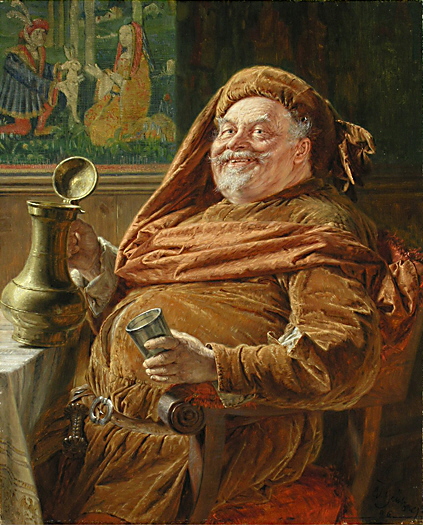
Forloth was a great man in life – great in deed in his youth, and great in girth in his dotage. Always a man of monumental hunger and thirst, he spent his later years in his favorite tavern at his favorite table, regaling the customers with stories of great deeds in far away lands, his wine goblet and lap rarely empty and his coin flowing freely. And so it was when he died – a small belch, a rolling of the eyes, and gone. It took four strong men to remove the body, and the whole town attended the funeral – even the Lord Mayor. A couple weeks later, the first dead body was found in the cellar – a serving wench – long in the tooth but no less beautiful for her years of service and always the favorite of Forloth – keeled over on a barrel of wine, her hair turned stark white. When Brena’s laughter began being heard echoing in the rafters and the wine began turning sour, the townsfolk soon quit the tavern and the landlord was forced to move his establishment. The tavern still stands empty, but a few brave souls have claimed to peek in the thick windows at midnight and see Forloth at his table, Brena in his lap, a ghostly goblet of spirits in his hands.

Forloth: HD 7; HP 22; AC 15 [silver]; Atk 1 strike (1d8 + energy drain); Move 40 (Fly 80); F12 R12 W9; AL C (NE); XP 1750; Special – Incorporeal, powerless in sunlight.

Brena: HD 5; HP 14; AC 15 [silver]; Atk 1 strike (1d8 + energy drain); Move 40 (Fly 80); F13 R12 W10; AL C (CE); XP 1250; Special – Incorporeal, powerless in sunlight.

COBHAR THE BEGGAR KING

Cobhar was born a beggar and thief, and spent his childhood learning how to steal and get away with it. Always an angry man, he hid it well and made a reputation for himself of a leader among the beggars and outlaws of the city – an unofficial ambassador of the underclass whose company was enjoyed by commoners, aristocrats and adventurers alike. Alas, he was a man of ambition, and one of those ambitions was to forge his beggars into a corps equal to the guild of thieves. The master of thieves, Lord Nock, couldn’t allow that, and so one night Cobhar took his last drink of rum and had his body unceremoniously dumped in the harbor, wrapped in heavy chains. The very next night, the thieves were surprised in their shadowy citadel by the appearance of a waterlogged man in chains. Few escaped that hideout, Lord Nock among them, and the reign of the thieves was over. Their hideout remains empty, the lair of Cobhar’s spectre and, stories say, still flush with the plunder of the guild. What nobody knows, though, are how many of the old thieves now haunt the halls of the guildhouse …

Cobhar: HD 7; HP 27; AC 15 [silver]; Atk 1 strike (1d8 + energy drain); Move 40 (Fly 80); F12 R12 W9; AL C (CE); XP 1750; Special – Incorporeal, powerless in sunlight.

MAELA THE MOURNFUL

Maela was a simple woman who lived in a small village by a river. Married to the miller, she was a respected member of her community who wanted, more than anything, to give birth to a child. After many years, she and the miller were blessed with a child, bright of eye and blithe of spirit. All was well for many years, until the coming of the orcs. In a flash, the village was razed, the mill set alight with Maela’s husband and child sealed within. The woman rushed into the blaze, but was unable to save them, and in her trauma rose a month later as a spectre. The charred remains of the mill still stand by the river, and the village is still abandoned. Maela has a powerful compulsion to care for people in distress, and a keen desire to embrace children and other small humanoids (gnomes, halflings). She is not hostile unless rebuffed.

Maela: HD 7; HP 20; AC 15 [silver]; Atk 1 strike (1d8 + energy drain); Move 40 (Fly 80); F12 R12 W9; AL N; XP 1750; Special – Incorporeal, powerless in sunlight.

GUILLA OF THE AUBURN LOCKS

Guilla was the prettiest girl in town – rosy cheeks, auburn curls, brilliant green eyes, etc. – and always popular with the men of the town (young and old). There were stories, of course, that she was perhaps to desirous of their caresses, but she denied everything and her father and mother would not hear of her indiscretions. It was when an adventuring bard entered the picture that things went awry. Handsome and dashing, for the first time in her life, Guilla herself fell in love. In the past, she had always had the upper hand, but now things were different. The bard stayed in town for a couple weeks, and spent nearly every waking moment of that time in her company, until the jealous men of the town had had enough and vowed to end his tenure as Guilla’s lover. It so happened that the bard finally acquiesced to Guilla’s pleading and vowed he would steal away with her on Midsummer’s night. The couple would make their way to the great city over the mountains and there live happily ever after. On his way to window, though, the bard was waylaid by the townsmen and, beaten and bloody, sent down river tied to a raft, never to be heard from again. Guilla waited the night through, and when the next day she heard that the bard had crept away in the night, her heart broke. Two days later, in a daze, she drank from a vial of poison and ended her life. At the next Midsummer night, during the revels of the young, a beautiful woman was seen gliding through the streets. One reveler was surprised by her, especially when he recognized her as Guilla, and when she embraced him, he died. Now, every Midsummer night, the ghost of Guilla glides through the streets of the town, seeking the love and adoration she once had in life, accompanied by the spectres of those she has embraced. There are three such spectres – fawning young men with eyes for none but Guilla. They will defend her to the “death”.

Guilla: HD 7; HP 32; AC 15 [silver]; Atk 1 strike (1d8 + energy drain); Move 40 (Fly 80); F12 R12 W9; AL C (CE); XP 1750; Special – Incorporeal, powerless in sunlight, men must pass a Will save upon seeing her face or be stunned for 1 round.

Spectral Lover: HD 3; AC 15 [silver]; Atk 1 strike (1d8 + energy drain); Move 40 (Fly 80); F14 R13 W11; AL C (LE); XP 750; Special – Incorporeal, powerless in sunlight, energy drain steals only one level.

SCENTH, THE SENTINEL OF BAGWELL HALL

Scenth was a man-at-arms in the employ of Baron Pirpasko, a man with many enemies who was ever fearful of the assassin’s blade. It so happened one night that Scenth was stationed outside the baron’s room as sentinel. While the baron was fast asleep, the baroness, a raven-haired beauty of questionable morals, crept out of bed and stole away with the sentinel for a midnight dalliance. The couple finished their lovemaking and she returned to her lord’s chamber while Scenth returned to his post. The young warrior had barely got to his post, though, when a scream broke the nocturnal silence. Opening the door, he saw the baroness clutching the bloody baron to her chest, a cruel smile on her lips.

“The baron has been murdered,” she screamed, her smile turning into a look of horror as other warriors reached the room.”An assassin got past that foolish boy and killed his master!”

Despite his protestations and accusations, the lad was found guilty of shirking his duty and was summarily hanged. The next night, though, as the household prepared to retire, they discovered the young man back at his post, his head still crooked and scarred by the noose. The baron’s squire challenged the ghostly lad and was nearly killed when his body was run through by Scenth’s ghostly sword. The man was left a shaken wreck, and the rest of the guard soon quit the manse, along with the duplicitous baroness, the baron’s chest of treasure locked away in the chamber beyond her reach.

Scenth: HD 7; HP 31; AC 15 [silver]; Atk 1 strike (1d8 + energy drain); Move 40 (Fly 80); F12 R12 W9; AL C (LE); XP 1750; Special – Incorporeal, powerless in sunlight.

PARIL

Paril was a thief, and one of the best in the world in his day. No vault had ever foiled him, and no ancient temple or forbidden boudoir had proved proof against his cunning. So it was that he delved deep beneath the earth in search of a sceptre of wondrous powers – one more challenge to be overcome. He stole past dozens of guards and wards, tricked a cyclops, walked a wire of spider silk and plucked the sceptre from under the nose of the demon Tessasses. Sceptre in hand, challenge overcome, he made his way out of the dungeon and was, quite suddenly, crushed by a bit of ancient masonry. His back broken, he fell prey to giant rats. An ignoble end to a master thief. Now, his spirit haunts the corridor, the sceptre still in his mortal form’s skeletal hand, beneath the tumbled masonry.

[The idea here is a spectre appearing on the 1st level of a dungeon in a corridor that leads to deeper levels]

Paril: HD 7; HP 22; AC 15 [silver]; Atk 1 strike (1d8 + energy drain); Move 40 (Fly 80); F12 R12 W9; AL C (NE); XP 1750; Special – Incorporeal, powerless in sunlight, surprise on roll of 1-3 on 1d6.
Retro-Engineering: Creature Catalog

Every so often I wander over to the Creature Catalog to see what they’re up to. Besides being the source of the very excellent Tome of Horrors (without which NOD would be much less interesting), the CC has converted hundreds of old school creatures for use in 3rd edition games. Many years after 3rd edition going out of print and the end to the first phase of the d20 revolution, CC is still cranking out these conversions, often of monsters I had never even heard of. Here’s their ten latest conversions retro-engineered into a more old school format.

Tirichik
Tirichiks look like a hybrid of white dragon and centipede, with two tentacles tipped by sharp spikes. Tirichiks are an apex predator of the tundra. They attack from ambush, hiding in snowdrifts or crevasses and then springing out at their prey. They can momentarily detach their skull from their spinal column, allowing them to make quick strikes from 10 ft away. These quick strikes score double damage if they hit, but attempting them lowers the tirichik’s AC by 2. Sensory organs on the beast’s tentacles give it a heightened ability to detect foes, lowering its chances to be surprised to 1 in 1d8. Tentacles can be attacked separately from the body, having an AC of 0 [19] and 2d6 hit points. They are severed when reduced to 0 hp, though severed tentacles are regrown in 2d10+10 days. Tirichiks are immune to cold and can walk on ice with no penalties to movement.

Tirichik: HD 13; AC 1 [18]; Atk 1 bite (3d6), 2 tentacles (1d6); Move 12 (B6); Save 3; CL/XP 14/2600; Special: Elongate neck, ice-walking, immune to cold.

Copyright 1992 Wizards of the Coast, Inc.
Originally found in FR 14 – The Great Glacier

Shee (Banshee Rider)
Shee look like eyeless fey maidens with long, white hair. They wear highly ornamented plate armor and ride long-maned, eyeless horses. Shee always carry long, insubstantial lances composed of shadow-stuff. Shee are undead creature. Although they appear to be a rider and mount, they are in fact a single creature, inseparable without the use of a sharp axe backed up by mighty thews. Shee can ride over any surface, including water, without penalty. Shee exist to destroy – even attacking other undead when there is nothing else to slay. A turned undead will not flee, but only turn its attention to a different creature. A shee that is struck in combat utters a terrible scream that kills the four nearest creatures unless they pass a saving throw. The scream can only be uttered once every 1d4 rounds and no more than 3 times per day. After screaming, the shee vanishes, moving magically to a distant place. Creatures that are struck by a shee and survive are treated as being blessed, but only against other undead. This effect is permanent, although it can be removed with a wish spell. A shee’s shadow lance ignores non-magical armor and, in addition to normal damage, inflicts 1d3 points of strength damage. If separated from the shee, the lance disappears and reforms in the shee’s hand the next round.

Shee: HD 9; AC -2 [21]; Atk 1 lance (1d10 + Strength drain) or 2 hooves (1d6); Move 24 (F20); Save 6; CL/XP 13/2300; Special: Death wail, shadowlance, vanish.

Copyright 1990 Wizards of the Coast, Inc.
Originally found in FA1 – Halls of the High King

Opinicus

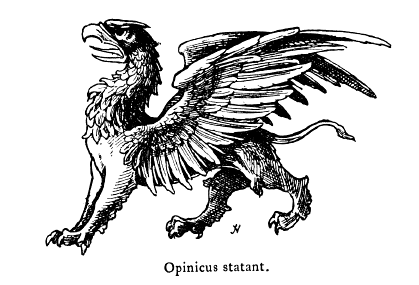
An opinicus is a griffin with the head and wings of an eagle, the body of a lion and the tail of a camel. They wander alone or in pairs in desert wastelands and are champions of They can use the following psychic powers as a 7th level psychic: Astral projection, id insinuation, mind thrust and telekinesis. They can also cast spells and turn undead as a 7th level cleric. The gaze of an opinicus flames with divine fire; all wicked creatures within 30 feet who meet this gaze suffer 2d6 damage and are blinded for 1 round (save negates blindness). The opinicus can use its gaze once every 1d4+1 rounds.

Opinicus: HD 7; AC 2 [17]; Atk 2 claws (1d6), beak (1d4); Move 20 (F30); Save 9 (8 vs. mental effects); CL/XP 10/1400; Special: Psychic powers, spells, sun sparkles, turn undead.

Copyright 1983 Wizards of the Coast, Inc.
Originally found in Monster Manual II

Netherbird
Netherbirds are the black, grotesque carion crows of Hell, serving devils and demons as messengers. They dwell on craggy moors in flocks of 3d10 birds. Their eggs are black and leathery and hatch unattended, being warmed by an inner hellfire. Netherbirds are 3 feet long and have wingspans of 6 to 7 feet. They are intelligent and can speak.

Netherbird: HD 2; AC 7 [12]; Atk 2 claws (1d4), bite (1d3); Move 6 (F24); Save 16; CL/XP 2/30; Special: Immune to fire.

Copyright 1989 Wizards of the Coast, Inc.
Originally found in FRE1 – Shadowdale

Kupuk
Kupuks look like large dogs (6′ long, 3′ tall at shoulder) with walrus-like hides, grey or yellowish fur and spiked tails.The people of the tundra and taiga use them as pack animals, for they are very loyal companions. Kupuk’s are egg-layers, like the platypus. When defending its eggs or pups, the kupuk gains a +1 bonus to hit and damage. Training a kupuk is fairly easy, taking about six weeks to teach them a trick. Kupuk young are worth 1,000 gp, and professional animal trainers charge 500 gp to train them. Kupuks can carry up to 200 pounds without losing any speed.

Kupuk: HD 5; AC 3 [16]; Atk 2 claws (1d4), bite (1d8), tail (1d12); Move 9 (S18); Save 12; CL/XP 5/240; Special: Frenzy, immune to cold.

Copyright 1992 Wizards of the Coast, Inc.
Originally found in FR 14 – The Great Glacier

Gorse
A gorse looks like a 3″ tall elf child with delicate wings. They carry small bows and swords and quivers of tiny arrows. They live under gorse bushes, and although secretive, they are friendly towards folk who bring them fruit, bread or milk. Gorse are fond of magic potions, and usually have 1d3 in their lair. Gorse have several magical abilities they can use once per day: They can create magical distractions (save or look away); magically exterminate small vermin within 20 feet (save or die); cast Mirror Image and cause thorn bushes within a 5-ft square area grow rapidly. These thorn bushes slow people moving through them to one half-speed and cause 1d3 points of damage. Gorse tip their arrows with a poison that causes confusion for 1d4 rounds unless a saving throw is passed. All gorse can cast the spell Mirror Image once per day. Once

Gorse: HD 1d2; AC 3 [16]; Atk 1 sword or bow (1 dmg); Move 3 (F12); Save 18 (16 vs. spells); CL/XP 1/15; Special: Poison, sprout, exterminate.

Copyright 1992 Wizards of the Coast, Inc.
Originally found in Dragon Magazine #180

Bramble
Brambles resemble tiny (3″ tall) elves with swarthy, wrinkled skin and long nails on its hands and feet. They wear plate armor, the back of which is covered in a brace of spines. They are among the most vicious and aggressive of the fair folk, taking delight in hunting pixies and sprites and other small fey. They can charm small animals into serving as their mounts. Brambles are fierce warriors, and charging bramble scores an additional 3 points of damage with its attacks. A brambles spines inject a poison that causes a sickened condition (-1 to all rolls) for 2d4 rounds (save applies). Once per day, they can target the wings of a small creature with a net of entangling thorns. With a successful ranged attack, the creature’s wings are bound and useless for 6d6 rounds.

Bramble: HD 1d3; AC 3 [16] or 1 2 [17] in plate armor; Atk 1 lance (1 dmg) or spines (1 dmg + poison); Move 3 (F12); Save 18 (16 vs. magic); CL/XP 1/15; Special: Poison, charm mount, spines.

Copyright 1994 Wizards of the Coast, Inc.
Originally found in Dragon Magazine #206

Behemoth (Giant Hippopotamus)
Behemoths are massive hippos (12′ long, 3 tons), capable of overturning good-sized boats. They are as aggressive and territorial as their smaller cousins.

Behemoth: HD 10; AC 3 [16]; Atk 1 bite (3d6); Move 9 (S15); Save 5; CL/XP 10/1400; Special: None.

Copyright 1983 Wizards of the Coast, Inc.
Originally found in Monster Manual II

Pseudo-undead (Template)

Pseudo-undead are living humanoids who resemble specific types of undead creatures. You can turn any humanoid into a pseudo-undead by altering its stats as follows:

– A pseudo-undead gains any claw and bite attacks of the undead creature is resembles, dealing 1d4 points of damage with its claws and 1d6 points of damage with its bite.

– Pseudo-undead can see in the dark.

– Pseudo-ghouls have a paralyzing touch (save or paralyzed for 1d3 rounds).

– Pseudo-ghasts have a paralyzing touch (see above) and are surrounded by an overwhelming stench; creatures within 10 feet must pass a saving throw or be sickened (-1 to all rolls) for 1d6+4 rounds.

-Pseudo-wights spread a disease with their touch. This fever deals 1d4 dexterity and constitution damage each day until the afflicted succeeds at a saving throw vs. disease at a -5 penalty.

– Pseudo-wraiths have physical forms, but always wear wispy shrouds or robes to obscure their bodies. They walk so lightly as to leave no trace. Their claw attacks are poisonous, causing 2d4 points of damage on a failed save.

– Pseudo-spectres have physical forms surrounded by a faint luminosity. Their claw attacks are poisonous, the poison weakening (-2 to hit and damage) a person for 1 day.

– Pseudo-vampires are like feral savages clad in the silk finery of civilization. They usually wear armor and fight with weapons. They have claw and bite attacks. Their bites cause persistent bleeding that saps a person of 1 hit point per round until staunched or magically healed. Their claws spread the “red ache”, a disease that robs a person of 1d6 points of strength each day until they succeed at a saving throw vs. disease at a -6 penalty.

Copyright 1983 Wizards of the Coast, Inc.
Originally found in Monster Manual II

Deviant Friday – Alan Lathwell Edition

Today’s feature Deviant is Alan Lathwell. Lathwell has a more classic style than previous featured artists.


The Mercenary
I like the pose and the helmet – basically a fighting-man with a short bow, short sword and leather armor looking for work.


Washer at the Ford

The concept of a “wandering omen” doesn’t show up much in fantasy games – banshees and black hounds are usually things that force you to roll initiative. Consider how much more effective they would be if there was nothing a player could do about them but wait and worry


The Battle
Law vs. Chaos

It Came from the SRD – Part Four

This post is the fourth of four posts converting the unconverted monsters from the SRD to S&W. There is, naturally, a part one, part two and part three. This post is open game content.

Sahuagin Mutant
About one in two hundred sahuagin has four arms. Such creatures can make four claw attacks or use extra weapons, in addition to the claw and bite attacks. A Referee in possession of a game that utilizes random mutations may want to add other mutations to the sahuagin mutant (laser eyes, a winning personality, etc).

  • Sahuagin Mutant: HD 2+1; AC 5 [14]; Atk 4 claws (1d4) or 2 weapons (1d8); Move 12 (Swim 18); Save 16; CL/XP 3/60; Special: None.

Scrag (Sea Troll)
These cousins of the troll dwell in any body of water in any climate. They regenerate only if mostly immersed in water.

  • Scrag: HD 6+3; AC 4 [15]; Atk 2 claws (1d4), 1 bite (1d8); Move 12 (Swim 18); Save 11; CL/XP 8/800; Special: Regenerate 3 hp/round.

Shadow, Greater
Although no more intelligent than an average shadow, a greater shadow is more loathesome and dangerous because it can spawn. Creatures drained of all their strength by a greater shadow become shadows under the control of their killer.

  • Greater Shadow: HD 9+3; AC 6 [13]; Atk 1 touch (1d6 + strength drain); Move 12; Save 6; CL/XP 10/1400; Special: Drain 1d4 points of strength with hit, hit only by magic weapons.

Shield Guardian
Shield guardians are magical constructs created to protect whoever wears a certain amulet. They obey verbal commands, but are fairly stupid. All attacks against the amulet wearer in the presence of a shield guardian suffer a –2 penalty to hit. A shield guardian can store one spell of level 4 or lower that is cast into it by another creature. It “casts” this spell when commanded to do so. If a shield guardian’s amulet is destroyed, the guardian ceases to function until a new one is created. If the wearer dies but the amulet is intact, the shield guardian carries out the last command it was given.

  • Shield Guardian: HD 15; AC 0 [19]; Atk 2 slam (2d6); Move 12; Save 3; CL/XP 16/3200; Special: Shield other, spell storing.

Skum
Skum are humanoid algae that serve aboleths and other aquatic dark lords. They are amphibious and have raking claws.

  • Skum: HD 2; AC 7 [12]; Atk 1 bite (2d6), 2 claws (1d4); Move 9 (Swim 15); Save 16; CL/XP 2/30; Special: None.

Spider Eater
A spider eater is 10 feet long and 4 feet high, and has a wingspan of about 20 feet. A spider eater attacks with its venomous sting and powerful mandibles. Female spider eaters lay their eggs inside large, paralyzed creatures. The young emerge about six weeks later, literally devouring the host from inside. Creatures stung by a spider eater must pass a saving throw or be paralyzed for 1d8+5 weeks. Spider eaters have a continuous freedom of movement ability as the spell. They can be trained as mounts.

  • Spider Eater: HD 4+1; AC 5 [14]; Atk 1 sting (2d4) and 1 bite (1d8); Move 12 (Fly 24); Save 13; CL/XP 5/240; Special: Implant eggs, poison.

Thoqqua
The thoqqua is a 5’ long, reddish-silver worm-like creature that radiates intense heat. When it burrows through rock it leaves a 3-ft diameter tunnel glowing red with heat; anyone touching this tunnel within 1 minute of it being made will suffer 2d6 points of damage. It can charge 120’ in one round, dealing 5d6 damage to whomever it hits. Creatures struck must make a saving throw or lose a prominent item worn to the creature’s intense heat. A thoqqua is healed by fire damage. It suffers double damage from cold.

  • Thoqqua: HD 3; AC 1 [18]; Atk 1 touch (2d6); Move 12 (Burrow 3); Save 14; CL/XP 4/120; Special: Healed by fire, double damage from cold.

Troll Hunter
Some trolls, more cunning than most, are not satisfied with merely eating civilized beings but train to hunt them relentlessly. These troll hunters are fearsome creatures who focus on slaying and devouring humanoid prey.

  • Troll Hunter: HD 12+6; AC 1 [18]; Atk 2 claws (1d4), 1 bite (1d8) or battle axe (2d6) or javelin (1d8); Move 12; Save 3; CL/XP 15/2900; Special: Regenerate 3 hp/round, +2 bonus to hit humans and elfs, speak with animals at will, cast resist fire once per day.

Vampire Spawn
Vampire spawn are undead creatures that come into being when vampires slay mortals. Like their creators, spawn remain bound to their coffins and to the soil of their graves. Vampire spawn appear much as they did in life, although their features are often hardened, with a predatory look. Like vampires, vampire spawn have a variety of special abilities. They can only be harmed by magic or silver weapons, regenerate 1 hp per round, can turn into gaseous form at will and can drain one level with their bite. Looking into a vampire spawn’s eyes forces one to make a saving throw or be charmed (as the charm person spell). Vampire spawn have the same weaknesses and vulnerabilities as true vampires.

  • Vampire Spawn: HD 4; AC 4 [15]; Atk 1 bite (1d6 + level drain); Move 12; Save 13; CL/XP 7/600; Special: See description.

Xill
Xill are four-armed, red-skinned hooligans. Xill are asexual. They reproduce by laying eggs in the stomachs of living humanoids. They can shift from the ethereal to the material plane instantly, or the reverse in 2 rounds during which it loses its magic resistance. Despite their magic resistance, xill can be warded with protection from evil. The xill’s claws can inject a paralyzing venom into grappled opponents (a saving throw applies). Once a victim is secured and subdued, the xill will take its victim to the ethereal plane for egg laying. If attacked in its lair, the xill will first save its eggs and any egg-bound victims. Xill eggs hatch in 1d4 days; over the next 2d4 days they will inflict 3d6 damage per day as they mature. Once they emerge they kill the victim instantly. The eggs will produce 2d8 small xill that mature to adulthood in only 1d4 hours.

  • Xill: HD 5; AC 2 [17]; Atk 4 claws (1d4) weapons (1d8); Move 15; Save 12; CL/XP 12/2000; Special: Attack as 8 HD creatures, only harmed by magic weapons, magic resistance 70%, ethereal shift.

Yrthak
A yrthak is a large, blind avian. It senses sound and movement by means of a special organ on its long tongue. It emits powerfully focused beams of sound from the protrusion on its head. The creature is a yellowish-green color, with the wings and fin being more yellow and the head and body more green. The teeth are yellow. A yrthak is about 20 feet long, with a wingspan of 40 feet. Despite their intelligence, yrthaks do not speak. They can focus sonic energy into a ray every 2 rounds. The ray inflicts 6d6 damage. It can also focus the ray on stone, causing an explosion that deals 2d6 damage to all within 10 feet of the impact.

  • Yrthak: HD 12; AC 3 [16]; Atk 2 claws (1d6), 1 bite (2d8); Move 9 (Fly 24); Save 3; CL/XP 13/2300; Special: Sonic attacks.

Templates
Templates are, in my opinion, a sound idea. Why have separate stats for skeletons and monster skeletons and dragon skeletons, when you can instead apply a simple template to any monster and turn it into a skeleton. Nice and simple. Unfortunately, here is where the idea runs smack-dab into one of my least favorite parts of the d20 experience – monster stats. When I used to run a d20 game, I would dutifully go about the business of template-ing a monster to throw a twist to my players. I would go down the list, make the changes, do the calculations, and in the end come up with a slightly new monster that would probably still bite the dust in the course of three or four rounds of combat. For me, not enough bang for the buck. Enter the Swords & Wizardry Core Rules and the sheer joy that is monsters with only SEVEN stats. Compare that to the 23 to 25 statistics for a d20 monster that is going to last just about as long and do just about the same things in combat. Of course, templates often are used to create fairly bizarre, tongue-in-cheek creatures, but I have room for a little comedy in my games. So, here is an attempt at converting some d20 templates into an old school format.

Celestial Creature
The celestial creature template can be applied to any kind of creature.

  • Celestial creatures are subject to spells that repulse conjured creatures.
  • Once per day a celestial creature can “smite evil”, dealing bonus damage equal to its own hit dice on a successful attack against a evil creature.
  • Celestial creatures take half damage from acid, cold and lightning and have 10% magic resistance. A celestial creature with four or more hit dice can only be harmed by magic weapons.
  • Celestial creaures have challenge levels 3 or 4 points higher than normal creatures of the same type.

Sample Celestial Creature

  • Celestial Polar Bear: HD 7; AC 6 [13]; Atk 2 claws (1d6+1), 1 bite (1d10+1); Move 12; Save 9; CL/XP 7/600; Special: Hug, smite evil, half damage from acid, cold and lightning, magic resistance 10%, only harmed by magic weapons.

Fiendish Creature
The fiendish creature template can be applied to any kind of creature.

  • Fiendish creatures are subject to spells that repulse conjured creatures.
  • Once per day a fiendish creature can “smite good”, dealing bonus damage equal to its own hit dice on a successful attack against a good creature.
  • Fiendish creatures take half damage from cold and fire and have 10% magic resistance. A fiendish creature with four or more hit dice can only be harmed by magic weapons.
  • Fiendish creaures have challenge levels 3 or 4 points higher than normal creatures of the same type.

Sample Fiendish Creature

  • Fiendish Giant Viper: HD 4; AC 5 [14]; Atk 1 bite (1d3 + poison); Move 12; Save 13; CL/XP 6/400; Special: Lethal poison, only harmed by magic weapons, half damage from fire and cold, magic resistance 10%, smite good.

Half-Celestial
The haf-celestial template can be applied to any humanoid creature. No matter the form, half-celestials are always comely and delightful to the senses, having golden skin, sparkling eyes, angelic wings, or some other sign of their higher nature.

  • Half-celestials have feathered wings, giving them a fly speed equal to twice their land speed.
  • A half-celestial’s armor class improves by one.
  • Once per day a half-celestial can “smite evil”, dealing bonus damage equal to its own hit dice on a successful attack against an evil creature.
  • Half-celestials can use the spell light at will, and can always counter magical darkness.
  • Half-celestials can cast cleric spells. They can cast one spell of each cleric spell level, with the maximum level of cleric spells equal to their hit dice.
  • Half-celestials are immune to disease, suffer only half damage from acid, cold and lightning, are only harmed by magic weapons, have 25% magic resistance and are +2 to save vs. poison.
  • A half-celestial’s challenge level is 5 points higher than a normal creature of its type.

Sample Half-Celestial

  • Half-Celestial Elf: HD 1+1; AC 4 [15]; Atk 1 sword (1d8) or 2 arrows (1d6); Move 12 (Fly 24); Save 17 (15 vs. poison); CL/XP 6/400; Special: Smite evil (+1 damage), bless once per day, light at will, immune to disease, half damage from acid, cold and lightning, only harmed by magic weapons, magic resistance 25%.

Half-Dragon
The haf-dragon template can be applied to any living creature. Half-dragon creatures are always more formidable than others of their kind that do not have dragon blood, and their appearance betrays their nature; scales, elongated features, reptilian eyes, and exaggerated teeth and claws. Sometimes half-dragons have wings.

  • Half-dragons have +1 hit point per hit dice.
  • A half-dragon that is larger than man-size gains leathery wings and a fly speed equal to twice its land speed.
  • A half-dragon’s armor class improves by two.
  • Half-dragons have one bite attack for 1d6 damage and two claw attacks for 1d4 damage. Damage can be increased for creatures larger than man-sized, or decreased for smaller creatures.
  • Half-dragons gain one breath weapon of the breed of their dragon parent (i.e. frost if a half-white dragon, fire if a half-red dragon). A half-dragon’s breath weapon deals 5d6 points of damage and is usable once per day.
  • Half-dragons are immune to sleep and paralysis.
  • A half-dragon’s challenge level is 2 or 3 points higher than a normal creature of its type, depending on whether or not it can fly.

Sample Half-Dragon

  • Half-White Dragon Mammoth: HD 12+12; AC 5 [14]; Atk 1 trunk (1d10), 2 gore (1d10+4), 2 trample (2d6+4) or 2 claw (1d8), 1 bite (1d10); Move 12 (Fly 24); Save 3; CL/XP 16/3200; Special: Breath cone of frost (5d6 damage) once per day, immune to sleep and paralysis.

Half-Fiend
The haf-fiend template can be applied to any humanoid creature. No matter its form, a half-fiend is always hideous to behold, having dark scales, horns, glowing red eyes, bat wings, a fetid odor, or some other obvious sign that it is tainted with evil.

  • Half-fiends have bat-like wings, giving them a fly speed equal to their land speed.
  • A half-fiend’s armor class improves by one.
  • Half-fiends have one bite attack for 1d6 damage and two claw attacks for 1d4 damage. Damage can be increased for creatures larger than man-sized, or decreased for smaller creatures.
  • Once per day a half-fiend can “smite good”, dealing bonus damage equal to its own hit dice on a successful attack against a good creature.
  • Half-fiends can cast the reverse versions of cleric spells. They can cast one spell of each cleric spell level, with the maximum level of cleric spells equal to their hit dice.
  • Half-fiends are immune to poison, suffer only half damage from acid, cold, fire and lightning, are only harmed by magic weapons, and have 25% magic resistance.
  • A half-fiend’s challenge level is 5 points higher than a normal creature of its type.

Sample Half-Fiend

  • Half-Fiend Berserker: HD 1; AC 7 [12]; Atk 1 weapon (1d8) or 2 claws (1d4), 1 bite (1d6); Move 12 (Fly 12); Save 17; CL/XP 7/600; Special: +2 to hit in berserk state, smite good (+1 damage), cast inflict light wound once per day, immune to poison, half damage from acid, cold, fire and lightning, only harmed by magic weapons, magic resistance 25%.

Lycanthrope
The lycanthrope creature template can combine any humanoid creature with any beast.

  • A lycanthrope’s hit dice are equal to the hit dice of his humanoid form plus the hit dice of his animal form.
  • Lycanthropes can shift between their humanoid form, their animal form, and a hybrid form.
  • A lycanthrope’s armor class improves by two.
  • Lycanthropes gain special movement types of their animal form while in hybrid form.
  • A lycanthrope in hybrid form gains two claw attacks that deal 1d4 damage and one bite attack that deals 1d6 damage. Damage can be increased or decreased as the Referee deems appropriate.
  • A lycanthrope spreads its curse to other creatures through its bite attack. Creatures bitten by the lycanthrope must pass a saving throw to avoid the curse.
  • Lycanthropes can only be harmed by silver or magic weapons.
  • Lycanthropes can communicate with animals of their kind in any form.

Sample Lycanthrope

  • Hill Giant Were-Orca: HD 20+2; AC 2 [17]; Atk 1 weapon (2d6) or 2 claws (1d6), 1 bite (1d8); Move 12 (Swim 24); Save 3; CL/XP 9/1100; Special: Throw boulders, only harmed by silver or magic weapons, communicate with orcas, curse of lycanthropy.

Vampire
The vampire template can be applied to any humanoid creature.

  • If the creature has fewer than seven hit dice, increase their hit dice to seven.
  • Improve the creatures armor class by two.
  • The creature gains a bite attack that deals 1d10 points of damage and drains one level.
  • As a vampire, the creature gains the following special abilities: Can only be hit by magic weapons, regenerate 3 hp each round, turn into gaseous form or giant bat at will, summon a swarm of bats or 3d6 wolves from the night, eyes that charm (as the charm person spell, save at -2 to negate), and the ability to turn humanoids into vampires by killing them.
  • As a vampire, the creature gains the following vulnerabilities: They can be killed by immersion in running water (unless they are natural swimmers), exposure to sunlight, or having a stake driven through their hearts (which, to be honest, kills non-vampires as well); they retreat from the smell of garlic, the sight of a mirror and the sight of “good” holy symbols.
  • Vampiric creatures have challenge levels 3 points higher than normal creatures of the same type, plus any additions due to extra hit dice.

Sample Vampire

  • Vampiric Lizardman: HD 7+1; AC 6 [13]; Atk 2 claws (1d3), 1 bite (1d10 + level drain); Move 6 (Swim 12); Save 9; CL/XP 10/1400; Special: See description above.

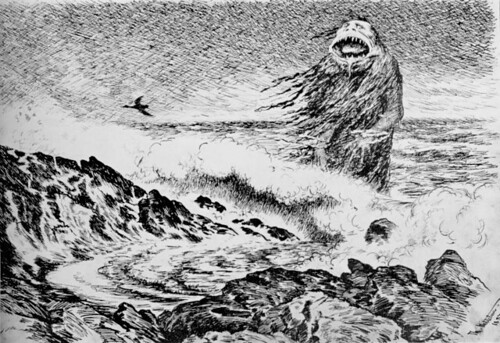
Art by Theodor Kittelsen – Sjøtrollet 1887 (The Sea Troll)

It Came from the SRD – Part Three

This post is the third of four posts converting the unconverted monsters from the SRD to S&W. There is, naturally, a part one and part two. This post is open game content.

Lammasu
Lammasus are servants of the lords of law. They appear as winged lions with the heads of bearded kings. They cast spells as level 7 clerics. In addition, they radiate a protection from evil, 10’ radius effect, can turn invisible twice per day and use dimension door once per day.

  • Lammasu: HD 7; AC 0 [19]; Atk 2 claw (2d6); Move 12 (Fly 24); Save 9; CL/XP 9/1100; Special: Spells.

Lillend
Lillends are protectors of the arts that look like winged women with the lower torsos of snakes. Victim’s of a lillend’s tail slap must succeed at a saving throw or be constricted each round for 2d6 damage. A constricting lillend cannot move, but it can still attack. A lillend can use the following spells: At will – darkness, knock, light, pass plant, polymorph self (humanoid only), speak with animals, speak with plants; 3/day – hallucinatory terrain; 1/day – fire charm, irresistible dance, transport via plants. Each lillend can understand all forms of communication.

  • Lillend: HD 7+2; AC 2 [17]; Atk 1 tail (2d6) or 1 weapon (1d8+4); Move 9 (Fly 27, Swim 15); Save 9; CL/XP 14/2600; Special: Spells, only harmed by magic weapons, immune to poison and life drain, half damage from fire, magic resistance 25%.

Magmin
Magmin look like halflings formed from molten rock and surrounded by an aura of flames. Touching a magmin causes flammables to ignite unless a saving throw is made. Just being within 20 feet of a magmin inflicts 1d6 points of damage. Metal items that touch a magmin melt unless the owner makes a saving throw.

  • Magmin: HD 2; AC 2 [17]; Atk 1 touch (1d6); Move 12; Save 16; CL/XP 3/60; Special: Heat.

Malenti
If a community of undine (aquatic elves) is located within 100 miles of a sahuagin community, about one in one hundred sahuagin looks just like an undine. These creatures, called malenti, can remain out of water for up to 12 hours. They are otherwise statistically identical to sahuagin.

  • Malenti: HD 2+1; AC 5 [14]; Atk 1 weapon (1d8); Move 12 (Swim 15); Save 16; CL/XP 2/30; Special: None.

Mephit
Mephits are minor elemental creatures that appear as small, winged demons. A mephit can use its breath weapon three times per day. Once per day, a mephit can attempt to summon another mephit of the same variety with a 25% chance of success. Mephits regenerate 2 points of damage each round if they are within their “element”.

Air Mephits
An air mephit breathes a 15-foot cone of dust and grit that inflicts 1d8 damage (saving throw for half). Once per hour it can duplicate a blur spell. Once per day it can use gust of wind. An air mephit regenerates if exposed to moving air.

  • Air Mephit: HD 3; AC 2 [17]; Atk 2 claw (1d3); Move 12 (Fly 24); Save 14; CL/XP 5/240; Special: Harmed by magic weapons, breath weapon, blur, gust of wind, regenerate, summoning.

Dust Mephit
A dust mephit breathes a 10-foot cone of irritating particles that deal 1d4 damage (saving throw for half) and imposes a -2 penalty to AC and attack rolls. Once per hour, a dust mephit can duplicate a blur spell. Once per day it can create a mass of roiling dust that duplicates a wind wall. A dust mephit regenerates in an arid, dusty environment.

  • Dust Mephit: HD 3; AC 2 [17]; Atk 2 claw (1d3); Move 12 (Fly 21); Save 14; CL/XP 5/240; Special: Harmed by magic weapons, breath weapon, blur, regenerate, summoning, wind wall.

Earth Mephit
An earth mephit breathes a 15-foot cone of rock shards and pebbles that deals 1d8 damage (saving throw for half). Once per day it can cast soften earth and stone. Once per hour it can magically change its size. An earth mephit regenerates if it is underground or buried up to its waist in earth.

  • Earth Mephit: HD 3; AC 3 [16]; Atk 2 claw (1d3); Move 12 (Fly 18); Save 14; CL/XP 5/240; Special: Harmed by magic weapons, alter size, breath weapon, regenerate, soften earth and stone, summoning.

Fire Mephit
A fire mephit breathes a 15-foot cone of fire that deals 1d8 damage (saving throw for half). Once per hour it can cast burning hands, and once per day it can heat metal. A fire mephit regenerates if it is touching a flame at least as large as a torch.

  • Fire Mephit: HD 3; AC 2 [17]; Atk 2 claw (1d6); Move 12 (Fly 21); Save 14; CL/XP 5/240; Special: Harmed by magic weapons, breath weapon, burning hands, heat metal, regenerate, summoning.

Ice Mephit
Ice mephits breathe a 10-foot cone of ice shards that deals 1d4 damage (saving throw for half) and imposes a -2 penalty to AC and attack rolls. Once per hour an ice mephit can cast magic missile and once per day they can chill metal. An ice mephit regenerates if touching a piece of ice of or if the ambient temperature is 32°F. or below.

  • Ice Mephit: HD 3; AC 1 [18]; Atk 2 claw (1d6); Move 12 (Fly 21); Save 14; CL/XP 5/240; Special: Harmed by magic weapons, breath weapon, chill metal, magic missile, regenerate, summoning.

Magma Mephits
Magma mephits breathe a 10-foot cone of magma that deals 1d4 damage (saving throw for half) and imposes a -2 penalty to AC and attack rolls. Once per hour, a magma mephit can turn into a pool of lava. The mephit can only be struck by +3 or better weapons in this form. The mephit can’t attack while in lava form but can use spells. It can move at a speed of 3. The pool’s touch ignites flammable materials such as paper, straw, or dry wood. Once per day a magma mephit can use pyrotechnics. A magma mephit regenerates if touching magma, lava, or a flame at least as large as a torch.

  • Magma Mephit: HD 3; AC 3 [16]; Atk 2 claw (1d6); Move 12 (Fly 21); Save 14; CL/XP 5/240; Special: Harmed by magic weapons, breath weapon, pyrotechnics, regenerate, shape change, summoning.

Ooze Mephits
An ooze mephit breathes a 10-foot cone of caustic liquid that deals 1d4 points of acid damage (saving throw for half). Living creatures that fail their saves are tormented by itching skin and burning eyes unless they have immunity to acid or are otherwise protected. This effect imposes a -2 penalty to AC and a -2 penalty on attack rolls for 3 rounds. Once per hour an ooze mephit can hurl an acid arrow (2d4 damage for 2 rounds). Once per day it can create a stinking cloud (6 rounds). An ooze mephit regenerates if in a wet or muddy environment.

  • Ooze Mephit: HD 3; AC 3 [16]; Atk 2 claw (1d3); Move 12 (Fly 18, Swim 12); Save 14; CL/XP 5/240; Special: Harmed by magic weapons, breath weapon, acid arrow, stinking cloud, summoning.

Salt Mephits
Salt mephits breathe a 10-foot cone of salt crystals that deals 1d4 damage (saving throw for half) and imposes a -2 penalty to AC and attack rolls. Once per day it can draw the moisture from an area in a 20’ radius. Living creatures within range take 2d8 points of damage (saving throw for half). This effect is especially devastating to plant creatures and aquatic creatures, which take a -2 penalty on their saving throws. A salt mephit regenerates if in an arid environment.

  • Salt Mephit: HD 3; AC 3 [16]; Atk 2 claw (1d6); Move 12 (Fly 18); Save 14; CL/XP 5/240; Special: Harmed by magic weapons, breath weapon, destroy moisture, glitterdust, summoning.

Steam Mephits
Steam mephits breathe a 10-foot cone of steam that deals 1d4 damage (saving throw for half) and imposes a -2 penalty to AC and attack rolls. Once per hour a steam mephit can duplicate a blur spell. Once per day it can create a rainstorm of boiling water that affects a 20-foot-square area and causes 2d6 damage. A steam mephit regenerates if touching boiling water or is in a hot, humid area.

  • Steam Mephit: HD 3; AC 3 [16]; Atk 2 claw (1d6); Move 12 (Fly 21); Save 14; CL/XP 5/240; Special: Harmed by magic weapons, breath weapon, blur, boiling rain, summoning.

Water Mephits
Water mephits breathe a 15-foot cone of caustic liquid that deals 1d8 acid damage (saving throw for half). Once per hour a water mephit can hurl an acid arrow. Once per day it can create a stinking cloud spell (6 rounds). A water mephit regenerates if exposed to rain or submerged up to its waist in water.

  • Water Mephit: HD 3; AC 3 [16]; Atk 2 claw (1d3); Move 12 (Fly 18, Swim 12); Save 14; CL/XP 5/240; Special: Harmed by magic weapons, breath weapon, acid arrow, stinking cloud, summoning.

Merrow
Merrows are the aquatic cousins of the terrestrial ogre. Merrow can live in fresh water or salt water. Salt water merrow often keep large harems of mermaids. The mermaids tolerate the merrow because of the protection he affords, but otherwise find them repulsive. This, in turn, drives the merrow to even greater depths of cruelty and hatred. Instead of the typical ogre’s club, they prefer to use long spears in combat.

  • Merrow: HD 4+1; AC 5 [14]; Atk 1 weapon (1d10+1); Move 9 (Swim 15); Save 13; CL/XP 4/120; Special: None.

Mohrg
Mohrgs are the animated corpses of mass murderers or similar villains who died without atoning for their crimes. Mohrgs are accompanied by 1d4+6 zombies. A mohrg’s long tongue paralyzes those it touches for 1d4 minutes. Creatures killed by a mohrg rise after 1d4 days as zombies under its control.

  • Mohrg: HD 14; AC -4 [23]; Atk 1 slam (1d8) and 1 tongue (paralysis); Move 12; Save 3; CL/XP 17/3500; Special: Tongue attack.

Mummy Lord
Unusually powerful or evil individuals preserved as mummies sometimes rise as greater mummies after death. A mummy lord resembles its lesser fellows, but often wears or carries equipment it used in life. Mummy lords are often potent spellcasters. The mere sight of a mummy lord causes one to become paralyzed with fear for 1d4 rounds unless they pass a saving throw. They are found as guardians of the tombs of high lords, priests, and mages. Most are sworn to defend for eternity the resting place of those whom they served in life, but in some cases a mummy lord’s unliving state is the result of a terrible curse or rite designed to punish treason, infidelity, or crimes of an even more abhorrent nature. A mummy lord of this sort is usually imprisoned in a tomb that is never meant to be opened again.

  • Mummy Lord: HD 10+4; AC 0 [19]; Atk 1 fist (1d12); Move 6; Save 5; CL/XP 15/2900; Special: Despair, rot, hit only by magic weapons, cast spells as a level 10 cleric.

Nessian Warhound
Nessian warhounds are coalblack mastiffs the size of draft horses, often fitted with shirts of infernal chainmail (+1 chainmail barding). Nessian warhounds resemble hell hounds in the same way that pit bulls resemble chihuahuas.

  • Nessian Warhound: HD 12; AC 0 [19]; Atk 1 bite (1d10); Move 12; Save 3; CL/XP 14/2600; Special: Breathe fire (24 hp).

Ogre Berserker
Their inherent bent toward chaos combines with their size and strength to make ogres natural berserkers. Indeed, their leaders are almost always monstrous brutes whose fury in battle is truly fearsome. A raging ogre berserker is an inspiration to other ogres.

  • Ogre Berserker: HD 8+2; AC 2 [17]; Atk 1 weapon (1d10+1); Move 9; Save 8; CL/XP 9/1100; Special: +2 to hit in berserk state.

Phasm
A phasm is an amorphous creature that can assume the guise of almost any other creature or object. If attacked, a phasm transforms into the most fearsome creature it knows (up to 12 feet long) and attacks. A phasm is immune to poison, sleep, paralysis, polymorph, and stunning effects.

  • Phasm: HD 15; AC 2 [17]; Atk 1 slam (1d4); Move 12; Save 3; CL/XP 17/3500; Special: Alternate form.

Rast
A rast has anywhere from ten to fifteen claws, though it can only use four at once. A rast has a body about the size of a large dog’s, with a head almost as large as the body. Any who meet a rast’s gaze must pass a saving throw or be paralyzed for 1d6 rounds. A victim hit by a rast’s bite attack loses 1 point of constitution from blood drain.

  • Rast: HD 4; AC 4 [15]; Atk 4 claws (1d4) or 1 bite (1d8); Move 3 (Fly 24); Save 13; CL/XP 8/800; Special: Paralyzing gaze, blood drain, immune to fire, x2 damage from cold.

Razor Boar
Razor boars are enormous boars with black-bristles and wild, bloodshot eyes. Its tusks are more than three feet long. Razor boars regenerate 2 hp per round. On a natural 20, the razor boars’s tusk attack severs its opponents head (if it has one) from its body.

  • Razor Boar: HD 10; AC -3 [22]; Atk 1 tusk (2d6) and 2 stomps (1d6); Move 21; Save 5; CL/XP 14/2600; Special: Magic resistance 50%, regenerate, vorpal tusks.

It Came From the SRD – Part Two

Here’s part Two of my SRD conversions, letters F through K. I’ll post L-R tomorrow and then round it out on Wednesday with S-Z and some templates.

This post is open game content.

Frost Worm
Frost worm look like white and blue purple worms. They are capable of burrowing through ice, but not stone. They can produce a sonic trill that causes creatures who fail a saving throw to stand stunned for the duration of the trilling. If attacked, a stunned creature may make another saving throw. The worm can breath a cone of cold once per hour that inflicts 10d6 points of damage (saving throw for half damage). When killed, the frost worm turns to ice and shatters, dealing 10d6 damage to all within 100 feet.

• Frost Worm: HD 14; AC 1 [18]; Atk 1 bite (3d6); Move 12 (Burrow 3); Save 3; CL/XP 18/3800; Special: Trill, breath weapon, explode, immune to cold.

Fury
A cruel hunter and roaming brigand, the fury is a harpy that has trained to become a deadly archer. Furies often become mercenaries, selling their services to the highest bidder. When not employed, they make ends meet as highway robbers, forcing merchant caravans to pay protection money. Their siren song is no less effective than a normal harpy’s, and their touch also charms (saving throws apply).

• Fury: HD 7; AC 4 [15]; Atk 2 talons (1d3) and weapon (1d6+2); Move 6 (Fly 18); Save 9; CL/XP 8/800; Special: Flight, siren-song, +2 to hit and damage with bows.

Ghost
Ghosts are restless spirits that dwell between the ethereal and material planes. They can emit a frightening moan (save vs. fear) and their touch ages a person one decade (in the case of most humanoids) or one century (in the case of long-lived demi-humans). Ghosts can also use telekinesis to hurl small objects. As ethereal creatures, ghosts can only be harmed by magic spells and weapons.

• Ghost: HD 6; AC 4 [15]; Atk 1 touch (aging) or 1 hurled object (1d4); Move (Fly 12); Save 11; CL/XP 9/1100; Special: Moan, aging touch, telekinesis.

Girallon
Girallons are 8-foot tall, albino, four-armed gorillas that are as strong as stone giants. Although capable of fighting with their claws and bite, girallons sometimes employ simple weapons in combat. They are tribal by nature and have a simple language. They are fond of gems, jewelry and shiny metal. They are also fond of human flesh. Girallons speak their own simple language. A girallon that hits with two or more claw attacks latches onto the opponent’s body and tears the flesh for double damage.

• Girallon: HD 7+1; AC 16; Atk 4 claw (1d6) and 1 bite (1d8); Move 15 (Climb 15); Save 9; CL/XP 7/600; Special: Rend with claws, track by scent.

Grimlock
Grimlocks are a race of subterranean humanoid that raid the surface world at night searching for humans to butcher and devour. They are completely blind, but with their highly developed senses of smell and hearing they can sense creatures within 20 ft. Although they are immune to spells that require their victims to have sight, they can be partially “blinded” with spells such as ghost sound and sound burst or substances like snuff. Grimlocks have grey skin, black hair and white eyes. Their teeth are large and sharp. Grimlocks speak their own language. Grimlocks sometimes (10%) lair with medusae. In rocky areas, grimlocks are effectively invisible (and require a see invisibility spell to detect) if they remain motionless.

• Grimlock: HD 2; AC 4 [15]; Atk 1 slam (1d6) or 1 weapon (1d8); Move 15; Save 11; CL/XP 4/120; Special: Blind-fight, invisible in rocky areas.

Howler
A howler looks like a massive, emaciated lion with a mane of quills. In the middle of the night, it lies low in the grass and howls for hours on end. Those who hear the howl must make a saving throw each hour or temporarily lose one point of wisdom, with creatures who lose all of their wisdom dropping dead. Creatures engaged in melee combat with a howler suffer 1d4 attacks each round from its quills. With each successful attack, the victim must make a saving throw or have the quill break free and lodge in their flesh. Each quill so lodged imposes a -1 penalty to hit in combat.

• Howler: HD 6; AC 5 [14]; Atk 1 bite (2d8), 1d4 quills (1d6); Move 24; Save 11; CL/XP 8/800; Special: Howl, quills.

Janni
Janni are lesser kin to the djinn and efreet. They are formed of all four elements, and thus dwell on the material plane. They can change a creature’s size twice per day, become invisible three times per day, and speak with animals at will. They can also create food and water once per day (as a cleric) and shift into the ethereal plane for a few rounds at a time. They have telepathy with a range of 100 feet. Most janni are encountered wearing chainmail and armed with a curved sword and longbow.

• Janni: HD 6; AC 3 [16]; Atk 1 weapon (1d8); Move 12 (Fly 15); Save 11; CL/XP 7/600; Special: Spells.

Kapoacinth
Kapoacinth are aquatic cousins of the terrestrial gargoyle that lack wings. I imagine their “skin” might look like coral, and they would perch on a reef waiting for an unlucky sahuagin or undine to swim past.

• Kapoacinth: HD 4; AC 5 [14]; Atk 2 claws (1d3), 1 bite (1d4), 1 horn (1d6); Move 9 (Fly 15); Save 13; CL/XP 5/240; Special: None.

Krenshar
The krenshar is a strange, catlike carnivore with extremely flexible skin on its head. Krenshars use solitary scouts to drive prey into the waiting clutches of the pride. The scout appears from hiding, uses its scare ability, then chases the fleeing target to join the attack. A krenshar can pull the skin back from its head, revealing the musculature and bony structures of its skull. Combining this with a loud screech produces an unsettling effect that works like a scare spell.

• Krenshar: HD 2+2; AC 4 [15]; Atk 2 claw (1d4) and 1 bite (1d6); Move 15; Save 16; CL/XP 3/60; Special: Frighten.

It Came from the SRD – Part One

As I’ve mentioned before, I’m no purist when it comes to the many editions and iterations of the “world’s most popular role-playing game”. My own desire for simplicity draws me toward the older versions of the game and their modern simulacra, but that doesn’t mean I can’t find things to like about most editions. The problem, I think, is when some of these clever notions (kits, feats, templates) become revenue sources for their owners. That said, I think one of the top five best ideas ever concerning our favorite game was the creation of the Open Gaming License and its accompanying System Reference Document. The SRD, and all of the other open content on the internet, are amazing sources from which to mine ideas. Looking over the SRD today, I decided to convert a few creatures (and creature variants) that didn’t make it into S&W:C. All of the following is open game content.

Arrowhawk
An arrowhawk is a predator and scavenger from the Elemental Plane of Air. By twisting its body and varying the cadence of its wingbeats, an arrowhawk can fly at top speed in any direction.

• Arrowhawk: HD 7; AC 3 [16]; Atk 1 lightning bolt (2d8) or 1 bite (1d8); Move (Fly 24); Save 9; CL/XP 9/1100; Special: Immune to lightning.

Barghest
A barghest is a lupine fiend that can take the shape of a wolf or a goblin. A full-grown barghest is about 6 feet long and weighs 180 pounds. It has bluish-red skin and blue-black fur. A barghest’s eyes glow orange when it becomes excited. Barghests can cast blink, levitate and misdirection at will and charm monster and dimension door once per day. A barghest in wolf form leaves no tracks or trail. When a barghest slays an opponent, it can feed on the corpse, devouring both flesh and soul. Feeding prevents any form of raising or resurrection that requires part of the corpse. For every three suitable corpses a barghest devours, it gains one hit dice, and its armor class improves by one. The barghest only advances by consuming the corpses of creatures whose hit dice or levels are equal to or greater than its own current total. A barghest that reaches 9 hit dice through feeding immediately becomes a greater barghest upon completion of the act. A greater barghest gains the ability to cast invisibility and alter size once per day.

• Barghest: HD 6; AC 3 [16]; Atk 1 bite (1d6), 2 claws (1d4); Move 12; Save 11; CL/XP 8/800; Special: Change shape, cast spells, feed, only harmed by magic weapons.
• Greater Barghest: HD 9; AC 0 [19]; Atk 1 bite (1d8), 2 claws (1d6); Move 15; Save 6; CL/XP 12/2000; Special: Change shape, cast spells, feed, only harmed by magic weapons.

Belker
Belkers are wicked spirits of the air. They are composed of smoke, and their wings lend a demonic cast to their appearance. At will, it can take on gaseous form, looking like a pillar of smoke. In combat, it can engulf a victim, sending solidified, smoky claws into its lungs to tear and rend for 2d6 damage each round.

• Belker: HD 7; AC 2 [17]; Atk 2 wings (1d6), 2 claws (1d3), 1 bite (1d4); Move 12 (Fly 21); Save 9; CL/XP 9/1100; Special: Smoke claws, gaseous form.

Bodak
A bodak is the restless, angry spirit of one killed by an act of terrible, senseless evil. They appear as humanoids with rubbery, reddish skin, featureless faces and smoldering, orange eyes. Creatures that meet its pitiless gaze must pass a saving throw or die instantly, re-animating as bodaks 24 hours later. Bodaks loathe sunlight, which inflicts 1 point of damage each round it is in contact with their skin.

• Bodak: HD 9; AC 1 [18]; Atk 1 slam (1d8); Move 9; Save 6; CL/XP 12/2000; Special: Death gaze, vulnerable to light, unharmed by lightning.

Cauchemar
The cauchemar is a horrible, especially malevolent version of a nightmare. The sight of one of these great horrors bearing down is enough to shake the heart of the boldest champion.

• Cauchemar: HD 16; AC -5 [24]; Atk 1 bite (2d6), 2 hoofs (2d8); Move 18 (Fly 35); Save 3; CL/XP 19/4100; Special: Breathe smoke, become incorporeal.

Celestial Charger
A celestial charger is a unicorn blessed by the gods of light and law. They have the same abilities as normal unicorns, but can also cast spells as a level 7 cleric. Once per day, a celestial charger can deal +8 damage on a successful attack against an evil creature.

• Celestial Charger: HD 8; AC 0 [19]; Atk 2 hoofs (1d8), 1 horn (1d10); Move 24; Save 8; CL/XP 11/1700; Special: Double damage for charge, 25% magic resistance, teleport, smite evil, cast cleric spells as level 7 cleric.

Chaos Beast
Chaos beasts have mutable, ever-changing forms. For all its fearsome appearance, whether it has claws, fangs, pincers, tentacles, or spines, a chaos beast does little physical harm. A blow from a chaos beast causes a living creature to become a spongy, amorphous mass unless they pass a saving throw. An affected creature cannot hold or use any item. Soft or misshapen feet and legs reduce speed to 6. Searing pain courses along the nerves, so strong that the victim cannot cast spells or use magic items, and it attacks blindly, unable to distinguish friend from foe. Each round the victim spends in an amorphous state causes 1 point of wisdom drain from mental shock. If the victim’s wisdom score falls to 0, it becomes a chaos beast. A victim can regain its own shape by attempting a saving throw. A success reestablishes the creature’s normal form for 1 minute. On a failure, the victim can still repeat this check each round until successful or drained of wisdom. A shapechange or stoneskin spell does not cure an afflicted creature but fixes its form for the duration of the spell. A restoration or heal spell removes the affliction, but a separate restoration is necessary to restore any drained points of wisdom.

• Chaos Beast: HD 8; AC 3 [16]; Atk 2 claw (1d4); Move 9; Save 8; CL/XP 11/1700; Special: Corporeal instability, immune to critical hits and transformations, magic resistance 20%.

Choker
These vicious little subterranean predators have hands and feet with spiny pads that help grip almost any surface. The victim of a successful tentacle attack must make a saving throw or be strangled for 1d6 points of damage each round. Chokers are so fast, they can make an extra attack or move at the end of each round.

• Choker: HD 3; AC 2 [17]; Atk 2 tentacles (1d4); Move 9 (Climb 6); Save 14; CL/XP 5/240; Special: Strangle, quickness.

Chuul
Chuuls are a horrible combination of crustacean, insect, and serpent. Although amphibious, they are not good swimmers and prefer to attack on land or in shallow water. The victim of a chuul’s claw attack must succeed at a saving throw or be constricted for 3d6 points of damage each round. A chuul can transfer constricted victims from a claw to its tentacles on its next turn. The tentacles grapple with the same strength as the claw. They deal no damage, but do exude a secretion that paralyzes for 6 rounds if a saving throw is failed. While held in the tentacles, a victim suffers 1d8 points of damage each round from the chuul’s mandibles.

• Chuul: HD 11+2; AC -3 [22]; Atk 2 claw (2d6); Move 12 (Swim 9); Save 4; CL/XP 15/2900; Special: Amphibious, constrict, paralyze, immune to poison.

Cloaker
When resting or lying in wait, these creatures are almost impossible to distinguish from common black cloaks (the cloaker’s ivory claws look very much like bone clasps). Only when it unfurls does the horrific nature of the creature become apparent. A cloaker has a wingspan of about 8 feet. Cloakers emit a low moan that can either cause everyone within 30 feet to save vs. fear or cause one creature within 30 feet to save vs. hold monster. Cloakers can manipulate shadows, duplicating the effect of the spells blur or mirror image.

• Cloaker: HD 6; AC 3 [16]; Atk 1 tail (1d6), 1 bite (1d4); Move 3 (Fly 15); Save 11; CL/XP 9/1100; Special: Moan, shadow shift.

Derro
Derro are a degenerate race of albinos that dwell deep underground. At night, they walk the surface world, kidnapping humans for slaves or food. Most derro wear studded leather armor and carry repeating light crossbows with poisoned bolts (see below), fork-fauchards (pole arms that grant a +4 bonus to overbearing attacks) and daggers. Derro bands are often lead by their savants, a sort of combination of magic-user and cleric. Derro lairs contain 20-40 derro, 1d3 savants, 1d6 student savants, 20-30 slaves (80% female) and 1d3 gargoyle allies.

• Derro: HD 3; AC 14; Atk 1 weapon (1d4); Move 12; Save 14; CL/XP 4/120; Special: Magic resistance 30%.
• Savant: HD 7; AC 14; Atk 1 weapon (1d4); Move 12; Save 9; CL/XP 10/1400; Special: Magic resistance 30%, spells.

Destrachan
A destrachan looks something like an eyeless velociraptor with a gaping, lamprey-like mouth. It has a pair of complex, three-part ears that it can adjust to be more or less sensitive to various sounds. It is blind, yet hunts with a sense of hearing more precise than most creatures’ sight. From its tubular mouth a destrachan emits carefully focused harmonics, producing sonic energy so powerful it can shatter a stone wall. So skilled is a destrachan at controlling the sounds it emits that it can choose what type of material to affect with its attack.

A destrachan can blast sonic energy in a cone up to 80 feet long. It can also use this attack to affect any creatures or objects within a 30-foot radius. It can tune the harmonics of this destructive power to affect different types of targets, including a blast that deals 4d6 points of damage to all within 20 feet, stunning all foes within 20 feet (saving throws apply) or shattering a particular material.

• Destrachan: HD 8; AC 1 [18]; Atk 2 claw (1d6); Move 12; Save 8; CL/XP 11/1700; Special: Blindsight, sonic energy.

Dread Wraith
The oldest and most malevolent wraiths lurk in the depths of forgotten temples and other forsaken places. They can sense the approach of living creatures, and hunger for them. Dread wraiths are immune to all non-magical weapons, including silver ones. Arrows, even magical ones, inflict only a single point of damage on their etheric bodies. The touch of a dread wraith inflict 2d6 points of damage and drains 1d2 levels. Humanoids that have all of their levels drained by a dread wraith become wraiths themselves under the control of their killer.

• Dread Wraith: HD 16; AC 0 [19]; Atk 1 touch (2d6 + level drain); Move 9 (Fly 24); Save 3; CL/XP 19/4100; Special: Drain 1d2 levels per hit.

Elder Pudding
The most ancient black puddings are vast pools of inky death. They have the same special abilities as other black puddings, save that weapons and armor of any kind are destroyed with but a single hit.

• Elder Pudding: HD 20; AC 8 [11]; Atk 1 attack (4d8); Move 6; Save 3; CL/XP 21/4700; Special: Acidic surface, immune to cold, divides when hit with lightning.

Ethereal Filcher
Ethereal filchers look vaguely like giant, disembodied hands, the “fingers” each tipped in a hand with long, sinuous fingers. The “palm” contains a rudimentary face. Ethereal filchers can slip in and out of the ethereal plane at will, using this ability to take people by surprise. The creature attempts to seize an item, then quickly shifs back to the ether. Ethereal filchers can detect magic at will.

• Ethereal Filcher: HD 5; AC 2 [17]; Atk 1 bite (1d4); Move 15; Save 12; CL/XP 6/400; Special: Detect magic, ethereal jaunt, pick pockets.

Ethereal Marauder
Ethereal marauders look like bipedal lizards with no forelegs and with gaping, tri-corner mouths filled with fangs. Their coloration ranges from bright blue to deep violet. They live on the ethereal plane, but mostly hunt on the material plane. Once a marauder locates prey, it leaves the ethereal plane to attack, biting the victim and then retreating quickly back to the ether.

• Ethereal Marauder: HD 2+1; AC 5 [14]; Atk 1 bite (1d8); Move 15; Save 16; CL/XP 3/60; Special: Ethereal jaunt.

Coming Soon: I’ll finish up the unconverted SRD monsters and then get to work describing the southwest portion of the Wyvern Coast and the infamous city-state of Ophir.

On Allegory

Your average fantasy rpg is set in a medieval world, which means knights and dragons and disease. Knights and dragons are easy enough to stat up, or I suppose they are since every game has them in one form or another. Disease, on the other hand, can present a few problems. If disease is going to play a roll in the game, it needs to be a real obstacle. If we’re being realistic, we know that many diseases, if contracted, must have the power to kill or really screw up a PC. That’s problem number one – explaining to a player why the character he has lovingly nursed through countless acts of daring to a lofty level is now dying from some pox he picked up when he was foolish enough to enter a town to buy supplies and train. It’s a real anti-climax and seems either terribly random or terribly unfair – a couple rolls of the dice, and microscopic entities that the locals haven’t even discovered have just accomplished what the Dark Lord and all his minions could not. Problem number two, of course, is that none of this will actually happen, because the chance that the afflicted cannot find a cleric to cast cure disease (or remove disease, depending on your edition) is slight. So, you go to the trouble of introducing the black plague, the disease that ravaged Europe and and maybe changed the course of human history, and the players see it as a mere inconvenience – slightly less annoying than death, but nothing that can’t be handled. To me, this just won’t do.

When designing my campaign, I wanted disease to be represented and I wanted it to be a problem. I looked at many different disease systems, from Arneson’s in Supplement II to Gygax’s in the old DMG and the ability score damage in 3rd edition, and none of them solved the aforementioned problems for me. And then, I started thinking allegorically.

I don’t run a historically realistic campaign. Nod is a world of folklore, fairy tales, mythology and superstition. The medieval mind did not see disease for what it was. Rather, it imagined that disease was a punishment from God. The Black Plague was God’s judgment on mankind. It was one of the most morally, spiritually and psychologically damaging event in European history, right up there with the First World War and its trench warfare and chemical weapons (which were a major inspiration for Tolkien’s Mordor.) This “psychic damage” is quite apparent in Peter Brueghel’s Triumph of Death (a detail of which can be seen above). And that painting got me thinking. A disease is terrible on a personal scale because it scars, weakens and kills. But disease is terrible on a grand scale because it infects and spreads. What monsters in the game we all love infect and spread? The undead, of course – or at least some undead. That’s when I decided to embrace the medieval and ancient allegories (symbols) that fantasy role-playing turns into creatures and makes real with stats. So, those disease rules that I could never quite get right were out, and plagues of undead took their place. The Black Death in Nod would not be an outbreak of bubonic plague transmitted by fleas and rats, but rather a terrible judgment from Heaven by which the dead rose from their graves and spread devastation and madness throughout the land. This was something that players could deal with – opponents to be overcome and mysteries to be solved (why are the gods angry? how can we placate them?) – with their skill at the game rather than a couple arbitrary dice rolls. Of course, mummy rot and lycanthropy were still in – you can’t have a proper campaign without mummy rot and lycanthropy. But otherwise, the undead, especially those who can spawn with a touch of their spectral hands, would take the place of disease in my campaigns.