Mutations on the Polyester Road

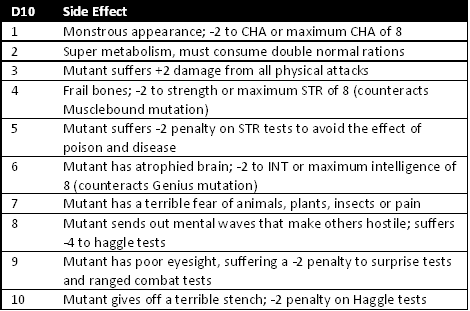
About 99% finished with my Mutant Truckers article for NOD 12. Thought I’d share the mutation tables to give folks an idea about just how mutant-y the game is. In general, Polyester Road doesn’t go as far down the mutant path as Gamma World and Mutant Future. Because it’s a mini-game/setting, I wanted to keep it focused and keep it from being too long. So, there is a small table of mutations – physical and mental, for folks to roll on. Characters can trade one hit dice for one mutation. Each mutation carries with it a 1 in 6 chance of a negative side effect (radioactive scrambled DNA can be dangerous, you know). Referees can use the same process to mutate monsters, bandits and bears (i.e. county mounties) – trade a hit dice for a random mutation. Hopefully, this will keep the mutations from dominating the game, but still allow for some fun variation of the characters.


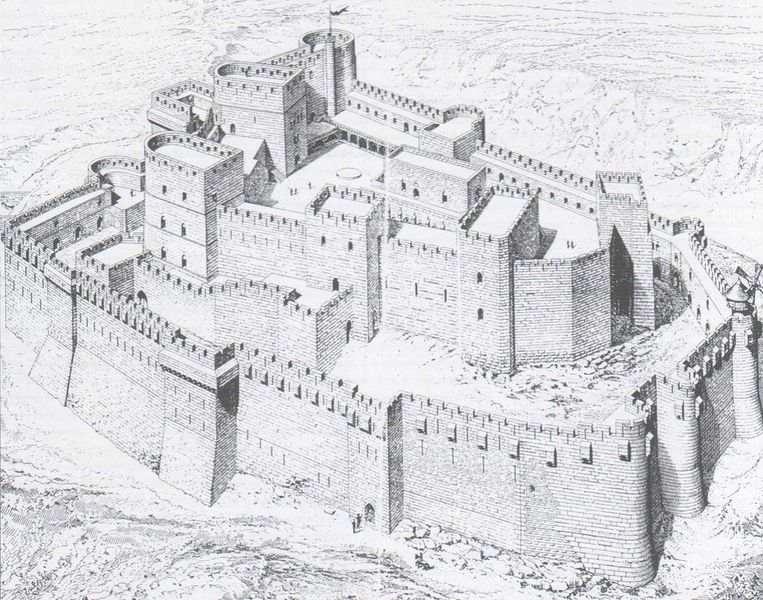
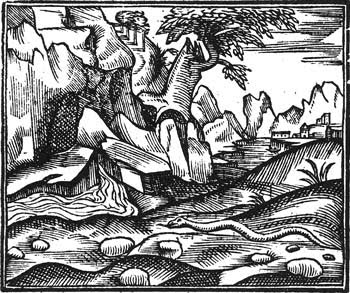
On a side note – I think the next big hex crawl in NOD will be Hell, based very loosely on Dante’s version, with a little Milton and lots of pulpy/gonzo nonsense thrown in for flavoring. The first hurdle will be mapping Hell – it’s circular and I have no idea how big it should be or what scale would work best. Still, should be an interesting exercise and provide readers with plenty of demonic and diabolical challenges for their game groups. Also gives me an excuse to use that devil cover I premiered a few months back!

A sack of dead man’s fingers swiped at the autumn equinox …

Magic Spell Ingredients:
A sack of dead man’s fingers swiped at the autumn equinox
Fresh leg of cow
2 cups of beaten feathers of frog
A piggybank of laughs scrumped at dawn

Magic Spell Method:
Scald in the cauldron on the third Wednesday of the month.

Magic Spell Effects:
Induces angry dragons to vomit cherry stones, and makes men with small heads forget who they are.

I got this nifty little spell from HERE, via a Facebook link from Neoncon Naomi. Actually not a bad generator for on-the-fly spell components for RPGs, judging from this random generation. Could be a fun way to run a weird fantasy, non-dungeon-crawly game – everyone plays a mage, and everyone randomly generates their spells from here and then goes about solving a mystery.

I also discovered that my unicorn name is Sunflower Celestial Lord, and that I’m as dark as the night sky and change the weather. So, not a bad day’s work, really.

Image from HERE.

Random Musings of the Day

Item One
This …

… is cool. Eric Canete – check him out, won’t you. He’ll show up on Deviant Friday sooner or later. Never watched much of the old Gargoyles cartoon, but I can certainly get behind Demona.

Item Two
Are pen and paper games ahead of the curve? Consider – in the case of rules-lite games, you have a slim set of rules to which you can add modules/house rules (i.e. apps) to build the experience you want, as opposed to something like Warcraft, which offers some pretty cool features, but forces everyone into the same experience. Want the ability to fly around on dragons and joust – no problem in Rules-Lite Pen and Paper – heck, somebody probably already wrote some rules for that. Want to do it in Warcraft (and honestly, maybe you already can – I have no idea) – you’ll need to ask and they’ll need to put it in a list of things to do and then debate on whether this is an idea that will be popular with everyone – oh, and you’ll need to have a subscription of some sort. Most rules-lite and rules-lite supplements are either free or very cheap. Maybe pen and paper has a brighter future than we all thought in a world of program-it-yourself entertainment?

Item Three

Random Thoughts Table (Roll D4)

1. Did I remember to extinguish the hearth before I left on this quest?
2. You know, I really like pretzels.
3. Is that idiot seriously going to tap that damn 10-ft pole on every floor tile in this hallway?
4. I should totally stab the thief in the back – he’d never see it coming.

My best friend drew up a random table for one of his characters (Rygar the Last), which included things like accidentally discharging his crossbow. Good times.

Item Four
Anyone want to trade a black and white illo for NOD #6 for a full page ad of their choice in the magazine. I’m writing up the next level of Izrigul’s Pleasure Palace (the best – and only – multi-level dungeon ever published in NOD). The whole level was designed as a theater by the demon Izrigul and features two factions at eternal (and pointless) war with one another. The troops on one side are tieflings in the style of Spanish soldiers from the 17th century armed with staffs that shoot rockets/sparks and sabers. The other side is composed of bugbears with snow white hair in the style of the powdered wigs of the time, wielding halberds and hand axes and dressed like 18th century French soldiers. I’d love a pic of one facing off against the other. Think opera/ballet meets D&D. Email me if you’re willing and able.

That’s all for today – much writing to do …

An Owlbear for Every Occaision

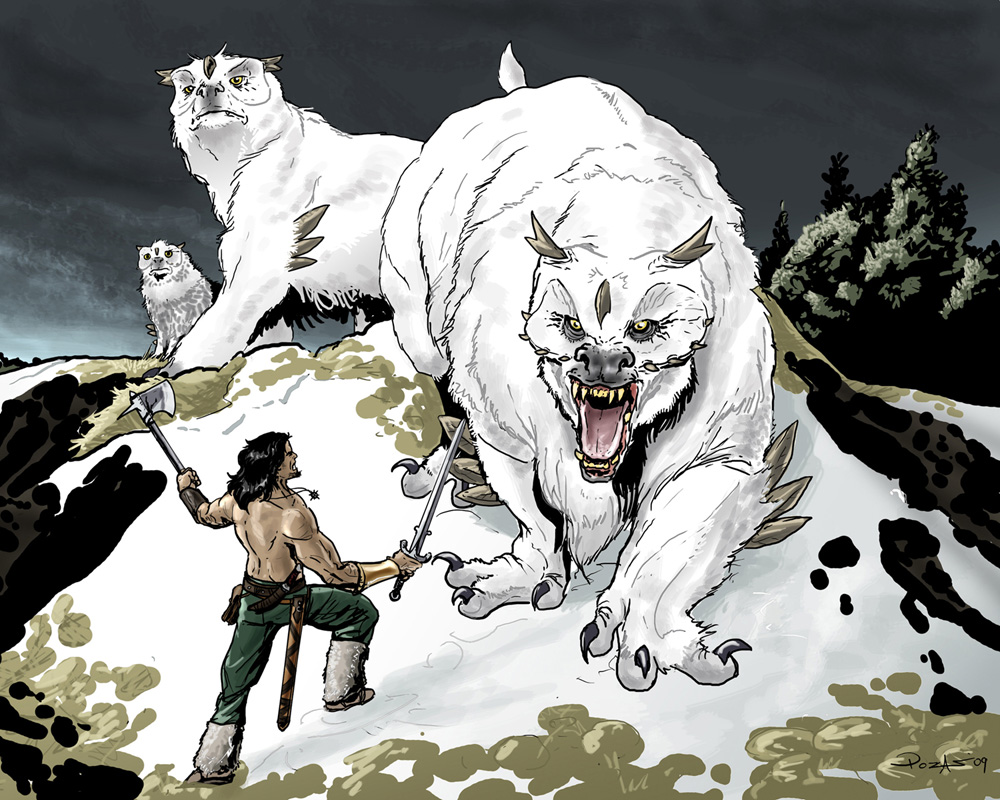
My last post involved a mama owlbear and her cubs. When you write as many encounters as I do, you have to provide some descriptive text to make one monster encounter feel different from another. In the case of the owlbear, I described it as a “great horned owlbear”, meaning it has the head and face of a great horned owl on a bear’s body. With that in mind, I present this little table to roll up a random owlbear. Just roll d12 for a body and d12 for a head. If you want to know what a sun bear or elf owl look like, use Google or Wikipedia.
 
Roll
Head
Body
1
Barn Owl (M)
Black Bear (S)
2
Boreal Owl (S)
Blue Bear (M)
3
Eagle Owl (L)
Brown Bear (M)
4
Elf Owl (S)
Cave Bear (L)
5
Fearful Owl (M)
Grizzly Bear (L)
6
Great Horned Owl (L)
Moon Bear (M)
7
Laughing Owl (M)
Panda Bear (M)
8
Pygmy Owl (S)
Polar Bear (L)
9
Screech Owl (S)
Shortfaced Bear (L)
10
Snow Owl (L)
Sloth Bear (S)
11
Spectacled Owl (M)
Spectacled Bear (S)
12
Stygian Owl (M)
Sun Bear (S)
 

The S, M and L refer to the size of the animal. For every “L” in an owlbear, it gains +1 hit dice and +1 to damage. For every “S” in an owlbear, it loses 1 hit dice and +1 to Armor Class.

And since owlbears are supposed to be magical hybrids, feel free to throw some weird special abilities in. Maybe a stygian owl-headed owlbear has some demonic powers, or a sun bear-bodied owlbear can radiate intense light. Surprise your players – they love that kind of thing. Really.

Image is by Claudio Pozas for the Owlbear challenge run by the ArtOrder blog.

Ibis, City of Sorcerers – Court of Spirits

A few more streets today, and then in a few days I’ll preview about half of the building locations.

Part One (Map)
Part Two
Part Three

D. Court of Spirits
This open yard is filled with patches of slender white mushrooms about 9-inches in height. The courtyard is not paved. In the middle there is an old, dry well (that might lead down to a dungeon, if a Referee is so inclined). The buildings that surround the yard back up to it and have any windows that might look over it boarded up or painted, except for the hostel [40].

On moonlit nights, the mushrooms awaken and become mushroom fairies that look like crude little dolls of white clay wearing mushroom caps and glowing as brightly as the moon above. These fairies will form circles and perform a very slow dance. Standing in the midst of one of these circles has a random effect:

Effect
1. In the blink of an eye, 10 years have passed. To observers, you simply blink away, but you will return to this spot 10 years of game time later unaware that you have been away.
2. You are teleported to Fairyland for 1 year and replaced by a wicked changeling. Observers will not see the switch, but may discover the change later.
3. As above, but instead of being replaced by a changeling your trip to Fairyland lasts for 10 years to you, but occurs in the blink of an eye to observers. You reappear aged a decade and with one level of druid or magic-user (or one extra level if you are already a druid or magic-user). Alternatively, a Referee may wish to play out your time in Fairyland.
4. Hypnotic patterns drive you mad unless you pass a saving throw.
5. You gain fairy sight (i.e. permanent detect invisibility), but you also see people as their inner (and often horrible) selves and lose 2 points of charisma as you find people unpleasant to deal with.
6. You are transformed into a werewolf. This will not become obvious, even to you, until the next full moon.
7. You are transformed into a mushroom-man.
8. You grow the ears and tail of an ass, effectively lowering your charisma by 1.
9. You are split into three separate beings, each with a portion of your personality and a third of your class levels.
10. You now bear an invisible fairy mark. Fairies are more friendly toward you (by fairy terms) from now on (i.e. +2 reaction adjustment).
11. You spontaneously learn a 1st level magic-user spell, but forget it and one other spell within 1d6 days. While you know the new spell you can cast it once per day. Once it and the old spell are forgotten, you will not remember ever knowing them and they will be replaced in your spell book with an unflattering sketch of your mother.
12. You think you’ve been transformed into a werewolf, and will act the part at each full moon until someone gives you a proper slap upside the head and calms you down. Nonetheless, you will go through the motions again at the next full moon.

E. Silver Lane
This narrow, noisy lane is named not only for the commerce that occurs in its confines, but also for the quartz paving stones that are streaked with silver. The bakery at the end of the street was once a noble villa, hence the higher class of paving. The buildings here rise a minimum of 10-ft and thus provide shade for most of the day. Many of them have rooftop gardens.

Crowds: The streets here are always crowded with customers, apprentices running errands and masters coming or going from lunch or home.

Random Encounters
1. Cart loaded with bread headed for a temple; pushed by two apprentices and guided by a third waving a stick
2. Disgruntled mercenaries (2d6)
3. Gaggle of 2d6 students visiting the scriptorium
4. Guardsmen (1d6 + sergeant)
5. Sly man begging alms and picking pockets (Thief Lvl 5)
6. Thugs (1d4+1) sent by the thieves’ den to collect protection money (Fighting-Men Lvl 3)

F. Court of Purple Dreams
The Court of Purple Dreams is dominated by a tall, pyramidal mausoleum of Princess Hashminepsis, who passed from NOD over 400 years ago (or should have). The buildings surrounding the court back onto it, and thus the court is very private and quiet. Running under its purple pavers are tunnels connecting to the sewers and allowing easy access for the ghouls of the under-city to their mistress’s tomb.

Crowds: There are no crowds in the Court of Purple Dreams, ever. Random encounters only occur here at night, and are usually with unpleasant things.

Random Encounters
1. Ghost, seeking to warn you away from certain doom
2. Ghouls, seeking fresh meat
3. Imps, seeking distraction
4. Midnight Peddler, seeking customers
5. Necromancer (Lvl 1d6+2) seeking counsel
6. Vampire and 1d3 spawn, seeking a warm drink

G. The University
The old University dominates the central portion of the map. Paved with aged limestone stained yellow with time, and walked with sages similarly aged, it boasts the finest library known to mankind (at least in the Motherlands and their environs).

Crowds: The University is always crowded with sages, students and apprentice magicians, as well as their servants and tradesmen who have been called on to provide some service. At night, it is more quiet due to curfews, but is still prowled by rakes, harlots and the more cunning students.

Random Encounters
1. A dozen young students trailing behind a harried scholar
2. 1d6 upper class-men and their valets
3. A magic-user and his apprentice
4. A rake coming to collect a debt owed by a student
5. Adventurers seeking a sage
6. A monster escaped from the subterranean vats

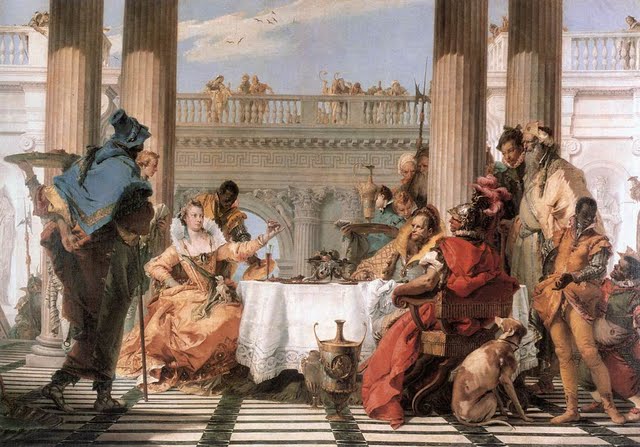
Art by Giovanni Batista Tiepolo: Banquet of Cleopatra (1743)

The Damager

Just discovered this on Chaotic Shiny – a cool little program that generates descriptions of damage taken in games. You simply type in the damage dice and the general type of weapon (slashing, piercing or bludgeoning) and the applicable pronoun, and it does the rest. A sample …

Mace 1d6, bludgeoning damage
– You slam its upper leg. (1 damage)
– You ruin its ankle with an elaborate move. (6 damage)
– You slam its neck. (3 damage)
– You bash its upper arm. (3 damage)
– You bash its body. (2 damage)

Lance 1d8, piercing damage
– You jab her body. (4 damage)
– You gore her torso with a fountain of blood. (6 damage)
– You pierce her shoulder. (2 damage)
– You gore her upper arm with an acrobatic move. (6 damage)
– You strike her forearm in a move that will surely leave a scar and a deadly blow. (8 damage)

Pole Arm 1d10, slashing damage
– You chop his shoulder (5 damage)
– You chop his lower leg (6 damage)
– You gash his foot with astonishing force and a jet of blood (9 damage)
– You gash his forearm with gouts of blood (9 damage)
– You chop his forearm (5 damage)

And I defy you to beat the price!

Random Beards – I can top that!

With random mustaches, of course! With scant apologies to A&A.

Having compiled this list, I’m now thinking that every dwarf clan I write up will have an official clan mustache and/or beard – maybe the ‘stache and beard are the dwarf version of heraldry? Hell, maybe their need for mustache wax is what drives the little buggers to dig up so much gold. Or maybe the Chandler’s Guild is the power behind most dwarven thrones? Or maybe I should just shut up and post the darn list already …

1. Natural – unshaped, unshaven, drawn by the hand of God, so to speak.
2. Hungarian – big and bushy – the mustache, not the people.
3. Dali – narrow, points are curved steeply upward; favored by surreal artists.
4. English – narrow, whiskers are long and curled up on ends (see photo to right).
5. Imperial – whiskers grow from both the upper lips and cheeks and curled upward.
6. Fu Manchu – long mustache grown only from the upper lip; favored by inscrutable geniuses from the Far East. The Pancho Villa variety is thicker and droopier.
7. Handlebar – like a Fu Manchu that has been trained to sit up (though not speak, although you know some wizard out there has tried).
8. Horseshoe – a bushier version of the Fu Manchu, but with hair growing not just from the upper lip, but also down the sides of the mouth; favored by hulks of the Hogan variety.
9. Pencil – a very thin mustache along the top of the lip – dashing on Errol Flynn, just plain creepy on John Waters (as it should be).
10. Chevron – thick and wide, it covers the entire upper lip – no curling here, mister.
11. Toothbrush – more popularly known as the “Hitler Mustache”, ‘nuff said.
12. Walrus – bushy mustache that completely (or mostly) covers the mouth.

All information drawn from Wikipedia. For random beards, please step this way to Aeons & Auguries.

Nabu – Hags, Sandy Beaches and Lillith

And now for the meat of the sandbox (meat of the sandbox?) – now for the sand of the sandbox.

4012 Sandman Beach: A gang of 12 sandmen dwells on this beach. When foolish mortals intrude, they use their sleep power to disable them, steal their possessions (throwing them into the sea to be carried away by the tide) and then carry them into the hills.

4503 Lone Samurai: A lone samurai, in poor health, rests against a rock writing something in a thick book. Although he will know the adventurers approach, he will make no move until they are within 60 feet, at which point he will ask their business. If the adventurers want to fight, he will prove a significant challenge.

If engaged in conversation, the samurai will reveal that his name is Mizaki, and he is a servant of the Empress of Mu-Pan. He and six comrades were charged with charting the coastline of the Sea of Stars , from start to finish. They embarked on this mission many years ago and through the years all of his comrades have perished. Only Mizaki remains, and he knows that his time is drawing close. Will the adventurers be willing to take up his mission and maintain his honor? If not, the samurai will never be seen again. If they do, he will accompany them for as long as possible. Those who make it back to Mu-Pan will discover that a new empress sits on the throne, and Mizaki’s mission has been forgotten. Mizaki’s main treasure is his book, which contains charts and commentary on the lands he has visited. The book is in a difficult code, but can be understood by most magic-users and bards with some effort.

Lord Mizaki, Fighting-Man Lvl 10: HP 45; AC 2 [17]; Save 9; Special: Str 14, Dex 14, Con 8, Wis 14; Long sword, splint armor, longbow, 8 arrows, throwing axe, silver dagger, maps & charts, 8 gp.

4723 Stone Prism: A stone prism rises seven feet above the desert sands. Egyptian-style bas-reliefs cover the sides; the northwest side shows a hippo with a crocodile in its mouth, the south shows three women hanging from an acacia tree with a lotus at their feet and the northeast side a stately pharaoh with dead eyes sitting on a throne, small humans under his feet. Sitting atop the monolith is a wailing desert hag in tattered black robes plucking flakes of manna from the air and groveling before unseen masters.

Desert Hag: HD 6 (36 hp); AC 3 [16]; Atk 2 claw (1d6), 1 bite (1d4); Move 12; Save 11; CL/XP 9/1100; Special: Confusion, magic resistance 25%, spells, vulnerable to lapis lazuli.

5020 Angel Statue: A stone statue of an angel juts up from the sands at a strange angle. Appeals to lawful powers have a +5% chance of being heard and acted upon when made below this statue. Blasphemies are met with a curse that doesn’t allow natural healing. Appeals to Astarte by name result in all non-chaotic creatures present being healed of 1d6 points damage. This healing will only occur once for a given creature.

5402 Igniguana Lair: A craggy depression serves as the lair for four young igniguanas. Several humanoid and animal skeletons litter their lair, including one still wearing a golden band inscribed with the name “Lorna” (50 gp).

Igniguana (4): HD 4 (20, 19, 17, 10 hp); AC 4 [15]; Atk 1 bite (1d6); Move 6; Save 14; CL/XP 6/400; Special: Breathes fire (20’ cone, 2d6).

5422 Stone Prism: A stone prism rises 7’ above the desert sands. Egyptian-style bas-reliefs cover the sides; the north side shows a vulture poised atop a lion’s corpse, the southwest a dog-headed man with a human hand grasped in its jaws and the southeast side a stately pharaoh with dead eyes sitting on a throne, small humans under his feet. Sitting atop the monolith is a wailing desert hag in tattered black robes plucking flakes of manna from the air and groveling before unseen masters.

Desert Hag: HD 6 (36 hp); AC 3 [16]; Atk 2 claw (1d6), 1 bite (1d4); Move 12; Save 11; CL/XP 9/1100; Special: Confusion, magic resistance 25%, spells, vulnerable to lapis lazuli.

5508 Fiendish Centaurs: In a high cave over-looking a sandy valley live three fiendish centaurs who call themselves the “Daughters of Demogorgon”. Their names are Mala, Dione and Hadai. When intruders enter their valley they descend from their cave at a gallop, intent on killing all but one, who they will tear limb from limb on their father’s altar. In a hidden compartment behind the altar there is 11,880 cp, 283 sp, 270 ep and 19 gp.

Fiendish Centaur: HD 4+4; AC 4 [15]; Atk 2 kicks (1d6), 1 flail (1d6+1); Move 18; Save 13; CL/XP 8/800; Special: Immune to fire, magic resistance 10%, heat metal.

5725 Stone Prism: A stone prism rises 7’ above the desert sands. Egyptian-style bas-reliefs cover the sides; the north side shows a mass of worms in a roughly humanoid shape, the southwest a swirling shape with a small, round depression in the middle and the southeast side a stately pharaoh with dead eyes sitting on a throne, small humans under his feet. Sitting atop the monolith is a wailing desert hag in tattered black robes plucking flakes of manna from the air and groveling before unseen masters.

Desert Hag: HD 6 (36 hp); AC 3 [16]; Atk 2 claw (1d6), 1 bite (1d4); Move 12; Save 11; CL/XP 9/1100; Special: Confusion, magic resistance 25%, spells, vulnerable to lapis lazuli.

6022 Mysterious Platform: A square stone platform with sides 60’ long. The platform is 10’ tall, but half of it is buried in the sand. The platform is built with massive, greenish-grey stone blocks. Four ramps, at each of the cardinal directions, leads up to the top of the platform. On the top, lights that glow at night are set into the platform’s surface. A mage might recognize the constellation Hydra.

A secret door on the northern side of the platform, to the right of the stairs, leads into a dark tunnel approximately 15’ long ending in a locked steel door. Beyond the door the corridors are metallic tubes that show no signs of joins or seams. The tube corridor snakes around a bit, ending in another locked, sealed steel door. A dwarf or gnome might be able to tell that the corridor slopes down-ward.

Beyond the second door there is a 15’ x 15’ room constructed with the same metal. The ceiling in this chamber is 20’ high. The walls of the chamber are studded with glass bulbs, levers and wheels. There is a pile of rubble (metal chairs, wires, and other scraps the adventurers will be unable to identify) in the middle of the room. Amidst the rubble are three humanoid skeletons. Their skulls suggest that they are reptilian. Each wears a tunic of a silver cloth that almost seems metallic (20 gp value) and metallic bands around their forearms with slim, titanium daggers attached by some kind of static attraction. One of the skeletons has a spherical, crystalline stone of scarlet and blue (an ioun stone) under its skull.

Bunches of wires hang from the ceiling, along with three bulging, reddish cysts of some organic material. The cysts are fairly thick, with an AC 18. Each cyst can withstand 20 points of damage before splitting. The cysts are home to Venusian brain bats in hibernation. They were sealed into this chamber by the previous users, having already taken over three of their ancient astronauts. They have been in hibernation for millenia, and will be ravenous when released from their cysts. Once adventurers enter the room, they will detect their body heat and begin regenerating; this process takes 10 rounds. Once fully regenerated, they will burst from their cysts and attack with a normal chance for surprise. If released from their cysts before fully regenerated, they will have half their normal hit points and suffer a -1 penalty to attack and save. When fully regenerated, the three will have 21, 17 and 16 hp.

6208 Nest of Stones: The adventurers might come across a nest built of stones in this hex. The nest contains five petrified eggs that look like geodes. They are worth 100 gp each. After being split, or a few weeks after being found, the crystals will hatch small (2 HD) caterprisms. If not fed stone, they will grow violent. The caterprisms will add 1 hit dice of growth per week until they reach 6 hit dice after a month, at which point they will burrow away.

Caterprism: HD 6; AC 1 [18]; Atk 1 bite (1d8) or 4 legs (1d10); Move 12; Save 12; CL/XP 10/1400; Special: Crystal silk, crystalline mandibles, magic resistance 35%.

6602 Demon of the Storm: Each night, when the moon rises in the sky, a sandstorm of terrible intensity sweeps over this hex centered on a shimmering globe of force. Inside the globe is the form of a sleeping demoness.

The hex is patrolled by a man with no name who appears to be a Roman centurion. The man cannot die, at least not permanently. At each sunrise, he is affected by a heal spell or a true resurrection, as is appopriate to his condition. Only complete disintegration will end his life. The man’s purpose is to prevent anyone from releasing the Lilith, the demoness. Besides his magic spear, the centurion wears an amulet engraved with the names “Senoy, Sansenoy and Semangelof” that protects him from demons and devils.

Lilith’s globe can only be breached by being simultaneous struck by a holy sword and subjected to dispel magic cast by a chaotic magic-user. Lilith’s spells are: Animate dead, charm person, darkness, dispel magic, finger of death (2/day), fireball (2d6), ESP, invisibility, know alignment, lightning bolt (4d6 damage. 1/day), limited wish (other), major image, polymorph self, produce flame, pyrotechnics, read magic, see invisibility, suggestion, teleport without error, tongues.

The Centurion, Fighting-Man Lvl 10: HP 61; AC 2 [17]; Save 9; Special: Str 16, Con 13, Wis 8; Banded armor, shield, +3 spear (lawful, save vs. paralysis), magic amulet (see above).

Lilith: HD 15 (71 hp); AC -2 [21]; Atk 2 tail (2d6) or 1 scimitar (1d8+5) or 2 whip (1d8+5); Move 16 (Fly 30); Save 3; CL/XP 25/5900; Special: Immune to fire, ½ damage from cold and poison, silver or magic weapons to hit, 75% magic resistance, spells, radiates fear in 10’ radius, summon 1d2 marilith demons (60% chance of success), regenerate 2.

6621 Ancient Saucer: Adventurers moving through this hex have a 1% chance of falling through the upper hatch of a flying saucer buried in the sand. The saucer was used by a band of zetans who were caught in the conflagration that destroyed the Nabu empire. While there is no hope of reactivating the saucer or any of its major systems, some power can be restored by collecting power crystals (they can be found throughout the ship) and placing the proper colors into small, hexagonal holes located next to the ship’s instrument panels.

The saucer is fifty feet in diameter and two stories tall. The hatch the adventurers fall into opens onto the outer corridor that circles the ship. The superstructure and interior walls of the saucer are made of titanium alloys in a variety of colors. There are no apparent seams between wall and ceiling or floor. Doors are of the sliding variety, and, since there is no power, must be forced open. From the outer corridor on the top level, one can enter the medical bay, elevator shaft, meditation chamber, science chamber, time chamber and command chamber at the center of the saucer. The bottom level is made up of five sleep chambers and a beam chamber. The ship is inhabited by various oozes, vapor rats and phase spiders.

[NOD #3 will have more details on the saucer and its contents]

6703 Nomad Camp: Atop a rocky rise there is an ancient fort of weathered sandstone. The fort’s walls are cracked and unsteady, the steps leading up to the entrance almost weathered into a ramp and crumbling in places, and the entrance itself now lacking a portcullis. Inside this structure a band of nomads descended from the survivors of Nabu’s cataclysm often make camp. When they are in residence (4 in 6 chance), the courtyard of the fortress is entirely filled with their brilliant white pavilions. The nomads number 200. They herd camels and work metal into ornaments and broad swords. The warriors wear mail shirts beneath their robes and carry javelins and broad swords. They are led in battle by 20 sergeants. Their chief is Omblud, a tall man with piercing green eyes. Omblud’s wife is the witch-woman Shamavar. The nomads are often preyed upon by the shadow wolves [Hex 6802] and know about the demon of the storm to the northwest [6602].

Nomad: HD 1; AC 5 [14]; Atk 1 weapon (1d8); Move 12; Save 16; CL/XP 1/15; Special: Avoid blows.

Shamavar, Druid Lvl 3: HP 12; AC 6 [13]; Save 14; Special: Spells (1st); Leather armor, shield, curved long sword, curved silver dagger, potion of healing.

Omblud, Fighting-Man Lvl 5: HP 25; AC 3 [16]; Save 14; Chainmail, shield, long sword, curved dagger, longbow, 20 arrows.

6716 Deserted Friary: Two limestone walls are all that remains of an ancient friary dedicated to Thoth. It was here that the scientist-priests experimented with the technology of their forebears, and ultimately destroyed themselves. The land around the friary is home to all manner of strange plants (assassin vines, shambling mounds) and the area is thick with radiation (saving throw each day or suffer 1d4 points of constitution damage). A sealed and locked iron trapdoor under the sand opens to reveal a 40’ deep winding staircase. The staircase leads down to a small laboratory complex.

SHRINE – At the center of the complex is a small shrine to Thoth. The small idol here is cast from mithral (500 gp). It sits in a small niche framed with ebony. A number of tiny prayer scrolls have been nailed to the wooden frame, most of them pleas (in the strange pictograms of ancient Nabu) for success in one scientific endeavor or another.

ENERGY – This room contains a reactor core glowing so brightly that one must shield their eyes to approach it. The reactor is connected to the walls by lines of gold inlaid into the floors and running along the walls, which are also decorated with images of Ra and his solar barque. Staying in the room for more than a minute results in 1d6 points of constitution damage and the equivalent of sunburns. Attempts to manipulate the levers and buttons on the reactor proper result as follows:

1. The reactor explodes, causing 6d6 points of fire damage and 1d6 points of constitution damage

2. The reactor dims, sputters and dies

3. Nothing occurs

4. A low hum fills the room and all present suffer 1d10 points of fire damage as the reactor flares briefly

5. An arc of lightning leaps from the controls into the would-be controller, inflicting 3d6 points of damage

6. The reactor flares (as 4 above) and then collapses inward, creating a sphere of annihilation

PSYCHOLOGY – Numerous experiments with zetan mind-helmets were performed in this room on test subjects. All of them either died or went insane, with the exception of the subject now trapped in the biology laboratory. At the end of the room is a curious throne of flint connected to the walls by lines of gold (see Energy above). A strange silvery headband rests on the throne, connected to it by gold wire. This headband should activate psychic powers in its wearer, but is faulty and instead forces the wearer to make a saving throw. If successful, they gain the ability to use ESP for 1 week at will and then lose the power forever. If the save is failed, they are struck with insanity (see spell).

BIOLOGY – Test subjects were kept behind mithral bars (100 gp each) in this room. The cages are now empty. In the middle of the room there is a flat table of bronze. The surface of the table is glassy, and appears to have the image of a gorilla with a white face. The table is connected to the walls via gold lines. The table is actually a form of stasis chamber. If the dials on the side of the table are meddled with or the gold lines severed, the creature in stasis, a reigon, will be released to wreak its terrible vengeance on the world.

Reigon: HD 5 (30 hp); AC 4 [15]; Atk 2 claws (1d6), bite (1d8); Move 12 (Climb 12); Save 12; CL/XP 8/800; Special: Psychic resistance 15%, mind blast, psychic defense, telekinetic force.

6719 Citadel of the Black Panther: A basalt citadel rises here from the desert sands, its black color striking against the sand. The citadel is topped by a brass dome. Its gateway is carved from obsidian and features bars of blackened meteoric iron. Above the gateway is a granite carving of the symbol of Seth, the god of darkness.

The citadel is a bulky tower roughly three stories tall. From above, it looks like a circle (the dome) within a diamond (the upper stories) within a square (the ground floor). Each of the upper stories have exits leading to ledges protected by battlements. These ledges are patrolled by scalefolk.

The interior of the citadel is maze-like, with myriad twisting passages ending either in dead ends or oddly shaped chambers. These chambers include sitting rooms, a kitchen dominated by a brass cauldron and a wizened old cook (a desert hag made obedient by powerful magic), an armory containing polished bronze maces (lead filled), shields and scale armor, shrines to Apophis and Typhon, barracks for the scalefolk warriors and human acolytes, a large temple dedicated to Seth and plush living quarters for Kemnabi, the Black Panther, and his scaly allies.

The temple is a hexagonal chamber dominated by a central idol of Seth in a pose of victory, his brother’s body below his feet and the goddess Isis on her kneels, a golden chain around her neck. The idol rests on an obsidian platform and is surrounded by a dozen hepatizon (black bronze) braziers burning cones of stinging incense. Torches line the walls at various levels and above one can see the great bronze dome. The temple is always guarded by 2d6 chaotic acolytes armed with heavy maces and wearing scale armor beneath their black robes.

Kemnabi’s private chambers are accessed via a secret door in the temple. The private apartments include rooms for his serpent man allies, a laboratory for same and a sprawling apartment for Kemnabi himself. Kemnabi’s apartment features a down-filled mattress, velvet pillows, a mahogany wardrobe (robes, courtier’s outfit), a private altar to Seth (an obsidian idol in an ebony cabinet), a porphyry brazier (50 gp) and a terracotta bust of his mother (3 gp). The apartment also includes a private bath. Kemnabi shares his apartment with the wereserpent Ekibe, who wears a turquoise pendant (30 gp) and a gold toe ring (80 gp). Locked iron chests contain 14,000 sp, 9,600 ep, 60 gp, 28 pp, and three gemstones worth 100 gp each – chalcedony, jacinth and alexandrite.

Yellow Scalefolk (24): HD 1; AC 4 [15]; Atk 2 bite (1d3), 1 weapon (1d8) or 2 claw (1d2); Move 12; Save 17; CL/XP 3/60; Special: Acid spit (60’, 1d4 damage for 2 rd), level 1 thieves.

Acolytes (12): HD 1; AC 3 [16]; Atk Weapon (1d8); Move 12; Save 16; CL/XP 2/30; Special: Command undead.

Serpent Folk (6): HD 6; AC 3 [16]; Atk 2 claws (1d4), bite (1d3) or weapon (1d8); Move 12; Save 11; CL/XP 8/800; Special: Spells (cause fear, darkness, neutralize poison, snake charm, sticks to snakes, suggestion, polymorph other), magic resistance 20%.

Kemnabi, Cleric Lvl 12: HP 54; AC -5 [24]; Save 5; Special: Dex 16, Wis 16, Cha 13; Spells 6th; Special: Spells (5th); Platemail, shield, heavy mace, potion of diminution.

The Stone Prisms, if you were wondering, lead to another encounter (which will appear in NOD #3 – hey, I have to hold something back).

On Wilderness Adventures – Part Two

First part of article here.

Battle Conditions
Once a Referee knows where a battle will occur and what the adventurers will be fighting, he still must determine other factors that can influence the outcome of the fight.

Before a battle, one adventurer (usually a ranger) must roll a saving throw. If successful, the encounter proceeds as normal. If the saving throw is failed, conditions are applied to the encounter based on how badly the saving throw failed (i.e. the difference between the character’s saving throw number and the number the player rolled). If any condition does not make sense, apply the condition above it instead.

1-2. Mist/Dust
3-4. Precipitation
5-6. Wind
7-8. High Ground
9-10. Surrounded
11-12. Storm
13-14. Earthquake
15+ Roll 1d10 twice on table

Earthquake
The battlefield is wracked by an earthquake. All creatures must succeed at a saving throw or fall down. Those who remain standing suffer a -10 penalty to all actions and can only move at half their normal rate. Spell casters must roll saving throws to cast their spells.

There is a 5% chance each round of a fissure 10 feet deep opening up beneath each creature. These unfortunates must succeed at a dexterity saving throw or suffer 1d6 points of damage. There is a 5% chance each round that a fissure will slam closed, killing anyone inside it. An swampy areas, these fissures will drain away the water leaving a quicksand that sucks in creatures who fail a dexterity saving throw. On cliffs, fissures that occur near the edge of the cliff actually drop creatures of the cliff, where they suffer 8d6 points of damage.

High Ground
If there is high ground on the battlefield, the monsters have it. High ground gives them two advantages. They receive a +1 bonus to hit against creatures on lower ground, and creatures trudging up to meet them do so at half normal movement.

Mist and Dust
The battlefield is shrouded in a thick mist or clouds of dust. Creatures 5 feet are -5 to hit with missile weapons. Creatures more than 5 feet away are -10 to be hit by missile weapons. The chance of surprise is increased by 1 for both forces.

Precipitation
A storm is soaking the battlefield. All combatants more than 10 feet away are -5 to be hit by missile weapons. Creatures move at half their normal movement rate safely, but must succeed at saving throws or fall prone if attempting to move any faster. Charging creatures will slide 3d6 feet when they fall prone.

Storm
The battle takes place during a lightning storm. Movement is cut in half due to the rain. Creatures more than 10 feet away are -10 to be hit by missile weapons. There is a 1 in 6 chance each round of lightning striking a random combatant, inflicting 5d6 points of damage and stunning them for 1d4 rounds. Creatures trying to fly in storms must make a saving throw each round to avoid falling.

Surrounded
The adventurers begin combat surrounded by their opponents. If only a single monster is encountered, ignore this result and give it the high ground instead.

Wind
High winds roar across the battlefield. Unprotected flames are extinguished and missile attacks are made at a -3 penalty to hit. Small flying creatures must make a saving throw to avoid being blown off of the battlefield and out of the battle. Larger fliers must make a saving throw each round to move through the air.

Monster Encounters
The monsters common to a wilderness region are detailed in that region’s description. Simply choose a monster or roll it randomly, roll for the number encountered, and proceed. If you want to challenge the party, assume an equal number of monster hit dice to the party’s hit dice.

If the Referee wishes, 1 percent of random monster encounters can be with an elemental or extra-planar creature. These are often quite dangerous and so should probably be reserved for experienced adventurers.

Extraplanar Creatures
1. Achaierai
2. Barghest
3. Belker
4. Couatl
5. Djinn
6. Efreet
7. Elemental
8. Ghost
9. Hag, Night
10. Hellhound
11. Ghost
12. Nightmare
13. Quasit
14. Salamander
15. Shadow Mastiff
16. Tavis Wyrm
17. Titan
18. Vampire
19. Xorn
20. Zetan

Traveler Encounters
Encounters with travelers are not intended to threaten the adventurers. Instead, they are meant to present role-playing opportunities or lead to side adventures.

Leaders of groups of travelers are level 3 to 12 level (1d10+2). The leader’s assistant is half the level of his boss. While the character class of a leader of a group of travelers is usually obvious, other details can be determined by rolling on the following tables:

Alignment
1-2. Lawful
3-5. Neutral
6. Chaotic

Race (Human, with a 1 in 6 chance of being demi-human)
1 Beastman
2 Centaur
3 Dwarf
4 Elf
5 Gnome
6 Half-Elf
7 Halfling
8 Mechanical Man

Caravan
A caravan consists of several wagons or, if at sea, one or more merchant ships. Each caravan consists of 3d6 traders and guards based on the value of the cargo they are transporting (see below). There is one sergeant for every 6 men-at-arms and a 2 in 6 chance that of spell caster of some sort is with the caravan.

Caravans travel from one city-state to another, hauling whatever the Referee deems appropriate. Assume that each trader has a team that carries 1,000 pounds of goods. A team consists of one of the following:

• A wagon pulled by 2 draft horses, 2 oxen or 4 mules
• A single elephant
• A train of 4 camels or 5 giant lizards
• A sledge pulled by 2 porpoises

For the sake of player interest, it is best to use valuable or useful cargo. If you wish, you can roll randomly for each team’s cargo on the table below.

Roll – Cargo (Value) – Guards

01-12. Ale (50 gp) – 1 man-at-arms

13-22. Iron (100 gp) – 3 men-at-arms

23-32. Oil, lamp (100 gp) – 3 men-at-arms

33-38. Copper Ingots or Dust (500 gp) – 3 men-at-arms

39-44. Tools (1,000 gp) – 6 men-at-arms

45-50. Weapons (2,000 gp) – 6 men-at-arms

51-56. Wine (2,000 gp) – 6 men-at-arms

57-60. Salt (5,000 gp) – 10 men-at-arms

61-64. Silver Ingots or Dust (5,000 gp) – 10 men-at-arms

65-68. Wine, fine (10,000 gp) – 10 level 1 fighters

69-72. Wood, rare (10,000 gp) – 10 level 1 fighters

73-75. Linen (10,000 gp) – 10 level 1 fighters

76-78. Coffee (50,000 gp) – 10 level 2 fighters

79-81. Gold Ingots or Dust (50,000 gp) – 10 level 2 fighters

82-84. Tea (50,000 gp) – 10 level 2 fighters

85-87. Cocoa (100,000 gp) – 10 level 3 fighters

88-89. Silk (100,000 gp) – 10 level 3 fighters

90-91. Tobacco (100,000 gp) – 10 level 3 fighters

92-93. Cinnamon (200,000 gp) – 10 level 3 fighters

94-95. Ginger (400,000 gp) – 10 level 4 fighters

96. Pepper (400,000 gp) – 10 level 4 fighters

97. Cloves (500,000 gp) – 10 level 4 fighters

98. Mithril Ingots or Dust (500,000 gp) – 10 level 4 fighters

99. Platinum Ingots or Dust (500,000 gp) – 10 level 4 fighters

100. Saffron (500,000 gp) – 10 level 4 fighters

Patrol
A patrol consists of 6d6 men-at-arms (with one sergeant per 5 troops) led by a fighting-man or 6d6 longbowmen (sergeants as above) led by a ranger. There is a 2 in 6 chance that a spell caster of some sort is with the patrol.

Pilgrims
A group of pilgrims consists of 6d6 people led by a cleric or druid. There is a 1% chance per 10 pilgrims of there being a magic-user and/or thief with the group. All of the pilgrims share the alignment of their leader.

There is one man-at-arms mounted on a warhorse per five pilgrims. The troops are led by a fighting-man and sergeant, also mounted on warhorses. In a lawful group of pilgrims, the fighting-man can be replaced by a paladin.

Pilgrims travel on foot (60%), donkeys (30%), or horses/camels (10%). Classed NPC’s are always mounted. The pilgrims are heading to a wilderness shrine or to a temple in a city-state and will be glad to travel with like-minded adventurers.

Pilgrims wear a badge symbolizing the shrine to which they are heading. This badge could be a feather of a particular color, a shell, a straw hat, a cloak of sack-cloth, or a bit of embroidery over their heart.

Strongholds
A stronghold is a structure established by a high-level adventurer and manned by his followers. You can randomly determine the type of stronghold encountered by a roll of the dice. About two strongholds out of six are ruins inhabited by monsters.

Abbey
An abbey is a religious manor inhabited by clerics or druids. Abbeys are always dedicated to a saint or deity. An abbey is established by a patriarch (level 9 to 12 cleric) or archdruid (level 9 to 12 druid) called the abbot or abbess. It houses 3d6 low level clerics or druids and 5d6x10 lay brothers (normal humans). Additional clerics, druids or paladins can be visiting at the Referee’s discretion.

A traditional abbey consists of a square outer wall. Inside there is a courtyard surrounded by a two story structure consisting of dormitories, a chapel, storage and work rooms, a stable and a bell tower. The abbey is surrounded by fields that are worked by the inhabitants. Medicinal gardens are maintained either within the walls or just outside the walls. The abbey’s armory is stocked with mail hauberks, shields, maces, slings, throwing hammers and whatever weapon is favored by the patron deity (i.e. longbows for abbeys of Apollo Helios).

Castle
A castle is established by a warlord (level 9 to 12 fighting-man), paladin (level 9 to 12) or ranger (level 9 to 12). The castle is a feudal manor supported by 1d4 villages. The castle is defended by a number of men-at-arms commensurate with its size. The lord of the castle is assisted by one sergeant per 10 men-at-arms, and a cleric (or druid) and magic-user of half the level of the lord.

Motte-and-Bailey: 2d6 men-at-arms
Keep: 4d6 men-at-arms [or tower keep or shell keep]
Concentric Castle: 8d6 men-at-arms

Grove
A grove is established by an archdruid (level 9 to 12 druid) with the permission of his or her order. The grove consists of several trees around a clearing. An altar rests in the middle of the clearing. The founding archdruid and 2d6 level 1 to 3 druids dwell in a nearby lodge. The lodge is a gathering place for elves, rangers, the fair-folk and forest creatures.

Monastery
A monastery is not much different from an abbey except that it is inhabited by monks rather than clerics. It is established by an abbot (level 9 to 12 monk). The abbey contains a training ground surrounded by a shrine, armory and barracks. The monastery houses 1d6 monks of level 2 through 5 and 3d6 level 1 monks.

Tower
A magic-user’s tower is built in a hard-to-access spot that offers unique magical properties. It is to these places an adventurer must travel if they wish to commission a magic item or to obtain spells of level 5 or higher. Magic-users have 1d4 apprentices and 1d3 level 1 magic-users.

On Wilderness Adventures – Part One

This is some information I cobbled together when I was trying to create some guidelines for my campaign regarding wilderness adventures. I found the move a hex, roll for encounter stuff a bit boring, and was trying to find a better way. These guidelines might prove useful to some, though I never felt as though I had them right. I’ll mention that the movement rates are what they are because I was using 6 mile hexes.

Travel
The following table shows the normal rate of travel (in miles per day) for different modes of travel. The first number is over easy terrain, the number in parentheses for difficult terrain.

Foot, unencumbered: 12 (6)
Foot, encumbered: 6 (3)
Camel*: 16 (8)
Donkey/mule: 12 (6)
Elephant: 12 (4)
Horse, Draft: 8 (4)
Horse, Riding: 24 (12)
Horse, War: 12 (6)
Ox: 6 (4)

Easy terrains are grassland and tundra. Difficult terrains are highlands, mountains, taiga, wastelands, wetlands, and woodlands. Camels treat deserts as easy terrain.

Events
Each day, there is a 1 in 6 chance that a random encounter occurs. In addition, each wilderness hex the adventurers travel through holds set encounters they might find. Adventurers may come across one of these encounters accidentally (1 in 6 chance) or by searching.

Random monster encounter tables should be provided for each wilderness area. In addition to the threat of the monsters, the Referee must determine the battleground on which the encounter takes place. Battleground in this case includes not only the terrain where the encounter occurs, but also the weather and tactics of the enemy. Battlefields and battlefield conditions are addressed later.

Wilderness Types
The following wilderness categories are used in NODTM.

Aquatic
Aquatic areas are filled with fresh water and include lakes, rivers, streams and canals.

Aquatic Battlefields
1-3 Sandy Ground
4-7 Rocky Ground
8-9 Kelp Forest (movement cut in half, -5 penalty to missile attacks)
10 Chasm

Grassland
A grassland is a flat area or an area of gentle, rolling hills that supports grasses, sedges, herbs and few to no trees. Prairies, meadows and savannas are all grasslands. Steppes are semi-arid grasslands that usually separate deserts from woodlands.

Grassland Battlefields
1-6 Meadow
7-10 Tall Grass (movement cut in half, surprise chances increased by 1)

Highland
A highland is a rugged area of hills covered by grasses, herbs and sedges and sparse trees. A highland with heavy tree cover is considered a woodland. A highland with very little rainfall or grass cover is considered a wasteland.

Highland Battlefield
1 Meadow
2-5 Gentle Slope (movement cut in half, creatures with high ground are +1 to hit)
6-9 Steep Slope (movement cut in half, creatures with high ground are +1 to hit, if hit for damage must make saving throw or roll down slope for 1d3 damage and knocked prone)
10 Cliff (if hit for damage must make saving throw or go over cliff)

Mountains
Mountains are very tall highlands bordered by highlands or separated from other mountains by passes or valleys.

Mountain Battlefields
1 Meadow
2-4 Gentle Slope (movement cut in half, creatures with high ground are +1 to hit)
5-7 Scree Field (if moving at full speed must make saving throw or slip and fall)
8-10 Boulder Field (-3 penalty to missile attacks)
11-17 Steep Slope (movement cut in half, creatures with high ground are +1 to hit, if hit for damage must make saving throw or roll down slope for 1d4 damage and knocked prone)
18-19 Cliff (if hit for damage must make saving throw or go over cliff)
20 Chasm (if hit for damage must make saving throw or fall into chasm)

Tundra
Tundra is a scrubland or grassland located in a cold area. They are often marked by permafrost. A tundra can be flat, rugged or mountainous.

Tundra Battlefields
1-4 Meadow
5-9 Rocky Ground (if moving at full speed must make saving throw or slip and fall)
10 Ice Sheet (if moving at full speed must make saving throw or slip and fall for 1d3 damage)

Wastelands
Wastelands are hot, arid expanses of sandy or rugged terrain. Rocky deserts that support succulents and/or scrub. Sand sea deserts are covered with shifting dunes that can measure over one hundred feet in height. Either kind of wasteland might have scattered oases. An oasis is a fresh spring surrounded by vegetation. Some oases are large enough to support strongholds and villages.

Wasteland Battlefields
1 Meadow
2-5 Rocky Ground (if moving at full speed must make saving throw or slip and fall)
6-10 Sand Dunes (movement cut in half)

Wetland
A wetland is land inundated with water. A marsh is a wetland dominated by grasses, while a swamp is a wetland dominated by trees. Marshes can be filled with salt water or fresh water from springs (bogs) or rain (fens). Marshes can also be called moors. Salt water swamps are called mangrove swamps.

Wetland Battlefields
1-4 Meadow
5-6 Tall Grass (movement cut in half, surprise chances increased by 1)
7-9 Shallow Water (movement cut in half, surprise chances increased by 1)
10 Deep Water (movement cut in half, no missile attacks, surprise chances increased by 2)

Woodland
A woodland is covered by a closed or opened canopy of trees. It might be flat or hilly. Jungles are tropical woodlands that often contain swampy areas. Taiga are coniferous forests found in cold climates.

Woodland Battlefields
1-3 Meadow
4-5 Undergrowth (movement cut in half, surprise chances increased by 1)
6-9 Lightly Wooded (missile attacks at -3)
10 Heavily Wooded (missile attacks at -5)

Dangers
Dangers are threats one must plan for and deal with while traveling through the wilderness. Each danger listed below can be avoided by taking a number of precautions. Failure to do so results in penalties that accrue before a battle or by the end of the day.

Most of the dangers result in fatigue. Each source of fatigue an adventurer (or his mount) suffers results in a -1 penalty to all actions (attacks, saving throws, attribute checks) and one half penalty to movement.

Cliffs
Adventurers that are traveling through mountains and rugged highlands need to link themselves with ropes and carry miner’s picks. Most importantly, they need to avoid being anything more than lightly encumbered.

Equipment: Rope (100 ft.), pitons/spikes, hammer, miner’s pick.

Penalty: 1d6 points of damage from falling and exertion, half with a successful dexterity saving throw.

Cold Weather
Characters need double food rations in cold weather. Characters must find shelter at night and start a camp fire (requires a flint and steel and a tinder box or a saving throw). Shelter can be an existing cave or it can be built. Building a shelter requires such items as pickaxes (for an igloo), hammer, string and axe.

Equipment: Bedroll, flint and steel, tinder box, winter clothing (or furs), winter blanket.

Penalty: 1d6 points of damage and fatigue.

Getting Lost
Besides using proper equipment, one should take the time to climb trees and hills to sight the area (when possible). Spells like find the path are a perfect substitute for proper equipment and smart adventuring.

Equipment: Maps, charts, lodestone.

Penalty: Fatigue.

Hot (Dry) Weather
Characters should only travel at night and must consume an extra water ration each day to avoid dehydration. If traveling during the day, one must keep the sun off their skin by dressing in robes, cloaks, caftans and hats. Characters should avoid any armor heavier than a mail shirt. It is also important to rest often by cutting daily travel distance in half.

Equipment: Caftan or hat, cloak or robes (i.e. Arabic dress), extra water ration per day, lack of armor (see below).

Penalty: 1d6 points of damage and fatigue.

Hot (Humid) Weather
Humid weather is draining. One should avoid wearing much clothing (natives of such environments are naked or practically naked), including armor. Characters must rest often by cutting their daily travel distance in half.

Equipment: Lack of clothing, extra water ration per day.

Penalty: 1d6 points of damage and fatigue.

Hunger
Bring food or bring somebody who can hunt for food. Spending time hunting cuts daily travel distance in half. Bringing traps and/or fishing gear gives a +1 bonus to survival saving throws. The spell create food and water makes enough food for three humans or one horse per caster level. This food will spoil after a couple of days.

Equipment: Rations, animal traps, fishing gear.

Penalty: Each day without food results in fatigue. A week without food inflicts 1d4 points of damage. Creatures brought to less than half their normal hit points from lack of food will suffer one point of random ability score damage each day.

Swimming
A creature can swim at one quarter of their movement rate for a number of rounds equal to its constitution score. Swimming for each round beyond that requires a saving throw.

If forced to stop swimming, a creature can tread water for a number of rounds equal to their constitution score. Treading water for each round beyond that requires a saving throw.

Failure to tread water results in sinking. A creature will sink 5 ft each round. Creatures can hold their breath for a number of rounds equal to their constitution score. Holding one’s breath for each round beyond that requires a saving throw. When a single such saving throw is failed the creature drowns.

Thirst
Most environments allow for the collection of water as one goes; unfortunately, this water is not always safe to drink. This problem can be solved with a purify food and drink spell. Without it, adventurers run a 30% chance of being sickened, with a failed constitution saving throw indicating nausea and forcing the adventurers to make camp for 1-3 days.

Clerics can use create food and water to create enough water for four humans per caster level. This water does not go bad, but must be stored somewhere. The cleric/druid spell create water creates 2 gallons per caster level.

Equipment: Canteen, water skin.

Penalty: Humans and demi-humans require a half gallon of water per day. Horses and oxen require 10 gallons a day. Camels require 2 gallons of water per day. Elephants require 30 gallons of water per day.

A day with sufficient water leaves one fatigued. A day without any water inflicts 1d6 points of damage and causes fatigue. Creatures brought to less than half their normal hit points from lack of water will suffer one point of random ability damage each day.

Vermin
Depending on the terrain, vermin are almost impossible to deal with. Food can be kept in water skins and hung from trees to make it safer from vermin. Adventurers can sleep in tents and burn sticks on incense to ward away mosquitoes and other disease carriers. Boots should be shaken vigorously before being put on in the morning. Complex perimeters formed of string and little bells are of dubious utility.

Equipment: Tents, incense sticks.

Penalty: Lose one day of rations and succeed on a constitution saving throw or suffer fatigue from sickness and poisonous stings.

Wear and Tear
Each night, armor and weapons must be oiled and stowed away. Bows should be unstrung (a spare bow could be unstrung during the day and kept strung at night). Metal weapons should be sharpened. One can use a mending spell if without proper equipment.

Equipment: Armor and weapon oil, whetstone.

Penalty: -1 AC if wearing armor. -1 penalty to hit if using weapons.

Tomorrow I’ll post info on battlefield conditions, different types of encounters and strongholds.