Grit & Treasure (Blood & Vigor?)

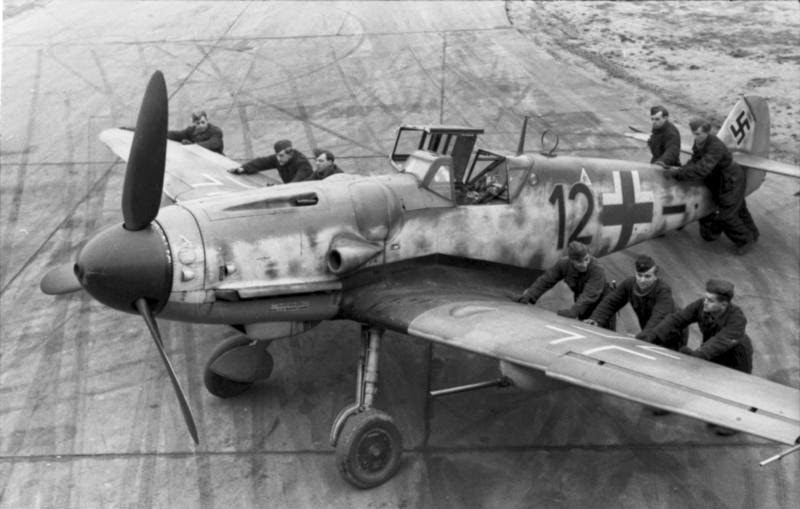
German warbird, or …

Work proceeds on Grit & Vigor. The last couple weeks have been spent gathering vehicle data, turning it into something useful, and brainstorming the rules for dogfights, car chases and inventions.

On the vehicle front, I now have data for about 1,400 tanks, cars and airplanes, and believe I have found a way to turn the raw data into game data. Just for fun, I thought I might throw out some comparisons between military vehicles from the olden days and Blood & Treasure monsters. Obviously, I need to look at some heavyweights.

THE MONSTERS

The Neothelid – 25 HD wrapped up in acid-dripping, tentacled horror. Imagine it going toe-to-toe with a Russian T-18 tank. The tank is easier to hit, but can absorb some damage and deal it pretty well.

T-18: Huge Construct (Tank), HD 25 (88 hp), AC 19 (DR 6), SPD 10 mph (140), ATK 1 tank gun (8d8) and light machine gun (1d8), MVR +0, CP 2/0, WT 13,000 lb.

… fantasy robot – who would win in a fight?

The Balor Demon – 20 HD of demonic fury, roughly equivalent to a Curtiss P-40 Warhawk. The Warhawk can deal more damage with its six heavy machine guns, but the Balor isn’t affected by such mundane weaponry. Better load that Warhawk up with magic bullets.

Curtiss P-40 Warhawk: Huge Construct (Fighter), HD 20 (70 hp), AC 16, SPD 360 mph (5280), ATK 6 heavy machine guns (2d6) and bombs (1000 lb), MVR +2, CP 1/0, CEILING 29,000 ft., WT 8,400 lb.

The Iron Golem – 18 HD of heavy metal death, the equal of Messerschmitt Bf.109 – though let’s be honest, one good strafe or bomb drop, and the iron golem’s iron hide and its vaunted magic immunity is going to go up in smoke.

Messerschmitt Bf.109: Large-X Construct (Fighter), HD 18 (63 hp), AC 16, SPD 398 mph (5830), ATK 2 heavy machine guns (2d6) and 1 medium machine gun (1d8) and bombs (550 lb), MVR +3, CP 1/0, CEILING 39,000 ft., WT 6,940 lb.

A few notes on the vehicles:

Size is based on weight (and how interesting would that be to do with all the monsters?). I used the full d20 scale (I only used Small to Huge in B&T), and added half-steps in. Size determines Hit Dice.

CP refers to crew and passengers. The crew is going to be making the attacks for the vehicle, so it’s their attack bonus that counts when firing their weapons.

The weapons here are generic, and the final stats will include their ROF and range. ROF works into the gun rules, with each addition round you fire at a target either increasing your chance to hit by +1, or contributing to an additional 1d6 damage at a rate of 5 rounds to 1d6 damage – player’s choice and they can mix and match (e.g. an extra 20 rounds of ammo can translate into a +20 bonus to hit, or +4d6 damage or something in between, like +10 to hit and +2d6 damage). The bombs I still haven’t decided on, but probably going to be treated as something like a fireball spell – damage dice and radius based on the poundage, with people and items passing saving throws to halve the damage. The game is really designed more for man vs. man, rather than man vs. B-17 Flying Fortress.

Speed is the vehicles top speed, in miles per hour and, in parentheses, feet per round. For car chases, I’m working out a system that uses top speed as a determinant for the difficulty of stunts, to make it easy for referees and players to create stats for vehicles without having to know much about them other than their weight, their style and their top speed.

Armor Class is based on the material of the vehicle’s skin, as well as its thickness. Size plays a part as well. Damage reduction (DR) is based on the thickness of the armor, since I needed a way to screen the tanks from weapons that, by right, shouldn’t be able to penetrate their armor.

MVR is maneuverability, which is based on the vehicle’s type and its power to weight ratio.

Not a perfect system, I know, but I think it will work well enough for game purposes. My focus is on three systems – aerial combat (aircraft vs. aircraft), car chases and a nod towards aircraft attacking land vehicles. G&V isn’t designed as a wargame, but the combat rules should be able to handle something as basic as two tanks plugging away at one another.

Oh, and just for fun …

Burrough’s Barsoom Scout Flyer: Large Construct (Fighter), HD 11 (39 hp), AC 20, SPD 300 mph (1460), ATK none, MVR +3, CP 5/0, CEILING 11,000 ft., WT 1,500 lb.

Nemo’s Nautilus: Colossal x5 Construct (Submarine), HD 250 (875 hp), AC 22, SPD 40 mph (580), ATK 1 ram, MVR -1, CP ???, DEPTH 52,000 ft., WT 1,500 tons

Well’s Martian Tripod: Huge-X Construct (Tank), HD 31 (109 hp), AC 22, SPD 10 mph (140), ATK 1 heat ray (10d6 fire) and black smoke projector (as cloudkill?), MVR +1, CP 1/0, WT 20,000 lb.

Martian Tripod vs. Balor – now that’s a fight I would pay to see!

Gads of Goblin Goodies

Goblinoids, especially the lesser versions of kobolds, goblins, orcs and hobgoblins, are crawling all over the average fantasy world. They make great opponents to low-level parties, and in large masses are pretty good against mid-level parties. Eventually, though, their usefulness either runs out, or you and your players just get plain sick and tired of them.

So, how about 100 little modifications you can use to spice up these well-worn monsters?

You can use these to change entire tribes or war bands, or just to spice up individual goblins to make them a bit more distinct and to play up their ties to Chaos.

Enjoy!

Mutations

1. Acid spit – resistance to acid, bite attack +1d6 acid, +1 to sunder items
2. Ape arms – move faster on all fours
3. Bat ears – huge, flapping ears allow fly speed (slow)
4. Big lungs – hold breath longer, +1 save vs. exhaustion
5. Black skin – +1 to hide and surprise in dark areas
6. Boar tusks – gore attack (1d4)
7. Bouncy – jump
8. Cat’s Eyes – +1 to reflex saves, +1 to missile attacks
9. Croc tail – tail attack, save vs. trip
10. Crusty – +1 AC
11. Death saliva – poisonous bite, +1d6 poison damage, can spit 10 feet
12. Dynamo – shocking grasp once per three rounds
13. Evil eye – bestow curse with gaze attack
14. Extra brain – higher intelligence level, +2 to will saves
15. Extra heart – +1 hit point per hit dice, +1 save vs. exhaustion
16. Four arms – extra attack and shield
17. Frog tongue – 10-ft ranged attack to grab items
18. Fullback – +2 to bull rush attacks
19. Gnarled – +2 AC
20. Goblin-queen – remarkably attractive … but no less evil
21. Goliath – one size category larger, but one intelligence level lower
22. Greasy – can slide at double speed down grades, +2 save vs. grapple
23. Green skin – +1 to hide and surprise in woodland environments
24. Hairy – +1 AC, resistance to cold, +1 damage per die from fire
25. Halitosis – breath weapon – 5-ft cone – every three rounds – save vs. nausea
26. Hammer fists – increased unarmed damage and grapple attack
27. Head ridges – head butt attack
28. Hook claws – claw attack, +1 to disarm and grapple attacks
29. Horns – gore attack (1d6)
30. Hound dog – knack for tracking
31. Iron stomach – +1 save vs. poison
32. Lantern-eyes – beams of light can blind
33. Monkey tail – prehensile
34. Nose spike – gore attack (1d3)
35. Pitch-skin – flammable skin, immune to fire
36. Puffer – can blow up, knocking people back, no damage from bludgeoning weapons, piercing weapons can puncture
37. Radioactive – all within 10 feet much pass a fort save or be nauseated; miss by 5 or more energy damage
38. Razor teeth – bite attack, and save or grappled
39. Rooky – crow wings to fly, crow beak to peck
40. Runt – one size category smaller, but one intelligence level higher, chance of spells
41. Scaled – +3 AC
42. Speed demon – +10 speed
43. Spikey – damage from grapple, or when struck by natural weapons
44. Spy – passes for human
45. Stinker – troglodyte stench ability
46. Third eye – immune to illusions
47. Translucent – big bonus to hide and surprise
48. Troll-blood – regenerate 1 hit point per round
49. Wall crawler – climb speed
50. Weird – first level psychic power (offensive, of course)
51. White skin – +1 to hide and surprise in arctic environments
52. Wolf ears – +2 to listen at doors, surprised on d8
53. Wormy – gnaw through stone (burrow 10)

Professions

54. Acrobatic – +2 to reflex saves, slow fall as monk
55. Backstabber – attack, hit points and abilities of first level assassin, one vial of poison
56. Berserker – 2 attacks per round
57. Black knight – weird sense of honor, warhorse, lance, platemail, pennons, squires from lesser goblin race
58. Brigands – brigandine armor (studded leather), longbows, surprise in woods
59. Bushwhacker – attack, hit points and abilities of first level scout, longbow
60. Dark Lord’s man – +1 to hit, upgrade armor and weapons
61. Desert Rat – unaffected by heat and sand movement, +1 bonus vs. fire
62. Evil High Priest’s man – +1 bonus to save vs. cleric spells, chance of 0-level orison
63. Hexenhammer – +2 save vs. spells, 1d6 bolts with silence cast on them, light crossbow, warhammer
64. Hoary – extra hit dice, +1 to will saves
65. Ice Demon – unaffected by cold and ice movement, +1 bonus vs. cold
66. Necromancer’s man – +1 bonus to save vs. magic-user spells
67. Pickin’ and Grinnin’ – attack, hit points and abilities of first level bard, banjo
68. Pilferer – attack, hit points and abilities of first level thief, thieves’ tools
69. Psycho – 2 attacks per round, immune to fear, max hit points, immune to confusion
70. Savage – attack, hit points and abilities of first level barbarian, greataxe
71. Sea Wolf – swim speed, hold breath like lizard man
72. Thugee – attack, hit points and abilities of first level assassin plus four 0-level cleric spells
73. Veteran – attack, hit points and abilities of first level fighter, platemail
74. Warrior princess – females, studded leather, falchions, chakram, ululating battle cries (save vs. fear)

Equipment

75. Amazon – female, longbow, short sword, breastplate
76. Boar rider – rides a battle boar
77. Blitzkrieg – chainmail, spiked tower shield, short sword
78. Cannonball – small cannon – spiked platemail – launches self into battle, 10% chance of living through the experience with 1 hp
79. Canter – 1d6 magic-user scrolls (can cast them), robes, curvy dagger (+1 damage)
80. Costermonger – looks like ugly old man or woman, sells poisonous or magic apples
81. Dashing – leather armor, rapier, ruffles and bows and feathers in wide-brimmed hat, leering eye
82. Fire-breather – petrol, torch, resistance to fire, once per round 5-ft cone of fire (1d6), or 10-ft cone every other round
83. Fire bug – 1d6 alchemist’s fire, leather armor
84. Flailer – great flail (double damage) – attack by hurling self 10 feet, once every two rounds
85. Hacker – black hood, great axe or executioner’s sword (+1 damage), leather armor, dagger
86. Hammerer – great hammer (higher damage) – hurl up to 20 feet once every two rounds
87. Infiltrator – padded armor, silk slippers (+1 to move silently), three daggers, hand crossbow
88. Kamikaze – bat-winged glider, goggles, devil-may care attitude, catapult launch (if necessary), dagger
89. Magic hat – can produce a spell effect from hat, must make Will save to make it work, 10% chance of random spell of level 1d4
90. Plunderer – light warhorse, leather armor, composite bow, short sword, knack for riding
91. Porcupine – spiked scale mail, spiked club, spiked gauntlets
92. Rhino rider – rides a battle rhino
93. Ronin – splint mail, grotesque mask and great helm, scimitar and dagger
94. Sapper – heavy pick, mining helmet, leather armor, dagger, 1d6 bombs, goggles
95. Sea dog – blunderbuss, leather armor, hook hand, dagger in teeth
96. Slimer – 1d6 glass spheres of green slime, +1 bonus to save vs. acid and slimes
97. Tinker – armorer’s tools, portable anvil
98. Twister – two chains, chainmail, chain letter tucked into belt
99. Swineherd – two boars on a chain
100. Wolf pack – two wolves on a chain

Odds and Ends (or Monster and Spells to be Precise)

SINOOZE

Large Ooze, Neutral (N), Non-Intelligent; Solitary

HD 8
AC 12
ATK Slam (1d6 + 1d6 acid)
MV see below
SV F10 R11 W11
XP 800 (CL 9)

Sinooze is an ooze that seeks out skeletal remains. It oozes over them and penetrates the bones with microscopic feelers, absorbing and reading the DNA. Using this information, it expands and takes the shape of the creature’s musculature.

The sinooze attacks and moves as the creature whose bones it animated. In addition, the monster deals acid damage when it successfully strikes. This acid damages organic materials and metal, but not stone.

Sinooze are flammable. When struck with fire, it suffers half damage, but is lit on fire. Subsequent successful attacks by the monster deal 1d6 points of fire damage. The monster continues to suffer 1d3 points of fire damage each round while ablaze.

Cold damage forces the ooze to pass a Fortitude saving throw or become thick and sluggish. Its movement is cut in half, and it becomes vulnerable to bludgeoning damage (i.e. takes full instead of half damage).

Special Qualities: Resistance to fire, weapon resistance

Bite of the Wolf
Level: Druid 2
Range: Personal
Duration: 1 hour

The druid’s mouth becomes a wolf’s muzzle. The druid gains a bite attack that deals 1d4 points of damage. Victims of the attack must pass a Reflex save or be tripped and knocked prone.

Coils of the Constrictor
Level: Druid 2
Range: Personal
Duration: 1 hour

The druid’s body becomes sinuous and flexible. On a successful grapple attack, the druid deals 1d4 points of damage and constricts his opponent for 1d4 points of damage per round until the grapple is broken.

Dwarfblood (Transmutation)
Level: Magic-User 1
Range: Personal
Duration: 1 hour

For one hour, the magic-user gains the special racial abilities of a dwarf.

Elfblood (Transmutation)
Level: Magic-User 2
Range: Personal
Duration: 1 hour

For one hour, the magic-user gains the special racial abilities of a elf.

Fangs of the Viper
Level: Druid 3
Range: Personal
Duration: 1 hour

The druid’s mouth becomes fanged. The druid gains a bite attack that deals 1d3 points of damage and injects Poison III into the victim.

Flashing Blade (Transmutation)
Level: Magic-User 1
Area of Effect: One blade
Duration: 1 hour

This spell can be cast on one medium or large blade, which must be touched by the magic-user. For one hour, the blade shines with a bright, blinding light. When the sword is used for an unsuccessful attack, the target of the attack must pass a Reflex save or be blinded until the end of the next round.

Foreboding (Illusion)
Level: Magic-User 2
Range: 30 feet
Area of Effect: One creature
Duration: 6 hours

The target of this spell has terrible feeling of foreboding. While under the effects of the spell, she believes every find trap task check she makes succeeds (i.e. finds a trap), every remove trap task check fails, and all listen at doors task checks result in her hearing weird, threatening noises on the other side of the door.

Gnomeblood (Transmutation)
Level: Magic-User 2
Range: Personal
Duration: 1 hour

For one hour, the magic-user gains the special racial abilities of a gnome.

Horns of the Rhino
Level: Druid 3
Range: Personal
Duration: 1 hour

The druid’s nose and forehead broaden and grow a fierce horn. The druid gains a gore attack that deals 1d8 points of damage. Every gore attack counts as a bull rush attack.

Horseless Carriage (Conjuration)
Level: Magic-User 4
Range: Object touched
Duration: 1 hour

By touching a wagon or similar wheeled conveyance, you imbue with the ability to move on its own. The wagon moves by your command, and in much the same way as a horse would, save that the wagon operates by voice command. For every three levels you possess, the wagon is moved by the equivalent of one horse (i.e. gains one horsepower). A 7th level magic-user could conjure up two horsepower, while a 12th level magic-user could conjure up four horsepower.

Hover (Transmutation)
Level: Magic-User 3
Range: Personal or close
Duration: 1 hour

This spell works like the levitate spell, except that it gives the recipient of the spell the ability to move at a movement rate of 20 forward and backward, and the recipient of the spell only levitates 6 inches above a solid or liquid surface.

Hug of the Bear
Level: Druid 3
Range: Personal
Duration: 1 hour

The druid’s arms become large and furry, and tipped with claws. The druid gains two claw attack each round that deals 1d6 points of damage. If both claw attacks hit a foe, they are automatically grappled.

Monstrous Mein (Transmutation)
Level: Magic-User 3
Range: Personal
Duration: 10 minutes

The magic-user’s creature type changes to monstrous humanoid. The magic-user gains darkvision to a range of 60 feet, is no longer affected by spells that affect humanoids (such as charm person), and gains a +2 bonus on Reflex saving throws. In addition, their visage becomes monstrous, and normal humans and men-at-arms must pass a Will saving throw upon seeing them or become frightened for 1d4 rounds.

Phantom Banker (Transmutation)
Level: Magic-User 2
Range: Close (30 feet)
Duration: Permanent

The magic-user changes one form of currency into the next higher form of currency, thus copper pieces into silver pieces, silver pieces into gold pieces, and gold pieces into platinum pieces. The total value of the coins does not change, thus 100 copper pieces can be changed into 10 silver pieces. Another use of the spell could then turn those 10 silver pieces into a single gold piece.

Polymath (Transmutation)
Level: Magic-User 3
Range: Personal
Duration: 1 hour per level

For the duration of this spell, the magic-user becomes a cleric, fighter or thief of her same level. The magic-user loses all magic-user abilities and restrictions for the duration of the spell, and for this reason they cannot end the spell early – the duration of the effect must be set by them when the cast the spell, up to one hour per level. While in their new class, they gain it’s hit dice (and thus re-roll hit points), saving throws, armor and weapon restrictions, special abilities, etc.

Polymath, Advanced (Transmutation)
Level: Magic-User 5
Range: Personal
Duration: 1 hour per level

As polymath, except the magic-user can become a multi-classed cleric/magic-user, fighter/magic-user or thief/magic-user of one level lower than their magic-user level (follow all normal multi-classing rules), or they can become a bard, ranger, barbarian, druid, assassin, etc. of one level lower than their magic-user level.

Potent Potables (Transmutation)
Level: Magic-User 2
Range: Close (30 feet)
Duration: 1 hour

All liquids within range of the magic-user take on the properties of alcohol for one hour. The liquids still taste the same, and potions still work as advertised, but the imbiber must pass a Fortitude saving throw or become drunk (treat as fatigued, but the player also has to slur their words when the speak and give out a loud, fake hiccup every so often – it’s called verisimilitude dude!)

Pussycat! (Transmutation)
Level: Magic-User 5
Range: Close (30 feet)
Duration: 1 minute

When the magic-user yells “pussycat!”, the most powerful creature (by number of levels or hit dice) is polymorphed into a normal cat for one minute, and it must pass a Will save or be frightened for the duration of the spell.

Quills of the Porcupine
Level: Druid 3
Range: Personal
Duration: 1 hour

The druid grows quills from his back and the back of his head and arms. When they make a successful bull rush attack, they deal an additional 1d6 points of damage, and creatures that miss them in melee combat must pass a Reflex saving throw or suffer 1 point of damage. The druid’s clothing is ruined by this spell, and she cannot cast it while wearing armor.

Sepulchral Power (Transmutation)
Level: Magic-User 5
Range: Personal
Duration: 10 minutes

The magic-user’s creature type changes to undead. The magic-user gains darkvision to a range of 60 feet, is no longer affected by spells that affect humanoids (such as charm person), is immune to illusions and mind-affecting effects, poison, sleep effects, paralysis, disease, stunning attacks, and gains a +2 bonus on Fortitude saving throws. They are still affected by death effects, but are now healed by negative energy and damaged by positive energy. Their appearance becomes gray and decayed, and normal humans and men-at-arms must pass a Will saving throw upon seeing them or become frightened for 1d6 rounds. As undead, they are liable to be turned or rebuked (and thus destroyed or controlled) by clerics and other classes with those abilities.

Spikes (Conjuration)
Level: Magic-User 2, Druid 2
Range: Touch
Duration: 1 hour

Armor touched by the spellcaster gains armor spikes, per the normal rules for armor spikes.

Supernumerary (Divination)
Level: Magic-User 2
Range: Close (30 feet)
Duration: Instantaneous

The magic-user instantly ascertains the exact quantity of one type of item within range, for example all the coins in an area by type.

Telecommunication (Conjuration)
Level: Magic-User 2
Range: Touch
Duration: 1 hour

The magic-user turns two cans, glasses, jars, etc. touched into a “telephone”. The objects are connected by an ethereal “wire” up to 1 mile long, and essentially work as though they were two tin cans connected by a string. There is some danger connected with this spell. When people communicate through it, they send out vibrations into the ethereal plane, and there is a 5% chance per conversation of attracting the attention of a wandering ethereal filcher.

Whitefoot
Level: Druid 2, Ranger 2
Range: Close (30 feet)
Duration: 1 hour

One creature within range leaves white tracks – as though it stepped in white paint – wherever it goes for one hour. This makes tracking a snap under most conditions.
I Love Paleontology

I’ve said it before, and I’ll say it again – I love the internet, with the emphasis on “net”. It’s fabulous having so much information so easily accessible, but what’s even better is that you find so many wonderful things you weren’t looking for, and in fact that you never knew existed. For example …

Illustration by Pavel.Riha.CB at the English language Wikipedia, used via Creative Commons Attribution-Share Alike 3.0 Unported license

The Odobenocetops, or Walrus-Faced Whale, or Walrus-Whale for short. Who knew? I’m just waiting for some lucky paleontologist to pull the first owlbear skeleton out of the ground.

So, in honor of this new addition to my brain matter, I present some quick monster stats. Please bear in mind, though, that I’m not going to stat up an inoffensive ancient whale that dined on mollusks. No sir – this is D&D, and that means we need an aquatic bad-ass!

ODOBENOCETOPS (WALRUS-WHALE)
Large animal, Neutral (N), animal intelligence; Pod (1d8)

HD: 8
AC: 18
ATK: Slam (1d6) and tusk (1d10)
MV: 0 (Swim 60)
SV: F8 R8 W14
XP: 800 (CL 9)

The walrus-whale is a sea mammal of the Pliocene era. The walrus-whale has a single long tooth that jutted back from its mouth and can be used as a tool and a weapon.

In combat, a walrus-whale attacks by slamming into opponents and by slashing and spearing with its tooth. Creatures hit by the monster’s tooth attack with a natural roll of ’20’ are punctured if they fail an Armor Saving Throw (i.e. roll 1d20 below one’s armor bonus, including any natural or magical armor bonuses, but excluding dexterity bonuses to AC). A punctured creature suffers 1d4 points of Constitution damage as organs are punctured, and thereafter suffers 1 hit point of bleed damage each round until healed.

Special Qualities: Resistance to cold

Astral Anglers

Saw a picture of ice fishing, and this idea popped into my head.

ASTRAL ANGLER

Large Outsider, Chaotic (NE), Average Intelligence; Solitary

Astral anglers look something like crystaline gulper fish, with massive mouths and long, thick bodies. Their bodies are largely transparent, but the creatures organs are a pulsating pink, and thus can be seen through the monster’s flesh.

HD: 8
AC: 18
ATK: Bite (2d6 + swallow whole)
MV: 40
SV: F8 R9 W9
XP: 800 (CL 9)

Astral anglers appear to exist for the express purpose of eating and swimming. They never speak, and their eyes show not a glimmer of intelligence. In fact, they explorers, slowly mapping the myriad psychic eddies and flows of the Astral Plane, imprinting their knowledge on their gemstone brains.

Mapping an infinite plane is hungry work, of course, which leads to the astral angler’s strategy for hunting. The monster extends a lure into the Material Plane, and when something grabs it, the monster yanks them into the Astral Plane to be swallowed.

SPECIAL ABILITIES
An astral angler opens portals into the Material Plane by opening its mouth and expelling a weird humming sound. This weakens the barrier between planes, creating an invisible portal that can be noticed by some creatures as a ripple in space.

Through this portal, the beast extends something like a tongue. This tongue is long and pink in reality, but it is charged with psionic particles, such that in the Material Plane it appears as something the monster’s prey envisions as their fondest desire. The particles pick up needs and wants that a group has in common, so the tongue appears as the same to thing to all. This is an illusion effect, and can be overcome in the normal way.

When a creature touches the tongue, they stick fast to it unless they pass a Will saving throw. A person stuck to the tongue is suddenly jerked through the invisible portal and into the Astral Plane. The portal remains open for 10 minutes, and others can move through it without difficulty.

The original victim that is jerked in is immediately attacked by the astral angler using its bite attack.

Preview Time

Wow – it’s been almost a week since last I posted. What have I been up to? Well, aside from work, a little economics-oriented freelance stuff, and doing the family thang, I’ve been working on NOD 22 and the Tome of Monsters. So – time for a preview post!

[Oh – and the physical version of NOD 22 is now up for sale at Lulu!]

NOD 23 – The Ende Hexcrawl

Foreigners have called the plateau of Ende the land of monsters, and rightly so. In ancient days past, the elves dominated the west and the dragons the lands of Mu-Pan, but the rest of the planet was given over to monsters, especially the colossal mountains called the Great Yamas.

In the primordial days, the Kabir did battle on this plateau where the ancient river Ende runs down from the mountain glaciers. They clashed with the demons and other outsiders who sought to colonize Nod, leaving behind small pockets of these monsters and their servants, and a great fortress-temple called Aornus, wherein was hidden a mighty artifact of the kind they had used to defeat the demons and push them into the underworld beneath the Great Yamas.

Before the receding of the waters of Mother Ocean and the South Seas, Ende was a hilly peninsula jutting from the Yamas and dominated by two tribes, the Rakshasa and the Naga. The Rakshasa dominated the goblins and ogres, while the Naga dominated tribes of lizard-men and ophidians. Between them, the Rakshasa and Naga constructed the fortresses that would become the four great city-states of the plateau.

Eventually, the waters did recede and revealed the vast lowlands that would become the plains of Gondar and the tangled jungles of Djangala. These virgin territories attracted human, demi-human and humanoid tribes, who came under the sway of the monstrous tribes of the plateau for a time, before asserting their independence.

Due to the presence of the fortress Aornus and the mythical engine of destruction concealed within, the plateau has been visited by many armies over the centuries, including diving armies of demons and angels. As a result, the plateau is home to many more aasimar (called aasura in Ende) and tieflings (called teivas in Ende) than can be found throughout most of Nod.

Ende today is much as it has been for centuries, a land of adventure, danger and potential wealth. After many millennia of settlement, the land is rife with ruins hiding treasures beyond belief. The cities of the plateau, constructed over a thousand years ago, sit atop ancient iterations of them-selves, one city atop another, forming vast dungeons clogged with treasure and the non-human tribes that originated the cities before humans settled on the plateau.

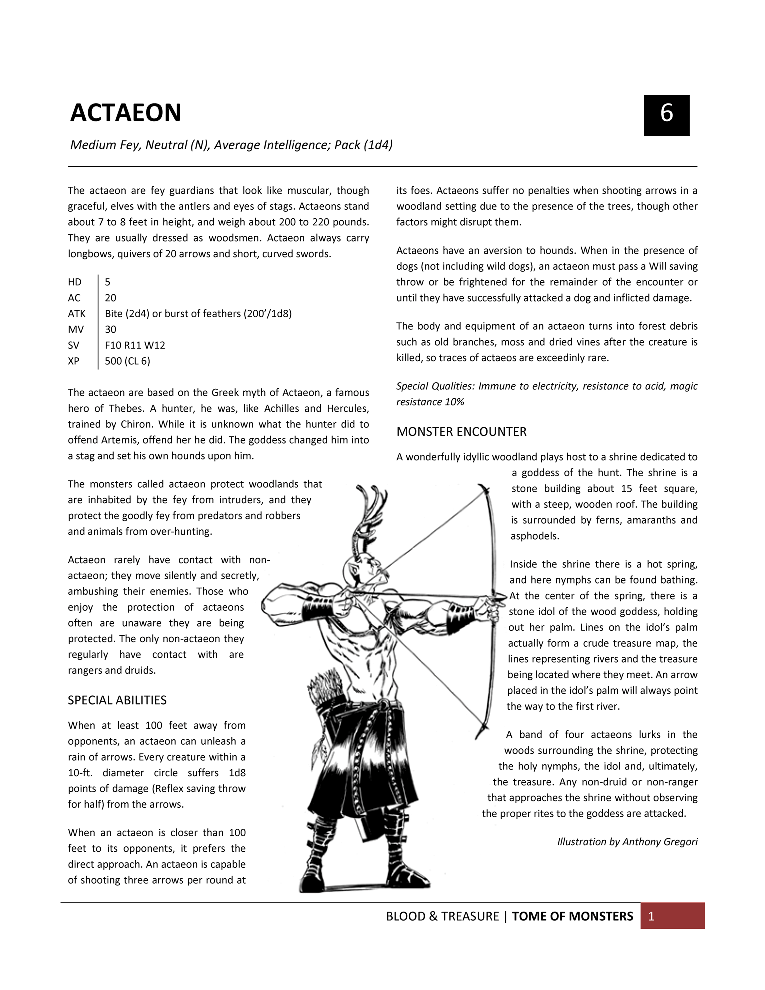
TOME OF MONSTERS

This is shaping up pretty nicely. Art is being commissioned and is flowing in – below is a sample page as the layout now stands. Looks like this one will feature 145 new entries (some with multiple monsters per entry).

Okay folks – back to work!

Giants Modified

I love D&D and its tropes, if for no other reason than that they give players a frame of reference that you can shatter by taking the “mundane” and making alterations to it. Take the giants, for example – six varieties that can be modified in wonderful ways to stump those veteran “know-it-alls” that tromp through your campaigns with a copy of the Monster Manual in their brains.

Some of the modifications refer to Blood & Treasure, which is awesome and you should own (and the complete game, e-book, is now on sale at rpgnow.com / drivethrurpg.com – eventually I’ll have all my material up for sale there as pdf’s and hard copies).

GIANT VARIATIONS

(Apply One or More; use a d30 if you’d like)

1. Armored: Giant has a turtle shell, chitin or skin of metal or stone – boost AC accordingly, and add spikes (+2 damage) if you like.

2. Artillerist: Giant carries a cannon or ballista as his personal ranged weapon (just use damage equal to stone throwing damage if you want to keep it simple and just use the weapon for a dash of flavor).

3. Beauteous: The giant is gorgeous, and gains the nymph’s blinding beauty and charm abilities. In terms of giantesses, imagine hill giantesses like junoesque shepherd women, stone giantesses like living, regal sculptures, frost giantesses with cool, calculating beauty, fire giantesses like giant-sized Sophia Lorens, etc.

4. Bellowing Roar/Piercing Scream: The giant has quite a pair of lungs – once per day it can holler/scream/shriek/roar per the dragonne special ability.

5. Bestial: The giant has bestial characteristics (use the hybrid template in B&T). Combine hill giants with giant boars, stone giants with cave bears, frost giants with worgs, fire giants with giant lizards, cloud giants with giant eagles and storm giants with giant rams – or use whatever animals you think are most appropriate (elephants and tigers offer great possibilities).

6. Bigger & Dumber: Why do things get dumber when they get bigger? I’d probably know if I was smaller. For this one, just use the “giant” template in B&T and knock the intelligence down a notch. If the giant should have spell-like abilities, nix them. Huge giants get a trample attack (damage equal to strike damage) and giants that go from huge to huger gain a stomp attack (per the stomp spell).

7. Builder: Giant has the abilities of an NPC engineer, as well as the tools and a giant ox or draft horse to help him work.

8. Breath Weapon: The giant can exhale an appropriate breath weapon in a 20-ft. cone. Frost giants exhale cold (3d6 cold damage), fire giants fire (3d6 fire damage), storm giants and cloud giants spit lightning (4d6 electricity damage) and the rest just blow a gust of wind (per the spell).

9. Centaur: Giant has an animal body (see bestial above), gaining any appropriate attacks (claws, for example) and the trample ability.

10. Chariot: Giant drives a giant chariot drawn by appropriate animals (see bestial above for ideas).

11. Class: Giant has the abilities of a PC class with a level equal to half its hit dice. Hill giants make good barbarians, stone giants rangers (yes, because of Wormy), frost giants bards, fire giants fighters, cloud giants magic-users and storm giants druids – but any will do.

12. Claws: Giant gains 2 claw attacks (2d4 damage for large, 2d6 for huge)

13. Drunk: Giant is drunk 90% of the time. He loses 2 points of AC and suffers a -2 penalty to hit in combat, but ignores half of all physical damage inflicted on him. When he misses in melee combat, he must pass a Reflex save or fall prone – anyone who might be flattened must pass their own Reflex save or suffer 2d6 points of damage.

14. Elemental: The giant is kin to the earth elementals; use the elemental template in B&T.

15. Evil Eye: Giant can curse with its gaze (per bestow curse)

16. Godson/Goddaughter: Giant has the half-fiend or half-celestial template from B&T – mommy or daddy is divine!

17. Hideously Ugly: Giant is so ugly, those who see it must pass a Will save or be frightened.

18. Knightly: Like the giant Russian knights of old, the giant is not only in platemail and carries a giant sword and lance, but also rides upon a warhorse sized for him or her. Giant knights might have the abilities of a chevalier (see NOD Companion) of a level equal to half their hit dice, if the referee so desires. Giant will definitely be more civilized than most of its kin.

19. Magic Resistance: Giant enjoys magic resistance equal to half their Hit Dice x 5%.

20. Man-Eater: Giant gains the swallow whole ability against creatures two sizes (or more) smaller.

21. Pet-Lover: Giant is accompanied by a dragon or magical beast (or dinosaur?) appropriate to his environment.

22. Primitive: Giant is more primitive than its kin; it can wear nothing more than leather armor and carries nothing more than a giant club, but it’s strength gives it a +2 bonus to damage. Note that hill giants aren’t too swift to begin with, so primitive hill giants wear no armor and fight with their fists.

23. Sage: Giant is old and wise, and has the abilities of an NPC sage.

24. Size-Changer: Giant can change size once per day, per the shrink or enlarge spells.

25. Shape-Changer: Giant can polymorph self once per day.

26. Smoker: Giant smokes a large clay pipe, and can exhale the equivalent of a fog cloud once per day. Creatures in the smoke must pass a Fortitude save (vs. poison) or start choking (tactical disadvantage).

27. Sun-Hater: Giant turns to stone in daylight, but regenerates as a troll (though the damage they are vulnerable to might be different than fire and acid).

28. Trickster: Like old Utgard-Loki, the giant has natural illusionist abilities. Allow them to cast spells as an illusionist (specialist magic-user) with a level equal to half their hit dice, and knock their intelligence up a category.

29. Two-Headed: Per the ettin.

30. Tusks or Horns: Giant has a gore attack (2d6 damage for large, 2d8 for huge).

Okay, a few more ideas:

31. Field Marshall: Giant is an exile who has taken up with lesser humanoids, becoming their de factor leader. Scale the humanoids to the giant: Hill giant with kobolds, stone giant with goblins, fire giant with orcs, frost giant with hobgoblins, cloud giant with gnolls and storm giant with bugbears.

32.  Undead: Combine the giant hierarchy with the sentient undead hierarchy, thus barrow giants (hill giant + wight), shadow giants (stone giant + wraith), smoke giants (fire giant + spectre), ice giants (frost giant + mummy – I’m thinking about the ice mummies here), mist giant (cloud giant + vampire) and tomb giant (storm giant + lich).

33. Friendly: Giants can be friendly, of course, but you don’t want to ruin the rep of the traditional giants. So – hybridize them with some of the friendly demi-human species. Combine hill giants with gnomes for forest giants, stone giants with dwarves for rock giants or fire giants with dwarves for iron giants, frost giants with elves for taiga giants, etc.

Haunted Armor

I don’t think it’s possible to be a member of my generation without having seen a haunted suit of plate armor at some point in a movie or television show. Even if it was just a cunning ruse by a Scooby Doo villain (who knew so many people tried to use the supernatural to cover up their crimes?), the haunted armor was a well worn trope in my day. These days, it shows up as nothing more than lazy comedy … or, in today’s post, as a way to kill those precious little snowflakes better known as Player Characters.

When a warrior dies with his armor, fighting to the end, his spirit often hesitates to leave its last post. When this happened, the spirit animates the armor and continues doing what it did in life. Haunted armor is a close kin to poltergeists – undead spirits that have opted out of the afterlife for a career in deviltry.

HAUNTED JAZZERAINT
Medium Undead, Chaotic (CE), Average Intelligence; Troop (1d6)

HD: 4
AC: 14
ATK: Strike (1d6) or scales (30’/1d4)
MV: Float 30
SV: F14 R14 W11
XP: 400 (CL 5)

A haunted jazzeraint appears as an empty suit of scale mail, floating about 3 feet above the ground, with a helmet and two burning yellow eyes floating above it. Creatures with one or fewer levels of hit dice and warriors of any level that see a haunted jazzeraint are struck by the plight of the spirit within it, and must pass a Will saving throw or be frightened.

A haunted jazzeraint has no hands, and thus cannot wield weapons. Instead, it attacks by either flailing its arms, or slamming with its helmet (per strike above) or by launching a fusillade of razor-sharp scales from its body. These scales seem to regenerate after being thrown, so the haunted armor has no end of them. Just the same, it can only launch a volley once every 1d4 rounds. When a volley of scales is thrown, the jazzeraint makes a separate ranged attack against all creatures within 30 feet and within a 90-degree arc.

Special Qualities: Weapon resistance (silver or magic), immune to cold, electricity and fire

HAUNTED MAIL
Medium Undead, Chaotic (CE), Average Intelligence; Solitary

HD: 5
AC: 15
ATK: 4 chains (1d6 + constrict + energy damage )
MV: 30
SV: F13 R13 W11
XP: 1250 (CL 7)

Haunted mail appears as a suit of chainmail. Creatures with one or fewer levels of hit dice and warriors of any level that see a haunted jazzeraint are struck by the plight of the spirit within it, and must pass a Will saving throw or be frightened.

Suits of chainmail attack with 20-ft. long chains that hang from the monster’s arms. Creatures struck by these chains may be constricted; if they are, they suffer one level of energy damage each round they are held. A creature that is completely drained becomes a zombie; the chain remains around its neck and the zombie is under the control of the haunted mail.

Special Qualities: Weapon resistance (silver or magic), immune to cold, electricity and fire

HAUNTED O-YOROI
Medium Undead, Chaotic (CE), Average Intelligence; Solitary

HD: 6
AC: 16
ATK: 2 strikes (1d6) or whirlwind (see below)
MV: Float 30
SV: F12 R12 W10
XP: 1500 (CL 8)

A haunted o-yoroi looks like a suit of Japanese samurai armor with a grimacing demon mask. Creatures with one or fewer levels of hit dice and warriors of any level that see a haunted jazzeraint are struck by the plight of the spirit within it, and must pass a Will saving throw or be frightened.

Haunted o-yoroi enter combat with a blood-curdling scream. All in earshot must pass a Will saving throw or be stunned for one round. In combat, they can strike with their arms, and specialize at sundering items (items suffer a -2 penalty to item saving throws to avoid being broken).

Once per combat, a haunted o-yoroi can turn into a veritable whirlwind, striking all foes within 5 feet of it. A separate attack roll must be rolled against each opponent, and each hit suffers normal damage plus one level of energy damage. Any creature reduced to 0 level or hit dice from this attack rise as zombies under the control of the haunted o-yoroi. These zombies have the two attacks of a berserker.

Special Qualities: Weapon resistance (silver or magic), immune to cold, electricity and fire

HAUNTED GOTHIC PLATE
Medium Undead, Chaotic (CE), Average Intelligence; Solitary

HD: 8
AC: 18
ATK: 2 strikes (1d6 + 1d6 fire or cold + energy damage) or by weapon (+ 1d6 fire or cold)
MV: 30
SV: F11 R11 W9
XP: 2000 (CL 10)

Haunted Gothic plate armor looks like the moving armor often seen in movies. It is fully articulated and usually armed with a greatsword, halberd or shield and longsword. If armed with a shield, the haunted armor improves it AC by 2. Creatures with one or fewer levels of hit dice and warriors of any level that see a haunted jazzeraint are struck by the plight of the spirit within it, and must pass a Will saving throw or be frightened.

Haunted gothic plate is either freezing cold or burning hot. All creatures within 10 feet of a chilly suit of armor suffer 1 point of cold damage each round, and must pass a Fortitude saving throw or be slowed, per the slow spell. Creatures within 10 feet of a burning suit of armor suffer 1 point of fire damage each round and must pass a Fortitude saving throw or swoon from the hear (i.e. fatigued).

Foes hit by the armor’s strikes, but not its weapons, suffer one level of energy damage. Creatures brought down to 0 hit dice or levels by the haunted armor rise as zombies with iron-hard hides, and thus an Armor Class of 18.

Special Qualities: Weapon resistance (silver or magic), immune to cold, electricity and fire

The Superman Theory of Interesting Monsters

When Superman was first introduced to the world in the late 1930’s in comic strips and comic books, he really wasn’t so much an adventure character as he was a wish fulfillment character – the ultimate big brother who could beat up anyone the author thought was deserving of it. Superman’s earliest battles were against normal folks who really never had a chance at defeating him – think of it something like a group of 20th level characters wandering into the Caves of Chaos. The point wasn’t to challenge Superman, but to live vicariously through him.

As the character went on, though, things had to change. For one thing, stories like that can become boring. Stories like that are still written, of course, and will be for as long as people daydream about getting everything they have ever dreamed. But there were other forces at work … competition! Superman was soon joined by many other heroes, and not all published by the same company. National Comics needed to keep things fresh!

Yes, I got there before Lex Freaking Luthor!

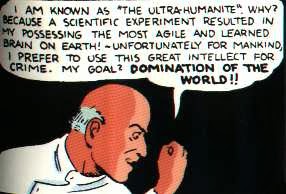
In 1939, the first supervillain appears on the scene – The Ultra-Humanite in Action Comics #13. The Ultra-Humanite represents the “opposite attracts” concept in comic book super-villainy – a physically powerful hero countered by a mentally powerful villain. The point here was simple – Superman can overpower anyone on Earth, but how will he fare against a superior mind? In other words – “how is he going to beat THIS guy?”

It strikes me that this lies at the heart of much of the monster creation in fantasy role playing games, especially during the old school phase when Arneson and Gygax and many others were building the foundation of what was to come. After the initial phase of dragons and balrogs, we begin getting into the weird Gygaxian ecology that includes rust monsters and lurkers above.

The idea was the same as above – the players have discovered tactics that work against bands of orcs and hordes of kobolds and fire-breathing dragons, but how will they defeat a monster against which metal is useless? How will they defeat monsters that drain levels every time they hit, monsters you dare not get close to? How will they defeat monsters who are resistant or even immune to magic spells? The monsters created by this process were weird and goofy and didn’t make the least bit of sense, because they weren’t monsters in the traditional sense, but rather puzzles disguised as monsters.

Okay, smarty pants – now what?

When I invent new monsters that are not based on creatures from myth or folklore (and sometimes even when they are), I try to make sure that that concept lies at the heart of what I’m doing – How do I force players to invent new tactics to overcome this new threat?

I think that what lies at the heart of what makes role playing games fun is the challenge they represent to the player, rather than the character. By forcing players outside of what is familiar, their interest is sparked and the game is more fun, even if at the same time they’re cursing you for your new innovation in killing their character. I think that at the heart of the game lies the basic puzzle of how do I overcome the challenge (monster/trap/riddle) to receive the prize (treasure/kiss/power).

When next you’re designing a new menace, or even if you’re using tried and true monsters, I suggest you put some thought into how this encounter will be different than all the other encounters your players have faced – what is the “gotcha” moment that will force the players to pause, give each other that worried glance, and then get their brains buzzing as they look for a solution. The treasure chest behind the monster is just a token, really – the real prize is the satisfaction of solving the puzzle the monster represents.

Support the Illustrated Bestiary of Fantastic Creatures

Got an email yesterday from Casey Sorrow, who is starting a Kickstarter to finance his An Illustrated Bestiary of Fantastic Creatures. Casey produces some amazing art, and the book promises to be game rules-neutral. That being said, it sure has an old school feel to me. Throw some bucks his way, so the mighty Casey doesn’t strike out! (Yes, I deserve whatever punishment the universe summons up for that one.)

You can find the Kickstarter HERE

You can find Casey’s website HERE