Odds and Ends (or Monster and Spells to be Precise)

SINOOZE

Large Ooze, Neutral (N), Non-Intelligent; Solitary

HD 8
AC 12
ATK Slam (1d6 + 1d6 acid)
MV see below
SV F10 R11 W11
XP 800 (CL 9)

Sinooze is an ooze that seeks out skeletal remains. It oozes over them and penetrates the bones with microscopic feelers, absorbing and reading the DNA. Using this information, it expands and takes the shape of the creature’s musculature.

The sinooze attacks and moves as the creature whose bones it animated. In addition, the monster deals acid damage when it successfully strikes. This acid damages organic materials and metal, but not stone.

Sinooze are flammable. When struck with fire, it suffers half damage, but is lit on fire. Subsequent successful attacks by the monster deal 1d6 points of fire damage. The monster continues to suffer 1d3 points of fire damage each round while ablaze.

Cold damage forces the ooze to pass a Fortitude saving throw or become thick and sluggish. Its movement is cut in half, and it becomes vulnerable to bludgeoning damage (i.e. takes full instead of half damage).

Special Qualities: Resistance to fire, weapon resistance

Bite of the Wolf
Level: Druid 2
Range: Personal
Duration: 1 hour

The druid’s mouth becomes a wolf’s muzzle. The druid gains a bite attack that deals 1d4 points of damage. Victims of the attack must pass a Reflex save or be tripped and knocked prone.

Coils of the Constrictor
Level: Druid 2
Range: Personal
Duration: 1 hour

The druid’s body becomes sinuous and flexible. On a successful grapple attack, the druid deals 1d4 points of damage and constricts his opponent for 1d4 points of damage per round until the grapple is broken.

Dwarfblood (Transmutation)
Level: Magic-User 1
Range: Personal
Duration: 1 hour

For one hour, the magic-user gains the special racial abilities of a dwarf.

Elfblood (Transmutation)
Level: Magic-User 2
Range: Personal
Duration: 1 hour

For one hour, the magic-user gains the special racial abilities of a elf.

Fangs of the Viper
Level: Druid 3
Range: Personal
Duration: 1 hour

The druid’s mouth becomes fanged. The druid gains a bite attack that deals 1d3 points of damage and injects Poison III into the victim.

Flashing Blade (Transmutation)
Level: Magic-User 1
Area of Effect: One blade
Duration: 1 hour

This spell can be cast on one medium or large blade, which must be touched by the magic-user. For one hour, the blade shines with a bright, blinding light. When the sword is used for an unsuccessful attack, the target of the attack must pass a Reflex save or be blinded until the end of the next round.

Foreboding (Illusion)
Level: Magic-User 2
Range: 30 feet
Area of Effect: One creature
Duration: 6 hours

The target of this spell has terrible feeling of foreboding. While under the effects of the spell, she believes every find trap task check she makes succeeds (i.e. finds a trap), every remove trap task check fails, and all listen at doors task checks result in her hearing weird, threatening noises on the other side of the door.

Gnomeblood (Transmutation)
Level: Magic-User 2
Range: Personal
Duration: 1 hour

For one hour, the magic-user gains the special racial abilities of a gnome.

Horns of the Rhino
Level: Druid 3
Range: Personal
Duration: 1 hour

The druid’s nose and forehead broaden and grow a fierce horn. The druid gains a gore attack that deals 1d8 points of damage. Every gore attack counts as a bull rush attack.

Horseless Carriage (Conjuration)
Level: Magic-User 4
Range: Object touched
Duration: 1 hour

By touching a wagon or similar wheeled conveyance, you imbue with the ability to move on its own. The wagon moves by your command, and in much the same way as a horse would, save that the wagon operates by voice command. For every three levels you possess, the wagon is moved by the equivalent of one horse (i.e. gains one horsepower). A 7th level magic-user could conjure up two horsepower, while a 12th level magic-user could conjure up four horsepower.

Hover (Transmutation)
Level: Magic-User 3
Range: Personal or close
Duration: 1 hour

This spell works like the levitate spell, except that it gives the recipient of the spell the ability to move at a movement rate of 20 forward and backward, and the recipient of the spell only levitates 6 inches above a solid or liquid surface.

Hug of the Bear
Level: Druid 3
Range: Personal
Duration: 1 hour

The druid’s arms become large and furry, and tipped with claws. The druid gains two claw attack each round that deals 1d6 points of damage. If both claw attacks hit a foe, they are automatically grappled.

Monstrous Mein (Transmutation)
Level: Magic-User 3
Range: Personal
Duration: 10 minutes

The magic-user’s creature type changes to monstrous humanoid. The magic-user gains darkvision to a range of 60 feet, is no longer affected by spells that affect humanoids (such as charm person), and gains a +2 bonus on Reflex saving throws. In addition, their visage becomes monstrous, and normal humans and men-at-arms must pass a Will saving throw upon seeing them or become frightened for 1d4 rounds.

Phantom Banker (Transmutation)
Level: Magic-User 2
Range: Close (30 feet)
Duration: Permanent

The magic-user changes one form of currency into the next higher form of currency, thus copper pieces into silver pieces, silver pieces into gold pieces, and gold pieces into platinum pieces. The total value of the coins does not change, thus 100 copper pieces can be changed into 10 silver pieces. Another use of the spell could then turn those 10 silver pieces into a single gold piece.

Polymath (Transmutation)
Level: Magic-User 3
Range: Personal
Duration: 1 hour per level

For the duration of this spell, the magic-user becomes a cleric, fighter or thief of her same level. The magic-user loses all magic-user abilities and restrictions for the duration of the spell, and for this reason they cannot end the spell early – the duration of the effect must be set by them when the cast the spell, up to one hour per level. While in their new class, they gain it’s hit dice (and thus re-roll hit points), saving throws, armor and weapon restrictions, special abilities, etc.

Polymath, Advanced (Transmutation)
Level: Magic-User 5
Range: Personal
Duration: 1 hour per level

As polymath, except the magic-user can become a multi-classed cleric/magic-user, fighter/magic-user or thief/magic-user of one level lower than their magic-user level (follow all normal multi-classing rules), or they can become a bard, ranger, barbarian, druid, assassin, etc. of one level lower than their magic-user level.

Potent Potables (Transmutation)
Level: Magic-User 2
Range: Close (30 feet)
Duration: 1 hour

All liquids within range of the magic-user take on the properties of alcohol for one hour. The liquids still taste the same, and potions still work as advertised, but the imbiber must pass a Fortitude saving throw or become drunk (treat as fatigued, but the player also has to slur their words when the speak and give out a loud, fake hiccup every so often – it’s called verisimilitude dude!)

Pussycat! (Transmutation)
Level: Magic-User 5
Range: Close (30 feet)
Duration: 1 minute

When the magic-user yells “pussycat!”, the most powerful creature (by number of levels or hit dice) is polymorphed into a normal cat for one minute, and it must pass a Will save or be frightened for the duration of the spell.

Quills of the Porcupine
Level: Druid 3
Range: Personal
Duration: 1 hour

The druid grows quills from his back and the back of his head and arms. When they make a successful bull rush attack, they deal an additional 1d6 points of damage, and creatures that miss them in melee combat must pass a Reflex saving throw or suffer 1 point of damage. The druid’s clothing is ruined by this spell, and she cannot cast it while wearing armor.

Sepulchral Power (Transmutation)
Level: Magic-User 5
Range: Personal
Duration: 10 minutes

The magic-user’s creature type changes to undead. The magic-user gains darkvision to a range of 60 feet, is no longer affected by spells that affect humanoids (such as charm person), is immune to illusions and mind-affecting effects, poison, sleep effects, paralysis, disease, stunning attacks, and gains a +2 bonus on Fortitude saving throws. They are still affected by death effects, but are now healed by negative energy and damaged by positive energy. Their appearance becomes gray and decayed, and normal humans and men-at-arms must pass a Will saving throw upon seeing them or become frightened for 1d6 rounds. As undead, they are liable to be turned or rebuked (and thus destroyed or controlled) by clerics and other classes with those abilities.

Spikes (Conjuration)
Level: Magic-User 2, Druid 2
Range: Touch
Duration: 1 hour

Armor touched by the spellcaster gains armor spikes, per the normal rules for armor spikes.

Supernumerary (Divination)
Level: Magic-User 2
Range: Close (30 feet)
Duration: Instantaneous

The magic-user instantly ascertains the exact quantity of one type of item within range, for example all the coins in an area by type.

Telecommunication (Conjuration)
Level: Magic-User 2
Range: Touch
Duration: 1 hour

The magic-user turns two cans, glasses, jars, etc. touched into a “telephone”. The objects are connected by an ethereal “wire” up to 1 mile long, and essentially work as though they were two tin cans connected by a string. There is some danger connected with this spell. When people communicate through it, they send out vibrations into the ethereal plane, and there is a 5% chance per conversation of attracting the attention of a wandering ethereal filcher.

Whitefoot
Level: Druid 2, Ranger 2
Range: Close (30 feet)
Duration: 1 hour

One creature within range leaves white tracks – as though it stepped in white paint – wherever it goes for one hour. This makes tracking a snap under most conditions.

Nodian Grimoire – Four New Spells

Image found HERE

I don’t invent all that many new spells – there are already so many of them, and I find that new ones often go unprepared because they’re a bit too niche – in other words, players don’t know what’s coming, so they tend to prepare the most tried and true spells for their clerics and magic-users.

That being said, a few ideas recently popped into my head, so I figured I would write them up.

ANIMATE ROOM

Level: Cleric 8
Range: Immediate area
Duration: 1 hour

This spell works much as animate object, except that it animates an entire room as a single monster. The room has the statistics of a huge animated object, and can use the objects within it as weapons to attack.

GODLY VISAGE

Level: Cleric 6
Range: Personal
Duration: 1 minute

The cleric takes on the physical form of his or her patron deity for one minute. Their equipment might change its form, but not its properties, magical or mundane (i.e. chainmail may look like +3 platemail, but it still acts like normal chainmail). Followers and enemies of the god or goddess must pass a Will saving throw or be stunned. This state lasts until the “deity” is hit in combat and damaged, or the “deity” or any of the “deity’s” allies attack the stunned creatures.

In addition to looking like their deity, the cleric gains the following special abilities: Suffer half damage from non-magical weapons and attacks, enjoys 5% spell resistance, and gains one special attack associated with their deity. This special attack should be no more powerful than a 3rd level spell, and can be used once.

QUID PRO QUO

Level: Magic-User 6
Range: Personal
Duration: 24 hours

By casting this spell, a magic-user declares a trigger spell, and the spell that will be triggered when that spell is cast in the magic-user’s presence, but not by the magic-user herself. Once this spell is cast, the effect lasts for 24 hours. If during that time any creature casts the trigger spell (hereafter known as the triggerer), instead of the trigger spell’s effect, a different spell is cast, with quid pro quo’s caster as the origin of the spell and the triggerer as the target (if applicable).

THIN AIR

Level: Magic-User 3
Area: One 3-ft. x 3-ft. x 3-ft. cube per level (max 30-ft. cube)
Duration: 1 minute

You rob the air within the area of effect of oxygen. You can move the area of effect while the spell lasts by concentrating on it – this concentration precludes other actions. Creatures within the thin air that engage in strenuous activity (running, climbing, fighting, etc.) must pass a Fortitude saving throw each round or become fatigued. A fatigued creature must continue to attempt Fortitude saving throws to avoid becoming dazed. Dazes creatures must continue to attempt Fortitude saving throws to avoid becoming unconscious. This unconscious state lasts for as long as the creature remains in the thin air, and 1d6 rounds thereafter.

Fight Like a Greek Hero … In the Buff!

A while back, I tossed out the idea of modeling variant samurai in Ruins & Ronin by swapping out access to armor in exchange for extra special abilities.

Today, I was looking at some classical art, wherein all the great heroes fight in the buff. Now, you could swap out the fighter’s normal access to armor with the monk’s ability to improve AC by level if you wanted to run a campaign set in classical Greece – in fact, I would suggest it. But what if you wanted to award fighters (and other character classes that normally have access to very good armor) if they want to throw down their metal suits and fight like Hercules?

My idea would be to grant an XP bonus whenever a warrior goes into battle unarmored. You can actually tie the size of the bonus to the amount of armor the warrior forgoes. This can get tricky at lower levels though, when fighters and clerics cannot necessarily afford better armor. You don’t necessarily want to hand the fighters and clerics a big XP bonus over the thieves and magic-users when they’re opting not to use armor they couldn’t get access to anyways.

Maybe the way to do it is this: If a character that normally has access to any armor decides to wear nothing more than leather armor (nonmagical), they get a +10% bonus to earned XP. If they decide to wear nothing more than padded, they get a +15% bonus. If they go around unarmored, but clothed, they get a +20% bonus. If they go virtually naked, they get a +25% bonus to earned XP.

You can reduce these bonuses for characters with more restrictive armor choices; you might decide that thieves who decide to go around virtually naked earn no more than a +10% bonus to earned XP, since they’re really only forgoing a couple points of AC bonus.

Shields don’t figure into this – the classical heroes often fought with shields. If the armor mentioned above is magical, reduce the XP bonus by 5% per magical plus (so wearing +1 leather armor translates into a +5% bonus to XP).

This could be a fun option for players with fighters who want to challenge common sense, and show off a bit in the process. It could also be a way to model the Xena’s and Red Sonja’s running around in less-than-optimal armor.

You might also give fighters with impressive physiques an additional bonus to reaction checks if they walk around virtually naked – i.e. permit them to add their Strength bonus in place of their Charisma bonus to reaction checks.

The Incarnator

It’s been way too long since the last post, so hopefully this one will make it up. This is admittedly not an “old school” sort of class, but rather more of a “high fantasy” concept.

THE INCARNATOR

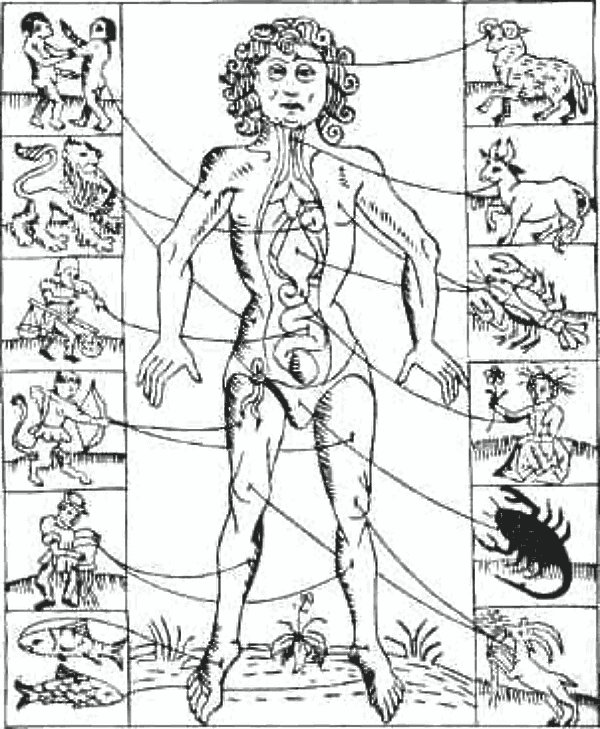
The incarnator is a mystic character class that can make the power of the stars incarnate on and within his person. These stellar incarnations appear in many shapes, but are always composed of light of a different color, based upon the star sign being invoked.

Incarnators train in much the same way as monks, psychics, and soulknives. They operate in training houses as tight-knit brotherhoods under the tutelage of a master.

In your campaign, incarnators might be the equivalent of magicians or psychics who specialize in star magic, or they might even have the blood of star gods and goddesses (the Pleiades) running through their veins.

REQUIREMENTS: Wisdom and Charisma 13+

ARMOR ALLOWED: Padded, leather, studded leather, and ring mail

WEAPONS ALLOWED: Club, dagger, dart, light crossbow, light mace, quarterstaff, short sword

SKILLS: Communicate, Decipher Codes, Navigation

CLASS ABILITIES

1. Incarnators call upon the mystic power of the stars, in the form of the twelve signs of the zodiac. Obviously, different fantasy worlds might have different star signs, but the rules here use the traditional zodiac – adjustments may need to be made for other worlds.

Because an incarnator calls upon the zodiac, they must first have their own star sign rolled randomly, with a 12-sided dice, of course.

2. Incarnators are skilled at drawing astrological charts. The action takes one hour, and not only reveals a person’s star sign, but also acts as an augury spell for the person in question.

3. To manifest an incarnation they must make a task check (a Will save) modified by their Wisdom score. Manifesting from one’s own birth sign is at a +2 bonus, from one’s own element at no penalty, from other elements at a -2 penalty, and from an opposing element at a -4 penalty. It is impossible for an incarnator to manifest from his opposing sign.

There are three types of incarnations an incarnator can manifest:

Artifacts are objects of solidified starlight. Manifesting an artifact requires a Will saving throw made with no additional penalty (see above).

Summonings are creatures composed entirely of solidified starlight. A summoning requires a Will saving throw with a penalty equal to the monster’s Hit Dice.

Aspects are internal or external modifications of the body. Aspects require a Will saving throw with a -10 penalty.

An incarnator can attempt a set number of manifestations per day (see table below). These numbers represent attempts, not successes. It’s possible for an incarnator to fail on all their attempted manifestations during a day. An incarnator can attempt the same manifestation multiple times per day if they choose.

Fire signs produce red light, earth green, air white and water blue.

If an incarnator is manifesting three incarnations from the same element, he gains resistance to that element’s related energy (fire, acid, electricity, cold) so long as his incarnations are manifested.

The artifacts, summonings and aspects associated with the signs are as follows:

Weapons: All incarnator weapons, including natural weapons, appear as solidified light of the appropriate color. The weapon acts in all ways as a +1 magic weapon of its type. A 6th level incarnator’s weapons also deal +1d6 points of energy damage based upon its element (i.e. Aries is a fire sign, so a warhammer of Aries deals +1d6 fire damage). A 12th level incarnator’s weapon acts as a +1 brilliant light weapon of its type. Weapons last for one turn (10 minutes). Manifested natural weapons permit an attack by the incarnator in addition to a held weapon.

Armor: Incarnator armor acts as +1 magic armor of its type. A 6th level incarnator’s armor also provides resistance against the appropriate energy (fire for fire signs, acid for earth signs, electricity for air signs and cold for water signs). Armor lasts for one hour.

Potion Bottle: The potion bottle of Aquarius contains a potion that duplicates a single spell of a level equal to the incarnator’s level divided by four, rounding down. Thus, a 1st level incarnator can manifest a potion that duplicates a 0-level spell, a 2nd to 5th level incarnator a first level spell, a 6th to 9th level incarnator a second level spell, and so on. The potion bottle and the liquid starlight is contains last for one turn, though the effects of the spell within have the normal duration.

Scales: The scales of Libra can take a measure of creatures, determining their alignment leanings (chaos vs. law, good vs. evil) and also the wisdom of an action (per the augury spell). The scales manifest for 1 turn.

Monsters: Monsters are energy constructs that fight as their normal type, but enjoy resistance to the energy associated with their sign. They last for 6 rounds.

Split: When a character splits, they become two incarnators of half their normal level and half their current hit points. If one is killed while split, the incarnator absorbs his former half, but suffers one level of energy damage (not drain). A split lasts for one round + one round per level of the incarnator.

Mighty Roar: The mighty roar works as the special ability of the dragonne. While manifesting the mighty roar, the incarnator’s eyes glow red, and a mane of reddish light filaments sprouts from his or her head. The mighty roar ability lasts for one round + one round per level of the incarnator.

Magic Circle: Per the magic circle spell, affecting either good or evil. The magic circle actually appears as a glowing green aura around the incarnator’s body, and lasts for one round + one round per level of the incarnator.

Blinding Beauty: Per the nymph ability, this ability causes the incarnator’s body to glow with luminous, white light. Blinding beauty lasts for one round + one round per level of the incarnator.

Horse Body: The incarnator manifests a centaur like horse body of red light. He gains the movement rate and natural hoof attacks of a centaur.

Steam Body: Per the gaseous form spell, but the incarnator can choose to expand into the equivalent of the fog cloud spell. Lasts for one round + one round per level.

Scales and Gills: The incarnator gains a swim speed of 60 and water breathing (per the spell). Lasts for one round + one round per incarnator level.


I Love Paleontology

I’ve said it before, and I’ll say it again – I love the internet, with the emphasis on “net”. It’s fabulous having so much information so easily accessible, but what’s even better is that you find so many wonderful things you weren’t looking for, and in fact that you never knew existed. For example …

Illustration by Pavel.Riha.CB at the English language Wikipedia, used via Creative Commons Attribution-Share Alike 3.0 Unported license

The Odobenocetops, or Walrus-Faced Whale, or Walrus-Whale for short. Who knew? I’m just waiting for some lucky paleontologist to pull the first owlbear skeleton out of the ground.

So, in honor of this new addition to my brain matter, I present some quick monster stats. Please bear in mind, though, that I’m not going to stat up an inoffensive ancient whale that dined on mollusks. No sir – this is D&D, and that means we need an aquatic bad-ass!

ODOBENOCETOPS (WALRUS-WHALE)
Large animal, Neutral (N), animal intelligence; Pod (1d8)

HD: 8
AC: 18
ATK: Slam (1d6) and tusk (1d10)
MV: 0 (Swim 60)
SV: F8 R8 W14
XP: 800 (CL 9)

The walrus-whale is a sea mammal of the Pliocene era. The walrus-whale has a single long tooth that jutted back from its mouth and can be used as a tool and a weapon.

In combat, a walrus-whale attacks by slamming into opponents and by slashing and spearing with its tooth. Creatures hit by the monster’s tooth attack with a natural roll of ’20’ are punctured if they fail an Armor Saving Throw (i.e. roll 1d20 below one’s armor bonus, including any natural or magical armor bonuses, but excluding dexterity bonuses to AC). A punctured creature suffers 1d4 points of Constitution damage as organs are punctured, and thereafter suffers 1 hit point of bleed damage each round until healed.

Special Qualities: Resistance to cold

Astral Anglers

Saw a picture of ice fishing, and this idea popped into my head.

ASTRAL ANGLER

Large Outsider, Chaotic (NE), Average Intelligence; Solitary

Astral anglers look something like crystaline gulper fish, with massive mouths and long, thick bodies. Their bodies are largely transparent, but the creatures organs are a pulsating pink, and thus can be seen through the monster’s flesh.

HD: 8
AC: 18
ATK: Bite (2d6 + swallow whole)
MV: 40
SV: F8 R9 W9
XP: 800 (CL 9)

Astral anglers appear to exist for the express purpose of eating and swimming. They never speak, and their eyes show not a glimmer of intelligence. In fact, they explorers, slowly mapping the myriad psychic eddies and flows of the Astral Plane, imprinting their knowledge on their gemstone brains.

Mapping an infinite plane is hungry work, of course, which leads to the astral angler’s strategy for hunting. The monster extends a lure into the Material Plane, and when something grabs it, the monster yanks them into the Astral Plane to be swallowed.

SPECIAL ABILITIES
An astral angler opens portals into the Material Plane by opening its mouth and expelling a weird humming sound. This weakens the barrier between planes, creating an invisible portal that can be noticed by some creatures as a ripple in space.

Through this portal, the beast extends something like a tongue. This tongue is long and pink in reality, but it is charged with psionic particles, such that in the Material Plane it appears as something the monster’s prey envisions as their fondest desire. The particles pick up needs and wants that a group has in common, so the tongue appears as the same to thing to all. This is an illusion effect, and can be overcome in the normal way.

When a creature touches the tongue, they stick fast to it unless they pass a Will saving throw. A person stuck to the tongue is suddenly jerked through the invisible portal and into the Astral Plane. The portal remains open for 10 minutes, and others can move through it without difficulty.

The original victim that is jerked in is immediately attacked by the astral angler using its bite attack.

Preview Time

Wow – it’s been almost a week since last I posted. What have I been up to? Well, aside from work, a little economics-oriented freelance stuff, and doing the family thang, I’ve been working on NOD 22 and the Tome of Monsters. So – time for a preview post!

[Oh – and the physical version of NOD 22 is now up for sale at Lulu!]

NOD 23 – The Ende Hexcrawl

Foreigners have called the plateau of Ende the land of monsters, and rightly so. In ancient days past, the elves dominated the west and the dragons the lands of Mu-Pan, but the rest of the planet was given over to monsters, especially the colossal mountains called the Great Yamas.

In the primordial days, the Kabir did battle on this plateau where the ancient river Ende runs down from the mountain glaciers. They clashed with the demons and other outsiders who sought to colonize Nod, leaving behind small pockets of these monsters and their servants, and a great fortress-temple called Aornus, wherein was hidden a mighty artifact of the kind they had used to defeat the demons and push them into the underworld beneath the Great Yamas.

Before the receding of the waters of Mother Ocean and the South Seas, Ende was a hilly peninsula jutting from the Yamas and dominated by two tribes, the Rakshasa and the Naga. The Rakshasa dominated the goblins and ogres, while the Naga dominated tribes of lizard-men and ophidians. Between them, the Rakshasa and Naga constructed the fortresses that would become the four great city-states of the plateau.

Eventually, the waters did recede and revealed the vast lowlands that would become the plains of Gondar and the tangled jungles of Djangala. These virgin territories attracted human, demi-human and humanoid tribes, who came under the sway of the monstrous tribes of the plateau for a time, before asserting their independence.

Due to the presence of the fortress Aornus and the mythical engine of destruction concealed within, the plateau has been visited by many armies over the centuries, including diving armies of demons and angels. As a result, the plateau is home to many more aasimar (called aasura in Ende) and tieflings (called teivas in Ende) than can be found throughout most of Nod.

Ende today is much as it has been for centuries, a land of adventure, danger and potential wealth. After many millennia of settlement, the land is rife with ruins hiding treasures beyond belief. The cities of the plateau, constructed over a thousand years ago, sit atop ancient iterations of them-selves, one city atop another, forming vast dungeons clogged with treasure and the non-human tribes that originated the cities before humans settled on the plateau.

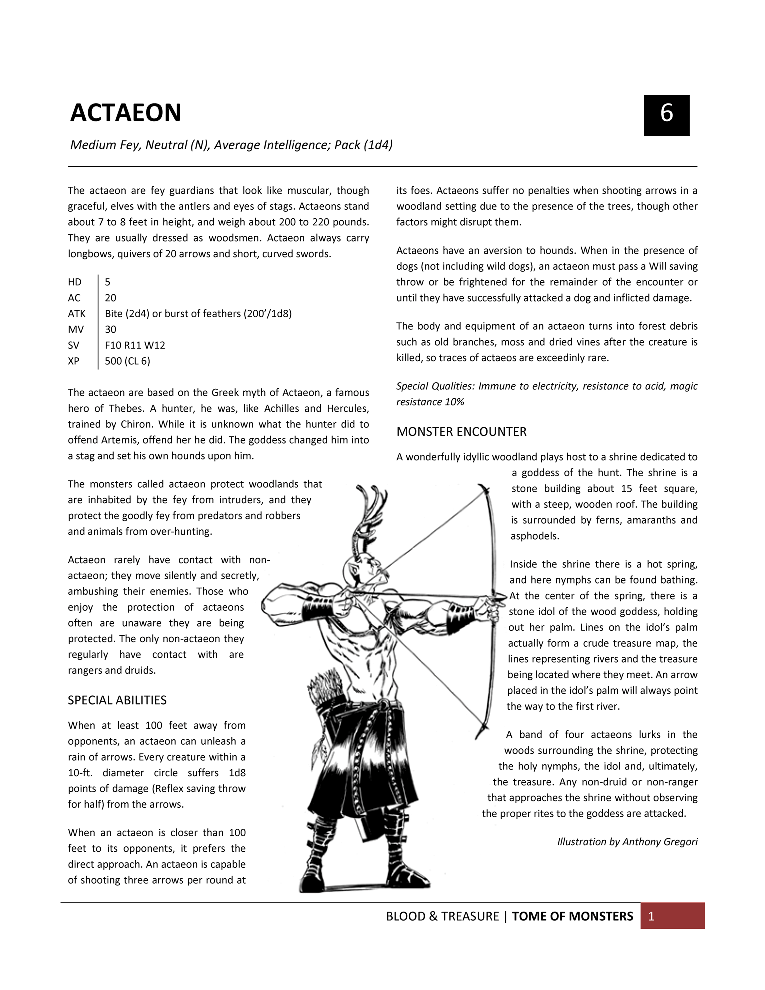
TOME OF MONSTERS

This is shaping up pretty nicely. Art is being commissioned and is flowing in – below is a sample page as the layout now stands. Looks like this one will feature 145 new entries (some with multiple monsters per entry).

Okay folks – back to work!

Haunted Armor

I don’t think it’s possible to be a member of my generation without having seen a haunted suit of plate armor at some point in a movie or television show. Even if it was just a cunning ruse by a Scooby Doo villain (who knew so many people tried to use the supernatural to cover up their crimes?), the haunted armor was a well worn trope in my day. These days, it shows up as nothing more than lazy comedy … or, in today’s post, as a way to kill those precious little snowflakes better known as Player Characters.

When a warrior dies with his armor, fighting to the end, his spirit often hesitates to leave its last post. When this happened, the spirit animates the armor and continues doing what it did in life. Haunted armor is a close kin to poltergeists – undead spirits that have opted out of the afterlife for a career in deviltry.

HAUNTED JAZZERAINT
Medium Undead, Chaotic (CE), Average Intelligence; Troop (1d6)

HD: 4
AC: 14
ATK: Strike (1d6) or scales (30’/1d4)
MV: Float 30
SV: F14 R14 W11
XP: 400 (CL 5)

A haunted jazzeraint appears as an empty suit of scale mail, floating about 3 feet above the ground, with a helmet and two burning yellow eyes floating above it. Creatures with one or fewer levels of hit dice and warriors of any level that see a haunted jazzeraint are struck by the plight of the spirit within it, and must pass a Will saving throw or be frightened.

A haunted jazzeraint has no hands, and thus cannot wield weapons. Instead, it attacks by either flailing its arms, or slamming with its helmet (per strike above) or by launching a fusillade of razor-sharp scales from its body. These scales seem to regenerate after being thrown, so the haunted armor has no end of them. Just the same, it can only launch a volley once every 1d4 rounds. When a volley of scales is thrown, the jazzeraint makes a separate ranged attack against all creatures within 30 feet and within a 90-degree arc.

Special Qualities: Weapon resistance (silver or magic), immune to cold, electricity and fire

HAUNTED MAIL
Medium Undead, Chaotic (CE), Average Intelligence; Solitary

HD: 5
AC: 15
ATK: 4 chains (1d6 + constrict + energy damage )
MV: 30
SV: F13 R13 W11
XP: 1250 (CL 7)

Haunted mail appears as a suit of chainmail. Creatures with one or fewer levels of hit dice and warriors of any level that see a haunted jazzeraint are struck by the plight of the spirit within it, and must pass a Will saving throw or be frightened.

Suits of chainmail attack with 20-ft. long chains that hang from the monster’s arms. Creatures struck by these chains may be constricted; if they are, they suffer one level of energy damage each round they are held. A creature that is completely drained becomes a zombie; the chain remains around its neck and the zombie is under the control of the haunted mail.

Special Qualities: Weapon resistance (silver or magic), immune to cold, electricity and fire

HAUNTED O-YOROI
Medium Undead, Chaotic (CE), Average Intelligence; Solitary

HD: 6
AC: 16
ATK: 2 strikes (1d6) or whirlwind (see below)
MV: Float 30
SV: F12 R12 W10
XP: 1500 (CL 8)

A haunted o-yoroi looks like a suit of Japanese samurai armor with a grimacing demon mask. Creatures with one or fewer levels of hit dice and warriors of any level that see a haunted jazzeraint are struck by the plight of the spirit within it, and must pass a Will saving throw or be frightened.

Haunted o-yoroi enter combat with a blood-curdling scream. All in earshot must pass a Will saving throw or be stunned for one round. In combat, they can strike with their arms, and specialize at sundering items (items suffer a -2 penalty to item saving throws to avoid being broken).

Once per combat, a haunted o-yoroi can turn into a veritable whirlwind, striking all foes within 5 feet of it. A separate attack roll must be rolled against each opponent, and each hit suffers normal damage plus one level of energy damage. Any creature reduced to 0 level or hit dice from this attack rise as zombies under the control of the haunted o-yoroi. These zombies have the two attacks of a berserker.

Special Qualities: Weapon resistance (silver or magic), immune to cold, electricity and fire

HAUNTED GOTHIC PLATE
Medium Undead, Chaotic (CE), Average Intelligence; Solitary

HD: 8
AC: 18
ATK: 2 strikes (1d6 + 1d6 fire or cold + energy damage) or by weapon (+ 1d6 fire or cold)
MV: 30
SV: F11 R11 W9
XP: 2000 (CL 10)

Haunted Gothic plate armor looks like the moving armor often seen in movies. It is fully articulated and usually armed with a greatsword, halberd or shield and longsword. If armed with a shield, the haunted armor improves it AC by 2. Creatures with one or fewer levels of hit dice and warriors of any level that see a haunted jazzeraint are struck by the plight of the spirit within it, and must pass a Will saving throw or be frightened.

Haunted gothic plate is either freezing cold or burning hot. All creatures within 10 feet of a chilly suit of armor suffer 1 point of cold damage each round, and must pass a Fortitude saving throw or be slowed, per the slow spell. Creatures within 10 feet of a burning suit of armor suffer 1 point of fire damage each round and must pass a Fortitude saving throw or swoon from the hear (i.e. fatigued).

Foes hit by the armor’s strikes, but not its weapons, suffer one level of energy damage. Creatures brought down to 0 hit dice or levels by the haunted armor rise as zombies with iron-hard hides, and thus an Armor Class of 18.

Special Qualities: Weapon resistance (silver or magic), immune to cold, electricity and fire

Grand Curses

First post of 2014!!!

GRAND CURSES

Sometimes a simple spell just is not enough. Sometimes, that damn village that ran you out of town because your barbarian is a half-orc needs to learn what for. Sometimes that pompous duchess who stiffed you after you slayed the local dragon needs to find out you’re not to be messed with. Sometimes, a simple spell is not enough – you need a Grand Curse!

Grand curses are not unlike normal spells in their overall effect, but they strike many more targets than a normal spell. Grand curses spread like plagues. They are cast on a single person and from that person affect all others with which they have contact. In this way, a grand curse can impact virtually every person in a village, town, castle or even kingdom. Grand curses are no more difficult than the normal spells they mimic, but their cost is much higher for the spellcaster.

A spellcaster can turn any spell he or she knows into a grand curse. To do so, they must know the spell the grand curse is to mimic, and they must be willing to sacrifice a pound of their own flesh, metaphorically. Each person affected by a grand curse costs the original spellcaster 10 experience points per level of the mimicked spell. Affected, in this case, means any creature forced to attempt a saving throw versus the spell. If a village of 100 people is affected, for example, by a sleep spell in the form of a grand curse, the spellcaster would lose 4,000 XP. These lost XP can force a spellcaster to lose a level, so when you unleash a grand curse, beware! In addition, the grand curse counts as a spell four levels higher than the spell it mimics.

In all cases, the spellcaster casts the grand curse at one initial victim. This person receives a normal saving throw, but at a -4 penalty. If they pass their saving throw, the grand curse fails. Otherwise, they suffer the effects of the spell with a permanent duration until dispelled with dispel magic spell or remove curse. Each person that sees or has some sort of contact with the victim of the grand curse while they are feeling its effects must succeed at a saving throw themselves or become a victim of the grand curse themselves. The effects of the grand curse affect a victim 1d6 turns (i.e. 10-60 minutes) after they fail their saving throw, so it is possible for the victims to move about quite a bit – all the better to spread the curse.

And before you ask – yes, grand curses must have a negative effect on their victims. No cursing people with cure light wounds!

The following are examples of grand curses.

Beauty’s Sleep
Level: Magic-User 4

This grand curse mimics the sleep spell. Each person that sees a sleeping victim of the spell must pass a Will saving throw or fall to sleep themselves.

Black Mood
Level: Magic-User 8

This grand curse mimics the crushing despair spell. Each person that sees a weeping or otherwise saddened victim of the spell must pass a Will saving throw or fall into despair themselves.

Confusion of Tongues
Level: Magic-User 7

This grand curse mimics the garble spell. Each person that speaks with an addle-brained victim of the spell must pass a Will saving throw or become addle-brained themselves. The garble spell appears in The NOD Companion.

Danse Macabre
Level: Cleric 7

This grand curse mimics the cause disease spell. Each person that comes within 10 feet of a diseased victim of the spell must pass a Will saving throw or fall sick themselves.

Infectious Laughter
Level: Magic-User 6

This grand curse mimics the hideous laughter spell. Each person that hears a laughing victim of the spell must pass a Will saving throw or laugh themselves.

Mass Hysteria
Level: Magic-User 8

This grand curse mimics the confusion spell. Each person that comes within 10 feet of a confused victim of the spell must pass a Will saving throw or become confused themselves.

Plague of Accidents
Level: Magic-User 8

This grand curse mimics the fumble spell. Each person that sees a person drop something must pass a Will saving throw or become clumsy themselves. The fumble spell appears in The NOD Companion.

St Vitus’ Dance
Level: Magic-User 12

This grand curse mimics the irresistible dance spell. Each person that sees a dancing victim of the spell must pass a Will saving throw or dance themselves. Oh, and I know – there are no 12th level spells – but damn this would be cool. Maybe save it for an evil demigod.

History of NOD Part IV

Wow – so I let myself get lax on updating the blog again. In my defense, I’ve been super busy at work (real work, that one that plays for my mansion and gold-plated yacht) and super busy at home (NOD Companion just needs a little editing and layout work, NOD 22 is coming along nicely, Mystery Men! got a small revision and ACTION X has been reborn as GRIT & VIGOR and is also coming along nicely). So, there’s my excuse. Here’s my post …

HISTORY OF HUMANS AND HALFLINGS

With the power of the elves and dwarves broken, the world was left to the humans and their ilk. We now reach a time a scant five thousand years ago.

As the dragons of Mu-Pan slowly retired into secret places, they left their scions in charge of their warring kingdoms. In time, they would be united in an empire that would have to tolerate numerous dynastic changes and revolutions and stand up to the machinations of the weird lords of Tsanjan.

Thule harbored a rogue elven land called Pohiola. This nightmare kingdom would slowly give way to the invasions of the horsemen of the steppe, as they laid the foundations for such kingdoms as Mab, Luhan and Azsor.

Antilia and Hybresail would remain largely wild places, home as they were to the shattered homeland of elves and dwarves, its human and demi-human populations reduced to barbarism.

In the Motherlands and Lemuria, the human populations learned well from their former elven masters, and founded sorcerous empires founded on demon worship. In time, such empires as Irem, Nabu and Kolos would fall in spectacular eldritch fashion. In their ashes, a new empire was born that would rule much of the Motherlands – Nomo. Nomo was founded when a band of elven adventurers led by Prince Partholon left the shores of Antilia in a dozen longships and make their way to the Motherlands. Finding themselves among a tribe of human barbarians, they soon asserted themselves as their masters, founding the city-state of Nomo and eventually extending their control over much of the sub-continent. Under Nomo’s emperors and empresses a 2,000 year empire was begun which would end only with the disappearance of the Emperor during adventures in the mysterious West.

With the emperor’s disappearance, Nomo fell into factional fighting, with each faction supporting its own candidate for emperor. The former tributary kings and queens in the empire also staked their claims on the throne.

Thus it is in today’s land of NOD. City-states built on the ruins of kingdoms built on the ruins of empires, all threatened by encroaching chaos.

RACIAL CLASS VARIANTS
In Blood & Treasure, I introduced the notion of variant classes. These were meant to illustrate the way one might create new classes using old classes as a base, with fairly minor changes.

BARBARIAN VARIANT: HALF-ORC THUG

Half-orcs often grow up on the mean streets, learning to excel not as trained fighters but as street brawlers. These half-orc thugs advance as barbarians, save for as follows: They may only use padded or leather armor and bucklers, they have the following skills: Bend Bars, Break Down Doors, Climb Sheer Surfaces, Gather Rumors, Hide in Shadows, Jump, Move Silently and Pick Pockets.

PALADIN VARIANT: ELVEN GALLANT

Gallants are elven paladins as dedicated to romance and wooing women as they are to righting wrongs and protecting the weak. While most paladins can be a bit stodgy, elven gallants are rather dashing and devil-may-care.

In a three-fold alignment system, gallants must be Lawful. In a nine-fold system, though, they need only be Good. Gallants cast spells from the bard spell list rather than the paladin spell list.

THIEF VARIANT: DWARF PROSPECTOR

As adventurous as dwarves can be, their first loves are always gold, gems and silver. Many, if not most, get their first taste of adventure as prospectors, heading into the hills or depths in search of metals or stones to mine.

Dwarf prospectors have the following skills: Climb Sheer Surfaces, Find Traps, Hide in Shadows, Listen at Doors, Move Silently, Notice Unusual Stonework, Open Locks, Remove Traps and Spelunking. In addition, they can wield picks and hammers.

THIEF VARIANT: GNOME PRANKSTER

Gnomes are innately magical folk, and some learn from a young age to tailor their magical abilities to the profession of thievery. These gnome thieves are noted for their enjoyment of taunting their victims with pranks and riddles, leaving calling cards and boasting of their thefts before they happen.

In place of a gnome’s normal innate spells, a prankster can cast the following spells: Mage hand, open/closer and ventriloquism.

THIEF VARIANT: HALFLING GYPSY

Many of the halflings that people meet are of a breed known as the pikey – wanderers from the east who live a semi-nomadic life among the larger races, making a living telling fortunes, picking pockets, stealing pies (they love pies) and bilking the naive.

Gypsies have the abilities of thieves, save they replace the backstab ability with the bard’s ability to fascinate. Their skills are as follows: Balance, Climb Sheer Surfaces, Escape Bonds, Gather Rumors, Hide in Shadows, Move Silently, Pick Pockets, Train Animals and Trickery.