The Glooms – Caged Imps, Forlorn Golems and Shadowy Theatres

Three more from the Ante-Hell. Perdition awaits …

110.5. Imp-N-Cage: Somewhere in this hex of magma pools and basalt landforms, hanging from a chain beneath a natural land bridge that spans a flow of magma, there is an imp inside a cage constructed of logical fallacies. The cage is too convoluted for the imp, but perhaps a character with high intelligence could solve it. To simulate this, the Referee can prepare three riddles. If a player can answer all three of them, they succeed in freeing the imp, which will swear eternal loyalty (ha!) to its rescuer and even become their familiar if they are a magic-user. Each riddle that is answer incorrectly, however, costs the character one point of their intelligence score, permanently, as they find themselves trapped in logical fallacies. Of course, as difficult as answering the riddles is, the swarm of adamantine wasps that guards the bridge is even worse.

ADAMANTINE WASP SWARM: HD 15 (76 hp); AC 0 [19]; Atk 1 sting (3d6+poison); Move 5 (F14); Save 4; CL/XP; 16/3200; Special: Poison (harden into ice, 1d6 damage per round, shatter when dead), magic resistance (12%).

IMP: HD 2; AC 2 [17]; Atk 1 sting (1d4 + poison); Move 6 (F16); Save 16; CL/XP 6/400; Special: Poison tail, polymorph, regenerate, immune to fire.

110.29. Forlorn Golem: A stone golem sits on the banks of the Acheron, its feet in the black waters, chin on hands, elbows resting on knees. The golem was created by a mad wizard to besiege Hell, the wizard miscalculating the width and depth of the Acheron. Abandoning the concept, the wizard moved on and left his creation by the river to await new orders. He sits there to this day.

STONE GOLEM: HD 15 (60hp); AC 5 [14]; Atk 1 fist (3d8); Move 6; Save 3; CL/XP 16/3200; Special: +1 or better magic weapon to hit, immune to most magic.

118.51. Natural Amphitheatre: There is a natural amphitheater located in this hex. The amphitheater has been accentuated with seating carved into the reddish-brown rock. Against the back of the amphitheater there is what appears to be a bas-relief (deep relief) of a warrior in Greek armor, spear and shield in hand. He appears to be fighting, with his back against the wall. The statue is actually a warrior who was turned to stone while fighting the guardians of this shrine, for the amphitheater is a shrine dedicated to the Tenebrae, the daughters of Nyx and Eerebus. It is guarded by eight sisters, medusas with black-bronze skin and cool, green eyes. Each of these medusas, as a priestess of the Tenebrae, can cast three cleric spells, one of first, second and third level, each.

The statue is still inhabited by the warrior’s spirit, now an ethereal shade. The shade appears when people walk on the “stage” and attempts to force a female adventurer touch his statue body. Doing this releases him from the curse, in which case the restored warrior can introduce himself as Damali, a crusader from ancient days. Damali is a 10th level paladin.

ETHEREAL SHADE: HD 8; AC 1 [18]; Atk Icy touch (2d6) or special ability; Move 9; Save 8; CL/XP 10/1400; Special: Hard to see, immune to non-magic weapons, befuddlement.

Image from HERE.

Peoples of Namera

There are now three Hex Crawl Chronicles out and a couple more in the can. I’m about to begin writing the next one, and since I’ve had a couple emails recently asking for some more details about the setting – in particular about the folks wandering around causing trouble in it – I thought I’d share a few of the details (well, as many as I know).

(Oh, and you can find the overall map for the setting HERE)

Bucranian
Appearance: HCC 5

The Bucranians of the great island Bucrania are handsome folk, with chiseled physiques and deep olive skin. Their hair and eyes are as black as night.
Noble Bucranians dress in tunics of expensive fabric, most purchased from the Last Men, and square cloaks. They wear leather sandals on their feet and phetas of silk on their heads. Commoners dress as nobles, only with less expensive fabrics. Warriors carry spear, short sword, javelins and oblong shields emblazoned with black bulls.

In Bucrania, all women are wards of the king and live one of his many palaces until they are wed to a man. The most valued men of the kingdom are athletes, and athletic games are frequent and hotly contested. Champions are adopted by the king and become princes of Bucrania. They are gathered into fraternal trios, and in these trios they battle minotaurs in the arena for the honor of their father and the favor of his “daughters”.

As humans, Bucranians can advance in any class. Bucranian priests are usually druids who worship bulls. Bucranian fighters favor spear and javelin.

Centaur
Appearance: HCC 3, HCC 4

A centaur has the head, arms and torso of a human or elf and the lower body of a pony or ass. Centaurs dwell in meadows and glades surrounded by thick woodlands. They are known for their lack of temper and their fondness for women, war and song.

Centaurs are usually seven to eight feet tall from hoof to head. Even though their equine bodies are smaller than normal horses, they are still quite heavy and find it difficult to scale sheer surfaces without help from others. A centaur’s equine body may have any pattern common to normal horses, and the hair on their heads often follows suit. Centaurs usually have nut brown skin.

Centaurs speak their own language and often (50%) the language of elves. They occasionally speak the common tongue of men. Many centaurs learn the languages of gnomes, goblins, halflings, kobolds and orcs. Because of their size, centaurs have booming voices.

Centaurs cannot have a strength or constitution scores lower than 9, nor can they have a wisdom score higher than 14. Centaurs can become fighting-men, advancing to a maximum of 7th level (8th level if strength is 14 or higher, 9th level if strength is 18). Centaurs can carry 150% more than most characters. In addition, their base movement is increased by 6. Because they are quadrupeds, a centaur’s gets a +2 save to avoid being knocked over or grappled. In combat, centaurs can choose to attack with their weapon or their hooves, which deal 1d4 points of damage. A centaur’s armor (really a combination of human armor and horse barding) costs twice as much as normal human armor.

Dwarves
Appearance: HCC 1, HCC 2, HCC 3, HCC 4

The dwarves of Namera are bandy-legged and wrinkled, with narrow eyes and immense noses, splayed toes, large hands (the better for holding hammers and climbing rocks) and snow white hair. Women are as ugly as the men, but their ugliness is made up for by a reputation as being honest, hard-working, and immense fun at parties.

Dwarves don’t like to stand out in a crowd, so they were muted colors that blend in with their surroundings, including hooded cloaks. They adore pockets and sew as many into their clothes as they can. Long, pointed shoes are also a must, to give the illusion of more height. Dwarf warriors look for as much armor as they can wear, and prefer practical weapons like hammers and axes to flashy swords. They usually carry crossbows or hand gonnes over bows. Dwarves are natural animal lovers, and every dwarf has his pet.

Dwarves follow the normal dwarf rules. Their gods are never named or invoked in public, and their clerics stay home to care for the clan (unless your favorite rules allow dwarf clerics, in which case they replace spoken prayers with noisy ululations.

Dwarves of the Aderumdocs
Appearance: HCC 5

Unlike their bandy-legged cousins of the west, the dwarves of the Aderumdoc Mountains are a bit shorter and much rounder, rosy cheeks, gap-toothed smiles (when they bother to smile) and long, nimble fingers. They have gray skin that becomes covered with moss as they grow older, giving them a natural camouflage in ancient forests.

The Aderumdoc dwarves are deliberate and patient, never given to rash action or thoughtless words. They often sit down cross-legged when it is time to think, puffing on their pipes and considering every angle. This makes them wondrous engineers, but can be quite taxing on their fellow adventurers when every fork in a tunnel must be weighed and considered.

The Aderumdoc dwarves follow the normal rules for dwarves.

Elves of the North
Appearance: HCC 4

These northern elves dwell in towers disguised as massive trees by illusions. They are uglier than the trouping elves to the south, having long legs and arms attached to squat bodies and faces that resemble brownies more than fashion models. These northern elves wear long mail byrnies and winged helmets traced with precious metals. They carry hide shields painted in bright colors and carry longswords and daggers.

Northern elves are gruff and forward than their southern kin, and do not bear so much resentment to others (though they dislike the imperious Northmen and their empire). They believe profoundly in freedom and actively sew chaos where societies seem to rigid and structured. The wood elves have learned how to train giant eagles for use as their mounts, and every wood elf warrior aspires to become an eagle rider.

The northern elves follow the same rules as all other elves. They can become fighter/magic-users (level 4 and 8 respectively), thieves (no limit), rangers (level 3) or fighter/magic-user/thieves (level 4/8/unlimited).

Elves of the Pirate Coast
Appearance: HCC 5

The elves of the Pirate Coast have sun-dappled skin and auburn locks they never cut and warm, gray eyes. The coastal elves stand about 5 feet tall and have wiry frames. The elves wear as little clothing as possible, preferring loose tunics and loincloths. In times of battle they put on ornate, polished armor and wield long swords, dagger and longbows.

The elves are natural horsemen, learning to ride at a very young age and not truly achieving adulthood until they are can perform all manner of acrobatic tricks and feats of mounted warfare. They are a carefree folk who have a tough time realizing that other people’s feelings, needs and desires exist. They are persistent, if not always skilled, singers and dancers.

These elves follow the same rules as other elves. Coast elf thieves are usually horse thieves and rustlers, and take as much joy in stealing as the warriors do in fighting and the magic-users in torching villages with fireballs.

Elves of Valley of the Hawks
Appearance: HCC 1

The elves of the Valley of the Hawks are typical for the elves of Namera. They stand about five feet in height and have lithe physiques, pale skin that gives off a glow of health and vitality. They usually wear their hair long and tie it back or weave it into braids. Their hair and eyes might be any color under the sun.

They follow the tradition of the trouping fairies, with every elf a lord or lady in dazzling raiment of mauve, cyan and soft green, riding fine horses and carrying ornate bows and long swords. Elves take great pains to have the most stylish and expensive clothing they can afford – their appearance is a matter of great pride for them.

All elves of the valley hail from a hidden fort that is disguised by illusions and enchantments to look like a grassy knoll. The elves tend moontrees, whose leaves absorb moonlight that distills into the sap. Dead branches have a core of hardened sap which is melted down and alloyed with aluminum and tin to form elven mail. Their cloaks of elvenkind come from the silk of the faerie dragon, which lives in globes of spun silk that look like colored lanterns hanging from the trees. Their boots of elvenkind come from the hides of harts that are killed and slaughtered ritually to gain the blessing of the forest.

The elves of the Valley are haughty and proud, but also terribly dashing and brave. They adhere to the normal rules for elves (or high elves for “advanced” games). Elf fighters of the Valley favor the use of long sword and long bow, or possibly lance.

Embalmers
Appearance: HCC 3

The Embalmers are a race of bronze skinned men with raven hair and violet eyes. They are short and stocky, the women voluptuous and the men given to wide exaggerations and long melancholies.

Male embalmers dress in woolen tunics and trousers and gray cloaks. They wrap their lower legs in leather thongs and wear leather sandals on their feet and intricately patterned conical wool caps on their heads. Women wear loose gowns, a wide leather belt wrapped just under their breasts, shorter cloaks and put their hair in braids. Warriors arm themselves with spear, shields of wood and leather, short bows and long knives.

The embalmers raise sheep, trading wool and foodstuffs for fragrant oils and herbs used in their embalming ritual, the aspect of their culture which gives it its common name. The embalmers make mummies of their dead philosophers and nobles, walling them into their temples and palaces that they may advise future generations through barred windows. Peasant corpses are burned for heat in the furnaces of their palaces.

Embalmers are humans and might be of any class. Paladins are rare among them and most embalmer clerics worship death gods. Embalmer fighters favor the spear or short bow.

Golden Men
Appearance: HCC 1

The Golden Men of the steppe have golden-brown skin and blazing red hair. They wear buckskins in the winter and loincloths when the weather is warm enough. Warriors wear leather armor and carry stout clubs and leather slings, or metal weapons they have scavenged from their victims.

The Golden Men are descended from the ancients and now dwell in small hunter-gatherer bands in the woodlands or as brutal nomads on the prairie. The ancient ruins that once made up their homes are sometimes haunted by them, as they return to their temples to pay homage to such deities as Alberni, the dog-headed moon goddess, Kishrdis, the obsidian-skinned goddess of mining and Thallos, the seven-eyed god of love.

The Golden Men are humans, and can advance in any class. Clerics are as common among them as druids and magic-users are quite rare since they lack the resources to produce books or scrolls. Most Golden Men magic-users use very ancient tomes from the times of the ancients printed on strange, glossy paper in tiny black letters. Golden Men fighters favor clubs and slings.

Half-Orc
Appearance: HCC 5

Half-orcs are not a race, but rather creatures with a mixture of human and humanoid (usually orc, goblin, gnoll, bugbear or hobgoblin) blood. Half-orcs can almost pass for human. They average from six to seven feet in height and are usually stocky. Their skin often has a pink, grey or green cast to it. Half-orcs often have one of the following facial features: Turned up nose, pointed ears, thick eyebrows, a heavy forehead, vestigial tusks and/or pointed teeth. Half-orc hair is coarse and unruly and usually black, dark brown or dark red. Half-orc eyes are almost always brown, brownish green or greyish green.

Half-orcs usually speak the common tongue of men and often (60%) the language of their other parent race. It is not uncommon for them to learn the language of dwarves, goblins, ogres and giants.

Half-orcs can see up to 60 feet in darkness and their sense of smell is as keen as a wolf’s. Their thick skin gives them a natural Armor Class of 8 [11], which can be enhanced with armor. Half-orcs enjoy a +2 bonus to saving throws against poison and disease.

Half-orcs can advance as fighters (up to 8th level), thieves (no level limit), assassins (up to 6th level) or fighter/thieves (up to 8th level as fighter and 12th level as thief).

Hivernians
Appearance: HCC 2

Hivernians have jaundiced, sallow skin and hair that ranges from dark carnelian to fiery orange. Their eyes are icy blue. Hivernians are short and wiry, with long arms, fingers and toes, pug noses, long teeth and heavy jaws. They wear animal skins and long hoods decorated with bones and teeth. Warriors carry spears and short bows and wear the equivalent of leather armor.

Hivernians are as ancient a people as the Golden Men, and have warred with them for generations. Unlike the Golden Men, who seem to be able to lay claim to an advanced civilization in the past, the Hivernians have ever been savages. They are skilled in stalking and hunting, and have no qualms about killing for the sheer enjoyment of it. Hivernians worship the elk-antlered, doe-eyed goddess Yhoundeh.

Hivernians move as silently as halflings and can track as well as rangers of their class level. Hivernians can take levels as fighters (up to 7th), fighter-thieves (up to 6th level in each) or magic-user/thieves (up to 5th level as magic-users and 6th level as thieves). Hivernian fighters favor the spear or short bow.

Last Men
Appearance: HCC 5

The Last Men have olive skin and blond hair always worn closely cropped. Dealing as they do in fabrics, the Last Men dress in heaps and layers of clothing, all of expensive and luxurious fabrics like damask silk and velour. Soldiers of the Last Men carry Bohemian ear-spoons (pole arms) and hand gonnes (treat as heavy crossbows).

The so-called “Last Men” are a population of men and women who consider themselves the last true humans left in Namera. All other peoples are infected with chaos and thus “sub-men” in the eyes of the Last Men. They are emotionless, bland people, their lives ordered by their master, The Golden God, and by an ingrained herd mentality. The Last Men deal in fabrics, growing cotton and mulberry trees. Their factories contain mechanical looms controlled by a difference engine kept in a great, black citadel in their city-state, located to the south of the Pirate Coast. True xenophobes, they fear corruption by others, but still send out traders in longships to trade fabrics for food and other items.

Last Men are humans, and can take levels in any class, but their lack of independent, creative thought makes magic-users among them rare. Clerics of the Golden God are more common. Last Men fighters favor the use of bohemian ear-spoon or hand gonne.

Necrophage
Appearance: HCC 3

Necrophages are tall and lean, with pallid skin that they paint in grotesque patterns using burgundy paint made from crushed elderberries and columbines. Their warriors wear leather or ring armor and carry shields, leaf-bladed short swords, spears and javelins.

The Necrophages are fierce warriors who roam the rolling steppes of the Land Beyond the Black Water with their herds of cattle, riding in war chariots. The necrophages consume the flesh of their dead and of enemy casualties in war. They are berserkers in combat, and while one might expect berserkers to charge into combat screaming, the necrophages fight in complete silence. Necrophage tribes are ruled by undead kings, wights, with worthy challengers raised by force of will when they die to challenge the existing wight-king. The necrophages worship Emntrix, the petty death who claims the souls of soldiers.

Necrophages are humans, and can take levels in any class. Necrophage clerics worship Emntrix, the petty death of soldiers. Necrophage warriors favor the short sword. They can choose to be berserkers, but lose the ability to wear more than ring armor. Berserkers gain a +1 bonus to attack in combat for a number of rounds equal to their constitution bonus plus their level. After they come out of rage, they suffer 1d6 points of damage from exhaustion.

Northmen
Appearance: HCC 1, HCC 2, HCC 4

The Northmen have ebony or chocolate skin and wavy hair of brown or black, often worn long. Most are stout and plump, but a few villages mingled with the elves in elder times and are noted for their height and the electric sparkle in their eyes. The northmen are known for their baggy trousers and long tunics. They favor axes and curved knives and usually wear chainmail or platemail.

Northmen are the architects of a great kingdom that is now tearing itself apart in a terrible civil war between three princesses who seek to replace their dead father. They are industrious folk, not given to flights of fancy, who regard others as just a tad less civilized than themselves. They have a tendency to roll their eyes at outlandish customs and costumes.

Northmen are humans and can take levels in any class. Their clerics worship such deities as Almerla the goddess of healing, Talaunus the god of civilization, Teros the god of war, Vilmarra the goddess of vengeance and Waith, goddess of the underworld. Northmen fighters always favor axes.

Sea Lords
Appearance: HCC 4, HCC 5

The average Sea Lord has pale skin (or deeply tanned skin for the crews of their lion-prowed longships), blond to auburn hair and eyes ranging from blue to gray. Men and women tend to be exceptionally tall, with a pleasant, rough demeanor. Sea Lords dress in leather tricorne hats, padded doublets and baggy pants tucked into tasseled buskins. Sea Ladies wear long dresses covered by shawls and pile their braided hair atop their heads, holding it with wooden pins. Noble Sea Lords and Ladies wear necklaces of bronzed leaves from their old domains in the White Islands. Warriors carry broadswords and pistols and wear steel breastplates over soft leather armor.

The Sea Lords, or Albians, came from across the Briny Sea to escape the sinking of their homeland, the White Islands. Most of the Sea Lords that escaped this cataclysm were men, the crews of ships. The early settlers suffered a distinct lack of women, giving rise to the taking of slaves among female humanoids of the Pirate Coast. For this reason, there are still a good many Sea Lords with goblin, orc or (if they are lucky) elf blood flowing through their veins (i.e. half-elves and half-orcs). Sea Lords always have a tale to tell, and in taverns they tell these tales to the accompaniment of fiddles, mouth harps and percussion provided by stamping feet and by clanging walking sticks and cudgels on whatever surface is handy.

The Sea Lord clerics always worship Albia, the White Goddess who created them and kept them until the betrayal of her father, the Briny Sea. Albia is a goddess of perfection and purity, the gleam in her father’s eye until he consumed her in a fit of pique. Where some religions produce holy water, the priests of Albia produce holy powders. The first were taken from the chalk cliffs of the White Islands, but modern powders, kept in vials of glass or silver, are drawn from chalk outcroppings on the Pirate Coast.

Swamper
Appearance: HCC 3

The swamp folk are albinos with long, kinky hair that they sculpt into a shape reminiscent of large horns or cones. They have broad faces and large, pink eyes. The Swampers dress in soft leather tunics and the more accomplished hunters wear black cloaks made from the pelts of swamp panthers. Warriors carry sickles and staves.

Swampers encountered outside their villages are hunters or gatherers looking for exotic herbs and insects. The gatherers carry horn-handled sickles, often silver bladed, leather slings, wicker holy symbols, spirit rattles and bags of herbs, including healing poultices and bundles meant to repel the undead. Gatherers are usually accompanied by a breed of large, white swine that are used as mounts, pack animals and to sniff out herbs and funguses.

Swampers can be of any class, but most of them are clerics or magic-users. Clerics worship spirits of the dead and of the earth. Swamper fighters favor the use of the staff, and there are probably more Swamper monks than true fighters.

Tevalar Elves
Appearance: HCC 4

The Tevalar elves are aquatic elves who dwell in fresh water. They have blue-green skin and are completely hairless, with large, black eyes. Their warriors wear coats of silvery scales, onion-domed helms of ground and polished river glass (filled with water and connected via copper tubing to brass water tanks on their backs). They are armed with tridents, crossbow and short swords.

The Tevalar are slightly paranoid expansionists, building dams to flood valleys and bringing nearby human and demi-human tribes under their sway. Tevalar elves know how their surface kin have been dimished by the surface folks, and are determined to escape this feat. This makes them easy to offend and quick to deal with situations decisively and, at times, violently.

Tevalar elves follow the same basic rules as elves, with the exception that they can swim as quickly as they move on land and breathe water rather than air. To be sure, they would make challenging player characters, given how reliant they are on their water tanks.

Witchmen
Appearance: HCC 1

Witchmen have tan or olive skin and a great variety of hair and eye colors. They wear long, straight tunics and woolen leggings. Their shoes are leather and pointed, and they wear tall pointed hats with wide brims; both shoes and hats are decorated with buckles of brass or silver. Warriors carry long swords and daggers, and wear either ring armor or chainmail.

The Witchmen come from southern climes and dwell in the swamps at the mouth of the Great River. They are mystics, steeped in eldritch knowledge and taught the arcane arts from childhood. They dwell under the rule a college of witches and warlocks, with young Witchmen accepted in synods when they reach puberty. They are educated in these synods and treat them something like political factions. They worship such deities as Eosinn, the faun goddess of hunting and Onorix, the goddess of wealth.

Their leaders are skilled in swordsmanship and magic, and should be treated as elves in terms of their class choices, though their maximum levels are 3 levels higher than elves. Witchmen favor long swords and daggers.

Oh – also – just finished my little map for HCC 6 – The Troll Hills. Time to start filling this baby up. We’ll have Witchmen colonists on the Great River, an unspeakable troll god and a lair for every troll that I can legally use and few I’ll probably create. Think of it as Against the Giants but for trolls. Should be fun!

Deviant Friday – Eric Canete Edition

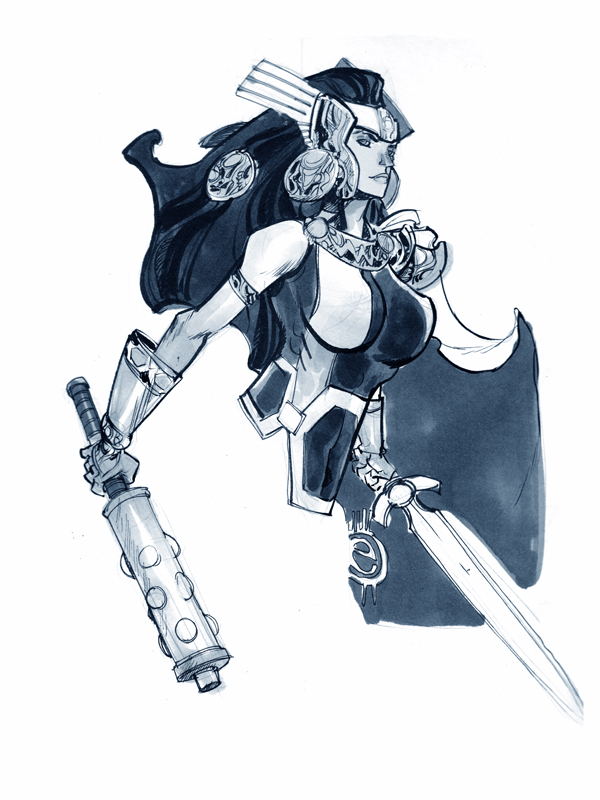
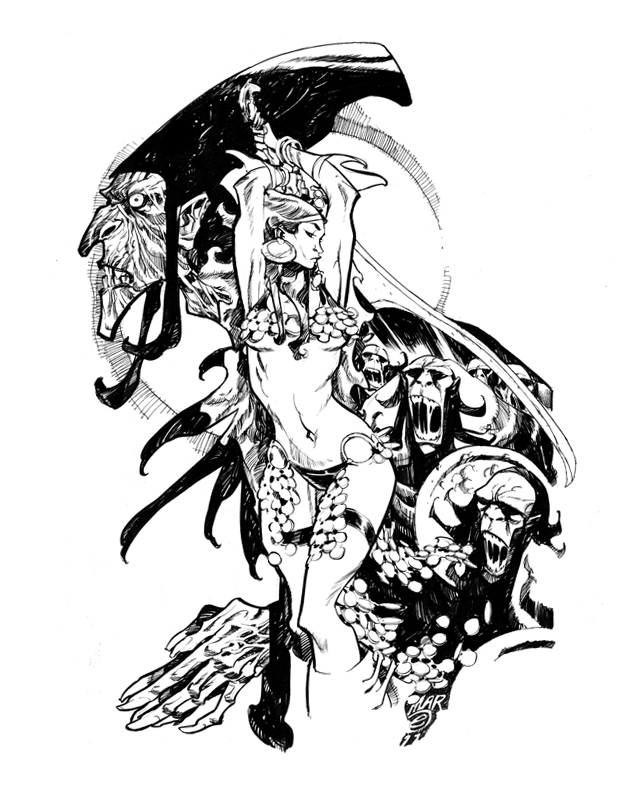
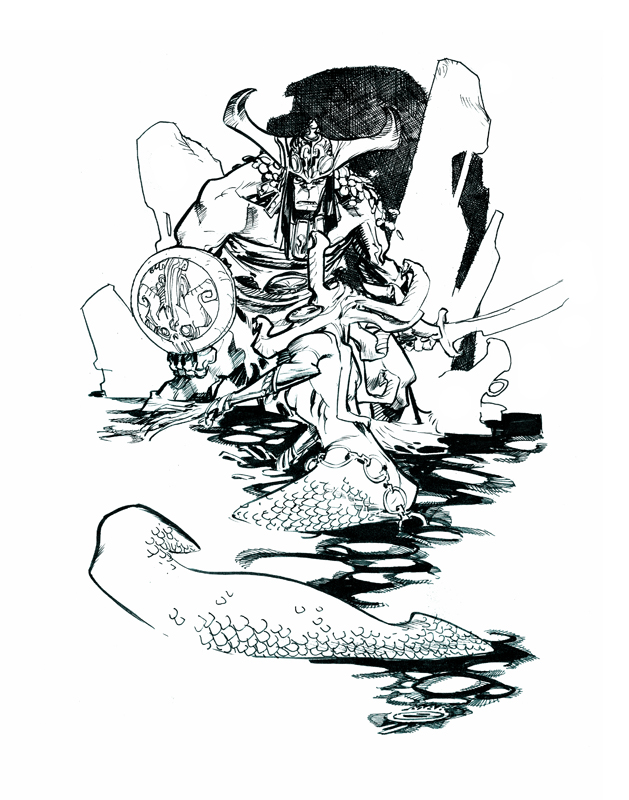
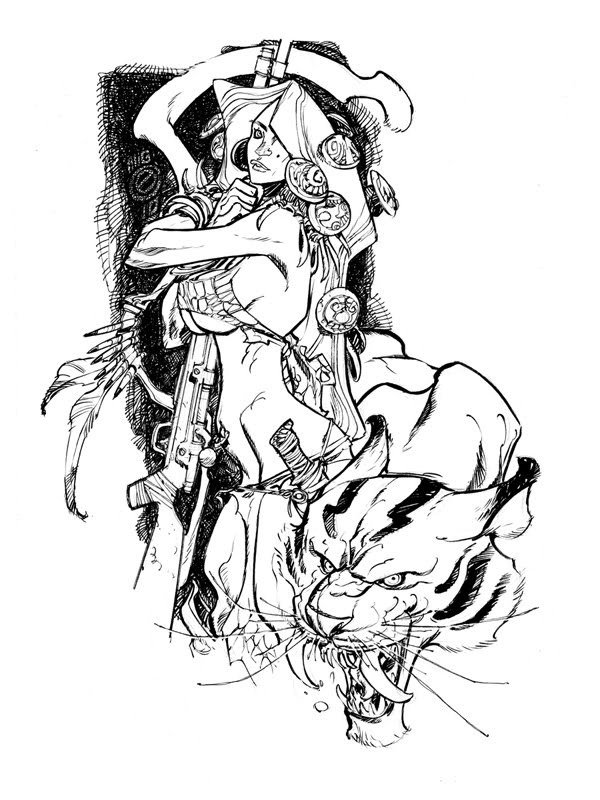
KAH-reload seems to mostly work in comic book images these days, though I remember some really nice fantasy stuff once upon a time. His style is maze-like – it draws in the eye and then gives it a roller coaster ride. They contain so much energy they make me feel like the paper is straining to hold them.

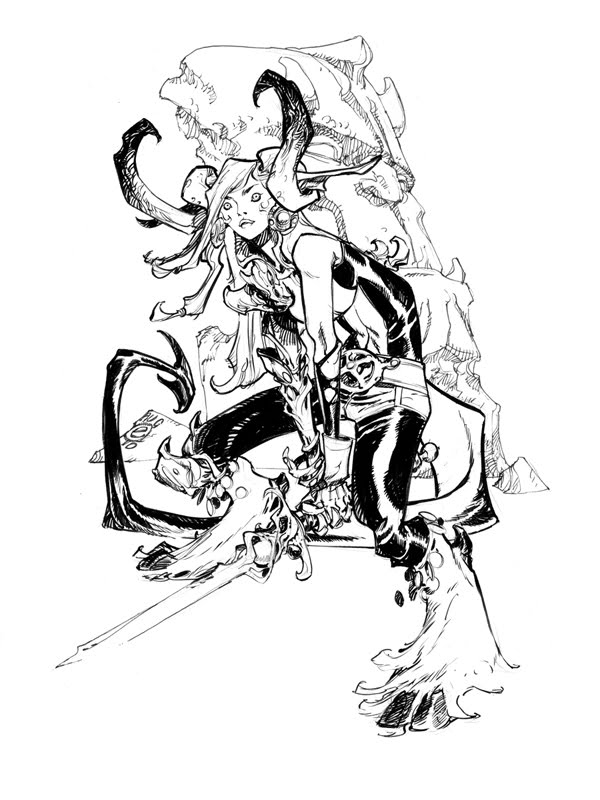
LADY SIF


RED SONJA


CONAN


ODINSON


SHANNA SHE DEVIL


MAJIK


I recently had another reason to look at some New Mutants material. It was really a fine piece of work back in the day.


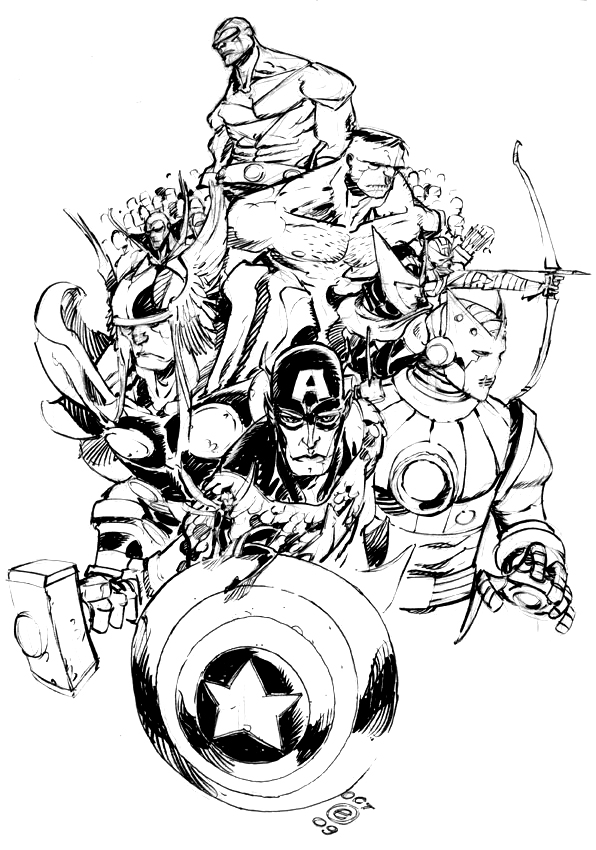
THE AVENGERS


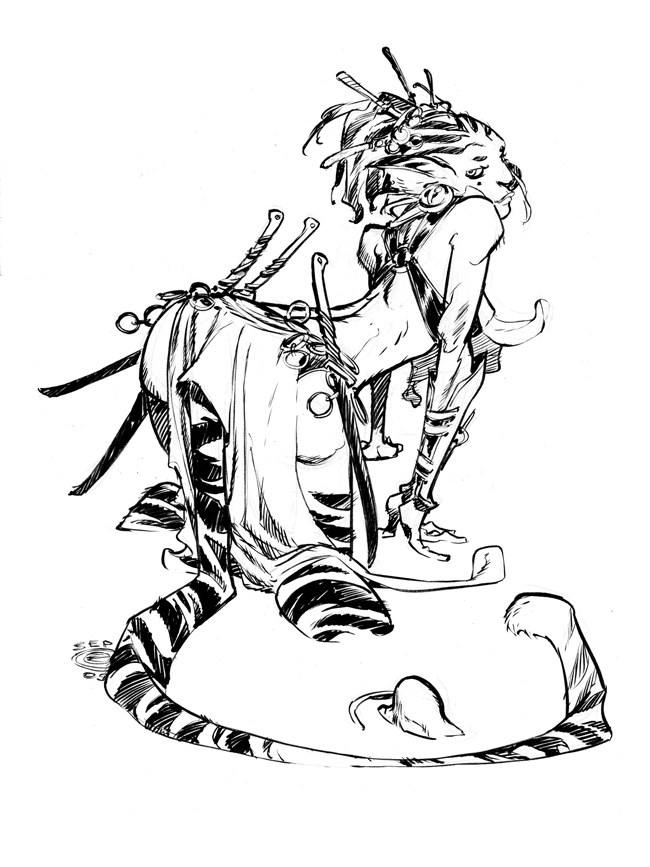
TYGRA


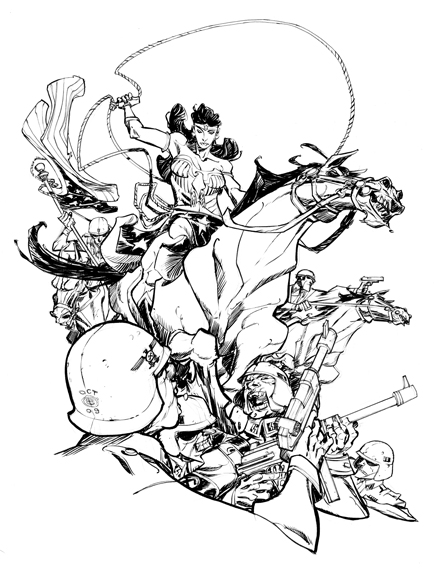
WONDER WOMAN


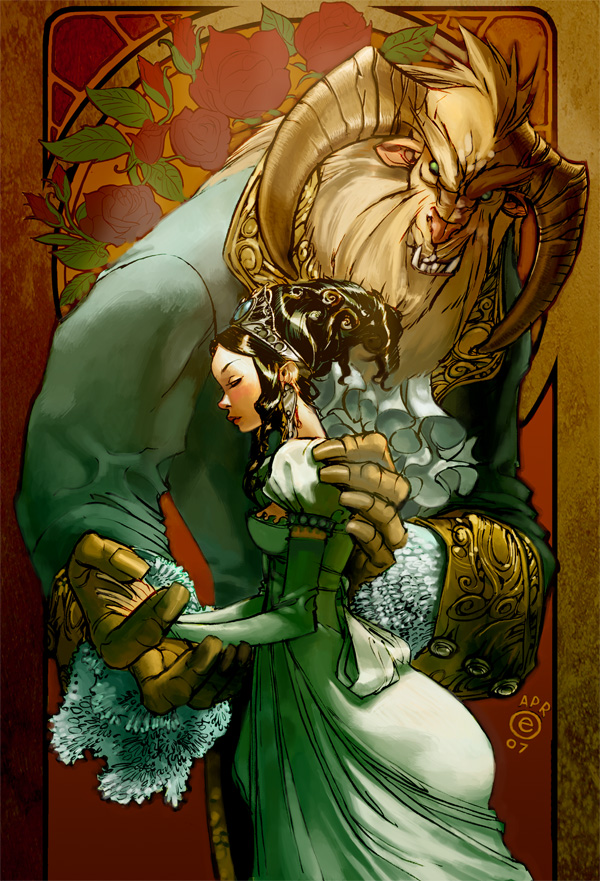
BELLE


Titans: What Are They Good For?

Orcus and Demogorgon, solars and planetars, but whence the titans? These big guys and gals seem to be on a pretty even footing with the demon lords and archangels (depending on which version of the game you adhere to), but they don’t get much love or use. I think this is a shame. To my way of thinking, titans represent a third way when it comes to the solars and the demon princes and dukes of Hell – neutral powers that can stand with the powers of Law and Chaos.

Perhaps the titans are the children of minor gods and goddesses. I’m talking Alala and Eleos, here, not Zeus and Aphrodite. Their parentage is divine and immortal, but they’re not. Well, maybe they are immortal in terms of aging, but they are creatures of the Material Plane and thus mortal in terms of “can be killed”. Where demon lords and solars hang out in the outer planes, titans live in the Material Plane, lording it over lesser beings as kings and queens by dent of their divine birth and tremendous power. How much more interesting to discover that the city-state you just wandered into is ruled by King Criomenos, the son of Moros, demi-god of impending doom and Eunomia, demi-goddess of law and legislation. You walk into this court to announce yourselves as great heroes, and find not a little man with a long, white beard, but a titan, head wreathed in gold, hand resting atop a golden sceptre as tall as your paladin and eyes that have seen centuries.

With that in mind, I decided that any titan that shows up in Nod is going to have a name, a heritage and powers commensurate with that heritage. According to S-n-W, the primary power of titans is spells – two spells of first to seventh level from both the magic-user and cleric lists, for a total of 28 spells. I decided to alter that a bit. Drawing on the old d20 SRD, I decided to instead give them all the spells (level 1 to 9) from the two cleric domains that most befit their parents. Since that gives them only 18 spells (still probably plenty), I decided to make up for it with a special defense (see below) and with the ability to commune with mommy and daddy once per day.

To determine the titan’s parentage, I decided to just make a random table of the cleric domains, rolling once for mom and once for dad. I listed some potential parents from Greek mythology behind each domain.

Roll D30 – Parent

1. Air – Aello (F), Aeolus (M), Aura (F)
2. Animal – Britomartis (F), Ichnaea (F), Krotos (M), Priapus (M)
3. Artifice – Acmon (M), Aristaeus (M), Hecaterus (M), Philomelus (M), Rhapso (F)
4. Chaos/Evil – Adikia (F), Eris (F), Dysnomia (F), Kakia (F), Kydoimos (M)
5. Charm – Eros (M), Hedone (F), Iynx (F), Peitho (F)
6. Community – Eunomia (F), Harmonia (F), Hymenaios (M), Nomos (M), Praxidike (F)
7. Creation – Euporie (F), Othorsie (F), Porus (M)
8. Darkness – Charon (M), Erebos (M), Nyx (F), Tartarus (M)
9. Death – Macaria (F), Melinoe (F), Thanatos (M)
10. Destruction – Alecto (F), Enyo (F), Moros (M), Nemesis (F)
11. Earth – Chrysus (M), Plutus (M)
12. Fire – Phlegethon (M)
13. Glory – Agon (M) , Eucleia (F), Kalokagathia (F), Nike (F), Pheme (F)
14. Good/Law – Arete (F), Astraea (F), Dike (F), Eunomia (F), Nomos (M), Peitharch (F)
15. Healing – Aceso (F), Eirene (F), Eleos (M), Eupraxia (F), Panacea (F), Philophrosyne (F)
16. Knowledge – Polymatheia (F)
17. Liberation – Momus (M)
18. Luck – Tyeche (F)
19. Madness – Deimos (M), Lyssa (F), Epiales (M)
20. Magic – Astraios (M), Circe (F), Despoina (F), Telete (F), Zagreus (M)
21. Nobility – Kalokagathia (F)
22. Plant – Amphictyonis (F), Carmanor (M), Chloris (F), Karpo (F), Silenus (M), Thallo (F)
23. Protection – Soter (M)
24. Strength – Bia (F), Kratos (M), Ponos (M)
25. Sun – Alectrona (F), Eos (F), Helios (M), Hemera (F)
26. Travel – Angelia (F), Arke (M), Ioke (F), Iris (F)
27. Trickery – Apate (F), Ate (F), Dolos (M)
28. War – Alala (F), Enyalius (M), Homandos (M), Polemos (M)
29. Water – Amphitrite (F), Galene (F), Glaucus (M), Proteus (M), Thetis (F), Thalassa (F)
30. Weather – Briareus (M), Chione (F), Tethys (F), Typhon (M)

A few of the categories are pretty sparse when it comes to divine representation, but what can you do.

You can find the various domains HERE and HERE. The spells that don’t show up in your favorite version of the game are easy enough to convert. If you don’t like conversions, use another spell that fits. Personally, I like the idea of a titan throwing down a spell the party clerics and magic-users have never heard of – maybe if they make a good impression and grovel a bit, the titan will teach them the secret!

Special Defenses
Special defenses should relate to the parentage, and the Ref might want to give them more than one special defense. Defenses for the titan might include:

+5 to save vs. poison or disease
Cannot be attacked by different kinds of creatures like reptiles, birds or plant creatures
Cannot be surprised
Immune to energy drain or falling damage
Immune to a class of spells – i.e. illusions, death spells or mind control
Magic resistance (maybe 15% for the least titans, with a 5% bump per additional hit dice)
Only harmed by +1 weapons
Resistance (half damage) from iron weapons or missile weapons, etc.
Resistance (half damage) to cold, fire, electricity, acid, etc.

You can probably think of others.

Using the example above, King Criomenos might have the following stats:

KING CRIOMENOS, Titan: HD 20 (109 hp); AC –1 [20]; Atk 1 sceptre (2d8) or javelin (2d6); Move 21; Save 3; CL/XP 22/5100; Special: Immune to death spells, spells (bless, cause disease, cause critical wounds, cause light wounds, disintegrate, earthquake, greater status, harm, heroes’ feast, implosion, mass cause light wounds, mass heal, prayer, refuge, shatter, status, sympathy, telepathic bond), commune with Eunomia and Moros.

The Glooms – Landsharks!

Still working diligently on Hell. Almost finished with the north half of the first ring, and then I need to sprint in October to finish the north half of the next few rings. Should fill quite a few pages. I’m also working on a Demonologist class based on the Elementalist I published a few months back and a class that will present a few underground creatures as playable races, for those who want to run a campaign set entirely in the underworld. I’ve commissioned some art from Jon Kaufman, who did the race images for PARS FORTUNA and requested an old-style bugbear (a’la DCS), orc (pig-nosed of course), goblin (a’la DAT), kobold (scaled dog dude), hobgoblin (samurai armor wearing), svirfneblin (a’la Russ), drow (a’la Willingham), duergar (a’la Holloway) and a new critter. I can’t wait to see what he comes up with.

I should also mention – if these encounters sound tough, they’re meant to be. Most Land of Nod hex crawls are designed with characters in the fourth to eighth level in mind. These are meant to challenge characters who have gone past 12th level and want to invade Hell instead of settling down and playing the end game (stronghold, armies, etc). For example, Cocytus, the lowest plane of Hell, will be geared towards challenging a party of 30th level characters.

66.4. Fishing Trolls: A tribe of trolls (50 males, 50 females and 60 young) dwell here on the banks of the Acheron. The trolls are whalers. They sail a boat made from the ribs and hardened skin of abyssal whales. They head out into the Acheron each day seeking abyssal whales to harpoon and pull out of the water. The whales are then processed, producing black ambergris that is highly valued (1,000 gp per pound; the trolls usually have 2d10 pounds on hand).

The trolls dwell in a white mount that abuts the river, in caves chewed out of the chalky stone. These caves wind through the white stone like a maze, but the trolls always know their way, especially the secret doors and passages.

The trolls are led by a jarl called Svalmad and his five brothers, who serve as his huscarls. The tribe also includes a shaman called Bearlang, who prays to Hel and Angrboda and has been given a nidhund by those demons for his loyal worship. The trolls of White Mountain have oddly elongated arms, giving them a +1 bonus to hit in melee combat. They wear bits and pieces of leather and metal armor (equivalent of ring mail) and carry axes and harpoons. Svalmad is growing old for a troll, and his brothers know it. They plot against him with Bearlang.

Besides the aforementioned ambergris and a fair amount of scrimshaw art (maybe 1d4 x 100 gp worth), the trolls have a treasure of 3,500 ep, 45,400 gp, 520 pp, a silver idol of Hel (800 gp), an emerald (4,000 gp), an aventurine (1,250 gp) and eight casks of fine wine (12 gal./100 lb. each, worth 600 gp/gal.)

TROLLS: HD 6+3; AC 4 [15]; Atk 2 claws (1d4), 1 bite (1d8); Move 12; Save 11; CL/XP 8/800; Special: Regenerate 3hp/round, +1 to hit.

NIDHUND: HD 4; AC 5 [14]; Atk 1 bite (1d6) and 2 claws (1d6); Move 21; Save 13; CL/XP 7/600; Special: Immune to cold and poison, rake with claws, magic resistance (10%).

HUSCARLS: HD 7+3; AC 4 [15]; Atk 2 claws (1d4), 1 bite (1d8); Move 12; Save 9; CL/XP 9/1100; Special: Regenerate 3 hp/round, +1 to hit.

BEARLANG: HD 6+3 (38 hp); AC 4 [15]; Atk 2 claws (1d4), 1 bite (1d8); Move 12; Save 11; CL/XP 8/800; Special: Regenerate 3hp/round, cast spells as a 3rd level anti-cleric, +1 to hit due to elongated arms.

SVALMAD: HD 9+3 (33 hp); AC 4 [15]; Atk 2 claws (1d4), 1 bite (1d8); Move 12; Save 9; CL/XP 9/1100; Special: Regenerate 1 hp/round, +1 to hit due to elongated arms.

90.11. Igho-Kih: Igho-Kih is a dready city of 12,500 grimlocks and their thelidu masters. The city is hewn from the very stone of the underworld in a lopsided radial pattern – meaning circles off-set from one another in such a way that they intersect at weird angles. The city-state is surrounded by a tall karst wall that looks like a picket of giant stalactites. These walls have been carved into battlements and towers at places, and form a massive fortress. Each buttressed balcony is patrolled by 1d4 grimlocks who carry spears and wear chainmail. Within the city-state there are tall towers that rise above the canyon-like streets. These black, 3-story towers contain acid that can be released into the streets like a flood at the direction of the city’s masters, a council of thirteen thelidu, squid-headed humanoids with tremendous powers.

These thelidu dwell in a domed palace in the center of the city-state. The palace and city are ensorcelled to be completely dark. Even magical light can only penetrate about 5 feet into the darkness, and even then only with the brightness of twilight. Within the domed palace there is a series of pits and tower platforms. There is no way to move between them other than magic or difficult climbing. At the center of the dome there is a deep pit lined with mirrors that scry into the worlds beyond Nod (i.e. Mercurius, Veneris, Martis, etc).

The thelidu plot the downfall of all creation, though they are so plodding and intellectual they’ll probably never get around to actually doing anything grandiose and meaningful. In the meantime, the grimlocks raise worms and fungus. They live in warrior bands under violent chiefs and enslave their (and other races’) women to use as domestic servants and for mating. The council watches all and knows all, and rewards or punishes the chiefs as they see fit.

109.7. Rats & Sharks: There is an old stone fortress here, probably built by the drow ages ago. The fortress has a courtyard and three towers. The two smaller towers have tumble at some time in the past and now exist as a ruin. The larger tower, though shabby, is still strong and is inhabited by a gang of 20 ratling reavers. Ratlings are, of course, little threat to the denizens of Nifol, but these ratlings are smart and they control five landwalking sharks, which they use in the manner of war elephants. The sharks are kept chained in the courtyard. The ratlings must use extreme caution when mounting them, jumping on the large leather and wood harnesses affixed to their backs from above and then guiding them with gibbets of meat tied with sinew to long sticks or bones. Patrols of three of these war sharks are constantly active in these tunnels, and may be encountered randomly (see above).

The tower of the ratlings contains a shrine to their goddess, the Mouse Lord. Here, they keep a silver idol with ruby eyes and the living manifestation of their goddess (or so they think), a wererat named Tefnuin who wandered into Nifol as an adventurer and managed to hook up with the ratlings after her partners were killed. Tefnuin dwells in luxury, her every need catered to. She wears silk veils that accentuate her semi-humanoid curves, enticing perfume (well, enticing to a ratling) and carries a poisoned dagger. Her soldiers are armed with crossbows with poisoned bolts, short swords and, when on their landwalking sharks, harpoons that are used to reel in prey.

The ratlings have a treasure of 9,790 gp, 860 pp and a lapis lazuli charm worth 200 gp.

LANDWALKING SHARK: HD 13; AC 5 [14]; Atk 1 bite (1d10+8); Move 9 (S18); Save 4; CL/XP 13/2300; Special: Amphibious, feeding frenzy.

RATLING: HD 1; AC 9 [10]; Atk 1 bite (1d6+poison) or weapon; Save 17; Move 12; CL/XP 2/30; Special: Diseased bite.

TEFNUIN, WERERAT: HD 9; AC 6[13]; Atk 1 bite (1d3), 1 weapon (1d6); Move 12; Save 7; CL/XP 10/1400; Special: Lycanthropy, control rats, surprise (4 in 6).

Shades of Black

The last color dragon to be given the shade treatment, though not the last article in this series. Shades of black really turned into shades of dark gray, but hopefully you’ll find these reptilian horrors useful.

ARSENIC DRAGON: The arsenic dragon is small and serpentine, with small, clawed legs that allow it to scamper and climb. Frills run along its sides that allow it to glide at a speed of 18 for a distance equal to 3 x the height at which is begins its flight. Arsenic dragons can always speak, and are quite talkative. They never cast spells because they are immune to magic. They dwell in small places, being able to curl up into a surprising small ball (3-ft in diameter) and stash their treasure all over their territory in tiny parcels usually wrapped in animal skins. An arsenic dragon’s bite is poisonous, forcing folk to pass a save or suffer one of the following effects: Fail by 1 to 3 points – fall asleep for 1d3 turns; fail by 4-6 points – paralyzed for 1d3 rounds; fail by 7+ points – suffer damage equal to normal breath weapon damage.

ARSENIC DRAGON: HD 6; AC 2 [17]; Atk 2 claws (1d4), bite (3d6 + poison); Move 9 (F18); Save 11; CL/XP 10/1400; Special: Poisonous bite, immune to magic.

BISTRE DRAGON: These large dragons dwell in large rivers and occupy a niche similar to whales. They are quite graceful when swimming, but become lumbering brutes on land. One often finds them floating on their backs in the midst of a river, seemingly immune to the current and snoozing or daydreaming. Bistre dragons are sagacious and have acerbic personalities – they are not as thoroughly evil as black dragons, but have a general disdain for others only overcome by their need to dominate them intellectually. Bistre dragons have a 90% chance to speak, and those who can speak have a 25% chance to cast 1d4 first level magic-user spells and 1d3 second level magic-user spells. A bistre dragon’s acidic spit does not affect flesh, but corrodes, tarnishes and rusts all forms of metal as the touch of a rust monster destroys iron. Creatures that are spat at must pass a saving throw or lose one random piece of metal equipment.

BISTRE DRAGON: HD 8; AC 2 [17]; Atk 2 claws (1d4), bite (3d6); Move 6 (S24); Save 8; CL/XP 10/1400; Special: Corrosive breath.

CHARCOAL DRAGON: These medium-sized dragons despise life. They dwell alone, rarely interacting with other dragons and often turning chance meetings into fights to the death. They are surrounded by a miasma of fumes that burn the eyes and throat and can vomit an acidic tar that sticks to flesh, clothes, etc and deals 1d6 points of damage until it can be scraped or peeled away (one can do nothing else, and must pass an open doors check to rid themselves of the tar). Charcoal dragons have the normal chance to speak and cast spells. They dwell in burrows.

CHARCOAL DRAGON: HD 7; AC 2 [17]; Atk 2 claws (1d4), bite (3d6); Move 9 (B6, F24); Save 9; CL/XP 9/1100; Special: Acidic tar.

LIVER DRAGON: Liver dragons are tall beasts with a body shaped reminiscent of a reptilian, winged giraffe. They are quick runners, with over-large heads, downward curving horns and saucer-like eyes that never seem to close. Liver dragons despise pretense and have a puritanical love of severity and honesty. They can see through all illusions and have the normal chance for a black dragon to speak and use magic. Their breath weapon is a cone of black energy that strips people of their lies and pretenses. Those struck are incapable of lying and deceiving in any way for 24 hours; they must also pass a saving throw or have their appearance altered to represent their inner selves (up to the player and Referee how this works out). This change in appearance is permanent unless one can be polymorphed or otherwise magically altered.

LIVER DRAGON: HD 8; AC 2 [17]; Atk 2 claws (1d4), bite (3d6); Move 12 (F18); Save 8; CL/XP 10/1400; Special: Immune to illusions, strip away pretense.

TAUPE DRAGON: Taupe dragons are small, quick and persistent dragons. They ooze acid from their teeth, claws and scales and are thus a blight on any landscape. Taupe dragons are territorial, marking their territory by rubbing their acidic bodies against trees and eating away the bark. Pools they visit frequently are often mildly acidic. Taupe dragons are more obsessed with treasure than most black dragons, using the precious metals as bedding, for precious metals are immune to their acidic bodies. Victims of the dragon’s claw and bite attacks may make a saving throw to avoid the extra acid damage. Touching a taupe dragon’s body causes 1d4 points of acid damage, and normal weapons used against a taupe dragon might be eaten away. Each time a hit is scored on a taupe dragon, a saving throw must be made. If failed, the weapon’s damage dice is reduced by one dice size (i.e. 1d6 to 1d4 or 1d4 to 1d3). A weapon reduced to 0 damage is useless. Weapons can be repaired, but will only regain one dice size at a maximum. Magical weapons need not make this saving throw. Each time a victim suffers acid damage from a taupe dragon, their armor’s armor bonus is reduced by one (no save). Again, magical armor is unaffected. Taupe dragons have a 25% chance of speech and the normal chance for black dragons for casting spells.

TAUPE DRAGON: HD 6; AC 2 [17]; Atk 2 claws (1d4 + 1d4 acid), bite (3d6 + 1d6 acid); Move 12 (F24); Save 11; CL/XP 8/800; Special: Acidic body and bite.

ONYX DRAGON: Onyx dragons have glistening black scales, short, thick necks, faces reminiscent of pit bulls with a double pair of horns, one curving upward, the other downward. They are stocky, with long, powerful tails that they make use of in combat to knock their opponents off balance. Each round in melee combat, those who fail to hit the dragon must pass a saving throw or be knocked off balance, suffering a 1d4 point penalty to AC for that round. Onyx dragons are lazy, physically and mentally, but no less arrogant for it. They consider themselves the most intelligent of creatures, when in fact their ignorance is monumental. When forced into discourse, they prattle on about this and that, vomiting streams of jargon and referencing obscure texts but never really proving anything. The acidic breath of an onyx dragon seeps into one’s bloodstream and affects the mind. Those hit by the breath must pass a saving throw or suffer one of the following hallucinogenic effects: Fail save by 1-3 = confusion for 1d6 turns; fail save by 4-6 = waking nightmare (per the spell); fail save by 7-9 = phantasmal killer effect (as the spell). Onyx dragons have a 65% chance of speaking, and those with speech can use telepathy out to 120 feet. They have a 15% chance of using 1d6 first level magic-user spells as psychic powers (i.e. they need not speak or move to engage them).

ONYX DRAGON: HD 7; AC 2 [17]; Atk 2 claws (1d4), bite (3d6); Move 9 (F24); Save 9; CL/XP 10/1400; Special: Hallucinogenic breath, tail slap.

Illustration from Karen’s Whimsey

Hell Preview 4 – Iron, Salt and Fire!

A few more glimpses into Nifol – the Darkness – the Ante-Hell.

12.30 Iron Maze: This hex holds a maze of iron. The maze has walls 50 feet tall and many twists and turns. To navigate the maze, you can use the following process:

The Referee rolls 6d6. Each dice represents one turn (10 minutes) of travel time. If players guess the number on the dice, they advance through the maze to the next dice. If they fail to guess the number, they must deal with an random event determined by the number on that dice:

Random Event
1. After an hour of wandering, you return back to where you started. Roll for a random encounter from the main Nifol Wandering Monster chart for this hour.

2. After 1d3 turns of wandering you come to a dead end. The walls here are cast in a bas-relief of Amazons slaying men, women and children. The Amazons are iron dergenue, who animate and attack unless a handsome man sings them a song (roll 3d6 under Charisma score to succeed).

3. After 1d3 turns of wandering you come to a Ploutonic shrine. The shrine has been bored into one of the iron walls, and contains an idol of a random Demon Lord holding a large gemstone. Touching the gemstone causes it to shatter, the pieces sprouting into xxx. A small pool of unholy water is left in the cupped hands of the idol.

4. Walls of iron spring up around you, trapping you unless you can climb over them. The tops of the maze’s walls come to a razor-sharp point, making escape tricky.

5. After 1d3 turns of wandering, you are discovered by the fiendish minotaur of the maze, a creature called Baalgor.

6. After 1d3 turns of wandering you discover a large, black hole in an iron wall. This hole transports you to a hex in Nifol of the Referee’s choice.

BAALGOR: HD 8+4; AC 6 [13]; Atk Head butt (2d4), bite (1d3) and flail (1d8); Move 12; Save 11; CL/XP 8/800; Special: Never gets lost in mazes.

IRON DERGENUE: HD 4; AC 2 [17]; Atk 1 strike (1d6); Move 12; Save 16; CL/XP 5/240; Special: Drag into iron, immunities.

16.19. Salt Mummies: A cavern that branches away from the main Salt Tunnel has been carved into a mausoleum. Sixteen goblin bodies wrapped in spider silk in the fashion of mummies are interred here. The touch of these mummies does not spread mummy rot, but rather drains the moisture from people (saving throw or lose 1d3 points of constitution; one point of constitution can be regained by drinking one gallon of water). Sewn into each mummy is a gold statuette worth 600 gp.

GOBLIN SALT MUMMY: HD 6+4; AC 3 [16]; Atk 1 fist (1d12); Move 6; Save 11; CL/XP 7/600; Special: Desiccate, hit only by magic weapons.

25.17. Tomb of Fire: The tomb of Sinmara, a queen among fire giants, has been placed here about seven miles from the Acheron. The tomb is a pyramidal tower of basalt with a locked bronze door. The door is trapped so that a layer of bronze melts over the thief’s hand (4d6 damage) and then hardens, trapping them there until a denizen of the under-world can finish the job. Once the thief’s hand is trapped the lock cannot be opened without removing the hardened bronze. The tower is surmounted by a everburning fire.

Within the tomb there is but a single chamber clad in red marble and lit with twenty everburning torches, each sized for a fire giant and set about 7 feet above the floor. In the center of the room there is a bronze idol of Sinmara that holds the queen’s bones. The idol can only be opened by the application of a cone of cold. If so opened, the bones suddenly light with hellfire and attack.

A secret chamber beneath the idol holds a burial treasure of 500 over-sized gold coins (five times normal size) stamped with Sinmara’s image in life.

SINMARA: HD 11+3; AC 1 [18]; Atk 2 claws (1d6 + 1d6 fire), bite (1d8 + 1d6 fire); Move 12; Save 4; CL/XP 13/2300; Special: Hurl boulders, immune to cold and fire, half damage from edged weapons, flaming aura (1d6 damage to all within 10 feet).

Alien Critter Generator

Any viewer of mainstream sci-fi has heard a few alien animal names that consist, usually of three elements. First, is their place of origin. Perhaps a planet orbiting the star Deneb. Then a descriptor – maybe this creature is slimy or dwells in slime. Finally, a noun – perhaps this irascible creature can best be described, like the well-known critter from Tasmania, as a devil. Hence Denebian slime devil. Okay, so how about a random table to do the same and stat the critter out.

Place
1. Venusian
2. Martian
3. Jovian
4. Saturnian
5. Mercurian
6. Plutonian
7. Neptunian
8. Denebian
9. Altairan
10. Cygnian
11. Betelgeusian
12. Polarian
13. Andromedan
14. Cetian
15. Algolian
16. Pleiadeian
17. Rigelian
18. Aldebaran
19. Antarean
20. Arcturan

* Note, if you prefer your beasties to be from distant stars rather than planets, just re-roll if Martian or Venusian, etc comes up. Or make your own table you lazy bugger – what do you want for free? You might also want to alter the critter’s stats based on the conditions of the planet (i.e. high gravity, etc.)

Descriptor
1. OOZE/SLIME: Creature may be covered in slime, granting it DEFENSE +3 vs. grabbing or wrestling attempts. Otherwise, just lives in a slimy environment.
2. ROCK/STONE: Creature may have DEFENSE +2. Otherwise, simply lives in a rocky environment.
3. DEATH: Creature either has a deadly poison bite or +2 hit dice.
4. SHADOW: Creature surprises opponents on a roll of 1-3 on 1d6 in darkness.
5. DUST/DESERT: Creature dwells in the desert, enjoys STRENGTH +1.
6. TREE/FOREST: Creature dwells in woodlands, enjoys DEXTERITY +1.
7. GIANT/GREAT: Creature has double hit dice.
8. CRYSTALLINE: Creature has DEFENSE +2 against all attacks except those from bludgeoning weapons and DEFENSE +5 against ray guns.
9. ICE: Creature suffers half damage from cold attacks.
10. LAUGHING/HISSING: Creature makes a laughing or hissing noise when threatened.
11. SCALED/FEATHERED: Creature is DEFENSE +1.
12. SPECKLED/SPOTTED: Creature has speckled or spotted hide. Heck, you could do stripes as well.
13. ACID: Creature has an acidic bite that inflicts +2 damage.
14. FIRE/STAR: Creature suffers half damage from fire and ray attacks or has ray attacks from eyes (weapon rating +5).
15. FANGED/HORNED: Creature has +1 weapon rating to bite or horn attack and +1 to bite or horn damage.
16. VAPOR/MIST: Creature either surrounded by a weird fog (opponents -1 to hit with SHOOT attacks) or creature dwells in misty area.
17. STINK/MUSK: Opponents must pass a Strength test or suffer -2 penalty to hit this creature in combat.
18. SEA/RIVER: Creature dwells in the sea or rivers and is equipped to swim at its normal speed.
19. CLOUD/SKY: Creature has a flying speed one category faster than its land movement.
20. LEAPING/HOPPING: Creature’s land movement is one category faster.

* Other special abilities could include spitting (poisonous spit, like cobra), long-necked, long-legged (faster movement), dwarf (half normal hit dice – probably meaningless for animals with only one hit dice to begin with), burrowing (gains slow burrow speed) and hypno- (can paralyze with eyes)

Noun
Stats are for Space Princess – you can no doubt find stats for Swords and Wizardry or Dungeons and Dragons if you just snoop around a bit.

1. DEVIL/BADGER: HD 1; DEFENSE 9; FIGHT 5 (claws and bite +0); SHOOT 8; MOVE N; Burrow S; STR 10; DEX 17; MEN 6; KNO 2; DL 2; Special: Flies into rage when damaged (+1 to hit and damage).
2. CRAWLER/CREEPER: HD 1; DEFENSE 8; FIGHT 5 (bite +1); SHOOT 7; MOVE F / Climb F; STR 10; DEX 15; MEN 2; KNO N/A; DL 2; Special: Poisonous bite (1d6 damage).
3. BAT: HD 1; DEFENSE 7; FIGHT 1 (bite +0); SHOOT 7; MOVE S / Fly F; STR 3; DEX 15; MEN 4; KNO 2; DL 1; Special: See in dark with echolocation.
4. DOG: HD 2; DEFENSE 8; FIGHT 7 (bite +1); SHOOT 8; MOVE F; STR 14; DEX 15; MEN 6; KNO 2; DL 2; Special: None.
5. CAT: HD 1; DEFENSE 7; FIGHT 3 (claws and bite +0); SHOOT 7; MOVE N; STR 6; DEX 15; MEN 7; KNO 2; DL 1; Special: None.
6. BIRD: HD 1; DEFENSE 7; FIGHT 3 (talons and bite +0); SHOOT 7; MOVE S / Fly F; STR 6; DEX 15; MEN 6; KNO 2; DL 1; Special: None.
7. HOG/PIG: HD 3; DEFENSE 8; FIGHT 9 (tusks +1); SHOOT 7; MOVE F; STR 16; DEX 10; MEN 4; KNO 2; DL 3; Special: +2 to strength tests to ignore pain.
8. BEETLE: HD 1; DEFENSE 7; FIGHT 5 (bite +2); SHOOT 5; MOVE N; STR 10; DEX 11; MEN 7; KNO N/A; DL 1; Special: None.
9. LION/TIGER: HD 6; DEFENSE 13; FIGHT 16 (claws and bite +2); SHOOT 12; MOVE F; STR 20; DEX 15; MEN 6; KNO 2; DL 7; Special: Pounce (two attacks when it wins initiative).
10. BEAST/ELEPHANT: HD 11; DEFENSE 17; FIGHT 26 (tusks +7 or stomp +5); SHOOT 15; MOVE N; STR 25; DEX 10; MEN 5; KNO 2; DL 12; Special: Trample (all in melee combat must make a dexterity test or suffer 1d6 damage).
11. BEAR: HD 6; DEFENSE 12; FIGHT 19 (claws and bite +3); SHOOT 11; MOVE F; STR 23; DEX 13; MEN 6; KNO 2; DL 7; Special: Creatures hit must make a strength test or be hugged for automatic damage each round until a successful strength test is made.
12. PINCHER/CRAB: HD 1; DEFENSE 7; FIGHT 5 (bite +2); SHOOT 5; MOVE N; STR 10; DEX 11; MEN 7; KNO N/A; DL 1; Special: None.
13. MOLE/RAT: HD 1; DEFENSE 7; FIGHT 2 (bite +0); SHOOT 7; MOVE S / Climb S; STR 4; DEX 15; MEN 2; KNO 2; DL 1; Special: Bite may cause disease.
14. APE: HD 4; DEFENSE 10; FIGHT 12 (claws and bite +2); SHOOT 10; MOVE N; STR 18; DEX 15; MEN 7; KNO 2; DL 4; Special: None.
15. LIZARD/SNAKE: HD 3; DEFENSE 10; FIGHT 10 (bite +1); SHOOT 9; MOVE M; STR 17; DEX 15; MEN 2; KNO 1; DL 3; Special: May be poisonous.
16. ANTELOPE/DEER: HD 2; DEFENSE 10; FIGHT 6 (antlers or horns +1); SHOOT 9; MOVE F; STR 12; DEX 17; MEN 4; KNO 2; DL 2; Special: None.
17. SPIDER: HD 1; DEFENSE 9; FIGHT 4 (bite +0); SHOOT 8; MOVE N / Climb N; STR 8; DEX 17; MEN 2; KNO N/A; DL 2; Special: Poison (2d6 damage).
18. BRUTE/RHINOCEROS: HD 8; DEFENSE 14; FIGHT 22 (horn +5); SHOOT 12; MOVE N; STR 24; DEX 10; MEN 2; KNO 2; DL 9; Special: Charge for double damage.
19. SNAIL/SLUG: HD 2; DEFENSE 4; FIGHT 4 (bite +0); SHOOT 4; MOVE S; STR 6; DEX 6; MEN 2; KNO N/A; DL 2; Special: None.
20. FISH/SHARK: HD 3; DEFENSE 10; FIGHT 8 (bite +1); SHOOT 9; MOVE F; STR 13; DEX 15; MEN 2; KNO 1; DL 4; Special: Blood frenzy (+1 to hit and damage when blood is in the water).

* You might want to swap out toad/frog for fish/shark, maybe throw turtles in somewhere.

Some Examples …

ANTAREAN ICE CREEPER: HD 1; DEFENSE 8; FIGHT 5 (bite +1); SHOOT 7; MOVE F / Climb F; STR 10; DEX 15; MEN 2; KNO N/A; DL 2; Special: Poisonous bite (1d6 damage), half damage from cold attacks. I’m picturing a stark white centipede of great size that hides beneath the snow. It has pockets on it in which it stores bodily fluids sucked from victims. It draws sustenance and heat from the decay of these fluids.

POLARIAN SEA BIRD: HD 1; DEFENSE 7; FIGHT 3 (talons and bite +0); SHOOT 7; MOVE S / Fly F / Swim S; STR 6; DEX 15; MEN 6; KNO 2; DL 1; Special: None. Polarian sea birds resemble Earth penguins except they are as large as dolphins and have coloration and habits reminiscent of killer whales. They have horn-like crests on their heads that allow them to make a low-frequency rumbling that can be heard by other sea birds miles away.

CETIAN HORNED SLUG: HD 2; DEFENSE 4; FIGHT 4 (bite +0, horn +1); SHOOT 4; MOVE S; STR 6; DEX 6; MEN 2; KNO N/A; DL 2; Special: None, horn does +1 damage. These slugs are the size of lions and are covered by a shiny, pink segmented shell. The forward-most shell piece has curved horns that the beast can use to attack.

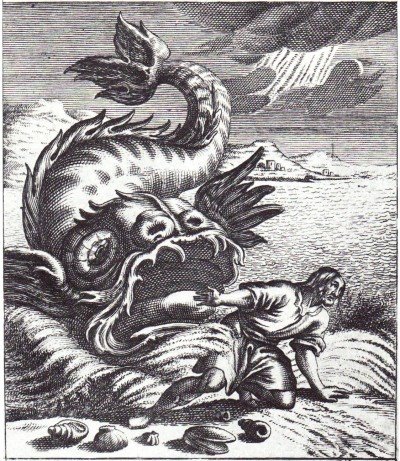
Image from HERE.

Hell Preview 3 – Tempests, Bakeries and Sad Ogres

6.40. Tempest: This hex is situated between an icy and steamy tunnel. These air currents create swirling, damp winds that smell of salts. The tempest prevents flying and increases the chance of surprise to 1-3 on 1d6. Near the center of the cavern there is a virtual forest of copper poles, some up to 1 foot in diameter and 50 feet in height, that crackle with static electricity.

Dwelling among these poles and feeding on whatever game enters the tempest – but mostly on slimy fungus that gathers on the posts – are hook beasts. These weird creatures look something like bipedal, hulking, wingless turkeys with large hooks – something like the claws of a sloth – in place of hands. Encounters with them occur on a roll of 1-4 on 1d6 in this hex. Inside their gizzards one might find thunderstones – small rocks that, when slammed against a hard surface erupt in a thunderous noise that causes deafness (save to avoid) and stuns people within 30 feet for 1 round.

HOOK BEAST: HD 6; AC 3 [16]; Atk 2 hooks (1d6); Move 12; Save 11; CL/XP 6/400; Special: None.

8.32. Bakery: A family of ten ubues dwells here in a deep cave. The smell of burning coal is in evidence as people approach, the smell coming from a large fire pit kept ever ablaze before the entrance to their cave. The ubue run their lair as a road-house. They provide a pallet of furs, a pungent blood wine and thick pasties made out of what-ever meat happens to turn up – usually dire corbies and bats. Any group that passes by is informed that the ubue claim the right to cull one of their animals or members for their pantry. The ubue have a treasure of 250 sp, 340 ep, 190 gp and a coral oil lamp (100 gp). A night’s stay in their cave costs 5 gp per person.

UBUE: HD 3; AC 2 [17]; Atk 3 clubs (1d8) or 3 strikes (1d6); Move 9; Save 14; CL/XP 3/60; Special: Multiple personalities.

11.26. Sorrowful Ogres: A band of thirty ogres has made camp here. Mercenaries, they were recently defeated by a large force of duergar and are now nursing their wounds. Their commander, a bull-necked lout called Dagum, has be driven round the bend by this defeat. He has become even more violent and erratic than normal for an ogre, and the others seek a cure – for they know he cannot easily be defeated by them.

DAGUM, DEMON OGRE: HD 10 (48 hp); AC 2 [17]; Atk 2 claws (1d10); Move 15; Save 6 (3 vs. mind effects); CL/XP xxx; Special: Resistance to acid, cold, fire and electricity (50%).

The Wages of Sin

About a copper a soul, actually.

In putting together a hex crawl of Hell, I decided to work off of a swords & planet model – rings of hell with weird-but-recognizable landscapes inhabited by strongholds, cities, dungeons, monster lairs, etc. Generally, I prefer to let D-n-D (or S-n-W) be what it is – a game about exploration with treasure as one of its primary objectives. Given that notion and the high power level one must find in Hell to make it a challenge for high level parties, it was a given that there was going to be a LOT of treasure in the Underworld.

In some ways, this makes sense. Gold, silver, gems, etc. are dug out of the ground, and the ancients sometimes combined their deities of the underworld and wealth for this reason. But on the other hand, it seems a bit silly. Why does Orcus need gold pieces? Or, more to the point, why does Orcus value gold pieces? Okay, maybe because money is power, but in the case of demon lords, hit dice and spell-like abilities are also power.

So, I wanted to set up an alternate economy for Hell based on souls and the value therein … but I also wanted a Hell that could be navigated and enjoyed by treasure-hungry PCs. What to do? Well, I decided to combine the concepts.

The demon lords want souls, and since Nod’s version of Hell is at least vaguely based on medieval notions of the architecture of Creation, I would assume that they would value different souls the way mortals value different autographs. In other words, the soul of Julius Caesar is worth more in Hell than the soul of Jack the Plowboy.

Inspired by the concept of souls paying a copper to Charon for passage into Hell, I decided that souls that pass into Nod’s Hell also bring a coin of commensurate value to their position in society at death. This coin eventually finds its way into the hands of the various demon lords and their minions and serves as a means of trade within Hell. To some degree, if you own the coin, you own the soul, and collecting golds and coppers would be a major pursuit of demon lords.

Each coin in Hell is impressed with the image its linked soul possessed in life – thus, if a PC comes across a coin in Hell with his mother’s portrait on it, he knows that her soul passed through this dark realm after death. In general, the coinage of Hell is linked to souls as follows:

Copper = Common souls like normal folk and men-at-arms
Silver = The most skilled, handsome or manipulative of common folk, including most chaotic PC’s who fall short of “the end game” of fiefs and strongholds
Electrum = Commoners raised into the lesser nobility or minor clergy
Gold = Nobles and high functionaries of the clergy
Platinum = Royals, Emperors, Patriarchs and High Priests

At one point I had thought about renaming the coins, but finally decided against it just in terms of the annoyance of record keeping. A gold piece is a gold piece, after all, to a merchant in Nomo. On the other hand, these coins did need be a little different from normal coinage to be interesting. Thus …

1. Hellcoins cannot be melted down by anything less than the breath of an ancient red dragon or the churning fires of a volcano. Once melted down, they are fit for forging into magic weapons, but always implant a secret curse in these items.

2. Hellcoins are unlucky to those who hold them. Quantity doesn’t matter – any Hellcoin in one’s pocket gives them a -1 penalty to saving throws and enhances by a small amount “wandering misfortunes” like having a commode emptied on them or having the target of one’s insults and jests turn out to be standing behind them, etc.

3. The holder of a Hellcoin can use it as a focus for speaking with its linked soul per the speak with dead spell.

4. Finally, a Hellcoin can be placed in the body of its’ soul’s previous owner and animate that body as a loyal, though sentient, zombie.

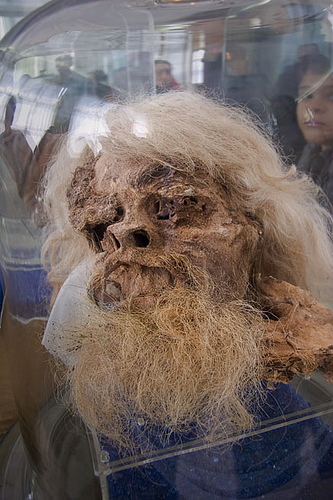
Image from Wikimedia Commons.