A Stroll Through the Virgin Woode – Sun Gods, Fort Adventure, Giant City and the White Tower

A few more previews of the Virgin Woode

0848. Ancient Idol | Dungeon
An ancient idol of Asur, the sun god of the ancient elves, stands here, half-toppled and overgrown with creepers that bear large, violet blooms. The statue has been damaged and defaced, the gold leaf stripped from it, the small, bench-like altar that stood before it cracked in half.

The blooms that grow around the idol put off a sweet-smelling odor, and in the presence of warm bodies release a pollen that intoxicated (Fortitude save vs. poison or fatigued).

The base of the idol, if one can get to it through the underbrush and creepers, holds a secret compartment accessed by speaking the high holy words (Klaatu Barada Nikto) or with a prying device, holds a large garnet that provides proof against illusions. If a person holds the stone in his or her mouth (don’t swallow it), they are immune to illusions, including invisibility. Fighting or doing other rough work while holding the stone in one’s mouth carries with it a chance of accidentally swallowing it (Reflex save, attempted once per minute). If swallowed, the stone causes nausea for 1d4 hours, and piercing pains in the gut as it is passed over the course of a few days.
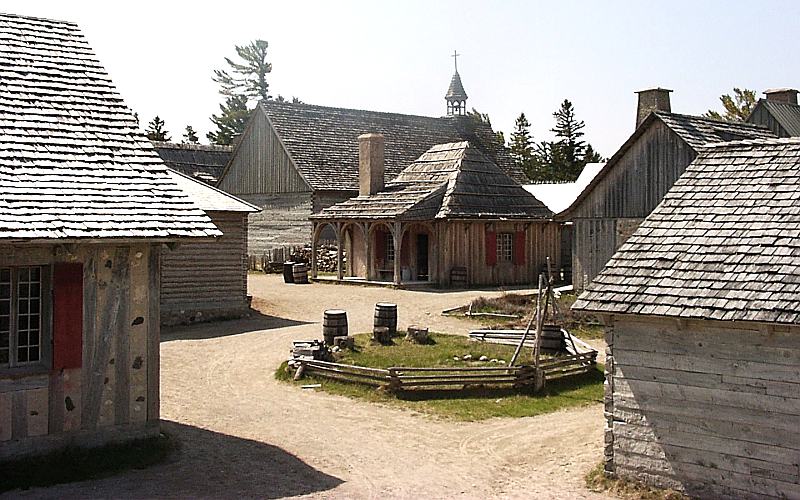
Image found HERE

1118. Fort Adventure | Stronghold
A fighting-woman of Salem colony, Hepzibah Stanis, has established a fort in this hex as an early defense of the colony and as a base of operation for pilgrim adventurers. The fort consists of a wooden palisade around several log buildings, barracks for the fort’s 20 pikemen, 16 longbowmen, 10 cuirassiers and 10 rangers, a home for Hepzibah and a small shrine to Diana tended by Elder Druthy Avanulf. A second druid, Elder Wandla Narlis once served here, but he was dishonest and greedy, and now dwells with brigands in the woods, consorting with demons. Hepzibah is gathering soldiers to route the brigands and bring the surrounding skraeling clans to heel.

1142. Skagarak | City-State
Skagarak is a large city of cyclopean architecture nestled in the wooded hills and surrounded by fields plowed by mammoth and mines dug by enslaved kobolds. The city is inhabited by 2,000 stone giants with shocking red hair and prominent jaws. The stone giants of Skagarak are rooted in the paleolithic, and claim to have dwelled in these hills since before the arrival of the ancient elves. Their city consists of great stone lodges inhabited by up to a dozen families bound together as a clan, walls 70 feet in height and buttressed by five great towers, a temple dedicated to mighty Atlas, and a splendid palace inhabited by their king, Tsul’kalu, and his royal clan. The streets are narrow and twisty, and the walls are surrounded by a a dry moat 20 feet deep.

The stone giants claim this hex as well as the hexes around it, using them to grow their crops and quarrying various stones (mostly granite and flint) and precious stones. They are not hostile to the wild elves, but care nor for their company, nor the company of the newly arrives humans.

1204. White Tower | Dungeon
The white tower is an example of an ancient elven ruin that the player’s might discover. It is a tall structure of white marble rising out of the woods. Inside the tower there is a golden stair leading to a chamber at the top of the tower. An antipathy spell has been cast on this chamber. The floor is littered with several uncut green garnets (5 gp each).

Each garnet confers on its possessor a single druid spell of 1st to 3rd level (roll randomly) that can be cast at the cost of 1d4 hit points. A creature must concentrate to cast this spell, and will only notice the hit point loss with a successful Will save.
Creatures killed by casting spells with these garnets will rise one day later as spectres that appear as glowing white skeletons with green garnets for eyes. The newly risen spectre will seek out the tower and reside in its walls.

Each garnet a creature steals from the tower will be pursued by a spectre. The spectres will appear each night in the thief’s dreams, chasing them through the dark woods toward the tower.

The dreamer will always awaken just as they reach the tower door and just as the glowing spectre is about to place its hand on their shoulder. Each night that they have this dream, they must pass a Will saving throw. If ever they fail, the spectre will be waiting for them in the waking world and it will immediately attack them. If killed, the unlucky thief will be found with all the color drained from their bodies and their eyes missing. The unfortunate will rise as a spectre as detailed above.

Last of the Mohicans [Quick Review]

I’m on a reading kick lately, specifically delving into about 100 classic books I’ve recently downloaded onto my Kindle from Project Gutenberg. A couple days ago I finished reading James Fenimore Cooper’s Last of the Mohicans – I thought it was a good choice given the fact that I’m writing a colonial North America-themed hex crawl at the moment.

For a book written in 1826, Last of the Mohicans is pretty accessible to the modern reader. Many books of that era make long, wide detours away from the story to touch on matters of history, geography, etc. This isn’t a bad thing in-an-of itself, but it can distract from the matter at hand. Last of the Mohicans stays the course, telling the tale of the white scout Hawkeye (Nathaniel Bumppo) and the Mohicans, Uncas and Chingachgook, as they endeavor first to deliver Cora and Alice, daughters of Col. Munro, and their companions, Major Heyward and the psalmodist David through the wilderness to safety. Ultimately, they fail at this, and must free them from the clutches of the Hurons and their chief, Magua.

Last of the Mohicans is a rousing tale worth reading. For gamers, it’s a good study on the way a wilderness campaign might be conducted. As I read the book, I also got the distinct feeling that it was a major inspiration on Tolkien’s Lord of the Rings. I’m no Tolkien scholar, so I might be completely wrong on this one, but the use of language, the singing of songs, the overall feel of the flight through the wilderness all reminded me of the Fellowship of the Ring. I do know that Tolkien’s rangers were inspired by the real life ranger of North America, so I suppose it’s possible that the professor was a fan of the book.

So – your assignment before tramping through the Virgin Woode is to delve into Cooper’s Last of the Mohicans: A Narrative of 1757.

Click here for Project Gutenberg’s copy

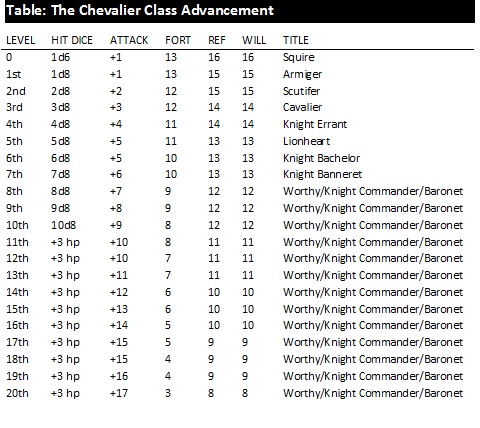
The Chevalier

Whether knights in shining armor or blackguards, chevaliers are the mailed fist of the feudal order, serving their suzerain in war and peace. At the heart of a chevalier’s pride (or arrogance), is his coat of arms, a symbol of his puissance at arms and place in the great chain of being. From a chevalier’s armorial, he draws powers beyond the simple hack and slash of the average fighter.

The chevalier is a sub-class of fighter who gains special abilities from the invocation of his coat of arms, in particular from his the tincture of the field (or main tincture of the field, since some are divided) and from the charge.

Requirements

Strength of 9 or higher and Charisma of 13 or higher. A character that does not have a Charisma of 13 or higher can still enter the chevalier class, but does so as a 0-level character called a squire (see below)

Armor Allowed

Any armor except padded, leather, studded, ring (i.e. scale or better), and bucklers and shields

Weapons Allowed

All weapons

Skills

Riding

XP Requirements

As fighter

Special Abilities

Before we cover the special abilities of a chevalier, we must address the concept of a 0-level chevalier, the squire. Some men are not born as wealthy or well-connected as others, yet they still have the drive to become knights. These poor souls (i.e. folks with low charisma) can still enter the service of a suzerain, holding the rank of “squire”.

A squire earns experience points just as any other character, but can only spend them to increase his or her charisma. One point of charisma can be purchased by the squire for 200 XP. When the squire achieves a charisma of 13, he or she becomes a 1st level chevalier and their experience points are reset to 0.

The first step to becoming a chevalier is to draw up a coat of arms. A perusal of the internet can assist in this, and your Treasure Keeper can make sure you haven’t copied the arms of an existing NPC or PC in the game world. The tincture and charge of a chevalier’s arms determine their special abilities, so read the entire description of the class before designing your arms.

A 1st level chevalier (armiger) can invoke their tincture once per day. The special ability associated with the tincture lasts for one hour. If a chevalier has more than one tincture on his arms (i.e. he has divisions), they must choose which tincture is their “main tincture” at 1st level. At 5th level, the chevalier can invoke their tincture three times per day.

Argent (Silver/White): The chevalier gains use of feat Fast.
Azure (Blue): The chevalier gains the use of the feat Expertise.
Ermine/Vair (Furs): The chevalier gains the use of the feat Alertness.
Gules (Red): The chevalier gains the use of the feat Power Attack.
Or (Gold/Yellow): The chevalier gains the use of the feat Iron Will.
Purpure (Purple): The chevalier gains the use of the feat Great Fortitude.
Sable (Black): The chevalier gains the Trickery skill.
Vert (Green): The chevalier gains the Tracking skill.

A 3rd level chevalier (cavalier) can invoke the charge on his coat of arms to gain a special attack or defense, most of them the equivalent of a spell. A 3rd level chevalier can invoke his charge once per day. A 10th level chevalier can invoke his charge three times per day.

Angel: Cure serious wounds (per the spell)
Arm: Strength (per the spell)
Bear: Chevalier can grapple (as though he has the Improved Grapple feat) for 1d8 points of damage
Bee: Chevalier can summon a giant bee (per summon monster IV)
Boar: Chevalier can continue to fight for 1d6 rounds after reaching 0 hit points, as a boar
Bull: Forceful hand (as the spell, though the attack bonus is only +8)
Castle: Stoneskin (per the spell)
Cross: Holy smite (per the spell)
Deer: Haste (per the spell)
Devil: Inflict serious wounds (per the spell)
Dolphin: Chevalier can swim at a speed of 80, as a dolphin, even when armored
Dragon: The dragon charge on his shield releases a breath weapon in a 15-ft. cone that deals 3d6 points of damage of an energy type associated with the color of the chevalier’s dragon charge
Eagle: Fly (per the spell)
Estoile/Mullet: Psionic blast (per the spell)
Fleur-de-lis: Magic vestment (per the spell)
Fox: Charm monster (per the spell)
Griffin: Magic circle against evil (per the spell)
Harp: Fascinate as a bard of the chevalier’s level
Harpy: Can captivate per the special attack of the harpy
Heart: Immune to fear
Leopard: Invisibility (per the spell)
Lion: Heroism (per the spell)
Mermaid: Water breathing (per the spell), and can swim without penalty in armor
Owl: Dispel magic (per the spell)
Phoenix: Continual flame (per the spell)
Raven: Deeper darkness (per the spell)
Rose: Suggestion (per the spell)
Salamander: Protection from energy (fire) (per the spell)
Serpent: Sticks to snakes (per the spell)
Sphinx: Confusion (per the spell)
Spur: Phantom steed (per the spell)
Sun: Searing light (per the spell)
Sword/Axe: Keen edge on a weapon of the same general type as the charge (per the spell)
Tree: Barkskin (per the spell)
Wolf: Chevalier can summon 1d4 wolves (per summon monster IV)
Wyvern: Poison (per the spell)

A 4th level chevalier (knight errant) can inspire courage in his henchmen and retainers, giving them a +2 bonus to save vs. fear effects as long as they are within the sound of his voice.

An 8th level chevalier (worthy) earns the right to build a castle and either start an order of chivalry (becoming a “knight commander”) or swear fealty to a royal personage (becoming a “baronet”). A chevalier with a castle attracts 1d6 men-at-arms per level, 1d6 first level chevaliers who wish to train under him and one 3rd level chevalier to serve as his castellan. These chevaliers should be generated as characters under control of the player.

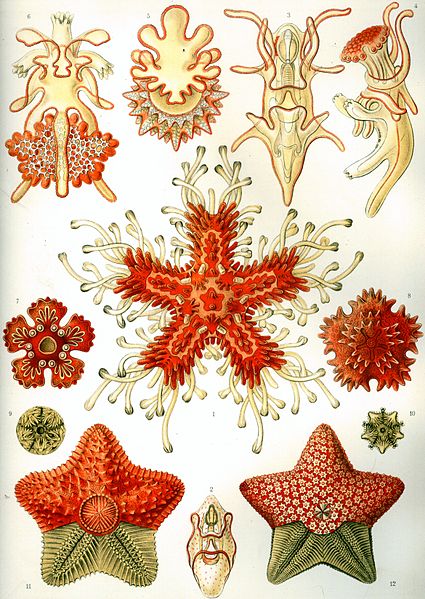
Star Fish from Outer Space – The Asterions

I promised stats (well, I promised to have them yesterday, so bad on me) for these ladies and gents, so here they are!

Star Mother
Huge Aberration, Neutral, Average Intelligence; Solitary

HD 12
AC 16
ATK 2 slams (2d6 + poison II)
MV 20, Climb 20
SV F 6, R 9, W 7
XP 1200 (CL 13)

Star mothers are huge, 5-armed starfish-like creatures. They are capable of planeshifting once per week, and use this ability to invade new domains. A star mother is surrounded by a 60-ft. radius aura that has the same effect as the eyebite spell.

Special Qualities: Magic resistance 25%

Starling
Tiny Aberration, Neutral, Average Intelligence; Clutch (2d6)

HD 0
AC 14
ATK 1 bite (1 + poison I)
MV 10, Climb 10, Fly 40
SV F 19, R 16, W 13
XP 50 (CL 1)

Starlings are the tiny offspring of the star mother. They look like 5-armed starfish with transparent flesh (acts as natural improved invisibility). They rarely enter combat, preferring instead to sneak up on victims while they are sleeping. They then attach themselves to a spot just beneath the base of the neck, and easily hidden by clothing, and use their magical powers to dominate their victims (per dominate person as a 6th level spellcaster). The dominate ability requires the monster to be in contact with its target.

Star Warrior
Medium Aberration, Neutral, Average Intelligence; Gang (1d8)

HD 4
AC 15
ATK 2 slams (1d4 + poison II) and bite (1d6)
MV 20, Climb 20
SV F 14, R 14, W 11
XP 400 (CL 5)

The star warriors are the 7-armed rank and file of the asterion armies, bred from humanoids that have been altered by the weird chemistries of the starlings. Each star warrior has a large, central eye that can, once per day, emit a ray 120 feet in length (Reflex save to avoid). The eye’s color corresponds to the type of ray, which you can roll randomly for each gang of star warriors:

1. Color spray (as the spell) – golden-brown eye
2. Energy missile – cold (as the spell) – violet eye
3. Hold person (as the spell) – emerald green eye
4. Magic missile (as the spell, 1 missile) – icy blue eye
5. Sleep (as the spell, 1 target) – deep maroon eye
6. Slow (as the spell) – vibrant crimson eye

Star Lord
Large Aberration, Neutral, High Intelligence; Command (1d4)

HD 8
AC 16
ATK 2 slams (1d6 + poison II) and bite (1d8)
MV 20, Climb 20
SV F 10, R 11, W 8
XP 800 (CL 9)

Star lords are 11-armed asterions who serve as the commanders of the star warriors. Their multifaceted central eyes can fire off all the various rays common to the star warriors, each once per day. They can levitate at will.

Special Qualities: Magic resistance 15%, levitation

The Star Lords

The cosmos of Nod hides many dangers, none greater than the Star Lords, a race of star-shaped creatures who roam from planet to planet in search of slaves and survival. The Star Lords, or Astarions, have no conception of danger, and thus fear nothing. It is said they once attempted to conquer Hell, seeing its demons and devils as no more fearsome than one might a peasant or fat merchant.

Of the astarions, there are four sorts which share a deep kinship and which always work in concert to achieve their aims. When they enter a new dimension, the first to be seen is the Star Mother. Her brood, the Starlings, soon appear and carry out their purpose of conquering the minds of whatever creature calls the dimension home. Some of these starlings manage to pervert the chemistries of their hosts, turning them into the dread Star Warriors, and a few of these Star Warriors manage to morph into the dreaded Star Lords, who rule dimensions until they are drained of resources.

[I’m putting this material down before I forget it – expect stats in the next post]

Star Mothers
A star mother is a huge being that looks like a massive sea star, with black, coarse flesh and a pink underbelly. It lies, splayed out in a cool cavern, it’s great bulging eye atop its body, its legs flexed that it might deposit hundreds of small, translucent eggs on the ground. These eggs hatch in a few days, producing starlings. Star mothers are powerful combatants due to their size and flexibility.

Starlings
Starlings are tiny creatures that resemble transparent sea stars. They are, of course, quite sneaky and stealthy, and it is their purpose to leave their mother’s nest and seek out sentient beings. Waiting until they sleep (usually), they attach themselves to their chosen victim’s back, at the base of their neck. From this point, they use their powers to bend the person to their will, pressing them to visit the cave, gather other starlings, and distribute them among other folk, especially folk known to be powerful, influential or capable of entering places in secret (i.e. thieves and assassins).

Star Warriors
About 1 in 6 starlings is capable of slowly changing their hosts into star warriors. Star warriors are medium-sized creatures that appear as sea stars with coral flesh and large eyes in their center. These eyes are various colors, each corresponding to a different type of ray which the monster can use a limited number of times per day. Star warriors are covered in a sort of chitin, and they are capable of flight.

Star Lord
A rare star warrior is destined to grow to large size. Its flesh becomes a deep crimson, and its eye becomes multifaceted, allowing it to use a variety of rays. Star Lords are the rulers of their people, and gain mental control over any humanoid controlled by one of its brother starlings. Star lords command their slaves (whether controlled or merely cowed) to offer up all manner of resources, ceasing the raising of new crops or mining of new materials, and instead directing all effort towards the aggrandizement of the Astarions. When the resources are depleted, the Astarions move on, their star mother shifting into a new dimension / planet / world while its old children simply cease to be, drying into dust and blowing away.

An (Un-) Common Dungeon

A little experiment tonight – I’m going to work up the skeleton of an adventure using the “random file” function at Wikimedia Commons. Now, you can’t do anything with some of these random files, so I’m going to take every single one in turn, but I’ll do my best with most of them to fit them into the scheme of the thing.

STEP ONE – LOCATION
Every good dungeon needs an entrance. My first image is actually a cheat – I’m using the picture of the day, the Temple of the God Wind in a Mayan ruin.

There’s the entrance to our adventure site – a ruined temple. Even though “God Wind” sounds like it has something to do with divine flatulence, we’ll assume we’re talking about a wind deity. Let’s work out some wandering monsters:

1. Wind Priests – half-naked blokes with censors of poisoned gas (sleep gas; they’re immune) and light maces

2. Small Air Elemental

3. Fusillade of poisoned darts (save vs. paralysis)

4. Giant Constrictor (wandered into the place from the jungle)

5. Pirates (exploring the ruin; their ship is anchored off the coast)

6. Albino Apes (just because they have a place in any ruined temple)

STEP TWO – THE BIG BAD GUY
Since I’m thinking more in terms of a short adventure than a mega-dungeon, it’s nice to have some monster or NPC sitting on top of the food chain. Not only is he/she/it the ultimate challenge of the place, knowing their identity in advance let’s you weave their presence throughout the place.

My random file – Barack Obama. I’d love to expand on this, but I like to keep politics out of this site, so I’ll try again. The next file is EZ Tondo – some sort of German store I suppose. The image doesn’t help, but how about an exiled Teutonic Knight who dabbled in black magic and has now taken up residence in the bowels of this pagan temple, adopting the identity of Tondo, Son of the God Wind, and cowing the locals into serving him.

Tondo will be a 4th level fighter and 6th level anti-cleric (dual-classing, dontcha know), and always accompanied by four of the aforementioned wind priests (2 HD each).

STEP THREE – THE MACGUFFIN
Now we need a reason for the adventurers to delve in the place, beyond simple loot. I get “Cathagenian ruins in Tunisia”, which brings Hannibal to mind, of course, and elephants, and thus a figurine of wondrous power, a pretty spiffy relic to delve for.

STEP FOUR – THE FIRST GREAT CHALLENGE
Just within the entrance, we need some wondrous challenge to whet the players’ appetites. I randomly get an image of an altar in a church. Our first great challenge, then, is a trapped altar dedicated to the God Wind. Maybe it looks like a pipe organ. You have to play the proper tune to open the doors into the dungeon, with each mistake summoning a monster or bolt of lightning or gust of razor-wind – something like that. The notes are secreted within a bas-relief of a gaggle of sylphs with open mouths, as though singing or shrieking, the mouths being at different heights and thus corresponding to musical notes. No, the ancient Mayans did not use this sort of musical notation, but since the players probably are not ancient Mayans, the concept works for them.

STEP FIVE – GUARDIAN OF THE FIRST LEVEL
We need a good (or evil) guardian of the first level – a monster or trap who keeps people from getting to the lower level, where the MacGuffin and Big Bad Guy are hiding. I get this …

Honestly, I have no idea. But it does give me some inspiration – I’m picturing a person grabbed by legs and arms and pulled in a most inconvenient way. But how?

Perhaps a well lined with hundreds of manacles embedded in the walls. The way to descend would be to either climb down a rope or climb down using the manacles as hand- and footholds. Naturally, the things are animated, and at some point attempt to clamp down on people’s wrists and ankles (Reflex save to avoid). Maybe they then pull the person, or maybe they just hold them while some winged goblins fly up from the darkness and attack. Either way, it would make for an interesting and challenging combat.

STEP SIX – THE BIG MYSTERY

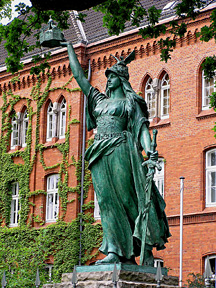
We need a mystery on the lower level to keep the player’s guessing. I now get the image of a statue holding a sword and a torch or oil lamp of some kind. This we’ll place in a circular room at the meeting of four passages. The passages lead to outer portions of the lower level – your basic rooms with monsters and traps and scant treasure. By lighting the statue’s lamp, though, and rotating it so that the light falls on bare walls in the rotunda, it also reveals extra-dimensional passages to four sub-levels, each dangerous. Once one walks through one of these openings, they see a wall behind them, so escaping from the sub-levels will be one of the challenges of the dungeon. One of the sub-levels hides a tiger’s eye gemstone that, when affixed to one of the the statue’s eye sockets (the empty one), animates it. It retains its perch and fights like a devil, but if defeated, the pedestal it stands on fades away, revealing a spiral stair that leads to the inner sanctum of Tondo.

So, six images gives us the framework for a (hopefully) entertaining dungeon. We would now need to draw up the levels and sub-levels and stock the chambers with monsters, traps and treasure. Remember, random isn’t just good in a game, it’s also good for creating a game – random inspirations to set your little grey cells to firing and creating things even you could never have known were lurking in you campaign world.

Humans in the Virgin Woode

Today, I thought I’d throw out some of my notions on the colonists who are settling in the Virgin Woode. I like, if possible, to relate things back to classic D&D tropes and concepts – in the vein of “D&D is always right” – and thus pair a bit of historic fact or fancy with the reality suggested by the rules. Recently, I’ve been reading Albion’s Seed: Four British Folkways in America to get some ideas, and it’s certainly been a great help. Currently, the three main groups of colonists are the Pilgrims, Cavaliers and Traders, with a sub-group of Agitators.

The Traders: You’ll recall “trader” as a monster type in Basic D&D (or Expert – one of them). Here, it refers to venturers (a’ la the class I worked up in an early issue of NOD), rangers and their ilk who settled the Dweomer Bay seeking riches in the Virgin Woode. The “traders” are made up of folks from Antigoon (i.e. Holland), Tremayne (i.e. Elizabethan England), Lyonesse (medieval France), Blackpoort (Dickensian London) and, well, just about anywhere there are men and women who want it all and want it now. The patron deity of Dweomer Bay is Atlas, the “god of exploration”, who has a pretty level-headed and casual cult in the city. The other gods and goddesses of the Motherlands pantheon are here as well, of course. I want Dweomer Bay to be a sort of melting pot of alignments, nationalities, classes, races, etc – like a D&D tavern writ large. Ultimately, an easy place to start a band of adventurers out. A peg-legged old fighting-man will probably serve as the city-state’s elected prince.

The Pilgrims: Inspired by the “monster” in the AD&D Monster Manual, the pilgrims in this case refer to religious exiles from Tremayne. Tremayne is ruled by the Faerie Queen, Gloriana, and has as its patron deity Diana. I wanted Tremayne to have a druidic religion that was very formal and, well, “Church of England”, I suppose. The pilgrims are the religious folks who want a return to the more “primitive church”, and they’ve settled to the north of Dweomer Bay in a town called Trinity after the notion of the triple goddess. For all intents and purposes, these folks are pagan puritans, witches who hunt clerics (and demons and such – hey, even if you’re neutral, you know that Chaotic Evil represents more of a threat than Lawful Good). They dress like the puritans in russets, browns and other “sadd” colors, wear steeple hats, venerate their elders – the big change being that these pilgrims are ruled by their women rather than men.

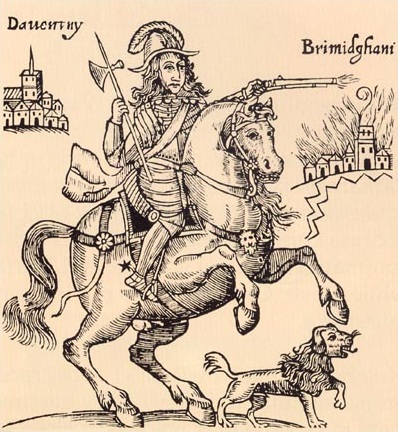
The Cavaliers: Inspired by the name of the class from Unearthed Arcana and by the identity of the Anglican settlers of Virginia and the Chesapeake, the cavaliers are dandies and monarchists loyal to Gloriana that are seeking to recreate Camelot in the Virgin Woode. Their names are based on the knights of Arthurian romance and the Faerie Queen and they adhere pretty closely to the feudal concept so common in fantasy games. Like the real cavalier settlers of North America, they speak with a drawl (which originates in SW England – the Southerners of America didn’t make it up) and are all about gallantry, nobility, power, lust and a love of gambling.

The Agitators: The agitators are the Son of Liberty in Dweomer Bay, determined to found a true republic and cast off the chains of monarchy. They’re devout worshipers of William Blake’s pantheon, especially of the Sons of Los, the gods of revolution. They’ve founded their own version of Penn’s Philadelphia, called Golgonooza. They’re recruiting an army and plan to cause trouble!

A Stroll Through the Virgin Woode – Oil Slicks, Swamp Apes, Burial Mounds and Fountains

0418. Oil Slick | Trap
A portion of the woods here is covered in an oil slick. The slick covers about three acres; only thick, rugged grasses grow from beneath the slick, making the area it has blighted look like some sort of a unwholesome meadow. Those who touch the oil with their bare skin must pass a Fortitude save or be affected by a random magic oil.

0527. Skunk Ape | Monster Lair
The remains of a walled city can be found in the swamp here. The ruins consist of nothing but crumbled walls and a few towers covered with slimes, verdigris or other forms of corruption. The ruins are haunted by an especially fierce skunk ape, who brooks no intrusions on his domain, and who is clever enough to pick off intruders one at a time. A flooded vault in the ruins holds a +2 scimitar that can slice through air. This has the effect of dealing double damage on gaseous and air elemental creatures, as well as allowing one to create small sonic booms by making a special attack against an Armor Class of 20.

0624. Burial Mound | Monster Lair
An ancient skraeling burial mound can be found here. The mound is about 200 feet in diameter and 22 feet tall. One side of the hill hides an entance veiled in illusion. Beyond this entrance there is a 80-ft. long passage lined by megaliths. At the end of this passage there is a teardrop-shaped shield painted a brilliant sapphire blue. This +1 shield is Lawful (CG) in alignment, and if touched by a member of any other alignment, sparks and causes 1d6 points of electricity damage (per round, if one keeps ahold of it).

The shield is actually a door of sorts, a small passage being hidden behind it. The shield is wizard locked to the wall (by a 10th level magic-user). Beyond the shield and the small hole in the wall, there is a narrow set of stairs that lead downward through a brackish, powerful wind. At the bottom of the stairs (about 400 feet long, and sensitive folk might get the feeling they’re “not in Kansas anymore”) there is a crimson sea stretching out into a black expanse. Beyond the sea (how one crosses it is up to the players – perhaps canoes would work) there is a grey shore, a long strand of beach behind which there is a noisome jungle of scarlet foliage. A treasure has been buried on this beach by pirates of this strange dimension, a treasure of two golden tablets containing the location of the tomb of the Thief of Dreams.

What monsters might dwell in this dimension, other than the pirates, is up to the TK – have fun and use it as a chance to surprise the players and introduce some new menaces.

0716. Empty Fountain | Curiosity
A clearing in the woods here holds an empty fountain made of red granite and topped with a coiled dragon made of tarnished copper. The dragon’s head is held aloft, such that one would assume that the water of the fountain would emerge from its snout. The pipe in the snout from which the water would emerge is currently blocked by the handle of a +1 light mace.

The fountain is guarded by an astral deva called Morviel, placed here at the behest of a wizard of the ancient elves to keep the curious or wicked away from this Fountain of Holocausts. Should the magic mace be removed, the fountain would explode in a gout of blazing flame, one that would send white hot cinders flying through the air to land in the woods beyond.

Anyone within 30 feet of the fountain, if active, would suffer 3d6 points of fire damage per round. Beyond 30 feet, and up to 1 mile, one suffers 1d6 points of damage per round. Naturally, within a short time the woods will be burning, causing other problems.

How to Make a New Class – The Land of Nod Way

I got an email recently asking about whether I used a formula of some sort when creating a new class. I figured the answer might make a good (and easy) post for the blog, so my process is as follows:

1) I read something and think that a particular character would make a good class. I usually look for something from classic fantasy literature, folklore or fairy tales, and a character type which spans a few different sources, even though one in particular might be the original or best known (i.e. there are lots of barbarians in fantasy stories, but Conan is the best known).

It’s quite fun and old school appropriate to base a character class on a particular character from fantasy, including adding in quirks about that character – i.e. the AD&D ranger being able to specifically use crystal balls because Aragorn could use a palantir. If you want to do a “mystic knight” class, go ahead and make it the Luke Skywalker class and include a whining ability – inside jokes like that are integral to the origins of the hobby.

2) I come up with level titles. Seems weird to do that second, but if I can’t come up with eight or nine synonyms for the class, it probably isn’t based on a broad enough concept.

3) I think up one or two specific abilities that not only fit the character, but which set it apart from existing classes. I try not to just make a new class with a mix of abilities from older classes, though sometimes an existing ability is appropriate.

4) I next look for a similar existing class and use it as my base in terms of attack bonus, save bonuses, etc. I throw in the special abilities and then try to figure out how comparable it is to the existing class in terms of power to help me decide which XP chart to use.

And that’s pretty much it. I try to keep in mind that I’m making up a bit of make believe nonsense for a game – i.e. I don’t take the process to seriously. Have fun. Be a little silly.

By the way – Tanner Yea’s Races of Lore now joins his Heroes of Lore as a download on the Blood & Treasure page.

Mythic Races IV – The Primordials

The primordials are an ancient collection of dinosauroid species native to the jungles of Hybrasil. All are based on a pairing of an Aztec deity with a dinosaur, with a little magic thrown in.

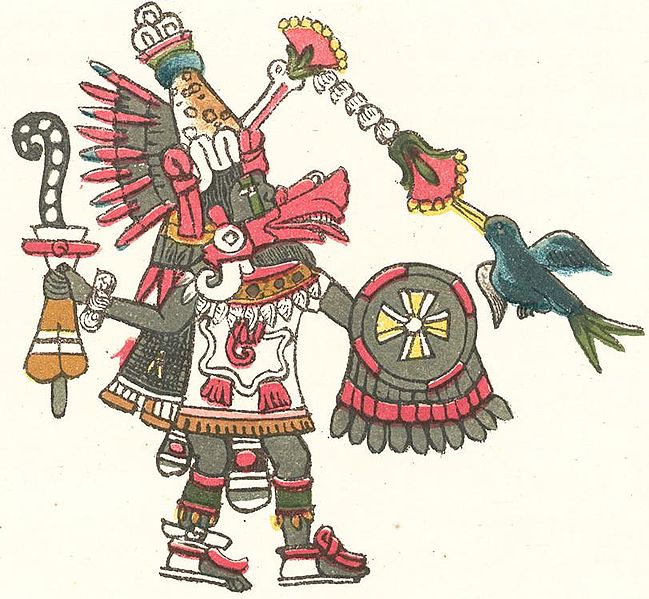
QUETZALS

The quetzal are high-flying, arrogant pteranodons, the size of humans, who consider themselves the natural ruling class of the primordials. The others do not share this belief, but they are often content to ignore the quetzals rather than argue the point. They look like flying reptiles with rainbow-colored plumage. They have thin, long faces and rather impressive azure eyes.

Quetzals are medium creatures with a movement rate of 30 feet per round on land and a fly speed of 30 feet per round. Because their bones are hollow, they count as small creatures in combat, in regards to tactical advantage and their ability to wield weapons. They have darkvision to a range of 60 feet.

Quetzals fragile bodies impose a 2 point penalty to their starting constitution scores, but they enjoy a 1 point bonus to starting intelligence and wisdom. It’s not for nothing that they believe themselves the most fit for leadership among the primordials. These ability modifications cannot increase a score above 18 or reduce it below 3.

Quetzals are as magically inclined as the other primordials. A quetzal with an intelligence of 10 or higher can cast the following spells, each once per day: dancing lights, flare and color spray.

Quetzals speak Common and Primordial. They might also speak Couatl, Dragon, Lizardman, Sylvan, Troglodyte or Celestial.

Quetzals may multi-class as cleric/fighters, cleric/sorcerers and cleric/thieves.

COYOLS
The coyol are fearsome and frightening primordials. They have the appearance of velociraptors with milky white scales and pitch black feathers on their arms and tails. They have toothy grins and unwavering eyes that can bore a hole through a person’s skull (not literally).

Coyols are small creatures with a movement rate of 40 feet per round. They have darkvision to a range of 120 feet. They have a bite attack that deals 1d4 points of damage.

The coyols are like forces of nature, with boundless personalities. Their natural propensity to lead and their constant drive to get what they want gives them a +1 bonus to starting charisma, but this focus on ego also gives them a -1 penalty to starting wisdom. These ability modifications cannot increase a score above 18 or reduce it below 3.

Coyols have magic in their blood, though this magic changes with the phases of the moon. When the moon is waxing and when it is full, a coyol with a charisma of 10 or higher can cast the following spells, each once per day: daze, light and hypnotism. When the moon is waning or new, they can cast darkness once per day.

Coyols speak Common and Primordial. They might also speak Dragon, Kobold, Lizardman, Sylvan, Troglodyte or Fiendish.

Coyols may multi-class as druid/sorcerers, fighter/sorcerers and sorcerer/thieves.

TEZCATS
Tezcats are large primordials, with scaly skin that forms a sort of armor plating on their backs, chests, faces and arms. They have squat legs, thick, armored tails and are almost as wide as they are tall. Their scales are turquoise in color and their faces have the appearance of turquoise skulls. Tezcats are warriors born, and relish taking the front line in any fight.

Tezcats are large creatures with a movement rate of 20 feet per round. They have darkvision to a range of 60 feet and have a knack for breaking down doors. A tlaloc can make a tail attack in combat for 1d4 points of damage. Their armor plating gives them a natural AC 12.

Tezcats are brutes, adding one point to their starting strength score. Their tiny heads and brains, however, don’t lend themselves to brilliance, so they lose one point from their starting intelligence score. These ability modifications cannot increase a score above 18 or reduce it below 3.

Once per day, a tezcat can unleash a deep, long bellow that acts as a gust of wind spell.

Tezcats speak Common and Primordial. They might also speak Dragon, Lizardman, Troglodyte, Troll or Air Elemental

Tezcats may multi-class as cleric/fighters, fighter/sorcerers and fighter/thieves.

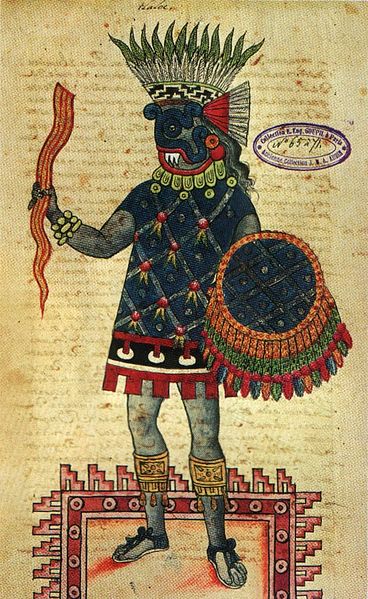
TLALOCS

Tlalocs look like humanoid toads with glistening, bright green hides and needle-like spikes running up their arms and down their backs. They have large, golden eyes that can show an incredible cunning when their owner wishes them to, but otherwise look blank and inscrutable. Two long fangs jut from their thin, crooked lips. Tlalocs stand about as tall as dwarves, though this is partially because of their hunched postures.

Tlalocs are medium creatures with a movement rate of 30 feet per round on land and a swim speed of 20 feet per round. They have darkvision to a range of 60 feet and have a knack for jumping and leaping. Tlalocs can hold their breath for a full minute before needing to breath. A tlaloc can make a bite attack in combat for 1d4 points of damage.

Tlalocs are quick and cunning, adding one point to their starting dexterity score. Their foul personal habits and monstrous appearance gives them a one point penalty to their starting charisma score. These ability modifications cannot increase a score above 18 or reduce it below 3.

As a primordial species, Tlalocs have a natural affinity for and control over water. A tlaloc with a wisdom score of 10 or higher can cast the following spells, each once per day: acid splash, ray of frost and obscuring mist.

Tlalocs speak Common and Primordial. They might also speak Dragon, Fiendish, Lizardman, Mugwump, Troglodyte, or Water Elemental

Tlalocs may multi-class as cleric/thieves, fighter/thieves and sorcerer/thieves.