Knowledge Illuminates – A Review

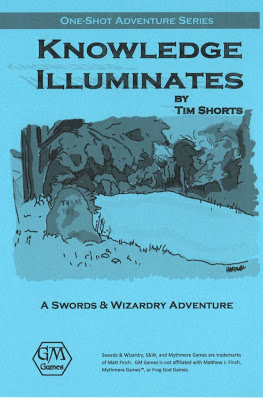
I recently received a copy of Tim Shorts’ new module (yeah, I call them modules) Knowledge Illuminates. Knowledge Illuminates is intended as a one or two session adventure for starting characters (1st level) using the Swords & Wizardry Complete rules. So, what’s it like?

I found it a dandy adventure. It has a wilderness section with interesting encounters and a great map, and an equally enjoyable dungeon component. The encounters made sense, were varied and, best of all, the adventure provides opportunity for moving beyond it. One could even imagine increasing the power of the encounters for a higher level party and using it as the first stage of an adventure that would plunge them into an interesting campaign (I could say more, but I don’t want to dangle any spoilers out there).

Again, the maps are fantastic – clean and easy to read. The art is excellent and provided by Dylan Hartwell of the Digital Orc Blog. The adventure also provides a new undead monster, a new magic item (two, really) and two new spells. It is written with a bit of background in mind, but I think one could easily adapt it to fit their own campaign.

All in all, Knowledge Illuminates definitely gets the Nod seal of approval. Check it out HERE.

Heroes, Everymen and Underdogs – Part 1

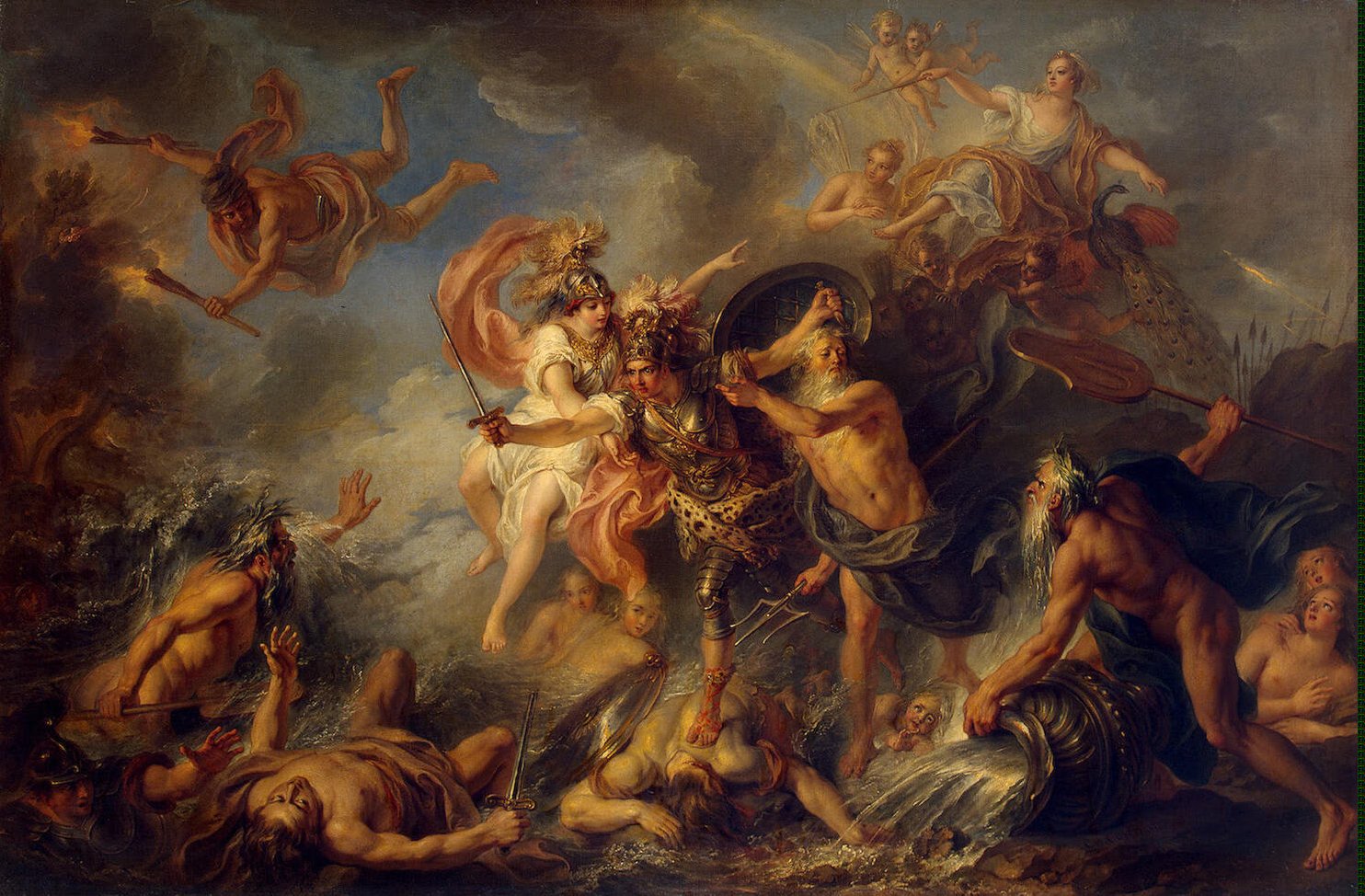
I was listening to a pod-cast today that was discussing the Iliad – a story every gamer geek should probably be familiar with – and an idea struck me.

The Iliad is set in the Age of Heroes (yeah, a TSR, AD&D2E-era book), in which the children of the gods, the heroes, were competing for glory and immortality among mortal beings, and bringing the blessings and the curses of the gods with them. What marked these heroes? Well, if nothing else, their incredible ability scores, to put it in D&D terms. Thus, the idea …

In a campaign that ignores “race” – i.e. and all humans campaign – might it not be fun to divide the characters into broad categories based on their rolled ability scores. Now, this makes the most sense to do if you’re rolling 3d6 (either in order or not doesn’t really matter for our purposes). These categories might go as follows:

Ability Score Total / Category

18-54 / Underdog (and must have at least one score of 6 or lower)

55-77 / Everyman (and may not have any score lower than 8 or higher than 13)

78-108 / Hero (and must have one score of 16 or higher)

Now, what special abilities might go along with these categories? More on that tomorrow.

Virgin Woode – Scrolls, Icy Corpses, Rievers and Tombs

1328. Soul Scrolls | Treasure
A stone totem pole stands in a clearing within a grove of trees. Within the mouth of the dragon atop the pole there is hidden a thick sheaf of scrolls. Each scroll holds a powerful spell (6th to 8th level) as well as the soul of an ancient elf wizard. Thirteen zombies are buried beneath the totem, and wait for somebody to climb it that they may erupt from the ground and climb the pole to attack them. Removing the sheaf of scrolls without first dispelling a magic rune on the dragon’s forehead causes the pole and anyone on it or within 60 feet to shift into a demi-plane of acid.

1528. Ice-Bound Corpse | Dungeon
A small cave in the side of a rocky hill issues forth an icy breeze. Inspecting the cave, one finds about 60 feet back a steep drop off and signs of former exploration – iron spikes hammered into the stone and a bit of dry rope.

At the bottom of the drop off, there is a second tunnel that extends back 100 feet, ending in a block of ice. Encased in the ice is the body of a drow warrior, encased in black armor, face twisted in a rictus of rage. Golden runes of power have been beaten into the surrounding tunnel, forming not only a wall of force effect, but also each acting a glyph of warding (cold). Three humanoid skeletons lie before these runes, tomb robbers killed by the traps.

Behind the block of ice there is a cavern filled with the funerary treasures of the drow, Cairithuic of the Canny Eye. The treasures are guarded by a chlorine elemental. If the body is removed from the ice, it revives in 1d4 hours as a dire wight!

1923. Hazard Station | Village
Two hundred rievers, mostly ex-henchmen who have turned to a life of freedom and larceny on the frontier, dwell here in a small gathering of cabins. The log cabins are scattered in a valley surrounded by wooded hills, each village having its own pigpen and cabin garden. The men and women of the village are surly and unwelcoming to those they do not know. On approach, the village women can be seen working in the gardens or tending the pigs or children, while the men hunt in the woods or relax in front of the cabins, tending their muskets or bows.

2027. Tomb of Sera | Dungeon
The wooded hills are dotted by remnants of the ancient elves, and this hex holds the tomb of a very noble elf, Sera, the father of Partholón, who crossed Mother Ocean in elder days and founded the city-state of Nomo. The tomb is stately and untouched, with walls of moonstone. It is situated on a large platform of moss quartz. The tomb has no discernable entrance. The only entrance is located on the platform, under the earth. One must figure a way to either raise the platform or lower the earth to reach it.

Behind this secret door there is a steep slope covered by a permanent grease spell. The back of the door is studded with spikes. At the top of the ramp there is a simple stone bier, beautifully carved, atop of which rests the body of Sera in state. It shows little decay. The body and tomb are attended by three spirits who served the elf in life – a squire, a courtesan and a jester. The spirits are bound willingly to the lord, and they do their best to protect the body from looters and defilers. They are not evil, and they are not ill-disposed to visitors, so long as they are honorable and well-behaved. The tomb can serve as a safe-haven for adventurers, for the wild elves will not approach it.

The only problem is the pack of ghoul wolves that patrol the woods. They can sense the flesh of a noble elf within the tomb, and are hungry for it.

Musing on the Design of Star Wars

Image found HERE

I just finished listening to some folks talk about Star Wars and its possible future under Disney (main take-away – how can Disney screw it up more than Lucas?). The podcast ended with the tune played by the Cantina band, and that got me thinking about the over 1940’s vibe of the original trilogy, and, more importantly, what I consider the design failure of the second trilogy. Among other problems with the second trilogy, I felt that they missed out on some design cues that might have cemented it into the same universe with the original trilogy.

Star Wars had a significant 1940’s vibe to it – it was very much a recreation of 1940’s sci-fi serials and WW2 movies – with some Akira Kurosawa thrown in for good measure. Okay – the cantina music was more 1920’s, and the 1930’s fills in as well – so maybe we’ll call it a 1920’s to 1940’s vibe. Now, one cannot remove the design of a piece, even a pseudo-period piece, from their own time and place. That makes it an interesting mix of 1920’s-1940’s and late 1970’s design (and boy, can you tell that the second and third movies were designed in the 1980’s). The “seventies meets the past” look was nothing new, really – there was a definite interest in resurrecting the 1920’s through 1940’s look in that era, with a modern twist.

Luke and Leia appear to be about 18 years old or so, so the second trilogy should be taking place about two decades earlier. What I think would have been cool, then, is to make the second trilogy look very 1900’s-1920’s.

I guess what I’m getting down to is this: What might a very “early 20th century” Star Wars have looked like? A very aristocratic Galactic Senate in old fashioned military uniforms – a doughboy vibe to the soldiers and proto-storm troopers – bobbed hair on the ladies – a little more ornamentation on things than was necessary, that transition from the Gilded Age to Moderne – more of an Egyptian style to things – a waxed mustache on Yoda. Perhaps some of these elements were present in the second trilogy.

I don’t know quite what it would look like, but it makes me wish I was an artist so I could explore the look of the thing.

Bring Some Love to Your Dungeon – The Puttis

Dungeons – dank and damp and deadly – killing the spawn that chaos belches into the inner recesses of the earth – retrieving all manner of treasures, sacred and profane – falling deeply in love with a minotaur and betraying your friends on its behalf … wait, what?

PUTTI

Small Outsider, Neutral (CN), High Intelligence; Flutter (1d6)

HD: 3
AC: 16 [+1]
ATK: 1 arrow (1d4 or see below)
MV: 20 (Fly 40)
SV: F12 R11 W10
XP: 300 (CL 4)

Putti are mischevious little bastards, spawn of the gods and goddesses of love, who haunt dungeons looking for opportunities to spread love and trouble. They appear as plump humanoid infants with pink skin and rosy cheeks and small white wings (clearly too small to allow them to fly, yet fly they do).

Putti are armed with short bows and a quiver of 10 arrows. These arrows can be fired as normal shafts, or they can be used to deliver the putti’s spell-like abilities. When used to deliver spells, roll damage (1d4) and apply this as a penalty on the victim’s saving throw.

Spells: 3/day – Calm emotions, charm person, clairaudience/clairvoyance, confusion, light, rage, suggestion; 1/day – Charm monster, command, dimension door, dominate person, dream, ethereal jaunt, irresistible dance.

Special Qualities: Immune to fear, magic resistance (15%)

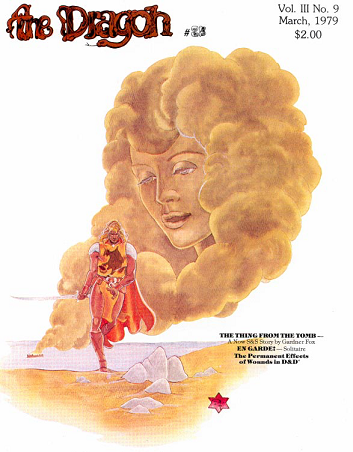
Dragon by Dragon – March 1979 (23)

I haven’t delved into an old Dragon for a while, so I thought tonight was as good a night as any to do a new “Dragon by Dragon”. What does March 1979 have in store for us?

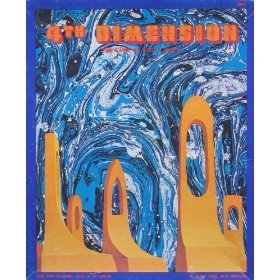
I often like to start with an ad, and this one has a dandy for Fourth Dimension, the game of Time and Space. You get to play a Time Lord in this one, with an army of Guardians, Rangers and Warriors. No dice in this game – all about the strategy.

In terms of articles, the first one up is about playing EN GARDE! (love the days of capitalized game names) as a solitaire game. Folks might find a use in the Critical Hits table.

Die Roll. Result (Damage Points)
1-10. Light Leg Wound (Base 20 + 16-sided die roll)
11-20. Light Left Arm Wound (Base 20 + 16-sided die roll)
21-30. Light Right Arm Wound (Base 20 + 16-sided die roll)
31-40. Light Head Wound (Base 20 + 16-sided die roll)
41-50. Light Body Wound (Base 25 + 16-sided die roll)
51-60. Serious Leg Wound (Base 50 + 120-sided die roll)
61-70. Serious Left Arm Wound (Base 50 + 120-sided die roll)
71-80. Serious Right Arm Wound (Base 50 + 120-sided die roll)
81-90. Serious Head Wound (Base 50 + 120-sided die roll)
91-99. Serious Body Wound (Base 100 + 120-sided die roll)
00. DEAD

Love the 16-sided dice and 120-sided dice – not sure how that was accomplished, though I’m sure a dice whiz can inform us in the comments. If modifying for use in “traditional fantasy games”, you could maybe replace “Base 20 + 16-sided die roll” with 6 + 1d6 or something like that.

Next is some fantasy fiction by Gardner F. Fox – “The Thing from the Tomb”. The first paragraph goes thus …

“Niall of the Far Travels reined in his big grey stallion, lifting his right hand to halt the long column of riders who followed him across this corner of the Baklakanian Desert. In front of him, and far away, he could make out a dark blotch on the golden sands toward which he was
moving.”

Jeff P. Swycaffer presents “Mind Wrestling”, a variation on psionic combat. To be honest, I still regret not throwing in a psionics appendix into Blood & Treasure. The idea here is that two people are attempting to push a cloud of power suspended between them into their opponent’s mind. The system uses a double track to represent the “field” of combat. Attackers secretly declare an outside or center attack, defenders secretly divide their Psionic Strength between outside and center defense, and then the attacker’s Psionic Strength (+40 or doubled, whichever is less) is compared to the defender’s strength. If a ratio of 2:1 is achieved, the marker is moved one space. If a ratio of 3:1 is achieved, it is moved two spaces. The attacker then has his psionic strength returned to normal and loses 3 points, and the defender loses twice as many points as his marker was pushed back. Simple system, and would probably be a fun game-within-a-game, especially for psionics-heavy campaigns.

Carl Hursh has rules and guidelines for water adventures on the Starship Warden. Lots of monster stats, including craboids and gupoids.

Michael Mornard presents notes on armor for fantasy games, maybe the first article to talk about how D&D armor and weapons is heavier than real armor and weapons.

Gygax’s Sorcerer’s Scroll presents the random generation of creatures from the lower planes – always a fun one, and I highly suggest people use it when sicing demons of various types on their players. You can either use it to generate additional “types” of demons, or use it to alter the appearance of existing types.

James M. Ward presents an article I’m excited about – Damage Permanency (or How Hrothgar One-Ear Got His Name). This system is used when a person is reduced to 1 or 2 hit points. When this happens, there is a 50% chance of no permanent damage, a 20% chance of needing magical healing to heal properly, and a 10% chance of being maimed unless wish or a 5th level or better clerical healing spell or device is used.

What follows are a number of tables – one to determine the area of the body damaged, and tables for each body location to determine what happens. Head damage, for example, is as follows:

1-12 Hearing Loss
13-24 Sight Loss
25-36 Speech Impaired
37-48 Charisma Impaired
49-60 Intelligence Impaired
61-72 Wisdom Impaired
73-88 Fighting Ability Impaired
89-100 Spell Ability Impaired

Of course, more detail follows. “Spell Ability Impaired” mean that the person loses one level of spell ability – i.e. a 3rd level magic-user would have the spells of a 2nd level magic-user.

The Design Forum features “Dungeons and Prisons” by Mark S. Day. Essentially, it covers the idea that dungeons should have some prison cells, and gives a few notions about how one might use them.

And that does it for Dragon in March 1979 – a useful little issue. One parting shot …

Ah – the good old days were just getting started in 1979!

Soon, I’ll review the latest adventure offering from Tim Shorts – Knowledge Illuminates!
Women, Cars and Spaceships … A Retrospective

While driving to work this morning, I was listening to classical music and musing on the design of cars and spaceships. I don’t mean real spaceships, of course – I mean the kind you see in movies, comic books, pulp fiction and television – the good stuff. I also started thinking about mens’ taste in women, and how the styles of disparate things tend to conflate at different times. With that in mind, I decided I was going to put together some images from different years (or small spans of years) of the top spaceship of that time, the top car of that time and what were considered the top sex symbols of that time to see if they clicked.

Here we go …

We’ll begin with 1929 and Buck Rogers. The spaceship was still in the “could have been designed by lonely housewives” era. Fairly sleek and only a few doodads stuck to the outside of the ship. For our car, we have a 1929 Duesenberg – also pretty sleek, formal and yet also sporty. Whether Buck’s spaceship had leather seats, I don’t know. For our sci-fi beauty, we have Col. Wilma Deering, Buck’s erstwhile companion and drawn as a classic beauty of the era – rounded face and graceful lips.

By 1936, Flash Gordon has burst onto the scene in the first of his film adaptations. The spaceship isn’t much different than Buck Rogers’ craft, though perhaps a bit sportier (check out the chrome!). Dale Arden, as played by Jean Rogers, conforms pretty closely to the earlier beauty standard, and the car isn’t terribly different from the 1929 Duesenberg, though you’ll note the nose is slanted back a bit.

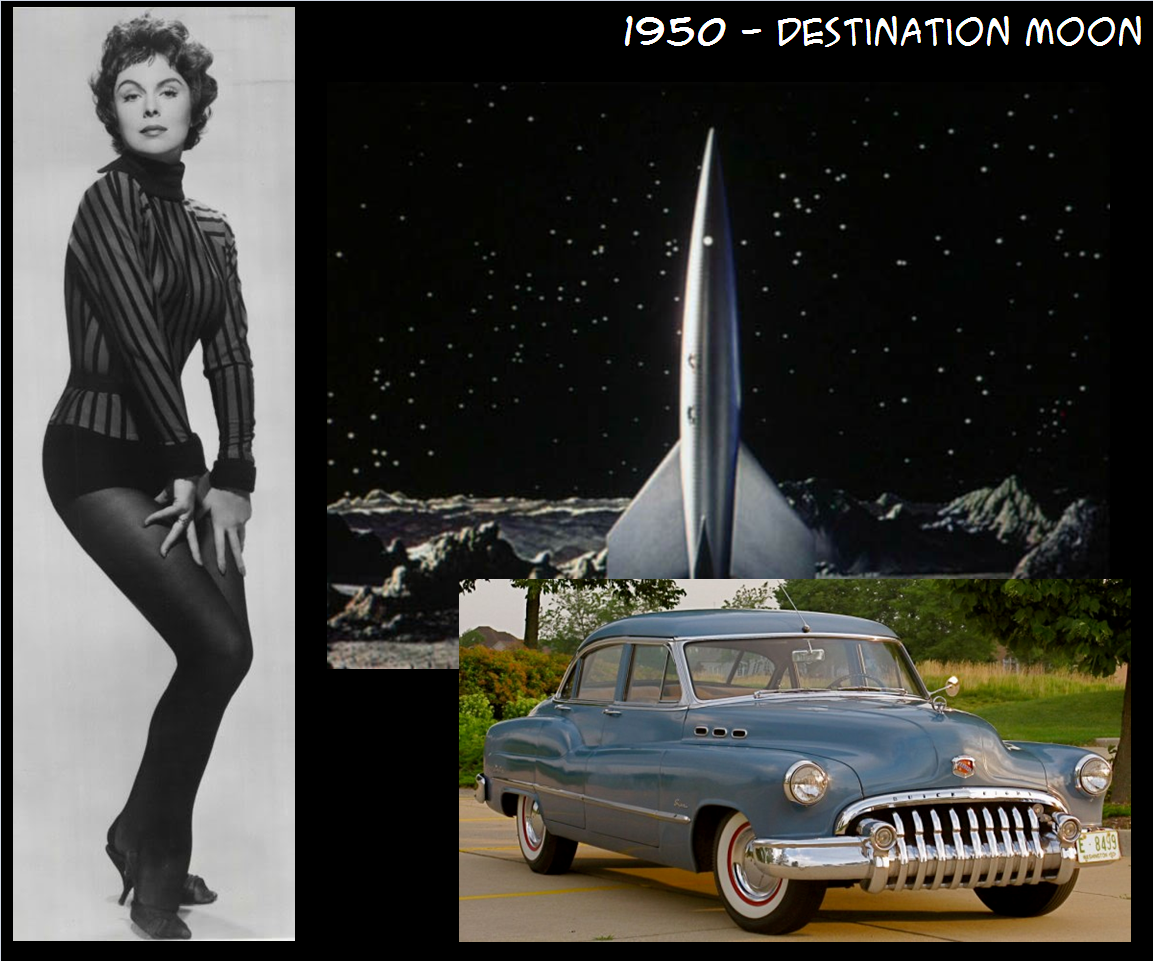
1950 brought the film classic (?) Destination Moon. Destination Moon at least played at being hard sci-fi, though the design was definitely of the moderne period, with the sleek spacecraft. The beauty of 1950, Erin O’Brien-Moore was pretty sleek herself, and shows how tastes were changing at the dawn of a new decade. The car is a bit more compact than in the 1930’s, but in this case it looks like the spaceship designs are beginning to presage developments in automobiles.

In 1956, Forbidden Planet put earthlings in a flying saucer (guess those captured German scientists were finally earning their keep). Beauty isn’t much changed from 6 years ago, and the car, a 1956 Chevy Bel Air, is not yet exhibiting the giant fins that will grace vehicles in the late 1950’s and early 1960’s.

By 1966, Star Trek has premiered. The Enterprise is unlike any spaceship audiences have seen before, and also notable is that the sole beauty of the cast (unless you include Sulu) is a black woman! Nichelle Nichols typified late ’60s beauty – curves and tall hair. The cars are becoming more slick as well – away from the tail-fins and into the muscle car era.

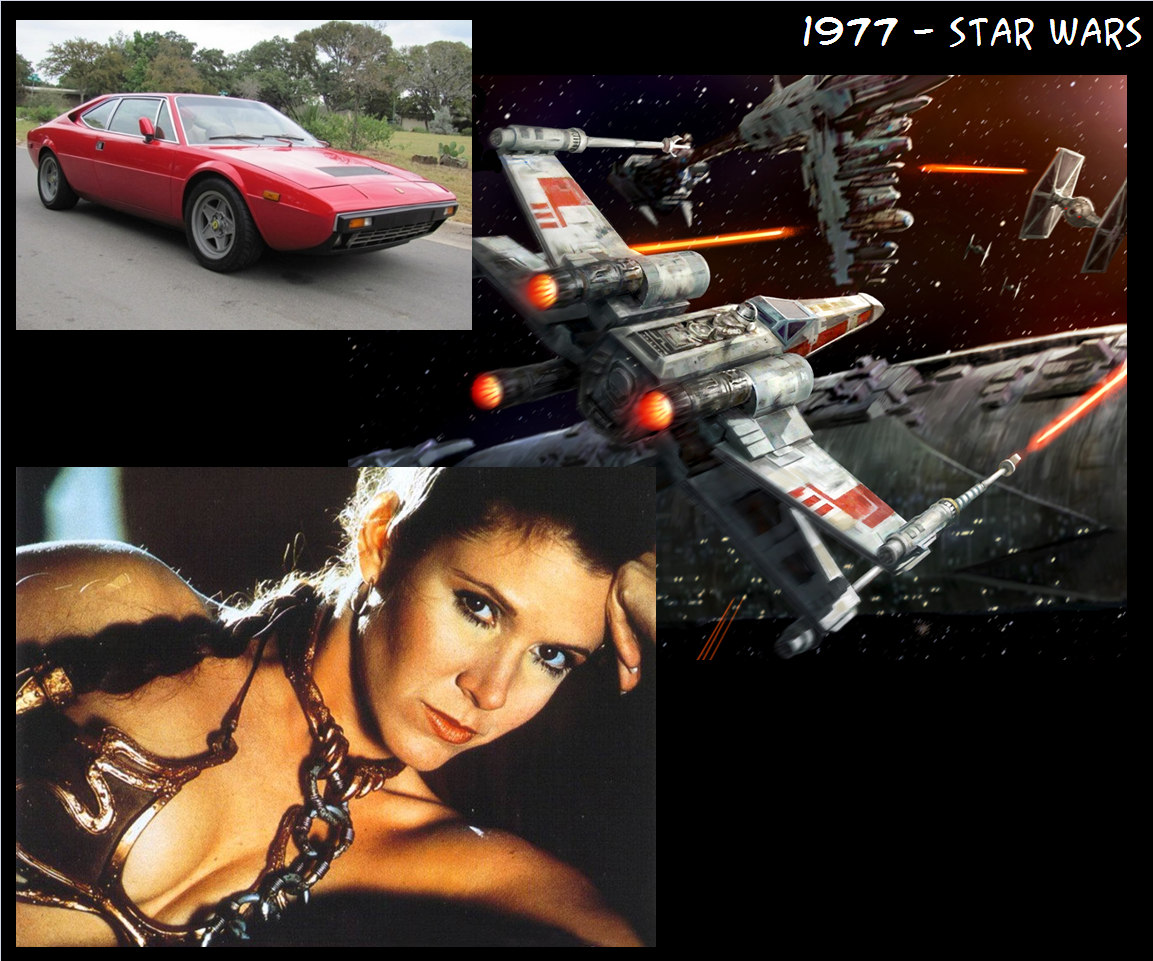
The next big leap, in this case back in some ways and forward in others, was 1977’s Star Wars (you might have heard of it). For the first time on film, we get a real sense of the “starfighter” – fighter aircraft in space. Yeah, the Star Destroyers were pretty iconic as well, but you really can’t beat the X-Wings and TIE Fighters for capturing the imagination of kids in that era. Our beauty is, of course, Princess Leia (Carrie Fisher), who really found herself thrust into unfamiliar territory in her slave girl costume. The 1977 Ferrari pictures seems to have a similar profile to those X-Wings.

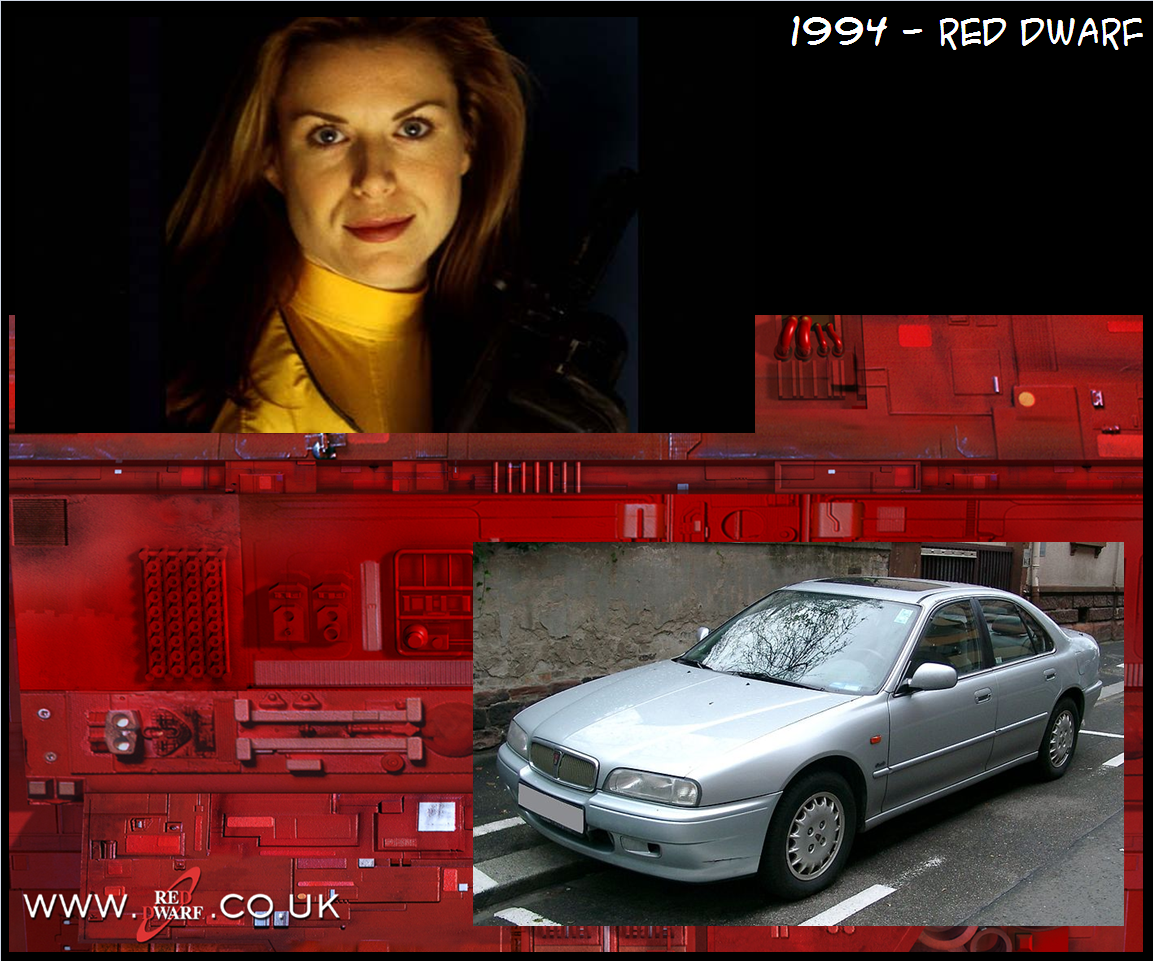
One last stop, and a leap forward to one of my favorite sci-fi series – Red Dwarf. Not American, and played for laughs, it introduced a completely utilitarian (and grandiose) spacecraft in the eponymous Red Dwarf. By 1994, we had maybe my favorite of all the sci-fi beauties introduced on this post – Chloë Annett as Kristine Kochanski (I like my women smart, beautiful and with a wry sense of humor) and the fairly utilitarian Rover. Substance over style in 1994 sci-fi.

Okay, there’s many more I could do – various incarnations of Star Trek, Alien, etc. I’ll leave further explorations to others.

A Stroll Through the Virgin Woode – Sun Gods, Fort Adventure, Giant City and the White Tower

A few more previews of the Virgin Woode

0848. Ancient Idol | Dungeon
An ancient idol of Asur, the sun god of the ancient elves, stands here, half-toppled and overgrown with creepers that bear large, violet blooms. The statue has been damaged and defaced, the gold leaf stripped from it, the small, bench-like altar that stood before it cracked in half.

The blooms that grow around the idol put off a sweet-smelling odor, and in the presence of warm bodies release a pollen that intoxicated (Fortitude save vs. poison or fatigued).

The base of the idol, if one can get to it through the underbrush and creepers, holds a secret compartment accessed by speaking the high holy words (Klaatu Barada Nikto) or with a prying device, holds a large garnet that provides proof against illusions. If a person holds the stone in his or her mouth (don’t swallow it), they are immune to illusions, including invisibility. Fighting or doing other rough work while holding the stone in one’s mouth carries with it a chance of accidentally swallowing it (Reflex save, attempted once per minute). If swallowed, the stone causes nausea for 1d4 hours, and piercing pains in the gut as it is passed over the course of a few days.

Image found HERE

1118. Fort Adventure | Stronghold
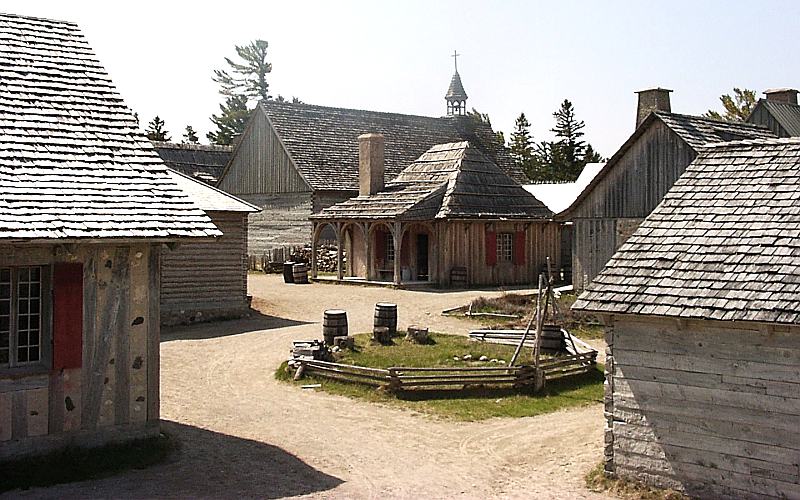
A fighting-woman of Salem colony, Hepzibah Stanis, has established a fort in this hex as an early defense of the colony and as a base of operation for pilgrim adventurers. The fort consists of a wooden palisade around several log buildings, barracks for the fort’s 20 pikemen, 16 longbowmen, 10 cuirassiers and 10 rangers, a home for Hepzibah and a small shrine to Diana tended by Elder Druthy Avanulf. A second druid, Elder Wandla Narlis once served here, but he was dishonest and greedy, and now dwells with brigands in the woods, consorting with demons. Hepzibah is gathering soldiers to route the brigands and bring the surrounding skraeling clans to heel.

1142. Skagarak | City-State
Skagarak is a large city of cyclopean architecture nestled in the wooded hills and surrounded by fields plowed by mammoth and mines dug by enslaved kobolds. The city is inhabited by 2,000 stone giants with shocking red hair and prominent jaws. The stone giants of Skagarak are rooted in the paleolithic, and claim to have dwelled in these hills since before the arrival of the ancient elves. Their city consists of great stone lodges inhabited by up to a dozen families bound together as a clan, walls 70 feet in height and buttressed by five great towers, a temple dedicated to mighty Atlas, and a splendid palace inhabited by their king, Tsul’kalu, and his royal clan. The streets are narrow and twisty, and the walls are surrounded by a a dry moat 20 feet deep.

The stone giants claim this hex as well as the hexes around it, using them to grow their crops and quarrying various stones (mostly granite and flint) and precious stones. They are not hostile to the wild elves, but care nor for their company, nor the company of the newly arrives humans.

1204. White Tower | Dungeon
The white tower is an example of an ancient elven ruin that the player’s might discover. It is a tall structure of white marble rising out of the woods. Inside the tower there is a golden stair leading to a chamber at the top of the tower. An antipathy spell has been cast on this chamber. The floor is littered with several uncut green garnets (5 gp each).

Each garnet confers on its possessor a single druid spell of 1st to 3rd level (roll randomly) that can be cast at the cost of 1d4 hit points. A creature must concentrate to cast this spell, and will only notice the hit point loss with a successful Will save.
Creatures killed by casting spells with these garnets will rise one day later as spectres that appear as glowing white skeletons with green garnets for eyes. The newly risen spectre will seek out the tower and reside in its walls.

Each garnet a creature steals from the tower will be pursued by a spectre. The spectres will appear each night in the thief’s dreams, chasing them through the dark woods toward the tower.

The dreamer will always awaken just as they reach the tower door and just as the glowing spectre is about to place its hand on their shoulder. Each night that they have this dream, they must pass a Will saving throw. If ever they fail, the spectre will be waiting for them in the waking world and it will immediately attack them. If killed, the unlucky thief will be found with all the color drained from their bodies and their eyes missing. The unfortunate will rise as a spectre as detailed above.

Last of the Mohicans [Quick Review]

I’m on a reading kick lately, specifically delving into about 100 classic books I’ve recently downloaded onto my Kindle from Project Gutenberg. A couple days ago I finished reading James Fenimore Cooper’s Last of the Mohicans – I thought it was a good choice given the fact that I’m writing a colonial North America-themed hex crawl at the moment.

For a book written in 1826, Last of the Mohicans is pretty accessible to the modern reader. Many books of that era make long, wide detours away from the story to touch on matters of history, geography, etc. This isn’t a bad thing in-an-of itself, but it can distract from the matter at hand. Last of the Mohicans stays the course, telling the tale of the white scout Hawkeye (Nathaniel Bumppo) and the Mohicans, Uncas and Chingachgook, as they endeavor first to deliver Cora and Alice, daughters of Col. Munro, and their companions, Major Heyward and the psalmodist David through the wilderness to safety. Ultimately, they fail at this, and must free them from the clutches of the Hurons and their chief, Magua.

Last of the Mohicans is a rousing tale worth reading. For gamers, it’s a good study on the way a wilderness campaign might be conducted. As I read the book, I also got the distinct feeling that it was a major inspiration on Tolkien’s Lord of the Rings. I’m no Tolkien scholar, so I might be completely wrong on this one, but the use of language, the singing of songs, the overall feel of the flight through the wilderness all reminded me of the Fellowship of the Ring. I do know that Tolkien’s rangers were inspired by the real life ranger of North America, so I suppose it’s possible that the professor was a fan of the book.

So – your assignment before tramping through the Virgin Woode is to delve into Cooper’s Last of the Mohicans: A Narrative of 1757.

Click here for Project Gutenberg’s copy