Fiendish Flora: Prism Plant [Monster]

PRISM PLANT
Medium plant, Neutral (N), Non-intelligent; Patch (1d6)

HD 2
AC 14
ATK 6 vines (1d4)
MV 0
SV F12 R18 W15
XP 200 (CL 3)

Prism plants are desert vines. The vines grow to about 7 feet in length and are about 1 inch in diameter. They are dark green in color, but are covered in dark tan needles that give the vines a shaggy appearance. The vines produce a sticky sap that forms crystalline “icicles” in the sand.

The vines usually hug the ground, but when it detects the presence of creatures within 30 feet via vibrations the vines rear up, exposing the crystalline sap-cicles to the light (well, at least in the daytime) and creating an prismatic effect that forces all within 30 feet of the plant to pass a Will save vs. the color spray spell. The plant can also attack with its spiny vines.

Fiendish Flora: Virginal Creeper [Monster]

VIRGINAL CREEPER
Large plant, Neutral (N), Non-intelligent; Cluster (1d6)

HD 4
AC 13
ATK 1d6 spines per person within 10 feet (1d3 + poison*)
MV 0
SV F10 R17 W14
XP 400 (CL 5)

Virginal creeper is named for the virgin goddess of the hunt, due to its unique form of defense. The creeper is composed of thick green vines that grow from a central, woody core. Each of these vines is covered with thin, greenish-yellow leaves and large, white flowers. Within each flower there are several needle-like spines.

The plant appears to detect people by a sort of tremorsense that extends to 30 feet. Within 10 feet, it begins to rustle and launches its spines, throwing 1d6 spines each round at each target that approaches within 10 feet. These spines are coated in poison that acts as a major adrenaline rush to those who fail a Fortitude saving throw. Each round, the person struck by the poison enjoys a cumulative +1 bonus to strength, up to a +3 bonus, but also suffers 1d4 points of damage as their heart is driven to bursting.

Fiendish Flora: Belial’s Breath

Today I’m kicking off a series of plant monsters, because – well frankly, because when I was walking yesterday some ideas started popping into my head and now I’m going to flesh them out and use them, by golly. So – a plant monster a day until I run out of ideas.

BELIAL’S BREATH
Large plant, neutral (N), non-intelligent; pit (1d6)

HD 4
AC 12 (vines have AC 13)
ATK 6 vines (1d4 + 1d6 fire)
MV 0
SV F10 R17 W14
XP 400 (CL 5)

Belial’s breath, also called salamander vine, is a monstrous plant that grows in volcanic regions, sending tap roots deep into the earth that tap into pockets of heat. The plant appears as a clump of vines that range in length from 4 to 8 feet long. The vines are about 1 inch in diameter and black. They support large leaves that are black on top and crimson on the bottom. The plant produces small yellow flowers that exude a sulfurous smell.

The vines themselves are covered in a tar-like substance that is both sticky and flammable. When the vines detect, by tremors in the ground, the nearness of a creature they snake out and attempt to grab the creature. The stickyness of the vines give them a +2 bonus to grapple attacks. If a grab is successful, the vine bursts into flame. This flame deals 1d6 points of fire damage to its victim as well as to the vines themselves. Each vine has 3d6 hit points; when a vine’s hit points are reduced to 0 by the flame or any other source, it is severed from the plant. The plant’s hit point total is not reduced by damage sustained by the vines. To kill the plant, one must deal damage to the large, crimson bulb that lurks beneath the soil and from which the vines emanate.

Special: Resistance to fire

Using Combat for Non-Combat Tasks

This post is really just me chasing down the thread of an idea, so don’t expect a finished product. Here’s my thought process:

Real life melee combat, medieval or otherwise, is a pretty tough thing to simulate with pen and paper. Folks are making all sorts of moves, offensive and defensive, that are pretty tough to keep track of. Because of this, Gygax and company developed an abstract combat system with hit points, Armor Class, etc.

What if we take this abstract process and apply it to other tasks – i.e. skill checks? Using combat rules really only make sense for non-combat tasks that are a process, and even then only when time is of the essence. They would be especially useful for tasks being performed while combat is underway. In these situations, though, they might work pretty well and create a pretty cool atmosphere in-game.

Before we get into specific examples, let’s break down the elements of the combat rules.

Offense in combat is governed by one’s attack bonus (or THAC0) and Strength bonus, which modifies “hitting” and damaging. In other tasks, a character using one of his class abilities/skills/concepts will “attack as a fighter of his level”, while those attempting things they know little about (little, but not nothing), would “attack as a magic-user of his level”. GMs could adjudicate situations in between these.

Defense in combat is governed by one’s Armor Class, modified by Dexterity, and Hit Points, modified by Constitution. We’ll refer to these concepts as active defense (AC) and passive defense (HP).

So, for task resolution, we need to know which ability scores govern the “attacker’s” offense, active defense and passive defense. We also need, for the “defender”, Hit Dice and Armor Class. Hit Dice here will represent the overall difficulty of the challenge, and to keep things simple, Armor Class will be 10 plus (or minus, depending on your system) the challenge’s Hit Dice.

Let’s begin simply with picking a lock. Specifically, a thief is trying to pick a lock so that the party can escape a combat they don’t think they can win.

The GM decides the lock, since it’s on the third level of a dungeon, has 3 HD and thus AC 13. For this task resolution, he rolls 3d6 and determines the lock has 9 hit points. It will get one “attack” per round, for 1d6 damage, and it turns out it contains a poisoned needle trap, so the attack actually scores 1d6 points of damage and requires the lock picker to pass a save vs. poison when hit.

The lock picker in this case is a 4th level thief. For this task, she’ll attack as a 4th level fighter – the player rolls 4d8 for her “hit points” during this task and gets 15. She’ll “attack” the lock once per round with her tools (and experience), and score 1d6 damage per hit.

For offense, the thief will use her Dexterity modifier to hit and damage. For active defense, we’ll use Intelligence to modify AC, and for passive defense Wisdom will modify Hit Points. I’m sure one could argue endlessly over which ability scores are appropriate to any given situation, but this is just an example so let’s not worry about it.

So, the thief has a +2 Dex bonus, no intelligence bonus and a -1 Wis penalty. If we’re using Blood & Treasure, the thief has an attack bonus of +4 (+6 with her Dex modifier), scores 1d6+2 damage against the lock, has 11 hit points (15 modified down by Wisdom penalty) and AC 10. If you wanted to argue that leather gloves provide a +1 to AC, you probably could.

Each round during combat, the thief and lock attack one another. If the thief is reduced to 0 hit points, she fails to pick the lock, but does not die (unless she also fails a save vs. poison, since this particular lock is poisonous). Perhaps the lock can even make one of it’s attacks an attempt to sunder the thief’s lock pick. If the lock is reduced to 0 hit points, the lock is picked and the thief can open the door and save the party. Heck, it’s even possible that the thief is poisoned in round one, but manages to survive long enough to pick the lock before expiring. Such dramatic possibilities!

Here’s another idea. Imagine a sub-plot in a modern game requires the adventurers to sneak into a museum and steal a valuable diamond. This wasn’t really planned by the GM, so instead of hastily drawing a museum map, figuring out the security guards and cameras, etc. In this case, the museum would be the challenge – maybe 7 HD and AC 17. The GM might also rule it gets three attacks each round, from security cameras (1d6 damage), patrolling security guards (1d8 damage) and infared beams (1d4 damage). If successful, the adventurers, who are all involved in this combat, get to the diamond and take possession of it. If they fail, they are caught – at which point they might be allowed to choose to go quietly or fight their way out, in which case we would enter traditional combat in a room filled with Egyptian antiquities against two armed guards with the police on their way.

Final notion for now – spellcasting. This might be good for a more modern game or a light magic game. The level of the spell is the spell’s Hit Dice (and thus determines Armor Class). The magic-user’s offense is governed by Intelligence, his active defense by charisma and his passive defense by Wisdom.

If the spell wins, it is beyond the magic-user and he cannot cast it. If the magic-user wins, he casts the spell. Obviously, this would now govern the casting time of spells, and one could dispose of preparing spells, instead simply requiring the magic-user to have a spell in their spellbook to be able to cast it. Perhaps some high-level spells could have “special attacks”, like wisdom drain or paralyzation, to make them more dangerous.

Imagine a 7th level magic-user attempting to cast a 9th level monster summoning spell while the party is holding off a balor demon. Heck, multiple magic-users could now join forces in casting a spell, chanting together, one sprinkling the powdered bone while the other waves the wand.

Anyhow – just an idea. I might explore it further and use it in ACTION X. I’d love to hear what folks think of it.

Building Better Henchmen

Do you like random tables? I do.

Do you like henchmen? I do.

Do you like random henchmen? I hope so …

The following tables can be used to make more interesting, if not useful, henchmen for your classic fantasy game. I think I might adapt these to ACTION X and use them as the default for minions.

Note – for those who don’t play Blood & Treasure (yes, I’m aware that’s 99.99999999% of all gamers), treat a “knack” as succeeding on a roll of 1-2 on 1d6, or as a flat +3 bonus to skill checks

TABLE THE FIRST – HENCHMAN PERSONALITY

1. Sniveling coward – has move of 40 and must check morale before each fight

2. Greedy bastard – tries to steal treasure at every turn

3. Junior paladin – braver and more heroic than he/she should be, but also a Lawful (Good) moralist about things

4. Dastardly spy – working for an opposing group of adventurers, making a map and reporting back

5. Secret cultist – member of a secret chaos cult, will betray the party if possible

6. Sword-for-hire – has to be paid (1×6 x 5 gp) for sticking his neck out, but +1 to hit with swords

7. Old veteran – a bit slower (move 20), but good at solving puzzles

8. Pack mule – can carry 150% normal weight, tends to be quiet and dull

9. Rebellious princess – (or prince) a rich brat who wants adventure but is still in the aristocratic mindset, has a tendency to complain and command

10. Rugged he-man – or she-woman; strong, brave and competent and a bit arrogant

11. Mother hen – very concerned about the adventurers and their health and well-being

12. Hyper-active – gets bored easily, often moves off on his own (especially when carrying something important)

13. Lucky duck – +2 bonus on all saving throws; lucky and knows it

14. Rakish devil – hits on the opposite sex, makes lascivious innuendos at the drop of a hat, has an over-fondness for booze

15. Death magnet – 1 in 6 chance that any random bad thing happens to this poor slob, but they enjoy a +2 bonus to all saving throws

16. Terrible jinx – increases chance of random monster encounters by 1 (or 5%), imposes a -1 penalty to saving throws for all in the party by their mere presence

17. Lazy complainer – move rate of 20, like to rest once per hour, complains about physical exertion, eats double rations

18. Delusions of grandeur – claims skills he or she does not have

19-20. Mundane henchmen – nothing special at all about this henchman

TABLE THE SECOND – HENCHMEN SKILLS

1. Academic – knack at deciphering and appraising the value of goods

2. Acolyte – can cast 1d4 zero-level cleric spells, each once per day; charges double

3. Acrobat – knack for jumping and ???

4. Animal Handler – knack for riding and taming animals

5. Apprentice – can cast 1d4 zero-level magic-user spells, each once per day; charges double

6. Athlete – knack at climbing walls and swimming

7. Deceiver – knack at forgery and disguise

8. Investigator – knack and finding traps and discerning alignment

9. Negotiator – +2 bonus to reaction checks if does the talking and knack for discerning alignment

10. Pick Pocket – knack at move silently and pick pockets

11. Rogue – can backstab for x2 damage once per day, knack at thief skills; charges double

12. Savage – berserker in combat, knack at barbarian skills, comes with loincloth, shield and spear; charges double

13. Sentinel – knack for finding secret doors and listening at doors

14. Shadow – knack for move silently and hide in shadows

15. Spelunker – darkvision to a range of 30 feet, dwarf knacks

16. Survivor – knack at survival and climbing walls

17. Swordsman – has one combat feat of the TK’s choice and comes with chainmail, shield and hand weapon; charges double

18. Thugee – can backstab for +2 damage and use poison safely, knack at assassin skills, comes with black leather armor and two daggers; charges double

19. Whirling Dervish – can attack twice per round with melee weapons, comes with leather armor, short sword and dagger; charges double

20. Woodsman – +1 to hit animals, knack at ranger skills, comes with leather armor, longbow and short sword; charges double

PAY SCALE

Just thought of this. What if the henchman’s pay scale determines what they’ll do …

Copper a day – will carry torches and bags, but will not fight

Silver a day – as above, plus will fight in second rank

Gold a day – as above, plus will fight in front rank

Platinum a day – as above, plus will check for traps and go into rooms first

Masters of the Dungeon

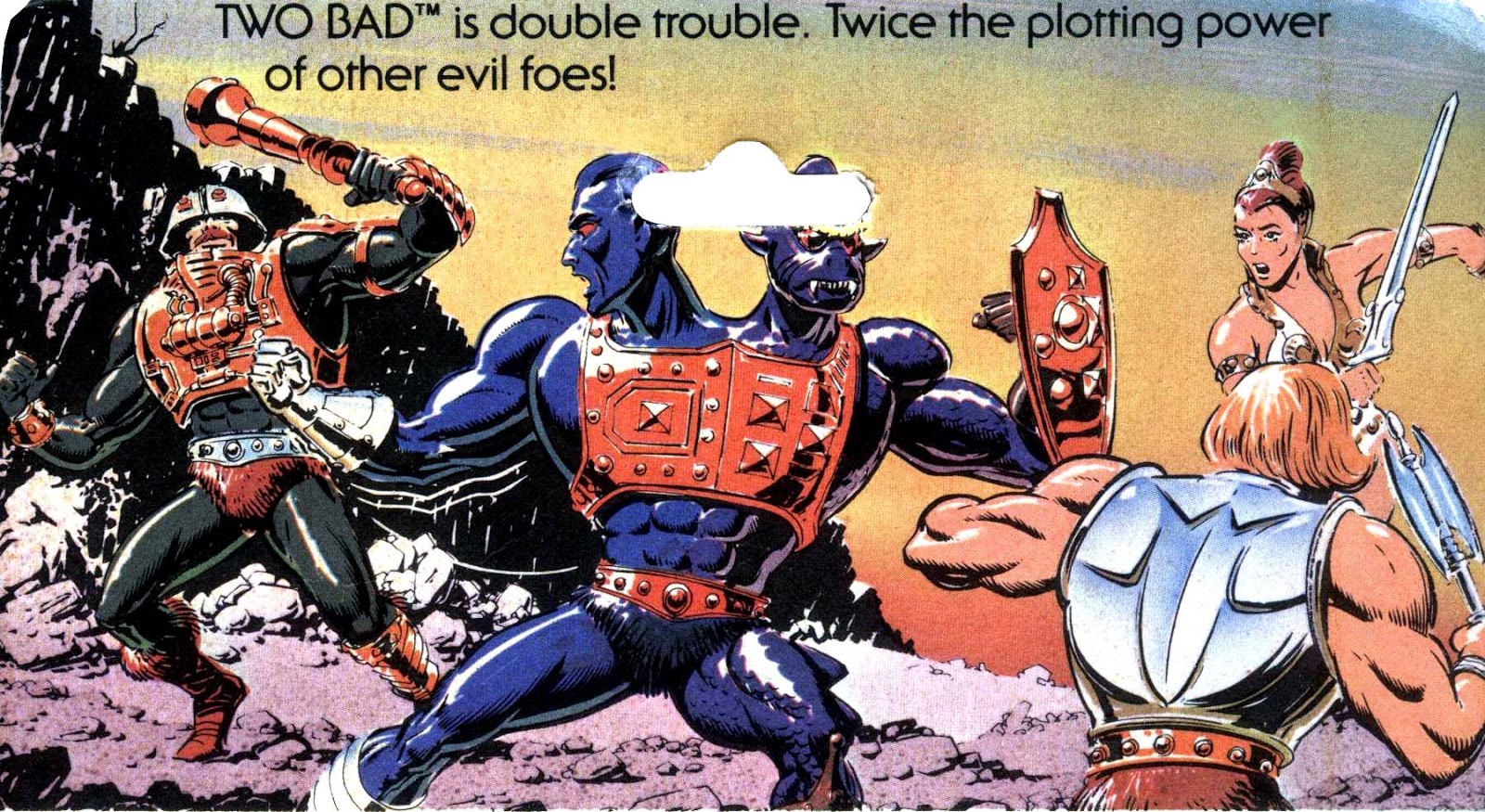
The Masters of the Universe came a bit late for me when I was young. A good friend of mine got the entire original release of MOTU for Hanukkah, though, and I remember going over to his house and checking them out, though I don’t think we ever actually played with them. We were getting too old for action figures (i.e. dolls for boys) at that point, and I was never into swords and sorcery anyways – I was more into a G.I. Joe (the original figures, you know, back when Snakeyes was a commando and not a stupid ninja) and Star Wars guy. At the time, MOTU figures struck me as really lame, and the cartoon was just horrible … well, except for this …

Now that I’m an adult, though, and have embraced my inner stooge and gonzo gaming, I have to admit a fondness for those old figures. Yeah, they’re goofy, but in all the best ways. They also strike me as things that would be amazing to throw at players in a gonzo dungeon – not as individuals, but as monsters on the order of goblins, orcs, bugbears, etc. With that in mind …

DOUBLE-HEADER (Double-headed Evil Strategists)
Medium monstrous humanoid; high intelligence; chaotic (LE); band (1 + 2d4 humanoids)

HD 4
AC 16 (breastplate and shield)
ATK 2 bites (1d4) or slam (1d6 + constrict)
MV 30
SV F14 R11 W10
XP 400 (CL 5)

Double-headers are two-headed humanoids who often lead humanoid war parties due to their high intelligence and mighty muscles. While some two-headed creatures have trouble with competition between heads, the double-header’s heads work in perfect cooperation. While this makes them especially cunning, it also gives them a +2 bonus to save vs. mind-affecting spells and abilities.

KLAWE (Warriors with a Grip of Evil!)
Medium monstrous humanoid; low intelligence; chaotic (CE); snag (1d4)

HD 1
AC 15
ATK 1 claws (1d6 + constrict), mace (1d6) and bite (1d4)
MV 30
SV F13 R15 W16
XP 50 (CL 1)

Klawes are humanoids covered with orange chitin and armed with maces. Their claws are capable of locking their foes in a grip of evil that deals double damage to lawful (good) victims.

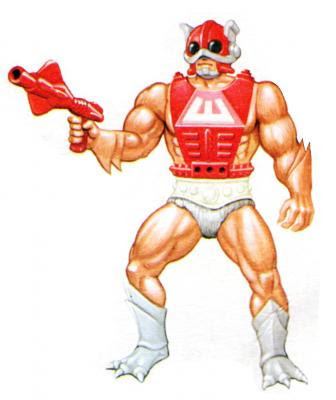
KOZMO (Evil Cosmic Enforcers)
Medium outsider; average intelligence; chaotic (NE); glower (1d4)

HD 3
AC 14 (breastplate)
ATK 1 slam (1d4) or 1 ray gun (1d6 fire)
MV 30
SV F12 R12 W12
XP 300 (CL 4)

Kozmos are humanoids that hail from the outer dimensions. They are used as enforcers by minor evil extraplanar entities. They wear helms with goggles that protect them from gaze attacks and permit them to see into the ethereal and astral planes. Once per day, a kozmo can use the dimension door spell.

LASHER (Evil Tail Thrashing Warriors)
Medium humanoid; low intelligence; chaotic (CE); welt (1d6)

HD 2
AC 14
ATK 1 spear (1d8) and tail lash (1d4 + stun)
MV 30
SV F12 R15 W16
XP 100 (CL 2)

Lashers are cousins of the lizardmen with lashing tails. They have rather ogrish faces with protruding fangs, and pale, glistening green scales.

LOCK-JAW (Evil Warriors Armed for Combat)
Medium humanoid; average intelligence; chaotic (CE); clamp (1d4)

HD 4
AC 14
ATK 1 bite (1d8) and either 1 musket (xxx), 1 hook (1d6) or 1 claw (1d6)
MV 30
SV F11 R14 W14
XP 200 (CL 4)

These cybernetic outlaws know no fear. They are equipped with adamantine jaws that can bite through nearly anything (+2 to sunder attacks; -2 to item saving rolls against them) and mechanical arms with the following possible attachments: Musket, hook (1d6 damage, +2 to disarm attacks) or claw (1d6 damage, +2 to grapple attacks). Lock-jaws can store unused weapons on their belts, and it takes them a full round to exchange one weapon for another.

MAN-BEAST (Savage Henchmen)
Medium humanoid; average intelligence; chaotic (CE); throng (1d8)

HD 1
AC 13
ATK 2 claws (1d3) or 1 whip (10-ft range, 1d4)
MV 30
SV F13 R15 W15
XP 100 (CL 2)

Man-beasts often serve as henchmen to evil lords. Once per day, they can use monster summoning I to summon animals only. Man-beasts can speak the language of animals.

MER-MOK (Ocean Warlords)
Medium humanoids; average intelligence; chaotic (CE); gang (1d6)

HD 1+1
AC 16 (scale breastplate)
ATK 2 claws (1d4) or sword (1d8)
MV 30 (Swim 40)
SV F13 R15 W15
XP 100 (CL 2)

Mer-moks are scaly, green-skinned amphibians that may be distant, telepathic relatives of the sahuagin. They wear breastplates and carry bronze swords. Mer-moks suffer no penalty when fighting with their swords underwater. They can communicate with aquatic animals via telepathy (300-ft. range) and can use this telepathy, once per day, to cast monster summoning II (summons aquatic animals only).

PROWLER (Evil Masters of Escape)
Small humanoid; average intelligence; chaotic (NE); pounce (1d8)

HD 0
AC 14 (breastplate)
ATK 2 claws (1d3) or musket (2d6)
MV 30 (Climb 40)
SV F16 R14 W16
XP 50 (CL 1)

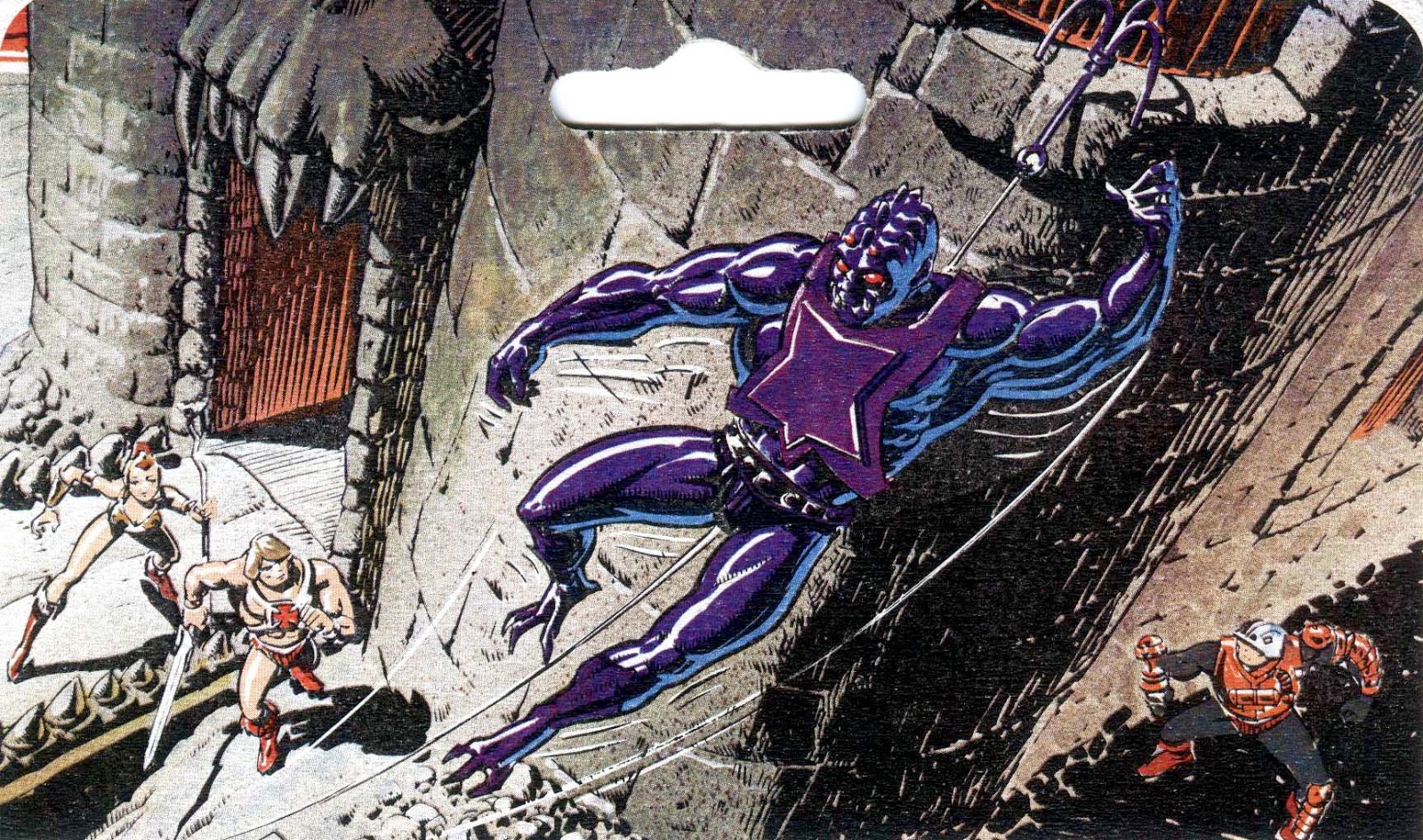
Prowlers are small, halfling-sized humanoids with monstrous, spidery faces, dark blue skin that helps them blend into the shadows (surprise on roll of 1-4 on 1d6). They are capable of moving across walls and ceilings (per the spider climb spell), and use this ability to help them surprise foes when they are forced to engage in melee. They prefer to attack with their slim, accurate muskets, though, striking from the darkness as snipers and then looting the bodies of their victims.

SKULLFACE (Lords of Destruction)
Medium monstrous humanoid; high intelligence; chaotic (LE); solitary

HD 9
AC 18
ATK 2 claws (1d4+2) or sword (2d4+2)
MV 30
SV F11 R9 W8
XP 900 (CL 10)

These lords of destruction are demonic men with skull faces and blue skin. Having the special qualities of demons, they are capable swordsmen and sorcerers. Skullfaces can cast spells as 8th level sorcerers, channeling their magic through their skull-headed staves without needing to speak or gesture. When encountered, there is a 50% chance a skullface will be mounted on a giant black panther and a 50% chance they will be accompanied by their savage henchmen, 1d8 man-beasts.

SPIKAZ (Evil Masters of Untouchable Combat)
Medium monstrous humanoid; average intelligence; chaotic (CE); prick (1d6)

HD 1+1
AC 16
ATK 1 trident (1d6) and morningstar (1d6)
MV 30
SV F15 R13 W13
XP 100 (CL 2)

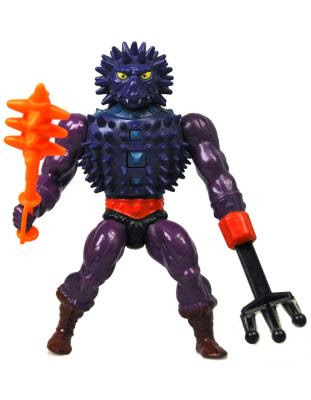
Spikaz are strange humanoids covered in bony protrusions that jut from their leathery hides. Natural smiths, most amputate their lower left arms and replace them with weapons, often tridents or warhammers. They often wield morningstars in their right hands in combat. Those locked in melee combat with spikaz using their natural weapons or small weapons must pass a Reflex save each round or be struck by their spikes, suffering 1 point of damage. Attacking a spikaz with unarmed attacks or grapples automatically inflicts 1d3 points of damage on the attacker with a successful hit.

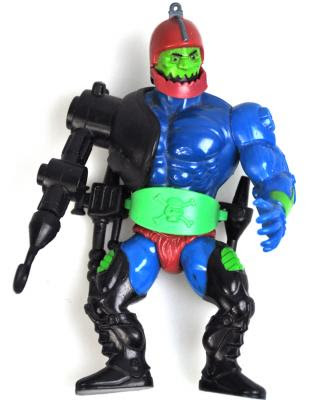
TRICLOPS (Evil Warriors That See Everything)
Medium humanoid; average intelligence; chaotic (LE); peep (1d4)

HD 3
AC 14
ATK 1 sword (1d8) or eye ray (30-ft range, 1d6 force)
MV 30
SV F12 R14 W14
XP 300 (CL 4)

Triclops possess three eyes spaced evenly around their heads. These eyes make it impossible to surprise a triclops, and give them the power of true seeing (as the spell), x-ray vision and the ability to rays of force that force victims to pass a Fortitude save or be knocked back 2d4 feet and fall prone if they fail a Reflex saving throw. They are also capable swordsmen.

YELLOW AMAZONS (Evil Warrior Goddesses)
Medium humanoid; average intelligence; chaotic (NE); coven (1d4)

HD 3
AC 15 (leather armor)
ATK 1 staff (1d8)
MV 40
SV F12 R14 W14
XP 300 (CL 4)

These saffron-skinned warrior goddesses go into battle armed with iron staves and leather armor. They can channel magic through their staves as though they were 3rd level sorcerers, though without their staves they have no magical abilities.
Poker Made Easy [ACTION X]

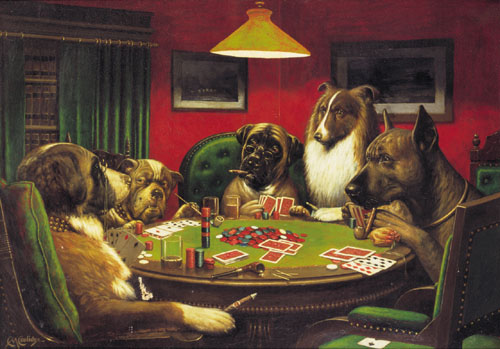
I was just watching an episode of Mission: Impossible which hinged around a high stakes poker game. It occurred to me that such an occasion might arise in a modern role playing game, such as ACTION X (whenever I finish it), so it might be worthwhile to come up with a little in-game system to simulate a game of poker. Note – this is not a step-by-step simulation of poker, and it is completely untested and probably stupid.

Step one for the player (or players) involved is to roll on the following table to discover the strength of their hand. Essentially, this would be their final hand – there’s no drawing of new cards in this simulation. For our purposes, we just want to get a relative idea of what the player has to work with. Each hand carries with it a modifier that will be used later in the simulation.


D%
HAND
MOD.
01-44
High card
-2
45-86
One pair
+0
87-92
Two pair
+1
93-94
Three of a kind
+2
95
Straight
+3
96
Flush
+5
97
Full house
+7
98
Four-of-a-kind
+9
99
Straight flush
+11
100
Royal flush
+13

The player now nominates how much money he is risking on his hand. This will be matched or nearly matched by his opponents (see below)

Next, the player makes a Gambling task check against each opponent in the game. A gambling task check is a Charisma check in ACTION X, which uses the same task resolution system as Blood & Treasure. The player adds his hand modifier to the roll, and subtracts his opponent’s Wisdom modifier. If his opponent has a knack at gambling, the player suffers a -2 penalty to his roll. If his opponent is skilled at gambling, the player suffers a -4 penalty to his roll.

Each time the player makes a successful task check, that opponent folds and leaves the game. Each person who folds deposits half the amount of money the player chose to risk into the pot.

Each opponent that survives these Gambling checks now reveals his or her hand – roll randomly on the table above to find out what they have. Each of these participants will put risk as much money as the player. The participant in the game with the best hand takes the pot.

Sugarcane, Agent 99

You never know where inspiration will originate. A few days ago, my daughter and I were watching an old commercial on PubDHub, and the name of the product, Sugarcane99, struck me as a great name for a sexy ’60s spy. As we continued to watch the commercial, it revealed itself as a wonderful little preview for a spy movie …

First, we have the spy boss, in his thick-framed glasses …

Then we have Sugarcane, Agent 99, on the beach, awaiting instructions …

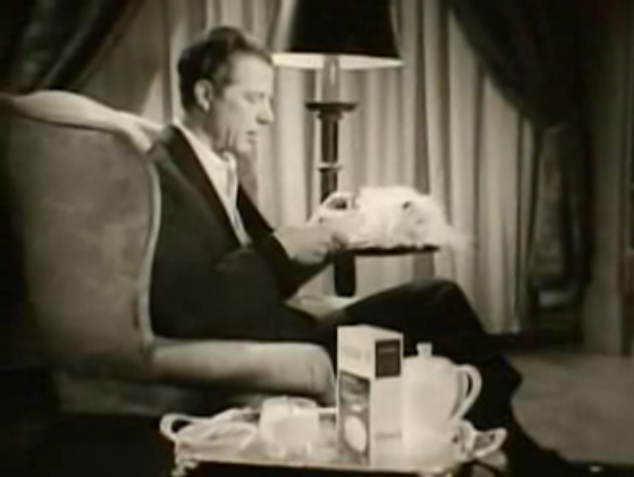
Then the villain of the piece, complete with obligatory white cat.

Finally, the villain’s accomplice, a wealthy femme fatale who uses her cover as a member of society to disguise her malevolent hobby, and the victim, a hapless diplomat drinking drugged coffee …

Hopefully, you’ll be able to catch the whole crew (and much more) in ACTION X, my take on modern role-playing. I’m about 75% finished with the game, and hopefully will start playtesting soon.

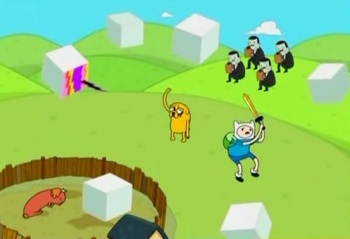
Enter the Geo-Metrons

Inspired by Adventure Time

In the vast cosmos there are many weird entities to encounter and fight. These are three of them.

Hell-Sphere
Small Aberration, Chaotic (LE), Average Intelligence, Gang (1d3)

Hit Dice: 4
Armor Class: 17 [Silver]
Attack: 2 fire whips (10-ft. range; 1d4 + 1d6 fire)
Speed: Fly 30
Save: F15 R14 W11
XP: 400 (CL 5)

Hell-spheres look like ruby colored spheres about the size of a human head. While they look solid, they are in fact only semi-solid, bridging the material and ethereal planes. Hell-spheres move by flying, and can also levitate in place. They attack by extending semi-solid whips of fire from their surfaces, and are also capable of taking control of living creatures.

To control a creature, a hell-sphere must envelop that creature’s head. This is considered a grapple attack, which the hell-sphere makes at a +2 bonus to hit. Once it has enveloped a creature’s head, the target is allowed a Will saving throw to resist the sphere. If this save fails, the creature is stunned for the remainder of the round. On the next round, it is under the control of the sphere.

A creature under a sphere’s control can use all of its natural abilities, and also gains the special defenses of a devil. The sphere must remain on the creature’s head to control it, and can be removed by a grapple attack (assuming somebody has silver or magical gloves or a net or such to catch it). Attacks against a sphere enveloping a creature score full damage on the sphere and half damage on the creature it is enveloping. While enveloping a creature, a hell-sphere can continue to use its normal attacks in addition to its new minion’s attacks.

Death-Cube
Small Aberration, Chaotic (CE), Average Intelligence, Gang (1d3)

Hit Dice: 3
Armor Class: 16 [Silver]
Attack: 2 rays (50-ft. range, 1d6 negative energy)
Speed: Fly 30
Save: F15 R14 W12
XP: 300 (CL 4)

Death-cubes look like black cubes about the size of a human head. While they look solid, they are in fact only semi-solid, bridging the material and ethereal planes. Death-cubes move by flying, and can also levitate in place. They attack by firing rays of gray energy from their surfaces, and are also capable of taking control of living creatures (per the hell-sphere above).

A creature under a cube’s control can use all of its natural abilities, and also gains the special defenses of a demon.

* Note – this one keeps making want to say Death-Cube for Cutie

Battle-Prism
Small Aberration, Neutral (N), Average Intelligence, Gang (1d3)

Hit Dice: 5
Armor Class: 18 [Silver]
Attack: 2 rays (50-ft. range, 1d6 force)
Speed: Fly 40
Save: F14 R13 W11
XP: 500 (CL 6)

Battle-Prisms look like three-sided pyramids about the size of a human head. Each surface is a kaleidoscope of colors. While they look solid, they are in fact only semi-solid, bridging the material and ethereal planes. Battle-prisms move by flying, and can also levitate in place. They attack by firing rays of prismatic force from their surfaces, and are also capable of taking control of living creatures (per the hell-sphere above).

A creature under a prism’s control can use all of its natural abilities, and also gains the effects of the heroism spell.