 Candle of Thought
This appears as a normal candle. When lit and held in one’s hand it casts a soft, steady white light, never flickering, even in a breeze (though a strong wind will extinguish it.) When the melting wax from the candle hits a creature’s flesh (a painful experience, maybe worth 1 point of damage), forgotten events in that person’s past will appear projected on the wall or floor within the area of the candle’s light. The person holding the candle can summon up these memories if he is concentrating on them (i.e. – what was that person’s name), otherwise they are random. The candle will burn for one hour before used up, with each memory extraction taking 1 minute.
Treasure
Quick Idea on Weapons
 Thinking about the “all weapons do 1d6 damage” rules, I thought it might be useful to come up with some other reasons why one might choose one weapon over another and came up with the following. You’ll notice that I didn’t differentiate between long swords and short swords. It seems to me if all weapons are going to do the same damage, you only need to differentiate between forms rather than small differences between weapons with the same basic form.
And just for fun, consider it Open Game Content.
Axe/Curved sword/Pick/War hammer: +1 to damage due to all of the wielder’s force being concentrated on a small cutting edge or piercing point
Bow: -1 to hit (difficult to learn) but attacks twice during a round (on normal initiative and at end), +1 to damage due to all of the wielder’s force being concentrated on a small cutting edge or piercing point
Club/Staff: Nothing special
Crossbow: +1 to damage due to all of the wielder’s force being concentrated on a small cutting edge or piercing point
Dagger: Always lose initiative against longer weapons, but +1 to hit due to the greater versatility that comes with multiple angles of attack
Flail: Ignores shield bonus to AC, +1 to disarm attacks because of the chain
Javelin/Throwing spear: Nothing special
Mace: Nothing special
Sling: Nothing special
Spear/Lance: Always win initiative against shorter weapons
Sword: +1 to hit due to the greater versatility that comes with multiple angles of attack
Two-handed axe/Pole arm: +2 to damage due to all of the wielder’s force being concentrated on a small cutting edge and the heft of the weapon
Two-handed sword: +1 to hit due to the greater versatility that comes with multiple angles of attack, +1 to damage due to the weapon’s heft
__________
Metal weapons (other than dagger) require a strength score of 9 or higher to wield properly, otherwise -1 penalty to hit.
Two-handed weapons (including bows and crossbows) require a strength score of 13 or higher to wield properly, otherwise -2 penalty to hit.
On Barter and Trade
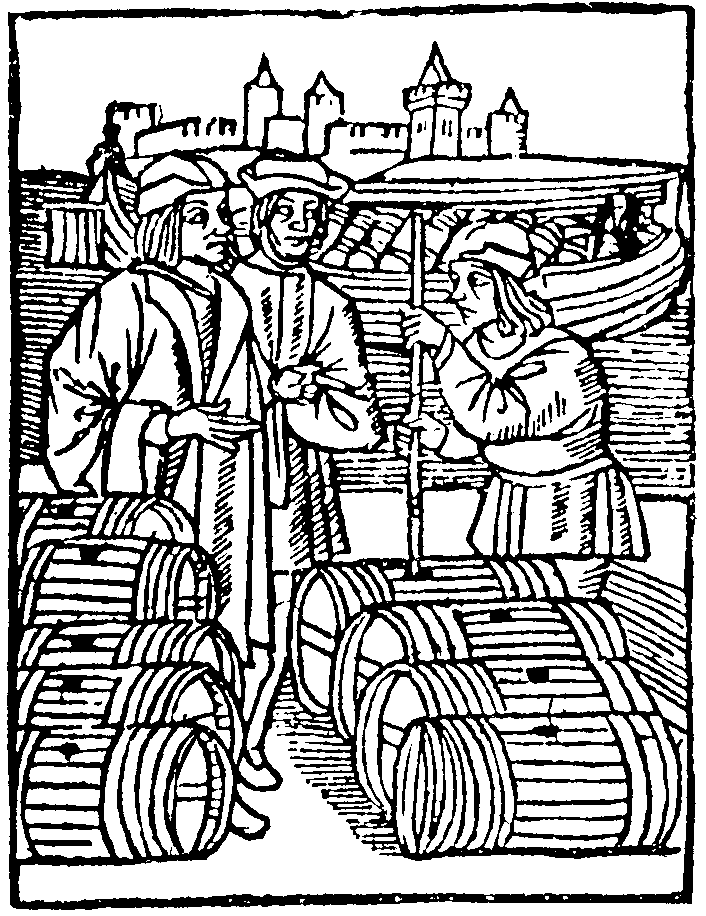 Those of you who use the Swords & Wizardry rules probably know that the guidelines for treasure allocation stipulate that there is a 10% chance (i.e. a roll of 10 on 1d10) that coins will be swapped out for gems, jewelry or magic. In general, I love these rules because magic, gems and jewelry remain fairly rare. However, I do feel as though this system leaves out many alternative forms of wealth, i.e. goods. I’m no stickler for realism in my games, but piles and piles of gold coins do stretch plausibility pretty far, and can become pretty boring. Coins were pretty rare things for most medieval folk. In an inventory of one of Charlemagne’s smaller estates, for example, one comes across a mere 13 shillings and large numbers of livestock, household goods, grain and cheese. For this reason, I began swapping out coinage for trade goods on the roll of “1” on 1d10, using the following guidelines for amounts and values. I went ahead and organized the information so one could randomly determine the goods found. Feel free to change values, especially if a particular item is either rare or exceedingly common in a particular region. When adventurers try to sell these trade goods, you can simulate price fluctuations by rolling 1d6, with a 1-2 meaning half the normal value and a 5-6 meaning double the normal value. Obviously, this can also be used for determining the contents of a caravan or merchant cog.
In Place of 100 gold pieces (roll 1d100)
1-2. 1d10 tons of raw wool (20 gp/ton)
3-4. 2d100 ingots of lead (10 lb ingots, 7 sp/ingot)
5-6. 2d100 ingots of iron (10 lb ingots, 1 gp/ingot)
7-8. 1d8 x 100 pounds of buckwheat (25 cp/lb)
9-10. 1d6 x 100 pounds of millet (3 sp/lb)
11-12. 1d6 x 100 pounds of oats (3 sp/lb)
13-14. 1d6 x 100 pounds of rye (3 sp/lb)
15-16. 1d6 x 100 pounds of walnuts (3 sp/lb)
17-18. 1d6 x 100 pounds of yellow (sulfuric) dye (3 sp/lb)
19-20. 1d100 ingots of tin (5 lb ingots, 4 sp/lb)
21-22. 1d4 x 100 pounds of hazelnuts (200 lb), 5 sp/lb
23-24. 1d4 x 100 pounds Red (iron) dye (200 lb), 5 sp/lb
25-26. 1d8 x 10 ingots of steel (5 lb ingots, 6 sp/lb)
27-28. 1d8 x 10 ingots of zinc (5 lb ingots, 8 sp/lb)
29-30. 2d20 ingots of brass (5 lb ingots, 1 gp/lb)
31-32. 2d20 ingots of bronze (5 lb ingots, 1 gp/lb)
33-34. 2d20 ingots of copper (5 lb ingots, 1 gp/lb)
35-36. 4d8 barrels of ale (barrel holds 30 gal., weighs 250 lb, worth 6 gp)
37-38. 2d10 barrels of wine (barrel holds 30 gal., weighs 250 lb, worth 9 gp)
39-40. 2d10 x 10 pounds of barley (1 gp/lb)
41-42. 2d10 x 10 pounds of blue dye (1 gp/lb)
43-44. 2d10 x 10 pounds of coal (1 gp/lb)
45-46. 2d10 x 10 pounds of green dye (1 gp/lb)
47-48. 2d10 x 10 pounds of gum arabic (1 gp/lb)
49-50. 2d10 x 10 pounds of ocher dye (1 gp/lb)
51-52. 2d10 x 10 pounds of chestnuts (1 gp/lb)
53. 2d10 x 10 pounds of cinnamon (1 gp/lb)
54. 2d10 x 10 goats (1 gp/goat)
55. 2d10 x 10 peacock feathers (1 gp/feather)
56. 1d10 x 10 pounds of ginger (2 gp/lb)
57. 1d10 x 10 pounds of lentils (2 gp/lb)
58. 1d10 x 10 pounds of pepper (2 gp/lb)
59. 1d10 x 10 raccoon skins (2 gp/skin)
60. 1d10 x 10 squirrel skins (2 gp/skin)
61. 1d10 x 10 sheep (2 gp/sheep)
62. 1d8 x 10 pounds of jasmine oil (25 sp/lb)
63. 1d6 x 10 pounds of almonds (3 gp/lb)
64. 1d6 x 10 pounds of ambergris (3 gp/lb)
65. 1d6 x 10 pounds of camphor (3 gp/lb)
66. 1d6 x 10 pounds of indigo dye (3 gp/lb)
67. 1d6 x 10 pounds of purple dye (3 gp/lb)
68. 1d6 x 10 pounds of chick peas (3 gp/lb)
69. 1d6 x 10 pigs (3 gp/pig)
70. 1d6 x 10 square yards of velvet (10 lb per yard, worth 3 gp/sq yd)
71. 1d6 x 10 deer skins (4 gp/skin)
72. 1d6 x 10 gallons of honey (gallon weighs 12 lb gal; 4 gp/gal.)
73. 1d6 x 10 square yards of linen (5 lb per yard, 4 gp/sq yd)
74. 1d6 x 10 pounds of vermilion dye (4 gp/lb)
75. 2d20 bear skins (5 gp/skin)
76. 2d20 square yards of lace (3 lb per yd, 5 gp/sq yd)
77. 2d20 pounds of rice (5 gp/lb)
78. 2d20 pounds of salt (5 gp/lb)
79. 4d8 sheep skins (6 gp/skin)
80. 2d12 pounds of calamus (8 gp/lb)
81. 2d12 marten skins (8 gp/skin)
82. 2d12 pounds of mercury (8 gp/lb)
83. 2d12 wolf skins (8 gp/skin)
84. 2d10 pounds of pine nuts (10 gp/lb)
85. 1d10 ingots of silver (2 lb ingot, worth 20 gp)
86. 2d10 square yards of silk (10 gp/sq yd)
87. 2d10 cattle (10 gp/cattle)
88. 2d10 cigars (10 gp/cigar)
89. 2d10 coconuts (10 gp/coconut)
90. Sable skin (9), 11 gp/skin
91. 2d8 mink skins (12 gp/skin)
92. 2d6 fox skins (14 gp/skin)
93. 2d6 pounds of cardamon (15 gp/lb)
94. 2d6 panther skins (15 gp/skin)
95. 2d6 pounds of pistachios (15 gp/lb)
96. 2d6 pounds of saffron (15 gp/lb)
97. 2d6 shark skins (15 gp/skin)
98. 2d6 pounds of cloves (15 gp/lb)
99. 2d6 oxen (15 gp/ox)
100. 1d8 big cat (jaguar, leopard, lion or tiger) skins (25 gp/skin)
In Place of 1,000 gold pieces (roll 1d2 and 1d20)
1-1. 1d20 casks of molasses (barrel holds 25 gal., weighs 300 lb, 100 gp each)
1-2. 1d4 x 100 pounds of rice (5 gp/lb)
1-3. 1d4 x 100 pounds of salt (5 gp/lb)
1-4. 4d8 casks of olive oil (cask holds 12 gal., weighs 100 lb, 60 gp each)
1-5. 2d12 x 10 marten skins (8 gp/skin)
1-6. 2d12 x 10 wolf skins (8 gp/skin)
1-7. 2d10 x 10 pounds of pine nuts (10 gp/lb)
1-8. 1d100 ingots of silver (2 lb ingot, 20 gp each)
1-9. 2d8 casks of sesame oil (cask holds 12 gal., weighs 100 lb each, 120 gp each)
1-10. 2d10 x 10 square yards of silk (12 lb per yard, 10 gp/sq yd)
1-11. 2d10 x 10 cattle (10 gp/cattle)
1-12. 2d10 x 10 cigars (10 gp/cigar)
1-13. 2d10 x 10 coconuts (10 gp/coconut)
1-14. 2d10 x 10 sable skins (11 gp/skin)
1-15. 2d8 x 10 mink skins (12 gp/skin)
1-16. 2d6 x 10 fox skins (14 gp/skin)
1-17. 2d6 x 10 pounds of cardamon (15 gp/lb)
1-18. 2d6 x 10 panther skins (15 gp/skin)
1-19. 2d6 x 10 pounds of pistachios (15 gp/lb)
1-20. 2d6 x 10 pounds of saffron (15 gp/lb)
2-1. 2d6 x 10 shark skins (15 gp/skin)
2-2. 2d6 x 10 pounds of cloves (15 gp/lb)
2-3. 2d6 x 10 oxen (15 gp/ox)
2-4. 1d10 x 10 pounds of cashews (20 gp/lb)
2-5. 2d8 x 10 big cat (jaguar, leopard, lion or tiger) skins (25 gp/skin)
2-6. 2d8 x 10 pounds of jasmine oil (25 gp/lb)
2-7. 1d6 x 10 pounds of groundnuts (30 gp/lb)
2-8. 1d6 x 10 pounds of jujubes (30 gp/lb)
2-9. 1d6 x 10 pounds of sandalwood oil (40 gp/lb)
2-10. 1d4 x 10 pounds of dried coconut (50 gp/lb)
2-11. 1d4 x 10 pounds of myrobalans (50 gp/lb)
2-12. 1d4 x 10 pounds of tea (50 gp/lb)
2-13. 1d30 pounds of dried lotus fruit (70 gp/lb)
2-14. 1d30 pounds of maple sugar (75 gp/lb)
2-15. 2d10 pounds of galingale (80 gp/lb)
2-16. 2d10 pounds of black walnuts (100 gp/lb)
2-17. 2d10 pounds of cocoa (100 gp/lb)
2-18. 2d10 pounds of fagara (100 gp/lb)
2-19. 1d6 ingots of gold (3 lb ingots, 300 gp each)
2-20. 2d10 pounds of tobacco (100 gp/lb)
In Place of 5,000 gold pieces (roll 1d3 and 1d12)
1-1. 4d8 x 10 pounds of groundnuts (30 gp/lb)
1-2. 4d8 x 10 pounds of jujubes (30 gp/lb)
1-3. 2d10 x 10 pounds of dried coconut (50 gp/lb)
1-4. 2d10 x 10 pounds of myrobalans (50 gp/lb)
1-5. 2d10 x 10 pounds of tea (50 gp/lb)
1-6. 2d6 x 10 pounds of dried lotus fruit (70 gp/lb)
1-7. 2d6 x 10 pounds of maple sugar (75 gp/lb)
1-8. 2d6 x 10 pounds of galingale (80 gp/lb)
1-9. 1d10 x 10 pounds of black walnuts (100 gp/lb)
1-10. 1d10 x 10 pounds of cocoa (100 gp/lb)
1-11. 4d8 ingots of gold (3 lb ingots, 100 gp each)
1-12. 1d10 x 10 pounds of tobacco (100 gp/lb)
2-1. 1d10 x 10 vanilla beans (100 gp/bean)
2-2. 1d6 x 10 pounds of ginger (150 gp/lb)
2-3. 1d6 x 10 pounds of pecans (150 gp/lb)
2-4. 1d6 x 10 pounds of sasparilla (150 gp/lb)
2-5. 1d6 x 10 pounds of frankincense (160 gp/lb)
2-6. 1d6 x 10 pounds of myrrh (160 gp/lb)
2-7. 1d6 x 10 pounds of butternuts (200 gp/lb)
2-8. 1d6 x 10 pounds of hickory nuts (200 gp/lb)
2-9. 1d4 x 10 pounds of cubeb (250 gp/lb)
2-10. 1d4 x 10 pounds of manioc flour (250 gp/lb)
2-11. 1d30 pounds of chili powder (300 gp/lb)
2-12. 1d30 pounds of dried pineapple (300 gp/lb)
3-1. 1d30 pounds of pumpkin seeds (320 gp/lb)
3-2. 1d30 pounds of zedoary (320 gp/lb)
3-3. 1d20 pounds of mace (400 gp/lb)
3-4. 1d20 pounds of turmeric (400 gp/lb)
3-5. 1d20 pounds of nutmeg (500 gp/lb)
3-6. 1d20 pounds of paprika (500 gp/lb)
3-7. 2d8 casks of fine wine (cask holds 12 gal., weighs 100 lb, worth 600 gp)
3-8. 2d8 pounds of pimentos (650 gp/lb)
3-9. 1d4 ingots of platinum (2 lb ingots, 2,000 gp each)
3-10. 1d6 pounds of long peppers (1,500 gp/lb)
3-11. 1d6 pounds of tamarind pulp (1,500 gp/lb)
3-12. 1 ingot of mithral (1 lb ingot, 4,000 gp)
I think the fun of using these items is that they challenge player’s assumptions. Most players are keyed in on the shiny stuff, so they’ll have to think a bit to avoid passing over something valuable like pimentos. Of course, some might see this as a dirty trick, and they might be right, but I figure its no dirtier a trick than a mimic or collapsing staircase. If you want to bypass some of the larger logistical headaches (i.e. several tons of raw wool), then just use the last 20 or 30 items on each list.
Image of wine merchants from Economic History Blog.
Books and Scrolls
 I was looking through some notes I made a while back concerning books and scrolls, and thought they might be of interest. Probably no blog post tomorrow – my company is hosting a charity golf course for most of the day, and then I’m going to see my daughter in a performance of Alice in Wonderland (she’s the door mouse). Until Tuesday …
Books and Scrolls
Clay Tablet: A tablet made of clay (terracotta) and either fired in a kiln to make it permanent, or simply erased if to be recycled. Writing on a clay tablet was done with a reed using cuneiform characters. A typical, large tablet weighs 15 pounds. Clay tablets cannot holds spells of more than 1st level.
Bamboo Scroll: A bamboo scroll is a collection of long, narrow bamboo slips joined together with thread. Each slip can hold dozens of pictographs. When joined together, the slips can be rolled like a scroll. Because these scrolls were heavy, they were replaced upon the invention of paper. A typical scroll weighs 10 pounds and can hold any level of spell, with such spell scrolls weighing 2 pounds per spell level so inscribed.
Papyrus Scroll: Papyrus is a thick, paper-like material produced from the pith of the papyrus plant, a wetland reed. Papyrus was cheap, but could not be folded, and thus had to be used in large, heavy scrolls. Papyrus is fragile and susceptible to damage from moisture and dryness, and it presented an uneven surface for writing unless of the very highest quality. Papyrus was abandoned for parchment by the 12th century, with Papal Bulls being some of the last things written on papyrus. Papyrus is manufactured by stripping the outer rind of the stem and cutting the interior into strips. The strips are laid side by side, horizontally. Another layer is then added atop the first, placed side by side vertically. While still moist, the two layers are hammered together. The sheet is then dried under pressure. After drying, the sheet is polished with a stone, shell or piece of wood. A typical scroll is assumed to weigh 25 pounds, with much of the weight coming from the rollers. Scrolls can hold spells of any level and should weigh approximately 5 pounds per spell level.
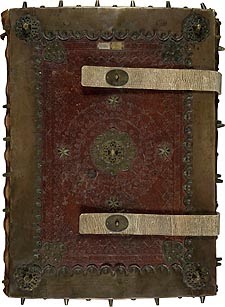
Book: A typical medieval book weighed between 40 and 165 lb. The Codex Gigas, for example, was 3.2 feet long, 20 inches wide and weighed 165 pounds. A rare Hebrew manuscript contained 1,042 pages and weighed 57 pounds. Given these dimensions, we can pretend that a basic book weighs 0.5 ounces per page, while a large tome weighs twice that much and provides twice as much surface for writing. A sheet of paper or parchment was called a bifolium, being a single folio folded in half to produce two leaves. Books were often bound between two thin sheets of wood that were covered by leather. When books were rare (i.e. before the printing press) they were often chained to desks.
Page Measures
Quire = 24 folio
Ream = 20 quires = 480 folio
Bundle = 2 reams = 960 folio
Bale = 5 bundles = 4,800 folio
Books can be printed on one of several mediums:
Parchment: Made from the skin of sheep, goats, deer and other animals. The parchmenter begins the process by selecting a disease and tick-free animal. The animal’s skin is washed thoroughly and soaked in a vat of water and lime for about a week, stirring several times a day with a wooden pole. The pelt is removed and laid over a curved, upright shield of wood. The hair is scraped out using a long, curved knife with a wooden handle on each end. The dehaired pelt is then rinsed in cold water for two more days to remove the lime. The skin is dried while stretched on a frame. The skin is secured to the frame by pushing pebbles into the skin every inch or so to make knobs, to which strings were tied. It was not uncommon to see holes in finished parchments where tiny tears made in the scraping process were stretched out in the stretching process. The parchmenter now ladles hot water over the stretched skin while scraping with another curved knife called a lunellum. The parchment is finally allowed to dry completely, shrinking and tightening as it does. Once dry, the scraping begins anew. Finally, the parchment can be removed and rolled up for transportation or sale. A scribe would purchase the parchment in this condition, cutting it to his desired size and buffing it before use with chalk. Parchment sheets were usually sold by the dozen.
Vellum: High quality parchment made from calf skin.
Paper: Made from plant pulp, fibers, rags or cellulose. Paper is cheaper than parchment, but not as long lasting.
Types of Books
- Atlas (Geography)
- Bestiary (Fauna)
- Chronicle (History)
- Cookery (Recipes)
- Dialogue (Philosophy)
- Grimoire or Grammary (Magic)
- Herbal (Flora)
- Lectionary (Religion)
- Lexicon (Language)
- Manual (“How-to” on war, hunting, politics, etc.)
- Principia (Science, mathematics, alchemy)
- Romance (Stories meant for entertainment)
Image from here.
On Coins & Coinage

In a previous post I went over the concept of huge coins and how they aren’t completely unrealistic. Nonetheless, I use 100 coins to the pound in my games, primarily because the challenge of logistics isn’t something my players were into.
The other way that coinage in Nod differs from the core rules is in the different types of coins I use. To the standard gold – silver – copper I added the platinum and electrum of my youth. To whit …
Platinum Piece (pp)
Platinum is difficult to work and thus fairly uncommon in coinage or art. Most platinum pieces in circulation were minted to commemorate special events (coronations, conquests, etc), and thus should carry some history with them.
1 pp = 10 gp, 20 ep, 100 sp and 1,000 cp
Gold Piece (gp)
Gold pieces are less common than silver, and often used for large transactions. They are the most common coinage carried by adventurers, whose wealth often rival that of the great merchant houses and minor nobility.
1 gp = 1/10 pp, 2 ep, 10 sp and 100 cp
Electrum Piece (ep)
Electrum is a naturally occurring alloy of gold and silver. For a brief time it was a common material for coinage, but the inability to determine the proportion of gold to silver caused it to fall out of favor. Most electrum coins found in hordes are, therefore, of ancient manufacture.
1 ep = 1/20 pp, 1/2 gp, 5 sp and 50 cp
Silver Piece (sp)
The most common coins in circulation and the basis for all economies. Adventurers prefer gold, of course, to lighten their loads, but the vast majority of non-player characters in Nod carry silver coins.
Orichalcum: Orichalcum is an alloy of bronze and gold, and thus in fantasy terms about as valuable as silver. A Referee might want to have his adventurers find a horde of orichalcum coinage in order to fool them into thinking their toting around gold coins (or maybe fool them into thinking they are just copper coins).
1 sp = 1/100 pp, 1/10 gp, 1/5 ep and 10 cp
Copper Piece (cp)
Coins were rarely minted from copper. Most of the copper pieces in the game would actually have been made of bronze, brass, billon or potin. Bronze is an alloy of copper and tin (80:20). Brass is an alloy of copper and zinc (90:10). Billon is an alloy of copper and silver, with copper making up more than 50% of the of the alloy. Potin was an alloy of copper, lead, tin and zinc. Coppers are carried by the peasantry, who prefer barter to coinage.
1 cp = 1/1000 pp, 1/100 gp, 1/50 ep and 1/10 sp
Other Materials
Coins have also been minted from less valuable materials, including lead, iron, tin, shells and wood. In general, I would count these items as one tenth as valuable as copper, though the folks using them might value them more highly.
Magic Rings
 Here are a couple magic rings inspired by the world of comic books (and their modern simulacra).
Rings of Elemental Earth
This pair of rings is carved from citrines and are worth 1,000 gp as jewelry. If worn one on each hand and slammed together while chanting “Res orbis operor vestri res”, the wearer becomes an 8 HD earth elemental for 10 minutes. This can be done but once per day.
Ruby Ring
The ruby ring is made of admantine and set with a highly-polished ruby lens. It was forged to be a weapon against evil and can only be used by benevolent creatures. The ring must be re-charged once every 24 hours at the altar of a benevolent deity. When fully charged, the ring allows the caster to produce several spell-like effects by succeeding at a wisdom check, for use of the ring requires an act of supreme will. The wisdom check must be made every round in combat or every ten minutes outside of combat to maintain willpower. Multiple effects can be manifested simultaneously, but the required wisdom checks are made at a -2 penalty for every effect beyond the first. The ring can duplicate the following spells: crushing hand, fly, forcecage, forceful hand, grasping hand, interposing hand, magic missile (1 missile), shadow conjuration, shield and wall of force. All spell effects manifest as a ruby-colored construct of pure force. If the bearer of the ring is killed, the ring teleports to the nearest person worthy of wielding it.
 Land of Nod